Paraphrasing St. Bernard of Clairvaux

download

My father enjoyed telling the story of how when I was young, despite having a number of different teachers who didn’t know each other in several different elementary schools, each teacher wrote the same thing on my report card: “Robert pays too much attention to the people around him in class.” I could say I was bored. I could make a case they all kept repeating themselves, or I could insist, “Honest to God I heard them the first time.” I could claim I was multitasking. But the truth is I am easily distracted. Several teachers said I needed everything repeated twice before I understood. It was Mr. Kingston, however, in fifth grade who took me aside and said, “You’re doing fine, Robert,” for the first time. I told him I make a lot of mistakes and he said, “Yes. Me too.”

Almost fifty years ago and I never forgot that, so at least I remembered something from Timber Point Elementary School. Still, I’ve packed on a plethora of mistakes since then.

A Russian nun once prayed for me for ten minutes at the Shrine of St Xenia. Then she gave me a piece of bread from the top of the sarcophagus and asked if I liked it. I wanted to say yes, I enjoyed her blessed bread, but my weak language skills kicked in and I told her, “I love you and lust for your black God.”

It is odd making other people laugh at what you say in a foreign language. Oh, there’s more:

I wanted to ask a cab driver where a bathroom was but ended up saying I like to drink dark beer from a toilet.

I told someone I thought was a waitress who turned out to be a prostitute what I thought was, “Yes I could use a few minutes to think,” which turned out to be, “Yes, I’d absolutely love oral sex.”

I pulled out a chair for a lady and told her to heel.

I asked for five sandwich rolls and walked out with fifteen. No fish.

A friend of mine wearing his priest’s collar wanted to tell the waitress he would like some mayonnaise and ended up saying, “I love to masturbate.”

Some friends went to buy coffee. The world in Russian for sugar is “Suga” but the word for bitch is “Suka.” They returned exclaiming, “Don’t ask for sugar in your coffee in Russia, Dude; they’re assholes about it.”

I could go on but more or less by screwing up I learned to fit in, pick up the nuances of accent and syllables, which brought down prices at the flea market, brought out their best Georgian wine, and opened gates to closed graveyards and monasteries. There are many more screw-ups but I’ve conveniently forgotten most of them.

This one stayed with me. At the back of one church, in the rubble of what was and would eventually again be St Catherine’s Catholic Church in the heart of St. Petersburg, a woman stood looking for a priest I knew. She seemed confused and we talked a bit—slowly of course, her in patient Russian and shattered English. Her grandmother had been the secretary of the church before the revolution seventy-five years earlier. In my weak Russian skills I determined the woman told me she had a huge cross to bear because of the horrors of communism and wanted the priest to take the sins away from her. But when Fr. Frank appeared, his translation was somewhat more significant. She had outside with her the original cross for the church dating back hundreds of years, which her grandmother had taken when the Bolsheviks took control after World War One, and which her family had wrapped in cloth and buried in the yard at their dacha where it remained for seventy-five years. She thought it was time to return it. It hangs again above the altar at St. Catherine’s.

Back at home and much more recently I showed my students how to present a paper using the guidelines from the Modern Language Association. I gave them copies, I presented another example on the outline, I asked them to open their books to the appropriate example in the text, and still forty percent of them did it completely wrong. Is that a mistake? Is that boredom? Distraction? Idiocy? I like to think they are overwhelmed and go home kicking themselves for doing something wrong that was so easy to get right, but I’m probably wrong. Not long ago I would have returned to a class like that and lectured them about how their priorities are screwed up; I would have told them that if they can’t get the easy stuff done they’ll never handle the challenges as they attempt to move up the collegiate ladder. I would have used the appropriate sarcasm with a touch  of attitude. But I recently altered my approach to, well, everything, and instead went back to class and said, “Simple mistakes, folks. Easily fixed. You’re doing fine. Let’s have another shot at it.”

Last year I was driving through the Pennsylvania countryside on my way to western New York on a Sunday morning when I heard a guest on a talk show quote St. Bernard of Clairvaux, who said we need to learn to make excuses for other people.

We need to learn to make excuses for other people. I turned off the radio and let that simmer inside for a while.

Sometimes if we see other people’s reasons for things, our world changes.

No professor likes students who come in late, or do a project completely wrong, or seem to be in their own little world. Still, I had one student who came in late because her husband is stationed in Iraq and she got to talk to him that afternoon. Another left early when she found out her father was dying. I remember clearly the one who couldn’t get the presentation correct no matter how hard he tried, but he has never been the same since returning from war. And the one that gives me pause still is the woman who stared at me the entire class without blinking an eye, then left, only to email me later an apology, that she wasn’t concentrating, that she had just learned her cousin was shown on television in Baghdad, dead and left swinging from a bridge.

I teach in a different environment here in the military rich resort of Virginia Beach. We learn to make excuses for other people because so many of these people don’t have excuses, they have interrupted lives. Their mistakes aren’t so much mistakes as they are simply, unfortunately, lessons set aside for later.

St. Francis de Sales said, “Never confuse your mistakes with your value.”

I am still learning to separate the two, mistakes and value. Maybe that’s why I spend so much time in nature—there are no mistakes there; value is an abstract concept. It’s the only place where it is necessary to just sit back and let it all be.

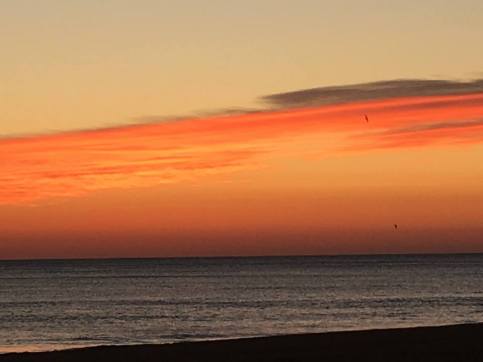
I hope others learn to make excuses for me. Every once in a while I whisper to myself “You’re doing fine, Robert,” like a fifth grade teacher might. But my language skills are not as sharp as they used to be, and I know I’m paying way too much attention to the people around me, but that’s okay. It helps me keep still, like a clear morning before sunrise when the water is calm and the promise of the day that I woke up to is still forgiving.
25399130_10213546157915780_7049320998632355963_n

Aerie

10708605_10204589214277787_4033108687908121330_o

The yard is filled with birds. When I raked yesterday I must have loosened the soil and provided more access to something edible. And today the front yard is covered in finches, titmice, cardinals, and others. Soon the flock of starlings should be here; it happens every January during their migration from wherever to who knows where. Thousands of starlings land on the bare branches of the tallest oaks and cover the ground and fill the birdbaths. They can be loud, but the real deafening beauty comes when they leave and thousands of wings together stir the atmosphere.

The osprey are gone for the winter, spending these months in South America somewhere, replaced by a handful of bald eagles. One eagle which used to perch on the peak of the house is no longer there, but several others do their fly-by every day or two.

And deer, too, are more abundant. One family lives on the west path, which is rarely traversed, and they bed down in a ticket of holly surrounded by protective woods. In the early morning they head to the front along the treeline and finish off whatever water is left in the birdbath. And in the acres of woods on the south lives a family of grey fox. Whenever we go out at night to use the telescope, he wanders to the backyard and walks around watching us, looking at his favorite tree where we often put some scraps for him to eat. It is especially touching when he picks up a large scrap and stares at us as if to say, “Wow, awesome, thanks!” and scurries through the brush to his den where I’m guessing some hungry cubs are waiting.

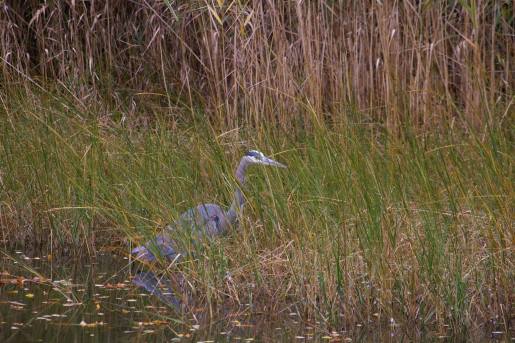
Then there is the river with an abundance of waterfowl from bufflehead ducks to gulls of every variety to the seasonal osprey and eagles. One great heron often stands unmistakably at the edge of the duck pond next to the river, and if I stand very still he won’t move, but more often than not he spots me long before I see or remember he is there and he takes off calling out with the distinctive sound like a wrench loosening a rusty bolt. He will land across the pond feeling safer in the sea grass, but in exchange he startles flocks of gulls who head my way.

At the water’s edge I look east where the Rappahannock meets the Chesapeake. It is roughly twenty-five miles across to the Eastern Shore of Virginia, so the view is not unlike looking out over the ocean. Sometimes, even, river dolphin migrate by. This is where we stand when Wallop’s Island across the bay has an evening lift-off of some payload heading toward the space station. The glow is powerful, followed by a long, vertical line of fire which seems to head to the southeast, and then after a few minutes simply goes dark. I am always amazed, even from this humble perspective seeing as how we aren’t that close. It seems to me to be some form of proof, though I’m not sure of what. Potential, perhaps, or maybe just that there is something “more.” I’m not smart enough to contemplate the science of it all, but lately I’m much more comfortable that way. I’m more drawn toward the philosophy of it all anyway.

More than twenty years ago I named the property “Aerie.” Aerie is a hawk’s or eagle’s nest, which seems quite appropriate since from the start both raptors made this place home. It isn’t unusual to see a hawk on a wire or the remnants of a dove on the lawn. But the name has another significance to me; it is the name of the first John Denver album I remember hearing. From those early moments of his music when I was barely a teen I was drawn toward the peacefulness and permanence that is the wild. Of course, back then I imagined I’d buy a house in the Rockies and spend the rest of my life playing guitar, maybe change my name to Bob Denver, but I realized the confusion with Gilligan would be a roadblock.

But that music then, “Poems, prayers, and promises” and “Rhymes and Reasons” and his cover of “Boy from the Country,” created an idealism and subtle hope I could not define but which somehow defined me. Combine that with shows like “Grizzly Adams” and movies like “Jeremiah Johnson” and I knew I was not going to take well to city life. I didn’t know it then but that music along with my walks through Heckscher State Park along the Great South Bay established a foundation of walks in nature which to this day somehow protect me from depressing and discouraging days. Through the failures and successes which followed, there was always something about a walk in nature—even if that wilderness was Central Park—which made me feel like the Boy from the Country that I can confidently claim I am here at Aerie. My taste in music has drastically expanded since those Long Island days, and my travel experiences have allowed me to find the largest cities in the world often as endearing as these paths at this nest I call home. But the former, to me, is a place to go, and the latter a place to stay.

Still, nature here can have some questionable moments to make me rethink the possibility of moving to a studio in Brooklyn and calling Ubereats. There was the time, for instance, a five-foot snake fell off a branch onto my neck, or the time a way-too-colorful snake from under the shed wrapped around my arm. And, of course, the storms can be debilitating. I stood on the porch in the middle of the night while Hurricane Isabel ripped thirty oak trees eighty feet high out of the ground and slammed them on the driveway, the lawn and throughout the woods. But like a decent lp with a couple of bad tracks, there aren’t enough of those moments to sacrifice what is essentially a form of blood pressure medicine and anti-anxiety pills.

Nature is not convenient; it is not as predictable as one might think. Nature does not accommodate humans, it does not care if you’re here or not; in fact, it would prefer to be left alone. I try and keep a low profile when I go for walks, try not to disturb the heron and sometimes I can even walk by the deer without them moving away. In the course of a week I spend the vast majority of my time outside where things make sense to me. There, I am not forced to figure out the answers or discover more efficient ways to advance. It lacks hypocrisy; it is absent of critique. It calls to mind the Whitman question, “The friendly and following savage: is he behind civilization or ahead of it and mastering it?”

I do love a stroll down Fifth Avenue, and some of my finest moments in life were spent in cafes in Prague and Amsterdam and New York. And one of the best summers of my life was spent almost entirely in a small cabin on a train. But I believe I better understood my role in those confined situations because of life in wide open spaces, this place I can retreat to when I get confused. I can clear my head here. There is music here.

It’s odd how a song can follow you, twisting its meaning as the decades pass. Often music transports us to some particular time or person or event, and hearing it again allows us to follow it back to then or to her or to those moments. But sometimes, not as often, a song follows us, grabs us by the soul and tags along so we don’t forget where we came from, what we’ve been through and, more to the point, what gets us through.  

Somewhere in the shade near the sound of a sweet singin’ river
Somewhere in the sun where the mountains make love to the sky
Somewhere to build me a faith, a farm and a family
Somewhere to grow older, and somewhere a reason to try

Somewhere to grow older, somewhere to lay down and die

                                                   –John Denver

48269317_10216281748143826_513227387618459648_n

Please Stop Acting Like DJT

civics-101-700x463

Stop calling President Donald Trump a mofo.

And please stop posting memes exclaiming the same. Yes, he is one, yes, he deserves a good pummeling of negative rhetoric, and yes, we have moved well past the point of complacency and inaction with his misguided policies and inept tactics. But when I read about representatives on the floor of congress acting, well, very much like Donald Trump, it discourages me. The reality of a person “deserving” to be called names is quite different than the act of actually doing so. In fact, it is NOT doing so that makes a person better than the supposed mofo. When DJT acts, talks, and behaves like the punk he is, he deserves criticism, he deserves political repercussions, he deserves shunning by those who entered government to actually govern the UNITED States and not DIVIDE them for personal satisfaction. But we only succeed by acting better than that which we despise. The Democratic Party has long claimed education as its backbone—in fact, many Trump supporters ridicule the “Eastern Elite” attitude and “Liberal Collegiate” types. Yet to practice the name-calling, profanity-laden tirades so common in the Trump camp is to demonstrate that his methods are justified, and the Democrats have finally stooped to his level. If the primary thesis of Democrats when referencing President Donald Trump is that “We are better than this,” then they must actually act it. There are far too many options available to simply resort to the same disgusting cursing, name-calling, personal attacks so common in DJT’s world. Besides, his rhetoric is too simple-minded and lazy for a thinking person to replicate.

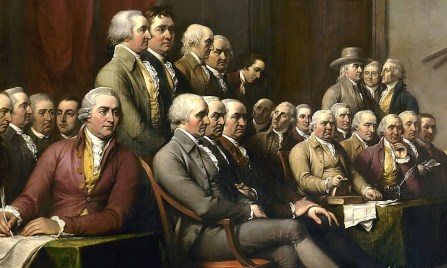
Several new members of congress and their supporters have pointed out what they rightly call the hypocrisy so rampant in the Republican Party, from the support of mistreating immigrants in quite un-Christian ways, to the balancing act of trying to publicly keep Trump supporters in their camp while privately admitting the un-American ways which have bled across this nation. Yet hypocrisy is exactly what these new members also practice when they lower themselves to gutter-language and ignorant attacks instead of maintaining a professional stance and keeping the focus on the facts; in essence, we constituents must insist all members of Congress, not just the ones we disagree with, act in a manner which is worthy of the Senate and the House of Representatives in a building once occupied by the greatest minds and leaders in this country’s history.

If they don’t support DJT, they need to stop talking like him, stop lashing out like he does, stop mouthing off like a bully as he does—even if they believe DJT and his cronies deserve it. In doing so, they violate so many basic argumentative fallacies and modes of civic behavior it’s going to be difficult to tell the difference between elected officials deserving of our support and the ignorant, self-serving narcissists who hijacked our nation.

foundingfathers


Now back to my regularly scheduled View from Nature. Thank you.


Blank Boxes

658

It is damp out from two days of rain and on and off showers all morning. Cloudy, and while the weather channel seemed firm on their mid-sixties projection, it never really made it out of the mid-forties. Out over the bay the sky is grey right to the horizon toward the eastern shore so that it is difficult to immediately separate the sky from the sea. It’s choppy and the current is strong, moving south. A few Canada geese moved about near the riprap but then took off.

I’m not feeling so great today, a chest thing, so I stopped at the library because there’s something about damp winter days when you’re not feeling one hundred percent which seem to say to go to the library. I had brief ambitions to read the paper, maybe check out the new books or get online and play Tetris. My son is working there today, though, and when I went in he was busy and a few ladies were reading the paper and some guy who I think lives on his boat nearby was on the computer, so I drove home and made tea and some crab soup.

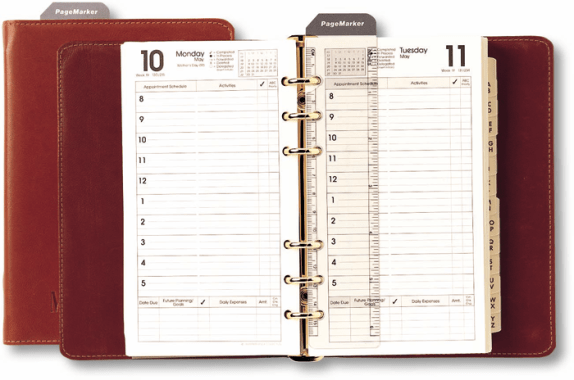
Then I read a post by a friend about her new date book for the year and how she loves starting the year with a new date book, and I thought, “yeah, me too.” There’s something so empowering—all those blank boxes just waiting to be filled in and that sense that you can fill it in however you damn well feel like. So, I got out my date book which I have yet to touch for the new year and sat at my desk, looked out at the damp, grey skies behind the barren trees to the south, and opened to the first page. I wrote my name and immediately realized something different about my 2019 date book than pretty much any I’ve started in decades: This will be my first full year not tethered to the trials and tribulations of the last several years. My health has drastically improved over the last three years, my obligations to anything other than my own schedule and whims have drastically decreased, and while I still have some commitments to a couple of colleges as well as some writing obligations, they are all by choice, with pleasure, so they remain commitments I welcome and look forward to. I blocked out what I know so far about writing deadlines, a few classes I’m teaching, and a few trips—Florida, Ireland, Maryland–and found some motivation.

I filled in what I could, which includes various other small known obligations to take me to the first week in June. After that, it is still completely blank. That’s never happened before. It feels good. A blank date book is not unlike a blank sheet of paper. Is there anything more promising and full of potential as a blank sheet of paper? Whitman, for instance, wrote Leaves of Grass. Good read, and everyone knows the work Whitman wrote and how it still grows in the literary field. But I have the uncritical blank sheet of paper, and with the right choice of words I may harvest my own grass.

So too the blank date book. Maybe I’ll sail around the Bay for the summer, or take pottery classes, filling in my Thursday nights with a little “Mathews Art League Pottery Workshop” through August. I love this so much more than resolutions to do things like read more books or exercise more. Those are lifestyle obligations which shouldn’t be anywhere near a resolution list—eating right and exercising and reading should be in the same category as breathing and urinating. They shouldn’t be something you need to commit to; rather, they are part of being alive.

But learning to harvest oysters—no one needs to do this, so filling in a box with “Deltaville Maritime Museum Oyster Growing Class” is exhilarating—it is a choice and something to look forward to.

Like…maybe…learning to play the flute or going to the zoo in DC or maybe taking a class in landscape painting, or maybe taking a poetry workshop. Maybe I’ll buy a goat. Perhaps I’ll leave the boxes blank, hang around home and garden, go for walks, simplify again, sit on the porch again and at night look at the stars. They’re my damn boxes, after all. 

Or maybe I’ll just go back to Spain.

See, here’s the thing. If I went to the store and bought date books, which right now are at fifty percent off, how many more would I need? Twenty more gets me to seventy-nine, and really at that point the blank boxes might be filled in with when to pick up my meds. So while I might—God willing—have plenty of date books after that point, the number of blank spaces for scheduling impulsive ideas is rapidly shrinking. That in itself doesn’t bother me—I’m a realist when it comes to the passing of time. But since I’ve recently turned a few corners and find myself now staring at more than a few possible paths, I want to fill in those boxes carefully and with passion.

I suppose if I had a Cavanaugh streak in me and kept all my old date books for some anal-retentive reason, I’m sure there’d be many boxes I wish I could erase or cross out or simply burn. I would have spent more time with my Dad and certainly would have visited my sister and my brother way more often. I would have filled in more than a few with flight departure times. I’m not regretful (well, a little), but looking back now at the pilgrimage so far makes me keenly aware of how to move forward.

Mostly, I want to fill in those boxes with the names of people I love, friends who are like family, family I don’t see enough, and leave a few boxes blank for those I’ve not yet met.

I haven’t started a year like this in thirty years, and except for the cough and the desire to finish my tea and crawl into bed, in some odd ways I feel like I’m in my twenties again.

Maybe a drive to see friends in New England. Maybe the Island where I haven’t been in way too many years. Maybe I’ll just stay in Ireland and herd sheep.

Maybe I’ll just go back to Spain.

cb7365d091e62294644b2b9e6be11176--cover-photos-decision


Peace Villanelle

b9b10612df76e62c67841de982d96ac7


Peace Villanelle 


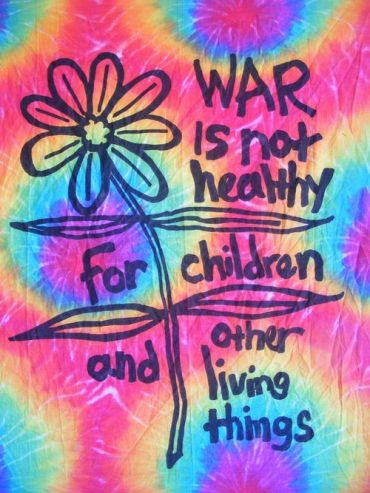
Nobody talks about Peace anymore.

The world has been hostile for too many years.

They scream about conflict, speak boldly of war.


A senior in high school has known nothing more

then a planet long poised in panic and fear

Even the schools don’t teach Peace anymore.


Poets and artists all know what’s in store

But no one is listening, no one can hear

As news reports hatred and battles and war


Anxiety-ridden and stressed to the core

People hide terrified terror is near.

while Peace seems a fable, a story of yore.


And when with our families and those we adore

Does anyone bother to shed any tears

For a world bathed only in bloodshed and war?


Children among us know nothing more.

It’s all they’ve been taught since the day they were born.

No one remembers the Peace anymore.

A whole population raised solely in war.


hqdefault


The Years Keep Rolling By


8

It’s the last week of December, and the full moon of the early part of this week is on its way out with the old year. It is beautiful, and at this late night, early morning hour, it fills my soul, or quiets it down, thoughts which seem synonymous.  The air is chilly, but still, and quiet, and clear across the river to the north and the bay to the east is nothing but the same quiet. The few lights of Windmill Point are faint, and the stars fill the sky despite the bold, recessive moon. It’s hard to imagine anyone is awake, anywhere. I am alone, I imagine—or, that is, I pretend—just me and the waning Cold Moon in the final days of this tumultuous year.

I certainly hope the reported hostility and resulting frustration don’t hemorrhage into 2019. I don’t know how to describe my perception of the past twelve months, but it simply felt busy, like a bad play with a massive cast of characters all simultaneously packed on the stage delivering their lines, with a boatload of stage directors and casting directors all yelling their advice and criticism and corrections, while out in the audience a brawl broke out and everyone started beating the shit out of each other. And to recall Lao Tzu, “If we do not change directions, we may end up where we are heading.”

So, exit, stage left.

I wish we could design our own year, like some magical date book we get for Christmas that comes with a special pen, and we sit near the fire, pour some wine, a bowl of Cheese-it’s. and start with January marking away at how the year will go. And, whoosh, it just happens.

It used to feel that way, didn’t it?

I remember when Congress was on break and you knew they were all coming back renewed, refreshed, ready to work, even if not “together,” at the very least ready to do their jobs and act with conviction. And at offices everywhere, and in businesses everywhere, there was a sense of a clean slate, a chance to “give it another shot” as it were. There was a sense that everyone made some positive New Year’s resolutions, not this deep sigh of exhaustion. Maybe it is too much information; for certain there is too much varied and contrasting information. We live in a time of a kitchen filled with cooks, a ship with too many captains—you get the point. It used to be easy to find someone to trust and let everything fall to her or his examination before disseminating it all to us.

And now it is almost New Year’s, and like a first-time marathoner, we’re left with a feeling like we’re dragging our tired asses across the finish line only to find out we didn’t get the job done, so we have to try it again.

I don’t like feeling this way. 

So this morning, tonight, depending upon how I look at it, in this indescribable, beautiful stillness of peace, and with a calm soul, I’ve decided to open the magical date book and make note of what the next year will be, and what it won’t be. I’ve talked it over with my other selves, and we all agree—if we work together on this, 2019 can be phenomenal.

Sure, there are resolutions. There should be. Benevolent ones like volunteering more, giving things away, being nicest to those who are least nice. But small ones too, like writing more real letters to people, calling family instead of texting, and eating more fruit. 

And I do have high hopes for some specifics, but my hopeful changes this year are more difficult to list. It’s always taken me longer to figure things out in my life than just about anyone I’ve known. And I know perhaps way too often I have acted enthusiastically and somewhat foolishly when it might have been better to have kept things a bit quieter. But this year some of my hopes are based less upon what I want to happen and more focused on what I don’t want to happen anymore. For me, some simple ambitions, such as no more explanations, no more worries about being misunderstood as has happened in the past, resulting in disparaging misjudgments. I’m done with that, but how does one express in a resolution what one will no longer care about? How does one make note of something that won’t happen anymore?

Honestly, some ambitions can’t be verbalized or measured. It isn’t a matter of distance or self-control, or even ability. It is a question of nuance. It is also a matter of faith. Not faith in a Supreme Being, though that certainly doesn’t hurt, but faith in ourselves to be able to bare our souls, or in some cases, not expose them at all. Sometimes we stand outside in the middle of the night surrounded only by the ghosts that keep us awake to begin with, and we’re terrified at our own truths, our own brief reach across the approaching distance, and something more subtle than a resolution finally follows, something difficult to define.

This is the last blog of the year, and this is the third full year of blogs. I’ll start volume four next week. But I’m ending volume three with the realization that A View from this Wilderness wasn’t for the readers–of whom, according to the tracking method which comes with WordPress, there are roughly between 750-945 a week. It was for me. This is my diary to remind myself of what brings peace to my soul while simultaneously reminding myself of what sets my soul on fire. A year ago my primary resolution felt more like a plea or a prayer–and it was answered, fulfilled, however one wants to label it for those who think labels are necessary. This year is different. 

When I was working for Richard Simmons, we talked about how the most promising members of the club–that is, the ones most likely to stick with it and go the distance–were the ones who came with what we called “a quiet resolve.” We didn’t know what drove them, and they didn’t post signs or make announcements; they didn’t have mini-celebrations along the way; they didn’t make it something separate from their life that needed to be tackled or climbed or conquered. They came in, did their thing–sometimes a little more each time–wiped off the sweat and went about their business. 

That is not a resolution. That is resolve. There is a difference. One is a statement, the other is way of being. 

It’s a beautiful early morning and the stars reach beyond my imagination. Maybe everyone should come out here with a pad and pen to make their list for the New Year, here under a blanket of stars, so that goals are kept in perspective. We simply don’t know who we’re going to run into along the road and we don’t know what life might toss in the way. And way too often we forget the decision to do something–or not do something anymore–is only ours. This pilgrimage we’re on is a circle, and whether we measure by the day, by the decade, or, as we do this week, by the year, it’s coming around again. 

download

There’s Time Enough, and Love

1958044_10202775610298821_1459147518_n


I really can’t watch the news anymore. I’m not burying my head in the sand, though there’s an argument to be made. I just need to keep my blood pressure in check and concern myself more with the joys of today rather than simmer in the ploys of those leading our country astray.

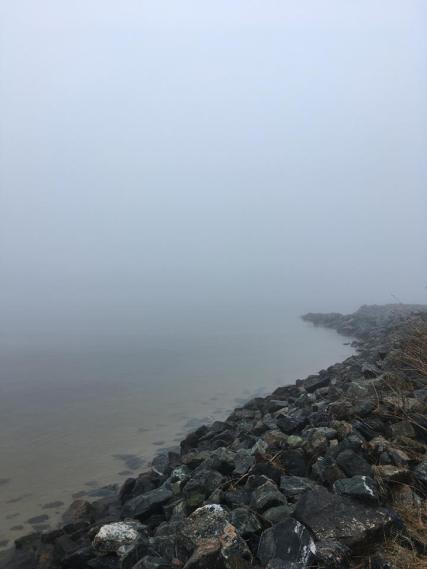
It is raining out, and foggy. I can’t see more than twenty feet into the river, though I can hear the geese out across the reach, and a few bufflehead ducks keep popping under the water and out again just ten feet away. The water is mirrorlike, so the rain on the surface is steady and peaceful and is the loudest sound I can hear; even the geese are far enough away now. It is a good day when the rain is the loudest sound. A few weeks ago I found similar peace walking on Antelope Island in Utah. The sense that there are no cities, no towns, no marketplaces anywhere, and no one is arguing about political matters.

I am fortunate to be able to spend a vast majority of my time in such surroundings. Most aren’t so lucky. The thing is, I don’t think you need to live like this to find balance; in fact, I’d probably go nuts if I couldn’t get to town sometimes to hear the beautiful noise of civilization doing its thing. But the opposite has become the norm; people don’t take the time, just sometimes, to hear the beautiful quiet of a starry night, or a foggy morning along the river. Even to just sit somewhere with no electronics, eyes closed, and listen to the passing of now would probably be a narcotic not available at pharmacies for those tethered to the trying struggle of life. But they don’t do it. Heart disease is up, stress-related illnesses are up, logic is down, ration is declining, the Golden Rule is just about gone, and basic human kindness has become as rare as the Great Blue Heron that just landed along the water’s edge. Seriously, how hard can it possibly be to just turn off the phone and the monitor and the broadcasting day and be silent for five minutes, find peace, make it the foundation of the day, make it the common denominator of all other activities?

When I was a child, my dad would end Christmas Day with a gift of books specifically for each of us picked out specifically by him. I can most certainly trace much of the influences in my life to those pages of adventure and travel, though now I realize those traits were something my beautiful father must have recognized in me which instigated his choices of reading material. In either case, it was the same for my siblings, and when my son was born I continued that tradition with him. It isn’t easy, particularly as he got older and older and became such a voracious reader and now works in a library; well, finding a book he hasn’t become aware of is difficult, but I love the challenge. Tomorrow I’m heading to a nautical gift shop in the village which has an excellent selection of difficult-to-find books about—go figure—adventure and travel. I’m not worried he will read this and know where I’m shopping; he probably already knows, and I don’t think he reads this blog.

But that’s just part of the benefit of the shopping trip to Nauti Nells in Deltaville. There’s also the peace that comes from leaving the phone at home and listening to the music, sampling the inevitable spread of food and drink Renelle usually puts out this time of year, traveling the world again each time I pick up a new book, and separating myself from the counter-productive, anti-relaxing, illness-inducing barrage of banter angrily occupying the world as it is. It isn’t my world. It isn’t how I choose to be.

Oh, I’ll stick my head up once in a while, fire off some blistering editorial to the paper about the need to recognize the essential neutrality of the Fourth Estate, or the cause of all this turmoil being firmly grounded in a crappy education system that needs to teach people to be better than this. Sure. But for the most part, the sand is fine, and the buffleheads, and the gentle sound of rain on the river.

48380300_10216319695932497_4474957877747908608_n

Nothing is Written in Stone

download

Recently, my brother-in-law made an online comment referencing research of historical subject matter. He indicated that if he is going to reuse an article he wrote twenty-years ago, he will meticulously review the details before releasing the revised edition to insure all information is up-to-date. I am not an historian, but I have spent some years teaching research methods and immediately appreciated his thoughts on the matter. The need to review the material might be obvious to him, one of the most respected historians in the country, but the work is too often seen as redundant to the average student or reader. I’ve had students say to me, “Well if he died over a hundred years ago, and this article was written fifteen years ago, what difference does it make?”

Here’s one example which instigated my concern about finding the most recent expertly researched information available:

Every month for quite some time now I find an extra thirty of forty dollars in my checking account from an ebook I wrote about Vincent van Gogh. This seemingly small amount of money adds up, but more importantly the sales have drawn the attention of bookstores and some libraries and this spring my publisher in Tallahassee, Florida is reissuing the paperback edition. The original book came out fifteen or so years ago, and the Kindle edition about eight years ago. After the first few printings, and certainly after the online version was released, the printed version went out-of-print. Sad, but normal. But recently, interest in the actual book version has drastically increased, so, reissue. Yay for me. Yay for Vincent. Poor guy; he’s been dead 128 years now.

So here’s the thing: The book is a first person account from Vincent’s own letters to his brother, Theo, and other artists. I edited them down from 2000 pages to about 160, but the words are his. The only subjective interjection I did was in brief transitions throughout the text to help the narrative flow and have some semblance of a standard rising action, crisis, climax progression.

It was the resolution which is more troubling. The prologue to the book covers the time between Vincent’s gunshot wound and his dying a day and a half later. I wrote the prologue based upon documented accounts from his brother, two doctors on the scene at the time, and many of the most respected art historians and experts on van Gogh’s life, including a curator at the Van Gogh Museum in Amsterdam. When I did this research, thirty-years ago or so now, I was confident in writing as Vincent as to the details from the gunshot (considered suicide at the time) to his death. But since my original research and writing of the prologue, new information has come to light. Without spending too much time here going into detail, let’s just say it is not probable that he killed himself, the mortal shot more likely coming from an intellectually-challenged teenage friend of his from the local town. Where they found the gun, what was and wasn’t found at the scene of the shooting, and Vincent’s own vagueness all became clear only a century later, though doubt of the original account arose from the start. Most startling is the suggestion in a found document of one of the two doctors that the wound itself could not have been self-inflicted.

Well, what is one to do? He wanted to die, he did say that.

So in preparation for press, I had to readdress the prologue and create a more neutral voice from our protagonist. Also, in most of his letters when referencing people who, in one way or another, were not accepted in society very well—much like his teenage friend outside Auvers, France—he showed rare moments of sympathy and concern for them. I brought slight more attention to those moments than he did in his letters so we might better appreciate his keeping the probable cause of death to himself.

In any case, it got me thinking about something completely unrelated: what did I once consider to be true about myself, my life, my path, which now, with new information and age and experience, could be considered obsolete?

Oh how I was decades ago is clearly not how I am now, but along with that are the decisions I made then which affect me now. They must be analyzed and contemplated, and, if necessary, abandoned. At least altered some. It is okay, I believe, if I am going to be true to my own brief narrative and create the best protagonist I possibly can out of this too, too sullied flesh, to do some more research and see if I might need to update my information. Maybe I can make me more decisive now than I used to be; maybe more mature; certainly less insecure.

I’m well aware of the truth that I cannot relive the past, and I am not even trying to change my course at all. No. I’m simply suggesting that at some point in the past my methodology set me on a course toward now, toward tomorrow, and if I take a brief pause to evaluate that past with the new information I have about life, I might be able to proceed more successfully than I would have still riding on the information gathered from a textbook I have been using since my youth.

I can remember times my mental history would record I was weak, paranoid, and even felt hopeless. But now, sometime later, it is clear revision is required. I know now the weakness was exhaustion, the sense of helplessness was a cleansing of false realities and misunderstood truths.  I wasn’t falling apart; I was shedding the parts of me I didn’t yet realize had died. Every dynamic character goes through an epiphany, none realizes it at the time.

I might change the character trait which up until recently was impatience. I’d add a few more details I recently discovered about confidence and instinct. I can’t change how I was in the past, and certainly not what anyone else knows or perceives me to be. But the me yet to come has not yet been written, and after close scrutiny to the facts of my life up until now, I can guide the character development somewhat.

After all, everything until now has just been a prologue anyway to whatever comes next.

Blessed Twilight High Res Cover

Present Tense

47108082_10216217648621378_675530963328958464_o

Lecture time:

Before we slip into the nature and the nurture of now, a quick lecture from an aging professor turned pilgrim:

What if one day you left your phone at home and went for a long walk? Would you wonder if everything is okay? Would you keep touching your pockets, looking behind you? At the very least would you wonder the time? How long, I wonder, before you turned and went home to check your texts, your messages. You’re hooked—we all are.

But what if, if, one day you just keep walking. Not many people anymore remember what it was like to have no ability to call home anytime they wanted. We looked for payphones at gas stations. And when we finished plugging it with coins for the three minutes we bought to talk, it was barely long enough to say, “Great, everything’s going great! How is everyone? Good! Okay, I’ll talk to you next week!”

Next week. Sometimes, next month. It is in part how we grew up, and it most definitely is how we matured. But those three minutes, then, was enough to know everyone was fine and we could focus on what was happening around us. We were fully aware of place. We kept no records. We didn’t update anyone. No texts. No tweets. No snapshots. We were that rare state of being which is slipping into the past: solely and completely in the moment.

No phone, no internet, no messages, no voice mail, no apps, no games, no kidding—just conversation with whomever you’re with or whoever happens along. If you wanted a picture of yourself at some site, or with a friend, you stopped someone walking by and asked that person to take it—we didn’t have long sticks to hold the 35mm. But that person would be friendly, and conversations would ensue, and information about local places to eat or drink could be discovered. We don’t do that now—we are in such a meme world we don’t risk much beyond the length of our arms. Am I the only one who misses the long talks and laughter after not seeing someone for a few days and “catching up”?

I do understand the obsession with taking pictures. When I looked at a photo, two things happen. It makes me miss that time and wish we had hundreds of more pictures of then, of the endless laughter of then, of the immeasurable hope of then. Yet it also helps me realize how we were in that moment, then, when the camera caught us; too much in the present, in fact, leaving us with only a few shots. But that’s fine. We were too busy living it.

But back to that long walk: At the end of that long day if you did just keep walking, by bedtime, phoneless, you might miss your normal routine to lie on your back, phone in hand, and seek out information for a while. You can’t, though, because you’re tech-less, and you can’t imagine that you ever couldn’t, but you do. No worries, the world keeps spinning, friends are not diligently waiting to hear from you or have anything to report, and the news is not going away.

The next morning is harder still. You ache to know what happened over night about which you have no information all these hours later. Did someone text? Call? It’s killing you, but you can’t go back now. You’ve walked too far. The anxiety, withdrawal, is real and stressful, and like giving up a blanket or a bottle each step seems endless, the day an eternity. You want to borrow someone’s phone. You want to just check real fast—find out everything is fine. And what if you did? Everything is fine, benign, most likely predictable and familiar. We crave the familiar and predictable; it falsely makes us feel safer. It is why we stay in bad relationships which become routine; it is why we stay in bad jobs which have no future but which we’ve mastered and manipulated.  

I know the arguments. The advances in this world have made much of our lives infinitely more convenient than then. No contest, and I am often thrilled that I can be a part of “what’s next” as we bullet toward tomorrow. But there is a price to pay—there is always a trade-off—and as far as some technology is concerned that price is how you spend your time. Thirty years will pass faster than you can fathom, trust me. Don’t spend it looking down.

Here’s a test to see if your priorities are in order: Plan to travel for a week and tell everyone you know you will be out of touch the entire time—no calls, no texts, no emails, no matter what happens. Tell them you’ll check in when you’re back to make sure your loved ones are alive; otherwise, you’ll be meeting new people, finding cafes and maybe a motel where you’ll spend nights drinking wine and laughing with new friends from new places, and you’ll catch the sunrise without capturing it on camera. No one needs to know what’s going on; they’ll ask when you return. No one needs to be updated, see pictures, videos, receive OMG texts at every mountain and mystery along the way. They’ll ask when you get home.

You’re without your umbilical, untethered, freefalling into yourself absent of the consistent clicks and taps of that certain cell. We grow anxious when faced with our own thoughts without possible deflection, no technological tangent. But the anxiousness erodes, and new conversations linger like lace curtains, sometimes lifting, often drifting down and raised only by the occasional wistful comment, and it is peaceful. You had forgotten “peaceful.” You maybe never learned just how to be full of peace.

But it isn’t so silent, is it, this peacefulness? This ironic disconnection links you to those nearby, connects you with others who make eye contact, talk about the places they’ve been, talk about the possibilities. Talk about unplugged! Most of the time you talk about life and how far you might reach, and the truth is you can’t reach out and grasp something if you’re holding anything. We do that though, we want to reach for more but not let go of what we’ve got. “If I put this down,” we say, “I might lose touch with what I know.” We haven’t yet realized Shakespeare’s decree that “one touch of nature makes the whole world kin.”

Take a deep breath. Take a moment. Take, for instance, that time you sat by the water at the north end of the beach and a couple caught you staring at the trees near the houses and they told you of an area filled with Spanish moss over walking trails just a few miles off the ocean. “Lived here for eighteen years,” you say, “And never knew that.” If you were looking down, they never would have said a thing. You know they wouldn’t. But the absence of such a small device can dial up the most spontaneous connections.

Really, you get used to this simplicity, this absence of noise, of interruption, of course you do. Find out what it is like to walk with empty hands and touch the world, what it is like to listen to nothing at all. At night those hands hold wine and bread and you hear tales of the day. We tell stories out loud, and we listen to stories and share moments, out loud, and we live, as much as possible, out loud. In this way, every single conversation is different. Every single shared sunset is different. And we come to have a sense of the senses.

I recently spent time in the wilderness out west, walking, being quiet, talking, just being there, and something unique happened in this age of all ages: I didn’t want to be anywhere else, I wasn’t thinking about any other time or place. 

And we learn, eventually we learn, the most important moments cannot be captured by the most efficient technology. Sometimes you need to be away from what you’ve become to understand who you are.

pexels-photo

Lead us, Not

980x

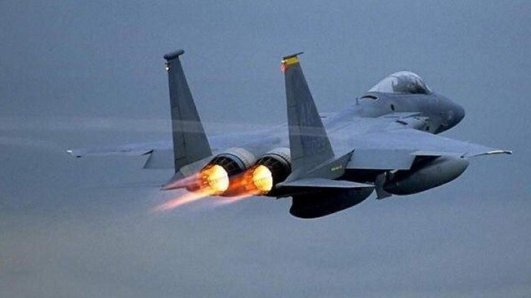
A few fighter jets flew over a parking lot at the beach. It happens a lot, and every time I can tell the tourists as they’re the ones running back in a store or holding their hands over their ears. It can be deafening, no doubt, but when you hear them all the time you become numb, complacent, and your tolerance of the disturbing afterburn steadily increases so that you’re aware of them passing more as a passing thought than a shocking revelation.

When I first lived around these jets I was one of those teenagers who tried to be cool, but every single time ran inside to avoid the sounds from cracking my skull and blowing out my eardrums like popping bubblegum. As years passed new people who traveled to the area would question how I could live there. But I’d say, “It’s really not that bad once you get used to it, and they’re usually done by evening.” Eventually I barely noticed the jets at all. I had so adjusted to the disturbing sound that I did not even flinch. My determination at one time to either move or get them moved to another base in another state had been tamed by overwhelming presence. I had gotten used to the sound so that it didn’t bother me anymore.

Always start with the metaphor.

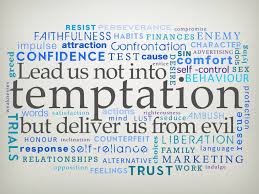
Sometimes we make the mistake of getting used to something that never should have happened to begin with. For instance, the Vatican has overwhelmingly voted to change the translation of the Lord’s Prayer. It’s true, and despite resistance, it is hard to deny the rational decision. The current reading, which has been enshrined since the first English translation, says, “Lead us not into temptation.” Yes, this line always bothered me as well, but I could never articulate why. Well, someone finally articulated it. That line as it currently reads is basically suggesting that we are asking God to not lead us into something evil, suggesting if we do choose something evil, it is actually God’s fault for leading us there to begin with. The new translation reads something to the effect of “Do not abandon us during temptation.” It makes way more sense and is hard, semantically, to not argue is better than what we’ve grown used to and closer, according to experts, to the original intent of the phrase. Still, people will resist, not because they think it through, not because they have theological training, and not because they necessarily understand it to begin with, but simply because it is what they are used to and don’t see any reason to change. This is frustrating when so many people, for no other reason than it is easier to just keep things the same, contradict those with the expertise necessary to make the call.

The change is right, no matter how hard it might be for some to accept.

And on that note, the literal:

When did it become okay to ridicule others? When did we become complacent about harsh personal criticism and blatant bullying? At one point not too long ago most people were taken aback by the rude and unnerving comments which seem to have become commonplace. Are we growing numb to immorality and unethical behavior?

Sometimes we know that, “Something has to change. Things cannot continue like this.” Sometimes we don’t know what’s going to happen next, but we are absolutely certain it can’t be what is happening now.

Accepting change is difficult, both for the better and the worse. Like staying in a bad job, like staying in a bad relationship, like staying in the same place, sometimes it is almost easier to accept the complacent illogical current way of life than to deal with the difficulty which lies ahead during the transition to something better, something, though challenging, with promise and hope. Worse still, though, are the adjustments we make to accept what we have; we get used to the noise which at one time was deafening but somehow became unnoticeable. That is the tragedy; when we fail to recognize the compromised state we are in by the simple virtue of some slow erosion of perspective. It took a while after making a change for me to step back and say, “Wow, what the hell was I thinking?”

I’m writing this the afternoon of Thanksgiving. In the worst of situations over the last few years I still can’t think of anything for which I’m not thankful. Is that a version of “everything happens for a reason”? I don’t think so, particularly since I am a firm believer in the free will to use our God-given decision-making capabilities wisely. Still, I’m grateful so many have the wisdom to know the difference between what to accept and what to change. Like knowing that Thanksgiving should be in October or that we need to stop changing the damn time twice a year. Oh, and the Electoral College has got to go.

But more to the point, it has been two years now and too many people are getting too used to the president’s rhetoric and ways. This week he thanked a country for being our ally whose crown prince ordered the brutal assassination and dismemberment of a journalist, the same week he blamed the forest fires on poor management, the same week he ridiculed the decisions made by federal judges, the same week he said what he is most grateful for is how great he has been for the country.

Too many people have accepted his despicable ways because of a tax refund; they’ve sold out, they’ve been paid off; they’re little more than whores along with the president himself. When did it become okay to act like spoiled children? When did it become okay to advocate policy which we would never tolerate in our adversaries?

Do not get used to the noise. Be constantly bothered by the afterburn of djt’s irreverence. He is leading us down a path toward demise of the U.S. constitution and civic behavior. In our own ways, each of us must not allow the constant disappointment and immoral behavior to become what happens when people start saying, “Well, what else did you expect from him?” That response is a half-step from acceptance. That’s unacceptable.

Change is not easy. Change can be damn near impossible sometimes; especially if we have grown so used to one way of doing things and especially if someone keeps telling us exactly what we want to hear and making promises we want to believe.

We can promise ourselves this with certainty: if things don’t change, they stay the same. As obvious as that seems, we don’t always understand the often dire consequences of familiarity.

He’s got to go, we know that. The real danger is the numbers of people who are getting used to him and his childish behavior.

download