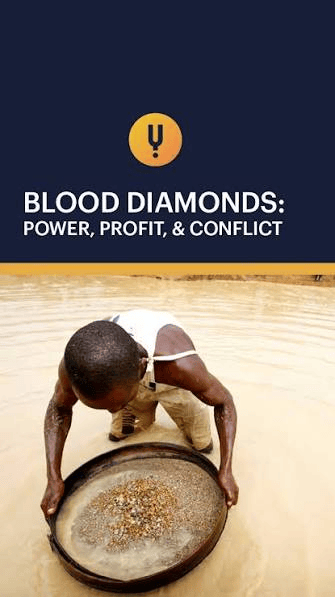
The problem, of course, is we can do without diamonds, and with global protests against the mines in places like Botswana, conflicts which spilled over into warfare, and exposure with movies like Blood Diamond, we are more than aware of Conflict Diamonds as they are so casually called.
But try telling someone to go back to a landline and ditch the smartphone. It’s laughable despite the mining conditions for a phone’s essential cobalt-powered lithium battery being far worse than diamond-mine workers could ever imagine. But, geez, it’s my smartphone; not giving it up.
It is time to accept the fact you’re not going to give up your cell phone or the electric car you have your eye on, even though they are the result of a slavery system in the Democratic Republic of the Congo.
Facts:
The DRC produces roughly eighty percent of the world’s cobalt supply, and has nearly half of the world’s reserves–more cobalt than the rest of the world combined. While the US gets most of its cobalt from Norway, Finland, and Japan, they are processors who take the supply of the metal mostly from the DRC.
So we understand each other, our smartphones and electric cars need cathodes for high-performance lithium batteries, and the primary component in cathodes is cobalt.
The Problem:
While some mines use heavy machines to do the work, about a third of the mines are so-called “artisanal” mines, where the work is done by hand by “freelance” workers. Roughly forty percent of the workers are children in unregulated pits, and most of those mines are owned by Chinese companies. The dust and grit from the mining gets in their lungs and kills them; and worse is that cobalt is toxic to touch and breathe. Hundreds of thousands of local people–mostly young women and children–mine the material for a few dollars a day, which they then must use to pay their way out of the mines to send home whatever money they have left, leaving them mostly in debt to the companies, much like share cropping or even slavery, and abuse is normal, including whippings and rape. This is from Siddharth Cara, a fellow at Harvard’s T.H. Chan School of Public Health. He insists after two decades of research and investigation that there is “no such thing as a clean supply chain.”
Some twenty-thousand people work at just one artisanal mine in the Lualaba region of the DRC. Armed forces are assigned by the government which is being paid serious money to make sure the mining continues and so-called overseers oversee the production much like overseers of slavery.
I was in the Lualaba region, very briefly, forty years ago. None of this was going on then, and the hills remained green and tranquil. I wondered what it looked like now so I looked it up on my smartphone, whose innards are built with the cobalt from this region. Guilty.
We won’t buy so called blood diamonds because of how they are mined, but no one is suggesting we boycott the companies who support this system of slavery pillaging the earth so we can have electric cars to protect the environment, and so we can have cell phones made from material mined by mostly starving children to be able to call our kids to make sure they are safe.
These phones, these cars, are available to us because of the spilled blood of people overrun by government troops, gathered up and moved to the mining district. The only true solution other than not using cellphones or buying electric cars is to pay the workers a real salary; formulate true working conditions so they can work with dignity and have a normal life. But their current salary is not expected to rise anytime soon. Of course not. It’s the DRC, the southeastern region of the Congo, one of the most dangerous places on the planet mostly because of these cobalt mines.
Samsung remains the largest manufacturer of smartphones.
The executive in charge of devices is Roh Tae-moon who earned roughly $4.5 million dollars last year.
The average cellphone costs about $571.
The average worker in the mines makes about $1.55 a day.
The average price of milk in the DRC is between $1.25 and $2.09 per liter.
At this point you might as well go buy that diamond you had your eye on.
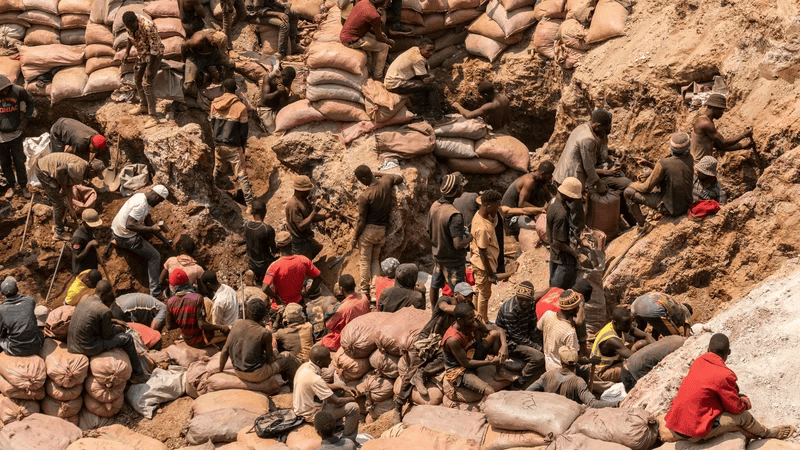
 a view from this wilderness