After

I received an email yesterday from a woman from Marseilles who now lives in North Carolina who knew Letty decades ago, and when she returned to the states was so excited to catch up, but the phone number she had didn’t work. Of course. So she Googled her and came upon my written memorial to her. She was devastated and wrote a lengthy email expressing her sorrow and condolences as well as remembering when they were both so young and full of energy. I haven’t responded yet–I will–and I’ll avoid my thoughts about the fact email works all over the world, including Marseilles, as do cell phones and how we have more free time than we would like others to believe to be able to call and say, “Hey I only have one minute but you are on my mind and I just wanted to say hi.” They’ve been warned it is a quick call. But I won’t say that because I’m just as guilty. Not as guilty as I used to be, but just the same. I wait until after it is too late to say what I want to say, even if all it is might be “Hello, I’m thinking of you.” The world is more chaotic than ever in human history and taking a moment to spread thoughts of friendship and love can go a long way these days.

I receive emails fairly often from friends of people I’ve written about. I’ve received dozens referencing Cole Young as I might be the only one other than art critics who has written often about my dear late friend who succumbed to lung cancer twenty years ago. He knew a lot of people, mostly artists, and they tend to look him up–Cole had a personality that might very likely reach back at you from the beyond to say, “Think of me now, Kunzinger!” So emails about Cole are common and not at all a surprise. It has, in fact, put me back in touch with some artists I knew back in those days.

The weirdest email was from “Eton Churchill.” Mind you, that is the name of my friend, playwright, professor Eton Churchill, who steered my Penn State Graduate degree and performance to a Pennsylvania Humanities Award. He died many years ago at a young sixty-two, so when I received an email from “him,” it did somewhat freak me out. It was, in fact, from his son who at the time was living in Asia. In fact, the first line was “I bet it is strange to receive an email from Eton Churchill. But I’m his son.” He also had read a tribute I wrote to his father and wrote to reminisce more than anything else. It reminded me of the time at my father’s funeral a man Dad used to work with came up to us with articles about my dad that this man had saved. He explained that none of my father’s coworkers had ever been to New York, let alone Wall Street, and Dad was the Yoda of their workplace; they all looked up to him and respected him. It is a moment I will never forget and will always appreciate. That’s a perspective we never get to hear. So Eton Junior’s email was more about appreciating that others appreciated his dad. Yes, we did. Very much. I’m just sorry I didn’t express that to him when he was alive. He passed away too soon. They always did.

Fr Dan knew our relationship well; we were more brothers than friends, and while he died unexpectedly, I never felt like I should have said more. I just wish I had. My college friend Dave, however, I had so much I wanted to say, so many thanks and memories to exchange, but he denied others the chance to say, “Hey, my life is better because of you. Thank you for forty-five years of friendship. I love you.” I wish I could have said that, and the “he knew that, Bob” comments are not sufficient. We know that doesn’t matter. It needs to be said. We need to give people the chance to tell us these things.

Letty knew exactly how I felt, of course, as did my mom and dad, but not so for Eddie, not Bobbie, not the other Dave and the other friend’s who left so much unspoken. I’ve received letters from friends of all of these people because of something I had written. The common denominator is their regret at having not told the person how they felt while they were still alive. Instead they told me. Which is nice, but there’s nothing I can do about it.

I’ve learned from these letters, however. I am glad I had a brief, lucid conversation with my dad. I’m glad my mom’s eyes were open long enough for me to say, “I love you, Mom,” as they welled up with tears and an hour later she was gone. I’m satisfied she knew. And I hope she knew I understood her love for me.

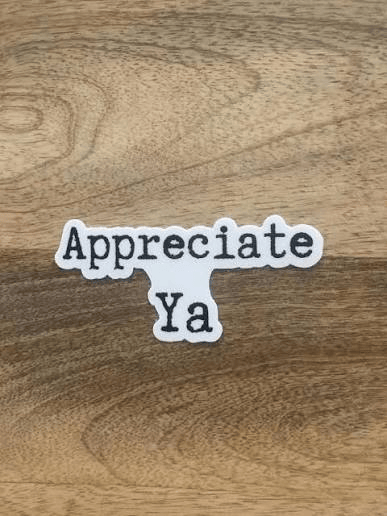
So then why do we wait? Why do we put off telling others how much they mean to us? It is simply speaking truth and demands no response at all. We can even tell them that: “Don’t respond, but I love you and I’m glad you’re in my life.” The closest we come now is “I appreciate you.” When this expression burst on the scene less than a decade ago (depending upon where you are from), I was resistant at first. I don’t appreciate them, I appreciate what they did. Someone holds the door open for someone else and they say, “I appreciate ya.” No. You appreciate not having to open the door yourself; you don’t even know the person holding it.

But yes, I’ve changed my tune. I do appreciate anyone who is nice these days in a world where anger and blame and aggression and excuses, lying and deception and downright rage is rampant. Maybe it is all the cellphone and Wifi waves in the air around us screwing with our nervous system; maybe we are losing faith, maybe we are losing hope. So the “I appreciate you” comments are not only welcome, they just might be necessary. Where else do we find hope and support anymore?

Listen, seriously. I appreciate ya.

Memorials to some of my friends:
Flip Flops

This work was originally published in “Barely South Review” about twelve years ago. It has since been anthologized and often pops up around 911. 

“Death plucks my ear and says, ‘Live. I am coming. Live now.’”

–Virgil

I went to the local hardware in Hartfield and bought a sickle—a huge rake-like piece of
steel only instead of a rake at the end there is a double-edged sharp, wavy blade made to rip
through branches, thick weeds and other bone-like growth. Eighteen dollars.

The front of my property is wooded, and on a few acres toward the river, I spent some
time clearing out brush and unwanted vines. I piled it up to haul away, but before that could
happen, other more tenacious weeds—small trees really—took over the area. Some I pulled out,
some I mowed, but I couldn’t grasp to tug out the tougher ones—so the sickle. One warm
morning while alone I put on shorts and flip flops, grabbed the sickle and walked the six hundred
of so feet through the woods to swing away at a small grove. None would rip out easily, so I
aimed for the fences, came down from my right with major-league force and tore through the
vines like an axe through balsa. I attacked one after another, muscles taught so that sweat came
fast, and I made progress. Then I stepped to swing at what looked like a thick, knotty growth at
the bottom of the stump. It was a Virginia creeper vine. Sometimes these monsters look rooted
but aren’t. But what do I know; I’m from New York. So I swung at it like A-Rod. The blade
passed through as if the weed were nothing more than a figment of my imagination, and with all
my energy plus a good deal of inertia, the metal blade ripped into my left ankle.

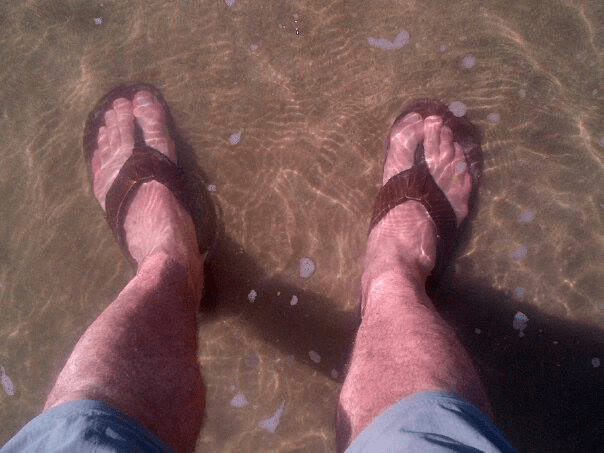
I like flip-flops. I grew up on the beaches from Long Island to Virginia, so I’ve been
wearing them since I’m a kid. I actually had one pair for ten years, sometimes rigged with a thick
paperclip to hold them together. My feet from April to October have a thick white stripe across
the tops seen only when my flip flops are off. I teach in them. I walk in them. I even mow the
lawn and chop wood in them. Despite what many have said, they are not the cause of the blade
Tarantino-ing my ankle. I don’t remember my foot slipping. I do remember almost not going out
to cut the underbrush to begin with because I couldn’t find my flip flops. What a different story
this would have been had I not come across them on the back porch. 

When it happened, blood exploded like water in a hose that’s been held back by bending
and then released. My ankle, foot and flops looked as if dipped in bright red paint. I hobbled the
six hundred feet to the back of the house to wash off the wound, bandaged it, then went back out
to cut more wood; I was wired from adrenaline, my ankle didn’t hurt too badly, and to be honest
I had a lot to do.

That night I iced it. I kept it clean. I was fine. Really.

A week later my leg was pitting a bit when I pushed my thumb into my shin. Excess fluid
I figured. Prior to the whacking, I had been running up to eight miles a day, prepping for the
Rock and Roll Half, so one evening when I was feeling a bit more hyper than usual, and the
swelling moved to both legs—a feat I could not comprehend from injuring one ankle, but I don’t
have a medical degree—I stopped at Kroger and spotted a blood pressure machine. This can’t be
right, I thought, when the first reading came up 270 over 190. I did it two more times and both
readings came pretty close to the same. At the checkout I let them know the machine was
broken. We all laughed at my numbers—even the bagger laughed and put the laundry detergent
on top of the bread. It was that funny.

The next day, worried about my ankle, I washed off my flip flops and went to the doctor.
He took my blood pressure. Again. Again. He asked why I was stupid enough to wear flip flops
while doing yard work. I pointed out I wacked myself above where any shoe would have come
anyway. He asked if I were doing cocaine, heroin, or any other substance, asked if I had
shortness of breath, dizziness, if I had thrown up, fell down, or otherwise felt corpselike. He took
my blood pressure again. He asked how long I felt hyper. “Years,” I said, and he took my
pressure again. Then he sent me to the emergency room. Average BP—260 over 175.
Tests. IVs. Tests. On and on it went for several hours. Nurses came, two doctors stopped
by, some punk there to visit a friend who had overdosed came by to check out my vitals because
my blood pressure was the talk of the ward. The nurses upped the meds. Finally the doctors said
based upon my blood vessels behind my eyes and various tests, my blood pressure had
apparently been that high for probably some years, and that if it wasn’t for the fact I’m totally
healthy otherwise with excellent results from blood and other tests, I’d have had a major stroke.

I asked the cause. The doctor shrugged. Genetics; in a high stress situation for far too
long; a combination, he said. They brought it down to 190 over 95 and sent me home with meds
to bring it back to normal. They told me to keep exercising and that because of my medicines I
could do the marathon, but to be clear, I’m going to be very weak for awhile until I adjust to a
life where I’m not pumped on triple doses of double shots coursing through my veins.

A few weeks later at a follow up where my pressure was at 110 over 70 the doctor told
me in complete agreement with the cardiologist and another doctor, had I not gone in, I’d have
most likely had a major stroke trying to run the half, and probably would be dead. I asked why I
didn’t have one while doing the eight miles a day prior to the Great Sickle Incident, and he was
quite professional about it: I don’t know, he said. I really don’t know. You should have. Good
thing you wacked your ankle, he said.

Yeah, thank God I wacked my ankle. And I thought how often that happens. Good thing I went back for the keys. Good thing I stopped for coffee. Good thing you kept me on the phone, or I’d have been at that intersection just at that moment.

“Good thing I watched Monday Night football on the 10th and overslept: I work on the
85th floor and I’d have been right there,” the stock broker said in the street to the television crew.
As the towers tumbled, he counted his blessings.

Good thing Larry Silverstein, owner of the lease of the World Trade Centers, has a wife
who made him go to his dermatologist appointment that morning instead of yet another meeting
in the North Tower.

Good thing Chef Michael Lomanoco of “Windows on the World” broke his glasses and
had to stop at Lenscrafters that morning to get them fixed.

Good thing Lara Clarke stopped to talk to her friend, actress Gwyneth Paltrow, in a
chance meeting down in the village that morning making her late for her job on the 77th floor.

Thank God singer Patti Austin, booked on flight 93, had to leave Boston a day early
because her mother had a stroke and she had to get back to San Francisco on the 10th instead. “I
went back and forth all day about when to leave,” she said.Thank God actress Julie Stoffer and her boyfriend had a wailing fight that morning and
she missed Flight 11.

Actor Mark Wahlburg is still haunted by that same Flight 11 to LA, which he missed at
the last minute when an 11th hour invitation to a film festival sent him to Toronto instead. He has
nightmares thinking about who took his place on the flight. He would have been sitting next to
Family Guy creator Seth McFarland who also missed that flight when his manager gave him the
wrong boarding time and he was fifteen minutes late. He, too, still has bad dreams, he says. But
thank God, he says.

It’s chance. It’s the phone call, the caught light, the traffic backup. It’s changing your mind. It’s
sticking to the plan. It’s oversleeping, insomnia, an upset stomach. It’s a few seconds. It’s the
wrong shoes. It’s the stroke of luck.

Blood Phones

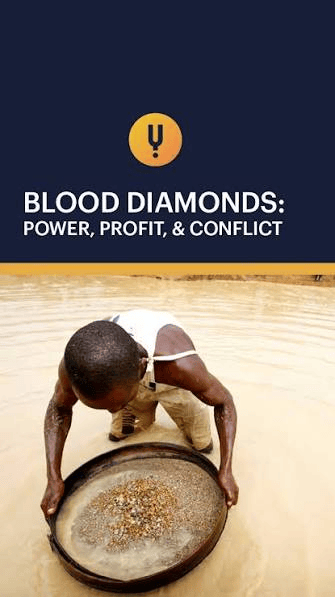
The problem, of course, is we can do without diamonds, and with global protests against the mines in places like Botswana, conflicts which spilled over into warfare, and exposure with movies like Blood Diamond, we are more than aware of Conflict Diamonds as they are so casually called.

But try telling someone to go back to a landline and ditch the smartphone. It’s laughable despite the mining conditions for a phone’s essential cobalt-powered lithium battery being far worse than diamond-mine workers could ever imagine. But, geez, it’s my smartphone; not giving it up.

It is time to accept the fact you’re not going to give up your cell phone or the electric car you have your eye on, even though they are the result of a slavery system in the Democratic Republic of the Congo.

Facts:

The DRC produces roughly eighty percent of the world’s cobalt supply, and has nearly half of the world’s reserves–more cobalt than the rest of the world combined. While the US gets most of its cobalt from Norway, Finland, and Japan, they are processors who take the supply of the metal mostly from the DRC.

So we understand each other, our smartphones and electric cars need cathodes for high-performance lithium batteries, and the primary component in cathodes is cobalt.

The Problem:

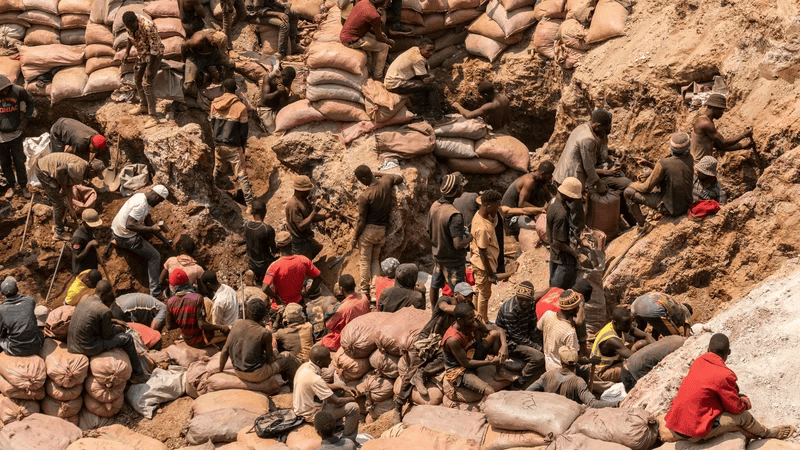
While some mines use heavy machines to do the work, about a third of the mines are so-called “artisanal” mines, where the work is done by hand by “freelance” workers. Roughly forty percent of the workers are children in unregulated pits, and most of those mines are owned by Chinese companies. The dust and grit from the mining gets in their lungs and kills them; and worse is that cobalt is toxic to touch and breathe. Hundreds of thousands of local people–mostly young women and children–mine the material for a few dollars a day, which they then must use to pay their way out of the mines to send home whatever money they have left, leaving them mostly in debt to the companies, much like share cropping or even slavery, and abuse is normal, including whippings and rape. This is from Siddharth Cara, a fellow at Harvard’s T.H. Chan School of Public Health. He insists after two decades of research and investigation that there is “no such thing as a clean supply chain.”

Some twenty-thousand people work at just one artisanal mine in the Lualaba region of the DRC. Armed forces are assigned by the government which is being paid serious money to make sure the mining continues and so-called overseers oversee the production much like overseers of slavery.

I was in the Lualaba region, very briefly, forty years ago. None of this was going on then, and the hills remained green and tranquil. I wondered what it looked like now so I looked it up on my smartphone, whose innards are built with the cobalt from this region. Guilty.

We won’t buy so called blood diamonds because of how they are mined, but no one is suggesting we boycott the companies who support this system of slavery pillaging the earth so we can have electric cars to protect the environment, and so we can have cell phones made from material mined by mostly starving children to be able to call our kids to make sure they are safe.

These phones, these cars, are available to us because of the spilled blood of people overrun by government troops, gathered up and moved to the mining district. The only true solution other than not using cellphones or buying electric cars is to pay the workers a real salary; formulate true working conditions so they can work with dignity and have a normal life. But their current salary is not expected to rise anytime soon. Of course not. It’s the DRC, the southeastern region of the Congo, one of the most dangerous places on the planet mostly because of these cobalt mines.

Samsung remains the largest manufacturer of smartphones.

The executive in charge of devices is Roh Tae-moon who earned roughly $4.5 million dollars last year.

The average cellphone costs about $571.

The average worker in the mines makes about $1.55 a day.

The average price of milk in the DRC is between $1.25 and $2.09 per liter.

At this point you might as well go buy that diamond you had your eye on.

Shabara Artisanal Mine, DRC