It’s difficult to know what we are capable of. No one instructs us early in life on how to recognize the difference between “that might be doable” and “you’re wasting your time and absolutely kidding yourself.” The only sure way of knowing is doing.
Some legitimate guidelines help. Finding people who already know what they’re doing either through experience or expertise; hopefully both. Taking your time and going step by step without feeling overwhelmed by the big picture of the final product. When I was young and learned tennis and guitar—both mostly self-taught—watching professionals was a double-edged sword. On the one hand I felt inspired to push hard and keep pursuing those goals. Clearly it had been done before so this isn’t a fantasy. At the same time, there is reason enough to quit whenever I watched the pros play tennis or guitar and then I’d move with confidence only to annihilate my six string or hit a ball with the corner of my racquet and watch them both fly into the net.
Each day, though, a little more, a little better. Someone nearby to tweak the progress, some down time to recognize that the difference between never having attempted such a foolish ambition and where I was at was growing, and the reach from where I was at to some form of success was rapidly shrinking. Day by day.
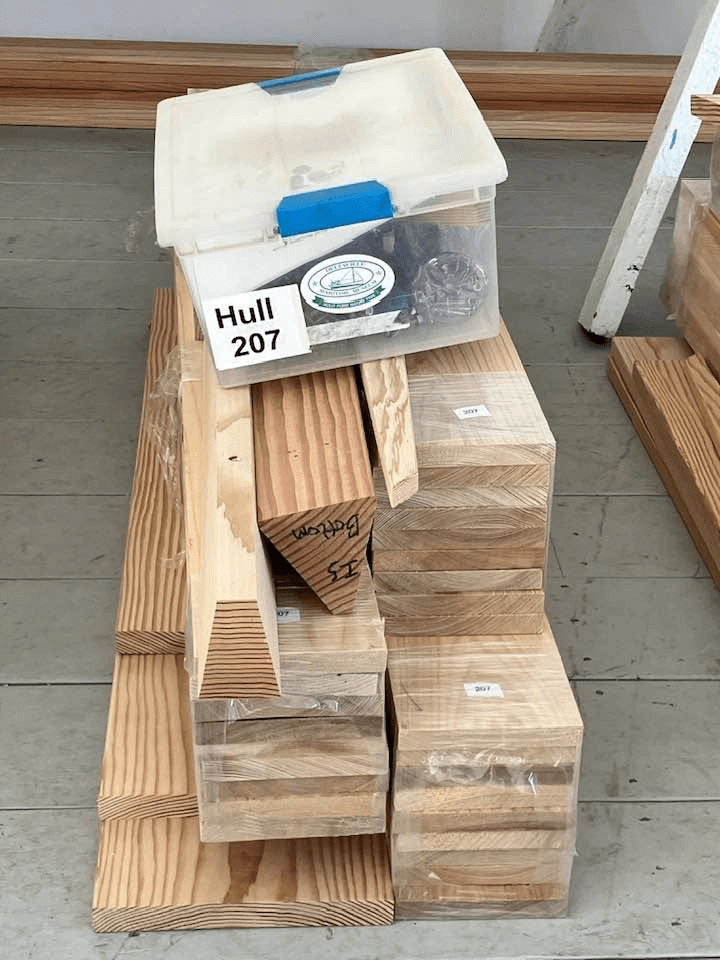
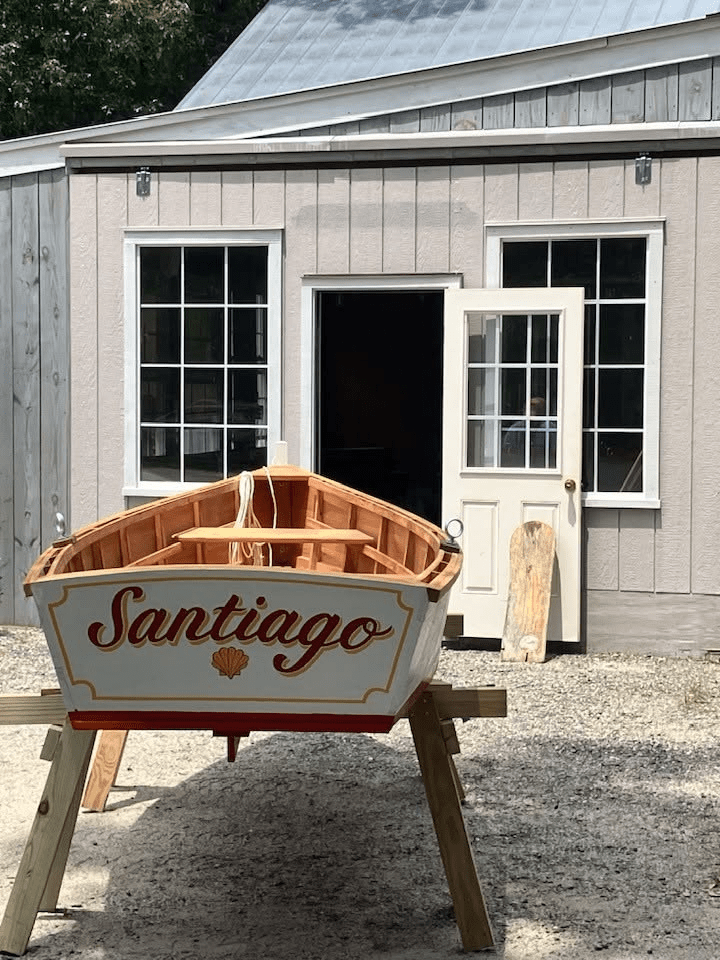
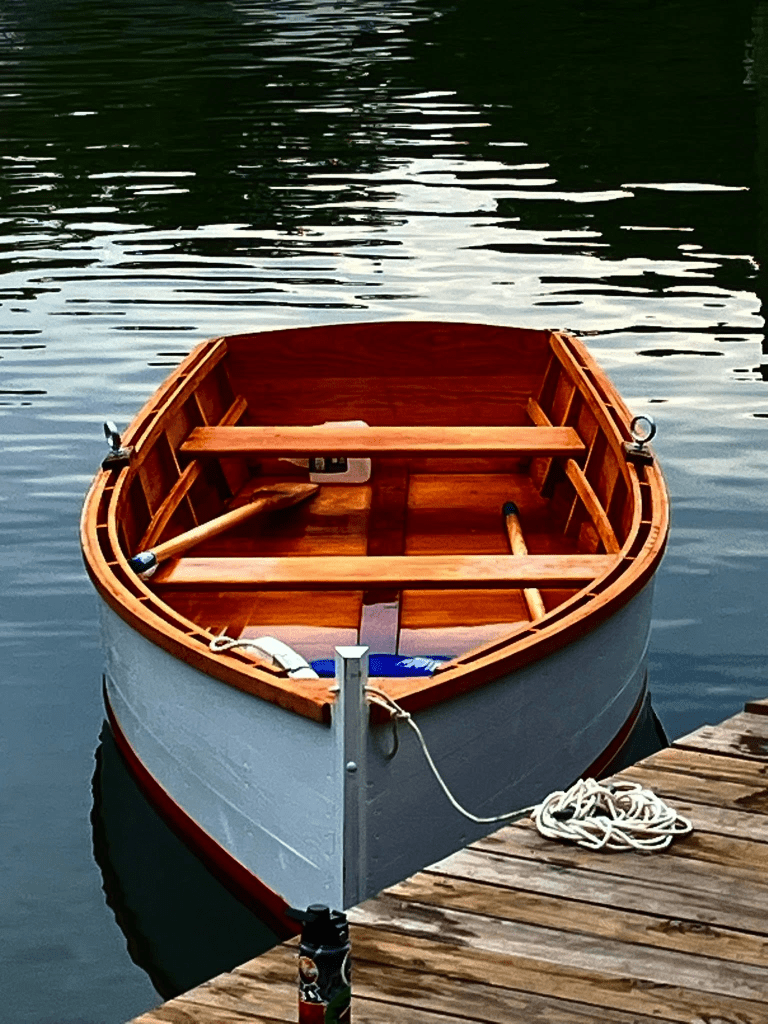
My son and I built a boat last week. Took about four days. It’s a fourteen-foot Wright Skiff with three benches, bumper rails, and other cool things which have nautical terms. We named her Santiago, after the city we reached on our pilgrimage along the Camino de Santiago in Spain, and after the Old Man in Old Man and the Sea, whose skiff looks just like ours, minus the sixteen-foot marlin carcass strapped to the side.
Still, we followed instructions printed out and had a half dozen expert boatbuilders on hand to walk us through it all. This stands in direct contrast to my life as a writer where every day I begin with a blank page and toss some verbs on there to see what happens. I rarely reach the same or even similar results. But we built our boat—Michael actually did the work—along side seven other teams and the boats all mostly look the same save some cosmetics and bad measuring of the floorboards (them, not us, I think). It reminds me of how far apart math and creativity often are. Follow the instructions, follow the formula, the builders begged of us. You can’t do that in writing (unless you’re James Patterson or EL James).
Of course, it wasn’t about the boat. We spent a week working together, switching on and off, recognizing each other’s strengths, helping, encouraging, laughing through it all. It is one thing to find out what you’re capable of; it’s an entirely other milestone to find out what you’re capable of with someone else, particularly your adult son.
I’m certain I cannot follow instructions for the next level craft—my forty-one foot Morgan Outisland or my aircraft carrier. But I’m equally certain I can do more than I thought I could just a week ago.
There’s another difference in the arts vs construction conversation. My last book, for instance, has a dozen different versions with various misfires along the way, and from them I tried something else, tossed more than I should. The book before that had originally been written as a series of twenty-three letters to my father. At some point someone I trust in the writing world asked why they were letters and I couldn’t answer her, so I rewrote them all as one long narrative. It is better. It is different. I’m not sure. But stray from the guidelines in the Skiff Manual and not only will six experts make it perfectly clear you are screwing up, they’ll cut and clamp and tighten until you are right back where you started. Consistency is the value of learning a new skill, except writing. Maybe.
Still, last night I walked to the dock and looked at Santiago floating patiently, and I glanced across the creek to another skiff where she rested calmly. They’re not the same at all, I noticed. I immediately saw my muscle-taut face holding two planks of wood together as Michael drilled a pilot hole followed by a screw, then another, and another, until we moved to the next board, satisfied. I saw the rising adrenaline each morning on the way to the boathouse, the growing confidence, the sense of accomplishment from perseverance.
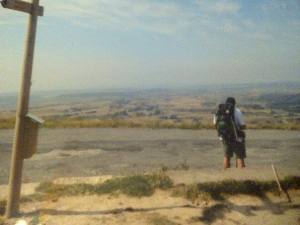
I stared down at Santiago and saw us in the Pyrenees talking quietly as we moved across dozens of kilometers every day. The heat of Galacia, the wonder of entering Santiago and continuing to the end of the world, Fisterra, and back. I saw us crossing fields of hope and dreams in Siberia, and I could see back even further, staring into our skiff we build this week with no prior knowledge at all of building even a Lego boat; I could see Michael at five when we first started walking these docks, taking pictures of sailboats, and later when we bought a canoe and sculled the Rappahannock and creeks.
At some point we don’t think we’re capable of anything. Writing a book, climbing a waterfall, driving a car, being a father, building a boat. But with the right advice and a lot of patience, we move forward, half the time thinking we’re making it up as we go, and the rest of the time knowing we’re just following instructions.
It’s good to find out we’re capable of more than we thought. It’s good to build a boat. It’s uncanny where that little skiff has already taken me.


Congratulations to you and Michael for the time you spent constructing a boat. Santiago is the ideal name for this skiff. You and your son are truly gifted!
LikeLike
you’re a dang good writer.
LikeLike
Bob and Michael, Congratulations on your mighty fine boat! You are both talented and patient. Your Harrisonburg Fan,Diane Goss
Yahoo Mail: Search, Organize, Conquer
LikeLike