Present Perfect

This picture shows only half the width of the tree

We walked around a tree so wide I could have parked a few cars in the trunk. The sapling of this Redwood broke ground no later than about the time of St Francis of Assisi and as early as the time of Christ. So when I was born, the tree had already been on the planet between eight and twenty centuries.

It isn’t the biggest one out there.

The waves which carve the Devil’s Cauldron and other such monoliths and stone formations along the west coast have carved the rock for millions of years, crashing in the same current we watched from the side of the Pacific Coast Highway. Understand, I’ve lived along the ocean my entire life and during my teens spent as much time in the water as I did out, but the Pacific has a different and very separate vibe, like it pulls itself out of the Mariana Trench every morning and explodes across the world toward the California and Oregon coast. It moves with seeming purpose and focus. This Pacific World is permanent, the infinite motion, the endless ebb and flow.

Along the reach in front of the Sunset Beach Hotel groups of people come and rake designs in the sand; circles and flowers which at first appear from a hundred feet above as individual and unrelated efforts, but they eventually join as volunteers meticulously shape the paths and designs, and in the center of each they place shells or other marine findings. When it is finished (or even before they are through) people line up or jump the line to follow the paths around like a sand labyrinth, seldom cheating, seldom hurrying others along. It is meditative to follow a brand new path no one has walked, and then to watch the incoming tide slowly swallow the western edges of the design, reaching up further each time, waves like hands reaching up and erasing the sand, smoothing it out, establishing for us all the impermanence of life, ironically through the rhythmic tides which are as old and permanent as the earth itself. 

Then we looked for sand dollars and sea glass. 

I have far less years ahead than behind. My last book is a memoir of an event I can remember like it happened this morning, yet it takes place forty-five years ago. Life in the past seems so swift because we can recall a moment instantly and transport ourselves to that event with a blink. It leaves the illusion that time went by fast, which of course it did not. To make matters more complicated, two people can perceive the same event, in the words of someone I know, completely differently. But the future is much more predictable for its absolute mystery. When we think ahead no one knows what will happen, how we will get there or even if we will get there, so we think ahead in slow motion, watching the mysterious and unrevealing turns in our lives. Ten years from now seems like a long ways away; ten years ago happened just before lunch. We are permanent; we are passing through.

The world is a mess. The events happening now have curbed my ability to travel to so many places, and the ripple effect is depressing by degree. But out on the Oregon Coast, those places of turmoil and the tyrants who cause the chaos no longer existed, and even the East Coast version of me seemed to slip away, leaving only the part of my life that understands the tough balancing act between the permanence of the ocean and the brevity of the lines we make in the sand. 

For all of the eternalness of the ocean and the trees, at least from our perspective as they certainly precede and last longer than us, it is our own mortality which makes even the oceans seem to be here but for a moment. Funny how some things in life you once thought of as permanent turned out to be a phase, proverbial ships in the night. At the same time there is a certain comfort in those transient moments which keep returning and again returning which make life tolerable. Love, at its very core is as eternal as the elements, yet can appear fleeting. It isn’t. It is always there, just below the surface, still growing from what was once a sapling, a chance encounter. Still pulling itself together from some place deep inside and far away, rushing across the surface of our years to our lives now. And like the deciduous redwoods which go dormant each year despite their longevity, often who we really are remains quietly below the surface waiting, just waiting.

But that’s vague and ethereal, which goes over my head more than often than not.

So listen: I only know this: I am alive now, awake and aware of my mortality and my chance, still now, to live life on my terms, at my pace. It took very little out west to make me feel completely aware and in the moment; I had no cravings for things or special meals or information–especially not for information. I learned again, for I have learned this lesson as many times as I have watched the waves pound the sand, to be present, aware of who I am, who I am with, without worry of words or silence or formality of casual moments. Absolute comfort without even understanding the transition.

And that’s all I know.

I was that rarest version of me: me one hundred percent myself without the need to “present” myself anything other than who I truly am; something which I no longer thought was possible. Allowing myself to relax and let go made me aware of how those times which squeeze our soul are as transient as the wind, and all that was left was who I really am. I have learned that lesson many times along the shores of the Atlantic and rivers around the world, but this time I had all the ingredients to understand. Time is not so persistent that it doesn’t allow us to learn more about ourselves at this point in life. One can be as old as the oceans yet as young as its waves.

That sounds really good but I’m not sure it means anything.

The truth is everything it seems is as old as the redwoods, including me, and everything as temporal as the paths we make in the sand as the tide is rising, including, of course, us all. There are certainly battles along the way. The Redwoods have fought fires, floods, typhons, earthquakes, and more, and for our part, there are personal battles which often make us feel like no wave can wash away our pain. But, of course, we survive and move on, a little closer to who we will eventually become if we just allow ourselves to, with apologies to Dan Fogelberg, “Be who we must.”

Grandma Moses was right: Life is what you make of it. Always has been; always will be.

Bob Marley was right as well: Everything’s gonna be alright.

A Thousand Years Ago

I miss the last millennium. I miss when students had to register by coming to the college and meeting with an advisor or faculty member or dean. The day registration opened, a line would form around the admissions building by six am, and some would be there for hours on end hoping to get their schedule. When I was a student, we all showed up to the basketball arena where tables were set up with members of various departments holding cards for each class. We’d be called down by seniority, and on the floor I would walk first to the Journalism faculty where one of the profs would give me a card for their course. I remember distinctly going to the Earth Sciences table where I asked for a card second semester senior year for a class I should have taken freshman year. The professor gave it to me and laughed. “When did you figure out you can’t put this off any longer?” he asked. “I’m still working on it,” I said, not kidding.

But in those seats waiting to be called to the floor, or in line wrapped around the buildings and often clear out to the lake on campus, students talked to each other with time enough to have deep conversations about where they’re from and what they are hoping to do with their lives. Friendships were made. My first day freshman year I came out of the dean’s office and a beautiful woman my age in a tie-dyed t-shirt and cut-offs leaned against the building trying to figure out her schedule. She looked up and said, “Hi, I’m Liz. Did you just see Dr. Jandoli?” I said I had and she asked for help. We talked for a few hours and I suggested some courses she might need to take, and the following Monday she found out she was in every single one of my classes. That was forty-seven years ago and she is still one of my dearest friends. The thing is, we talked, and by the time classes started I had a half dozen relationships already underway. And likewise at the college where I taught, I’d walk into class that first day and everyone was chatting away the time, having met and bonded while waiting in line. There is value in waiting, in having no device to occupy your time. But those days are gone now.

I miss those days in that long ago millennium when I might not see a friend or relative, or often enough a sibling or a parent, for weeks or months at a time, and when we did finally see each other again having not had the ability to communicate in any way other than what was not yet known as snail mail, we would practice the lost art of “catching up.” We’d sit into the small hours of the morning and swap stories about people we met and what others we knew were doing. We’d talk about mishaps and adventures, about what we missed and what we discovered. There was tremendous value in being out of the loop for months on end. You found out just how much you missed someone, you found out just how much you can handle on your own.

If the devices available now were available then I might never have lost touch with some people, one for twenty-two years, and we would have remained close and never learned just how much we value in each other, we never would have discovered how much we needed to learn on our own. Friendships can be destroyed by overuse. Certainly they can burn out. But in the last period of the second set of a thousand years, you looked for payphones, your asked directions, you waited in line for coffee, for meals, for God’s sake for everything. You understood the need to yield to others, you waited for the green, you waved someone else in, you had long periods of absolute silence. Silence is dead now, and when I asked my students how many minutes a day were they in complete silence other than what is heard outside such as cars or birds, only a few had any silence at all and even then for only a few minutes.

I miss the last millennium for the music I discovered by sliding up and down the radio dial while a friend drove us absolutely nowhere in particular. I miss the need to go to a theatre to see a movie without the option to simply stream it at home. I miss having no idea where I’m going and needing to ask for directions, during which I found out more about where I was and where I should go. Before GPS a friend of mine and I were doing readings in Cornell, New York. We got lost and discovered Vladimir’s Book Barns which could contest the most historic of bookstores anywhere, including Strands. Vlad suggested we find Dave’s Fish Fry to eat, which we never would have found on our own or, for that matter, online. By getting lost and not having a cell phone for directions or assistance, I have met indigenous people in the Sonoran Desert, talked for an hour to a Gambian in line at a post office in Senegal while waiting to use a phone, and wandered around a Virginia Beach college campus looking for a phone to call AAA to come get my car and ended up with a job.

We have lost the art of getting lost, of asking for help from others. We stopped stopping people on the boardwalk to ask them to take our picture only to find out where they’re from and what we might have in common. I have friends all over the world, and the vast majority of them are because that’s what we did during the last millennium–we talked to strangers, we hitchhiked (that’s an early form of Uber where you didn’t have to pay anyone), we walked inside Chick-Fil-A and Starbucks, we turned to the student next to us and asked her major, where she was from, her name. I once asked my students during the last week of classes what the names were of the people sitting next to them and not a single one knew anyone else’s name.

We may not have been nearly as technologically savvy during the last semester, but we were human, and we could use more humanity these days.

Someday We’ll all Understand

pexels-photo

It’s mid-April and the semester is nearly over. I’m in a café near the Bay thinking how I’d love for this place to be open at night, late, like 4am, and sit and have beers or wine and talk to strangers about where they’ve been, literally and figuratively. It kind of reminds me of a place I used to go to that burned down in Russia. I’ve been thinking a lot about St Petersburg lately as it is.

Then this past week in class we talked about the students’ lives–what they’re into now, what they hope for, what they have planned and what they can’t yet fathom.

“Did you always want to teach college?” one student asked.

“I NEVER wanted to teach college,” I answered, and they all laughed. I didn’t.

“Funny,” I said, “but I’m working on a piece right now about how few extraordinary things in life ever are the result of ordinary pursuits.” I thought about the jobs I’ve had, the places I’ve been and some of the people I have been lucky to know. “What do you remember?” I asked.

They stared at me.

“Tell me a story about something extraordinary in your life.”

“You start,” the student said.

Okay.

“There a bar in the woods in Russia. We called it The Shack because it had no name.”

This happened about twenty eight years ago.

Just off the Gulf of Finland not far from an exclusive hotel but well in the woods was one of this world’s coolest bars—a dive really—a place to drink and sing and meet people you’d never want mad at you. It was small, with broken-down shed-like walls and windows which barely kept out the storm blowing off the Baltic one May night in the nineties. It was well after midnight and we ordered a bottle of Georgian Merlot and several plates of shashleek, a Russian shish kabob dish. A gypsy band showed up, including a guitar and violin player I’d met before along with a friend of theirs, a woman singer. Hours passed as we sang and drank. There were four of us, three of them, a waitress, the owner and his cat, and we sang and drank while what must have been that hurricane from The Perfect Storm slammed to shore. This duck blind of a building sat under birch trees, but that simply made me more aware of the weather, wondering when one might topple through the roof. It was exhilarating, an adrenaline rush that had nothing to do with the wine. It was being alive, right then at 3 am, with total strangers, live gypsy music, Georgian wine, and shashleek, that kept us awake. It felt dangerous, subversive, but it was just a bar in the woods.

The band took a break and came to our table and we spoke in broken Russian and English about the storm and how we hoped it wasn’t high tide soon since the water was just a few hundred feet west, maybe less. Then Alexi, a two hundred eighty pound drunk Russian who hated Americans started screaming at us like he had the first time I ever met him, the first time I walked in the place a few years earlier. He had kept to himself mostly since then, sometimes talking to me, mostly not, but this night something got under his skin and he screamed at me like he did that first time, “I hate Fucking Americans.” He startled me, but he had a drink in front of him, and another regular customer, a friend of the gypsy band, was sitting with him and told him to quiet down so he did.

But then I saw his eyes. They were deep and vacant, like he’d seen a ghost, and when he saw me watching him he stood up and said, “I hate fucking Americans!” and he tossed his beer at me. Sasha, the guitar player, stood up and yelled at him in Russian. But just then thunder, with a sound like the sky opening up and dropping two tons of hard earth on our shack, rattled the walls and ceiling and we all cringed. I thought for sure one of the birch trees cracked and was going to kill us all. I went down on the floor with my friends and the gypsy band, and Alexi cursed and fell against the back of his chair. He suddenly looked so small, and the thunderclap crashed on us again, this time blowing open one of the windows, and rain and wind sheered a path across our booth and against the other wall. Dima put his violin under his coat and our shasleek flew off the table onto the floor. The shack cat went for it but the wind and rain chased him back under the bar and into his bed.

Another flash of light lit up the shack and Alexi was trying to hide under his table but he was too big, and just as he glanced out the window on his way to the floor, he stopped and stared. I was watching him, and he looked out the window for some time, then looked at me, and with a nod he said, “Horosho. Horosho” which means, “okay. It’s okay.” And he looked out the window again when the window slammed back and forth. He grabbed it before it hit him and he held it a second, staring out over the Gulf. He looked at me as if to ask me to come see but he didn’t know how. Instead he closed the window and latched it again and turned and sat down. He nodded to me, “Horosho. Edeesuda.” It’s okay, come here. A few of us gathered and sat at his table, and Dima took out his violin. Alexi smiled at me, looked out the window and peered with a stoic face, then turned and smiled again. He looked at the waitress and said “pivo,” beer, and he motioned to us all so she brought us all beer. The rest of the night we laughed and sang songs. I asked Alexi what he saw outside but he just nodded at me and said, “I hate fucking Americans,” and we laughed and toasted and Dima played, then Sasha joined in and then the woman singer, and the beer tasted good. Alexi sat quietly the rest of the night.

“The storm passed and the sky quieted down. So here’s the thing,” I said. “I almost had stayed at the hotel that evening, turned in early, read in bed. Those are all good things, quiet ambitions which keep me grounded and invested in whatever happens next. But that night I didn’t. Like the time we went Ghost Hunting at midnight at the Saint Augustine Lighthouse, or when my son and I sat up all night in the town square of Portomarin, Spain, because we couldn’t find a place to stay. One time a friend of mine and I hitchhiked to Niagara Falls and it took no longer than it would have to drive, but coming back wasn’t so lucky; we walked for eight hours along dark roads through small towns. But if we had been given a ride right away, I’m not so sure I’d remember we even made the trip to begin with. I rarely remember the path; I remember the sudden left turns, the spontaneous jumps.

Sometimes you have to stay up until dawn to understand what’s hiding behind the night. It’s the rest stop at three am with two truckers and a couple of local high school kids farting around; or the sound of wildlife in the desert brush, or tall pines scraping together in winter in the woods with no light but the moon. It’s walking up an Arctic Path at four am in snow-deep March with Northern Lights bouncing past like a bull whip; or lying on my back on a cot in a compound in Africa beneath more stars than could possibly exist, the distant sound of someone chanting the Koran. It’s walking out of a shack in the woods after a storm passes, the sun just lifting over the raised bridges, ears buzzing from loud live music.

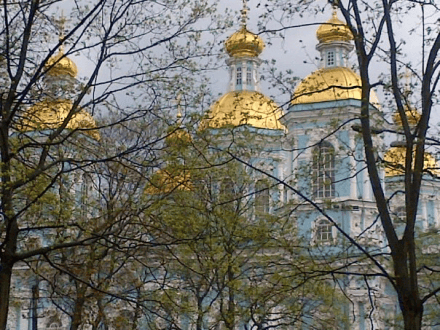
On that night, we stood for a second in the quiet morning light, the four of us, and we watched the sun rise over St Petersburg, then we walked home and started an ordinary day.

The students stood to leave. I said, “I’ll leave you with a quote from the philosopher Dan Fogelberg: ‘Be who you must, it’s part of the plan.'”

On the way home, I stopped for a beer.

neva-river-opposite-the-peter-and-paul-fortress-at-sunrise-in-st-petersburg

I Can’t Trace Time

aerie one

Back to this wilderness.

It occurred to me one day on my porch while staring at the surrounding woods, that at some point less than one hundred years ago none of those trees were there. The land has beautiful eighty foot oaks, some maples, tall thin pines and various other hardwoods including black walnut trees, which I am told can provide the ingredient necessary in the liqueur, Wild Spiced Nocino.

The branches protect birds as diverse as red-tailed hawks, downy woodpeckers, and countless chickadees, and they are habitat to other wildlife including one flying squirrel we spotted a few years ago when his tree fell. The squirrel was fine and found a new home in a white oak.

But a hundred years ago this was just land, sandy land, edged by the running Rappahannock River and backed by equally treeless farmland. A century before that these nearby plantations provided food for the region at the expense of slavery, and some slave descendants remain, selling vegetables at food carts out on the main road, or working the bay as watermen, telling stories about how the Chesapeake is just about farmed clean every season by crabbers at the mouth or the headwaters leaving nothing left for those working the midland shoals.

This area hasn’t changed much in one hundred years.

It is like this everywhere, the coming and going of things. In Manhattan a few hundred years before the wild construction on bedrock, coyote and deer were common. It was hilly (Manhattan means land of hills), and where the United Nations stands once stood grand oaks. The Lower West side was a sandy beach, and ecologists say if left to do what it wanted, most of the upper west side would be covered in trees and vines, shrubbery and wildflowers inside twenty years.

I can’t imagine what my house would look like if left untouched. When I don’t mow the lawn for a few weeks it looks like a refuge for timber wolves.

But these trees weren’t here a century ago and I sat on my porch and wondered if there had been other trees or if this land was barren, or was it used by the Powhatans, or was it home to some former slave family, or just a dumping ground. Evidence is scarce, buried beneath the roots of this small forest.

This happens to me everywhere I lived; I like to imagine what was on that spot one hundred, two hundred, a millennium earlier. The house I rented in Pennsylvania was used as a hospital during the civil war. Before that it was a farm. Now it is a Real Estate office. The maples which lined the road and shaded the living room are gone. Someone planted new ones but it will be decades before they mature. My house in Massachusetts was a fish market a century earlier. Purpose moves on with time. Maybe that’s why I’m so mesmerized by the Prague hotel I always stay at. It was the same building seven hundred years ago that it is now. But here on my porch I realize this house is the only place in my life I’ve lived for twenty years, and I was curious if five times that score of years ago I could sit on this spot and see right out on the water, or were there trees then as well, different ones which died or were timbered to make room for crops.

The house is made from western pine forested on land which I assume is either now empty of trees or filled with young pines waiting to become log homes. What will be left a hundred years from now? Will someone sit on this same porch and look right out toward the bay once these oaks have long fallen? I know this house, this land, is a “hotel at best” as Jackson Browne despondently points out. “We’re here as a guest.”

Wow. Wrote myself into some sad corner there. Thanks Jackson.

I know nothing is as permanent as nature, despite the constant changes. It simply isn’t going anywhere. We are. So I like to remember that a century ago farmers sat here and talked about the bounty in the soil, or talked to 19th century watermen about the changing tides. And I like to realize that a hundred years before that the nearby swampland, now home to so many osprey and egrets, was a major route for runaway slaves. They’d have been safe in these woods, if there were woods then.

I like to do that because it reminds me a hundred years from now perhaps I will have left some sort of evidence of my passing through; even if just in the cultivation of language, the farming of words.

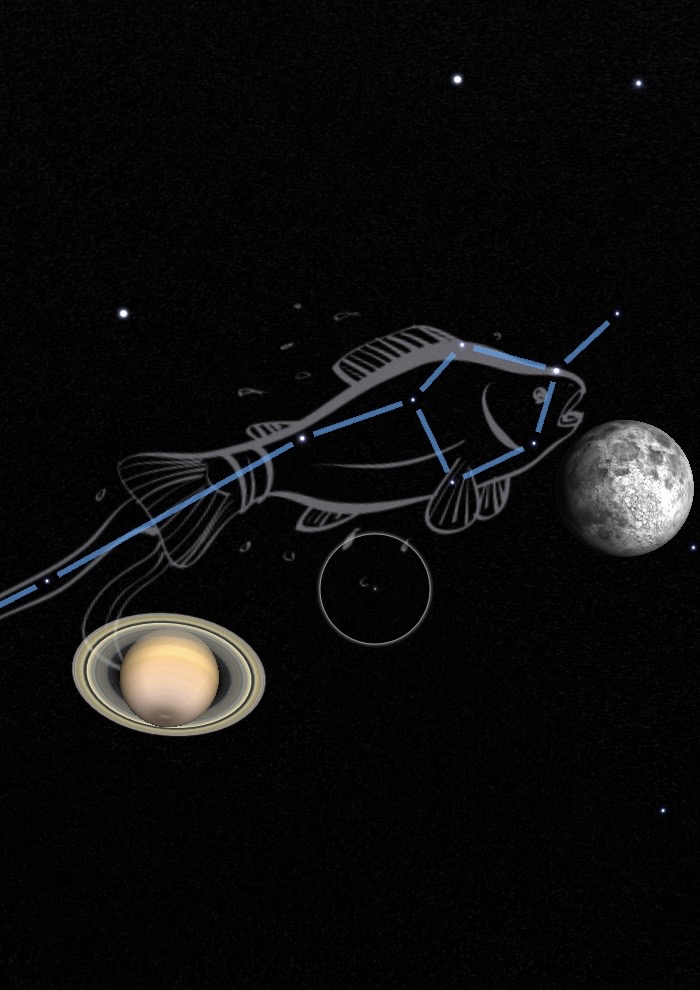
So I sit on the porch and listen to the wind through the leaves. It is now; it is right here, now. Sometimes at night we stand in the driveway with the telescope and study Saturn, or contemplate the craters on the moon—both here long before us and in some comforting way, long after we’re gone.

In spring and fall the bay breezes bring music even Vivaldi would envy, and I’ll listen to his Four Seasons, written nearly four hundred years ago, and listen to the wind through the leaves of these majestic, young trees reaching eighty feet high, and be completely, perfectly in the moment.

Despite the warming trends, the extreme tendencies of weather, the fragile ecosystem which sustains life, nature is still the only place I have found that really doesn’t change. It never has. Ice ages and dust bowls will alter it, but eventually some seed will take root.

aerie two

Old Dominion University, March 12, 2026

This past Monday morning I returned to classes at Old Dominion University for the first time since the day before the shooting which killed ODU professor Lt. Col Brandon Shah. On Thursday, March 12th, a gunman entered Professor Shah’s room in Constant Hall, where he taught ROTC students, and killed him. Classes were cancelled, Spring Break followed, and everyone left campus for ten days or so to process—or not process—what happened.

During break we received a stream of emails from the college president, the dean, the counselors, a colleague who has training and experience in trauma recovery,and more, all updating us on the actions of the college and reminding us of the availability of counselors, some of whom were set up across the street in the Chartway Arena. When I returned on Monday, a colleague sat with a counselor at a table in the lobby of our building and made themselves clearly available to anyone who wished to talk. They handed out blue ribbons of support, and their presence along with similar setups throughout campus reminded everyone that not only did something happen here, but not everyone will handle it the same way.

The very notion of yet another school shooting is actually somewhat abstract when it doesn’t occur in front of you; when the information you receive comes from the same devices which deliver the weather and Fortnight updates. While the incident occurred just a football field away, it is apparently only relative to those who were there when it happened, otherwise it might as well have been across the country.

At a table in the hallway on the floor where my classes meet sat a chaplain who wore a vest stating as much. I introduced myself and asked if anyone had spoken to him, out of curiosity. “They’re still processing” he said, which meant no. But my fears were about to be realized. They’re not processing this at all.

In some of those emails we received, experts, including counselors trained in post-traumatic situations, suggested how to discuss the events with students who might still be in denial, scared, in defense mode, or worse. One of the suggestions was to simply make students aware that it’s okay to talk about it but not necessarily talk about it then. In other words, business as usual but with a sense of awareness to the tragedy which played out just two hundred feet to the north.

I decided to go to my classes, pull my chair into the center of the room, and talk.

For too many years too many times on the news I have heard so many reports of how “counselors will be available” and “assistance will be available throughout the campus” or high school, or elementary school, and now this school, ODU, which is both one of my alma maters as well as my place of employment. Nine years of higher education and thirty-seven years as a college professor, yet this is the first time I experienced the presence of those aids. That’s a good thing, of course. I returned to campus and scattered throughout the buildings and outdoor areas were tables, counselors with identification about their necks indicating who they are, chaplains in yellow “Chaplain” vests. Blue Ribbons, Blue wrist bands. Boxes of Klenex.

I met one of the trauma specialists who introduced himself to me before class, who told me in front of everyone that he will be in the hallway if anyone wanted to talk.

I pulled my chair to the center of the room and I asked how their break had been, who had traveled, who stayed home. No one was going to bring it up, so I did. I said, “Listen, I didn’t know Lt. Colonel Shah. I have taught in Constant Hall several times and I know where the classroom is, but I was home when this happened and this is my first time back. But this hits close to home, doesn’t it? It does for me.”

Silence, of course. Honestly, at nineteen I don’t think I’d have a clue what to say either. So I put it out there. “Does anyone want to say anything about how this effected them?”

Oh my:

One girl was pissed because her math tutor is in that building and she had to miss her session that day and she has a midterm and isn’t doing well.

One guy shrugged and said he heard about it and was sorry for the loss, but it didn’t really affect him at all. “I’m not in ROTC.”

Another: Shit happens.

Laughter.

Complete indifference. It’s a reality show episode. It’s a reel on Instagram. It’s a minute ago so move on already.

During a break I asked the counselor, who could hear the entire exchange, if this was simply denial and some sort of defense mechanism, but he said he didn’t think so. That sure, for some of them, they truly are still in the denial stage and haven’t processed it enough yet to understand the implications of what happened, but for a growing number in his experience, the new norm is indifference. It isn’t a lack of compassion or even empathy; those are situational responses and they’re not necessarily ready to dial them up in a writing class. It is more or less “just something else that happened last week.”

Inside I wondered why everyone wasn’t outraged that one of their professors was gunned down closer to us in that class than their dorm rooms were. It’s not easy being a student today. Aside from the barrage of instructions and technology and demands, they are also part of a generation which grew up with shootings as daily news, guns in backpacks, violence as an alternative behavior, and media from movies to games which inundate us all with killings and destruction as entertainment.

I thought about one of my previous jobs as professor at Saint Leo University on the Little Creek Amphibious Base in Virginia Beach, where nearly all my students in thirty years were retiring or active-duty military who had served in the Gulf War, Afghanistan, Iraq, Kuwait, and some in Vietnam. I remembered how some didn’t come home, and some came home unable to function as they had before. I remembered one student who had been in three of my classes who went home from class one night and shot himself. But I always, absolutely always, felt safe in their presence, on that base—one of the most secure in the world. It never crossed my mind that anyone would come into the room and shoot me. But there, they all had stories like that, horrible and unforgettable stories which redefined their life’s narrative and reset the trajectory of their existence. At St Leo’s one time in 2009 or 2010, we talked about an incident in Camp Liberty, Iraq, when a solder went into a training camp during a seminar and killed five soldiers serving with him. In that class, everyone opened up about how they felt; they had been there and knew the value of sharing those emotions. On that night, one solider said, quietly, “I was there. I was at the clinic that day.”

The entire class at St Leo’s talked for an hour about how he processed it. Was still processing it.

Monday, I went back into class and some read their phones, some stared at the counselor, wondering, perhaps, if they should talk to him. I wondered if anyone wondered if they were supposed to feel more disturbed than they do and are worried about that.

I sat down and after some teaching wrapped up class. But before I stood up I said, “Listen. Seriously, everyone, please.” They were uncharacteristically present. “You’ve got three or four other classes still. It’s quite possible that you’re going to be in class next to someone who was in the room that day.” I waited. “It is possible that someone next to you in the next class was in the next room and heard the gunfire, heard the screams and chaos as other students your age subdued and killed the assailant. They may want to talk. They may just say that they were there, or maybe they’ll say more than that. They might want you to listen. So if that happens, listen—take the time to let them talk. Don’t say “I understand.” We don’t. Just say you’re sorry and listen more.

Two students broke down. A few others sat longer than they should, lingering like maybe they did want to say something after all.

Later the counselor told me that since they weren’t there, the indifference was prevalent. But when I suggested some friends of theirs might have been, certainly someone in a class might have been, their empathy rose to the surface and it became, perhaps for the first time, quite real to them indeed.

The world is a war zone, a failed project. These students sitting through their writing course with another four years ahead of them before “life actually starts” as someone once told me, are in it for real, wanting to change things, wanting to be part of something. I was glad to know that when it came to their peers, they were very much negatively affected by the possibility of violence.

Because they don’t know if at some point some other disturbed person will confront someone they know in some class and kill them. They do not know. Two weeks ago it seemed a mostly ridiculous notion.

Now it is part of their narrative. This is not the education they came here for.

Famous Last Words

I’ve run out of words. Out of ideas. Out of patience and interest and desire. I’ve run out of stories to share and any sense that any of those stories are remotely worth writing about to begin with. I’ve grown tired of getting it right, of editing, of restructuring and developing and trimming down. I’m over the clarity thing, finding the right noun, the more specific verb, eliminating obtuse modifiers, over the placement of pronouns and split infinitives.

I’ve said what I wanted to say.

Except to say this:

Every instance is miraculous to me. Every nuance of life, the breezes and stillness of a summer night, the aroma of honeysuckle, lavender in the air, the yellow of forsythia, the hints of orange and rust low on the horizon. All of it and more of it strikes me speechless and as often as I’ve tried to write about this I couldn’t do it justice. Time and again I ripped up or deleted the prose out of protest to my own lack of focus and ability. I should have been a photographer, bought the equipment and peddled my pictures to magazines and couples on the beach just before dawn–you know the shot, two people in the sand leaning against each other watching the sky lighten in the east. Before cellphones, couples remembered the moment by their presence, but now the moment is ever present because of the picture from the phone, so they no longer know if they recall that moment or simply the endless stream of “love this picture of you two” comments which flood their feed. But what of the shot from behind? The one of the two of them three feet from the water’s edge when the quick ray of dawn hits that small solstice space between their otherwise entangled lives. I could have done that instead of writing about dead relatives and other love songs.

It turns out what I’m best at is simply being present, watching the river run past, a heron searching for minnows and the osprey teaching her young to fly. I have mastered the art of taking it all in and the constant state of miraculous now which engulfs us every moment. But I tried writing instead because I couldn’t make money simply being alive, though I came close; but I could make money writing, teaching about writing, showing people some places I’ve been and what happened along the way, hoping they would sit back and say, “Yes, I know what you mean.”

Instead, I’m out of stories. I am starting to believe my last book took forty years to write not because it was so difficult but because I knew once that story was told I would have nothing left to say.

The story is told and I was right: I have nothing left to say.


Except to say this:

I have been working on a book about teaching. Well, it’s not about teaching, it’s about the best of and worst of what happens when you spend thirty plus years with twenty-year-olds and some of them go on to wonderous things while others die by their own hand, or their ex’s hand, or the random drop of evil. So I’m dealing with a publisher about that manuscript, but my mind is entangled in something that is a bigger deal to me, and that’s the “who gives a damn” factor which plagues writers from time to time, only this time the plague has spread into sentence structure and transitions and now its damned near everywhere. Even the pronouns are complaining; it’s always “I hate” this and “You suck at” that. And I’m also stage-deep in a play, a tragic play about the glory of hope, a one person play which I’m planning to premier in upstate New York but I ran into the “this kind of sucks” part of the writing process and if the book were not out I’d totally use the play as an excuse to avoid the book and most likely would finish the play, but instead the book is out and the play is pointless now. And my book about traveling, about the philosophy of being somewhere for a week or a month and being 100 percent present so that years later we remember every moment—that book, it is out there waiting for me to gather all the words and slap them into the correct order. But not today. It’s rainy and windy and there’s a possibility of tornados today, so maybe next week after coffee one morning.


You see what I mean? It just might be that all the other books and essays and readings and articles I’ve done in the past thirty plus years was a way to avoid finishing the book, and it worked, but now that that the book is done and out, everything else seems to have been a distraction from what I wanted to do originally, before the writing, before the planning and scheming and blind ambitions of a teenager, and that was simply to “live in the world, not inside my head” with thanks to Jackson for the line—to just take it all in at this rest stop as I pass through nature. Wordless. Anonymous. Present.

Maybe I’ll just head back to Spain.

After I get back from Oregon of course.

And Paris.

I feel as if my point—if I ever had one—has been made so I have no reason to go on with these unalphabetically disorganized letters.

Except to say this:

Everything I do seems to be prep work for something that I have not yet figured out. Or, to return to Jackson again, “It seems I’m just a day away from where I ought to be.”

Letty’s birthday would be Wednesday. Dave’s next week. Mom’s and Dad’s in two months, Dan’s a month ago, Cole’s in ten days. I’ve written about all of them. And about Joe, whose birthday was the day my last book, the one about him, kinda sorta, launched. So it can often feel like I’m all out of words, but this time it’s extreme, like the alphabet hasn’t even been invented yet.

But then a hawk flew by my window here at Aerie, and I read something about the Oregon coast, and I saw a clip of Lady Gaga singing “La Vie en Rose,” and I woke up. See, there’s no such thing as writer’s block, there’s only the lack of wind and the empty sails and that sense the doldrums are a permanent state of being. Then, softly at first like a fragment, like a clause, the wind picks up, then more, and suddenly you’re sailing wing on wing through compound sentences and everything, I mean all of it, falls into place and, as Dan notes, “There’s nothing left to say but come on morning.”

Except to say this.

In Convenience

1

Chapter One

Sandy stands at the cash register waiting for Jimmy to finish pumping gas. She knows he will come in and ask for two packs of Marlboro Lights, make some off-color comment, look her up and down, smile his creepy grin, and wink as he leaves, calling, “See you later, Babe.” So she gets the cigarettes ready and is glad for customers getting coffee and picking out food from the grill. She doesn’t need to be nice to him for very long if there’s a line.

Harry is standing at the rack of novelties near the door; trinkets such as lighters that look like fishing poles, key chains with toy turtles, and some stuffed animals on the lower shelves where kids can see them and grab them with slushie-coated hands and the parents will have to pay. Harry reads the headlines in the paper while sipping his coffee which he rests on top of the stack of Gatorade cases, and when it gets crowded, as it does every morning around seven, he carries his coffee and paper to the counter, places down exactly two dollars and eight cents (never in her hand, few people are polite enough to actually hand her the change, she thinks), says, “Thank you Sandy,” and walks out to talk to the younger watermen in the parking lot gathered around Billy Ray’s truck backed up to the pile of bags of logs for sale. It’s like this every morning. If it rains, they sit on the logs under the overhang.

“See you tomorrow, Harry,” Sandy calls back to eighty-something Harry, and is sorry he leaves before sixty-year-old Jimmy comes in since Harry usually engages the creep long enough to distract him so that by the time he turns his attention back to Sandy’s twenty-five-year old body, she’s waiting on other customers.

Jimmy enters and gets to the counter just before another customer, Patty, with her coffee and a small bag of donuts, as usual. Sandy puts the cigarette packs in front of him and rings them up. “Anything else, Jimmy?”

“Oh darling!” he says, a slight sound of drunk in his slur, but it’s just his way. He turns to Patty, “Look at how my girl knows me! No darling, just the cigs today.” He pays and starts to talk when Sandy looks toward Patty, who places her donut bag on the counter in front of Jimmy. “See you later, Babe,” he says and leaves, a chill running down Sandy’s spine.

Every damn day.  

Tracy the manager mingles with the customers near the cooler getting their cases of Corona and Bud Light and only once in a while some dark beer worth the money, with her small iPad strapped to her neck like a server’s tray at the old fifties style roller skating drive-in restaurants. She scans sandwiches and bagged pickles and some small cakes. The chips and soft drinks and alcohol are counted when the men who carried those cases in and out deliver them, like the chip guy, Gus, who rolls in six or seven cases of varieties of bagged potato chips in familiar and disgusting flavors. He leans on the boxes waiting for Tracy or Sandy or anyone willing to take a few minutes away from the constant line of customers at the counter so they can count the delivery and he can be on his way. “I’m leaving in three minutes” he might mutter sometimes, but, really, no he’s not. It just makes him sound more in control instead being forced to wait for the old woman at the register holding a twenty-dollar bill who seems to gain gratification by standing over the lottery tickets for far too long, saying, “Sandy, I’ll take a number three. How much is that? Oh, no, no. Maybe instead a number twenty-five. None? Oh okay, well let me see then…” and a line forms, so Sandy will say, “I’ll be right back,” and she counts Gus’s bags, sends him on his way, opens the other register and gets others on their way, sips her Red Bull and moves back to the old woman who still hasn’t landed on a number she likes. Eventually, the woman says, “Oh just give me the number three anyway. I came in for that so I should know what it costs!” and everyone in line lets out a sigh of disgust.

It is eight-thirty am. It should slow a bit now, briefly.

The last customer to check out for now is Casey. A “true gentleman” Sandy always says, both to him and to her coworkers who have a penchant for making fun of every single person who enters the store. “He always buys the same damn thing,” one will say of whoever just left. Or, “He never buys the same thing twice.” “He is such a smoker!” “What an alcoholic!” “Dear God! I wish he’d shower! He smells like fish all the friggin time!” and on and on. Sandy stays silent, most of the time, except for the more than occasional exhales of exasperation when dealing with guys, and the occasional woman, hitting on her.

But there are some, like Casey, who make it worthwhile. He’s always polite and always has a compliment. Today it was, “My Sandy, you really have beautiful eyes, and today they seem more alive. Enjoy your day!” and she smiles. Casey isn’t that old, fifties perhaps, still too old for Sandy. But there’s something about him that makes anyone who hears him know he isn’t trying to pick her up. He is just a nice guy. There are others, too, both men and women, a scattering of fine customers who like it when she works and make it known to Tracy. Part of it is how sharp she is and how she can clearly correct a problem almost instantly, and part of it is her pleasant disposition and even-temper despite those problems and despite the jerks.

There are moments when their rudeness gets the best of her. She might ring something up twice by accident, or, worse, tell someone they are out of something the customer is determined to have, and, of course, it is Sandy’s fault and they’ll let her know what a crappy human she is. Once, when she came in to work late, Brenda, a co-worker, though usually on a different shift, asked if everything was okay at home, knowing it almost always isn’t since Sandy’s boyfriend, Tim, usually rags on her each morning. Sandy said, “Yeah, sure, Tim let me know how lucky we are now that we must wear masks since my face looks gross in the morning. I cried for twenty minutes.”

“Geez,” Brenda said, “you can get that abuse here!” and walked out to head home after her shift, but when it slowed down and Sandy stood sipping her second Red Bull and watched a woman fumble with the gas pump, she thought, No, no. At least here, Casey comes in, or some of the other guys who always say how nice I look. Or that lawyer who comes in sometimes and tells me this job is fine, but I have it in me to do so much more. And even Jimmy, the pig, clearly thinks I’m attractive. There’s some good here, some chance to feel good about myself. Not at home. Luckily, she is usually too busy to think about it since her sharpness and friendliness placed her right on the busiest parts of the day. No, she likes it here. She is needed and appreciated here and it gives her a sense of purpose, which, at twenty-five, can be gratifying, but, as Sandy is beginning to figure out, can be a death sentence. For now, though, she enjoys her job.  

Until Ben comes in at noon for his shift, the POS as he’s referenced when he is not in the store. Not because Ben isn’t nice—he calls all the men “Brother” and all the women “Ma’am,” no matter the age—something left over from his military service and subsequent jail time, his early release for good behavior, and his subsequent non-violated probation. But he is known in the convenience-employee crowd both here and at several stores up and down this stretch of highway as the Piece of Shit because, as Brenda likes to point out, “No one, anywhere, ever, knows more than this prick.” How to do inventory, how to check people out faster, how to pick the best lottery tickets (“you really have to watch the news to see what’s going on and find the equivalent reference in the cards”), how to lose weight, how to talk to your boyfriend at home when he is constantly putting you down, or in the case of Brenda, how to raise three boys properly since he raised a teenage girl for at least a couple of the years he was around. He knows it all. What’s more, they will point out, it doesn’t matter how correct one of the employees is about any given subject; he absolutely must outdo. If Brenda tells a customer that the beef and cheese tacos on the grill are fresh, Ben needs to let the customer know not only the same, “Yes, Ma’am, they are absolutely fresh, freshest we’ve had in a while,” but he has to add his imagined contribution to that: “I was just telling Brenda we need to make sure we only serve the freshest ones so she went ahead and made them for me just now,” even though that never happened and he has less seniority than anyone else in the store save Old Peg who comes for four hours every day to make coffee and clean the counters, and has been there since it was a “Dave’s Stop and Go,” back in the sixties when there was nowhere else in town to get anything to eat except the IGA.

Sandy, to the point, does not like working with Ben. It isn’t the work—Ben is efficient and can be left alone to do most anything, and, she likes say, at least he can count, unlike many who have spun through this job. No, she doesn’t look forward to shifts that overlap Ben’s because he both gives her a headache and makes way too many personal comments to her, especially about Tim. Tim may be an asshole, she thinks, but he’s my asshole. 

Other than that, they all get along well. Ben has to be there because no one else will hire him, and this is walking distance to his home, albeit a long walk, and he doesn’t drive. He is there because he accepts his fate that this will pay the bills and he has learned to live on what me makes. Brenda is terribly smarter than the job, smarter than this life she’s living with overdue rent and three kids who constantly need things, one of whom is special needs, but she knows that, and has, to her credit most people say, taken it on one hundred percent. She will be manager someday and is already assistant, which means she makes a bit more money than she used to, and is given more responsibilities, like access to the larger bill section of the safe, the ability to check in deliveries and make orders, and even the ability to hire if they need help. Tracy is there because she started there in high school, worked her way up, proved to be efficient, honest, and desperately even-keeled in any situation, and never had ambitions to do more, though managing a corporate convenience store is demanding enough—she loves running the store, gets paid well, and even won Manager of the Year at the annual corporate convention in Orlando, which came with it a generous financial reward. She treats the other workers like offspring, and she is still young enough at fifty to work for many more years. Her and Brenda make a great team.

Then there’s Sandy who simply shouldn’t be there, knows she shouldn’t be there, everyone else except Tim knows she shouldn’t be there, but like so many twenty-somethings in the last twenty-something years, had trouble emotionally moving much past high school, just eight miles away. She has always lived in the small town, knows everyone and everyone knows her, has been with her boyfriend forever, and is respected and appreciated by Brenda, Tracy, and everyone that comes in, and a position like that in a small town on a peninsula far from any city doesn’t always happen. God knows what it might be like down in Richmond or up in DC, she thinks. No, this works. “Someday” is her mantra. Someday. “If Tracy cared about her,” one regular, a lawyer who works over in Richmond, said one day to Harry at the Gatorade cases, “she’d fire Sandy and force her to move on, find her potential.” But Harry has observed far too much for far too long, and since the lawyer has only been in the area for fifteen years, he’s still a come-lately and doesn’t know better. But Harry does, and told him plainly, “Tracy isn’t the problem. Not even Tim’s the problem. Sandy’s the problem.” They both nodded at that cold truth.

Sandy glances at the clock to note her shift ends soon, so she offers to help Tracy do inventory after work for some overtime. Tracy says okay, not because she needs the help or because Sandy is that ambitious, though both of those things are true, but because Tracy understands Sandy simply doesn’t want to go home.

At the coffee counter, Peg wipes down a spill and complains about how messy everyone is these days and it wasn’t like this even during the sixties, and she starts ranting about how much more courteous customers used to be, and an afternoon is dedicated to this subject. Every day it is a different rant—sometimes the way people are dressed or not dressed, sometimes the cursing so common in convenience store lines, and sometimes about how the shelves are left in disarray. Her voice grows louder to outdo the rattling of the drink machines, and Sandy regrets her offer to stay noting a headache coming on. Ben comes over to explain to Peg how to better clean the counter, but Peg, the woman in her eighties who just a few days earlier complained about the cursing, tells Ben to shut the fuck up, and Tracy and Sandy laugh so hard they lean on each other, and suddenly Sandy knows that is exactly why she stayed; the laughter she doesn’t have at home. It takes her mind off of her pointless relationship. But, damnit, she thinks. It’s hard to get motivated when everyone’s fine with where they are now! The watermen are content. The old men and women who come in for coffee and lottery tickets are all content. Her co-workers, her boyfriend, hell, even Jimmy is content. She sees this and knows being surrounded by so many satisfied people is going to destroy her. She needs to quit. For now, though, she counts egg salad sandwiches.

The Quick Brown Fox

This piece was originally written for the Jewish Mother Sessions with Tim Seibles, and then published in several journals and the collection Fragments: Flash non-Fiction. It has since been anthologized twice. It crawled out of one of my thumb drives this afternoon.

A

BCDEFGHIJK

LMNOP

QRSTUVWXY

Z

26 letters.

That’s it.

In the beginning. That which doesn’t kill us makes us stronger. To be or not to be—that one just six letters.  Jesus wept—seven.

I can’t write, my students say; my mother said; my very own demons say when something needs to be said but I’m at a loss of words. The history of English has turned and spun back on itself, argued with endings and double negatives, trampled meaning, treasured nuances, made murderers of us all, and unearthed muses to slipknot a string of letters, tie together thoughts like popcorn for a Christmas tree, individual kernels only able to dangle dutifully due to one common thread.

I do. Rest in Peace. Go to Hell. I quit. Fuck you. I love you—7 letters.

The English language, more specifically the alphabet, was not alphabetical at first, made that way in the 1300’s on Syria’s northern coast.  Today, we slaughter its beauty with a cacophony of sounds whose aesthetic value is lost in translation while simultaneously softening hardened hearts with poetry and prose for the ages. For nearly a millennium this alphabet whose letters lay the way for understanding in multiple languages, has dictated decrees, is uttered by infants one syllable at a time until by age five they’ve mastered the twenty six consonants and vowels.  What circles of wonder are children’s faces when someone’s tongue pushes out “toy” “treat” “your mommy’s here” “your daddy’s home.”

Plato said, “Wise men talk because they have something to say, fools because they have to say something”; Socrates said, “False words are not only evil in themselves, but they infect the soul with evil.” The sins of our fathers forever condemn us to hell but for confession, penance, and absolution.

Forgive me father for I have sinned—14 letters.

Of all the languages on the planet, English has the largest vocabulary at more than 800,000 words, all from those same 26 symbols.

There are roughly forty five thousand spoken languages in the world, about 4500 written today but almost half of them are spoken by less than a thousand people. English, though, is the most common second language on Earth—translate or original, the Magna Carter, The Declaration, The Bible, the Koran, the Torah, the tablets tossed by Moses and a death certificate all reassembled versions of the twenty-six.

I have a dream—eight letters.

Ask not what your country can do for you; ask what you can do for your country—fourteen.

We the People–seven

Teeter-totter, gummy, Mississippi, and Utah—four.

Billowy is one of only a few seven letter words whose six letters remain alphabetical. Spoon-feed is the longest, at nine letters, whose seven letters are reverse-alphabetical.

We can talk, us English. We can spin a yarn, chew the fat, beat the gums, flap the lips. We have the gift of gab, we run off with the mouth, we can spit it out, shoot the breeze, talk someone’s ears off, or just talk shop, talk turkey, talk until we’re blue in the face, be the talk of the town. We can, for certain, at just seven letters, bullshit.

My point (7 letters) is that (3 letters) sometimes, despite our skills (4 letters) with the English language (6 letters), we are often left, at just six letters, speechless.

Like in the lobby that day.

You texted me well less than 160 characters, which is the alphabet 6.1 times, that you were in the lobby. I stood, lost, staring at strangers, until one more text; seven letters long—turn around.

I had aged twenty three years, you not one. The sun settled through lace curtains and bathed your face, your hair, your smile, my God your smile, and when you saw me, you leaned forward just enough like you used to when we laughed at some private joke, and there, for the first time, I knew I knew nothing about language, that Shakespeare, Keats, Wordsworth, would be worth nothing to me had they been muses in my mind feeding me phrases to capture what I saw when I saw you.  There are no words. No language has been invented to allow me enough expression that others can read how I felt, how every moment returned, every hope, every single possibility, the innocence, the honesty, the complete oneness of two. No. It has never, can never be captured with twenty six times twenty six letters.

It isn’t love, exactly, and perhaps some symphonic phrase might come closer then the limitations of language. This is the frustration of poets, the complete sense of ineptitude of writers and lovers throughout history. To define that smile, the slight lean forward, that light through laced curtains at just that moment all those years later. We can’t impose such limitations.

We say hello. We say soon after, perhaps, so long.

And the rest is silence.

Letting Go of Small Hands

We don’t get up early enough. We don’t play with the kids enough. We don’t walk on the grass enough, we worry too much about losing. We don’t throw the ball enough, hike through the woods, climb the low trees, eat fruit off the vine, go for a drive. We don’t tell enough stories, listen to records, dance for no reason at all. We don’t call old friends who are hard to find, aunts and uncles who made us laugh, stay longer with our parents talking about the times we had, talking about the rain. We don’t journey enough to places close by, we don’t find beauty in what there is plenty of, we don’t appreciate what is common, we don’t celebrate what is in our grasp. We’ve lost the art of contemplation, of solitude, of fasting, of quiet walks. We forget the world exists in each step, the saints and martyrs, philosophers and missionaries walk with us, whisper about the temporal state of life, the immortal flight of a bird. Life is the way we sit around and laugh until two. Life is the feet on the coffee table, the tie undone, the kids asleep in their beds. Life is the sound of water in a pool, the sound of tea poured into china cups, the sound of distant thunder at dusk. Life is unwrapped gifts, cards in the mail, the smell of bacon on Sunday morning; drinking beer with friends on Friday night, the first cold day in autumn we need to wear a sweater, life is the spring grass showing beneath the melting snow. It’s the mother in the door waving to her youngest child moving away. It’s the father at the observation deck waving to his son on the plane. It’s the letting go of small hands; it’s the giving away of the bride, it’s the days that pass without a phone call.

Life is the distance between a falling leaf and the ground.

Observations

Observations

Michael texted from Spain a few days ago. He was boarding a train. I don’t know where he was going, and I’m pretty sure he didn’t either. I don’t know where he gets it from. The empanada doesn’t fall far from the oven.

**

Mark Z is in a hearing and META is being sued by hundreds of parents across many cases because FB and Instagram might be “dangerously addicting,” with bad influence on their tweens, including suicide. Question: Where the hell were the parents when the kids were nose deep in tech? Why aren’t parents of fat kids suing Hershey’s? Why aren’t the parents of wired kids with enlarged hearts suing Red Bull or Monster? Why aren’t the parents reading to their kids when they’re toddlers and teaching them the value of imagination? Why aren’t they instilling in them the value of life and individuality? Oh, that’s right, they’re on Facebook talking about who they saw at their college reunion.

**

Three months ago on Facebook I said Trump is not interested entirely in Venezuela as an endgame, that it was solely a means to and end, that he wants Cuba. Yesterday they announced their support of the current interim president in Venezuela, and it won’t be long before a deal is cut to get their oil at rock bottom prices. Meanwhile, no fuel or food has entered Cuba and they are quite literally dying, with no tourism, not business, no nothing. But wait, “we” can save them. Putin doesn’t care; especially if in exchange djt backs off his barely-there-anyway support of Ukraine. I think djt and the hotel side of his life has been Havana Daydreaming for quite some time.

**

I now have about forty pounds of Hershey’s chocolate. I use the cup holder on the treadmill at the Y to hold the wrappers.

**

Michael is now in Prague. I told him about the strudel; he told me about the Pilsner.

**

Ilia Malinin came in eighth place, falling twice in his free skate. Good. Here’s why: I support the US team, of course, but not his outrageous ego. He is the self-proclaimed “quad God,” and in one interview before the games he wondered not in any joking way why anyone questions his excellence. He dropped to eighth place; hopefully he dropped his ego as well.

**

Conversation a few days ago at Big Johns, a convenience store about twenty miles from here:

Guy eating chicken (I kind of know him so I felt comfortable responding) : “It’s those fucking Antifa’s. They can all fuck themselves.”

Me (I stopped eating all meat, including chicken, but that’s neither here nor there): “Holy Crap! You support Hitler! Stalin!!”

Guy: Fuck no! (laughs) Hell, no I don’t support them!!

Me: But…but…they’re fascists!!

Guy: Damn right they are!

Me: So you’re against them and people like them?!

Guy: Damn right, Bob! What the fuck?

Me: So then you’re against those fascists???

Guy: Yeah (chicken spray).

Me: You’re…you’re Anti Fascist! Antifa!

Guy: Not the same thing! (silent) Is that what Antifa means?

Me: Yes.

Guy: Fuck, I thought it was the name of some radical anti-Trump group!!!

Me: Well, yeah, it is.

**

When the fog starts to lift but is still in the trees and resting above the pond and river, my mind is focused and everything in my life seems clear and obvious. We need nature to clarify that which is muddled by cinderblock and drywall. We need nature to remind us to breathe.

**

The last thing Dave texted to me was “And we’ll all be together again.”

The last thing Fr. Dan said to me was “I’ll call you tomorrow night, Bobby.”

The last thing Letty said to me was “I love you, Bawb. Look for me with the birds on the porch rail.”

The last thing my mom said to me was “I’m so confused.”

The last thing my dad said to me was “What hotel am I in? HA! Hotel! I wish I was at a hotel! What hospital am I in?”

The last thing Eddie said to me was “I’ll call you this weekend.”

The last thing Cole said to me was “I hope your journey on this earth reveals itself to you.”

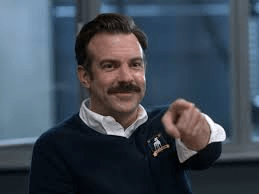
So now I wonder on a daily basis what the last thing I say to someone is. I’d hate for it to be something negative or down, something benign or flippant. Despite my Roy Kent tendencies, I’m determined to keep Ted Lasso in mind when I’m with others, especially when I leave others.

The last thing I say to most people is “see you soon,” or “talk later.” That’s normal I suppose, and somewhat hopeful and mostly about right.

Mostly.