In The Year 2025

For some years now I’ve spent time toward the end of December thinking about the significant moments of the year, which can often include some tragedy, of course. But I quickly became a fan of this wide-lens scan of the previous twelve months. It helped me focus on moments that meant something instead of memories just bouncing around my brain, turning them into little more than some passing haze between other, seemingly more important hazy thoughts. It didn’t take long to figure out that those five significant moments truly were the most important days of the year, and they deserve a more intense recollection. So I listed them for myself and thought about them, focusing, concentrating, then almost reliving them. Yes, even the sorrowful parts.

These are the five that emblazed themselves into my mind so that even just a brief touch of an aroma might bring back the day with complete clarity.

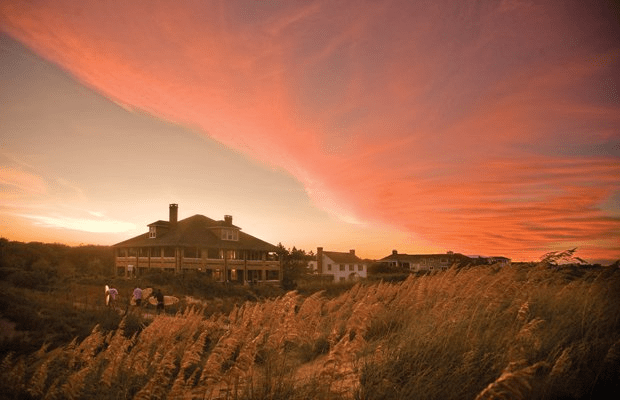
Gwynn’s Island, Virginia. Michael submitted a few pieces to a juried art show at the Island’s museum, and as a result he had to make several trips there to drop off the work, to go to the opening, and then to pick the work up after the show, so I joined him. We hiked the beach one time and ate at one of our favorite Mathews County places, Richardson’s. It is always relaxing when we go on one of our hikes through the trails or along the various coastlines of the area. On that day we dropped off his work and discovered the hidden gem of a museum with artifacts dating back to John Smith’s sojourn there and his storied subsequent swim in the Chesapeake not far from here, where he was stung by a stingray, giving the point its name. But the second trip there was most memorable as the turnout for the art opening was excellent, and they set up an excellent table of food and wine, while the artists and guests admired the work. An art historian and teacher sat as judge, and Michael’s work won first place. Her explanation of her choice was touching and as an art appreciation professor myself, I truly admired how well thought out her choices were (this isn’t Dad speaking, really). One of his rewards for first prize was a gift card to the popular local joint, Hole in the Wall, where we ate on our third trip down. This all seems fast and so local to rank as one of the five moments of a year, but it is hikes like these, combined with the display of his work, that brings such peace I cannot find many other moments during which I’d rather spend my time.

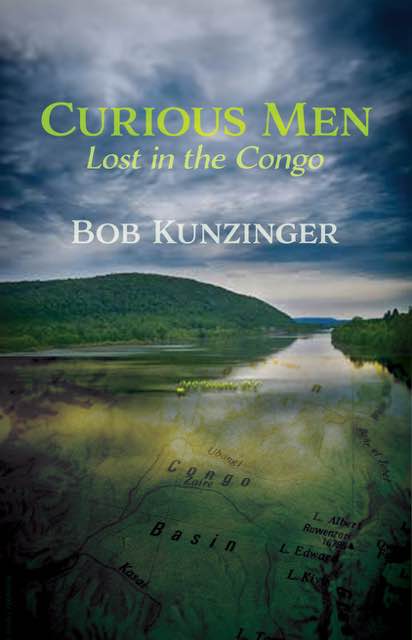
Curious Men: Lost in the Congo. While the official release date for my new book is not until January 4th (as that is the birthdate of the subject of the book), it is available already and receiving the copies in the mail meant more to me than my other works. This one was very personal, and it had been a monkey on my back for forty-five years. The work has been through so many versions, I cannot honestly tell you the final version is the best one, but it is the one that I believe works best for me now. In the end, I discovered the book was not about me and not about my friend. It is about trying to figure out life when out on your own for the first time, and what we choose to pay attention to and choose to ignore. What is most significant about this work and the release of the book is this one is the first book I’ve written which was done so entirely for me. I wasn’t thinking about audience, about others who knew the story, not thinking about critics or publishers, editors or bookstore owners. It was for me. It is the most honest thing I’ve written, and I still could have taken five more shots at it and not been completely satisfied. Releasing this book has more significance than I could ever possibly convey (and it is doing very well thank you very much).

Spirit Lake, Utah. Okay, so this one is special. We drove up in June to an area where snow still drifted across the trails and the temps at night fell into the low forties at best. No running water, no electricity, a wood burning stove in a cabin the size of an SUV, with a firepit off of a porch out front. Our cabin was “Sacajawea,” and we left it often to walk down the hill to Spirit Lake, lay on the dock and watch the stars, or more often to hike some of the trails climbing above 11K feet, where a few times we saw moose. Rarely in my life have I been that relaxed, that detached from everything which causes stress, and able to say what I wanted and talk for hours without any thought about how it came out. I was never so present. How often do we find ourselves so much in the present moment that all matters of concern slide away? It happened that entire trip.

The Netherlands. The only tense moment of this trip was at the end, when I was returning the car to the rental lot at the airport, and I accidentally left the airport and found myself on an interstate headed back to Amsterdam, and a sign which read, “Next exit 14 miles.” I texted to say I’d be really late getting through security, then I sped, spun about some cloverleaf, slipped into the rental lot thirty minutes later and tossed the keys to a man who wanted to inspect the car. I took off running and panted my way through security. The rest of the trip was perfect. To walk the fields where Van Gogh walked and painted, to stay in an Airbnb just a mile from where he lived with his parents in Neunen, to dodge bikes and cars in Amsterdam and stumble upon a festival in Volendam. I will say here that I had a blast, laughed endlessly, remained silent for hours without worry of the quiet, and wondered

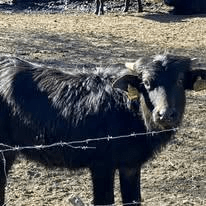
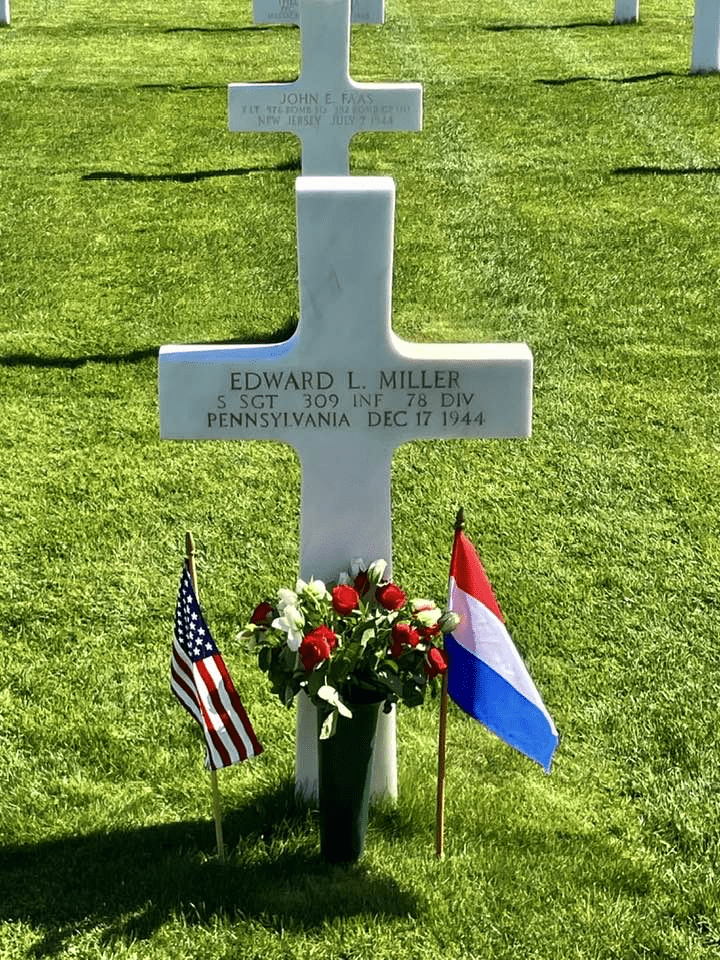
beyond words what circumstances found us there with such presence of mind. There was the small village where a stroll into someone’s backyard yielded a take of water buffalo cheese and yogurt, and I met my new friend, Sparky the Water Buffalo. An old woman in a housedress came out to her own barn where we looked in cases at water buffalo ice cream and other items, to sell the goods without a word of English. By far, however, the highlight of the trip was a small ceremony for Staff Sergeant Edward L. Miller of Pennsylvania who died on December 17th, 1944, at the Battle of the Bulge, and where I stood silent while his niece rubbed sand from Normandy in his name, made an etching of his stone, and met the family who has taken care of his grave since the war. While they spoke to each other, I looked about these grounds of the American Cemetery at Margraten, at the more than 8000 fallen soldiers, and said to one of our hosts, “These men were no older than my students,” and the weight of war, of the Miller family’s loss, of this memorial journey across four thousand miles settled in my chest. What an honor to be part of this in a small, outside way. I can still smell the freshly mown grass as they were cutting it while we stood nearby. I can still hear the voice of the young woman at the park who spoke with such respect and honor. What a day. What an incredible trip. I’ll leave off the part about driving in Delft.

Mom. On April 12th my Mom, Joan Catherine Kunzinger, died at almost 92 years old. Joanie was the smartest, most honest, most caring, most loving woman I have ever encountered. Her strength as a young girl who had to take care of her siblings, as a young bride with two and then eventually three kids, as a wife taking care of Dad when he was not well in the last years of his life, and as a widow who hauled herself around absolutely always laughing, appreciating the fact she was simply alive and grateful. That is the word for Mom: Grateful, for everything, She could make friends with a lamppost and everyone I’ve ever met who met Mom, loved her. Her solidly Irish and Italian background came through strong, and she was forever a New Yorker. But Mom was at home wherever she was. I was fortunate enough to make more than fifty short videos of her talking about her life, but I cannot watch them without breaking down. Still, here’s the significance of her being on this list this year: She wasn’t expected to die. Not when she did. The day before I left for the Netherlands, I made a video of Mom in which she recites a poem about tulips, and laughs. I promised her I’d

bring her cheese, and she was very excited (despite her predictable “oh please don’t go to any trouble” comments). Two days after I returned but was still at my sister’s home in Pennsylvania, Mom fell while getting up from Bingo, and she hit her ribs on the chair. She never recovered as her paper-thin lungs were already beyond strained. I made it home in time for her to look in my eyes while she lay in her bed. Her eyes swelled a bit when she saw me, but she quickly fell back to sleep. She died that night after I had driven home.

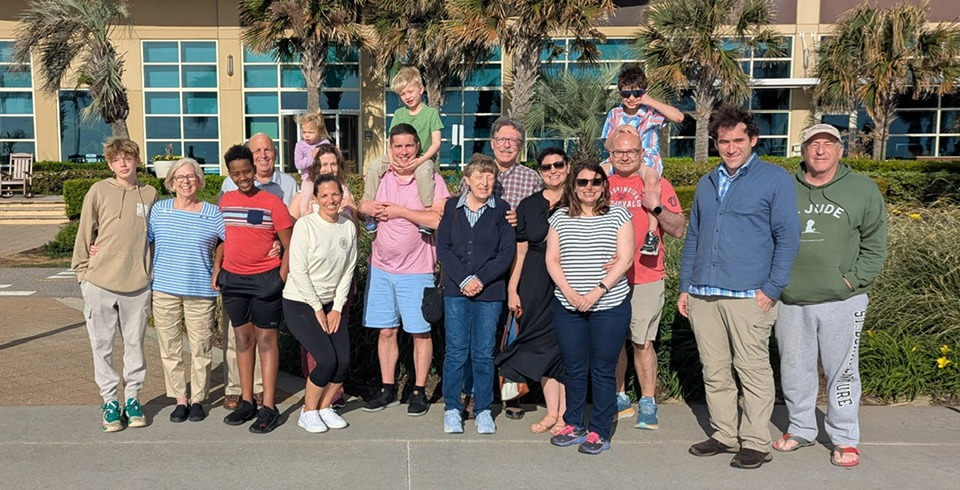
But here’s the thing about this: I have in front of me a picture of the family the morning after the funeral, and we’re on the boardwalk in Virginia Beach, clearly and appropriately enjoying each other’s company, just as Mom would have wanted. My sister made a comment when captioning the picture about this being “Mom’s legacy.” That hit me well. There is her life, right there, in the three kids, the five grandkids, the five great-grandkids, and it’s only just starting. Mom taught me through example to appreciate just the reality that we are alive now, but not for long, so we must love. I never got to tell her all about Amsterdam as she was very excited about me going and was looking forward to hearing about everything. Instead, I ate her cheese. She would have laughed at that.

The days Michael and I spent at New Point Comfort before the art show, the narrative of Curious Men and why it means so much to me, Spirit Lake, the Netherlands, Mom—all of these are the most significant moments of the past year because of the people; only because of the people.

    I hope from now on when I recall events from my past, I recall them solely because I had the chance to love and be loved and let that always be what I remember.

    Love

    I never like starting a piece with a quote. It feels too simplistic and yellow-journlismesque. But here goes:

    It seems to me that no matter how much we make the best of those holidays which follow a significant loss, the loss is still present; it has to be. To pretend everything is normal, or worse, that annoying pandemic-born phrase, “the new normal,” is a foolhardy act. No, it’s not normal. There’s a hole in the world right in the middle of the gift-giving, the conversations, the Christmas dinner–especially the dinner. We adjust, of course, we work the best we can off of the three strings left, everyone shifting slightly to accommodate the newly-needed positioning. But it certainly can be the elephant in the room.

    My mom died in April, and it wasn’t exactly expected. Certainly at nearly ninety-two with already compromised health, I would not call her passing a shock, but when I left for the Netherlands a week earlier, she was fine, even jovial. While gone we bought cheese, and my intention was to share it with Mom. But she died just two days after we returned. Dad’s death was much more anticipated, and at the risk of sounding cold (Merry Christmas Everyone!–nice topic for today, don’t you think?), his death was almost immediately accepted. He had declined so far over the course of the previous two years, and in the one brief moment of lucidity he had while I was present, he told me he supposed he only had a few days left–said it as a matter of fact, an acknowledgement of something he almost welcomed. But Mom had no intention of going anywhere yet.

    So we adjust more now than we did back then, though in both cases, the change was noticeable. Dad’s also because his passing was just two months before Christmas.

    But here’s what I noticed: I’m paying way more attention these days to those that are here. Hanging onto the conversation longer, thinking more about the gifts I give–are they personal enough and not some last minute purchase to “get it done.” I’m listening more this year–to my son, to my siblings–I’m aware of the spices in the dressing, the timing of the dessert. It’s as if those of us who remain have made the music by filling up the empty spaces with what love we have to give, no longer assuming any of the rest of us will be here next year.

    Perhaps I am more focused. The more loved ones exit, the closer attention I pay to those still here in the play, on this stage. Oddly, I can nearly pinpoint the exact moment my adult life began, and someone gave me a present this Christmas which reminded me of that time back then, and two essential truths emerged: That really happened, and I’m still here. We waste so much time not talking to others; we have mastered the art of euphemism and avoidance. We figure that we have time to figure things out, plenty of time to tell them what we’re feeling. And then often without warning they’re gone. So why not turn to those who are left and say, “Listen, I need to tell you what you mean to me…” Being able to still do so just might be our departed loved one’s greatest gift to us. We don’t have everyone we started out with, but we have those who are left, and we have the truth of us in each other’s lives.

    I believe the holidays which follow the passing of a loved one, while difficult, just might be the most honest, the most open and transparent. I missed Mom today, and always I miss my father, but this year too I missed, again, Letty, Fr Dan, Dave, and so many more who left in the last sixteen months, left without me taking the time to say what I would have said had I known I’d never get the chance to say anything. No more. That’s their gift to us, right there. This year instead of their absence being only sad, it is also motivating. It’s like they’re still in the shadows silently telling me to love, to just love. And like Virgil’s personified Death, they twitch my ear and whisper, “Live. Live now…I am coming.”

    Merry Christmas.

    Flowers in the Dirt

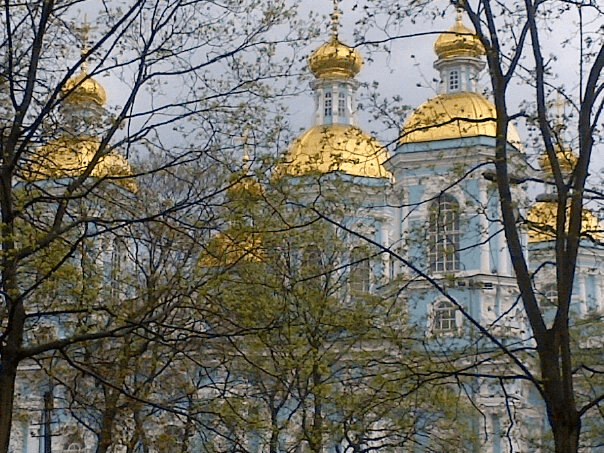
    St Nicholas Cathedral (one of the rare churches to never close during Soviet days)

    I’ve been thinking a lot about Russia lately, about how so much these days reminds me of my time there. Over the course of more than twenty years, I came to know the backroads and alleys of St. Petersburg, Russia. I found the coolest little cafes and late night jazz joints, made friends in shacks serving Georgian wine and shashleek—a kind of shish kabob—in a small room with low ceilings and dirt floors, the Gulf of Finland pounding at the sand outside. I returned again and again to long embraces from friends like Igor and Dima and Valentine the crazy man and brilliant artist.

    I taught American culture at the college, endured endless people wanting to practice their English, celebrated Victory Day on Palace Bridge year after year, mourned the losses of people during the siege with veterans who sat telling me their stories all the while holding my arm, connecting to me through touch.

    I prayed with old nuns in shrines, climbed the rubble of the ruined St Catherine of Alexandria Catholic Church with American priest Frank Sutman who raised enough money to rebuild this first Catholic Church in all of Russia back to its glory from the ruins of the storage facility it had become during the Soviet Era. I met musicians in old bars—Gypsies—and played music with them until the sun came up, read my own work at the famed Stray Dog Café surrounded by the ghosts of Anna Akhmatova and Trotsky and Brodsky.

    What a time it was.

    With friends I toured palace after palace, attended private concerts by quintets from the Kirov who played just for us before dinner at the Nikolaevsky, walked the halls of the Summer Palace and wondered about the infamous Amber Room, learned every crevice of the Winter Palace and its five building complex that is the Hermitage Museum. Had drinks in the basement of the Yusopov Palace where Rasputin had drinks just before he was killed for the fifth time. Walked the grounds of Galinka Palace, the Church of Spilled Blood, St Isaacs, St Nicholas, Trinity, and more. I climbed to the top of the tower of Smolney from which St Seraphim supposedly fell the ninety feet to the ground when he was ten but landed softly and got up and ran toward canonization.

    I learned where to buy vodka and where not to sip it at all. I found the best places for authentic borsch and had Beef Stroganoff at the Stroganoff Palace.

    I ate at McDonalds, Pizza Hut, Kentucky Fried Chicken, and more western joints filled to the gills with Russians all in love with the taste of America, drinking in the swell of western culture, surrounding my friends and me trying to fit more English into their Cyrillic mouths.

    We took canal rides and saw folk shows where more than a few times I was dragged on stage to dance with the Russian women and men as balalaika music filled the packed arena. I’ve seen Swan Lake at the Marinksy Theatre more than a dozen times and have seen Hamlet in Russian.

    I’ve made friends with former Soviet Naval Captains, countless professors, writers, and artists. I’ve become friends with translators and more than a few vets of the Chechnya War who would have rather stayed home and continued their studies in Engineering at St Petersburg University than return with no legs, one arm, half a face blown away, leaning against the Metro Walls, cap in hand—handicapped, hopeless.

    I’ve sat on the rocks of the Gulf of Finland drinking champagne during the White Nights while one of Russia’s finest flautists performed privately for us, laughing, making us cry with Tchaikovsky and Bach. I’ve sat backstage at the St Petersburg Conservatory with a dear friend who is a choreographer, and his teacher, who used to dance with Baryshnikov, and watched them practice.

    We’ve had food from an Uzbekistan Restaurant, and I came to understand the plight of the refugees from Azerbaijan after the slaughter by Armenians. I’ve read at the flat of Dostoevsky with an original volume of Pushkin on the table next to me and one of Fyodor’s own manuscripts two feet away. We have wandered through the massive marketplace next door and carried home to our apartment bags of fresh vegetables and chunks of meat cut before my eyes off of a carcass.

    I’ve battled with border patrol over textbooks, bribed cemetery guards to let us wander sacred grounds, sat in the cell that held Dostoevsky and other dissidents, and watched the ruble gain strength, take a beating, then recover, then fall. I’ve sat on benches with women who were survivors of the siege during the Great Patriotic War and talked about family, talked about poppyseed rolls, talked about the flowers that grow in the dirt.

    I was there when they reinterned the remains of Czar Nicholas II and his family, including Anastasia and Alexi. I was there for the celebration of the 300th anniversary of the city that Peter the Great called the Window to the West.

    I watched as Marlboro came to town, then Clairol and every Russian woman suddenly had bright red hair. Adidas showed up and all the men wore warmup suits. I’ve walked past too many men in cheap three piece suits holding semi-automatic rifles guarding some boss’ SUV as money exchanged hands—all cash, USD, in suitcases.

    I had just turned thirty-one when Communism fell and two years later I went to St Petersburg. The city streets were dank and barren, not a single neon sign, not a single advertisement, nothing to see or do. I toured the lab of Pavlov where dogs are still used, and I stood on the Field of Mars next to the eternal flame commemorating those lost during the siege. I met then-Vice Mayor Vladimir Putin. I met ambassadors. I met Sophia, who was a young teen when the Czar was still in charge, who lost her husband and son during the siege, and who sat in the shadow of the Smolensky Shrine and told me they can take anything they want from her, but they’ll never take her faith from her again. She blessed herself in the large Orthodox way and held my arm with her ninety-something year old transparent hands. She could tell me whatever she wanted. I could talk about anything I wished. I watched this country I was raised to fear fixate on all things west, becoming a strong and welcome presence in world culture and exchange. Every person I brought returned home amazed at the life that was Russia, hoping to return, knowing they had friends there, and dozens did return with me for a second, some for a forth or fifth time. Russia was addicting.

    I’ve brought dozens of US faculty, hundreds of college students, a dozen cousins, pilots, performers, writers, and a four star Army General, twice.

    Now, exactly half a lifetime since my first trip, I’ve watched it all go full circle. The little western influence that is still there can’t be changed, but the welcome presence has faded away—no more McDonalds, Pizza Hut, or KFC. No more Starbucks. Open readings are tolerated only if no one, no one, absolutely no one uses the word “War” in reference to the Ukraine.

    After the invasion, I sat by hopelessly four thousand miles away as friends wished me well and hoped we’d someday meet again. I told them, my friends, including those now in Germany and France, a few in Norway, that I cannot wait to see them again, perhaps in New York, or Paris. Maybe Oslo. Not Russia. Those who had left or since left Russia, I talk to, but too many to mention I can no longer get ahold of, and I have no idea whatever happened to them. Many were men in their twenties and thirties. All had terrific senses of humor and the hopes young artists and engineers who knew only democratic principles their entire lives. Gone.

    I have taken a train from one end of that massive empire to the other with my son, creating memories to last all our lives, spent late nights drinking shots of vodka with Siberian businessmen. I’ve sat in the home of tour operators and laughed and became brothers with them. I have mementos on bookshelves, on walls. I’ve written three books about my times in Russia, and more than fifty articles. I’ve developed three college courses about Russian Culture and mentored more than two hundred students who received Study Abroad credit. I miss the beauty of the architecture, the beauty of the people, and the mystical way history bathes me when I walk the streets at night. I miss my friends. I miss laughing with Valentine and talking about butterflies and angels. I miss sitting alone at this one café I love drinking tea, making notes, listening to contemporary folk music and enjoying this impossible life I’ve had the chance to live that brought me more than two dozen times to a place that until I was in my thirties, I never thought I’d ever see. I miss the people very much.

    I miss the way old women swept the streets with birch brooms. I miss the Hermitage and the Hidden Treasures Collection, and that time I helped spread the ashes of my artist friend, James Cole Young, in the crevices of one of his favorite paintings. I miss counting stripes on the wallpaper and chasing pigeons in the park.

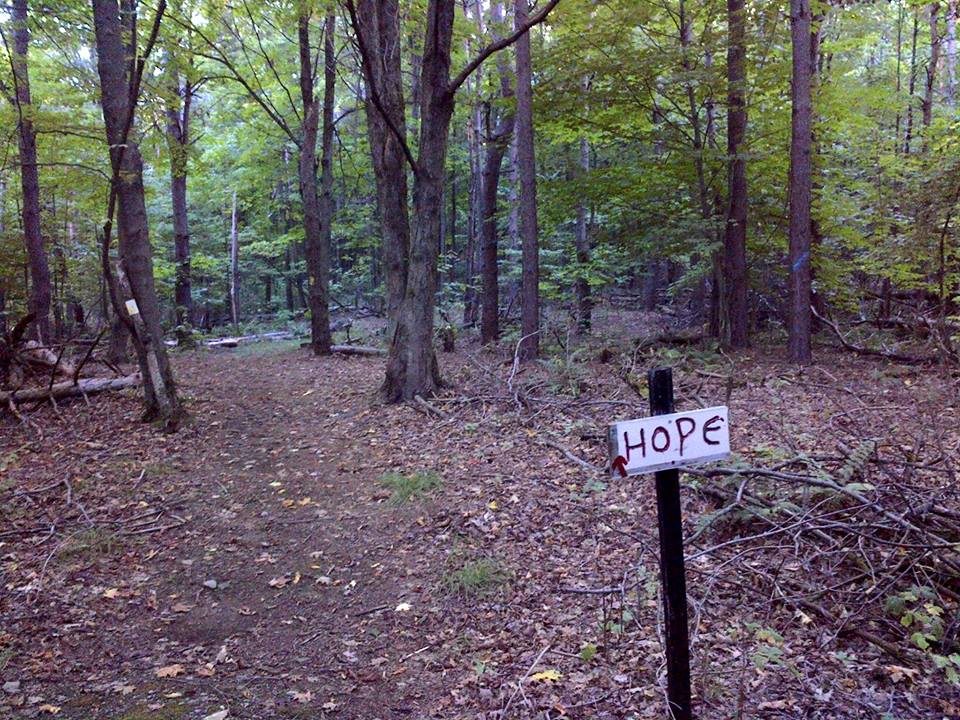
    I miss the hope that was Russia. I miss that hope. Even now, here, I miss hope.


    on Nevsky Prospect in St Petersburg

    Extended Metaphor

    I suppose my parents were the original plunger to my pinball life. From the time I was born they slowly pulled back on that spring, maintained that illusion of safety and determination. “We’ll move him to the Island,” they said. “We’ll go out to a quiet village,” they said, “where he can grow up in nature with friends.” I think their hands got sweaty and slipped a bit when they said we’d all move to Virginia, but they recovered just fine.

    But then it happened.

    Release.

    Suddenly I moved about life bouncing from one influence to another, bouncing and tumbling from high scores to near elimination, and all my parents could do was keep their fingers on the flippers so if by chance—and a slight chance it usually was since I mastered the art of bouncing around—I moved anywhere close, they could try and catch me for a moment in metallic suspension, then send me in their chosen direction, or at least back into some middle-ground where I was safe from an early exit.

    The thing is, others got their hands on the flippers too. Advisors, sometimes friends, sometimes lovers, holding me out on the end of the bar, deciding which way and how hard to send me on. Too gentle and I’ll tumble right out of the game; too hard and I’ll inevitably come back to haunt. That happened a lot.

    The thing is when I was at the height of my ricocheting life, I was in my prime, in my element. I liked not always knowing where I was headed and what might happen. It kept me perilously in the moment, so blatantly aware of the “now” as I kicked off one bad experience and bulleted toward hopefully something better, a tiny cannonball without any ability to steer. Yeah, that was me for a long, beautiful and exciting time.

    Then something game-changing occurred: I had a son, and I found myself pulling back on that plunger, looking ahead at the same time wondering if I could help him score the most points by spinning him toward a certain destination of my choosing. I remembered what that was like to not simply be without control, which has its own benefits and limitations, but to be at the mercy of others with their fingers on the flippers. A coach told me I needed more discipline and I could compete at a higher level in tennis, but the parental plunger pulled back a bit more declaring a difference of opinion. I decided not to go to college for a while and I really thought that plunger would let me go in any direction I chose, but no, as a year later I was tucked nicely away in the safety of a university chamber. Truly, my parents weren’t the best in letting this loose cannon follow my own lack of control, but it was to their credit they recognized in me that carelessness. Ironically, life went very well for me because of their foresight, their ability to look ahead, having played the game before. Sure. But it was their game. Not mine. In subsequent years they handled the flippers just fine, often helping me get back on the course I had chosen. So with my son, I wanted so desperately to simply let go and watch that ball of a boy rip out on his own. But I’d been around the block by then, and while I thought I could help by holding the plunger as long as possible, I let go earlier than I wanted, maybe even earlier than he wanted, and he’s found the right bumpers to play off of in his life.

    But the point is I’m bored again. Certainly I’m too old to just richochet about hoping to bump into something good, but I’m too young to leave the game. So I looked at some maps and noticed places I want to go and haven’t yet been, and I can’t remember the last time I put myself out there, risked embarrassment in hopes of chance. If I remember correctly, I always got five balls when playing pinball, and when I got to that last one I needed to savor it, and the tendency was to try and manipulate and control those flippers as much as possible, create some illusion I can make this last longer than possible.

    But it is in that way that we lose those very years; we slow down, play it safe, find comfort in the flipper that holds us a moment before deciding which way to propel the time that remains.

    You know what would be really interesting? Pull the plunger all the way back, and even beyond back, then let it rip. Yes. Maybe go to the Islands, bounce about the South Pacific, perhaps walk the Pacific Coast, maybe train through India or take a river cruise on the Danube. Whatever. But that’s my new plan: I’ll let my imagination control the flippers and see what happens.

    Maybe I’ll just go back to Spain

    Wait. Loss.

    In my youth Dad always walked down the small staircase on Christmas morning to plug in the lights while my siblings and I waited. Mom would have stacked our gifts in separate piles under the tree, and after the three of us exchanged our own gifts earlier that morning in my sister’s room, we’d gather on the steps and wait. When the tree lights lit, Dad would call out “Okay, you can come down now,” and we would, each of us steered toward our own third of the presents.

    Mom was our Santa back then, waiting in lines for the right gifts, hoping she doesn’t ever again buy my sister the wrong album, trying to get it right, not knowing of course that she couldn’t possibly get it wrong. She’d be in the kitchen as soon as the presents were open so she could make the stuffing and prepare the pies for the relatives coming that day. And then later, after everyone had gone home and the five of us were again alone, Dad would emerge from his closet with books for each of us. This was special as it was common knowledge that Mom did all the shopping, but in the case of the books, Dad shopped himself, wrapped them himself, always picking out the perfect one for each of us, and would “surprise” us with them that night. It is a tradition I continue with my own son. Those days of “Dad’s Books” happened it seems just months ago, and the times that Mom worried she used too much spice in the dressing seems to have occurred weeks ago, but it could not have been. They both made it seem as if we had hundreds of holidays together with just the five of us, but it wasn’t even two dozen. That’s what time does when you’re complaining about the cold or the crowds or the difficulty finding just the right thing to give someone–it passes. Fast.

    October 2015

    I remember sitting in the uncomfortable recliner next to the hospital window and thinking, “If I’m here a few more days, I might take down the clock; laminate the list of television stations he will never watch; ask to fill in the information on the empty whiteboard I’ve stared at for four days, note the nurse’s name, cross off the faces from frowny to happy to indicate his pain tolerance. If he had more time, I might move his bed closer to the window.” Three times I moved his food trays, trice-daily reminders he hadn’t regained consciousness, into the bathroom. I can still smell the aroma of onion soup he never knew existed.

    Most certainly I would move the two boxes of blue latex gloves from the wall inside the door to the wall outside the door. Nothing says “If I touch you, I might die” like blue latex gloves. I would silence the incessant beeping from the health monitor above his head.

    I didn’t mind the wait. As sure as I knew his blood pressure, blood oxygen level, and pulse, I will miss the wait, the slim possibility, the sliver of “just maybe.”

    The text from my brother read, “He’s gone. Come back over.”

    I dismissed class just after 8:30 and left for the hospice center a few miles from the college. I forgot to tell the students it would be a few weeks before I returned. I drove to see my suddenly late father.

    We took turns saying goodbye again, this time after the fact. He looked gone—as if he’d been dismissed, like he transferred or simply dropped out. I held his bare arm below the sleeve of the green golf shirt they provided. I wondered if all the patients had the same shirt. The entire building had a sense of oneness, of warm togetherness, like all the nurses should have the same name, and all the patients looked like my dad.

    I kissed his withdrawn face. I thought he might feel cold, but his arm felt warm as if from the sun during all those days at the field coaching my brother in Little League, and from sitting all day in the baseball stadium bleachers, buying me hotdogs, letting me keep score as he showed me how to fill in the small boxes.

    When I took his folded hand in mine, it felt stiff, but not from some medical transition; no, more like his muscular grip back when he took my infant son in his arms and laughed, his eyes wider than space, his laugh deeper than love, just moving his grandson up and down as they laughed and my son reached for his nose, for his glasses. I reached for those glasses now, unused on the nightstand, and held them.

    A week earlier I stopped at the hospital to check on him, expecting another day of quietness after a week of unconsciousness. But I walked in to see his eyes wide open, staring at the ceiling, then at me.

    “Well hello,” he said in his baritone voice.

    “Hey Dad, how are you?”

    “I’ve been here since 4:30 this morning.”

    “You’ve been here for four days.”

    “Four days! What hotel am I at? Ha! Hotel! I wish I was at a hotel! What hospital?”

    He could have been thirty years younger. After a long, slow year-long erosion from dementia, I had not heard Dad so lucid in several seasons.

    “You’re near home, Dad. You’re at the hospital right near home.”

    “It is serious, then?  Tell me.”

    “You have pneumonia, Dad.”

    “So I probably don’t have much longer, do I?”

    And that nurse came in and Dad checked out, turned his head and closed his eyes one last time just days before he died. That night I rode in the transport ambulance to take him to hospice.

    If I had more time I might tell him about my failures, my shortcomings. But there is never enough time.

    April 2025

    We were in a cheese factory shop in Volendam with baskets of cheese wheels to bring home. I held a bag of four wheels and thought about who I can give them to after I separate them. “I’ll give one to Mom,” I said.

    Stateside, I stopped at my sister’s home in Pennsylvania when Mom’s nurse called to say she had fallen while rising from her chair at bingo, and she hit her ribs on the chair, bruising the bones around her already-weak lungs. Her nurse, Max, held the phone so Mom could talk. “I’m so confused,” Mom said to my sister and me, and I said I’d be home the next day. A while later another nurse called. “Your mother is transitioning.” She’s becoming a man? I momentarily wondered, not trying to be funny; I truly had never heard anyone reference the stage between being not at all dead and about to die as a “transition,” but I suppose it is as good a euphemism as any. Certainly, “Your Mom is dying,” appears a bit colder, but I still think I’d have preferred such directness over the “I’m so afraid to say what is happening that I’m going to wrap it in obtuse verbs.”

    The next night I leaned over her sleeping body and she opened her eyes and they welled up, and I said “I love you, Mom” and she fell quickly back to sleep. Later that night my brother texted. Mom was gone. That was either eight months or eight years ago.

    I miss the waiting, especially this time of year when I’d be waiting to give her some gifts—probably flowers and a gift certificate to take her to a nice lunch. She reached the age where those gifts of time spent together were the most valuable.

    I miss making videos of Mom, and how for every one video I recorded I deleted four or five because they were too ridiculous to publish. I miss those outtakes now.

    I miss seeing Mom in the foyer of her home waiting for me to drive up the circle to pick her up, a wide smile followed by an “Oh, it is so good to get out for a bit! You know?” I knew. She didn’t care if we just drove around. I’d park the car at the market and she’d wait for me as I ran in to get her bananas, fudge stripes, and flowers.

    That last time I saw my dad before he entered the hospital he had sank a twenty-two foot putt on the practice green and looked at me with such a proud and excited reaction it’s as if my entire life collapsed into that moment—the golf when my brother and I were young on the Island, that time Dad and I went to see Jaws when it first came out, or when he and I went to Disneyland in California; our lunches every week after he retired but before Mom had. Strangely, I think I felt the loss of my father before he even died because of his ebbing mind and misunderstood timeframe. Loss comes unexpectedly and often out of joint.

    The last time I saw my Mom I told her I’d be in Amsterdam and we were going to Keukenhof to see the acres and acres of flowers, and would she like me to bring her some tulips. She stared at me a long time, and I waited, and more time passed, with my phone video playing, and still I waited wondering if I had lost mom right then, until finally she smiled and recited a poem from her youth.

    It was worth the wait.

    Merry Christmas Mom. I’ll put on some Christmas music for you—some of your beloved Andy Williams. And Merry Christmas to you too Dad. I’ll plug in the lights Christmas morning and later that night I’ll give Michael a book, and I’ll be thinking of you.

    The Rain that Day

    There’s a scene in one of the Hunger Games films where Jennifer Lawrence and Josh Hutcherson are sitting in the doorway to their house. The shot is from deep inside the room and we can see them almost silhouetted on the floor leaning against the door frame looking outside where a heavy, steady rain is falling. It’s summer or fall. The door is open yet and they seem comfortable, and it is raining. 

    That image stayed with me. I want to call the director and say, “Well done,” you nailed one of the most comforting images I can recall–inside warm and dry away from the storm but close enough to appreciate it. 

    I loved sitting on the patio when I was a child, under the canvas awning when it rained, and I just assumed it was raining everywhere, which at eight years old was probably a three block radius. What did I know of everywhere? But that closeness of rain never left me. In Spain on more than one occasion we donned our raingear and walked out onto the Camino to keep going, a heavy fog sometimes filled the air, and on one day near the village of Cee on the way back from Fisterra to Santiago, we couldn’t even see ten feet forward. But here I am eleven years off the Way and I remember that day as if I just walked in the door from the path and set my walking stick against the fireplace stones. 

    What is it about the rain? 

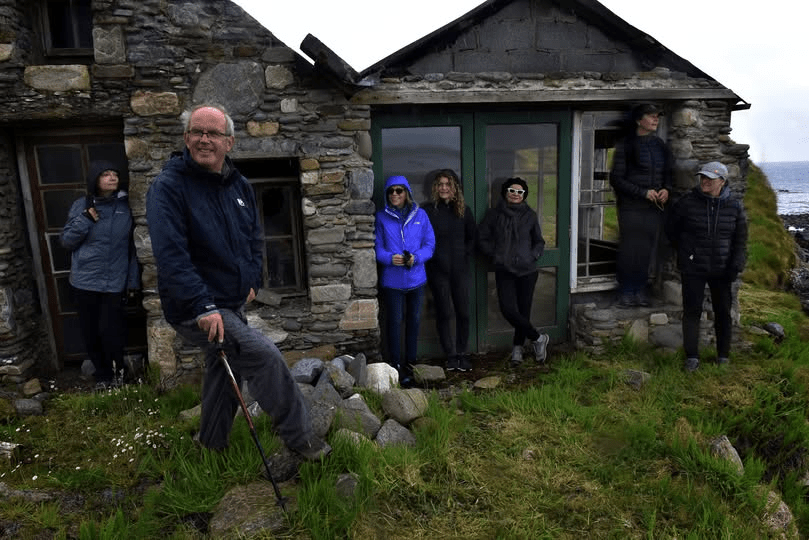
    On a trip to Ireland, the only day out of ten it rained was the very day archeologist Michael Gibbons planned to give us a walking tour of the Renvyle Peninsula in Connemara just along the Wild Atlantic Way. We went anyway, along roads and across bogs for a half dozen miles, and sometimes it was only cloudy, but more often a steady Irish rain fell as more of a pleasing accompaniment than any nuisance of weather. In fact, when we walked near an abandoned home we stood under the eaves to wait out a downpour and during the short break we laughed and joked with each other about nonsensical things, but it is the time from the walk we remember most, the moment we all took pictures and realized how stunning the Irish Pete could smell in a rain, and how we didn’t mind, not in the least.

    I took a moment just now to look up the history of rain, already knowing the first evidence dates back 4 billion years, and the first mention of it in literature dates back to both Gilgamesh and The Iliad. What I didn’t know until just now is that raindrops are not shaped like teardrops but more like hamburger buns, that one inch of rain over one acre of land weights over 110 tons, that Mawsynram, India, is the wettest place on Earth with more than 450 inches of rain annually, and that rain really does have its own odor, called petrichor, caused by the wetness releasing the oils from plants and soil which then fill the air. 

    “The beauty of the rain is how it falls”

    –Dar Williams

    I love the smell of rain, the feel of it on my back and neck, but my reason has little to do with any enjoyment of being wet, soggy, drenched; it is because I can, because I am here in nature still, well after so many I love have closed the door behind them, all of whom if they could would love to be drenched in the rain with me, and we would laugh at being here, alive, and I’d say how moist I am and we’d laugh even harder. 

    I love feeling alive and rain does that, even if I’m just on the patio at an old picnic table sixty years ago and the sound on the canvas above me and the steam off of the sidewalk nearby all kept me present, absorbing the moment before the next one came. How often in life can we be so acutely aware of a moment so that we can hear the nudge of the one that follows? Time is too swift for rain; life is too short for the subtle rise of mist from the pavement. 

    “Let the rain kiss you, Let the rain beat upon your head with silver liquid drops, Let the rain sing you a lullaby.” –Langston Hughes

    It’s the same with the sun, the feeling-alive thing. The heat and scorch on my neck and back energizes me like nothing else can, and everything around me is hyper-present, like I can feel the molecules, the very atoms of the light, and too of the rain, like the coursing of blood. 

    It’s raining now, and I’m going to pour a cup of tea, put on a sweatshirt and go sit on the porch and listen to the rain in the woods and on the porch roof here at Aerie. I’ll let my mind wander and try and remember the last time I heard my father laugh and remember the last time my mother and I talked about nothing at all. I’ll think about Eddie and that time we walked all day in the rain through Heckscher State Park on the Great South Bay, just two fourteen-year-olds who suddenly owned the planet, and we spent all day out there and sang “The Long and Winding Road,” and now when I hear that song I think of rain, and Eddie, and how it always takes me a moment and a shake of my head to understand that day was fifty years ago, forty-five years before he closed the door behind him, and how that rain that day was like a third friend laughing along with us, singing along with us. When it rains now I can have that day again, and I like that. So I walked up here to my desk and settled into this chair and I’ll listen to the rain on the skylight before I turn out the lights. 

    “Some people feel the rain. Others just get wet”

    –Bob Marley

    May 23, 1925-October 21, 2015

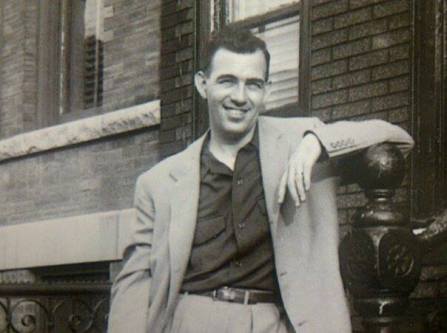
    Dad died ten years ago this Tuesday, the 21st. Words can’t express how I miss him. The following essay first appeared in Kestrel: A Journal of Literature and Art, as well as my collection Fragments, and anthologized in a few other publications. It was the last piece of my writing I am aware my father read.

    12063306_10207030426106557_3199067376729529480_n

    Instructions for Walking with an Old Man at the Mall

    First of all, he’s walking, you’re joining him. Don’t stop if he doesn’t. Don’t keep walking if he doesn’t. You are a shadow, an imitation.

    Stand on his side where he can better hear you. If he can’t, repeat yourself as if for the first time, no matter how many times. Never say “never mind.” When he tells you something, you have never heard that story before, even if you can repeat it word for word. When he tells you about the baseball games with his Dad seventy years earlier, they are new stories, and your response must sound genuine. When he tells you about the time he went swimming at camp with his friends, and how when they went to retrieve their clothes from under a boat they found a snake, be amazed again, ask what happened. Laugh again since he will laugh.

    When he pauses in front of a store, don’t question it. At that moment, allow his sole purpose in pausing is to look at whatever item is in that display. He might mention how he used to own that tool, those pants. Let him know you remember; do not make a big deal that he remembered. He needs you to know he didn’t stop “to rest”—he stopped to look at the display. When he says he could use that new suit, a new pair of shoes, or a new whatever is new, agree. If he happens to stop in front of Frederick’s of Hollywood, there’s no need to joke; it will only emphasize he couldn’t get past a place he would never stop with his son. This time he simply couldn’t continue. Talk instead about his grandkids. Talk about the rain. Do not talk about old times. There’s no need to recall the time he drove you to the airport for a flight to college and you saw him hours later waving to you onboard the plane. Avoid bringing up the time just the two of you spent the day at Shea Stadium when you were a child. Instead, ask about the Mets and if he happened to catch the game last week. You know he did. Let him tell you about it.

    When he seems tired but doesn’t want you to keep stopping, stop to fix your shoe, to read a sign; look for a bench and suggest you sit and talk. He’ll ask about your son; he’ll ask about work. Have something to say other than “fine, Dad.”

    Do not look at your watch. Do not check your phone; most definitely do not check your phone. Leave both in the car. Do not indicate in any way he is keeping you from anything. No other time is relevant anymore. But you will grow tired and restless. If he senses this, he will insist you leave. He will say he knows you have a lot going on, and he’ll say he’ll see you later, and he’ll do whatever he can to make you feel he is completely fine with it. Stay anyway. Then sit a bit longer. Do not ask about the doctors; the walk is to forget about the doctors. Do not quiz him on medicine or schedules. He is out for a walk, you joined him, it is something about which he will tell others—that he went for a walk at the mall and his son was there and joined him. Do not let his story end with “but he had to go.”

    When he can’t remember where he parked his car, ask if he parked in the usual area. He did. Sit down for a few minutes. It will come to him. There’s no need to ask probing questions like “which stores” or “what street” he was near. Just sit a while. He’ll remember. You’re not in a rush.

    When you leave the mall be near him as he steps from the curb, but do not help. He will be fragile and unstable. The step from curb to parking lot is a leap; he used to do it with you on his shoulders and two others running out front. Let him step down on his own but be ready. He bruises easily and a simple scrape is a trip to the doctor. Have the patience he had when your childhood curbs seemed like the cliffs of Dover.

    Don’t say “I guess I’d better get going.” Don’t make plans. Don’t make any comment to indicate he did well or that it was a “good walk.” He didn’t do well and it wasn’t a good walk. He’s older now. He’s slower now, but he knows this. Really, once the walk is done, the time spent together always seems to have passed faster than we recall. He knows this as well.

    12143183_10207071237766823_459922957598238343_n

    I Barely Remember When

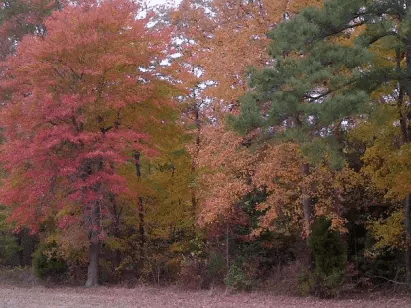
    Fall has arrived and the breezes this weekend cleared away most of what was left of summer. Last week at home I walked along the river like I always do this time of year when the water laps at my feet, it is warmer than the air, inviting, deceiving, teasing me into thinking summer will push back on autumn and maybe even win out. I don’t mind the change so much; I’m not bothered by the passing of time as much as how I spend the passing of time.

    The leaves are just beginning to change here, and my drive in a few weeks to West Virginia will bring me through every stage of autumn. Sometimes you can see all the changes happen in one day. Crazy. Well, the truth is, some things need to change. Even with resistance, sometimes it is the only way to make room for new growth.

    For me even the seasonal change from summer to fall is often troublesome. Again, I don’t mind fall—my days in western New York and Massachusetts are most memorable for this time of year. And obviously I know it is going to happen. I watch the weather, I mark the calendar, I see the leaves letting go. But still it always takes me by surprise. I wake up one day and I need to wear more clothes, or I no longer feel the sun so strong on my shoulders, and I am saddened. The Seasonal Affective Disorder which strikes some of us in February can also have its way in October, though usually not as bad.

    This year is different; I’m both tired of change and in desperate need of some right now.

    In kindergarten I liked a little red-haired girl, Kathleen.

    Stay with me here.

    Just like Charlie Brown I was afraid to approach her. At the same time I was thrilled I met someone I would get to grow up with. We were in the same class until third grade when at the end of the school year my family moved much further out on the Island. Instead of saying goodbye to her I made a card that said, “I love you” and threw it at her in the hallway. I think she got it. Now I wish I had just handed it to her politely and said I was sorry I was moving. I never saw her again. I probably didn’t handle that relationship well. The change, however, the move east to what would become where I would forever call “where I am from,” was unexpectedly pleasant despite my resistance at first. The same thing happened when I was fourteen and moved to Virginia Beach, four hundred miles south. I absolutely and definitively did not want to go; I’m so glad we did.

    During each major change in life, though, I consistently ignored the advice of my older siblings or from examples set down on television or in school. I simply preferred to assess a situation and have at it on my own terms, even if it meant complete and utter disaster. I was slow to learn as a result, but I gained that small bit of confidence we used to earn out on our own, trying and failing, fantasizing and acting and pretending. You simply never know when those youthful lessons will return to come in handy, see us through an unexpected left-turn, help us through the changes. And it seems these days everything is changing, doesn’t it? It’s as if people in positions of power are scanning the horizon to see what they can disrupt next. Even friends are acting strange, distant, and when the very essence of what we can count on is no longer predictable, we must either adapt or run away. I’m running away.

    I thought about those years, my early youth in on Long Island, and how innocent it all was; how we flipped baseball cards and played stickball. We had block parties where the block would be closed to traffic and we all put picnic tables and grills out and walked up and down the street talking to everyone else and sharing food, and riding bikes, and the adults had drinks and the kids had fun. Television went off the air at night, just a fuzzy white noise until the early morning when a black and white flag waved across the screen and some dude said, “We now begin our broadcast day” after the National Anthem.

    This was the age of my youth. It was innocent and tech-free and filled with hippies and protests and flag-burning and marches and sit-ins and rumbles. The laughable Mets became the champs and we walked on the moon. On the moon, for God’s sake. How can you possibly not understand why at the core of my generation is some semblance of hope, still simmering. Hope is what got us through; the hope of humanity, the hope of leaders, the hope of lovers and friends. We were not a generation of followers staring at our hands; not by any stretch of the imagination. So when the times were a ‘changing, we changed—or we were the ones causing the change to begin with. And as we grew older, those organic traits became part of our DNA.

    But hope in everything is fragile now. And the falling leaves are no help; not for me anyway.

    It almost seems ridiculous and it is certainly ironic that the best way for me to handle these unexpected and troublesome changes is to, in fact, change. So be it. “To change is to be new. To be new is to be young again.”

    “If you do not change direction, you may end up where you are going.”

    –Lao Tzu

    We now begin our broadcast day.

    Foolish. Insane. Successful.

    Some of us are masters of self-deception; we can convince ourselves of just about anything and we learn to look for the smallest of clues to justify whatever illusion keeps our delusion alive.

    I am certain this all sounds somewhat psychotic, even sinister at times. I know. Yet this mental acuity of delusion and ambition is not only necessary, it’s what separates those of us in lives of quiet desperation from those whose names are synonymous with acts of greatness.

    Two truisms:

    One, “Insanity is doing the same thing over and over hoping to reach a different result.” Okay.

    Two, “The Greater Fool is the one who thinks they can succeed where others before have consistently failed.”

    But notice the problem; no advancement in technology, science, the arts, moves forward without a delicate balance of both: Science in particular means doing the same thing over and over to check results, to see if it comes out differently even once, only once in a million trials, to make certain everything is okay or everything just changed. The movie The Right Stuff which begins in California with test pilots does an excellent job of showing how insane those fools were to get into yet another new jet after everyone else had died, only to take flight to another level and eventually out of this world. Certainly the engineers made alterations each time, so it wasn’t the same thing over and over, but with patience and caution.

    It is a difficult thing to keep trying to get something right that continually fails. And worse, everyone that cares about you watches and calls you insane for still persisting when nothing positive has happened, and they call you a fool for not listening to the sage advice of intelligent and caring people. But the reality is only we know what we are capable of and so few of us ever try to find out what that is.

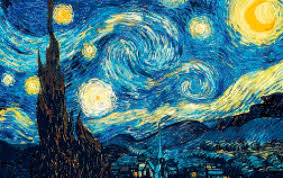
    Example: Vincent van Gogh kept painting the way he believed was right despite being told to change his ways by the most respected art critics and dealers—including his own brother—of the day. When he failed, they said, “The fool is insane, and he lived off of his brother!” When he succeeded, they said, “His persistence paid off, and he had the undying support of his family.” When he painted “Starry Night” from a room in the asylum, it wasn’t liked at all by others in the art world. Today, some estimates place its value at just about one billion dollars. Can you point out the genius among delusional if pressed to do so? Can we ever know for certain the guy on the corner in St. Augustine I met decades ago who was screaming to passers by that the voices in his head told him the “water is rising my brothers and sisters; the water is rising,” wasn’t talking about Hurricane Mathew? There’s a thin line between genius and delusion; and history has proven it takes an insane person, a fool, to be exalted for their persistence and determination. “How pathetic” they say beforehand; “How original” they say later.  

    I’m sure that, like me, this all makes you think of the overweight patrons at the health club I managed forty years ago. Some of the members were there to lose well over one hundred pounds, some fifty. I taught an advanced class for the football squad at Holy Cross College as well as a class where the minimum desired weight loss was fifty pounds, and some wanted to shed triple that. They tried everything. Everything, over and over.

    One day I walked into class with five, five-pound bags of sugar in a backpack. I sat on the small riser at the front of the room and put the pack on the floor and told everyone to sit down. We talked a bit about weight, about the physicalness of carrying it around, the mental weight we carry with it; the ridicule from others, the spouses telling them they’ll never lose it and to give up, the neighbors calling them fools for going to the club everyday when “you should have thought of that before you gained all that weight,” never understanding, never ever empathizing.

    So I asked a woman to come up and pick up the pack. She gasped when she tried, of course, and she barely got it off the ground. So I told her to crouch down and I put the pack on her thighs so that she could wrap her hands around it, and then I told her to stand up, helping her at the elbows. She laughed when she was all the way up, and then I told her to drop the back, which she gladly did, and it made a thud when it hit the gray carpeting so that everyone jumped. She sat back down; I picked up the backpack and put my arms through the straps.

    “This is heavy,” I said, and we laughed. When I asked if anyone else wanted to try and pick it up they all shied back, laughing, looking away. I sat again and opened the pack and pulled out the yellow bags of sugar one at a time and lined them up on the riser.

    “Sugar! Not-yet-completed cake!” We laughed. “How many people want to lose twenty-five pounds?” Everyone’s hands went up, of course.

    “Of course! You have to want to lose fifty just to get in this class. This is just half of that–this is twenty-five pounds that you could not lift without great effort! Should I get another five bags so it meets the minimum of the classes’ desires?”

    Everyone was quiet.

    “Buy a backpack. Buy ten bags of sugar—granulated sugar of course.” We laughed some more. We had to; we had to laugh to do this at all. “Buy the backpack and fill it with ten five pound bags of sugar, and when someone tells you to give up, when you tell you to give up, when someone calls you a fool or says you’re insane for trying what you’ve already tried before and it clearly isn’t working, hand them the back pack—give your weight to them and tell them to carry it for a while. And then come to another class. Let them know that this time it’s different.”

    “Persistent and determined remains crazy and foolish unless you keep going and succeed, but to keep going short of success is insanity. That’s where you come in. You believing in yourself is all that’s necessary for everything to work out. The others are just more grains of sugar you have to carry around.”

    Why is it we praise the people who stay within our boundaries of expectation and understanding, but when someone pushes the envelope a bit, heads out toward Mach One on the meter, they’re crazy because they’re doing something we wouldn’t.

    “Maybe people laugh at you because they know they do not have the determination and persistence you do to do what you’re doing, and they don’t have the vocabulary to tell you that. Don’t get upset, just keep emptying that backpack one bag of at a time.”

    I have felt foolish lately and it has slowed down a project I am working on, and I thought of the members of the club, and I thought of Richard, the club owner who himself at one time needed to lose more than twenty bags of sugar, but he played the role of The Greater Fool, and he persisted to the point of insanity, until he crossed that thin line into “inspirational.”

    There’s a thin line between so many things, but most allusive is the one between failure and unprecedented success. The problem is sometimes that line is so far ahead of us giving up seems not only easier, but logical. “No one would blame you if you just strapped the pack on and kept going; it’s easier than trying to empty the damn thing.”

    But that’s why when we’re working on something you believe in that no one else does, something which everyone else might consider insane and foolish, it’s important not to look toward the distance for that line, but to look at the next step, then the next step, then the next one after that.

    Flip Flops

    This work was originally published in “Barely South Review” about twelve years ago. It has since been anthologized and often pops up around 911.

    “Death plucks my ear and says, ‘Live. I am coming. Live now.'”

    –Virgil

    I went to the local hardware in Hartfield and bought a sickle—a huge rake-like piece of
    steel only instead of a rake at the end there is a double-edged sharp, wavy blade made to rip
    through branches, thick weeds and other bone-like growth. Eighteen dollars.

    The front of my property is wooded, and on a few acres toward the river, I spent some
    time clearing out brush and unwanted vines. I piled it up to haul away, but before that could
    happen, other more tenacious weeds—small trees really—took over the area. Some I pulled out,
    some I mowed, but I couldn’t grasp to tug out the tougher ones—so the sickle. One warm
    morning while alone I put on shorts and flip flops, grabbed the sickle and walked the six hundred
    of so feet through the woods to swing away at a small grove. None would rip out easily, so I
    aimed for the fences, came down from my right with major-league force and tore through the
    vines like an axe through balsa. I attacked one after another, muscles taught so that sweat came
    fast, and I made progress. Then I stepped to swing at what looked like a thick, knotty growth at
    the bottom of the stump. It was a Virginia creeper vine. Sometimes these monsters look rooted
    but aren’t. But what do I know; I’m from New York. So I swung at it like A-Rod. The blade
    passed through as if the weed were nothing more than a figment of my imagination, and with all
    my energy plus a good deal of inertia, the metal blade ripped into my left ankle.

    I like flip-flops. I grew up on the beaches from Long Island to Virginia, so I’ve been
    wearing them since I’m a kid. I actually had one pair for ten years, sometimes rigged with a thick
    paperclip to hold them together. My feet from April to October have a thick white stripe across
    the tops seen only when my flip flops are off. I teach in them. I walk in them. I even mow the
    lawn and chop wood in them. Despite what many have said, they are not the cause of the blade
    Tarantino-ing my ankle. I don’t remember my foot slipping. I do remember almost not going out
    to cut the underbrush to begin with because I couldn’t find my flip flops. What a different story
    this would have been had I not come across them on the back porch.

    When it happened, blood exploded like water in a hose that’s been held back by bending
    and then released. My ankle, foot and flops looked as if dipped in bright red paint. I hobbled the
    six hundred feet to the back of the house to wash off the wound, bandaged it, then went back out
    to cut more wood; I was wired from adrenaline, my ankle didn’t hurt too badly, and to be honest
    I had a lot to do.

    That night I iced it. I kept it clean. I was fine. Really.

    A week later my leg was pitting a bit when I pushed my thumb into my shin. Excess fluid
    I figured. Prior to the whacking, I had been running up to eight miles a day, prepping for the
    Rock and Roll Half, so one evening when I was feeling a bit more hyper than usual, and the
    swelling moved to both legs—a feat I could not comprehend from injuring one ankle, but I don’t
    have a medical degree—I stopped at Kroger and spotted a blood pressure machine. This can’t be
    right, I thought, when the first reading came up 270 over 190. I did it two more times and both
    readings came pretty close to the same. At the checkout I let them know the machine was
    broken. We all laughed at my numbers—even the bagger laughed and put the laundry detergent
    on top of the bread. It was that funny.

    The next day, worried about my ankle, I washed off my flip flops and went to the doctor.
    He took my blood pressure. Again. Again. He asked why I was stupid enough to wear flip flops
    while doing yard work. I pointed out I wacked myself above where any shoe would have come
    anyway. He asked if I were doing cocaine, heroin, or any other substance, asked if I had
    shortness of breath, dizziness, if I had thrown up, fell down, or otherwise felt corpselike. He took
    my blood pressure again. He asked how long I felt hyper. “Years,” I said, and he took my
    pressure again. Then he sent me to the emergency room. Average BP—260 over 175.
    Tests. IVs. Tests. On and on it went for several hours. Nurses came, two doctors stopped
    by, some punk there to visit a friend who had overdosed came by to check out my vitals because
    my blood pressure was the talk of the ward. The nurses upped the meds. Finally the doctors said
    based upon my blood vessels behind my eyes and various tests, my blood pressure had
    apparently been that high for probably some years, and that if it wasn’t for the fact I’m totally
    healthy otherwise with excellent results from blood and other tests, I’d have had a major stroke.

    I asked the cause. The doctor shrugged. Genetics; in a high stress situation for far too
    long; a combination, he said. They brought it down to 190 over 95 and sent me home with meds
    to bring it back to normal. They told me to keep exercising and that because of my medicines I
    could do the marathon, but to be clear, I’m going to be very weak for awhile until I adjust to a
    life where I’m not pumped on triple doses of double shots coursing through my veins.

    A few weeks later at a follow up where my pressure was at 110 over 70 the doctor told
    me in complete agreement with the cardiologist and another doctor, had I not gone in, I’d have
    most likely had a major stroke trying to run the half, and probably would be dead. I asked why I
    didn’t have one while doing the eight miles a day prior to the Great Sickle Incident, and he was
    quite professional about it: I don’t know, he said. I really don’t know. You should have. Good
    thing you wacked your ankle, he said.

    Yeah, thank God I wacked my ankle. And I thought how often that happens. Good thing I went back for the keys. Good thing I stopped for coffee. Good thing you kept me on the phone, or I’d have been at that intersection just at that moment.

    “Good thing I watched Monday Night football on the 10th and overslept: I work on the
    85th floor and I’d have been right there,” the stock broker said in the street to the television crew.
    As the towers tumbled, he counted his blessings.

    Good thing Larry Silverstein, owner of the lease of the World Trade Centers, has a wife
    who made him go to his dermatologist appointment that morning instead of yet another meeting
    in the North Tower.

    Good thing Chef Michael Lomanoco of “Windows on the World” broke his glasses and
    had to stop at Lenscrafters that morning to get them fixed.

    Good thing Lara Clarke stopped to talk to her friend, actress Gwyneth Paltrow, in a
    chance meeting down in the village that morning making her late for her job on the 77th floor.

    Thank God singer Patti Austin, booked on flight 93, had to leave Boston a day early
    because her mother had a stroke and she had to get back to San Francisco on the 10th instead. “I
    went back and forth all day about when to leave,” she said.Thank God actress Julie Stoffer and her boyfriend had a wailing fight that morning and
    she missed Flight 11.

    Actor Mark Wahlburg is still haunted by that same Flight 11 to LA, which he missed at
    the last minute when an 11th hour invitation to a film festival sent him to Toronto instead. He has
    nightmares thinking about who took his place on the flight. He would have been sitting next to
    Family Guy creator Seth McFarland who also missed that flight when his manager gave him the
    wrong boarding time and he was fifteen minutes late. He, too, still has bad dreams, he says. But
    thank God, he says.

    It’s chance. It’s the phone call, the caught light, the traffic backup. It’s changing your mind. It’s
    sticking to the plan. It’s oversleeping, insomnia, an upset stomach. It’s a few seconds. It’s the
    wrong shoes. It’s the stroke of luck.