Peace, briefly

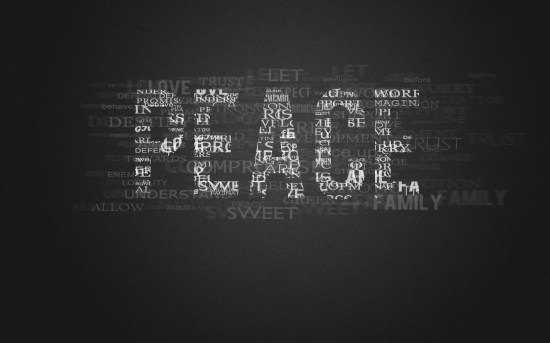
Peace-Typography-Wallpaper-Widescreen-HD

Christmas is the time of year we look for the familiar, the consistency in our lives we lean on to support all the craziness life has become. We recall stories from our youth, we talk about old times and of things to come. We share food and clean up and drink wine and laugh telling the same bad jokes and counting on the same silly family members to keep the mood light. Whoever cooked the stuffing will worry there is too much spice, and someone is going to insist you have just the last bit of wine in the bottle. The game might be on or music—at some point there will be music—and eventually everything will settle to the Norman Rockwell painting it should be. Some people will read new books, some will sit near the fire and have a drink and talk about those who have left us. The last thing everyone will say before heading off to bed is “Merry Christmas.”

It is the same in all homes though to varying degrees of comfort. Some living rooms are sparse, some will celebrate in shelters, and some under bridges somewhere praying for a warm night; the peace of Christmas is not dependent upon income or position. It is Christmas and some undercurrent of peace permeates our thoughts, our intentions. We want it to last. We are glad for what we have.

I do not understand why everyone doesn’t celebrate Christmas; I really don’t. I understand the ones who shun Easter; Easter, after all, is what makes Christianity what it is with the Resurrection as the foundation of the Faith. It is Easter, after all, that set the whole Religion in motion. So if you don’t buy into the resurrection part, well then Easter is not for you.

But Christmas is when we celebrate the Birth of Someone—Son of God, Messiah, Prophet, call Him what you will based upon your Faith, or lack thereof—who is literally the personification of peace. It is not the season to directly recognize His divinity; Christmas is decidedly about His humanity. The Man preached absolute peace, encouraged us to love our enemies and forgive them, reminded us to remember our own shortcomings, and insisted on love as the basic tenet of life. Who can possibly have a problem with that?

It seems a lot of people.

I have one friend who hates Christmas. Despises it. Absolute contempt. Though to be fair, he feels that way about everything and everyone. But this time of year he is especially hostile. I don’t know why except he believes not believing in the divine means you shouldn’t believe in the humanity. That makes no sense to me. Shouldn’t we start with humanity? Isn’t that the point to begin with? If you don’t comprehend the mystery of the resurrection, you can at least understand the life of this Rebel who stopped history in its tracks.

He cracked history in half so that even those who crucified him must be dated relative to His life. Christmas Day is a chance to remember the one Person who had perhaps the greatest effect on all of humanity.

Some don’t like the shopping, the carols, the crowds, and the commercialization of Christmastime. I never understood that either. If you don’t like the commercialization and crowds and shopping then don’t buy anything. But to put a positive spin on it all: it is the season when retailers do well enough to keep the prices down, when even the most tight-assed co-workers buy a tray of food for the luncheon, and strangers greet you with something other than disgust. It’s like a big, seasonal “time out” where everyone gets to pretend to get along. And some of those naysayers prefer to point out the hypocrisy of the season, noting the phoniness of pretending to be nice one day, saying “Merry Christmas,” and not giving you the time of day the next

Okay, but listen: if you have the choice of those around you being nasty only eleven months of the year instead of twelve, wouldn’t you take it? And since when is your peace of mind and happiness dependent upon what someone else says or does? If that is true then there is no better time to pause and contemplate the peace that is the season. That WWJD wristband so popular for a short time some years ago makes perfect sense. Here is The example of how we should act toward other people; here is The Ideal—a Birth that happened only one time in the history of ever—surely it isn’t a bad idea to take one day to recognize His time here on earth. Have you read His bio? Go ahead, Wiki Him, and then tell me His Birth isn’t worth celebrating.

My incoming seventeen-year-old freshmen will be the first group of students who were born after 911. They have known nothing but war, nothing but hostility, insecurity, terrorism, and fear. Surely now is a good time for some peace, even if ever so briefly.

How about this: make dinner and invite friends and family and tell stories of days long ago—like something out of a Norman Rockwell painting. Put some extra spice in the stuffing and make sure someone finishes off the wine. Put the game on, sit near the fire and have a drink and remember those who can’t be with us any longer. They’re missed, especially this time of year.

Peace my friends.

And Merry Christmas.

charlie-brown-christmas-i-can-tell-you-what-christmas-is-all-about

Get Back

widget-news_tcm7-211939

The earth was frozen here this morning, and as I walked along the sand at the ocean’s edge, I didn’t leave footprints. I moved along as if on pavement, and so I moved along quite a while despite the freezing temperatures and the winds from the northwest. The water was relatively calm, and it seemed almost an effort for the waves to run too far past the break. A few fishing boats moved out from the inlet, and several dolphins barely broke the surface fifty yards out.

This is my constant. This is any time of my life standing here in December, too early for the sun, watching some planet just above the horizon dim then fade to a brightening sky.

We are inundated with information, and most of it is negative, or contradictory, or frightening, or simply pathetic. From presidential tweets to congressional shenanigans, to civil-war-like partisanship, to murders and terrorism, to racism and hypocritical judgments; to financial fears for graduate students, middle class workers, young graduates, seniors on fixed incomes; to the awakening of brave women exposing the horrific trend in society of men—particularly those in positions of power—to blatantly or subtly offend others. My mind is saturated with information, and little of it is positive, none of it is healthy.

And the worst part of all of this is the lies and backstabbing. It has filtered down (or started, perhaps?) to the workplace. I swear to anyone who doesn’t understand, it has become impossible to know who to trust right in my own hallway.

What a hell of a race. Honestly, I simply cannot wrap my head around how a species with such potential can be so destructive on so many levels, from ridicule to greed to mass-annihilation. What the hell happened? Really, if God’s coming back, now’s good. Is God already here? Is that why no footprints in the sand this morning? I hope not; I truly would be quite disappointed to know that. I prefer this mess we have made is all from freewill. I can believe in that. Still, there doesn’t appear to be a plan, does there?

I understand this is an oversimplified view of world events and situations, and an idealistic reaction concerning what we are capable of. In fact, it crosses decidedly into triteness.

But one of the tenants of productive human behavior is to surround yourself with positive people, to step away from the negative ones, the complainers. To remain healthy, creative people should engage with other creative types, and planners and visionaries should be working toward new advances with other like-minds. Of course. But these like-minded individuals are getting harder to find. Or maybe—maybe—they’re still out there, they’re just harder to recognize for the cloud of unknowing coming from the media, from the meetings, from the droves of people speaking out of both sides of their mouths.

Perhaps I’m just tired. For the most part it has been a long, bad year. I just turned in my final grades and was reading some blogs here, and I thought how negative I’d become this year, how, well, tired I’ve become. On this blog I tried to justify writing about the college and politics and the world at large by noting that it is all a “wilderness.”

Until, that is, I stepped off the boardwalk and moved to the waves which didn’t make it much past the break, and the sand was firm like pavement, and my feet didn’t even leave imprints, and the cold wind coming from the northwest kept me decidedly in the moment. It all seems predetermined out there.  When was the last time you went for a walk outside in very cold weather? Not to the car, or from the car to the mall. I mean a walk without destination, absent of headlines and voting results. It is the ultimate in the immediate; it remains the only evidence of permanence I can find.

Out on the horizon this morning, well before the sun broke through, some thin clouds ran the length to the south like jib sails running out front heading to the Outer Banks just to the south. The water was warmer than the air, and sea birds kept diving by me as I walked hoping I had food. One landed near my feet disturbing a few sandpipers I was sneaking past.

The pier is closed for the season, and the lights running down the boardwalk were still on so I could clearly see no one was around but a few military out for an early run. One old man wrapped tight in a parka walked his dog.

But at the water’s edge all I could hear was water, and even that so gently I could sometimes also hear the dolphins’ fins break the surface. It was that calm. No hypocrisy. No backstabbing or negativity. It is the ultimate definition of truth. It remains the most honest experience I have found.

And so I came to work and I turned in my grades. It is time to head back to my small patch of woods at the river.

You’d be surprised. There’s so much to be done. “Count all the bees in the hive. Chase all the clouds from the sky.”

25399130_10213546157915780_7049320998632355963_n


Acknowledgements

1414083349-7-ways-entrepreneurs-master-self-awareness

I’ve been messing with this piece for a long time. I acknowledge now it is time to let it go

I’d like to acknowledge a few people without whom none of this would be possible. My parents, of course, and God, I’ve got to acknowledge God, it’s required of these kinds of things. I’d like to thank the friends that got me here, like Eddie and Steve, Mike and Dave, Sean and Tom, Tom and Tim, oh I could go on, yes I could go on. I’d like to thank those that influenced me: Tim and John. The Muppets and the Velvet Underground. Jackson and Bruce and Billy and Eric, Jimmy and Neil—the other Neil. I can’t forget the places from where I would not end up here: the Shack and the dives along the way. The Club and the Bull and Finch. The Golden Tiger and the Blue Door Blues and Jazz club where they don’t play blues nor jazz and the door is brown, but really that makes me thank them more. I’d like to thank those who took a chance on me and then broke up with me; those that said I was worthless and forced me to do something valuable out of spite. I’d like to thank Spite. God Bless Spite.

I’d like to acknowledge the people who left impressions on me that cannot be repaid. The profs and elementary school teachers. Mr Kingston for caring; Mrs Guidice for understanding we were only five years old.

I’d like to acknowledge that I’m impatient; that I’m intolerant of people who repeat themselves; that I’m lazy; that I’m prone toward wandering instead of being focused. I have to acknowledge right here that I’d much rather have taken more time after high school; and then after college instead of ending up in Mexico headed to New York. I’d like to admit it was simply a matter of thinking something would simply drop in my lap.

I’d like to acknowledge that I am irked by people who use sentences in the form of a question when they’re not really asking anything. I’d like to acknowledge I’m as curious as to what happens to the assholes who I’ve taught as much as I wonder about the honor roll members, who often, I must admit, are equally assholic.

I’d like to thank my son without whom I would not, to the best of my knowledge, be a father. I’d like to acknowledge it might be the only thing I never tire of doing. I’d like to admit right now I tire of doing everything else really pretty quickly.

I’d like to have known my grandfathers.

I’d like to thank Camus for making me question everything and Indiana Jones for making me think I know everything. I’d like to acknowledge the people who pick up the cigarette butts most people flick out the window because they’re too-lazyass-bark-at-the-moon stupid to use their ashtray.

I’d like to acknowledge Aaron Sorkin and the writers of West Wing and Newsroom for some of these lines.

I’d like to thank Kathleen who I knew when I was five. And Kay, of course, and the early morning calls of cows in the distance.  I’d like to thank Essie. I’d like to thank Lynn and Kathy and Michele—not that Michele the other Michele—and Mary and Joan and Margo and Lisa. I do not wish to thank Stacey. Freak.

I’d like to acknowledge people like Albert Schweitzer and Mother Teresa and other contemporaries of ours for making me realize I’ve really done nothing at all.

I’d like to thank my inexperience in starvation, my ineptitude in homelessness, my warless neighborhood, and the plague-less road I’m on.

I’d like to acknowledge rest stops and urinals. Or trees, I acknowledge both equally. I’d like to take some time right now to acknowledge the passing of time, the quickness of life, the fleeting moments during which we are truly passionate, the ability, the possibility, and the stability. I’d like to recognize my ability to know when it is time to move on, to let go.

I’d like to thank myself for not hurting anyone. I’d like to thank those I might have hurt for dropping my classes. Ironically, I’d like to acknowledge I’ve hurt way too many people. I’d like to take it all back. I’d like to give it all away. I’d like to leave it all on the playing field. I’d like to go back and run one more time on the south shore beaches where my grandparents lived, where we’d walk along Freeport Avenue smack dab in the middle of the road where the cement slabs met along long strips of soft tar, and we’d press our toes into the tar as we made our way to the ocean, and be two behind my sister, one behind my brother, in front of some cousins, and later we’d go back to the house and explore the ancient attic. And we’d drive home late and in the morning I’d wake to the sound of foghorns drifting up from the Great South Bay. I’d like that a lot. 

download

Astronomy 101

pexels-photo

Winter at night in the country is silent. To the north is a harvested field where often geese land just around dusk, and in the river beyond that. Just on the east is the bay, and there’s nothing but trees to the west and south. When the sky is clear this time of year it is cold, and now Saturn is settling below the horizon just after midnight. The just-about-to-be-Super Full Moon is climbing over the Chesapeake, and if it weren’t so bright the Milky Way in the south would be more visible. This is the way it is; this is seven at night in the country in winter.

This is the Cold Moon. It is the first full moon in winter, so the Cold Moon. In two weeks is the Geminid meteor shower offering more than one hundred and twenty flybys an hour. If you lay on your back on a blanket in the grass in the country on December 14th or so, you can probably make a few wishes every minute.

Today I miss my family—my siblings and their families, many cousins and some cousins once removed are all having lunch in Manhattan. It is Christmastime in New York and they’re sharing stories and laughing, probably walking around mid-town, stopping in some stores, watching the skaters at Rockefeller Center. I wish I were there. “Next time” is too iffy anymore. Time keeps redefining “next time.” At the same time my soul is filled with peace because my son and I will get out his telescope and spend some time tonight out here on the bay in the country looking deep into the Milky Way. We will try and see some craters on the moon, blind ourselves by observing Vega in the west, and if we are out early enough we will see the rings of Saturn in the Southwest.

After a while I’ll start a fire in the fire pit on the patio near the back path, and we’ll heat up some cider. I am sure that while we will enjoy ourselves, we both would have liked to been in New York City today. Some years ago we went and met my cousin Roy and his wife Patty and had pizza and walked in the rain, lit candles at Saint Patrick’s Cathedral, and talked about the joy of spending time with family. I haven’t seen them since. It makes me sad.

Honestly, our lives should revolve around family; it really is that simple. Unfortunately, that is not the way it is way too often. We battle with deadlines and struggle against the proverbial sand seeping through the hourglass. I would like to slow the whole thing down. I’d love to be able to live like we lived half a century ago when cousins were a stone’s-throw away and every day someone was around, sharing dinner, and we would run into each other at the stores. Now we are scattered like stars and to meet with more than a handful of us means mapping out distances to common locales, coordinating schedules, and planning ahead for accommodations and flights. The simplicity of saying, “Hey, we’re going to get a fire going in the pit tonight, drink some wine and use the telescope; why don’t you come by,” has receded to so long ago I barely remember when. I wouldn’t change much about my life; but if I could make one small adjustment, I’d arrange it for all my cousins and extended family to live nearby, especially my siblings and their families. I suppose we appreciate each other more for the lack of constant contact and the possibilities of “next time.” But part of me wishes I was in NY right now.

Still, few events bring me more peace than sitting outside with my adult son, having cider and looking for constellations in the night sky. It is incomprehensible how much space exists between us and the stars, and how long it would take to get there. When the world is too much with us, we can always find a little peace out in the field in the perfect stillness of night and watch some meteor shoot by, dimmed only by the light of the moon

Vincent van Gogh once wondered in a letter to his brother, why can’t the stars be as accessible as the dots on a map of France. If we take a train to reach Paris, he supposed, then perhaps we take death to reach a star. I think of that sometimes when I’m looking toward Vega or Orion, or when I get lost in the Pleiades. It is silent out here stretching clear across the water, and the chill reaches deep inside, and you realize this is exactly how it was for Copernicus, for Galileo, for our grandfathers, and forever it will be exactly like this. And you realize life should always be like this but it is inexpressible, so you look around for someone to share it with, because talking about it falls short, is incomplete. It must be shared to be understood.

And you realize right then that family is the center, the absolute center of your universe. At some point we come to understand that life revolves around them.

aug 4 17 010 (2)


An Apology to the Citizens of the World

images

We are so sorry. Truly, if we had any idea he would have turned out like this we never would have hired him. In fact, many suspected this very result, but honestly, not to this degree. Unfortunately, he met the qualifications: born here at least thirty-five years ago. Go figure. Yes, a majority of votes didn’t go his way; it’s hard to explain. And by his tone when he speaks, an international audience might perceive this all to be a practical joke, an exaggerated example of the “Loud American” so much of the rest of the world despises. Unfortunately, no. This is real. And we are so sorry.

This isn’t about policy, for the most part. It is about human behavior.

Let’s get a few things straight:

First, the president of the United States is not the “deal maker” here, we are. We hired him to carry out what we decide needs to be done. Sometimes that power is abused; sometimes we need to reevaluate our own choices; and sometimes it simply goes awry and we hire an immoral, indecent, and perverted asshole, but we’ll decide what needs to be done, not him, and if errors continue we’ll find someone else to take the job who will listen to what we say. When that isn’t done efficiently and with our confidence, we regret it. Well, not everyone, and that’s another problem. Some buy into the propaganda hook, line and sound-bite. Not because these sheep believe it so much as the methods employed to communicate such crap is so convincing. Huxley wrote in ’58: “The effectiveness of political and religious propaganda depends upon the methods employed, not upon the doctrines taught. Under favorable conditions, practically everybody can be converted to practically anything.”

Or anyone.

Second, the president often makes executive decisions we don’t like. Our support of US troops, for instance, should not be mistaken for a belief that most American’s think those same troops should be sent to North Korea, Somalia, or anywhere else. Most Americans understand true Islam is not what the president is mouthing off about, and most Americans know that the environment must be our primary concern. I’m sorry if the president and some people around him leave the impression that Americans stand behind destroying the world either by imminent destruction because of childish and irresponsible hyperbole or by some slow erosion through pollution and overuse of natural resources. We were doing really really well until a year ago. Forgive us. We are embarrassed by the president’s inability to recognize his mistakes and refusal to reverse bad decisions out of some false sense of pride.

But that is not what we need to apologize for, though we’re really sorry for that, too. No, what sits atop this mass of mess we’ve helped make is the greatest of ills for which perhaps no apology will suffice: we’re sorry we are not what we used to be. At one time Americans created a constitution that rewrote how government should be run. The world turned toward us with respect for our progress. We didn’t suddenly succeed at nearly everything we did—military, invention, science, medicine, and engineering—because of our population: we’re not that big. We didn’t surpass the expectations of critics from Czars to Monarchs because all Americans got along—we disagree with each other perhaps more than most citizens in most countries; that happens in an experiment like ours which is why dissent is written into the Constitution. In fact, the constitution encourages it, particularly free speech. With that model, we made good on our word for two centuries, and when we had problems of our own—the Civil War, Slavery, Civil Rights, Women’s Rights, political scandals like Watergate, LGBT rights—we dealt with it, sometimes aggressively, sometimes diplomatically, and sometimes poorly, but we dealt with it and moved on. No longer. No, now, I’m sorry to say we attempt to bury our faults beneath distraction and fear. We simply are not what we used to be. And that isn’t fair to our future or the future of countries which turn to us as an example.

The truth is, the United States as we knew it is ill. Its heart is filled with fear and unsubstantiated speculation, and when executive decisions are coupled with personal attacks, degrading and racist statements, and absolute ineptitude, a change has to happen. This country does not have the moral strength it did in its youth, and any artificial means of sustaining life will eventually collapse to the reality of this false resuscitation in some pathetic tagline like “Make American Great Again.”  Honestly, most of us are too smart for this. Patriotism has always been the backbone of this country; but it had always been a patriotism built on pride—the pride that came from making the right decisions, following the right paths, no matter how hard; it was a patriotism built on the backs of dissidents and soldiers who knew how to fight for our freedoms without compromising them. It was not false; it avoided the trite sound-bite built by committees and marketed to the mob who drive about the country with flags flying from car antennas.

But many here have bought into this new, veneered patriotism. But it has a different grain, this national pride that permeates every aspect of American life. It’s a patriotism balanced on fear and propped up by stimulus-response. It has not the historic sense about it the world so respected and tried to emulate in decades past. It’s a national unity that survives not because we believe in ourselves but because we no longer have the attention span to unearth the truth; we don’t have the objectiveness to separate right from wrong, and we no longer understand that sacrifice means growth, not weakness.

It is Lord of the Flies; it is the reactionary leader creating a monster he is set on protecting us against, silencing the dissent of investigations like most dictatorships do, convincing us the one who leads with reason and diplomacy will place everyone in danger; it is Moby Dick, with Ahab determined to commit suicide against an unassuming nemesis solely for revenge and not to advance some greater good. It is the tragedy of the ages, the fall of an empire. It is our own fault, and we’re sorry. No one here is happy about this.

No one here is happy when the president declares he is a deal maker not a diplomat; when he pushes aside world leaders to get in the spotlight; when he ridicules mentally challenged people; when he badmouths journalists—the very soul of a democracy—when he treats women like objects and brags about it; when he lies about his accomplishments; when he makes fun of anyone who disagrees with him.

This man is an embarrassment no matter how far to the left or the right he might stand. This is about human behavior. We were supposed to be a better example than this. We were supposed to provide proof that humanity had it in its collective power to accept the ways of many people and, based upon a common constitution, work together. Our proclamations promised in writing the rights of liberty and happiness—amazingly, for the first time in recorded history. And it worked for awhile. Oh, the democratic principles of our founding fathers remain the cornerstone of any government that hopes to rule without revolution; that aspires to last longer than its military forces allow. We were really good at it, too. But who isn’t embarrassed by the fall of a good example? It is, perhaps, worse than watching some wretched foe attempt to lead you into the abyss; for after proving oneself worthy, after placing oneself in the position of respect and admiration, after followers line up blindly trusting this once-great prototype of human justice, to bend toward being an aggressor, to bring the balance of criticism against the once seemingly-faultless government, is nothing short of deplorable. We preached to the world that our way of life should be emulated and respected; and certainly for some time it was. But we’ve become the spoiled athlete with talent and power who bends rules to benefit himself. Watch closely then because we are truly falling. And it is undoubtedly because of a small group of demented leaders manipulated by the current president.

Talk about inappropriate behavior in the workplace.  

We are not on this slippery slope because of some foreign power who takes issue with our self-worth; no, we’ve made it here on our own. We spend more time studying the drinking habits of bad actresses than the decisions made in congress. We propose new governments to foreign lands while our own executive branch is under investigation; cabinet members disagree; both major political parties prefer there were only one party; what the president says is cause for war both domestic and international; race relations are once again in turmoil; the president wants to literally build a wall between us and our neighbors; we spend more on fast food and gourmet coffee than we do on education; we don’t handle natural disasters very well; violent crime is higher here than in most countries on the planet; our jails are saturated, and our waterways are polluted. And all the while we spend a great deal of energy telling other countries how they should act and what is wrong with their leaders and policies. Are we right? Perhaps, but we’ve lost credibility, and many of us would rather our leaders simply keep their mouths shut for awhile and let the world, as Mark Twain said, believe we are stupid than open our mouths and remove all doubt. Please, just for a short time while we straighten this out, could everyone look away?

We are so sorry. We may have earned the position of respect and reverence in the past, but it is not automatically renewable. We should not follow up these successes of domestic and foreign programs fifty years ago with a new foreign policy based upon “gut feelings.” The primary fault and eventual downfall of any great nation is hypocrisy.

We weren’t always this way. We didn’t even act this way through the two centuries of turmoil and growth, when what we did and how we did it, while arguable and questionable, rarely contradicted our own principles of democracy. When we recognized our own hypocrisy—slavery, for instance—the collective power of this country’s citizens demanded we set it right. Now we call for executive privilege as if we’re ordering a pizza. We refuse to testify like we’re turning down dessert. We’re scattering troops about the world like it’s a Risk board and the only place left to put a few cannons and horses is Kamchatka. We refuse to accept the ideas of other nations no matter how many are unified against us, and we withdraw from treaties set up to protect the globe solely to protect our wallets.

We’re sorry our leadership often acts and speaks less than presidential. Listen, lots of people here make fun of our president. They make fun of his tweets, his verbal sweeping generalizations, his inability to act like a mature adult. Yes, it’s embarrassing– the world has made that clear, but you don’t need to tell us.

Believe me.

Newspapers in counties that once turned to the United States for leadership and guidance mock our president on a regular basis, emphasizing his flaws, using his fallacies as some proof that America is not what it used to be.

And it’s not. And we’re sorry, but the rest of the world needs to understand how this works. When we collectively decide he needs to be fired, we will do so. For now, disagree as we might, our system is set up so that other branches of our government hopefully pull up the slack. This type freedom comes at a price, and we don’t always make the right decisions. But they’re our decisions, and while we deeply apologize for not maintaining our past strength and dignity, that respect was not earned by any one president or any single policy, but by the collective efforts of the American people and supported by the finest constitution in human history which guarantees rights that have made this country work. Rights such as the one that states anyone born here can become president. Anyone.

Even this asshole.


constitution-page1

What Lies Within

A Very Personal Thanksgiving Week Blog


Okay then:

I have never applied for a job. I always just fell backward into them. I wanted to use a bathroom at the beach and managed a hotel for four summers; I thought I was going to an exercise class to learn to be an instructor and managed a health club for Richard Simmons; and blankets, well, there were no applications in small Mexican villages back then. Even here at Tidewater Community College where I have been a professor for twenty-eight years I started because my car broke down in the parking lot and I happened to use the phone in the Humanities Division office the day the dean, Bill De Weese, needed someone to teach some courses. In fact, I have spent most of my life falling backwards into some sort of forward motion. I would change that about myself I am sure since it simply reflects my tendency to take the path of least resistance. I just got lucky that my path ran through some cool and amazing locales. 

In fact, I would change a lot about myself; the way I am with people for instance. I’m fine in front of twenty people or two hundred people—no problem, but one on one is one example of where I’m often uncomfortable, with the exception of a few very close companions. I often joke with a friend about how I don’t fit in; I’m not saying I “can’t” fit in; I’m saying I, me, inside, in my heart and soul, never feel like I fit in, like everyone else is existing in some sort of poetic unity and I can’t get my meter right so I stare in from outside. It always feels that way to me. Always. I don’t have much of a problem with that, actually. But it does demand some adjustments along the way.

For instance, here’s a pretty significant adjustment: I’m leaving TCC at the end of Spring semester. No, really.

The college made me an offer I can’t refuse, nor do I wish to. Nothing about my life, my personality, or my ambitions bends toward retiring some day at seventy-something as an English professor. I’ve gone too long now without being scared, without taking chances or reaching for something just beyond my grasp. I am about to move toward a world with a certain lack of security that I’ve had for so long; but there is another security which beckons—the security of pursuit, the comfort of knowing I’ve avoided complacency; the recognition of who I am deep inside, the person who wrestles with those tigers which come at night.

I don’t want to wake up someday at the end of someone else’s life. 

I suppose now that nearly everything in my life is changing, ending, adjusting or otherwise cracking in half, it just might be easier for me to make the changes I can and accept the ones I can’t. I don’t for a second pretend I have the wisdom to know the difference. But that’s okay; unlike Frost on his immortal and misunderstood road, I’m checking out the other path; see what’s there for me. In the literary world it is understood that there is only one path but with choices along the way. But as he indicates, once we move too far down the choice we make, we don’t ever go back.  

And I have no desire to go back. I can’t begin to offer thanks for how it has all gone so far. But we often fail to recognize there are constant forks in the proverbial road. And my current direction, for a multitude of reasons, simply isn’t working out anymore. People who know me well and have taken this trip with me tell me to look, really look at the amazing ride it has been. Yes, indeed, what an amazing ride. The travel, the people, and the endless opportunities. 

But listen: How do we measure what we’ve done? How do we do that? Honest to God, how is that possible? By comparison? If so to what? The least among us? The greatest among us? Each other? The past? Perhaps it is in how we feel in our soul. Maybe the measure of a man is in the distance between his dreams and the efforts he puts forth to reach them. The only ideal comparison is to ourselves and how we might have done things differently, but that comparison is by virtue of nature impossible since one can never tell what might have worked out, who would have worked out, what distances we might have traveled into our wildest hopes if not for…and on and on and on in impossible measure.

Yet here I am. All the balls I’ve been juggling have now fallen; or, better said, I stepped back and let them fall. That’s okay though: I still have some balls left. 

I still have it in me, as we all do no matter our age, condition, situation, or experience, to have the courage to pursue a goal instead of a path. The greatest lesson I learned on the Camino is that while the journey is the point—the lessons learned, the people met, the experiences which can never be outdone, are so obviously the point of course–without the goal of Santiago, without some cathedral in the distance, we’re just meandering aimlessly hoping to bump into something good.

It’s been a great three decades; apparently I’m good at meandering. But this path has no spires, no eventual absolution. Just because you’re good at something—really good at it—doesn’t mean you should be doing it. By that measure I should be managing a hotel or making omelets somewhere. There needs to be a fire inside, at the least some simmering always present.  And just because you found a fine plateau with security and comfort and respect, doesn’t mean you are supposed to stay. I hope people don’t decide what I should have done based upon what they would have done. We do that a lot.

It might be easy to assume this rumination is to reassure myself I’m doing the right thing. Yeah, of course, and it is something I need to do daily. We all do, otherwise we really do slip back into routine, ease, and the gentle flow of life with a current created by someone upstream. It is most certainly self-reassurance. But it’s like this: I’ve been in school for twenty-eight years, and I’ve been learning about myself, what works, what doesn’t. I’ve developed aspects of my life which burned when I was young and still simmer waiting for some attention. I’ve sat inside this cinder block office tracing maps and writing essays waiting for something different to knock on the door, leaving me feeling like I’m always just “a day away from where I ought to be.”

I want to live, and that’s simply not happening here. It would have been very easy to keep doing what it is I’ve been doing for so very long without effort or worry, but it came at a cost, and I’m no longer willing to pay that price. It really is that simple. I’m just not healthy anymore in so many ways. I’m not for a second pretending it wouldn’t have been easier to stay; that most definitely would have been the path of least resistance. But I no longer have it in me to fight for complacency, to struggle with mediocrity to insure the predictable.

When I was in college my friend Sally made me a plaque. It said, “What lies behind us and what lies before us are tiny matters compared to what lies within us.”—Emerson. It isn’t difficult to see what lies behind me has been phenomenal. I could go on about journeys and writings, the people and the moments, but they all only lead me here, to now. And what is next became incomprehensibly predictable, so much in fact I could map out my life for years—years—to come. Some take comfort in that; most people rely upon that security. I can’t, refuse to, will not, am absolutely against sitting in a chair one day not too many years from now looking back and saying, “Yes, that was a comfortable life, but it wasn’t mine.”

For better or for worse, with all the anticipated struggles before me which are very present in my soul, I want to never doubt that my life was absolutely mine.

“I’ll make myself some pictures and see what they might bring. I think I made it perfectly, I wouldn’t change a thing.”     –John Denver

042


The Value of Change

aerie two

Last week in my creative writing class we reviewed various questions to ask when returning to a draft. Where’s the best place to start? Is this detail to obvious? Is it too obtuse? One question in particular is a favorite of mine and I spent some time going over examples which moved to an interesting discussion: What value does this detail (image, sentence, etc.) bring to the work? We talked about fluff and filler and basic bullshit which often creeps into the craft, especially during the rough draft stage at the end of a writing session liquefied by too much Rioja.

And then the weekend came and the leaves along my road and along the river leading out to the bay were at their peak; that is, they were vibrant with red and orange, yellow and rust, and the deep blue sky behind them made for a scene no camera could accurately capture. My days immediately had value, enriched by the pure power of life in transition, which I could witness simply by walking.

This made me think of my father; I have so many reasons to think of him, particularly in the fall when things change. But the leaves remind me of how much he enjoyed the season. The fall is family coming for holidays, of course, which my father lived for, but also football on Sundays; and in all the houses we lived it was the colors of the leaves. Leaves ablaze burnt orange and fire-red, and blue skies contrasting black trunks and silver and brown branches. It is when we mark time with colors and the distance between a falling leaf and the ground.

When I was a child I found an oak near the creek at the end of the old trail along the Southern State Parkway, and I carved my name in the trunk. It might still be there, nearly half a century later; if some hurricane hasn’t taken it down, or some summer storm, or construction or a myriad other ways time steals our past. This weekend while out walking along the Rappahannock I wondered if I decided to drive to the very end of that Long Island road and park near our old house and walk through the woods to the trail, would I discover fourteen-year-old me standing there with a knife not understanding how fast the tree would carry my carving to incomprehensible heights? Would I stare across decades and measure the distance from my youth by the height and breadth of the trees I long ago climbed and swung from and hid behind? Nothing exceptional happened in those woods; nothing but the passing of time occurred where I carved my name in a tree while Dad waited at home for us to move on. But now, if when I returned to my car would I catch a glimpse of my long-ago father looking at the newly planted trees surrounding our new house anticipating their eventual majesty? Did we know we would move away so soon? Do we ever know how soon we move away?

So many seasons have passed, and once again leaves are ablaze, burnt orange and fire-red. It is as if new colors appear, and my son has spent his own decades taking pictures and marking time by the height of the apple trees in our yard, which anyway have lost their leaves for now.  Everywhere I look it is autumn and the branches more prominent, like bones pushing through aged skin. If my father were still here would he want to tell me again about the colors on the trees along the Brooklyn streets of his youth? I have never been able to take root like him, but I’ve come to understand the arch of ancestry and the unwavering value of the past.

And what value there is in every moment, in every season. What profound and inexplicable value exists in the persistent passing of time, the predictability of change, and the colors of life. Oh! Such colors of life!

aerie one

Strike That

155354706

In Derek Jeter’s last year with the Yankees, he made 12 million dollars.

That same year I didn’t. I teach college.

He hit 310 in his career with 260 homers and 1311 rbi’s. He played in 145 games his last season and stood at the plate 581 times. During some of those at bats, and certainly a few times on the field with his hands on his knees, he called out supportive statements from his shortstop position, like “Go get ‘em!” or “Come on!” He probably broke a sweat. It gets hot out there and he’s from Jersey. The stress must have bled onto his off-the-field schedule as well. He had team meetings, promotional events, media interviews, charity appearances, and, of course, training. I imagine it can be rough, throwing that ball a few hours every day, placing himself in harms way of a hammered lined drive—not to mention the dangers of collision with the third basemen or pitcher during those sudden infield flies. So I really can’t question his annual salary of 12 million dollars. Certainly the people attending in the Bronx were there because of him and would go home if he didn’t play one day (which is rare–he missed, in fact, only 17 games in 2014). When the fans arrived, they spent more money on beer, food, and shirts with Jeter on the back, which is another aspect of his job which must take its toll–all those pregame autographs he must sign, and all those people running around wearing Yankees jerseys with his name on the back–Impostors! Human plagiarists!

I don’t know Derek. We don’t hang with the same crowd. It might be my age–I was a sophomore in high school when he was born. It could be also I’m a Mets fan, so no wonder our paths have not crossed.

Also, I don’t make 12 million. In fact, here’s how it breaks down: Derek’s game time salary, that is, money divided into his in-season, game time appearances, totals $74.074 per game. That doesn’t include spring training, appearances, practices, and money he makes from other income such as commercials and endorsements. Compare that to my salary, including class time, prep work, meetings, grading, workshops, and conferences, across the course of a twenty-eight-year career, including cost of living increases–I mean the basic salary for myself as a college professor—I will make in total what Derek pulled down in twenty-five games, seven innings.

Surely I could field a ball. I might have called the coach, asked him to put me in. I used to throw fairly well from the mound. I could be like the pitcher made famous in Dennis Quaid’s The Rookie, Jim Morris, who at thirty-five returned to baseball as a relief pitcher. And, hell, I’d do it for half what Derek makes. One tenth. Wait. I’ll do it for what he would have made in the 17 games he didn’t play his last year, which is still twelve times my annual income.

Now, all this is fair, really. He generated income, increased revenue. No one is running over to the college bookstore to buy jerseys with “Kunzinger” on the back. If someone else were pitching the grammar rules instead of me, students would still show up. Nike doesn’t endorse faculty, though for relatively small money, I’d throw a “swoosh” at the bottom of my course outline and wear the Nike shirts to class everyday. I wear a baseball cap quite often–for the right price it could be theirs, or Budweiser’s, or Coke’s.

Think of the possibilities. A company could sponsor my clothes, sneakers, and hats. They could endorse my syllabus, my tests, and even my overheads. Yes, at the bottom of my overheads I could put a “Goodyear Blimp” emblem. I’d do it for relatively small money.

I already do.

It wasn’t always this way, to be sure. During the Babe’s days he signed a two year, $160,000 contract making him the highest paid player of all time while Cub slugger Hack Wilson led the National League in home runs and RBI’s and said he was “grateful” when he signed in 1931 for $35,000. That same year a college professor averaged about $3000 a year. Here’s the math: While my annual salary is about 30 times that of my counterpart back then, Derek’s take was 80 times the Babe’s.

Make no mistakes: I can teach. I’ve had excellent evaluations for my entire career, and my performance improves as I go, unlike an athlete’s. But I still bet I can pitch low enough to force out three opposing players faster than Jeter can develop students’ argumentative writing skills. But you have to love him. I mean, to watch him play is witnessing an artist stroking the canvas—sheer beauty. Truly.

Still, you should see me diagram a sentence. Breathless.

1411412754000-9-20-jeter

Looking Both Ways

unreceptive art

I’ve been thinking a lot lately about the past three decades at the college and I’ve noticed a few trends along the way. Many years ago I wrote a small work about being a professor, and it is interesting to note that things have not changed. That’s my fault though; I really forgot to make a note reminding myself to call each of my students and remind them to get up, to come to class, to bring their work, and to raise their hand.

I’ve failed them.

Please. Allow me to note some consistencies:

Older students are better than those just out of high school. The big dude with the pierced face and tattooed eyelids is probably a great writer. Many students would rather pull a lower grade than have a professor look at a rough draft. Students who take copious notes don’t always fair as well as students who just listen intently. If it happened before they were born, it really doesn’t have any affect on them and therefore they shouldn’t be required to learn about it.

Hamlet is boring; Oedipus is stupid; statistics is tedious; bio lab is too long; developmental classes are a waste of money; introduction to literature is a waste of time; history is not relevant; philosophy has no practical application; psychology is disturbing and the instructors are disturbed; text messages are read more than text books; face to face communication is obsolete; and the only source of information is the internet.

Here’s the great irony of education: while we should become smarter as time goes by because we’ve been given the answers through the centuries, watched the lessons played out on the battlefields and in seminar rooms, we’re actually ignoring more, learning less, and not really keeping tabs of our decline.

Maybe if I text my lectures they’ll pay attention. Phones go off in class, in the hallways, in their backpacks. They reach in to quickly shut it off because they “forgot it was on,” and spilling out onto the floor are the books they need, a few small notebooks, and various articles of clothing. They carry more in their bags then in their minds. 

The science and math books are ten-pounders, and the anthologies aren’t lightweights either. For lab they need their lab equipment, gloves, goggles, special notebooks, dead animals. Rough drafts, final copies, required journals, various books read besides the textbook, art supplies, tape decks, language discs, keys, wallets, games and personal items. Some have staplers, toothbrushes, condoms, aspirin, medicine bottles, and hand soap. Some carry crayons and cookies because their kids come to class sometimes when elementary school is out or cancelled, or when the kid is sick but the Prof told the parent if she missed one more day she’d fail the course. They carry medicine for those kids, bi-polar, attention-deficit, hyperactive. They carry the same for themselves, medicine for their own ADD, ADHD, OCD, diabetes and manic-depression. They carry a lot. They need to remember when papers are due, when tests are scheduled, including their math tests, their physics test, algebra, pregnancy, special needs tests, mammograms, CT scans, and various other tests they’ve got on their mind and written down in their notebooks at the bottom of their parcel.

They carry cell phones with various rings, various friends calling during class, right before class. They have small machines attached to their ear so they can remotely answer the phone without having to move their arms or lift their hands. They have the numbers of everyone they know automatically programmed in. They no longer have to walk to see anyone, walk to find a phone, remember any numbers, lift their arms, or turn their heads.

Once someone’s phone vibrated during class. The vibration on the desk was as loud as a ring, but she politely excused herself. Some professors insist the phones be off during class, and they won’t even allow them to be turned to vibrate. But this student came back in and said she was sorry and that she had to go, that was her babysitter calling and someone from her husband’s command post was at her house waiting for her to come home. A week later I discovered her husband had been blown up at a roadside bombing on the airport road from Baghdad. Another student’s brother was on television. He worked for Blackwater in Baghdad and she watched her brother’s charred body swing from a bridge in Iraq.

One student shot himself in the head because he thought the paper was due and he thought his medicine wasn’t. True story. A colleague of mine listened quietly one day to a near-suicidal student explain why her paper was late and how her daughter was going through depression and they were bringing her to the doctor to see what was wrong, and it weighed so heavily on her mind that she couldn’t really concentrate on the paper and would the professor mind the paper turned in a few days late, and she agreed. Students knew this about her—she would work with anyone. A few days later my colleague hung herself in her kitchen because her medicine was fucked up.

This is the American Community College. These are the trenches, in the city; some of these students come to get ahead, knock off some basic education classes before transferring and paying more at the university. But some come here instead of jail, or to bide their time, or to hang with old friends and maybe hook up with new ones. Some come to keep off the streets; it can get dangerous these days. But some of these students come from real war-torn areas. My student Deng walked across Somalia to Ethiopia twice looking for safety. Before he found it at ten-years-old in a Red Cross camp, he was given an automatic rifle and taught to kill. Now he tries to write about gun control and crime in seven hundred words, making sure the grammar is right. His mother was raped and hacked to death in front of his eyes. His father “disappeared.” He was a Lost Boy. Sometimes he didn’t concentrate. Yeah, okay, sometimes he didn’t pay attention. But when he came to my office we talked about politics and survival. We talked about Africa and faith. We talked about ideas, and he told me Chinua Achebe knows Africa. He told me how Sartre would not be popular in Somalia but Descartes would. He knew the differences, understood the gentle nuances that separate philosophy and politics. I didn’t ask about his scars. He didn’t ask about mine.

Some students came here with an education the likes of which we can’t possibly conceive. He told me he as soon as he found the camp he knew he needed to leave. I said I understood. He said it was too much, and he wanted to die so badly that’s when he knew he just had to get out. I didn’t answer. I had nothing left to say to him.

I have nothing left to say.

I wonder if any of my students from years ago wish they could go back to the start and do things differently. I know I do.

Sometimes I’d like to go back to 1986—amazingly only three years before I began teaching college. There was one moment then—I can still sense the stillness in the July air—I would like back. How different things would be. But we couldn’t know then what we know now. We were so young.

What I know now is this: all the lectures in all the classrooms from all the professors in the world will not prepare us to be anything of value if we don’t find any value in what we do and how we live our lives.

Of course we would all do things differently; even just a few small moments. I’d never have left Massachusetts. I’d have gone to Monterrey anyway. I would have passed on the Trout in Prague, the oysters in Asheville. When I left Tucson that last time I’d have headed west instead of back east.

We are always in pursuit of ourselves, aren’t we? Even if we don’t consciously consider such notions day to day. In class this morning I asked my students if there was anything they would have done differently in their short but tech-dominated past. They all laughed and had answers that ranged from staying off-line to trying harder in high school to treating a loved one better while she had the chance. They talked for a bit; they got quiet. They thought a while. And I added this: What are you doing now that five years from now you wish you had done differently?

They looked at me for a moment with just a little confusion and some wonder about their future, and they waited for me to talk.

But honestly, I have nothing left to say.

14937424_10209929992233898_1894421309569638064_n


Blog 100

12033141_10206923732439282_3439217421098717487_n

I figured out how to be happy. Here, now, at fifty-seven years old. It is good I thought of this so early in my life so now I can be happy all the time instead of just when it works out.

It is this: Don’t expect anything from anyone. Or, better said, stop paying attention.

I’ve heard this throughout life in various semantic forms. Do what’s good for you; happiness must come from within; create your own happiness; build your own rainbows, blah blah, yada yada, ewww. But the triteness is true. When we stop expecting things of other people, even when it is logical in some sort of familiar way to do so, we move gracefully without being disappointed by false expectations.

This is sort of what St Bernard meant when he said we must learn to make excuses for other people.

Or maybe I just like having no one left to blame but myself if something doesn’t work out.

I love every season. I like the icy winds on my face when I am near Lake Erie or when I lived in New England. Nature is so absolutely objective; she just lays it out there on the line and says, “Today, you’re going to freeze your ass off,” but means nothing by it. It is absolute honesty. It does not differentiate between those who love the cold and those who don’t. The same was true in the Sonora Desert; it wasn’t unusual to hike in 110-degree heat, but it was what it was. Once in a while it will whisper, “then go inside if I’m too hot for you.”

That’s what draws me to nature; it keeps me in the moment, I experience again what humans have experienced since the dawn of us. But these days surrounded by processed landscapes and prepackaged cities, people tend to pass judgement on everything from lip gloss to the definition of genocide; they categorize and change their minds; their moods can be unpredictable and hard to trust.

This isn’t the case in nature. Nature just might be the only place of absolute fairness. It doesn’t bully. It doesn’t ridicule or praise. It simply doesn’t care; which is all that is necessary for one to be oneself.

It’s why I walk. Cinder block hallways and poster-laden classrooms offer nothing. When I am in the woods or near water, the criticism is all internal and ironically it is only at that point it is mostly positive. I am proud of myself when out there, first for being out there, for shedding the residue of concrete expectations. And what I find when the sun is sliding along the water or the leaves linger just a few moments more before letting go for good, is that I expect more out of myself than I do when I am closed in. In the hallways and meeting rooms and online spaces saturating the air with invisible communication cables, I do what is necessary, sometimes what I think is more than necessary, but always I am tethered by others exceedingly low expectations. But when I’m out on my own meandering I tear down the low-bar mentality and realize what I am capable of.

And it occurred to me recently that since I do my best in those situations, I should spend more time in those situations.

I used to imagine myself looking back at myself from a few years ahead. I’d pretend I was doing an interview on television, or perhaps having a talk about some accomplishment, and that visualization became some sort of bizarre, slightly-psychotic point in time I could shoot for. All I had to do then was fill in the empty space between where I was at and that future moment. You know, it actually worked more than a few times.

Maybe when I’m inside and around others I just don’t have the time or space to push the reaches of my mind and see what’s in there to fill in that empty space. Or maybe I’m too easily distracted. Nature is like a familiar movie; I already know it well and can look up at my favorite scenes, or glance around at moments I never noticed before, but it is comfortable enough for me to multitask.

The view from my wilderness is almost always internal, clothed in the spectacular colors and soft breezes of nature. When I walk along a deserted road I take full responsibility for every thought and action and reaction. When I stroll down the oceanfront or along the river I can find the right words, discover the correct image. I remember what I think about when out there. It stays with me, whereas the conversations in corridors often go in one ear and…well, no, they don’t actually go in at all.

It isn’t only that nature doesn’t pass judgement on my decisions or actions that relaxes me and allows some sort of organic process to work at its best; it is that I can clear my head of those who do.

The truth is fifty-seven isn’t young, and I need to be myself again. We all do; and maybe we all have that place away from (or in the middle of, who knows) distractions where politics and business and the infestation of life can’t touch us. If that is where we truly live, why don’t we live more?

Peace.

20728045_10212554877374386_3347078338756462849_n