This is about humanity. Enough.

download (1)

Where Do The Children Play
                                    –Cat Stevens
Well I think it’s fine, building jumbo planes
Or taking a ride on a cosmic train
Switch on summer from a slot machine
Yes, get what you want to if you want
Cause you can get anything
I know we’ve come a long way
We’re changing day to day
But tell me, where do the children play?
Well you roll on roads over fresh green grass
For your lorry loads pumping petrol gas
And you make them long, and you make them tough
But they just go on and on, and it seems that you can’t get off
Oh, I know we’ve come a long way
We’re changing day to day
But tell me, where do the children play?
Well you’ve cracked the sky, scrapers fill the air
But will you keep on building higher
‘Til there’s no more room up there?
Will you make us laugh, will you make us cry?
Will you tell us when to live, will you tell us when to die?
I know we’ve come a long way
We’re changing day to day
But tell me, where do the children play?

download (3)


Coasting

51HKRzooA7L

One couple pulled and pushed a cooler, presumably filled with ice and drinks and some food, across the sand to their blanket on the beach while their kids ran on ahead, tossing their plastic pails near their umbrella and then kicked into the surf about knee high.

The lifeguard stood and whistled for someone to come closer to shore, but I couldn’t see who he was calling from where I sat on the deck of the restaurant. We took a table under the overhang to stay out of the direct sun in the nearly 100 degree heat.

From 14th Street clear to the inlet at First, this same scene played out; umbrellas and beach chairs, blankets and radios, kids in the surf, surfers further out, jet skis and parasailers beyond them. A plane passed with a banner pushing the food at Rockefellers.

Since I’m a kid, this has been my summers: the sounds of the surf, of gulls, of tourists, and of music drifting down from the boardwalk; vendors, bikers, hawkers selling key chains, teenage girls selling ice cream, and guys sweet-talking middle-aged couples into touring some time-sharing place at Fifth Street. Get a free gift they say; no obligation they say.

This has never been a vacation for me; I’ve never traveled to find a hotel at the beach, anymore than some of my New York cousins would think about taking four or five days off from work to head to the city. It is daily life, it is normal routine. Most of my friends from high school, and the vast majority of non-tourist-shop business people I know in the area, prefer winter, celebrate the departure of the crowds, the “See You in April” signs on hotel marquees, and plywood on the windows at Dairy Queen. But I’m okay with it. This is a window back and forward, my youth and my foreseeable future, and the beautiful blending of sounds, the cold drinks, the hot sun on my shoulders, the two guys tossing a football or throwing a Frisbee, the sun-worshipers stretched out in just the right direction and angle to get an even tan, the older woman reading one of the Bronte sisters, the guy listening to the baseball game, all of it remains some sort of soundtrack of my summers, and I feel at peace with it all, including for what I don’t hear.

There’s an absence of politics, an absence of any sense of argument other than the couple who forgot the towels in their hotel room and one of them has to go back—but that one plays out all summer long every summer.

This is as much America to me as the farmer in the field or the family barbecue on the Fourth of July.

I have never been able to sit on the beach and absorb the sun, however. I prefer to walk, and when I’m at the right beach, I look for shells, and when with friends I toss a Frisbee or just walk along the beach ankle deep in the water and talk. So many of my memories are along this coast.

Like the time my friend Jonmark finished a concert for some dance at the Old Cavalier Hotel, he and I walked for awhile and talked until well into the small hours. We were teenagers, both about to move away. Or when one hot summer day my friend Kathy and I swam out beyond the pier on the Bay only to swim too far, and spent the next hour or so taking turns dragging each other back to the sand. Or when Michele looked away for a second, just one lousy second, and we could no longer see her little sister Carrie anywhere, and we called and yelled and walked both ways and waded out into the Atlantic, only to see her bobbing along with her red hair down from the boardwalk eating an ice cream cone.

Or earlier. Long Island. Point Lookout, and my siblings and I would carry our towels and walk down the middle of Freeport Avenue pushing our toes into the soft strip of tar which separated the two sides of the road, all the way to the beach where we’d walk around the red sand-fence and settle down for the day.

For now though, I come back here like an astronaut between space-walks. Usually I am alone, and I walk the length of the boardwalk and just think. Sometimes about something I’m working on, other times about people I miss, and there are many of them. Usually though, this becomes the one place I am not spending too much precious time remembering or planning, but simply being, letting the five senses take over and translate my life to me through the sounds and sights of the coast. And the saltwater sits on my lips, and the smell of the salty air mixes with somebody’s sun lotion, and I dig my toes into the sand to cool them off from the blistering surface. And it feels right. It feels like I’m doing fine; as if no matter what else is not going well in my life, I’ve got this right.

And I’ve learned to see a riptide or how bad the undertow is, and I’ve learned to read the sky for an afternoon storm, and I’ve learned to let it all just be.

65511367_2393690677364519_6582629833203777536_n

Idle-izing

download

I look around and see so much that needs to be done, so much I want experience, that I just get brain-lock. I still have my eyes set on walking across Spain again, maybe Siberia, leaning toward the Continental Divide Trail, definitely the Canadian Rail, and even biking to Coos Bay, Oregon, isn’t out of my peripheral vision just yet. Also, hiking around Ireland.

I want to grow a bountiful garden and I’d love to raise a goat. I have books to write and old friends and family to visit. The list goes on and on and the time does not, it simply does not. It took me decades to realize I just need to pick a direction and go, see what happens and then bounce from there. But sometimes I sit on my porch and look out at the property and end up walking along the water thinking about sailing. Or once in a while we drive around taking pictures and we end up at this abandoned building on a bluff over the river and I think how I’d love to open a pub there. It tires me thinking of it all and I can’t even write because there are so many words and I know I should just chose one to get going, but instead I sit on the porch and look out, tired, but not really.

I often wonder if seemingly lazy people aren’t unambitious as much as they are simply overwhelmed with possibility without firm decision-making skills.

Artists can be like that. Writers and musicians too. I remember a line from a song written by Alan and Marilyn Bergman: “I pity the poor one, the shy and unsure one, who wanted it perfect but waited too long.” Love that.

Idleness leads to chronic immobility, both physically and mentally. In writing classes I tell my students to just go, pick a direction and go, and it might not be the right way but I swear somewhere in paragraph three you will make a left turn into exactly where you want to be next. Or as in the words of my friend and adviser, Pete Barrecchia, “Just write the fucking thing.” And so in all things, just go. Sometimes we are afraid we might miss something if we go, or stay, or change or remain idle. That’s funny since no matter what happens we’re going to miss something. The list of things we’ll never do will always be infinitely longer than the things we attempt.

Okay, so this was all brought on because I was listening to very old James Taylor, which isn’t always a good idea. This time it reminded me, as music is apt to do, of times in my life I sat staring at so many possibilities I couldn’t focus so instead lost my direction. Some call this situation a “First World Problem.” They laugh and say to stop complaining when there are so many unfortunate souls who’d give anything to have even one of those opportunities.

No, they don’t get it. This isn’t about “appreciating position” or any sense of privilege. Indecision is a sign of depression, borne of the inability to express something inexplicable: the razor-thin line between the beauty and grace of existence and the torment in knowing we can never experience it all, and so many don’t even try. Some suicidal people don’t think about killing themselves because they don’t want to live, but because they can never live enough.

(note to readers: I’m not suicidal)

I’m getting better at simply choosing one direction and committing. I do it in my writing, my daily walks, and my mental wanderings through the vague world of “what’s next.” Tomorrow I’ll work on one specific chapter of a project and remind myself that while there were fifteen other projects I really wanted to get to, I will end the day having made significant progress on “this” one.

My idleness is not indifference, most certainly not. It is the same reaction when a server brings a tray of fifteen delicious-looking desserts and I turn them down. I don’t want to make a choice only to regret it later because “as it turns out I would have rather had the raspberry torte after all.” I need to just point to the triple-berry pie and forget the other options ever existed at all (which is, unfortunately, getting easier).

It reminds me of a method of advice we used at the club when I worked for Richard. I told people I had no intention of helping them lose 50 pounds, but I’ll be thrilled to help them lose 3 pounds this week. And it worked.

The world has more choices now than ever before, and for each nuance of life the decision-making options have increased exponentially. So if I’m sitting on the porch starting at the trees, or on the sand looking out over the bay, it isn’t idleness, it is…

Okay, well, sometimes it is idleness, but it is an idleness I have chosen, a specific quiet motionless moment which I have hand-picked to work on.

Things I No Longer Need to Remember

download

Phone Numbers (programmed).

Birthdays (Facebook).

Appointments (Calendar alarm).

Medicine (Seven-day container).

Due dates (autopay);

Students’ names (though I rarely remembered them to begin with); meetings, sub-committee duties, office hours. Where I was in my notes the last time I lectured.

I don’t need to know directions anymore, or the names of the best restaurants someone told me about when I asked directions somewhere, because I have GPS, so I didn’t stop to ask directions to begin with, and the same device guides me to the five-star diners.

We are apt to forget all the minutia we remembered from friends and helpful local residents because there is an app for that now; we are programmed to forget.

The world has changed; technology has distanced us, we know this, we’ve written and talked and studied and argued this for a long time; it has made more things possible but has sidelined the braincells we flexed on an almost hourly basis, even when we simply wanted to call home.

And the people have changed, no longer asking others to take their picture in front of some monument, preferring instead the vantage of a six-feet long pole. We don’t call to make reservations, we don’t even talk to the cashier at the fast food counter, opting instead for computer screen six feet away so we don’t have to interact.

We don’t need to remember anymore how to interact.

Except in political discussions. Then we interact, argue, fight, dismiss, infuriate. Infuriate. From what I remember on the news last night, we no longer need to remember how to be gracious, understanding, kind, human. We no longer have any need to recall common courtesy, respect, accepting of differences, or be politically correct.

We can forget about what others believe in, what others worship, what others find beautiful. We can disregard the golden rule; we might have long ago forgotten the golden rule.

I started to talk about this with my students one night two years ago after the election; they just stared at me waiting for me to get to some point. I forget what one of them said that made me give up.

I brushed my hand in the air: “Forget it,” I said.

images

These Things we are Capable of

download

It’s a hazy day here in Virginia Beach, and unseasonably cool. Tonight in my Giants of the Arts class at Saint Leo University, we’re going to talk about Leonardo da Vinci as an example of the potential of a person. We will talk about all he did in art, in sculpture, and all he wrote in his journals about science, about the body, about the heavens. We talk about how he would have rather spent time with his friends talking and drinking wine than doing work, that it often took years to complete one project, that he always believed in all his efforts that he could have done better.

It’s a fun lecture since too many students think the only thing he ever did was the Mona Lisa and was fodder for the film, The Da Vinci Code. A few of my students, however, most of whom have been stationed all over the world at one time or another in their military service, have seen the Sistine Chapel. I prefer it when they tell each other of the artists’ accomplishments rather than it come from me.

Every once in a while, however, our discussions about art and music, about architecture and drama, digress to philosophical explorations about potential and genius. We explore just what it takes, according to a full understanding of “Giants” of the arts, the ingredients necessary to achieve. Talent is not enough since unrecognized talent is everywhere; and drive is not enough since more than a few driven individuals don’t have the talent to triumph. Timing, of course, and luck, vision of some sort, and a full understanding of your craft, along with the ability to tune out the naysayers, to ignore the uninformed out to disparage you. Oh it is quite involved and takes the full two and a half hours to explore and still come up short, but the consensus is always the same: no wonder there are only a handful of “Giants” in any given generation.

These things we are capable of, whether by the luck of birth, the grace of God, or the sheer will of hard-headed artists, is a possible proof of faith. “The Last Supper” is a miraculous painting; and more so the ceiling of the Sistine Chapel. The “Pieta,” and his ideas about human anatomy.

On the way to the college I’m stopping at Harris Teeter. They have the best bread there, and I need a new notebook to make my daily lists, and that store is the only one I have found which carries this tan, college ruled, 5×8, style to which I’ve become accustomed. I’ll park near the Wells Fargo ATM to take out a twenty and when I walk toward the door I’ll look to my left toward the municipal center half a football field away, toward Building 2, toward the spirits of late former students Alex and Mary, and their nine colleagues, and one contractor just trying to get a permit, who all just moments earlier took what they didn’t know would be their last breath, missed what they didn’t know was their last chance to call home and say how much they loved someone, missed their last chance to notice what I’ll notice across the parking lot, the dozens of Carolina wrens which always seems to gather in the bushes near the crosswalk. Moments later they ceased to be.

The killer took fifty or sixty shots from his .45 caliber handgun with extra magazines. He managed to keep it somewhat quiet by equipping the gun with a suppressor. He emailed a resignation earlier in the day stating he was grateful for the job but for personal reasons he needed to give his two-week notice. So either he was not contemplating carnage when he wrote the letter, or he was trying not to draw attention to himself by simply not showing up or quitting outright. In either case, something snapped.

So here’s the thing: the shooter is just another ordinary killer in the United States. Twelve deaths by a gun? Last year there were more than 36,000, a third from intent to kill another, and two thirds by suicide–which if you take the gun out of the equation, drops the suicide success rate by three times.

And, of course, this doesn’t include the more than 100,000 injuries from guns.

I am not an expert in gun control; I’m not an expert in sociological issues, in the psychology of killers, the second amendment, the constitutional track of the laws which bring us here. I have some training in how to secure a building during an emergency by virtue of teaching college for so long, but I’m equally aware of the likelihood the shooter is most likely already in the building by the time emergency steps need to be taken. I’m not an expert on PTSD, nor am I an expert on depression, despite my deeply committed readings on the subject.

My expertise is in the arts, in the humanities, I can engage a group of adults for hours in engrossing conversation about some of the Giants of history and what they leave behind that so enabled them to be household names half a millennium later. My expertise is in showing my students what those Giants are capable of.

Oh, dear God, these things we are capable of.

73e439de-e373-4a72-9672-2a99fcfd4cdb-Screen_Shot_2019-06-01_at_11.45.19_AM

On the Connemara Shore, Looking Back

region-renvyle

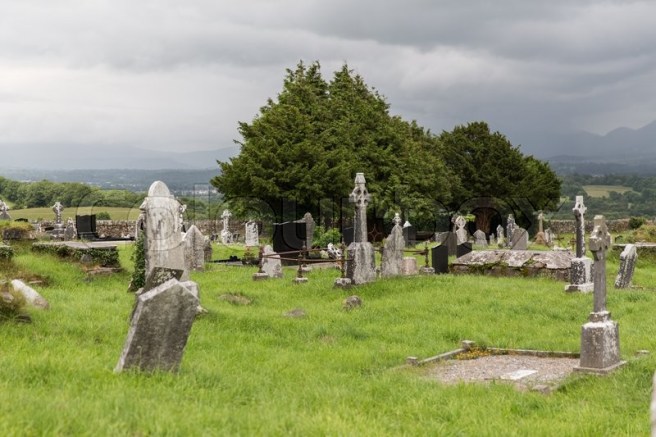
I’m looking out across the Wild Atlantic Way, where for thousands of years others looked out from these small islands on the west of Ireland, from the cliffs, from these craggy hills. Celts, Vikings, on through my own ancestry of McCormicks and Walsh’s and more, on through to poets such as Yeats and Seamus Heaney, all sat in these fields, on this beach in Connemara, in Connaught, and looked out across the Atlantic to the setting sun, to the once unknown flat vastness or inconceivable largeness of the wild seas stirred from storms. 

It is calm today, and I’m thousands of miles from home, as I have been many times in my life. But this one is different. I’m not far, maybe walking distance, at the most a short carriage ride, from where some great-great-greats set the DNA ball rolling toward me. And a part of me, while waking here everyday in wonder at the distant connections, often thinks, well, who cares really? The world is not recognizable from those days; the criteria they used to make decisions about where to live and who to marry and what to do for a living don’t even fall in the realm of memory–they are on a separate plane. I am alive, now, rooted in my more immediate ancestry of fathers and grandfathers, cousins I communicate with on a platform for which there would be no explaining to an aboriginal Irishman from my centuries ago. I like now. I love now, in fact. 

But another part of me feels more complete because of being here on this land looking at the ocean from the opposite side of my normal routine. It’s as if some long ago blood which once mixed in this soil can run through my fingers when I brush the grass, or when I run my palm on the wind-blown patterns in the sand, and it helps us meet each other somewhere in the between. 

This is as close to going back to then as is physically possible. When I walked out this morning and looked across the gardens to the ocean, where at one time those McCormicks and Walshs watched the waves pull and push to shore, it was like I had found the edge of some abyss of time, and I leaned over my past, beyond my parents and their grandparents, to a time so long ago that this, right here, is the only common ground left. And I wondered again if I am just distracting myself from the here and now. Maybe it somehow grounds me? 

John Edgar Wideman wrote that we all need two parents, four grandparents, eight great-grandparents, sixteen great-great grandparents, then thirty-two, then sixty-four. And that’s only six generations back to a time, he points out, when thirty-two men made love with thirty-two women, all in some subtle conspiracy to make me possible. And certainly some buzz of DNA filtered through which connects me to them, of course, but something else. I guess it is because I live at the water and spend most of my mornings looking out, looking “back” to not only a place but a way of being which was at one point part of who I was before I became. 

Certainly I do not need knowledge of them to fully become myself, nor was there ever a pressing need to appear on this shore. I’m not Sean Thorton returning to Inishfree to reclaim a homestead. 

Still, I could stay here. Oh lord, if reincarnation is a reality, and time were not as restrictive as we have made it, I could be born, breathe, and cease to be on the shores of Connemara, disconnected, without a need to cross the Wild Atlantic Way. I have been many places where I believed I could have a whole life. What a sad and sardonic reality that we have one life to live when a thousand times a thousand lives are not enough to completely experience being human, being here. We all play a roll, of course, and sitting here on the grass somewhere someone before me sat makes me feel like I understand my character a bit better. 

Perhaps the most significant gain for me on these paths west of Galway is that I wouldn’t trade my life at all. I would never gamble with the memories of my childhood, my son’s childhood, the sunrises and sets, the Scotch with my father, the early morning talks with my mother, the laughter–oh the laughter–with my siblings. I wouldn’t lay one bet down against the birthday parties and anniversary parties, the pool parties, the block parties, the quiet moments late at night, the places I’ve been and the people I’ve known. 

Perhaps I came here to thank the spirit of place which stirs again in my bloodline as I walk through the sands of Connemara, for being part of the cycle which made walking to the river with my son on my shoulders possible. 

And I can hear, quietly, a sweet Irish blessing:

Thanks for the fullness 

of days spent together

The friends that we pray

will be with us forever.

The feelings we’ve shared

the food and the fun,

with faith that God’s blessings

have only begun.

800px_COLOURBOX20668217


A Letter from Siberia

The following is an excerpt from a work-in-progress about traveling across Siberia with my son. Part of the book is framed in letters to my Dad. May 23rd would have been his 94th birthday, and I miss him dearly every day. 

12063306_10207030426106557_3199067376729529480_n

Dear Dad

You should be with us. We could sit in the dining car and have a few beers; you’d read Journey to the End of the Russian Empire and we’d write letters home to Mom. When I think of trains I naturally think of my youth and you at the station going and coming home. I remember one time we rode the train to the city for dinner and a show, but this ride is nothing like the Long Island Railroad. It’s odd how the Siberian rail feels safer and less shaky, but then I was so young. I would love to ride trains with you again, have a drink in the dining car and talk about baseball. If you were here you’d order the burger and fries and have a Baltika, their best beer, and of course we would have some caviar just to be able to go back home and say we had caviar. I think of you a lot and it is most likely because I am more of a father now than I’ve ever been, your grandson and I alone on the other side of the world, slightly ecstatic, slightly terrified. And it is only now, out here, that I realize no matter how strong you showed yourself to be, inside you were probably scared as well. It is my turn. 

Strange how you just never know when that last ride will be. I don’t remember back then knowing we will never do this again. Those lucid moments of finality are rare and tend to sneak past us. We must be in those seats facing away to see them and I get weary always looking backwards.

So we barrel along, just a father and his son. I wonder if Czar Nicholas looked out at these same birch forests and had some sort of premonition. Did his son stand nearby like Michael stands near me now? Did his young heart still hold hope the hard days were past? Did he smile and think about being able to spend more time with his dad? When I was young, on those rare times we traveled to the city I worried about getting lost, or strangers, or the sheer majestic size of the surroundings, but I always knew somehow you’d figure it out. I guess Alexi felt the same around his exiled father. And Michael too waits for my cue to disembark or head to the dining car. I’ve come to understand finally that you were as anxious as I am, wanting your son to have the time of his life yet protect him in a world of strangers. It turns out on the rails in Russia rushing through forests, we are the strangers.

Still, If I had the ability to forget my roots, to never remember the people I’ve known and loved or the places I’ve been, I could stay forever in Siberia. I’d disembark the trans-Siberian rail and I’d live on the shores of Lake Baikal. The gentle, helpful people in this pristine landscape at once made us feel at home. This morning I thought, very clearly, “I’d love to be exiled here.” The Decembrists didn’t mind so much. These revolutionary aristocrats of the 1800’s built beautiful homes with sunrooms and gardens. They entertained nightly, wrote books and continued their lives untethered by Czarist concerns. Today the riverfront in their Irkutsk is an oasis of pubs and cafes, international foods and festivals, with banks and other businesses lining boardwalks with architectural masterpieces. 

As to our companions I’m afraid to say we won’t get to know them well; no one we’ve met travels very far on the Siberian railroad. A few stops mostly; maybe one or two nights and certainly not all the way to the far side of the empire. No wonder the conductor recoiled when he asked our destination and I said “Vladivostok.” This isn’t a tourist route; for that people head south to Moscow and cross Russia and Mongolia into China, ending up in Beijing. This “Imperial Route,” St. Petersburg to Vladivostok, is mostly rural and roughly the same distance as traveling from New York to Hawaii. For some perspective Dad, it’s as if you boarded the LIRR at the Islip station to head to downtown Manhattan and met someone continuing to Honolulu. The other travelers, nearly all men, are heading to or from work projects or visiting family just one or two stops away. Some people travel further, and in third class a few families carry a month’s worth of belongings to summer dachas, but so far only Michael and I and a family from France are covering the entire nation. We talk with travelers, we get out at stations, and we eat and drink.  

A woman sold blueberries this morning at the platform. Another man sold books, including Chekhov. We called the woman Blueberry Babushka for her outfit was mostly a blue-flower design, and she carried two metal buckets of berries. I bought a large bag and for a moment thought she was going to count them out, like you do with your bowl at breakfast, and I was suddenly sorry I am not home to help you separate the good berries from the bad. Still, you’d be proud of your grandson—he ate nearly an entire bucket before boarding. They are about the freshest food we’ve found. But I left without Chekhov, so I decided to record my own journey to the end of this vast land, and, like Anton, do so partly in letters home, to you.

The sun is setting Dad, and it is hard to see the birch trees. Michael is off somewhere between cars, staring, no doubt, out some window at this vast and beautiful landscape. In a few days we’ll head deeper into Siberia, passing that point where we will be closer to you going forward than heading back, and it feels fine. But for now this father and son are headed to the bar car.

–Always,


557940_10201257508307220_1772982156_n

Small Talk

I wrote this piece a long time ago and it received a lot of positive feedback and has since popped up in various online publications. I’m posting it here today because my mother is very much on my mind as yesterday was her birthday, and we had a great day. At one point we talked about life long ago when we had family over for a barbecue. This remains one of my favorite pieces. 

download

A lady in line at the market turned toward me and said, “I so much prefer iceberg lettuce over Romaine.” I did not provoke her. I didn’t make eye contact or in any way use body language to indicate I was remotely interested in conversation. In fact, I was engaged in the celebrity headlines on the rack above the Doritos. But I looked up. Damn it I looked up, which the woman interpreted as “Oh please continue.” So she went on. “Romaine is so dirty. I mean I know it has so much more nutritional value than iceberg, but it is always grimy no matter how much I wash it.”

I know people, good-natured people, who can handle this. I have friends who might willfully and enthusiastically engage this poor, lonely woman in conversation about various greens, their benefits, and possibly even move on to legumes or even poultry. I’m not one of those people. I have never been good at small talk, nor do I care. Halfway through her very innocent observations about the roughness of Romaine, I stopped listening, wanted to say, “Who cares? It’s a head of lettuce!” but didn’t. It seemed rude. Instead, I said simply, “Oh I know,” in a definitive manner, clearly indicating to the average person that “Oh I know” was all I planned to say. She didn’t get it.

“My husband, God rest his soul, loved Romaine lettuce, but he also loved plum tomatoes. Oh my, tomatoes are a whole other problem for me. You know just last week I was trying to decide between cherry tomatoes or plum tomatoes for the salad and I remembered that…”  Shut up! is what I wanted to say, but instead I stared at her with vacuous eyes. I cannot explain this physical reaction, but it is real and akin to the shortness of breath I experienced as a child at mass when Fr Charles at Our Lady of Lourdes parish would go on and on in his homily. I truly can’t breathe in situations like this. My blood sugar drops, time slows to some immeasurable pace, and my left arm starts to hurt.

Once when a woman asked which Chapstick flavor was my favorite I answered in Russian. I used to use Spanish but people started answering me in Spanish and then I had to have small talk in another language. Once I actually abandoned my cart in line and left the store.

When Iceberg Lady left, I paid for my groceries and wheeled to my car still thinking about the difference between the two types of lettuce. I wonder now what I would have thought about had I not be hijacked to think about this. I learned to like Romaine when I was older, and it can taste dirty, she’s right. But at least it isn’t bitter like some of the other dark green ones. See, I can think about irrelevant minutia all day long. But I can’t discuss it. I prefer conversations with depth and direction, meaning and thought. Give me a good Aristotle-like argument over a coupon swap any day.

Most people will say when you’re only passing through someone’s life for a few seconds in line at the checkout, small talk is all time allows. But I insist the opposite is more valid. If I were to hang out with the lady for a while, then perhaps eventually we’d get to ridiculous discussions about lettuce, but we only spent five minutes next to each other. Five minutes in all of time, eternity coming and going, our lives from birth to death and beyond and before, and in such a flash of explosive existence, five valuable minutes are spent with a woman contemplating lettuce! We negotiate neighbors and strangers alike like this, trying to fit in fragments of our lives as we spin along.  Shouldn’t that time, that precious, fleeting time, be worthy of something substantial? When she said, “I so much prefer iceberg lettuce over Romaine,” I should have said, “Yes, that’s interesting. I wonder if it is because of your youth, or how your taste buds formed when your mother or perhaps grandmother cooked for you. Where are you from? Have you ever wondered if hunters and food gathers were picky or did they just grab what they could and move on? Are you afraid of death?

Instead I know this about her: She prefers iceberg lettuce because it doesn’t taste like the ground.

So I put my groceries in the car and wondered when I started eating Romaine. Growing up it was always iceberg. Perhaps because it was so much cheaper, or maybe that was more widely available back when I was young. But I remember standing at the kitchen counter while my mom smacked the head of lettuce on the cutting board to break the core. Then she’d pull it out and toss it, and I’d help her tear the lettuce apart in small chunks for salads in the black bowls we got at Esso for free after so many tanks of gas.

She’d pull the lettuce apart and start cutting Beefsteak tomatoes and ask about my day. I’d tell her stupid stuff like how Jimmy O’Roarke asked if I wanted to come to his house to have some candy. And she’d comment about how Jimmy always had candy, and then we’d talk about our favorite candy; or I’d talk about how I played football at recess with Norman but I just couldn’t keep up with him so I’d end up just watching everyone. Then we’d talk about what cousins might be coming over and what we could do for fun when they did. It was nothing, really, nothing at all. I loved those mornings when she made sandwiches for school. In winter it was still dark out and my siblings were in bed or already in school and just Mom and I would sit in the kitchen and the radio played late sixties music and we’d talk about food. I can still hear an FBLI bank jingle playing right before the news at the top of the hour, and I can sense the stillness of the quiet winter mornings as I walked to the bus stop. I don’t remember caring that it was cold, and my friends and I would talk about the snow and wait for the school bus.

I drove to the next store on my list thinking about my mom, about how little I was against the counter helping her make a salad. I can still smell the cucumbers sliced on the plate, and the hamburgers cooking on the grill, like it was right there with me. That was so long ago. My dad would work the grill, and our neighbor Joe would stand by keeping him company while I leaned against the kitchen counter and Mom would let me have small chunks of ground beef or slices of salted cucumber. I’d tell her about what my friend Charlie and I had been doing and she always seemed interested.

So just for fun I grabbed some bread and ground beef, cheese, onions, and iceberg lettuce because that’s what we used to use on burgers. Of course. And I stood in line thinking about mom and how most of who we are is tethered in beautiful ways to who we were.

I held the lettuce in my hand. It was firm and fresh, and I said, “Iceberg is still the best lettuce for burgers!” to the man behind me in line. He just stared at me.

10521068_10204171927835004_1522545168990331731_n

The Sounds of the Day

download

For most of my life I’ve been surrounded by beach sounds. The ocean, of course, its current coming ashore in a predictable, rhythmic pattern (though sometimes, more so lately, the water makes lazier progress with a more common calmness, a wave seemingly wandering to the sand almost as a second thought instead of its normal troop movement speed and persistence).

Also at sea are the gulls, calling and diving, chasing each other for scraps of found food or small fish claimed just below the surface. And pelicans occasionally lift from their glide to angles of light and school movement, then dive into the shoal rising slowly with a catch. It is the only time I hear a pelican; they are quiet. Dolphins, too, seem silent unless one breaches and spins, and even then she would have to be quite close to shore, which happens, sometimes.

On the beach is a symphony I’ve tuned in to since I’m a child. There’s the music from other blankets and people sunning in beach chairs, from vendors and from the speakers during scattered events up and down the strand. In the sixties when I was a toddler it was transistor radios with the “tiny tin voice of the radio man,” and in the seventies in my teens it was boomboxes mixing disco and Beach Boys; always the Beach Boys. Add to this the constant conversations ranging from requests for suntan lotion application to talk of kids and parents, to talk of work, to the best places to eat according to the guide they found in the top drawer in their room, to the heat, to the humidity, to financial plans to boyfriends and girlfriends and wedding plans and sunburned shoulders and faces and the dreaded burns on the backs of knees.

Further back still near the hotels, a store owner on the boardwalk is hosing down the sidewalk and a sanitation truck rolls by surrounded by workers walking while peering in garbage cans at each block, and the joggers muffled headphones, their shoes methodically hitting the pavement, and the two men in suits who always stand in the same spot next to a table of bible literature, never pushing but always encouraging people to have a good day. They refuse donations. They’re okay, those two men.

And it all works. It works as if Leonard Bernstein or Toscanini stood atop the twenty-feet tall Neptune statue at 31st Street and covertly conducted the separate sections, blending them so everyone anywhere on blankets and beach chairs, under umbrellas with kids or strolling with elderly parents on the boardwalk, and the three guys throwing a football, and the handful of surfers at First Street and the bike rental girls wearing bikinis and holding clipboards and the people fishing off the pier and the businessman on break talking on the phone, one foot on the rail between the boardwalk and the sand talking to someone about an appointment that didn’t go well, all of them, charted out in three quarter time and blended to some shoreline perfection.

I don’t know if it is some sort of Doppler effect or another sound-wave phenomenon, but if you stand on the sand right where the waves break and look to sea and listen, it is like being in an altogether different theater than when you simply turn around and face the boardwalk.

I spend a lot of time looking east across the pounding and ever receding tides. The seasons remain on their perpetual flow, and after some time you can recognize the nuances, the subtleties of change.

In fall I look forward to the slow erosion of tourists, some in September, and by October they’re nearly all headed home to West Virginia and Pennsylvania and Quebec. That’s when the dominant sounds are the natural ones coming from the current. But come spring, when the sun has risen higher and so have the room rates, and the traffic is heavier and you have to pay the parking meters again, and stores which had not been open since Labor Day once again have their baskets of body boards and circular racks of T-shirts on display on the sidewalk, I welcome the movements of summer, the sounds of the season, as the months slowly drift by of their own free will.

59698281_10217375927377623_8959660727052795904_n

The Frequency Illusion

Red Semi Leads Traffic Down An Interstate Highway

You know the routine: Someone says to you, “Hey I’m thinking of buying an Outback,” or they casually say, “I’ve seen more bluebirds than I used to,” and for the next several days you notice way more Outbacks or bluebirds. In college the practical joke would be to tell someone to “watch out for red trucks.” Of course, they’d suddenly be aware of them and so see them more.

It’s called “the Frequency Illusion,” also called the Baadar-Meinhoff phenomenon. It is what distracts us; but it is also what helps us focus. If you know you’re going to look for a new coat, you are hyperaware of others’ coats. If you are trying to lose weight, you are hyperaware of Dunkin Donut shops everywhere. Tragic. The point is, once we become aware of an idea, usually the first time or at the very least when the idea is brought on with some sort of urgency, we find it in the cracks of our lives where it most likely has always been lingering, it’s just that we haven’t.

I’m going to Ireland in two weeks, and don’t you know that for the past month I’ve noticed All Things Irish. Shops, songs, foods, teas, books, everything. I’m certain the world didn’t suddenly drop Ireland onto the map now that I’m going, but that is what it feels like for all of us subject to this psychological saturation.

Someone said to me she was more aware of her constant use of the phone when there exists a significant gap between the percentage of time using it compared to the amount of work getting done. After reading an essay I wrote about cell phone distraction, she more often sees the numbers of people with their head’s down, not communicating with life around them, not even noticing the life around them. I’m glad I had a small part in that.

So I have an idea I’m trying out. Each morning I’m going to list five or six things to look for that will make my day better. “Look out for children playing,” I might include. Or “There are going to be a lot more nice people out there today.”

Or

The colors of spring are more abundant this year.

Or

I’ve noticed getting stuck at a red light really doesn’t slow me down all that much.

Or

I can’t believe how many nice people I encounter in one day.

It might not work, but not doing it at all isn’t working either. I’m aware, always, of the nature around me, even when in the city, and I notice the numbers of people who pass through parks deeply engrossed in the stresses of somewhere else. I bet if someone had said to them, “Have you noticed how tall the trees are getting in the park?” their day would have been different. Even if ever so slightly.

I noticed in the last year something grounding in my life; I have a better chance of changing the course of my day than I do the course of my life. And, of course, doing so in the end changes my life.

So, be sure to look out for sunsets; they’ve been more brilliant lately.

(and look out for red trucks…I won’t say why, just…you know…look out)

50401074_10216599151318707_267535089120837632_n