In Defense of Decorum


Etiquette.


“If you ask me what I came here to do in this world,

I, an artist, will answer you: I am here to live out loud.”

                                  –Emile Zola


The “great experiment” that is America has been challenged many times in the last two centuries, but all those attacks, both foreign and domestic, from the Civil War to Civil Rights, desegregation to suffrage, Iran-Contra to 911, had one thing in common which enabled transcendence of such tragedies—decorum. Even when disagreements arose, those at battle remained armed with respect for each other’s love of this country and maintained dignity in the presence of world media in an effort to demonstrate that America can handle its problems without digressing to schoolyard banter and behavior, and all sides insisted upon an absolute respect of the facts.

Some pundits assure us that “the Republic will survive, don’t worry.” It used to be easy to believe this; it used to be clear that our differences as citizens did not outweigh our love of this nation, and when the powers that be respectfully followed the rule of law and accepted the common denominator of truth, while not everyone would be happy with the results, the dissenting opinions at the very least knew those results were not attained for spiteful and personal reasons.

Listen to John McCain defend former President Barack Obama’s character to a voter who despised McCain’s opponent and verbally, wrongfully, abused him. Listen to the courtesy and respect for service to our nation shared by candidates Nixon and Kennedy in their debates. Listen to just about any two candidates in political history who, while they may find great fault with their opponents’ stance and sometimes even their character, knew to remain like an adult and maintain the presence of mind to understand basic human behavior.

The absence of that decorum will be the death of this nation long before any particular amendment or Supreme Court decision. Recently, a woman in North Carolina has been celebrated by her peers for refusing to apologize for a barrage of racial slurs thrown at a minority on the street. She is not alone as citizens abuse our first amendment rights to expose their decidedly prejudiced points of view.  This has been occurring with more frequency only since such classless behavior was demonstrated by the president dating back to his candidacy. Leaders who lower themselves so far as to speak in such uneducated terms will, in turn, as German native and American businessman Michael Kuhnert points out, elevate the egos of their followers by giving them some perceived superiority over all other groups based on race, nationality, religion, and gender. This is a primary method of fascism.

The conflicts caused by this growing trend to degrade those different than the mob is not about policy, and oddly enough it isn’t even about the allegations of criminal behavior on the part of either the president or members of congress; it is entirely possible previous political leaders were just as crooked, just as underhanded. Instead, it is about creating division in this country, again, based solely upon race, religion, ethnicity, and sexual preference, and that division has ignited a war of words not grounded in any form of valid debate but rather in the banter of street gangs and enraged mobs. It isn’t solely that such rallies persist with chant such as, “Lock her up!” and “Send them back!” but that those to whom we are supposed to look up to, those who are vying for the right to lead us and our country, stand idly by, which merely encourages the crowd.

The United States position as a world leader is clearly in question. The dependence of the world on this country in the wake of World War Two is long over, and countries will find other trading partners; they will build relationships with other nations, and they will not lose a beat as they write new treaties without the involvement, let alone the leadership, of the United States. And it isn’t beyond possible that they’ll discover they’re better off without the foul-mouthed, unpredictable commentary from Washington. Once gone, reestablishing those relationships might just be meaningless for them. No foreign power brought us down; no violation of treaties, no declaration of war, no natural disaster or terrorist attack broke the spine of this nation: we did it to ourselves with our blatant and repulsive hatred of our own citizens, and by demonstrating a severe lack of class in how we relate to each other.

The leaders of this country have become the most undignified group of leaders this land has ever seen, and that will break our endurance as a great nation more than any disagreement over policy.  The poison which runs through the marrow of this nation is not political dissent, it is not historically divisive issues such as abortion or gun control, it is pure hatred; the repugnant, immature, ignorant hatred displayed by the president and members of congress for our country’s own citizens.

This, then, is an appeal to my artist friends. Despite our quiet voices in this sea of noise, it has always been the task of the artist to expose inequity, injustice, and fascist tendencies. It was Thomas Paine whose small, seditious pamphlet Common Sense instilled in the citizens of the colonies the ability to move forward. It was David Walker in the early 1800s who called upon his Black brethren to resist. It was Thoreau’s Civil Disobedience; it was Carl Sandburg; it was John Stuart Mill and Richard Wright; it was the writings of Woody Guthrie and Bob Dylan.

It was—it is—the artists.

President John F. Kennedy said, “When power leads man toward arrogance, poetry reminds him of his limitations. When power narrows the area of man’s concern, poetry reminds him of the richness and diversity of existence. When power corrupts, poetry cleanses.”

The writer, despite his isolation, has it in his or her power to put voice to what others wish to say but cannot, but once they hear it said, they sing along with the harmony of their generation. Ginsberg wrote, “Poetry is the outlet for people to say in public what is known in private.” And the beloved Robert Frost said, “A poem begins as a lump in the throat, a sense of wrong.”

The artists of our nation must combine our talents with our grief, blend our anxiety with our refrain, and we must risk exposing truth to say in whatever way we can, with whatever genre we must, that we used to be better than this, and we will not allow the loud voices of hate drown out the insistent chant of respect. 


trump_grumpy_meme_site

Notes in Nature

Notes-in-Nature-web (1)

This is my new book inspired by the writings from this blog. This morning I received a note that the pre-order at Amazon ranks the book in the top 100 for all books about nature. Yay!

Here’s what happened: 

When my father died in the fall of 2015, my writings turned inward, and I began this weekly blog in January, 2016, to discuss the need to be alive “now,” to appreciate all that is around us “now.” and to celebrate the time we have, whether with our loved ones or alone. I followed some study of relativity and time, and the value of simplicity. 

Plus, coincidentally, the world became more stressful, and I found that the need to retreat increased with every news story. This “Thoreauvian” approach to dealing with life–stepping back from it to gather my thoughts and appreciate what is truly important, became the theme of the blog. Listening to a lot of the late Dan Fogelberg helped. Because of publicity for some of my other articles in various locations, including Blue Planet Journal and the Washington Post, the readership of this blog exploded, and it has been a pleasure to keep it up. But the weekly posts were mere outlines to what I really wanted to express, so I returned to the start and expounded upon my more personal pieces, and A Third Place was born. In it are several dozen short essays about this need, this deep need, for all of us to step back.

I honestly do not believe there has been a more important time for this. It is a very simple book–no narrative arc, no suspenseful transitions. Just characters in a dynamic world. I hope you’ll order it, and I hope you find something in these pages to inspire you to go for a walk, and hopefully call your father. 

The View from this Wilderness really is beautiful. 

But fleeting.

Thank you for reading and for ordering. Here is the Link: 

A THIRD PLACE: NOTES IN NATURE


It’s in my Blood, I suppose

348s
The Great South Bay

When you get to the end of the Southern State Parkway, the last exit before the entrance to Heckscher State Park was ours. You can take that to the west to East Islip or to the east to Great River—that’s us. There’s a fork in the road heading east, the right fork remains Timber Point Road and ran back to the stables, and the left fork which was River Road. That’s us.

The first left is Leeside Drive, then the first left on Leeside is Church Road, and we were all the way around the curve at 142. It was a beautiful, shingled, two-story colonial on about an acre of grass but a significant amount of woods in the back left to satisfy a nine-year-old whose hobby was building forts when he wasn’t playing baseball with Steve and Todd or hiking along the Great South Bay and through the woods of Heckscher with Eddie.

Like it was yesterday.

I’d ride my bike out to the bay, and in the winter when no one was playing, I’d head up the golf course cart path to the holes along the water and sit on the high green looking out toward the east, and I’d daydream, or leave my bike near a sand trap and I’d walk along the water. Early on it would still be foggy and I could hear the foghorns out on the reach. I assume it is the same. I hope it is the same.

Later in the day I’d meet Eddie and we’d hike through the paths of the park through woods and marshland, often hopping from bog to bog, once finding the abandoned and broken down beach cabana house. We knew every inch of that place, every path, many of which we named so we could meet there—“Hey, let’s meet tomorrow at the Four Corners Creek.” Yes.

It is DNA or atmosphere? I wonder as I walk along the Rappahannock and the Chesapeake (and in days past, along the Allegheny, the Susquehanna, the Rillito….) if there was something in my blood that connected me to rivers and woods, or was it simply that’s where Mom and Dad moved so that’s what I did, and I find there some sense of familiarity.

It really doesn’t matter in the end; I’m good with it.

It’s hot today, upper nineties, and humid, 80 percent or more. I’ve given up on the lawn, and I’ve moved my vegetables into the shadier areas, no longer believing that “Six hours of direct sunlight” is the same today as it was fifty years ago when those instructions appeared on plant labels.

The heat, though, has never bothered me; I like the sweat and the heat on my neck and arms, and if I don’t have sun stripes where I wear my flip flops, I’m not outside enough.

But I never thanked my dad for making this possible. The greatest gift my parents ever gave me was proximity to water, to woods, to nature and the earthly ingredients which run through my system and keep me alive; keep me tethered enough to reality to not go crazy with the world as it is.

IMG_6937
The Chesapeake Bay

Havana Daydreaming

download


Michael and I sat at the bar at the club this afternoon talking about tomorrow, what he packed and what he has planned. He leaves for Cuba in the morning for about ten days.

He’s not inexperienced at traveling. At fifteen he spent ten days in Ireland; at twenty we trained across Siberia, and the following year we walked across Spain. He’s been around the block (well, not really because my road is on the water and we don’t really have a “block” per se—but go with the metaphor). An avid reader and researcher for all things which come into his interest parameters, he is well prepared.

But, you know, I’m the dad. So I’ve been reading articles about Cuba, its crime and tourism, and how Americans are faring with djt in office. I Google-Earthed the place where he’s staying with seven other artists for his residency, I forwarded to him several articles about the currency fraud down there, the petty crime—you know, all happy articles. At my sister’s suggestion he wrote our niece who spent a few days there. “That’s two days more than you’ve been there” I told him. He knows several people who have been there and talks to them regularly, and his Spanish is pretty decent, though I suggested he learn the phrase, “Please don’t speak so fast.”

This morning at the Y while on the treadmill, I thought long about the past couple of decades—more—and all we’ve been through, and I tried to figure out from where he got this drive to wander the world and see as much as he can. Particularly as an artist to catch it in his own way. Anyone who knows my son will back me up when I say he is the kindest person you will ever meet, patient and very quiet. He immerses himself in whatever he is involved in, and is generally more ready for what comes his way than I ever was. Perhaps it is his generation, I thought. They’re clearly more savvy with technology to figure out what needs to be done to get where they want to go.

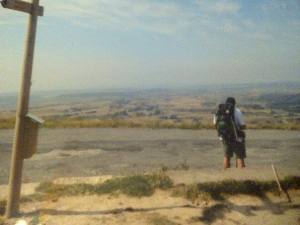
The son of close friends of mine climbed Mt. Kilimanjaro. When the young man’s father told me of the plans, I reminded him that at his son’s age he took off for a summer to cycle around Ireland, followed by cycling around the United States. Another friend’s daughter is right now on the meseta of the Camino de Santiago, alone, bearing the heat and distance, having the time of her life. When my friend was his daughter’s age he was driving into Mexican villages and hiking past rattlesnakes in the Sonoran Desert.

How easily we forget.

My niece is shuffling off to New Zealand for a year, and doing so with the grace and confidence of a New Yorker popping over to Jersey for the day. This is how small the world is now; as a result, this is how neurotic parents have become, reaching for the anti-anxiety meds while at the same time trying to show our children it is no big deal, we absolutely know they’ll be safe, and see you when you get back. Gulp.

So we had a going away drink at the club and talked about Cuba, about his readiness, of which he was vague and quiet, though he talked with an air of someone who had triple-checked his list and truly was ready. I told him he only needed to put up with my questioning another few hours and then he’d be on his way to Miami to the “Cuba-Ready” desk, and on to Havana. At that exact time tomorrow he’ll be landing in Havana.

I’m excited for him. We watched some golf, talked to the pro, had a drink and some odd flat-pretzel mix, and I thought to myself, twenty-six years old. Unbelievable what our children’s generation is doing.

Twenty-six.

My plane landed in Dakar in the late afternoon, and I had no idea if my friend to whom I had written that I’d be coming even received my mail, let alone crossed Senegal to meet me.  Well, she had and she did, and that night when she went back to stay at the Peace Corps house I checked into a hotel near the ocean and listened to the blending of French and Wolof and Pulaar drifting up from the courtyard outside my room. I ended up going for a walk and passed shops open late where music filtered through the streets and everyone, I mean absolutely everyone, stared at me. I went back to my room after midnight and lay on the bed with the smell of the salt air coming from the Atlantic.

I was terrified. I was twenty-six. It was the first day of a long trip that included just three weeks in eastern Senegal, a return to Dakar, and then some time drifting down through the continent, alone. It was exciting; it was stupid. I was alive, truly alive, and nothing about my life would be the same.

I was just a few months older than Michael is now. That was my job then—to terrorize my parents by following my songlines into God knows where, and it is my son’s job now. He does it well, by the way. A few days ago a friend asked me if I was more nervous about Michael headed to Cuba for nine days or to Ireland in October for a month. That was no contest:

“Ireland,” I said.

“Really?” he said, thinking the opposite would be more likely.

“Absolutely. I was just in Ireland for nine days and the roads suck there—people die! They drive like maniacs and the hedges come right to the edge of the road—I know! I walked them! Give me a good communist regime for nine days anytime.”

I know this for certain about him going: If he didn’t, he’d regret it forever.

Geez, the regrets: I never worked in a castle in Austria, never rode to Coos Bay, Oregon. I never went horseback-riding in the Rockies, and I never made it out to Monterrey.

I never canoed the length of the Chesapeake Bay, and I never…

and I never…

The list of ambitions we wanted to do and didn’t could fill volumes. Perhaps that is what makes the few times we get the chance to actually go so much more memorable. I have no complaints about my life, and I’m pretty confident neither does my son, so far.

“So you’re going there to take pictures?” I asked him when he told me he was going.

“Yes.”

“Well, son,” I said, looking around his work room in the house where all of his photographs and canvases lean against the walls. “You take abstract photos. Of water.”

“Yes.”

“Don’t get me wrong, I’m happy for you. But, can’t you take those pictures here along the Bay—I mean, they’re abstract. It’s water, for God’s sake. Just tell everyone it is Cuban water and you can save a lot of money.”

He laughed. “I’ll take a few of my Cuban neighbors, and maybe some colorful buildings.”

“Ah, well then of course.” I was joking, naturally, but it wasn’t until today when leaving the club that I knew he was ready to go and that he would do it right, he would do it his way.

“Honestly, I have no agenda at all for when I’m there. I’ll play it by ear,” he told me.

Perfect. I mean, really, what kind of damn-fool amateur traveler would say such a thing?!

Vaya con Dios mi hijo.

27972823_10214038017131953_2460361808253850432_n

This is about humanity. Enough.

download (1)

Where Do The Children Play
                                    –Cat Stevens
Well I think it’s fine, building jumbo planes
Or taking a ride on a cosmic train
Switch on summer from a slot machine
Yes, get what you want to if you want
Cause you can get anything
I know we’ve come a long way
We’re changing day to day
But tell me, where do the children play?
Well you roll on roads over fresh green grass
For your lorry loads pumping petrol gas
And you make them long, and you make them tough
But they just go on and on, and it seems that you can’t get off
Oh, I know we’ve come a long way
We’re changing day to day
But tell me, where do the children play?
Well you’ve cracked the sky, scrapers fill the air
But will you keep on building higher
‘Til there’s no more room up there?
Will you make us laugh, will you make us cry?
Will you tell us when to live, will you tell us when to die?
I know we’ve come a long way
We’re changing day to day
But tell me, where do the children play?

download (3)


Coasting

51HKRzooA7L

One couple pulled and pushed a cooler, presumably filled with ice and drinks and some food, across the sand to their blanket on the beach while their kids ran on ahead, tossing their plastic pails near their umbrella and then kicked into the surf about knee high.

The lifeguard stood and whistled for someone to come closer to shore, but I couldn’t see who he was calling from where I sat on the deck of the restaurant. We took a table under the overhang to stay out of the direct sun in the nearly 100 degree heat.

From 14th Street clear to the inlet at First, this same scene played out; umbrellas and beach chairs, blankets and radios, kids in the surf, surfers further out, jet skis and parasailers beyond them. A plane passed with a banner pushing the food at Rockefellers.

Since I’m a kid, this has been my summers: the sounds of the surf, of gulls, of tourists, and of music drifting down from the boardwalk; vendors, bikers, hawkers selling key chains, teenage girls selling ice cream, and guys sweet-talking middle-aged couples into touring some time-sharing place at Fifth Street. Get a free gift they say; no obligation they say.

This has never been a vacation for me; I’ve never traveled to find a hotel at the beach, anymore than some of my New York cousins would think about taking four or five days off from work to head to the city. It is daily life, it is normal routine. Most of my friends from high school, and the vast majority of non-tourist-shop business people I know in the area, prefer winter, celebrate the departure of the crowds, the “See You in April” signs on hotel marquees, and plywood on the windows at Dairy Queen. But I’m okay with it. This is a window back and forward, my youth and my foreseeable future, and the beautiful blending of sounds, the cold drinks, the hot sun on my shoulders, the two guys tossing a football or throwing a Frisbee, the sun-worshipers stretched out in just the right direction and angle to get an even tan, the older woman reading one of the Bronte sisters, the guy listening to the baseball game, all of it remains some sort of soundtrack of my summers, and I feel at peace with it all, including for what I don’t hear.

There’s an absence of politics, an absence of any sense of argument other than the couple who forgot the towels in their hotel room and one of them has to go back—but that one plays out all summer long every summer.

This is as much America to me as the farmer in the field or the family barbecue on the Fourth of July.

I have never been able to sit on the beach and absorb the sun, however. I prefer to walk, and when I’m at the right beach, I look for shells, and when with friends I toss a Frisbee or just walk along the beach ankle deep in the water and talk. So many of my memories are along this coast.

Like the time my friend Jonmark finished a concert for some dance at the Old Cavalier Hotel, he and I walked for awhile and talked until well into the small hours. We were teenagers, both about to move away. Or when one hot summer day my friend Kathy and I swam out beyond the pier on the Bay only to swim too far, and spent the next hour or so taking turns dragging each other back to the sand. Or when Michele looked away for a second, just one lousy second, and we could no longer see her little sister Carrie anywhere, and we called and yelled and walked both ways and waded out into the Atlantic, only to see her bobbing along with her red hair down from the boardwalk eating an ice cream cone.

Or earlier. Long Island. Point Lookout, and my siblings and I would carry our towels and walk down the middle of Freeport Avenue pushing our toes into the soft strip of tar which separated the two sides of the road, all the way to the beach where we’d walk around the red sand-fence and settle down for the day.

For now though, I come back here like an astronaut between space-walks. Usually I am alone, and I walk the length of the boardwalk and just think. Sometimes about something I’m working on, other times about people I miss, and there are many of them. Usually though, this becomes the one place I am not spending too much precious time remembering or planning, but simply being, letting the five senses take over and translate my life to me through the sounds and sights of the coast. And the saltwater sits on my lips, and the smell of the salty air mixes with somebody’s sun lotion, and I dig my toes into the sand to cool them off from the blistering surface. And it feels right. It feels like I’m doing fine; as if no matter what else is not going well in my life, I’ve got this right.

And I’ve learned to see a riptide or how bad the undertow is, and I’ve learned to read the sky for an afternoon storm, and I’ve learned to let it all just be.

65511367_2393690677364519_6582629833203777536_n

Idle-izing

download

I look around and see so much that needs to be done, so much I want experience, that I just get brain-lock. I still have my eyes set on walking across Spain again, maybe Siberia, leaning toward the Continental Divide Trail, definitely the Canadian Rail, and even biking to Coos Bay, Oregon, isn’t out of my peripheral vision just yet. Also, hiking around Ireland.

I want to grow a bountiful garden and I’d love to raise a goat. I have books to write and old friends and family to visit. The list goes on and on and the time does not, it simply does not. It took me decades to realize I just need to pick a direction and go, see what happens and then bounce from there. But sometimes I sit on my porch and look out at the property and end up walking along the water thinking about sailing. Or once in a while we drive around taking pictures and we end up at this abandoned building on a bluff over the river and I think how I’d love to open a pub there. It tires me thinking of it all and I can’t even write because there are so many words and I know I should just chose one to get going, but instead I sit on the porch and look out, tired, but not really.

I often wonder if seemingly lazy people aren’t unambitious as much as they are simply overwhelmed with possibility without firm decision-making skills.

Artists can be like that. Writers and musicians too. I remember a line from a song written by Alan and Marilyn Bergman: “I pity the poor one, the shy and unsure one, who wanted it perfect but waited too long.” Love that.

Idleness leads to chronic immobility, both physically and mentally. In writing classes I tell my students to just go, pick a direction and go, and it might not be the right way but I swear somewhere in paragraph three you will make a left turn into exactly where you want to be next. Or as in the words of my friend and adviser, Pete Barrecchia, “Just write the fucking thing.” And so in all things, just go. Sometimes we are afraid we might miss something if we go, or stay, or change or remain idle. That’s funny since no matter what happens we’re going to miss something. The list of things we’ll never do will always be infinitely longer than the things we attempt.

Okay, so this was all brought on because I was listening to very old James Taylor, which isn’t always a good idea. This time it reminded me, as music is apt to do, of times in my life I sat staring at so many possibilities I couldn’t focus so instead lost my direction. Some call this situation a “First World Problem.” They laugh and say to stop complaining when there are so many unfortunate souls who’d give anything to have even one of those opportunities.

No, they don’t get it. This isn’t about “appreciating position” or any sense of privilege. Indecision is a sign of depression, borne of the inability to express something inexplicable: the razor-thin line between the beauty and grace of existence and the torment in knowing we can never experience it all, and so many don’t even try. Some suicidal people don’t think about killing themselves because they don’t want to live, but because they can never live enough.

(note to readers: I’m not suicidal)

I’m getting better at simply choosing one direction and committing. I do it in my writing, my daily walks, and my mental wanderings through the vague world of “what’s next.” Tomorrow I’ll work on one specific chapter of a project and remind myself that while there were fifteen other projects I really wanted to get to, I will end the day having made significant progress on “this” one.

My idleness is not indifference, most certainly not. It is the same reaction when a server brings a tray of fifteen delicious-looking desserts and I turn them down. I don’t want to make a choice only to regret it later because “as it turns out I would have rather had the raspberry torte after all.” I need to just point to the triple-berry pie and forget the other options ever existed at all (which is, unfortunately, getting easier).

It reminds me of a method of advice we used at the club when I worked for Richard. I told people I had no intention of helping them lose 50 pounds, but I’ll be thrilled to help them lose 3 pounds this week. And it worked.

The world has more choices now than ever before, and for each nuance of life the decision-making options have increased exponentially. So if I’m sitting on the porch starting at the trees, or on the sand looking out over the bay, it isn’t idleness, it is…

Okay, well, sometimes it is idleness, but it is an idleness I have chosen, a specific quiet motionless moment which I have hand-picked to work on.

Things I No Longer Need to Remember

download

Phone Numbers (programmed).

Birthdays (Facebook).

Appointments (Calendar alarm).

Medicine (Seven-day container).

Due dates (autopay);

Students’ names (though I rarely remembered them to begin with); meetings, sub-committee duties, office hours. Where I was in my notes the last time I lectured.

I don’t need to know directions anymore, or the names of the best restaurants someone told me about when I asked directions somewhere, because I have GPS, so I didn’t stop to ask directions to begin with, and the same device guides me to the five-star diners.

We are apt to forget all the minutia we remembered from friends and helpful local residents because there is an app for that now; we are programmed to forget.

The world has changed; technology has distanced us, we know this, we’ve written and talked and studied and argued this for a long time; it has made more things possible but has sidelined the braincells we flexed on an almost hourly basis, even when we simply wanted to call home.

And the people have changed, no longer asking others to take their picture in front of some monument, preferring instead the vantage of a six-feet long pole. We don’t call to make reservations, we don’t even talk to the cashier at the fast food counter, opting instead for computer screen six feet away so we don’t have to interact.

We don’t need to remember anymore how to interact.

Except in political discussions. Then we interact, argue, fight, dismiss, infuriate. Infuriate. From what I remember on the news last night, we no longer need to remember how to be gracious, understanding, kind, human. We no longer have any need to recall common courtesy, respect, accepting of differences, or be politically correct.

We can forget about what others believe in, what others worship, what others find beautiful. We can disregard the golden rule; we might have long ago forgotten the golden rule.

I started to talk about this with my students one night two years ago after the election; they just stared at me waiting for me to get to some point. I forget what one of them said that made me give up.

I brushed my hand in the air: “Forget it,” I said.

images

These Things we are Capable of

download

It’s a hazy day here in Virginia Beach, and unseasonably cool. Tonight in my Giants of the Arts class at Saint Leo University, we’re going to talk about Leonardo da Vinci as an example of the potential of a person. We will talk about all he did in art, in sculpture, and all he wrote in his journals about science, about the body, about the heavens. We talk about how he would have rather spent time with his friends talking and drinking wine than doing work, that it often took years to complete one project, that he always believed in all his efforts that he could have done better.

It’s a fun lecture since too many students think the only thing he ever did was the Mona Lisa and was fodder for the film, The Da Vinci Code. A few of my students, however, most of whom have been stationed all over the world at one time or another in their military service, have seen the Sistine Chapel. I prefer it when they tell each other of the artists’ accomplishments rather than it come from me.

Every once in a while, however, our discussions about art and music, about architecture and drama, digress to philosophical explorations about potential and genius. We explore just what it takes, according to a full understanding of “Giants” of the arts, the ingredients necessary to achieve. Talent is not enough since unrecognized talent is everywhere; and drive is not enough since more than a few driven individuals don’t have the talent to triumph. Timing, of course, and luck, vision of some sort, and a full understanding of your craft, along with the ability to tune out the naysayers, to ignore the uninformed out to disparage you. Oh it is quite involved and takes the full two and a half hours to explore and still come up short, but the consensus is always the same: no wonder there are only a handful of “Giants” in any given generation.

These things we are capable of, whether by the luck of birth, the grace of God, or the sheer will of hard-headed artists, is a possible proof of faith. “The Last Supper” is a miraculous painting; and more so the ceiling of the Sistine Chapel. The “Pieta,” and his ideas about human anatomy.

On the way to the college I’m stopping at Harris Teeter. They have the best bread there, and I need a new notebook to make my daily lists, and that store is the only one I have found which carries this tan, college ruled, 5×8, style to which I’ve become accustomed. I’ll park near the Wells Fargo ATM to take out a twenty and when I walk toward the door I’ll look to my left toward the municipal center half a football field away, toward Building 2, toward the spirits of late former students Alex and Mary, and their nine colleagues, and one contractor just trying to get a permit, who all just moments earlier took what they didn’t know would be their last breath, missed what they didn’t know was their last chance to call home and say how much they loved someone, missed their last chance to notice what I’ll notice across the parking lot, the dozens of Carolina wrens which always seems to gather in the bushes near the crosswalk. Moments later they ceased to be.

The killer took fifty or sixty shots from his .45 caliber handgun with extra magazines. He managed to keep it somewhat quiet by equipping the gun with a suppressor. He emailed a resignation earlier in the day stating he was grateful for the job but for personal reasons he needed to give his two-week notice. So either he was not contemplating carnage when he wrote the letter, or he was trying not to draw attention to himself by simply not showing up or quitting outright. In either case, something snapped.

So here’s the thing: the shooter is just another ordinary killer in the United States. Twelve deaths by a gun? Last year there were more than 36,000, a third from intent to kill another, and two thirds by suicide–which if you take the gun out of the equation, drops the suicide success rate by three times.

And, of course, this doesn’t include the more than 100,000 injuries from guns.

I am not an expert in gun control; I’m not an expert in sociological issues, in the psychology of killers, the second amendment, the constitutional track of the laws which bring us here. I have some training in how to secure a building during an emergency by virtue of teaching college for so long, but I’m equally aware of the likelihood the shooter is most likely already in the building by the time emergency steps need to be taken. I’m not an expert on PTSD, nor am I an expert on depression, despite my deeply committed readings on the subject.

My expertise is in the arts, in the humanities, I can engage a group of adults for hours in engrossing conversation about some of the Giants of history and what they leave behind that so enabled them to be household names half a millennium later. My expertise is in showing my students what those Giants are capable of.

Oh, dear God, these things we are capable of.

73e439de-e373-4a72-9672-2a99fcfd4cdb-Screen_Shot_2019-06-01_at_11.45.19_AM

On the Connemara Shore, Looking Back

region-renvyle

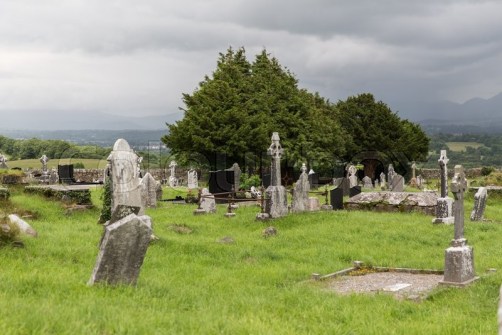
I’m looking out across the Wild Atlantic Way, where for thousands of years others looked out from these small islands on the west of Ireland, from the cliffs, from these craggy hills. Celts, Vikings, on through my own ancestry of McCormicks and Walsh’s and more, on through to poets such as Yeats and Seamus Heaney, all sat in these fields, on this beach in Connemara, in Connaught, and looked out across the Atlantic to the setting sun, to the once unknown flat vastness or inconceivable largeness of the wild seas stirred from storms. 

It is calm today, and I’m thousands of miles from home, as I have been many times in my life. But this one is different. I’m not far, maybe walking distance, at the most a short carriage ride, from where some great-great-greats set the DNA ball rolling toward me. And a part of me, while waking here everyday in wonder at the distant connections, often thinks, well, who cares really? The world is not recognizable from those days; the criteria they used to make decisions about where to live and who to marry and what to do for a living don’t even fall in the realm of memory–they are on a separate plane. I am alive, now, rooted in my more immediate ancestry of fathers and grandfathers, cousins I communicate with on a platform for which there would be no explaining to an aboriginal Irishman from my centuries ago. I like now. I love now, in fact. 

But another part of me feels more complete because of being here on this land looking at the ocean from the opposite side of my normal routine. It’s as if some long ago blood which once mixed in this soil can run through my fingers when I brush the grass, or when I run my palm on the wind-blown patterns in the sand, and it helps us meet each other somewhere in the between. 

This is as close to going back to then as is physically possible. When I walked out this morning and looked across the gardens to the ocean, where at one time those McCormicks and Walshs watched the waves pull and push to shore, it was like I had found the edge of some abyss of time, and I leaned over my past, beyond my parents and their grandparents, to a time so long ago that this, right here, is the only common ground left. And I wondered again if I am just distracting myself from the here and now. Maybe it somehow grounds me? 

John Edgar Wideman wrote that we all need two parents, four grandparents, eight great-grandparents, sixteen great-great grandparents, then thirty-two, then sixty-four. And that’s only six generations back to a time, he points out, when thirty-two men made love with thirty-two women, all in some subtle conspiracy to make me possible. And certainly some buzz of DNA filtered through which connects me to them, of course, but something else. I guess it is because I live at the water and spend most of my mornings looking out, looking “back” to not only a place but a way of being which was at one point part of who I was before I became. 

Certainly I do not need knowledge of them to fully become myself, nor was there ever a pressing need to appear on this shore. I’m not Sean Thorton returning to Inishfree to reclaim a homestead. 

Still, I could stay here. Oh lord, if reincarnation is a reality, and time were not as restrictive as we have made it, I could be born, breathe, and cease to be on the shores of Connemara, disconnected, without a need to cross the Wild Atlantic Way. I have been many places where I believed I could have a whole life. What a sad and sardonic reality that we have one life to live when a thousand times a thousand lives are not enough to completely experience being human, being here. We all play a roll, of course, and sitting here on the grass somewhere someone before me sat makes me feel like I understand my character a bit better. 

Perhaps the most significant gain for me on these paths west of Galway is that I wouldn’t trade my life at all. I would never gamble with the memories of my childhood, my son’s childhood, the sunrises and sets, the Scotch with my father, the early morning talks with my mother, the laughter–oh the laughter–with my siblings. I wouldn’t lay one bet down against the birthday parties and anniversary parties, the pool parties, the block parties, the quiet moments late at night, the places I’ve been and the people I’ve known. 

Perhaps I came here to thank the spirit of place which stirs again in my bloodline as I walk through the sands of Connemara, for being part of the cycle which made walking to the river with my son on my shoulders possible. 

And I can hear, quietly, a sweet Irish blessing:

Thanks for the fullness 

of days spent together

The friends that we pray

will be with us forever.

The feelings we’ve shared

the food and the fun,

with faith that God’s blessings

have only begun.

800px_COLOURBOX20668217