At first I was going to just record myself reading a blog, and then I thought I’d record something specifically about nature.
Then I found some videos of Tim Seibles and me from the Jewish Mother sessions we did for several years in Virginia Beach, and I was going to publish them, but, no.
Then I realized how many people I know write about nature, and this page was born. Already since this was published a few hours ago, a list of writers to add to the page has grown. But understand, there is no ranking involved. I reached out to writers I knew well and the first bunch that answered my call and sent me a video I posted. That’s it. And many of them did so while trying to move classes online.
What started a few months ago as a passing thought has turned into this page, and I’m excited to see where it goes. I mean, how can anyone ever get tired of readings about nature.
Thank you for watching. Please if you so desire, like their readings when you watch them, and remember to go to the links of their work and read their bios.
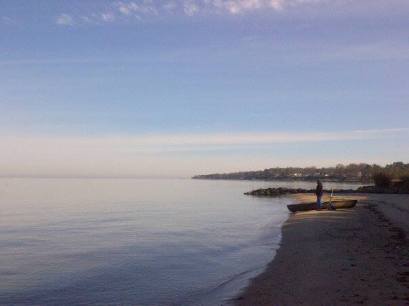
My walk was chilly today, a breeze coming from the northwest stirring up the surface of the bay and pushing away the false hopes of an early summer. I love—embrace—the feel of this time of year on my skin, whether it be warmer days or chillier nights. For now, it’s early spring again, closer to late-winter, and I walked along the water and past the farmlands, nothing to see but sky, deep blue sky, clear to the horizon. A young eagle swept across the road and along the duck pond near the river, and the same blue heron I see every day was there only to take off like she always does with a deep honk to glide across the pond to the marsh, landing in the shallow water without causing so much as a ripple. The kingfisher on the wire as well as the gulls along the rip rap are braver, not caring so much about my routine. The herons, however, and the egrets and buffleheads all distance themselves as fast as possible.
A sign of the times, maybe.
Everyone I know is inside; the entire planet is isolated or quarantined or Staying in Place by whatever decree the local, state, national authorities updated today. It’s like the whole world was put in a Time Out for three minutes or three weeks or three months. Some people are engaged with the news watching the numbers go up, and I suppose it helps us stay in tune to the gravity of the situation, keeps us in check, but it feels an awful lot like for some the CDC tally has replaced Sports Center. I’m not indifferent to the desperate and unprecedented nature of this crisis; it’s simply that I’ve done all I can do at this point. My art and writing students are in check, the kitchen and pantry are stocked, I’m not going anywhere, and by nature here at Aerie I don’t see any more or less people now than I have in the twenty-four years I’ve been out here on the eastern edge of the peninsula.
Still my mother called earlier to make sure I was safe, avoiding contact with people the best I can. I told her, “Mom, I have to drive somewhere to have contact with people.” She felt better. Until tomorrow. As for her, she’s in her independent apartment in Virginia Beach in a facility that keeps her safe, the property spotless, and everyone else—including family—away. Isolation means being away from others. It is safe. But it is also very sad. For some, tragic. Isolation, while the best course of action, contradicts the soul’s desire for human interaction. It is one thing to choose to be alone; it is an entirely different thing to have aloneness thrust upon you. Some, I am sure, would rather die.
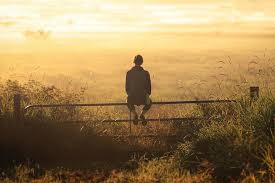
But back out here in the Wilderness, the sky is “blank” tonight. That’s what my son and I call the sky at sunrise or sunset when no clouds are resting along the horizon, stirring up the dust, calling up colors for us while we sit and watch or take pictures. Sometimes the western edge just above the reaches of the river, up past Tappahannock and outwards toward Fredericksburg, is so streaked with dark reds and blood orange that we can’t decide whether to shoot pictures or just stare silently while it all goes down. We might hear a boat out past the point, or sometimes Mike landing his P-13 a mile or two to the west at Hummel Field, but mostly it’s just the water, softly, right there, every few seconds at our feet.
But tonight, well, tonight, as if to underscore the news blasting out from literally every town on Earth, the water is rough, coughing up white caps and slamming the rocks at the end of Mill Creek. Parrot Island looks half submerged, and the pier near the old boat ramp is underwater. It’s like nature knows.
Of course it does.
It’s like the earth is saying, “You’re not paying attention!” It’s like the earth is telling us who is in control, from violent storms to virulent disease, it is calling out for some humility, some humble self-reproach. This crisis has demonstrated, clearly, as if under a microscope, how indiscriminately we brush off people and time and life itself. I know so many will be complimenting the efforts of billions worldwide, and showing how we’ve come together, showing how we’re sewing masks, or clapping for nurses, or thanking cashiers, or washing our hands. We’ve pulled ourselves together to get through this, yes. Yes.
But it’s only now, six feet apart at best, miles apart for sure, lightyears away from each other for certain, that we appreciate the eye contact, the walk along a city street, stopping in stores, sitting at a café; that we appreciate shaking hands, a quick hug, the friendly embrace. The economy will return to something better than this, the chance of contracting the disease will back off, the colleges will reopen for face to face classes, and we will be able to sit at Starbucks and laugh, sharing a muffin. Of course, But I fear it is going to be sometime before we have those sensory experiences, the visceral explosion of life on our souls.
It’s getting dark and my skin is cool, almost wet from the night air. I can taste the salt from the bay on my lips, and my face is lashed red and wet. It feels good, and I can take a deep breath, a deep deep breath, and walk up the hill past the farm under a half-moon into my home for the night.
I am fortunate. I live on four acres with trails and gardens, and I have a peaceful walk to the river and the bay. I can be outside from sunrise to sunset without ever seeing anybody, and I can wander at will to watch the eagles trade calls with the osprey, watch the fishing boats out toward the mouth of the river, and I can breathe deep and feel about as healthy as one can possibly feel.
Well, except for my stuffy nose, my fatigue, and my headaches, which have come to stay for a while as they do every year about this time if I don’t medicate just a little and shower a lot. It’s a bit unnerving having allergies which bring on headaches and fatigue the same time as the appearance of the Coronavirus known for some of those same symptoms.
But I tolerate the meds (or, more commonly the last few years, a lot of green tea) for the sake of such beauty. Living in the country has the benefits I’ve long touted on this page, especially in Spring. The buds on the oaks are changing the tone of the sky from dark blue to a hazy blue with speckles of green, interrupted only by the white blossoms on the apple trees a few feet closer. The daffodils have come and gone but the tulips are pushing through now, and the azaleas are ready to explode.
The white flowers on the laurel bushes are still a month off, but between now and then the honeysuckle will fill the woods from here to the river, and the early wheat across the fields will be knee high. I’ve not yet planted the garden; not going anywhere has interrupted my normal routine just a bit, but I have seeds inside I’m ready to sow so they will break ground or perhaps even blossom by the time we can interact with each other again.
It is Spring, and the rains from the west combined with the bay breezes have awakened every aspect of life, from the bees which I saw again this week, to the Carolina wrens headed back north, to the return of the osprey in the marsh where eagles have nested most of the winter. The farmer across the way will drive his tractors and thrashers and slow us down on the main road as I try and head to the village. He’ll pull into a field to let a row of cars by as he gives a small wave. I most likely would have seen him at The Galley in a few days if the Galley was open for anything other than take out.
The river is changing as well, turning to her normal choppiness this time of year as the March winds wake up the waves clear across the reach so that sculling to Windmill point is, well, pointless. But the breezes, oh they are soft again, and warm, with a touch of salt and the fragrances of goldenrod which, anyway, has turned my dark grey car yellow, the site of which ironically calms my nerves when I wonder if my headache and my fatigue are allergies or, you know….(insert a whisper here)…covid-19.
A quick shower clears away the coating and I can breathe again and have energy again and feel excellent, awakening in me the realization that this time of year I nearly always quarantine myself anyway. Problem is, of course, at my age, I’m only looking at so many more Springs, maybe two decades if genetics stays true. That’s just one score of springs and a few odd years before the allergies alone can cause havoc with my respiratory system.
A quick review of this short dirge seems on the surface to indicate some depressing thoughts until now, but that’s only half true. I don’t sit around and count how many seasons I have until I’m eighty, if I ever am eighty. I really don’t. In the normal doings of life it never crosses my mind. But the news, well, the news has been gray at best, and it doesn’t take much for me to ease down that slippery slope of understanding time’s limitations.
I prefer to think of such an acute awareness of how many Spring’s I have left in me like I do the proctor at a timed exam. She might glance at the clock every once in awhile and call out, “Thirty more minutes,” and everyone looks at the clock in unison and everyone takes a deep breathe, lets out a whisper of a curse, and presses down just a bit harder with the pencil, scribbling a bit faster. I don’t mind the warnings, the head’s up. They awaken in me just enough anxiety to appreciate better the weeding I need to do in the rose garden running along the woods behind the house, or thinking about my ambition to rake away the leaves running along the four hundred foot driveway to plant bulbs and wildflowers, which anyway won’t bloom this year, but soon.
But I’m only out in this wilderness because I can return to town, sit and have a drink with friends, laugh, touch each other’s arms when we tell a story, give a hug to those I haven’t seen in some time. That’s life—that contact, that human touch. Even Thoreau ate dinner at Ralph Emerson’s place on occasion. I’m going for a hike through the woods and then to beachcomb for a bit. I wade calf-deep and then slip the flip flops back on and walk the hill to the house, maybe call a friend who anyway is probably out on a hike as well. We are never alone in this being alone, as Gordon Sumner once wrote. Nor do I ever want to be.
My entire life I’ve been running behind. I figured out quite late how to plan ahead financially, professionally, and even emotionally; long after everyone else I grew up with. I am the one who always thinks of just the right words to say only after the situation is over. And I’ve objected throughout my life to changes in plans only to completely agree later, after I’ve thought it through more.
I’m not good at so much of what is necessary to maintain a normal life. A significant slice of my brain still thinks I’m in my twenties, ready to start anew, chase some other dream. Another portion of my cerebral pie is still in its teens, excited about a hike through the woods, wondering if any of my friends on the old block are still interested in a long walk along the creeks of Heckscher State Park on the Island. And still another remains the hopeless romantic, surviving crisis after crisis throughout this narrative just knowing that when we get to the climax, it’ll all turn out just fine.
I’ve mastered the art of self-deception. I’m the proverbial creator of castles in the air, and I’ve convinced myself I’m not too old to build foundations under them. My justification for such quixotic approaches to things is how well it has worked for me thus far. I’ve had my share of living, of adventures, of trunks filled with experiences that have filled dozens of journals from Africa to Russia to Mexico to Norway. I’ve done the professor thing. I’ve built the house in the country near the water and raised a fine, fine son. The old Zen stuff I learned in my teens in the seventies panned out—visualize and follow through. I’ve been best friends with adventurers, artists, musicians, writers, soldiers, homeless, and drunkards.
And I’ve been lucky enough to have older siblings who are two of my heroes; two people who I not only look up too, but who have inspired me more than I can appropriately write about; my parents, too, were examples—in all, four people around me all the time, all raising me to some degree, and still, their lessons I learned far too late. I’m not complaining—just the opposite, my God, I’ve had the chance to live more lives than I ever imagined possible when I was young. What a pilgrimage it has been so far.
But (there’s always a “but”). I was at a meeting many years ago and the division chair had asked us all to tell ten of our own accomplishments—not school related—that no one there would possibly know about. My turn came and I mentioned some things I was proud of, and secretly as I read the list, I thought two things simultaneously. One part of me was thinking, Wow, I’ve had some really great opportunities. But the other part of me was thinking, I’ve spent more of my years not doing things than I ever spent doing things. I feel like I’m still trying to figure out what to do with my life.
There is good reason for thinking that second thought, about how I was “not” doing things, because I was, in fact, doing a lot: I had a young family, I finally had a career, a mortgage, and a job that afforded me chances to do so much of what I wanted. But there was always something missing, something I always felt like everyone else knew about for themselves a decade or two before me, but I just couldn’t put my finger on it, like it was always just out of reach. Everyone I knew seemed to feel settled, like they had found for themselves exactly, I mean exactly, where they should be and what they should be doing. I could see it in their enthusiastic attitudes, in their engaged eyes, in their unrestrained energy for their work, and I just figured I’d come to that attitude late, like I always have, but it never showed up. I thought maybe I’d find it in one of the two dozen trips through the years to Russia or Prague or Amsterdam, or if I wrote it through enough, I’d find it in one of my stories. Well, as another influence in my life, Jackson Browne, once wrote, “I can’t help feeling I’m just a day away from where I ought to be.” Yes.
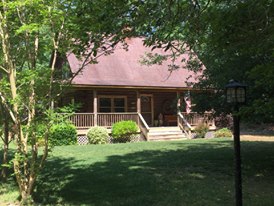
Then came this allusive Covid-19, a phrase which has suddenly entered our lexicon without any warning or slow introduction at all. Just “Bam! Covid-19!” And we have been told to isolate as much as possible. We’ve not yet been given the order here in Virginia to stay in place, but when we are, well to be honest, nothing’s going to change much around here. The property alone is huge with trails and a wrap around porch and a patio where I spend much of my time doing work. The river is right here, and it leads directly into the Chesapeake Bay. The village is sparse so that pubs are still open for people who, sitting far apart, can relax on the deck and have a drink. Like always. Nothing here has changed much. My daily walks are still my walks daily, and I still never see a soul while doing so.
So last night I sat at the desk about 3:30 in the morning and read some rough drafts of my work and had an urge to go online and plan some trip; maybe drive to see a friend in Ohio, or head to Florida or New England. I’ve had a burning desire to hike the paths on Antelope Island or have lamb at Peklo in Prague. Yes, I’d apply for some grant like I have so many times before, and I’d just go, and I’d write about it.
But we all now find ourselves in this precarious position of not being able to do what we could so easily do just days ago. We’ve been told to isolate. Down in the city it seems these days that just going to the store is dangerous, making us reevaluate how important that bag of chips really is after all. Now all around the world people are staying in place, like it was a massive game of “Red Light” and God suddenly screamed “STOP!”
It is one thing to blame our inaction on lack of finances or being too busy at work and it is another thing altogether to have immobility thrust upon us, to be told any plans we may have had must be cancelled or, at the very least, postponed.
I despise postponing anything, but in particular, life. There isn’t that much of it to begin with for the youngest of us; and there certainly isn’t that much left for the healthiest of us. So postponing and “waiting it out” contradicts everything believed in by those of us who want to empty the tank before we end this mortal ride.
Now’s a good time to think about this. I wasn’t doing anything anyway. So I stayed up late, or got up early, I forget, it was 3:30 am and I was tired, but I was up and I thought about it and I came to a fine realization, an absolutely perfect epiphany: It is the searching I am after; it is the “looking” I look for. Even Don Quixote isn’t trying to slay any windmills; it is the pursuit which draws him. I have learned after so many years and so many miles that it is the absorption of life on the road, the cultures, the laughter with others that is my livelihood. There isn’t anything in the journals I was ever actually after; it was having something to write about at all that mattered.
We are always faced with the ancient and abstract question, “What do you do for a living?” Well, for a paycheck I teach college. For a “living”??? Well, for a living I have celebrated Victory Day with World War Two vets in Russia on the 50th and 60th anniversary; I walked across a frozen lake in the Arctic while bands of aurora borealis bounced just over our heads; I stood on a rock next to an obo with my son on a hillside above Lake Baikal, and a year later we walked across Spain. I sat and drank vodka with a Russian photographer and friend after his wife died, and another friend of mine and I spent hours counting stripes on the wallpaper in our hotel room. We had wine, yes.
This all crossed my mind at 3:30 am after yet another day of not going anywhere along with everyone else on the planet who is not going anywhere for quite some time to come. Sitting still and isolating myself has set my mind free. Too free, perhaps, so I’ve got to occupy my mind before it gets out of hand and I discover, too late of course, that I’ve wasted even more time. To that end, my moments hence forth and until I’m directed differently will be spent working in the garden, fixing the shed, cleaning out the attic, canoeing to Parrot Island, writing letters every day to my dearest friends, and more, and more.
I am very excited about possible quarantine. Very cool. You see, if we are forced to focus on one or two things, we can usually master them. Put anyone alone in a room with just two things to do and wait three weeks. They will have mastered those things, of course. But life doesn’t allow us this; life demands a degree of multitasking we will never be able to master. But limit me to two things? Really?
As they say in this neck of the woods: Here, hold my beer.
This is what I’m best at: Individual moments. I just could never put my finger on it. But this is how I make a life; slipping all these beautiful individual moments together on a string. I’ll make pretzels and we’ll laugh and drink coconut rum and experiment with the dough. I’ll organize all my photos. I’ll clean up all my flash drives. I’ll wash the windows and they’ll be the cleanest frigging windows in the village.
I’ll learn to be excellent at just a few things within my grasp instead of half-ass at things just out of reach. Why do I feel like everyone else already knows all this?
Still, it won’t last long. I know me. I may have come to understand who I am later than most people, but I’m there, and there’s still too much gas in the tank to not pursue what’s just out of the reach of my headlights, so I’ll keep driving. Someday I’ll learn. Someday.
Some have stocked up on food and water and other essentials, some are less worried and go about their business. Some are working from home and many are not working at all, right now sitting at the kitchen table figuring out how to make the money last longer than they had planned just a few days ago, when things were already tight.
Many will try to learn something new or start a new hobby, like the lady at the library a few hours ago who learned to download books onto Kindle so she can catch up on her reading. I heard a man in the store yesterday say he was going to learn to cook. Many will binge-watch shows ad nauseam, all of them trying to avoid this invisible killer, this microscopic mess, and some of them will remember Plato said that courage is knowing what not to fear. An analyst on the radio today, when asked how difficult it is to catch this still relatively uncommon viral critter, compared a town of people to a book and the virus to a page—one leaf of paper, she said—but they’re all bound together. It isn’t easy to keep the pages away from each other, but it must be done. “Take your piece of paper and go home,” she said, her point well taken.
I’m fortunate in that my life won’t drastically change. I’ve moved my art seminars and writing classes online, and I’ll be home to walk, wander about the dock and mess about with boats, since there’s “nothing like messing about with boats” Kenneth Grahame tells us. I’ll get up for the sunrise at Stingray Point and follow it down across the duck pond and the western Rappahannock until the sky blends blue with something like a purple mist, and then deep reds, and then gone.
I’ll sit on the porch and listen to the spring peepers and dream of Spain, of the hot sun and the endless paths through eucalyptus forests and the open plains. I’ll imagine hot nights in the Siberian railroad dining car east of Irkutsk, Michael playing chess as five or six Russians take turns buying Baltika beer and laughing at the way my son keeps winning, noting how good he is, ignoring how drunk they are. I’ll look out through the woods here not far from the Chesapeake Bay and maybe hear an owl, most certainly a whippoorwill, and eventually I’ll head inside and upstairs to this desk and try and rub two sticks together on the keyboard. If nothing ignites, that’s alright; there’s time. I just need patience. They are the two most powerful warriors, Tolstoy reminds us—patience and time. And we’ve been told we’ll have plenty of time, maybe months.
It’s only Day One.
Each day I know I’ll walk to the river and note how predictable the herons can be, fishing the same spot where the water bends along the sand, as they always have, long before this, long before that. Nature has a way of reminding us to come out of the allusive moment, pick up our faces from the flood of current events and study the timeless presence of now, the motion of the tides. Isolation at home is a good time to go out, even if only to a small patch of grass in a park, to find some piece of sky and remember or plan. Some will push strollers, some walkers, and some will walk alone, slowly and against all warnings, preferring the fresh life of nature along a creek behind an apartment complex to the confines of a sterilized hallway. “I just want to go for a walk” someone might say, having never had to say that before.
Sometimes there simply isn’t enough time to take even the slightest of moments away. “Life is paper thin,” my friend Toni Wynn wrote. Yes.
On the upside I don’t have to tolerate students staring at their cellphones while I’m trying to talk to them. Are these people raised by wombats that they never learned to look at someone who is talking to them?
I will not have to suffer the slings and arrows of outrageous double negatives. I ain’t got no need for no more of that.
I, thankfully, will not have to worry about having a stroke every single time one of my students uses upspeak to talk, turning the simplest of phrases into a question, trying to force me to say “uh huh” every single sentence. Gone.
Oh, and the dastardly parking situation! Gone!
No one coming in late, leaving early, offering excuses instead of doing the work. No one sneezing in class, coughing into the atmosphere, smelling like weed. No one asking me to repeat what they missed or asking me to start over or asking me what they’re supposed to be doing when everyone but them is doing something. No more.
No more standing in a long line for a long time to buy an overpriced, badly made egg salad sandwich. No more lines. Anywhere.
What if this stays like this a long time?
What if I can’t get back into my mother’s place because of all the elderly people with respiratory problems, including and especially her?
What if I touch someone who touched someone and then later, briefly touch someone else, helping them onto the curb, into the store, into their car, and then it starts.
It’s like lungs filling up with glue someone said.
It’s like having no ability to breathe in, someone else said.
“I”m sorry things ain’t what they used to be.”
This evening a writing student wrote about her concerns, and at the end of her email she asked if I’d ever experienced such a change of how things are compared to how things were. I said, yes, I have. Almost twenty years ago now.
She wasn’t born yet.
It was a Tuesday, just before nine, and the sky a cobalt blue, bluer than I’d even known. Afterwards, my office mate and I were walking from the other side of campus around the lake, and we talked about how this all seemed suddenly irrelevant, petty. We didn’t yet know if someone was also bombing the UN, the pentagon, the White House. We just didn’t know anything.
Well, that’s not exactly true. We knew one thing with clarity: We had the absolute conviction that our destiny which had always been our own had suddenly been obliterated.
It must feel like that now, I wrote back to her, like it’s going to last and things will never be normal again. I paused in my typing, imagining her reading my words and perhaps nodding.
Well, I added, We’ll develop a new reality, a new routine, which might include more consistent hygiene, more focused learning, and an appreciation for the small things. The really small things.
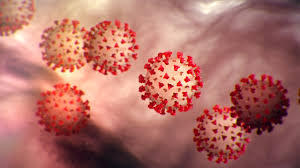
Microscopic things. What is essential is invisible to the eye, Saint Euxpery wrote. True, but so is what’s deadly, like microbes, viral ones, which slide without detection into the cheek and then the throat. And then you die.
It wasn’t a rebellion that brought us to our knees, or any sort of invasion. No. Someone coughed. And then, and then, then…
I wish that peace could spread so easily, like fire, like wind, like time. I wish that we’d wash our hands of greed, of pride, of aggravation.
I remember Dad was a coach for my Little League team, and I was not a good hitter. I could play outfield just fine, but at the plate I panicked. He offered me ice cream every day for a week if I hit a home run, and I did. He knew just what I needed for incentive. To be fair, I hit a line drive over the second baseman’s head which then rolled between the legs of the right fielder; several throwing errors later I scored. I asked the manager if he could mark it as a home run instead of a double with extra bases, and he said yes. Dad just laughed and did, in fact, buy me ice cream every day for a week. We’ve all got stories like that. We all remember moments like that.
Then there was the time just he and I went to Jolly Rogers Amusement Park on the Island. Maybe I was eight. I don’t remember. But I wasn’t tall enough for some of the rides, and it was just the two of us. When you come from a family of five, time alone with anyone is rare. With Dad it was usually my brother and me with him, playing golf mostly. I like how most of us have several sets of memories—me with Dad; me with Dad and my brother; me with Dad, my brother and my sister. And of course all five of us. Those categories create different memories of various personalities. Dad was different when all three of his kids were in tow—more responsible, more reserved. Crazy how three kids can have completely different memories of the same event, the same person even, but put them all together and it’s a life, a home.
Dad taught me to drive, how to come out of a curve, how to anticipate what all the other drivers might do, how to expect the worst. I remember how when I was a senior in high school, he’d let me have his car. He and I, twice a week, would go to a local Dunkin Donuts and have coffee (juice for me) and donuts (double chocolate glazed for me) and then I’d drop him off at his carpool and I’d head off feeling way older than my seventeen years. And in the decade that followed I traveled all over the country, and because he had a toll-free number at his desk, I would call a couple of times a week to say hi and update him on my whereabouts. He was always interested, and I must say, now that I think of it, I don’t remember him ever—ever—not taking the time to talk. Like the time I called from Massachusetts to tell him I was going whale watching off the coast of Maine. He was so excited, I can still hear his baritone “Oh boy, that will be something!” But I lied. I was actually in an airport when I told him that, and I was flying back to Virginia along with just about every relative we had to surprise him for his sixtieth birthday. When he and my mom walked through the door to a thunderous “SURPRISE!” he said, “I thought you were going whale watching!” I swear I’m pretty sure he was disappointed I was there and missing that boat trip. I assured him I’d be going when I returned north. We all remember that party, I’m sure. That’s how I recall it; that and the mostly naked woman who showed up to sing Happy Birthday, compliments of one of my uncles. Mostly I remember Dad asking about Maine. He did his fair share of traveling in his life, but he loved to hear about all of our adventures.
I happened to start teaching college just before he retired, but Mom was still hard at work, so Dad would show up at my office around lunch time once he knew my schedule (to his last days, despite a fading capability to remember most things, he always remembered my schedule), and about once every two weeks we’d go to some fish joint around the beach.
Then Michael was born and since we lived just a mile around the corner from my parents, I’d walk Michael to their home during the week while Mom was at work and Dad and I would kind of talk—mostly I watched television while Dad held Michael or played with him, or walked him to the water to show him the ducks. I have more pictures of my son and my father together than either of them with me.
My son reminds me in just about every way of my father—quiet, patient, deeply kind—and that spills over into their passions for history and golf. The best times were when my brother came to town and the four of us would play, but even just the three of us was always fun. And always my father and my son would talk about books and about golf and whatever else there was to talk about. And they’d joke around.
My father’s feet, however, were never really strong, so he couldn’t join Michael and me in Busch Gardens with our season passes. At first Michael wasn’t tall enough for some of the rides, but that just meant we spent more time playing games until he had so many stuffed animals that we had to bag them and donate them to a children’s hospital. He still has a big blue fish around here somewhere. Since we live just a few miles from a beautiful golf course, we played a lot as he grew, and he always brought his camera along.
And then when my son was in his teens, I taught him to drive, how to come out of a curve, how to anticipate what all the other drivers might do, how to expect the worst. I wonder if when Dad taught me to drive, he thought about the same thing I thought about when I taught Michael—that what I really just taught him was how to leave home. I remember telling him about being in college and while other students in my dorm would spend twenty dollars on beer at the skellar, I’d borrow someone’s car and spend twenty dollars on gas and head to Niagara Falls or Lake Chautauqua. He got it right away. I remember how he figured out the highlander got about twenty-five miles per gallon, and how a gallon cost about $2.50 at the time, so he knew ten bucks would get him a hundred miles. I said to him, “So you’re asking me for ten dollars?” He looked past me for a second, figuring, and said, “No. I’ll need a hundred and sixty.”
Funny how now he can travel anywhere in the states and call me for free, tell me about his adventures.
But there’s one significant break in this progression of DNA—the gap between my father’s generation and mine was significant. His was World War Two, the Andrew Sisters, dressing down was loosening the tie, he and Mom had their friends and did their thing, and I had mine and did my thing, and never the twain did meet. But there is very little gap between my generation and my son’s. For the most part we listen to the same music, watch the same movies, and being in your fifties now isn’t nearly as settled down as being in your fifties forty years ago.
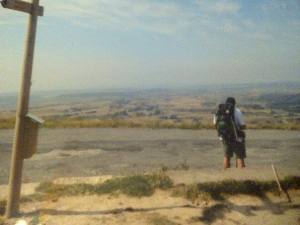
So when I headed to Siberia, Michael came along. And Spain was our trip together from the start. And through it all he would read everything, wanting to know the history, amazed at the details.
These days, when Michael isn’t out at art galleries, he works in a library. And sometimes when I’m home I’ll drive down and see if he wants to get lunch at one of the fish places around, and he’ll tell me of his plans to ride his bike from Pittsburgh to DC, or to go do another artist residency on one of the Aran Islands in Ireland, and I tell him, with a tinge of envy, I’m as excited as he is, and I’ll probably be just as disappointed as he if he doesn’t go.
I am not a history buff by any means, though I have toured many historical sites around the world. Some of my favorites include Sagamore Hill—Teddy Roosevelt’s home on Long Island where I first went when I was in sixth grade and the last time when my son was about the same age I was then. I have a picture of me with classmates on that porch and another of Michael near the same spot. Very Cool. Another is Monticello—Thomas Jefferson’s home. Historical sites abound here in Virginia.
In Europe and Asia, too, I’ve found myself surrounded by history. In Prague, for instance, my favorite restaurant is Peklo, which six hundred and fifty years ago was a wine cellar where King Charles IV would occasionally indulge; they make an amazing duck. And all across Russia I’ve been able to experience history from the homes of the Czars to the train stations used by soldiers during World War One and the Russo-Japanese War just before that.
But make no mistake—I sucked at history in college and high school. Still, my own sister earned a doctorate in history from Notre Dame and has written extensively about American history, including her definitive book about Arkansas Governor Winthrop Rockefeller (Agenda for Reform). Her husband, too, received his Ph.D. from there and is a leading historian at Temple University, author of countless award-winning works about military history, and it isn’t unusual to see his familiar face pop up on the history channel as commentator. Even my father knew so much about history he could have taught the subject, and at St. Ephram’s School in Brooklyn eighty years ago, he won a history award for his abilities.
Me, not so much. I am a hands-on guy fascinated by items that survived time and war and neglect. I need an object, a talisman of sorts, to bring history to life to keep my attention. The irony is I have made so many trips to Russia for the purpose of experiencing culture that I became heavily steeped in history by virtue of immersion. Russians are deeply rooted in their tragic and beautiful past. In Prague it is the same. When there, I always stay in a building built almost 700 years ago, but I have little interest in reading about those times. I like to be in the present, walk the same hallways with someone like my sister or brother-in-law to tell me what happened while I half listen and half focus on the immaculate trajectory of time, like an arrow, like a beam of light, like a falling star. Time remains relentless, and I simply prefer to lean against a wall in Prague or sit in a pew in a Spanish chapel prayed in by Charlemagne and contemplate the immediate reality that we are on the same line, standing between them and what’s next, isolating this moment. I am nobody, to be sure, but I am here, part of the conspiracy to keep those ages alive. Time can be like a relay that way. Observers grab the events of the past and pass them along to whoever’s next, and on. But while my sister and her husband are direct descendants of Herodotus, I like to consider myself the descendant of the barkeep who served up some honey mead for the evening gatherers who stood around and told stories and tried to pick up eunuchs.
History would be well served to have a bartender’s version of events. We could bypass the normal reference material like dates and plans and titles and influences, and keep track of what they really thought, their insecurities, their ambitions. Who wouldn’t want to pour another hekteus of wine and listen to Aristotle rattle on about which Sophocles play bored him to death and which sent him reeling to his corner table after intermission to contemplate the center of the universe? What tender stood by with the bottle of chianti that got Galileo hammered, relegating him to the courtyard at three am on his drunk ass with a dizzy head, and as he lay on his back he looked up at the stars and thought, “Whoa, hang on here.”
I do have one object which acts as transporter sending me back to the late 1800’s every time I hold it in my hands. It is a porcelain cup made in Russia in 1896. It is about four inches tall, white porcelain interior with blue and red markings. On the side is the seal of Czar Nicholas II and Alexandra, and “1896,” the date of his coronation. A history professor in St. Petersburg gave it to me. The “coronation cups” were made for that occasion and were to be filled with beer and passed out to the masses of commoners outside the Kremlin walls so they could celebrate along with the aristocracy. The military training field where half a million people gathered for the souvenirs of cups and various food and clothing items was already a dangerous place to walk for all the trenches and mud pits. But things quickly went south when a rumor spread that each cup had gold in it and there were not nearly enough of them to go around. A stampede ensued and left over 1700 people trampled to death. The cup became known as the “cup of sorrow,” so called by Alexandra herself, but it is more often referred to as the “cup of blood,” and this tragedy on their Coronation Day seemed a bad sign for things to come during the reign of the last Czar. I own one of only five hundred or so of the originals from that very field. When I hold the cup, my mind wonders what they were talking about before the stampede, what music were they listening to, was it an exciting time or, because of the conflicts already underway throughout the empire, was it subdued and the cup distribution simply a brief diversion. Who made the cups? For me, owning one is a way to reach through a rabbit hole and pull out some nineteenth-century reality. Though an argument can be made that it might be considered moronic to have it in my possession and I should probably sell the damn thing on Ebay.
When I hold the cup in my hands and turn it over, I wonder which guard, swarmed by people, handed it out, which peasant held it in her hands. I turn it over and realize the likelihood is that it was stepped on in the mud or smuggled away quickly by some young worker who managed to escape the tragedy. It is one thing to listen to a history lecture about the event, and something else entirely to go to the Kremlin and hear the tour guide explain the events as you look out over the parking lots and office buildings on the once barren land, and imagine the droves of Russians pushing for the gates, their comrades crushed just for the cup, this cup.
As the Raiders of the Lost Arc character, French archeologist Rene Belloch, notes, “We are simply passing through history; this is history.”
I think I’ll let the others write history. Instead, I’m heading to this small hundred and twenty five year old oyster shack I know and have a dozen Old Salts and sit in the same place oystermen sat while Teddy Roosevelt was pounding up San Juan Hill, and I’ll talk to some fisherman about changes in the tides, and how some Bay islands used to be so much larger, before the storm of ’33, and before the one in ’03, and if you paddle out to them at low tide and work your way through the mud, you can still find hundred-year-old hand crafted beams and abandoned hand-made oyster traps. When I was a child on Long Island, we would find arrowheads. The Native American culture on the Island wasn’t only learned by reading history lessons in schoolbooks; it happened as well when lying around in the sand and marshes of the south shore.
If I drink enough at the oyster shack, I might stumble out to the patch of grass on the river and fall on my back and stare up at the stars and think about Galileo and Copernicus and who else lay still in the quiet of night, the faint sound of water lapping the shore nearby, who was it that first saw Orion’s belt or the Pleiades spread out like buck shot. Then I might go back inside and sit a few stools down from the cook sitting alone in the corner, and then lean into the tender and ask, “So what’s his story?”
I eat almonds, wild berries, artichokes. I consume legumes, fiber, and avoid fast food. Last night, I passed on New York style Pizza, the thin kind where oil drips off a folded slice, and there’s just enough cheese to cover the sauce. You know the kind. Like Vinny’s on Seventh Avenue or that place in Queens that sells pies for half price on Wednesdays. We used to bring home the coveted white box, held hot in the passenger seat, that most unique smell filling the car, combination of crust and toppings, making everyone hungry. Then we’d pull the slices apart, glad for the way the pizza guy slammed the round blade onto the pie and spun it four times to make the slices even. Sometimes I’d order an entire small pie for myself and sit and watch the game, drinking ice cold coke.
But last night I passed on the slice my friend kindly offered. Ate instead a plate of lettuce which looked a lot like weeds I pulled from the garden and tossed onto the overturned lid of a metal can to carry into the woods, only this had oil and vinegar. You see, I’m not trying to lose weight, though I should; and I’m not trying to save my heart from heavy foods, though, there too, I really must pay more mind. What I’m trying to do is act my age. Guys like me, you see, those for whom the graph in the shape of a pie is about two-thirds colored in, we have to spread out the years a bit more, make it last.
Sometimes after a day filled with too much news and not enough hope, I feel like I’m just trying to make it to the end of life before anything bad happens to me or the world. I don’t remember feeling this way as a kid. Hell, I don’t remember feeling like this four years ago. I remember when I was little picking up garbage on Earth Day and thinking at that moment everyone in the world was picking up garbage. That applied to all aspects of my trash-free existence. If it rained it rained everywhere. Snow. Everyone on the planet on Saturday mornings watched Underdog. Of course.
So a few weeks ago I sat on the flatbed table in the doctor’s office and he listened to my heart. “You eating right?” he asked. “Sure.” “How about exercise? Are you getting enough?” “Absolutely.” “You really shouldn’t eat pizza so much you know.” “Hey, when I was in college I ate it all the time.” “You were twenty; you could eat linoleum and your body would be fine.”
I went outside into the grey morning sun and sat in the car. Most of us live roughly the same length of time, give or take a dozen years. Most of us are roughly the same height give or take, possess a relatively small variety of features like eye or hair color, have nearly identical operating systems for intake and evacuation, and suffer cold and heat, pain and comfort, desire and illness roughly the same.
So what separates us from each other I wondered as I drove off to find a Duck’s Donuts. My dad’s generation were “doers.” Survive the depression; fight the Nazi’s, build a house and raise a family. They took the punches and kept moving forward. My son’s generation waits for things to happen. They are raised in a paranoid, post 911 world where you never know when the next shoe is going to drop. Mine is the Earth Day generation. We were going to clean up the world; we stood together anti-nuke, anti-oppression, anti-war, pro-environment, pro-conservation dreamers with an absolute conviction we would be successful. We had Dylan. We had King. We had time. I suppose the environment in which we are raised has a heavy hand on the scale; the era, the latitude, the world-at-large. My era was the emergence of Earth Day, granola bars, Rocky Mountain High. I’m not sure when the hope started to erode like it has, but it has. Except for those moments when hope is like iron, like space. Those moments. You know the ones I mean…
Two dollars and fifty cents for a fucking donut. I paid the woman and took my small, custom-made lunch to an empty park and wondered why no one was outside playing. “Are you getting enough exercise?” the doctor asked. Honestly, I am, and long-distance hikes aren’t unusual for me; way more exercise than most of my twenty-something-year old students, to be sure. And, actually, I normally do eat really well. But sometimes I wonder if the three months or so longer I’m going to live by eating right and doing Yoga is worth the amount of pleasure I must cut out of my life to get there.
I finished eating and got on the swings. Eating right?Yeah, sure I am, I thought, and moved over to the slide and slid right down to the bottom with ease, landing plump on the dirt. I put my palms down on the ground and tilted my head back and stared at an emerging sun, the clouds quickly dissipating. Act your age, I thought, looking around. Part of me was glad I was alone in the park—made me want to climb the monkey bars. And another part of me wondered why the place wasn’t packed with senior citizens, pumping donuts into their mouths and giving the see-saw another workout. Hell, that’s what I’m going to do when more of this metaphoric graph gets filled in. It is, after all, my life. I brushed my palms against each other and the dirt smelled good, fresh, and some salty air drifted in from the Atlantic. Then all at once I felt young, but it wasn’t the swings or the slide or the monkey bars. There, right there, the dirt and the ocean’s salty air, and the sun cracking the day in half, these things, right there, the visceral life we have at our fingertips, right then I remembered is nothing short of miraculous.
Late last night and early this morning it snowed. Not much, couple of inches, but enough for the university to say stay home, and enough for my son and I to head out and walk the trails on the property. The woods here are filled with holly, and the holly are all covered in snow since there was no wind to speak of and the snowfall was light, dusty. The little out there packed under our heels to that well-known winter sound of shoes compacting snow, leaving tread marks, pulling up small chunks. I made the mistake of walking under a tall, heavily snow-laden holly, and instead of throwing a snowball at me, Michael aimed for the branches above my head, and pounds of snow fell on my head, down my neck, covered me perfectly. The cold on my neck and down my shirt on my back felt—and I don’t mean to simplify this adjective—white. That kind of cold wetness on the neck feels white. Melting white. The crisp, clear air stung at my face and my eyes watered a bit from the cold and the air and the brightness of the sun on the snow. We took pictures as proof, and cardinals passed moving from a holly to the porch rail to sift through safflower seed. This all before eight am.
That, too, felt ageless, as if fathers and sons everywhere this morning walked through the woods, and snow fell gently, and none of us anywhere had any promises to keep.
Back on that first earth day, when I was just a child, I remember thinking—or maybe someone said it, which is more likely—if people didn’t throw trash everywhere, we wouldn’t have to pick it up. Ah, prevention! How elusive you can be!
…but eventually it all makes sense, because eventually you understand that it is all about those moments; we simply don’t have enough of those moments when we love out loud; when we spend time with those we need nearby, laughing, telling stories, remembering when, watching the sun paint a lonely reach, listening to other people’s voices far off across the way laughing at some far off story only they will know. And we start a fire and open wine, and we all go for a walk, three or four separate conversations mixing, tumbling back on each other, so that we don’t know anymore which comments we are laughing about. Someone suggests ordering a pizza and everyone sits around the fire having a slice and everyone comments how it is the best pizza they’ve ever had, though they’ve had it before, but not like this, not at all like this.
Then, right then, you’re glad you listened to the doctor, glad you did your part in salvaging this magnificent planet, glad you tried, anyway, and glad you are still here. Because right then everyone everywhere is sitting around a fire, laughing, the whole clean and peaceful planet right then is sitting around telling stories and laughing, and your eyes swell at such beautiful transient thoughts.
And later, when it is quiet, and someone says there is no point in stoking the embers—it is late, or early—and someone might have already fallen asleep nearby while two others talk with more control and less style about the swiftness of time, about uncertain moments, about unrequited dreams, and it will get quiet, and the air might have a chill. And eventually, one of the two will say while the other just nods, “But look, we are here now, and who knows for how long, so let’s be here.” And right then I know, if I’m among the mix, I know for certain that I’ll look out across the distance and think of Frost:
“Earth’s the right place for love; I don’t know where it’s likely to go better.”
I tell my students on their first day that the most important question professors will ask any student throughout college from the start to their PhD is, “Where did you get your information?” That’s it. That’s the whole B.O.W. (Ball of Wax, come on). If the answer to that question is vague or first person or convoluted, they fail. But if the information they provide is excavated from the works of experts, and the students make that clear every single time—every single time—they introduce a subjective thought, they will gain the respect of their readers until the students become the experts and, as a result, the source for future researchers.
“Where did you get your information?”
Okay. Tonight’s View is from the professor/j-major in me.
According to the Pew Research Center and the Washington Post’s Fact Checker Poll, the most trusted news sources are predictably partisan. The vast majority of Republicans trust Fox News for their information followed closely by conservative talk radio, while CNN takes the top for the majority of Democrats followed closely by NPR and MSNBC. Both parties found little use for the other party’s choices. Go figure.
Fine. Let’s take a look at from where they get their information, shall we?
Sean Hannity is a conservative host who discusses political topics and influences millions. His education? He dropped out of NYU and Adelphi. It was his radio experience that enabled his charismatic presence to cover for his lack of expertise in anything he discusses. In the world of Mass Communications, he is not a journalist, though he plays one on TV. If any student comes remotely near this man on a works cited page, they fail.
Rush Limbaugh was another conservative talk show host discussing political topics and influencing millions more than Hannity. His Education? He dropped out of Southeast Missouri State University. His radio experience enabled his smooth voice and sharp wit to cover for his lack of expertise in anything he discusses. Again, cite him and I’ll laugh at you in front of the whole class.
These two have absolutely no background or degrees in journalism and how to verify information properly, or political science, or any experience in either politics or journalism beyond being disc jockeys with opinions.
Here is a disturbing example: conservative radio host Mike Savage has written multiple best-selling political books supporting his commentary on his syndicated talk show, though his three degrees are in botany, medical anthropology, and nutrition. He is not a journalist, not a political scientist, and not funny.
Thom Hartmann, as well, is one the most successful progressive talk show hosts as well as a business mogul, but his degree in Electrical Engineering from Michigan State didn’t qualify him for the multiple best-selling books he has written about politics. Come on! How is it possible anyone with a brain and a concern for this country takes advice from these people? “I’m really concerned about international relations and the effects of treaties on trade and military bases around the world. I think I’ll ask a botanist.”
And these same DJs are the same people who lead the masses in knocking Main-Stream-Media. Let’s have a gander at a couple of the more popular commentators these frauds have attacked: Chris Cuomo is a lawyer who is the brother and son of NY State Governors. Megyn Kelly, most famous for being ridiculed by President-elect DJ Trump when she was the only qualified person at Fox, has a political science degree from Syracuse and a law degree from Albany. If you want to know what might have the worst effect on your future when congress changes laws, who do you consult? The engineer? Two college dropouts with no experience in either law or politics but managed to stretch a college DJ gig into a career because they have good voices? Or a lawyer with a political science degree; another lawyer whose family has been in the governor’s house for decades?
Where did you get your information? Think about this before you answer, I tell them after I rant about these examples and more. I like to also point out that there is a chasm between News and Commentary. There is, in fact, very little “news” anywhere; that is, the objective presentation of indisputable facts. The majority of airtime is dedicated to talking heads chatting about “possibilities” based upon how they “feel” about something, each (both parties) bringing with them their own prejudices, ignorance, and agendas. Before anyone talks, and long before any student attributes information to a source, I’d better know their degrees, their experience, their qualifications to be considered an “expert” whose opinion is worthy of weighing.
And another thing: there is also a difference between an expert and a participant. An expert has all the information about the bigger picture, understands the cultural and historical context, has digested and contemplated the multiple facets of the topic through education, experience, and consultation with other experts. A participant was there. Bring in the soldier who fought in Iraq for his commentary about what we should do in Iraq; bring in the businessman for his commentary on what we should do in international relations; bring in the English professor to discuss what are the best teaching methods at the college level–do any of these three, and you fail. All any of these three can tell us is how “they” would do it; none can say with expertise that they know exactly how it should be done. These three or in the mix; experts are above it all, observing and taking notes.
Thank them all for their service and give them raises, and if I ever want to know what it is like to be in Iraq, I’ll ask a participant, just as I’ll ask a college professor what it is like to teach English. But they’re not experts at all. Students need to discuss problems in military strategy in Iraq or outcome results for college compositions with the respective experts. Am I nitpicking? NO. I’m ensuring that the information provided is as indisputable as possible.
To teach at a university you must have a terminal degree in the field you teach. I teach writing, as such my undergraduate degree in journalism, as well as my terminal degree in research methods and creative writing non-fiction directly informs my instruction. This is a no-brainer. My brother-in-law, for instance, is a well accomplished tenured historian at Temple University and author of multiple definitive volumes in history. He is one of the most respected people in his field. But he can’t teach chemistry. No one no one no one at all, no one at all, anywhere—no one—questions this. And education is not the only occupation which requires employees be learned in the areas they work. To be more specific, he even specializes in particular areas of history, and while he is extremely learned in just about any subject in the field, he will be the first one to pass along a question about medieval history, for example, to someone whose expertise lies there. I am qualified on paper to teach literature, to be sure. But my “area” is writing, and colleagues send students my way who are interested in such, just as I will recommend someone else to those who wish to learn Shakespeare.
Experts are generally pretty specific.
Can you imagine an entire staff at any business or office where none of the staff has direct experience in the field? Inconceivable. Can you imagine what would happen if the people consulted for the most important decisions were not experts in research and investigation but instead radio personalities or billionaires with experience in a completely unrelated business? You get the picture.
They fail.
The Fourth Estate demands expertise. “Fair and Balanced” is an amateur attempt at a quick Brand. It makes no sense. Real news is often not fair. Real news covers the facts, the verifiable facts, the indisputable facts no matter where they lead, and if they only lead in one direction then we all head that way. That is journalism. That is fair. Fairness is found in the research to unearth the absolute facts, not in the reporting. And balance has nothing to do with results.
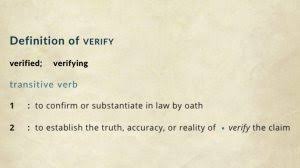
In my Research Methods course, we discuss the best sources and how to eliminate the false ones, how to validate the authority of the source, and how to ensure a phony source isn’t presenting itself as an authority. This is a challenge in a world where verification before publication is nearly non-existent. Then we discuss the significance of knowing how to do this. On a practical level, I tell them it’s so when they’re looking for the right company for which to work, or the best investment for their income, or the best advice on health and medical issues, they know they’re not being misguided by incomplete information from unqualified sources.
But on a more immediate level, it also helps when listening to pundits pontificate about what’s best for our country, our families, and our children. I don’t want advice from my neighbor who “also had that condition” on what medicines to give a family member. I prefer a, you know, what do you call it? Oh right, a doctor.
And yet, honestly, most people are doing just that: taking advice from people who are more qualified to grow vegetables than they are to suggest who should run our country. These fools have thrown a damp blanket over true journalism, which insists upon validation of all sources. In essence, the most popular disc jockeys in the country, they call themselves commentators, are making everything up as they go.
So how do we understand the dangerous trend in recent years to dis an individual’s outstanding qualifications for something more appealing to the eye and ear, for someone who makes up facts to suit the listeners’ desires, which leads to higher ratings, which leads to twisting rationalization so far you have to go around your elbow to get to your ass? Get ‘em while they’re young; freshmen, high school juniors, middle-schoolers. Get them then and teach them the difference between a fact and an opinion, between an opinion and a belief, between a belief and a prejudice.
Well, the fact is facts never used to be so pliable; truth came after excruciating research and triple-checked sources. Informed individuals stood down when that research showed them wrong. Trust was a given.
This much is reality: the criteria used by many people in this country to choose a president would not get them a passing grade on a research paper in my freshman composition course. Misinformation is childish. Incomplete information is embarrassing.
And inexperienced, uneducated, unqualified commentators are not journalists, they’re not advisers and they’re not looking out for our best interests. They’re simply dangerous.
“Hey, let’s ask the guy playing with his leaves who should be president”






 M
M



 a view from this wilderness