The Land of Hopes and Dreams

1052308796.jpg.0

A new caravan of migrants is walking from Honduras to the US/Mexican border. Walking. Women and children and men are walking from the Honduran border to the US border, a distance of about 1600 miles. That’s like walking from New York City to Houston, Texas.

The vast majority of them, just about 99 percent, have no criminal background. Part of that is because the vast majority of them are children, but those left are laborers, agricultural workers, and more. Their jobs have been threatened by local Honduran cartels who force out or kill anyone not willing to work for them. These people are scared, and they’re determined to provide a better opportunity for their families, a better education, leaving home with only what they can carry or drag or are willing to abandon along the way to maybe–maybe–have a chance in the United States, because they already know they don’t have a chance in their native land. They’re walking across mountains, a desert, with hardly any food or water, risking the lives of their children to avoid the death sentence pretty much guaranteed in their homeland.

Their determination to literally cross barriers and risk separation, and even life, is a trait that carries them through the hardships of this journey. It isn’t unlike those fleeing Nazi Germany, fleeing Bosnia, fleeing starvation in Ireland, fleeing religious persecution in England, and on and on. The overwhelming majority of these starving, tired, battered souls are seeking something other than, better than, oppression and servitude.

Why aren’t we sending buses down there to get them and bring them here? What work force wouldn’t thrive on a population of people with such integrity and determination, who have clearly proven they would rather die than turn to a life of crime–if that weren’t true they’d stay home and move up the ranks of some cartel.

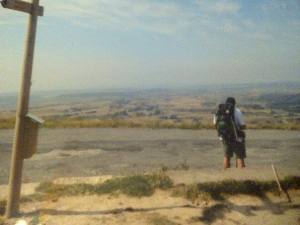
I have always been proud of most of my students, proud of their efforts to find their way in life. But they–we–could stand to learn from those whose sacrifices to better themselves can’t be compared to the so-called struggles we face on a day to day basis. Their pilgrimage to this sacred place–a journey three times longer than the Camino de Santiago from France to Spain–has taught them to carry humility, sacrifice, determination, compassion, and hope. Why wouldn’t we–my God I hope this is taken as rhetorical since it is so obvious–why would we not want them in our classrooms and workplaces as examples? There is nothing lazy about these people. If they wanted a lucrative life of crime they could have just stayed home.

This country has always benefited from immigration. In every study conducted by everyone from the NY Times to Gallop to CNN and even Fox, crime rates have dropped in cities where the most immigrants settled, the overwhelmingly largest percentage of drugs comes through recognized DHS check points, not across illegal crossing sections of the border, and the primary occupation sought by those fleeing crime and murder in their homeland is agriculture–jobs simply not sought by US citizens.

We should be setting up job fairs for these people, not jail cells. We should find housing and extended family and help them get settled as quickly as possible–there’s work to be done.

And I’d love to sit in the back of the classroom sometime while a student who might have crossed the 1600 miles from the Honduran border to the US border talked about what it was like, how the family survived, what dreams were they chasing, and what’s next. We could all learn from such fortitude, such determination, such hope.

migrant-caravan-map_9

Ace


download
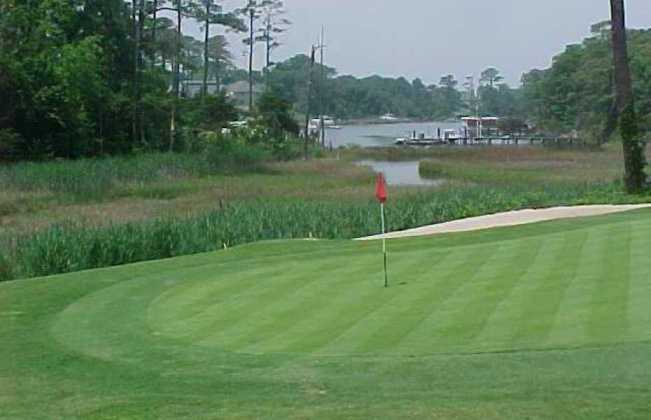
The 15th at Broad Bay from the side. The tee is across the marsh to the left

The fifteenth hole at Broad Bay Country Club in Virginia Beach is a par three. It isn’t long, just over 140 yards, but it can be a bit tricky. The brief, if any, fairway in front of the tee box slopes toward a creek and marsh, and the green is immediately on the other side of the bridge. Beyond the green are woods backing up to someone’s home, but to the left of the green is a broadening creek opening up to a bay. This hole gets in your head. I once stood waiting to hit while NFL star Bruce Smith whacked his tee shot with a short iron, and none of us had any clue as to where it might have gone. He took a drop.

I wasn’t there twenty-five years ago today when my dad took out a five wood to send it up high sailing over the creek to God knows where. It was only when they crossed the bridge and my father—most likely joking—and another gentleman, walked across the green and found Dad’s shot in the hole.

A golfer’s dream. He was so proud of that shot that day, and rightly so. It’s funny how one’s passion—and Dad’s passion for golf wore a thin disguise—can so occupy our conversations and memories. Dad recalled that shot on that day to his golfing buddies more than a few times, as if he was forever in some sort of disbelief it had happened at all. He knew it happened; but it simply couldn’t be true.

My father was a respected stock broker and vice president for one of the largest companies on Wall Street, he patiently and proudly raised three kids, and he loved—loved isn’t the right word, too soft, too simplistic—but he loved being around his family, his grandkids and his great-grandsons. Yet for his personal achievements, recalling that hole-in-one at Broad Bay made his entire being light up.

Most sports, or any hobby for that matter, don’t have many equivalents to this achievement. Winning a marathon, perhaps, or just completing one. A significant high-jump? Shot put? While “personal best” comes into play, those aren’t hobbies—anyone leaping over bars or tossing bowling balls across a field is most likely doing so at the competitive level. Maybe bowling a 300 game is the only other landmark for an enthusiastic amateur.

But the hole-in-one is one of the most famous achievements for the everyday player.

From the time he was in his late-forties when he first learned to play at Timber Point Golf Club on Long Island, he brought my brother and me out on the course and we all played together. For years, and in some way right up until just a few years before he died, we all would play golf together. It was a place we connected, talked, spent uninterrupted hours together, had lunch and kept playing together, encouraging each other on, and too often pointing out mistakes. I can still hear his baritone voice when a putt came up short, “Oh it is just short.” Mr. Obvious. Or more commonly when I’d mess up a swing, he’d quietly say, “You picked your head up.” No kidding.

And it is with some regret that neither my brother nor I were there on the fifteenth at Broad Bay that day. After half a lifetime of golf it would have been something to be there, to see his face when he saw the ball in the hole and said, “Oh boy!” That’s exactly what he would have said. As we both grew taller and stronger than our father, our shots were usually longer and our scores often better, but he was dangerously consistent, right down the middle of the fairway, and he could putt. In fact, the last shot he ever took in his life, on a practice green, was sinking a twenty-two foot putt. But of the three of us, he is still the only one with a hole-in-one, and it feels right this way.

The odd thing is when I brought the trophy home from my mother’s just about a year or so ago, I simply put it on a bookshelf and, honestly, I haven’t looked at it since. But for some reason this morning, I was getting a book and for the first time glanced up at the plaque and saw today’s date—March 25th. And then the year—exactly twenty-five years ago! I smiled and had a brief urge to call him.

But there’s no need. He called me, reminded me one more time about the sunny day in March a quarter of a century ago, and in my mind he told me the story once again.

IMG_6712


Inch by Inch

IMG_6717

I’m at a table in the garden area on a beautiful spring afternoon. There’s a light breeze and not a cloud in the sky; in fact, it is the darkest blue I’ve seen in quite some time. The garden benches are covered with overturned pots, and beneath the last bench are bags of dirt. Not long ago I rehung the garden tools on the outside back wall of the shed and raked the area smooth of rocks and debris. Danger of the last frost will soon be past, and the growing season will begin in earnest.

One problem. I couldn’t care less. I’m just not into it this year. Maybe it’s because I’m mentally tired of putting long hours—days—of effort into something which literally doesn’t bare any fruit, and maybe it is because the farm stand in the village always has plenty of fresh picked produce, is inexpensive, and is a nice place to talk to people. In year’s past the garden was a physical and mental escape; a place to be away from the droves of people I was in constant contact with, and a place to let my mind wander, get lost in the metaphor of sowing and tending to life until it grows and can stand on its own. I don’t know.

But this year I’m not feeling it; not yet anyway. I have a lot of traveling to do in the next few months, a major project which is way overdue, and a small market down the road selling the freshest tomatoes and peppers you’d ever find.

All that is true, but I still know I’ll haul my tired ass out here and garden, and not long later I’ll find myself excited about it. Finally, I’ll post a picture or two of the half dozen cucumbers I’ll pick and then run down the road for something to eat. I know routine; I’ve been growing in this spot for twenty-three years.

I suppose the garden is not unlike this monster of a project I’ve been working on for a few years now; I can’t not do it. I won’t be satisfied until I get it right, and then once I do, that will motivate me to do more. I have quit a few things in my life which I might have pursued to more success, and only sometimes do I look back and think I should have pushed it further, get past that proverbial “wall” until I found a new stride and, as a result, a new reason to keep going. But I don’t dwell on them and am smart enough to know my limitations.

But this is different, this is a challenge I look forward to. I know what to do and how to do it, I just need to be attentive. And in my project, I know what I want to say and how and even where, I just need to keep turning and wrestling the material until it ripens. And the uncontrollable elements like the weather for the garden and, well, I suppose an editor or publisher for the project? Well, that’s just about being persistent. I could catalog here the plethora of artists who faced rejection after rejection sometimes for years but who stuck with it and finally succeeded, but past performance doesn’t guarantee future results, as they say. So I persist. I’m convinced Martha Stewart’s tomatoes were consistently rotten for a few years before she hit on the right variety.

So my garden right now is little more than an outline waiting for me to till the soil, mix the organic fertilizer and plant a rough draft.

And if it fails again, and if I can’t get this narrative arc to push out toward where I need it to go, I’ll swing by the market for some hot peppers, grab some potato-based vodka for the makings of a Bloody Mary, and have at it one more time.

I think this is my season. It’s harvest time both in the garden and the garret. After all, Whitman had Leaves of Grass, but I have the blank sheet of paper. This leaves me with the advantage. Everyone knows the work Whitman sowed and how it still grows in the literary field, but I have the indisputable blank sheet of paper, and with the right choice of words, I might harvest my own grass.

13133182_10208384568959282_830887679397207826_n

Don’t Cell Your Soul

170811_wwyd_act5_952_16x9_992

When I was in my teens and worked for other people—as a cashier, a desk clerk, a server, a bartender—we were not allowed to take personal calls at work. It was logical and no one seemed to have a reason to contest this; we were on company time. If things got slow they found something for us to do, or a good employee would seek out duties, even ask what could be done.

The cashier who took my order here at Panera has already pulled her phone out of her back pocket and checked her messages a dozen times—between customers usually, but twice while customers were looking at the selections. I am sure she washes her hands after using the restroom; but clearly not after using her phone. The woman cleaning the booths has stopped after wiping down each bench to read her phone and text someone, one time so engrossed in the message a customer who could not pass had to ask her twice to move to the side.

According to research by OpenMarket, 83% of millennials open their text messages within a minute and a half of receiving them, even when working. And according to Pew Research Center, 18-24 year old’s send an average of 3200 text messages a month. And the price is high: a study by Florida State University found that after receiving a phone call or text message, workers’ mistakes increased between 23 and 28 percent. The number one productivity killer at work is the cell phone, and the back pocket distraction kills an average of eight work hours a week—that’s the equivalent of paying someone an entire day’s wages to do nothing but check the phone.

I can’t fathom why they can’t be made to leave them in their cars or a break-room locker. If there is an emergency, people are certain to know where these tech-dependent minions work and can call the place directly; no boss is going to divert an emergency phone call. If it isn’t, then who would want someone like that working for them? Someone who doesn’t keep their attention 100 percent on work; someone who is thinking about something else one quarter of the time; someone who gets paid an entire day’s wages for being on the phone.

But that’s the bosses’ problem. Whatever, right? Sure, costs will probably creep up and service has certainly suffered, but we are welcome to patronize a place with sharper management practices.

The real problem is the inability to accept quiet. Their brainwaves are always operating at a heightened pace, causing stress, inattention, and long-term health problems. They are losing the ability to accept and be immersed by peace. Peace of mind, peace of spirit, and peace of soul.

Yes. Peace of soul. The practice of walking in silence from class to class or work to the car or store to store and any point a to any point b has faded. And according to more than a few studies, it is during those moments—not the extended sleep at night or the hour-long yoga class—when true peace of mind, rest, de-stressing, takes place, like small reboots throughout the day. But if the buds are always in, or the pocket is in a constant state of vibration, those quick shots of a settled soul no longer exist and the body adjusts to a heightened state of stress it doesn’t even realize is unhealthy.

“But there might be an emergency!” my students told me when we discussed this in a critical thinking class. And right there I understood the problem and I understood the president’s ability to convince his followers that we have an emergency on the southern border: they have redefined what constitutes an “emergency.” For my students, their absolute need to know what the plans are, what’s for dinner, where they’re going to meet later, and a plethora information that could easily be obtained later when not at work or school or peeing, is a dire emergency. They will absolutely not be able to concentrate if their Pavlov-proven-right minds aren’t relieved of the larger stress of knowing someone is paying attention to them but not knowing why. And this mentality has given social permission to the president to take what used to be an emergency—earthquakes, floods, tornadoes, terrorist attacks—and redefine it to be something as benign as a group of minorities without food and in relatively poor health crossing the border on foot. For a racist, a person of color is an “emergency.”

Few examples exist anymore of leaders who are laid back and put things in perspective. It is true that it is never the situation, but how we handle the situation that determines our character.

Worse, there is no “now” now. The phone by invention links us to somewhere else and what was and what will be. The loss is greater than the lost pay, and greater than the distraction holding people up in the aisle; it is the sacrifice of presence. It is not noticing the elder couple in the corner who are laughing and enjoying their lunch. It is not noticing the way the storm clouds broke, the way the steam rises from the pavement from the rain heated by the breaking sun. It is the inability to practice yesterday’s norm of being present.

The guy at the computer trying to order lunch needs help. The green tea machine is almost empty. Two tables within eyeshot have dirty dishes and no customers.

The daffodils are in full bloom and the blossoms on the pear trees too are in full bloom. There’s a hint of salt in the air from the ocean, and a flock of robins has gathered under the crepe myrtle on a grassy spot in the parking lot.

The cell phone is a brilliant device I use often to communicate with friends and family, to keep up to date on virtually everything going on in my life. But it is unsettling to the soul

Daffodils_1500-56e890a65f9b5854a9f993d1

Collections


IMGP1173

I walked the beach on the Gulf of Mexico this morning. I got up early and saw the calm turquoise water and clear, blue sky and headed out with a plastic bag and all the time in the world. The shells along this beach are amazing—I don’t know their names but I love the shapes and colors. Shark teeth, too, are apparently abundant here, and while I haven’t found that many, friends of mine have found countless teeth and a shell collection to rival the most respected collections anywhere.

On the way to this wilderness on the near west coast I already knew I was going to spend a few mornings here walking the length of this Key scouring the sand for shells. And so I did, and this morning I didn’t find as many as I had yesterday, but still enough for display on a bookshelf at home. When I walk around my friend’s house I am inspired with ways to display shells, but with the few I have I have plenty of room. I’ll put them in front of the books about travel. The most unique piece I found is what we kind of determined looks like an old tool. It is a rock of some sort but shaped perfectly to fit a hand, with the hammer end of the rock quite smooth, different than the rest, and that part has small grooves in it as if it has been used to bang something. Native Americans lived in this area for centuries so perhaps, or maybe before that, since it is rudimentary, but it definitely leans toward tool more than just rock with a coincidental shape. I know water can carve stones in intriguing ways, but this is a tool, a hammer of sorts.

Few people don’t know the astonishing and—yes—miraculous symmetry in nature; the balance of strength and fragility, the measure of beauty and practical use. Shells might be the best example of this. In this house where I type are my friends shells that defy logic for their survival of tumbling and crashing through storms and tides and pounding onto the beach on top of the million shattered pieces of other shells. In the end they are simply the outer layer for some sea life. At home, up on the bay, we don’t have the same critters, but we have no shortage of the former protections of oysters, scallops, clams, and mussels. I don’t know what lived in some of these shells, but whatever it was didn’t need their protection anymore. Oyster shells can be reintroduced to the water for new oysters to take shelter and adopt, but not so most of these in this collection. They remind me of natures endless display of tranquil strength and subtle measure of time.

But the concept of collecting them moves beyond the pleasure of being surrounded by their beauty. My son collected chess sets I brought back from Russia, and to see them is to marvel at the carvings of the pieces and the meticulous care put into making the boards. Of course.

But there’s more. When I look at one set it reminds me of when he was six, and we sat on the floor unwrapping it from my travel, and how he picked up each piece one at a time and talked about what he liked about them all. The other sets, too, all have moments tied to them which transcend the actual object. I’d tell him each time about where I bought it, and about the transaction, and how we—the salesperson and me—talked a while and bargained, and what the options were and the weather that day, and somehow that set brought him to Russia with me.

I have shells already at home I had found on this stretch of shoreline, and when I look at them I remember not the collecting so much as the conversation in chairs on the beach over rum, or the deeper conversations about family, vacations when we were young, how at the heart of our pilgrimage the simple pace of walking the sands and picking up souvenirs is the same as when we were children. The shells are almost irrelevant; or, better said, a catalyst for some other aspect of how fragile life is—the passing of time, the moments of love shared between friends, or family, or the introspection out walking alone in the early morning hours finding shells and answers and inspiration.

These shells I have connect me to my friends, to these brief encounters of shared space, laughing, remembering, and, thank God, still planning. And my son’s chess sets have the practical aspect of playing the game, but the added bonus, for as long as he can remember, of those late nights of me arriving home and opening the bags and spreading the pieces out on the floor, insuring he knew I was thinking of him while away, wishing he were there.

Odd how both items—shells and chess sets—are so often used as metaphors for our lives; the fragile but durable presence of a shell and the calculating and anticipatory nature of chess. For me, though, the collecting is a method of isolating time, of collecting moments and putting them up on the shelf to pick up every once in a while and recall a conversation, bring friends closer, make the distance not seem so important.

48380300_10216319695932497_4474957877747908608_n

Talking Trash

dolphin-plastic


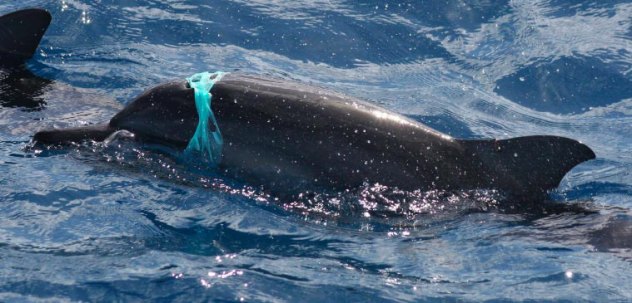
This country has an adopt-a-highway program, started in the ’80’s by James Evans of the Texas Department of Transportation, and made famous when not long later Bette Midler and Robin Williams adopted highways near their California homes. Basically, the adopters pick up the crap that other humans throw out their windows. The tonnage of trash tossed without care is debilitating for those who must clean it all, and deadly to animals who ingest some by accident. But ain’t that America. This is who we are. This is what we do. We consciously roll down the car window and dump bags of junk food onto the highway and into the woods so someone else can clean up after us.

Recently, I walked the edges of the woods along country roads and trails like I normally do, and I wondered about something just beyond the obvious eyesore element of this travesty: what’s at the root of the decision to scatter garbage for someone else to clean up? I’m not talking about the occasional accidental trash that blows out the window or falls from a truck. I mean the waste which vomits from people’s car windows onto the road. They actually decided to do this.

The view today, from this wilderness, is not so attractive.

They swing through take-out windows and spend three times more money on a crappy meal than it costs to make a decent one at home, then eat and drive to save time, and finish it all off by dumping the bag out the window before they get to their neighborhood so there’s one less thing to do, or they pile it on the pile of trash others piled on at the overflowing can next to the convenience store.

The endless pursuit of convenience is killing this world.

It takes too long to refill a water bottle, so they buy another not really caring about the cause and effect of plastics and earth and cancer. It’s not that people riffle through a case of Dasani in a few days–though the waste is noted–it is these same people set sail those plastic projectiles. Why? What the hell’s wrong with keeping them in the car until they arrive home? No, they just keep going, racing against nature, against time, trying to outpace the destruction, leaving it behind as they make the next turn, wherever that may be. They pop in another k-cup to save time or they order ahead—yes, people actually get online and order “fast” food ahead, including coffee. And that in itself is not a problem as much as the perceived “waste” of time is creating real time “waste” destroying the lifespan of entire species. And people say they don’t want to be late. And people say they’re running behind. People will tell you they’re making the best use of their valuable time. Sure, they can make coffee at home and use a thermos, but–no. And yes, they can buy a reusable water bottle and refill it–they even sell filtered ones–but, not so much.

And really, no problem with that. Except when they throw those items out their windows into oncoming wilderness. Then we see just what a waste some people’s mindsets are.

But look at this: People throw trash into nature, and companies know that. So companies figure out how to make the trash biodegradable–which is admirable, or they put more trash cans around, or they send out road crews with long spears to collect it all, or they encourage people and groups to Adopt-a-Highway. But all of those efforts should be made moot when people are simply raised to take their time and respect the environment by–and this is a simple one–throwing away their trash in a trash bag.

But that isn’t convenient. And damnit, the McDonald’s bag is ruining the floor of my car.

And for the record, ninety percent of all trash in this country does not get recycled. And ninety percent of people say they would recycle if it were “easier.” EASIER?? I’m having difficulty understanding the “difficult” part of this scenario.

But let me throw out some facts:

The litter on the interstates alone adds up to about 52 billion pieces of litter a year, or about 6700 pieces per mile. Right now–right now–the oceans hold approximately 300 billion tons of litter because lazy-ass, bark-at-the-moon stupid people toss cigarette packaging (#1), paper goods from fast food restaurants (#2), and plastic bags and cups (#3) into or near waterways which sweep the stuff into the currents and into the paths of ocean life, screwing up the ecosystem. The difficult part of this clean-up is 70 percent of that water-bound trash ends up on the ocean floor. The out-of-sight mentality of these childish litterers is causing cholesterol-like clogging of the veins of this planet.

And the now famous Great Pacific Garbage Patch floating around between Asia and North America, which includes supposed radioactive waste from Fukushima, is now between 1 million and 5.8 million square miles in size. Again, there is a waste pile roughly the size of this country floating in the Pacific.

And it isn’t the fault of McDonald’s or Marlboro or Budweiser, though they account for most of the trash we pass on the road and people are quick to blame them for creating such a mass of waste, and to that point–it would help if they’d figure out how to cut that down some. It is simply and directly the result of human beings who vote, who go to church, who raise children, who work hard forty hours a week, who attend football games and tuck their kids into bed at night–and open their windows while driving along the highway and throw a bag full of chewed up food and dirty wrappers out into the world.

Because it is convenient. This “Age of Convenience” is getting old. Time to grow up.


download
The Pacific Island made of Trash


Trajectory

download


Maybe I have wanted, at times, to be undone, to retreat to the eternal before, the ethereal space of not-yet. I have wished. I have. For instance, I have wondered how a flower emerges into a field of colors and pedals and fragrance, and anyway opts to stay, be one of multitudes, unpicked, unnoticed. Or how a seedling in the brush appears, never noticed, until eventually, soon, the roots wither, ever unnoticed.

I have known people like this. I have been like this.

Perhaps it is the duty of the stars to shine in spite of the brighter light of other stars, which, anyway, doesn’t reach its destination for billions of years, just as its source fades. And maybe there is a natural, unavoidable imbalance, an imperfection, and the perceived harmony only works when no one questions, no one recoils into the earth, ashamed but instead, emerges, one color among millions—maybe unnoticed, certainly, but one whose absence is indeed observed and mourned.

Maybe I have wanted to be undone, which is, after all, not death, precisely. And so instead I choose, now, in my afternoon of being, to consider all my life up until this moment a pre-existence of sorts, an ante-life, if you will, like the seedling of a giant oak, which itself has not yet broken ground.

*****

I told a friend last year when I was moving-on professionally that I had decided to reinvent myself. That is, I was at the quite unusual place of being able, with thought, to wipe the slate clean and scribble something entirely fresh; something with not even the thinnest filament reaching back to the previous promontory. No, no tethers, none. And he said, he who was also moving on at the same time, he said he had decided the same thing, the same.

We laughed over a table covered with metaphors we had conceived by the time dinner was complete, but like all good conversations planted in hope and watered with Cabernet, we brought it back to reality: I can, I said, and in that case I knew I was using Whitman’s I, the universal I, since he was also thinking, “I”, I can, I said, fulfill that laughable rant we lay on young people: I wish I was your age and knew the things I know now. Well, I said, and then we said together, “We are that age again, and we know what we know.” Maybe not the same age chronologically, but certainly in spirit.

And I left the restaurant and walked in the clear air to my car.

I have known people—kind, deeply kind and beautiful people—who chose to be undone but did not understand it cannot happen physically, only in spirit, though not spiritually, but, instead, in spirit. I wish they understood that once something is done, it cannot be undone, but if it is understood and embraced with honesty, can be done again, but differently, and, as Maya Angelou made clear, with hope.

I would like to think again in terms of “new,” “fresh,” “beginner.” I would love to, again, be frightened at the unknown, embarrass myself, expose my naivete. I would handle rejection better, not take it so personally; I would handle success better, not take it so personally, and all of the other “If I had the chance to live my life over again” cataloging we do in our minds, I will do them, and then they will be done.

And should I, once again, emerge as a flower into a field of colors and pedals and fragrance, one among multitudes, unpicked, unnoticed, I will be, this time, decidedly alive, as only a solitary, unpicked, unnoticed flower might be.


****

If I had my life to live over again,
I’d dare to make more mistakes next time.
I’d relax.
I’d limber up.
I’d be sillier than I’ve been this trip.
I would take fewer things seriously.
I would take more chances,
I would eat more ice cream and less beans.

I would, perhaps, have more actual troubles but fewer imaginary ones.
you see, I’m one of those people who was sensible and sane,
hour after hour,
day after day.

Oh, I’ve had my moments.
If I had to do it over again,
I’d have more of them.
In fact, I’d try to have nothing else- just moments,
one after another, instead of living so many years ahead of each day.

I’ve been one of those persons who never goes anywhere without a thermometer, a hot-water bottle, a raincoat, and a parachute.
If I could do it again, I would travel lighter than I have.

If I had to live my life over,
I would start barefoot earlier in the spring
and stay that way later in the fall.
I would go to more dances,
I would ride more merry-go-rounds,
I would pick more daisies.

– Nadine Stairdownload (1)


This

download

This morning I walked out of an office and thought about the year it has been. When I was a younger writer I fell into the trap of thinking a great piece would be if thirty-year-old me would run into ten-year-old me and they had a conversation. It is a cheap idea done ad nauseam, but back then I was cheap and nauseous.

Now I’m expensive and nauseous. So it again crossed my mind, this theme of antiquity.  But no, I decided against once again falling into the trap of writing or talking to myself from a different time in my life. I stood on a corner drinking a bottle of water feeling pretty good and relieved and new, and I thought, again, what a year it has been. Just about every aspect of life from a year ago has changed, and here I am at what one group of people might call the exit of a long career, but which I have determined is the starting point of something new, be it life itself. Reboot, if you will. 

But there’s no way to write about that without tapping deep into the marrow of triteness and predictability. So I went back into my books to find someone who did a much better job of it. It comes from a paper called, “On Public Knowledge and Personal Revelation,” by Joseph Zinker. It is one of those rare pieces of writing I can read and then shout, “Man, I wish I had written that. But I thank God I read it.”

It meant a lot when I first came across it in a Leo Buscaglia book, Love, forty years ago this fall, and it means as much to me today. I pass it along with gratitude for sharing these small observations and digressions with me from this View:

***

“If a man in the street were to pursue his self, what kind of guiding thoughts would he come up with about changing his existence?   He would perhaps discover that his brain is not yet dead, that his body is not dried up, and that no matter where he is right now, he is still the creator of his destiny. 

He can change this destiny by taking his one decision to change seriously, by fighting his petty resistance against change and fear, by learning more about his mind, by trying out behavior which fills his real need, by carrying out concrete acts rather than conceptualizing about them, by practicing to see and hear and touch and feel as he has never before used these senses, by creating something with his own hands without demanding perfection, by thinking out ways in which he behaves in a self-defeating manner, by listening to the words that he utters to his wife, his kids, and his friends, by listening to himself, by listening to the words and looking into the eyes of those who speak to him, by learning to respect the process of his own creative encounters and by having faith that they will get him somewhere soon. 

We must remind ourselves, however, that no change takes place without working hard and without getting your hands dirty.  There are no formulae and no books to memorize on becoming.  I only know this:  I exist.  I am.  I am here.  I am becoming.  I make my life and no one else makes it for me.  I must face my own shortcomings, mistakes, and transgressions.  No one can suffer my non-being as I do, but tomorrow is another day, and I must decide to leave my bed and live again.  And if I fail, I don’t have the comfort of blaming you or life or God.”

Symbol-of-the-camino-de-santiago-Spain

Keep the Fire Burning

1

This morning I walked along the beach just before dawn. The water was glassy; if I had a kayak with me, I could have gone a fair distance without a wave so much as lifting or pulling away. Gulls on the beach scattered in front and gathered behind and a solitary dolphin breached just about fifty feet off shore. We were alone together, the porpoise and me. Except for the occasional fighter yet ripping past it was perfectly peaceful, as was I.

I walked to Big Sam’s, a local side-street joint that’s been there forever, right on the inlet where fishing and tour boats already departed and will return in a few hours, and I sat absolutely alone looking out across the docks and had breakfast. It is such a safe routine, predictable in it’s pacing. I walk the beach a lot but don’t often add breakfast, so this last minute turn was a great start to the day. It only works for me though if I’m up before the sun. Sleeping late (after 6:30 or so) is a waste of the morning. By the time most people I know were getting up I was halfway through my egg and crab burrito.

Yesterday my son turned twenty-six and this morning I thought about when I was that age. Back then I woke to the sound of cows outside the old country house I lived in, and went for walks or hiked through a nearby state park. Back then I was happy—completely in the moment, feeling more myself than perhaps I had until then, maybe since, who knows, but I had also “paused” for a while. After living around the country, working jobs as diverse as managing a health club to smuggling blankets out of Mexico, I found my forward motion wasn’t, so I stopped and worked a few dead end jobs in hotel restaurants and city bars. I didn’t know then that “taking a break” and “forward motion” are not separate; they are, in fact, very much dependent upon each other. But for me, then, I stalled. The only two things I knew then were I was completely happy because of circumstance, and that I knew I didn’t want to throw out my anchor just yet.

It took the tough love of someone else back then to light a fire under my ass. And during this past eight months I once again “paused,” stepped to the side and let it all be after thirty years of trying to stay one step ahead of the flames. This time, however, that old me came back around and found some purpose in that pause, and I feel myself again. Now I see my son who I’m so proud of, picking up momentum, building a reputation as an artist, and reminding me daily of my dad for his instinctive kindness.

And this morning I walked the beach, stopped for breakfast, watched the gulls scatter and return, and then that dolphin moved past. Maybe it’s because I’ve been walking beaches since I’m a child that I found the metaphor so moving. Or it could be because with each dramatic change in my life I reach up a bit more and try to see what’s next, but I’ve only started to discover that the times I’ve breached the surface, just briefly, have been driven by love. I suspected decades ago my path was not going to be without left turns and even the occasional detour and u-turn, but that’s okay.

It turns out some of the dreams I had at twenty-six simply needed time, maturity, and experience to come to fruition. A little fire behind me didn’t hurt either. But it also turns out I’m the same person I was when I was my son’s age. Maybe moreso.

I wondered this morning half way through my burrito what these two times in my life have in common. Nature, of course, thinking about what’s next, starting a new path in my life. There are even a few cows still near my house. But there’s something else I can’t put my finger on, though I suppose it has something to do with being in the moment, appreciating the present, understanding that “thin, thin, the moment is thin, ever so narrow the now,” as James Taylor sings.

Or maybe I can feel the fire burning, keeping me from sitting still for too long.

12033141_10206923732439282_3439217421098717487_n


Being Alone, Sometimes

IMG_6093

Over the course of three decades working at a community college I had some interesting and, well, scary moments. There was the time a student threw a desk at me (I caught it, but he didn’t know it really shook me up); or the one who ran around the room screaming in Russian (I screamed back at him in Russian, and he froze, then ran out of the room, out of the building, and was never seen on campus again), or the one who wasn’t even a student of mine but I happened to venture into the dean’s office just as the provost was confronting him, but the student was so high he thought I was his professor and slammed the door shut and yelled at the two of us until security showed up. Yes, moments to remember, indeed.  

But there was one night that left me stone-cold scared.  

I got up to pee about ten pm. I’d been in my cinder block, windowless office for several hours, and everyone had gone home, the last class most likely filing out no later than nine. I stayed though; I wanted to clear my head after the incident in my college comp course at four thirty.  

A student in the back mouthed off at me then stood to leave. He cursed at me on the way out, muttering, “I’m coming back, asshole. You’re so fucked,” and he kicked open the door to the outside. Gone.

I normally didn’t worry about punks like this. They had my attention; it was the quiet creeps in the corner buried under a black raincoat who gave me pause. But this time he got under my skin, this student, the way he didn’t yell, just mouthed it to himself more than me. The way he didn’t make eye contact as if he wasn’t threatening me but instead already making plans, running through some list in his head of what he needed. When class ended everyone left, acting extra nice as they did, seemingly trying to compensate for their psychotic colleague who scared us all. “Have a good weekend, Professor,” most of them said, even the ones who never talked before. “See you Tuesday,” they all said. It was very nice. Calm. Borderline creepy.  

So I went back to my office and fiddled around and calmed down by listening to music and making a note which mentioned the guy’s name and said, “Threatened to kill me in my 4:30 course—22 witnesses.”  I figured the police would need a lead. When I emerged from my cinder block cell at about ten, I found the hallways to be vacant and even the classrooms and other offices to be empty. I saw the guard walking away from the building on his rounds, and I stretched, thought about heading right to my car and going home, but decided to head to the bathroom first. I had to pee.

I stood facing the wall, the overwhelming smell of cleansers filled the air reminding me that the cleaning crew had done their thing and left for the night. After drinking several bottles of water I figured this might take a bit, and I stood facing the tiles when the door slowly opened. I tried to turn my head but the position of the urinal kept me from seeing the door, which was anyway behind another wall, and I couldn’t see who came in. I was quiet a moment, trying to empty myself a bit faster, and then called out, “Tom, you back?” Nothing. Not even the sound of shoes, no reply, no clap of books or a backpack being tossed on the shelf near the door. Just the door closing on its own and a soft cough. I wasn’t alone.

***

Curiously, I spend a lot of time alone—walking, driving—and I like it. I can clear my head and do a lot of “writing” while by myself. I am rarely intimidated or scared when in the car or on a trail, not the least of all because I tend to pay attention wherever I am. Plus, most people, and animals for that matter, leave me alone. The irony of today’s way of life with technology and social media is well known: we are more connected than ever but increasingly isolated. I get that. When I spent time alone prior to cell phones and computers, I was simply out of reach. My imagination could run wild with who might have tried to call me but, alas, I wasn’t home, and they didn’t leave a message (or message machines were not yet available). But today we can be faced with multiple ways for people to get in touch with us, and when they don’t, when we lose friends, when we don’t hear from family anymore, it is obvious, it is blatant, and it is sad. Then, we spend even more time alone, as depression is such a spiraling disease.

But my solo walks and humanless wanderings are by choice. I can almost always dial up a down mood to something almost manic at the end of a long walk. Part of it is chemistry, part is meditation, and part of it is feeling more comfortable away from people than around them. Since I was nineteen-years-old I’ve been to some degree in front of groups of people, from coffeehouses, to exercise classes, to readings, to college teaching. But very rarely in those instances is one-on-one required. As such, I never had much practice at it. I’m crappy at small talk, and with the exception of a few people, I choose nature (or a full room, of course—one or the other).  

I read somewhere one of the signs of depression is the desire to be alone; and I believe this is true, for me at least. When I’m around too many people for too long (which isn’t long at all) I get depressed—but when I retreat to the river or hike somewhere, I can turn my mood around, feel possible, feel somewhat myself again. Technically, I’m not “clinically” depressed, and I’m generally always in a pretty decent mood. But when I’m around too many people, I want to flee. 

I never tire of walking, sitting along some waterway, sitting with an understanding friend talking, having a glass of wine, driving, stepping out of a busy building and finding a bench or a picnic table. A corner in a coffee shop. A trail through pines, or oaks. A train through forests of birch trees. A path through the Pyrenees. One or two people who understand and a moment or two in nature, and suddenly despair can quite easily slide to hope.

And hope is always worth getting to know, even searching for.

I finished peeing, zipped up, and turned around slowly, and the punk was standing against the far wall. My heart raced to an immeasurable pace and I tried to move to the sink to wash my hands without any visible shaking. I was going to bypass the washing but wanted to appear in control.

I soaped up wondering if a handful of this would sting his eyes enough for me to make a getaway. “What?!” I said, as if I knew he was there the whole time and I was tired and wanted to go home. I did want to go home but I was certainly no longer tired; at the moment I felt I could stay awake for a very long time.

“I just wanted to apologize. Please don’t drop me from your class. My mom will kill me.”

The blood ran out of my head and torso and gathered at my ankles. If I had to run at that moment I would not have been able to. I took a paper towel and dried my hands. “Are you apologizing because your mom will kill you or because you shouldn’t have mouthed off at me for giving you a failing grade on a paper that didn’t meet a single requirement?”

“Both, I guess.”

“You ever mouth off at your friends like that?”

He laughed a bit. “Yeah, I suppose, but listen, I really…”

“How come you can find all the words you need when mouthing off but none when writing?”

He stared at me. I was waiting for the Universal Collegiate “I don’t know,” but he was quiet and stared at me.

I walked out the door and he followed. “I’m going home,” I said. “See you Tuesday.”

“Okay,” he said, and walked out as I went to my office to get my stuff and perhaps throw up in my garbage can.

When I walked out to the car he was sitting on the bench. “Do you need a ride?” I asked, and he shook his head.

“No. I just don’t want to head home yet.” I didn’t ask why. I kind of figured why.

“See you Tuesday,” I said again, and he said the same.

20728045_10212554877374386_3347078338756462849_n