Now and Next

images

“We talked of the tiny difference between ending and starting to begin”

                                                                   –Harry Chapin

Richard Simmons sat in my office with me and Betty, a woman who needed to lose more than a hundred pounds and was eating up to ten Snickers Bars a day. I’ve told this story before, but one detail I left out. At some point no matter what Richard said, Betty kept returning to all she had done wrong; the candy, the diet soda, the fatty foods for dinner, the stagnancy, salt, the same response so many members of the club relied upon to make them feel like they’re appropriately self-analyzing their situation.

When she was quiet a moment, Richard shook his head and said as only he can say, “Betty Betty Betty. You’re thinking is backwards. It isn’t difficult to know how you got in this position; I know, I’ve been there myself. But the more you focus on what you’re doing wrong or what you did wrong to bring you to this point, thinking you will find an answer there, the longer you will spiral into depression.”

I remember Betty looking at the Snickers Bar on my desk. I remember seeing the absolute compassion in Richard’s eyes. I had just taught an hour-long advanced class and was exhausted. I remember listening with as much intensity as Betty listened. I’d been analyzing what members ate to figure out what they should do differently in the future, and I sensed Richard was about to bring this in a new direction.

“Focus only on solutions. Focus on now and next; that’s all: Now and Next.” He talked about which good foods to have that day, where to park her car, what to do that night when she normally would have a bowl of something ugly, what to do when she normally would watch television, snacking without thinking.

Stop analyzing and thinking about the old Betty, he told her. That was then. That was yesterday. Stop listening to what anybody else says that isn’t healthy for you.

Then this: Don’t wake up a month from now knowing what you could have done differently but didn’t bother doing because it was hard or unfamiliar. Don’t wake up tomorrow regretting what you did today when you know better. I sat up when Richard looked at me for some interjection. He was excellent at knowing when to back off. So I said, “Betty, focus on the next positive solution instead of the last negative cause.”

Richard’s eyes opened a bit and he repeated to Betty, “Focus on the next positive solution instead of the last negative cause.”

I miss Richard. When I think of him, I think of Don McLean’s line about Van Gogh: “This world was never meant for one as beautiful as you.” People made fun of him, they ridiculed his outrageous demeanor and attitude. Even his friends like David Letterman would make fun of him for the benefit of their own routines. And how Richard handled it was an example so often overlooked. He laughed along with everyone, no matter how it might have hurt inside, and he kept true to what he believed in. I loved that. I loved the very notion that no matter what anybody else says, they are not on your path, they are not seeing things the way you do, they do not have your anticipation or depression or hope or hopelessness.

It isn’t difficult to understand how some of us end up where we are. For some it is depression which can lead to a downward spiral of bad choices. But for some it is an unexpected fall which others might wrongly judge. And we get caught up in their judgments, trying to show them what really happened to bring us here instead of ignoring their thoughts and focusing on now and next. And what we all have in common is the next step will be individual and unique.

We wish too often for angels, for miracles, for some unexpected assistance to help us through the unfortunate circumstances in which we find ourselves. But how we lose the weight is by what step we take next, usually alone but with as much confidence and faith as we can summon.

It is warm today, sunny, warm like July and I’m wearing shorts and flip flops, though by the end of the week it is supposed to be winter again. The geese are confused, I saw some insects on the lawn, and I’m praying the laurel doesn’t start to bud. It’s happened before. Tomorrow I start teaching again two writing courses at Old Dominion and two art courses at Saint Leo’s. Again. So much follows me, even here in nature where I’m looking out across a still and beautiful river, but my mind is preoccupied. I’m still learning to focus on the next step, even when I have no idea what that next step should be. I’m still learning to stop waiting for miracles and stop analyzing the last negative cause.

The past is in its grave.

cb7365d091e62294644b2b9e6be11176--cover-photos-decision

A Guide to Teaching Art History to Active-Duty Military During a Time of War

download

For starters, if someone’s phone vibrates and he reads the message, pay no mind. When someone is late and quietly tries to slide to the back and pick up on the discussion, it’s not a big deal. If she asks for something to be repeated that you went over before her arrival, nod and ask another student to answer the question; the repetition is good for everyone anyway. Don’t ask where they were or why they’re late. Just let it go. If several evenings pass and someone hasn’t shown up, send an email or call; they might have needed a day or two, just a little time away. If they don’t answer, if they don’t return the call, let it go. If they don’t return at all, give them an incomplete and wait. It’s not going to be a problem to wait. When they do return, don’t ask where they were or why they didn’t call. They are well-trained US Military; they are Navy personnel, Chief Petty Officers, Seal Team Six. They’re not negligent. Honest to God, they’re not indifferent. 

When calling roll ask where they’re from. They’re from all over the country, and more than a few friendships can ignite in a small class of people who discover they come from just a few towns away from each other half a world away from here. Let them talk about it; laugh as they laugh about common experiences. It will pay off later both here and abroad.

Let them know this is the most important class they will take. After they’re done laughing, tell them that while it may seem benign, that nothing they’ve trained for will help them here and nothing you’re going to do will ever be used on their job, art preceded us all, preceded war, preceded the invention of gunpowder and even politics. Show them the cave art from France. Play them the ancient South African chant still used today to warn villagers of nearby dangers. Show them the painting Rembrandt made of the crucifixion several dozen wars ago. Tell them that the most beautiful artifacts on the planet can be found between the Tigris and the Euphrates Rivers in ancient Mesopotamia. They’ll already know you’re talking about present day Baghdad. They’ve been there. Show them some of the Iraqi artwork; they can talk about it with you. You won’t have to remind them that literature, visual arts, architecture, music, is what we live for. Instead, play them Pachelbel’s Canon in D, or Bach’s Cello Suite Number One in G Major played by Yo Yo Ma. They’ll get it. 

Do not play protest songs. Do not show anti-war slogans. They already agree with those sentiments, of course. They’re not political. Not one of them is interested in war. None of them desires to shoot anyone, hurt anyone, confront anyone. And when you talk about propaganda art, let them comment and stay silent. You have no need to say much here. They’ll carry pretty much every conversation anyway. Remind yourself you are teaching some of the most disciplined, respectful, hard-working, dedicated, and motivated individuals any professor can possibly hope for. Point them toward the art; they’ll tell you why it is beautiful and significant and can be the salvation of humanity, and always has been. They’ll see the cherubs’ fingers touch and they’ll cry. They’ll hear Shostakovich’s Seventh Symphony and sit quietly long after class ends, thinking. Remembering. Let them be.

If you are teaching at sunset and somewhere on base a trumpet starts playing “Colors” as the flag descends, stop teaching. Let it play out. They’ll explain if you ask. When someone needs to keep stepping out, don’t skip a beat. If someone stands up in the back of the room and wanders around or stares out the window for a long time after the trumpet stops, let it go.

When someone says they’ve been notified they’re being deployed, do not apologize; do not say “stay safe.” Do not pretend they’ll be fine. Even if they make it back there’s a high chance they won’t be fine and a significantly higher chance they’ll return with a strong desire to kill themselves. Simply thank them for their service and tell them you look forward to seeing them when they return. When they do they will come to see you; they always do. For God’s sake, remember their name. Give them your cell phone number and tell them it would be great to get coffee together and catch up. Let them know they really can call. They won’t but give them your number anyway.

If someone’s spouse emails to tell you your student will not be coming back to class anymore, thank them politely and apologize for their loss–you will have already received a letter from the administration. Do not reply with what a fine student your student was—that’s predictable and uninteresting. Instead, repeat the student’s name and say you will inform everyone else.

And have that discussion about beauty—ask them if they think beauty is in the eye of the beholder or if it can be an objective essence. They’ll all insist that it is in the eye of the beholder. Then put the cheapest, ugliest statue of Madonna or Christ or whatever deity you choose on the desk. Ask them what is beautiful about it. When you’ve separated the ones who find the gaudy plastic ugly from the ones who find the symbol of Mary or Christ beautiful for what it represents, show them that defining “beautiful” is not so easy; show them that what one person finds beautiful may have absolutely nothing to do with the medium. They’ll be no need to extend the metaphor or talk about other cultures, other religions, other perspectives—these people have been around the block; they’ll get it.

Then show them pictures of some of the world’s greatest buildings and ask them their favorite architecture. They’ve been to Dubai, Baghdad, Karachi, and Istanbul. They’ve been to Syria, the mountains of Afghanistan, the border of Pakistan. They’ll talk about structures you’ve never heard of; they’ll be enthusiastic and want to share it with you and recall it with colleagues. Then you’ll see how very much they already appreciate beauty and human accomplishment; you’ll quickly come to see that they very much understand what humans are capable of.

Better than anyone, they are acutely aware of what humans are capable of.


images
Iraqi Artist Abbas Muhi al Deen

Rain on the Skylight

31413032113_ecddb31f8d_b

It’s the first week of January at something like 3 am. I was thinking about a friend of mine I last heard from thirty-eight years ago today. We lost touch because of bad travel plans. I shouldn’t have given up so soon. I should have been more combative, more pessimistic. What an optimistic ass I was back then. That’s not always a good thing.

But it got me thinking here in the witching hours of night, of those times and what I did and what I failed to do. Such as, I should have kept playing tennis.

I should have kept playing guitar.

I should have stayed in Massachusetts.

I should have headed to USC for that Film School thing after college.

I should have taken that job tending bar in the Austrian castle.

I hate three am.

Anyone ever do this? Not seriously, not in a regretful way really, but those witching-hour moments of, what is it? Not self-doubt, really. More of a review; an analysis of “me so far.” The moments don’t linger; I don’t stop on the Massachusetts one and get frustrated at all that might have happened if I stayed or what could have been avoided, no. It’s just a “wow, of all the places I’ve lived I wish I had stayed there.” Really, no big deal. This isn’t a “My Regrets” blog by any means. It is an exercise in nature where the view is hindsight and the wilderness is disparity. As for Massachusetts, I quickly recall trying to drive Route 140 up the mountain in winter, and the moment passes, and I realize I should have moved to Florida.

Instead of Penn State I should have gone to NYU. I was accepted at both, but I didn’t think I could afford New York. As it turns out I couldn’t afford Pennsylvania either so I should have not afforded New York instead. While there, I should have joined my old friend Sean who is an actor in NY and gone to some casting calls. I always wanted to play the dead body at the beginning of “Law and Order.” Or I could have taken advantage of the NY City nightclub scene and done stand up. But I’m seriously certain I wasn’t funny enough. Not yet. Age provides humor.

See, this reflection isn’t serious. Not really. But it’s late, and I’m tired, so I think sometimes about the downside, the shadowy side of it all, like how I should have answered the phone that morning in ’92 when I sat staring at the desk in my office thinking how I should have stayed in bed, that I didn’t want to talk to anyone. Not yet. And how a few days later I should have apologized to his father at the funeral when all I told him was that I should have called more often.

Time passes and I should have gone to Monterey anyway. I should have tried harder or given up completely. They’re so closely related, quitting and devotion. I should have learned the difference. Maybe I already knew I shouldn’t go and that thirty years later it would all make sense. Or maybe I simply couldn’t afford it, financially or emotionally. I should have learned to invest in both. I did some math: If I had saved one dollar a day from the time I was born I’d have roughly $22 thousand dollars right now. That’s a new Civic. I could have had a new Civic. I should have done that.

I am going to be sixty and I’ve been really tired, just really tired. It’s not depression, really, and my doctor says it is not chemical, it’s situational. I should have found a different doctor. Or maybe I should have found a therapist. Like that one who always finishes my sentences, who I can be around and be quiet a long time without being asked, “So what’s wrong you’ve been quiet?” But I don’t think she’s licensed. I should have majored in philosophy. Or psychology. Or journalism. Well, okay, but I should have actually pursued a career in my major instead of, you know, not.

I didn’t know I was wrong, or right, or on the wrong or right path. I didn’t have that kind of sense of things back then. Or now I suppose. I didn’t know a good coach would have made all the difference. No one ever said, “You really need some better coaches; you can make this happen.” I grew up in a time when as long as you weren’t in trouble nothing needed to be talked about. This was not the age of trophies for everyone and helicopter parents. Life was fine so long as I wasn’t in trouble. But that’s the thing; I was always hanging out at the beach, walking instead of being on the court, being on the ball, being in the books, being aware of what was next, aware of what to do. And when you’re just not sure what to do, you do nothing. It’s that simple.

I shouldn’t have done nothing.

I should never have quit piano lessons. Four days was simply not long enough.

I should have stayed in Spain.

***

Less than two years ago I left a job I held for three decades.

Truth be told, I now know what I should have done differently: I should have left sooner. I should have abandoned a job I had no business doing to begin with and pursed something creative years earlier. I got hooked by the security and respectability and money, but I was never really qualified to teach what I taught. On paper, sure, but life is not paper, life is not degrees, life is not always expectations and responsibilities and duty. Those things are important, yes, of course, and before my note section here fills up with how wrong I am I should point out I do have three college degrees, I was responsible enough to hold down an incredibly respectable job for thirty years, and I always showed up. Always.

But that is not life. That is not passion. That is not what sets the soul on fire and ignites that internal motivation. I spent a few days with a pretty popular recording artist once when I was a senior at college. We sat one afternoon playing guitars and he asked what my major was, and he asked why the hell I wasn’t involved more in music. “You should finish school and then forget it and get into this. You really should,” he said.

I shouldn’t have spent any time with him. That just fucked with my head.

Explain this: I had that one job since the end of the Reagan administration to the second year of the current chaos in DC—I taught English, college comp, etc., but I had NO English training AT ALL—honest, none. My degrees at the time were in journalism, and then humanities and art, not English. On top of that, I had never taught a class in my life except for Richard Simmons, and that wasn’t college, it was loud music and fifty people sweating their asses off, literally. On paper, fine, they said. But I walked into the classroom that first time and for quite some years after and basically taught senior-level journalism.  Sure, eventually I received a terminal degree, this time in English, creative writing, etc, so I did work until I knew what I was doing. But it was such a relief when I left; I felt like no matter how hard things can get without that security, I just stepped out of something vague and unhealthy and into the reality of life where you can feel your pulse, you can feel your desire like something stirring in your stomach. On top of that I spent thirty years there and I haven’t heard from one person since I left. I was never so isolated as when I was there. Yes, by God, I should have left sooner.

But then, Spain. So listen: after you fall to sleep and have gone through your “I shouldn’t have’s” and your “I should have’s,” do you recall the one moment that you know you can land on if you’re falling? That one time or person or place in your life that retains such clarity and focus, that you can go there—physically or mentally—and you know you will step back into purpose and direction again?

For me, Spain.

No, this isn’t about going back to Spain, though I will, or walking the Camino again, though I will. It is about remembering that this pilgrimage we’re on is laced with “I should have stopped earlier, I should have kept going, I should have turned there and left sooner and on and on and on.” Oh to complete that pilgrimage taught me about this grander journey, and I wish I had done it when I was my son’s age when he did it; they don’t teach pilgrimage in school. They don’t teach so many things about life, like how to recognize you’re still too young to recognize what is permanent and what is fleeting. They don’t teach you when to forget about who’s missing and when to head out and see for yourself; they don’t teach you when to answer the phone, when to change courses, not to read Frost, to read more Rumi. They don’t teach you so much. I shouldn’t have expected to simply know everything I needed to know. They don’t teach you just how ignorant you are; they tell you how smart you are, and then they send you out to discover on your own your shortcomings. That’s fair, I suppose, but they could have at least warned us, right? They could have an exam in some civics course entitled, “Someday at three am you’re going to wake up and wonder about all the things you shouldn’t have done. Have a blue book and a number two pencil ready.”

I don’t think people think about this. Or maybe they do and I’m just catching on, late as usual. Well, we all should believe in ourselves earlier.

Anyway, what I was about to write before Truth interrupted with all her matter of factness about Robert Frost and wrong paths and three am, there are so many things not that I wish I had done but that I wish I hadn’t. But really, at the end of the end, I will be more regretful of what I wanted to do and didn’t try than what I did do and failed.

I really wish I could talk to my dad right now. Have a Scotch. He was an example of such unparalleled strength. He didn’t offer advice, not really. Maybe my siblings remember him doing so, but I don’t. But, man, he was an amazing example of what a person should be in the best of circumstances. I miss his strong, quiet presence. I should have been more like him.


Something has got to change. And apparently it isn’t going to be anyone else, or the world, or the menu at Panera, so it is going to have to be me. Maybe intelligence isn’t simply knowing when to show up but knowing when to leave. Sometimes we learn late, but, well, we do learn.

I shouldn’t have had so many Cheez-Its before bed. I should have stopped at one coconut rum and orange juice.

I should get back in bed and try and sleep. And when someone says, “Well, you’re doing the best you can,” I should stop them and say, “How do you know?” Honest to God, stop telling people that. How do you know??

No. I’m not. And it is usually only at this hour of the night that I am blatantly aware of that fact; that I absolutely am not doing the best that I can. Are you? Does anyone? How do we know? Think about it, how do we measure what we are capable of? To each other? No, of course not. To past performance? I hope not. Then how? Instinct? Faith?

Damn. Now I’m awake again.

I should have gone to bed two paragraphs ago. I should go downstairs and get some Oreos. I shouldn’t have…

download

January 1, 2020


20728045_10212554877374386_3347078338756462849_n

After more than twenty-thousand years of having to live with each other you’d think we’d be better at it. It is 2020, and there are armed conflicts in Syria, Iran, Iraq, Afghanistan, Mexico, Yemen, Libya, Kenya, Somalia, Turkey, Kurdistan, Ukraine, India, Pakistan, Columbia, Venezuela, Democratic Republic of Congo, Mali, Burkina Faso, Indonesia, Nigeria, Mali, Egypt, and more. In our own country in 2019 alone 23,958 committed suicide with a gun, another 15,068 killed someone else. There were 415 mass shootings with over 200 children being shot to death. Personal attacks on others’ looks, habits, beliefs, gestures, shortcomings, disabilities, race, ethnicity, faith, has become common, practiced by people in power, proudly perpetuated by too many others. The time when we didn’t ridicule, didn’t make fun of others, is over. Gone. Disagreement has always been common, but now it is accompanied by threats, including from leaders. More people are starving to death than ever in human history, more people are homeless, more people are desperate for help, and the gap between those who can help and those who need help is so vast, neither probably knows the other even exists anymore. Nuclear proliferation appears to be an ambition instead of a deterrent, and the lack of faith, of morality, of basic human decency makes the possibility of attack more likely: “I’m bringing them down with us,” has overruled the cautious yet calculated “We will get through this.”

Sigh. Happy New Year.

The woods are deep and foggy this morning, deer remain bedded down on a path across the property; I see their tails. I hear geese in the distance, in the field toward the bay, and closer to me in the woods cardinals quick from holly to pine while other small birds head to the porch rail for some seed. It is warmer than it should be. I love warm weather, but this is not right; the ground should be even just slightly frozen; I should at the least see my breath. But things change. Weather, news, even me, we change. And then today I wandered out to discover that this path into the wilderness has made me so much more keenly aware of the contrast to the madness in the city. It is beautiful out here; here is where I belong. The river is still, like glass, like memory, like a soft kiss, and the sky is grey but breaking blue like subtle hope, like a promise from someone you trust. It is a prime escape, ever-present. But a growing imbalance, a withdrawal of sorts, occurs whenever I return to town. It makes me uncomfortable, and perhaps that is what has been missing in my isolated life; a sense of discomfort. 

It is 2020, and I’ve decided this will be my self-imposed “Year of Discomfort.” A year to get involved, to help those I can, to get out of my comfort zone and see where I can be of some assistance. This is the first entry in year five of A View from this Wilderness. FYI—these little word exercises and journal entries are an attempt to keep any aphasia at bay, remind me later of what I’ve already forgotten—the deer for instance, and the eagle which just glided by. I won’t forget, though, how much warmer it is every year. I just glanced back at the early January entries since 2016, and this is certainly the warmest New Years Day yet. Happy New Year Global Warming.

Oh, nature will be fine. No one disputes that; this isn’t her first rodeo with radical weather patterns. No, in the observations of George Carlin, it is humanity that is going to be screwed, not nature. A major concern among anyone who can think is not necessarily what we are doing to nature as much as what nature is doing to us in retaliation. It’s brutal. Still, while changing weather patterns just might eventually kill the human race, humanity’s own inhumanity is going to get there first. I look at those stats; I read the news riddled with overcrowding and floods and droughts and civil war and civil strife in a world where civility is eroding.

But here, now, on the edge of this brand new decade, my concern is more than the warmer weather. Sure, it makes part of me want to take up the cause and join Greta and fight global warming. But another part of me is rooting for it. Maybe a new race can do better than us. Newsflash to world leaders and hyper-idealistic boomers like myself: the world we were going to change, clean up, finally introduce to peace, not only remained the same, it ebbed into something sardonic and antagonistic.

So how, someone please suggest, how, on the dawn of this decade, does one person make a contribution and hope to turn it around? Greta was great at shaming world leaders; companies have remained true to the Paris agreement despite the US withdrawal, and individuals making others aware of the crack in the moral backbone of our world are nothing short of saviors. But growing individualism and isolation–like me, for example–makes it difficult to gather forces and get on with things. 

Being out here in the wilderness has helped me more than I ever anticipated. It is my blood pressure medicine, my anti-depressant, my caffeine. And maybe I’ve reminded some people of the necessity of discovering ourselves by stepping out of the current of current events for a short bit to regroup and head back in. But complete withdrawal is dangerous, even more so when the distance is not between civilization and nature but between each other, and deeper still, that internal distance between what we are doing and what we can do. Maybe what I’ve taken from this wilderness is this: First person singular doesn’t translate well; it doesn’t leave enough room for others to be part of the narrative. And, ironically, the view from the wilderness we call society can be even more isolating. This year would do well with some more cooperation, more helping each other, listening to each other. I wonder how many people wouldn’t have killed themselves if someone, really anyone, had been listening? Maybe we should no longer accept the news that “someone got shot last night,” but instead, “one of us got shot last night.” We’re in this together is an old, tired, Hollywoodesque truism, but, well, we’re in this together for God’s sake. We threw the cigarette butt out the window. We didn’t recycle. We didn’t think our vote counted. We slept last night on a bench in a park. We looked the other way. We were cold. Hungry. Scared. Indifferent. Helpless. We were terrified. Alone. What if we were all guilty? What if we were all held responsible?

How do we know we won’t be? 

It seems we never saw the forest for the trees. So we couldn’t see it was us floundering out here all along. Us. US. We need to do more this year.

I know I do. Maybe the only way to face reality is to take a breath, watch the river drift by on an early Wednesday morning, and then gather my forces, head back to town, and engage. 

It is a new day. It has to be a new day. It just has to be.


download

(Re)Solutions

250588286

When I worked for Richard Simmons, we talked often about how the most promising members of the club–that is, the ones most likely to stick with it and go the distance–were the ones who came with what we called “a quiet resolve.” We didn’t know what drove them, and they didn’t post signs or make announcements; they didn’t have mini-celebrations along the way; they didn’t make it something separate from their life that needed to be tackled or climbed or conquered. They came in, did their thing–sometimes a little more each time–wiped off the sweat and went about their business. That is not a resolution. That is resolve. There is a difference. One is a statement, the other is way of being. 

Now it is almost New Year’s, and like a first-time marathoner, I am beginning to feel like I’m once again just going to drag my tired ass across the finish line. I don’t like feeling this way. I used to know better. For God’s sake, I used to get paid really good money to teach others about positive attitudes and tackling goals and sticking with it and determination. But I was twenty-four-years old. I use a larger font now. I listen to oldie’s stations. I read the obituaries. Yes, I’m looking forward to the New Year, of course; but first I have to look back at a few things, most obviously what didn’t work and why, and then what did work and why.

I used to wish we could design our own year with some magical date book that comes with a special pen, and we sit near the fire, pour some wine, a bowl of Cheese-it’s and start with January marking away at how the year will go. And, whoosh, it just happens. It used to feel that way, didn’t it? When we were young maybe. But now some adjustments must be applied to the idealistic neverland mentality of “New Year’s.”

It’s always taken me longer to figure things out in my life than just about anyone I’ve known. And I know perhaps way too often I have acted enthusiastically and somewhat foolishly when it might have been better to have kept things a bit quieter. But this year some of my hopes are based less upon what I want to happen and more focused on what I don’t want to happen anymore. Honestly, some ambitions can’t be verbalized or measured. It isn’t a matter of distance or self-control, or even ability. It is a question of nuance. It is also a matter of faith. Not faith in a Supreme Being, though that certainly doesn’t hurt, but faith in ourselves to be able to bare our souls, or in some cases, not expose them at all. Sometimes we stand outside in the middle of the night surrounded only by the ghosts that keep us awake to begin with, and we’re terrified at our own truths, our own brief reach across the approaching distance, and something more subtle than a resolution finally follows, something difficult to define. That’s when we understand the truth of our resolves. We begin to know, that is we come to understand, that we aren’t declaring some resolution, we are not deciding to do or not do something anymore; no, we are altering the state of how we think, how we react. It’s more about the moment than the year; more about the soul than the situation.

So thanks to lessons learned from my old boss Richard, I’m acutely aware that we don’t lose fifty pounds by losing fifty pounds. We lose fifty pounds by losing one pound, then another, then we gain a few back and then lose a few more than that, and eventually we realize we’ve made progress. So a list of resolves must be patient; it must not contain bravado or climatic moments at every turn. A good list must be tempered by experience. One of my favorite character traits revealed in The Great Gatsby is when his father, after Jay’s death, is reading the list of resolves his son wrote in the back of the book Hopalong Cassidy when just a boy. In one of them the young Jay had written, “Save $5.00 (crossed out) $3.00 per week.” We learn Jay has ambition but understands his limitations. A list must show hope without setting oneself up for discouragement. ie:  if you’re going after that green light across the bay, you need to learn to swim.

Next, a good list must not bring us down the old paths we’ve walked before aimlessly hoping to bump into something good. Nothing falls in our lap; we will not win the lottery, talent without effort is as common as corn, and the famous truism is as true as ever—the definition of insanity is doing the same thing hoping to reach different results. No, the list must be specific, take advantage of this clean slate, appreciate the challenges we still carry, blend our talents with a determined work ethic, and most of all be unabashedly honest. Too many of our resolutions are often lofty and quickly abandoned, so we must appreciate those aspects of the past which worked, which rely upon our ability to know who we are, which a good resolution will refuse to abandon. It is decidedly acceptable for a list to include, “I will continue to…” several times. Many things in life, after all, worked out fine and we should not resolve them away. So any successful list must include not only new approaches to the old failures but reliance upon tried and proven traits which keep us sane.

In the end, the attention we pay to our resolves will be the difference between making the same mistakes or making it all worthwhile. I spent thirty years teaching college, which requires not only motivational techniques, but endless resolutions on our part as professors. But now I don’t teach; not as much anyway. Luckily, I was paying attention to what I told them, and it has come time for me to apply what I preached, both as a professor and as a motivational trainer at a health club, which are dangerously similar.

But listen, Buddha said we are shaped by our thoughts; we become what we think. That is not on any list. No, it is an approach which makes resolutions redundant. And the real key comes of course from Confucius: “It does not matter how slowly you go as long as you do not stop.”


GENERAL RESOLVES

No wasting time
No more smoking or chewing
Bath every other day
Read one improving book or magazine per week
Save $5.00 [crossed out] $3.00 per week
Be better to parents

Yeah, Jay’s list is as good as any I’ve ever seen.

It just shows you.

No wasting time. Chew on that a moment.

images

Joyeux Noel

rockwell

Well before dawn this morning, I could see some stars and what must have been a planet in the west. Something about a clear sky on Christmas has always mystified me, captivated my attention and imagination, from the simple, fun thoughts of reindeer and sleighs to the philosophical digressive pondering of First Cause, the Immaculate, and the imaginative world of proof. I love Christmas morning with its tidings and anticipatory pay-off. But even more I love earlier, alone, when the sky is a narrative, and the Author was sharp enough to leave enough room to us to fit in our own passages as we need to.  

In the east a sliver of light.

I stand and remember.

On Christmas morning before our parents were awake (or so we supposed), my siblings and I would gather, usually in my sister’s room, to exchange gifts we had bought for each other, before we headed down for the beginning of Christmas Day. It would inevitably still be dark out, and I know we’d lay awake waiting to hear each other also awake in the other room. A tap on the door. A “come in.” And we’d sit on the floor and open our presents.

At some point (like clockwork, as much an annual tradition as the Turkey or the pies), our mother would wake our father and he would exclaim, “I thought I said no one up before nine am!” and he couldn’t hide his smile to our laughter at the ludicrous suggestion we’d be up any later than five. It was always cold out during those Long Island years, and often snowy, but we weren’t going outside so it just added to the magic. Dad would be in his robe and slippers and he’d head to the living room as we gathered on the stairs and waited for him to plug in the multi-colored lights on the tree, and those on the rail, bringing to life the otherwise dark room. Mom had, of course, already organized whatever presents we would get into separate piles, and Dad would stand back and she directed us to the right area under the branches, though sometimes it was obvious if an unwrapped toy appeared, clearly already wished for by one of us. Dad would sit on the couch and watch in joy, even through the stream of “Wow, thank you Mom!” wishes continued.

It wouldn’t be long before the aromas of breakfast mixed with the onions and bell seasoning already underway for the stuffing, and eventually we’d need to get dressed, if not for church since we might have attended midnight mass, certainly for the droves of family who would soon fill the rooms. It was a beautiful way to grow up. I do not know the possible stresses, fears, and sacrifices that went on behind the scenes—that’s how good they were at it. Then, much later in the day, after everyone else had left and we had all settled into the routine of looking at our gifts again, Dad would emerge from some closet with his gifts for each of us—books he had personally picked out, bought, and wrapped. It remains one of my favorite memories of all of my memories of my dear father.

It’s in the fifties here today along the Chesapeake, and sunny. This is one of those days each year where I’ve been up so long and have done so much that it feels like it should be six hours later than it is. My sister and brother and nieces and nephew are all off in various parts of the country with their families celebrating their Christmases, all of us with some common traditions, all of us with our individual touches to the holiday. Certainly all of us fortunate enough to be celebrating Christmas, laughing and telling stories, enjoying the food, the drinks, the sounds of football or Christmas music, and even the welcome sounds of a newborn trying to stretch out his new skin. We are, to be sure, at peace today. Anyone with family today is engulfed in traditions which help balance our lives; they bring peace to our soul while providing some shared space not only with each other but with the idea of our ancestry, the hope of our posterity.

My father used to sit to the side for most of the holiday and enjoy being surrounded by his family. He’d carve the turkey, and of course disappear toward evening to get the books to give to us, but I picture him most in his chair, watching a game, laughing with us, waiting for Mom to call him to duty in the kitchen. He has moved on, and whatever there might be to know after this life of ours, well, he now knows, and that too brings me great peace.

Two deer stand nearby in the woods, cautious but not fleeing. It’s so quiet out. Absolute peace stretched out like canvas in all directions. On the water some ducks ease by.

I miss the days before society took “nearby” and “not far away” and tossed them to the strong breezes of technology and One World. In that small house around that small table when I was a child were so many relatives it is crazy to conceive how we pulled it off. But no one cared—we were together. Everyone was close enough to “drive over,” and by the time the turkey came out of the oven, a small crowd was sitting and standing and outside and in, laughing and sharing serious moments, because it was Christmas.

The sun is getting low and its getting chilly. I’m going inside again. I bought Michael a book at a local nautical shop and I need to wrap it and “surprise” him with it all these hours later in the day after the lift of Christmas has settled down. And he will be gracious enough to act surprised, just as we did with our father when he would predictably surprise us with books forty and fifty years ago.

Well, except for one time. We had all settled down and we were sitting quietly, even the television off, the games had ended, dinner was done. And my sister looked at our father and said, with a smile, “Okay, so where are our books?”

Thank God for memory. I love we are graced with memory.


Merry Christmas

Alone again, naturally

IMG_6937

This morning I took pictures at the bay, as I usually do, and I posted one of the shots on the neighborhood Facebook page, which I tend to do about once every two or three months, when one of the shots is worth sharing beyond my friends list of family and near-family. Also when it is good enough for it not to embarrass my photographer son whom everyone in town knows. In any case, it was a good shot with just enough clouds to make the sun interesting and turn the frame into something of a narrative.

Within six hours the post had over 250 likes, loves, wows, and other various reactions, had been shared twenty-something times, and had a few dozen comments of “Beautiful!” “Awesome!” “What a shot!” etcetera. So I’m curious about something.

I don’t set my alarm; I wake by about 5:30, find my way outside and on the way to the Y stand at the water at Stingray Point, or if it is foggy I’ll wander around right here near the house at the duck pond on the Rappahannock River, and I listen. I can hear buffleheads move by, dipping under and back out, taking off together if they notice me. Gulls, too, come close, hoping for food, and then I watch them move out toward one of the boats where they might pick up some fish from the watermen. In summer, osprey move out over the river toward Windmill Point, and in winter with them having migrated south, bald eagles aren’t unusual to find across the fields. Egrets, too, and a variety of smaller birds, like kingfishers and indigo buntings.

But that’s later, around seven or so. Earlier, I walk along the small strip of sand at the bay and watch the occasional container ship miles across the water toward Tangier heading south or north, from Baltimore to Norfolk. Closer to shore oyster boats have been at it for quite some time, and here, near the sand, the water is calm most of the time, almost like glass. I can hear the water’s tiny break, the ducks’ wings.

But out on the horizon, out toward the Eastern Shore across the Chesapeake, the sun remains beneath the land working its way up through the occasional clouds and morning fog, and streaks of orange and red and something like gold glazes the edges of the morning, letting light slip through as if blinds open slowly, until the top of the sun comes up almost out of the waves, and I stand alone, and it fills me so it is as if the sun and the bay and the endless sky has swallowed my existence.

Alone. For God’s sake, by myself.

Geez, come on!

I’m not on some wilderness safari; I’m in a village with houses everywhere, stores and boatyards, everywhere. People, real people, all over the place, yet I’m alone, everyone satisfied to catch the repeats on Facebook. I love the comments and it feels good to share nature with others who can’t get outside, but I can’t be the only one who can get outside! Where the hell is everyone?

And this isn’t just for coastal residents. The sun, you know, rises in a lot of places now. Have you ever watched the sun come up over the rooftops, trees muting the streams of morning as the air slowly clears? Have you ever, even once, seen the rays of light moving down Fifth Avenue? The sun rises all day long, constantly, it is always, I mean always, rising for someone, somewhere, constantly, perpetually. Yes, each of us usually only sees it once, most of us not at all—the sun is usually up before we open the curtain. But surely, here, on the edge of the day, in all these years, I might have stood next to someone other than my son and said, quietly, “Beautiful, isn’t it?” But not. Never. I’m not kidding. Not once.

I’d love to see dozens of pictures of the sunrise over the bay, the same sunrise from dozens of perspectives, all of us standing around, alive, afterwards heading over to the café for coffee, talking about how we need to do this more often, laughing about how this just might be the highlight of the day, but at least we started out okay. The rest of the day is in the control of so many others in our lives, but those few moments, early, when the sky is not yet blue, but almost, is ours if we choose to engage in life for a few moments. This is trite, yes, but apparently not trite enough or I wouldn’t be a solitary figure on the sand, wondering if I’m the only one who noticed.

Life is brief, a moment at best; that’s why I’m out there. It all passes so fast. Come watch the best parts with me. I’ll buy you some coffee. We’ll laugh about how fast it all passes. 

12552985_10207528806325751_531358727225209771_n

Verbal Abuse

images

The wilderness, this afternoon, is inside. 

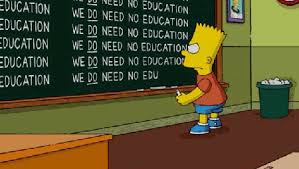
It started for me about twenty years ago when my son and I were at a local food store. Some five-year-old nearby called to his mother, “Hey Mama! Do we be needin’ potatoes?” To which his mother replied, “We ain’t be gottin’ no need for no potatoes.” The kid paused, looked up, and I said it sounded like they didn’t need them but that I hadn’t done the math yet.

It’s a big wide negative world we live in.

“No, I ain’t feeling bad.”

“I don’t be needin’ none of your crap.”

“Don’t be talkin’ no trash to no one.”

Double negatives not only returned to our vernacular after centuries away, it has become standard conversation. The bad grammar is not the problem, though that’s a problem. It is the vague undercurrent of negativity that surfaces in conversation and conduct. The “ain’t”s “no”s and “don’t”s run out front of people’s ramblings like offensive tackles, pushing and shoving as soon as the sentence comes off the tongue. It’s hard to avoid these grammatically-challenged people who apparently have subconsciously convinced themselves that nothing good is going to happen. Worse, something negative dominates most of their sentences, both verbal and proverbial. It’s positively shocking.

At a McDonald’s where two workers tried to fix a blender: “It don’t do nothing, do it?” At a restaurant when the hostess asked another customer where he’d like to sit: “It don’t make no difference.” At the counseling office on campus: “You mean he don’t need no developmental English?”

I had a student challenge me in class one day when I explained that how they grunted to each other in their own lives was their business, but in my classroom I expect proper language. He told me I was “arrogant and offensive” to tell students I won’t tolerate double and triple negatives, bad grammar, and defensive, resistant behavior. He agreed with my teaching methods about as much as his subjects and verbs agreed with each other.

First of all, I told him, I am definitely arrogant. Be positive about that one. I am arrogant about the abuse of our language; I am arrogant when how you talk on the streets spills into the classroom. This naturally leads me to offensive: I tell them plainly, “If anything I say offends you, you probably deserve it.”

The retort: “You think you’re better than us.”

Well, yeah. Not because my life is more valuable or more worthy absolutely not. In fact, some of the most valuable people I have known are illiterate village elders in West Africa or Mexico, migrant workers in Virginia, painters in the college halls. It’s because at any university in any collegiate situation, I try to get it right; I try and make it second nature not to belittle education and intelligence by bullying the language to a pulp. It’s insulting and childish.

A brief rant (because, no, I haven’t been ranting yet): If anyone outside our borders hears me expressing myself in one long stream of negatives, hears me ripping apart what I don’t understand, hears me make fun of what threatens me, and hears me laugh at what I can’t master, I know I’m showcasing for the world that we are the most pathetic, mindless, ignorant, illiterate jackasses on the planet. It reflects poorly on our secondary and primary education system and says to everyone simply that we are lazy. “Welcome to Moronica! Come on world, you know what da hell we meant.” Maybe we should come with subtitles.

Maybe I’m simply not a negative person—except now of course.

Truth is, I really couldn’t care less about the speech, though it is annoying. And I can easily attempt to administer editing drills that eliminate this moron-babble from their essays; what I can’t control is the rising tide of helplessness that’s the true problem. Why does anyone want the primary root idea of every thought and conversation to be a variation of “no?” What hope do people have if they go into every situation with two negatives already pulling their attitudes?

I really don’t know.

I asked my students what they hoped to accomplish after college, where they hoped to be. They hadn’t thought about it, which is normal, I suppose, but one student said, “I don’t want to think about it none. It don’t look too good out there.”

Sigh. No, it don’t.

Momentum is dead. These people feel like they’re running on ice. Was a time college students knew they could defeat anything that kept them from their goals. They believed in themselves. Their natural mental state bent toward something positive. No more. Now we’re instilled with fear—of failure, of attacks, of non-acceptance, or criticism. It is the Age of Fear, and the students have taken this time to heart. They’ve had a homeland defense attitude hammered into their psyche. They are taught to expect the worst, to anticipate failure, and to be prepared to pay the price. Negativity is not only acceptable, it is their survival gear.

A psychology lesson: Cognitive Therapy shows that when people are depressed, their thoughts are dominated by pervasive negativity; they dwell on the negatives and ignore the positives. They don’t believe they can accomplish the simplest tasks. They don’t believe anyone is interested in helping them. Highest percentage of depressed Americans? College students. They are convinced where they’re at now is as good as it’s going to get. We used to only see it in body language. The closed arms, the blank stare toward the ground. Now, this vein of depression has adopted our own language to spread its vile verbiage. Am I over-generalizing here? I don’t think so. Maybe everyone’s depressed.

Everything, after all, is negative. Iraq and Ukraine and Afghanistan pervade the American mind in little more than a stream of body counts and car-bomb updates. Hurricanes slam our shores and send us reeling into “he should have” “she should have” volleys. The news has always been negative, but now the news is on all the time, from computers, watches, television, radio, and news sites. None of it is good and it ain’t getting no better. When I tell them they are better than their attitudes, that they can achieve every single one of their goals despite being trained for twelve years to simply do what they’re told and shut up, they laugh and say, “I ain’t got no time for none of that.”

It’s all about tone and they’re tone deaf.  

They’re being fed all negative information through a wireless umbilical. And their identity is directly related to two modes: their actions and their speech.  And what is the verdict? It ain’t good.

Okay, devil’s advocate here: In their defense, however, who really cares? After all, I do know what the students are saying, or trying to say, and I understand why they have slipped into such lazy, uneducated speech.  I know the times they live in now demand this animal-like mindless reactionary talk in order to be accepted by other animal-like mindless friends.  But these people graduated from a high school in the United States. They are what we define as “educated.”  I’ve been told some of the double negatives and horrific grammar is more “dialect” than illiteracy. No. No no no. 

A real comment: “Professor Kunzinger, I don’t need no developmental English. I didn’t do bad in high school.” This is what I’m talking about: Not, “I did well in high school,” but “I didn’t do bad.” They’re defining themselves by some degree of negative measure.

They don’t understand that command of the language is not about being taught some medieval construct carried over the pond by mostly snooty, old white upper-class Englishmen. Using the language as a sword with skill and finesse allows them to outwit anyone, any age, any income. It allows them to move without being noticed from group to group to take command, to lead, to sway the argument in their favor. It is the basis of all advancement, and it acts as the sharpest tool against a dull public out to take advantage of everyone.

Too many people today believe the art of communication is simply to be understood; it has nothing to do with being respected and taken seriously. “I should be accepted for who I am, not how I speak,” I’ve been told many times.

Listen: How you speak IS who you are. You may be brilliant but prove it for God’s sake. Stop hiding the Mensa tendencies. Let’s call it “Tonal Directed Conversation.” To these people, the sound of the words is more important than their meaning. Back to the store: “I ain’t be gotten no need for no potatoes,” in tone, is crystal clear. This woman is not buying the spuds. In fact, if I did do the math, it even comes out that way. She’s got three negatives floating through that amoebae sentence; it actually spins back toward “no” in the end.  But that aside, the tone is clearer than the language. Knowing that, she might as well have been speaking Russian or Turkish. What difference does it make even if she merely grunted and scratched her armpit, so long as the tonal inference clearly shut out the potato-buying possibility? Everyone knew what she meant; it don’t make no difference. I figured that woman to have been in high school during the Reagan administration. But when Reagan told them to “Just say no,” this is so not what he meant. So now the question remains: Is it enough to know what someone means?

I’ve been teaching too long to know it wasn’t always like this. I don’t remember any (note: “any” not “no”) such verbal abuse years ago. Students could complete a coherent sentence without round-kicking the language. And when I tell my students this, they tell me I’m arrogant and offensive. Well, there they’ve got me.

The thing is, sometimes, I am also mistaken.

Here we go:

History compels me to admit maybe I don’t know nothing about what I’m saying. A little homework reveals how English ain’t so easy to master: Turns out most other languages thrive on the negative, and double negatives in fact were once wholly acceptable in English. Chaucer says of the Friar, “There was no man nowhere so virtuous”; and Shakespeare’s Viola says of her heart, “Nor never none/Shall mistress of it be, save I alone.” It’s all about emphasis. English remains, in fact, the only language that doesn’t allow double negatives. Why? Well, it simply ain’t logical. Grammarians since the Renaissance have objected to the double negative because these humanists who emerged during the age of reason demanded English conform to formal logic. They pointed out that two negatives destroy each other and make a positive. Since then, half a millennium later, this rule advocated by teachers of grammar and writing has become fundamental.

Nevertheless, all speakers of all educational backgrounds continue to use multiple negatives when they want to make a point, as when President Reagan taunted his political opponents by saying “You ain’t seen nothing yet.” That line uttered earlier by Al Jolson in The Jazz Singer was the first spoken words of cinema. And the movies ain’t changed much since.

I don’t like being wrong, however, so I called a linguist I know in Boston.

“What is the problem with ‘ain’t’?” I asked.

“Well,” my colleague said, “it first appeared in English in 1778, evolving from an earlier form an’t, which arose almost a century earlier as a contraction of are not and am not. In fact, ain’t comes from the same era that introduced ‘don’t’ and ‘won’t.’” He took what sounded like a sip of tea. “Ain’t and some of these other contractions came under criticism in the 1700s for being inelegant and low-class, even though they had actually been used by upper-class speakers. But while don’t and won’t eventually became perfectly acceptable at all levels of speech and writing, ain’t does not come from any direct word sequence, making it a “vulgarism,” that is, a term used by the lower classes.”

“Oh,” I said. “But are not contractions of any form vulgar to a true linguist?”

“No, Bob,” he said. “I do not think so. Even a linguist can not avoid using them.”

I was not clear about this so he clarified. “Distaste for the word ‘ain’t’ is still alive, Bob. Its use is still regarded as a mark of ignorance.”

“But technically then,” I argued, “these students are not wrong, they are just living in the middle ages.”

“Well, I would not say that. I believe we must accept that vulgarisms have no place in our language. The worst of these vulgarisms are the double negative and ‘ain’t. It also thrusts their mentality toward depression. With language, however, we can contract hope and the future into a vulgarism we can all live with. Emphasis should be on the meaning.”

“So you are saying that without meaning in our words we are simply grunting with accents and scratching our stupidity.”

“Exactly, Robert. Well put,” he said.

I had to disagree. “Wait, though. You’re the linguist here, but maybe the nay-sayers are correct.”

“But they could not possibly…”

“Is it not possible that tone really is more important than meaning?”

“No! That simply does not make sense.”

“That seems a bit negative.”

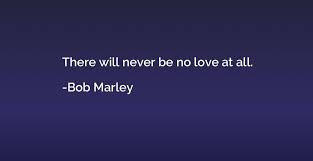
After he hung up on me, I thought more about it. English has evolved for a thousand years, leaving behind meaning, gaining new meaning through time. We’ve dropped words completely, changed the definition of others. In America’s early days, the Irish, the English, the Italians and the Dutch beat the crap out of English. Webster came along and fearful of a country with multiple languages each with nearly unrelated dialects, homogenized us all to the English we banter about today. But why would be believe we’re done? The language is still evolving. Maybe we’re at the start of a neo-Renaissance. While Voltaire would have taken issue with the illogical taste of double negatives, Cervantes would have loved it. The language is changing, there is no doubt about that. How we speak today is a far cry from where we were, and a faint hint of what’s to come. Truth is, you ain’t seen nothing yet.
marley

Zero to Sixty

12194858_10207157940894347_8870260616460653701_o

I was always good at math. I can still glance at a long sheet of numbers, say for Yahtzee or Scrabble, and nearly instantly tell you their sum. Counselors in school said I should consider accounting. Perhaps they were right; the problem is having a knack for calculating and solving problems doesn’t translate to the ability to handle finances. Trust me.

Life, it seems, is best seen more as ironic than literal.

The sciences were out nearly immediately. It wasn’t from lack of interest; no, in fact this very blog is the result of my deep appreciation and interest in nature, the origins of trees and the mystical solidity of space. It’s just I couldn’t hold all that information, the formulas and all. Needless to say, the sciences and me simply never had good chemistry. Four years after my brother nailed his eighth-grade science course (he would later become an actual Scientist—note the capital “S”, as a geologist), I had the same teacher at that Long Island school. He called roll that first day and got to my name. “Robert, are you Fred’s brother?” “Yes,” I replied. “Well then,” he said, “I’ll expect great things from you.” “Don’t” I answered, and he laughed.

Yes, that I could do—I could always make people laugh. Teaching afforded me that opportunity—fifteen shows weekly, register in the administration building—seating is limited. But I could never tell jokes; I was and am more of a situationally humorous person. No one pays to see that.

It’s hard figuring out what you want to be when you grow up, especially if you’re already grown. Ironically, you’d think the vantage of age and experience would make the decision easier. In retrospect, I would have been just fine at several passions had I pursued them with the vigor and confidence of successful people. I was simply always distracted by one underlying drive: I wanted to see the world, to explore and wander and experience, and that’s difficult to do sitting still. The one dominating component of whatever mental mechanism drives us to such things kept whispering, I have to go I just have to go, I can’t explain it. I know why this is true. I understand the one or two people who had such impactful influence on my vulnerable, teenage mind. But it isn’t a career, per se. There are peripheral occupations, of course: Travel industry, military, or a job where you have enough money and time to take the time to spend the money on fulfilling that desire.

Like college teaching.

Teaching then, like education itself, served more as a means to an end then a goal or objective. Along the way I think I became good at it, sure. I still love working with students’ writing and at this very minute am waiting for some to show up in my office so I can help them finish a paper about, yes—what they want to do with their chosen major and their lives. We are really enjoying this internal exploration, so much so that I am doing it with them, analyzing what I want to do with my life.

In essence, this is a rough draft of a college paper in which I discover my entire life has felt like a rough draft in need of editing.  

It helps that I’ve been staring at twenty-years-old for thirty years. It has kept me young and always thinking about what’s next instead of what was.  But even so, thinking about what was helps me now, at eight months shy of sixty, understand how I got here. Growing up I spent most of my time in nature. Long Island’s south shore state parks, the oceanfront, the rivers and marshes of Virginia, were my backyard, playground, friend. Maybe I should have pursued a career in forestry or become a waterman. Maybe. But that meant staying mostly in one place and that never worked for me.

So, writing this down helps me understand this about my past: I could never keep still, I preferred to be alone and outside, and I had a deeply-rooted though never completely understood need to express to others how outrageously beautiful our world is, and humanity, and love, and how that awareness is made more acute by the inescapable passing of time.

I couldn’t find that Major listed in the college catalog. Philosophy, perhaps, but that’s difficult to find in the want ads. The closest I can come is the arts. My friends Mikel Wintermantel and Cole Young captured on canvas what I’m talking about; and the long list of writers I know and respect often do the same, especially the poets. Writing, of course, seems most obvious for me since I like to do it and have had excellent mentors. But people don’t support the arts enough to sustain you unless you write about horror, fantasy, or sex. Maybe mystery, but I suck at making things up.

What do I want to do with my life? When I was a kid, I wanted to be a baseball player in summer and then spend winters in Florida being an ice cream man. Not only am I not kidding about that, it still sounds like the best plan. I liked Mr. Softy’s twist cones and Good Humor fudgsicles the best. I’d probably feature those on the side of my truck. The plan fell apart, however, when I didn’t make the baseball team due to my lack of ability to, well, play baseball. Tennis was my sport, but I got distracted. It was either practice tennis or ride my bike all day long and the latter felt more like I was getting somewhere. Then came my passion for Space which coincided, not coincidentally, with the late-sixties, early seventies NASA domination of our imaginations. But, you know, science, so eighty-six that one.

A student just left. He wants to be a dental hygienist. He said he loves working with people and talking with people. I suggested it would be mostly him doing the talking but he seemed okay with that. It’s odd how with each rough draft I read I wonder how I would do in that field. Most of these freshmen and sophomores want to go into business. I was born several centuries too late, it seems. Or too early.

In retrospect, evidence seems to prove that most of us in the first world live the lives we choose to live once we accept that we are the ones ultimately making the choices, no matter how much we want to blame or accuse or thank others for the situations in which we find ourselves. We did it, for better or worse, with families and finances and luck, good or bad, we made the choices—always have and we always will. Of course, there are those who can’t pull themselves up by their own bootstraps or were born into a horrific situation from which escape into a chosen life seems—and often is—nearly impossible. Well, that just makes our ability to choose our own direction more precious, more delicate and powerful, and a choice not to be taken lightly.

As we talked about in class; it’s really just about asking ourselves the right questions. There’s a science to it, though, which may be why I was always asking the wrong questions. So I told them to write about it. I assigned their semester project early on, which was in essence to discover themselves through writing, and perhaps unearth some truths about what they want to come next. I did this same assignment for years at another college and a student once came up to me and said, “My husband had you for this class about five years ago and came home and said the lecture really struck him and he wanted to quit school, that it wasn’t what he wanted after all.” I gulped. But she then told me he started his own tiling business which is now very successful, and they’ve never been happier. That’s a good story; it ends well. There are others with different endings. Always, though, endings they ultimately wrote themselves.  

Still, I like this assignment because it is personal for me and because I always knew that in the end if I kept writing about my life, that someday I’d figure out what I wanted to do with my life.

And therein lies the irony.

8818b018af88a8957919dc4dacf94cdc

No Reservations

This essay was originally published in the limited edition work, Out of the Way. It is forthcoming in an anthology of spiritual travel writings out of London. It is a cold, almost-winter morning here on the Bay and this piece is one of my favorites for so many reasons, not the least of which is how it helps me recall the warm days in Spain.

14054911_10209240941688065_3938689277427780114_n

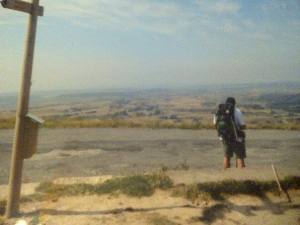
We had callouses, bandaged sores and bloodied toenails. My feet grew an entire size and I lost fifteen pounds despite the rich diet and daily dose of delicious Spanish wine. We climbed mountain trails made of nothing but rocks and descended slopes so steep blood blisters formed daily. Best damn summer of my life.

On our first night in the Pyrenees we slept next to a chapel Charlemagne used in the ninth century, and we spent a few hours drinking gin and tonics and talking to the innkeeper. We talked about America and Spain, about pilgrimage and gin. We talked about talking and about being quiet. He didn’t speak English but had been to Arizona, and we laughed about the endless days of sunshine and the long stretch of desert-like paths across the heart of Spain. A few days later in the village of Zubiri in Navarra, just before Pamplona, we found a place to stay on the fourth floor on an old house and shared a room with a couple from France. My son took pictures from the third century Roman Bridge outside. Another night we stayed in a small inn run by a single mom who made dinner for five of us—a woman from Madrid, Michael and me, and two men from Germany. It was a delicious Italian meal and we drank clay pitchers of red wine and talked about the distances we had yet to walk. We laughed in three languages and despite someone snoring most of the night we slept well enough to leave an hour after everyone else making our journey quieter and more personal. We didn’t worry about how far we walked or where we might stay. We walked and we would find a place. Like the fly-infested villa with tremendous views, or the albergue with dogs who insisted on sleeping in our laps, or the room above the garage with a killer bar at the street; or the stone building down some slope where we met some girl from Texas and a father and son from Amsterdam and we drank the best cider in Spain.

We spent one night above a pub in Samos and had pulpo–octopus–for dinner. That night a priest invited us to a private party and we stood next to four buffet tables of tapas and wine, and we ate and stood on the balcony and watched swans swim by in the lake behind the cloister, hissing at the setting sun. Every single day outdid the previous one. I kept waiting for that golden moment, and they kept coming. Like that following morning when we walked to a nearby field and stood in the sacred silence of a chapel from the ninth century.

We slept on yoga mats in a hallway of an old church in Logrono with seventy other tired souls after we shared dinner and walked through passages in the five-hundred-year old basement. For two nights we slept in comfort in the same hotel Hemingway stayed while working on The Sun Also Rises. In some small chicken village we stayed in a brand new albergue which had no business being open. The floors and ceilings weren’t done, it was freezing inside, and the yet-to-be-inspected bathroom was three floors down. The only bar in town was closed so the owner gave us a few beers to wash down the thick dust everywhere. We stayed near Torres del Rio above a tavern with fine food and a wading pool out back to soak our blistered and swollen feet. We slept in an old monastery a hundred yards from a church St Francis of Assisi himself asked to be built. In Portomarin we had no place to stay at all so we stayed up as long as we could. We hung out in a small café until one am and then walked around the misty, cool waterfront. Then we settled on the town square with covered walkways running next to a medieval church. We pulled together folding chairs and wrapped ourselves in whatever we could and tried to sleep in rapidly dropping temperatures. A kid on a bike did tricks on the cathedral steps until three am which anyway kept me amused. At four-thirty we got out our flashlights and headed west. You can see a million stars in Spain at that hour of the morning, and the darkness makes the silence almost visible.

We walked from the silence of the Pyrenees through the plains and the western mountains of Galicia where the sole sound is often walking sticks hitting the path every few seconds, or the occasional gentle whoosh of the windmills. Some walk with headphones and listen to music. Some carry on constant conversation with companions, and we all stop every once in a while to adjust a backpack or drink water from scattered wells. We see wild horses and stop in cafes converted from garages.

This is life for forty days.

At the mountaintop village of O’Cebreiro there were no rooms left and we nearly walked out of town to camp when a man waved us toward a back door of an inn and we ended up with a beautiful private room for practically nothing at all, and just outside the door were a few tables on a stone patio overlooking valleys that stretched across Galicia. In the morning the fog sat below and when the sun came up the fog dissolved, the sky turned blue, and the green hills welcomed us west.

I noticed a slight change in my daily routine compared to home: at home I wonder how far something is, how long it might take to arrive. I might even know before I left what I planned to do when I got back. But on the Camino the plan is simply to continue. At home every time I start something new, I demand tangible answers with definitive outcomes. But on the path each day I discover not that there aren’t any questions, but that the answers have become irrelevant.

Eventually we map out something deeper and less tangible than the well-marked trails across Spain: we learn to navigate the journey inward, the “inscape” as Thomas Merton called it. You realize home is dictated by others’ plans, others’ deadlines, others’ habits and expectations, and at home after a while you come to wonder just whose journey you are on. But here, despite thousands of other pilgrims on the same path, ours is unique, it has never before been trodden, and each decision remains pure and honest. The sameness which becomes our lives at home erodes on the Camino to the certainty that each step makes sense.

In a suburban neighborhood outside Santiago we put our packs on two of five beds, the others occupied by a salesman from Madrid, a woman from Barcelona and another from Mayorca. We all had dinner on the back porch where all the flies in Spain gathered to join us, as well as a bulldog named Brutus, and the sun was brilliant and we slept well. A few nights earlier we stumbled into some tiny town, another chicken village which looked like a movie set for an old western, and we slept in the bunk room with fifty other people and picked up a few supplies at their shed they called a store, but man the lemon chicken we had for dinner was perfect.

Back home information is instant and artificial stimulation has become completely natural, daily demands of meetings and traffic and phone calls and explanations and disappointments and arguments and the constant hum of civilization permeate our most private thoughts. On the Camino we travel to unexplored depths as centuries come and go with each village and vineyard, and we walk through villages past chapels used by Charlemagne, saints and kings, Cervantes and Queen Isabella and St. Francis of Assisi. It is a complete abandonment of routine, despite the daily routine. It is an absolute participation in simplicity, and discussions gravitate toward the purest of ambitions, the most sacred truths; truths left untapped at home.

When we finished we wanted to do it again. And therein is the road not taken: To live a life you would, in a heartbeat, live again.

It is the rare phenomenon of immeasurable time, aware of every single step; each one like words of a prayer, like an absolution, like perfect syntax, like absolute meter. We can’t add or eliminate a single syllable; each step is essential and immediate and timeless.

download