The Value of Change

aerie two

Last week in my creative writing class we reviewed various questions to ask when returning to a draft. Where’s the best place to start? Is this detail to obvious? Is it too obtuse? One question in particular is a favorite of mine and I spent some time going over examples which moved to an interesting discussion: What value does this detail (image, sentence, etc.) bring to the work? We talked about fluff and filler and basic bullshit which often creeps into the craft, especially during the rough draft stage at the end of a writing session liquefied by too much Rioja.

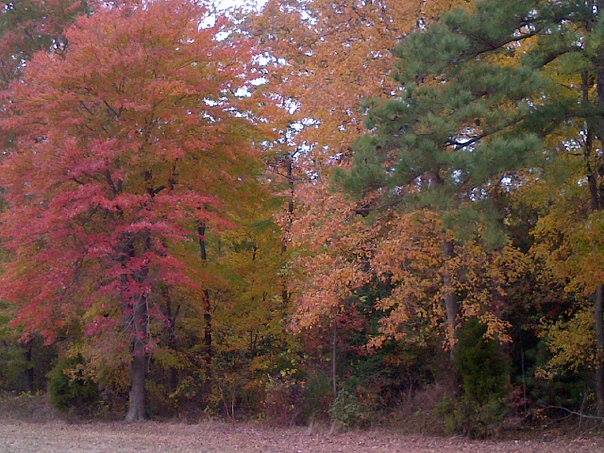
And then the weekend came and the leaves along my road and along the river leading out to the bay were at their peak; that is, they were vibrant with red and orange, yellow and rust, and the deep blue sky behind them made for a scene no camera could accurately capture. My days immediately had value, enriched by the pure power of life in transition, which I could witness simply by walking.

This made me think of my father; I have so many reasons to think of him, particularly in the fall when things change. But the leaves remind me of how much he enjoyed the season. The fall is family coming for holidays, of course, which my father lived for, but also football on Sundays; and in all the houses we lived it was the colors of the leaves. Leaves ablaze burnt orange and fire-red, and blue skies contrasting black trunks and silver and brown branches. It is when we mark time with colors and the distance between a falling leaf and the ground.

When I was a child I found an oak near the creek at the end of the old trail along the Southern State Parkway, and I carved my name in the trunk. It might still be there, nearly half a century later; if some hurricane hasn’t taken it down, or some summer storm, or construction or a myriad other ways time steals our past. This weekend while out walking along the Rappahannock I wondered if I decided to drive to the very end of that Long Island road and park near our old house and walk through the woods to the trail, would I discover fourteen-year-old me standing there with a knife not understanding how fast the tree would carry my carving to incomprehensible heights? Would I stare across decades and measure the distance from my youth by the height and breadth of the trees I long ago climbed and swung from and hid behind? Nothing exceptional happened in those woods; nothing but the passing of time occurred where I carved my name in a tree while Dad waited at home for us to move on. But now, if when I returned to my car would I catch a glimpse of my long-ago father looking at the newly planted trees surrounding our new house anticipating their eventual majesty? Did we know we would move away so soon? Do we ever know how soon we move away?

So many seasons have passed, and once again leaves are ablaze, burnt orange and fire-red. It is as if new colors appear, and my son has spent his own decades taking pictures and marking time by the height of the apple trees in our yard, which anyway have lost their leaves for now.  Everywhere I look it is autumn and the branches more prominent, like bones pushing through aged skin. If my father were still here would he want to tell me again about the colors on the trees along the Brooklyn streets of his youth? I have never been able to take root like him, but I’ve come to understand the arch of ancestry and the unwavering value of the past.

And what value there is in every moment, in every season. What profound and inexplicable value exists in the persistent passing of time, the predictability of change, and the colors of life. Oh! Such colors of life!

aerie one

Strike That

155354706

In Derek Jeter’s last year with the Yankees, he made 12 million dollars.

That same year I didn’t. I teach college.

He hit 310 in his career with 260 homers and 1311 rbi’s. He played in 145 games his last season and stood at the plate 581 times. During some of those at bats, and certainly a few times on the field with his hands on his knees, he called out supportive statements from his shortstop position, like “Go get ‘em!” or “Come on!” He probably broke a sweat. It gets hot out there and he’s from Jersey. The stress must have bled onto his off-the-field schedule as well. He had team meetings, promotional events, media interviews, charity appearances, and, of course, training. I imagine it can be rough, throwing that ball a few hours every day, placing himself in harms way of a hammered lined drive—not to mention the dangers of collision with the third basemen or pitcher during those sudden infield flies. So I really can’t question his annual salary of 12 million dollars. Certainly the people attending in the Bronx were there because of him and would go home if he didn’t play one day (which is rare–he missed, in fact, only 17 games in 2014). When the fans arrived, they spent more money on beer, food, and shirts with Jeter on the back, which is another aspect of his job which must take its toll–all those pregame autographs he must sign, and all those people running around wearing Yankees jerseys with his name on the back–Impostors! Human plagiarists!

I don’t know Derek. We don’t hang with the same crowd. It might be my age–I was a sophomore in high school when he was born. It could be also I’m a Mets fan, so no wonder our paths have not crossed.

Also, I don’t make 12 million. In fact, here’s how it breaks down: Derek’s game time salary, that is, money divided into his in-season, game time appearances, totals $74.074 per game. That doesn’t include spring training, appearances, practices, and money he makes from other income such as commercials and endorsements. Compare that to my salary, including class time, prep work, meetings, grading, workshops, and conferences, across the course of a twenty-eight-year career, including cost of living increases–I mean the basic salary for myself as a college professor—I will make in total what Derek pulled down in twenty-five games, seven innings.

Surely I could field a ball. I might have called the coach, asked him to put me in. I used to throw fairly well from the mound. I could be like the pitcher made famous in Dennis Quaid’s The Rookie, Jim Morris, who at thirty-five returned to baseball as a relief pitcher. And, hell, I’d do it for half what Derek makes. One tenth. Wait. I’ll do it for what he would have made in the 17 games he didn’t play his last year, which is still twelve times my annual income.

Now, all this is fair, really. He generated income, increased revenue. No one is running over to the college bookstore to buy jerseys with “Kunzinger” on the back. If someone else were pitching the grammar rules instead of me, students would still show up. Nike doesn’t endorse faculty, though for relatively small money, I’d throw a “swoosh” at the bottom of my course outline and wear the Nike shirts to class everyday. I wear a baseball cap quite often–for the right price it could be theirs, or Budweiser’s, or Coke’s.

Think of the possibilities. A company could sponsor my clothes, sneakers, and hats. They could endorse my syllabus, my tests, and even my overheads. Yes, at the bottom of my overheads I could put a “Goodyear Blimp” emblem. I’d do it for relatively small money.

I already do.

It wasn’t always this way, to be sure. During the Babe’s days he signed a two year, $160,000 contract making him the highest paid player of all time while Cub slugger Hack Wilson led the National League in home runs and RBI’s and said he was “grateful” when he signed in 1931 for $35,000. That same year a college professor averaged about $3000 a year. Here’s the math: While my annual salary is about 30 times that of my counterpart back then, Derek’s take was 80 times the Babe’s.

Make no mistakes: I can teach. I’ve had excellent evaluations for my entire career, and my performance improves as I go, unlike an athlete’s. But I still bet I can pitch low enough to force out three opposing players faster than Jeter can develop students’ argumentative writing skills. But you have to love him. I mean, to watch him play is witnessing an artist stroking the canvas—sheer beauty. Truly.

Still, you should see me diagram a sentence. Breathless.

1411412754000-9-20-jeter

Looking Both Ways

unreceptive art

I’ve been thinking a lot lately about the past three decades at the college and I’ve noticed a few trends along the way. Many years ago I wrote a small work about being a professor, and it is interesting to note that things have not changed. That’s my fault though; I really forgot to make a note reminding myself to call each of my students and remind them to get up, to come to class, to bring their work, and to raise their hand.

I’ve failed them.

Please. Allow me to note some consistencies:

Older students are better than those just out of high school. The big dude with the pierced face and tattooed eyelids is probably a great writer. Many students would rather pull a lower grade than have a professor look at a rough draft. Students who take copious notes don’t always fair as well as students who just listen intently. If it happened before they were born, it really doesn’t have any affect on them and therefore they shouldn’t be required to learn about it.

Hamlet is boring; Oedipus is stupid; statistics is tedious; bio lab is too long; developmental classes are a waste of money; introduction to literature is a waste of time; history is not relevant; philosophy has no practical application; psychology is disturbing and the instructors are disturbed; text messages are read more than text books; face to face communication is obsolete; and the only source of information is the internet.

Here’s the great irony of education: while we should become smarter as time goes by because we’ve been given the answers through the centuries, watched the lessons played out on the battlefields and in seminar rooms, we’re actually ignoring more, learning less, and not really keeping tabs of our decline.

Maybe if I text my lectures they’ll pay attention. Phones go off in class, in the hallways, in their backpacks. They reach in to quickly shut it off because they “forgot it was on,” and spilling out onto the floor are the books they need, a few small notebooks, and various articles of clothing. They carry more in their bags then in their minds. 

The science and math books are ten-pounders, and the anthologies aren’t lightweights either. For lab they need their lab equipment, gloves, goggles, special notebooks, dead animals. Rough drafts, final copies, required journals, various books read besides the textbook, art supplies, tape decks, language discs, keys, wallets, games and personal items. Some have staplers, toothbrushes, condoms, aspirin, medicine bottles, and hand soap. Some carry crayons and cookies because their kids come to class sometimes when elementary school is out or cancelled, or when the kid is sick but the Prof told the parent if she missed one more day she’d fail the course. They carry medicine for those kids, bi-polar, attention-deficit, hyperactive. They carry the same for themselves, medicine for their own ADD, ADHD, OCD, diabetes and manic-depression. They carry a lot. They need to remember when papers are due, when tests are scheduled, including their math tests, their physics test, algebra, pregnancy, special needs tests, mammograms, CT scans, and various other tests they’ve got on their mind and written down in their notebooks at the bottom of their parcel.

They carry cell phones with various rings, various friends calling during class, right before class. They have small machines attached to their ear so they can remotely answer the phone without having to move their arms or lift their hands. They have the numbers of everyone they know automatically programmed in. They no longer have to walk to see anyone, walk to find a phone, remember any numbers, lift their arms, or turn their heads.

Once someone’s phone vibrated during class. The vibration on the desk was as loud as a ring, but she politely excused herself. Some professors insist the phones be off during class, and they won’t even allow them to be turned to vibrate. But this student came back in and said she was sorry and that she had to go, that was her babysitter calling and someone from her husband’s command post was at her house waiting for her to come home. A week later I discovered her husband had been blown up at a roadside bombing on the airport road from Baghdad. Another student’s brother was on television. He worked for Blackwater in Baghdad and she watched her brother’s charred body swing from a bridge in Iraq.

One student shot himself in the head because he thought the paper was due and he thought his medicine wasn’t. True story. A colleague of mine listened quietly one day to a near-suicidal student explain why her paper was late and how her daughter was going through depression and they were bringing her to the doctor to see what was wrong, and it weighed so heavily on her mind that she couldn’t really concentrate on the paper and would the professor mind the paper turned in a few days late, and she agreed. Students knew this about her—she would work with anyone. A few days later my colleague hung herself in her kitchen because her medicine was fucked up.

This is the American Community College. These are the trenches, in the city; some of these students come to get ahead, knock off some basic education classes before transferring and paying more at the university. But some come here instead of jail, or to bide their time, or to hang with old friends and maybe hook up with new ones. Some come to keep off the streets; it can get dangerous these days. But some of these students come from real war-torn areas. My student Deng walked across Somalia to Ethiopia twice looking for safety. Before he found it at ten-years-old in a Red Cross camp, he was given an automatic rifle and taught to kill. Now he tries to write about gun control and crime in seven hundred words, making sure the grammar is right. His mother was raped and hacked to death in front of his eyes. His father “disappeared.” He was a Lost Boy. Sometimes he didn’t concentrate. Yeah, okay, sometimes he didn’t pay attention. But when he came to my office we talked about politics and survival. We talked about Africa and faith. We talked about ideas, and he told me Chinua Achebe knows Africa. He told me how Sartre would not be popular in Somalia but Descartes would. He knew the differences, understood the gentle nuances that separate philosophy and politics. I didn’t ask about his scars. He didn’t ask about mine.

Some students came here with an education the likes of which we can’t possibly conceive. He told me he as soon as he found the camp he knew he needed to leave. I said I understood. He said it was too much, and he wanted to die so badly that’s when he knew he just had to get out. I didn’t answer. I had nothing left to say to him.

I have nothing left to say.

I wonder if any of my students from years ago wish they could go back to the start and do things differently. I know I do.

Sometimes I’d like to go back to 1986—amazingly only three years before I began teaching college. There was one moment then—I can still sense the stillness in the July air—I would like back. How different things would be. But we couldn’t know then what we know now. We were so young.

What I know now is this: all the lectures in all the classrooms from all the professors in the world will not prepare us to be anything of value if we don’t find any value in what we do and how we live our lives.

Of course we would all do things differently; even just a few small moments. I’d never have left Massachusetts. I’d have gone to Monterrey anyway. I would have passed on the Trout in Prague, the oysters in Asheville. When I left Tucson that last time I’d have headed west instead of back east.

We are always in pursuit of ourselves, aren’t we? Even if we don’t consciously consider such notions day to day. In class this morning I asked my students if there was anything they would have done differently in their short but tech-dominated past. They all laughed and had answers that ranged from staying off-line to trying harder in high school to treating a loved one better while she had the chance. They talked for a bit; they got quiet. They thought a while. And I added this: What are you doing now that five years from now you wish you had done differently?

They looked at me for a moment with just a little confusion and some wonder about their future, and they waited for me to talk.

But honestly, I have nothing left to say.

14937424_10209929992233898_1894421309569638064_n


Blog 100

12033141_10206923732439282_3439217421098717487_n

I figured out how to be happy. Here, now, at fifty-seven years old. It is good I thought of this so early in my life so now I can be happy all the time instead of just when it works out.

It is this: Don’t expect anything from anyone. Or, better said, stop paying attention.

I’ve heard this throughout life in various semantic forms. Do what’s good for you; happiness must come from within; create your own happiness; build your own rainbows, blah blah, yada yada, ewww. But the triteness is true. When we stop expecting things of other people, even when it is logical in some sort of familiar way to do so, we move gracefully without being disappointed by false expectations.

This is sort of what St Bernard meant when he said we must learn to make excuses for other people.

Or maybe I just like having no one left to blame but myself if something doesn’t work out.

I love every season. I like the icy winds on my face when I am near Lake Erie or when I lived in New England. Nature is so absolutely objective; she just lays it out there on the line and says, “Today, you’re going to freeze your ass off,” but means nothing by it. It is absolute honesty. It does not differentiate between those who love the cold and those who don’t. The same was true in the Sonora Desert; it wasn’t unusual to hike in 110-degree heat, but it was what it was. Once in a while it will whisper, “then go inside if I’m too hot for you.”

That’s what draws me to nature; it keeps me in the moment, I experience again what humans have experienced since the dawn of us. But these days surrounded by processed landscapes and prepackaged cities, people tend to pass judgement on everything from lip gloss to the definition of genocide; they categorize and change their minds; their moods can be unpredictable and hard to trust.

This isn’t the case in nature. Nature just might be the only place of absolute fairness. It doesn’t bully. It doesn’t ridicule or praise. It simply doesn’t care; which is all that is necessary for one to be oneself.

It’s why I walk. Cinder block hallways and poster-laden classrooms offer nothing. When I am in the woods or near water, the criticism is all internal and ironically it is only at that point it is mostly positive. I am proud of myself when out there, first for being out there, for shedding the residue of concrete expectations. And what I find when the sun is sliding along the water or the leaves linger just a few moments more before letting go for good, is that I expect more out of myself than I do when I am closed in. In the hallways and meeting rooms and online spaces saturating the air with invisible communication cables, I do what is necessary, sometimes what I think is more than necessary, but always I am tethered by others exceedingly low expectations. But when I’m out on my own meandering I tear down the low-bar mentality and realize what I am capable of.

And it occurred to me recently that since I do my best in those situations, I should spend more time in those situations.

I used to imagine myself looking back at myself from a few years ahead. I’d pretend I was doing an interview on television, or perhaps having a talk about some accomplishment, and that visualization became some sort of bizarre, slightly-psychotic point in time I could shoot for. All I had to do then was fill in the empty space between where I was at and that future moment. You know, it actually worked more than a few times.

Maybe when I’m inside and around others I just don’t have the time or space to push the reaches of my mind and see what’s in there to fill in that empty space. Or maybe I’m too easily distracted. Nature is like a familiar movie; I already know it well and can look up at my favorite scenes, or glance around at moments I never noticed before, but it is comfortable enough for me to multitask.

The view from my wilderness is almost always internal, clothed in the spectacular colors and soft breezes of nature. When I walk along a deserted road I take full responsibility for every thought and action and reaction. When I stroll down the oceanfront or along the river I can find the right words, discover the correct image. I remember what I think about when out there. It stays with me, whereas the conversations in corridors often go in one ear and…well, no, they don’t actually go in at all.

It isn’t only that nature doesn’t pass judgement on my decisions or actions that relaxes me and allows some sort of organic process to work at its best; it is that I can clear my head of those who do.

The truth is fifty-seven isn’t young, and I need to be myself again. We all do; and maybe we all have that place away from (or in the middle of, who knows) distractions where politics and business and the infestation of life can’t touch us. If that is where we truly live, why don’t we live more?

Peace.

20728045_10212554877374386_3347078338756462849_n

I Can’t Trace Time

aerie one

Fall has arrived and the breezes this weekend cleared away most of what was left of summer. Last week at home I walked along the river like I always do and this time of year when the water laps at my feet, it is warmer than the air, inviting, deceiving, teasing me into thinking summer will push back on autumn and maybe even win out. I don’t mind the change so much; I’m not bothered by the passing of time as much as how I spend the passing of time.

Tonight I’m in West Virginia, and winter’s on its way. The leaves are just beyond peak here, and my drive to the coast tomorrow will bring me through every stage of autumn. Sometimes you can see all the changes happen in one day. Crazy.

The truth is, some things need to change. Even with resistence, sometimes it is the only way to make room for new growth.

For me even the seasonal change from summer to fall is often troublesome. Again, I don’t mind fall—my days in western New York and Massachusetts are most memorable for this time of year. And obviously I know it is going to happen. I watch the weather, I mark the calendar, I see the leaves letting go. But still it always takes me by surprise. I wake up one day and I need to wear more clothes, or I no longer feel the sun so strong on my shoulders, and I am saddened.

So when a change is even more unexpected, like anyone else I wonder how I am going to handle it. And the surest way—for me anyway—to gauge my reaction to life being different or accepting some sort of radical, unexpected shift in existence is to look back to when these things have happened before.

I’ve never lived a conventional life.

In kindergarten I liked a little red-haired girl, Kathleen. Just like Charlie Brown I was afraid to approach her. We were in the same class until third grade when at the end of the school year my family moved much further out on the Island. Instead of saying goodbye to her I made a card that said, “I love you” and threw it at her in the hallway. I think she got it. Now I wish I had just handed it to her politely and said I was sorry I was moving. I never saw her again. I probably didn’t handle that relationship well.

A line from a favorite song of mine says, “Can you picture a time when a man had to find his own way through an unbroken land?” Imagine that for a second. No satellite photos, no GPS, no maps and indicators, no sextant, nothing but perhaps some paths beaten by cattle or floods. Wild.

In some ways that’s all of us in our youth. Personally, I often ignored advice of my older siblings, examples set down on television or in school. I simply preferred to assess a situation and have at it on my own terms, even if it meant complete and utter disaster. Once I walked three blocks from home just to play with a friend’s plastic bowling pin set. I was eight. Another time I decided to hike into the San Jacinto Mountains outside Palm Springs without telling my parents, or anyone for that matter. I missed the small sign that said “Danger: Rattle Snake Area. Keep Out.” What a beautiful hike that was until I fell into a Saguaro cactus and spent an extra hour on a rock pulling thorns out of my leg. What a great day.

My point is simple. I should be dead. Or abducted. Or in juvi for harrassing an eight year old girl. Instead, I gained that small bit of confidence we used to earn out on our own, trying and failing, fantasizing and acting and pretending. You simply never know when those youthful lessons will return to come in handy, see us through an unexpected left-turn, help us through the changes.

I thought about those years, my early youth in Massapequa Park on Long Island, and how innocent it all was; how we flipped baseball cards and played stickball. We had block parties where the block would be closed to traffic and we all put picnic tables and grills out and walked up and down the street talking to everyone else and sharing food, and riding bikes, and the adults had drinks and the kids had fun. Television went off the air at night, just a fuzzy white noise until the early morning when a black and white flag waved across the screen and some dude said, “We now begin our broadcast day” after the National Anthem.

This was the age of my youth. It was innocent and tech-free and filled with hippies and protests and flag-burning and marches and sit-ins and rumbles. The laughable Mets became the champs and we walked on the moon. On the moon, for God’s sake. How can you possibly not understand why at the core of my generation is some semblance of hope, still simmering. We were not a generation of followers staring at our hands; not by any stretch of the imagination. So when the times were a ‘changing, we changed—or we were the ones causing the change to begin with. And as we grew older, those organic traits became part of our DNA.

Change. Part of who we are is absolutely dependent upon how we were when we were young. And when I was young I was restless, always ready for something new. I didn’t mind our move away from the Little Red-Haired girl. I didn’t mind the move to Virginia.

I welcome what’s next.

“To change is to be new. To be new is to be young again.”


“If you do not change direction, you may end up where you are going.”

–Lao Tzu

We now begin our broadcast day.


quixote


Learning to Walk

936666_10203849673869739_8969931922841361910_n


This is a special edition of A View from this Wilderness. About a month from now my book “Out of the Way: Walking with Francis in Spain” is being released, and this excerpt–which I reworked into a variant form here–is one of my favorites. I hope you enjoy this and thanks for reading: 

Learning To Walk

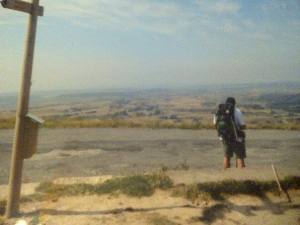
When my son and I decided to climb the Pyrenees on our pilgrimage to Santiago, Spain —a five hundred mile trek from France to the Spanish coast—I passed on carrying walking sticks. Now, I’m not always a stubborn or proud man; when someone told me to buy my hiking shoes one size larger than normal, I did and I’m glad; walking hundreds of miles really does make the feet bigger. And when I was told to drink a lot of water I made sure to stop at every well on the way. Not buying a walking stick wasn’t a matter of wanting to look strong; I simply didn’t want something else to carry.

Curiously, we were the only two pilgrims without walking sticks in all of St Jean Pied du Port, France, where we began our trek. They only cost about five euros for a good solid piece of oak about five feet tall, varnished, “Camino de Santiago” burned into it and a metal casing at the tip to hit the ground, with a tough cord through the handle. Some people carried fold away steel ski poles and others wood ones. Some pilgrims bought two and walked like cross country skiers; most found one would suffice, leaving the other hand free to point at the Pyrenees or hold a water bottle. And as I told my son: “I’ve been walking upright without assistance for a long time, uphill included.”

It turns out the Pyrenees are profoundly uphill. Those first three unassisted days crossing the mountains made for some interesting balancing acts. With both arms free it was too easy to move too fast and tire out or lean too far and stretch out a muscle. Instead, we took a lot of breaks and watched where we were going so not to step on endless small rocks and countless eight inch black slugs, bountiful in Basque country. Another reason I went without was my concern that on the Camino I’m come to carry the cane like a crutch and expect it to help me more than I should, especially once we moved past the Pyrenees. We were a rarity on this journey: a father and son together in peace for five weeks, talking, laughing, and sharing intimate moments in chapels and cafes.

We didn’t need the sticks; we would lean on each other.

          In Pamplona we bought two walking sticks.

We gave in when we realized we tired more quickly than our fellow pilgrims, and it felt awkward to let our arms dangle all day. Michael found one about five feet tall stained dark and rugged looking. Mine was a bit taller and tan. Both had thick cords through the handle for our wrists. It took some getting used to but somewhere on the way to Logrono, Spain, we found the rhythm and our walking sticks became an extension of our anatomy. I learned just the right timing to pick it up and how far in front of me to place it back down. I figured out when to not let the tip hit the ground, when to carry it on my shoulders, and when to lean heavy on it to relieve pressure on the knees or toes. I learned I needed it more down hill than up, on dry riverbeds more than the pavement, and not at all in larger towns and cities.

          And after another week or two that cane worked its way into my character, as did everyone’s. We would leave them on our bunks in the late afternoon after we checked into a place to stay and then went out to eat or drink. It marked our space, and a quick glance indicated whose bunk was whose faster than looking at the backpacks. Two mahogany walking canes told us the two men from Frankfort, Germany, were also staying; the silver ski poles with a Belgium flag sticker belonged to Sylvie. And others knew ours leaning against a wall, in a corner, or as they lay on the ground against the wall at night. At some point my walking stick was simply part of the pilgrimage as much as my water bottles, my backpack and my journals. Eventually I knew if I had to make a choice I’d have given up the backpack before the stick.

          It became a part of my walking style and I decided I’d continue to use it when we returned to the States. Since he had been old enough to walk Michael and I have explored woods and walkways together. At home he always grabbed a hand crafted walking stick from the pile he made from fallen branches, and off we would go. I adapted quickly to mine in Spain and when I wasn’t holding it, my hand felt empty.

          A few weeks later near the city of Sarria, it occurred to me I’d be using that stick the rest of my life. When I am in my eighties no one will need to convince me I’d be safer with a cane; by then this piece of wood with “Camino de Santiago” burned into the side will simply be understood. For my family it will be part of who I had become, the one who walks, who at one time when he was so much younger crossed Spain with his son, and the only items they brought back were their walking sticks.

          That was agreed on in Pamplona. With about five hundred miles before us, we knew we couldn’t carry much. In fact, shortly after arriving and evaluating my belongings, I ditched some clothes and equipment to lighten the load. We had been accustomed to acquiring souvenirs to remind us where we had been. When I was young my father always brought back glass mugs with the name of the city or state printed on the side. When I traveled during Michael’s youth I likewise found evidence to give him and make him feel part of my journeys. But this was different; this was a pilgrimage walked by saints and queens. This wasn’t a vacation; it was a brand new way of life. So as we walked Michael took pictures and I wrote in my journal and we decided those would be our mementos. We both knew no token could possibly represent the experience of sharing these five weeks, twenty-four hours a day, together.

          But as it turned out, soon after buying the walking sticks and getting used to them we realized doing so allowed us, quite ironically, the double pleasure of having an easier time of it on the pilgrimage as well as a very practical souvenir of our time together that summer. We would bring them home. Enough said.

          It was difficult not to think of my father when we first bought them. At almost ninety at the time of our pilgrimage, he sometimes needed to struggle out of his chair, but once he was up he kept going without assistance from a “third leg” as Sophocles suggested in the Sphinx’s oracle. Now here were his son and grandson deciding to carry a few canes for five weeks. That kind of time together, talking, walking, mostly remaining quiet and pointing out the beauty around us is simply not often shared between a parent and child. In fact, on our entire Camino we only met a few other similar relationships, a father and son from Holland and a mother and daughter from Sweden. The innkeepers and café owners would comment on how lucky we were to travel together. We knew this, though, and as time went on we both wanted the trip to continue. Together we met people from around the world, drank in cafes as varied as Hemingway’s favorite pub and a garage some woman turned into a bar. We prayed together in churches built before the time of Charlemange and chapels where St Francis of Assisi sought refuge. We shared every moment of every day surrounded by the finest scenery in Europe, and five weeks later we walked together into the sacred city of Santiago de Compostella aided by our walking sticks, which literally guided us across the country.

          In Santiago one afternoon we toured a museum which had on display relics of those who walked the Camino. One cane in particular was featured—that of St. Francis of Assisi, who walked the same pilgrimage exactly eight hundred years earlier. Encased under two glass boxes was a short, peasant’s staff used by Francis when he journeyed from Assisi to Santiago and back. He was thirty-three and traveled well over a thousand miles with this walking stick of his still in tact and on display nearly a millenium later. I was in awe. The significance of our canes became clearer. They would do more than simply link us to the Camino long after we were home; they linked us to every pilgrim who ever followed The Way.

          At the end of the journey one night in Fisterra, the ancient “end of the world,” I stared at our sticks as we sipped a local red wine and watched the small fishing boats in the harbor. We had done it; we completed the Camino, together, and we sat together, father and son, and gazed at the Atlantic.

          It gave me complete peace of mind to know that someday, hopefully a long time from now, it will be Michael’s. I wondered if long after his grandfather and I are both gone, when he is an old man himself, will he sit in a chair and stare with aging eyes at our two walking sticks leaning against a wall, probably long worn away at the tips. Will he someday pick one up in his fragile, elderly hands and remember his youth, coming of age on the Camino, walking more than twenty-miles a day with his father? I wondered if he would tell stories to his grandchildren about the great pilgrimage, and recall the time we wandered into Pamplona together and picked out those very walking sticks. I hoped he would remember the details while his grandchildren ask if they can hold them as he tells them the same stories again about how much we laughed so long ago in Spain. Yes, these were the perfect items to bring home, if there could be one.

          They will collect dust, I thought, much like memories collect dust and cover up some of the details, making them hard to recall. But they will stand as proof. Perhaps there will be small indents near the handle where over time my fingers rubbed away at the varnish. There was a time though, he might say to someone, when my father held this stick, and I held that one, and together we climbed mountains.

Then perhaps some unthinkable time from now he will leave them to his son or grandson. Those descendents won’t have memories from these two simple wooden staffs, but they might have stories of a father and grandfather who more than half a century earlier followed in the footsteps of saints.


          At the end of our trip we boarded a train for Pamplona and spent a few days celebrating. We went to the airport to fly home—we would visit my father and tell him about our journey: three generations sitting together sharing stories and memories. Then we got to security. Then we handed the security guard our backpacks and belongings, including the canes.

           “You can’t bring the walking sticks with you,” casually said the guard.

          “Why?”

          “Because they are considered dangerous.”

          “Yes, I understand, that is why I’m shipping them in cargo.”

          “They can’t go through cargo.”

          “Why?” My chest hurt.

          “They are too large and considered dangerous and also they are not in boxes.”

          “No one sells boxes to hold them and they’re not so big. Skiers ship skis and poles longer than these walking sticks!”     

“Skiers have them in specially made carriers and besides you are not skiers and these are not poles.”

          “Yes, they are! In fact they are a sort of religious object very similar to the holy relic cane of St. Francis of Assisi!” My anxiety showed as my voice got louder.

          “But still they are not wrapped correctly to be shipped through our mechanical equipment without a box and they will damage something.”

          “Would you say the same thing to an old man with a cane? Would you tell him he couldn’t bring his cane on the plane because it isn’t wrapped correctly?” Time had passed and the security guard was losing patience and a line had formed behind us with people carrying backpacks and boxes but no walking sticks.

          “No, the old man with the cane would be allowed to bring the walking stick on board with him. You’re not an old man and this isn’t a cane!”

          My heart sank. Michael’s heart sank. The argument continued but I had lost. I asked Michael to carry the canes to a corner and lean them against the wall for someone else to take; perhaps some father and son pilgrims would find them. Michael said if we hand known this would happen we could have left them at a place for others; now they’ll probably just be thrown in the trash.

          We were quiet a long time. It was as if they cut off my arm. I said, “Well, we promised each other last month up in France that we weren’t going to have any souvenirs so this just holds us to our original commitment.” Michael sighed and agreed but we were feeding each other’s disappointment by going on about it. So he brought them over to the wall and left them and I am sure he felt as guilty as if he had abandoned two family pets. He got back in line but before we made it through security I looked at the sticks and got out of line.

          I went over and took the thick cords from the handles and gave Michael his. Once through security we tied our journals with the cords and I felt somehow as if it was supposed to be like this. We left it all in Spain. There might come a time when I will forget the particulars, and even later when Michael will not recall the details. But for now when I go for walks I don’t use a walking stick at all. I doubt I ever will. I’m a lot like my father that way. Instead, I walk alone along the river and remember when we sat in St Jean Pied du Port, France, restless and anxious and ready to begin.

10614098_10203882354206727_2088004524313204443_n

Pause

22310244_10213055460488651_5213842711112328189_n

I’ve been teaching college for twenty-eight years now and my classes usually fill pretty quickly. But in all of that time I’ve known some truly amazing professors. I work with a woman named Robin who has been teaching college since I was in third grade, and she is excellent at it; patient, experienced, knowledgeable in every aspect of her discipline. She’s the real thing. Like my brother-in-law, Greg, whose expertise in history has earned him respect around the world.

In my own fields, writing and English and arts and humanities, I’ve listened to lectures by colleagues and was amazed at their focus and thoroughness in presenting examples. These people are good, really good. They enjoy meetings and long discussions about accreditation and textbook selection. They can sit for hours and swap ideas about incorporating technology or revamping placement tests.

I can’t. I haven’t the patience. Sometimes in the middle of a lecture I want to stop and say, “Do you all realize that you can die at any moment; that a fighter jet might crash into this room right now, and you’re spending those last moments discussing the relevance of Kafka? What the hell is wrong with you?!” I can be a joy sometimes. It reminds me of a scene from Woody Allen’s “Radio Days” in which parents bring their young son to a psychiatrist because the child won’t do his homework. The doctor asks, “Why won’t you do your homework, kid?” and the kid responds, “The sun’s going to dry up in four billion years. What’s the point?” For awhile I thought this was a fatalist position, but I’ve reconsidered. I once asked a class what their topics were for the first paper due that week. No one answered. I said I was not grading them at all on topic choice, so they could tell me the topic was creamed corn and I would not have cared, I just wanted to know. No answer. I asked twice more and they stared at me. Then I said, “What the hell are you doing here?” They were quiet so I repeated it: “What in God’s name are you doing here?”

The dean of the department called me in and asked what happened in class because someone complained. I told her I asked them two questions and they couldn’t answer either one. She said I should have perhaps phrased them differently. I asked her what the hell is she doing there. I said, “Are you seriously going to sit here and suggest how I could have rephrased a question instead of telling the student to consider doing the work?” I walked out. I tend to walk out a lot.

For years—decades—I thought my colleagues at work shouldn’t be there if they’re going to insist on treating students like children. But I have been wrong. It’s me. Maybe I shouldn’t be there.

I can keep their attention; that I’m good at. I’ve been in front of crowds since I’m nineteen-years-old, and over the years I’ve stolen some excellent late night Comedy Channel material, and I can keep them laughing, and I can make the work relevant. But that’s not teaching; that’s entertainment. While I may argue that they need to be paying attention to begin with before I can start to hope they hear the lesson, I also well know that stimulating them like that doesn’t help with retention, both in their minds and on my enrollment sheet. No, a successful professor shows how the material is relevant, essential, and hopefully interesting.

So last week I went for a walk across campus. I passed the geese in the lake, the rows of crepe myrtles which run from my office to the parking lot and the grove of trees separating campus from the highway. I walked along a path near a farmer’s market and asked myself, very seriously, “What am I doing here?”

Why are we ever where we are? It is because we like it? Or is it because we simply lost momentum? There’s a great line in You’ve Got Mail. In a scene with Meg Ryan’s voice over for an email she is writing, she contemplates how she has a good life—simple but good. And then she says, “But sometimes I wonder: Do I do what I do because I like it or because I haven’t been brave.” Every once in a while I’ll watch a scene in a movie that makes me loose concentration in the film and start thinking about my life. That’s one of those moments. Every time.

For me the real answer is somewhat Kafkaesque: I’m here because my car broke down in the parking lot in 1989 when I was passing by the college headed from another city back to the oceanfront. I went in a building to use a phone and one thing lead to another and now I have twenty-eight years under my belt. I’ve been awarded many, many grants, taught full classes in subjects as various as African-American Literature, college composition, and creative writing. I even spent some time teaching a course about the art and culture of September 11th, 2001. I’ve written articles about education for newspapers, magazines, and the Chronicle of Higher Education. I’ve been to conferences to present and to learn, and I’ve taught as a guest in colleges in Russia, Prague, Amsterdam, and Norway. What an amazing twenty-eight years. I’m grateful.

But as a kid growing up listening to Fogelberg, reading Peter Jenkin’s A Walk Across America, and hanging out with adventurous people who traveled the world, “I want to teach college comp at a local community college” doesn’t roll off my lips.

I know that the reasons I stayed make sense, are justifiable, even absolute because some degree of responsibility is expected of a young father trying to find “roots” and a place for my son to come from. It is the great American dream, created centuries ago, made personally possible for me by the efforts of my beautiful mother and father. I was “on the right track.” I had “grabbed a corporation job by the tail before I die,” as an old friend of mine once sang. This is the Great American Dream. Yes. But equally true is the reality we aren’t all built the same.

My grip isn’t nearly as tight as it used to be. It sank in staring at the Gulf of Mexico the other day that in twenty years I’ll be in the final countdown to eighty. The list of things I’ll never get to do or do again is extensive, but this week convinced me that the list of things I still plan to do is too long for such an amount of time. I cannot believe—I mean, I cannot believe I let anyone—ANYONE—distract me from what is truly essential.

I do not plan on quitting my excellent job—don’t worry Mom. But I will not be defined by it anymore.

I’m fifty-seven years old and have never lived a conventional life, and it doesn’t seem like it is going to smooth out anytime soon. I prefer sunsets to Wheel of Fortune and sunrises to Good Morning America. I have theories, of course, about why I could never settle for the 9-5 gig so many I know settled into very comfortably. Maybe we have different stresses. But if I think I won’t get to see some place I’ve dreamed of I can’t sit still. Ayers Rock, Patagonia, Arles, Singapore, Banff. I have to see these places. I have to. I can’t explain this. It is as if to not see these places, to not go meet people who live lives there, to not write about it, to not be part of it all even ever so briefly is punishment, prison, some sort of cruel joke, and the stress can be unbearable.

The brain is freaking amazing. At four-thirty in the morning I can wake with regrets that make my stomach feel ill. Regrets about things I’ve written, said, did and didn’t do, the fate of the world, the trajectory of my life, or the smallest decisions. Fast forward to mid-afternoon, add some caffeine, some Cat Stevens or just the right James Taylor song and the same material I so decided was going to be my downfall before dawn can be exactly what drives me. Same work, same brain, different times of day.

It’s our call.

How often do we worry about disappointing someone else, or an entire group of someone else’s? How long does it take the average person to understand that the only way to pass our eventual aged years is by pursuing our own reality instead of someone else’s illusions?

I can’t help think of Denis Finch Hatton’s words made famous in Out of Nowhere by Robert Redford: “I don’t want to wake up one day at the end of someone else’s life.”

Ironically, it might be just that awareness that makes me an excellent college professor; the ability to make students question their place, contemplate their path, and evaluate their own truths.

It’s just that sometimes I’d rather be the example than the preacher.

magazine me


An Amendment or Two

40772801_303

I’m likely to piss off some friends with this one. But enough is enough. 

Many (not all) gun advocates do not understand the need to restrict certain weapons. They see it as an infringement on their second amendment rights; that to prohibit American citizens from buying and responsibly owning any weapon they choose—whether assault rifle, grenade launcher, or something, you know, dangerous—is to deny them the rights set down in the constitution, even if some lost souls abuse that right and commit atrocities such as in Las Vegas.

And Orlando.

And Columbine.

And Sandy Hook.

And Tucson

And Aurora

And Oak Leaf, Wisconsin

And the Washington Navy Yard

And Fort Hood

And Charleston

And Chattanooga

And…

Do I describe that correctly, gun advocates? Does that sweeping little generalization pretty much sum up the primary defense of gun ownership?

I don’t mind the belief system as much as I do the repulsive hypocrisy.

To simplify: Americans are free to practice their rights as guided by the constitution, even if an over-abuse of those rights deeply and tragically infringe upon the rights of others, including their right to life?

Okay, my turn.

You see, the amendment just before your borderline violence-inducing one is the First Amendment; the free speech one. The one that allows you to shout down gun-control advocates, the one that allows you to display clever little bumper stickers that say, “Insured by Smith and Weston” or “Stop honking; I’m reloading.” That simple amendment that the founders found to be so essential to the progress of democracy they made it number one. Yeah, that one. The one that says if we are not happy with the way the country is going we can protest, so long as it is peaceful, organized, and does not infringe upon anyone else’s rights.

I heard way too many gun advocates shooting off their mouths about NFL players taking their knee during the National Anthem to protest how the government is treating them. Too many second-amendmentizers seemed more concerned that people were not standing during the National Anthem than they were why those people were not standing. It seems these people would be pissed at their children for getting blood all over their new shirt before they found out what caused the bleeding.  Did it even cross anyone’s mind to stop and ask what the problem is? To find out if something can be done for those men to rise again and have a reason to be grateful to be born in this country.

Why didn’t it cross the minds of those naysayers to pay attention to these men on their knees in protest of the government’s inability to create a society in which all men and women are treated as equal? When you see football players on their knees during the National Anthem, instead of instantly deciding they are being disrespectful to the country and flag, or are not patriots because they didn’t fight for the country, remember that they have a different fight; their battlefield is the prejudice in the workplace, the hatred on the city streets, the racial profiling on the highways, the assumption of guilt. Their battlefield is just about everywhere they go, and they must fight daily. These people do not whine, they do not turn tail and run away, they do not attempt to stir violence or shoot up a concert or a school or a platform with a congresswoman. They take a knee so that exactly what happened happens—that people talk about it, complain about it, draw attention to it, because they are saying, despite the uphill climb since before this country began, that things can be better and they want to be a part of making it so. They insist on standing in front of the line of fire from self-declared protectors of the flag so that the rest of their race and oppressed people have a fighting chance. Many of them fought in various wars only to come home to a country that wanted nothing to do with them; many were abandoned by the V.A. And many simply are tired of being ridiculed for speaking their mind while the same ones who ridicule them are defending the rights of others to own the guns which shoot up the streets.

How dare anyone question the patriotism of anyone else simply because they don’t wear a uniform or don’t stand and cheer to Lee Greenwood. Patriotism has included from the earliest days of this nation the right to protest, to sit down at counters, to refuse to relinquish a seat, to march down Fifth Avenue in silence, to march on Washington in song, to write small little pamphlets inciting people not to violence but to action, not to rebellion but to conversation.

Nowhere nowhere, not one place in the constitution does any line indicate that anyone should sit down and shut up. And that includes taking a knee to stand for something that those with blind faith refuse to accept. Democracy was designed to change with the times by allowing protest and conversation. Yes, it also allows the possession of firearms. But in both amendments, restrictions have always applied. You can’t yell fire in a theater. You can’t commit acts of libel or slander.

And you cannot you cannot you cannot advocate the ownership of arms which are designed for the sole purpose of mass destruction.

iStock-187848640


How to Make an Omelet

Step-4-930x930

Writers face a task unlike most of the arts. In music you can judge how well you’re doing by simple comparison to the original song you’re trying to cover. In visual arts it isn’t unusual to see young painters in museums copying the masters, measuring their progress by their ability to replicate Van Gogh or Rembrandt. But writers have no such opportunity. We can’t simply retype a volume of Hemingway and hold it up at the end and say, “Check it out! For Whom the Bell Tolls Baby! I’m getting better every day!” No. It is a crapshoot. If we appear too much like one of our idols, we are emulating too closely. If we have too much of our own voice too quickly we are terrified and, often, ridiculed for straying from the canon (in that way all the arts are the same–music in particular and writing remain siblings in this difficult balance).

That’s why I love small chores with immediate results. Washing the dishes is a good one. Laundry. Cleaning the porch or cleaning out the shed. Mowing might be my classic example. These are all activities I can simply do while thinking of mostly other things, then after not-too-long of a time I can stand back and see the results. I can quickly assess whether or not I did a good job and redo parts that are obviously in need of another go at it.

Not a lot of guesswork is necessary; very little, if any, subjective viewpoints. It is what it is.

I have so little of that in my life. As a writer I am naturally dealing with material which can constantly be changed based upon my mood, the time of day, my caffeine intake. Even when I decide I’ve butchered a piece into place the best I can, I rewrite it again, restructure it, dump the intro and move the conclusion. Shred it. Eventually the editor will send the usual note indicating “only small grammatical corrections from this point on,” and I’ll panic realizing that means the journal is probably going to send back the four replacement paragraphs I shot off to them at the last minute. Instead, if the piece comes out in some anthology or another journal under a different title, I’ll include the new addition then, still knowing it will never be close to finished. Some things will never be finished.

Still, when something does come out in print or online I like to do just one quick take on it to see if they did something strange like add words I’d never use such as “spurious” or take out words I do use, like my name. Then I’m done. To look at the material again is just a way of seeing how differently I’d write it—not necessarily better, just different.

Right after that I mow the lawn. I admire the straight lines of cut grass; grass that was long but is now short. I trim the long grass around the stones and, ouila, done. Nothing to question; it is finished until next time.

However, in the best of days my usually unorthodox approach to everything from work to parenthood to travel and writing has always raised more questions than answers. Part of it is I take a lot of chances; another part is an overwhelming need to experience the passing of time as if I’m taking a dip in the ocean. I want to be absorbed in it, saturated by it. Maybe that’s why I write to begin with; to conjure a counterpoint to the persistence that is time.

Cooking is another task which can be immediately graded. I cook seafood mostly, but I also can make an amazing omelet. I knew a sous chef named Willie at the Hotel Hershey when I worked there half a lifetime ago. Sometimes he would take a weekend off to go to see his family in Puerto Rico, or just stay home, and I’d get to spend that day making omelets to order for the guests. The trick is to let it cook awhile on one side before the flip. I got good and I still love making them. Immediate gratification. Like playing Freecell or Tumbling Towers. I know instantly whether or not I did a good job.

If the temperature is too hot the egg will burn but if it is not hot enough it will not solidify well. The butter first (not spray not margarine not bacon grease butter just butter and if that bothers you eat oatmeal), followed by any hard ingredients—peppers, shrimp, etc—and after they’ve been thoroughly sautéed, pour in the room temperature, already beaten eggs—three is perfect. Keep pushing the egg toward the middle or sides to let the uncooked egg slide under the cooked part, making for a fluffy, well distributed omelet. When the whole thing seems un-oozy, flip it with a snap of the wrist so it lands in the same spot only upside down. Cover with shredded cheese and then fold in half and let it slide in perfect placement with the half-moon side matching the curve of the plate like two ballet dancers in unison.

Then eat.

This doesn’t work in writing. The second paragraph of this piece, for instance, was originally the beginning. The one starting with, “I love small chores with immediate results.” I changed it a few seconds ago. Writing has no guideline, no recipe, no set ingredients. I wonder now why I didn’t write, “When I mow the lawn I always start near the driveway and work my way to the woods.” Or “I do the larger dishes first when I clean and the silverware last.” Both decent starts. I can also point out now that originally the omelet section was the first paragraph, but I buried it later to back off of the “process” style which can be overbearing and misleading. I also couldn’t decide whether or not to include Willie. I kept putting him in and then leaving him out thinking it irrelevant, but then I decided to leave him in because I thought it a small detail that personifies the example. And yet another part of the writer side of me is constantly saying, “Who gives a shit?” as I write. Writers must constantly strive toward uniqueness without the benefit of example which itself defines contradiction.

Thank God I love to cook. Balance is everything.

Still, I like not knowing if what I’m working on is on the right track; not being able to see too far into the work. I like discovering where I’m going only when I get there or maybe slightly before that, and then getting lost again, trying different directions until the landscape reveals itself.

I wonder if I live the way I do because I write, or if I write the way I do because of how I live?

I don’t always want to know what’s going to happen. Maybe what I’ve been working on for all these years will turn out to have a happy ending; or maybe some tragedy will strike and I’ll need to write myself out of a corner and make some alternative escape from the monotony of a three-decade-old narrative. Whatever. I just know that in the end, the old axiom, “Watch pot never boils,” is not true. Of course it will boil. Einstein’s theories aside, the pot on the heat is going to boil. It is one of the few predictable aspects of life we can count on. Time is selfish that way. Not one fat second will ever lose an once on my account.

And no matter how many ways I approach it in the years I have left, I am never going to be finished with this life I’ve been writing. There are just too many ways to rewrite it; and far too many people already are too accepting of their first draft.

A quick nod to Paul Simon: “I’ve been working on a rewrite, that’s right. Gonna change the ending. Gonna throw away the title and toss it in the trash. Every evening after midnight is time I’m spending, working on a rewrite; I’m gonna turn it into cash.”

ba02ec3830cff1feb1767adc74611b80

A Pathless Wood

depositphotos_24008289-stock-photo-a-man-walking-along-a


The details aren’t important, but in a nutshell: Toward the end of last week I was walking along a steep cliff and slipped. A friend of mine reached down, caught me by the fingertips, and pulled me back up. I have never felt such relief; he’ll just say he was giving me a hand.

As years pass and the events of what turned out to be one of the truly shittiest weeks of my life fade to some horrible memory, what I will always now remember instead of the stress and the lack of sleep and the uncertainty, will be this gesture. It is difficult for any of us to translate the significance of another’s actions to someone who helps us out. I’ll avoid the “butterfly effect” metaphor, and I definitely will steer clear of the pebble in the pond bit, but it is along those lines—in a good way.

This is about perspective, of course. This is about what will become important to us in retrospect.

I remember a story once about a man who went fishing with his young son. The father had a lousy time because he so wanted to catch a fish for his son, or even better help his son hook one. He was so disappointed when they drove home with nothing, silent the entire time. Some months later his son had tragically passed and when going through his things he found a diary in which the boy wrote for the entry on that day of fishing, “Spent the whole day at the lake with my dad. Best day of my life!” Sometimes we miss the point.

I wonder how often we just assume the person falling will land on a ledge somewhere and be fine? Or even more, how many times do we figure “It isn’t all that bad! Look on the bright side”? Sometimes someone trusts us at our word and, without question, hooks in and helps out. What seems like a simple kindness to someone else might be the equivalent of a second birth to the guy who can’t hang on any longer.

So with what seems like a great deal of weight lifted from my shoulders I made a list of what is truly essential. I’ll avoid references to Antoine de Saint-Exupery, I’ll by-pass the five or so predictable Hallmarkesque choices such as “family” and “health,” and I’ll swiftly move to the following:

6. Walking in nature. There is an absolute presence of timelessness there. It is as it was hundreds of years ago and will be from now, it doesn’t pass judgement, it holds no grudges, it suffers no criticism. It is as close to perfection as one can get for the passing of time. It boggles my mind how it can clear my head so easily.

7. A sense of humor. I don’t mean reacting to jokes or watching a comedy. I mean exactly the opposite: I mean being able to see something unexpectedly tragic as an opportunity and a chance, seeing something that changes as simply something new, looking at getting lost as discovery, looking at losing something as simplifying.

8. Trust. I heard someone once quote St. Bernard of Clairvoux as saying. “We must learn to make excuses for other people.” I loved that. I want to move forward trusting that the excuses others have are pleas for forgiveness or help. I want to have more humility when someone needs to rush around me on the highway. I want to look at people as having good reasons for questionable actions. I just think it is healthier to trust and lose than spend life with the bitter aftertaste of doubt.

9. Talking to strangers. Everyone I know in my life was at one time a stranger. At the start I didn’t know the names of my closest confidants. I want to sit more on boardwalk benches for just five minutes if that’s all we can spare and talk. I did that a few weeks ago and an old man on vacation from Poughkeepsie and I talked about the smell of salt water in the air.

10. Laugh. (okay, I had to throw in at least one trite, predictable choice). We need to laugh for fun, of course, but just as much for survival, to blanket our fears, to extinguish our anxiety, to take away the hurt.

But you know what? At times I think Robert Frost was right: Life can seem like a pathless wood. Sometimes it hurts really bad anyway and you feel like a man on a cliff whose legs are about to give out. So we laugh and hope Buddha’s Vinaya was wrong when it called for ancient monks in India to go to confession for such an offense as laughing. I want to laugh like we did when we were young and we would tickle, entice, and play the clown or the fool. It is the ultimate in now, the definitive value of absolute present. It’s Nietzsche’s need to call every truth false which was not accompanied by at least one laugh. We laugh and nothing hurts and no one is going to die. We laugh and we must stop eating, talking, drinking, even moving because it is time to laugh and no one worries when someone laughs. No one is plotting damage or pouring hemlock; no time when we are laughing and we enjoy the break from the cold reality of life where things fall apart. But not when we let ourselves rejoice and be glad.

Eventually, I will forget the stress and the anxiety of these days, but I will never forget the friend who chased it away. Time is going faster now than ever before. And if I can slow it down just a little bit, it would be to spend more moments laughing with good friends, drinking wine, and try and finally understand that every single morning is a second chance.

forest