10 Thoughts Five Months Out

cb7365d091e62294644b2b9e6be11176--cover-photos-decision

1.

Most of the people I’ve known in twenty-nine years of teaching college should not be there, or they should be there and I shouldn’t; either way, someone’s out of place, and it’s probably me since I find myself that way most of the time—out of place. Like when I first started teaching and I was nearly the same age as the students who all were about the same age as each other so anyone of us could have been any other one of us. But I was the professor and everyone else wasn’t, and because it was their first time ever in a college and my first time ever teaching, college or otherwise, we were all a bit awkward and out of place. This really could have gone either way; disaster of the blind leading the blind, or one massive group therapy session in college composition. We all pulled and pushed each other through by our commas until we ended up twenty-nine years down the line, the students all with doctorates or partnerships and me walking away from the college feeling like I just wasted three decades.

2.

Once, a student wanted to go on a study abroad to Russia with me and I thought it was a great idea because she was so enthusiastic; I mean, more enthusiastic than any of the other hundreds of students I’d brought before. She told me she was going to have a baby and would be about four months pregnant on the trip but the doctor said no problem so she went. She was by far the most exciting person to have along, videotaping everything, photographing everything, and asking questions; and she even took the lead several times on tours through St Petersburg. Once, she was walking right in front of me at a full clip and was about to step out into oncoming traffic, ignoring my lecture about pedestrians not having the right-of-way, and I grabbed her by the hair and pulled her back out of the line of a speeding truck. This delivery truck was close enough to her to pull the bag out of her hands and onto the ground, and she said, “He saw me!” I told her yes, and probably he aimed; when we got home we told that story with a laugh like most people do when the shock and fear of what could have happened wears off. We connected well and she was like a much younger sister or daughter, and she had her baby and brought her to see me. She had promised to bring by the photos and videos from the trip sometime but she never did. She never did, no, she never had the chance. Her ex, the baby’s father, went to her apartment one evening to take their child. She ran outside terrified and hid in the bushes and called 911, and the operator heard her whisper “He saw me” just as her ex shot her in the back of the head and took the baby; Fuck. I almost quit then. It’s all so fragile, I thought.
3.

I almost quit after 911. I thought, like a lot of people thought, my already questionable career became irrelevant. It wasn’t of course; it just needed serious reevaluation.

4.

My first boss and I had a disagreement about procedure. It was after I had the students read Hamlet and they didn’t and after asking a few simple questions which they could not answer I asked who had read it and they all admitted they had not. So I told them they were all absent and told them to have it read by the following class, and they really should since after six classes of these “absences” I can drop the entire lot of them. I left and someone complained to my boss. He called me in and politely told me he had tried the same thing once and I really shouldn’t do that since a more appropriate approach is to simply give them a quiz and fail them. When I told him I didn’t want to teach them material they didn’t bother to read he said they might not have had a chance to get the work done, being a community college with workers and single parents and a variety of other excuses. I left his office. The following class I sat and opened to Hamlet and told them I was aware someone had complained and that I was told to handle it differently. I told them my boss wanted them to know I didn’t know who complained and that their complaint was taken seriously. When everyone seemed satisfied I asked who had read Hamlet, and when everyone admitted they still had not yet read it I stood up and said they were all absent—again—and they had better read it by the following class. I walked down the hall into my bosses office, told him what happened and told him if he thinks interfering with my teaching methods is a good idea then he should teach the damn class. He stared at me a long time and then laughed and said he bet they’d read the play now and told me to have a good weekend. This is insane, I thought. The students did read the play, but by then I no longer cared.
5.

I went into class one day and just stared ranting: The problem isn’t technology or over-attachment to cell phones or drugs or violence or video games or sex, too much or too little. The problem is college is boring, it is boring, It. Is. Boring. The problem is college is boring, it’s as boring as fuck, as boring as uncooked potatoes; it is as boring as a completely blue sky, as boring as season four of House where you already know how this shit plays out, it is that boring. Like the fourth movement of a bad symphony, like the way a guitar player feels the need to talk while tuning, it is as boring as an airport, as boring as a bus ride, as a rock garden, as John Cage’s 4’ 34”, it is that boring. Everyone here knows they can do an IT Boot Camp for six grand and get placed in a job making 40K, and they can work from home, they can live in Dad’s basement, they can, of course they can. But they don’t yet know that if they are that bored that they will probably find all of life boring as hell and it isn’t, and I told them that, and I pointed out how the completely blue sky has infinite stories, but they didn’t understand. I’m not very good at this, I thought.

Someone complained again. Go figure. “I’m sorry; he’s right,” my boss told the student. I liked my boss more than my job, and that isn’t right. I almost quit then.

6.

I’m bored. I’m leaving. It isn’t you, it’s me. I sold out I went for the paycheck when I never wanted to be part of this relationship to begin with. I totally whored out my entire career, took a dump on integrity, spit in the face of self-respect. I made a grave mistake; I took the job, I took the damn job. A lot of people are going to say I’m out of my mind for leaving and I should have worked it out but the truth is I’m bored, and tired and I’ve had enough. So, yeah, take care. See ya.

7.

I knew these people: Trish hung herself because her meds got messed up. Reetika killed her son and then herself because she didn’t like her husband. Dave sucked an exhaust pipe. Bud popped himself on live television. I’ve known these people. I’ve wrapped my arms around too many people who saw no way out; I’ve made them drinks, I’ve made them mad. I’m not like that, though people do worry about my bouts with impatience and distance. They have worried for a long time. I get calls: “Are you alright?” They don’t know, they just don’t and they’re worried about me. That isn’t fair. But if I have to explain to another student one more time the concept of double negatives I’ll be doing time for something. I have colleagues who can work with the eight people out of one hundred I actually asked who was shot at the Ford’s Theater in 1865 and these eight answered Christopher Columbus, but I’m not one of them. I don’t have the patience, or, more so, the interest. I’ve reached my limit on defining “complete thought.” I’ve done all I can about explaining the difference between “search” and “research.” I know for certain that if I saw one more student text someone while I was talking, I might have thrown the phone into the campus lake. I know this. This was a big red flag for me.

8.

When I first heard I had been hired back during the Bush 41 administration I was sitting on a picnic table behind the humanities building. My boss walked out and told me I got the job, which meant a great salary, benefits, and security. I was a college professor. My family was thrilled, I suddenly was met with respect when asked what I did for a living. “I’m a college professor” comes in second for respect just behind doctors. My path had been cleared; my future in tact. My boss asked what I would have done if I didn’t get hired full time, and I told him I really didn’t know. He asked if I had been scared that I wouldn’t get the job. No, I said.

Almost immediately something wasn’t right, something sour in my stomach. Really, right away something felt wrong with this, and I think it had something to do with the realization that no where on my long list of hopes and plans and dreams and ambitions was “teaching college.” I got the job but lost my nerve. That’s usually how it goes. I am not afraid of commitment. I am afraid of wasting time. It terrifies me. But I was about to have a son and it was time to get serious. I wanted to say to the people in my life, “I’m sorry if my decisions are not in line with what you would have done, that they can be seen as irresponsible, that they can be regarded as misguided, but I’ve made up my mind,” but I didn’t; I was a coward—I took the job.
9.

I drove by the campus recently and it didn’t feel close, didn’t feel a part of my past at all, let alone my recent past. It felt more like I used to know someone who worked there but only vaguely. A friend texted and asked what I was going to do next and I said I wasn’t sure, and she said, “Well, at least you have experience at that.”

Then she said, honestly, then she said, “Well, after more than thirty years it sounds like you’re finally the Bob I knew again,” and I put down the phone and cried because that was the only thing I ever wanted, to be myself again. And for everyone else, sorry if you don’t agree with my decisions; but they’re not yours. Isn’t that the best we can do? To know that the final decisions about ourselves are actually our own? If that is the grand test in life, I finally got one right.

10.

I can’t possibly count the amount of things I would have done differently in my life, but I love this one quote which has followed me since college. It is by Leo Buscaglia, and we exchanged letters many years ago, and I picked up one of his books in which I keep those letters, and it was on the page of this quote:

“I exist, I am, I am here, I am becoming, I make my own life and no one else makes it for me. I must face my own shortcomings, mistakes, transgressions. No one can suffer my non-being as I do, but tomorrow is another day, and I must decide to leave my bed and live again. And if I fail, I don’t have the comfort of blaming you or life or God.” 
                                                                                                   ― Leo F. Buscaglia,

14054911_10209240941688065_3938689277427780114_n

Fade to Now

10426893_10212684993107198_7869380231877784156_n

Maybe it is the current environment, waiting for the other shoe to drop, the sense when I turn on the news in the morning that I’m going to see a special report about some bomb, some decision which brings us closer to annihilation. But more than ever in my life I’m in search of simplicity, of those perfect moments we normally only experience with people we love. You know the ones—laughing with someone so hard that just recalling that moment makes you laugh again; a deep conversation over a glass of wine about the beauty of simplicity, the meaning of it all. Maybe you go for a walk and there’s a soft breeze; maybe you sit on the porch and there are a million stars, or maybe just a gentle rain falling on the awning and the sound is as eternal as a sigh. Those moments when what was and what will be are shrouded by the widening love of that moment. Those times. We live for those times.

Of course we can’t always live in the moment. By nature we remember and plan, and the need to survive requires lessons and anticipation. But the art of being mindful of the now is slipping away. We are engrossed in connections.

Distraction has crept into our lives like a slowly rising tide, soaking the moments normally set aside for a little peace of mind. We check the phone, get online, get absorbed by news updates, protests, uprisings, the falling Dow, we jump at the “bing,” worry about what didn’t get done, worry about what might happen. When we used to let go and simply “Be,” we now hold on, afraid of missing something, believing we need to keep up, stay informed. There is always—always—human sound streaming from somewhere; unfortunately it is rarely laughter. Hell, even tears would do if it meant a moment of honesty. But instead it is a video, music, conversations, the press, the pressing need to know, the pressure of parenthood, of teenagehood, of the extraordinary task of having an ordinary day.

This isn’t leading anywhere. I don’t have a solution, I really don’t. I don’t know what to tell you. It simply is an observation.

As for me, I’ll walk the water’s edge and think about walking the water’s edge. I’ll talk to a friend and share some wine and laugh about what strikes us, have deep conversations about what sets our souls on fire, and then try and keep it burning well into what’s next.

I have a few symptoms of this chronic condition called “time.” My wrist hurts for no reason at all; I have memory issues; I listen to a lot of Van Morrison. Still, I am fine with all that; it is like the proctor calling out from the front desk that there is only thirty minutes left to finish the exam: it makes me sit up and get down to business.

And it helps me focus on simplicity and the moment I’m in. One of the advantages of trying to focus on the “now” is I don’t really need too much memory to do that anyway. All I need is a place to walk.

And breadcrumbs. I should probably bring breadcrumbs.

12552985_10207528806325751_531358727225209771_n

Transitions

main-qimg-84d9a6255b577a75b9f3f33032922327-c


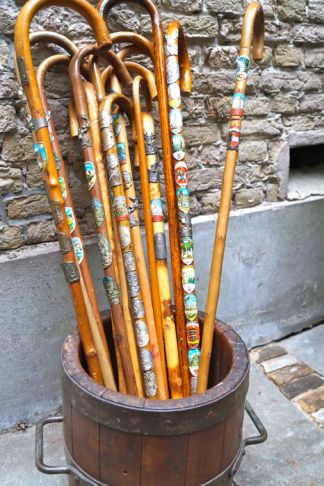
I am not a shell collector. I have a few by virtue of living near the water. And, of course, some I picked up on travels to Florida where the shells are beautiful. I do have an affinity for scallop shells, however. They are the symbol of the Camino de Santiago, the Way of St James. In medieval times, pilgrims would bring a shell back from the Atlantic to their parishes in France and Italy and other places as proof of completion of The Way. Today it represents the journey itself, both going and coming back.

So this morning I went for a long walk on the beach at Casey Key. I looked for shells on the same sands scoured by my friend Deb whose collection rivals that of anyone’s anywhere. It is phenomenal. But I don’t have her eye for shells in the sand. Part of that is my mind wanders when walking. It always does. It takes me some time to adjust from a normal schedule during a normal week to a non-schedule. 

Which is why this morning I halfheartedly wandered along the waterline, picking up and tossing back broken shells, paying more attention to the water sliding past my ankles and out. I was thinking more about an essay I’m working on for a reading later this week. It is about the floods of eastern Siberia when Michael and I were there, and the possibility of the tracks being damaged by water on our way to Vladivostok. Often, I work on essays while walking, finding the digression, trying to extract the predictable.

I’m not alone in being distracted at the beginning and end of vacations, trips, retreats. The first few days we often worry if everything back home was taken care of, then we concern ourselves with the new routine of not going to work, not returning calls, not checking email. Eventually, we settle in to simply enjoy the passing of now. But then toward the end we bend back into leaving, thinking about the “week ahead,” about what is waiting for us and piled up while gone. So the “vacation” days designated to the middle often don’t amount to much, but they remain the time we need; the value in taking off our armor and being ourselves, completely in the moment. 

So I let go. A dozen dolphins swept past and kept me in that moment for quite some time, the way they break the surface, the way one of them was a spinner, the way their return to these waters indicates the dangerous Red Tide is dissipating.

And I found a few shells. The best way to describe them is as small conch shells—really tiny ones, about two inches long. Most of these, when I do find them, have cracks or wide holes, but a few were in tact, survived the pounding waves and undercurrent. The shells themselves are simply the outer body part of an animal that has died and the soft parts of the animal have been eaten or decomposed.

Shells themselves have been used as money since the 13th century BC, and in some places such as West Africa, were still used that way well into the 20th century. A woman’s dowry would often consist of shells.

Hindus used left facing conch shells to hold holy water, and right facing ones are one of the eight auspicious symbols sacred to Buddhists. And of course shells have been used as tools and utensils for tens of thousands of years. The ones I have collected I’ll put on a bookshelf to remember my walks along these beaches.

The dolphins returned, and pelicans as well. A few dozen sandpipers chased each other in unison and the waves picked up out in front of Hurricane Michael off the coast of Cuba moving up into the Gulf and headed north just to the west. Post-hurricane high tide should mean fine shell searching.

When my own Hurricane Michael and I were in Spain, we wore the scallop shells on our packs. Painted in the center of the back is a red cross of St James. Today it sits on a bookshelf near my journals of that trip, and when I glance that way I recall cafes, walking through Galacia, or climbing the Pyrenees. The shell is an icon, a window to those times.

I knew I was moving toward leaving the Key when my mind shifted again toward Siberia and floods, the rumbling of the train, and the reading I have this week in Tampa. I’m not sure the essay is ready, and I need to print it out, and I hope the hotel in Tampa has a printer. Small thoughts, premature thoughts, seeping into the end of my walk.

Maybe that’s why the shells—they’re objects from the middle when I was still focused on shape and color, texture, water running up my calves. To me my friend’s collection represents more than the beauty and miracle of nature, it symbolizes retreat, it stands as her way of being in the moment. 

Perhaps writing is my way of collecting shells, albeit in the shape of stories.

I think that’s what’s missing in the Siberian piece. The water running up the tracks, the texture and color of the river beneath the rails. So often the trip is about being in motion, rolling along, eating, drinking, talking to people and watching the landscape; but during the floods we were focused on the here and now, the unknown and unpredictable. We didn’t know what we would find; we really had no idea what we might find and we kept eyeing the waterline and waiting.

FullSizeRender

Of the questions of these recurring


edged-path

I am slowing down, and it feels good and is about time. It is, in fact, precisely about “time.”

James Taylor was right: The secret of life is enjoying the passing of time.

Like everyone else I’ve ever known I’ve been excessively guilty of being caught up in the swirl and turmoil of life: the conflicts at work, the bills, the inundation of news, the negativity, the road rage, the “endless trains of the faithless, the cities filled with the foolish.” And I had mastered the art of adjustment. That is, I managed to dial-up my stress tolerance to accommodate increased worldly distraction and anger. In fact, the level at which I managed to maintain sanity despite the stress could have exploded the heart of a younger me. We don’t see it happening, do we? The slow dripping of tense interaction in the news and conversations makes its mark only over months and years, so that the only way to recognize how crazy it all became is to step away long enough to say, “I don’t even recognize who I’ve become.”

That was me; guilty.

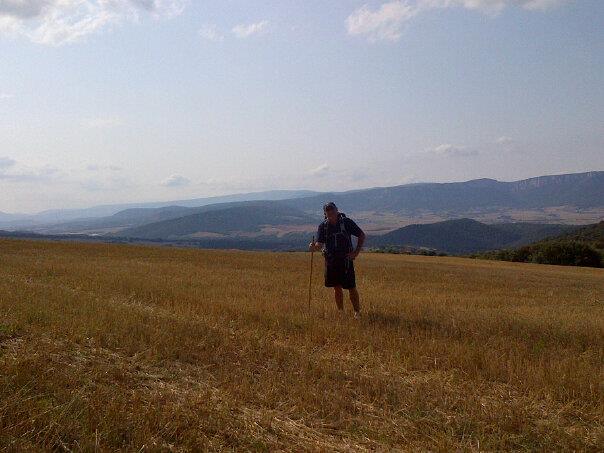
My slow erosion of anger and anxiety has occurred in several stages. First, there was Spain. The pilgrimage for a month across the Pyrenees with my son at three miles an hour taught me to let go of nearly all possessions, worries, and regrets. “Simplicity” became my ambition, and I achieved it in some small way. But of course, out there, in Basque country and Galacia, it isn’t difficult, when all we had to do all day was walk, talk, meet people, stop in cafes and chapels, and let go of life. For all my worldly ambitions, I knew then I could live like that forever.

But I came home.

It didn’t take long for work issues to seep back into my psyche and anger to swell my attitude. The ridiculous often dominates our conversations and conditions, so much so that tunnel vision takes over and suddenly all that matters is one particular, otherwise irrelevant battle. We sacrifice the big picture because we get caught up in the whirlwind of small, pathetic quarrels.

I needed to let go again.

Now I spend my time working for what I need, which as it turns out isn’t nearly as much as I thought and yet seems more than I could possibly want. In the last several years I’d focus on the goal—in writing projects I simply wanted it done, in journeys I simply wanted to get there. Now, the journey itself is the pleasure—creating the work, making the trip. I stop and get out now, look around, meet people, and take it in, take control of the clock instead of being dictated by it. I’m heading to Florida next weekend—I have no idea how long it will take to get there. People ask, they say, “What is that, ten hours? Eleven?” I think yes, that sounds about right—or it might be two days. I’m not sure just yet.

You see, I’ve done the math. I’m fifty-eight-years old. In twenty years I’ll be almost eighty. Twenty years ago seems like a blink; twenty years from now feels almost fleeting. I’m not becoming regretful or melancholic or depressed; I’m really not. I’m becoming aware of the passing of time, and I enjoy the world more because of it.  

Honestly, it isn’t difficult to see what’s essential. One of my heroes is my sister. She was handed a short straw with Stage Four Ovarian Cancer, and she kicked it in the teeth. Five years remission and going strong and gaining momentum, and all with a quiet determination I’m sure she inherited from our mother. Some people “slow down” because they see the mortal exit ramp and would prefer to coast, but some people, and I count myself among them finally, slow down because we don’t want to miss anything. We want to enjoy the passing of time and not miss it by focusing on time passing.

When I was in college I once carved a pumpkin. I was on a retreat over a weekend which included Halloween, and a friend of mine and I decided it was time to carve a pumpkin, only it took us five hours. It was a huge pumpkin and slowly and methodically we approached it from all sides, making designs, slits for light, holes for depth, we became sculptors and monks, carving and contemplating. When it was done at some ridiculous a.m. we inserted a handful of candles and woke everyone. Not a single person minded—they all sat around talking about the pumpkin and suddenly we were telling stories by pumpkin light, sharing fears and hopes, out in a cabin in the woods somewhere. I remember it still, and that was two times ago the twenty years ahead of me. I had forgotten all about that pumpkin until today, sitting on my porch and slowing down my heart rate, slowing down my mind, trying to adjust the pulse of the planet around me.

I used to believe I needed to not only be a part of some race somewhere to prove to myself I am alive, but I needed to be “winning” at something, whatever that means. But now my pilgrimage has taken a different path, a new pace.

I think I am starting to master the passing of time, and it reminds me again of Whitman:

                  The friendly and flowing savage, who is he?

                  Is he waiting for civilization, or past it and mastering it?

f192fd82-b58a-4c51-b6c8-1e2609a4dd3b

Soon, Three Years


How-to-drink-scotch

When we are kids we look at our parents shirts, or their legs. Sometimes we look at their hands, especially if they’re holding ours. We notice the knuckles and the lines running under the cuffs and into ages ago. We simply don’t spend a lot of time looking up. Maybe it hurt our necks, or perhaps the brightness from the sky or the sun or the fluorescent lights in the store ceilings deflected our attention, or maybe the vague sense of repetition kept us from bending back our heads too far.

I can tell you most of the details of my father’s eyes and face in his later years. I can describe with precision the curves in his chin, the rollback of his neck, his deep eyes and his pronounced forehead bearing the lines of nearly a century. Without a glance toward a picture I know the sunspots on Dad’s face; the doctor’s mark; the slight, tight curve of his upper lip and the forward position of his reading glasses as he sat in his chair and leaned toward the light so he could read the paper.

But I don’t know much about the determined look of his younger days, when I was a toddler, and even a young man. I never noticed the intensity of his eyes when leaving for work, or the joy in his eyes watching his favorite teams win when he brought us to baseball games. I can’t describe the pain or pleasure of life when he still had life in his eyes. I didn’t pay attention.

I never asked my dad what he did for a living. I mean I know what his occupation was, but I never inquired about his day, about what took place. Part of me was too busy growing up or playing with friends, and part of me didn’t want to bother him after he had been doing it all day. But those are adult responses when I wonder why I didn’t ask, and the truth is I probably didn’t care. He did his thing and I did mine. His thing made my thing possible but even that was too complicated to contemplate. So when we talked we talked about baseball, or golf.

We got a long absolutely fine. We just didn’t talk because of our circles. My circles crossed paths with friends, sometimes with siblings, often with my mother. His circles crossed paths with colleagues, my mother (rarely at the same time as me, except for dinner and weekends), neighbors. This was old school; this was adults being one generation and the kids being another, between them one of the biggest abyss’s in American history. It was no big deal, at least not in our home. But I never asked him about his day, what he did all day.

I just figured I wouldn’t understand or if I did ask he’d give a quick, often funny response. I think you have to be a parent to understand what kind of child you were. You need a basis of comparison that goes beyond the parent-child relationships of cousins or friends. It has to be later, years later, when you understand what he would have wanted you to ask, what he wished you had shown interest in, how close—or not close—you were. Turns out we were so much closer than I knew but I never asked.

When I was a teenager, two days a week I got to keep my Dad’s car for the day. The trade off was I had to bring him to the parking lot where he met a colleague by seven thirty in the morning. He never lectured me about what I could and couldn’t do that day, where I could and couldn’t go.

We’d get to the donut shop early on purpose, and he’d have coffee and a plain donut and I’d have juice and a chocolate one, because we liked routine because routine keeps things simple and keeps things from changing too quickly. Like our routine for years at bedtime where I’d say good night and he’d say to sleep tight, and while I really never knew what that meant, to sleep tight, I couldn’t imagine going to bed without hearing him saying it. He’d tell me not to let the bed bugs bite which somehow seemed creepy but again, to not hear it meant certain devouring by whatever it was he was talking about. I can still see him in the doorway, the hallway light on. “Don’t let the bed bugs bite,” he’d say, and so they wouldn’t.

At the donut shop he’d watch the news on the television above the counter and eventually we left for the parking lot where his colleague would pull in just as we did, always. Their timing was phenomenal. He’d say to have a great day and to pick him up at five, and I’d drive off before he had a chance to walk to the other car. Maybe I was late, or maybe I was afraid someone I knew would see me, shattering the illusion it was my car and not my dad’s.

But I liked that routine. It became Scotch in his later years, like clockwork, but it was the same thing. We’d sit with the television on and know the other was there, which was in itself the purpose of the routine to begin with.

Yes, in later years on Tuesday nights we drank Scotch. Dad always like J & B, an inexpensive blend he probably first drank and therefore a taste to which he grew accustomed. On occasions he drank Chivas, and a few times he had a bottle of Edradour in the house. Routine is important and on Tuesday nights I’d get there about nine and was no sooner in the door when he’d say, jokingly, “My coaster seems to be empty,” or something similar with a laugh and a welcoming smile. I’d put my things down and say I’d get some, and he’d say he was just joking and he didn’t mind getting it at all, which he always enjoyed. He would walk in the kitchen and I could hear the cabinet and the ice and the heavy bottle he put back in the cabinet, never leaving it on the counter for more because we never had more. He’d return steadily and slowly and hand me my glass and we’d raise them to toast and he’d say, “Well,” nodding his head politely, and I’d interrupt and say, “to your health,” to which he would again nod and with his deep voice reply, “and to yours.” Then we’d watch baseball, not really talking much. It was late. He sipped his Scotch.

But I preferred to pour the Scotch. I hate Scotch. When I poured the Scotch and he sat in his recliner, everything was the same but instead of Scotch in my glass I would pour water. His eyes had faded in those last few years and he wouldn’t have noticed the tint of my drink. And anyway, it wasn’t about the Scotch. We sat together a long time and he would turn once and say, “Boy that is good, isn’t it?” and I’d agree. Sometimes I felt guilty and would pour some for myself as well, but usually only when it was the Chivas or Edradour or another fine single malt. It always made me tired, but he always would be the first to head upstairs to bed. Then I’d sit quietly for a while glad to be able to sit in peace, but the next day at work, or walking across a parking lot, I’d wish he had stayed up longer even just to sit quietly. I’d be sorry he went to bed and promise myself that the next Tuesday while drinking Scotch I’d make more conversation, talk more about the game or about my day or anything really, since he wouldn’t have minded. But the following Tuesday would come and like clockwork I’d be exhausted and silent and he would get tired and go to bed.

He aged well, my father, and sitting with him on Tuesday nights was the purest time I had during those days. When I hear ice in a glass I can hear his voice and sometimes I can turn it into a laugh, but usually even that fades to a slow, soft sigh.

A few years after Dad retired I’d bring his toddler grandson to the mall to meet him and walk around. Nothing could distract him from walking around at the top of three generations. Dad’s smile exploded with happiness when he watched his young grandson grow more excited as we approached the toy store, or when we stopped for ice cream and Dad would pretend to lick some of my son’s cone. The two of them would laugh hysterically until my son offered him an actual lick, always refused with a string of thank you’s.

Once my son and I walked around alone and then saw Dad sitting on a bench, taking a break. His face lit up, of course, when this small boy ran up to him. I always wished that had happened more often. We did meet him many times to walk the mall, but it always felt more exciting when it wasn’t something he was expecting, as if an ordinary day of routine was suddenly cracked wide open by this small but exciting surprise. I can’t think about that too much, about not doing that more.

I think the spontaneity of unexpected meetings made it more like his youth, or even mine, when siblings or cousins and countless friends lived within a few blocks of where they all grew up. Visiting was normal, and running into each other at the grocer or the hardware store, or later the mall, was an ordinary occurrence. I believe Dad missed those times, and seeing his grandson that afternoon was a beautiful mixture of possibility and recollection.

The three of us spent a lot of time walking around various locations together. The food store between our houses, the cul-de-sac at the end of Dad’s block, to the river at the back of his property where they’d hold hands and be equally thrilled by whatever nature they discovered together. Once we went to a golf extravaganza and my son and I watched Dad in his glory putting balls and swinging drivers. He told his grandson to pick out a dozen golf balls for himself as Grandpa’s treat from six or eight huge crates of various balls. Dad explained the difference between the ones which said “100” on the side and those which said “90” while his grandson dug deeper for another ball with Garfield on the side. They had separate agendas but one memorable afternoon. Golf was at the heart of many times together.

But when we met Dad at the mall, I would hang back as we walked, so it felt to both of them like they were alone. They discovered the stores together and Dad always allowed his grandson to pull him into the ones he wanted, namely the toy store or the bookstore. Dad bought more than a few books on those visits.

Somewhere in my attic is a box of books from those days. I am glad we kept them, but I have no idea why, and I have no intention of looking in the box. Someday, perhaps, but not soon. At some point my son will take those books with him—I am sure of it. If he has children, and I sit somewhere to read to my own grandchild, I’ll picture some inconceivable moment in the past when my father and my son laughed hard together turning the pages, and I’ll think about the passing of time and the persistence of memory.

I’ll remember donuts and orange juice. I’ll remember the time he took me to Jolly Rogers Amusement Park on Long Island when I was a child—just the two of us—and he let me have whatever I wanted to eat. I’ll remember the Scotch, his deep voice, the subtle laugh.
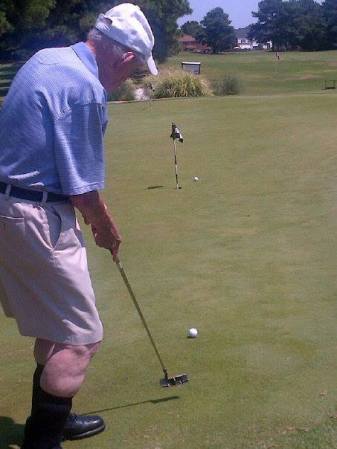
My memory is not nearly as strong as it was even not so long ago, but I’ll remember forever my son and my Dad on a putting green the last time he ever held a club in his hand. Dad sank a twenty-two-foot putt, and he didn’t smile so much as smirk, as if to say, “Of course it went in,” and then laugh out loud at the joy of the sound of the ball in the cup.

11145166_909732039093731_1191096712032760981_n

Witness

maxresdefault


Norton Hurd stood behind me in line at the store yesterday. He put his hand on my shoulder and asked how my son is doing. Around the village I am “Michael’s Dad.” We talked for a bit and then discussed Hurricane Florence and how it missed our waterfront community.

“We were lucky,” I said to him, and he agreed, saying he was happy for everyone in our area but worried for those in the path. Then I asked which hurricane was the worst that he had experienced in this area. He didn’t hesitate.

“That would be the one in ’33.”

That’s 1933. Norton was 17 at the time. Norton Hurd turned102 years old today.

In the 1940’s, he founded Hurd’s Hardware in Deltaville which is where I do a lot of shopping and where he goes to work every day. He studied history at Lynchburg College during the depression, and while there he played tennis, baseball, and basketball, landing in their Hall of Fame.

During World War Two he trained pilots in open-cockpit planes in Minnesota, and then traveled to Guam onboard the Wasp as one of the “Hell Razors” and was in the first group of planes to bomb Tokyo. On one flight one of his engines failed and he ditched his plane in the Pacific not far from the Wasp, and he was rescued and awarded the Distinguished Flying Cross.

I offered to let him go ahead of me but he nodded and said no, he wasn’t in any hurry. Just on his way to work.

When he returned from war he figured everyone would need appliances so in 1946 he opened the store.

“You live down that road had the tavern on the pier. Chowning’s place. I used to go there when I was young but the storm destroyed that. Did you know about that place?”

I did. Back before the storm and when the steamboats still ran up the Rappahannock River from the Chesapeake, jettying out into the river from the end of the road in front of my house was a pier with a restaurant, along with other facilities.

That was the year my mother was born. FDR was president. Norton was 17, had just graduated from Syringa High School, and was headed across state to college.

The year he was born President Woodrow Wilson was trying to end World War One; Czar Nicholas the Second was still very much in power; German Zeppelins bombed Paris; Pancho Villa invaded the United States; the Cubs played their first game at Wrigley Field (then called Weegham Park); the Easter Uprising against the British occupation of Dublin; Ernest Shackleton is stuck in Antarctica; Lenin declares Imperialism is caused by Capitalism and begins his climb to the rule of Russia.

Penicillin didn’t come along until Norton was twelve.

The irony of him being a history major is that, to me, to us, he is history, he is witness to the most brutal and powerful and awe-inspiring, and sadistic century in human history. I stood in line in front of someone who was my adult-son’s age when the Japanese bombed Pearl Harbor. I just retired from a three decade career teaching college, after spending a decade bumming around the country, and this man is almost twice my age; forty-four years older than me, and he is on his way to work.

And he is fine. Absolutely fine, running just ahead of time, outlasting countless “End of the World” events. He has patience. He has paced himself perfectly. He has all the time in the world. He missed the first flight just south of here by only thirteen years.

Some people make us stop in our tracks and realize what is important; what is essential. Norton does that every time I walk into Hurd’s Hardware and he asks if he can help me find something. One of these days I’m going to say, “Yes, actually. The meaning of life?”

Some people should live forever. He’s one of them. Some people spend their lives in such grace, such kindness toward humanity that I wish they would just keep going. Norton’s one.

There are others. People who don’t study history or make history but actually are history, colleagues of time, adding such peace to the human condition that it is cruel for them to simply no longer be.

Charles Schulz is another. Dr. Seuss. Francis of Assisi. People who not only do not bother anyone, but they dedicate their lives to making our lives simpler, more endurable, more aware. I wake up when I’m around Norton.

Pachelbel is another. Cousteau. Andre the Giant.

Sometimes the good don’t die young. Sometimes they stand as a measure to all we can be. And I’ve been studying the history of these people, and I’ve noticed one common trait: they all make people feel better about themselves and the world. They all give more than they receive.

I’m heading to Hurd’s tomorrow. I don’t know why. I’ll find something there I need.  


dp-pictures-a-look-back-hurricane-1933-20140703
After the “Great Hurricane of 1933”

Integrity vs. Crazytown

all-the-presidents-men-9781416527572_hr

I’m teaching two non-fiction, critical thinking, research-focused seminars at Old Dominion University. It is a favorite of mine for the convergence of creative non-fiction writing in the vein of Truman Capote or, to a lesser degree, Tom Wolfe without his fabricated presence in events, and journalism in our attempt to establish credibility through in-depth, valid research of indisputable sources.

I asked the students, all roughly nineteen-years-old and more attentive than any students I taught at other local colleges, what drove their interest in the course. The answers varied from “my advisor told me I had to take it” to “my professors in the science courses don’t like my research or writing.” One student asked what inspired me to pursue classes like that when I was in college.

Don’t you love good timing? I absolutely love excellent timing.

I told them I was sixteen-years-old as a junior in high school and required to read some books which intrigued me, including Electric Cool-aid Acid Test, In Cold Blood, and, most notably All the President’s Men about the Watergate debacle which had occurred just a few years earlier. I told them I continued that interest into college where classes like this were standard for journalism majors. And while the world was just starting to fall in love with the works of Stephen King, my writing heroes were two men in particular—Woodward and Bernstein, the Washington Post writers who brought down Nixon and his henchmen. In fact, most of the communication majors at college admired the integrity and thoroughness of these journalists—other grads like Neil Cavuto and Dan Barry taking the lead of our seasoned professors to insure nothing—absolutely nothing—can be challenged.

All the Presidents Men was published forty-four years ago, and since then not one single aspect of research or information Bob Woodward has published has been shown to be wrong. What he brings to the table in his half a century as a journalist is the indisputable reputation of being right. He doesn’t rely upon editors to check his work for accuracy—though of course they will—he does that work before it reaches their inbox. His meticulous attention to detail through the years has resulted in a trust of the information he provides. That’s what you’re shooting for, I told them. That’s what you want professors to think when they pick up your essays and research projects: “Oh, this was written by Jane Doe, I know this will be accurate and thoroughly researched.” It affects your grade, it affects your letters of recommendation, it affects your job placement.

And that’s why despite the dozen or more books about djt which have been released and scrutinized and argued in the past two years, this is the first one which terrorizes the president, his confidants, and his lawyers. This isn’t Kitty Kelley with her spurious accounts of goings-on in the lives of her subjects. This is Bob Fucking Woodward. This is the voice of everything journalism is supposed to be, and is.

In every generation, it is said, comes a writer who makes everyone pay attention. Woodward is well into his third generation of readers. Never doubt the power of an accurate story or two. 

Watch the news, I told them. Something’s about to happen.

download

Well Before Dawn

1712071712078304

I am drawn toward the early morning hours of dawn, when I feel ahead of the world, and I can sense some small whisper of…what….hope, I suppose, or wonder maybe. To hear life around the river in those moments motivates me, awakens in me possibilities which otherwise lie dormant. Before the sun rises, often just after the first sliver of light reaches up across the bay, I can hear osprey and other sea birds who at that hour never seem to mind my presence.

But earlier, when that glimmer on the eastern horizon is still merely a possibility, I have taken to walks by moonlight, sometimes not even that. In the woods where I live and down along the water, something is going on. There is life out there wide awake and moving through the dark hours like spirits who need to finish their errands before the sun gives them up. Like sneaking up on some grand behind-the-scenes operation, or suddenly discovering the dark web and meddling around a bit, those hours when the rest of our lives are at rest, motionless, recharging, the world around us is in full swing on the midnight shift.

Generally, this happens for me just before the wild life around me packs it in for the night; just before I watch the horizon for illumination.

Fox come about the edges of the woods looking for scraps of food or the peels and rinds of bananas and melons. I can stand patiently off the side of the drive and one fox will wander across the yard from the woods behind me to those on the south and stop before disappearing again beyond the laurel, and he will stare at me, relaxed, nosing around the base of a tree I occasionally put food. Then he’s off—not swiftly or in fear, but nonchalantly, demonstrating that he lives here as well and has decided to stretch his legs. That’s all.

Owls, too—some barn but mostly screech owls, perch in the oaks and elms, sometimes swooping down and moving through branches with precision. But my favorite are the geese which cover the night sky in flocks sometimes so enormous the swoosh of their wings alone creates a breeze, and their call to “Go! Go! Go!” is startling.

Closer to home, out front near the edge of the trees, deer nearly always feed on the dew-soaked grass and often the hostas, and if they sense me sitting on the porch or standing in the clearing, they will look up, briefly, ears turned forward—just for a moment—and then return to their grass, not minding me, aware just the same.

And it is then, when I am well acclimated with the night and my eyes have adjusted, and my soul too has adjusted, that I think of my way in the world, the motivation behind the turns and hesitations, my purpose of this passing in time. Oh, do I ever have an internal monologue underway with others gathered in my nocturnal imagination! There’s one friend nodding his head and insisting I follow my own path. I can hear him clearly when I’m out there, see his small sardonic smile as he says, “Come on Kunzinger. You know how to do this, stop waiting for approval or it’s never going to happen.” And there, too, is another friend whose smile is as wide as dawn pressing his sense of adventure into my spirit with an “all or nothing” carelessness about him which brings me up short yet livens my ambition. In one brief moment I am eased by no longer thinking of them in the past tense, but just as quickly, we all move on.

And sometimes sitting there on one of the benches is another friend, subconsciously rubbing her neck and looking at me with wide brown eyes saying, “Someday I will,” and then laughing and repeating, “Honest, someday I will,” and it makes me sad, deeply sad like liquid, but that moment too passes.

And then the distance across the reach lightens ever so slightly, from dark, almost Navy blue to something slightly more pale, like powder, and I’m alone again—the fox rushing off into the woods, the geese at rest in the harvested field or at the river’s edge, and the murmurs of chickadees and wrens and cardinals chase away what’s left of the stillness, and even my friends bow off, and I have trouble separating memory from imagination. So I go inside and wake my son so we can head to the bay to catch the sunrise.

It’s as if time lets me manipulate her however I wish just by heading outside at just the right moment; as if time has been neglected, ignored, or taken for granted, but for some of us who stay up late or get up early to gather as much out of our moments that we can, it offers a small reward, and I can bend her ever so slightly. Then, just briefly, it eases the almost vague pain in my soul which gathers around loss, which surrounds emptiness, and which almost always seems to visit during those late-night hours.

But predictably and somehow simultaneously surprisingly, dawn returns with that hope I need and says, “Wait, watch. Just watch.”

10925477_10205414237302847_5616740111726914403_o

To Plant a Garden

…is to believe in tomorrow. –Audrey Hepburn

13133182_10208384568959282_830887679397207826_n

In the garden the peppers gave up for now, yielding enough to cover their cost, making them worthwhile, of course, for the fresh taste and the seasoning of satisfaction.

The cucumbers, too, have let me know they’re growing weary, pulling it together enough to hand over a few last small ones, but their withering leaves and the absence of new growth announce it’s time for me to head to Merryvale in the village to get the vegetables.

The tomatoes were the blowout. Early on I harvested bowls of cherry tomatoes, but they grew smaller and more tart, and now they seem to be spitting out just one or two here and there from behind brown vines, as if to say, “Wait, here’s another. You might as well eat it here. No point in ‘gathering’ them.” I haven’t yet done the accounting on the tomatoes but in the end each one might have cost me more than I care to admit. It reminds me of the man who grew a garden and kept an accounting only to find out each tomato cost about fifty-four dollars.

The eggplant win. I only had four plants, and one of them was behind what turned out to be a snake-sunning spot, but in the end, I harvested a whole bunch of eggplants, and while I can only eat so much of the stuff, it is rewarding nonetheless, which is why a garden to begin with.

I like taking from the earth—harvesting fruit and finding soil beneath my fingernails, the dirt under my feet, the unmistakable aroma of tomato vines, and cucumbers. I start the season with visions of baskets filled with big, ripe tomatoes, a row of peppers of various colors next to the bowl of string beans, which it turns out deer rather enjoy. Clearly reality digresses from the virtual image, but I never tire of spending time back there, behind the shed, noting the heat and feeling the hot sun on my back. There is always a buzz of flies and the occasional sound of a bee, and when I go back inside I have a sense of abandonment if I don’t get back there soon. And sometimes there are storms, downpours, but even in the rain—sometimes especially in the rain—I enjoy the peace, the absolute presence, of the garden.

It gives so much more than fruit. I have worked in my mind on more than a few writing projects there, and worked out some worries, burying them forever beneath the mulch and compost. I don’t listen to the news there, and I stopped listening to music. I prefer the eternal sensation that I am gathering from the garden in a fashion not unlike Thom Jefferson, Voltaire, or Cicero, who said if you have a garden and a library, you have everything you need. I spent my Sundays out there not in conversation, but consultation with George Bernard Shaw who said, “The best place to find God is in a garden; you can dig for him there.” And, of course, Monet, who said, “The garden is my most beautiful masterpiece.”

It is art. Writing is not unlike the work in the soil outside. The high hopes before starting, the impatience, the need to weed and prune (Hemingway must have done a lot of pruning), and water. If we give well to the garden, it tells us stories, it feeds our imagination and seasons our lives, deliciously. Someday when I can no longer tend to the plants and vines, I’ll long remember the sun on my neck and the feel of taking a tomato or cucumber off the vine and resting it gently in the basket, and then its sweet taste that afternoon.

And I hope the garden remembers me. I wonder if someday when someone else clears out the area to garden, or even perhaps build, or plant grass, when someone has long impressed his own identity on this land, will some piece of me stay behind? Maybe someone will find an old rusty wire from the bean vines, or the rotted-out bottom of a basket I left too long in the soil one winter. Maybe someone will find herself humming a tune I left there in the spring air while turning over the ground for lettuce and squash. We try hard not to leave our mark in nature, allowing it to remain its trusted and pure self, but a part of me prays that if someone excavates the area that used to be “my” garden, he will find some inspiration.


Dr. Russell J. Jandoli

jandoli
Dr Russell J. Jandoli–he would have been 100 August 16th

The first class I ever took in college was Media Law and the professor was my advisor, Dr. Russell Jandoli. He was one of the reasons I went to St. Bonaventure. This seasoned journalist had worked with everyone in the business and did his time with Stars and Stripes. He introduced me to the work of Ernie Pyle, and spent several hours with me in the basement of the library talking to Fr. Ireneaus Hirscher, who had known Thomas Merton, and we talked a long time, the three of us. On the way back to his office his simple comments about what to listen to and what I clearly wasn’t paying attention to helped me through all the writing courses at the college.

Dr. Jandoli would have been 100 years old Thursday. He seemed older than his years even four decades ago, yet had a laid back way about him that indicated he could handle, and probably had already handled, anything and anyone. He was a gentle man; a pure soul who was straight out of central casting for old time journalists. The first class on my first day in college, Dr. Jandoli walked in, called roll, and said quietly, “There’s no such thing as objectivity. It doesn’t exist,” and walked out. We sat quietly for a few moments until one student walked to the window and looked out and saw the professor walking away. “He’s gone!” he said, and we all walked back to our dorm rooms.

He caught my attention.

The following class he told us he didn’t want that information—essential for journalists—to get lost among all the other information we had no intention of remembering or caring about.

A few years later he was very sick in the hospital. When I visited, he told me that teachers talk too much. “We have two hour classes for one hour of information,” he said. “No wonder everyone stops listening.” He believed writing did the same thing. “Too many words. Your essays need to thin out as you rewrite. Leave some words behind as you go.” It was like sitting on a hillside with some prophet—his legs crossed, a long beard, the strength of ages in his straight and sturdy back. Instead, Dr Jandoli’s fragile frame lay eroded and weak in a hospital bed. We talked about things I was writing and then we sat quietly for a few moments before his wife would come and chase me out. Then he laughed and said, “Mr. Kunzinger—leave death for the poets.” His skin was transparent, and his once keen eyes that stared at ages of students from behind thick black glasses sunk subjectively into darkness.

He recovered from that stay, of course, returning stronger and then retiring. Just a dozen or so years later he wrote me a beautiful letter when a colleague of his and a friend and mentor of mine, Professor Pete Barrecchia, died. It was a beautiful letter, precise and deep. Those two were the journalists who set the pace, established the essential integrity necessary for the Fourth Estate to exist at all. And as a teacher he was the type who quietly demanded attention when he talked. He was the professor who we didn’t take advantage of simply because we couldn’t live with disappointing him.

Every time I write an editorial for the paper or a piece for a journal or magazine, I think of him, can see his deep, humble, and cunning smile. I think I moved away from journalism and toward personal narrative because I understood too well how difficult it can be to remain objective. It was rare then, and today nearly non-existent.

Happy Birthday Russ. Your influence is still present, and more necessary now than ever before.

images