These Things We are Capable Of

download

We’ve been at each other’s throats from the start. Maybe it was land, maybe shelter. Most definitely food. But someone’s blood pressure went through the cave roof and instead of compassion we bred confrontation; instead of agreement, anger; instead of compromise, deep-rooted rivalries that most definitely predate the old testament with Ruth and her indecisive demands about parenting.

I have spent several hours on several occasions at the Medieval Torture Museum in Prague and have seen what engineers devised to make the pain last as long as possible. One contraption which looks exactly like a birdcage would be stuffed with a very-much-alive and kicking naked person whose crime warranted such punishment, and the cage would hang from  Charles Bridge until birds pecked the flesh from the bones, and nothing was left but carcass. This is real, this is while Magellan was at sea and Sir Thomas More was pissing off Henry the Eighth. Some of humanity’s greatest inventions came from this age, some of its greatest art. This is the Renaissance, moving into the Baroque era, and Vivaldi and Pachelbel would soon be composing. Bach. Michelangelo had already finished the ceiling, and Da Vinci’s David chiseled its way into the top ten list of examples of human potential.

Right about then, a woman for the simplest reason might have been put into a suit of armor filled with small holes and stood in the square with or without a helmet, depending upon her position in town (certainly a woman of worth would be spared exposure since friends might be in attendance at the piercing), and swords would be pushed through one side and through the body and out a hole on the other side. This, over and over so that a dozen or more swords had been used from all angles.

The one which made my blood run cold and my knees weak, though, was a frame about ten by ten, from which someone would hang by the ankles spread eagle, the hands tied in opposite corners at the bottom, looking much like an inverted image of Da Vinci’s Vitruvian Man, which, ironically, he drew at just about this time, and two men would take a huge tree saw, one on each side…

(Caution: What I’m about to write will make your knees weak. Skip this section if you must)

…and saw back and forth from the crotch down through the center of the torso until they reached the neck and the body fell to both sides, a mirror image of itself dangling from the frame. The person was so hung on the structure so the blood would remain in the heart and head keeping him/her alive for most of the ordeal.

These are our predecessors. The things they were capable of. We now have the technology to create the illusion we have improved since the middle ages. Spoiler alert: No, we are worse. If you base success on improvement, much as a student who doesn’t write any better on paper four than on paper one is not going to receive the same grade as given on paper one, than humanity, despite its leaps and bounds and small steps and giant leaps, is still making freshman errors. We put children in cages, we slaughter each other in deserts and mountains of the middle east, we all stand on the bridge to watch the violence unfold, we despise what’s different, we ridicule what threatens us, all the while praising ourselves for creating faster download speeds. 

Maybe it’s too much red meat. Too much caffeine. Not enough contemplative walks in nature.

We sapiens disagree over just about everything, and since humanity’s natural instinct is to survive and protect our own, fighting has been inevitable from the start in a world with more people than cultivated resources, more need than ability, more fear than communication.

It’s a shame how much potential we have squandered; how often through the millennia we might have refocused our attention on constructive endeavors. Across the Vltava River from the torture museum is the remnants of Charles the IV’s Hunger Wall, a stone fortress of a wall which at one time almost encircled the city in the 1400’s. It was built by men who were otherwise starving. Fearing insurrection and at the same time needing protection from outside invaders, he offered food for anyone who worked on the wall, plus enough for their families. A place rarely visited, nearly never walked. Everyone’s over in Old Town at the Torture museum. 

On the top floor is the rack. Yes, an actual, blood-stained rack–not a replica. They’re pretty big, and, yes, they can rip limbs apart. It was in the same room as the chair filled with nails facing up and out from every aspect of the seat and back, and the guilty party sat on it while a press was cranked into his/her chest, and while weights were set on his/her legs. Who designed this? Who swung through the 15th century version of IKEA and fumbled with the parts, directionless, and then tried it out–just a little, “say when,” and signed off on a successful dry run?

We did that. Us humans. The same ones who came up with penicillin and the printing press, the Last Supper, Monet’s Gardens, flight. We figured out how to transplant a heart, how to radiate cancer cells, how to calm a crying baby. Also, how to build gas chambers to eliminate an entire race, how to create one piece of munition with enough power to evaporate a hundred thousand people instantly, and how to find the rationalization to drop the damn thing. Us.

The brain is capable of extremes, of love so timeless that it seems created before two were born and saved just for them; and hatred so virulent that genocide becomes an anticipated act; murder a preconceived plan; road rage commonplace and almost laughable.

The view of humanity from an historic standpoint is disheartening. I understand the accomplishments, the “we can send a man to the moon” yardstick, the soundbite which entices us to really believe there isn’t anything that is bad in society that can’t be fixed by everything that is good in society. Yes, of course. But we’re behind the eight ball here, and apparently the great flaw of creation is that doing right is harder, suppressing anger more difficult, advancing more troublesome, than doing wrong or evil or even worse, nothing at all.

I wish we could just start over again. Give back that metaphorical apple and wipe out the sin. While most people still believe the myth that we use only ten percent of the brain (the truth is all of the brain is usually active and at work), our actions perpetuate that myth since they show we simply are not thinking.

The view of humanity is depressing and embarrassing, and I’m certainly no help. I’m of the category of those who are more likely to do nothing than to help, but right now that has to be a leap ahead of the countless lost souls doing harm, torturing our posterity. I at least hope I have a leg up on them.

So here’s a small contribution with a bow to the better angels: I can point to the east, early, and say, “Look. Look at that,” as the sun breaks the surface of the morning, pushing back the dark blue, unraveling hope, as it always has, and we can watch it together, share a glance of what Rita Dove says is “The whole sky is yours to write on, blown open to a blank page.”

80892057_10219703998937957_781853226633789440_o

Timber: 1. Growing trees 2. To warn of a falling tree

IMG_1546

About a mile from home is a beautiful horse farm, Fountain Green Farm, which stretches across Wake Road and is as beautifully landscaped as the finest ranches in western Kentucky. I’m not sure how many acres it is, several hundred at least. Beyond there had been beautiful woods surrounding a pond. The woods stretched for a few miles all the way from the same road around the corner clear through to Route 33/3, the main highway which runs from Deltaville to all points west (and north and south—this is the end of a peninsula, which etymologically speaking, means “almost an island,” so the road which runs past the woods is THE road which runs past the woods).

Hunters used the woods for a hunt club in deer season, and on any given morning or around twilight, deer and fox, raccoon and opossum in abundance hover at the edge of the road, eating grass or playing “scare the driver.” I’m not really sure what else lived in there. Snakes I suppose, but if you fly over the forested area you can see that the woods stretch pretty far to the west as well as from Wake Road to 33/3.

My point is, you can’t miss them.

Until now.

A timber company came through and sold off the trees, cut them down, left limbs and stumps and branches and arbor-carnage strewn across acres and acres, cutting right through to the west and south, ending at the entrance road over on Route 33, carved out for logging trucks to haul out thousands and thousands of oaks and pine and maple and walnut trees. And more. The picture above doesn’t show the length and width of this destruction. Look at it now. All the way to the right it dips down along a ravine and back up across small rolling hills not seen in the photo. To the left and out of the picture to the top the cleared land covered in wooded waste stretches along the edge of Fountain Green Farm clear out through the once-forest.

We’ve had a lot more deer on the property lately. Now I understand.

I want to put up lawn signs on the once-woods which say, “This is why it has been so HOT out” or “Did you even once consider the flying squirrels?” (it’s true; the area is full of flying squirrels). But business, you know. The timber company which owns the land was doing what everyone knew they were going to do eventually.

The thing is, for me, they decided to do it now in the summer of 2020. Political mayhem is worse than ever, Covid-19 is killing hundreds of thousands of people without any sign of quieting down, Australia burned, Kobe died, George Floyd was murdered, protests followed, a massive African dust cloud covered the country, an East African locust swarm, a northwest swarm of murder bees, and the list goes on. It seems every aspect of life has been shredded, with unemployment out of control, morons gathering in groups postponing our ability to fight Coronavirus, homelessness increasing, hunger increasing, suicide increasing, hope teetering on the edge of lessness, and violence has apparently become the new default position for police.

I turn toward nature for balance, for escape, for some centering so I can better handle what is already nearly impossible to handle, and it brings me some peace, it allows perspective, reminding me that the rocks and trees, the river and north winds do not care who is in office, who is in distress. Nature is steadfast, promising nothing but somehow reliable for its billion-year-old consistency and objectivity.

And the woods around the corner were just a small fragment of that nature, barely noticeable, hardly thought about while driving by. Honestly, I was almost always looking the other way, toward the river, the bay, across the reach toward something just beyond my sight. But now behind me, just over the hill, I can sense a hole, an absence, like an absent limb, or the memory of someone I love who is no longer with us.

By the time the remaining too-small-to-be-sold trees reach the height of those carried off over the course of three weeks or so, my son will be older than I am now and I’ll be, well, harvested.

Still, even the rocks erode ever so much with each tide and rainfall, and shorelines recede and floods change the direction of rivers. The earth is not finished, and nature has always survived our short-sighted greed. The trees can be cut down, of course, but long after the last foreman’s great-great grandson is no longer alive, the trees will return, again and again. And again. They’ll grow old like Redwoods and wide like sequoias, and some lightning strike will cleanse the area again, on her own terms. Until some sapling starts to rise. 

Humanity is impatient. Nature understands the value of persistence. 

It is why I turn to nature, toward the fields at Fountain Green Farm where horses graze in the mist of the summer morning, and toward the paths which run through Belle Isle State Park on Virginia’s Northern Neck, up along the Rappahannock River, and along the back roads of Williamsburg, where Powhatan’s people grew crops and tried like hell to survive, only to be cut down by greed.

Humanity will not let things be. It just might be our most dangerous, self-inflicted act of callousness. We just won’t let things be.

29598286_10214465686343416_2959516907664415271_n

This Familiar Heat

111727372_10221420920299918_4858245368168076758_o

It’s hot.

There is a heat index of 118. The un-humidified temp is about 105. Either way there is some weather going on here. I remember it being this hot without the “index” when I lived in the Sonora Desert and when I called my dad he would say, “Yes but it is a dry heat.” A dry heat–kind of like a blowtorch. 

The humidity is high, and breathing is difficult even without the mask.

This year already sucked. Now it’s hot. 

First of all, full disclosure: Depression is always not far from here, hiding behind trees when I walk the trails. It keeps me walking, though, staying a step ahead. Well, it’s been a hell of a walk these past two years, and I’ve found some balance in nature, even on hot days. Like everyone else most of the troublesome issues in my life are self-inflicted and the graces have all been gifts, so I find balance by going outside, scorching sun or not.

The heat doesn’t bother me. Nor the cold for that matter. In college in western New York the freezing temperatures were tempered by the dryness, and a ten-degree day might warrant a mere sweater, whereas the humidity here at the beach combined with cold temps can be to-the-bone bitter. In either case, many people simply stay inside.

But I have a strange routine: I like to experience and absorb every degree of the extremes. I long for the strong sun on my shoulders or, equally, the cold wind on my face, my boots crushing snow on the walk. As early as mid-July I sense summer slipping into cooler temps and changing colors. And while I might claim autumn to be my favorite season, I miss summer before it is even half over. It is as if it is the only summer that ever was and ever will be again, and I want to suck the marrow out of it, drain it of every ounce by my constant participation, let my senses explode from the enormity of the very reality of feeling summer happen. 

That’s borderline psychotic, I know. 

But listen, when it is hot we want it cooler, when cold we want it warm. When it is dark we turn on lights and when it is sunny we wear sunglasses. We constantly temper reality. My natural instinct is to dive deeper into reality. That’s not to say I want to stare into the sun, but honestly, that really IS where the fun is. It is familiar to me.

I rely upon the familiar, even if it is a steamy hot day. When I am not traveling, which is all the time now, I walk to the river and follow the same routine, barely noticing the weather most of the time. Twenty years ago I built this house frequented by hawks, the occasional eagle, countless osprey, and geese. In recent years the number of bald eagles has increased. I have never been complacent watching such majestic birds of prey in flight. One move of her wings and an eagle can glide on a draft clear across the river before turning east across the bay. Still, they make no sounds. Oh, sometimes hawks call out to each other in a very distinct high pitch caw. But mostly Eagles perch in silence. Their lack of sound creates a distance between us like strangers in a waiting room. Once I walked back from the river and saw an adult bald eagle atop the house. But because of the raptor’s silence and blank stare, we lacked connection, some sort of shared space.

Despite my own random migrations, I find comfort in the familiar. The sounds of nature as well as the voices of those I have loved and lost talk to me sometimes when I sit at night on the porch and recall long-ago conversations.

I am comforted by sound. 

In a world where we often seek silence to escape the never-ending noise, where we know we’ve disappointed those we love, when we can’t get our footing, when we taste self-doubt and don’t know what to do next, when we just don’t know what to know, it is the laughter of friends and companions that call to us through the fog of daily life and steer us home. The bells which I respond to are the sounds of friends laughing, family telling stories, a football game on television on Thanksgiving Day with the smell of turkey filling the house, an old western on a rainy summer Saturday afternoon. I love the daily calls of life, the drifting sounds on a hot summer evening, the persistence of the ocean waves, the relentless ranting of house wrens in the morning.

Wine pouring into wine glasses. Talking with my brother while waiting to tee off. The quiet sweep of the paddle while canoeing with my son.

Bacon in a pan in the morning. The laughter of old friends. 

Children.

28992680643_ae19b9a539_h

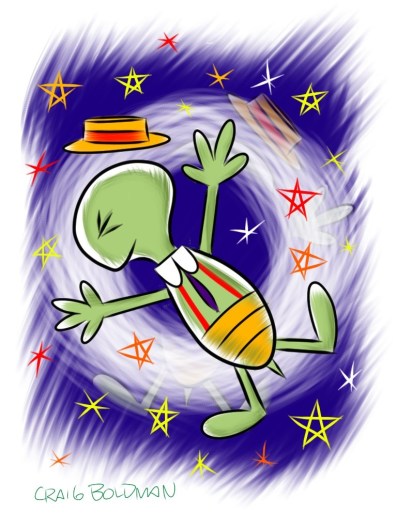
Tooter Turtle

photo-2-106-768x1024

I walked into the bar for a drink after leaving the college for the last time, the very last time; absolutely never again would I return to my place of employment after thirty years. I had parked at the bar earlier in the day knowing I would end the afternoon here. I placed my box of office belongings at my feet, all haphazardly tossed together, the remnants of what remained—some class notes, a half-finished manuscript, a biography of Wolfe, a volume of Hrabal’s Dancing Lessons for the Advanced in Age. Just as I ordered a coconut rum with orange/mango juice, a young woman and her shorter friend already at the bar said they wanted the same, that it sounded just fine, and it seemed the best way to celebrate their recent enrollment at the college.

The taller one raised her glass to her friend and said, “Here’s to yet another beginning!” and her friend added, “Done with four years in the Navy, now on to four years in college! Bring it on!” which is a phrase I despise for the sheer vagueness of “it,” a phrase that only by fractions beats out “Game on!” as annoying and overly bullish, but I did appreciate their vigor so I raised my glass, “Good luck” I said, and drank half my glass.  

“Do you teach at the college?”

I smiled and said, quite honestly, “No,” for the first time in six U.S. presidents. “But I used to back in what now seems like a long time ago.” These two new students who after serving in the military are still almost three times younger than me so I insisted on paying the tab to wish them well and thank them for their service when one of them politely asked if I had any advice to offer.

“No,” I responded, thinking about all I could say, all I could offer, all I could inform them of if I knew, I mean if I could even remotely be convinced that they would heed the suggestions gathered from a third a century of observations and engagements with traditional students and returning students and drop-outs and ex-cons and ex-wives and exceptionally misplaced students.

They turned to leave when the bartender refilled my glass and I said “Wait!” and I asked him to refill their glasses. They smiled and for the first time noticed the box on the floor at my feet with papers and desk objects and only then tuned in to the reality that I was on my way out, leaving the collegiate world, a world where the New Year starts in August, the collegiate world of three week breaks every four months, leaving the center ring where the main event between the timeless foes of idealism and cynicism battle it out on Tuesdays and Thursdays or Mondays and Wednesdays, leaving a world where I stared at eighteen-year-olds for thirty years, a world which never aged before my eyes

I smiled. “Advice, huh? How about I tell you one story, if you’ve got a few minutes.”

They sat on stools. I stood.

I talked: 

A student once threw a desk at me. I told him his writing lacked the depth he was capable of and he stood up and threw a desk at me. I don’t think he understood and I caught the desk, put it down and asked, quite firmly if I recall, if he had heard me. The writing lacked the depth he was capable of and he, of course, only heard “lacked,” and armed himself with furniture. Why is that? What is it about our inability to find the positive in criticism? I reminded him that he volunteered to seek my advice on his writing, he in fact paid for it, and he really shouldn’t be upset with me for offering my thoughts but upset he was, to be certain and he stormed out saying he was going to find a new professor who loved his work and then he stormed past me and out the door, a thick aroma of strong coffee behind him.

The class wondered if I was nervous and I said I was not, that I was more suspicious of the quiet one in the corner in the raincoat than the one who now has my attention, but his defenses were up just like so many students’ defenses are up ready to pounce on anyone who doesn’t say what they want to hear.

I sipped and stared at my box a long time. It was all starting to sink in. Thirty years. I try not to say what is the absolute cold hard reality of my life, that I never should have taught college, because I don’t want to hear the myriad responses from “think of all the lives you touched” to “but what opportunities it afforded you” to “but you…” and “but you…” and “but you…” but it is true. I stared at the box and thought, right then, and completely honestly, I never should have done this.  I looked at the two who suddenly seemed identical.

I continued:

I found him in the hallway and stopped him and said I simply had a few questions if he was smart enough to just answer them and then be on his way without any penalty for his previous actions. I think he was more upset that I caught the desk than from my unheeded advice, and he stood still, arms folded, eyebrows up. You answer a few questions honestly, and no matter what the answers, you are welcome to come back to class or I’ll withdraw you without penalty. He nodded.

Okay, I said, first: If I asked you to write five hundred words about yourself, about what drives you, what motivates you, what pisses you off—other than me—and what your passions are, could you do it?

I’m not writing no damn paper about…

I’m not asking you to do a thing you little punk, I said, I’m asking if that was the charge before you could you pull it off? And he looked up to the left, which is what we do when we think—up to the left to anticipate, up to the right to recall—and he said, yeah sure he could do that, of course.

So I said, okay, of course, I knew that, so second: If I said I’m going to ask everyone in the class to do the same, and the couple of people whose writing really makes me sit up and take notice I’ll give an A for the semester and I’ll help get published immediately, would you write better to be among that group of writers? And he thought again but said more definitively he absolutely would go that extra yard. His arms came down to his sides which showed me his defenses were down.

Okay, then, finally: If we actually did that assignment in class, the five hundred words about yourself, but the one person, the one piece of writing, the one work which made me wish I had written it, I’d give on the spot five grand, would your writing suddenly be better, would you put more effort into it for the five thousand dollars? And without thinking he said, yes, of course, raising his shoulders, throwing his body language into his definitive answer, and he said damn right the writing would be better, and he said he knew that for five grand he’d be able to write better than everyone else.

He nodded to himself and smiled at me, proud of himself, feeling somehow vindicated, feeling somehow throwing the desk woke me up to his wise and prophetic prose. I stared at him blankly for a long time, a long long time, and said, finally, with a sigh, There it is. I shook my head. Go home, I told him. You’re wasting my time.

He yelled at me, Wait! I told you I’d put in the best effort I could! What is your fucking problem now? Forget it, you’re out of your mind! he said and started to leave when I turned around and stepped toward him. He stopped.

I already told you the problem before you stormed out of the class. The work isn’t your problem, it’s you.

What the f…

You just said it, you just admitted it to me. You just stood here in the hallway outside a room where twenty-four students are dead silent listening to us, and you said you always could do better. You just couldn’t be bothered. Sure, if I paid you, then you’d put in the effort. But short of that, screw it. I have no room for anyone who can do better but doesn’t bother. I already told you—your writing lacks the depth you are capable of, and YOU just told ME the exact same thing. Go home. I’ve got serious students here and you’re in the way.

The three of us finished our drinks. They waited for me to continue. They said what a crazy dude he must have been and asked what happened to him and was the writing good and did he return to class and was I scared and all the obvious, shallow, thoughtless questions people ask when they miss the point, completely forgetting they had asked me for some advice. At first I thought how even the punk got the point, but instead I just laughed to myself and wished them well, and added, “Oh! Advice, sure. Be just what you is, not what you is not. Folks what do this has the happiest lot.” They just stared at me. 

I picked up my box and left. 

I put the box in my trunk and looked back at the college and sighed. The sun was setting and cars moved out of the campus while some drove into the parking lot, the endless cycle of registration and graduation, the comings and goings of those majoring in mediocrity, seeking their degrees in convenience, and I felt a wave of fear. I knew, I mean I knew with complete conviction, that those close to me will never understand. I stepped off a cliff, knowing at the same time it was either walk away quietly or die quietly. I still hope the ones I love understand but so many have drifted away it seems perhaps they don’t. But from that moment on, something stronger took hold. That moment was mine. Completely mine.

I graduated.

It was time to see what’s next, see if my efforts could rise up to my capabilities. I suggested once to my advanced writing class what a world it would be if everyone suddenly decided to do what they are passionate about, but did so with complete conviction. 

From the car I could see the very building I walked out of every week since the end of the Reagan administration, and felt very, very sad. I could see a twenty-nine year old, wide-eyed novice who had no business teaching but managed to pull it off; I could see my small boy at two running along the grass between buildings; I could see my father coming to meet me for lunch; I could see friends who left too soon, left this beautiful and forgiving world for good too soon, and while I knew I wasn’t ready for it to end, I also knew it had to if I was ever going to breathe on my own. I got in the car and drove to the light to make a left and head away for good, and I stared at the thirty years, the thousands of students, the ebb and flow of a career that I only used to do, and I thought to myself, with complete awareness and absolute conviction, I always could do better, I just couldn’t be bothered.

download

Poetry, In a Sense

Copy-of-LI-Voices-Quotes

My son and I walked the trails of a nearby state park today, miles of trails through marsh and woods along the shores of a lake which, despite the proximity to town, seemed isolated.  We were leaving when I wondered why I can never properly write about so many of our walks; even the long ones like, you know, across Spain. I wrote a short book about it but with few exceptions it never caught what I wanted to convey about spending a month with Michael in Spain, walking. I understand why, of course; I’m a non-fiction writer, not a poet. 

In fact, at a creative writing workshop I was at before we weren’t at anything at all, someone asked the standard “Where do you get your ideas from?” question. I used to say, “Trenton. I use a mail-order catalog,” but I realized that was somewhat snarky. Then I remembered a line from a poem by my good friend Tim Seibles:

Some things take root in the brain and just don’t let go

I love when someone says exactly what I’m thinking. Saves me time.

That’s how it works, though. Tim’s right. I might be out for a walk along the water, or perhaps driving somewhere, and one thought leads to another, and then just the right song comes on, or a smell—yes, sometimes it might be an aroma that makes me think of a place, and then the receptors in my head are off and running; I’m just along for the ride, somehow simply a spokesperson who never really gets the translation right. That’s the problem with writing; it is never right. If someone looks at a piece they’re working on and very comfortably suggests there is nothing more that can be done, I am weary of reading it. And as for me, I know what it was like to walk across Spain with my son, but no one else does, and no one ever will no matter how much I write about it. Memoir simply doesn’t excavate those moments they way poetry can.

Of all the writers I know it has always been the poets who can get me to sit back and say, “Yes! Exactly.” I can carry on conversations all day long about a subject and then toss it around in my head for a few days, write it out, readdress it, and pour some decent energy into it, only to turn to a few lines some poet wrote and I find the need to burn my work. I’ll do it too; I’ll sit here with a match and hold the pages while they flare up. It has a very cleansing effect.

Here’s an example: Tim and I went to lunch at this same dive joint in Norfolk we always go to, and we talked. We talked about our fathers, or about something in the news. We talked about a variety of things that good friends talk about; though, we rarely talk about writing. At some point a few years ago I mentioned my dad, about how I miss him; I know Tim gets it so I didn’t have to say much, but still, talking is always helpful. Unfortunately, my words are trite, predictable, and lazy descriptions of how missing a person feels. Of course, I know I’m not trying to compose a play; I’m just talking about my dad. Still, I want to get it right.

Then sometime later I flipped through one of Tim’s books and came across this:

Missing someone is like hearing a

name sung quietly from somewhere

behind you. Even after you know no

one is there,  you keep looking back.

Fucker. He nailed it. I could write a thousand lines about how I miss my dad, but that covers it. That’s poetry.

Anyone who listens to a lot of music knows what I mean. Some lines just say it all.

I have tried to write essays about nature, already handicapped by the vast selection of the genre from people such as Thoreau, Muir, and E.O. Wilson. In my files are dozens of starts in an attempt to finish a piece about the fall of the year, about the onset of winter. Those brain receptors often click into the passing of time, the end of things, the changes beyond our control. I wrote one “epic” diatribe that might be the most bloated piece of crap I’ve ever attempted. The only way to make it more pretentious would have been to have it translated into Latin. Then Frost does this:

So dawn goes down to day,

Nothing gold can stay

Asshole.

I prefer to sit and have a beer and talk; I like running into a friend and grabbing a bite and laughing about simple things like sports and movies. But I also like reminders of our glide across this thin layer of life.

Over the course of the past several years I found a way to handle my frustrations when I can’t find the right words to express our need to celebrate being alive. I call a friend and meet him for lunch. I head to a favorite café and have a beer and talk to strangers. Every single one of my closest friends was, at one time, a complete stranger. I walk along the water and watch the dolphins breech and disappear. I feel the coolness of morning give way to the warmth of the sun on my face.

Geez, I am surrounded by poetry.

I sat on a rock in the mountains west of Tucson and watched the sun work its way across the desert. Michael and I walked past a small sign that said “Santiago de Compostella” five hundred miles and five weeks after we left France. We watched the seals at Lake Baikal.

Poetry.

Ice in a glass. The sound of the golf ball dropping into the cup. The sound of cardinals on the porch, looking for food. Waves. A very long hug from an old, old friend when we knew there was no reason on Earth we should have lost touch. A distant fog horn, a nearby gull, a radio on a blanket on the beach, rigging against a mast, a ball hitting a mitt.

My dad’s deep “Hello.”

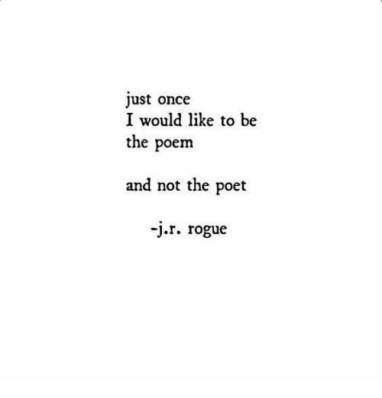
A name sung quietly from somewhere behind you


80866447_1834537380017222_129623083655888896_n

Game Plan

547471_10201289137737936_801104233_n

I love this story: When the first film with sound was shot, there wasn’t any dialogue—it was all music. The Jazz Singer staring Al Jolson was all music, with even some placards like those used in silent films still held up for some dialogue. But you could hear the music. But right before the very end Jolson turns from the music and looks right into the camera and says, “You ain’t seen nothing yet!”

There’s hardly any reason for that story. I just thought of it for some reason when out walking with Michael today. We walked through Belle Island State Park. We parked near the camp store just past the Belle Mansion, and walked about six miles through their trails, to the Rappahannock River, out across marshes and fields, through new-growth forest areas, back along fields of clover and Black-Eyed Susans, and to the old red barn near where we started.

We noted to each other sites the other might have missed. He pointed out the rabbit (I told him, “They seem so defenseless. It’s too bad they don’t have better defenses or camouflage. The white tail is a dead giveaway. They need something.” “Like poison spit,” he suggested. And that’s how I see rabbits now). I pointed out some herons, and while there is plenty of wildlife in the area, today we didn’t see much. Bird life (osprey, heron, cuckoos, the helpless rabbits). We talked about the day, the cumulus clouds, the deep blue sky, the breeze. We talked about art and guitars and briefly about the Camino. I recalled the time in Roncevalles, Spain, just across the Pyrenees, and how when sitting at a bar I mentioned to a local man that I hadn’t expected that previous day to be so brutally uphill. He smiled and said, “The next several days aren’t so bad at all. You’ll be fine.” The next several days were almost as brutal—the first four days, in fact, up until we were nearly in Pamplona, were the toughest days of the entire pilgrimage. On one of those days, after a long silence walking along vistas no one should ever miss, Michael said, “Maybe ‘aren’t so bad after all’ means something different to someone who lives in the Pyrenees than it does to someone who lives on a beach.”

Anyway, that crossed my mind today and made us laugh as we trekked along at a decent clip on flat land. We’ve logged some miles, him and me. When he was very young we would walk from the house to the river, and after not very far at all he’d run right in front of me, his arms out to the sides like wings, and not say a word, waiting for me to heave him onto my shoulders, which, of course, I did all the time until the time I couldn’t. But we still walked.

And Spain of course. And the hills around Lake Baikal, and dozens of miles in all the towns and cities along the way.

So when Covid settled in he pulled out some maps of the local state parks and we started exploring them all, amazed at their beauty, amazed at how no one was ever out there. We brought masks with us just in case we ran into someone but never had to get them out.

Today we laughed a lot, talked, and just admired the scenery as anyone would. I don’t know what else might have been going on in his mind—he’s twenty-seven, so I probably don’t want to know. But I know what was going on in mine; that is, I will remember very clearly many of my thoughts today while Michael was shooting pictures and I was watching the skies as we walked along grassy paths.

I turn sixty in two days.

I thought about my life, my days in Arizona, New England, Pennsylvania, abroad. My decades as a professor, my childhood, my teen years and some of the people I knew then. I thought about how some of the most important people in different stages of my life are gone, and how other friends without whom I could not survive are still a dominant part of my life and always will be, I hope. I am lucky, I am fortunate, I am aware of all the best of what I have had through these six decades, these seven hundred and twenty months, these two hundred and forty seasons.


I’ve heard people say they have no regrets. Ha, well I do. Plenty. I would have been kinder to people and more patient. There are two or three events in particular I wish never happened and one or two times I wish I had more balls. Some say things are meant to be; some say things happen for a reason; I know all the arguments, I really do—but for me it’s simpler than that—I should have done some things differently, it’s that simple.

But in the end, especially on a day like this, if anything would have been done differently, I might not be at this spot today, writing about this day, and that makes it all worthwhile.

I don’t have a bucket list; I never have. I like Robert Redford’s idea that “I just dropped the B and put an F and went back to bed.” I think a bucket list would be too depressing, too finite. What if I ran through it all quickly? Add to it? I’d assume it would have already had the best things in there, so that’s not going to work.

No, instead I just think about fitting things into my life based upon drive, money, and time. I want to ride my bike to the west coast (I need a bike). I want to hike the AT (I need a map). I want to hike around Ireland and train across Canada. I want to start a small writers’ retreat here at Aerie. I want to ride horses in the Rockies. On and on and on…

But the one thing I am definitely going to do is the Camino again. I wanted to do it this summer, and while it would be easy to blame it on Covid, other factors made it a non-starter before this pandemic popped up. I’ll get there. My “plan” is to do the Camino every five years until I can’t. We’ll see. I also want to camp in Oregon, go back to Mexico, see Arles, drive to Long Island.

And I suppose as long as I can walk, I can walk nearly anywhere. “Everything’s in walking distance if you have enough time,” Steven Wright tells us.

Look, I know it’s the end of the third quarter for me. I get that. But I’ve spent the better part of this game out on the field; I rarely felt like I was benched in all these years. So my plan is to get as much game time as possible in this last quarter. If I’m lucky like my father was and my mother is, I’ll get some overtime, but that’s not important; what is important is that I, as James Taylor aptly wrote, “walk on if you’re walking even if it’s an uphill climb.”

When my father was my age I was managing a health club for Richard Simmons and spending all of my money on plane tickets and gasoline. But when my mother was my age I was a brand new father; she’s still with us and mostly doing fine– since my son’s entire life ago. Today she won at cornhole by throwing four bags in a row through the hole. When I think of that, and of all the days from my son’s birth to now since she was my age, and lay them out before me, I am restless with excitement for the places I can go, the help I can be, the love I can share, the new stories—oh the new stories.

Metaphor Call Back: Just when you think it’s over, someone turns and reminds you that you ain’t seen nothing yet.

But, seriously, it’s the walking. I like the pace, I like the patience needed, the way it calms me down and makes me less anxious, less angry and uncertain. I like how a good hike lets me talk with someone and remain quiet, both. I like how I feel at the end of the walk, the hike, the climb, when I have a glass of wine or just a glass of water, and the breeze brushes my sweat and cools me off a bit, and part of me wants to sit and rest but the better part of me wants to just keep going. Just keep going.

Yeah, that’s my game plan for the fourth quarter. Just keep moving the ball downfield.

a-day-in-spain


A Zoom from this Wilderness

download

I just turned in my grades for my final Saint Leo’s “The Women of Art” class and for my ODU Summer course of English composition. And I realized for the first time in a very long career, I do not know any of these people. This feels more like some clandestine operation than a college course. “I’ll leave the information in a video–we’ll call it ‘zoom’ like that kids show so no one gets suspicious–and you can private message me to set up a F2F meeting where we can chat in private.” Come on, this isn’t learning, it’s like a bad dating site. 

I miss the human touch, the handshake, the eye contact. I miss saying, “Hey there, what’s your major?” and “Where are you from?” 

Students and faculty now meet via zoom, on Blackboard, online however they can, safe from the masked masses making their way through city streets and infectious locales. Kids in kindergarten right through coeds on campuses all have settled into a new way of learning. But something essential is missing which completes a person’s education, the element not addressed in lesson plans or recorded videos or discussion boards: The before and after of it all.

Students waiting for professors to wander in from their offices make eye contact with each other, nod, build conversations from simple hellos to frustrations with the work to politics to sports. They connect over shared inside jokes and run into each other at the coffee bar, continuing their meeting on the sidewalks from building to building. Relationships begin, trust develops; multicultural, multigender, interaction ensues bringing lessons with which no lecture can possibly complete.

Depressed students make connections while the book-bound student finds friends with familiar isolating habits. Face to face learning includes interruptions and spontaneous tangents–and humor, oh the humor! So much can be recalled, so many details can reappear fresh with the association of humor, the benefit of bonding. 

Then the professor comes in and sits for a few moments gathering thoughts while the students quiet down but know hey have a few minutes, so they talk about their families, their weekends, the problems they had writing the paper, the illnesses and deaths and deployments and day to day drudgery. Professors make note of which ones tried but couldn’t do it and which ones did well without trying. They hear about issues with development or topic or incomprehensible reading material. They learn what to focus on, where to give slack and where to let someone talk back, vent, get to the point. One student says something and the professor’s pause before reacting can speak volumes, the quick smile, the side glance, the small nod of approval impossible to convey to a computer camera.

It’s not hard to spot someone with a question who is afraid to ask, notice the dip of someone’s eyebrows in confusion who otherwise would not offer a hint of hesitation. A quiet confidence comes from face to face acknowledgement.

Early in the semester conversations are reserved, focusing mostly on course work or other classes or common haunts. Later, a fist bump, a smile, or quick tap on the desk to say “Hey, cool, good to see you,” without any words at all. And toward the end, they find they are bonded by something more than assignments and group work. They experience others’ failures giving a boost of self-worth that they’re not alone in their anxiety. They take note of another’s approach, broadening their efforts and enabling success unavailable from the “Resources” page of the course platform.

Then the professor begins. A few minutes might be dedicated to addressing situations overheard before class, or passing along a question someone had after class last time that the student was afraid no one would want to listen to but the professor knew everyone needed to know.

Maybe the most important lessons we take from classes are the ones which include some sort of social awareness. We cannot mask our need for companionship; we cannot distance ourselves from what we gather by gathering. Marriages have come from such connections

This move to online learning is necessary and in the long run makes the most sense during this global pandemic I’ve decided to call Bruce. If it is going to be with us until a vaccine is available, I’ve decided to personify the bastard. But we must stop pretending online anything is the same as face to face learning, or that we can get the same results. No. too much humanity is being left offline.

unreceptive-art


Father’s Day: Tuesdays With Fred

12063306_10207030426106557_3199067376729529480_n

On Tuesday nights my dad and I drank Scotch. Dad always liked J & B, a blend to which he probably became accustomed early on. On occasions he drank Chivas, aged just right, and a few times he had a bottle of Edradour in the house. On Tuesday nights we poured two glasses on the rocks. Routine is important and I’d get there about nine and was no sooner in the door when he’d jokingly say, “My coaster seems to be empty,” or something similar with a laugh and a welcoming smile. I’d put my things down and offer to pour, and he’d insist he was just fooling and didn’t mind at all getting our drinks, which was true. He would walk in the kitchen and I could hear the cabinet and the ice and the heavy bottle he put back in the cabinet, never leaving it on the counter for more because we never had more. He’d return steadily and slowly and hand me my glass and we’d raise them to toast and he’d say, “Well,” nodding his head politely at a loss of words, and I’d interrupt and say, “to your health,” to which he would again nod and with his deep voice reply, “and to yours.”  Then we’d watch baseball, not really talking much. It was late. He sipped his Scotch.

But I hate Scotch, so I preferred to pour. When I went in the kitchen, everything was the same but instead of Scotch in my glass I had mostly water. Dad’s eyes had faded in those last few years and he wouldn’t have noticed the lighter tint of my drink. And anyway, it wasn’t about the Scotch. We sat together a long time those Tuesday nights and he would turn once and say, “Boy this is good, isn’t it?” and I’d agree. Sometimes I felt guilty and would pour a bit more for myself as well, but usually only when it was a single malt. After a while he would head upstairs to bed. Then I’d sit alone in peace after a long day, but inevitably I’d wish he had stayed up longer even just to sit quietly. I’d promise myself that the next Tuesday while drinking Scotch I’d make more conversation, talk more about the game or about my day or anything really, since he wouldn’t have minded even turning the game off, but the following Tuesday would come and like clockwork I’d be exhausted and silent and we’d watch baseball and he would get tired and go to bed. It was always fine.

My father aged well, and sitting with him on Tuesday nights was the purest time I had during those days. I can still hear him say, with a slight laugh, “My hand feels very light,” or “Sure I’ll have a small glass,” even while my coat was still on, and sometimes I can recall it with a laugh, but other times, when I get home late and stand in the driveway on a clear, cold night, it is too real to think about.

And as odd as it may seem, it isn’t simply my father in the paternal sense that I miss; that we all understand. No, it is the small things that rip at my seams, like seeing someone eating a bowl of blueberries or a cup of she-crab soup, the sound of ice in a glass, someone jingling coins in his pocket, baseball. The sound of golf on television, the aromas of Thanksgiving Day, the opening theme music for “Law and Order,” lunch specials at boardwalk restaurants, cardinals in spring.

When Dad first retired I’d bring his toddler grandson to the mall where Dad walked in the afternoon and we’d “run into” Grandpa. I never promised either my father or my son we would meet so as not to disappoint either if we didn’t. But when we did, nothing could distract Grandpa from walking around at the apex of three generations. Dad’s smile exploded with happiness when he watched his young grandson run toward the toy store, or when we stopped for ice cream and Dad would pretend to lick some of my son’s cone. The two of them would laugh hysterically until my son offered him an actual lick, which Dad always refused with a strong, “Thank you very much.”

Once it really was an accident, meeting Dad at the mall. On that occasion my son and I walked around and discovered Dad sitting on a bench, taking a break from his walk. His face lit up, of course, when his grandson ran up to him. It was as if an ordinary day of routine was suddenly cracked wide open by this small but exciting surprise. I believe the spontaneity of unexpected meetings must have made it seem more like my own youth, when siblings and cousins and countless friends lived close by and visiting was normal and running into each other at the store was an ordinary occurrence. Dad lived for family. So sometimes seeing his grandson at the mall was a beautiful mixture of possibility and recollection.51685774_10216748550053582_4324075431826292736_n

When that did happen I would often hang back as we walked so it felt to both of them like they were alone. They discovered the stores together and Dad always allowed his grandson to pull him into the ones he wanted, namely the toy store or the bookstore. Dad bought more than a few books on those visits, and somewhere in my attic is a box of those books from those days. I thought a lot about those walks when he died almost five years ago when after the funeral we all went to a restaurant, and my now adult son ordered Scotch on the rocks. Perfect.

Perhaps if I become a grandfather, my son will take those books with him—I am sure of it. And when I sit somewhere with my own grandson on my lap to read to him, I’ll picture some inconceivable moment in the past when my father and my son laughed hard together turning the pages, and I’ll think about the passing of time and the persistence of memory. It makes me keenly aware that my father might very well have sat with my son and remembered our time when he was a young father and he’d read “Big Little Books” to me, or how every Christmas he bought each of my siblings and me a book to suit our personality and hobbies.

Someday I might sit in a comfortable chair and a golf tournament will be on. I’ll offer to get us a couple of ciders from the refrigerator, or perhaps even a good, aged Scotch. I’ll offer to pour but my son will insist I stay seated and he’ll retrieve them himself, knowing, of course and without offense, in that particular instance, it is my own father I’ll be thinking of.

          Happy Father’s Day Dad. Dear God I miss you.

Flumen: Latin, meaning River

10426893_10212684993107198_7869380231877784156_n

When I was fifteen years old, my next-door neighbor Karen and I went canoeing out on the Lynnhaven River. Neither one of us had canoed much—Karen was just twelve at the time—and while we both could swim well, it’s a pretty murky river. At the time the eastern shore of the river was all wild (now, condos, restaurants, and beautiful homes line the banks), and it wasn’t unusual to see snakes and other critters.

We were in one of the inlets surrounded by high marsh grass when Karen asked if I’d heard about the girl at Busch Gardens who was killed on the flume ride. I hadn’t. She kept turning to talk to me, rocking the aluminum Grumman canoe, and said the eight-year-old girl was alone in the front of the log—which at the time were made of real logs; it would be after this incident they replaced the logs with fiberglass ones—and a muskrat which had nuzzled down beneath the wood near her feet, proceeded to repeatedly bite her up her legs. Her screaming went unheeded since the others in the back of the log assumed she was screaming at the falls. She died on the way to the hospital. Some time later in our outing when it was quiet and we paddled along listening to the cardinals, I slid my oar under her seat and hit her legs and feet with it. She screamed and stood up, falling out into the river. It was only about two feet deep at that point so she climbed in and we went home laughing and wet.

I’m not sure whatever happened to Karen.

But I know all about the flume.

Growing up I went to Busch Gardens whenever company came to Virginia from New York to visit, or when high school or college friends and I spent the day in the park, visiting the pseudo European countries, drinking beer at the Festhaus in Germany, and riding the Loch Ness Monster. In the early ‘90s, we had a family reunion in Williamsburg where the park is located and one day the entire Kunzinger clan, which is not a small number, invaded the Old Country. My cousin Audrey and I rode the Loch Ness Monster, but just as it came out of the first loop and headed toward the cave, it stopped on a dime, at a slight angle so that Audrey in the seat next to me was just above me. We were there about fifteen minutes when we heard a few people behind us getting sick. I prayed Audrey had an iron stomach and looked across the rest of the park. It turns out I liked the roller coaster better when it wasn’t moving and I could just look out and enjoy the view.

Then about seven years later we bought season passes and Michael and I spent more than a few hours riding the Loch Ness, the Alpingeist, and other such ridiculous structures designed to kill college professors while their sons sit by laughing.

Then one year we approached the Flume. The line was long, about thirty minutes, and from the switchback corral we could see the tracks which carried the log cars to the top, followed by a quick drop into the water, then another climb, another drop and around a few bends into the sawmill, where as the log turns slowly around the far back wall, it approaches a giant saw blade which, of course, the log plummets under just before getting there, down the watery drop into the pool below, where it finally moves another fifty feet to the end. Everyone screams. Really, everyone, all the time. A sniper with a shotgun in the trees could shoot away and would never be exposed by the victim’s screams.

The worker filled the logs leaving Michael and I next for the log making its death-defying plunge at that moment. Clearly, this clerk wasn’t even born when the girl died, but I had to say something.

“Did you know about the eight-year-old girl who was bitten by a muskrat and died on this very ride?”

“I didn’t,” he said with a chuckle, thinking I was trying to terrorize my son (Michael heard the story and knew the new logs were safe), or the patrons around us. To be fair, it was working on one couple who stood nearby. “Maybe I wasn’t working when that happened. When was that?”

“1975.”

“Oh, I wasn’t born. You’re serious though?”

“Yes, the logs were wood then and, well, everyone thought her screams were out of fun.”

“Oh, I guess so,” he said. “I suppose if it happens again no one would know until the ride was over.” We both laughed, him more than me.

Our log came and the worker, Michael, me, and the two behind us all checked the front and under the seats and climbed on. It would be the first of dozens of trips on the flume for my son and me.


What a ride. What a way to be completely and absolutely without exception in the moment. The cool splash of the water, the grinding of the tracks and the gentle heavy bump of the log against the blue, fiberglass walls of the flume. The sawmill “blade” buzzing away at full speed, and the laughing and screaming. There is no way to ride such rides and be wondering about anything else; not food, not what to do next, not anything, not even whether you remembered to lock the car which you could almost see from that height. Just now, just the thrill of pumping adrenaline and mist.

Then the drop.

Then the walking around the park soaking wet, thinking it might be best to do all the water rides at once and then change.


Out on the Rappahannock in the early hours, we paddle up Mill Creek and then over near Locklies Creek, up near the Norris Bridge and across to Parrot Island where we beach the Old Towne Canoe and walk about the marsh. A century ago the island was farmed, but now there’s barely enough solid ground to walk on but for a small patch in some woods where someone built a small blind. We’ve seen beaver there, and deer, and water moccasins move about the water but they’re skittish around people and boats.

On some mornings, early, Michael in front and me in the back, we row down the river toward the Chesapeake which rolls past right here to the east. There we beach the canoe and wade the water looking for shells and oysters or clams, beachcomb for driftwood and an occasional horseshoe crab in the sand. We rarely talk, and we never scream at the top of our lungs. We take it in, absorb the moment, completely caught up by the rising sun as we settle down into a routine of discovery and peace.

It is my blood pressure medicine; my anti-depressants, my muse. I’ve made many mistakes in my life, made some wrong turns, spent more than a few remorseful hours wishing I could do some things differently, hoping beyond hope for enough time to set it all right. But not out there, not where the water pushes us along as I push backwards. The very nature of canoeing is you must push what’s in front of you out of the way and behind you in order to keep moving forward. Out on the water one believes in himself, understands what comes next and how to approach it, what to aim for, what to push out of the way.

IMG_0870 IMG_0869 IMG_0870

IMG_0872 IMG_0873