Nothing is Written in Stone

download

Recently, my brother-in-law made an online comment referencing research of historical subject matter. He indicated that if he is going to reuse an article he wrote twenty-years ago, he will meticulously review the details before releasing the revised edition to insure all information is up-to-date. I am not an historian, but I have spent some years teaching research methods and immediately appreciated his thoughts on the matter. The need to review the material might be obvious to him, one of the most respected historians in the country, but the work is too often seen as redundant to the average student or reader. I’ve had students say to me, “Well if he died over a hundred years ago, and this article was written fifteen years ago, what difference does it make?”

Here’s one example which instigated my concern about finding the most recent expertly researched information available:

Every month for quite some time now I find an extra thirty of forty dollars in my checking account from an ebook I wrote about Vincent van Gogh. This seemingly small amount of money adds up, but more importantly the sales have drawn the attention of bookstores and some libraries and this spring my publisher in Tallahassee, Florida is reissuing the paperback edition. The original book came out fifteen or so years ago, and the Kindle edition about eight years ago. After the first few printings, and certainly after the online version was released, the printed version went out-of-print. Sad, but normal. But recently, interest in the actual book version has drastically increased, so, reissue. Yay for me. Yay for Vincent. Poor guy; he’s been dead 128 years now.

So here’s the thing: The book is a first person account from Vincent’s own letters to his brother, Theo, and other artists. I edited them down from 2000 pages to about 160, but the words are his. The only subjective interjection I did was in brief transitions throughout the text to help the narrative flow and have some semblance of a standard rising action, crisis, climax progression.

It was the resolution which is more troubling. The prologue to the book covers the time between Vincent’s gunshot wound and his dying a day and a half later. I wrote the prologue based upon documented accounts from his brother, two doctors on the scene at the time, and many of the most respected art historians and experts on van Gogh’s life, including a curator at the Van Gogh Museum in Amsterdam. When I did this research, thirty-years ago or so now, I was confident in writing as Vincent as to the details from the gunshot (considered suicide at the time) to his death. But since my original research and writing of the prologue, new information has come to light. Without spending too much time here going into detail, let’s just say it is not probable that he killed himself, the mortal shot more likely coming from an intellectually-challenged teenage friend of his from the local town. Where they found the gun, what was and wasn’t found at the scene of the shooting, and Vincent’s own vagueness all became clear only a century later, though doubt of the original account arose from the start. Most startling is the suggestion in a found document of one of the two doctors that the wound itself could not have been self-inflicted.

Well, what is one to do? He wanted to die, he did say that.

So in preparation for press, I had to readdress the prologue and create a more neutral voice from our protagonist. Also, in most of his letters when referencing people who, in one way or another, were not accepted in society very well—much like his teenage friend outside Auvers, France—he showed rare moments of sympathy and concern for them. I brought slight more attention to those moments than he did in his letters so we might better appreciate his keeping the probable cause of death to himself.

In any case, it got me thinking about something completely unrelated: what did I once consider to be true about myself, my life, my path, which now, with new information and age and experience, could be considered obsolete?

Oh how I was decades ago is clearly not how I am now, but along with that are the decisions I made then which affect me now. They must be analyzed and contemplated, and, if necessary, abandoned. At least altered some. It is okay, I believe, if I am going to be true to my own brief narrative and create the best protagonist I possibly can out of this too, too sullied flesh, to do some more research and see if I might need to update my information. Maybe I can make me more decisive now than I used to be; maybe more mature; certainly less insecure.

I’m well aware of the truth that I cannot relive the past, and I am not even trying to change my course at all. No. I’m simply suggesting that at some point in the past my methodology set me on a course toward now, toward tomorrow, and if I take a brief pause to evaluate that past with the new information I have about life, I might be able to proceed more successfully than I would have still riding on the information gathered from a textbook I have been using since my youth.

I can remember times my mental history would record I was weak, paranoid, and even felt hopeless. But now, sometime later, it is clear revision is required. I know now the weakness was exhaustion, the sense of helplessness was a cleansing of false realities and misunderstood truths.  I wasn’t falling apart; I was shedding the parts of me I didn’t yet realize had died. Every dynamic character goes through an epiphany, none realizes it at the time.

I might change the character trait which up until recently was impatience. I’d add a few more details I recently discovered about confidence and instinct. I can’t change how I was in the past, and certainly not what anyone else knows or perceives me to be. But the me yet to come has not yet been written, and after close scrutiny to the facts of my life up until now, I can guide the character development somewhat.

After all, everything until now has just been a prologue anyway to whatever comes next.

Blessed Twilight High Res Cover

Present Tense

47108082_10216217648621378_675530963328958464_o

Lecture time:

Before we slip into the nature and the nurture of now, a quick lecture from an aging professor turned pilgrim:

What if one day you left your phone at home and went for a long walk? Would you wonder if everything is okay? Would you keep touching your pockets, looking behind you? At the very least would you wonder the time? How long, I wonder, before you turned and went home to check your texts, your messages. You’re hooked—we all are.

But what if, if, one day you just keep walking. Not many people anymore remember what it was like to have no ability to call home anytime they wanted. We looked for payphones at gas stations. And when we finished plugging it with coins for the three minutes we bought to talk, it was barely long enough to say, “Great, everything’s going great! How is everyone? Good! Okay, I’ll talk to you next week!”

Next week. Sometimes, next month. It is in part how we grew up, and it most definitely is how we matured. But those three minutes, then, was enough to know everyone was fine and we could focus on what was happening around us. We were fully aware of place. We kept no records. We didn’t update anyone. No texts. No tweets. No snapshots. We were that rare state of being which is slipping into the past: solely and completely in the moment.

No phone, no internet, no messages, no voice mail, no apps, no games, no kidding—just conversation with whomever you’re with or whoever happens along. If you wanted a picture of yourself at some site, or with a friend, you stopped someone walking by and asked that person to take it—we didn’t have long sticks to hold the 35mm. But that person would be friendly, and conversations would ensue, and information about local places to eat or drink could be discovered. We don’t do that now—we are in such a meme world we don’t risk much beyond the length of our arms. Am I the only one who misses the long talks and laughter after not seeing someone for a few days and “catching up”?

I do understand the obsession with taking pictures. When I looked at a photo, two things happen. It makes me miss that time and wish we had hundreds of more pictures of then, of the endless laughter of then, of the immeasurable hope of then. Yet it also helps me realize how we were in that moment, then, when the camera caught us; too much in the present, in fact, leaving us with only a few shots. But that’s fine. We were too busy living it.

But back to that long walk: At the end of that long day if you did just keep walking, by bedtime, phoneless, you might miss your normal routine to lie on your back, phone in hand, and seek out information for a while. You can’t, though, because you’re tech-less, and you can’t imagine that you ever couldn’t, but you do. No worries, the world keeps spinning, friends are not diligently waiting to hear from you or have anything to report, and the news is not going away.

The next morning is harder still. You ache to know what happened over night about which you have no information all these hours later. Did someone text? Call? It’s killing you, but you can’t go back now. You’ve walked too far. The anxiety, withdrawal, is real and stressful, and like giving up a blanket or a bottle each step seems endless, the day an eternity. You want to borrow someone’s phone. You want to just check real fast—find out everything is fine. And what if you did? Everything is fine, benign, most likely predictable and familiar. We crave the familiar and predictable; it falsely makes us feel safer. It is why we stay in bad relationships which become routine; it is why we stay in bad jobs which have no future but which we’ve mastered and manipulated.  

I know the arguments. The advances in this world have made much of our lives infinitely more convenient than then. No contest, and I am often thrilled that I can be a part of “what’s next” as we bullet toward tomorrow. But there is a price to pay—there is always a trade-off—and as far as some technology is concerned that price is how you spend your time. Thirty years will pass faster than you can fathom, trust me. Don’t spend it looking down.

Here’s a test to see if your priorities are in order: Plan to travel for a week and tell everyone you know you will be out of touch the entire time—no calls, no texts, no emails, no matter what happens. Tell them you’ll check in when you’re back to make sure your loved ones are alive; otherwise, you’ll be meeting new people, finding cafes and maybe a motel where you’ll spend nights drinking wine and laughing with new friends from new places, and you’ll catch the sunrise without capturing it on camera. No one needs to know what’s going on; they’ll ask when you return. No one needs to be updated, see pictures, videos, receive OMG texts at every mountain and mystery along the way. They’ll ask when you get home.

You’re without your umbilical, untethered, freefalling into yourself absent of the consistent clicks and taps of that certain cell. We grow anxious when faced with our own thoughts without possible deflection, no technological tangent. But the anxiousness erodes, and new conversations linger like lace curtains, sometimes lifting, often drifting down and raised only by the occasional wistful comment, and it is peaceful. You had forgotten “peaceful.” You maybe never learned just how to be full of peace.

But it isn’t so silent, is it, this peacefulness? This ironic disconnection links you to those nearby, connects you with others who make eye contact, talk about the places they’ve been, talk about the possibilities. Talk about unplugged! Most of the time you talk about life and how far you might reach, and the truth is you can’t reach out and grasp something if you’re holding anything. We do that though, we want to reach for more but not let go of what we’ve got. “If I put this down,” we say, “I might lose touch with what I know.” We haven’t yet realized Shakespeare’s decree that “one touch of nature makes the whole world kin.”

Take a deep breath. Take a moment. Take, for instance, that time you sat by the water at the north end of the beach and a couple caught you staring at the trees near the houses and they told you of an area filled with Spanish moss over walking trails just a few miles off the ocean. “Lived here for eighteen years,” you say, “And never knew that.” If you were looking down, they never would have said a thing. You know they wouldn’t. But the absence of such a small device can dial up the most spontaneous connections.

Really, you get used to this simplicity, this absence of noise, of interruption, of course you do. Find out what it is like to walk with empty hands and touch the world, what it is like to listen to nothing at all. At night those hands hold wine and bread and you hear tales of the day. We tell stories out loud, and we listen to stories and share moments, out loud, and we live, as much as possible, out loud. In this way, every single conversation is different. Every single shared sunset is different. And we come to have a sense of the senses.

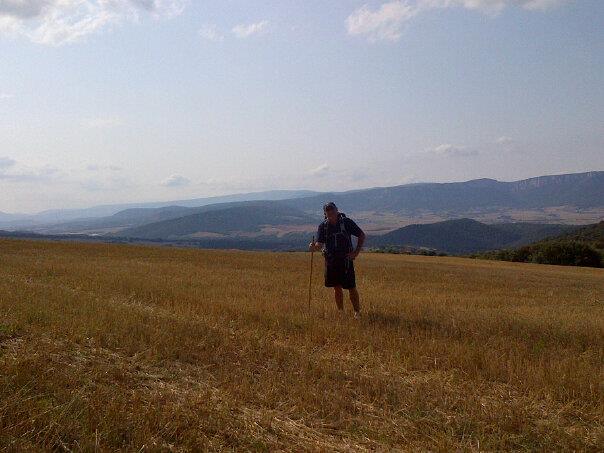
I recently spent time in the wilderness out west, walking, being quiet, talking, just being there, and something unique happened in this age of all ages: I didn’t want to be anywhere else, I wasn’t thinking about any other time or place. 

And we learn, eventually we learn, the most important moments cannot be captured by the most efficient technology. Sometimes you need to be away from what you’ve become to understand who you are.

pexels-photo

Lead us, Not

980x

A few fighter jets flew over a parking lot at the beach. It happens a lot, and every time I can tell the tourists as they’re the ones running back in a store or holding their hands over their ears. It can be deafening, no doubt, but when you hear them all the time you become numb, complacent, and your tolerance of the disturbing afterburn steadily increases so that you’re aware of them passing more as a passing thought than a shocking revelation.

When I first lived around these jets I was one of those teenagers who tried to be cool, but every single time ran inside to avoid the sounds from cracking my skull and blowing out my eardrums like popping bubblegum. As years passed new people who traveled to the area would question how I could live there. But I’d say, “It’s really not that bad once you get used to it, and they’re usually done by evening.” Eventually I barely noticed the jets at all. I had so adjusted to the disturbing sound that I did not even flinch. My determination at one time to either move or get them moved to another base in another state had been tamed by overwhelming presence. I had gotten used to the sound so that it didn’t bother me anymore.

Always start with the metaphor.

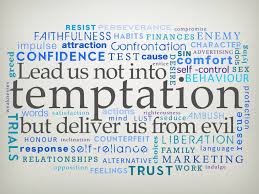
Sometimes we make the mistake of getting used to something that never should have happened to begin with. For instance, the Vatican has overwhelmingly voted to change the translation of the Lord’s Prayer. It’s true, and despite resistance, it is hard to deny the rational decision. The current reading, which has been enshrined since the first English translation, says, “Lead us not into temptation.” Yes, this line always bothered me as well, but I could never articulate why. Well, someone finally articulated it. That line as it currently reads is basically suggesting that we are asking God to not lead us into something evil, suggesting if we do choose something evil, it is actually God’s fault for leading us there to begin with. The new translation reads something to the effect of “Do not abandon us during temptation.” It makes way more sense and is hard, semantically, to not argue is better than what we’ve grown used to and closer, according to experts, to the original intent of the phrase. Still, people will resist, not because they think it through, not because they have theological training, and not because they necessarily understand it to begin with, but simply because it is what they are used to and don’t see any reason to change. This is frustrating when so many people, for no other reason than it is easier to just keep things the same, contradict those with the expertise necessary to make the call.

The change is right, no matter how hard it might be for some to accept.

And on that note, the literal:

When did it become okay to ridicule others? When did we become complacent about harsh personal criticism and blatant bullying? At one point not too long ago most people were taken aback by the rude and unnerving comments which seem to have become commonplace. Are we growing numb to immorality and unethical behavior?

Sometimes we know that, “Something has to change. Things cannot continue like this.” Sometimes we don’t know what’s going to happen next, but we are absolutely certain it can’t be what is happening now.

Accepting change is difficult, both for the better and the worse. Like staying in a bad job, like staying in a bad relationship, like staying in the same place, sometimes it is almost easier to accept the complacent illogical current way of life than to deal with the difficulty which lies ahead during the transition to something better, something, though challenging, with promise and hope. Worse still, though, are the adjustments we make to accept what we have; we get used to the noise which at one time was deafening but somehow became unnoticeable. That is the tragedy; when we fail to recognize the compromised state we are in by the simple virtue of some slow erosion of perspective. It took a while after making a change for me to step back and say, “Wow, what the hell was I thinking?”

I’m writing this the afternoon of Thanksgiving. In the worst of situations over the last few years I still can’t think of anything for which I’m not thankful. Is that a version of “everything happens for a reason”? I don’t think so, particularly since I am a firm believer in the free will to use our God-given decision-making capabilities wisely. Still, I’m grateful so many have the wisdom to know the difference between what to accept and what to change. Like knowing that Thanksgiving should be in October or that we need to stop changing the damn time twice a year. Oh, and the Electoral College has got to go.

But more to the point, it has been two years now and too many people are getting too used to the president’s rhetoric and ways. This week he thanked a country for being our ally whose crown prince ordered the brutal assassination and dismemberment of a journalist, the same week he blamed the forest fires on poor management, the same week he ridiculed the decisions made by federal judges, the same week he said what he is most grateful for is how great he has been for the country.

Too many people have accepted his despicable ways because of a tax refund; they’ve sold out, they’ve been paid off; they’re little more than whores along with the president himself. When did it become okay to act like spoiled children? When did it become okay to advocate policy which we would never tolerate in our adversaries?

Do not get used to the noise. Be constantly bothered by the afterburn of djt’s irreverence. He is leading us down a path toward demise of the U.S. constitution and civic behavior. In our own ways, each of us must not allow the constant disappointment and immoral behavior to become what happens when people start saying, “Well, what else did you expect from him?” That response is a half-step from acceptance. That’s unacceptable.

Change is not easy. Change can be damn near impossible sometimes; especially if we have grown so used to one way of doing things and especially if someone keeps telling us exactly what we want to hear and making promises we want to believe.

We can promise ourselves this with certainty: if things don’t change, they stay the same. As obvious as that seems, we don’t always understand the often dire consequences of familiarity.

He’s got to go, we know that. The real danger is the numbers of people who are getting used to him and his childish behavior.

download

Of Things Unseen


Here in Prague, I didn’t get to see a few things.

I wanted to visit Terezine again; the museum which was a Jewish Ghetto in which the subject of my reading, Arnost Lustig, had been interned as a teen. It is an hour north of the city by bus, and I simply didn’t plan on it.

Also, I wanted to see the ballet. I’m not a big ballet fan, to be sure, but I am a music fan, and one of my favorite pieces, Swan Lake, is playing at the theater here, but I opted on a symphony at Dvorák Hall. I’m not complaining; there simply isn’t enough time to do the things you want to do once you find them, as Jim Croce pointed out.

Then there are the things I didn’t get to see because they can no longer be seen. For years when I came here, statues of Golem were everywhere. Golem is a mythical character in Prague Jewish folklore, and it is a long story but the cultural result was statues everywhere–in front of bars, restaurants, and for sale in small form in shops throughout the city. The history of the character goes back to the Talmud, which mentions a man-like creature created by rabbis to use as a servant. Up until recently you couldn’t take a picture without finding one in the frame. I even have a photo of William Hurt standing next to one from my first trip in 2000. They’re all gone. It seems commercialism created a battle over who owns the rights to use the image, and Old Golem has gone into hiding, except for one in the Jewish Quarter.

Worst of all the things I didn’t see is my tea room at Nerudova 19. This quaint shop had seven tables, soft music, a wide variety of herbal teas, amazing strudel, and inspiration. It had been there for decades and decades. Milos Foreman shot several scenes from Amadeus inside. I used to go there every single night on every one of my trips and order a pot of Irish Creme or Apple spice tea and, sometimes–often–strudel. I wrote the draft of Penance over the course of eight evenings at a table near the window, and it was my safe place. No matter how well you know a place, it is nice to have somewhere familiar–a tea room, a pub, a small shop–to go to so you can regroup, get centered to face another plethora new experiences. In Prague, Nerudova 19 was that place for me. It is an ice cream shop now. I asked the owner what happened and he shrugged and said, “Same thing happening everywhere. Technology. People like you used to come here to do work but you always ordered more food, more tea. You understood it wasn’t a rest area. In the last few years people came with laptops for the wireless and order only one cup of tea and sit for hours and hours. I had no turnover. I started asking people to leave after thirty minutes if they didn’t order more, but then word spread you couldn’t spend time here unless you bought something and they all went to Starbucks. So, ice cream. You’re welcome to stay at a table as long as you like you know!” He still has a copy of Penance near the register. I bought a double-size cone of ice cream and left.

The excitement that was Prague during the Havel presidency is gone; the folk scene is tucked away past the university instead of along the banks of Kampa Island. Even the guitar player near the Lennon mural didn’t know the words to “A Day in the Life.’ So sad.

Things change; I get that, and so much here is the same, the deep art culture, the thriving literary scene amongst all age groups, mulled wine, beers at the Golden Tiger, and apple strudel. And music, which pulsates beneath the streets of Prague and moves through her people like plasma, as if the Velvet Revolution was personified and moves about the city as a shadow, like a new mythical creature, hiding–yes, but present just the same, making everyone move through the streets with some unknown energy.

79f541b042a7f8341283b66313609d0b_kids-stories-books-and-the-image-of-a-book_2800-2100


The Outrageously Overrated Act of Remembering

Summer memories

I was never good at remembering names. This isn’t new. Through thirty years of teaching college, some students’ names stuck; either from their attendance in multiple classes or their outstanding work, or, of course, from throwing desks and calling me an asshole. Still, even with students sitting in front of me two or three days a week for sixteen weeks, the names remained allusive. Face? No problem.

Numbers, also, no problem. I remember all the phone numbers I’ve ever had; license plate numbers, even an old friend’s social security number—it just stuck. It must be a different part of the brain; or, more likely, interest. No offense to the college-age kids but I never had a reason to remember their names. I taught, we talked, I read their papers, we talked some more, I turned in their grades and they moved on. So did my mind.

I guess I was distracted. Yes, that is it. I was distracted. After all, through those years I had incredible numbers of students, credit hours, a son, a house, writing projects, extensive travel; so of course I only filed away information my brain deemed necessary for future use. Besides, all the information retreats to yesterday quite quickly. I learned to live in the day, focus on the moment. Isn’t that good? I think that is good.

Small things, though, stand out as blank spots. I can never remember what you call the matting for a frame. For some reason, “matting” is just out of reach. And I am absolutely certain I ate dinner last night but please do not ask what it was. Salad I think. Yes, salad. I’ll go with salad.

A friend posted a meme which read, “I’m more likely to remember song lyrics from the eighties than why I walked into the kitchen just now.” Man is that so true. Lyrics relentlessly stick to my brain, but not items I’ve read. I’m rereading a book from my youth, Dove, about Robin Lee Graham’s solo voyage around the world. I’ve read it a half dozen times, but each time there are parts I completely forgot as if someone added them later. This is normal, a friend tells me. But he’s old and he is just projecting, I believe.

In his later years, my father had aphasia, where you simply can’t recall a particular word, though you know exactly what it is you want to say (like the matting problem I have). I read recently in an article that stress, major changes in life, and even raised blood pressure or bad diet can affect retention and recall. But, and I’m not trying to be funny here, I can’t remember what journal that was in. So somewhere it says in a place I can’t readily recall that my not recalling that very thing is normal for the way my last year has been. The thing is, this year is going swimmingly, and I read the piece this year. So does that mean that part of the brain was already gone? I have no idea.

Well, to be honest, I hope so. There’s so much I remember which is already enough to be grateful for in a hundred lives. I remember my first slurpee at the 711 in Massapequa Park on Long Island when I was barely more than a toddler. And I remember nearly every inch of Heckscher State Park out on the Great South Bay. And Eddie. And Steve. And Captain Cooey who sat in a wheel chair at the other end of Church Road and told me about his days as a tug boat captain in the twenties. And these memories are very visual; I have a better memory for things I see than things I read. Again, the senses dominate my recall. 

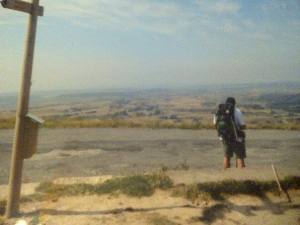
I remember summers mostly, and nearly every single day I have spent with my son. I remember the visceral experience of walking The Way, and the people, and the towns and food, though I need to look up the names of some villages. I recall the dates we walked through each of the places, no problem. And crossing Siberia is etched in my memory, though I’m fuzzy about some details. I could list the fine memories of my life for a thousand blogs and never get it all down. For some reason I can better recall things which have ceased happening (or people who are no longer with us) with more accuracy than the persistent events or people still in my life.

But…

I was going through some files of mine of previously published work for an anthology and I found some I don’t remember writing. I mean, the style is mine, the digression, and according to the bi-line and bio, I wrote the damn things. But, well, I must have been listening to some music.

I don’t mind forgetting; it helps me prioritize things in my life. I have one friend I remember every single moment together; another I can barely recall knowing at all. I just left a job after nearly three decades and it seems more like a character in a movie I once watched.

I took one of those memory tests and I passed. I think. And I have an incredible sense of direction. I need only travel somewhere once and for some reason for years I can recall exactly how to get there. But sometimes a student will say, “Did you get my email?” and I can’t remember if I did, what it might have said, or who the hell she is to begin with to be able to answer. Someone once said I have “Selective Memory.” Perhaps. Most of my life has been chiseled down to the simplest form of being, and I prefer it that way. When I walk in nature, along the ocean or through paths, I remain completely present. I have no need to remember, or plan for that matter. My son knows the names of all the birds and trees; I don’t, and it must frustrate him that I keep asking the names over and over. I don’t even know why I ask, as if at some point it will “take.” It won’t.

I can remember things if I can touch them, if I can feel it on my skin and under my fingers. I can remember things if they bring my senses to life, if they stimulate my enthusiasm for being alive and make me thank all the powers that be that I am living and breathing at that moment. I can remember things if remembering is all I have left, when the desire to pick up the phone is quickly followed by the realization someone is gone, and then it is quickly followed by sharp recollections of conversations and laughter, the way we planned or hoped or absorbed each other. I am glad for that.

I learned recently through my brother of something called “Muscle Memory.” I am sure the brain does the same thing; we’ve long known that repetition aids recollection. Maybe that’s my issue: I simply have no need to remember most of the minutia, the passing deluge of the common occurrences. But when something stimulates my brain, it grabs hold, and later I can at least salvage the finer moments of my life. And to be honest, how many fine memories does one need? I’ve decided if I can keep track of five fine memories as I grow older, I’d already be a lucky man. The balance of this, of course, is the five bad memories that must remain as well.

It is interesting how all ten of those events can be so related.

I remember when a bolt went into my son’s skull; I remember how brave he was as they stitched his head. I remember a summer of blisters covering my feet; I remember when we climbed the Pyrenees together. I remember the unparalleled excitement of a friend’s plans to travel; I remember how he never came home.

I remember how excited I was to finally graduate from college; I remember the finest days of my life were at college.

I remember the last conversation with my father; I remember the last conversation with my father.

18881841_10211883327026047_8943898358793139406_n

A Kind Morning

0b2e6e0c94fc6830bb494bef2d0b02dc317dec7c

I am writing in Panera this morning, finishing a chapter, eating a breakfast sandwich, drinking some hibiscus iced tea, listening to perfect background music, after a nice long walk on the beach this morning. It’s a nice day. I’m in a happy place. Plus, you know, free refills.

It isn’t crowded and a supervisor here has six or seven workers cleaning the hell out of this place. One woman pushed a carpet sweeper (not a vacuum, one of those quiet ones so I can still hear the music, thank you) under my feet several times, but I resisted telling her the egg she was getting was already there when I sat down. With each new area, her boss reassured her she was doing a fantastic job. Another gentleman cleaned the one other chair at my table—over and over for a few minutes I might add; the chair is clean. Then he took the supervisor’s encouraging words to heart when she told him to take his time and clean every single chair as perfectly as he had the first; he asked if I wouldn’t mind moving to the other chair so that he could clean mine. I happily obliged. It gave me a chance to see my earlier work from a different perspective. Honestly, it helped me see so much from a different perspective. Interestingly, he looked very familiar, but after teaching so long eventually everyone looks vaguely familiar.

The supervisor heartily apologized but I said it was absolutely not an issue, that she should be very proud of her employees. I told her I’ve been working with people about the same age as these workers for thirty years and I’ve never seen such dedication to completing the job, and doing it right. She thanked me and agreed they are that reliable. She turned to the woman closest to me, the carpet sweeper, and said, “Did you hear that?” and the worker smiled wide and said, “Why yes I did! Thank you sir!” and she clapped and a few other workers clapped and the supervisor laughed and smiled at me and whispered “Thank you again,” and I told her, quietly, “really, thank you.”

I then recalled that the young woman who brought me my breakfast sandwich was especially helpful in placing it down and asking if there was anything I needed and if I wanted a refill on the iced tea she’d be happy to get it, and she would be back to check. Yes, I’m at Panera. I did, in fact, need a refill of my hibiscus tea but decided to retrieve it myself. When I returned, a cinnamon roll had been placed at my table and the young woman said, “This is from Ellen (the supervisor).” She saw my tea as I sat down and said, “Oh I was going to get that!” and laughed and walked away.

These are very special-needs workers. I just learned they’ve been employed here for quite some time and the gentleman I recognized used to work at a Farm Fresh Supermarket I frequented before it closed down; he retrieved the carts. I am glad to see him working again.

The list of things that are absolutely right and good here is extensive. I am one among millions these days caught in the current of irrational leadership, negative reinforcement, unwarranted personal criticism, and basic meanness and hatred. Here among these fine people is the example of all we can be; the potential each of us can hope to obtain; such ethics, such basic decency to others.

I am coming back. I found my new office. Please, if you are ever on Lynnhaven Parkway in Virginia Beach, Virginia, just near the mall, patronize this Panera. They’re setting the example.

dalailama1-2x


In the Space of Fifty Years

aug 4 17 006 (2)

We looked at the stars again. Saw some passing meteors and the nearly full moon of course. And a few planets. But mostly stars. I don’t know their names and no matter how many times I read about them or someone explains them to me, that part of my brain simply doesn’t operate well anymore. I know Orion because of the old Orion Motion Pictures; that’s it. It is the same part of the brain that doesn’t allow me to remember names of students or meeting times. But out under the stars on a clear cold night you really don’t need to know the names of anything; not the stars, not students, not the days of the week or the towns on a map. It is late, and you’re outside like our primitive ancestors stood outside and there are stars, the exact stars our original DNA saw, and labels are useless, except to call them timeless, to call them exquisite, and to know that they are.

Some nights the temperatures are freezing, but that is usually because of no haze or cloud cover so the stars are even more brilliant. With the small scope we can see the rings of Saturn and four of Jupiter’s moons. We have also seen Venus and Mars, and a herd of constellations that start with a P or a C, I forget. One of them is Pleiades, I know that. They are the seven sisters.

I do know the big dipper when I see it, and a long time ago I saw the Southern Cross on a continent far away. I assume the brightest star I see so often in the south is either Alpha Centauri or Vega, but I really don’t care one way or the other. I’m not going there, not teaching astronomy, and I’m not trying to impress anyone at all. I did take an astronomy class in college, and on one cold night we took a powerful telescope to a hillside and took turns scanning the sky. When it was my turn I said, “This is out of focus; it’s all fuzzy,” to which the professor looked and exclaimed, “Holy Cow, you found a nebula!” He then told me I didn’t discover one but I did point the telescope toward a fuzzy patch someone else had discovered. Still, I’m not unromantic—I wasn’t oblivious to the idea that I was staring deep into space, across billions of years ago toward eternities from now.

I can’t wait for clear nights at home when we can see stars in the darkness across the bay or the river, but what I enjoy looking at the most is the moon. I never tire of staring at the craters, especially when it is a half-moon, which makes the craters so much easier to see than when the moon is full. My son will point the telescope toward Saturn’s rings or Jupiter’s moons and I’ll say, “Yeah, nice, now let’s look at our moon again.” He always obliges, but I understand why it isn’t as important to him as it is me.

In the late sixties I was just another kid like so many caught up in the space race, following the Apollo missions as they came close to the moon, orbiting it, sending back images of its surface. I had a brown jacket with a NASA patch sewed on the sleeve and an American flag on the other. I knew every aspect of space travel—the speed needed to exit the earth’s gravitational pull, how the Saturn V rocket was built, the space inside, the Space outside, the purpose of each mission, and the names of every single astronaut.

I turned nine in July of ’69 and we just moved into our new home. I remember my sister sitting on the floor and I joined her as we watched Walter Cronkite dictate the actions of Neil Armstrong and Buzz Aldrin while Michael Collins orbited above them. The next evening, I remember going outside and looking up at the sky, knowing they were up there and wanting more than anything to go there someday. We then lived in a world where we had walked on the moon. Incredible. It was the first serious ambition I remember; I wanted to train at NASA and be an astronaut. Of course. It wasn’t because I liked the science—my brother is the scientist in the family. No, it was because I liked the ambition of it all, the pursuit of something seemingly impossible, literally otherworldly.

Even at nine it meant to me that despite the turmoil of the sixties we kept our eye on the ball and refused to believe we could not achieve Kennedy’s decree. I am not sure the succeeding generations have a comparable ambition, at least not one as grand. Mars? Someday. Not yet.

So we go out and look at the stars and the full moon, and whenever I do I have hope again, despite the problems with the Russians (like in ’69), or bad race relations (like in ’69), or protests on campuses (like in ’69). It seems we have lost that spark, just a bit, and that’s okay for people like me who had that time, had that foundation of combining dreams with plans, ambitions with determination, like NASA did when I was young. But I wonder what the nine-year-old’s today turn to for that lesson of hope, that example of integrity and focus. What field do children’s fathers bring them to just before sundown to sit on lawn chairs and wait for what happens? An empty field has the potential of the sum of all possibility.

Humanity needs something larger than itself to shoot for. We can over-focus on tragedies and deceptions, leaving us the impression that today’s headlines are the beginning and ending of our existence. In the midst of such madness, striving toward an almost impossible ambition provides the perspective necessary to keep moving forward, to keep hope, to keep enough integrity to recognize we can do better than this. The greatest minds combined in the history of humanity have not yet figured it all out; but the pursuit itself has always been their purpose. We have focused too close to home, aiming merely to achieve; what a disappointing ambition. Perhaps we don’t spend enough time outside, where all desire begins, where all hope is born. 

Maybe too many people think everything’s already been discovered. I’m sure others felt like that every step of the way from the Dark Ages through the Renaissance. And for the record, it wasn’t Galileo who first mapped the moon after seeing it through his telescope. That inaccurate historical note goes to Englishman Thomas Harriot who mapped the moon in July of 1609 several months before Galileo; 360 years nearly to the day before my sister and I sat on the floor and watched Neil Armstrong step down onto the lunar surface.

Can we reach the stars someday? Hell, I can’t even name the damn things, but I’m glad someone smarter than me is mapping the way. It was U.S. astronomer and pioneer of Dark Matter, Vera Rubin, who noted that more than anything else the discovery of the far reaches of space should teach us humility. We all could use a little reminder that we are at best merely guests here, moving through, making room for others hundreds of years from now to look up at the skies and marvel at the nebula, be amazed again at the craters on the moon.


pexels-photo


10 Thoughts Five Months Out

cb7365d091e62294644b2b9e6be11176--cover-photos-decision

1.

Most of the people I’ve known in twenty-nine years of teaching college should not be there, or they should be there and I shouldn’t; either way, someone’s out of place, and it’s probably me since I find myself that way most of the time—out of place. Like when I first started teaching and I was nearly the same age as the students who all were about the same age as each other so anyone of us could have been any other one of us. But I was the professor and everyone else wasn’t, and because it was their first time ever in a college and my first time ever teaching, college or otherwise, we were all a bit awkward and out of place. This really could have gone either way; disaster of the blind leading the blind, or one massive group therapy session in college composition. We all pulled and pushed each other through by our commas until we ended up twenty-nine years down the line, the students all with doctorates or partnerships and me walking away from the college feeling like I just wasted three decades.

2.

Once, a student wanted to go on a study abroad to Russia with me and I thought it was a great idea because she was so enthusiastic; I mean, more enthusiastic than any of the other hundreds of students I’d brought before. She told me she was going to have a baby and would be about four months pregnant on the trip but the doctor said no problem so she went. She was by far the most exciting person to have along, videotaping everything, photographing everything, and asking questions; and she even took the lead several times on tours through St Petersburg. Once, she was walking right in front of me at a full clip and was about to step out into oncoming traffic, ignoring my lecture about pedestrians not having the right-of-way, and I grabbed her by the hair and pulled her back out of the line of a speeding truck. This delivery truck was close enough to her to pull the bag out of her hands and onto the ground, and she said, “He saw me!” I told her yes, and probably he aimed; when we got home we told that story with a laugh like most people do when the shock and fear of what could have happened wears off. We connected well and she was like a much younger sister or daughter, and she had her baby and brought her to see me. She had promised to bring by the photos and videos from the trip sometime but she never did. She never did, no, she never had the chance. Her ex, the baby’s father, went to her apartment one evening to take their child. She ran outside terrified and hid in the bushes and called 911, and the operator heard her whisper “He saw me” just as her ex shot her in the back of the head and took the baby; Fuck. I almost quit then. It’s all so fragile, I thought.
3.

I almost quit after 911. I thought, like a lot of people thought, my already questionable career became irrelevant. It wasn’t of course; it just needed serious reevaluation.

4.

My first boss and I had a disagreement about procedure. It was after I had the students read Hamlet and they didn’t and after asking a few simple questions which they could not answer I asked who had read it and they all admitted they had not. So I told them they were all absent and told them to have it read by the following class, and they really should since after six classes of these “absences” I can drop the entire lot of them. I left and someone complained to my boss. He called me in and politely told me he had tried the same thing once and I really shouldn’t do that since a more appropriate approach is to simply give them a quiz and fail them. When I told him I didn’t want to teach them material they didn’t bother to read he said they might not have had a chance to get the work done, being a community college with workers and single parents and a variety of other excuses. I left his office. The following class I sat and opened to Hamlet and told them I was aware someone had complained and that I was told to handle it differently. I told them my boss wanted them to know I didn’t know who complained and that their complaint was taken seriously. When everyone seemed satisfied I asked who had read Hamlet, and when everyone admitted they still had not yet read it I stood up and said they were all absent—again—and they had better read it by the following class. I walked down the hall into my bosses office, told him what happened and told him if he thinks interfering with my teaching methods is a good idea then he should teach the damn class. He stared at me a long time and then laughed and said he bet they’d read the play now and told me to have a good weekend. This is insane, I thought. The students did read the play, but by then I no longer cared.
5.

I went into class one day and just stared ranting: The problem isn’t technology or over-attachment to cell phones or drugs or violence or video games or sex, too much or too little. The problem is college is boring, it is boring, It. Is. Boring. The problem is college is boring, it’s as boring as fuck, as boring as uncooked potatoes; it is as boring as a completely blue sky, as boring as season four of House where you already know how this shit plays out, it is that boring. Like the fourth movement of a bad symphony, like the way a guitar player feels the need to talk while tuning, it is as boring as an airport, as boring as a bus ride, as a rock garden, as John Cage’s 4’ 34”, it is that boring. Everyone here knows they can do an IT Boot Camp for six grand and get placed in a job making 40K, and they can work from home, they can live in Dad’s basement, they can, of course they can. But they don’t yet know that if they are that bored that they will probably find all of life boring as hell and it isn’t, and I told them that, and I pointed out how the completely blue sky has infinite stories, but they didn’t understand. I’m not very good at this, I thought.

Someone complained again. Go figure. “I’m sorry; he’s right,” my boss told the student. I liked my boss more than my job, and that isn’t right. I almost quit then.

6.

I’m bored. I’m leaving. It isn’t you, it’s me. I sold out I went for the paycheck when I never wanted to be part of this relationship to begin with. I totally whored out my entire career, took a dump on integrity, spit in the face of self-respect. I made a grave mistake; I took the job, I took the damn job. A lot of people are going to say I’m out of my mind for leaving and I should have worked it out but the truth is I’m bored, and tired and I’ve had enough. So, yeah, take care. See ya.

7.

I knew these people: Trish hung herself because her meds got messed up. Reetika killed her son and then herself because she didn’t like her husband. Dave sucked an exhaust pipe. Bud popped himself on live television. I’ve known these people. I’ve wrapped my arms around too many people who saw no way out; I’ve made them drinks, I’ve made them mad. I’m not like that, though people do worry about my bouts with impatience and distance. They have worried for a long time. I get calls: “Are you alright?” They don’t know, they just don’t and they’re worried about me. That isn’t fair. But if I have to explain to another student one more time the concept of double negatives I’ll be doing time for something. I have colleagues who can work with the eight people out of one hundred I actually asked who was shot at the Ford’s Theater in 1865 and these eight answered Christopher Columbus, but I’m not one of them. I don’t have the patience, or, more so, the interest. I’ve reached my limit on defining “complete thought.” I’ve done all I can about explaining the difference between “search” and “research.” I know for certain that if I saw one more student text someone while I was talking, I might have thrown the phone into the campus lake. I know this. This was a big red flag for me.

8.

When I first heard I had been hired back during the Bush 41 administration I was sitting on a picnic table behind the humanities building. My boss walked out and told me I got the job, which meant a great salary, benefits, and security. I was a college professor. My family was thrilled, I suddenly was met with respect when asked what I did for a living. “I’m a college professor” comes in second for respect just behind doctors. My path had been cleared; my future in tact. My boss asked what I would have done if I didn’t get hired full time, and I told him I really didn’t know. He asked if I had been scared that I wouldn’t get the job. No, I said.

Almost immediately something wasn’t right, something sour in my stomach. Really, right away something felt wrong with this, and I think it had something to do with the realization that no where on my long list of hopes and plans and dreams and ambitions was “teaching college.” I got the job but lost my nerve. That’s usually how it goes. I am not afraid of commitment. I am afraid of wasting time. It terrifies me. But I was about to have a son and it was time to get serious. I wanted to say to the people in my life, “I’m sorry if my decisions are not in line with what you would have done, that they can be seen as irresponsible, that they can be regarded as misguided, but I’ve made up my mind,” but I didn’t; I was a coward—I took the job.
9.

I drove by the campus recently and it didn’t feel close, didn’t feel a part of my past at all, let alone my recent past. It felt more like I used to know someone who worked there but only vaguely. A friend texted and asked what I was going to do next and I said I wasn’t sure, and she said, “Well, at least you have experience at that.”

Then she said, honestly, then she said, “Well, after more than thirty years it sounds like you’re finally the Bob I knew again,” and I put down the phone and cried because that was the only thing I ever wanted, to be myself again. And for everyone else, sorry if you don’t agree with my decisions; but they’re not yours. Isn’t that the best we can do? To know that the final decisions about ourselves are actually our own? If that is the grand test in life, I finally got one right.

10.

I can’t possibly count the amount of things I would have done differently in my life, but I love this one quote which has followed me since college. It is by Leo Buscaglia, and we exchanged letters many years ago, and I picked up one of his books in which I keep those letters, and it was on the page of this quote:

“I exist, I am, I am here, I am becoming, I make my own life and no one else makes it for me. I must face my own shortcomings, mistakes, transgressions. No one can suffer my non-being as I do, but tomorrow is another day, and I must decide to leave my bed and live again. And if I fail, I don’t have the comfort of blaming you or life or God.” 
                                                                                                   ― Leo F. Buscaglia,

14054911_10209240941688065_3938689277427780114_n

Fade to Now

10426893_10212684993107198_7869380231877784156_n

Maybe it is the current environment, waiting for the other shoe to drop, the sense when I turn on the news in the morning that I’m going to see a special report about some bomb, some decision which brings us closer to annihilation. But more than ever in my life I’m in search of simplicity, of those perfect moments we normally only experience with people we love. You know the ones—laughing with someone so hard that just recalling that moment makes you laugh again; a deep conversation over a glass of wine about the beauty of simplicity, the meaning of it all. Maybe you go for a walk and there’s a soft breeze; maybe you sit on the porch and there are a million stars, or maybe just a gentle rain falling on the awning and the sound is as eternal as a sigh. Those moments when what was and what will be are shrouded by the widening love of that moment. Those times. We live for those times.

Of course we can’t always live in the moment. By nature we remember and plan, and the need to survive requires lessons and anticipation. But the art of being mindful of the now is slipping away. We are engrossed in connections.

Distraction has crept into our lives like a slowly rising tide, soaking the moments normally set aside for a little peace of mind. We check the phone, get online, get absorbed by news updates, protests, uprisings, the falling Dow, we jump at the “bing,” worry about what didn’t get done, worry about what might happen. When we used to let go and simply “Be,” we now hold on, afraid of missing something, believing we need to keep up, stay informed. There is always—always—human sound streaming from somewhere; unfortunately it is rarely laughter. Hell, even tears would do if it meant a moment of honesty. But instead it is a video, music, conversations, the press, the pressing need to know, the pressure of parenthood, of teenagehood, of the extraordinary task of having an ordinary day.

This isn’t leading anywhere. I don’t have a solution, I really don’t. I don’t know what to tell you. It simply is an observation.

As for me, I’ll walk the water’s edge and think about walking the water’s edge. I’ll talk to a friend and share some wine and laugh about what strikes us, have deep conversations about what sets our souls on fire, and then try and keep it burning well into what’s next.

I have a few symptoms of this chronic condition called “time.” My wrist hurts for no reason at all; I have memory issues; I listen to a lot of Van Morrison. Still, I am fine with all that; it is like the proctor calling out from the front desk that there is only thirty minutes left to finish the exam: it makes me sit up and get down to business.

And it helps me focus on simplicity and the moment I’m in. One of the advantages of trying to focus on the “now” is I don’t really need too much memory to do that anyway. All I need is a place to walk.

And breadcrumbs. I should probably bring breadcrumbs.

12552985_10207528806325751_531358727225209771_n

Transitions

main-qimg-84d9a6255b577a75b9f3f33032922327-c


I am not a shell collector. I have a few by virtue of living near the water. And, of course, some I picked up on travels to Florida where the shells are beautiful. I do have an affinity for scallop shells, however. They are the symbol of the Camino de Santiago, the Way of St James. In medieval times, pilgrims would bring a shell back from the Atlantic to their parishes in France and Italy and other places as proof of completion of The Way. Today it represents the journey itself, both going and coming back.

So this morning I went for a long walk on the beach at Casey Key. I looked for shells on the same sands scoured by my friend Deb whose collection rivals that of anyone’s anywhere. It is phenomenal. But I don’t have her eye for shells in the sand. Part of that is my mind wanders when walking. It always does. It takes me some time to adjust from a normal schedule during a normal week to a non-schedule. 

Which is why this morning I halfheartedly wandered along the waterline, picking up and tossing back broken shells, paying more attention to the water sliding past my ankles and out. I was thinking more about an essay I’m working on for a reading later this week. It is about the floods of eastern Siberia when Michael and I were there, and the possibility of the tracks being damaged by water on our way to Vladivostok. Often, I work on essays while walking, finding the digression, trying to extract the predictable.

I’m not alone in being distracted at the beginning and end of vacations, trips, retreats. The first few days we often worry if everything back home was taken care of, then we concern ourselves with the new routine of not going to work, not returning calls, not checking email. Eventually, we settle in to simply enjoy the passing of now. But then toward the end we bend back into leaving, thinking about the “week ahead,” about what is waiting for us and piled up while gone. So the “vacation” days designated to the middle often don’t amount to much, but they remain the time we need; the value in taking off our armor and being ourselves, completely in the moment. 

So I let go. A dozen dolphins swept past and kept me in that moment for quite some time, the way they break the surface, the way one of them was a spinner, the way their return to these waters indicates the dangerous Red Tide is dissipating.

And I found a few shells. The best way to describe them is as small conch shells—really tiny ones, about two inches long. Most of these, when I do find them, have cracks or wide holes, but a few were in tact, survived the pounding waves and undercurrent. The shells themselves are simply the outer body part of an animal that has died and the soft parts of the animal have been eaten or decomposed.

Shells themselves have been used as money since the 13th century BC, and in some places such as West Africa, were still used that way well into the 20th century. A woman’s dowry would often consist of shells.

Hindus used left facing conch shells to hold holy water, and right facing ones are one of the eight auspicious symbols sacred to Buddhists. And of course shells have been used as tools and utensils for tens of thousands of years. The ones I have collected I’ll put on a bookshelf to remember my walks along these beaches.

The dolphins returned, and pelicans as well. A few dozen sandpipers chased each other in unison and the waves picked up out in front of Hurricane Michael off the coast of Cuba moving up into the Gulf and headed north just to the west. Post-hurricane high tide should mean fine shell searching.

When my own Hurricane Michael and I were in Spain, we wore the scallop shells on our packs. Painted in the center of the back is a red cross of St James. Today it sits on a bookshelf near my journals of that trip, and when I glance that way I recall cafes, walking through Galacia, or climbing the Pyrenees. The shell is an icon, a window to those times.

I knew I was moving toward leaving the Key when my mind shifted again toward Siberia and floods, the rumbling of the train, and the reading I have this week in Tampa. I’m not sure the essay is ready, and I need to print it out, and I hope the hotel in Tampa has a printer. Small thoughts, premature thoughts, seeping into the end of my walk.

Maybe that’s why the shells—they’re objects from the middle when I was still focused on shape and color, texture, water running up my calves. To me my friend’s collection represents more than the beauty and miracle of nature, it symbolizes retreat, it stands as her way of being in the moment. 

Perhaps writing is my way of collecting shells, albeit in the shape of stories.

I think that’s what’s missing in the Siberian piece. The water running up the tracks, the texture and color of the river beneath the rails. So often the trip is about being in motion, rolling along, eating, drinking, talking to people and watching the landscape; but during the floods we were focused on the here and now, the unknown and unpredictable. We didn’t know what we would find; we really had no idea what we might find and we kept eyeing the waterline and waiting.

FullSizeRender