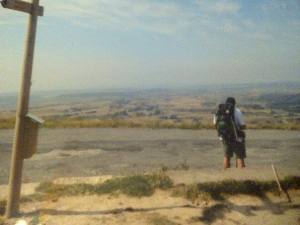

Some of us are masters of self-deception; we can convince ourselves of just about anything and we learn to look for the smallest of clues to justify whatever illusion keeps our delusion alive.
I am certain this all sounds somewhat psychotic, even sinister at times. I know. Yet this mental acuity of delusion and ambition is not only necessary, it’s what separates those of us in lives of quiet desperation from those whose names are synonymous with acts of greatness.
Two truisms:
One, “Insanity is doing the same thing over and over hoping to reach a different result.” Okay.
Two, “The Greater Fool is the one who thinks they can succeed where others before have consistently failed.”
But notice the problem; no advancement in technology, science, the arts, moves forward without a delicate balance of both: Science in particular means doing the same thing over and over to check results, to see if it comes out differently even once, only once in a million trials, to make certain everything is okay or everything just changed. The movie The Right Stuff which begins in California with test pilots does an excellent job of showing how insane those fools were to get into yet another new jet after everyone else had died, only to take flight to another level and eventually out of this world. Certainly the engineers made alterations each time, so it wasn’t the same thing over and over, but with patience and caution.
It is a difficult thing to keep trying to get something right that continually fails. And worse, everyone that cares about you watches and calls you insane for still persisting when nothing positive has happened, and they call you a fool for not listening to the sage advice of intelligent and caring people. But the reality is only we know what we are capable of and so few of us ever try to find out what that is.
Example: Vincent van Gogh kept painting the way he believed was right despite being told to change his ways by the most respected art critics and dealers—including his own brother—of the day. When he failed, they said, “The fool is insane, and he lived off of his brother!” When he succeeded, they said, “His persistence paid off, and he had the undying support of his family.” When he painted “Starry Night” from a room in the asylum, it wasn’t liked at all by others in the art world. Today, some estimates place its value at just about one billion dollars. Can you point out the genius among delusional if pressed to do so? Can we ever know for certain the guy on the corner in St. Augustine I met decades ago who was screaming to passers by that the voices in his head told him the “water is rising my brothers and sisters; the water is rising,” wasn’t talking about Hurricane Mathew? There’s a thin line between genius and delusion; and history has proven it takes an insane person, a fool, to be exalted for their persistence and determination. “How pathetic” they say beforehand; “How original” they say later.
I’m sure that, like me, this all makes you think of the overweight patrons at the health club I managed forty years ago. Some of the members were there to lose well over one hundred pounds, some fifty. I taught an advanced class for the football squad at Holy Cross College as well as a class where the minimum desired weight loss was fifty pounds, and some wanted to shed triple that. They tried everything. Everything, over and over.
One day I walked into class with five, five-pound bags of sugar in a backpack. I sat on the small riser at the front of the room and put the pack on the floor and told everyone to sit down. We talked a bit about weight, about the physicalness of carrying it around, the mental weight we carry with it; the ridicule from others, the spouses telling them they’ll never lose it and to give up, the neighbors calling them fools for going to the club everyday when “you should have thought of that before you gained all that weight,” never understanding, never ever empathizing.
So I asked a woman to come up and pick up the pack. She gasped when she tried, of course, and she barely got it off the ground. So I told her to crouch down and I put the pack on her thighs so that she could wrap her hands around it, and then I told her to stand up, helping her at the elbows. She laughed when she was all the way up, and then I told her to drop the back, which she gladly did, and it made a thud when it hit the gray carpeting so that everyone jumped. She sat back down; I picked up the backpack and put my arms through the straps.
“This is heavy,” I said, and we laughed. When I asked if anyone else wanted to try and pick it up they all shied back, laughing, looking away. I sat again and opened the pack and pulled out the yellow bags of sugar one at a time and lined them up on the riser.
“Sugar! Not-yet-completed cake!” We laughed. “How many people want to lose twenty-five pounds?” Everyone’s hands went up, of course.
“Of course! You have to want to lose fifty just to get in this class. This is just half of that–this is twenty-five pounds that you could not lift without great effort! Should I get another five bags so it meets the minimum of the classes’ desires?”
Everyone was quiet.
“Buy a backpack. Buy ten bags of sugar—granulated sugar of course.” We laughed some more. We had to; we had to laugh to do this at all. “Buy the backpack and fill it with ten five pound bags of sugar, and when someone tells you to give up, when you tell you to give up, when someone calls you a fool or says you’re insane for trying what you’ve already tried before and it clearly isn’t working, hand them the back pack—give your weight to them and tell them to carry it for a while. And then come to another class. Let them know that this time it’s different.”
“Persistent and determined remains crazy and foolish unless you keep going and succeed, but to keep going short of success is insanity. That’s where you come in. You believing in yourself is all that’s necessary for everything to work out. The others are just more grains of sugar you have to carry around.”
Why is it we praise the people who stay within our boundaries of expectation and understanding, but when someone pushes the envelope a bit, heads out toward Mach One on the meter, they’re crazy because they’re doing something we wouldn’t.
“Maybe people laugh at you because they know they do not have the determination and persistence you do to do what you’re doing, and they don’t have the vocabulary to tell you that. Don’t get upset, just keep emptying that backpack one bag of at a time.”
I have felt foolish lately and it has slowed down a project I am working on, and I thought of the members of the club, and I thought of Richard, the club owner who himself at one time needed to lose more than twenty bags of sugar, but he played the role of The Greater Fool, and he persisted to the point of insanity, until he crossed that thin line into “inspirational.”
There’s a thin line between so many things, but most allusive is the one between failure and unprecedented success. The problem is sometimes that line is so far ahead of us giving up seems not only easier, but logical. “No one would blame you if you just strapped the pack on and kept going; it’s easier than trying to empty the damn thing.”
But that’s why when we’re working on something you believe in that no one else does, something which everyone else might consider insane and foolish, it’s important not to look toward the distance for that line, but to look at the next step, then the next step, then the next one after that.

 a view from this wilderness
Bob- You are insane….but it’s the good kind of insanity. The backpack story made me laugh when I really needed to laugh! Thanks Bob
LikeLiked by 1 person
This speaks to me on so many levels! Perfect personal timing- let this article marinate…
Sent from my iPhone
LikeLiked by 1 person