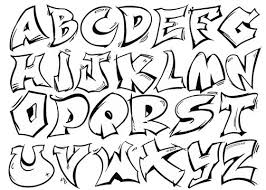
A
BCDEFGHIJK
LMNOP
QRSTUVWXY
Z
26 letters.
That’s it.
In the beginning. That which doesn’t kill us makes us stronger. To be or not to be—that one just six letters. Jesus wept—seven.
It is what it is—six.
I can’t write, my students say; my mother said; my very own demons say when something needs to be said but I’m at a loss for words. The history of English has turned and spun back on itself, argued with endings and double negatives, trampled meaning, treasured nuances, made murderers of us all, and unearthed muses to slipknot a string of letters, tie together thoughts like popcorn for a Christmas tree, individual kernels only able to dangle dutifully due to one common thread.
I do. Rest in Peace. Go to Hell. I quit. I miss you; I love you—7 letters both.
The alphabet was not alphabetical at first, made that way in the 1300’s on Syria’s northern coast. Today, we slaughter its beauty with a cacophony of sounds whose aesthetic value is lost in translation while simultaneously softening hardened hearts with poetry and prose for the ages. For nearly a millennium this alphabet. whose letters lay the way for understanding in multiple languages, has dictated decrees, is uttered by infants one syllable at a time until by age five they’ve mastered the twenty-six consonants and vowels. What circles of wonder are children’s faces when someone’s tongue pushes out “toy” “treat” “your mommy’s here” “your daddy’s home.”
Plato said, “Wise men talk because they have something to say, fools because they have to say something”; Socrates said, “False words are not only evil in themselves, but they infect the soul with evil.” The sins of our fathers forever condemn us to hell but for confession, penance, and absolution.
Forgive me father for I have sinned—14 letters.
Of all the languages on the planet, English has the largest vocabulary at more than 800,000 words, all from those same 26 symbols.
There are roughly forty-five thousand spoken languages in the world, about 4500 written today but almost half of them are spoken by less than a thousand people. English, though, is the most common second language on Earth—translated or original, the Magna Carter, The Declaration, The Bible, the Koran, the Torah, the tablets tossed by Moses and a death certificate all reassembled versions of the twenty-six.
I have a dream—eight letters.
Ask not what your country can do for you; ask what you can do for your country—fourteen.
We the People–seven
Teeter-totter—four.
Mooo—two.
Billowy is one of only a few seven letter words whose six letters remain alphabetical. Spoon-feed is the longest, at nine letters, whose seven letters are reverse-alphabetical.
We can talk, us English. We can spin a yarn, chew the fat, beat the gums, flap the lips. We have the gift of gab, we run off with the mouth, we can spit it out, shoot the breeze, talk someone’s ears off, or just talk shop, talk turkey, talk until we’re blue in the face, be the talk of the town. We can, for certain, at just seven letters, bullshit.
My point (7 letters) is that (3 letters) sometimes, despite our skills (4 letters) with the English language (6 letters), we are often left, at just six letters, speechless.
What are the odds on a planet of nearly eight billion, the vast majority of us would comprehend each other because of twenty-six characters, small symbols.
The first time we meet we say hello (four). And then we love (four). And all too soon later, with the misery of six letters, “Goodbye.”
And because eight characters is simply too much sometimes; sometimes too painful, we knock it down to three with RIP.
And the rest is silence (six).

 a view from this wilderness