Best Cheese I Ever Had

So here’s one I wrote and let it go. It’s partially told in a piece in my short collection Howl at the Moon (Cuty Wren Press). It came to mind this morning because I’m leaving in a few days for Amsterdam, and I’m sure there will be cheese involved.

I was in the Netherlands about twenty years ago, maybe twenty-five. I lectured at the University of Amsterdam and talked about art and Van Gogh and death. Normal stuff. In class one day, which was open to visitors and in which everyone was required to speak English, an older woman whose late husband was an artist sat in for the lecture, and afterwards she gave me an etching her husband did of a local cathedral. When she learned I was going to find a way up to the Zuider-zee, she offered me her son’s motorcycle for the day. Students gathered to talk about Van Gogh and about America and more. While the woman and I spoke, they talked amongst each other. One guy asked another if she was working that night and she said no, but the next night she was. He told her he’d come by. Another said it hurt to speak in English, and the young woman said it’s good for him to learn, that she wants to learn as many languages as she can. They all talked about van Gogh’s art.

That night on my way back to the hotel, I walked through the Red Light district to use a computer at a Brown Café to tell my officemate about how it was going so far. The windows of the district display scantily clad women, select lingerie on the floor, a couch, maby velvet, sensual surroundings and lighting. They move about tenderly like flesh and bone mannequins, and when a prospect passes, they urge him to pause, consider coming in for a quick turn. They whisper to them in Dutch, in English, French, German. There’s a back room for the business end of the exchange. I kept walking.

The next morning was one of those movie-set days with a perfect temperature, ideal soft breeze, postcard tulips and windmills, dikes running roadside holding back calm waters. I rode out to a Volendam café on the docks where som sailor just back from the states finished washing down his ketch, and we talked about his Atlantic crossing, about the Chesapeake Bay where he had been, and about the cheese he had on deck which he shared with me. We went in the café for a beer and the waitress offered some Gouda and bread with eel and herring. She said the cheese was from a small factory just a few miles away and that I should go, so I did.

Inside the cheese factory—a small barn-type building—a young man and woman stirred a vat of vlaskaas cheese which was sharp, and they told a half dozen of us how gouda is made and molded into wheels and how we shouldn’t refrigerate it, and how healthy it really is, being a hard cheese, including aged, smoked, and toasted. I bought two wheels for fresh gouda and stacked them in my pack and walked outside where a few other travelers from a bus sat at a picnic table.

A Dutch girl about twenty-five eating cheese and drinking white wine asked me to sit with her, and when I told her she looked familiar she said she had been at my lecture, and she swept her blond hair behind her ear and that’s how I knew her—she did that the entire reading, it kept falling forward and she kept sweeping it back and I thought Geeze just tie it back already. I told her simply I recognized her.

She offered me a glass of wine and retrieved a plastic cup from inside, and I shared her cheese. Her name was Abby and she came up to get a few wheels for her family and one for her. After about thirty minutes and a glass of white, the bus driver called for them to go so she left and said she’d hoped to see me again, and I walked toward the bike to leave. The cheese was heavy but I was glad to have it, and the perfect day made me not care so much.

That night I packed for my trip home the next day and decided to head back to the Brown Café to write again to my officemate back home to tell him about the ride out to the North Sea and the sailor and the hair-sweeping blond. I did so on the upper level of the first café I came to where the open door swept the smoke from the hash up to the internet café section so that by the end of my email I couldn’t spell anything correctly.

I left the café and strolled around the district where people drank espresso and the aroma of various smoke filled the narrow streets and top-shelf women worked the windows, and if you can see this coming you must believe me that I certainly didn’t see it coming at the time: I turned a corner and glanced at a blond in a prime-site window, and it was her, Abby, the hair girl with the cheese, and she motioned to me like I was just another passerby, but then recognized me and sat up more from where she had been prone on some pillows and her white lingerie lingered just a bit behind, and she pulled her strap back on not trying too hard to do so, and she pressed against the glass and urged me to come inside, motioning toward the door on the left. I thought about just walking by but that thought didn’t hold so I went in just to say hello. She cut me a slice of the cheese she had bought that day and she pointed that out, that it was the same wheel of cheese that we shared earlier, and that thought seemed to connect us closer than I cared, but it hung there between us. I had one slice of the vlaskaas on the table and said I didn’t want her to lose business on account of me, and that I really had no intention of patronizing her profession, and she smiled and said she understood. I left, and on the way out I passed the guy from class who had asked her if she was working that night. He glanced at me and I laughed. This is not like the colleges at home, I thought.  

On the way home I walked by the Van Gogh museum one more time. It was quite in that part of town, and I stood in the cool night air, the sweet aroma of flowers everywhere, and remembered Vincent’s words about Sien, a prostitute who lived with him for a while with her young daughter. About her he wrote to his brother, “I believe there is nothing more artistic than to love people.”

Next week I’ll be there, at the museum, at the village where he lived a while with his parents, and along the canals. Just look at how everything in our lives moves on, grows and changes and, eventually dies. We age and hold out hope that some of who we used to be remains, knowing, of course, that is true only for a little while. Since I walked those streets last, friends and loved ones have died and my world has changed time and time again, but this week I’ll walk along that avenue and the hallways of the van Gogh museum where his work remains on permanent display, and I’ll think about the man who was nothing more than a peasant who lived with a prostitute, didn’t make any money in his last ten yers, lived off of his brother, was disliked and consdiered a leech and a failure by everyone including the best artists of the day who for the most part said his work had no hope. And I’ll think about that as I pass people sleeping on benches in the park and wonder which ones are artists and which ones of us merely pass judgement.

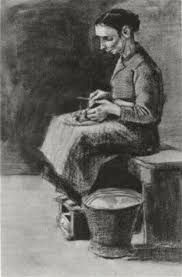
Van Gogh Drawing of Sien Peeling Potatoes

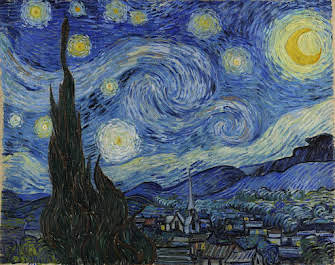
Vincent van Gogh

Vincent van Gogh was born on March 30, 1852, and died at birth. His parents buried him in the entrance to the graveyard in the church where his father was an Episcopalian minister. Exactly one year later to the day, the couple gave birth to another boy and named him after his dead older brother. Vincent van Gogh was born March 30, 1853, and spent his youth seeing his name and birth date on a headstone when he went to the church.

He tried working in a bookshop, as a tutor, an art dealer, and a preacher in the mines of Belgium. He spoke multiple languages, read Hugo in French and Dickens in English. He fell in love with his cousin and lived for some time with a prostitute and her daughter. For the last ten years of his life he lived entirely off of his brother, sold only a painting and a scattering of drawings, fought with every artist he knew and rarely paid his bills. He was belligerent and sick with syphilis, manic-depression, and epilepsy. He was considered a bum by every contact he made, and only two art critics thought he showed any promise at all. At thirty-seven he shot and killed himself.

That was 135 years ago this July. We’re still talking about him.

By today’s standards, he would be outcast and dismissed as a man who wasted his life pursuing a passion with no hope of even making a living at it, let alone gaining any success. He would be quickly forgotten.

A few years after his suicide, Vincent began to be recognized for his innovations in art, his vision as an expressionist, and his deeply-moving letters to his brother about life, love, God, hope, art, and death. Today he is considered one of the most influential artists in history.

I’m going to the Van Gogh Museum in Amsterdam next week followed by a reading I’ll be doing at the Van Gogh Library in Neunen, Netherlands.

It started when I was a freshman in college, and a dear friend, the late artist James Cole Young, gave me a three volume set of letters Van Gogh wrote to his brother and other artists. I mostly ignored it for a few years, until in Massachusetts when I went home after work each night and read them several times, intrigued by two seeming contradictions: One, he wrote extensively about his inability to gain any attention at all in the art world and other artists’ bad opinion of his work, yet he became one of the greatest artists of all time; and two, he stated often his thrill for being alive, for life itself, for everyone, and he wrote of the insane idea of taking one’s own life, yet he did just that. So I looked further. As a graduate student, I wrote a one man play as one part of my Masters in Arts and Humanities at Penn State and performed it at the Olmstead Theatre in Pennsylvania, under the direction of the late playwright Eton Churchill. Eventually, my work Blessed Twilight: The Life of Vincent van Gogh was released in 2018. It is all first person from Vincent’s letters.

In just over a week I get to hang out where he lived and wander aimlessly down the same streets of Neunen. Perhaps I’ll even drink some absinth

Most people love Vincent’s art. But I like his writing.

Like this:

In a painter’s life, death perhaps is not the hardest thing there is. 

The earth has been thought to be flat. It was true, and is today, that between Paris and Arles, it is. But science has proven the world is round and nobody contradicts that nowadays. But notwithstanding all of this people persist in believing that life is flat and runs from birth to death. However, life too is probably round and very superior in expanse and capacity to the hemisphere we know at present. For my part, I know nothing of it. But to look at the stars always makes me dream as simply as I dream over the black dots of a map representing towns and villages. Why, I ask myself, should the shining dots of the sky not be as accessible as the black dots on a map of France? If we take a train to get to Rouen, we take death to reach a star. One thing undoubtably true in this reasoning is this: that while we are alive, we cannot get to a star any more than while we are dead we can take the train. So it seems to me possible that cholera and cancer are the celestial means of locomotion just as steamboats and railways are the terrestrial means.

To die quietly of old age would be to go there on foot. 

I feel more and more that we must not judge God on the basis of this world; it is a study that didn’t come off. What can you do in a study that has gone wrong if you are fond of the artist? You do not find much to criticize; you hold your tongue. But you have a right to ask for something better. It is only a master that can make such a muddle as this, since then we have a right to hope that we’ll see the same creative hand get even with itself. And this life of ours, so much criticized and for such good and exalted reasons—we must not take it for anything more than what it is and go on hoping that in some other life we’ll see a better thing than this.  

–Vincent van Gogh

On This Silent Night

The Blue’s Brother’s Light Display

It’s misty tonight but not raining, and all the lights have halos from the soft air. Today I slowed down after sixteen weeks of not, followed by a few days of noise–it was all in my mind, of course, but noisy just the same, so this evening I decided to slow down and after standing on the front lawn looking at the moon through the haze in the east, I drove down into town.

I put on some solo piano music from George Winston’s December and rolled slowly past the fish market to the real estate office where Steve and Randy Blue have the best lights I’ve seen. They have music synced with a radio station across the river, and the largest tree in the front keeps beat with the sounds, but I kept my windows rolled up and just listened to George’s deep rendition of Variations on Canon in D. Kids with parents ran through the paths between light displays, and I assume they were yelling, or calling out what they saw, but I heard nothing. Just George and Pachelbel.

I stopped next door at 711 and bought some hot chocolate, talked to Wayne a while in the parking lot, but families started moving past the Nutcracker display to the parking lot, so I drove off toward the bay, pausing in front of Hurd’s Hardware. Jack Hurd has the entire front window filled with illuminated Christmas trees in various colors, and on the left side the trees are several deep. This window against a black sky with no other stores around makes it more silent than it should be. I turned off the car and the radio and rolled the window down and still heard nothing but quiet, a faint spill of music from the light display at the realtors.

Behind Hurd’s and across the street is the village branch of the county library, and tonight my son worked while a local Y hosted kids who had entered their artwork to be hung in the library gallery in the back. I rolled down the street and looked back into the window. This, right here, is one of my favorite things to do in the dead of a cold night in December; to see kids and families laughing and warm inside a window, not able to hear them, but watching them play and talk while outside I can see my breath and my face is tight from the cold. At one table near the front Michael talked to a woman, while over near the door a few kids entered to head back to show their parents their work.

On the way home I rolled into the IGA and could see Kristin from the museum and one of her kids at the checkout, talking to the clerk, laughing. The lot was empty, mostly because it’s Monday but also the rain, and I headed to the river, rolled down the windows, and turned off the car and sat quietly. Out on the Norris Bridge I could hear the whining of truck wheels moving across to White Stone, and the light at the airfield was circling, indicating someone will land at some point tonight, probably Mike in his PT-13 headed back from some weekend show. All of this going on yet all I can hear is the lapping of the Rap on the sand and the slow movement of a heron about fifty feet away in the marsh. To my right in the windows of the yellow house across the reeds is a blue light of a computer or television flashing on the walls.

I like the peace I find when I am outside looking in at Christmastime, and some rebirth of familiar connections take hold of everyone. It is fleeting of course, but present for now. I enjoy watching these flashes of life around me. I try not to be creepy and prefer only to look in public spaces like convenience and hardware stores, but it is nice to catch a place like the library where so much activity is going on behind my music, like shadows on some cave wall. But this year is different than last. Some of the people I used to talk to every day have gone silent, somewhere beyond the ideas and anticipations of those still here. So my world in general has gone mostly silent in the past several months for the first time in three decades.

So tonight I decided a drive made perfect sense; not only because it fills me with some sort of hope to see life being lived, but also because I’ve always been just outside looking in.

This happens to a lot of people, especially this time of year; we have a sense that we’re better off a step back, perhaps a small part of the conversation but not participating as much as others, preferring instead the safety of the next row back instead of the circle of talkers; we are more comfortable on the patio bench quietly watching the stars until someone else who feels awkward comes out and quips about needing some air. That’s where I am, away from the small talk, and I turn around, place my elbows on some wrought iron fence behind me, and look in a everyone laughing. I am okay a step back.

But at the river I sat in silence and thought about why this distance works for me.

It is safely consistent. I know blindfolded how to walk through most of the Blue’s Brother’s light display, and I know Wayne and Maria will be at 711 at this hour. Monday nights Michael always works the library, and Jack’s trees make everyone smile for a few weeks. They make me smile anyway, and I appreciate that. It is predictable and consistent at the end of a year that has been anything but either.

So I drove around listening to Winston’s version of Bach’s Joy and felt completely and literally at peace. Life is out there, through the windows, in the market and the front steps of the convenience store. The kids in the library laugh like Michael used to when I brought him in to sit at those same tables two and a half decades ago. This is what we can count on when we are running out of things to rely upon; that Christmas will bring out people with lights and once dark window displays are somehow almost personified, the trees in Jack’s window display appear more like watermen at the cafe standing around talking about the coming snow.

I slowly rolled down my long, winding driveway until I reached the lamppost near the lawn at the house. The porch is lit with white lights, as usual, and the wreathes illuminate the walls and windows. I had one other significant loss this past year; the Penguin, affectionately known as Pengy, died last January. His wires were shredded from years of moisture and his skin simply popped. Sad really, because I liked seeing him for twenty years at the corner of the porch.

But things change. I have new light displays now someone sent me, and after tonight’s Chocolate Bailey’s on ice I’m not going to care so much anyway. But I do have a suggestion: Turn off the music except for something peaceful, and stay outside for a bit–watch life for a while from the outside, observe it’s consistent laugher and predictable love. Watch others enjoy the moments they have together while they still have those moments.

But don’t stay out there too long. The love is inside.

Hurd’s Hardware, Deltaville
west on the Rappahannock tonight

Stopping by the River on an Icy Morning

The tide is lower than I’ve seen in some time, mud flats running into the river easily one hundred feet or more. Fiddler crabs scurry about and seagulls land to grab them in the same place they normally would dive from on high into water three or four feet deep. This ebb is unusual.

Where the water does lap at the mud, foam formed from the icy cold winds, with temps in the upper twenties and lower thirties early this morning, and the winds pushing down from the northwest drop those another eight degrees or so. It is cold, and damp, so I feel it in my bones.

I like this. I mean, no, not all the time. But every so often I need some visceral reminder that I am alive now, not tomorrow when I have a laundry list of things to do or yesterday when some punk in my college comp class complained because I didn’t pass his plagiarized paper. Now, I am aware of the cold, the mudflats and panicked crabs, and my skin is tight, my eyes water from the wind, and my breath is frozen. It cleanses my entire world. I move about, which gets my blood flowing, and that not only warms me but awakens my senses even more. My mind, too, is clear, as if the winds and the cold blew off the soot that settled all semester.

Then the obligations seem fleeting, the problems which yesterday boiled my blood from the sheer weight of such minute interruptions, are cooled and dismissed by the ripple of foam running down the beach to Locklies Creek near Rappahannock River Oysters.

Here’s what is important, that I am still here. Alive, but more so, aware that I am alive, here, along this river today, and the cold pulls tight the skin on my face.

I thought of Richard Bach this morning and his work Illusions, in which the protagonist says almost as an aside, “Here’s a test to see if your mission on this earth is complete: If you’re alive, it isn’t.”

Hard to know sometimes, though, what that mission might be, isn’t it? You’d think by my age it would not only be second nature, but nearly complete, but I’m just waking up to the fact I should probably do something with my life. To do that I’m going to have to suppress the cold reality that I’m not young.

Except today, when what could have been some stagnant morning happened to turn kinetic because of the cold. My energy returned like a flood tide, and I stood on the sand wondering how to channel it. I think we do that sometimes; we have ambition, energy, even a wave of hope, but we simply don’t know what to do with it.

And for the first time in a long time, I understood my immediate response:

Nothing. Do nothing.

See the day, walk along the river and watch the eagles find food, and the lingering osprey who has not yet left for points south, dive for his meal. The most essential elements for life go ignored, or worse, aren’t even considered, for our need to be “productive.” But is it any less productive to walk on a leaf-covered path and watch cardinals move from holly tree to the ground and back? Is it any less productive to look east across the bay or the Atlantic and contemplate the waves, their calm and their power, as they approach and recede?

It is the same in summer for me, the blazing heat on my neck and face insist I remain present, the sweat on my forehead somehow similar to the tears from the cold wind, catch me and hold me tight in the moment, and I welcome it because at some point it will no longer be, or, better said, I will no longer be.

But not today. Today a dozen geese came in low across the duck pond and settled on the river just to the west, their honking subsiding, their journey paused for now. It doesn’t end exactly, not yet, but they take a moment and rest before they need to continue their flight.

And maybe they discover their purpose is in these moments, aware of the peace around them when they’re not rushing from one place to another, leading a flock or following the same. For geese, it is when they land and rest that it is impossible to tell who was in charge and who fell behind.

I came home, eventually, made some tea, organized my thoughts, responded to a few inquiries, but I did so with added calm I didn’t have before. I have a sense of peace now, of some sort of presence I can’t quite define, which is good, since I still have more than a little to do in front of me.

Yes, much more to do still in front of me.

Present Perfect

1908040_10203813288720133_7224931381547605230_n

I’m thinking about Spain tonight, that time back then, and the lessons I forgot, the moments which were later diluted by misguided responsibilities. The way I fell apart just a few years later and leaned too hard for some time there; the way I still do sometimes. The way everything makes sense when I’m talking to the right person, and how I know it should make sense all the time, and how it doesn’t. That’s on my mind tonight. That, and Spain.

I’m thinking about how I carried home with me that sense of life as it was meant to be, at least for me it was, and how it lasted for a little while back then. And tonight I’m wondering what happened to it. I thought I’d never forget what I apparently forgot. Then more recently after some significant changes, I was sure I’d never again forget to be present, to be aware of life, now.

Then late last night I read a letter –this morning I suppose–in which a small part told me of all the versions of me in thirty-five years, that one, the one right after Spain, was the easiest to love. “Find him again,” it said. “You won’t be at peace until you do.”

Just. Well. Fuck.

Spain.

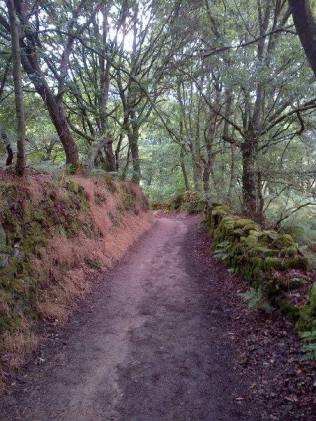
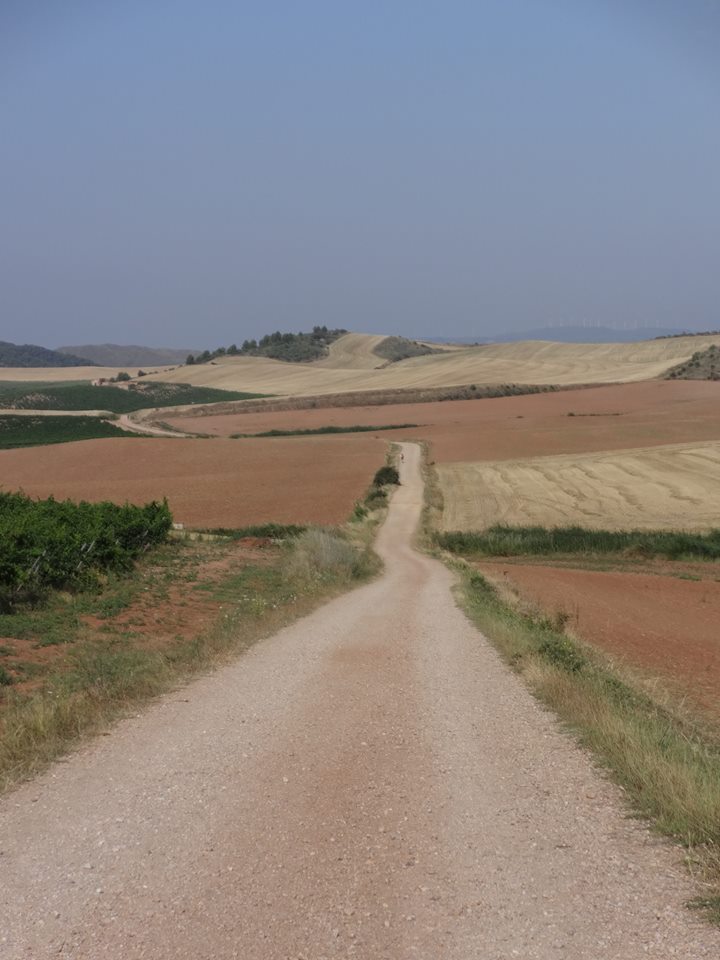
One evening a decade ago, Michael and I spent the night above a bar in the village of Samos and had pulpo–octopus–for dinner. Later that night a priest invited us to a private party and we stood next to four buffet tables of pintxos and wine, and we ate and stood on the balcony, drank wine and watched swans swim in the lake and hissing at the setting sun behind the cloister. Every single day outdid the previous one. I kept waiting for that golden moment, and they kept coming. Like that following morning when we walked to a nearby field and found a chapel from the 9th century alone in the mist, part of some eternal sacred silence. It was not a five-hundred mile journey; it was one step at a time, one moment at a time, over and over. That might be the most practical lesson of the Camino.

We slept on yoga mats in a hallway of an old church in Logrono, Spain, with seventy other tired souls after we shared dinner and walked through the basement of the five hundred year old building. For two nights we slept in comfort in the same hotel Hemingway stayed while working on The Sun Also Rises. In some small, old chicken village we stayed in a brand new albergue which had no business being open yet. The floors and ceilings weren’t done, it was freezing inside, and the yet-to-be-inspected bathroom was three floors down. The only bar in town was closed so the owner gave us a few beers which made up for the thick dust everywhere. We stayed near Torres del Rio above a bar with fine food and a wading pool out back to soak our blistered and swollen feet. We stayed in an old monastery a hundred yards from a church St Francis of Assisi himself asked to be built. In Portomarin, we stayed up as long as we could because the rooms were all filled. We hung out in a small café until 1am and then walked around the misty, cooling waterfront. Then we settled on the town square with covered walkways running next to a medieval church. Against some storefront we pulled together folding chairs and wrapped ourselves in whatever we could and tried to sleep in rapidly dropping temperatures. A kid on a bike did tricks on the steps of the church until 3 am which anyway kept me amused. At 4:30 we got out our flashlights and headed west. You can see a million stars in Spain at 4:30 in the morning, and the darkness makes the silence almost melodic.

In O’Cebreiro there was no room and we nearly walked out of town to camp when a man waved us toward a back door at an inn and we ended up with a beautiful private room for practically nothing at all and just outside the door were a few tables on a stone patio overlooking valleys that stretched across Galicia. In the morning the fog sat below us in those valleys, and the sun came up like we were looking at the ocean until the clouds dissolved and the sky turned blue and the green hills welcomed us.

A few weeks earlier when we first crossed the Pyrenees into Spain’s small village of Roncesvalles, we stayed next to a chapel Charlemagne used and at night we went to the basement and spent hours drinking gin and tonics and talking to the innkeeper. In the village of Zubiri in Navarra, just before Pamplona, we stayed in a new place on the fourth floor and shared a room with a couple from France. My son took pictures from the Roman Bridge outside our window. A few days later on the eve of the feast of Saint James, patron of this pilgrimage, we stayed in a small inn run by a single mom who made dinner for us, a woman from Madrid, and two men from Germany. We shared a delicious Italian meal and drank clay pitchers of red wine and talked about the distances. We laughed in three languages and despite someone snoring most of the night we slept well enough to leave an hour after everyone else making our journey quieter and more perfect. We didn’t worry about how far we walked or where we might stay. We walked and we would find a place. Like the fly-infested villa with tremendous views, or the albergue with dogs who insisted on sleeping on our laps, or the room above the garage with a killer bar at the street; or the stone building down some slope where we met some girl from Texas and a father and son from Amsterdam. After paying at the restaurant we drank the best hard cider in Spain.

In one neighborhood as close to suburbia as we ever saw, some couple opened an albergue in their house and we got the first two of five beds, the others occupied by a salesman from Madrid, a woman from Barcelona and another from Majorca. We all had dinner on the back porch where all the flies in Spain gathered to join us, as well as a dog named Bruno, and the sun was brilliant and we slept well. Once, we stumbled into some tiny town, another chicken village, looked like a movie set for an old western, and we slept in the bunk room with fifty other people. In the morning we picked up a few supplies at their shed they called a store, but man oh man the lemon chicken was awesome.

Everything we did was deliberate.

Everything we ate was delicious

Everyone we met enriched our lives. It should be this way all the time. At home. Anywhere. We live in a phenomenal world for a disturbingly short period of time. It should always be this way. In fifteen years I’ll be fifteen years older, no matter how I get there. In fifteen years I’ll be almost eighty. Life is too easy to love to give it the cold shoulder.

In Spain every single day for more than a month we remained present, aware, but when we came home after some time we slid quietly into the old routine, stumbled back upon a world where what was and what might be constantly drowns out what is, where few live in the present, where few talk to each other. Where people pass through life quietly.

“Those of us who live,” Vincent van Gogh wrote, “why don’t we live more?” It doesn’t have to be Spain, of course. It could be a week walking city streets, a day spent cleaning the garage, a moment watching the sunset across a salty plain.

And it doesn’t have to be fifteen years. It is, after all, jut one moment at a time, over and over, for fifteen years.

Buen Camino. I’ll be outside. Leave a message.

…the Fozzie pillow my sister made me,…

I have a lot of shit.

Books I’ll never read again, clothes I don’t wear, boxes of frames and a stack of artwork I’ll never hang leaning against the wall next to the bureau. I have enough pottery to supply a small restaurant, enough reusable grocery bags in my house and in the trunk of my car to carry away the frozen food isle of Kroger, and a shed full of tools I didn’t use when both me and them were newer.

I have scribbles of notes for articles and essays, folders of rough drafts for books and short non-fiction I never read or even attempted to get published, sixteen previous versions of a book which comes out in a year that doesn’t resemble any of the first fifteen variations.

Even when I get away from it and go for a walk down the hill to the river, I have too much stuff. I have obligations both financial and professional that weigh heavily, an overwhelming desire to call Letty or Dave or Dan and just talk like I did every few days for three, four, almost five decades, and sometimes a powerful flash of memory of my father so real I can hear his voice next to me. Those moments can be debilitating, and I just want to swim away. When that happens, I carry it all home and sometimes write about it, sometimes lay down and try and sleep. I lay down and not sleep at all a lot.

A few days ago my son and I took the ferry to Tangier Island, eighteen miles into the Chesapeake, and we walked the historic, tiny slab of sinking land. It was good to slap the world’s largest estuary between me and my stuff, walking around, talking, noticing the birds, the friendly residents, and watching the watermen do their thing the way their ancestors did since Cornish settlers arrived in the 1680’s, more than fifty years after John Smith rowed by and took note. A lady in a golf cart next to Lorraine’s restaurant where we had fresh soft shell crab sandwiches spoke to a friend of hers in a Cornish accent the islanders are famous for.

And we had ice cream.

But all of that was all I needed to clear my head and not carry around the volumes of concerns back on the mainland. I was in the moment, which is quite a rare thing for anyone these days. I have noticed that when I travel—Prague, Ireland, Spain, especially all those trips to Russia, even the pond of lily pads across the river where my son and I often stop to listen—I am completely present, uber aware of my surroundings, the people, and my memory sharpens so that I can write about it sometimes years later and still smell that moment, still hear a veteran’s voice telling me about “the time that…” Absolutely present.

And I come home after those moments and look around at the stacks of magazines I won’t read again if I ever did, the boxes of ornaments too many to hang them all, grade books from my early teaching years, relics of a time I wish hadn’t happened to begin with never mind reliving it, and I wonder why I still have it all.

When we walked the Camino de Santiago, it took about a week to shed the sense I was forgetting something, to ease up on the worry that something needed to be done. It took only a few more days to remind myself that at all times I am indeed here, breathing in and out, moving along, celebrating the passing of time, and everything else is needless no matter how sentimental we are about stuff. We rarely stop and appreciate the fact we are actually alive to begin with, standing here, able to negotiate the next moment however we desire. I forget this most of the time, and I wish I didn’t.

Many, many years ago I went to a wedding reception on the shore of Lake Erie in the small village of Angola on the Lake. I stood looking out across the water not unlike I do almost every morning when I head to the bay at Stingray Point and stare east, and Fr Dan, who had celebrated their marriage, walked to me and we talked. I remember he said I seemed quiet. I told him I wasn’t sure what to do with my life. He told me the normal Fr Dan stuff like God will show me the way, and I’m young and have so many options, and more of what I’ve heard him repeat to me and others in the nearly forty years since then, but I knew all that. So I said something to the effect of, “I suppose just knowing no matter what else all I need is ‘me,’ alive and functioning, to start over if things don’t work out in whatever direction I choose and to truly enjoy the ‘passing of time.’” He laughed and put his hand around my shoulder and said how right that is.

But we don’t really mean that. We work hard, we gather memories and even though we stack them next to the bureau or on closet shelves, we need them there to glance at once in a while to know there was some reason and rhyme to our pilgrimage until now. Of course I can land on my feet and start in a new direction at any time, knowing that in about a week that routine will realign my anxieties and I’ll be fine, and all I’ll need to carry with me are memories of those I have loved. Yes, that is all true.

But I like my shit. The funky photos Valentine took in Russia, and the photo Letty had framed for me of four ladies on a bench; the stacks of brochures and pamphlets from state parks and museums my son and I have hiked and visited for nearly thirty years, the signed books from authors I have had the pleasure to talk to and read with, the tins of pins from Soviet shops and Czech artists’ studios. The sloth birthday balloon and a crazy little light-generated cat from someone who can finish my sentences for me, the folders of drawings from my son’s youth, the small bottle of absinth I never opened.

The miter box my brother bought me and the rug of seascape my sister made when I was in college. My mom’s large Dopey Doll. Shells from a walk with a friend on the Gulf of Mexico and a nutcracker my son painted when he was young.

I have so much stuff, but it all reminds me of what an amazing pilgrimage it has been.

In two years I’m going back to St. Jean Pied de Port, France, to start walking again, south to Pamplona then west to Santiago. I’ll carry a pack with just enough to know I’ll be fine. And if I should stumble upon mementos to carry home, I am sure I can find someplace to put them.  

Pando

“Baby” John Walsh and me

I sat against the wall in Durty Nelly’s, an old Irish pub next to the Bunratty Castle near Shannon, Ireland. The bar was packed and next to me was the only available place to sit: a wide, stone windowsill looking out over the running creek below as the place had been a mill at one time. The window has bars on it, otherwise the drop is straight down about fifteen feet. A short, quite Irish-looking Irishman sat on the sill and drank his beer. It was loud from music and talking so that even my companion and I had to yell to hear each other.

The Irishman leaned toward me, his legs dangling above the floor. “Last time I was here I drank too much and fell out the window into the creek. That’s why they put bars up!” He toasted the air and drank, and it was easy to believe him even though the scenario was unlikely. He came straight from central casting, acting all the part of Barry Fitzgerald in The Quiet Man.

After I spoke, revealing my Yankeeness, he asked where I was from and what we were doing there. “Connemara!” he exclaimed. “The wild west!” We laughed as his response was common and I had previously noted that the Wild Atlantic Way which runs through the western portions of County Galway and all of Connemara were indeed rustic, scenes from Banshees of Innisfree shot there, as well as The Quiet Man and others. I told him my ancestry is Irish, Connacht, and in particular County Galway, noting Connemara specifically. He asked the relative surname.

“Walsh!” I screamed over the noise. “There’s some McCormick and others for sure, but Walsh is the Galway connection.

He stood up, set his beer on our table, pulled out his wallet, removed his license, and handed it to me. “Baby John Walsh is the name! Nice to meet you cousin!”

When I returned home, I thought about how connected everyone really is; how I could make trips to Bavaria or Sicily and have similar experiences, pushing out the concentric circles of my DNA. Actually, we do that socially all the time. In one family we usually break down the “lines” by aunts and uncles. Outside the family such as here in the village near Aerie, the families of many watermen have been here since the 1600’s and so when you talk to natives in town you slim down where you are “from” by creeks. “Oh he’s from over near Broad Creek.” “He’s from Mill Creek.” “Her family is down on Stove Point.” But if I head up-county, I simply say I’m from Deltaville. They wouldn’t know the Duck Pond near Parrot’s Island. When I’m down at the college, I note I live “up on the Middle Peninsula.”

You see where it goes.

When traveling as I just did to western Maryland, “I’m from Virginia” suffices. In Ireland, I usually don’t need to expose my already obvious “United States” origin, but for those who know our country, I’ll add the state.

I suppose if we ever end up on Triton, I’d pull out my license and signify to some other-worldly writer that I’m from Earth, just past Mars on the right.

What captivates me about this is the closer our ancestry is to others, the more likely we are to get along. John Walsh and I would have talked anyway since we drank beer next to each other, but once we realized we shared that name the conversation grew deeper, and I learned he wrote restaurant reviews, and he did, in fact, fall out the window into the creek on several occasions.

My brother spent time with Kunzingers in our ancestral village of Lohr a. Main, Germany. I’m Facebook friends with two Michael Kunzingers. One is my son, and the other a mathematician in Austria whose great great great great something or other is the same GGG as mine, back in the early 1800s. It’s just that his line of family never left the old world as mine did in the 1850s.

We all have the same roots no matter how far apart we grew up and eventually branched out, stretching our posterity across distant ideas.

I’m reminded of what now seems like a trite mentality from perhaps the sixties when those coming of age declared against the supporters of the Vietnam War and later the threat of Nuclear War, “We are all one family! The Human Family! We are one race!”

But it’s true. We are. And if nothing else we often drink the same beer, choose the same corner of some obscure pub and maybe bump into a distant cousin.

John Edgar Wideman wrote that everyone needs two parents, four grandparents, eight great-great grandparents, then sixteen, then thirty-two; and that’s just five generations back. He acutely notes that less than two hundred years ago, sixteen men and sixteen women made love. None of the couples most likely knew any of the other couples, living as far apart as Kings County, New York, and County Galway, Ireland, and never met any of the others in their lives, not knowing what would eventually be true—that it was all part of some grand conspiracy to set in motion the DNA which would eventually create you.

We are rooted in our past, which means we are truly rooted in each other to some degree. I understand that doesn’t mean we will get along. Tradition tells us the first two brothers certainly didn’t.

But we are here. Together on this world. At the very least we can have a beer and compare notes I should think.

Pando. The world’s largest tree.

Uncomplicated

30739603_10214554803251283_6796824465050173440_o
The board outside my former office, May 2018

Some years ago when I knew for sure I was leaving my job I held for nearly thirty years, I started to focus not so much on what was next as much as how fast, how so very fast it all went, and I realized that about the same amount of time to come would put me at nearly ninety years old.

I cleaned out my office—slowly at first, then with much more indifference. I carried piles of books to a common table in the building’s lobby, I moved file cabinets and other useless furniture into a storage area for someone else to claim and configure to their job the way we do with all things in our lives—we mold them to fit in the corners of our growth and accomplishments. Yeah, I was done with all of it.

And outside my office I took down all announcements and office hours and lists of readings from my bulletin board so that all that was left was black construction paper. It looked clean, like a slate, and I absolutely loved the metaphor of it all, but I also thought I should take a piece of chalk and write in some demanding font, “Outta here.”

Instead, I typed up a favorite saying of mine, “Life is really simple, but we insist on making it complicated,” by Confucius. I stapled it to the middle of the board, smiled, and went about my business of unraveling three decades and finding my way to that diversion Frost wrote about with such eloquence.  

Next to my office was a classroom, and students often leaned against the wall (and my door) while waiting for another class to empty before entering. A few noticed the saying and commented to me when I returned to my office. “I like it,” one woman commented, “because it makes me think about it.” I liked that. I wish she had been one of my students.

The following week I added another quote to the board. This time Lao Tzu, one of my absolute favorites: “If you don’t change directions, you may end up where you are going.” Just stapling that to the board punctured a ball of emotion that spilled out across the rest of that day. How many times have I preached, I thought, about the dangers of getting caught in the currents and letting the world around us carry us through instead of pulling ourselves out of the stream and deciding for ourselves where we are going? Students had the same reaction, and I know they were wondering just who is it that decided going to college right then was the right thing to do. Often there is absolutely nothing wrong with where we are going; this is not a rebellious statement, I don’t think. I believe Lao was just indicating it can’t hurt to get a glimpse of what’s ahead every once in a while to see if you really are okay with the path you’re on.

Well, the board caught on and people started asking when the next quote was going up, gathering around my door on Tuesdays after they figured out I didn’t work Monday’s and that I must have posted them early Tuesday mornings, which I did. Up went James Taylor, Mae West, Seneca, St Augustine, and Jonathan Swift. More than a few passing people commented on how motivating the sayings were, and how they looked forward to them. Well, motivation was always my profession anyway, not teaching. For those thirty years it wasn’t English I was there for—hell, I was barely qualified for the first fifteen of those years. It was that I knew how to get them to find significance in it all—the work, the direction, the balance of dreams and reality. My job in New England after college was to motivate people, and I learned it well. So when I ended up teaching college, I knew instinctively that it really doesn’t matter how much I know the work, if they aren’t engaged—if they don’t feel motivated—I’d be speaking to the walls. Plus, my board was an extension of what I knew was about to end, and I started in those last months to motivate myself forward. I was absolutely projecting.

William Penn. Herman Hesse. Helen Keller.

Thoreau.

Darwin.

Then it was the first week in May at the start of my last week ever on campus. And I found this: We must let go of the life we have planned so as to accept the one that is waiting for us—Joseph Campbell.

I typed it up, printed it out, moved Thoreau a bit for balance, and stapled Joseph to the board. That one was for me.

One of my most vivid memories from Spain was being in Santiago after more than a month of walking at about two or three miles an hour, sitting in cafes, crossing Roman bridges noting each step, each breath—essentially, more than a month of barely moving to cross a nation—and then seemingly suddenly we we boarded a train for the six-hour ride–just six hours–back to Pamplona. Six hours. It took four weeks to go from Pamplona to Santiago, and six hours to get back. On top of that disturbing reality check was that after a month of barely moving, we were suddenly barreling along at sixty and seventy miles per hour. It simply felt wrong. I leaned against a window looking at the landscape and when I saw pilgrims walking the opposite direction toward Santiago, holding their walking sticks, their backpacks strapped and the sun beating down as they walked and laughed, talking to other pilgrims on the road, I got a pit in the center of my stomach, a nauseous pain, like a child on a school bus for the first time who sees his parents outside walking the other way. I wanted to get off; I wanted to pull back the doors between the carriages, toss my pack out onto the trail and tumble out like a character in a movie. Writing that just now brought the pit back; it was that real, it is that real. It was the only time in my life I compared side by side the notion of getting somewhere and going somewhere. They’re not the same.

I’m a pilgrim, not a passenger.

Sometimes that happens. You’re riding along, caught up in the mainstream, barely noticing where you’re going because you’re engaged with everyone else in the stream barely noticing where they’re going, and you catch a glimpse of some shadow of yourself just out of reach. And you know that’s where you should be, of course, but the trouble, the pain, the expense, the sacrifice, the explanations necessary, the possibility of failure, the probability of doubt all slide in front of you, each holding you back just a little, all adding up to a gravitational force of “now” and “comfortable” and “responsible” that’s harder to break free from than the strongest of currents.

And even if you do jump, you’re immediately inflicted with that same pit in the stomach, only this time it pulsates, “Oh my God, what have I done?” The things is, you’ll never lose the pit, one way or the other.

Anyway.

On that last day back then, I cleaned out my office and walked outside the door, and for a moment I thought about leaving the quotes there, or maybe replacing them all with just one quote in the middle of the black construction paper, saying, “and this bird you cannot change—Ronnie van Zant,” but I changed my mind and took them all down and gave them to my friend Jack. Each week he’d come by my office and we’d talk about the latest quote and what it meant to us. Then on that last day when I was about to throw out the last folder of teaching materials, I found another passage, typed it up and stapled it to the board. I’d like to believe it is still there.

I know now how much I need that motivation again. But there are two types of motivation: Internal and external. That external one is easy: do the work or don’t get paid. Clean the room or don’t eat dinner. But the internal motivation that drives us from somewhere deep inside, that contradicts the currents, that learns how to turn on a dime, I need that once again. I’m surrounded by people retiring and settling their affairs, haunted by others who slipped off the stage too soon, and it simply creates an indefinable stagnation.

But today while walking along a street in a small village on the Rappahannock River, I remembered that last quote, and it felt right, deep in my stomach it felt right:

“If a man in the street were to pursue his self, what kind of guiding thoughts would he come up with about changing his existence? He would perhaps discover that his brain is not yet dead, that his body is not dried up, and that no matter where he is right now, he is still the creator of his own destiny. He can change this destiny by taking his one decision to change seriously, by fighting his petty resistance against change and fear, by learning more about his mind, by trying out behavior which fills his real need, by carrying out concrete acts rather than conceptualizing about them, by practicing to see and hear and touch and feel as he has never before used these senses…We must remind ourselves, however, that no change takes place without working hard and without getting your hands dirty. There are no formulae and no books to memorize on becoming. I only know this: I exist, I am, I am here, I am becoming, I am my life and no one else makes it for me. I must face my own shortcomings, mistakes, transgressions. No one can suffer my non-being as I do, but tomorrow is another day, and I must decide to leave my bed and live again. And if I fail, I don’t have the comfort of blaming you or life or God.”

                                                                                                                    –Joseph Zinker

12140843_10206985963235013_8819103812513984303_n

Forthcoming

Allegheny River

I had an unconventional youth. Specifically, I did not lead the normal life of a nineteen-year-old away at college. While my floormates were drinking heavily and sleeping until noon, I was at classes early to get them out of the way so I could head out to the Allegany River, or up to Niagara, or out to Chautauqua Lake, canoeing, listening to fascinating stories from a friend of mine, helping him plan his return to the Congo River for an adventure I couldn’t possibly contemplate prior to then.

I have two books coming out next year. The first, Office Hours, is a “Sedaris-like story-telling” of thirty-five years of college teaching. The second, Curious Men, is about that time back then in college myself, planning the Congo trip, turning a first semester probation they said was due to grades but I knew was due to complete indifference, into an honor-roll semester due to my sudden acute interest in absolutely everything. A friend of mine used to ask, “You mean that year you were on crack without ever touching a single drug?”

Yes, that year. Nineteen.

Memoir writing is a challenge for the need to engulf yourself in the emotions of a time that was apparently significant enough to warrant a book, yet absent enough of those same emotions so the reader can find the bigger picture of the narrative, the part that must reach up and out of itself into their lives, show them their emotions instead of displaying my own.

I brought this up because I just finished it, the book, Curious Men: Lost in the Congo. As a point of reference, though, and in full disclosure, I started it forty years ago. I’m a slow writer.

But the primary question publishers, publicists, agents, and–what do you call them? Oh yeah, readers–ask is, “What’s it about?”

So that needs to be split into two answers. Most people mean “What happens” when they ask what it is about. And that’s fine and not too difficult to answer: A friend asked me to help him plan a canoe trip—solo—on the Congo River. I did, and he went, and he never returned. Eventually, I went. But I returned—most of me anyway. This might be of interest to readers, particularly those who have enjoyed my writing in the past, or those who like adventure, distant places, rivers. Mysteries, even. Possibly psychology. But that “what happens’ response makes it all seem very 1981ish, and little more.

Which means there must be a second answer for this to work. And that is the true response to “What’s it about?”

In this case, it’s about being nineteen-years-old. It’s about being on my own for the first time, out from under the parental umbrella only to be thrust into a world where countless adults want to know my plans for the rest of my life, my major, my summer internship possibilities, my “declaring” of a focus for my entire career before I’d even taken a single class, all the while living with someone I’d never met on a floor with ninety guys I’d never met who seemed to insist I drink despite my desire not necessarily to not drink, but not to drink because they insisted; and all of us with two bathrooms, one payphone, and honestly little guidance to navigate. This wasn’t the military where some sergeant told us what to do when to do it how to do it but never why. We were paddling out in the deep-end, completely solo. Hence, the drinking and the need to join the pack. Just because I didn’t end up face down in the stairwell every night doesn’t mean I didn’t understand the draw of the need to do so. It’s just that I found my own alcohol of sorts.

I found another outlet, something well outside the box, and in doing so ended up with a working knowledge of a few African languages, an understanding of the fauna of equatorial Africa, a comprehension of diseases, some knowledge on how to temper loneliness, and a taste of a particular lesson I couldn’t find in my mass comm classes: outrageous adventure is simply a matter of deciding to do something and following through. I discovered that I didn’t need to follow some template to be alive. I learned that maybe it was everyone else who didn’t fit in. At least that’s what I told myself at the time as a defense mechanism.

But something changed over the years. You see, I’ve been staring at nineteen-year-olds for thirty-five years now and that alters the narrative some.

In the end, Curious Men is not about Africa, it’s not about the Congo or anyone in particular; it is about being nineteen and scared, and how that has changed in the decades since I ate sun-dried fish while bantering in Lingala, and most importantly, learning how to jump, knowing, absolutely understanding, that once you jump, you’ll either land on your feet or you’ll learn how to fly. Unless you don’t. Then you need the “What’s it about?” to step to the plate. Sure, it takes place in rural western New York and ruraler central Africa, but the narrative and the theme often divert.

Indeed, I’ve been staring at nineteen-year-olds for thirty five years now, and students today are no less timid then then, no less adventurous, no less interested. The difference is they are infinitely more distracted, bending toward convenience and accessibility, seeking and finding adventure on a screen, through gaming and TikTok, and I don’t doubt that if I were nineteen today the rivers I sought out would be virtual from the safety of some Virginia Beach bedroom. Maybe I was born at the right time, back when you sat around some diner eating wings and talking until some spark ignited, and you drew maps and made lists on the back of placemats, and then, most importantly, you followed through.

Curious Men: Lost in the Congo, is, as S.E. Hinton (The Outsiders) wrote, “A story that should be a must read for all teenagers—and adults alike for that matter.”

I’m just deciding now on the dedication. That’s a tough one. In ten books I’ve ever only dedicated one; The Iron Scar: A Father and Son in Siberia is dedicated to my father and my son. I’m not sure yet I am going to do so this time, but I’m leaning toward this, a variation of sorts of something Richard Bach once wrote:

To the nineteen-year-old who lives within us all

The Congo

Love. And Time.

It’s Fourth of July week and I’m about to get older, and I’m in a café on the Bay thinking how I’d love for this place to be open at night, late, like 4am, and sit and have beers or wine and talk to strangers about where they’ve been, literally and figuratively. I’m sitting here thinking about the the past four or five decades. “Fortunate” doesn’t come close to describing this pilgrimage; but something is different lately. I’m just turning sixty-four and I’m outliving so many people I know. This makes me curious about what’s next, about this brief span before me. I thought I’d grow tired by now, start to unwind, but curiously I find myself gaining momentum.

Here’s a decidedly oversimplified explanation of what runs through my mind on an almost daily basis: We are going to die, of course, but we have no idea when, and even if I live to my mother’s age of ninety-one, that’s just twenty-seven years form now. That’s nothing. And after that we close the door behind us and slip into that nothingness of never being this way again, through the eternal and infinite future of all futures. My point is, to be trite, “Today is my moment; now is my story.”

And today while sipping a cappuccino and after talking to a couple who are sailing down the bay to cross back to the Netherlands, I felt awake, like that crystal-clear awake you have sometimes after it rains. Like all of my senses were cleansed and rebooted. Happy Birthday to me.

To be sure, I’ve had my share of everything: I’ve had a lot of chances to travel. I’ve walked across Spain, trained across Siberia, drove around North and Central America, stood in rivers from the Connetquot to the Congo, and I’ve followed a herd of moose through the woods in Northern Norway. But still it simply isn’t enough; not on this abbreviated timeline. There’s not enough time, never enough love, too much wasted energy, too many spoiled days and nights, not nearly enough love.

In looking back, the moments that stick out most in my mind are the ones where I stepped out of my comfort zone and risked being embarrassed, rejected, and humiliated. Sometimes those things happened, to be sure, but those times are still better and more memorable than sitting safely at home watching reruns of an old show, watching other people live still other people’s lives.

Oh there have been moments. And they all have one thing in common; my memories are of the people I was with completely engaged with each other. It might have been my son in Spain and Russia, or just us taking pictures down at the river. It could have been sitting on a beach in Florida or drinking champagne while watching a sunset on the Great Salt Lake.

Sitting around a club I ran in Massachusetts after hours and swapping stories, laughing, eating pizza from down the road after all the people left. It’s the one am stop at Ocean Eddies on the pier in Virginia Beach in the late ’70’s for a drink and a talk with someone from somewhere else, nothing but the sound of waves crashing under us.

One Fourth of July I was in Massachusetts and drove to Boston to watch the fireworks and I stopped at the Bull and Finch Pub, made famous for being the model for “Cheers.” I sat at the bar and had a beer and got talking to someone who was there to play music. I told him I had played and he asked me to play a short set during one of his breaks. Okay, so this is an example of knowing as sure as I’m sitting here that ten minutes after I said no I’d be absolutely pissed at myself, so I said yes. Rarely am I 100 percent in the moment, not distracted by next or was, but moments like that I am present, completely present–like on the Camino or the Train or the Lake or the river. I said yes and risked being myself. I even had the balls to play “Please Come to Boston.” When I got home to my house on the reservoir that night, I got out my guitar and played while my cat Huey sat on my knee and listened.

Alive. I was so freaking alive that night. The next day friends came by for my birthday and I told them about it and they were excited for me but like with most things in our lives, you absolutely had to be there. I was.

Geez I’ve been fortunate.

But there was one night in particular which stands out a bit more than most of the others. It took place in a bar which long ago burned down. We called it The Shack because it had no name.

This happened about twenty-five years ago.

Just off the Gulf of Finland not far from an exclusive hotel but well in the woods was one of this world’s coolest bars—a dive really—a place to drink and sing and meet people you’d never want mad at you. It was small, with broken-down shed-like walls and windows which barely kept out the storm blowing off the Baltic one May night in the nineties. It was well after midnight and we ordered a bottle of Georgian Merlot and several plates of shashleek, a Russian shish kabob dish. A gypsy band showed up, including a guitar and violin player I’d met before and had played with there along with a friend of theirs, a woman singer. Hours passed as we played and sang and drank. There were four others, three of them, a waitress, the owner and his cat, and we sang and drank while what must have been that hurricane from The Perfect Storm slammed to shore. This duck blind of a building sat amongst birch trees, but that simply made me more aware of the weather, wondering when one might topple through the roof. It was exhilarating, an adrenaline rush that had nothing to do with the wine. It was being alive, right then at 3 am, with total strangers, live gypsy music, Georgian wine, and shashleek, that kept us awake. It felt dangerous, subversive, but it was just a bar in the woods.

I had been in my hotel room, ready to call it a night since the next day we were all going on a river cruise, but I got dressed to head back up the beach to The Shack and have some wine. I didn’t want to wake up the next morning and wished I had gone. The storm hadn’t yet kicked up. But it was coming; you could see it in the haziness of the midnight sun.

The band took a break and came to our table and we spoke in broken Russian and English about the storm and how we hoped it wasn’t high tide soon since the water was just a hundred feet west, maybe less. Then Alexi, a two hundred eighty pound drunk Russian who hated Americans started screaming at us like he had the first time I ever met him, the first time I walked in the place a few years earlier. He had kept to himself mostly since then, sometimes talking to me, mostly not, but this night something got under his skin and he screamed at me like he did that first time, “I hate Fucking Americans.” He startled me, but he had a drink in front of him, and another regular customer, a friend of the gypsy band, was sitting with him and told him to quiet down so he did.

But then I saw his eyes. They were deep and vacant, like he’d seen a ghost, and when he saw me watching him he stood up and said, “I hate fucking Americans!” and he tossed his beer at me. Sasha, the guitar player, stood up and yelled at him in Russian. But just then thunder, with a sound like the sky opening up and dropping two tons of hard earth on our shack, rattled the walls and ceiling and we all cringed. I thought for sure one of the birch trees cracked and was going to kill us all. I went down on the floor with my friends and the gypsy band, and Alexi cursed and fell against the back of his chair. He suddenly looked so small, and the thunderclap crashed on us again, this time blowing open one of the windows, and rain and wind sheered a path across our booth and against the other wall. Dima put his violin under his coat and our shasleek flew off the table onto the floor. The shack cat went for it but the wind and rain chased him back under the bar and into his bed.

Another flash of light lit up the shack and Alexi was trying to hide under his table but he was too big, and just as he glanced out the window on his way to the floor, he stopped and stared. I was watching him, and he looked out the window for some time, then looked at me, and with a nod he said, “Horosho. Horosho” which means, “okay. It’s okay.” And he looked out the window again when the window slammed back and forth. He grabbed it before it hit him and he held it a second, staring out over the Gulf. He looked at me as if to ask me to come see but he didn’t know how. Instead he closed the window and latched it again and turned and sat down. He nodded to me, “Horosho. Edeesuda.” It’s okay, come here. A few of us gathered and sat at his table, and Dima took out his violin. Alexi smiled at me, looked out the window and peered with a stoic face, then turned and smiled again. He looked at the waitress and said “pivo,” beer, and he motioned to us all so she brought us all beer. The rest of the night we laughed and sang songs. I asked Alexi what he saw outside but he just nodded at me and said, “I hate fucking Americans,” and we laughed and toasted and Dima played, then Sasha joined in and then the woman singer, and the beer tasted good. Alexi sat quietly the rest of the night.

The storm passed and the sky quieted down. I almost had stayed at the hotel that evening, turned in early, read in bed. Those are all good things, quiet ambitions which keep me grounded and invested in whatever happens next. But that night I didn’t. Like the time we went Ghost Hunting at midnight at the Saint Augustine Lighthouse, or when my son and I sat up all night in the town square of Portomarin, Spain, because we couldn’t find a place to stay. One time a friend of mine and I hitchhiked to Niagara Falls and it took no longer than it would have to drive, but coming back we walked for eight hours along dark roads through small towns. But if we had been given a ride right away, I’m not so sure I’d remember we even made the trip to begin with. We talked a lot that night, and I wish I could walk like that with more people, and talk, and just walk quietly too.

Sometimes you have to stay up until dawn to understand what’s hiding behind the night. It’s the rest stop at three am with two truckers talking about the next town; or the sound of wildlife in the desert brush, or tall pines scraping together in winter in the woods with no light but the moon. It’s walking up an Arctic path at four am in snow-deep March with Northern Lights bouncing past like a bull whip; or lying on my back on a cot in a compound in Africa beneath more stars than could possibly exist, the distant sound of someone chanting the Koran. It’s walking out of a shack in the woods after a storm passed, the sun just lifting over the raised bridges, ears buzzing from loud live music. It’s the perfect silence on a salt bed and the music of family talking about old times, talking about now. My new year needs to start not just remembering the beautiful path it has been so far, but what made it beautiful to begin with. Its enjoying the passing of time, as JT wrote.

On that night on the gulf after the storm, after the music and the wine, when I stood in the quiet light of morning and shook hands with Alexi as we went separate ways, most likely for good, I began to understand that this crudely brief life of ours is best punctuated with those we love.