Peace of Mind

I never truly fit in.

When I was young I certainly had friends, but I was never completely comfortable around anyone—it probably explains my ease in front of a crowd instead of in a crowd. Honestly, I’m much better and more myself in front of two-hundred-fifty people or more than I am with three or less. The art of small talk has always eluded me; in fact, I wrote a relatively successful piece entitled just that, “Small Talk.” It’s not my thing.

I could never involve myself in the minutia of life. I was always better at big picture jobs—a hotel, a health club—where the objectives were clear and the conversation was kept to a minimum. So you can see the irony coming, right? Yes, thirty plus years teaching and discussing and reworking writing by college students, very often one-on-one. I always fell back on my health club training. That is, I became not so much a professor of grammatical skills or syntax as much as I was a motivator.

Big picture themes. That’s my wheelhouse.

So I never fit in at departmental meetings or brown bag discussions. In those places my mind shut down when endless conversation ensued about how to word one sentence of a document or the need or not the need for the Oxford comma, and on and on and blah blah blah and whomp whomp whomp…

They didn’t want me there. I didn’t take it personally; I just, once again, didn’t fit in. When I was growing up, Eddie and I would wander the state park and sing, and even with him, my best friend, conversation came with a melody and lyrics. Things don’t change.

I went to a high school reunion a few years ago. I knew just four people there. Kathy, her sister Patti, our friend Michele, and…okay three people. In retrospect that makes sense—I didn’t really do much in high school. My friend Mike and I did announcements, and that left the appearance I was involved, but I wasn’t. There was a mic, a room, and hallways between me and everyone else. Perfect.

In college it was the same. I was very involved, but scrutiny of that involvement is illuminating for me. Radio station (alone in a studio talking to the campus); coffeehouses (alone on stage in front of a crowd of people I couldn’t see anyway because of the lights); weekends with keg parties and drunken floormates found me borrowing a car and heading for Niagara Falls. I was more comfortable around the resident directors who were often alone in their apartments, or driving to Canada.

Even when I did participate, what I participated in is defined by the singular concept of “one.”

Tennis is an isolated sport.

Guitar can be played without accompaniment.  

Writing.

Walking. Hiking. In college it was the Allegheny River, in Tucson I’d drive down and wander the empty streets of a Mexican village, and in New England I’d hike to the top of Mt. Wachusett where kettles of hawks kept my attention for hours.

Nature.

I find myself more comfortable in nature because it doesn’t mind failure, it pays no attention to shortcomings and disappointments. It simply allows us to exist as we are without judgement or ridicule.

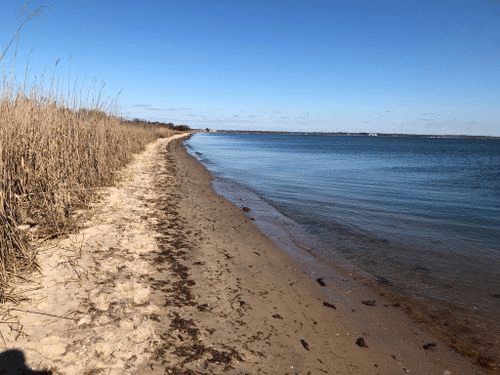
This afternoon after the storm I sat on some stones at the river and watched the choppy waters, the heron gliding across the duck pond toward the marsh, a kingfisher perched on a wire, and the distant, dark clouds building again, bringing more rain again.

It was a few moments of absolute peace of mind.

A thought about this: The peace of mind thing is not easy to obtain. It is not an absence of sounds and conversations, it is an internal escape from one’s own internal disturbances; the constant interior monologue about everything from the practical (money, transportation, deadlines) to the emotional (sick friends, relatives), to the fleeting irrelevance in life that get their claws in your thoughts and won’t release. So finding peace of mind is not easy to do just because my surroundings are quiet and natural; it just makes it easier.

So I sat on the rocks in a rare moment of internal quiet, the still waters of my mind undisturbed by some psychological pebble, and I looked calmly across the river and realized something profound: this river doesn’t want me here either. It was not created for humans, it is not set up for people. It’s why the heron flew off because of me but not because of the egret or the eagle or the osprey. It is why the tide will ebb and flow based upon the natural phenomena of the moon and the sun, gravity and storms—not because of anything or anyone anywhere.

I once stood waist deep in the Congo completely aware that no human should be there. It is the same in any natural place. In Tucson we stood on the shores of the San Rillito River during the horrific floods of 1983 and watched this once calm, low waterway—a place where kids would play baseball at low tide—snap bridges in half, grab houses off of their foundation, flip them over, and carry them on its back to some other place.

Nature has a whole other level of confidence.

Still, it’s as close as I have come in life to being myself, being out there. Hiking in the mountains, canoeing, simply walking down the coast toward some other where.

Some people never find their reason for being here; they let the world saturate their thoughts like a swollen river and swallow them, giving up, giving in, letting that minutia like money and disappointing others get the better of them. It’s easy to do; it happens. I suppose most people don’t ever feel completely comfortable around others, a bit of self-consciousness slips through. But it isn’t that, exactly. It’s that feeling of always thinking I should probably be somewhere else.

Counselors have said since counselors have been saying things that it is essential to find your place in the world. I agree. I’m not sure I ever will, but I certainly agree, and at least I know where to look.

I’ll be outside. Don’t come.

To Change is to be New

aerie one

I’ve not been well the past day or two. I’m feeling much better but it certainly gave me the time to rest and absorb the world around me without distraction.

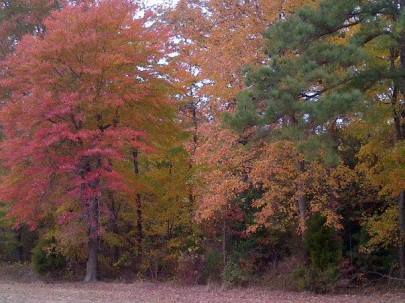
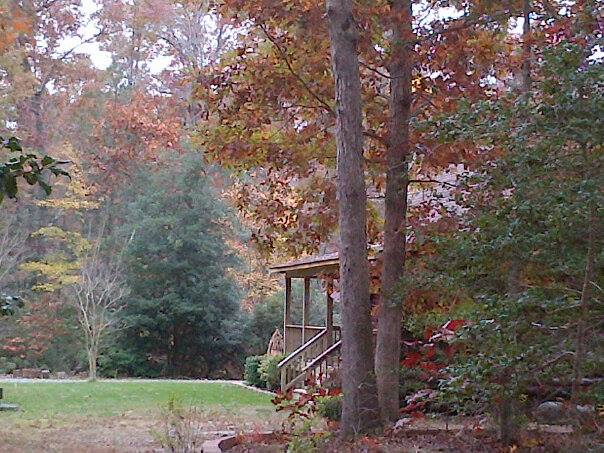
It occurred to me on my porch while staring at the surrounding woods, that at some point less than one hundred years ago none of those trees were there. The land has beautiful eighty foot oaks, some maples, tall thin pines and various other hardwoods including black walnut trees, which I am told can provide the ingredient necessary in the liqueur, Wild Spiced Nocino.

The branches protect birds as diverse as red-tailed hawks, downy woodpeckers, and countless chickadees, and they are habitat to other wildlife including one flying squirrel we spotted a few years ago when his tree fell. The squirrel was fine and found a new home in a white oak.

But a hundred years ago this was just land, sandy land, edged by the running Rappahannock River and backed by equally treeless farmland. A century before that these nearby plantations provided food for the region at the expense of slavery, and some slave descendants remain, selling vegetables at food carts out on the main road, or working the bay as watermen, telling stories about how the Chesapeake is just about farmed clean every season by crabbers at the mouth or the headwaters leaving nothing left for those working the midland shoals.

This area hasn’t changed much in one hundred years.

It is like this everywhere, the coming and going of things. In Manhattan a few hundred years before the wild construction on bedrock, coyote and deer were common. It was hilly (Manhattan means land of hills), and where the United Nations stands once stood grand oaks. The Lower West side was a sandy beach, and ecologists say if left to do what it wanted, most of the upper west side would be covered in trees and vines, shrubbery and wildflowers inside twenty years.

I can’t imagine what my house would look like if left untouched. When I don’t mow the lawn for a few weeks it looks like a refuge for timber wolves.

But these trees weren’t here a century ago and I sat on my porch and wondered if there had been other trees or if this land was barren. A few hundred years ago it was used by the Powhatans as hunting grounds.

This happens to me everywhere I lived; I like to imagine what was on that spot one hundred, two hundred, a millennium earlier. The house I rented in Pennsylvania was used as a hospital during the civil war. Before that it was a farm. Now it is a Real Estate office. The maples which lined the road and shaded the living room are gone. Someone planted new ones but it will be decades before they mature. My house in Massachusetts was a fish market a century earlier. Purpose moves on with time. Maybe that’s why I’m so mesmerized by the Prague hotel I always stay at. It was the same building seven hundred years ago that it is now. But here on my porch I realize this house is the only place in my life I’ve lived for twenty-six years, and I was curious if five times that score of years ago I could sit on this spot and see right out on the water, or were there trees then as well, different ones which died or were timbered to make room for crops.

The house is made from western pine forested on land which I assume is either now empty of trees or filled with young pines waiting to become log homes. What will be left a hundred years from now? Will someone sit on this same porch and look right out toward the bay once these oaks have long fallen? I know this house, this land, is a “hotel at best” as Jackson Browne despondently points out. “We’re here as a guest.”

Wow. Wrote myself into some sad corner there. Thanks Jackson.

I know nothing is as permanent as nature, despite the constant changes. It simply isn’t going anywhere. We are. So I like to remember that a century ago farmers sat here and talked about the bounty in the soil, or talked to 19th century watermen about the changing tides. And I like to realize that a hundred years before that the nearby swampland, now home to so many osprey and egrets, was a major route for runaway slaves. They’d have been safe in these woods, if there were woods then.

I like to do that because it reminds me a hundred years from now perhaps I will have left some sort of evidence of my passing through; even if just in the cultivation of language, the farming of words.

So I sit on the porch and listen to the wind through the leaves. It is now; it is right here, now. Sometimes at night we stand in the driveway with the telescope and study Saturn, or contemplate the craters on the moon—both here long before us and in some comforting way, long after we’re gone.

In spring and fall the bay breezes bring music even Vivaldi would envy, and I’ll listen to his Four Seasons, written nearly four hundred years ago, and listen to the wind through the leaves of these majestic, young trees reaching eighty feet high, and be completely, perfectly in the moment.

Despite the warming trends, the extreme tendencies of weather, the fragile ecosystem which sustains life, nature is still the only place I have found that really doesn’t change. It never has. Ice ages and dust bowls will alter it, but eventually some seed will take root.

aerie two

A Note About A View from this Wilderness

At a recent seminar I attended online about maintaining blogs and building your audience, they suggested creating “memberships”; commitments from readers with a monthly fee of some sort. I didn’t like that idea, and neither did the others attending except a top tier blogger with an audience of over 100K.

Another suggestion is advertising or support links, such as an Amazon link where if you buy something from Amazon by clicking through my page, I’d get a penny or something like that. Plus, the blog would then have ads all over it. I didn’t like that either. Neither did many others except the top tier blogger with 100K followers.

I and some of my favorite bloggers like Sarah Leamy of Wanderlust, thought a straight forward donation page would be best. This apparently is standard among bloggers everywhere. Some people who will read what is essentially the equivalent of several books a year might not mind donating $5 or $10 a year for our time and to help defray the minimal costs (website address is really the big one, and the program upgrade to keep advertising OFF the page–irony at its best). I know some very successful writers who don’t agree with the concept of a blog because it takes your energy and material away from books and articles you could be getting paid for from a large market. I disagree in that many of my blogs have lead to articles I never would have written without the weekly–often two or three times a week–dedication to A View. In fact, this blog was the impetus for my book A Third Place: Notes in Nature

I started this blog shortly after the death of my father. My first entry was about sitting in a chair of his and looking out my window at nature. From there it has grown, and A View from this Wilderness has roughly 1000 unique viewers per post, and A View is fast approaching 500 posts in the course of seven years.

So, I’ve put up a donation page in a nod to artists everywhere who produce work for the sole purpose of producing work for others.

Thanks for your consideration in donating. Total disclosure: A View is not going anywhere and will always be free, but a donation would truly help.

I have put up a donation page for those who would like to help me defray the cost of the blog. The blog will remain free to all and I hope more and more continue to follow by clicking the follow button in the bottom right corner, continue to read, and continue to share. But if anyone can donate it will be greatly appreciated. I am suggesting $10 a year (more is always welcome). This amount will only be repeated if you want it to, and no information is saved, ever. It is simply to assist in the minimal costs of the blog. Currently, A View has more than a thousand unique readers and averages more than 100 shares per blog.

Can you help? Click on the words “ABOUT A VIEW” below:

These Days

I like to sit in my green writing chair my father gave me years ago and look past my books and paintings into the wilderness which surrounds my home. The first time I sat here at Aerie, it was winter, and the birds could not find food in the morning’s snow so a slow spread of seed across the porch rails brought nature as close as possible without opening the windows. House wrens, warblers, robins, cardinals, downy woodpeckers and others all winged in from the apple trees to the rail, grabbed some seeds or stood and ate them there. Next to the porch is a larger than me thorn bush covered in red leaves which the birds use for hiding. They popped in and out from the bush to the porch and back to grab more of the only food around. Eventually they all work their way back to the woods by dodging from tree to tree like soldiers moving forward on a night raid. The thorn bush first, of course, followed by a quick flight to the first holly. From there the apple trees, despite their dormant branches, are fine for resting because of the snowy limbs. The last leg is a short one to more holly at the edge of the woods. Once there they seem to pause, look back as if they are wondering if they had enough, or if they forgot anything, and then they disappear into the high branches of dense forest. Later they’ll return.

I have found two ways to experience nature. First by moving through her: Sunday drives, evening strolls, afternoon hikes, morning runs, and any average commute. We take in what we can, view the variety of colors in spring and the fall foliage. But I’ve driven the route to work enough times in two decades to really not see it at all anymore. Are the trees taller? I assume they must be, but a change cannot be noticed by one who watches it grow. I cross three bridges along the way and two of them have been rebuilt since I started. Still, my mind is elsewhere when nature simply rests there sixty-five miles an hour slower than me. We can’t always be aware of nature; I understand this. But I’m not fully sure I know what it is that distracts me to begin with. There are other means to move through nature: A few years ago my son and I trained across the vast empire of eastern Russia, across the Steppes and hills of Siberia, and to the pacific coast. Along the way we saw thousands of acres of birch forests and hundreds of small, curious shacks all painted royal blue. I could never drive across Siberia, so the train would have to do, but the journey left me with more questions than answers. Who works out there? Are the dilapidated gulags we passed empty or just in ruins? What kinds of wildlife did we pass, mostly at night, just beyond the trees away from the tracks? Surely a grizzly or two or a Siberian tiger stood and watched us roll along.

As if extremes exemplified my existence, the following summer we walked the medieval pilgrimage route from southern France to Santiago, Spain, on the Camino de Santiago. The Camino is five hundred miles long, and at just about three miles an hour or so means every Basque slug, meseta insect and Galacian fly could be personally experienced and known by name. We watched the colors of the sky change and stood still every few kilometers to take in the vistas, drink some coffee, and walk the rocky paths again. To drive that distance takes roughly eight hours. It took us five weeks. One sees more when moving slowly. It is simple physics. But in the end we are still moving through.

Which leads me to way number two to experience nature: Sit still.

I took pictures of birds outside my window, and then I put down the camera and watched. They tilt their heads when they eat, as if they can’t see the food unless their eyes face down. Most varieties get along well, but the chickadees are little bastards. They’ll chase away or dare anyone, squirrels included. Yellow warblers are neurotic and Cardinals look pissed off though I think they really just want to be left alone, like old writers.

It is strangely the same in winter. But I’ll never forget that first winter in this chair. I simply stared at the bare brown branches against the gray sky. Somehow the white snow on dark green holly leaves brought the yard to life. I have lived here for twenty-six years but it seems I never before sat and stared at trees, at birds’ wings just inches away, at the patches of green grass surrounded by a dusting of snow. Even walking across the yard would have chased away these observations as quickly as the birds would have scattered into their hiding spots. As if my Siberian questions needed the balance of answers, I looked about the yard and witnessed more in an hour than I had for three weeks on the rails. Usually it is in Spring that we pay attention to the trees, when bare branches give way to buds, which give way to new life. Or in the autumn when we calculate our driving times on Sunday afternoons for when the leaves will be at their “peak.”

I sat perfectly still, doused in the narration-free documentary playing out before me, and discovered something phenomenal: Trees are always at their peak.

They stand strong like church steeples. The thick brown branches reach up, shirts off, muscles taut, every bone exposed, wrestling, bent at the elbows, visible like some skeleton x-ray against a low, gray sky, or a deep dark blue sky, or a snowy dirty white sky, and these trees don’t balk, they don’t flinch. They dare every aspect of deep winter weather. The wind moves through unnoticed, and snow catches crevices and freezes further growth for months. What wonder it is to watch their stern and steady rise, proof of decades, sometimes centuries, dug in for winter, standing guard in forests and backyards, unable for a while to block the sun, bare enough for us to listen at night to the geese. Starlings settle on naked limbs, thousands of starlings like leaves land, rest awhile, then leave, the trees once again alone waiting out winter, as if to say they’ll let winter leave when they’re damn well ready.

I used to think time went by so fast. I remember my dad sitting on the porch in our backyard watching birds outside the screened-in porch. He was a relatively quiet man but loved to watch the birds. One time he and my mom watched a pair of cardinals teach their young one to fly. They watched it fail a few times until it finally took to the air, making it to the nearest branch, not far from the porch. I never had time for that when I lived there. I wonder if my parents, maybe like the cardinals themselves, were both thrilled to see me leave the nest but sad at how fast I found my wings. Now I sit in his chair watching a robin work through the seed on the rail, and I realize it isn’t time that moves too fast—it’s me.

Still, life

Van Gogh, 1887 Netherlands

When I taught Art Appreciation at Saint Leo University on the Naval Base in Norfolk, over the course of almost thirty years the most common comment among my mostly retiring active-duty military or already retired vets, when I showed still life paintings, was, “Who Cares? Who would want that on their walls? I’d rather have a real bowl of fruit!”

Rarely did anyone catch on that it was a set-up; I knew they’d say that.

“Why do you think?” I’d retort like any good psychologist might.

At first the responses were always the same, semester after semester: the dude liked fruit (or flowers); some family member painted it and they felt obligated to hang the thing; it was on sale; it came with the castle. Then, someone would offer a constructive perspective: the artist couldn’t afford a model; it represented wealth—having paintings of fruit or flowers or livestock meant you could afford those things (as well as a painting of anything at all, actually); the colors matched the throne.

“All true, but anything else?”

Silence.

I’d put on the screen some of the more famous and celebrated still-life paintings. Caravaggio’s fruit, Cezanne’s apples and curtains, or his famous skull painting, Braque’s violin and candlestick, and perhaps most famously, my favorite, Van Gogh’s Sunflowers.

“So that’s it? They liked the colors? They liked a good Mcintosh apple? I’d ask.

“Maybe they had paintings of those things because they couldn’t see them. Back then people might not have even known what an apple or a sunflower was, or at least never had seen them,” some thoughtful student might inevitably contribute.

“Except the skull.” We’d laugh.

“Excellent, and, sorry, but why else?”

Eventually someone would see it. “That’s a damn good sunflower.”

There it is. The texture, the perspective and color. The very notion of sitting and looking intently at a flower or an apple or even a skull is met with a laugh—we walk by them, of course, and they’re pretty. But to “Whitman ourselves” into some deep study of a leaf of grass or the pedal of a tulip is met mostly by ridicule. But when it is a painting, no one questions it. We are not wigging out on nature; we are appreciating the intense talent it took to capture the life itself and make it permanent. “Here we are,” I’d say, “One hundred—no, two, three hundred years later, and we’re still looking at the same flowers that Caravaggio had on his table. He keeps showing them to us.”

“Now I want an apple,” someone usually quipped. We’d laugh and I’d move on to the abstractionists, which was an entirely different head game.

But the still-life paintings were the ones I used on quizzes. They couldn’t get the answer wrong since it was a personal response, but after they studied endless names and paintings and periods and movements, the actual questions surprised them.

  1. Part A. Look at van Gogh’s “Sunflowers” for at least three minutes—study the strokes, the perspective, the context, and any narrative you find, and write about it in 500 words.

Part B. Why don’t you do that in nature? Why is it you can appreciate a painting and look at it a long time, but you don’t stop in nature and study the flowers, the texture of a tree? Respond in 500 words.

And other questions bent in a similar fashion.

I have a passion for art and some of my closest friends, several of whom have passed on, have been visual artists. I deeply appreciate art because, in part, I can’t do it myself. I have paintings by friends like Mikel Wintermantel, James Cole Young, George Tussing, and more. I have shelves of books with work by Pissarro, Cezanne, Monet, and Van Gogh, of course. The quality of his drawings exceeds his paintings in my opinion. As a writer and therefore an artist in the more general understanding of the term, I connect completely to the notion of trying to repeat in art what we experience in nature, and while my list of writers who have succeeded in that talent is impressive, my list of visual artists is far more extensive.  

That which captures nature and holds it up for us to see in the small rooms of tall skyscrapers, or paintings of Provence hung in living rooms in Arizona, is an example of human creative potential that is so revered that the names I’ve mentioned are household names, and the artists died centuries ago—that’s their staying power.

Still, life is not two-dimensional. It cannot be hung on walls or captured with acrylics and oils. It is an experience. It is kinetic. Life is the aroma of sunflowers in a field outside Pamplona, Spain, or the honeysuckle along a sidewalk in South Philly. Life is the soft sounds of rain on a pond in a park, where Monet’s lily pads cover the green surface, and you can hear a bullfrog, and you can feel the moistness on your skin. It is the sound of dry leaves on van Gogh’s path in the Netherland woods, or the slight chill in late fall where birch trees break the horizon like an Elliot Porter photograph.

If we can go for a walk and keep still, life is the original model, the inspiration and original cause, not art. Art is there for us, and it is beautiful and eternal and, personally, brings me peace.

But it is always imitating life. It did when Plato called it a false reality of life, and it did when van Gogh said, “Still, life is what matters most and the true artist in this world does not work on canvas but with flesh, heart, and soul.”

Home, 2019 Virginia

Shameless Self Promotion

You can now order books direct from me at my book page. Think summer reading. Think early holiday shopping. For the Van Gogh lover, for the traveler, for the fathers and sons, the ones who walk, the ones who pray.

Order the books then email me (bobkunzinger@yahoo.com) the titles and addresses for inscription.

Thank you for supporting freelance writers, small presses, and the arts in general:

Go to the “books” link in the menu above, or tap “Continue reading” in the box below

The Six Grandfathers

The east trail at Aerie

Back to this wilderness.

It occurred to me one day on my porch while staring at the surrounding woods, that at some point less than one hundred years ago none of those trees were there. The land has beautiful eighty foot oaks, some maples, tall thin pines and various other hardwoods including black walnut trees, which I am told can provide the ingredient necessary in the liqueur, Wild Spiced Nocino.

The branches protect birds as diverse as red-tailed hawks, downy woodpeckers, and countless chickadees, and they are habitat to other wildlife including one flying squirrel we spotted a few years ago when his tree fell. The squirrel was fine and found a new home in a white oak. And of course the fox which frequents the lawn.

But a hundred years ago this was just land, sandy land, edged by the running Rappahannock River and backed by equally treeless farmland. A century before that these nearby plantations provided food for the region at the expense of slavery, and some slave descendants remain, selling vegetables at food carts out on the main road, or working the bay as watermen, telling stories about how the Chesapeake is just about farmed clean every season by crabbers at the mouth or the headwaters leaving nothing left for those working the midland shoals.

This area hasn’t changed much in one hundred years.

It is like this everywhere, the coming and going of things. In Manhattan a few hundred years before the wild construction on bedrock, coyote and deer were common. It was hilly (Manhattan means land of hills), and where the United Nations stands once stood grand oaks. The Lower West side was a sandy beach, and ecologists say if left to do what it wanted, most of the upper west side would be covered in trees and vines, shrubbery and wildflowers inside twenty years. I can’t imagine what my house would look like if left untouched. When I don’t mow the lawn for a few weeks it looks like a refuge for timber wolves.

But these trees weren’t here a century ago and I sat on my porch and wondered if there had been other trees or if this land was barren, or was it used by the Powhatans, or was it home to some former slave family, or just a dumping ground. Evidence is scarce, buried beneath the roots of this small forest. One guide at the Mattaponi center not far away told me this had always been hunting ground for the Powhatan. I’m glad it wasn’t a burial ground. I’ve seen Poltergeist.

This happens to me everywhere I lived; I like to imagine what was on that spot one hundred, two hundred, a millennium earlier. The house I rented in Pennsylvania was used as a hospital during the civil war. Before that it was a farm. Now it is a Real Estate office. The maples which lined the road and shaded the living room are gone. Someone planted new ones but it will be decades before they mature. My house in Massachusetts was a fish market a century before I sat at the kitchen table looking out at the Wachusett Reservoir and wrote a book about Vincent van Gogh.

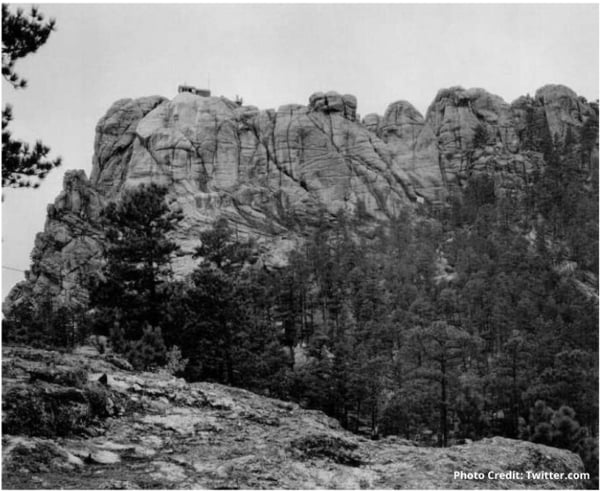
Purpose moves on with time. Maybe that’s why I’m so mesmerized by the Prague hotel I always stay at. It was the same building seven hundred years ago that it is now, only then it was used by servants for the castle. In Russia most of the lands upon which St. Petersburg is built were not lands at all, but marsh, and Peter the Great filled it with stones to create his “Venice of the North.” And a Lakota medicine man, Nicholas Black Elk of what is now South Dakota had a dream in which he saw “Six Grandfathers,” for the directions–North, South, East, West, Up, and Down– and his dream was the vision of a mountain that was to be left alone to symbolize kindness and love and wisdom, as present in human grandfathers, and it was to be carved only by wind and rain, and so it was. Until 1927 when Gutzon Borglum “began his assault” on what became Mt. Rushmore.

I like knowing but I like not knowing too, like accepting truth, like unearthing reality, like facing our fears. What was on the land where you are now? What will be? What traces of us will linger, offering a hint of now to some other now?

This house is the only house which ever stood on this former hunting ground, and is the only place I have lived for this long–twenty-six years. The house is made from western pine forested on land which I assume is either now empty of trees or filled with young pines waiting to become log homes. What will be left a hundred years from now? Will someone sit on this same porch and look right out toward the bay once these oaks have long fallen? I know this house, this land, is a “hotel at best” as Jackson Browne despondently points out. “We’re here as a guest.”

I know nothing is as permanent as nature, despite the constant changes. It simply isn’t going anywhere. We are. So I like to remember that a century ago farmers sat not far from here and talked about the bounty in the soil, or talked to 19th century watermen about the changing tides. And I like to realize that a hundred years before that the nearby swampland, now home to so many osprey and egrets, was a major route for runaway slaves. They’d have been safe in these woods, if there were woods then.

I like to do that because it reminds me a hundred years from now perhaps I will have left some sort of evidence of my passing through; even if just in the cultivation of language, the farming of words.

So I sit on the porch and listen to the wind through the leaves. It is now; it is right here, now. Sometimes at night we stand in the driveway with the telescope and study Saturn, or contemplate the craters on the moon—both here long before us and in some comforting way, long after we’re gone–all of humanity.

In spring and fall the bay breezes bring music even Vivaldi would envy, and I’ll listen to his Four Seasons, written nearly four hundred years ago, and listen to the wind through the leaves of these majestic, young trees reaching eighty feet high, and be completely, perfectly in the moment.

Despite the warming trends, the extreme tendencies of weather, the fragile ecosystem which sustains life, nature is still the only place I have found that really doesn’t change. It never has. Ice ages and dust bowls will alter it to be certain, but she has mastered the art of adaptation, and eventually some seed will take root.

Native Hope Six Grandfatheres
The Six Grandfathers before the Four Presidents

One Quiet Day

I have learned the sound of gulls when they circle looking for food compared to their call when confronted by something strange. I can close my eyes and know the direction of the tide and the pull of the current. I do not know most smaller bird calls—my son Michael has to tell me (over and over) which is which when home on the porch—but I know well the call of a hawk or osprey or eagle, especially when they teach their young to fly. It is a sight to behold, and more, it is a sound I will never forget.

There is nothing “silent” about nature. There is nothing quiet about night. On the river in the evening when the stars blanket the sky above the Chesapeake and up the Rappahannock, the most muffled of sounds carries across the water. It could be a car crossing the bridge, a late-night fisherman dropping traps, rigging against a mast, the gentle, familiar, eternal lap of water on the sand.

Paul Simon wrote, “Everybody loves the sound of a train in the distance; everybody knows it’s true.” Yes, across the night, when everything seems silent and the distant call of a train comes across the space between. There is life out there carrying on. Like the red dot of a passing airplane when I stand on the sand in perfect quiet and know onboard passengers are talking, laughing, reading, and life is carrying on, heading for somewhere else. Come morning the call of the fog horns on the fishing boats comes across the reach.

I love the quiet of nature, despite its lack of silence. Believe it or not, it has been quite some time since I’ve experienced the type of quiet I am referring to.

I would like a quiet day. One. One quiet day without the residue of yesterday or headwinds of tomorrow. Just the day, one. A quiet one during which I could just let the river run past and feel the cool and heat of the sand and the sounds of gulls or osprey and, of course, waves; when I define quiet, I include birds and waves.

A day where if the phone rings at all it is just family, ready with a joke or an old story to get us all laughing and remembering and planning. Usually quiet days include laughter and stories.

A day to myself like I used to do in my twenties when I drove into Manhattan and walked from Herald Square all the way up and through part of the park, talking to the vendors or checking out the music along the way coming from the cafes and radios. When I explain “quiet day” I must include the sounds of the city as natural and organic as the osprey and waves since they are expected. Plus, they aren’t talking to me so no response is expected or necessary, just my presence without the noise in my head, the endless, persistent humming in my head of stress or anxiety or what’s next or what happened. Without all that. One day.

My life is not unlike Thoreau’s in that my retreat is near the water in the woods where I am able to regroup, not to ignore civilization as much as be better prepared to face it. So I would like one day. One. One quiet day where I could live deliberately and be in absolute touch with the passing of time solely for the sake of the passing of time, to watch the seconds, to count the minutes. I could lean against a tree and hear the combine on the neighbor’s farm or the rigging on the boats on the river. There is a thin, very thin, line between quiet and the sound of rigging in the early morning hours.

I was thinking the other day about the quiet days in college when a bunch of us would walk into town just to get something to drink and everyone would be talking at once, and laughing at once at different things, and I loved that sweet and passive activity of such transience. If I am going to define “quiet days” I can’t leave off my friends. Or a drink or two.

I have had many days which I would “formally” call quiet by the Oxford definition. In Spain, at home on the river when it is early, or late. When I was young and hiked through Heckscher State Park. Sometimes when I am alone at home I fiddle around the house, working out on the property or on the porch, and can go from sunrise to sunset without a sound and it can be deafening. But those are literal, and I have come to understand that true peace is not the absence of noise but rather the presence of some connection around us.

I remember a beautiful, perfect, quiet evening a long time ago when a friend of mine and I went to an Italian restaurant in a run-down strip mall, and they were almost closed but they let us order some bread and a bottle of wine and we talked for hours, joking with the woman who worked there but mostly just laughing together about now and life at another time. We finished each other’s sentences and the wine and then went our own ways, quietly, until next time.

Another time, we stood on the beach here and watched across the bay toward Wallops Island, and it was late and cold and clear, and a rocket lifted with a payload for the Space Station, and all we saw was a red glow and the entire horizon glow white and red, then the sliver of a rocket move up, pushing out flames, further up to the southeast, and then, quietly gone. We never heard a thing. That kind of quiet is mind-bending to me.

It is quiet tonight, and cold—the type of cold, quiet night where sounds travel quite some distance, and I can hear the north winds sliding across from Windmill Point to the duck pond, and I need to turn my back to the cold, and walk up the hill and down the long, winding driveway to my porch, and the rustle of deer or opossum in the woods, try and find some music to match my mood, but doing so usually just sends me back outside.

A View from this Wilderness

I have written blogs on A View from this Wilderness for six full years. This week, Volume Six is complete, and in just a few days I will begin Volume Seven. It did not go where I had expected it to, though few things in my life, if anything, have gone where I thought they would.

When I started the blog in January of 2016, my father had just died a few months earlier, I was still senior faculty at a college in Virginia Beach, was still senior faculty at a university on the naval base, my mother still lived in a large condominium and my brother lived in Texas. None of those things are true anymore; or, the truths of those things are in the past, as most realities in our life tend to be, eventually.

I thought this site would be a simple escape into nature, and for a while it was. I wrote about geese, about the river and the bay, about the hawks and eagles here at Aerie, and about the wildlife we discovered here at night while looking at the stars. But as the weeks and months progressed, it became more about the nature of things, including and perhaps most significantly, human nature, particularly my own.

I left the college. I left the university (or the university left us, as it shut down because of Covid and never reopened). I lost touch with people I knew well for a very long time, and spent more time on the river, along the trails of the Chesapeake region. When I started this blog, we didn’t yet believe then candidate djt would win the election, we didn’t understand the animal-like attack on the Fourth Estate, and most certainly we didn’t yet know Covid; we didn’t anticipate quarantine, masks, distancing, and so much illness and death. And as we did, nature became more important, no longer simply a refuge, that escape, but a place to breathe without worry, a place to walk without concern.

Professionally, this blog led to a book, A Third Place: Notes in Nature. Among writers, blogs are somewhat controversial. Some believe it can distract from real writing, absorb your energy from completing more worthy works. I understand the argument. But I’ve always had several layers of writing going on at the same time. There is the serious material I know I want to send to publications, perhaps even in book form, as in the case of Siberia, Africa, and another project just underway; slivers of material from these topics sometimes end up in this blog, but rarely. Then there is the raw material—the stuff I read in bars with the likes of Tim Seibles—stuff we generally don’t expect to be published and which certainly won’t appear here; stuff we prefer you hear when you’ve been drinking and where recording is strictly prohibited.

But there is the middle work, the journaling, the reflections, the prompts, the thoughts, the spewing of anger at politicians, the rants at society for ignorance and negligence, and the confessions to those I know and those I do not know about so many of my shortcomings, failures, and misunderstandings. Many times what I thought would be a work about nature turned out to include my heart on my sleeve; yeah, I’ve exposed much in these six years and as a result some people pulled back, others gathered closer. This has certainly been a cleansing experience.

But in the end this blog is a place I simply am what I am. I do not know if I’m departing this life tomorrow or in thirty years, but when I do, I’m leaving everything I can out there, exposed. This blog has taught me, is teaching me still, to be who I must, something I wish I had learned decades ago.

It started with one reader—me. Last week the unique readership numbered almost 1100 people, averaging just around a grand every week. I’m very pleased by that. But make no mistake: I have no illusions that I am changing people’s minds about anything, including my own. I simply found a place to express myself instead of calling you and doing it. You’re welcome. In the end every single blog posting is from the start to the finish, first for me.

I have written about dear friends who I thought I’d spend my life with, confidants I counted on to be there and to be there for, but they moved on too soon, like Cole and Joe and Trish and Ed and Bobbie and Dave and too many more to count. I’ve written about artists who I’ve known and whose work made me feel like they knew me, even the ones who I was never fortunate enough to meet, like Vincent van Gogh and Dan Fogelberg, John Denver, Harry Chapin, Mozart, Chopin, Marley, Nick Drake and so many more whose music plays while I’m typing. Also, I’ve written here about Cole and Eton and Gosha and Slava and Tim and the other Tim.  

I’ve written about my son. About my dad. But still, mostly about nature both human and natural, from my perspective, never anyone else’s. The advantage of a blog is we’re like street corner preachers standing on a milk carton flapping our sentiments to the wind, and some people hang out and nod, others hang out and get pissed off, but most just walk on by. That’s fine. I’d walk by too.  

And if I haven’t written about some people, it’s because I didn’t want to, don’t want to, and never will want to. If I’ve learned anything at all, it’s reflective of the sentiment of that Long Island philosopher William Joel, to “do what’s good for you, or you’re not good for anybody.” Something else I learned way late in life.

But a few other things I’ve learned in these now 370 posts:

Heron get frightened easily. Geese change course if they see humans. Hawks are hyper-focused on food and if you walk by one while they’re eyeing down a squirrel, they couldn’t give a rat’s ass you’re nearby.

Standing at this river and watching rockets lift from over at Wallops Island raises the hair on the back of my neck, as does standing in the yard and seeing the stars.

Bare trees in winter are as beautiful as the colors of fall and the buds of spring.

I’m stronger than I thought I was but nowhere near as smart as people think I am. My strength is creativity not intelligence, and my true abilities lie in expression, whether through writing, photography, and at one time music.

Some of my posts never made it to publication because they were too honest, too scathing, and not fair. Some never made it to publication because as soon as I finished, I thought they could do better than A View, and they have, including places like the Washington Post. Other entries just sucked so I deleted them.

I learned that people prefer to laugh hard or cry exhaustively over simple education or rants.

I’ve learned that I prefer to be hit over the head by someone about how they feel about things rather than some slow reveal of the truth. And I’ve discovered that time spent with people who make you feel better about yourself is all there is left in life. There is no legacy, there is no endowment more valuable than that—to spend time with people who you love and who love you and who aren’t afraid to be truthful about that, no matter what.

This blog will continue with its bloated pretentiousness and condescending rants, but hopefully, as well, readers will more likely notice the sun on the bottom edge of a cloud, the call of geese or the strong woosh of an egret’s wings. Too, I hope they notice the beauty in human nature, and how swift life is, and how we all know the simple truth is when we leave this world, we’re going to wish we had been more open with others, move loving, more honest with how we feel without concern of hurting or being hurt.

The view from this wilderness is fragile and fast, and beautiful, and it is the same view as those reading in Mumbai, in London, in Brooklyn, Cincinnati, Mexico City, and New South Wales. The View from this Wilderness is not dependent upon coordinates. Everyone has the same view no matter where they are; and if everyone stands in the same spot, every single view is unique. We need to help more people without them asking, and we need to let more people know we love them without worrying about their response. The old Japanese saying remains true: “Just because the message is not received doesn’t mean it is not worth sending.” And we all like to know that people hear and appreciate us, but that’s not why an artist paints or a writer writes.

We write to remind ourselves that we miss too many sunsets, sunrises. We walk by too many flowers just beginning to open, and too many quiet lakes. We pass by too many mornings without opening the curtains and too many evenings without stepping outside.

We move too swiftly through life, worrying more about grace than gratitude, more about lofty ambitions than love.

Those of us here at A View from this Wilderness (that’d be just me) wish everyone a Happy New Year.

“Love when you can

Cry when you have to

Be who you must

That’s a part of the plan.”

–Dan Fogelberg

This Night, This Day

In the east this morning a sliver of light. I stood at the bay and remembered:

More than five decades ago on Christmas morning before our parents were awake (or so we supposed), my siblings and I would gather before we headed down for the beginning of Christmas Day, usually in my sister’s room, to exchange gifts we had bought for each other. It would inevitably still be dark out, and I know the three of us would lay awake waiting to hear each other also awake in the other room. A tap on the door. A “come in.” And we’d sit on the floor and open our presents.

At some point (like clockwork, as much an annual tradition as the turkey or the pies), our mother would wake our father and he would exclaim, “I thought I said no one up before nine am!” and he couldn’t hide his smile to our laughter at the ludicrous suggestion we’d be up any later than five. It was always cold out during those Long Island years, and often snowy, but we weren’t going outside so it just added to the magic. Dad would be in his robe and slippers, and he’d head to the living room as we gathered on the stairs and waited for him to plug in the multi-colored lights on the tree, and those on the rail, bringing to life the otherwise dark room. Mom had, of course, already organized whatever presents we would get into separate piles, and Dad would stand back as she directed us to the right area under the branches, though sometimes it was obvious if an unwrapped toy appeared, clearly already wished for by one of us. Dad would sit on the couch and watch in joy right through the stream of “Wow, thank you Mom!” wishes.

It wouldn’t be long before the aromas of breakfast mixed with the onions and bell seasoning already underway for the stuffing, and eventually we’d need to get dressed, if not for church since we might have attended midnight mass, certainly for the droves of family who would soon fill the rooms. It was a beautiful way to grow up. I do not know the possible stresses, fears, and sacrifices that went on behind the scenes—that’s how good they were at it. Then, much later in the day, after everyone else had left and we had all settled into the routine of looking at our gifts again, Dad would emerge from some closet with his gifts for each of us—books he had personally picked out, bought, and wrapped. It remains one of my favorite memories of all of my memories of my father.

***

It was in the sixties here today along the Chesapeake, and sunny, and to be honest I’m just tired. This is one of those days each year where I’ve been up so long and have done so much that it feels like it should be six hours later than it is. My mother and sister and brother and nieces and nephew and their spouses and offspring are all off in various parts of the country preparing to celebrate their Christmases, all of us with some common traditions, each of us with our individual more recent touches to the holiday. Certainly, in times of such tumultuous anxiety throughout the world, all of us remain fortunate enough to be celebrating Christmas at all, laughing and telling stories, enjoying the food, the drinks, the sounds of football or Christmas music. We are, to be sure, at peace. Anyone with family is engulfed in traditions which help balance our lives; they bring peace to our soul while providing some shared space not only with each other but with memory, the idea of ancestry, the hope for posterity.

My father used to sit to the side for most of the holiday and enjoy being surrounded by his family. He’d carve the turkey, and of course disappear toward evening to get the books to give to us, but these days I picture him most in his chair, watching a game, sipping scotch or wine or a beer, laughing with us, waiting for Mom to call him to duty in the kitchen. He has moved on, and whatever there might be to know after this life of ours, well, he now knows, and that too brings me great peace.

It’s so quiet out tonight. Absolute peace stretched out like canvas in all directions. On the water some buffleheads ease by. Still, there are moments I wish I was somewhere else; or maybe simply some “when” else. I miss the days before society took “nearby” and “not far away” and tossed them to the strong breezes of technology and zoom. In that small house around that small table when I was a child were so many relatives it is crazy to conceive how we pulled it off. But no one cared—we were together. Everyone lived close enough to “drive over,” and by the time the turkey came out of the oven, a small crowd was sitting and standing and outside and in, laughing as well as sharing serious moments, because it was Christmas and we were together, and it was going to be like that forever.

For the day anyway.

The sun is getting low and it’s getting chilly. I’m going inside again. I bought Michael a book at a local nautical shop and I need to wrap it and “surprise” him with it later in the day tomorrow after the lift of Christmas has settled down. And he will be gracious enough to act surprised, just as I did with my father when he would predictably surprise the three of us with books half a century ago.

Geez, fifty years. More.

Hold tight to those around the table tomorrow. And when you have to let go, make sure they know you didn’t want to.

Merry Christmas my friends.