Forthcoming

Allegheny River

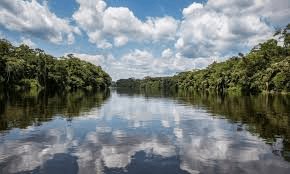
I had an unconventional youth. Specifically, I did not lead the normal life of a nineteen-year-old away at college. While my floormates were drinking heavily and sleeping until noon, I was at classes early to get them out of the way so I could head out to the Allegany River, or up to Niagara, or out to Chautauqua Lake, canoeing, listening to fascinating stories from a friend of mine, helping him plan his return to the Congo River for an adventure I couldn’t possibly contemplate prior to then.

I have two books coming out next year. The first, Office Hours, is a “Sedaris-like story-telling” of thirty-five years of college teaching. The second, Curious Men, is about that time back then in college myself, planning the Congo trip, turning a first semester probation they said was due to grades but I knew was due to complete indifference, into an honor-roll semester due to my sudden acute interest in absolutely everything. A friend of mine used to ask, “You mean that year you were on crack without ever touching a single drug?”

Yes, that year. Nineteen.

Memoir writing is a challenge for the need to engulf yourself in the emotions of a time that was apparently significant enough to warrant a book, yet absent enough of those same emotions so the reader can find the bigger picture of the narrative, the part that must reach up and out of itself into their lives, show them their emotions instead of displaying my own.

I brought this up because I just finished it, the book, Curious Men: Lost in the Congo. As a point of reference, though, and in full disclosure, I started it forty years ago. I’m a slow writer.

But the primary question publishers, publicists, agents, and–what do you call them? Oh yeah, readers–ask is, “What’s it about?”

So that needs to be split into two answers. Most people mean “What happens” when they ask what it is about. And that’s fine and not too difficult to answer: A friend asked me to help him plan a canoe trip—solo—on the Congo River. I did, and he went, and he never returned. Eventually, I went. But I returned—most of me anyway. This might be of interest to readers, particularly those who have enjoyed my writing in the past, or those who like adventure, distant places, rivers. Mysteries, even. Possibly psychology. But that “what happens’ response makes it all seem very 1981ish, and little more.

Which means there must be a second answer for this to work. And that is the true response to “What’s it about?”

In this case, it’s about being nineteen-years-old. It’s about being on my own for the first time, out from under the parental umbrella only to be thrust into a world where countless adults want to know my plans for the rest of my life, my major, my summer internship possibilities, my “declaring” of a focus for my entire career before I’d even taken a single class, all the while living with someone I’d never met on a floor with ninety guys I’d never met who seemed to insist I drink despite my desire not necessarily to not drink, but not to drink because they insisted; and all of us with two bathrooms, one payphone, and honestly little guidance to navigate. This wasn’t the military where some sergeant told us what to do when to do it how to do it but never why. We were paddling out in the deep-end, completely solo. Hence, the drinking and the need to join the pack. Just because I didn’t end up face down in the stairwell every night doesn’t mean I didn’t understand the draw of the need to do so. It’s just that I found my own alcohol of sorts.

I found another outlet, something well outside the box, and in doing so ended up with a working knowledge of a few African languages, an understanding of the fauna of equatorial Africa, a comprehension of diseases, some knowledge on how to temper loneliness, and a taste of a particular lesson I couldn’t find in my mass comm classes: outrageous adventure is simply a matter of deciding to do something and following through. I discovered that I didn’t need to follow some template to be alive. I learned that maybe it was everyone else who didn’t fit in. At least that’s what I told myself at the time as a defense mechanism.

But something changed over the years. You see, I’ve been staring at nineteen-year-olds for thirty-five years now and that alters the narrative some.

In the end, Curious Men is not about Africa, it’s not about the Congo or anyone in particular; it is about being nineteen and scared, and how that has changed in the decades since I ate sun-dried fish while bantering in Lingala, and most importantly, learning how to jump, knowing, absolutely understanding, that once you jump, you’ll either land on your feet or you’ll learn how to fly. Unless you don’t. Then you need the “What’s it about?” to step to the plate. Sure, it takes place in rural western New York and ruraler central Africa, but the narrative and the theme often divert.

Indeed, I’ve been staring at nineteen-year-olds for thirty five years now, and students today are no less timid then then, no less adventurous, no less interested. The difference is they are infinitely more distracted, bending toward convenience and accessibility, seeking and finding adventure on a screen, through gaming and TikTok, and I don’t doubt that if I were nineteen today the rivers I sought out would be virtual from the safety of some Virginia Beach bedroom. Maybe I was born at the right time, back when you sat around some diner eating wings and talking until some spark ignited, and you drew maps and made lists on the back of placemats, and then, most importantly, you followed through.

Curious Men: Lost in the Congo, is, as S.E. Hinton (The Outsiders) wrote, “A story that should be a must read for all teenagers—and adults alike for that matter.”

I’m just deciding now on the dedication. That’s a tough one. In ten books I’ve ever only dedicated one; The Iron Scar: A Father and Son in Siberia is dedicated to my father and my son. I’m not sure yet I am going to do so this time, but I’m leaning toward this, a variation of sorts of something Richard Bach once wrote:

To the nineteen-year-old who lives within us all

The Congo

Between the Lines

37.5531° N, 76.3403° W

It’s raining today along the river, and the puddles running along the roads and the edge of the woods are yellow, covered in the pollen which until early this morning hung in the air and on my body and in my lungs. It is the time of year when I most welcome the rain. Right now, I’m standing at the Chesapeake Bay where it is rainy and peaceful. I don’t get phone service when I’m out along the road near the bay, and I like it that way; I like how I’m on the edge of the continent, lost in the four thousand miles of water between here and, well, as it turns out, Sicily, where my maternal great-grandfather was born. When I’m out here out of service I feel more in touch with everywhere else, everything and everyone else, and my imagination takes control of the helm.

If my eyes could bend directly east along this vantage, I’d see through Athens where I almost went almost forty years ago and on into Tabriz, Iran, where a student of mine never came home from thirty years ago. Past there I’d move through Uzbekistan, a place I’ve never been but whose food I know well having eaten many dinners at an Uzbek restaurant in St Petersburg, Russia, where we’d spend four hours taking our time with each course and hot bread and samovars of tea, belly dancers and hookahs, and the most delicious entrees.  I had no idea all these years standing waist deep in the Chesapeake at Stingray Point, I was watching distant Uzbeks.

I’m standing on the imaginary line that runs just a sliver south of the 38th Parallel, closer perhaps to 37.5, or if you speak to any one of the watermen in this village, they’ll tell you 37.5531° N.

So, close enough. Let’s go further:

Passing Gansu, China, famous for its water-pipe tobacco out into the Yellow Sea almost directly through Baengnyeong Island, which means “White Wing Island,” so named for the resemblance to an Ibis in flight, and home of intelligence communities because of its proximity to North Korea, which brings me to the most famous spot on the 38th Parallel—the 38th Parallel. Of course it runs around the entire planet almost directly under my feet, but when most people hear “38th Parallel,” they think of the Koreas, of course.

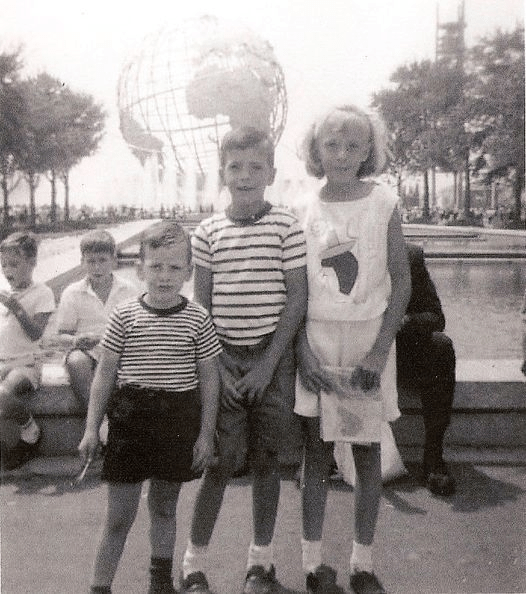
I’m on the same white line as Canyonlands National Park, Utah, and Newton, Kansas, passing right under the counter at Gurty’s Burgers. Evansville, Illinois, too, but it makes me think of the tragedy of the 1977 plane crash which took the lives of the entire University of Evansville basketball team. I’m two and a half hours east of Charlottesville, Virginia, and just south of Chincoteague Island where the horses still swim. And when I was five with my siblings at the World’s Fair in Flushing, New York, standing in front of the famous huge globe with its metal longitudes and latitudes, who were my neighbors then? Are they still out there, following different lines? Searching away? Searching toward me?

But since I find myself at the proverbial crossroads in life yet again, I can’t ignore my northern and southern neighbors—since isn’t that what we are? Neighbors? I mean, if we are going to James Webb our way into the distant galaxies and black holes, I think we’ve reached the point where we can all consider each other neighbors, relatively speaking. If “neighbor” is someone with whom we have some physical closeness compared to others more distant, than astronomy has moved us all on this sphere into the category of “neighbors” to be sure, reliant upon each other, part of each other both as particles and participants.

And those north of here include the North Pole, of course, since all longitudes meet eventually, twice actually. But closer to home is Ellesmere Island, Nunavut, Canada, the world’s tenth largest island and home to Victor’s Seafood which has curbside pickup when you don’t want to get out of the car. And Prince Charles Island, also in Nunavut, of course. This line runs south from there through Ottawa and into my birth state of New York, into Pennsylvania, into Maryland, and down through the Chesapeake Bay to this rainy little piece of Longitude. But wait, I’ve always been drawn to the tropics. Here’s why: I’m standing, I mean I find myself smack dab on the same streak that runs just west of the Bahamas and right into Holguin, Cuba, its fourth largest city and cradle of Cuban Music. But here’s the crazy part: It goes on, this longitude, into Colombia, Ecuador, and San Bartolo, Peru, on the Pacific Ocean, famous for its beach-going tourists and surfers. That’s what nearly exactly attracts people to Virginia Beach, just a notch southeast of here and where I attended high school; and where I learned in geography everything about this world except that New York and Virginia were due north of the west coast of South America. Yes, here standing on North America’s east coast and staring out toward the Atlantic, I am due north of the west coast of South America where people are staring out on the Pacific Ocean. But further still, the Southern Ocean (which I don’t remember even being a place when I was a kid) and right into the northern cliffs of Charcot Island, Antarctica, with its crabeater seals and Adelie penguins. Right here, but south.

Deltaville is at 76.3403° W for those keeping score.

This one spot, here, this mark on my mental map is tied, distantly I admit, but tied just the same to people being born and raised and looking out, wondering. It’s kind of our own little “Double L” ranch, only really thin and exceptionally long. If we coordinate correctly, we could all plant flowers on our line, though somewhat problematic headed north and south as my daffodils might not grow in the Nunavut tundra or the desert of Patagonia, but we are neighbors; we work together on these things.

We have been nomads since the nomadic days, and while we might be “from” somewhere, we rarely stay any longer, following our songlines, chasing something unknown. Since I’m a child I have wanted to follow those latitudes and longitudes, since I read Robin Lee Graham’s Dove, since Joshua Slocum, since St. Brendan.

I want to meet our neighbors before I sail on to different coordinates. Ireland, of course, and Prague. Spain again, and the Netherlands, for certain. It turns out these lines are everywhere, like a grid, like graph paper, like those moving walkways in airports leading us to the next terminal.

My first experience with Longitude and Latitude Lines on the globe at the World’s Fair in ’65

Eostre: The Goddess of Dawn

aerie one

Eōstre is the Old English way of saying Easter. The reference is to a new birth, a sense of rising quite appropriate for the holiday. Few realize, I’m sure, that Eostre was the name of the pre-Christian Goddess of Dawn.

Life is always being reborn, whether the result of the changing seasons or divine intervention, rising from the past to try again.

I’m home now, and it is Easter Sunday, and I’m thinking about the need to start over. In that frame of mind with the buzz of a dozen candy coated chocolate malted eggs, I found again a metaphor in nature.

Back to this wilderness.

It occurred to me one day on my porch while staring at the surrounding woods, that at some point less than one hundred years ago none of those trees were there. The land has beautiful eighty foot oaks, some maples, tall thin pines and various other hardwoods including black walnut trees, which I am told can provide the ingredient necessary in the liqueur, Wild Spiced Nocino.

The branches protect birds as diverse as red-tailed hawks, downy woodpeckers, and countless chickadees, and they are habitat to other wildlife including one flying squirrel we spotted a few years ago when his tree fell. The squirrel was fine and found a new home in a white oak.

But a hundred years ago this was just land, sandy land, edged by the running Rappahannock River and backed by equally treeless farmland. A century before that these nearby plantations provided food for the region at the expense of slavery, and some slave descendants remain, selling vegetables at food carts out on the main road, or working the bay as watermen, telling stories about how the Chesapeake is just about farmed clean every season by crabbers at the mouth or the headwaters leaving nothing left for those working the midland shoals.

This area hasn’t changed much in one hundred years.

It is like this everywhere, the coming and going of things. In Manhattan a few hundred years before the wild construction on bedrock, coyote and deer were common. It was hilly (Manhattan means land of hills), and where the United Nations stands once stood grand oaks. The Lower West side was a sandy beach, and ecologists say if left to do what it wanted, most of the upper west side would be covered in trees and vines, shrubbery and wildflowers inside twenty years.

I can’t imagine what my house would look like if left untouched. When I don’t mow the lawn for a few weeks it looks like a refuge for timber wolves.

But these trees weren’t here a century ago and I sat on my porch and wondered if there had been other trees or if this land was barren, or was it used by the Powhatans, or was it home to some former slave family, or just a dumping ground. Evidence is scarce, buried beneath the roots of this small forest. Local historians settled long ago that this lower part of the peninsula was primarily hunting ground for the Powhatans, including Chief Powhatan and his daughter Pocahontas.

It’s changed since then. Four hundred years of rebirth in these woods finds me on the porch contemplating the ghosts of Aerie

This happens to me everywhere I lived; I like to imagine what was on that spot one hundred, two hundred, a millennium earlier. The house I rented in Pennsylvania was used as a hospital during the civil war. Before that it was a farm. Now it is a Real Estate office. The maples which lined the road and shaded the living room are gone. Someone planted new ones but it will be decades before they mature. My house in Massachusetts was a fish market a century earlier. Purpose moves on with time. Maybe that’s why I’m so mesmerized by the Prague hotel I always stay at. It was the same building seven hundred years ago that it is now. But here on my porch I realize this house is the only place in my life I’ve lived for twenty years, and I was curious if five times that score of years ago I could sit on this spot and see right out on the water, or were there trees then as well, different ones which died or were timbered to make room for crops.

The house is made from western pine forested on land which I assume is either now empty of trees or filled with young pines waiting to become log homes. What will be left a hundred years from now? Will someone sit on this same porch and look right out toward the bay once these oaks have long fallen? I know this house, this land, is a “hotel at best” as Jackson Browne despondently points out. “We’re here as a guest.”

Wow. Wrote myself into some sad corner there. Thanks Jackson.

I know nothing is as permanent as nature, despite the constant changes. It simply isn’t going anywhere. We are. So I like to remember that a century ago farmers sat here and talked about the bounty in the soil, or talked to 19th century watermen about the changing tides. And I like to realize that a hundred years before that the nearby swampland, now home to so many osprey and egrets, was a major route for runaway slaves. They’d have been safe in these woods, if there were woods then.

I like to do that because it reminds me a hundred years from now perhaps I will have left some sort of evidence of my passing through; even if just in the cultivation of language, the farming of words.

So I sit on the porch and listen to the wind through the leaves. It is now; it is right here, now. Sometimes at night we stand in the driveway with the telescope and study Saturn, or contemplate the craters on the moon—both here long before us and in some comforting way, long after we’re gone.

In spring and fall the bay breezes bring music even Vivaldi would envy, and I’ll listen to his Four Seasons, written nearly four hundred years ago, and listen to the wind through the leaves of these majestic, young trees reaching eighty feet high, and be completely, perfectly in the moment.

Despite the warming trends, the extreme tendencies of weather, the fragile ecosystem which sustains life, nature is still the only place I have found that really doesn’t change. It never has. Ice ages and dust bowls will alter it, but eventually some seed will take root.

aerie two

Aerie: noun: 1. A Hawk or Eagle’s Nest. 2. Bob’s Home.

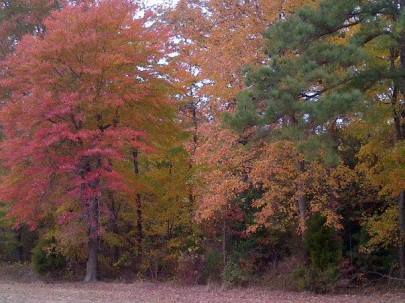
It’s colder today, and a strong wind blows out of the northeast, off the water, and the last of the leaves are letting go. It’s desperately Autumn here along the Bay. Yesterday the colors were brilliant, at their “peak,” and today they are muted. Tomorrow the leaves will mostly have fallen. I walked the paths just now here at Aerie, and the skin on my face feels tighter, the back of my neck is cold.

The sound of dry leaves and the wind is immediate. The clouds are low and dark—steel blue—layered deep clear past the horizon, as if they’re keeping out the rest of the world. They threaten, of course, but somehow they protect as well. It only took a few turns around the property and a meander past the duck pond and river to let go of the world for a while. Genocide cannot find me here; bombings will not find me here. Invasions and deficits and brashness and ridicule cannot locate me when I’m here at Aerie, and the sky is low like this, and the only sounds are the leaves in the wind and the water pushing back on the rocks, and the geese over the recently harvested fields.  

I left home far more than I should have. It was always interesting and exciting to come home after a month somewhere else and see how so much had changed; leaves either completely fallen or fully alive. I am glad for the places I’ve been and the people I’ve grown close to in my travels. But in retrospect it seems I was mostly out there looking for something allusive, some semblance of peace, perhaps. And today walking up the hill from the river I realized it might be the kind of peace I find here at Aerie. I almost find it here in Spring, working in the garden, osprey calling above while teaching their young to fly; and in Summer when we scull out on the Rappahannock, up the inlets to the west, stopping for oysters at a small grill near the bridge. In Winter, when deer and fox come closer to the house looking for food, finding apples, and I can sit on the steps for hours teasing one fox closer, and then closer still, and she eats a few slices before taking a large core in her mouth to bring back to her den to share with her young.

But it is Fall, of course, when I come closest, and the smell of leaves is deep, and white oak burns in the fireplace, and we heat up apple cider and I can sit on the patio at night for hours, bundled against November, working on something in my mind, remembering the reach from some other time.

Last week I walked to the river and a bald eagle stood in the field to the east where corn had been just a few weeks ago. It never fails that every time the eagles return this time of year, I remember a song by one of the primary influences in my life for my love of nature–John Denver. He wrote, “I know he’d be a poorer man if he never saw and eagle fly.” I always knew it to be true; I just never dreamed it would happen from my front porch. I have hiked in the Rockies, and I’d hike there every day if I could. And I’ve walked across the Pyrenees, through the Berkshires, along the Camino de Santiago where I must return to truly unearth that peace. Yet here where the Rappahannock meets the Chesapeake is where all my songlines converge.

It’s colder today, and grey. The paths are covered in leaves, as they should be this time of year, and my son is baking biscuits and heating up apple cider downstairs. I have some serious metaphorical hills still to climb, but today, outside, I can hear squirrels arguing, and the driveway is covered in acorns. A close friend of mine pointed out recently that to him Autumn is hope, it is life tucked away for awhile giving us a chance to start over in a few months. He’s right, of course, but I wish I could slow the whole thing down. I don’t want things to change so fast anymore. I like the sound of the leaves as I walk the paths, the colors as I lay in my hammock and watch them fall. I find peace in the carpet of stars at night, out early enough in these winter months for me to spend hours looking up, wondering. My anxiety settles down when I sit on the patio at night and hear rustling in the woods as the fox comes to call. I have lost so much faith in humanity it is difficult to write about. I need a breath; I need to be restored. It seems that despite our potential to banish the evil in the world, we continue to falter. But here at Aerie on the eastern edge of Virginia’s Middle Peninsula, something eternal is happening even as life let’s go and settles softy around me, marking time like decades.

Passing through Nature to Eternity

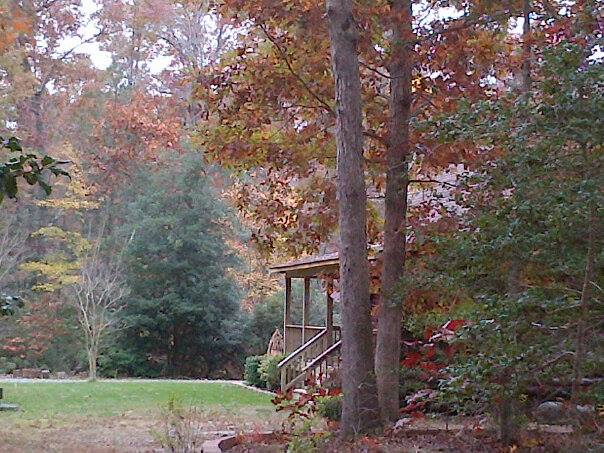
there’s a house in there, swallowed by the growth

It’s raining, and the air is cooler than it has been, which brings with it, for me anyway, a soft undercurrent of sadness. You see, I love summer. I love the heat and the stillness of it, the hot sun on my face and shoulders, the sand under my feet, the water—oh the water. So when I wear long sleeves or shoes with socks, or when the water can no longer be waded into for no reason at all other than slant of earth and distance to the sun, I get melancholic (as if listening to Jackson Browne right now might not already be responsible). And today was like that, but more so because of the rain.

This week’s work involves adding random details from my younger years to a one-hundred-and-eighty-page manuscript to set a sharper tone to a time that was above description, beyond anything that could be limited by diction. This editing stage sends me back to a place I would, both at once, relive again in a heartbeat and never want to think about in my lifetime. But it was so long ago I have trouble remembering some details and I get lost in the weeds of long ago. So to clear my head, I went for a walk to keep myself present, keep my mind on the here and now. Rain can certainly do that. This can be a Herculean task at times—keeping things clear. More so for me when the air is cooler, and the sun is not so hot anymore. It made me realize how much simply fades from our lives if we stop paying attention to it.

Writers have various ways of dealing with ghosts. Some watch Pirates games, some watch movies. Some drink and some play with their dogs in open fields. I walk.  

Down the road is a track of wooded land with an old colonial house. At one time, even since I built here twenty-seven years ago, the house was completely visible and well admired. It sits recessed on the front edge of beautiful, forested land with hardwoods, which this time of year are starting to show their colors. The house is white with a wrap around porch, hedges, and a front lawn more akin to a rolling, green field where deer gathered every day at dawn and dusk to sip the dew. I loved walking by and think about sitting on the porch, drinking tea on a day like this, watching deer and listening to something gentle, like piano music, while rain kept meter on the porch roof.

You can no longer see the house. The front lawn has grown deep in weeds and small trees after just a half dozen years of no one caring for it. Nature has reclaimed the entire property, and the house, if you walk up the no-longer-navigable driveway far enough, is covered in vines and mildew. Several porch slats are caved in, and while the windows remain in tack, portions of the siding are simply gone. I don’t know who owns the place, but the man who rented it and lived there with his dog has gone back to Richmond an hour from here and, presumably, has no connection to or obligation for the place. For all I know the owner is dead. That happened elsewhere nearby. One house not far from here has been so reclaimed by nature it is absolutely impossible to tell there is a structure there except for a slight glimpse on a sunny day of a car bumper and an old boat appropriately named “Prozac.”

It happens sometimes when there is a lack of heirs in a community where restrictions are limited and property size is usually somewhat sweeping. The once lived-in and celebrated home is a house being swallowed by the earth, as all eventually will be. It makes me wonder if Mars at one time had a suburbia which a billion years of burning sun and negative-Kelvin ice storms vaporized into nothingness. That’s what crosses my mind when someone doesn’t mow their lawn very often.

There was a time, though, when someone oversaw the construction of the beautiful place, measured twice and cut once, new owners backing up a moving van and carefully designing the rooms, children running up the steps to their bedrooms, leaning against the window on days like this to watch the deer out front. The place might have filled with the aroma of turkey in the fall, soft sounds of football from the television in the den in the back, with the double doors that looked out over the marsh to the east. Geese frequent the area, and from the porch the kids would have sat in the chairs when relatives visited and watched the birds land in the fields across the road.

The kids grow up and leave, for Richmond, for DC, for another place. The parents can’t take care of it as well as themselves, so they move to a smaller place in the village, or in with one of their kids, and the paid-for-house sits alone and silent. Taxes only run a few hundred a year, so they’re easily paid and then forgotten. Then they rent it to a man with a dog, but he leaves too, and the owners die, and the kids let it go, hoping to take care of it someday.

Or maybe they had no kids, like the Prozac house. It just sits there until nature, which always wins in the end, wins.

I wonder if I’d run through that entire scenario if it wasn’t raining. Autumn is proof, I suppose, like old, uninhabited homes, of the passing of time.

Back at Aerie, I sit on the porch, drink tea, listen to a football game, and can smell turkey drifting out from the kitchen. I have some planting to do for the fall—bulbs mostly, but the back trails have gone untended for far too long. I’ll do that, this week probably. The area behind the shed needs to be cleaned up as well, and I need to get an estimate on stripping and restaining the house; I’m way overdue on that. I don’t have the energy I did when I built the place twenty-seven years ago. Then, all winter long I came and helped stack the logs, met sub-contractors while my then three-year-old son sat watching his home rise out of the dirt. While the roofers worked or the electrician figured out how to install wires in a log home, he’d ride on my shoulders as we walked down the hill to the river and we’d talk about what we’d do here–a pool, of course, and a basketball net. We’d play football in the yard, and we’d throw the baseball, of course. Come that early Spring I built the inside; all the interior walls, the cabinets, the stairs, the rest. The rest of life was still a distant curve after a still-to-come lengthy journey, and this place was forever. Come spring, we moved in, and the wood smelled so fresh, plus outside honeysuckle and lilacs.

The leaves are changing colors early this year, and I can feel the fall in the chill of the wind. The bay breeze helps keep it seasonal for now, but the winds will shift soon to the north, shutting down summer completely.

I don’t mind fall; it is beautiful. My time in western New York and especially in central New England spoiled me for how intensely beautiful autumn can be. But summer for me has more hope, still holds just enough promise for everything to work out fine in the end. It is the time when we keep building our lives instead of stepping aside and letting nature run its course.

Does everything eventually bend the way of the once-white colonial? Is even Aerie headed someday to the condition of the Prozac house? We like to think not.

And anyway, for now, I am here, sitting and drinking tea. Tonight the fox will come by the side of the house for apple pieces, and the birds flitter between the crepe myrtles and the porch-rail feeders. Life is everywhere right now, even while summer fades. I can hear the geese headed toward the field.

The rain has eased, and I think I’ll walk again, down past the farm, past the unseen, recaptured house, and to the river, which will hold its own for eras beyond everything else, as waters have done since the start. But then I’ll need to cut the grass. If I have the energy, I’ll also trim the hedges.

“And while the changing colors are a lovely thing to see,

if it were mine to make a change I think I’d let it be.

But I don’t remember hearing anybody asking me.”

–John Denver

Aerie

That Which We Are, We Are

The Chesapeake Bay Bridge Tunnel

I immersed myself in outdoorsy stuff in my early teens; even beyond that. I wonder if something innate in my DNA attracted me like chemistry to the outdoors and references to it, or my environment and influences doused me with enough references to nature that my path was clear.

I listened to all of John Denver; knew every word to every song. Played his music on the record player and my guitar. At the same time, my friend Eddie and I spent every single day in the woods and along the Great South Bay at Heckscher State Park, nearly literally our backyard back then on Long Island’s South Shore. I watched movies like Jeremiah Johnson and television shows like Grizzly Adams. I wanted to disappear from civilization like they did; I wanted cabins like they had up in the Rockies, with a warm fire going.

The beach took hold of my Buddhist-bending mentality, combined with Dan Fogelberg and Jimmy Buffett, books by Joshua Slocum and Robin Lee Graham. Patrick O’Brien and the first paragraph of Melville’s Moby Dick, which reads:

Some years ago—never mind how long precisely—having little or no money in my purse, and nothing particular to interest me on shore, I thought I would sail about a little and see the watery part of the world.

Damn I wish I wrote that, wrote “Son of a Son of a Sailor,” “Rocky Mountain High” and “Sweet Surrender,” wrote home from some mountain in Utah not far from Redford’s “Sundance” ranch, long before the film festival was born. Instead, I played their music, watched the shows, and spent as much time as I could in whatever nature I could.

I think it was the beginning of me always feeling slightly outside of everything, just a little beyond understanding people. For some time I thought it was insecurity, but now I believe I just preferred the natural state of things, how perfect it is out there. I had the theme of Grizzly Adams down pat:

Deep inside the forest
Is a door into another land
Here is our life and home
We are staying, here forever
In the beauty of this place all alone
We keep on hoping.

Maybe
There’s a world where we don’t have to run
And maybe
There’s a time we’ll call our own
Living free in harmony and majesty
Take me home
Take me home.

Even that line repetition is a nod to Frost’s line “Miles to go before I sleep.” Exactly.

Is it true that everything we are we remain? Our hopes remain. Our dreams remain. And if we hadn’t lived them out yet, perhaps we still will in some other season? Maybe.

A part of my mind never truly grew up, I know that. A part of my psyche still holds tight to how I used to think when I was young, sometimes to the point I can be out for a walk and not even remotely feel my age, forget that my ability to do most of the things I could then is, shall we say, compromised. But we trick ourselves. I can still ride a bike; can still hike in high altitudes. In my fifties I walked across Spain. So who knows.

What happens is we forget. We let go of so much of who we were to make room for who we become. It is natural and beautiful and necessary, and we would not come close to being who we are today without who we were then, watching Dan Haggerty and his bear walk down the mountain, or listening to John Denver’s opening guitar riff on “Rocky Mountain High.” It’s in our blood. It has to be.

Unless, again, something in our blood attracted us to those things. Who the hell knows, right?

Ever come across a trigger that brings you back to those moments you had then? Maybe it’s a picture in some old album your parents kept; or a book you read. I have books like that, from then, I have a baseball my friends all signed when I left Long Island and it transports my mind to that small village, almost as if had I driven there today I’d see fourteen-year-old Eddie coming out of his house ready to hike through the park. We have so much more ability to manipulate time than we realize.

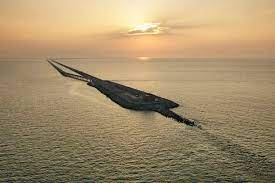
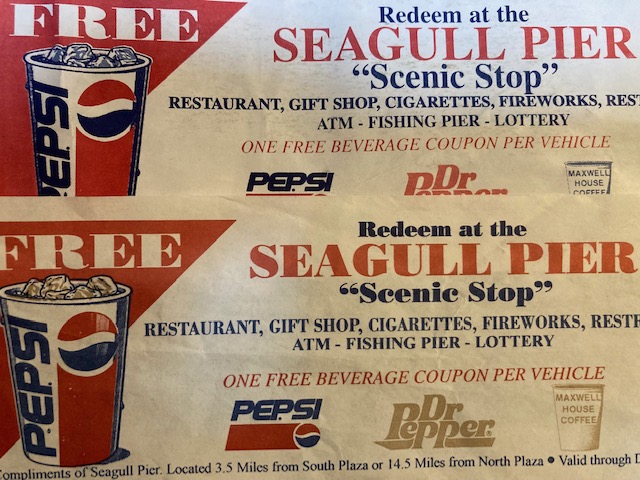
So, I had this job. One of my first, and the last one as a high school student. I worked on Seagull Pier on the South Island of the Chesapeake Bay Bridge Tunnel which connects Virginia Beach, Virginia, with the Eastern Shore of Virginia, known as the Delmarva Peninsula. I was thrilled to get hired out there for one reason: I’d be working “nearly” on the water, watching the sunset and rise, feeling the salt water on my face all the time, like Melville but without whales. I worked 10 pm to 6 am every night, usually alone, frying shrimp and fries, serving sodas to travelers with coupons they received when they paid their toll to make the crossing of one of the longest bridge-tunnels on the planet. Yes, they got a free Pepsi at the pier. It was pretty barren then—a diner-style interior with a few tables, a gift shop, and a pier filled with fishermen. In later years the restaurant took over part of the pier and became quite nice with a full menu. But back then it was just a quick stop for a basket of fried food, coffee or Pepsi, a few souvenirs and back on the road.

They tore it down a few years ago to expand the bridge tunnel.

I would drive my dad’s ‘72 Nova out there just before dark, park and stand on the rocks looking west up the Chesapeake, west, toward the setting sun. Then I’d head inside and cook, serve, clean, make coffee, talk to fishermen on rainy nights when they crowded the counter, talked to the rare customer who stopped for their free Pepsi or a burger at three AM. Then when my shift ended, or sometimes even before then if no one was there, I’d walk out on the parking deck on the east side of the building and watch the sunrise over the Atlantic at the mouth of the bay.

Just remembering that brings me such absolute peace I can, just for a moment, forget some of the minutia that I find myself up to my neck in. I remember, and I am there, can smell the salt, can feel the breeze coming off the water.

I love to remember.

One morning at about four, the door opened as I was just about to clean the grill. I glanced back to see who was coming in and it was a man by himself in a sweater. He had long hair, a thick beard, was tall, big, like a linebacker, and stood for a moment looking around.  I called to him to sit anywhere and he came right up behind me and sat at a stool, and he said, “Can you make me a burger on that grill before you clean it, my friend?”

Instant voice recognition. It was Dan Haggerty. Grizzly Adams himself. I asked and he said yes. We talked and he insisted I make a burger for myself as well, and fries, and we sat together and talked for an hour in the empty Seagull Pier restaurant. He was on his way to Florida and preferred to drive very late and very early.

Young people: This is before there was any form of a device with which I could capture the moment unless I happened to have my camera—a big device with film in it—which I didn’t. So we have those triggers. A baseball, an old guitar. Stories.

Today I received mail from my sister. My brother-in-law bought a new car, and in the old car, buried somewhere in the console or glove compartment or somewhere, they found three Free Drink coupons for Seagull Pier from one of their many trips south to see our parents in Virginia Beach.

She was discarding outdated coupons some toll clerk shoved at her with her change. I received a wormhole to a version of me that had my entire existence in front of me from a place I loved to show up and leave out in the middle of nature, where the sun set and rose again with my arrival and departure. What had for nearly fifty years become illusionary, almost some fiction from forever ago, suddenly seemed to happen this morning, and I felt younger, more alive.

I still head to the bay—same bay, ironically—to watch the sunrise; and to this river every evening to watch the sun disappear west into the Utah mountains. I still dream of riding horses across the Rockies. I still listen to Denver and Fogelberg.

If not, I know for certain I’d be a poorer man.

Everything we are, we remain. Our hopes remain. Our dreams remain. And while not all of them will find fruition, some might. Some just might. If not in this, then perhaps in some other season.

Perhaps.

Thanks Cathy and Greg, for not stopping for a free beverage

The Moon and My Own Private Ghosts

My moon, today

It’s not easy finding the constant in life. You think—or at least you hope—it will be people, and sometimes, but rarely, a particular person, but that doesn’t always hold to be true. People change, they come and go, they die, they just die, and while that’s not unexpected or even unusual, it still creates that ripple, that slight adjustment which a constant helps steer you through.

The constants in life mean everything.

Today while out for a long walk to clear my head, to figure out where yet again I most likely screwed up, I looked up at the moon and understood there is my constant. The moon, yes, but all of it—the water and the marsh, the woods, the sounds of the rest, and all the rest included.

From the start it was always nature. When I was still in the single digits we moved to a house in walking distance to a state park, the Great South Bay, a river, and an arboretum. Even behind the houses before the highway, which anyway ended right there, were woods and a mysterious trail leading to “the creek.”

When we moved my constant came along. We lived on a river and I could canoe clear out to the Chesapeake right from my own yard. I’d ride my bike all over the city, but in particular along the boardwalk and clear back through a new state park to a smaller but beautiful different bay. It was always nature that saved me from loneliness, from anxiety, from the awkwardness of me.

It simply never changed. At college I never felt either mature enough or hip enough to engage much with others, except if separated by a mic, but the river—that river running along New York’s Southern Tier saved me more than a few times, and my hikes up to the Heart where Thomas Merton used to sit and write in his journal, or overnighters out in the National Park not far west.

And Niagara. Canada. And my go-to safety net, Letchworth State Park.

Bring on Arizona and the Sonoran Desert, the Catalinas, the canyons with waterfalls and paths. I’d head up to Kitt Peak and watch the stars, or up Mt Lemon and watch the snow just miles from friends in shorts. I was safe there.

In many ways I never matured. Some might say my constant is immaturity then. Okay, perhaps. I admit I am more interested in hiking through woods watching birds than I am just about anything else. I moved to New England and hiked Mt Wachusett most weekends; I lived on a reservoir and walked out to the Old Stone Church and sat for hours playing my guitar hoping no one could hear, praying someone would listen.

Africa.

The trails at the small but memorable Pinchot State Park in Pennsylvania.

Here. Aerie, where hawks and eagles nest, and osprey teach their young to fly, and deer, opossums, fox and countless birds make themselves at home, because it is their home. I’m a guest.

Nature has no concerns. It is its own constant. It has no financial obligations; it does not have to ask anyone for help again and again; it does not answer to differing opinions or lie about its past. Nature does not judge, it does not question, or answer for that matter.

I know these trees, like I still know the ones Eddie and I climbed in Hechscher, like I still know the ones bending over like “girls throwing their hair over their heads to dry in the sun” along the Allegheny where my friend Joe and I used to wade for hours, dry fish on the rocks, and talk about wilderness and time.

Everyone above is gone. They’re just gone. But the nature of us is there, as well as nature itself. I wander for hours with my ghosts, talking about back then, talking about what’s next.

Today through the branches the half moon stood stark in the dark blue sky, and I swear not one other human could see it. Sure, you have a moon to admire in your world, but it’s not this one. Because this one knows Eddie and how he warned me one night when walking through the trails just after sunset to lookout for lunatics. I didn’t know what that was so I asked what a lunatic is and he said never mind. When I thought he had left to go home, I walked further past some grove and he jumped out and screamed, and I screamed, loud, and I called him crazy. And he laughed and said, “That’s a lunatic.”

My moon knows that story.

The trees here know about the time my dad and I sat on the porch and he couldn’t remember the names of some loved ones and he couldn’t see how sad I was. And they know about the time he let my son tie him up in a lasso and put a small cowboy hat on his head, and my father and my son laughed. That’s in the air; that’s out there, waiting for me to cut through the path on the west side of the property.

I have much on my mind, and a great deal of it I would rather not discuss with many people. And that’s not healthy—keeping it in like that. So I go outside and share it with the waiting trees and the ghosts I bring along. Certainly it is all internal monologue, but it’s always been that way, when Eddie and I wandered the woods singing Harry Chapin songs, or Karen and I canoed the Lynnhaven talking about how far the river reached to the south, through the marshes. I was always in conversation, connecting to the wilderness.

A friend of mine in Colon, Germany, but who is from Poland, calls me “the Man from the Country.”

“I was born in Brooklyn,” I told him.

He looked around when he was here and we walked to the river many years ago, and said, “This is not Brooklyn, Bob. This is a jungle. You live in a jungle.”

So it is. But it’s an honest jungle, with a river and a bay and a moon.

Nature lets me off the hook. Nature holds me responsible. It teaches me to be honest with myself and, in turn, with others. It teaches me to be quiet, to let others think what they want.

I have lived, lived very much “out loud” as it is fashionable to say. Oh, I have certainly lived. But it is in nature I am alive. There’s a difference. You know what I mean. There is a difference. You know exactly what I mean.

The Great South Bat at Hechscher State Park

Therapy

I saw my therapist today. My son and I went to a local nature trail, and as we walked I mentally conversed with the crisp air and bare trees, the occasional birds, and the creeks running alongside. This is my proverbial couch, and today (as well as last week at Westmoreland State Park on the Potomac River) was my weekly session. I have always found perspective in nature, an understanding of the need to focus on now, on today, on the moment at hand, as well as a deep appreciation for the pace and tempo of time when we are in nature. With so much going on in my life, today, and every time we go for hikes or when I just wander to the river and sit on the stones to watch cars pass on the distant bridge, I manage to slip those bonds of stress and anxiety.

I have walked in nature since I’m nine years old, and I always innately managed to allow “nature’s peace to flow into me as sunshine flows into the trees,” as John Muir suggested, and I’m certain everyone out there understands this as well.

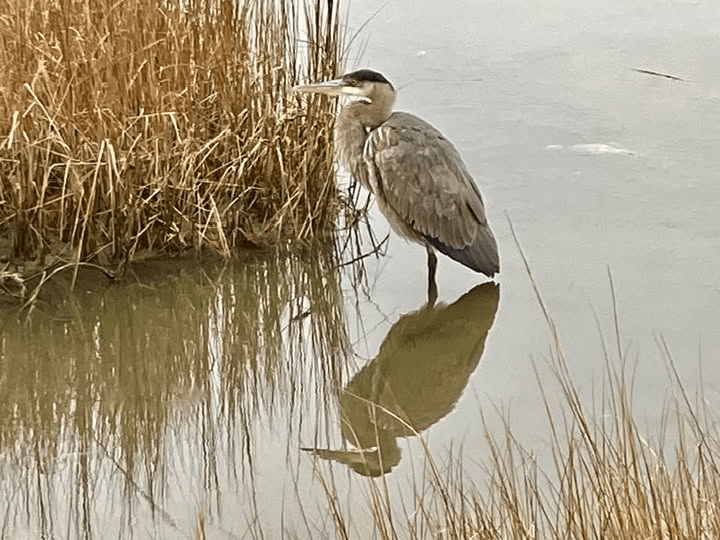
E.O. Wilson wrote that, “Nature holds the key to our aesthetic, intellectual, cognitive and even spiritual satisfaction.” I think better in nature. I mentally write and revise, I connect dots between seemingly unrelated themes. I can sit and contemplate the way geese land on the pond and suddenly recognize the relationship between them and a discussion I had about some folk song or compelling art. I don’t do this on purpose; I just walk, then I recall that piece I’m working on about the Torture Museum in Prague, and after awhile I note the patience and focus a Great Blue Heron uses in seeking out small fish in the duck pond, and, ouila, clear as a bell. I’m off and running.

I have been to churches all over the world and remain close friends with priests I’ve known since I’m nineteen, but I don’t really contemplate faith until I’m on some trail somewhere in the snow and turn around to see the valleys cut by ice millions of years ago. Even those faithless among us know that Muir was right when he wrote “the clearest way into the universe is through a forest wilderness.”

I have been going to these therapy sessions since I’m a child along the Great South Bay, and like John Burroughs, I have always gone to nature to be “soothed, healed, and have my senses put in order.” It isn’t far, this nature I’m talking about. I’ve walked down Fifth Avenue in summer at five a.m. and have known nature. The walk from my building to the parking garage at the college passes several groves of trees and a well-hidden pond where birds spend their time between their classes.

When I’m confused, anxiety-ridden, stressed, worried about meeting my goals, worried about so much I thought I’d never have to concern myself with at my age, when “the world is too much with” me, I just know what Einstein meant when he wrote, “If you look deep into nature, you will understand everything better.”

Frank Lloyd Wright said he walked in nature every day for inspiration for his day’s work. Me too, and sometimes it actually happens that way, particularly if I come home, put some appropriate music on, and brain dump my thoughts.

Just as often, however, I’m so inspired and awakened by nature that I just stay out there. The long trails become my compound sentences and the rocks at the river from which I can see both west up the Rappahannock and east across the Chesapeake become my exclamation points. In writing I avoid such sensational punctuation marks, but in nature they are virtually everywhere! The herons and the kingfishers are sensational. The snapper turtles and the stingrays, the pink clouds at dusk, the orange glow before dawn, the osprey call, the geese landing all at once with hundreds of slides into the otherwise-still water; these are nature’s equivalent of dramatic emphasis. There are simply no parentheses in nature, nothing to set off or turn into some subordinate clause. It is all subject and verb; it is always active voice.  

Life—my life—has seemed heavy at times, a ton of bricks difficult to carry but more difficult to put down. I have climbed so far already this year, and I continue one foot in front of the other, but the summit is still quite aways away, and when I’m inside—both physically and mentally—it can keep reflecting back at me, can absorb too much attention simply by virtue of perspective, like a boulder in a bathtub. But when I’m outside and the simplicity of life greets me at the door and reminds me of my priorities, and I step out into the infinite presence of earth, Rachel Carson is there too to remind me that “those who dwell among the beauties and mysteries of the earth are never alone or weary of life.”

Bizarre statistic: Those who contemplate suicide and decide to see it through at home are three times more likely to do so than those who go into nature to end their misery. Of course there are exceptions; I’ve known or have known of a few troubled souls who found their eternal peace in nature much too soon. But the vast majority of lost souls find their way home by leaving it and seeking out something larger than themselves.

We seem so damned important and certain in the confines of our offices and living rooms and our problems can appear so significant, but out along the river, out where we can stare across the reach to the distant waves, up along the ridge of some mountain where water formed caves millions of years ago and we stand in perfect silence completely in the moment, we are aware that life is nothing but now and love. Life at its core is comprised of nothing more than now and love.

Session over.

Standing Still but Still Standing

This week marks the end of Volume Seven of this blog. Sunday, January 1, 2023, I will begin Volume Eight. It did not go where I had expected it to, though few things in my life, if anything, have gone where I thought they would. I also could not conceive that I’d still be doing this going on eight years. It proves the notion that if you just keep showing up, things happen.

When I started the blog in January of 2016, my father had just died a few months earlier, I was still senior faculty at a college in Virginia Beach, was still senior faculty at a university on the naval base, my mother still lived in a large condominium and my brother lived in Texas. None of those things are true anymore; or, the truths of those things are in the past, as most realities in our life tend to be, eventually.

I thought this site would be a simple escape into nature, and for a while it was. I wrote about geese, about the river and the bay, about the hawks and eagles here at Aerie, and about the wildlife we discovered here at night while looking at the stars. But as the weeks and months progressed, it became more about the nature of things, including and perhaps most significantly, human nature, particularly my own. I recognized a few of my many flaws, proving in some small ways to myself that “Writing to Learn” really does work, noting those times I wrote myself out of a depression or into a corner and back out again.

The changes kept coming, as they are apt to do: I left the college. I left the university (or the university left us, as it shut down because of Covid and never reopened). I lost touch with people I knew well for a very long time understanding finally that sometimes people we thought were friends were really simply colleagues with whom we shared a world. Mostly, I spent more time on the river, along the trails of the Chesapeake region. When I started this blog, President Obama was still in office. As the years moved drudgingly by, someone else came, and now President Biden holds down his temporary quarters. There was no such thing as Covid, we hardly ever used terms like quarantine, masks, social-distancing. Yet as we did, nature became more important, no longer simply a refuge, my escape, but a place to breathe without worry, a place to walk without concern.

Professionally, this blog led to a book, A Third Place: Notes in Nature. Among writers, blogs are somewhat controversial. Some believe it can distract from real writing, absorb your energy from completing more worthy works. I understand the argument. But I’ve always had several layers of writing going on at the same time. There is the serious material I know I want to send to publications, perhaps even in book form, as in the case of my current larger projects including Wait/Loss, Front Row Seat, and Curious Men. Then there is the raw material—the stuff I read in bars with the likes of Tim Seibles—stuff we generally don’t expect to be published and which certainly won’t appear here; stuff we prefer you hear when you’ve been drinking and where recording is strictly prohibited. Other work, too, got done. A reissue of a book about Van Gogh, Blessed Twilight, and The Iron Scar: A Father and Son in Siberia–this year’s book about riding the trans-Siberian railway with my son whose pictures grace the book in a gallery of several dozen of his shots.

But there is the middle work, the journaling, the reflections, the prompts, the thoughts, the spewing of anger at politicians, the rants at society for ignorance and negligence, and the confessions to those I know and those I do not know about so many of my shortcomings, failures, and misunderstandings. Many times what I thought would be a work about nature turned out to include my heart on my sleeve; yeah, I’ve exposed much in these six years and as a result some people pulled back, others gathered closer. This has certainly been a cleansing experience. Nothing wrong with that at all.

But in the end this blog is a place I simply am what I am. I do not know if I’m departing this life tomorrow or in thirty years, but when I do, I’m leaving everything I can out there, exposed. This blog has taught me, is teaching me still, to be who I must, something I wish I had learned decades ago.

It started with one reader—me. Last week the unique readership numbered almost 1500 people, averaging just around 1200 every week. I’m very pleased by that. But make no mistake: I have no illusions that I am changing people’s minds about anything, including my own. I simply found a place to express myself instead of calling you on your cell phone and doing it. You’re welcome. In the end every single blog posting from the start to the finish is for me first.

I have written about dear friends who I thought I’d spend my life with, confidants I counted on to be there and to be there for, but they moved on too soon, like Cole and Joe and Trish and Ed and Bobbie and Dave and too many more to count. I’ve written about artists who I’ve known and whose work made me feel like they knew me, even the ones who I was never fortunate enough to meet, like Vincent van Gogh and Dan Fogelberg, John Denver, Harry Chapin, Mozart, Chopin, Pachelbel, Marley, Nick Drake and so many more whose music plays while I’m typing.

I’ve written about my son. About my dad. But still, mostly about nature both human and natural, always from my perspective, never anyone else’s. The advantage of a blog is we’re like street corner preachers standing on a milk carton flapping our sentiments to the wind, and some people hang out and nod, others hang out and get pissed off, but most just walk on by. That’s fine. I’d walk by too. I’ve never had a guest blogger. I’ve never skipped a week except when traveling, and even then I believe I scheduled some writing. I’m proud of this blog. It makes me feel like I’m being constructive when I should be raking leaves.

And if I haven’t written about some people, it’s because I didn’t want to, don’t want to, and never will want to. If I’ve learned anything at all, it’s reflective of the sentiment of that Long Island philosopher William Joel, to “do what’s good for you, or you’re not good for anybody.” Something else I learned way too late in life.

But a few other things I’ve learned in these now 450 posts:

Heron get frightened easily. Geese change course if they see humans. Hawks are hyper-focused on food and if you walk by one while they’re eyeing down a squirrel, they couldn’t give a rat’s ass you’re nearby.

Standing at this river and watching rockets lift from over at Wallops Island raises the hair on the back of my neck, as does standing in the yard and seeing the stars.

Bare trees in winter are as beautiful as the colors of fall and the buds of spring.

I’m stronger than I thought I was but nowhere near as smart as people think I am. My strength is creativity not intelligence, and my true abilities lie in expression, whether through writing, photography, and at one time music. I suck at finances, am shaky with quantum physics, and I do not know how to build an erector set.

Some of my posts never made it to publication because they were too honest, too scathing, and not fair. Some never made it to publication because as soon as I finished, I thought they could do better than A View, and they have, including pieces which went on to the Washington Post, The Sun, and the Chronicle of Higher Education, among others. Other entries just sucked so I deleted them.

I learned that people prefer to laugh hard or cry exhaustively rather than the simple, boring rants or blogs about education. I learned that everyone can relate to nature, wishes they spent more time in nature, feels more relaxed in nature.

I’ve learned that I prefer to be hit over the head by someone about how they feel about things rather than some slow reveal of the truth. And I’ve discovered that time spent with people who make you feel better about yourself is all there is left in life. There is no legacy, there is no endowment more valuable than that—to spend time with people who you love and who love you and who aren’t afraid to be truthful about that, no matter what, who are able to remain quiet without worry of that quietness.

This blog will continue with its bloated pretentiousness and condescending rants, but hopefully as well, readers will be more likely to notice the sun on the bottom edge of a cloud, the call of geese or the strong woosh of an egret’s wings. Too, I hope they are encouraged to reflect more often about how swift life is, and how we all know the simple truth is when we leave this world, we’re going to wish we had been more open with others, move loving, more honest with how we feel without concern of hurting or being hurt. And we will wish we had seen more sunsets. It is that simple.

The view from this wilderness is fragile and fast, and beautiful, and it is the same view as those reading in Mumbai, in London, in Brooklyn, Cincinnati, Mexico City, and Barcelona. The View from this Wilderness is not dependent upon coordinates. I’ve learned, too, that we need to help more people without them asking, and we need to let more people know we love them without worrying about their response. The old Japanese saying remains true: “Just because the message is not received doesn’t mean it is not worth sending.”

All artists like to know that people hear and appreciate us, but that’s not why an artist paints or a writer writes.

We write to remind ourselves that we miss too many sunsets, sunrises. We walk by too many flowers just beginning to open, and too many quiet lakes. We pass by too many mornings without opening the curtains and too many evenings without stepping outside. We move too swiftly through life, worrying more about grace than gratitude, more about lofty ambitions than love. And we believe everyone else does to, and we want to say so for them.

If you’d like to follow this blog and have not yet done so, click the “follow” button in the bottom right and enter your email. You’ll always only receive blog entries; nothing else. If you’d like to make a donation to help with spreading the words through social media, please feel free to do so by

Venmo: @robert-kunzinger

or Zelle: Bobkunzinger@yahoo.com .

If you’d like to respond to individual posts, please do in the notes section after each entry.

If you’d like to go for a walk, drop me a line–I’ll be outside waiting.

Those of us here at A View from this Wilderness (that’d be just me) wish everyone a Happy New Year.

“Love when you can

Cry when you have to

Be who you must

That’s a part of the plan.”

–Dan Fogelberg

Peace of Mind

I never truly fit in.

When I was young I certainly had friends, but I was never completely comfortable around anyone—it probably explains my ease in front of a crowd instead of in a crowd. Honestly, I’m much better and more myself in front of two-hundred-fifty people or more than I am with three or less. The art of small talk has always eluded me; in fact, I wrote a relatively successful piece entitled just that, “Small Talk.” It’s not my thing.

I could never involve myself in the minutia of life. I was always better at big picture jobs—a hotel, a health club—where the objectives were clear and the conversation was kept to a minimum. So you can see the irony coming, right? Yes, thirty plus years teaching and discussing and reworking writing by college students, very often one-on-one. I always fell back on my health club training. That is, I became not so much a professor of grammatical skills or syntax as much as I was a motivator.

Big picture themes. That’s my wheelhouse.

So I never fit in at departmental meetings or brown bag discussions. In those places my mind shut down when endless conversation ensued about how to word one sentence of a document or the need or not the need for the Oxford comma, and on and on and blah blah blah and whomp whomp whomp…

They didn’t want me there. I didn’t take it personally; I just, once again, didn’t fit in. When I was growing up, Eddie and I would wander the state park and sing, and even with him, my best friend, conversation came with a melody and lyrics. Things don’t change.

I went to a high school reunion a few years ago. I knew just four people there. Kathy, her sister Patti, our friend Michele, and…okay three people. In retrospect that makes sense—I didn’t really do much in high school. My friend Mike and I did announcements, and that left the appearance I was involved, but I wasn’t. There was a mic, a room, and hallways between me and everyone else. Perfect.

In college it was the same. I was very involved, but scrutiny of that involvement is illuminating for me. Radio station (alone in a studio talking to the campus); coffeehouses (alone on stage in front of a crowd of people I couldn’t see anyway because of the lights); weekends with keg parties and drunken floormates found me borrowing a car and heading for Niagara Falls. I was more comfortable around the resident directors who were often alone in their apartments, or driving to Canada.

Even when I did participate, what I participated in is defined by the singular concept of “one.”

Tennis is an isolated sport.

Guitar can be played without accompaniment.  

Writing.

Walking. Hiking. In college it was the Allegheny River, in Tucson I’d drive down and wander the empty streets of a Mexican village, and in New England I’d hike to the top of Mt. Wachusett where kettles of hawks kept my attention for hours.

Nature.

I find myself more comfortable in nature because it doesn’t mind failure, it pays no attention to shortcomings and disappointments. It simply allows us to exist as we are without judgement or ridicule.

This afternoon after the storm I sat on some stones at the river and watched the choppy waters, the heron gliding across the duck pond toward the marsh, a kingfisher perched on a wire, and the distant, dark clouds building again, bringing more rain again.

It was a few moments of absolute peace of mind.

A thought about this: The peace of mind thing is not easy to obtain. It is not an absence of sounds and conversations, it is an internal escape from one’s own internal disturbances; the constant interior monologue about everything from the practical (money, transportation, deadlines) to the emotional (sick friends, relatives), to the fleeting irrelevance in life that get their claws in your thoughts and won’t release. So finding peace of mind is not easy to do just because my surroundings are quiet and natural; it just makes it easier.

So I sat on the rocks in a rare moment of internal quiet, the still waters of my mind undisturbed by some psychological pebble, and I looked calmly across the river and realized something profound: this river doesn’t want me here either. It was not created for humans, it is not set up for people. It’s why the heron flew off because of me but not because of the egret or the eagle or the osprey. It is why the tide will ebb and flow based upon the natural phenomena of the moon and the sun, gravity and storms—not because of anything or anyone anywhere.

I once stood waist deep in the Congo completely aware that no human should be there. It is the same in any natural place. In Tucson we stood on the shores of the San Rillito River during the horrific floods of 1983 and watched this once calm, low waterway—a place where kids would play baseball at low tide—snap bridges in half, grab houses off of their foundation, flip them over, and carry them on its back to some other place.

Nature has a whole other level of confidence.

Still, it’s as close as I have come in life to being myself, being out there. Hiking in the mountains, canoeing, simply walking down the coast toward some other where.

Some people never find their reason for being here; they let the world saturate their thoughts like a swollen river and swallow them, giving up, giving in, letting that minutia like money and disappointing others get the better of them. It’s easy to do; it happens. I suppose most people don’t ever feel completely comfortable around others, a bit of self-consciousness slips through. But it isn’t that, exactly. It’s that feeling of always thinking I should probably be somewhere else.

Counselors have said since counselors have been saying things that it is essential to find your place in the world. I agree. I’m not sure I ever will, but I certainly agree, and at least I know where to look.

I’ll be outside. Don’t come.