The Joanie Channel

Joan in the Great River house, circa 1969

On June 22, 2002, my sister sat at our parents’ kitchen table and recorded an audio interview she did with them about their lives, about life during the depression and World War 2. She asked other questions, and just like Terri Gross on Fresh Air, did a great job of bouncing off of their responses. She sent copies to my brother and me about five years ago, and when I sat to listen to them, a few things struck me. One, my father was precise in his responses, and my mother was hysterical in hers. He was 77 at the time, and Mom was 69. But what hit me hardest was hearing our father’s voice for the first time in half a decade. I can hear his voice in my mind, of course, but to actually hear his voice like he was sitting there made him young again. The last few years of his life I was around him all the time and his dementia grew worse and worse. So when I played the cd, I heard not just my father, but my father younger, still alert to everything. It was nice to push past the sound of his weak and confused voice that had filled the corners of my mind and hear him as he had been. Ironically, at the same time it makes it hard to listen.

About two years ago while out to lunch I randomly recorded a video of my mother talking about something. I don’t remember what and the video is gone, but the idea took hold, and for the last two years every couple of weeks when we were at lunch or getting coffee, I’d ask her a specific question, or I’d encourage her to remember a particular time in her life. Note that she is one of the funniest and smartest people I’ve ever known, and understand too that she has had quite the life from the streets of Bushwick, Brooklyn, to Long Island, to Virginia Beach, and now in Williamsburg, Va. There are fifty plus videos here, but I recorded more than a hundred and deleted many. Some were redundant, and some in the past year or so I got rid of when Mom would struggle with a memory, or lose track of what she was talking about.

Still, this is decidedly not about Joan Catherine.

It is about time. This has everything to do with the brief flash of time we have to share with each other. Watch how a person can at once both change so much and still be themselves, who they are in their heart. The truth is at some point as we age we realize that we must set aside our anger and anxiety and arguments, and we seem to do so far too late in life. In the past year I’ve lost a half dozen people I loved very much who were my confidants and companions, and every one of them died relatively young, three of them in their early sixties. At the same time, my mother has nose-dived into a wall, fallen and slammed her head on a porcelain tub, fallen on the floor, faced cancer–again–had a pacemaker put in, battled neuropathy, and moved from her spacious condo where she lived with my dad, to an independent living apartment in Virginia Beach, to an assisted living apartment in Williamsburg, and she just keeps going. Last July she was in the hospital with pneumonia and sleeping eighteen hours a day, and the doctor did not think she would leave the hospital. Yesterday we went to lunch at an Italian restaurant and she woofed down a massive piece of tiramisu. She Just. Keeps. On. Going. And always with a sense of humor. She talks here about her move from Brooklyn to Long Island, from there to Virginia, and about how patient she can be. Or not. She sings the Banana Song, Woody Guthrie, a Shampoo commercial, and in one of my favorites when she had no idea I was taping from the cup holder of my car as we drove along, she sings “New York, New York.”

But this isn’t about Joan. This is about brevity. When we look ahead–when we anticipate–time can slow to a tragically slow pace. But when we look back, when we recall, we can transport our mind instantly to another era, as if it happened two seconds ago. This makes it seem like time goes by so fast. But it is the same now as it was when we were children. That’s the thing about time: it is dependable. Not one fat second will lose an ounce on my account. But the older we get, the more we recall instead of plan, so the clock can be deceptive. In these videos, Mom is full of energy, sitting up and laughing, with immediate recall of incidents an hour earlier as well as two generations ago; at the same time, here Mom is wearing oxygen, sometimes softly gasping for air, and her memory is nearly non-existent.

Time. It is the only measurement that matters. And we are endlessly distracted by the news and entertainment and the stress of finances and politics and health. But all of it slides away when we start to list what is essential. Then, the answer is easy: each other. That’s it. People leave us, sometimes slowly and sometimes with the swiftness of a cool, autumn morning that takes us by surprise. But they do, in fact, leave.

These videos are in no order, so one of Mom recently trying to remember her Uncle’s name might be followed by one of her looking stronger, heavier, talking about her favorite foods. I decided against a strict chronological order so that instead of watching a woman’s slow decline as age takes hold, we can see how life is, in the words of my friend poet Toni Wynn, “Paper thin.” I will add more to her page as time permits. Thanks for enjoying our mother’s beautiful sense of humor and simple take on what matters the most.

Note: There are some videos on the “Video” tab, but most of the videos are on the “Shorts” tab. Please check out both. And “follow” The Joanie Channel.

https://www.youtube.com/@TheJoanieChannel/shorts

Lecture: Day One

Not for nothing, here are three definitions straight from my lecture on the first day of my Critical Writing and Thinking course:   

Fact. A fact is anything independently verifiable. No one should disagree with the facts unless they haven’t done their homework to find out what is and what is not factual. There are no such things as alternative facts; true facts can be verified and are not obtained from biased individuals with personal agendas. They come from independent sources. Note: The opposing side of an argument would still agree with the facts.

Opinion. A lot of people have the wrong opinion about what an opinion is. It is not how you feel about something. We’ll get to that. It is a “judgement based upon the facts.” So the value of the opinion is dependent on whose judgement it is. Ideally, experts; that is, people who have taken the time, education, and research to find out as much information as possible about a particular idea and disseminate the results for us. They know more about the subject than anyone else and have no agenda in the results. Their experience at being able to decipher information through time and in consultation with various other independent researchers, validates the perspective.  If someone offers an opinion without finding out the expertise or validity of the source, the opinion is in question and often wrong. Yes, it is possible to have a bad or wrong opinion if the judgement is not based upon independent experts.

Belief. This is what many think of as an opinion. A belief is a judgement based upon faith. Not necessarily religious, but that too. It is a conviction not based upon anything directly and empirically verifiable, but through trust. No one is wrong for their beliefs as they are not opinions, that is, judgements based upon facts; they are judgements based upon convictions.

Here’s the example:

No one questions that when we buy a house and we need to get it inspected, we are wholly concerned about the opinion of the inspector. We want expert inspectors to tell us what is wrong and right with the place and present factual evidence, and we certainly don’t want an inspector who works for the seller and only has their welfare in mind, nor do we want one who doesn’t have the experience and expertise to do the inspection to begin with. No one questions this, but there are people who insist the opinion of a botanist about political affairs is valid. It is not. The botanist has beliefs one may align with—so be it, but do not pretend the information is valid from independent sources.

This leads to the most important question in all of discussions about politics, world affairs, and finances. It is also the question I tell my students is the primary concern of every professor from the time students write a paper for freshman comp to when they obtain a PhD:

Where did you get your information?

That’s it. Everything else isn’t even worth discussing without first establishing that the opinions and facts come from independent, verifiable sources who can study not only historical trends but predict pretty accurately what is likely to happen based upon that knowledge. This is what economists are best at, and so too political scientists. They are able to say, “Based upon these legal notations and previous attempts in various situations, the most likely outcome of these actions is….”

Hope and faith have nothing to do with it.

The emotion swirling through today’s atmosphere is unprecedented, and some of it isn’t because decisions being made are necessarily wrong but because they are unprecedented and seemingly dangerous as they negatively affect millions of people. Those people who are affected—all of us actually—want to know upon what basis these decisions are being made to do whatever it is being done, and who are the independent and valid experts who suggested those actions to begin with. A full disclosure of that information from researchers and experts would curb much anxiety.

No one should be out to change another person’s convictions. But if there is an argument at hand, the only way to win is by presenting facts and opinions, not beliefs, and one must maintain the belief that others will accept those facts and opinions.

The Five Things I did This Week Assignment

Despite my dislike of djt and em, two of the deplorables, I am intrigued by the assignment put forth by the South African/Canadian currently in charge of the United States; to record five things I accomplished this past week and send it to my boss.

I don’t really have a boss, per se. Never did actually. I mean, at the college I have a supervisor, but we’re trusted enough to be left alone to do what we need to do to accomplish the college’s mission. That’s the thing about good leadership; it lets the people who know what they’re doing do what they know. In my twenties I ran a health club and in my late-teens and early twenties I managed a hotel and in both cases my boss was either across the country or across town. So while in all those jobs I had someone above me, likewise in all those cases, they let me do what I needed to do.

My point is I am not sure to whom I should send this Muskian request of five accomplishments, so I decided to put it out here in the Wilderness, where thousands can View what I’ve been doing this week which I believe warrants that I continue doing what it is I do.

  1. I made a list of what I would do if I wanted to rule indefinitely without anyone able to stop me. I’d fire all the Generals who are responsible for insuring checks and balances is taking place. I’d fire the chief counsel at all branches of the military along with the Chair of the Joint Chiefs to make sure if there is any sort of “delay” in my leaving office, I will have the military and the ones fighting on my behalf in court all on my side. I would trim down all branches of the government which could somehow seize my power back financially, and I’d discontinue media access to press conferences to anyone who did not agree with me, so that the propaganda is not directly from my office but from the media’s lack of coverage of dissenting opinions. This is just a brief list so far and I know it is ludicrous to think congress or even a conservative senate would allow this to happen knowing their legacy depends upon the preservation of our country, but I had to accomplish something this week and I chose this.
  2. I filled out the form and made an online promise to participate in the march on Washington in defense of DEI employees, for LGBTQ+ rights, for diversity and inclusion in the military, and more. I am confident my chosen supervisor genius inventor idiot would never fire me for wanting to make sure as many people as possible in this country no matter their backgrounds, their gender, their identification, race, religion, or any other aspect of their humanity that these two feckless weaklings take issue with, have as much opportunity as possible to make this country greater than it already was.
  3. I asked my critical thinking and research students to find one federal program that was cut and investigate what are the long-term losses by the programs demise that are apparently compensated for by any short-term financial gains. And if there aren’t any gains in the long run, I asked them to find out who will be responsible for fixing it. I suggested they start with the many medical and health assistance programs which save the lives of children around the world, which prevent the spread of deadly diseases such as Ebola, or anything they want really. It is up to them. I suggested they wear masks while doing the research as measles is getting bad again.
  4. I walked through the woods and along the trails here at Aerie. I wandered down to the river and sat on the rocks and visited with some ghosts I’ve known for some time. We talked about the changes that find us now, and how they leave me so cold and so scared. I told my spirited late friends that thinking of them brings me peace, and maybe because of the heart trouble and kidney cancer, and the heartbreaking brain tumor, that they are free from this slow erosion of democracy and now they don’t need to watch. I laughed and thought of how they all might respond, and then I remembered what a writer once said, that “so long as I have breath and the ability to write, I will remain here to fight another day.” And so I shall. It was a beautiful walk and reminded me too of what is important. I miss my ghostly companions.

Which leads me to number five:

  • I’m writing a group of songs. I’m about halfway through. Let’s call them folk songs, but let’s also call them protest songs. I’ve taken out my guitars and they stand obediently on their stands near the window. I have a pile of notes and scribblings and some complete sheets of paper with phrases and lines and irony and metaphor. I tried doing something similar to this forty-five years ago when I was a young, immature college student badly playing coffeehouses. I couldn’t write well at all then. Now I can. And at some point I’ll record and upload the group of—let’s call them Go-Fuck-Off-Don and Elon songs—to Youtube, and at that point I’ll complete my “five things I did In Class Today Mommy” assignment properly. Maybe the album will do so well I’ll receive a Kennedy Center Award.

Oh Right! Number Six: Turn down Kennedy Center Award.

So what’s on your list?

Looking for Space

I don’t fit in. That’s okay.

When I was young I certainly had friends, but I was never completely comfortable around anyone—it probably explains my ease in front of a crowd instead of in a crowd. When I was growing up, Eddie and I would wander the state park and sing, and even with him, my best friend, conversation came with a melody and lyrics. Things don’t change. Honestly, I’m much better and more myself in front of two-hundred-fifty people or more than I am with three or less. The art of small talk has always eluded me; in fact, I wrote a relatively successful piece entitled just that, “Small Talk.” It’s not my thing.

I could never involve myself in the minutia of life. I was always better at big picture jobs—a hotel, a health club—where the objectives were clear and the conversation was kept to a minimum. So you can see the irony coming, right? Yes, thirty plus years teaching and discussing and reworking writing by college students, very often one-on-one. I always fell back on my health club training. That is, I became not so much a professor of grammatical skills or syntax as much as I was a motivator.

Big picture themes. That’s my wheelhouse.

So I never fit in at departmental meetings or brown bag discussions. In those places my mind shut down when endless conversation ensued about how to word one sentence of a document or the need or not the need for the Oxford comma, and on and on and blah blah blah and whomp whomp whomp…They didn’t want me there anyway. They didn’t mind me there, but they knew–I knew–I had no idea what they were talking about, not because I wasn’t smart enough; I just didn’t care so much and it showed. I didn’t take it personally. They argued about policy and pedagogy and pedestrian approaches to the diaspora of whatthefuckever. I watched a hawk outside. It seemed more important.

I went to a high school reunion a few years ago. I knew just four people there. Kathy, her sister Patti, our friend Michele, and…okay three people. In retrospect that makes sense—I didn’t really do much in high school. My friend Mike and I did announcements, and that left the appearance I was involved, but I wasn’t. There was a mic, a room, and hallways between me and everyone else. Perfect.

In college it was the same. I was very involved, but scrutiny of that involvement is illuminating for me. Radio station (alone in a studio talking to the campus); coffeehouses (alone on stage in front of a crowd of people I couldn’t see anyway because of the lights); weekends with keg parties and drunken floormates found me borrowing a car and heading for Niagara Falls alone or with one friend. I was more comfortable around the resident directors and priests who were often alone in their apartments, or driving to Canada, then my floormates.

Throughout my life, even when I did participate, what I participated in is defined by the singular concept of “one.”

Tennis is an isolated sport.

Guitar can be played without accompaniment.  

Writing. Oh hell, I’m not even there when I’m writing.

Walking. Hiking. In college it was the Allegheny River, in Tucson I’d drive down and wander the empty streets of a Mexican village, and in New England I’d hike to the top of Mt. Wachusett where kettles of hawks kept my attention for hours.

Nature.

I find myself more comfortable in nature because it doesn’t mind failure, it pays no attention to shortcomings and disappointments. It simply allows us to exist as we are without judgement or ridicule. It doesn’t care who is in charge. And in the end, Nature is in charge anyway.

This afternoon after the storm I sat on some stones at the river and watched the choppy waters, the heron gliding across the duck pond toward the marsh, a kingfisher perched on a wire, and the distant, dark clouds building again, bringing more rain again.

It was a few moments of absolute peace of mind.

A thought about this: The peace of mind thing is not easy to obtain. It is not an absence of sounds and conversations, it is an internal escape from one’s own internal disturbances; the constant interior monologue about everything from the practical (money, transportation, deadlines) to the emotional (sick friends, relatives), to the fleeting irrelevance in life that get their claws in your thoughts and won’t release. So finding peace of mind is not easy to do just because my surroundings are quiet and natural; it just makes it easier. I have found peace of mind in the midst of a thousand people and felt trapped inside a panic attack when alone on a beach. This is definitely a mental thing.

So I sat on the rocks in a rare moment of internal quiet, the still waters of my mind undisturbed by some psychological pebble, and I looked calmly across the river and realized something profound: nature doesn’t necessarily want me there either. It was not created for humans, it is not set up for people. It’s why the heron flew off because of me but not because of the egret or the eagle or the osprey. It is why the tide will ebb and flow based upon the natural phenomena of the moon and the sun, gravity and storms—not because of anything or anyone anywhere.

Nature has a whole other level of confidence. Still, it’s as close as I have come in life to being myself, being out there. Hiking in the mountains, canoeing, simply walking down the coast toward some other where.

Some people never find their reason for being here; they let the world saturate their thoughts like a swollen river and swallow them, giving up, giving in, letting that minutia like money and disappointing others get the better of them. It’s easy to do; it happens. I suppose most people don’t ever feel completely comfortable around others, a bit of self-consciousness slips through. But for me it isn’t that, exactly. I don’t feel uncomfortable around others; I’m okay in my own skin. It’s more of a feeling of always thinking I should probably be somewhere else.

Counselors have said since counselors have been saying things that it is essential to find your place in the world. I agree. I’m not sure I ever will, but I certainly agree, and at least I know where to look.

I’ll be outside. Don’t come.

2025 Day One

Life is too short to simply run out the clock.

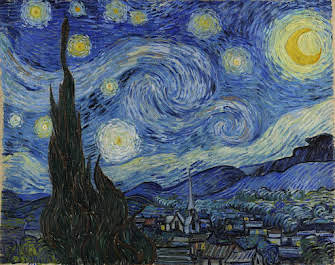
Van Gogh once wondered, “Those of us who live; why don’t we live more?” I considered my lack of effort, my lack of discipline, my lack of patience; and I thought about my abundance of inattentiveness, my tendency to rush, to generalize, to blame. I need to live more not despite the losses of 2024 but because of them. Because I can, simply put. Fortune has me well in hand. Lesson Learned.

Is there an age limit on starting over? At what point are New Year’s Resolutions simply pointless?

Let’s find out.

Grandma Moses didn’t start painting at all until she was seventy-six.

Frank McCourt, author of Angela’s Ashes, winner of the Pulitzer Prize and National Book Critics Award, didn’t start writing until he was sixty-five.

Laura Ingalls Wilder started writing the Little House on the Prairie series at sixty-five.

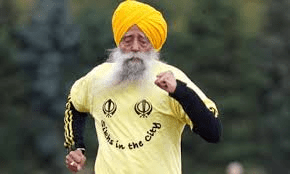
Fauja Singh ran his first marathon at eighty-nine (luckily if I choose this path I can wait twenty-five years before getting off of the couch).

Harland Sanders established Kentucky Fried Chicken when he was in his sixties.

And for God’s sake, Noah was six hundred years old when the waters started to rise. Hell, I’m going back to bed.

Truthfully, it isn’t about starting over, really. We make resolutions this time of year to lose weight and exercise and save money and volunteer more, and those are common ambitions for a good reason: they’re admirable goals, apt adjustments to our otherwise well-planned life. Emerson tells us that “the purpose of life is to be useful, to be honorable, to be compassionate and have it make some difference that you have lived and lived well.” I must do all of those things, for certain. But a slight adjustment simply won’t cut it for me anymore. Not this time. 2024 was a wake-up call.

Certainly, the atmosphere these past few years hasn’t exactly been conducive to positive change. I seriously grew up believing my generation was the one that would clean the world, bring peace to all countries, and create a more inclusive society. I know it was innocent and naïve, of course, and I didn’t really expect some land of Oz, but I also didn’t expect this pathetic disaster we still call humanity. We are a mess; our supposed “intelligent life” turned out to have little compassion for each other, and it is stressing me out more than my meds can handle. I don’t understand why it all gets to me and brings me down. It just does. I know that “a happy soul is the best shield for a cruel world,” as Atticus wrote. But listening to the news is akin to swimming in toxins, and it has become overwhelming, drowning out whatever happiness takes root. Something has to change–if not out there, certainly in here.

And it helps to have a distinct starting-over point. A few times each year—birthdays, Spring equinox, for educators the first day of classes, and New Year’s Day for us all, we can take a deep breath and make some sort of commitment to do some small part by changing ourselves, either by dancing with the Druids at Stonehenge or making resolutions. Of course, I can only speak for me.

The clock is ticking while I’m distracted by society’s bad energy, spending valuable time on meaningless banter. I need to get back to me and remind myself, as Dan Fogelberg sang, that “there’s more than one way of growing old.” I need to take more chances and figure out which dreams I simply refuse to allow to fade before I die. Not all of my imaginings are realistic, of course. Certainly I can narrow down the list with some rationale: I can probably toss out the Wimbledon win and playing outfield for the Mets. I’m confident the circumnavigation of the world is sliding off the list as well, as is winning an Academy Award for directing.

So what do those people above have in common? They’re not afraid to fail, they’re not afraid to embarrass themselves and be transparent. They’re not afraid to be ridiculed, mocked, trolled, dissed, and dismissed.

With that in mind it occurs to me most of my successes came in the midst of countless failures for most of my life; I have embarrassed myself in front of crowds since I’m nineteen, I remain pretty open about myself, and as a professor and a writer, I have suffered a steady barrage of ridicule, mockery, rejection, and dismissal. Yet in the words of Hamlet: “I do not know why yet I live to say, ‘This Things to do.’”

And now it’s New Year’s 2025, and despite the crappy year that 2024 was, I’m still here and able to write these words. That is step one: Be Alive.

I know a man who joined the Peace Corp at seventy-five. Another who learned French and became a translator at seventy-one.

There are barriers to these resolutions, to be certain. Pressure, stress, money, fear, and sheer exhaustion. Age! Yes, dear, persistent and unyielding age. The obstacles can seem insurmountable, but as Moliere said, “The greater the obstacle, the more glory in overcoming it.” Still, on top of this, those battling depression have to also face those internal voices telling us there’s no point, those for whom the “resolve” in resolution can be a monumental task, those for whom as a friend of mine recently noted, “no longer care if there’s a light at the end of the tunnel; I’m tired of the tunnel.” But none of us, I am not wrong about this, none of us wants to reach the point of death, as Thoreau reminds us, only to find out we never really lived at all, and, even worse, never even tried.

Certainly, some of us are simply mentally exhausted. Some of us have little faith in ourselves or no clue where to begin with some of this. Some of us fear we are simply wasting our time. “I’m just going to gain back the weight,” people rationed when I worked for Richard Simmons. We used to tell those who wanted to quit that in everything in life we have two options: I will attempt this and do what’s necessary to succeed so that even if I fail, I know I tried, or I will not bother trying because I’m likely to quit anyway or simply do not have the energy.

Which group do I want to be in when I’m older? Older?! Ha! I mean now. When I am near the end of the end, what would I have been successful at if I had just, well, showed up?

So Happy New Year, and if you’re thinking it is too late and much too hard to start over, I leave you with the words of Joseph Zinker from the Gestalt Institute:

If a man in the street were to pursue his self, what kind of guiding thoughts would he come up with about changing his existence? He would perhaps discover that his brain is not yet dead, that his body is not dried up, and that no matter where he is right now, he is still the creator of his own destiny. He can change this destiny by taking his one decision to change seriously, by fighting his petty resistance against change and fear, by learning more about his mind, by trying out behavior which fills his real need, by carrying out concrete acts rather than conceptualizing about them, by practicing to see and hear and touch and feel as he has never before used these senses, by creating something with his own hands without demanding perfection…We must remind ourselves, however, that no change takes place without working hard and without getting your hands dirty. There are no formulae and no books to memorize on becoming. I only know this: I exist, I am, I am here, I am becoming, I make my life and no one else makes it for me. I must face my own shortcomings, mistakes, transgressions. No one can suffer my non-being as I do, but tomorrow is another day, and I must decide to leave my bed and live again. And if I fail, I don’t have the comfort of blaming you or life or God.

Fauja Singh running a marathon at 100

This Year (Can’t End Fast Enough)

What a year. Just, well damn, just, what a year.

For the first time in fifty years—1974—I have no reason to go to Virginia Beach other than a Bloody Mary at the Beach Pub or breakfast at Ocean Eddies, and of course to visit my father’s resting place. 1974 was the year my parents purchased a house on the Lynnhaven River, and this year my mother left the Beach for Williamsburg. It’s odd, really, not needing to go to a place I needed to go for five decades. And while I’m the sort that never needs a reason to go somewhere, I’m painfully aware that Virginia Beach has permanently aligned itself with other towns of my past, such as Massapequa Park and Great River. Oakdale and Wellsville.

Forty-five years ago this past September I met two people that would change and influence me for years—Fr. Dan Riley, who would visit me every night late in the infirmary for a few weeks while I had the Russian flu, during which time we bonded and came up with the idea of a radio show—Inscape. And Dave Szymanski, who joined me many mornings every week in the campus radio station as we tried to figure our way through the gives and takes of that freshman year—him pulling news off the wire, me spinning albums, both of us talking, sharing, hoping. Both of them died this year, exactly forty-five years later, and I meet them sometimes in my mind when I need some advice or companionship.

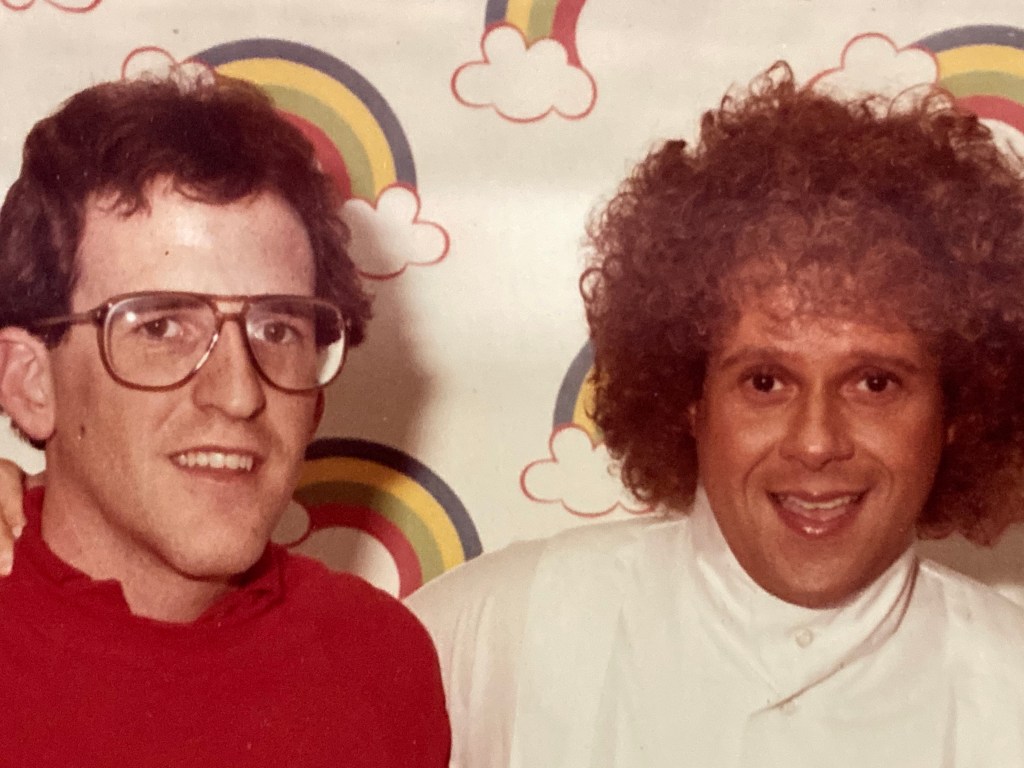
Forty years ago I walked into a hotel room in Worcester, Massachusetts, thinking I was trying out for a part time job as an exercise instructor at some local health club, and walked out that day a member of the management staff of that club, working for Richard Simmons. It was a wild ride for a while, and the fall of ’84 found me moving into a beautiful yellow house near a reservoir, making a ton of money from America’s Favorite Exercise Guru, and having a blast while getting in shape. This year, forty years later, Richard died, reminding us all it doesn’t matter how full of life we are, how much joy we bring others, eventually we too pass all too quickly.

Thirty-five years ago this past summer my car broke down in the parking lot of Tidewater Community College. This was pre-cell phone of course, so I wandered into an office to use a phone to call AAA. While on hold, the dean—Bill DeWeese—said to his assistant—Eleanor Shannon—that he needed someone to teach Humanities on Wednesdays. I hung up and got the job. One week later I stood outside the door of my first class waiting for students and talking to a woman in an office across the hall. She had a heavy French accent and in those first five minutes we laughed more than I had the previous five months. Letty welcomed me to the college, and the next day we went for coffee. Eleanor passed away some years ago, Bill last year, and Letty this past July, nearly thirty-five years to the day after we met.

Thirty years ago this year I made my first of two and a half dozen trips to St. Petersburg Russia. Prior to that initial journey with my colleague and friend Joe Antinarella for a grant with the Commonwealth, it was much more difficult to travel there. But through the years I watched the city move from vacant streets without advertising or western influence, to restaurants and concerts, European clothing lines and shoe stores, American coffeeshops and fast-food joints, and we wandered freely throughout the backstreets of the Window to the West, knowing Peter the Great’s idea of a “New Amsterdam” had finally been fulfilled. And now, thirty years after that first month-long stay, the streets are again vacant of advertising and western influence, and I cannot go back, nor do I plan to go back.

Twenty-five years ago I made my first of many trips to Prague. It was a month-long stay as I taught at Charles University, was befriended by the great Czech writer, Arnost Lustig, and read all the works of one of the more influential writers in my life, Bohumil Hrabal. I also discovered Pilsner and Terezine, the Hunger Wall and 19 Nerudova Tea Room where I wrote an entire manuscript at night over apple strudel and Irish Crème tea in just over three weeks, and some years later published it as Penance. Since then I’ve come to know Prague as well as I know any city, though much there has changed. It seems change tends to happen.

We like round numbers, don’t we? We like even years, silver and golden anniversaries. More people showed up for the fiftieth anniversary of Victory Day in St Petersburg than the forty-ninth. More people observed a moment of silence on September 11th, 2021, than the same day a year earlier or a year later. We count in decades, we measure in leap years. You can buy birthday cards for someone’s 45th or 50th or 60th, but not their 64th, as if there is less reason to celebrate a life until they finish some imaginary five-year plan.

Still, on this fiftieth anniversary, I understand that I have no real reason to return to the Beach anyway, other than see my Dad’s headstone and tell him about the Mets. I remember the city like it was last week, and what a time it was, managing the hotel those summers during college, attending gigs with my oldest friend, musician Jonmark Stone, and lounging on the beach or at Ocean Eddies back when the drinking age was eighteen. I’m not nostalgic—we had our day in the sun; a lot of them, and I’m lucky enough to carry those memories with me. When I talk to Jonmark on the phone we don’t reminisce, we talk about when we can make our next tee time or when I might get out to Indiana. No, looking back is fine, really, as there’s always going to be something there for me, but it’s not nearly as productive as looking ahead. Fr Dan and Letty would agree; Dave maybe not so much but I didn’t love him less because of his instinct to recall our Glory Days at the radio station.

Many of my habits ended this year, some for the better and some absolutely for the worse, but they ended just the same—they aren’t sitting just behind me in some fog. They’re done. No more weekly phone calls or thrice a week walks. No more late-night Bailey’s on Ice at a mountain on New York’s Southern Tier. That’s why I knew as fall slipped away that this New Year’s is going to be an important one; this is not going to be the same old lang syne.

This year I’m traveling again. First stop, the Netherlands. This year two books are slated for release, one about teaching college, Office Hours, and one I started more than forty years ago and which I finally completed, Curious Men, which tied me to the past for four decades, and which ironically enough is about a time in my life I learned to jump first and invent the parachute on the way down. Perhaps I was simply in denial back then, or a little too angry. For certain I was depressed. But if I understand psychology correctly, this is the acceptance part. And just in time, too. It’s nearly New Year’s.

I understand most people live between the two, comfortable in the daily life of here and now, glad for the past, at the same time they have prepared for their future. Their New Year’s Resolutions are practical and fulfilling, and while some are broken, a birthday is an inevitable chance for a reboot.

So this year, borrowing from Fitzgerald’s Jay Gatsby, I have but one resolve. This year, after the loss of three people I spoke to nearly daily, the completion of a manuscript that on a daily basis brought me back to when I was nineteen-years-old, and a nearly complete amputation of a city that shaped my very existence, as my one resolution for 2025 I’ve decided to simply get out of my own way. In the words of John Denver, who has been there for me from the start,

It’s time to make mistakes again

It’s time to change the show

It’s time and time and time again to find another way

It’s time to gather forces and get out of yesterday.

Happy New Year everyone. Thank you for another year of reading my small entries here.

Present Perfect

1908040_10203813288720133_7224931381547605230_n

I’m thinking about Spain tonight, that time back then, and the lessons I forgot, the moments which were later diluted by misguided responsibilities. The way I fell apart just a few years later and leaned too hard for some time there; the way I still do sometimes. The way everything makes sense when I’m talking to the right person, and how I know it should make sense all the time, and how it doesn’t. That’s on my mind tonight. That, and Spain.

I’m thinking about how I carried home with me that sense of life as it was meant to be, at least for me it was, and how it lasted for a little while back then. And tonight I’m wondering what happened to it. I thought I’d never forget what I apparently forgot. Then more recently after some significant changes, I was sure I’d never again forget to be present, to be aware of life, now.

Then late last night I read a letter –this morning I suppose–in which a small part told me of all the versions of me in thirty-five years, that one, the one right after Spain, was the easiest to love. “Find him again,” it said. “You won’t be at peace until you do.”

Just. Well. Fuck.

Spain.

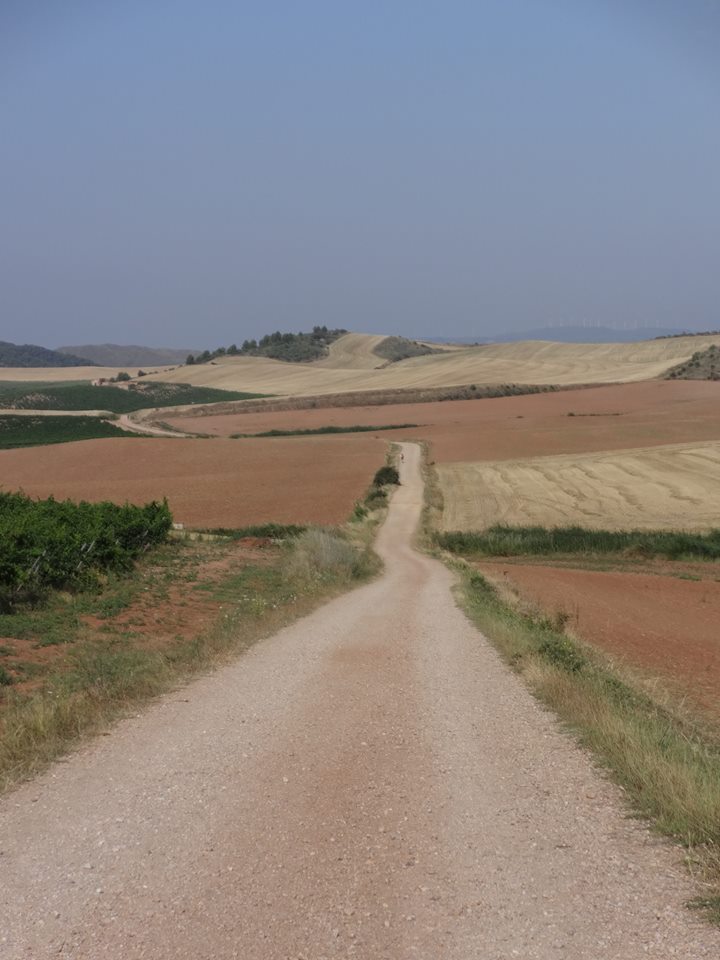
One evening a decade ago, Michael and I spent the night above a bar in the village of Samos and had pulpo–octopus–for dinner. Later that night a priest invited us to a private party and we stood next to four buffet tables of pintxos and wine, and we ate and stood on the balcony, drank wine and watched swans swim in the lake and hissing at the setting sun behind the cloister. Every single day outdid the previous one. I kept waiting for that golden moment, and they kept coming. Like that following morning when we walked to a nearby field and found a chapel from the 9th century alone in the mist, part of some eternal sacred silence. It was not a five-hundred mile journey; it was one step at a time, one moment at a time, over and over. That might be the most practical lesson of the Camino.

We slept on yoga mats in a hallway of an old church in Logrono, Spain, with seventy other tired souls after we shared dinner and walked through the basement of the five hundred year old building. For two nights we slept in comfort in the same hotel Hemingway stayed while working on The Sun Also Rises. In some small, old chicken village we stayed in a brand new albergue which had no business being open yet. The floors and ceilings weren’t done, it was freezing inside, and the yet-to-be-inspected bathroom was three floors down. The only bar in town was closed so the owner gave us a few beers which made up for the thick dust everywhere. We stayed near Torres del Rio above a bar with fine food and a wading pool out back to soak our blistered and swollen feet. We stayed in an old monastery a hundred yards from a church St Francis of Assisi himself asked to be built. In Portomarin, we stayed up as long as we could because the rooms were all filled. We hung out in a small café until 1am and then walked around the misty, cooling waterfront. Then we settled on the town square with covered walkways running next to a medieval church. Against some storefront we pulled together folding chairs and wrapped ourselves in whatever we could and tried to sleep in rapidly dropping temperatures. A kid on a bike did tricks on the steps of the church until 3 am which anyway kept me amused. At 4:30 we got out our flashlights and headed west. You can see a million stars in Spain at 4:30 in the morning, and the darkness makes the silence almost melodic.

In O’Cebreiro there was no room and we nearly walked out of town to camp when a man waved us toward a back door at an inn and we ended up with a beautiful private room for practically nothing at all and just outside the door were a few tables on a stone patio overlooking valleys that stretched across Galicia. In the morning the fog sat below us in those valleys, and the sun came up like we were looking at the ocean until the clouds dissolved and the sky turned blue and the green hills welcomed us.

A few weeks earlier when we first crossed the Pyrenees into Spain’s small village of Roncesvalles, we stayed next to a chapel Charlemagne used and at night we went to the basement and spent hours drinking gin and tonics and talking to the innkeeper. In the village of Zubiri in Navarra, just before Pamplona, we stayed in a new place on the fourth floor and shared a room with a couple from France. My son took pictures from the Roman Bridge outside our window. A few days later on the eve of the feast of Saint James, patron of this pilgrimage, we stayed in a small inn run by a single mom who made dinner for us, a woman from Madrid, and two men from Germany. We shared a delicious Italian meal and drank clay pitchers of red wine and talked about the distances. We laughed in three languages and despite someone snoring most of the night we slept well enough to leave an hour after everyone else making our journey quieter and more perfect. We didn’t worry about how far we walked or where we might stay. We walked and we would find a place. Like the fly-infested villa with tremendous views, or the albergue with dogs who insisted on sleeping on our laps, or the room above the garage with a killer bar at the street; or the stone building down some slope where we met some girl from Texas and a father and son from Amsterdam. After paying at the restaurant we drank the best hard cider in Spain.

In one neighborhood as close to suburbia as we ever saw, some couple opened an albergue in their house and we got the first two of five beds, the others occupied by a salesman from Madrid, a woman from Barcelona and another from Majorca. We all had dinner on the back porch where all the flies in Spain gathered to join us, as well as a dog named Bruno, and the sun was brilliant and we slept well. Once, we stumbled into some tiny town, another chicken village, looked like a movie set for an old western, and we slept in the bunk room with fifty other people. In the morning we picked up a few supplies at their shed they called a store, but man oh man the lemon chicken was awesome.

Everything we did was deliberate.

Everything we ate was delicious

Everyone we met enriched our lives. It should be this way all the time. At home. Anywhere. We live in a phenomenal world for a disturbingly short period of time. It should always be this way. In fifteen years I’ll be fifteen years older, no matter how I get there. In fifteen years I’ll be almost eighty. Life is too easy to love to give it the cold shoulder.

In Spain every single day for more than a month we remained present, aware, but when we came home after some time we slid quietly into the old routine, stumbled back upon a world where what was and what might be constantly drowns out what is, where few live in the present, where few talk to each other. Where people pass through life quietly.

“Those of us who live,” Vincent van Gogh wrote, “why don’t we live more?” It doesn’t have to be Spain, of course. It could be a week walking city streets, a day spent cleaning the garage, a moment watching the sunset across a salty plain.

And it doesn’t have to be fifteen years. It is, after all, jut one moment at a time, over and over, for fifteen years.

Buen Camino. I’ll be outside. Leave a message.

Vincent

The following is an excerpt from my 2018 book Blessed Twilight: The Life of Vincent van Gogh; however, the words are his from a letter he wrote to his brother Theo in 1888. Often, an artist who excels in one genre does so in others as well; Vincent was no exception. I believe his writing to be as artful as his paintings.

Vincent van Gogh: March 30, 1853-July 29, 1890

From a letter to Theo:

It certainly is a strange phenomenon that all of the artists, poets, musicians, writers, and painters are unfortunate in material things—the happy ones as well. Maupassant is a fresh example of that. It brings the eternal question: Is the whole of life visible to us or isn’t it rather that on this side of death we see one hemisphere only? Painters, taking them only, dead and buried, speak to the next generation and very often several after in their work. Is that all or is there more besides? In a painter’s life, death perhaps is not the hardest thing there is. 

The earth has been thought to be flat. It was true, and is today, that between Paris and Arles, it is. But science has proven the world is round and nobody contradicts that nowadays. But notwithstanding all of this people persist in believing that life is flat and runs from birth to death. However, life too is probably round and very superior in expanse and capacity to the hemisphere we know at present. For my part, I know nothing of it. But to look at the stars always makes me dream as simply as I dream over the black dots of a map representing towns and villages. Why, I ask myself, should the shining dots of the sky not be as accessible as the black dots on a map of France? If we take a train to get to Rouen, we take death to reach a star. One thing undoubtably true in this reasoning is this: that while we are alive, we cannot get to a star any more than while we are dead we can take the train. So it seems to me possible that cholera and cancer are the celestial means of locomotion just as steamboats and railways are the terrestrial means.

To die quietly of old age would be to go there on foot. 

I feel more and more that we must not judge God on the basis of this world; it is a study that didn’t come off. What can you do in a study that has gone wrong if you are fond of the artist? You do not find much to criticize; you hold your tongue. But you have a right to ask for something better. It is only a master that can make such a muddle as this, since then we have a right to hope that we’ll see the same creative hand get even with itself. And this life of ours, so much criticized and for such good and exalted reasons—we must not take it for anything more than what it is and go on hoping that in some other life we’ll see a better thing than this.  

I’ve Got Your Number

I recently had to get a new phone. It didn’t work out, but that’s a different issue. You see, I have had an iPhone since my Blackberry died years ago. But I ordered an Android by accident. It came and I gave it one day and could not deal with it. Quick sidebar: I’m not remotely interested in pursuing a discussion of the differences, advantages, and quirks of phones in this space, or the comments, or casually—like, ever. I mention it only to illustrate that transitioning from the I to the A simply didn’t work out.

Ironically, the transition itself was ridiculously easy. I simply took the SIM card out of one and put it in the other. Done. Everything transferred. Very cool. But that wasn’t always the case. Some years ago I gave up my Blackberry for my first iPhone and in doing so I lost everyone’s phone numbers. Gone.

I wrote about it back then. What happened was I had to send an email to everyone I knew. It went something like this:

“Can you please text me, ‘Hi, this is _____’ so I can put your phone number back in my contact list?”

It was, I thought, a simple request.

First, my friends Robert and Molly in Ohio carried this out perfectly. From both I received a text with their names in the text. Understand, when you send a text to me, I can only see a phone number; it does not come through with your name on it unless you are already in my address book, which obviously no one was. So for the twelve people who wrote, “Here you go” or “It’s me” or “Sorry about your phone, here’s my number” or “Here ya go, let’s get beers,” some deciphering was necessary.

“Let’s get beers” was easy—Jose. It is his standard comment to me, so perhaps he wrote that on purpose knowing I’d know he’d know I knew. Someone else wrote, “So if I don’t say who I am, will you be able to figure it out?” which I figured out immediately because I could hear her “tone” in the response. For a few of the texts I had to look up the area code to figure out who it might be. One of them was on Long Island, so I knew it was a cousin, but that really doesn’t narrow it down much in my family. Then the message said, “Funny I just saw someone who looks just like you and I was smiling, thinking, ‘Hey there’s my cousin’ when he clearly thought I was smiling at him and it kind of got me in trouble,” so I knew it was Lisa. My cousins, all of them, have distinct personalities. Lisa has several.

My late friend Dave emailed his name, address, current location, plans for the weekend, apologies for my troubles, offers of assistance, and his next week’s schedule. But no phone number. No kidding. And since it was an email and not a text, I still couldn’t call him. Eventually I received a random song lyric from a Florida number and added “Dave” to my contacts. He’s one of a dozen or so contacts no longer with us. I am not sure how long I should wait until I delete them. I don’t think I ever will.

My brother, my friend Jack, and several others just replied to my email with their phone numbers, which was actually much easier and made more sense, but they also took that opportunity to welcome me to the 21st century and the world of Smart Phones (though my Blackberry was pretty smart). And that really is the point here.

There was a time back in the last millennium when I knew everyone’s number by heart. That was when I had no “contact list” in my phone; back when “my” phone was a fat machine on the counter used by the entire family, long before the invention of voice mail, call waiting, or answering machines. When we looked up someone’s number in a small address book enough times and then dialed it (rotary) enough times that the digits tended to stick in our minds. I can recall most of my own numbers well back into my childhood, most of my friends’ from then and through my twenties, as well as work numbers and relatives’ numbers, including my grandmother’s from her apartment in Queens in the eighties. It is not age that stole my retention; it is convenience. We now live in a world where, “If we don’t have to, we don’t.” In fact I know it isn’t age because I once went into one of my classes and asked fifteen twenty-year-olds if they could tell me the phone number of their best friend, and only one of them could. These are the same people who don’t take notes or rewrite notes from a peer after they’ve missed class, but instead simply take a picture of the pages and then can’t understand why they don’t understand.

I had a friend at Penn State who asked me for the date and time of something I was involved in. When I told her and asked if she wanted a pen to write it down, she said, “No, if I write it down I’ll forget it.” Exactly. Certainly, my memory is not what it used to be. Students’ names for me are nearly impossible, though to be fair that has less to do with memory than it does interest. One young lady said I don’t remember their names because I’m not trying hard enough to do so, and I said she was wrong, that I wasn’t trying at all. Ironically, I can tell you the name of every single person in my first class I taught thirty-five years ago. Much like the phone numbers, however, I had more reason to retain them years ago than I do now.

Numbers, though, have always come easy for me. I never had trouble committing to memory zip codes, addresses, bank account numbers, as well as phone numbers, and I still can. I even still remember one particular airman’s social security number, because in the ‘80s when you addressed letters to people in the Air Force, you followed their name on the envelope with their complete social security number. It was a different world. Today’s world has made it easy to forget what is essential—the phone numbers of my loved ones. Shouldn’t those numbers be second nature?

Apparently not, so I emailed everyone. Some people didn’t respond at all, which made me realize, yeah, maybe I don’t need them in my life. What a great opportunity to weed out the ones I wonder why I knew to begin with. Worse, there were numbers for people for whom I don’t have emails and can’t contact them at all. I know if there is a reason to contact me they will, but something more revealing crossed my apparently feeble mind: I don’t need nearly so many people in my life. My average contact-scroll used to take a while. This turned out to be a great way to clean house. I thought it would happen again moving from iPhone to Android, but no.

I most likely will not return to memorizing numbers, though I will attempt to retain a dozen or so of those people I can’t imagine not being able to call in an instant. What if I had to borrow someone’s phone? I’d like to remember those numbers or recall someone’s birthday without a Facebook prompt. One response via text was, “Hey, it’s me! Shouldn’t you know my number by heart?!”

My immediate thought was, “Yes, of course.” But then I thought, “No, I shouldn’t.” What I should be doing is seeing loved ones often enough that we have no reason to call. We should be laughing together at pubs, at picnic tables, across the fence in the yard, across the room, across time. Numbers should be pointless. Memory should be irrelevant for our consistent commitment to spending time together now. Too many numbers have no recipient anymore. People get deleted too quickly, and before you know it we’re wishing we could just meet them somewhere—no phones, no devices. Just the human touch.

One text came through as “Poetry is Bread Brother!!! Eat it up!!” so I entered, “Tim.” My favorite response to my email was the last text I received. It said simply, “Just put me in your contact list as ‘Tumbleweed’.” I knew exactly who it was even though that handle had been unknown to me before that text.  

I had no reason to contact everyone this time, which was a bit sad, actually. But in the end I gave up on the Android—it has no Facetime. So I simply moved the SIM card back to my iPhone and said, “Hey Siri. Text everyone,” to which she (mine’s a she from Ireland) replied, “What would you like to say?” I thought about it while the little squiggly thing moved back and forth, then replied, “Call me. Let’s talk.”

“Send it?”

“Yes.”

“Done.”  

Dave

That’s my friend Dave Szymanski. He died Tuesday, May 14th. RIP my brother. We laughed so much that now just laughing at all often makes me think of him. We were going to get together when we both turned seventy and sing “Bookends” on some park bench. No kidding; it was part of the plan. We wanted to belt out to whatever audience was out walking their dog, “How terribly strange to be seventy!” Well, that won’t happen. Still, I am absolutely certain if I make it that far I’ll most definitely do just that, but alone, crying, laughing. I have so many stories about Dave you’d think we were twins. But those are mine now–Dave and I agreed to have joint custody of the stories of those times, but since he is gone now, I’m assuming full ownership. Unfortunately, they fall squarely under the category of “You had to be there,” so there’s no point in sharing them.

This is not likely to go where you believe it might go.

I’ve been thinking about what I can best call the start of some independent consciousness–that is, the time when I was first aware I was a growing, independent thinker/dreamer, mentally unattached to others, my thinking not entirely tethered to parents or siblings or teachers. I guess I was in what we then called Junior High, now Middle School, and at thirteen or fourteen years old life was still idyllic. That’s the point I think I started to think of myself as an individual. I have no idea if that is late, early, or disturbed. We lived near the Great South Bay next to a State Park and an arboretum, a golf club, and I was surrounded by friends in the village of Great River. I have memories before that, and possibly even dreams, which at that time were to either be an astronaut (Apollo 11) or play baseball during the summer (Miracle Mets) and be an ice cream man in Florida during the winter. But those were the “in the immediate” aspects of life; that is, things you thought about and said to friends but then forgot nearly instantly. But realism crept into my view somewhere around seventh grade when more realistic plans surfaced, like sailing around the world or riding my bike across the country, or being a musician or a writer or a tennis pro. All seemingly real plans at the time; those things which you no longer imagine and pretend but which you pursue, even if fruitlessly and without much talent.

No one save his family knew Dave was sick, so most of us didn’t have the chance to take the time to reminisce. It’s important; we always say, “Tell people how much you care about them because you never know if they’ll be around next week,” but we rarely follow through. We know it is true, and we know it is real, but we just don’t. But if we really did know it was the last time we might talk, the last chance to say something, like how much you appreciate the long conversations in the radio station at five in the morning, you picking out albums, him tearing UPI articles for the news; or how the three am pancake house runs were more important than final exams; or how the weekly texts through the next forty years kept you going, you’d tell him. Listen: Please, make sure if something happens and you know you’re going to be checking out, do not keep it a secret; some of us have a few things to say.

Anyway.

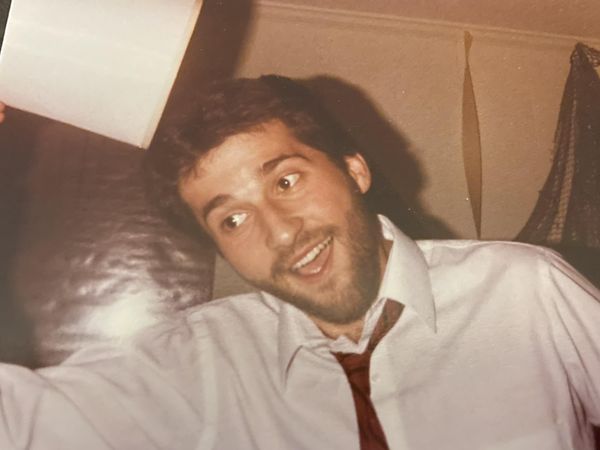
A few days ago someone asked me for my favorite picture of Dave. I went searching deep both on and offline, but I do not have many at all since back when we spent a lot of time together we rarely walked around with a camera and film. But I looked, all the while sifting through tons of other photos of the scattered years throughout my life, and at some point I stopped and simply sat remembering, and I realized something close to lifesaving during an otherwise heartbreaking week: What an amazing ride this has been so far.

I’ve mostly taken the paths of least resistance, I must admit, but apparently someone was up ahead clearing it for me, because it’s been outrageously fortunate. And I finally figured out what the pictures are for. Not only to reminisce, but to remind myself when I get lethargic or depressed, lonely, or tired, that I’m still walking this brilliant Camino, and to remind me of the words of Virgil when he wrote that Death twitched his ear and whispered, “Live….I’m coming.”

Not knowing when someone is going to die, or even that they are sick, is a cold reminder that we don’t know when we’re going to die, or when we might fall ill, and the truth is we just might have a few things to say to those we will leave behind. Speak now or forever…

I normally try to not write too directly only about myself, choosing instead for a digression into some common ground. But not this time. Honestly, this one is for me. Just a few findings from the journey so far:

Sandy. My best friend forty-five years ago.
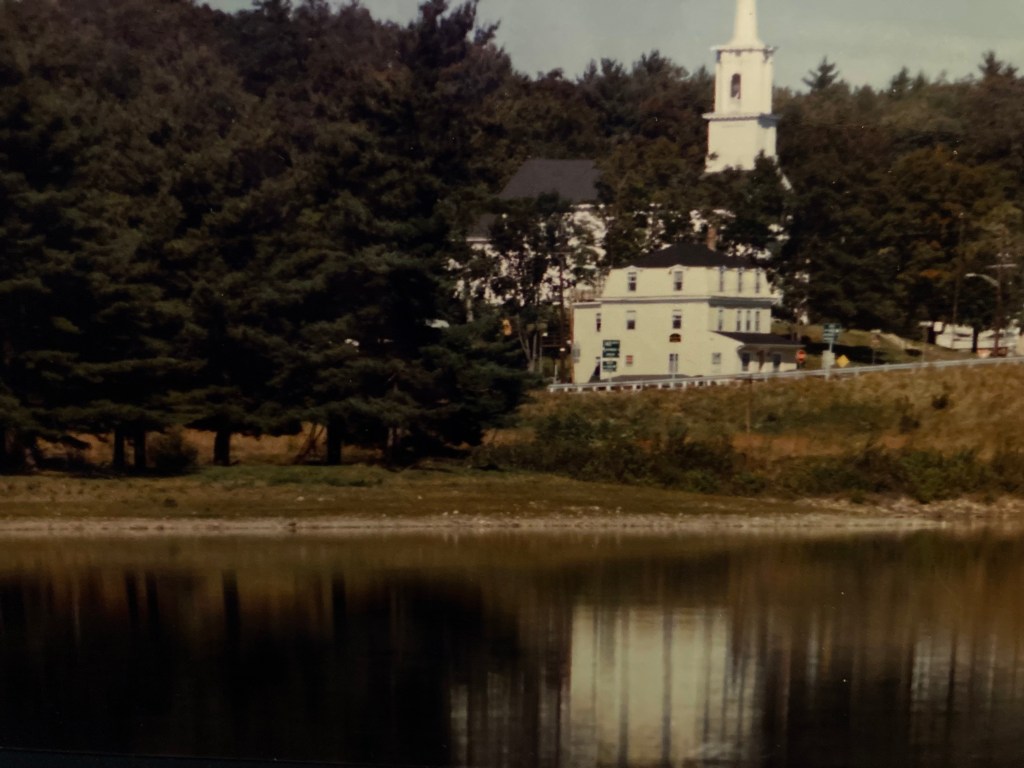
My yellow house in Oakdale, MA. I lived for a few years on the first floor/basement behind the hill. The water is the Wachusett Reservoir, and up the road to the right was an apple mill, then up the mountain to the ski slopes, Princeton, Massachusetts. I loved it there and never should have left. 100 years earlier the house was a fish market.
My siblings and me (in the middle) in Massapequa Park on Long Island, where we lived from just after I was born until I was nine. It was a great place to be; Dad worked his tail off so we had great childhoods. My siblings are two of my five heroes.
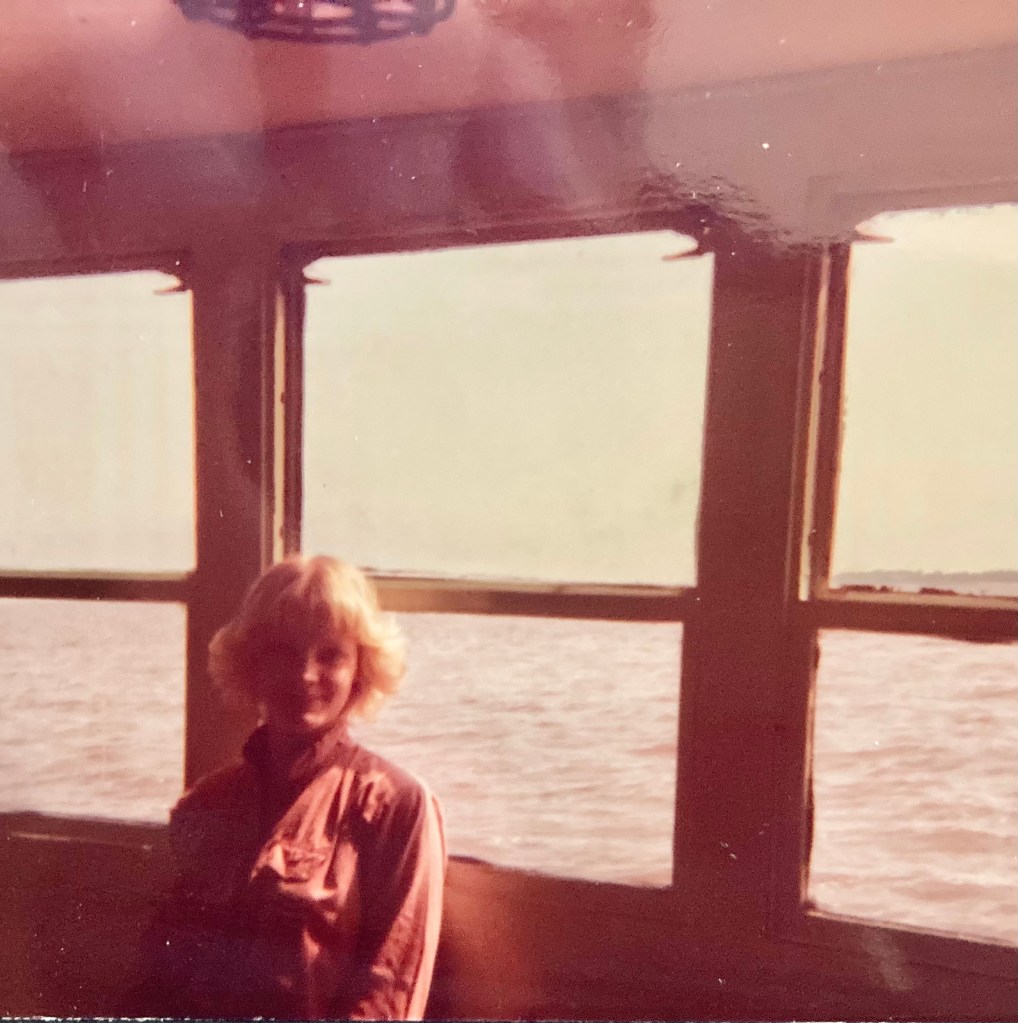
My friend Michele during high school. One day I borrowed Dad’s car to go to Michele’s for “about an hour.” Instead, we drove to the end of Knott’s Island on the Carolina border, drove onto the ferry, and headed down the coast of the Outer Banks. Neither one of us wanted to turn around. If we hadn’t we might well still be driving.
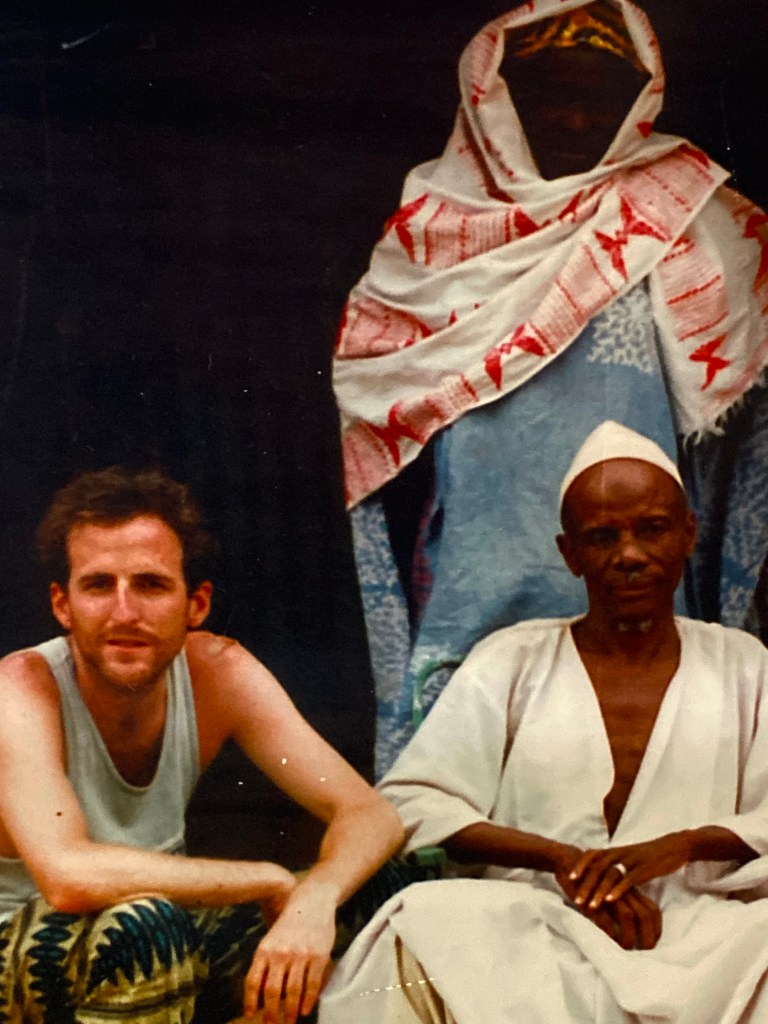
In Senegal where I spent some time before headed somewhere else in Africa. A few months earlier my life had completely changed, so I decided to change it further and ended up there. My college friend Claire and me with a village jeweler on the left. We had no clue who the dude on the right was. He just jumped in the picture.
I lived in this cabin in northern Norway for March of 1995 with my colleague Joe and American teacher/writer John Slade while we taught at the Bodo Graduate School of Business. We filleted cod caught by our seventy-five year old neighbor, Magnus. A Russian guitarist, Max, and I spent evenings in the cabin dueling folk tunes from the US and Russia. One night I fell through the ice on a lake but only to my ankles. Another we felt we had to duck from the swirling bands of the Northern Lights. Another we chased moose up a hill. Other stories for another time.
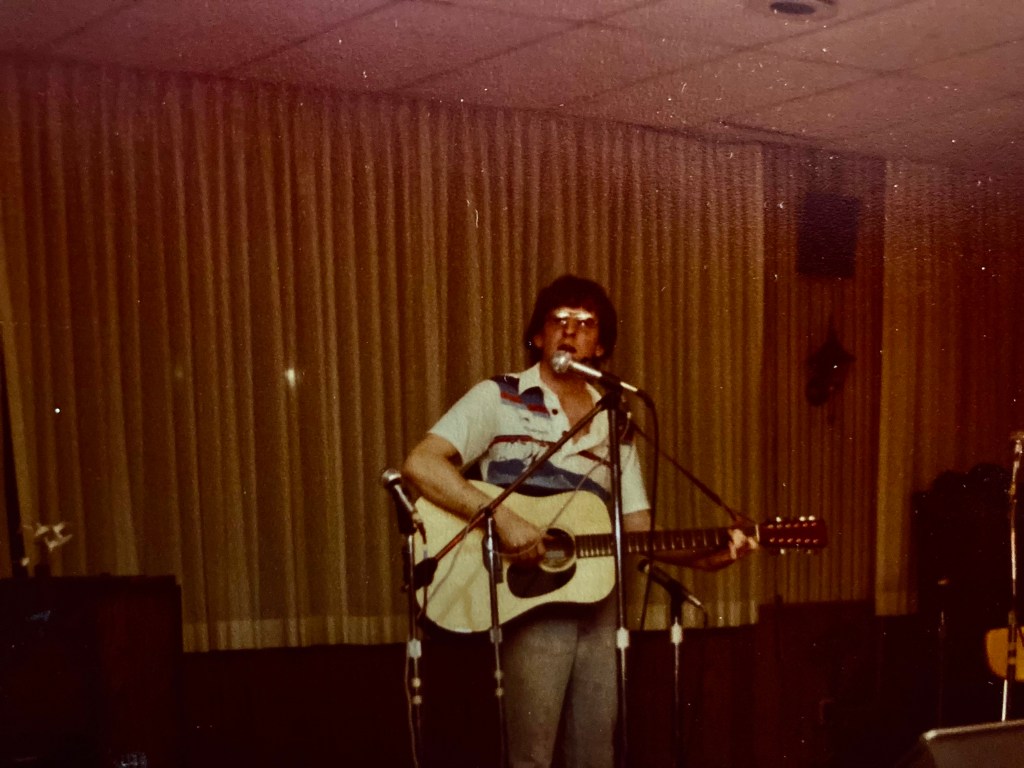
This old guitar saved my life. Coffeehouses kept me from falling through some proverbial ice during those years. And what stories from those gigs, like the time when 150 people sat to watch us play and at one point we opened the curtains behind me (there’s an Olympic size swimming pool on the other side of the windows) at the exact time a swimmer climbed out of the pool and his suit had slipped to his knees. We all waved. He dove back in the pool.
The Great River house my father had built and where we lived until moving to Virginia in ’75. When people ask where I’m from it is a difficult question to answer, but as I get older I say “Great River” and it is listed that way on my FB page. I live in Virginia. But I’m from Great River. Hard to explain.
My advisor and mentor, Pete Barrecchia. He was one of the true journalists of this country and the source of my first and greatest writing lesson. When someone in editorial writing class complained about not knowing how to start and where to put in the research and on and on and on, he put down his cigarette, grimaced, and said, “Oh just write the fucking thing.” It worked.
One of my escapes during college; Letchworth State Park. My escapes were either music or nature. Sometimes just the smoke-filled art studio beneath a dorm on the other side of campus. But escape was always important for me. Hard to explain.
My boss in the mid-eighties. One of the finest humans I’ve ever known. Yes, that’s him.
Village chief. And his wife.
My Great Uncle Charlie Kunzinger and Aunt Jane. Time note: He fought in WW1 in France, and when I was a freshman in college at St Bonaventure, he was still writing me letters and sending poetry.
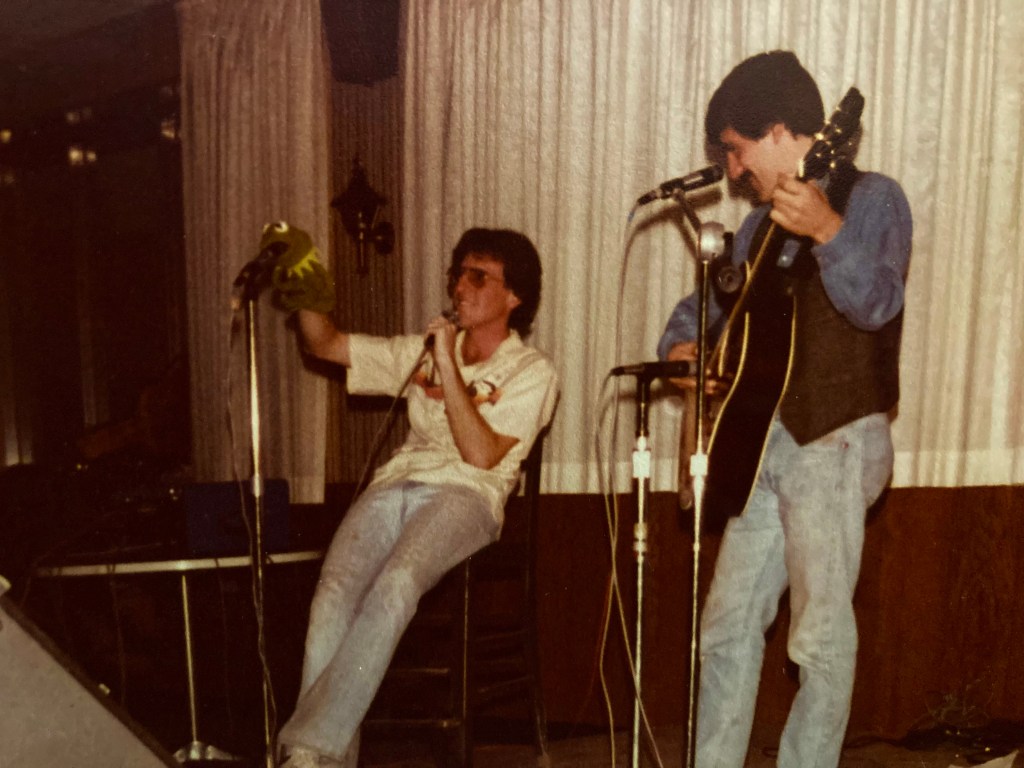
Mike Bonnano and Kermit when idealism was still okay to sing about, and where no one cared how bad you were.
My friend Tim O’Brien who most know for his prose writing but few know is an extremely accomplished magician. True story.
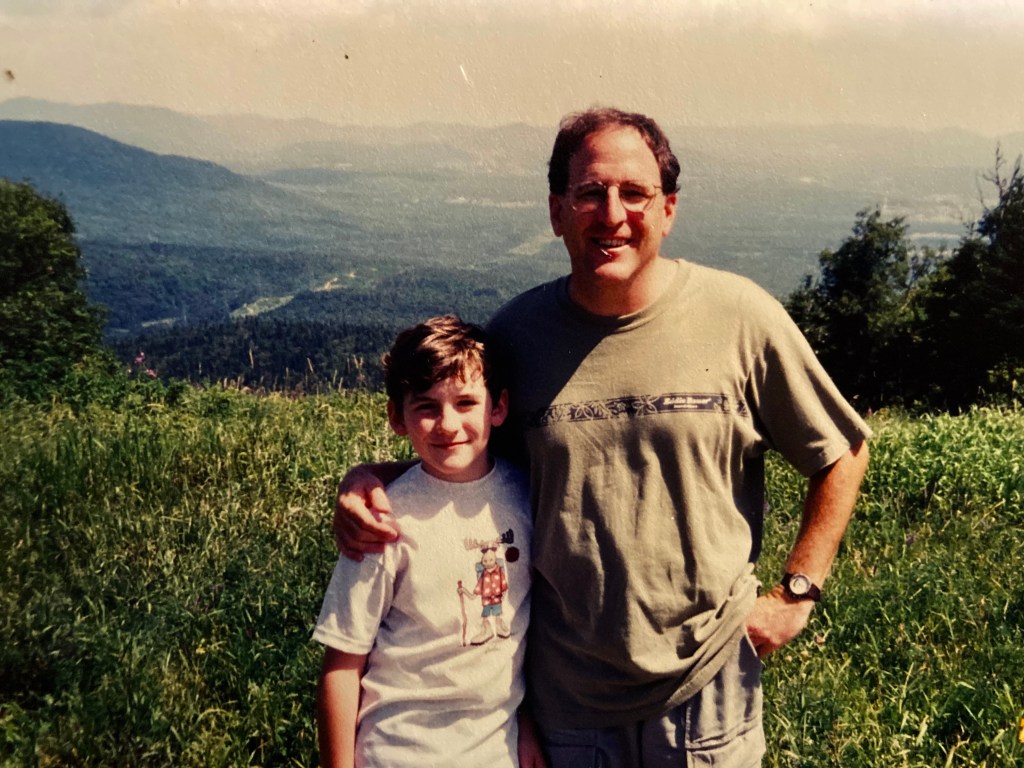
Michael and me in mountains of eastern Quebec many years ago. We’ve been literally around the world since then, and we’re still going. With apologies to Maya Angelou, “I wouldn’t take nothing for my journey now.”

Call someone. Tell them something. Anything. Forgive them. Ask them to forgive you. Tell them you’re sorry you didn’t answer the phone that last time they called and said they felt like talking. You planned to call them back but just didn’t “feel” like it yet. Now you can’t. Go ahead, call someone and say you wish you were as good a friend to them as they have been to you. Don’t be embarrassed. It’s only life, you know. That’s all.

It’s only life.