I Barely Remember When

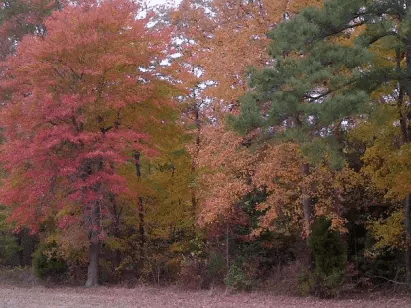
Fall has arrived and the breezes this weekend cleared away most of what was left of summer. Last week at home I walked along the river like I always do this time of year when the water laps at my feet, it is warmer than the air, inviting, deceiving, teasing me into thinking summer will push back on autumn and maybe even win out. I don’t mind the change so much; I’m not bothered by the passing of time as much as how I spend the passing of time.

The leaves are just beginning to change here, and my drive in a few weeks to West Virginia will bring me through every stage of autumn. Sometimes you can see all the changes happen in one day. Crazy. Well, the truth is, some things need to change. Even with resistance, sometimes it is the only way to make room for new growth.

For me even the seasonal change from summer to fall is often troublesome. Again, I don’t mind fall—my days in western New York and Massachusetts are most memorable for this time of year. And obviously I know it is going to happen. I watch the weather, I mark the calendar, I see the leaves letting go. But still it always takes me by surprise. I wake up one day and I need to wear more clothes, or I no longer feel the sun so strong on my shoulders, and I am saddened. The Seasonal Affective Disorder which strikes some of us in February can also have its way in October, though usually not as bad.

This year is different; I’m both tired of change and in desperate need of some right now.

In kindergarten I liked a little red-haired girl, Kathleen.

Stay with me here.

Just like Charlie Brown I was afraid to approach her. At the same time I was thrilled I met someone I would get to grow up with. We were in the same class until third grade when at the end of the school year my family moved much further out on the Island. Instead of saying goodbye to her I made a card that said, “I love you” and threw it at her in the hallway. I think she got it. Now I wish I had just handed it to her politely and said I was sorry I was moving. I never saw her again. I probably didn’t handle that relationship well. The change, however, the move east to what would become where I would forever call “where I am from,” was unexpectedly pleasant despite my resistance at first. The same thing happened when I was fourteen and moved to Virginia Beach, four hundred miles south. I absolutely and definitively did not want to go; I’m so glad we did.

During each major change in life, though, I consistently ignored the advice of my older siblings or from examples set down on television or in school. I simply preferred to assess a situation and have at it on my own terms, even if it meant complete and utter disaster. I was slow to learn as a result, but I gained that small bit of confidence we used to earn out on our own, trying and failing, fantasizing and acting and pretending. You simply never know when those youthful lessons will return to come in handy, see us through an unexpected left-turn, help us through the changes. And it seems these days everything is changing, doesn’t it? It’s as if people in positions of power are scanning the horizon to see what they can disrupt next. Even friends are acting strange, distant, and when the very essence of what we can count on is no longer predictable, we must either adapt or run away. I’m running away.

I thought about those years, my early youth in on Long Island, and how innocent it all was; how we flipped baseball cards and played stickball. We had block parties where the block would be closed to traffic and we all put picnic tables and grills out and walked up and down the street talking to everyone else and sharing food, and riding bikes, and the adults had drinks and the kids had fun. Television went off the air at night, just a fuzzy white noise until the early morning when a black and white flag waved across the screen and some dude said, “We now begin our broadcast day” after the National Anthem.

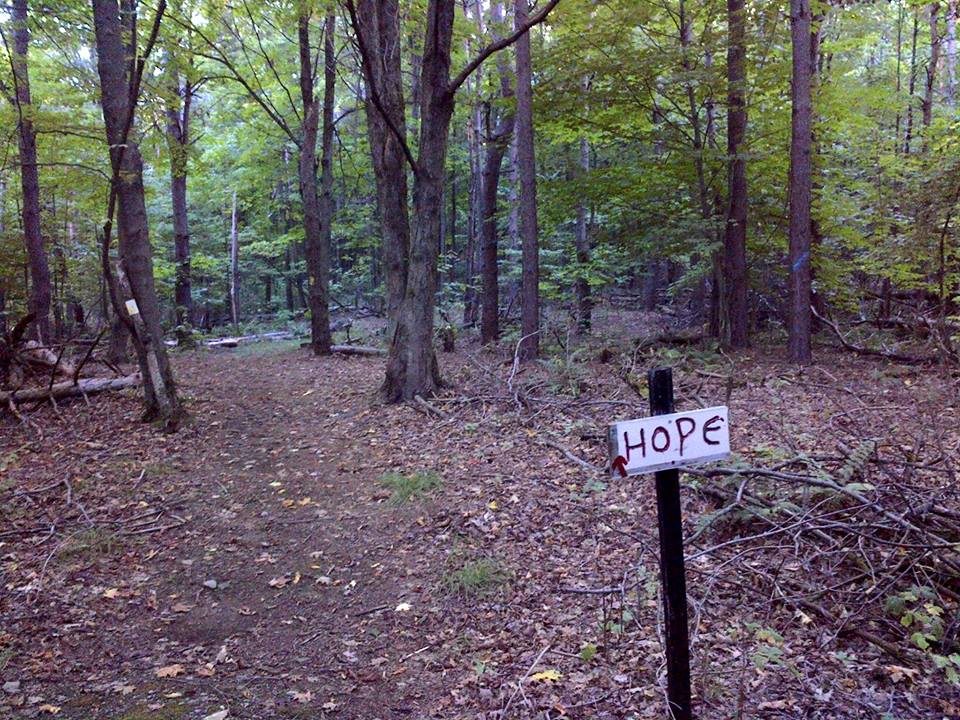
This was the age of my youth. It was innocent and tech-free and filled with hippies and protests and flag-burning and marches and sit-ins and rumbles. The laughable Mets became the champs and we walked on the moon. On the moon, for God’s sake. How can you possibly not understand why at the core of my generation is some semblance of hope, still simmering. Hope is what got us through; the hope of humanity, the hope of leaders, the hope of lovers and friends. We were not a generation of followers staring at our hands; not by any stretch of the imagination. So when the times were a ‘changing, we changed—or we were the ones causing the change to begin with. And as we grew older, those organic traits became part of our DNA.

But hope in everything is fragile now. And the falling leaves are no help; not for me anyway.

It almost seems ridiculous and it is certainly ironic that the best way for me to handle these unexpected and troublesome changes is to, in fact, change. So be it. “To change is to be new. To be new is to be young again.”

“If you do not change direction, you may end up where you are going.”

–Lao Tzu

We now begin our broadcast day.

Foolish. Insane. Successful.

Some of us are masters of self-deception; we can convince ourselves of just about anything and we learn to look for the smallest of clues to justify whatever illusion keeps our delusion alive.

I am certain this all sounds somewhat psychotic, even sinister at times. I know. Yet this mental acuity of delusion and ambition is not only necessary, it’s what separates those of us in lives of quiet desperation from those whose names are synonymous with acts of greatness.

Two truisms:

One, “Insanity is doing the same thing over and over hoping to reach a different result.” Okay.

Two, “The Greater Fool is the one who thinks they can succeed where others before have consistently failed.”

But notice the problem; no advancement in technology, science, the arts, moves forward without a delicate balance of both: Science in particular means doing the same thing over and over to check results, to see if it comes out differently even once, only once in a million trials, to make certain everything is okay or everything just changed. The movie The Right Stuff which begins in California with test pilots does an excellent job of showing how insane those fools were to get into yet another new jet after everyone else had died, only to take flight to another level and eventually out of this world. Certainly the engineers made alterations each time, so it wasn’t the same thing over and over, but with patience and caution.

It is a difficult thing to keep trying to get something right that continually fails. And worse, everyone that cares about you watches and calls you insane for still persisting when nothing positive has happened, and they call you a fool for not listening to the sage advice of intelligent and caring people. But the reality is only we know what we are capable of and so few of us ever try to find out what that is.

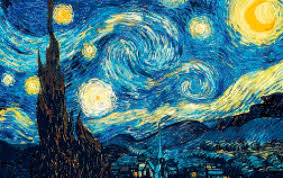
Example: Vincent van Gogh kept painting the way he believed was right despite being told to change his ways by the most respected art critics and dealers—including his own brother—of the day. When he failed, they said, “The fool is insane, and he lived off of his brother!” When he succeeded, they said, “His persistence paid off, and he had the undying support of his family.” When he painted “Starry Night” from a room in the asylum, it wasn’t liked at all by others in the art world. Today, some estimates place its value at just about one billion dollars. Can you point out the genius among delusional if pressed to do so? Can we ever know for certain the guy on the corner in St. Augustine I met decades ago who was screaming to passers by that the voices in his head told him the “water is rising my brothers and sisters; the water is rising,” wasn’t talking about Hurricane Mathew? There’s a thin line between genius and delusion; and history has proven it takes an insane person, a fool, to be exalted for their persistence and determination. “How pathetic” they say beforehand; “How original” they say later.  

I’m sure that, like me, this all makes you think of the overweight patrons at the health club I managed forty years ago. Some of the members were there to lose well over one hundred pounds, some fifty. I taught an advanced class for the football squad at Holy Cross College as well as a class where the minimum desired weight loss was fifty pounds, and some wanted to shed triple that. They tried everything. Everything, over and over.

One day I walked into class with five, five-pound bags of sugar in a backpack. I sat on the small riser at the front of the room and put the pack on the floor and told everyone to sit down. We talked a bit about weight, about the physicalness of carrying it around, the mental weight we carry with it; the ridicule from others, the spouses telling them they’ll never lose it and to give up, the neighbors calling them fools for going to the club everyday when “you should have thought of that before you gained all that weight,” never understanding, never ever empathizing.

So I asked a woman to come up and pick up the pack. She gasped when she tried, of course, and she barely got it off the ground. So I told her to crouch down and I put the pack on her thighs so that she could wrap her hands around it, and then I told her to stand up, helping her at the elbows. She laughed when she was all the way up, and then I told her to drop the back, which she gladly did, and it made a thud when it hit the gray carpeting so that everyone jumped. She sat back down; I picked up the backpack and put my arms through the straps.

“This is heavy,” I said, and we laughed. When I asked if anyone else wanted to try and pick it up they all shied back, laughing, looking away. I sat again and opened the pack and pulled out the yellow bags of sugar one at a time and lined them up on the riser.

“Sugar! Not-yet-completed cake!” We laughed. “How many people want to lose twenty-five pounds?” Everyone’s hands went up, of course.

“Of course! You have to want to lose fifty just to get in this class. This is just half of that–this is twenty-five pounds that you could not lift without great effort! Should I get another five bags so it meets the minimum of the classes’ desires?”

Everyone was quiet.

“Buy a backpack. Buy ten bags of sugar—granulated sugar of course.” We laughed some more. We had to; we had to laugh to do this at all. “Buy the backpack and fill it with ten five pound bags of sugar, and when someone tells you to give up, when you tell you to give up, when someone calls you a fool or says you’re insane for trying what you’ve already tried before and it clearly isn’t working, hand them the back pack—give your weight to them and tell them to carry it for a while. And then come to another class. Let them know that this time it’s different.”

“Persistent and determined remains crazy and foolish unless you keep going and succeed, but to keep going short of success is insanity. That’s where you come in. You believing in yourself is all that’s necessary for everything to work out. The others are just more grains of sugar you have to carry around.”

Why is it we praise the people who stay within our boundaries of expectation and understanding, but when someone pushes the envelope a bit, heads out toward Mach One on the meter, they’re crazy because they’re doing something we wouldn’t.

“Maybe people laugh at you because they know they do not have the determination and persistence you do to do what you’re doing, and they don’t have the vocabulary to tell you that. Don’t get upset, just keep emptying that backpack one bag of at a time.”

I have felt foolish lately and it has slowed down a project I am working on, and I thought of the members of the club, and I thought of Richard, the club owner who himself at one time needed to lose more than twenty bags of sugar, but he played the role of The Greater Fool, and he persisted to the point of insanity, until he crossed that thin line into “inspirational.”

There’s a thin line between so many things, but most allusive is the one between failure and unprecedented success. The problem is sometimes that line is so far ahead of us giving up seems not only easier, but logical. “No one would blame you if you just strapped the pack on and kept going; it’s easier than trying to empty the damn thing.”

But that’s why when we’re working on something you believe in that no one else does, something which everyone else might consider insane and foolish, it’s important not to look toward the distance for that line, but to look at the next step, then the next step, then the next one after that.

Flip Flops

This work was originally published in “Barely South Review” about twelve years ago. It has since been anthologized and often pops up around 911.

“Death plucks my ear and says, ‘Live. I am coming. Live now.'”

–Virgil

I went to the local hardware in Hartfield and bought a sickle—a huge rake-like piece of
steel only instead of a rake at the end there is a double-edged sharp, wavy blade made to rip
through branches, thick weeds and other bone-like growth. Eighteen dollars.

The front of my property is wooded, and on a few acres toward the river, I spent some
time clearing out brush and unwanted vines. I piled it up to haul away, but before that could
happen, other more tenacious weeds—small trees really—took over the area. Some I pulled out,
some I mowed, but I couldn’t grasp to tug out the tougher ones—so the sickle. One warm
morning while alone I put on shorts and flip flops, grabbed the sickle and walked the six hundred
of so feet through the woods to swing away at a small grove. None would rip out easily, so I
aimed for the fences, came down from my right with major-league force and tore through the
vines like an axe through balsa. I attacked one after another, muscles taught so that sweat came
fast, and I made progress. Then I stepped to swing at what looked like a thick, knotty growth at
the bottom of the stump. It was a Virginia creeper vine. Sometimes these monsters look rooted
but aren’t. But what do I know; I’m from New York. So I swung at it like A-Rod. The blade
passed through as if the weed were nothing more than a figment of my imagination, and with all
my energy plus a good deal of inertia, the metal blade ripped into my left ankle.

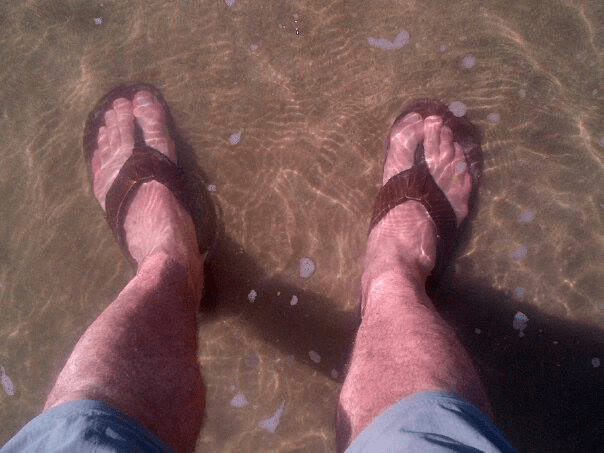
I like flip-flops. I grew up on the beaches from Long Island to Virginia, so I’ve been
wearing them since I’m a kid. I actually had one pair for ten years, sometimes rigged with a thick
paperclip to hold them together. My feet from April to October have a thick white stripe across
the tops seen only when my flip flops are off. I teach in them. I walk in them. I even mow the
lawn and chop wood in them. Despite what many have said, they are not the cause of the blade
Tarantino-ing my ankle. I don’t remember my foot slipping. I do remember almost not going out
to cut the underbrush to begin with because I couldn’t find my flip flops. What a different story
this would have been had I not come across them on the back porch.

When it happened, blood exploded like water in a hose that’s been held back by bending
and then released. My ankle, foot and flops looked as if dipped in bright red paint. I hobbled the
six hundred feet to the back of the house to wash off the wound, bandaged it, then went back out
to cut more wood; I was wired from adrenaline, my ankle didn’t hurt too badly, and to be honest
I had a lot to do.

That night I iced it. I kept it clean. I was fine. Really.

A week later my leg was pitting a bit when I pushed my thumb into my shin. Excess fluid
I figured. Prior to the whacking, I had been running up to eight miles a day, prepping for the
Rock and Roll Half, so one evening when I was feeling a bit more hyper than usual, and the
swelling moved to both legs—a feat I could not comprehend from injuring one ankle, but I don’t
have a medical degree—I stopped at Kroger and spotted a blood pressure machine. This can’t be
right, I thought, when the first reading came up 270 over 190. I did it two more times and both
readings came pretty close to the same. At the checkout I let them know the machine was
broken. We all laughed at my numbers—even the bagger laughed and put the laundry detergent
on top of the bread. It was that funny.

The next day, worried about my ankle, I washed off my flip flops and went to the doctor.
He took my blood pressure. Again. Again. He asked why I was stupid enough to wear flip flops
while doing yard work. I pointed out I wacked myself above where any shoe would have come
anyway. He asked if I were doing cocaine, heroin, or any other substance, asked if I had
shortness of breath, dizziness, if I had thrown up, fell down, or otherwise felt corpselike. He took
my blood pressure again. He asked how long I felt hyper. “Years,” I said, and he took my
pressure again. Then he sent me to the emergency room. Average BP—260 over 175.
Tests. IVs. Tests. On and on it went for several hours. Nurses came, two doctors stopped
by, some punk there to visit a friend who had overdosed came by to check out my vitals because
my blood pressure was the talk of the ward. The nurses upped the meds. Finally the doctors said
based upon my blood vessels behind my eyes and various tests, my blood pressure had
apparently been that high for probably some years, and that if it wasn’t for the fact I’m totally
healthy otherwise with excellent results from blood and other tests, I’d have had a major stroke.

I asked the cause. The doctor shrugged. Genetics; in a high stress situation for far too
long; a combination, he said. They brought it down to 190 over 95 and sent me home with meds
to bring it back to normal. They told me to keep exercising and that because of my medicines I
could do the marathon, but to be clear, I’m going to be very weak for awhile until I adjust to a
life where I’m not pumped on triple doses of double shots coursing through my veins.

A few weeks later at a follow up where my pressure was at 110 over 70 the doctor told
me in complete agreement with the cardiologist and another doctor, had I not gone in, I’d have
most likely had a major stroke trying to run the half, and probably would be dead. I asked why I
didn’t have one while doing the eight miles a day prior to the Great Sickle Incident, and he was
quite professional about it: I don’t know, he said. I really don’t know. You should have. Good
thing you wacked your ankle, he said.

Yeah, thank God I wacked my ankle. And I thought how often that happens. Good thing I went back for the keys. Good thing I stopped for coffee. Good thing you kept me on the phone, or I’d have been at that intersection just at that moment.

“Good thing I watched Monday Night football on the 10th and overslept: I work on the
85th floor and I’d have been right there,” the stock broker said in the street to the television crew.
As the towers tumbled, he counted his blessings.

Good thing Larry Silverstein, owner of the lease of the World Trade Centers, has a wife
who made him go to his dermatologist appointment that morning instead of yet another meeting
in the North Tower.

Good thing Chef Michael Lomanoco of “Windows on the World” broke his glasses and
had to stop at Lenscrafters that morning to get them fixed.

Good thing Lara Clarke stopped to talk to her friend, actress Gwyneth Paltrow, in a
chance meeting down in the village that morning making her late for her job on the 77th floor.

Thank God singer Patti Austin, booked on flight 93, had to leave Boston a day early
because her mother had a stroke and she had to get back to San Francisco on the 10th instead. “I
went back and forth all day about when to leave,” she said.Thank God actress Julie Stoffer and her boyfriend had a wailing fight that morning and
she missed Flight 11.

Actor Mark Wahlburg is still haunted by that same Flight 11 to LA, which he missed at
the last minute when an 11th hour invitation to a film festival sent him to Toronto instead. He has
nightmares thinking about who took his place on the flight. He would have been sitting next to
Family Guy creator Seth McFarland who also missed that flight when his manager gave him the
wrong boarding time and he was fifteen minutes late. He, too, still has bad dreams, he says. But
thank God, he says.

It’s chance. It’s the phone call, the caught light, the traffic backup. It’s changing your mind. It’s
sticking to the plan. It’s oversleeping, insomnia, an upset stomach. It’s a few seconds. It’s the
wrong shoes. It’s the stroke of luck.

Let Go

Taxi Driver by Martin Scorsese (1976) | SP Film Journal

It’s the second week of classes and something new and exciting is happening that reminds me of my first days away at college: No one is using their phones. They are actually all in class talking to each other and to me, and listening. I have no idea why.

The first time I went away by myself, other than a few extended trips with a high school friend of mine to Chapel Hill, North Carolina, and camping in the mountains, was my freshman year at college. That was a nine-hour drive from my home, so returning on a weekend was simply out of the question. This was a time when communication by today’s standards was archaic. We had no cell phones, no computers, no answering machines if we even had a regular phone, which I didn’t. Mine was a payphone at the end of the dorm hallway which I shared with ninety, often drunk guys. So even if someone did try to reach me, one of us on the floor would not only have to hear it ring, but we’d have to muster up the energy to walk down the hall and answer it. Doing so then entailed learning who the person was calling for, walking to that person’s door, banging until they answered as you yelled “Bob! Phone!” and then return to bed without letting the caller know if the person was even home. So no “message” would be left.

We wrote letters, on paper, with stamps and envelopes, and walked them to the post office on campus. But with papers to write, parties to attend, basketball games, and hikes along the river, letter-writing was not a priority. Instead, when we went away to school, we went away. Gone, out of their lives. See you in someday.

I arrived that first year in August and returned to Virginia Beach in November, and during that time away, while I often called my father at his office due to his toll-free line, and my mother much less often due to my lack of ability to plug the payphone with quarters, I didn’t talk to a single high school friend in any way for three solid months.

But when I got home. Oh, wow, when I returned home that first Thanksgiving weekend, I headed to my friend Mike’s house, and our friends Dave and Michele and Kathy and Patti all came over, and we sat out back or went to Pizza Hut and we talked. We told stories and talked and laughed so hard I can still picture us sitting there like it happened last week.

We had so much to catch up on. I told them about college, about the hills of western New York, about my roommate and floormates and others I met and became close to. I told them about apple picking in Albion, New York, with a friend, or about how two other friends and I drove to the Billy Joel concert in Buffalo and got lost on the way back. I had an endless bag of stories to share with them, and they caught me up on life there. Dave was married, Michele had her first son, another was still out in Nashville and another in nursing school.

We all looked different than four months earlier. Older somehow, despite the probable lack of change. But nineteen is a time when even just a little bit of maturity comes from the slightest change. We met new people, added new dimensions to our personality and experiences. I was hitchhiking to Niagara Falls, Jonmark was doing well in Nashville, Mike was doing traffic and news for a local television station. We had stories to tell that we would never have had to share if we all stayed a part of each other’s lives on a daily basis. What’s more, other people entered our narrative. When you break off completely and start anew elsewhere, you learn new ways—it truly is that simple. I’m not suggesting that one doesn’t mature and learn and grow without leaving. But one point is indisputable: I had no idea what any of them had been up to, no clue. And they couldn’t possibly conceive of what I’d been doing. And there was no device save the US Postal Service to keep us informed.

So we had to catch up, and I had new friends.

You see, something unexpected happened that I just now tried to tell my students about. When I returned to college, the same thing happened as when I went home that first time. It had only been a week since I left for Thanksgiving, but upon return, I could not wait to see my new friends, those I was literally living with, ate with three meals a day, walked home with at three am, cried with. The few days away from them felt longer than the time away from those friends from high school I’d known for some years. Something was different. All those changes that had scared me to death before leaving for college turned out to be the best thing for me, and that time then would not have been nearly as significant had those changes occurred while still holding the hands of friends through some WIFI umbilical back to the beach.

Fast forward.

During my first few years teaching college in the early nineties, I’d walk down the hallway toward class and could hear the students talking, multiple conversations overlapping about the weekend, about plans, majors, transfers, food, concerts, about life, all of it. New friends mostly, evolving into new relationships, new ways of thinking. I’ve seen strangers become partners become parents. And after a long college break, it took ten minutes to quiet down the room, everyone catching up, seemingly happier to be back then to have gone home to begin with.

But that eroded; slowly at first, and then with discouraging speed. When I approach a room for class these days, it might as well be empty for the silence. It’s easy to think it is, until I turn in the door and see twenty-three students sitting silently, staring at their phone, texting the same friends they’ve been texting since seventh grade, not knowing even the names of those next to them, one of whom might be their significant other, or a friend with similar interests, or someone with familiar plans and hopes. They don’t seem to even care.

They’ve never learned the art of missing someone, the value of silence, the strength that comes from a complete lack of ability to communicate. The time spent in their own thoughts, without music, without social media, without letting go for a period of time without knowing what happens, has slipped away. College students remain knee deep in high school conversations well into their collegiate years, and it leaves them all with a much more provincial perspective.

Today, just now, that seemed to change again, and my students–all away from home for the first time–talked to each other, learned names, made plans. It felt right, like some semblance of humanity has survived the technological advances.

There was a time we were all prodigal children, and those we loved embraced our return from that unreachable place we went to, be it away at school or another state. And we learned how love can survive such incommunicado. I once went twenty-two years without talking to someone and then spent two straight days catching up. And honestly, I don’t think I would have appreciated her half as much had we never lost touch. It helps to let go, to follow different paths and not be tethered by technology, and then find each other again and find out how friendship has little to do with constant communication.

And more, during those times I was somewhere else–Arizona, Massachusetts, abroad, and had no means of reaching someone, I discovered more about myself than I ever would have by holding on. I see my students now using expressions I had thought were long gone:

I hope to see you soon.

Keep in touch.

Drop me a line.

How have you been?

So, what happened?

I have missed you.

These simple phrases have brought me such growth, such love, and such peace, they remind me that the strongest connections come after letting go.

Just, before Dawn

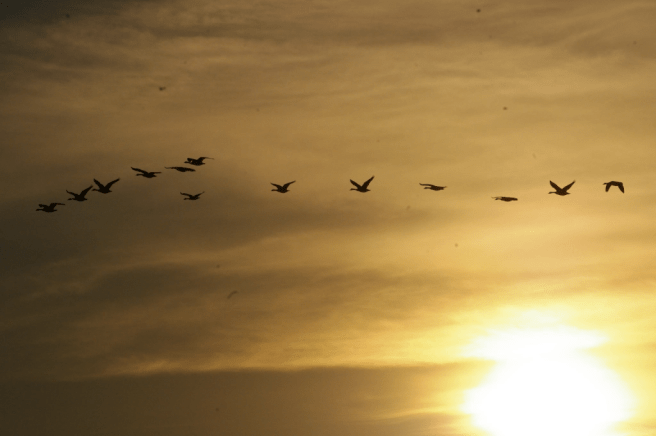
I rose early this morning since I needed to be in Norfolk by 8. That’s okay, though. I am drawn toward the early morning hours of dawn when I feel ahead of the world, and I can sense some small hint of hope. The geese flew by headed to the river, and to hear life around the water in those moments motivates me. Before the sun rises, often just after the first sliver of light reaches up across the bay, I can hear osprey and other sea birds who at that hour never seem to mind my presence.

But earlier, when that glimmer on the eastern horizon is still merely a possibility, I have taken to walks by moonlight, sometimes not even that. In the woods where I live and down along the water, something is going on. There is life out there wide awake and moving through the dark hours like spirits who need to finish their errands before the sun gives them up.

Fox come about the edges of the woods looking for scraps of food or the peels and rinds of bananas and melons. I can stand patiently off the side of the drive and one fox will wander across the yard from the woods behind me to those on the south and stop before disappearing again beyond the laurel, and he will stare at me, relaxed, nosing around the base of a tree where I occasionally put food. Then he’s off—not swiftly or in fear, but nonchalantly, demonstrating that he lives here as well and has decided to stretch his legs. That’s all.

Owls, too—some barred but mostly screech owls, perch in the oaks and elms, sometimes swooping down and moving through branches with precision. But my favorite are the geese which cover the night sky in flocks sometimes so enormous the swoosh of their wings alone creates a breeze, and their call to “Go! Go! Go!” is startling.

Closer to home, out front near the edge of the trees, deer nearly always feed on the dew-soaked grass and often the hostas, and if they sense me sitting on the porch or standing in the clearing, they will look up, briefly, ears turned forward—just for a moment—and then return to their grass, not minding me, aware just the same.

And it is then, when I am well acclimated with the night and my eyes have adjusted, and my soul too has adjusted, that I think of my way in the world, the motivation behind the turns and hesitations, my purpose of this passing in time. Oh, do I ever have an internal monologue underway with long-gone friend now gathered in my nocturnal imagination. There’s Cole nodding his head and insisting I follow my own path. I can hear him clearly when I’m out there, see his small sardonic smile as he says, “Come on Kunzinger. You know how to do this, stop waiting for approval or it’s never going to happen.” And there, too, is another friend whose smile is as wide as dawn pressing his sense of adventure into my spirit with an “all or nothing” carelessness about him which brings me up short yet livens my ambition. In one brief moment I am eased by no longer thinking of them in the past tense, but just as quickly, we all move on; usually just as the sun surfaces.

The sky in the distance across the reach lightens ever so slightly, from dark, almost Navy blue to something slightly more pale, like powder, and I’m alone again—the fox rushing off into the woods, the geese at rest in the harvested field or at the river’s edge, and the murmurs of chickadees and wrens and cardinals chase away what’s left of the stillness, and even my friends bow off, and I have trouble separating memory from imagination. So I get in the car and head south to the city where I simply don’t belong.

It’s as if time offers a small reward for some of us who stay up late or get up early to gather as much out of our moments as we can. Then, just briefly, it eases me back into this new reality I never anticipated. It remains for me the most honest time of day, the most just, when all thoughts have a chance of pushing through the darkness, and the truth about what we are here for is ironically illuminated.

I’ve started to live for the deep hours of the night at the twilight of dawn.

Curious Men: Lost in the Congo

The Allegheny River, Allegany, New York

Memory is as fluid as anything in our lives. What happened and what “seemed to happen,” as writer Tim O’Brien points out, can often be confused. When looking back we might have a habit to recall what seemed to happen, reality having been washed and hung out to dry over the course of decades. Sometimes though we can recall nearly ever nuance of a time in our lives for its significance, its uniqueness, or its romance. I have a pretty sharp memory when it comes to many events. A friend of mine and I were talking not long ago about how we can both remember nearly every detail, everything, about a period in our lives so long ago you’d think it was from another life. Many of us have times like those which, for whatever psychological reason, we can summon up to the point of remembering the clothes we wore on a particular day.

My basic memory for most things is pretty solid. I remember all my phone numbers and license plates, and, worse, the phone numbers and license plates of friends of mine. The old joke about song lyrics holds true with me, but so do the times spent with extended family. One of my only memories of my paternal grandfather was him weeding a lot he owned next door to his house on Long Island. He died when I was five, so I was no older than that, probably still four. But I picture that day, those moments, perfectly.

Some years ago when Meanwhile in Leningrad came out, someone asked how I can remember the conversations I had with survivors of the Siege of Leningrad, who at the time I knew them were in their eighties, and I wrote the book several years after our conversations. I said, well, first of all, they’re never going to find or read the book, so there’s that. But more accurately, when a woman sitting on a bench holding my hand tells me about dragging her dead husband and son across the city to leave in a mass grave, and she sat with me clinging to their photograph sixty years later, I will not forget any of it. Much of the writing in that book falls in that category. Did the conversation happen verbatim? Doubtful, but the gist of it is pretty damn accurate. There’s an old journalism method that when you write the piece and include quotes from someone, call them up and read what you wrote to them and ask, “That’s pretty much what happened, right?” Nearly all the time they’ll say yes. Can you remember the words, exactly the words, you spoke an hour ago? Exactly. If that’s not possible as in this case, I rely on memory and notes.

Memory is reliable or not depending upon just how present we are during the event. That time so long ago when we said we could remember everything: We were both very much present at the time, we lived the example of what would later be called “mindfulness.” Of course we remember. Likewise there are times I so shut out of my memory it’s like they never happened at all.

Still, some events are so close to my soul I would need the team from Matrix to come extract them.

Like what happened in 1980 and 81, when I was a freshman and sophomore in college, the subject of my forthcoming book, Curious Men, from Madville Press. Of that time then, I remember everything. I watched, studied, and listened so intently that this memoir could be considered a documentary for how clear the details remain to me four and a half decades later.

I like that “memoir” includes the Spanish word “oir,” to hear, because much of memory stems from what we hear, and as a nonfiction writer I am bound by listening to the world around me, sometimes to the one sitting in front of me, and those sounds of vowels and consonants and the musicality of language I know will never escape my recollection.

My friend, colleague, and former officemate, Tom Williams, once introduced me at a reading as a non-fiction writer by saying, “Here’s some shit that happened to Bob and the best he can remember of it.” That’s pretty spot on. Despite a degree in journalism, I never had what it took to do the job in the traditional sense like so many I graduated with, some of whom have won prestigious awards for their work. I was definitively not up to that task. But I could handle the feature work, the “Let me tell you what just happened to me” work, just fine. In college, my friend Deb used to help me with news stories and I’d help her with features. We knew our strengths. I had a column in the college paper for which I ventured out into the community and did something, and then I wrote about it. I went horseback riding in Machias, New York, flew planes in Wellsville, kayaked the lake in Allegheny State Park, and sat on the ground behind campus at Merton’s Heart. Those events I could remember. I knew how to be present. Most of those activities were out of my wheelhouse at the time, so recalling what happened was easier. I was paying closer attention, sometimes just so I wouldn’t die.

Memoir is like that. If we can’t remember it we’re certainly not going to write about it.

But not this time, not this book. Summation: As a college freshman uninterested in the normal activities of my floormates–that is, drinking and drinking–I felt lost and disconnected from everyone. Then a family friend returned from the Peace Corps and asked me to help him plan a trip, solo, on the Congo River. So I did.

Long story short, it didn’t work out and his trip became mine. The first half of the book takes place in western New York. The second half in the Congo.

Still, that’s not what the books about.

Most of it takes place now, in every classroom across America where nineteen-year-olds sit and try and find something worth doing, something that reaches deep inside them and wakes them up. I’ve been staring at nineteen-year-olds for thirty-six years and one thing hasn’t changed: they’re scared out of their minds. They’re alone in a new place far from home living in a room this size of their car with a total stranger, and every adult within earshot constantly wants to know their plans for their major, their careers, their lives. It is often unbearable.

I was exactly like that back then. Until a friend walked into my life and said, “I have an idea. I need your help.”

We were so young.

So that’s what this memoir is about: About that time back then. What we did and how and why we did it, yes, but mostly about being nineteen and far from home looking for a reason to exist at all.

This is how I remember it.

Coming this winter:

The Rest of Me

I ask my students the same question the first class every semester. I pull a chair into the middle of the front of the room, ask them their names and where they’re from, and we talk about the area, hobbies, majors, quirks, travel favorites, and more. Half the class—I find it a priceless investment in time as they warm up, get to know me and each other, find themselves more able to talk throughout the semester, ask questions, share ideas.

Then I sit quietly for a second and ask them the same question every time:

What are you capable of?

What do you think you are capable of? I don’t mean “What do you hope you can do?” but what tangible proof from previous experiences has convinced you it is worth reaching out a little further than your grasp this time because you know you can do it?

It’s not an easy question to answer because it is difficult to know if we can achieve that which we have not yet attempted, so at best we need to guess. And even the most educated guess is still hypothetical. Yeah, I lose a few at this point, but I usually can reel them back in by jumping that chasm to the goal. “Okay then,” I continue. “What do you wish you were capable of?”

I remind them that unfortunately, every semester the evidence gets worse that freshmen in college are capable of anything other than having technology complete their assignments for them. I insist, then, that one of the finest results of college beyond the degree and the friends and the job prospects is the sense, the absolute pure sense, of accomplishment. To achieve something, to find out we are capable of so much more than we thought, becomes part of one’s bloodstream.

I asked myself that recently, the Capable Question. It was my birthday, sixty-five years to the day after I showed up at the now defunct Shore Road hospital in Brooklyn; one year to the day after Letty “closed the door behind her.” I looked back at what I have done with my life, who is in it and who no longer is, and who is again, and the good news is I’ve been around the block a few times and that’s one thing I always wanted to do. The bad news is as it turns out the block isn’t in my neighborhood.

Sometimes I don’t know where the hell I am. For a person who has traveled as much as I have, I still need direction an awful lot of the time.

So I asked myself, “What are you capable of?” I figure I still have a couple of decades, surprisingly. Maybe more on a good day, maybe just a few weeks when my mind downshifts. But let’s call it twenty years.

I just agreed to a location to perform a one man play in New York. My book Curious Men comes out in just a few months. My book Office Hours comes out in about eighteen months. My fig trees need watering. I’m thinking of getting a new cat or two. Maybe a dog. A goat for sure.

A few months before she died, Letty and I sat in Starbucks at the beach and after a lot of laughing, she said, “I always thought I’d be here past sixty-five, Bawb. I just never thought it would all be over; my life would be completely done at sixty-five.” I nodded. I tended to avoid trying to come up with a response. She didn’t want one. She wanted me to listen, to hear her existence, to be there while she was being alive. After a while she leaned forward and said, “Since I’m not using the rest of me, you can have those years. I trust you to use them well. What will you do with them?”

I thought about it like she had some power to give me twenty more years. “I am going to walk the Camino de Santiago again. I’m going to drive through the northwest for a few weeks. I’m going to take a river cruise in Europe with a friend of mine. I’m going to camp in Havasu Falls.”

“…and?”

The perfect response. “And?”

This is all to bring up a point:

After something I wrote went online about a month ago, several people, some I don’t know, wrote to tell me how good it is that someone my age still thinks I can do something new. They wanted me to know how much they are behind me no matter how outrageous it is that I’d try something besides enjoying retirement.

Two things here: One, I have no idea what they’re talking about. And two, Seriously? I mean, I’m sorry you took a nose dive as soon as you were eligible for Social Security, but I can’t wrap my mind around that mentality. Maybe it’s because retirement is somewhat irrelevant if you never really worked to begin with, but also in the world of arts, in the realm of love, there is no “retirement.” You can’t turn it off, you just can’t. And I want to spend my time with people I care about, seeing things together. I felt the same way when I was in my twenties. Did you guys grow tired of those you know?

“Someone my age” my ass.

I’m not going to republish the litany of accomplishments by people in their seventies and eighties. If you understand then you’re not sitting around lamenting anyway; and if you don’t, you’ll just shake your head.

I have done okay until now, and parts of my life turned out to be riddled with circles, as if Einstein was right—there is no actual “time,” humans have just made it linear so we can comprehend our passage here. Well, I’ve never been good at staying inside the lines anyway.

Honestly, I don’t know what’s going to work and what won’t work from day to day. I just hope for the best for the rest of me.

But, at the risk of being in over my head, here’s my plan: To speak my mind, about love, about hopes, about what is working and what is not. To keep writing as long as I have something to say. To fulfil some plans that I can’t shake.

I’ll retire when I’m dead, and then I’ll close the door behind me. If something should happen to abort those plans, feel free to take the rest of me and see what you’re capable of.

The Almost

I posted a comment today that simply said, “I’ve lost interest in absolutely everything. Almost.”

I wasn’t kidding. Sometimes I joke or lead on, sometimes I post things in a broad stroke as an inside joke to someone out there who gets it and everyone else is like, “Huh?” And sometimes, once in a while, I mean it. That’s this time, now. I’ve truly lost interest in absolutely everything.

The news has stolen so much of my time I feel like I should be ten years younger but for the endless endless ENDLESS barrage of manure pouring out of left and right and mainstream and radical outlets, filling the empty spaces of life with reports on the childish behavior of world leaders. So I turn to see what’s going on around the world and I see children dying in droves in the Middle East, but nowadays in a world filled with bitter and anxiety-ridden people ready to snap at anyone who speaks, those that point out the tragedy of dying Palestinian children are called anti-Semitic when they just are trying to say no matter what else you feel about land rights and terrorist organizations, at the very least we should be able to agree that tens of thousands of children should not die from war and starvation, right? Right?!

And my beloved St Petersburg is a place I’ll never go again because two or three men at the top decided to change the lives of the entire nation–two nations actually–so I turn my attention to students and classes since I stumbled into that career, but everyone is cheating with AI claiming it doesn’t make a difference since the work is done and the essay is written and I did the same thing when I was their age by using a calculator instead of working out the math on paper and it is nearly impossible to prove anyway. So I look toward some planned trips I had with some groups of people, but when they fell through and I let them know, I received mostly belligerent, nasty, attacking emails from the same people because they decided not to read my emails. People suck. Come on, you know it. They just suck.

So I turn my attention to my work, but one book project for a publisher in New York got pushed off a year, and the other book project for my publisher in Texas is going well and launches this Christmas, and while I think it is some of my best work and the endorsement from writers I respect is unprecedented, it will never be what I want it to be because it is so personal, so significant to me, that it took forty-five years to tell the story and I’ll never be satisfied, and letting it go to the publisher was like watching the main character die all over again.

I’m exhausted. No. That’s not right. Fatigued isn’t close either.

Numb. The worst kind of numb; the numb that feels good and makes it hard to give a rat’s ass about anything at all except being numb. Exhausted and fatigued can be bad. Numb can be dangerous.

But I had a few moments of “excellent” in the past few months. In The Netherlands. At Spirit Lake, Utah, and with my son hiking various trails along the Chesapeake. But I’ve lost interest in almost everything else. True story.

So I decided to forget about the news and the world situations and the AI essays and the publishing delays and writing disappointments and instead just focus on the Almost.

We spend much too little time focusing on the things that we do find interest in, we are too often held hostage by the news cycle which only pisses us off. This cannot be healthy. So I’ve decided to save myself. It might be one thing. Sometimes you might be close to a tragedy but there is one thing–perhaps a child, perhaps an event, maybe some faith–that keeps you going anyway.

So I turned to the things that motivate me from inside somewhere.

Shit.

I wish I could remember what they were.

Enough

Let the video play while you read

I’m taking more time.

I headed off by myself for a few days last week, wandered about some trails, sat and stared across a lake for a few hours, just stared, thought about people who I used to know, used to love–love still, I suppose–and came to a few conclusions.

Nothing is more important than love. Spending as much time with people who make you forget all about what might happen next, what happened already, people who chase away anxiety and dismiss regret, who finish your sentences, know when to laugh, know when to sit in silence while you cry. Know when to hold on and when to hold on even tighter. Nothing, I swear to you, nothing can possibly be more important than this. We build our lives and occupations and make contributions to society so we can know we played our part in this powerful play that just goes on and on, and that’s all right and true, but it remains secondary at best, a shadow at best, to how our lives can only be truly illuminated by the love of those who make us understand more of who we are. Those who we celebrate for who they are, all of each of them, not just the parts we find convenient.

I’ve been around the block and have had the good fortune to ease my way through so many worlds, so many lives, with some of the most accomplished people of our age. Oh, in the name of all that’s holy I have known life at its best, and experienced more than I ever imagined I would, from deep deep rivers to the wind-shaped rock formations on the sides of mountains, and there is more beauty in what I’ve seen than one can experience in ten lifetimes, and what I’ve seen is nothing, a sliver, a minute fraction of what there is to be experienced in this world, and yet we spend our time watching other people live there lives, watching other people pretend to live yet other people’s lives; we spend our time looking for the right moment or the right person or the right way to say the right thing, instead of letting the beautiful passages of truth and pure love come out of who we are as we simply live in honesty, not afraid to take a chance if we know it leads us closer to who we were meant to be. We start so pure and honest, and we go through all those firsts until we become experienced and “wise” only to find out all those firsts were the closest we ever were and ever will be to the truth of who we are.

Here’s another truth: People die of brain tumors, of heart failure, of kidney disease, they die from falling over or falling down. But first, if they were lucky, they lived. Death is not so sad if it comes after life. But lately I’ve noticed people passing away before they had a chance to live their lives at all. It reminds me of an old lyric: “Pity the poor one, the shy and unsure one, who wanted it perfect but waited too long.”

We need to stop waiting for something to happen.

The world these days is not worth the beauty that life can be. Leaders are corrupt, struggles are real, starvation is epidemic, children are being killed for no good reason at all. The world has been ravaged by waves of interference that have compromised our nerves and our focus, and we are drowning. This world leaves so many believing suicide is a viable option. Society has not nearly earned the beauty that life can be.

So I’m stepping to the side for a while. I took a few days to myself last week to finally and conclusively mourn my mother and father, my friends Dan and Dave, Letty, because I had not yet done so and because I have not yet loved the way I believe we were intended to love.

And that is a death worse than all the others.

I took a few days off last week to try and see if I could find that person inside buried beneath layers of the soot shoveled onto me from a life of almost’s and nearly’s. And I quickly understood the time I have left is a fragment of the time I’ve already wasted.

Breaks over.

65

It’s that time again. When I was born Dwight Eisenhauer was president and Richard Nixon was his vice. The average household income was just over $5000 a year, the average house just about twice that and the average new care just about half.

I appear on the scene just hours after the first fifty-star flag had been revealed noting Hawaii, and a week before the Pulitzer Prize winning Harper Lee book To Kill a Mockingbird is published.

Benin, Niger, Ivory Coast, Ghana, all gain independence, and Aretha Franklin makes her first recording. Cyprus, the Central African Republic, and Chad gain independence. And in August, the Beatles with Pete Best perform for the first time with their new moniker in Hamburg.

Belka and Strelka board Sputnik with forty mice, two rats, and a rabbit and actually make it back to earth alive.

Hurricane Donna rips up the east coast and in my home state of New York, Governor Nelson Rockefeller declares September 19th Grandma Moses Day in honor of her 100th birthday. She was born at the start of the Civil War and died when I was a toddler. Time is deceptively swift.

I’m amazed by the people I shared this space with. First and foremost, birthdays remind us in fine mathematical style that we are alive and are still part of the population which constantly expands like bottle rockets in the deep blue sky. It bends my small mind to think of this reality that I’m certain everyone knows but few contemplate: I shared this planet with every other human who ever breathed the air. Read Carl Sagan’s “Pale Blue Dot” as a brilliant reference.

Just in my lifetime: Mother Theresa. Malcolm X. Neil Armstrong. Jimi Hendrix. Pope Paul the Sixth. Lech Walesa. St. John Paul the Second. Thomas Merton. President General Eisenhower. Elvis. Pablo Picasso. Albert Schweitzer.

Rwandan Tutsis. The Lost Boys of Sudan. Steven Biko. Pol Pot.

I shared time with these people; these saints and sinners brushed my sleeve simply by sharing the earth during my stay. I have a loose connection to miracles and massacres.

This world has some serious issues; always has. It is at best, though, a hotel, and every once in a while I take a look at the register to remind myself who else stayed here. Alexander the Great, Charlemagne, Mohammed, Ivan the Terrible, Ghengas Khan, all guests just over the slope of the horizon, just beyond some small slice of linear time. On the same human trajectory as mine but before is Geronimo, Moses, Jesus, think about the gentle bend of time, the careen of place that separates me from the disciples, the Visigoths, the founding fathers. All here but just before.

Closer to now, when I look inside the lines of my coming and going, I can see the souls who at one time or another shared with me this spinning blue wad. Not short of miraculous, we claim the same particles of stardust, and that’s what keeps me looking around when I walk down some city street; I want to know who on earth is with me on earth.

Time has ripped past. I was born a month ago. I waded through foreign rivers last month. My son was born last Tuesday. Fleeting. Swift. Impatient. And my thin life falls on the same graph as Richard Wright and Ernest Hemingway.

Carl Jung lectured during my youth, and Ty Cobb watched the same Mets players as me. When I was still cutting new teeth and outgrowing my Keds, I could have headed downtown with my Dad and possibly been on the same train as William Faulkner, ee cummings or Marilyn Monroe. I might have passed them on the street, maybe stood in line at some drug store counter with my mom and behind us because of the blending of circumstance might have been Sylvia Plath or Sam Cooke; Nat King Cole; Otis Redding. We have overlapping lives. On a Venn graph, we share the shaded space.

Judy Garland and I watched the New York Jets in Super Bowl Three. When I was born World War One vets weren’t yet senior citizens and World War Two Vets were in their thirties. Vietnam isn’t history to me; it is my childhood, my early teens. The fall of Saigon was announced over the loud speakers at my high school.

There are empty fields save monuments and markers where soldiers died defending this land against the British, against ourselves, and they stood where I stand and watched the hazy sun rise. Same sun; same beach, same blessed Commonwealth. Don’t mistake history for “back then.” Those people just happened to check out before us. It could have been us. It is us now, watching the orange moon like we do, noticing the calm river, sharing time with loved ones, thinking about others. Getting ready to die since it won’t be long before our lives overlap with the crying call of a newborn Einstein. Did you see that boy running at the park? That girl climbing the tree at her home? Did I just pass by some senator, some Cicero or Socrates, some St Augustine?

Like a couple today buying the same house that young lovers lived in centuries ago, like sour-dough starter. Like a relay race.

My adult son is trying to get a shot of fireworks in front of the moon, but the angle is wrong. When he was just five months old I held him with my hand over his ear, the other ear against my chest, as we watched fireworks out over the Atlantic in Virginia Beach. That was last Friday or so.

What a life. How many times do we reinvent ourselves? How often do we stop in our tracks, get out of the rush and inertia of humanity pushing from behind, and let it all go by, catch the moon over the Chesapeake? Why do we so rarely rest easy in the love of those near and of those still far away when our stay in this world in our time is brief at best.

I love getting older, knowing more people, turning the pages. I miss my mom and dad, I miss Dave and Fr. Dan, and I miss Letty. My parents lived longer than I thought and the others I really didn’t think would check out as soon as they did. Thank Buddha for Ghosts and reincarnation. Just in case I watch the birds on my porch.

Listen, please: