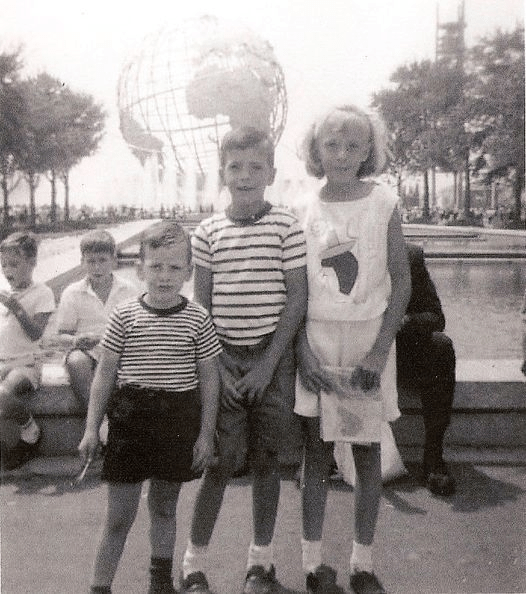
Dave

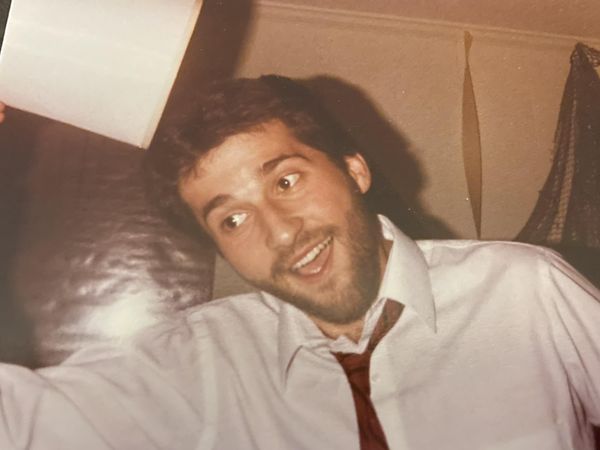
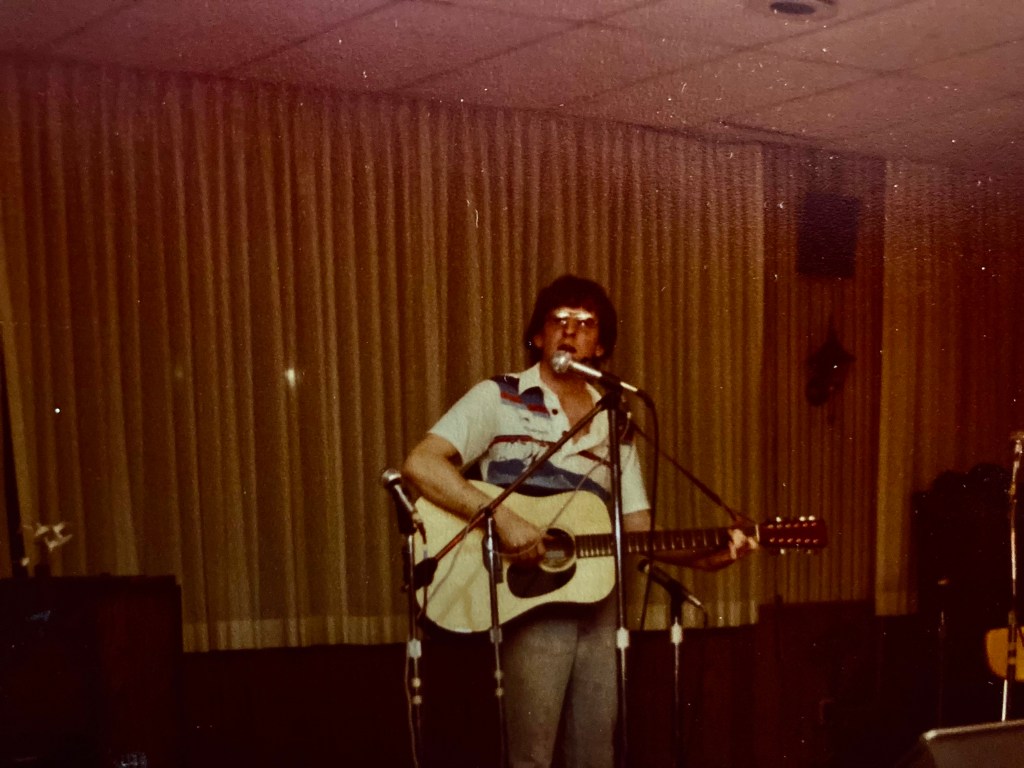
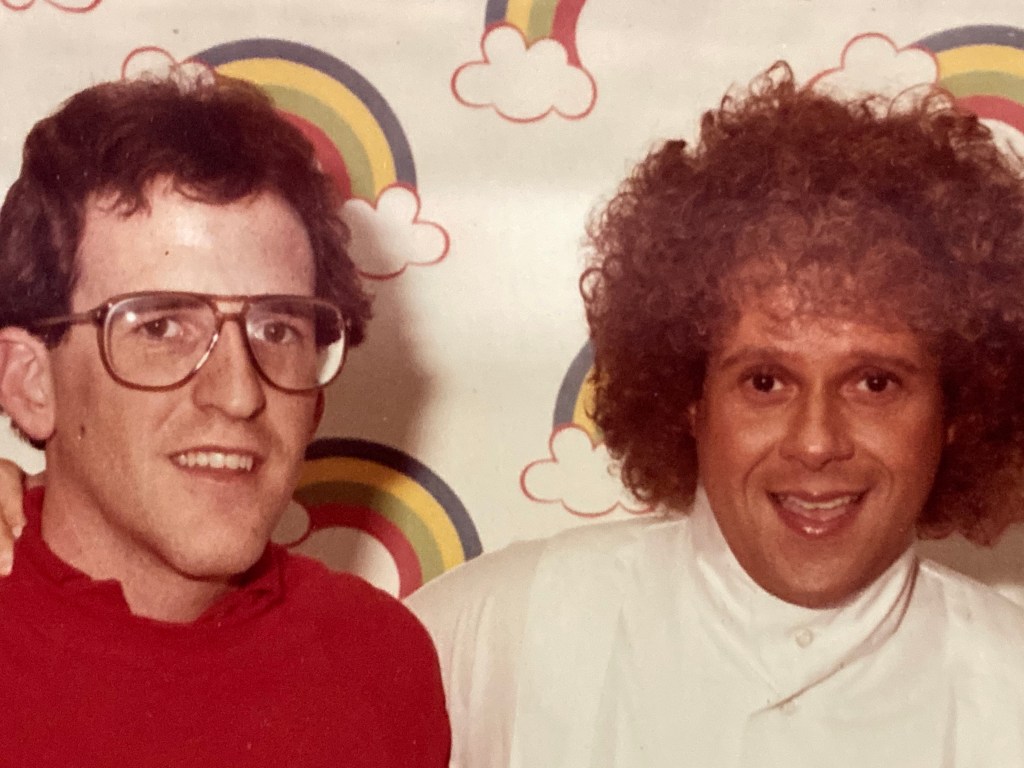
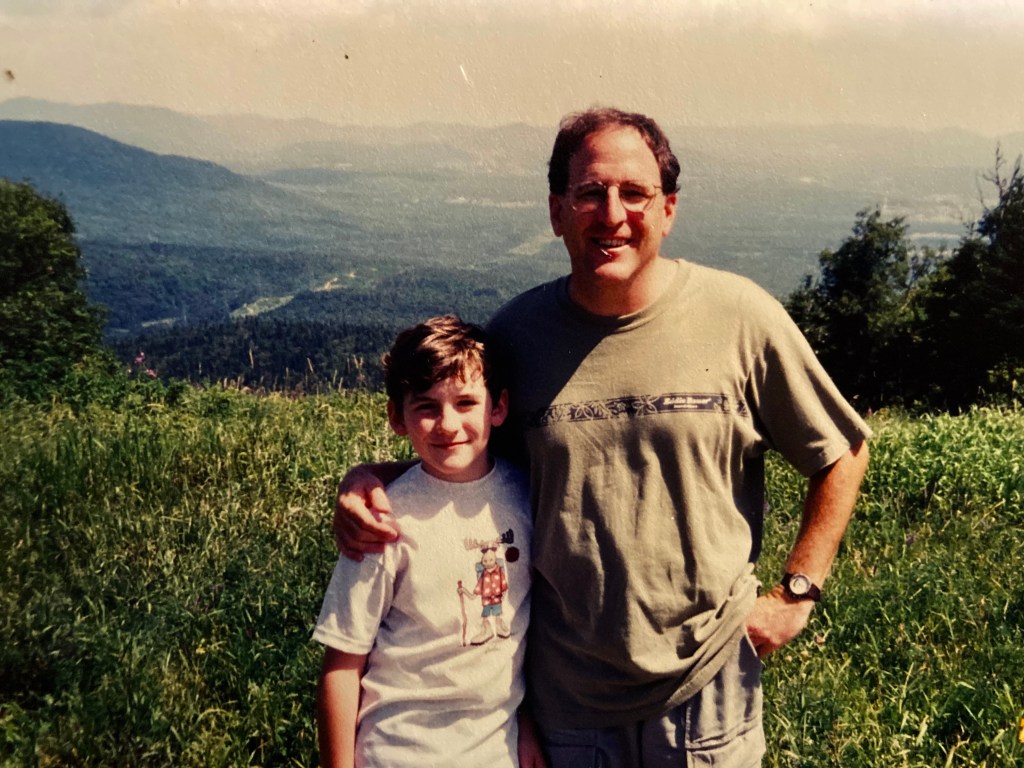
That’s my friend Dave Szymanski. He died Tuesday, May 14th. RIP my brother. We laughed so much that now just laughing at all often makes me think of him. We were going to get together when we both turned seventy and sing “Bookends” on some park bench. No kidding; it was part of the plan. We wanted to belt out to whatever audience was out walking their dog, “How terribly strange to be seventy!” Well, that won’t happen. Still, I am absolutely certain if I make it that far I’ll most definitely do just that, but alone, crying, laughing. I have so many stories about Dave you’d think we were twins. But those are mine now–Dave and I agreed to have joint custody of the stories of those times, but since he is gone now, I’m assuming full ownership. Unfortunately, they fall squarely under the category of “You had to be there,” so there’s no point in sharing them.

This is not likely to go where you believe it might go.

I’ve been thinking about what I can best call the start of some independent consciousness–that is, the time when I was first aware I was a growing, independent thinker/dreamer, mentally unattached to others, my thinking not entirely tethered to parents or siblings or teachers. I guess I was in what we then called Junior High, now Middle School, and at thirteen or fourteen years old life was still idyllic. That’s the point I think I started to think of myself as an individual. I have no idea if that is late, early, or disturbed. We lived near the Great South Bay next to a State Park and an arboretum, a golf club, and I was surrounded by friends in the village of Great River. I have memories before that, and possibly even dreams, which at that time were to either be an astronaut (Apollo 11) or play baseball during the summer (Miracle Mets) and be an ice cream man in Florida during the winter. But those were the “in the immediate” aspects of life; that is, things you thought about and said to friends but then forgot nearly instantly. But realism crept into my view somewhere around seventh grade when more realistic plans surfaced, like sailing around the world or riding my bike across the country, or being a musician or a writer or a tennis pro. All seemingly real plans at the time; those things which you no longer imagine and pretend but which you pursue, even if fruitlessly and without much talent.

No one save his family knew Dave was sick, so most of us didn’t have the chance to take the time to reminisce. It’s important; we always say, “Tell people how much you care about them because you never know if they’ll be around next week,” but we rarely follow through. We know it is true, and we know it is real, but we just don’t. But if we really did know it was the last time we might talk, the last chance to say something, like how much you appreciate the long conversations in the radio station at five in the morning, you picking out albums, him tearing UPI articles for the news; or how the three am pancake house runs were more important than final exams; or how the weekly texts through the next forty years kept you going, you’d tell him. Listen: Please, make sure if something happens and you know you’re going to be checking out, do not keep it a secret; some of us have a few things to say.

Anyway.

A few days ago someone asked me for my favorite picture of Dave. I went searching deep both on and offline, but I do not have many at all since back when we spent a lot of time together we rarely walked around with a camera and film. But I looked, all the while sifting through tons of other photos of the scattered years throughout my life, and at some point I stopped and simply sat remembering, and I realized something close to lifesaving during an otherwise heartbreaking week: What an amazing ride this has been so far.

I’ve mostly taken the paths of least resistance, I must admit, but apparently someone was up ahead clearing it for me, because it’s been outrageously fortunate. And I finally figured out what the pictures are for. Not only to reminisce, but to remind myself when I get lethargic or depressed, lonely, or tired, that I’m still walking this brilliant Camino, and to remind me of the words of Virgil when he wrote that Death twitched his ear and whispered, “Live….I’m coming.”

Not knowing when someone is going to die, or even that they are sick, is a cold reminder that we don’t know when we’re going to die, or when we might fall ill, and the truth is we just might have a few things to say to those we will leave behind. Speak now or forever…

I normally try to not write too directly only about myself, choosing instead for a digression into some common ground. But not this time. Honestly, this one is for me. Just a few findings from the journey so far:

Sandy. My best friend forty-five years ago.
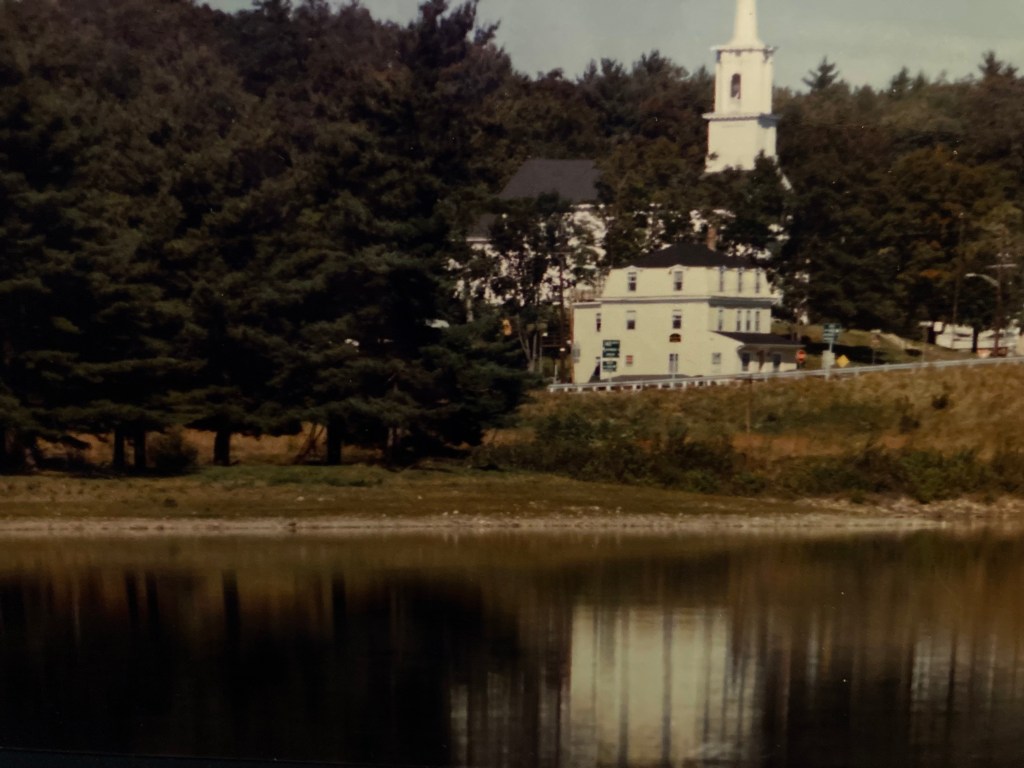
My yellow house in Oakdale, MA. I lived for a few years on the first floor/basement behind the hill. The water is the Wachusett Reservoir, and up the road to the right was an apple mill, then up the mountain to the ski slopes, Princeton, Massachusetts. I loved it there and never should have left. 100 years earlier the house was a fish market.
My siblings and me (in the middle) in Massapequa Park on Long Island, where we lived from just after I was born until I was nine. It was a great place to be; Dad worked his tail off so we had great childhoods. My siblings are two of my five heroes.
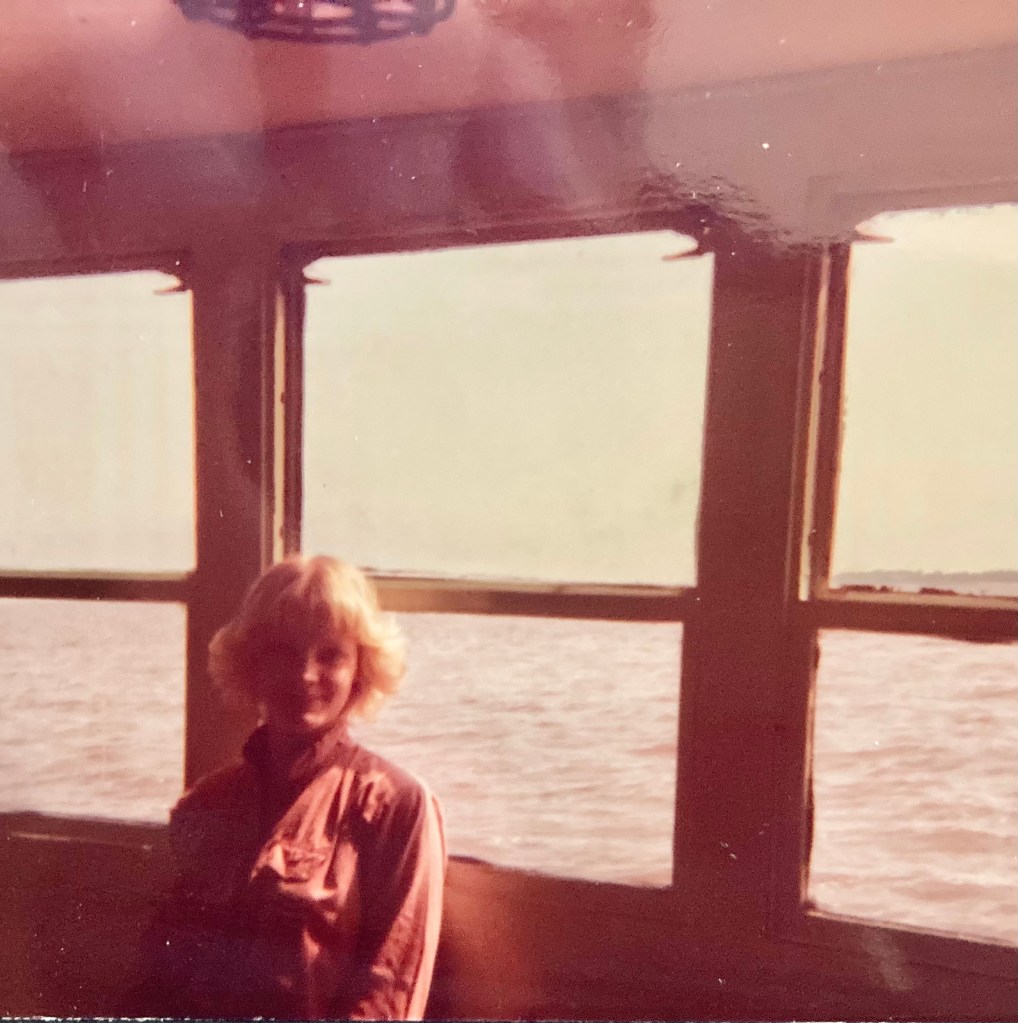
My friend Michele during high school. One day I borrowed Dad’s car to go to Michele’s for “about an hour.” Instead, we drove to the end of Knott’s Island on the Carolina border, drove onto the ferry, and headed down the coast of the Outer Banks. Neither one of us wanted to turn around. If we hadn’t we might well still be driving.
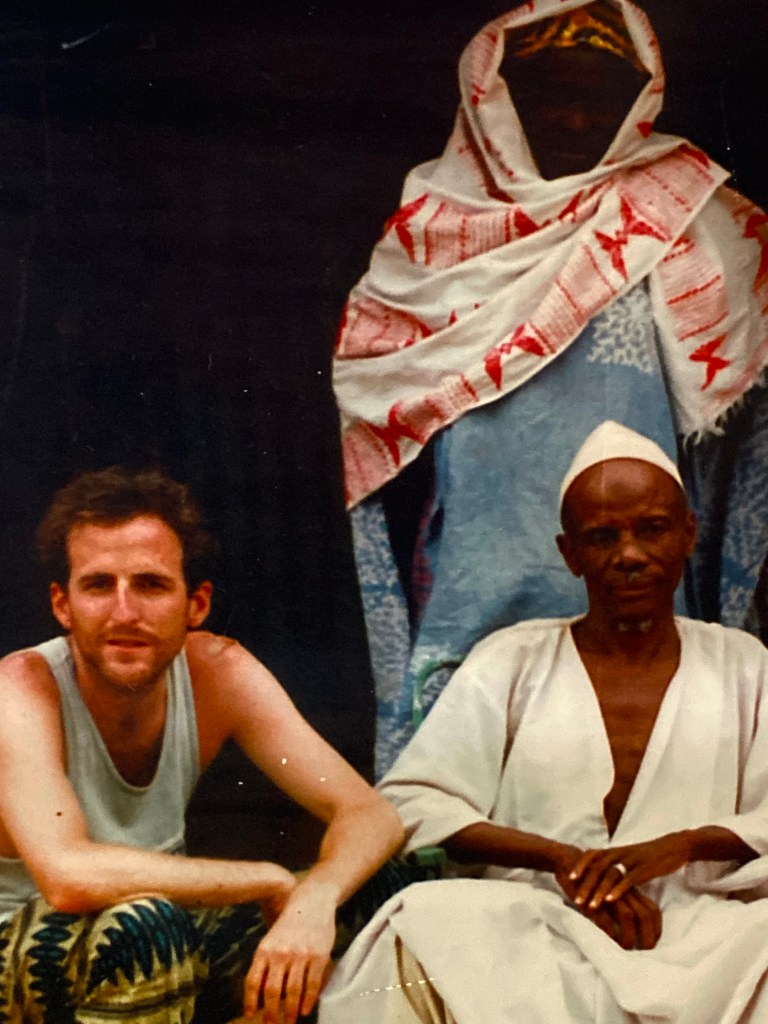
In Senegal where I spent some time before headed somewhere else in Africa. A few months earlier my life had completely changed, so I decided to change it further and ended up there. My college friend Claire and me with a village jeweler on the left. We had no clue who the dude on the right was. He just jumped in the picture.
I lived in this cabin in northern Norway for March of 1995 with my colleague Joe and American teacher/writer John Slade while we taught at the Bodo Graduate School of Business. We filleted cod caught by our seventy-five year old neighbor, Magnus. A Russian guitarist, Max, and I spent evenings in the cabin dueling folk tunes from the US and Russia. One night I fell through the ice on a lake but only to my ankles. Another we felt we had to duck from the swirling bands of the Northern Lights. Another we chased moose up a hill. Other stories for another time.
This old guitar saved my life. Coffeehouses kept me from falling through some proverbial ice during those years. And what stories from those gigs, like the time when 150 people sat to watch us play and at one point we opened the curtains behind me (there’s an Olympic size swimming pool on the other side of the windows) at the exact time a swimmer climbed out of the pool and his suit had slipped to his knees. We all waved. He dove back in the pool.
The Great River house my father had built and where we lived until moving to Virginia in ’75. When people ask where I’m from it is a difficult question to answer, but as I get older I say “Great River” and it is listed that way on my FB page. I live in Virginia. But I’m from Great River. Hard to explain.
My advisor and mentor, Pete Barrecchia. He was one of the true journalists of this country and the source of my first and greatest writing lesson. When someone in editorial writing class complained about not knowing how to start and where to put in the research and on and on and on, he put down his cigarette, grimaced, and said, “Oh just write the fucking thing.” It worked.
One of my escapes during college; Letchworth State Park. My escapes were either music or nature. Sometimes just the smoke-filled art studio beneath a dorm on the other side of campus. But escape was always important for me. Hard to explain.
My boss in the mid-eighties. One of the finest humans I’ve ever known. Yes, that’s him.
Village chief. And his wife.
My Great Uncle Charlie Kunzinger and Aunt Jane. Time note: He fought in WW1 in France, and when I was a freshman in college at St Bonaventure, he was still writing me letters and sending poetry.
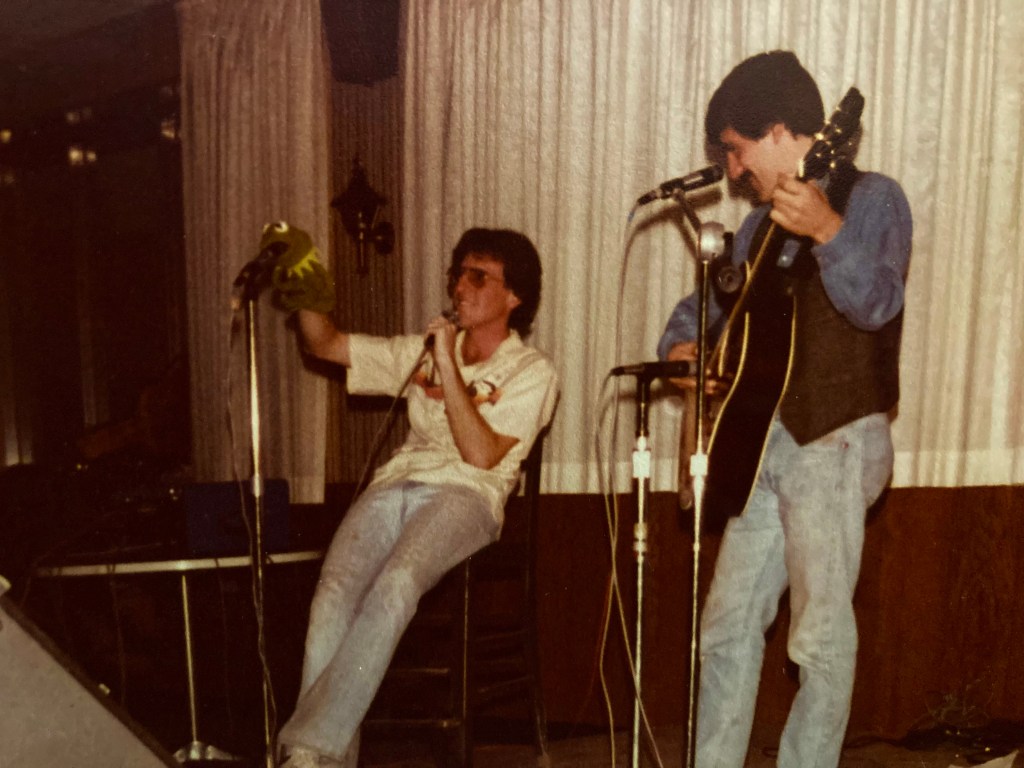
Mike Bonnano and Kermit when idealism was still okay to sing about, and where no one cared how bad you were.
My friend Tim O’Brien who most know for his prose writing but few know is an extremely accomplished magician. True story.
Michael and me in mountains of eastern Quebec many years ago. We’ve been literally around the world since then, and we’re still going. With apologies to Maya Angelou, “I wouldn’t take nothing for my journey now.”

Call someone. Tell them something. Anything. Forgive them. Ask them to forgive you. Tell them you’re sorry you didn’t answer the phone that last time they called and said they felt like talking. You planned to call them back but just didn’t “feel” like it yet. Now you can’t. Go ahead, call someone and say you wish you were as good a friend to them as they have been to you. Don’t be embarrassed. It’s only life, you know. That’s all.

It’s only life.

Instead, this:

I started this blog twenty-three times tonight and ended up with nothing. It is one of those times when nothing I write comes close to what I want to say.

So instead, this:

for Dave

“I counted my years and realized that I have less time to live by, than I have lived so far.

I feel like a child who won a pack of candies: at first, he ate them with pleasure but when he realized that there was little left, he began to taste them intensely.

I have no time for endless meetings where the statutes, rules, procedures and internal regulations are discussed, knowing that nothing will be done.

I no longer have the patience to stand absurd people who, despite their chronological age, have not grown up.

My time is too short: I want the essence; my spirit is in a hurry. I do not have much candy in the package anymore.

I want to live next to humans, very realistic people who know how to laugh at their mistakes and who are not inflated by their own triumphs and who take responsibility for their actions. In this way, human dignity is defended and we live in truth and honesty.

It is the essentials that make life useful.

I want to surround myself with people who know how to touch the hearts of those whom hard strokes of life have learned to grow with sweet touches of the soul.

Yes, I’m in a hurry. I’m in a hurry to live with the intensity that only maturity can give.

I do not intend to waste any of the remaining desserts. I am sure they will be exquisite, much more than those eaten so far.

My goal is to reach the end satisfied and at peace with my loved ones and my conscience.

We have two lives and the second begins when you realize you only have one.”

~Mário de Andrade (San Paolo 1893-1945) Poet, novelist, essayist and musicologist

Pravda

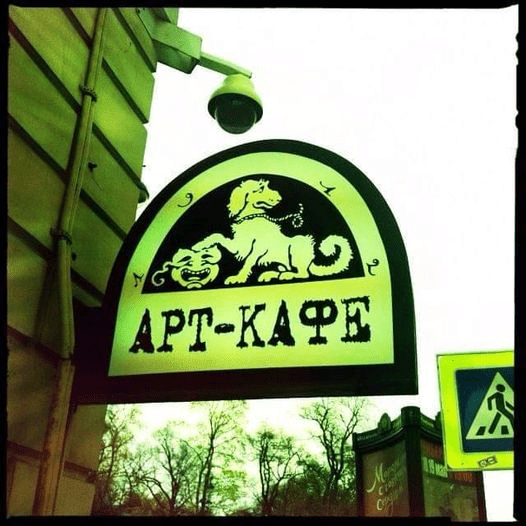
Eleven years ago I read a not-so-subversive piece called “Driving Under the Influence” at St Petersburg, Russia’s, infamous Stray Dog Café, where in earlier years Pasternak had read, and before him Mandelstam, who died in a gulag near Vladivostok for his threatening words, and also Anna Akhmatova, and a string of dissidents who risked their lives so their prose and poetry might be read and heard.

We sat at a long table, and while everyone listened to my innocent story of teaching my son to drive, I imagined the whispers and quiet conversations in those same corners about the Czar, who walked the hallways of the Winter Palace a few hundred yards away. What a world it must have been, I thought, but also, how good those days of revolution and dissidence were in the past. The city in 2013 was alive with artists, writers, photographers, musicians, and mostly legal political opposition to everything, with St Petersburg University students free to protest, complain, object, and support whatever they desired. As a result, no one needed to so much. It’s the greatest value of freedom; when people are free to choose, fighting and uprising recede. The horror of seventy-five years of Soviet oppression, preceded by three centuries of Czarist rule, was finally over.

My Russian friend and photographer Valentine shot pictures of old women, survivors of the siege, and of his children, his “Butterflies,” and laughed through a cloud of vodka, ever ecstatic at being able to express himself in marketplaces, newspapers, and galleries. Full of life and hope, these artists pushed their mediums to the max and shared stories of “darker” times when pointing a camera at anyone meant a possible sentence in Siberia, just east of Irkutsk, not far from the archipelago of dead poets. Not any longer, Valentine told me again and again over shots of Russian Standard and tables of photographs that just a few years earlier he had to hide those photographs inside the lining of books. “You should write here, Bob,” he told me. “You’d be free to write here,” he said. “Those dark days of Soviet Russia are dead.”

That was then.

The truth has once again folded up her tables and left the marketplace; transparency has turned away in shame. The Russia that Valentine came to love for three decades, and the only one I ever knew firsthand, is gone. It is gone. The citizens still attempt to navigate the streets of Peter the Great, the backroads of their “Window to the West,” but they are once again driving under the influence of a Neo-Stalinism, Vladimir Putin’s Fascist Regime.

Russia needs dissidents again. It is a time for poets. The Stray Dog should be crowded again with college students and artists listening to new poets risk everything for a few stanzas of truth. A contemporary Mandelstam, a modern-day Pasternak, should come out of the corners of the university classrooms and set ablaze a bonfire of observations and digressions. Because nothing ignites writers more than the attempt to extinguish truth.

I Can Breathe in a Small Town

My brakes went and my mower broke this week. I’m not mechanically inclined.

I drove the car to a mechanic two miles from Aerie and asked him to check it out. He said it was a full brake job from calipers to pads, but he could do it the next day, and while his rates were higher than I was hoping to dish out for something I can’t even see (though I could hear them well enough), they were still lower than anyone else I called to compare. And I know Scott; he’s reliable, dependable, and has a reputation for being very fair. Plus I can walk home from there past cows and sometimes even turkeys.

While I was there the first of those two very recent days, I asked him about small engine repair since the two shops I’ve used in the past have since closed, and my own attempts to fix the engine did not pan out, despite watching several YouTube videos (though admittedly, one thing lead to another and I spent a few hours watching Taylor Swift songs and Family Feud clips).

So I asked, and Scott recommended Kelly Slaughter in the village. Cool.

I spent the better part of the past thirty years working in the city of Virginia Beach with its half a million residents. But throughout my adult life, I’ve always managed to live where I knew everyone and people knew me. In Massachusetts it was a fine 100-year-old house in a small hamlet on a reservoir. In Pennsylvania it was a farmhouse three centuries old with push out lead windows and farms everywhere. Here at Aerie, if I don’t know someone in town, they certainly know my son. There is something safe in this life, something reliable. I love traveling, headed out to Ireland, Prague, the Gulf Coast of Florida or the hills of western New York, but I know I can come home and settle right back into life on the bay.

I couldn’t find Kelly listed so I stopped at a shop known as “The Man Cave,” with deep hallways and rooms, alcoves, and endless piles of yard sale type items. This is the place where you can find virtually anything, but you have to climb and sift, move aside, and dust off. Fred is a man of about eighty and he sat in the front room in his chair and welcomed me to his world.

“Hey Fred. I need a mower. I’m going to find Kelly Slaughter to fix mine, but I saw the one out front and wonder how much it is?”

“Kelly! Kelly and I been close friends since we were young. I’m sorry to tell you but he’s not doing well. Thirty bucks and it’ll start right up. Already filled with gas.” This all in one sentence. Fred and I talked a bit. I told him I had to head to 711 to get money from the ATM and he gave me an envelope and said, “Well, I’m leaving so just put the money in here and slide it through the door next time you get a chance.”

I loaded the mower (which did start right up) and told him I’d have paid someone twice that to mow the property just once, so this is a great deal. “You’ll get a few seasons out of this anyway,” he assured me. “711 huh? That puts me in mind for a few slices of pizza. I might stop there myself.”

I took the money out of the ATM and bought Fred a few slices of pizza and paid him for the mower, went home and cut the grass after a month of outrageous growth.

Then back to Scott’s to drop off the car.

“I felt a slight shimmy earlier when I accelerated,” he said.

“Yes,” I answered, not feeling the need to expand. Scott’s good.

“I have transmission flutter stuff; should get rid of that. Car will be ready tomorrow about lunch.”

On the way home I walked by a ranch with close to a hundred head of cattle. It’s one of my favorite properties around here, and I stopped and talked to the cows a while. An eagle—very late for his trip north before all the osprey return and reclaim their nests—settled in the yellow field for a rest then headed out toward the river.

The next day at lunch I picked up the car and went to 711 to fill up with gas, where I ran into Wayne. “I hear Fred sold you a mower.”

“He did, and I already mowed the entire property, including the field and the northern yard.”

“Hell, Bob, you would’ve had to pay someone twice that at least just to mow it once.”

“Exactly.”

Bubba came out of the store headed to his new job in the next county. “How’s that new mower Fred sold you?”

“Good. I still need to get the old one fixed though.”

“You try Kelly Slaughter? I used to see him parked at the end of his driveway waiting for the mail each day. Haven’t in a bit though.”

“Kelly’s not well anymore and Fred said most likely not going to improve.”

“Oh too bad. I always liked Kelly. There’s a shop in Mathews. Another in White Stone. Or you can watch a few videos and do it yourself.”

I went home and put some old tomatoes out for the fox and filled the birdbaths for the deer. Then I decided they are right; I can absolutely fix the mower myself. So I sat once more at my desk and scanned YouTube for mower-repair videos. Turns out there are even videos for my specific brand and model.

I must have spent an hour watching. You know, I wasn’t crazy about Steve Harvey as host at first, but he grew on me, and I like how he keeps the show moving. And Taylor, well, I like “All Too Well,” of course; I mean, who doesn’t. But that one line from “Anti-Hero” keeps cycling in my mind: “Hi. It’s me. I’m the problem it’s me.”

3.5 Decades

I completed my thirty-fifth year of teaching college this week, reaching into five decades, and I’ve collected some observations through six presidential administrations, hundreds of school shootings, several wars, and three blood pressure medications.

When I began, students did not have cell phones, laptops, pcs, Starbucks, energy drinks, vapes, internet or any of its time-sucking programs like Spotify, TikTok, Facebook, Instagram, and so on—there was no device with which to communicate with others other than the house phone or pay phone. We didn’t have GPS or Uber, relying upon paper maps and taxis, or hitchhiking. We learned through experience instead of Google; research was completed at the card catalogue and microfiche section of the library. Students were less distracted and profoundly less hyper.

At the beginning of it all, it took the first five minutes of class to get students to stop talking; friendships and even marriages were conceived in classrooms where everyone moved swiftly away from high school friends and old neighborhood habits into new relationships which would last a lifetime. They looked at each other, talked and laughed and worried with each other. They took notes in notebooks, asked questions, and they learned how to figure things out instead of find things out. I kept attendance in an attendance book, and everyone knew everyone else’s names. The need to reestablish oneself at eighteen without a net (and without the Net), forced first-timers away from home to grow up faster, mature without the crutch of pre-teen friends a tweet away.

The campus grassy areas, the student center, the dorm lounges were filled with students studying, throwing a frisbee or football, standing behind tables proselytizing about organizations or providing information about that month’s cause. Lounges were packed, the line to my office was long with students ready to ask questions, review a paper, attempt to con me into extended due dates. Some just came by to talk and they’d sit in the office for hours, sometimes on the floor and some in the door as my officemate Tom and I would share stories of our college days, which even then seemed archaic—so when compared to my students today, our own freshman ways are tales from neanderthals.

But they were there, the students, laughing and talking, enlivening the office and the next day the classroom, trying a bit harder, doing a bit more.

When cell phones first entered the classroom, they were quickly forbidden, and students’ common claim was they carried one just in case of an emergency. That evolved to constant texts and phone calls before and after class, which morphed to phones behind books and in laps during lectures. In recent years when I walk down the hallway to the classroom it is quiet, deafeningly so, as if no one is going to be in the room when I turn into the doorway. But of course they are there, staring at their phones, texting their friends from middle school, watching TikTok videos. One semester with fourteen weeks gone I asked them the names of those sitting next to them, and no one—not one—knew anybody else’s name. I told them they might have spent the semester next to someone who could have been a good friend, a confidant, a soulmate. I remind them someone else in the class might have an answer to some question, a thought that completes theirs. They shrug.

In the beginning, students plagiarized out of books; then they bought papers online; today they turn in AI generated work, which they don’t realize is more often vague and filled with generalities, and while well documented, lacks in any significant attribution that is necessary in excellent collegiate writing, so they do poorly and can’t figure out why.

But there’s something else which has changed and is difficult to define that has something to do with simplicity. In thirty-five years the world has grown more angry, more impatient, and aggressive. This isn’t an old prof ragging on their generation staring at me from the silence of the seats; I hear the same thing from twenty-something year old colleagues. Most of today’s students don’t think they can face the day without a few Red Bulls, coffee, or three Five Hour Energy Drinks. This isn’t an exaggeration. In the beginning it seems students had big hearts—helping others in class, stopping by (pre-email, remember) my office to ask for help or offer thanks, willingly teaming up with two or three others for projects and study groups. Today, students’ hearts are big—physically I mean, often fifty percent larger than they should be from the synthetic drinks, in turn causing anxiety, insomnia, intestinal issues, muscle spasms, and excessive restlessness, all from the B vitamins and caffeine coursing through their veins, causing classroom issues including tardiness, inattentiveness, impatience, irritability and a desperately clear lack of focus.

And me? Thirty-five years ago was I a better teacher? Ha. No. I feel so bad for those students those first few years, mostly because of my own arrogance borne of insecurity, my impatience resulting from fear of my own ignorance about a subject. I was almost the same age as them back then. The average age at that college was twenty-nine; exactly my age when I started teaching. So sure, I’ve changed too. But hopefully for the better.

Last week I pulled the chair in front of students, most of whom could be my grandkids, and I sat quietly for a bit. I told them

you just arrived at college this year and within a few weeks a half dozen adults my age want to know what major you wish to declare to invest your entire college education in for the next four years, what discipline you wish to focus on, what your plans are for the rest of your life, all while you’re attempting to navigate fifteen credit hours with professors who have no intention of holding your hands like high school teachers might have, while living with total strangers in tight quarters, sharing bathrooms. For the first time in your life, now, at eighteen, you’re thrust into this whirling processor trying to find your bearings, and you find safety and security in your phone which is your only remaining umbilical back to a more organized and predictable life. I get it.

In the beginning, when I first started teaching—I go on—students were forced into dealing with this new life with little ability to retreat, and it is how they found out what they’re capable of. And when they did, their energy didn’t come from a can; it came from knowing they could handle so much more than they thought they could.

Do you even know what you’re capable of? Because until you let go, you haven’t moved on.

I stood to leave. Abby, a fine student who takes notes and drinks water from a reusable vessel, asked, “What was college like when you were a freshman?”

I laughed because I have spent the better part of my writing life recently writing about just that. “Terrifying,” I said, and they laughed. “I was not only cut off from home because of the stone-age communication system we used in those pre-historic times, I also went to college ten hours away. I didn’t drink much and lived in a dorm with those who did drink, nonstop, at a time the drinking age was eighteen. I was never a great student so there’s that, and I tried to balance it all by getting involved in the radio station and newspaper and local coffeehouse scene, but that just made me neglect my work even more.” A “D” student in the back sat up and listened.

“You survived, I guess,” he said, reflectively.

“I did. Though it didn’t always seem that way. But I’d go back and do it again in a Monster Drink-infused heartbeat.” We all laughed, which is how I always preferred to leave them.

It’s been thirty-five years since I first walked into B-100, a small auditorium on the Beach campus of Tidewater Community College, to teach a college comp course. I sat in the seats like any other student while thinking of my lesson for my first ever class, as students walked in. Two behind me, of course not knowing who I was, said, “Geez I hope this one’s not an asshole.” I stood up and walked to the front and the faces on those two dropped.

“I hope not too,” I said. “But if I am, be sure to let me know,” and we all laughed.

Yeah, I’d do it again.   

That Student

Its the end of a semester, finishing up today, and I sit and remember one of my favorite moments as a professor; ironically, it was a day I encouraged a student to quit school. Honestly, not everyone belongs. Not yet.

A student comes to see me. He says he can’t handle the pressure of school. I tell him I think he’s a good student and he says yes, he can do the work, he just can’t stand it. He hates it, he says. He gets bored fast. It’s a good conversation, honest. Had we been somewhere else we would have talked over beers. He looks at his watch and says he has to work in a few hours and sighs. He runs his own roofing company but hates that too. He has six grand invested in equipment and no help and he just dreads doing the work now. He says he’s at some fork in the road, two paths that look the same so he’s frozen, easier to just stay put. He gets quiet and stares at a photograph on my wall of a village in Africa. Looks nice he says, like he wants to say anything to forget what he’s really thinking about. Then he remembers and sighs again. He’s quiet for some time and I find myself drifting.

I worked at a bar. Good money and mindless work; the kind of work where if you don’t think too much about what you’re doing, you can keep on smiling. I know I spent a few years there but it seems like it was always winter, all grey and bone-cold. One morning I woke on a bench near a lake in a state park near my country house, but I didn’t know how I got there. I had to work a few hours later but never made it. I drained my accounts, stuck a little aside, then bought a ticket to Africa. Turns out changing my life, kicking my own ass out of the same ‘ol same ‘ol, was as easy as jumping off a cliff knowing you’re either going to land on your feet or learn how to fly. Boring disappeared from my life.

But this student has trouble talking about it, so I talk: I tell him I get that feeling in my chest too. Tight, constricting, difficulty breathing. You know what I’m talking about. It’s the sense that something needs to change. It’s the Philosophy class with five minutes left of three hours and the prof starts another chapter because there are still five minutes left; it’s the meeting you can’t tolerate but you’re in a row of seats with too many people on both sides so you can’t leave; it’s that this-homily-is-way-too-long feeling. It’s the feeling you’re just one day away from something else, but then that day comes and you find yourself one day away from something. It’s the Whitman poem about astronomy; the wide awake at three am feeling and you can’t move so you stare at the alarm clock. Exactly, he says. I’m always staring at the clock, he says. I’d love to know what you’d do, he says.

I tell him about that bar somewhere I didn’t belong. I remember working and then not working but I don’t remember what happened between the two. I just recall waking up one day in the peace-of-mind of another world, centuries away from being behind bars; like I could finally breathe on my own. I let him know I remember dreading the moment between what was and what was next so I just kept pouring drinks, and he nods. He knows. Then I say that one day I didn’t. It was that simple. He looked at me like I was looking in a mirror. Then he says he’s going to work and he leaves. I went to class slightly high on remembering, still somehow slightly down, suddenly lethargic.

Six months later he sends me a postcard from Australia. Don’t know when I’ll be back, it says. When I am, let’s get some beers and talk. I look forward to it but, of course, way leads on to way, and I doubt he ever came back.

Between the Lines

37.5531° N, 76.3403° W

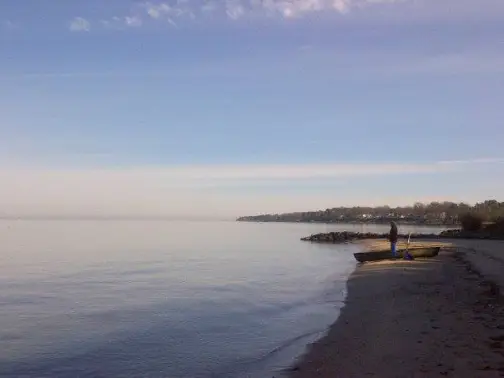
It’s raining today along the river, and the puddles running along the roads and the edge of the woods are yellow, covered in the pollen which until early this morning hung in the air and on my body and in my lungs. It is the time of year when I most welcome the rain. Right now, I’m standing at the Chesapeake Bay where it is rainy and peaceful. I don’t get phone service when I’m out along the road near the bay, and I like it that way; I like how I’m on the edge of the continent, lost in the four thousand miles of water between here and, well, as it turns out, Sicily, where my maternal great-grandfather was born. When I’m out here out of service I feel more in touch with everywhere else, everything and everyone else, and my imagination takes control of the helm.

If my eyes could bend directly east along this vantage, I’d see through Athens where I almost went almost forty years ago and on into Tabriz, Iran, where a student of mine never came home from thirty years ago. Past there I’d move through Uzbekistan, a place I’ve never been but whose food I know well having eaten many dinners at an Uzbek restaurant in St Petersburg, Russia, where we’d spend four hours taking our time with each course and hot bread and samovars of tea, belly dancers and hookahs, and the most delicious entrees.  I had no idea all these years standing waist deep in the Chesapeake at Stingray Point, I was watching distant Uzbeks.

I’m standing on the imaginary line that runs just a sliver south of the 38th Parallel, closer perhaps to 37.5, or if you speak to any one of the watermen in this village, they’ll tell you 37.5531° N.

So, close enough. Let’s go further:

Passing Gansu, China, famous for its water-pipe tobacco out into the Yellow Sea almost directly through Baengnyeong Island, which means “White Wing Island,” so named for the resemblance to an Ibis in flight, and home of intelligence communities because of its proximity to North Korea, which brings me to the most famous spot on the 38th Parallel—the 38th Parallel. Of course it runs around the entire planet almost directly under my feet, but when most people hear “38th Parallel,” they think of the Koreas, of course.

I’m on the same white line as Canyonlands National Park, Utah, and Newton, Kansas, passing right under the counter at Gurty’s Burgers. Evansville, Illinois, too, but it makes me think of the tragedy of the 1977 plane crash which took the lives of the entire University of Evansville basketball team. I’m two and a half hours east of Charlottesville, Virginia, and just south of Chincoteague Island where the horses still swim. And when I was five with my siblings at the World’s Fair in Flushing, New York, standing in front of the famous huge globe with its metal longitudes and latitudes, who were my neighbors then? Are they still out there, following different lines? Searching away? Searching toward me?

But since I find myself at the proverbial crossroads in life yet again, I can’t ignore my northern and southern neighbors—since isn’t that what we are? Neighbors? I mean, if we are going to James Webb our way into the distant galaxies and black holes, I think we’ve reached the point where we can all consider each other neighbors, relatively speaking. If “neighbor” is someone with whom we have some physical closeness compared to others more distant, than astronomy has moved us all on this sphere into the category of “neighbors” to be sure, reliant upon each other, part of each other both as particles and participants.

And those north of here include the North Pole, of course, since all longitudes meet eventually, twice actually. But closer to home is Ellesmere Island, Nunavut, Canada, the world’s tenth largest island and home to Victor’s Seafood which has curbside pickup when you don’t want to get out of the car. And Prince Charles Island, also in Nunavut, of course. This line runs south from there through Ottawa and into my birth state of New York, into Pennsylvania, into Maryland, and down through the Chesapeake Bay to this rainy little piece of Longitude. But wait, I’ve always been drawn to the tropics. Here’s why: I’m standing, I mean I find myself smack dab on the same streak that runs just west of the Bahamas and right into Holguin, Cuba, its fourth largest city and cradle of Cuban Music. But here’s the crazy part: It goes on, this longitude, into Colombia, Ecuador, and San Bartolo, Peru, on the Pacific Ocean, famous for its beach-going tourists and surfers. That’s what nearly exactly attracts people to Virginia Beach, just a notch southeast of here and where I attended high school; and where I learned in geography everything about this world except that New York and Virginia were due north of the west coast of South America. Yes, here standing on North America’s east coast and staring out toward the Atlantic, I am due north of the west coast of South America where people are staring out on the Pacific Ocean. But further still, the Southern Ocean (which I don’t remember even being a place when I was a kid) and right into the northern cliffs of Charcot Island, Antarctica, with its crabeater seals and Adelie penguins. Right here, but south.

Deltaville is at 76.3403° W for those keeping score.

This one spot, here, this mark on my mental map is tied, distantly I admit, but tied just the same to people being born and raised and looking out, wondering. It’s kind of our own little “Double L” ranch, only really thin and exceptionally long. If we coordinate correctly, we could all plant flowers on our line, though somewhat problematic headed north and south as my daffodils might not grow in the Nunavut tundra or the desert of Patagonia, but we are neighbors; we work together on these things.

We have been nomads since the nomadic days, and while we might be “from” somewhere, we rarely stay any longer, following our songlines, chasing something unknown. Since I’m a child I have wanted to follow those latitudes and longitudes, since I read Robin Lee Graham’s Dove, since Joshua Slocum, since St. Brendan.

I want to meet our neighbors before I sail on to different coordinates. Ireland, of course, and Prague. Spain again, and the Netherlands, for certain. It turns out these lines are everywhere, like a grid, like graph paper, like those moving walkways in airports leading us to the next terminal.

My first experience with Longitude and Latitude Lines on the globe at the World’s Fair in ’65

Melville Without Whales

The Chesapeake Bay Bridge Tunnel

Today is the 60th anniversary of the opening of The Chesapeake Bay Bridge Tunnel, a series of bridges with two tunnels which run more than 17 miles across (and under) the Chesapeake Bay from Virginia’s Eastern Shore to Virginia Beach. I used to work out there, on the South Island in the restaurant, back when the Modern Marvel was just thirteen years old. The piece below is about there, about then, published about six months ago.

That Which We Are, We Are, Still

I immersed myself in outdoorsy stuff in my early teens; even beyond that. I wonder if something innate in my DNA attracted me like chemistry to the outdoors and references to it, or my environment and influences doused me with enough references to nature that my path was clear.

I listened to all of John Denver; knew every word to every song. Played his music on the record player and my guitar. At the same time, my friend Eddie and I spent every single day in the woods and along the Great South Bay at Heckscher State Park, nearly literally our backyard back then on Long Island’s South Shore. I watched movies like Jeremiah Johnson and television shows like Grizzly Adams. I wanted to disappear from civilization like they did; I wanted cabins like they had up in the Rockies, with a warm fire going.

The beach took hold of my Buddhist-bending mentality, combined with Dan Fogelberg and Jimmy Buffett, books by Joshua Slocum and Robin Lee Graham. Patrick O’Brien and the first paragraph of Melville’s Moby Dick, which reads:

Some years ago—never mind how long precisely—having little or no money in my purse, and nothing particular to interest me on shore, I thought I would sail about a little and see the watery part of the world.

Damn I wish I wrote that, wrote “Son of a Son of a Sailor,” “Rocky Mountain High” and “Sweet Surrender,” wrote home from some mountain in Utah not far from Redford’s “Sundance” ranch, long before the film festival was born. Instead, I played their music, watched the shows, and spent as much time as I could in whatever nature I could.

I think it was the beginning of me always feeling slightly outside of everything, just a little beyond understanding people. For some time I thought it was insecurity, but now I believe I just preferred the natural state of things, how perfect it is out there. I had the theme of Grizzly Adams down pat:

Deep inside the forest
Is a door into another land
Here is our life and home
We are staying, here forever
In the beauty of this place all alone
We keep on hoping.

Maybe
There’s a world where we don’t have to run
And maybe
There’s a time we’ll call our own
Living free in harmony and majesty
Take me home
Take me home.

Even that line repetition is a nod to Frost’s line “Miles to go before I sleep.” Exactly.

Is it true that everything we are we remain? Our hopes remain. Our dreams remain. And if we hadn’t lived them out yet, perhaps we still will in some other season? Maybe.

A part of my mind never truly grew up, I know that. A part of my psyche still holds tight to how I used to think when I was young, sometimes to the point I can be out for a walk and not even remotely feel my age, forget that my ability to do most of the things I could then is, shall we say, compromised. But we trick ourselves. I can still ride a bike; can still hike in high altitudes. In my fifties I walked across Spain. So who knows.

What happens is we forget. We let go of so much of who we were to make room for who we become. It is natural and beautiful and necessary, and we would not come close to being who we are today without who we were then, watching Dan Haggerty and his bear walk down the mountain, or listening to John Denver’s opening guitar riff on “Rocky Mountain High.” It’s in our blood. It has to be.

Unless, again, something in our blood attracted us to those things. Who the hell knows, right?

Ever come across a trigger that brings you back to those moments you had then? Maybe it’s a picture in some old album your parents kept; or a book you read. I have books like that, from then, I have a baseball my friends all signed when I left Long Island and it transports my mind to that small village, almost as if had I driven there today I’d see fourteen-year-old Eddie coming out of his house ready to hike through the park. We have so much more ability to manipulate time than we realize.

So, I had this job. One of my first, and the last one as a high school student. I worked on Seagull Pier on the South Island of the Chesapeake Bay Bridge Tunnel which connects Virginia Beach, Virginia, with the Eastern Shore of Virginia, known as the Delmarva Peninsula. I was thrilled to get hired out there for one reason: I’d be working “nearly” on the water, watching the sunset and rise, feeling the salt water on my face all the time, like Melville but without whales. I worked 10 pm to 6 am every night, usually alone, frying shrimp and fries, serving sodas to travelers with coupons they received when they paid their toll to make the crossing of one of the longest bridge-tunnels on the planet. Yes, they got a free Pepsi at the pier. It was pretty barren then—a diner-style interior with a few tables, a gift shop, and a pier filled with fishermen. In later years the restaurant took over part of the pier and became quite nice with a full menu. But back then it was just a quick stop for a basket of fried food, coffee or Pepsi, a few souvenirs and back on the road.

They tore it down a few years ago to expand the bridge tunnel.

I would drive my dad’s ‘72 Nova out there just before dark, park and stand on the rocks looking west up the Chesapeake, west, toward the setting sun. Then I’d head inside and cook, serve, clean, make coffee, talk to fishermen on rainy nights when they crowded the counter, talked to the rare customer who stopped for their free Pepsi or a burger at three AM. Then when my shift ended, or sometimes even before then if no one was there, I’d walk out on the parking deck on the east side of the building and watch the sunrise over the Atlantic at the mouth of the bay.

Just remembering that brings me such absolute peace I can, just for a moment, forget some of the minutia that I find myself up to my neck in. I remember, and I am there, can smell the salt, can feel the breeze coming off the water.

I love to remember.

One morning at about four, the door opened as I was just about to clean the grill. I glanced back to see who was coming in and it was a man by himself in a sweater. He had long hair, a thick beard, was tall, big, like a linebacker, and stood for a moment looking around.  I called to him to sit anywhere and he came right up behind me and sat at a stool, and he said, “Can you make me a burger on that grill before you clean it, my friend?”

Instant voice recognition. It was Dan Haggerty. Grizzly Adams himself. I asked and he said yes. We talked and he insisted I make a burger for myself as well, and fries, and we sat together and talked for an hour in the empty Seagull Pier restaurant. He was on his way to Florida and preferred to drive very late and very early.

Young people: This is before there was any form of a device with which I could capture the moment unless I happened to have my camera—a big device with film in it—which I didn’t. So we have those triggers. A baseball, an old guitar. Stories.

Today I received mail from my sister. My brother-in-law bought a new car, and in the old car, buried somewhere in the console or glove compartment or somewhere, they found three Free Drink coupons for Seagull Pier from one of their many trips south to see our parents in Virginia Beach.

She was discarding outdated coupons some toll clerk shoved at her with her change. I received a wormhole to a version of me that had my entire existence in front of me from a place I loved to show up and leave out in the middle of nature, where the sun set and rose again with my arrival and departure. What had for nearly fifty years become illusionary, almost some fiction from forever ago, suddenly seemed to happen this morning, and I felt younger, more alive.

I still head to the bay—same bay, ironically—to watch the sunrise; and to this river every evening to watch the sun disappear west into the Utah mountains. I still dream of riding horses across the Rockies. I still listen to Denver and Fogelberg.

If not, I know for certain I’d be a poorer man.

Everything we are, we remain. Our hopes remain. Our dreams remain. And while not all of them will find fruition, some might. Some just might. If not in this, then perhaps in some other season.

Perhaps.

Thanks Cathy and Greg, for not stopping for a free beverage

For Those Who Stay Behind

Note: This is a very serious one. Read. Share. Forgive. It’s all we’ve got.

This is for Dave W, Bobbie B, Bud D, Tricia K, and the one’s who live with those unseen wounds which simply won’t heal.

***

A broken limb is obvious. A cast, a sling, a set of crutches or even a knee cart, and people can see the problem, understand the delays and compromises. We move aside or assist in any way we can.

What happens when someone injures their mind, breaks their thought process, when a person cracks their perception of reality and ration? The world is quick to judge the results of some unseen wound festering in their frontal lobe. “They’re lazy,” we say; “They’ve given up,” we say; “They keep asking for help and I’ve had enough,” we say. No one replies to the unfortunate soul with some walker, “No, sorry. I’m not helping you anymore.”

Well, in both cases the likelihood of one asking for help is pretty slim anyway.    

Monsters such as depression, anxiety, and nervous breakdowns can destroy a person’s ability to function. People can’t think as clearly so they lose jobs, they make bad financial decisions and lose money and property. “They could have done something else; they could have sought help from a professional if that was true,” we say.

And when nothing makes sense anymore and the world is too much with them and there is absolutely no meaning in anything—when numbness overtakes the idle sadness, they find a way out.  

The truth is suicide is not always the result of depression; it is not always a person simply giving up. In fact, it is often seen by the psychologically afflicted as the perfect solution. It is not doing harm; it is solving problems. The mind no longer functions the same as others’ minds. If they even want to ask for help, they don’t even know what it looks like to ask for anything in particular, so they seek solutions on their own, like sleep, like cutting off contact, like shutting the brain down for good. It is not life they fear or wish to escape; it is their mind. It is a difficult task to escape one’s own thoughts.

“There is medicine for that,” we say.

Not really. Sure, there is medicine to help someone cover up the wound, like a Band Aid, but the sore doesn’t heal as much as it is buried. The infection will return as soon as

well 

as soon as it rains, or when the next call comes from a creditor because they can’t work enough to keep up, or, worse, when a call doesn’t come any longer from friends and they suddenly remember they were better once, and they won’t be like that again. But even that’s not accurate since they simply are like this now, and apparently always were, and the moment it happened is an allusive memory.

Because while in the movies when someone has a nervous breakdown, they flail their hands and scream, cry, and someone might slap them, tell them to snap out of it, in reality that’s not what happens. The truth doesn’t play well on film. In reality they say nothing. They might drink, of course, or become addicted to some pain reliever, some vice that keeps their brain in the moment like alcohol or other self-defeating measures that keep their mind from dwelling on some past or future attack, but they might just as easily sleep all day, or more likely not sleep at night. They try and work but the ability to focus is gone; not ignored or delayed—the actual part of the brain that helps them do work or see a reason to exist at all has a hole in the middle of it, the circuits are infected and surrounded by puss, but no one can see that, so it can’t possibly be anything other than “a phase,” “laziness.”

Later, afterwards, people say they didn’t know, “They always seemed fine.” “I thought they were going through something.” “They said it was no big deal.”

They say, “I wish they had asked for help.” They say, “I did all I could.”

They say, “What a shame.”

Indeed.

Did Hemingway have another novel, Van Gogh another masterpiece, Robin Williams another routine for the thousands of kids he used to visit in hospitals?

Depression and mental illness often caused by a mental breakdown can cause lives to rip apart, and the only explanation they have when they ask for help again and again is “I’m trying.” And eventually that simply isn’t good enough no matter how much they are loved. They live out on the fringe, they hold signs, they sleep on grates. Likewise, they live in country houses and city apartments. They seem to try, they try to seem to fit in.

Maybe if they wore a cast, had sutures across their forehead. We like to see problems before we help solve them. We don’t offer help to people when we don’t know they’re suffering; how could we? Unless we know them well.

And that’s the problem. No one knows them at all. They’re funny and outgoing. They make light of serious situations. They can work a room. So they either never ask at all or, when they do so too often say “I need help,” it is difficult to see how. “Again?” we reply. “Why now?” we ask. The thing is in a few days they will not even remember they ever asked for help to begin with. This is true; the compromised brain actually blocks that out completely. To us they can either be absolutely silent or seem constantly desperate; but to them it just happened.

Here’s the problem:

How can we find that line between someone who really needs help and someone who just needs a bit more tough love? What do we do if there is no visible “mistake” that needs correcting? What do we say when they say nothing at all, or if we do ask if they need help, they say, “No thank you, it’ll be fine,” more out of a notion of being too embarrassed to say yes. Too ashamed. They’d rather…what?

They’d rather die. To be sure. I remember a phone call early one morning when I just didn’t want to hear it again. I remember a visit from someone who needed more than I could give. I recall calling once and the phone kept ringing. I’ll never forget that one.

Where is the line between knowing whether we helped enough and we could have done more?

Honestly, it runs right down the middle of the rest of our lives, and we walk it aimlessly, hoping we made the right call, that there was nothing we could do. Even if we’d rather be on the side of foolishness, helping people way more than they probably deserve, we can’t ever know.

So we call and talk, stop by, we get them to laugh because apparently we think laughter is the best medicine.

That’s not how a nervous breakdown plays out. Trust me on this one. But there is no Habitat for Humanity that helps people rebuild their minds. So they lose everything: their homes, their families, their purpose. And there’s not a damn thing we can do about it. Well, sure there is, but the place between knowing and not knowing is dark and difficult to navigate.

So. What do we do?

We forgive them for finding a solution the rest of us thinks is foolish. We forgive them for believing that the pleasure found by watching their kids and grandkids grow, watching another sunset with someone, laughing at lunch with friends, still isn’t worth the pain—the constant and debilitating pain—that comes constantly to infect their mind; constantly, day and night. Even their dreams are saturated with pain.

Forgiveness for something we do not understand is a monumental task. But then for some, so is life.

If you need help, Call 988 immediately.

If you know someone who needs help, Call them. You don’t have to know what to say. Say anything.

If you are living with the memory of someone you feel like you could have helped more, it isn’t your fault. It isn’t their fault. Forgive them. Forgive yourself.

Remember what we learned as toddlers: How would we want them to react if it was us? What would we want them to remember if it was us?

Not everyone is fine. It’s that simple.

Bob Kunzinger writes the weekly blog, A View from this Wilderness, which premiered in January 2016, and is the author of eleven books, including the forthcoming Office Hours, as well as hundreds of articles in national and international publications. He lives in Virginia.

Hypocrisy

A few days ago, the editors at the widely read Vox Populi (18K daily subscribers) published my essay, “Moral Absolutism: Do Not Kill Children.” The emails have streamed in, most of them understanding and in agreement, and most of them understanding my issue is not with Israel’s right to defend itself against Hamas, nor even Israel’s right to seek out Hamas and destroy them. My issue is the exorbitant amount of civilian casualties, in particular women and children. It is all in the essay below.

But then something happened.

A few days ago, seven aid workers for World Central Kitchen were killed by accident in an Israeli airstrike (the disclaimer “by accident” was never used by Israel for the deaths of children). Since then the world has been outraged. “Repulsed that this has happened!” exclaimed “Left, Right, and Center” host David Green. President Biden said he was, “Outraged and heartbroken.” A reporter for Slate covered this best and I’ve included her article below, please please read it. But the obvious explanation, and one that repeats itself all too often, is also dangerously close to an accusation of such sweeping generalizations that I hesitated to say it, but that moment passed and here it is: We are more disproportionately outraged by the deaths of seven aid workers who voluntarily entered a warzone to provide relief than we are the deaths of over fourteen thousand children, because the aid workers for the most part look like us. The Israeli government even came out quickly and said they screwed up, they apologized, they promised swift resolution to the issue and punishment to those involved. A rare and decisive apology was delivered nearly immediately for the “error.”

Wait a minute. No such declaration was made by the Israeli government, and no such clear and emotionally charged disgust was displayed by President Biden nor British Prime Minister Sunak nor US Secretary of State Blinken for the extermination of fourteen thousand children. Can this mean the kids were targeted so no apology was due? You really can’t apologize for something you intended to do, can you? Or does this imply Israel is not sorry or disgusted by their deaths? Does it suggest the lives of seven people, only one of whom was Palestinian, were more valuable because they worked for Spanish celebrity chef Jose Andres?

Tens of thousands of innocent civilian deaths, fourteen thousand of them children, famine, rampant disease, accusations of genocide from UN officials all reported by the world media daily, but it is the deaths of these seven that pissed off the west and made them pay attention. Come on. This is simply wrong. Isn’t it beyond time we admit the rest of the world couldn’t care less until it directly affected them either through death or economic impact? It happened in Rwanda thirty years ago with the deaths of 800,000 Tutsis, and it will happen again. Apparently, we can afford for all the children to die and tens of thousands more who are about to through more attacks, hunger and illness caused by the Israeli Army and Hamas, but damnit, Israel stepped over the line when these seven familiar faces were killed.

Anyway, I’m just confused, that’s all. Why is it acceptable for innocent children to die but unacceptable for aid workers who knew the risks to die? Why is one called an accident but the other not? Why did one result in an apology but the other not? After all of the refusal on Israel’s part to allow aid to begin with, and when they did they made it nearly impossible to get it through, how can we believe these seven weren’t targeted and the culprits knew they’d just have to apologize, all the while anticipating exactly what would come to pass: that Chef Andres would cancel future aid deliveries and Save the Children would end up going to save other children, pulling back their presence in Gaza as well?

And to those officials whose response is, “Of course the deaths of the children were unacceptable as well,” one must demand an explanation for the six months of silence on the matter.

Please read these two pieces: one from Vox Populi, the other from Slate.

Peace.

The Vox Populi Article:

The Slate Article:

https://slate.com/news-and-politics/2024/04/world-central-kitchen-workers-killed-israel-gaza-idf-jose-andres.html