At the river today I watched birds fly left to right as if to write on the sky. I suppose if they could they would spell out timelessness, they might scrible peace. A flock of geese flies spastically and lands on the river, on the pond, in the field and I’m reminded of Dylan–both Bob and Thomas–or John Prine. Meanwhile, swallows fly like clouds of mist or fog while somewhere in their past must exist a choreographer, and I’m certain they’ve read James Joyce.
I’ve noticed lately the poetic presence in nature–not just in the soul of our surrounings while walking along the bay or hiking up to a waterfall on the Columbia River Gorge, but in the actual structure, as if were I to slow the whole thing down I could diagram the breezes through the aspens, the waves along the Atlantic.
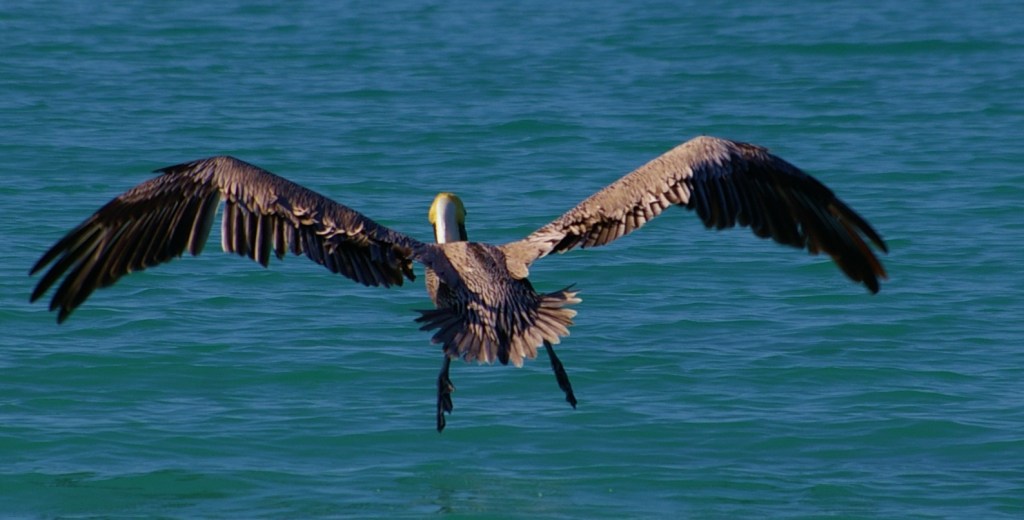
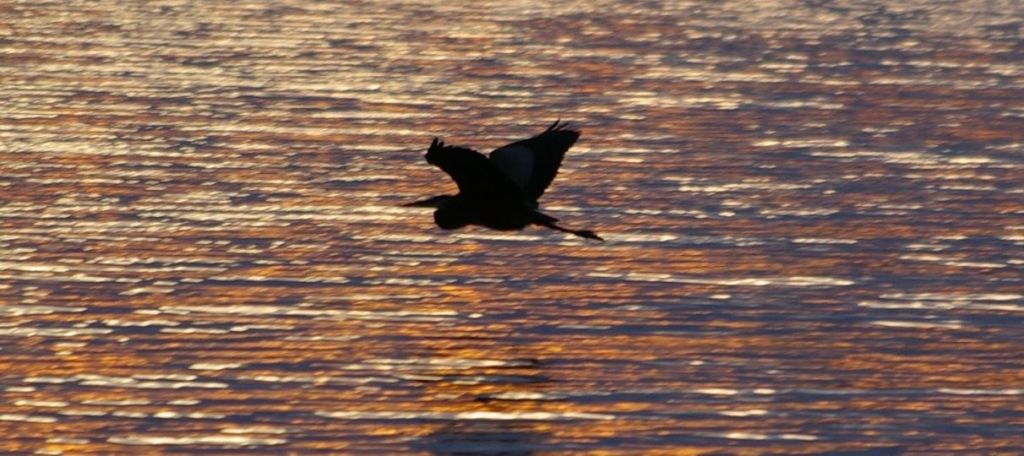
When I see herons push back just once against the surface of air and glide at pelican height, feet above the Cheapeake, and that one push moves them downstream until they tilt back their wingspan to lift up and settle gently on some branch on a dead tree in the marsh, I know they’ve read Hemingway, or at the very least paged through the work of Czech writer Bohumil Hrabal, who Sontag once said was perhaps the greatest European prose writer of the twentieth century, and whose one-sentence book, Dancing Lessons for the Advanced in Age, must be on the shelves of these herons and their cousin egrets.
I went down to the water in the first place to work on a chapter from a new book. I’m trying to adjust the sentence structure to slow down the reader or help them run out of breath. I mix compound structures with simple statements. Some fragments. I want to control their pace, make them pause and perhaps reread a segment when I need emphasis, or have them gasp outloud when I wish to wear them out, give them a sense of unbridled energy, like a Siberian train or over-enthusiastic college freshmen in over his head. And it occured to me as an Osprey caught a draft and lifted gently into a nest where another osprey tended her eggs, that I want to write just like that, cover the pages of my new book with flights of starlings and the melodic song of the lark. How cool for the reader to watch the words as they lift out of the shallow marsh and push against the surface of the pond until they clear the beach, then spiral up and almost out of control–but clearly not–toward the mouth of the river, until they climax at the headwaters of the bay and resolve themselves in the delta. Gulls and comorants and allusive, small green herons punctuate the phrases.
Damn, I really want to author a work like that, like the flight of birds, the singing, the hurriedness of the hummingbirds and the slow glide of an eagle, a hawk. How cool would it be if readers got swept up in the life of the words as they carried the narrative clear across the Rappahannock and the audience could do nothing more than follow along, thinking they’re reading at their leisure, not realizing they’re being pulled across the reach?
My new book takes place in one day but has a list of characters as long as Audubon’s Guide to North American Birds. There’s me, of course, since everything I write, like feathers, is mostly true, but there is also Karen and Rachel and Trish and Mark–finches and songbirds for their tragic brevity. There is Lianne and Letitia, a couple of youth-sentenced canaries, the latter whom specifically promised to show up at the birdfeeders on my porch. And then there’s a punk who keeps reappearing until one of us gives in–yeah, guess who. I’ll make him the Turkey Vulture or a magpie.
I suppose I have to be a bird too, seeing as it is a first person narrative. I decidedly do not want to be a Laysan albatross or a cockatoo, both of which outlive everyone else. Perhaps a hawk. The quiet, squirrel-eating type.
I sat a long time thinking about this because that is what I chose to do today. I thought about the birds we saw along the Pacific coast and in the Redwoods, and I tried to recall the ones along the Great South Bay when I was a kid, which made me remember a parakeet my cousin Lisa once had which kept flying into the mirrors on her living room wall. That poor bird was just a fragment, barely a subordinate clause.
In the end, I chose (for now, anyway, since rewrites are possible in my birdword world) to pass on the feathered friends and be the redwood itself, not only here since before all that and here long after all this, but a resting place for them all, a safe place, with branches so high a bird can see across lifetimes and know how the narrative will end, which is more than my brain can handle right now.
Honestly, I have been having trouble with this one, getting it right. The narrative constantly weaves in and out of future and past events all the while grounded in one room in the present. Trouble writing this one, indeed, that is, until today, when I realized I need to write like birds fly.
Of course. Why am I always the last one to see the obvious?