
Stealing Home

Ebbets1913OpeningDay

This Monday, May 23rd, is my dad’s birthday. He would have been ninety-one. A few years ago I wrote a trilogy about Dad which remains some of my favorite writing and memories. This is Part Two of the Trilogy originally published in Kestrel Journal, with part three later picked up for a Norton Anthology.

———————-

Sons

“Big Al” came in the Harris House Pub by eleven-thirty every morning for a few Buds and a pack of cigarettes. He couldn’t see well, and in fact worked at a nearby diner whose proceeds provided aid to the blind. He’d sit at the bar and talk about his daughter and how she doesn’t call anymore, and about his son who he hasn’t seen since he was young, who told him once, “I’m not spending my days dogging it for my blind dad.” Al was truly a big man and moved slowly. He’d gaze with difficulty across the thickest glasses I’ve ever seen, and walk the snowy streets with his hand touching the wall. He’d pause every once in a while and wait and then continue, eventually swinging open the old door to the Harris House to sit on the same stool closest to the door, order his Bud and begin the questioning.

“Who played in the first world series? Who won?”

I’d laugh and make a few drinks for other customers then wander into the back. When I returned with ice for the bin I’d say, “Pittsburgh versus Boston, 1903, and Boston won …um…five to three!”

“Excellent, Bob, here’s another quarter,” he’d say and laugh, saying to his friend Kenny at the next stool how I was a walking encyclopedia of baseball facts.

“Who struck out more batters in his career than anyone else?”

I’d return with hot food from the kitchen for a customer. “Too easy, Al, I grew up watching him when he was with the Mets! Nolan Ryan!”

Another quarter hit the bar.

My co-worker Sandy figured I had a baseball encyclopedia in the back but I told her I didn’t.

“When was the first professional baseball league formed?”

I’d roll out a keg, and while tapping it tell him, slowly in a state of recollection, “1871.”

Two bits more.

Kenny followed me to the kitchen after one of Al’s questions and heard me on the phone: “Hey, highest batting average. Cobb? What was it? 367—got it, talk to you soon.” I turned and he laughed. “Some hotline?” he asked. “Dad,” I told him.

“Cobb. 367,” I said, placing another beer on the counter without charging him. Al never lost a dime.

Back before cell phones, when payphones were standard, my father had an 800 number at his desk, and wherever I traveled in the United States I could call him for free—from the Arizona/Mexican border, from Maine, from every dusty state in between. I’d tell him where I was and how life was progressing, and he’d tell me what was new with him, my mom, and life in general in Virginia Beach. A certain peace permeated the air back then, a silent sense of security until the next payphone in the next state.

Dad’s hearing, of course, has grown weak, and he rarely talks on the phone. He watches the games with subtitles on, but they don’t always keep up with the announcers rapid-paced reporting. It’s harder to see the score box on the television and sometimes keeping track of what’s going on is frustrating. When that happens he tells me about his youth in Brooklyn, the Branch Rickey days of the Dodgers, and going to Ebbett’s Field with his friends or his father. He still knows the players’ names, the records, the managing staff and where they went after the Dodgers went to California. He asks me to read the time so he can watch the weather, unless the Mets are playing, and David Wright is on deck, and while the World Series may not be in the cards for the home team this year, Dad takes each game one at a time.

We’re into extra innings now, breaking records just by marking time. I loved going to games with him in New York, or watching New York games with him on television in Virginia, like I loved calling him up for facts.

Through it all, though, baseball had nothing to do with it.


dad 1

I miss you Dad.


Student Comes to See Me

bar


I cleaned out some old boxes in my office last week and found an old postcard from Australia. Then I remembered where it came from:

Student comes to see me. He says he can’t handle the pressure of school. I tell him I think he’s a good student and he says yes, he can do the work, he just can’t stand it. He hates it, he says. He gets bored fast. It’s a good conversation, honest. Had we been somewhere else we would have talked over beers. He looks at his watch and says he has to work in a few hours and sighs. He runs his own roofing company but hates that too. He has six grand invested in equipment and no help and he just dreads doing the work now. He says he’s at some fork in the road, two paths that look the same so he’s frozen, easier to just stay put. He gets quiet and stares at a photograph on my wall of a village in Africa. Looks nice he says, like he wants to say anything to forget what he’s really thinking about. Then he remembers and sighs again. He’s quiet for some time and I find myself drifting.

I worked at a bar. No bills but good money and mindless work; the kind of work where if you don’t think too much about what you’re doing, you can keep on smiling. I know I spent a few years there but it seems like it was always winter, all grey and bone-cold. One morning I woke on a bench near a lake in a park and didn’t know how I got there. I had to work a few hours later but never made it. I drained my accounts, stuck a little aside, then bought a ticket to Africa. Turns out changing my life, kicking my own ass out of the same ‘ol same ‘ol, was as easy as jumping off a cliff knowing you’re either going to land on your feet or learn how to fly. I landed on my feet and boring disappeared from my life.

But this student has trouble talking about it, so I talk: I get that feeling in my chest too, I say. Tight, constricting, difficulty breathing. You know what I’m talking about. It’s the sense that something needs to change. It’s the Philosophy class with five minutes left of three hours and the prof starts another chapter because there are still five minutes left; it’s the meeting you can’t tolerate but you’re in a row of seats with too many people on both sides so you can’t leave; it’s that this-homily-is-way-too-long feeling. It’s the feeling you’re just one day away from something else, but then that day comes and you find yourself one day away from something. It’s the Whitman poem about astronomy; the wide awake at three am feeling and you can’t move so you stare at the alarm clock. Exactly, he says. I’m always staring at the clock, he says. I’d love to know what you’d do, he says.

I tell him about a bar somewhere I didn’t belong. I remember working and then not working but I don’t remember what happened between the two. I just recall waking up one day in the peace-of-mind of another world, centuries away from being behind bars; like I could finally breathe on my own. I remember dreading the moment between what was and what was next so I just kept pouring drinks, but then one day I didn’t. He looked at me like I was looking in a mirror. Then he says he’s going to work and he leaves. 

Six months later he sends me a postcard from Australia. Don’t know when I’ll be back, it says. When I am, let’s get some beers and talk. I look forward to it but, of course, way leads on to way, and I doubt he ever came back.

Outback 7

The Genderfication of America

bathroom sign

I had to fill out an online form for a writer’s conference and I knew all the answers about my identity but one.

Gender.

Okay, hold on: I know I’m “male.” Or at least I thought so. The anatomy suggests so, as does my need to shave daily, my voice, and my bend towards dark beer.

But the form had a drop down menu, and when I hit the little arrow to expose what I thought would be a binary choice, male or female, with a possible third entry of some form of Trans, I found these eleven options:

Male

Female

Agender

Adrogenous

Bigender

Cisgender

Gender fluid

Intersex

Transsexual

Transgender

A gender not identified here

I had to look up some of them.

The first two along with Transgender and Transsexual all seem obvious, though one might argue that if a Male or Female does trans to the other, once the trans is done they are officially the other gender. Transsexual and Transgender, like Male and Female, are well established terms, one being the operation is complete, the other the “identification” is complete but the packaging is original. For the latter Trans option, I asked myself if I identify more with the other “standard” gender—Female—than I do my birth gender, Male. If the answer had been yes, then I’d have checked Transgender. That was an easy one, though it almost sent me searching for a bathroom.

Agender totally baffled me. Bigender I understood, particularly if I had been born with a mixture of gender identifiers (see Intersex below), or I never quite Transed all the way and am still walking the line between genders—bigender it is. But agender—having no gender—doesn’t make sense to me. I suppose if I simply couldn’t identify with either (as opposed to having tendencies to identify with both), I’d be absent gender—agender. But then I still feel like I would have to make some call in the matter. At the end of the day I really do have to pee, and at some point I need to commit. Bigender implies I can use either bathroom, of course. But agender leaves me hanging. I have nothing on that one.

Adrogenous was easy; I am of the age to well remember “Adrogenous Pat” of Saturday Night Live. In this case I am drawn toward parallels with bigender, though now I think this might better explain agender. The middle ground here gets murky. Bigender, agender, and adrogenous all imply similar non-committal answers to the initial question. Still, I do not think they’re synonyms. In fact, agender and bigender might be precise opposites with the same outcome. One identifies with neither and the other both, leaving both in a holding pattern when it comes to decision making. Just writing that makes me feel uninformed, so my confusion could very likely be lack of experience and information more than lack of clarity on the part of the form. This is a writer’s conference, after all.

Cisgender is crystal clear. Cisgender is when I solidly identify with my birth gender. No freaking pink paint or rainbows in my room, Bucko. This is where the answer to the initial question is not “Male” but “you’re damn right I’m male, asshole.”

Gender fluid makes me uncomfortable. As such, it basically means at any given moment I can move unseen between the two dominant genders, which is very different from transgender where the move is deliberate and usually one-way. There is a breed of sandpiper here on the east coast that is gender fluid. I am not belittling people who are as well. I just don’t know of any but I have seen the sandpipers, so relax.

Intersex is less confusing than it seems. It feels a lot like gender fluid but it turns out this is when someone is a hermaphrodite—born very clearly with both dominant gender organs apparent. I figure by the time someone is old enough to fill out a form for a writer’s conference and has to choose this option, he/she has already transitioned, or at least might probably check the bigender box, though bigender implies “identity” whereas intersex is a physical reality. It is possible to be intersex but completely identify with only one of the two, making an altogether new, hyphenated category.

What makes my mind wander, however, is gender not identified here. In coming up with that option, wouldn’t the list creators had to have at least entertained at least one other, or is that option to leave the door open for some combination not yet considered? They may have been thinking about the US Navy vet who went through an operation to become like a tiger. He grew whiskers and had a mechanical tail surgically implanted. Check transfeline if you fall into this category.

For the record, I have friends in nearly every one of these categories, and they can share a bathroom with me anytime. I’m going to have a Guinness Stout and finish the application.

pat

A Permanent Change

aerie one


Back to this wilderness.

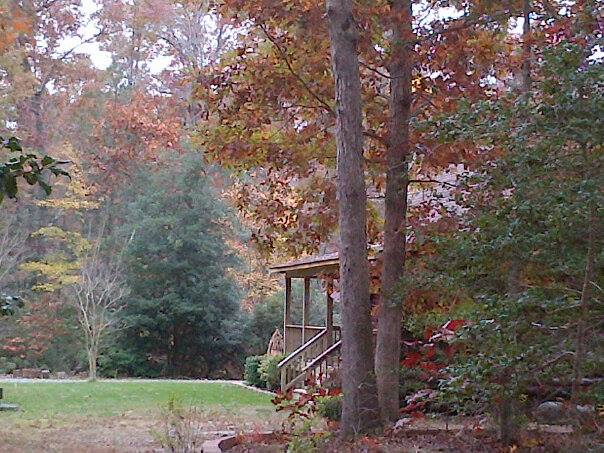
It occurred to me one day on my porch while staring at the surrounding woods, that at some point less than one hundred years ago none of those trees were there. The land has beautiful eighty foot oaks, some maples, tall thin pines and various other hardwoods including black walnut trees, which I am told can provide the ingredient necessary in the liqueur, Wild Spiced Nocino.

The branches protect birds as diverse as red-tailed hawks, downy woodpeckers, and countless chickadees, and they are habitat to other wildlife including one flying squirrel we spotted a few years ago when his tree fell. The squirrel was fine and found a new home in a white oak.

But a hundred years ago this was just land, sandy land, edged by the running Rappahannock River and backed by equally treeless farmland. A century before that these nearby plantations provided food for the region at the expense of slavery, and some slave descendants remain, selling vegetables at food carts out on the main road, or working the bay as watermen, telling stories about how the Chesapeake is just about farmed clean every season by crabbers at the mouth or the headwaters leaving nothing left for those working the midland shoals.

This area hasn’t changed much in one hundred years.

It is like this everywhere, the coming and going of things. In Manhattan a few hundred years before the wild construction on bedrock, coyote and deer were common. It was hilly (Manhattan means land of hills), and where the United Nations stands once stood grand oaks. The Lower West side was a sandy beach, and ecologists say if left to do what it wanted, most of the upper west side would be covered in trees and vines, shrubbery and wildflowers inside twenty years.

I can’t imagine what my house would look like if left untouched. When I don’t mow the lawn for a few weeks it looks like a refuge for timber wolves.

But these trees weren’t here a century ago and I sat on my porch and wondered if there had been other trees or if this land was barren, or was it used by the Powhatans, or was it home to some former slave family, or just a dumping ground. Evidence is scarce, buried beneath the roots of this small forest.

This happens to me everywhere I lived; I like to imagine what was on that spot one hundred, two hundred, a millennium earlier. The house I rented in Pennsylvania was used as a hospital during the civil war. Before that it was a farm. Now it is a Real Estate office. The maples which lined the road and shaded the living room are gone. Someone planted new ones but it will be decades before they mature. My house in Massachusetts was a fish market a century earlier. Purpose moves on with time. Maybe that’s why I’m so mesmerized by the Prague hotel I always stay at. It was the same building seven hundred years ago that it is now. But here on my porch I realize this house is the only place in my life I’ve lived for twenty years, and I was curious if five times that score of years ago I could sit on this spot and see right out on the water, or were there trees then as well, different ones which died or were timbered to make room for crops.

The house is made from western pine forested on land which I assume is either now empty of trees or filled with young pines waiting to become log homes. What will be left a hundred years from now? Will someone sit on this same porch and look right out toward the bay once these oaks have long fallen? I know this house, this land, is a “hotel at best” as Jackson Browne despondently points out. “We’re here as a guest.”

Wow. Wrote myself into some sad corner there. Thanks Jackson.

I know nothing is as permanent as nature, despite the constant changes. It simply isn’t going anywhere. We are. So I like to remember that a century ago farmers sat here and talked about the bounty in the soil, or talked to 19th century watermen about the changing tides. And I like to realize that a hundred years before that the nearby swampland, now home to so many osprey and egrets, was a major route for runaway slaves. They’d have been safe in these woods, if there were woods then.

I like to do that because it reminds me a hundred years from now perhaps I will have left some sort of evidence of my passing through; even if just in the cultivation of language, the farming of words.

So I sit on the porch and listen to the wind through the leaves. It is now; it is right here, now. Sometimes at night we stand in the driveway with the telescope and study Saturn, or contemplate the craters on the moon—both here long before us and in some comforting way, long after we’re gone.

In spring and fall the bay breezes bring music even Vivaldi would envy, and I’ll listen to his Four Seasons, written nearly four hundred years ago, and listen to the wind through the leaves of these majestic, young trees reaching eighty feet high, and be completely, perfectly in the moment.

Despite the warming trends, the extreme tendencies of weather, the fragile ecosystem which sustains life, nature is still the only place I have found that really doesn’t change. It never has. Ice ages and dust bowls will alter it, but eventually some seed will take root.

aerie two


Six Months

pendulum

How long is six months? Well, obviously, logically speaking it is simple math. But we have philosophy to consider, and that just messes everything up.

Six months is, in this case, 182 days, or 4368 hours. I can prove this; I counted. But it is not how I have perceived these six months. When a child moves from one year to eighteen months old, we are excited by the new date: “He is eighteen months old today!” we exclaim to questioning gawkers. But at fifty-five I don’t say, “Well, actually I’m fifty-five and a half today.” Six months means so much more on the edges of life than it does in the middle.

When I am entirely in the moment–focused and engaged–time is irrelevant. I couldn’t tell you if an hour passed or a week. It is only when I think about it that the laws of relativity engage. I would like a life where I remain completely in each moment. My “String Theory” is to have a string of those moments, from cradle to grave. If you think about  it, though, you can’t do it. Perception is an unfriendly conspirator in linear time.

It was a Wednesday night, six months ago, about eight thirty, and I just had finished teaching creative writing. The winter which passed since that Wednesday seemed to be milder than previous years. There were some cold days, and I remember a stretch in January when we needed to let the faucet drip upstairs, but mostly it was fine, the ground never too frozen.

And now looking around, it occurs to me the trees are not much different now than they were six months ago, the borders of two seasons, one going and one coming back, separated by mostly bare branches and plowed fields. Even the fairways at the golf course are the same half-brown, half-green as back then; this time the green is on the way in instead of on the way out, and life is returning in the rough. October and April are first cousins.

Six months in my professional world is more than one entire semester, which collegiately is akin to a completed project. We start, we meet everyone, we develop relationships, we advise and have meetings, grade and test, encourage and withdraw, come to a climax of exams and projects culminating in final grades and, for some, graduation; and then we start again—all within six months.

Excuse me for this but I “wikied” Time. Here’s what it said: “Time is the indefinite continued progression of existence and events that occur in apparently irreversible succession from the past through the present to the future.”

“Apparently.”

As usual, Wikipedia is only partly right. That’s a fine explanation of linear time. Thanks. But it doesn’t account for emotion or recollection. I’m talking about perception. I learned much about our perception of time  just by spending some with my father. A round of golf, for instance, went much faster when we played well than when we didn’t. Watching  baseball games on television wasn’t unlike being held hostage; they seemed to last so long. But when we showed up at Shea, the game passed in minutes. And two fingers of Scotch can somehow simultaneously last forever and disappear without noticing. It all depends, and that is what’s cool about time–it is much less scientific than it appears.

“All our sweetest hours fly fastest,” wrote Virgil. No kidding.

I didn’t see someone for twenty-three years and then one day I did, and it was as if no time at all had passed. This morning I spoke to a colleague and I thought I aged a decade just standing there. Perception.

If someone gives up cigarettes or alcohol for six months, it is a major achievement.

If someone has a new job for six months he or she is still suspect.

And in love: “They only knew each other six months” is diametrically opposed to “You mean you’ve not spoken for six months?!”

Six months isn’t always six months. Sometimes measurement is pointless.

The Mets won the National League pennant that night, 182 days ago, that Wednesday. Six months later we are well into the opening month of the baseball season, which six months from now will be over and we will have a new World Series champion. The half year to the next World Series seems so much further away than the six months since the last one, or is that just me?

It was 76 degrees that day with an evening low of 45. Fall was holding off as long as possible. I taught creative writing that night, finishing about eight-thirty.

A student commented it was too early to end, and I agreed, then left.

A doctor I know said the passing of time is also relative to experience. For an elderly person whose schedule has changed drastically due to retirement, less sleep, fewer or more frequent visits from friends or family, the perception of time fluctuates. If someone needs to use the bathroom more often, to that person it is not understood to be more frequent but instead the “time between trips to the bathroom” passed so much faster. If someone’s eyesight is diminishing along with slower brain function, it isn’t the eyes that have trouble with twilight, but how much faster night arrived than it used to.

Add to that the absolute reality that when we miss someone it seems so much longer since we have seen him. It is all perception. That’s what sucks about time: as an objective process it is relatively persistent and dependable. Relentless, in fact. I can tell you the definitive truth about how long it will take for six months to pass. But I can’t begin to measure what it will feel like.

Why does six months from now seem so much further away than six months ago? I suppose time recedes quicker than it approaches. Anticipation has a lot to do with that, and regret. They so work against each other. “I wish I could have” implies something happened, still fresh and recent, and we missed the chance to say or do or try something. However, “I can’t wait until” implies some event seems like it will never get here.

Maybe time isn’t linear after all. We can manipulate time by recalling just the right moment, smelling some fragrance, hearing the right song—they bring us right back, right there. You can’t slap that into an equation. Measuring how we experience time means allowing for some x-factor, be it love, or fear, or loss, which renders the numbers pointless.

Six months? It was yesterday. It was a lifetime ago.

“The secret of life is enjoying the passing of time” –James Taylor

11120546_10205776165870835_1733757971466560348_n


Changing Gears

monza


I owned an ’85 burgundy, 5-speed, fuel-injected, three-door, turbo charged Dodge Lancer. We called it the POS. It was the car I used to bring garbage to the dump, carry bricks and wood, and haul crap without caring. I kept it clean but didn’t worry if it wasn’t. We’d find driftwood and toss it in the back, sand and shells and all. We spent countless hours driving to the beach, the ice cream parlor, the auto repair shop. My son practically grew up in that car, learned music from its cassette deck, held up the felt on the falling roof so I could see where we were going. I drove him to school in that thing well into third grade.

We all remember our cars.

My first was my dad’s ’72 Nova, which wasn’t mine but I racked up the miles on it for him as good sons do. My first car I drove when I lived on my own was a 1980 light blue, Chevy Monza. That little thing and I saw the United States a few times, smuggled blankets out of Mexico and Molson’s out of Canada. We spun out down an icy hillside in Massachusetts and I ended up junking it in Pennsylvania when the engine blew out. I was driving all of a friend’s belongings from my house to her mom’s when that happened. I think that’s when I started understanding metaphor. In fact, to this day metaphor drives my writing life. It comes from cars.

My favorite was a red Jeep Cherokee five speed. I abused that car the way jeeps should be abused, and it lasted far longer than I treated it. It is the car I think of when I hear Paul Simon singing, “If more of my homes had been more like my cars, I probably wouldn’t have traveled so far.” Those were good times, windows open, radio blasting. There was the time I was stranded in the desert with a dead battery a hundred miles from a tree. Or when for several years the gas gauge on the Jeep was backwards. In forty years I went from fitting everything I own in the trunk to needing a U-Haul just to go away for the weekend. I can think of very few objects I’ve owned that symbolized “freedom” more than my cars.

One day when Michael was small and we were in the POS we drove over a pothole at a sub shop parking lot. The chassis slammed hard and made a crumbling sound like folding metal. I tried to back up and it refused. A friend pushed me out and I drove home thinking whatever was wrong righted itself.

No. In fact, I couldn’t go backwards for the next eighteen months.

I learned to look for a pull through. I’d park far away at the mall, grocery stores or work. I learned to anticipate what was next so as not to corner myself, or worse, find myself with my face against the wall. I learned patience. Only three times in a year and a half I found myself trapped. The first was at Old Dominion University when arriving for a night class and the parking lot was full save one spot against a pole. I paused and asked my friend if he wanted to push me in then or push me out later.

I learned what roads I couldn’t turn down, what tight situations might be waiting, when to find a slope to roll back down, when to walk. A cop once pulled me over for pushing a yellow light. He let me go but stood and waited for me to leave first, but I had stopped in front of a sign and for the second time I couldn’t back up when I needed to. He waited. I waited. Finally, I said, “Wow Officer, my heart is still racing and I’m tired. I think I’ll sit here a minute and compose myself.” He left.

It was after the third time that I junked the car—excuse me—donated it to Good Will. I had to get it inspected and went to a shop where I know the mechanic, Tuna. Honest to God his name is Tuna. I didn’t want to tell Tuna about my inability to back up, obviously, since I refused to buy a new transmission, and I realized I was screwed when he pointed me into the one car bay with no way out but back.

In Virginia, an inspector’s first task is to scrape the old sticker off the windshield, so while he scraped I called, “Hey Tuna, it’s the last day of the month so I know you’ll be swamped, go ahead and put the lights on while you’re in there.”

“Good idea, Bob!”

I called out. “Okay. Brakes? Good. Left signal? Good. Right signal? Good,” and found myself doing my own state inspection. “Reverse” No white lights lit up, of course. “Good!” We finished that part and he finished the rest, put on a new sticker and asked for ten dollars. I gave him a twenty and said, “Tuna, I need a five, four ones, three quarters, two dimes, and five pennies.”

“Sure Bob,” he said and headed to the store in the front of the shop. When the shop door slammed I got in the car, threw it in neutral, got out, heaved it over the red tire lifts onto the gravel lot, jumped on the brakes until the POS was far enough back to go forward. Tuna came out and I held my side gasping for breath. “You must be in a hurry!” he said handing me my change. I drove off wondering what was next.

Seems like back then I was always wondering what was next.

The following day I drove Michael to school. We listened to music while he held up the roof. He grabbed his bag, got out and waved as I rolled forward, moving on, and realized the truth is we rarely have a reason to go backwards anyway.

hitchhiker-88746-530-644


Peace Management

shenandoah

A friend of mine is a Franciscan priest who remains calm no matter what happens.

We are not alike.

He is compassionate, understanding, patient, and saint-like. He is perfect for his job and does it 24/7; that is, he is one of those rare souls that couldn’t be anything but some sort of man of God. If he gets stuck in traffic, for instance, he keeps it all in perspective. If someone cuts him off, his response remains, “They really must be in a hurry. I hope they’re careful.” Or, “Wow, God bless them and watch over them, they really must be anxious about some appointment.” His is a peaceful soul.

This contrasts directly with my “Use a frigging turn signal, butthead!” approach. When entering a tunnel and the traffic decelerates from sixty to forty, the good Father cares: “Oh, thank our Lord they are all being careful going into this tunnel. It really must be frightening to so many people.” I handle it with my own style: “It’s a tunnel. IT IS A TUNNEL! It is not a brick wall! The Road did NOT shrink! It’s a damn TUNNEL!”

We obviously address frustration differently, which makes me wonder how we ended up this way. Would Monastery-Bob and Professor-priest keep their temperaments in tack? If I lived on a mountain in prayer would I be less likely to want to kill the cashier for not being able to multi-task?

I was like him once, my friend the peaceful priest.

When we met during college we talked a long time about peace and where it comes from. To search for peace in the world is a fruitless act. Even if we find it, it can disappear with war, with stress, with distractions and interruptions. It is like turning to others to find what you want to do with your life; it must come from within. And peace, too, must be a spring, not a shower. I always liked that thought.

I once went to Father’s room and found dozens of people drinking beer and laughing as they told stories about their lives. Afterwards, I said I had a great time and found it strange that I could feel so lost among friends on one day and on another feel so connected and centered. He said, “Bobby—tonight you brought the peace with you.”

Man, he made it sound so simple: Bring the peace with you.

So when some dirtbag student of mine called me an asshole in class, I thought of Father, and how it is never the situation but how we handle it. I could picture him with his wide smile and deep laugh and huge hands on my shoulders telling me I’m going to be just fine. Last week I brought the student into the division office and sat the little bastard’s ass in a chair while I filled out a withdrawal form. Before I could finish the paperwork, however, and before he stopped crying, I decided to give this “peace” thing a shot.

“Are you scared?” He looked at me. “College, I mean, the assignments? Are you worried?”

“I suppose,” he said, calming down.

“Why?”

It took him a long time to answer something other than the moronic, I don’t know. “I’m not a good student. I was never good at school.”

“You get confused?”

“Yeah,” he said, nodding, knowing I hit on his fear.

“Yeah,” I said. “A lot of people do. I know I did. What you might try doing is stepping back a bit. Sit to the side and watch everything from a distance for awhile—get some perspective. Instead of calling me an asshole, ask me some questions.”

“Right,” he said, with not just a little indignation.

Bring the peace, Bob. Bring the peace.

“Sometimes we need to see things from a different point of view.”

He was quiet a long time and I believed I got through to him, and I wondered what he pictured as I recalled sitting in Father’s room listening to stories of scared and lost students like myself still trying to get a handle on our place in the world.

“Wow, thanks for your psycho-babble bullshit, Dude,” he said.

I took a breath, thought of Father, and told the little prick to get out of my site; that Hardees is hiring and someone has to clean the toilets.

It’s a gift, really, knowing one’s place in the world.

I headed home thinking about peace and frustration, fear and anxiety. He’s where he should be, this former student of mine. He’s out in the real world where he can seek out only those challenges he knows he can conquer. He is part of the masses that only face what they’re not afraid of.

Bringing peace to an otherwise hostile environment is a difficult task. Maybe that’s why I, too, often avoid the challenge and wander down country roads, watch the water ebb and flow rather than the anxiety. It’s why I don’t drive during rush hour, avoid fast food restaurants and box store checkout lines. Hell, maybe I’ll just start giving everyone A’s so less people will call me bad names.

Yes. Let there be peace and let it begin with me, Bob the Asshole. I’m going for a walk and I’m bringing my peace with me.

the rapp


Awake. Right. Now.


aurora in norway

I fell through the ice on a frozen lake in northern Norway in March of ‘95. It was two in the morning, twenty below, and I followed two friends across the snowy ice toward a road on the other side. I heard the ice crack and I stood still, a green band of aurora borealis bent just above us, and I stood still like Wile E. Coyote—suspended for just a moment listening to the ice crack—and thought, “oh, wow, shit,” and went through.

I landed just about ten inches below the surface on another ice shelf. I stood just deep enough for frigid water to cover and fill my boots about calf-high. I waited for the next crack when Joe turned and we froze in fear of us both plunging into the lake. This wasn’t the first time I’d walked on thin ice, but previous mishaps were mostly metaphorical—pissing off my parents, trying to pass a class, trying to cross borders with contraband. I stood with icy feet; my heart pounded in my chest ready to plunge into my stomach when the ice again cracked. Nothing.

Our friend John turned and laughed. “It’s day melt,” he said, ahead of us by twenty feet, already on the shore. “The surface ice melts a bit each day then freezes at night, but it’s thin. That’s what we were walking on. The second layer you landed on is probably six feet thick.”

“Why didn’t you go through?” I asked, John was six two and not a light man.

“I was first,” he said. “I loosened it for you.”

I sloshed to shore, took off my socks, and stood at the end of a fjord when across a field six moose stood taller than us all. I put my boots back on and watched the moose move toward us. They were bull-like, each one heavier than the three of us combined. The night was still, and the air was calm. To the north lay nothing but wilderness for a thousand miles; the Arctic Circle sat a hundred miles south. This was as close to sacred ground as I ever got. I was soaked in below zero temperatures, green bands of borealis bent above my head, the moose moved toward us, and I never felt so awake, like sleep wasn’t part of the Human idea, like caffeine was a tranquilizer. Awake. The northern lights lingered like they were in water, as if the the sky was submerged and the green bands couldn’t bend faster than the deep blue flow would allow, and we floated between. The moose moved closer. I held my breath. Two leaped just beyond our reach and bounced over the ice with absolute grace.

That moment, right then, will never go away.

I’ve been lucky to have had many such moments—the tram at Lake Baikal in Siberia, just about any day in Spain, the sunrise in Tucson, just about any evening at the river. We rise every morning and gaze at life around us, but how often are we awake, I mean completely and blatantly alive?

Studies tell us that most of us sleep a third of our lives and most of us work a third of our lives. And now at my age with hopefully about a third of my life left, I’d like to spend as much of what amounts to one third of that third being fully awake before the ground falls beneath my feet.

frozen lake joe and me in norway


b


Shut Your Mouth

I cut off a lady in the parking lot at Food Lion this morning, and it reminded me of an article I wrote several years ago about obesity. Knowing Michelle Obama’s drive to eradicate obesity in children, I sent it to her. This is the First Lady’s response:

letter from michele obama

The instigation for the original article was a trip to Starbucks. Some dusty pre-teen kid in triple x clothes asked his mom for a second brownie, chocolate milk and a donut–and she obliged. The boy bulleted about Starbucks for fifteen minutes while his mom sucked down a second frappe of some sort, then he collapsed on the floor near her feet and stretched out, forcing customers to portage around him. And I wondered very simply: How is this not child abuse? How is it possible that she can get in serious trouble for giving him cigarettes but nothing can be done when she pumps pounds of sugar into his bloodstream, heart, and kidneys, likely leading to diseases including diabetes, heart disease, and kidney failure. So I wrote the article, sent it to Mrs. O who read it and subsequently wrote me back pushing her plan to eliminate junk food from schools everywhere. Good idea, I thought, but flawed.

Years ago I worked at a health club where we reminded members at the end of a vigorous one hour workout that they always have two choices: They can give in to temptation or avoid it by reminding themselves of their ultimate goals. Not easy at all, of course. But how hard is it to say, “No, Son, if you eat that you’ll be gross and you might die.” I’m guessing Starbuck’s Mom didn’t want to listen to him whine, though eventually that happened as well anyway because for fifteen minutes he complained of stomach aches.

The owner of the health club was good at helping people lose weight. The best. He had a simple trick when it came to food: Ask yourself every time you’re going to eat something, “Is this a good idea or a bad idea?” As simple-minded as that sounds, it works. The problem, of course, is getting the answer wrong. It is easy to say, “This is a good idea because if I don’t have just a little chocolate I’ll binge!” or “Seriously, I read online that eating four Snickers Bars a day actually helps.” But all things being equal the constant good-bad question can work well, especially if you allow yourself three “bad ideas” a week. That’ll give you something to look forward to, assuming you don’t use up all three during one episode of Breaking Bad.

But a bigger issue looms in this wilderness of ours which turns bad parenting into a symptom instead of a cause: Limited Vision.

Some punk in a jacked-up pickup rode my ass for three miles on a narrow country road last week. I suppose I made the situation worse when I slammed on the brakes not caring so much if he rammed my ass. That might have been wrong. Just as wrong as coming as close as he could because his mono-syllabic brain can’t handle complicated thoughts like driving and pinching some chew at the same time. I should have thought through the bad idea/good idea thing and pulled over, swallowed my right to be on the road at all, and let him race on to whatever bar awaited him. My inconvenience would have been limited, my discontent over within seconds. Instead, we played this game for three miles until we reached the four lane. To be fair I had nothing better to do anyway and going ten miles an hour allowed me to watch the birds fly from tree to tree.

But we do this all the time: We decide to address an immediate problem even if it creates a bigger problem later, and all along we ignore the underlying issue which created the initial problem to begin with. My need to get this guy off my ass by braking could have created all sorts of bad situations, not the least of which might have been a bullet in my back in this rural, gun collecting, hunters paradise we call home. Likewise, the enabler mom has created an obese child with a future of complaining, food bills, medical bills and most likely being bullied. In both cases we weren’t thinking ahead.

It happened again the other day when some Earnhardt wannabe rode my tail, but this time I pulled over and let him go and he waved as he went by. Maybe he didn’t realize how close he was. Maybe I didn’t realize he wasn’t so close. Maybe he was late for the doctors, or the airport. I have no idea, but by braking I clearly would have created more problems for both of us. It is just like deciding not to eat another brownie. It really is.

The problem with Mrs. Obama’s plan is it attacks a symptom instead of the cause. The problem isn’t healthy food versus junk food. The problem is decision making ability. Yes children should be eating better, and yes it is a good idea to limit the junk food in schools, and of course parents should do what is right instead of what just keeps the kid quiet. But the solution is for everyone to learn the downside of immediate gratification and the benefits of long-term gain, even if it means sacrifice–or pulling over, or letting the kid scream. Making the right decision doesn’t mean solving “a” problem, it means avoiding new ones as well. The solution to a problem should not create a new problem. Positive actions can have all sorts of negative results. Simply, removing the bad choices will not solve the problem in the long run.

Which is why this is actually about the lady at Food Lion this morning.

I saw a spot open up in the parking lot and shot into it from the aisle, not realizing she had been waiting for the spot from the other direction. My fault. This has happened to me before. I was about to pull back out and give an apologetic wave when she was already out of her car and banging on my trunk. I rolled my window down as she approached the side of the car still yelling. I yelled back, “Are you out of your mind?!?! You could be shot! You have no idea if I’m some psychotic killer just out of prison or what! You don’t know I don’t have a gun, a knife or a baseball bat! Get back in your car you idiot! It is a SPOT! I didn’t see you. I apologize. I’ll pull out and you can have it.”

She looked terrified. Good. It never crossed her mind to simply find another spot and let jackass me have that one. She saw the decision as “one spot and two cars.” In the meantime other cars waited behind her Mercedes, now sitting alone with the door open, fresh for some carjacker. She quickly returned to the car and drove off. I doubt she’ll do that again. Instead of seeing it as a “that spot is mine but he got it” situation, we both could have looked around at the dozens of other spots available. Likewise, Mrs. Obama should be able to place a plate of junk food and a plate of healthy food in front of junior high students and instead work on their decision-making ability.

For the record, I’m writing this at Starbucks, sucking on a chocolate chip frappe and a chocolate croissant. My suggestions are theories, folks, just theories.

brownies


Mistakes

im bob


My father enjoyed telling the story of how when I was young, despite going to a number of different teachers who didn’t know each other in several different elementary schools, each teacher wrote the same thing on my report card: “Robert pays too much attention to the people around him in class.” I could say I was bored. I could make a case they all kept repeating themselves and “honest to God I heard them the first time.” I could claim I was multi-tasking. But the truth is I am easily distracted. Several teachers said I needed everything repeated two times before I understood. It was Mr. Kingston in fifth grade who took me aside and said, “You’re doing fine, Robert,” for the first time. I told him I make a lot of mistakes and he said, “Compared to who?”

Compared to who? Forty-six years ago and I never forgot that, so at least I remembered something from Timber Point Elementary School. Still, I’ve packed on a plethora of mistakes since then.

A Russian nun once prayed for me for ten minutes at the Shrine of St Xenia. Then she gave me a piece of bread from the top of the sarcophagus and asked if I liked it. I wanted to say yes, I enjoyed her blessed bread, but my weak language skills kicked in and I told her, “I love you and lust for your black God.”

It is odd making mistakes in a foreign language. Oh, there’s more:

I wanted to ask a cab driver where a bathroom was but ended up saying I like to drink dark beer from a toilet.

I had already gulped what I thought was water when my esophagus discovered the burning effects of bad Vodka.

I told someone I thought was a waitress who turned out to be a prostitute what I thought was “yes I could use a few minute to think” which turned out to be “yes I’d absolutely love oral sex.”

I told a room full of students whom I needed to listen that they should all get their suitcases.

I pulled out a chair for a lady and told her to heel.

I asked for five sandwich rolls and walked out with fifty. No fish.

A friend of mine wearing his priest’s collar wanted to tell the waitress he would like some mayonnaise and ended up saying, “I love to masturbate.”

Some friends went to buy coffee. The world for sugar is “Suga” but the word for bitch is “Suka.” They returned exclaiming, “Don’t ask for sugar in your coffee in Russia, Dude; they’re assholes about it.”

I could go on but more or less by screwing up I learned to fit in, pick up the nuances of accent and syllables, which brought down prices at the flea market, brought out their best Georgian wine, and opened gates to closed graveyards and monasteries.

At the back of one church, in the rubble of what was and would eventually again be St Catherine’s Catholic Church, a woman stood looking for a priest I knew. She seemed confused and we talked a bit—slowly of course. Her mother had been the secretary of the church before the revolution seventy-five years earlier. She needed to see the father. In my weak Russian I determined the woman told me she had a huge cross to bear because of the horrors of communism for all those decades and wanted the priest to take the sins away from her, but when Fr. Frank appeared with sharper language skills than mine, his translation was somewhat more significant. She had outside with her the original cross for the church dating back hundreds of years, which her mother had taken when the Bolsheviks took control after World War One, and which her mother had buried in the yard at their dacha where it remained for seventy-five years. She thought it was time to return it.

My mistake.

Back at home and much more recently I showed my students how to present a paper using the guidelines from the Modern Language Association. I gave them copies, I presented another example on the outline, I asked them to open their books to the appropriate example in the text, and still forty percent of them did it completely wrong. Is that a mistake? Is that boredom? Distraction? Idiocy? I like to think they are overwhelmed and go home kicking themselves for doing something wrong that was so easy to get right, but I’m probably wrong. A few years ago I would have returned to a class like that and lectured them about how their priorities are screwed up; I would have told them that if they can’t get the easy stuff done they’ll never handle the challenges as they attempt to move up the collegiate ladder. I would have used the appropriate sarcasm  with a touch of professorial belittling attitude.

But last January I was driving through the Pennsylvania countryside on my way to western New York on a Sunday morning when I heard a guest on a talk show quote St. Bernard of Clairvaux who said we need to learn to make excuses for other people.

We need to learn to make excuses for other people.

To drive the point home, a few days later a friend of mine posted a video of an impatient man leaving his house one morning pissed off at everyone on his way to the coffee shop and to work. At some point someone gives him glasses. The day rewinds and he leaves his house again, but this time the glasses allow him to see other people’s reasons for their actions and the world changes.

See other people’s reasons and the world changes.

Like the student who came in late because her husband is stationed in Iraq and she got to talk to him that afternoon. The one who left early has a dying father. The one who couldn’t get the presentation correct no matter how hard he tried has never been the same since returning from war. The one who stared at me the entire class without blinking an eye, then left, only to email me later an apology, that she wasn’t concentrating, that she had just learned her cousin was shown on television in Baghdad, dead and left swinging from a bridge. I teach in a different environment here in the military rich resort of Virginia Beach. We learn to make excuses for other people.

St. Francis de Sales said, “Never confuse your mistakes with your value.”

On the other hand, sometimes we really can be lazy assed bark-at-the-moon stupid. I do it all the time. Make no mistake about that.


mistakes