Every year since the end of the “Great Patriotic War,” veterans and their families remember something different than their counterparts throughout Europe and the United States who celebrate the Nazi’s surrender, the liberation of millions of people. In Russia, Victory Day is celebrated on May 9th. In St. Petersburg in particular, they celebrate survival. For nine hundred days the Nazis bombarded the city in an attempt to “wipe it from the face of the earth.” The Nazis failed; the veterans never forgot.
But apparently, you have, Mr. Putin, haven’t you? Your beloved Leningrad. I was there at the Piskarevskoe Cemetery twenty years ago when you placed the wreath at the foot of the statue of the Motherland and mourned for the seven-hundred-thousand women and children buried in mass graves; your relatives, your family, friends, all starved to death or killed during the Blockade. “One of the most tragic events in human history,” you called it. “This must never happen again,” you said.
In the 1990s, when you were vice mayor of St Petersburg, you stood in front of the Mariinsky Palace—City Hall—and nodded as a guide explained to a Canadian delegation the wonderful story of perseverance. I was a professor traveling alone from America who happened by, lucky to hear the story in English. And after two dozen trips to St. Petersburg, I have become quite aware how this story of pride is ingrained in the hearts of all of the city’s residents, including you, so you said. “Everyone in this city knows this story,” the guide said, and you nodded, smiled.
Your actions in Ukraine suggest you’ve forgotten, so let me jog your memory: Hitler was so convinced he would take Leningrad, he sent out 250 invitations for a celebration party to be held at the Astoria Hotel, just feet from where we stood near the statue of Nicholas I. The guide said that when it became clear to Hitler that he was not going to be able to take the city after all, he ordered Leningrad be “completely destroyed and wiped off the map.” Hence the siege—nine-hundred days of bombing, a million and a half dead, nearly seven-hundred thousand of them women and children. But it didn’t work. Your own relatives insured your birth by holding off the Nazis. And for decades, even as late as the 1990s when I spoke to old women in the city about it—survivors of the siege—they remained proud to say that “Hitler never dined at the Astoria Hotel.” Everyone clapped. You clapped. It’s a great story.
A few days later I watched you lay the wreath on Victory Day and declare such terror should never occur again in the world.
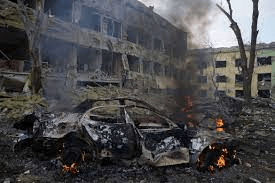
It has come full circle, hasn’t it, Mr. Putin, only now you are the evil aggressor who has abandoned his own people, a population who swore such an event should never be experienced by humanity again, when you imposed a similar fate on the citizens of Mariupol, Ukraine. Now the people of Ukraine are fighting their own Great Patriotic War, and you are their Hitler. It took eighty years for another madman to think he has the right to destroy a population to satisfy his own ego and insecurities. We’ve seen it before; we know how this turns out. No matter what happens geopolitically, you will go down in human history as a tyrant and cold-blooded killer, “Putin” spoken in the same sentence as “Hitler,” Mariupol in the same breath as Leningrad.
What’s tragic personally is I stood there in that cemetery, Shostakovich’s Seventh Symphony, the Leningrad Symphony, on the speakers, and watched you place that wreath, listened to my translator proudly repeat what you said: “This is one of the most tragic events in human history and we must never allow it to happen again.”
The people of your city—St Petersburg—are ashamed that not only did it happen again, but it was conceived by and carried out by one of their own citizens.
The true Russian heart, the true soul of someone from St Petersburg, is one who celebrates survival and all that Peter the Great’s “Window to the West” has to offer the world. You might be from the Soviet Union, but you are not Russian. There was a time when even St. Petersburg could see the beautiful and celebrated results of your efforts to bring the city and the country back to life after a century of darkness. But once this is over, you will only be mentioned as the tyrant who sacrificed his own people to destroy another culture. And then, like all monstrous dictators, you will simply be forgotten.
At a creative writing workshop someone asked the standard “Where do you get your ideas from?” question. I used to say, “Trenton. I use a mail-order catalogue,” but I realized that was somewhat snarky. Now I quote my good friend Tim Seibles:
Some things take root in the brain and just don’t let go
I love when someone says exactly what I’m thinking. Saves me time.
As for ideas, yes, that’s how it works. I might be out for a walk along the water, or perhaps driving somewhere, and one thought leads to another, and then just the right song comes on, or a smell—yes, sometimes it might be an aroma that makes me think of a place, and then the receptors in my head are off and running; I’m just along for the ride, somehow simply a spokesperson who never really gets the translation right. That’s the problem with writing; it is never right. If someone looks at a piece they’re working on and very comfortably suggests there is nothing more that can be done, I am weary of reading it.
But of all the writers I know it has always been the poets who can get me to sit back and say, “Yes! Exactly.” I can carry on conversations all day long about a subject and then toss it around in my head for a few days, write it out, readdress it, and pour some decent energy into it, only to turn to a few lines some poet wrote and I find the need to burn my work. I’ll do it too; I’ll sit here with a match and hold the pages while they flare up. It has a very cleansing effect. Plus, you know, toasted peeps.
Here’s an example: Tim and I went to lunch at this same divey joint in Norfolk we always go to, and we talked. We talked about our fathers, or about something in the news. We talked about a variety of things that good friends talk about; we rarely talk about writing. Well, somewhere over the course of the last year I have several times talked about my dad, about how I miss him; I know Tim gets it so I don’t’ have to say much, but still, talking is always helpful. Unfortunately, my words are trite, predictable, and lazy descriptions of how missing a person feels. Of course, I’m not trying to compose a play; I’m just talking about my dad. Still, I want to get it right.
Then not too long ago I flipped through one of Tim’s books and came across this:
Missing someone is like hearing a
name sung quietly from somewhere
behind you. Even after you know no
one is there, you keep looking back.
I could write a thousand lines about how I miss my dad, but that covers it. That’s poetry.
Anyone who listens to a lot of music knows what I mean. Some lines just say it all.
I have tried to write essays about nature, already handicapped by the vast selection of the genre from people such as Thoreau, Muir, and E.O. Wilson. In my files are dozens of starts in an attempt to finish a piece about the fall of the year and the coming of winter. Those brain receptors often click into the passing of time, the end of things, the changes beyond our control. I wrote one “epic” diatribe that might be the most bloated, pretentious vomit I’ve ever attempted. The only way to make it more pretentious would have been to have it translated into Latin. Then Frost does this:
So dawn goes down to day,
Nothing gold can stay
Asshole.
I prefer conversations, of course. I like to sit and have a beer and talk about our dads; I like running into a friend and grabbing a bite and laughing about simple things like sports and movies. But I also like reminders of our glide across this thin layer of life.
Over the course of the past several years I found a way to handle my frustrations when I can’t find the right words to express our need to celebrate being alive. I call a friend and meet him for lunch; luckily, he’s usually a poet—I know a lot of poets. If I can’t find one, I head instead to a favorite café and have a glass of wine and talk to strangers. Every single one of my closest friends was, at one time, a complete stranger. I walk along the water and watch the dolphins breech and disappear. I feel the coolness of morning give way to the warmth of the sun on my face.
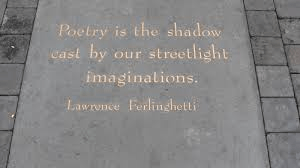
Note: We are surrounded by poetry.
I sat in an Irish pub in Prague once during a soccer match between Dublin and Manchester United. The excitement and roar of the crowd, the explosion of being in the moment, alive, then, ever-so-briefly, was poetry.
There was the time my friend Tom and I sat on a rock in the mountains west of Tucson and watched the sun work its way across the desert. Or when Michael and I walked past the small sign that said “Santiago de Compostella” five hundred miles and five weeks after we left France. Or when we watched the seals at Lake Baikal.
Poetry. Like when we walk to the river at sunset, most nights for twenty-five years now, and catch the colors, find the light on the water. Or those Tuesday nights a long time ago after I finished teaching and Dad and I would have some Scotch.
The sound of a golf ball dropping into the cup. The sound of cardinals on the porch, looking for food. Whippoorwills at dusk. Gulls at dawn. Rigging. Waves.
I’m on a train again, headed north out of Virginia, through DC, Maryland, and into Pennsylvania. I wandered from my wide and roomy comfortable seat up to the empty dining car where I hung out for a while in a booth the size of those at Applebee’s, had a breakfast sandwich and coffee I brought with me, and watched the farms and rivers retreat as we swung through Richmond and Fredericksburg. At some point we paralleled the Potomac through an area so wild it seemed more like a ride out west.
I took pictures.
It costs about $25 to get from Williamsburg to DC; another $7 to continue on to Philly. Gas is $4 a gallon; it’s 292 miles. At a generous 30 miles per gallon, that’s 10 gallons of gas. So for $8 less than the gas right now, I left Williamsburg at 5:40 and will arrive at 30th Street Station in Philadelphia at 12:10, wandered about the cars and stretched out in the dining car, walked around Union Station in DC, took pictures and texted friends, and even napped early on. No wear and tear on the car or my body or my eyes, no traffic jams, no parking expenses, tolls, nothing. $32 bucks.
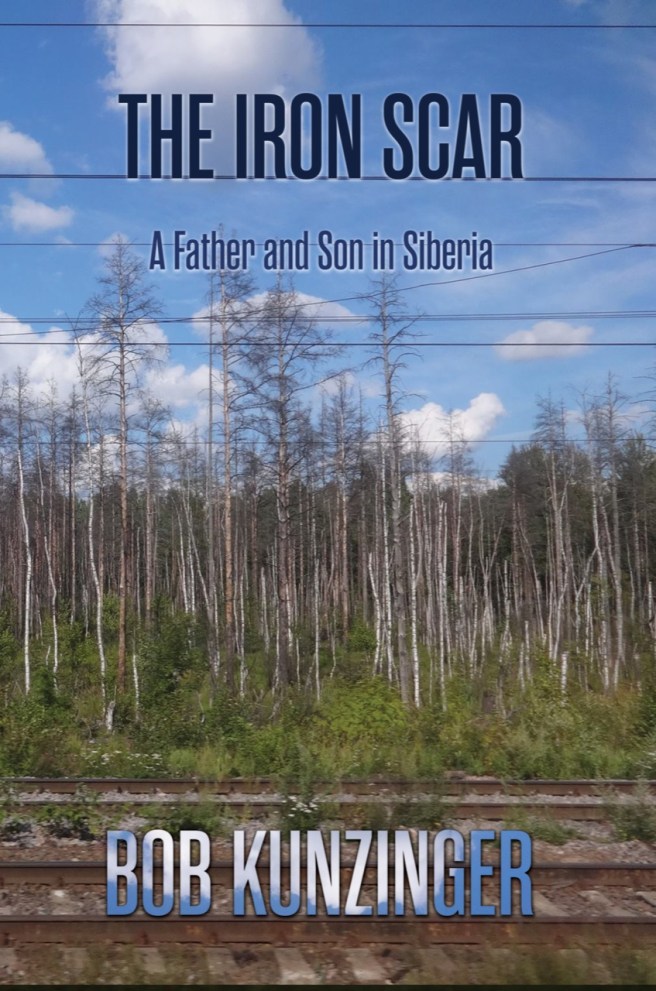
I’m never driving again to a place I can take the train. I’d fly, of course, if it was a great distance. Well, except if the purpose of the trip IS the train, like in The Iron Scar, which, ironically, is why I’m on this train to begin with—to get to a convention in Philadelphia for the launch of The Iron Scar, do some book signings and readings, and hang out with friends. $32 bucks. Geez.
The dining car earlier filled me with a sense of some sort of powerful memory of chess, and vodka and beer,
of onions and sliced salmon and borsch. Of loud laughter from new friends and the cacophony that is a group of drunk Russians speaking their Slavic tongue for hours. The rumble of the train, the traditional music,
the hard, heavy slamming of the cabin door when others are trying to sleep, the low glow of Michael’s book lamp on the bunk below me while I’m trying to sleep, his harmonica playing American folk music in the passageways between cars, the uproar at “Checkmate,” which apparently is a universal word,
the old man in the dining car late one night just above the Mongolian border, of the hallways lined with travelers gaping at the dangerously swollen Amur River, of the ease of heart and spirit when the skyline of Vladivostok came into view, of
the disappointment when the skyline of Vladivostok came into view, because the beautiful bonding journey was coming to an end, of course.
I hope people read my new book and discover this for themselves, discover the hesitancy of letting go of their children when they are no longer children, of letting go of their fathers when they are no longer able to live the life they had lead, of letting go of our own trepidation at getting older, of being next in the line of succession, of moving further down the tracks without knowing what to expect, trying to enjoy the ride the best they can without losing sight of the horizon.
I hope they read my book that is not so much about trains but the ride, not so much about Siberia but those distant places ahead of us which seem so foreign and barren yet comprehensible once we are forced to face it.
I’m almost in Phlly. This was a deeply fast ride. I tried to enjoy it the best I could, tried to meet people and equally avoid them, spending time alone in the booth looking at the beautiful passing of the world outside.
If I could only take with me one thing from this ride I’ve been on, it is that I tried to spend as much time as possible witnessing the beautiful planet I’ve been privileged to see so much of.
It’s been one hell of a journey. A bargain to be sure.
In the early ‘90s, I stood in line at a bakery in St. Petersburg, Russia. I was in the city for three weeks teaching American culture to the faculty at Baltic State University. The entire nation had just opened up after seventy-five years of communism and four hundred years of czarist rule. Things were a bit unorganized and haphazard. Yeltsin was in charge but not really; the Russian mafia was in charge. But that’s an entirely different story with a very bad ending for so many people.
But in the early ‘90s my colleague Joe and I had an apartment near the Gulf of Finland, not far from a family who we paid a great deal of money to host us for three meals a day plus tours. It was incredible to be part of all these changes with this family—him, a former Soviet Naval Captain whose job had been to search the arctic for American submarines, and her a translator and professor of English and languages at the university. We became family. More stories.
But mostly Joe and I discovered Russia on our own when not through the experiences of this family whose own changes were occurring daily. Understand, Russia never knew democracy, never knew capitalism.
So the bakery story:
I stood in line and Joe videotaped me waiting. But I waited forty minutes. Finally I arrived at the counter and pointed out a dozen or so pastries. She bagged them but put the bag behind her and handed me a piece of paper with the total price and pointed me to another line. I waited there. Ten minutes. Twenty. Finally when I was second in line, the cashier went outside to smoke, and we all waited another ten or fifteen minutes. Eventually she returned and rang up the sale, I paid, and I moved back to the first line where I waited as long to turn in my proof of payment for my bag of pastries.
Most of this is on tape somewhere.
That night at the college we talked about many things and answered many questions. That deserves a different story entirely, but not here. To the point: we had handed out US newspapers, and someone held up coupons and asked what they were. We explained, and he commented why in the world would you sell something for less than the price, that is dumb, no wonder capitalism doesn’t work. So I told them all the bakery story, and they nodded as if to say, “yeah, that sounds about right.”
And then he asked, “So how is it different in America.” I love a good setup.
I told them: In the states the cashier is fired; she sucks at her job and I’m losing business—you know why? Because Joe has a bakery across the street and his line is moving, and my customers are heading over there, and my income comes from customers, not the government, and while your income is guaranteed, it allows you commune apartments and mafia shakedowns. We offer coupons as incentive to try my pastries, and if you work hard and keep the line moving and don’t eat the pastries, you’ll get raises and promotions and eventually own your own store.
Yeah, they didn’t get it.
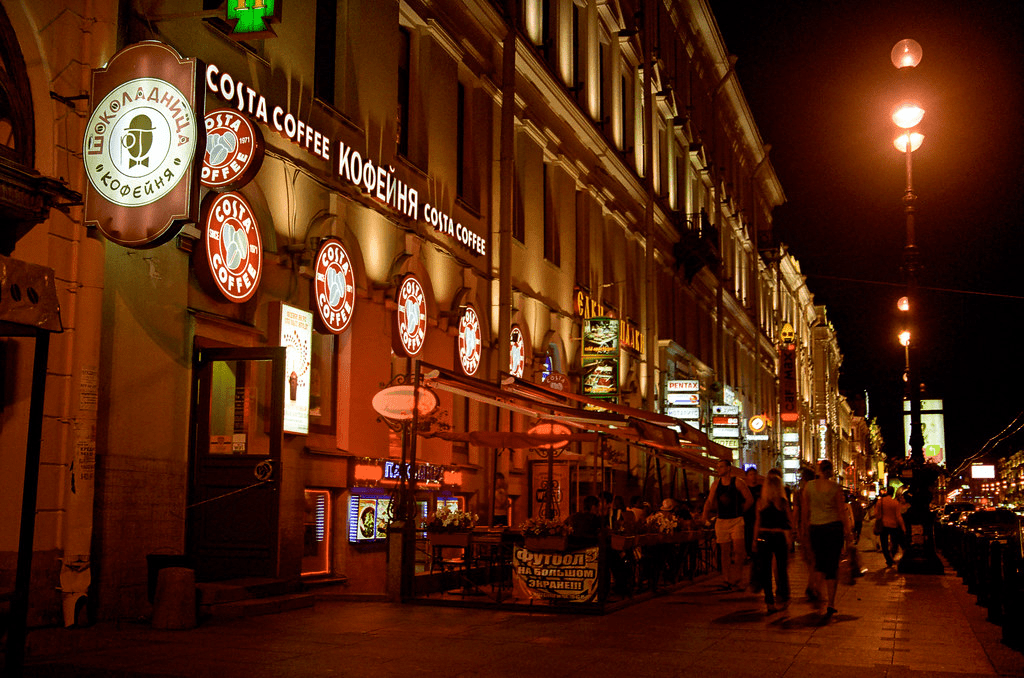
That is Soviet Russia; that is how Putin mistakenly sees Russia. That is how he was raised and was already part of that mafia/governmental system by the time we arrived thirty years ago. His Russia was a population paid by the government no matter what, and no where on Nevsky Prospect (Fifth Avenue) was a single billboard, a single neon sign, few restaurants, no advertising save Marlboro. You bought sour cream and milk from the back of trucks, or you went to the stores set up exactly like the bakery with long lines, and that was how it was since the Romanov’s came to power in the 1600s. Putin gained control by gaining control over an economy and country that was shredded after the coup; and when the government gave everyone across the empire three days to trade in Soviet money for Russian money, and the vast majority of people live three days from a bank—Putin and his cronies scoured the countryside buying Soviet money at twenty cents on the dollar and making millions.
But the Russia he runs now is not the Russia he so quickly gained control over by the late ‘90s. That Russia was still filled with people used to the government telling them what to do and they complied so long as their pension was secure. Today’s Russia has had thirty years of absolute freedom to come and go, make money a la capitalism, set up and own businesses, travel the world, speak relatively freely, and families live all over the world without fear of repercussions. Anyone in Russia who was even ten at the time of the coup is now in their forties, so all Russians forty or so years old and younger know nothing but the freedoms listed, the opportunities experienced by the west, and they like it—a lot. Enter McDonald’s, KFC, Starbucks, western music, movies, travel packages, tours of New York, London, and LA. Enter jobs with international corporations and BMW’s and HoHo’s.
This is NOT their father’s Russia.
So to keep them quiet and subdued, it is now illegal to indicate support of Ukraine, illegal to travel abroad, illegal to speak openly unless it is for the government.
People compare Putin to Hitler. That is not accurate.
Putin is Stalin.
But his narrative has a significant flaw which perhaps Stalin was able to avoid for some time—the population of Russia and Ukraine have a western mentality that simply didn’t exist there at all prior to the early 90’s. Sure, he keeps getting re-elected: At first simply for stability—no one liked Yeltsin or Zyuganov. Later he was re-elected because of fraud (the 2018 election found one of his two opponents dead and the other poisoned and later imprisoned). But the country he rules will quickly become unruly, much like the citizens of Czechoslovakia who knew democracy well when communism came in 48 and again in 68, and those who remembered how life was prior to communism refused to allow the suppression, hence the Velvet Revolution, led by those who remembered.
People have something now they didn’t in Stalin’s day—a basis of comparison. They’ve not had to stand in line for pastries for three decades, and they have family not just in Ukraine but throughout the world. The government, the military who act out of fear of Stalinesque punishment (like the Not One Step Backwards decrees which insured that any Soviet soldiers retreating or disobeying would be shot), cannot sustain the isolation required to continue the onslaught of other nations.
I’ve made more than two dozen trips to Russia, crossed it by train, traveled with more than 500 people including US Army generals, professors, writers, artists, lawyers, and others, and I kept journals, I wrote extensively to the tune of three books and countless editorials and essays.
There was so much more to write—about Valentine, my dear photographer friend, about a graveyard on the gulf, about the rebuilding of a church by another close friend, and the planned exodus of two other friends, artists, some years ago to avoid draft into the army to fight in Chechnya. Stories about old women in the Hermitage and a homeless man who became a companion.
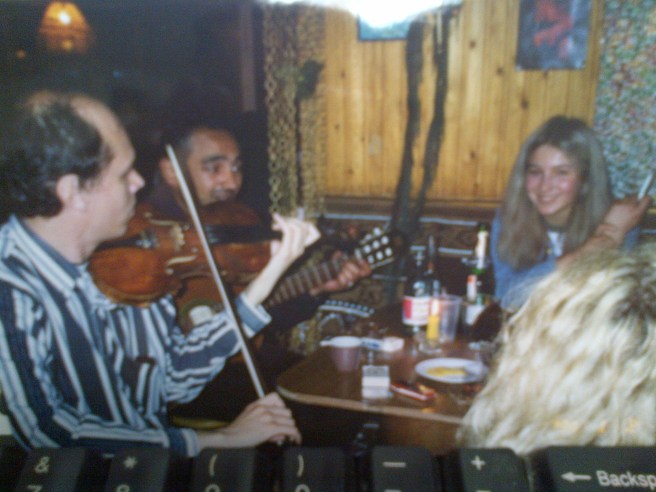
And I could write an entire book about The Shack, about playing guitar with a gypsy band every night until five am, drinking outlawed Georgian wine and laughing, teaching them “American Pie,” learning their folk songs which made us all cry despite not knowing a single word.
For thirty years Russia was a fine combination of history and romance with hope and emergence, like a young child with an old soul. And I have full confidence when the dust settles, the that Russia I came to love will survive. The bell of freedom rang for those people years and years ago, the chimes of hope, the echoes of prosperity.
The old truism is indeed true: You cannot unring that bell.
Oh I have stories. Geez what a time it was. Nothing is what I was told it would be when I was young. Nothing.
I’ll go back, but I don’t see a need to write about Russia anymore.My last piece of writing besides this short blog is my book in which my son and I travel from one end of the country to the other, and we see the world together, enjoying the fragile and beautiful passing of time. How can I possibly follow that?
So many people talk about war, about poverty, emigration, about nuclear fallout and political discourse. The news is now riddled with bullet point reporting about stranded soldiers, homeless families, courageous politicians, and psychopathic leaders. You’d hardly know they were talking about humanity. You’d never guess they were talking about us.
The top of the hour take on today tells me a few million people must live elsewhere, most likely forever, that the cost of gas is so high it is no longer cost efficient for minimum wage workers to work unless they bike or bus. The cost of food will rise, as well as the price of everything trucked, shipped, or flown to somewhere else to consume.
Covid is still killing people, and controversy concerning restrictions consumes organizational meetings and town hall events. Two people were shot and killed in Worcester, Massachusetts, last night, and those late souls were just two of two hundred and seventy others in the last twenty-four hours.
The view from this wilderness is discouraging.
So many people talk about sanctions and retaliation, about cyberattacks, about drone warfare, about soldiers looting and soldiers who have no idea what they’re doing there to begin with. So many people talk about inflation and recession, about climate change and burning swatches of America.
The headlines have gone bold on a daily basis, largest type of the fattest font, that bold type normally reserved for assassinations and declarations of war, set aside until Dewey Defeats Truman, is constant, morning edition, afternoon edition, online version, all full bold above the fold in your face headlines about how many dead, how many fleeing, how many floundering in some nether land on their way to Poland or Germany or Alabama or anywhere that’s somewhere else. Headlines about a leader misleading his nation, another leader leading by example, and a little girl singing a little girl song in a shelter. She holds a kitten.
Some people will believe anything. Some people need to believe in something. Some people believe that if you believe you’ll be fine.
This is not how I wanted my fourth quarter to start. It’s been a good game, mostly. I’ve had some incredible, once-in-a-lifetime plays, well more than once, but I’ve fumbled as well, threw my share of interceptions. But it’s been amazing. I trained across two continents; I walked across a country; I reconnected, resigned, regrouped, then remembered what it was I wanted out of life to begin with. And it’s not to listen to so many people with no expertise decide exactly what’s wrong and who caused it; it’s not to listen to so many people bend toward the fight instead of negotiation, lean toward aggression instead of forgiveness. This is not how I want the fourth quarter to play out. Clearly I have more comforts than the vast majority of this world; I’m not “sitting on the cold floor of a train station” as some random posts remind me, insisting that since I’m not destitute and homeless I should shut up. I agree completely with this sentiment; I’ve no reason to complain. But this isn’t about empathy; this is about my inability to absorb anymore disappointment with a species with such capabilities as to create miracles on a daily basis yet falling faster into a vacuum of violence from which it doesn’t seem possible anymore to escape.
I’ve tried switching my meds, I’ve tried exercise and eating differently, I’ve tried laced lollipops and tiny bottles of Baileys.
I’ve tried. But still, I need to try something else. So I remember that...
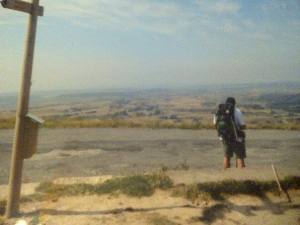
when you walk five hundred miles, you note each step, your life slows to some equatorial pace, and you can feel the air move around you, the subtle brush and lift of a soft breeze come across a field. Every day is an eternity, each moment you find yourself exactly where you should be with whom you should be with. Each person crosses your path for a reason, and each reason evaporates with the next step, like a constant stream of rebirths, an endless loop of beginnings.
This is how I escape the persistent pounding of chatter, the numbing talk shows filled with nothing more than speculations. This is how I keep from falling: I wonder, would anyone notice if I just walked away, headed south along the coast, hitchhiked, bussed, trained, away from here? Would anyone notice if I ended up in Pied de Port, France, looking out toward the Napoleon Pass across into Spain, out of reach of the rising tide of so many people?
I’d like to believe that the view from this wilderness is always optimistic, and so many people have commented on the beauty of this wilderness, the sunrises and nightfalls, the slow glow of dawn sweeping gently across the bay and stealing the day, but the true wilderness that must be explored is within, always first and last the wilderness within, and that is very difficult to do with so many people talking about so many people dying.
I wish that I could slow the whole thing down. The world is changing again, and it’s not looking like a strong narrative is headed this way, but there are still so many people I want to spend time with, so many places I’d like to see.
I had a bad night, last night. Couldn’t sleep, finally wide awake at four am talking to ghosts and sitting at my desk. Part of it is standard anxiety, part of it is staring a cold-hard truth in the face, and that usually happens with the utmost clarity at four am.
Then on the drive to work I listened to the news. Yeah, I have no idea what I was thinking. And here I had Jason Isbell in the cd player, but no, I went to NPR. Kiev, Moscow, invasion, twenty-mile Russian convoy (now thirty, now forty, now fifty), nuclear arsenal on high alert, one million Ukrainian refugees fleeing for elsewhere from their homeland which has stood for more than a thousand years, long before Moscow.
So I checked my email and a dear friend whom I’ve known since 1994 had written. He lives in St. Petersburg and said they’re probably losing all social media, he can’t travel anywhere, food is hard to find, and everything he owns, including his finances, are worth less than half than they did one week ago. He worries about his son.
I thought of the people I’ve met across the entire stretch of Russia from the Baltic to the Sea of Japan, and how none of them–seriously, none of them that I’ve ever known and by all of the accounts I hear from journalists and other writers in-country, support Putin. They are indeed opposed to the invasion. These are people who, unlike Putin, grew up in a non-Soviet state, where western goods and services and freedom to travel were standard. They understand the invasion of Ukraine is supported by and carried out by a small group of bitter men from Soviet Days who have no respect for human life.
So I wondered what it would take for Putin to go over the deep end, even further than he is, and order the release of nuclear weapons, and I realized he would have to have his back against the wall and feel like there is no other way, and I thought about how the entire world, supported by every single United Nations member country who voted today save five despicable ones, are for pushing this psychopath against the wall, and while that’s a good thing, my anxiety spiked.
So I escaped that mental bloodbath by returning to my original issue from 4am and pulled out a pad and started to make lists of how to handle that, and I briefly thought “sure, go ahead, push Putin to the wall: two problems solved,” but of course I just needed caffeine. Then I spoke to a dear friend, and though I spoke more than I listened, nothing cleanses the soul like talking to someone who knows you now and knew you then.
Then I got home and it started all over; no problems solved, but definitely better perspective having gotten through a beautiful day, and I went to the river, my river, here, and
well
every star in the sky must be visible tonight. No city lights, no moonlight, just starlight, and it’s brilliant. Orion and his troops are on full blast in the south, and just to their left Sirius is seriously awake this evening. I stood a long time, saw a few shooting stars, made a few wishes (come on, you have to), and walked along a bit, the waves gentle, a few boats out past the channel. And I remembered how sometimes nature grounds us, not because it makes us feel small, though that too, but because it has such integrity, such steadfast confidence. Five hundred years ago what people in this wilderness witnessed is not much different than I saw tonight, despite the wars and poverty and the combined human sense of fear at falling away from itself since then. Nature simply is. What a lesson; Buddhist in its manner, eternal in its truth: Nature simply is. As we should be.
So I came up to my desk and in my search for one document found another. I read it, sat back and wondered which ghost put it there for me to find tonight of all nights. Might have been Bobbie–she liked poetry, or perhaps Lianne–she taught poetry. Wasn’t Dave; Dave would have left me some Bowie lyrics again.
Doesn’t matter. I’ll ask later when the anxiety kicks in.
In the meantime, it is a good one to remember–that we are, as the Bard once touted through Gertrude, simply passing through nature on our way back to eternity.
Still, the news makes me miss my friends tonight.
Seriously. Read this:
There Will Come Soft Rains
by Sara Teasdale
There will come soft rains and the smell of the ground, And swallows calling with their shimmering sound;
And frogs in the pools singing at night, And wild-plum trees in tremulous white;
Robins will wear their feathery fire Whistling their whims on a low fence-wire;
And not one will know of the war, not one Will care at last when it is done.
Not one would mind, neither bird nor tree, if mankind perished utterly;
And Spring herself, when she woke at dawn, Would scarcely know that we were gone.
by Eugenia Sakevych Dallas, published in Nova Ukraine in 1945, translated by Marko Carynnyk
“1933”
Peaceful, hard working, happy, gregarious people, With their golden fields of wheat Blue skies, Ukraine my country, Breadbasket of Europe. , Suddenly black clouds of terror From the neighbor to the North. Darkness blew over the green hills The peaceful golden steps of Ukraine.
Bullets riddle my country, They took my freedom, my land And brutally turned us into a colony Run by hostile ruthless outsiders
By Force they made us give them All our food to the last morsel. In return they gave us prisons in Siberia And Genocide in Ukraine.
Countless Numbers of Children With protruding frightened eyes, outstretched little hands Pleading for food, crying. Some of us survived – Orphans Forever
The free world was silent!
Our Hopelessness, Bewilderment, Gave way to panic. We sunk deep into resignation, Mental apathy, stupor, and despair
The Communist Terror, their sadism Made us pay dearly with our lives. Extermination by slow starvation Was done quietly, so that no one in the world Would hear or know about it.
We Must Pledge to Preserve, Memories of Ukrainian Genocide To ensure that the world, Does not repeat the past.
We must not forget the pain That was inflicted upon Ukraine. We must remember our Obligations and responsibilities Toward our loved ones, who perished so unjustly Today and Always, Their memories must be kept alive forever.
The Russian Revolution Creation of world Communism in 1932 Let to a yet unknown Genocide In Ukraine, a story that was never fully told.
The preorder is over, and Amazon will not start shipping books until April, but Kim, my publisher, sent me a carton of the ever perfect number 42 books, and I can ship you one signed, (or not signed) to anywhere you’d like, this very afternoon.
Here’s the link: Send $20 to this link and that includes shipping, and email me the address at bobkunzinger@yahoo.com and I’ll mail the book today.
“Graveyard” by James Cole Young (author’s collection)
Note from Bob: This piece was originally written as “One Deer Running” for a seminar at ODU in 1998 with Mike D’Orso, then updated some years later and published in various journals and eventually in the collection, Borderline Crazy. I miss Cole, our long, late-night/early morning conversations. For reference, when we were hanging out together, Lennon’s “Double Fantasy” album had just been released and American hostages were being held in Tehran. I was 19 or 20, played music, and little else mattered but art, whether visual or otherwise. Then again in the late 80’s, and again from 1999 to his premature death in 2005. I’m finishing an entirely new essay about Cole and his work for an artist magazine, so he is very much on my mind. I won’t be publishing here pictures of his most brilliant work most of which remains in his daughter’s possession until the forthcoming artist’s magazine piece.
One Deer Running
for Cole
In autumn of 1987, I wandered into the Fishback Galleries off 57th street in Manhattan. The elevator leading to the studios had violet wallpaper with deep yellow flowers and dark green carpet. Spacious abstract paintings of some west coast artist filled the gallery. Large paintings with gobs of primary blues and reds drew me in, just paint on canvas, lines and circles forming predetermined direction with no apparent purpose.
When the curator approached, a notebook in her hand and clearly a lot on her mind, I felt out of place. But I asked anyway. “Do you still have the works of Cole Young here?” I thought I sounded artsy, as if I tossed out the names of landscape artists everyday over espresso at Raphael’s and Michael’s Pub. “James Cole Young. I think he had a show here last spring,” I explained.
“Yes,” she said, scanning a bookshelf for a specific title. “Two in the back office are all I have left.” She pulled out a thick volume and fingered the index. “You may spend a few minutes looking about at our current artist if you wish.” By the time she finished speaking, she had already returned to her desk‑‑a long virgin‑white graphics table covered with neatly stacked manila envelopes and coffee table books.
I followed her.
“Did he do well? I mean‑‑how did the show go over?” The glare of her cobalt blue eyes told me How did it go over? was not a phrase heard often in these titanium-white walls.
“He did well,” she said, turning back to her book. “He was one of our most successful artists. Some fine clients secured his works.”
Fine clients.
Martin Scorsese; John Reed, CEO of Citibank; Walter Shipley, CEO of Chase Manhattan, Wilson Greatbatch, the man who invented the pacemaker.
Fine, indeed.
“What paintings are left?” I asked.
Again, she raised her eyes, more slowly this time. Her Indian red skirt lifted toward her yellow hue thighs. She wore black heels. I wore jeans, long hair, and the scent of poverty. “A cloud scene,” she said, this time with a sigh. “And,” she added, “‘Homage to Cole’.”
“Homage to Cole.” I couldn’t believe it.
“Can I see that one please?”
“Please,” I went on. “Would you mind? I was there when he painted that. I was in the studio, smelling the paint. I remember when he moved a few things because they didn’t look right.” Her book slipped from her fingers, and she lost her place.
“I’m sorry,” she said. “That wouldn’t be possible. It is locked up for a buyer.”
Someone bought it, yes. The sale had been secured for tens of thousands of dollars and the painting eventually hung in a second-floor lobby of the World Trade Center.
The afternoon was waning as I stepped back onto 57th Street. The slate blue sky had darkened, and the sun had turned pale, a yellow oxide. They didn’t have his self portrait, I thought. We studied his self‑portrait in his class once, I remembered, as I walked toward a street vendor for dinner. I can picture it. He has no shirt and is standing sideways in front of a window. I think there was a dead bird on the sill.
And “Homage to Cole” painted in respect to one of the most influential artists in Cole’s life, Thomas Cole. Cole Young loved the way after painting landscapes most of his life, the most beautiful work Thomas Cole did was of the sky, where the Hudson School painter found “grace and expansive energy.”
Allegany, New York, is almost as far from the Fishback Galleries as the New York landscape allows. The small village on the state’s Southern Tier counts just six thousand residents. The town and its larger neighbor, Olean, are surrounded by the Allegheny Mountains while the Allegheny River S‑curves its way through, shallow enough to wade across. Pennsylvania lies just beyond the valley to the south, and Buffalo, about 75 miles north, is the closest town of any sprawl. In the midst of these “Enchanted Mountains” is St. Bonaventure University, which boosts the community’s head count another 33 percent.
It’s an old campus, dating to 1858, founded by Irish settlers and Franciscan Priests. Most of the buildings are surrounded by forests of gold and red and dark green and yellow trees and sprawling lawns. One of its older buildings is St Francis Friary which once housed priests and seminarians. In the mid‑seventies it was converted into a dorm with its own dining hall, chapel and majestic views, still students back then would shy from its remote location: It stood alone, accessed either by road or a walk through the woods on a narrow trail. When the University started its art program in ’75, the former friary was perfect. In the basement was an old storage room‑‑great for a teaching studio. Beneath it, deep in the ground, hid an old library once used by Franciscans ‑‑perfect for an artist’s studio.
Administrators never brought dignitaries here. The art studio and classroom were not on the campus tourback then‑‑someone might have run into Cole Young. At twenty-five, with long hair, mustache, and lanky limbs, Cole bent forward when he taught his classes, making sure his opinion, which bent to the left, was clear and understood.
“I can smell dead priests here, man,” he told me once. In class back then, students moved about—painting, drawing, modeling, seemingly on their own yet under Cole’s eyes, and even more, his preaching.
“Trust yourself,” he told a self‑conscious student with a pencil and a large pad. A nude female sprawled across an indigo blanket on the floor. The student was supposed to draw her without looking down at his own pad.
“Let go. You know what her hair looks like. Let the mind and the hands work together.” His head would thrust with each verb, for emphasis. He’d throw words at his students, desperately afraid they wouldn’t get it‑‑not the drawing, but the metaphor of it all. “You’ve been doing things without looking your whole lives,” he called to everyone. They all stopped. Cole was preaching.
“You tie yourshoes without looking sometimes, right? Button your shirt? Pee?” He turned back to the student. “You can find your pecker without looking, right? Know where it is?” Cole backed off. He made his point, albeit with the abrasiveness of a van Gogh brushstroke.
Then he taught. “Do it man, you can. Trust your hand. No, it will not look like a photograph. No, it may not look like hair. But it will be movement. It will be information.”
Then to everyone: “It is all information. Right? Talk to me. Tell me what her hair looks like. Tell me where it turns and darkens and falls freely. Give me all the information you can.” Music played when he taught. Dylan. Lennon. Van Morrison. Old Jackson Browne.
He and I would hit Perkins Pancake House at three am after some painting, music, and ranting. Everything was an issue for Cole. Some kid came in wearing a Nike shirt and Cole revved up. “You work for Nike?” he asked. The kid who seemed either on his way to or from being drunk said no. “Then why are you promoting Nike? You get paid to wear that shirt? We’re billboards! We’re being sucked in by the swoosh.” The kid just ate his eggs looking confused.
Cole once bought a van and demanded the dealer’s metal symbol on the back be taken off. “I don’t work for them. They want it on there they should pay me.” They took it off.
He was a skinny version of Harrison Ford when he smiled, his hair somewhere between auburn and light brown, long, near his shoulders. And his eyes would dart about the room while teaching or lock into another’s when one on one. Cole played his game and if you couldn’t play along, leave, take economics where no one gets it. Get off the freaking bus. Drop out. “Life, man. That’s all this is this whole education thing. Life. That’s it.”
Cole and his wife, Sharon, moved to a farm in Allegany. It was so far off the beaten path, you had to want to go there‑‑and most people who ended up there were usually lost. Still, Cole spent most of his time in his studio beneath the art classroom in the old friary on campus, about seven miles away.
Most mornings while I was a student, we’d be in the studio till three am, Lennon on the stereo, Cole smoking pot, working on something that looked like a valley beyond a secluded scenic overview. Pictures taped to the walls represented nature’s original inspiration for this work. Smoke filled the studio. Hours passed and he still worked on a rock. Same rock he had been working on for a week.
“Shit.” He put down his brush. “There isn’t enough detail in the trees.” He looked at the pictures. “See? I have to move the rock.”
The fine detail in “Homage to Cole” is laborious painting. A stick in the brush, fallen from the sugar maple in the foreground, was a week’s work. The birch tree, which gave him trouble in the painting, took even more time. It was done between classes, during lunch, late at night when no one was around, in the early hours while talking about John Lennon and listening to music. We’d be quiet for a while when he’d blurt out “‘life is what happens when you’re busy making other plans.’ Geez. Lennon’s a freaking genius.”
This was about the time of the Iranian hostage crisis and pictures of starving children in the third world poured in on network television every night. Cole was pissed. “No one in this country is going to give a damn until that kind of terrorism happens here, in America. Then they’ll wake up.” His anger produced two canvases, both set in New York City, and both of tall buildings ablaze after a terror attack. This was twenty years before 9/11.
Cole Young’s paintings have been compared to JMW Turner and Caspar Friedrich. One critic wrote that his work has the passion and range of Friedrich: The “calmness that evaporates into furious motifs in nature,” carried out with one of the most varied palettes in contemporary art. To Cole, rocks are not brown or slate or tan or white. They are a composite of colors. To use one color of oil to represent that rock is, to Cole, to focus on vague images instead of scrutinizing the scene. In the 1800’s, Friedrich used similar colors and approach. He too would labor over color, layering one on another and mixing and scraping until the right tone was achieved. I once pointed out that van Gogh said to leave the obvious vague. “Van Gogh was an asshole,” Cole responded. So it was.
Friedrich’s contemporary, Turner, whose work hangs in museums throughout the globe, mastered the turmoil in nature as well, particularly clouds. “Cole Young’s work,” one Buffalo art critic wrote, “is not unlike… the early paintings of Turner.”
With that remark, exhibitions began to emerge. So did his work. The volume of work in his studio grew. Three walls were blocked by large canvases in progress, balanced on cinder blocks, lit by huge mercury lamps to insure perfect color. All about each canvas were books‑‑Friedrich, Turner, Constable and pictures and studies of subjects. All are landscapes, though that term‑‑”landscape artist”‑‑was not right, not to Cole.
When his class studied a “landscape artist,” he’d say, “It sounds like he’s working for a garden center. It’s just a tag. What gross information does ‘land‑scape artist’ carry? Huh?” He smiled. “He’s a painter. He paints nature.”
“And damned well,” he’d add, and everyone laughed. Cole didn’t like to offend people, though he knew he did. “I’d rather offend some of you,” he told his class, “to wake you all up, than be oh‑so‑damned‑polite and have you not get it.”
What Cole got were acclaims in the art community and New York’s Fishback Gallery opened his one‑man exhibit. And he sold well there. Fine clients bought his paintings. But Cole sank into a deep depression, a lethargy he couldn’t explain, couldn’t control.
Nine years of complacent monotony later, in the spring of ‘96, during a brief period of what Cole later said was false energy, he painted two small canvases. They are both called “Graveyard.” In these paintings, he “ties nature directly to the human impulse to acknowledge and commemorate its dead.” It is a row of dead trees seen close and from a low vantage point from within the “decayed woods.”
The observer is inside, looking up. The view is “locked directly to the shredded, peeling bark and broken limbs of a few pitiable stalks. There is a hint of color in the brush, and the sky is neither threatening nor inviting.”
He also painted one large painting. A 4’ x 7’ scene in autumn woods, but the emphasis is on a bubbling, dark blue cloud. It is called “Difficult Cloud.” These three paintings head to the Buffalo State University Art Exhibit, win top awards and critical acclaim. “Difficult Cloud” sold for eighteen thousand. Still, these moments were patches of blue in an otherwise apocalyptic sky. Teaching, painting, nothing could keep Cole young anymore. He was a student staring at his hands because he didn’t trust himself. “I’m holding cigarettes where a brush should be,” he told me once.
In the late nineties, his daughter Dylaina encouraged him to join a smoking-cessation seminar. It was late and we sat on the porch of his farmhouse. He told me about the first night at the seminar and how it still gives him chills. On the way to the high school while driving along the upper end of 5th Street in Allegany, Cole saw a deer running across a field. At twilight‑‑too early for headlights, too late for the sun‑‑he watched the grace, the stretched limbs, the beauty. He also noticed that the deer, on its present course and speed, would have run into the side of his van.
He slammed on the brakes and old oil paint tubes flew out from the back with cans and bottles. The deer veered into the woods. Cole loved to philosophize, though, and he sat there a long time considering the collision of beauty and death. He lit a cigarette to calm his nerves.
That night, he sat among twelve other men and women in a room at an Olean High School. He waited silently. The director of the seminar walked in and talked. “You start. You stop. You will. You won’t. You’ll quit on your birthday. You’ll quit New Year’s. You’ll slow down. You’ll quit for lent. Listen, just quit smoking or drop the whole fucking issue,” the guy said. Then he left, telling them he’d be back in ten minutes.
Cole smiled. “Ingenious,” he had told me. To a participant that night, Cole said, “The man is brilliant. Don’t you get it, man? Christ, this is freaking ingenious. Don’t you get it?” He drew the whole room in, some talking, but most listening to Cole.
Cole finally got it. He returned to the studio with the enthusiasm and persistence of ten years earlier. He painted, he contacted the galleries again all eager to pick him up, all still a bit hesitant to commit to an artist who might drop out of sight again. Do it, don’t do it, whatever, but shut up and paint—that became his new philosophy. He stormed back into his studio. He traveled again, sketching landscapes and taking pictures in the Smokey’s, in the Adirondacks, in New Hampshire at a friend’s farm, at Mt Washington. He asked me to bring him to Russia. He worked. But our trip never materialized. A few years later, he suffered the chemo and operations to abort lung cancer about the same time he created large room-size canvases of clouds above New Hampshire’s Mount Washington. He was running as fast as he could toward a collision he knew was approaching, but he did it with grace. His later paintings show his mastery of color, especially of the sky, and the luminous clouds rise on endless canvases.
In September of 2001, when the towers fell, Cole heard it all happen from his studio down under the Manhattan Bridge Overpass. He didn’t think right away about “Homage to Cole,” one of many expensive pieces of art vaporized when the towers tumbled. He thought of the two canvases of terrorist-attacked buildings in Manhattan from two decades earlier, and chills ran up his spine.
Cole’s hero, landscape artist Thomas Cole, died young after a short illness, but his five-painting series TheCourse of Empire, painted in 1836, exposes the progress of a society from its savage beginnings to the apex of luxury and success and finally its demise and extinction. Later, he looked upward, detailing the colors and beauty of the sky. Both Coles loved symmetry.
Despite his illness, the energy in his voice didn’t fade. He called me, exclaiming, “I want to go to China. Let’s go to China and head down to the southern provinces where you can write and I can paint a lifetime of work in one month.” It was as if he was a teenager again when he sold his first drawing to the Saturday Evening Post. “China, Bob. You’re going. I can’t do that alone, it’s not in me but life is finally opening up,” he said. He wrote the next day to expound further about China, and he said he felt alive again, he said lifehad finally exposed itself to him, and he finished with, “I hope your journey on this planet reveals itself to you.”
I never spoke to him again.
When Cole Young died that November, I walked out and stared into the brilliant autumn sky. It was neither threatening nor inviting. High clouds reached across the horizon. I can see him leaning into me, preaching, telling me about the allusiveness of clouds, about their very temperance. Cole had always been a composite of colors, and what ignited him most was when someone looked at him, or anything, on the surface only. “We were born with energy and depth, man. Use it.” What energy he had. What remarkable energy his paintings generate; proof that sometimes the simplest and most fragile brushstrokes can create the most vibrant scenes.
quick artist sketch while hiking (author’s collection)
It occurred to me one day on my porch while staring at the surrounding woods, that at some point less than one hundred years ago none of those trees were there. The land has beautiful eighty foot oaks, some maples, tall thin pines and various other hardwoods including black walnut trees, which I am told can provide the ingredient necessary in the liqueur, Wild Spiced Nocino.
The branches protect birds as diverse as red-tailed hawks, downy woodpeckers, and countless chickadees, and they are habitat to other wildlife including one flying squirrel we spotted a few years ago when his tree fell. The squirrel was fine and found a new home in a white oak. And of course the fox which frequents the lawn.
But a hundred years ago this was just land, sandy land, edged by the running Rappahannock River and backed by equally treeless farmland. A century before that these nearby plantations provided food for the region at the expense of slavery, and some slave descendants remain, selling vegetables at food carts out on the main road, or working the bay as watermen, telling stories about how the Chesapeake is just about farmed clean every season by crabbers at the mouth or the headwaters leaving nothing left for those working the midland shoals.
This area hasn’t changed much in one hundred years.
It is like this everywhere, the coming and going of things. In Manhattan a few hundred years before the wild construction on bedrock, coyote and deer were common. It was hilly (Manhattan means land of hills), and where the United Nations stands once stood grand oaks. The Lower West side was a sandy beach, and ecologists say if left to do what it wanted, most of the upper west side would be covered in trees and vines, shrubbery and wildflowers inside twenty years. I can’t imagine what my house would look like if left untouched. When I don’t mow the lawn for a few weeks it looks like a refuge for timber wolves.
But these trees weren’t here a century ago and I sat on my porch and wondered if there had been other trees or if this land was barren, or was it used by the Powhatans, or was it home to some former slave family, or just a dumping ground. Evidence is scarce, buried beneath the roots of this small forest. One guide at the Mattaponi center not far away told me this had always been hunting ground for the Powhatan. I’m glad it wasn’t a burial ground. I’ve seen Poltergeist.
This happens to me everywhere I lived; I like to imagine what was on that spot one hundred, two hundred, a millennium earlier. The house I rented in Pennsylvania was used as a hospital during the civil war. Before that it was a farm. Now it is a Real Estate office. The maples which lined the road and shaded the living room are gone. Someone planted new ones but it will be decades before they mature. My house in Massachusetts was a fish market a century before I sat at the kitchen table looking out at the Wachusett Reservoir and wrote a book about Vincent van Gogh.
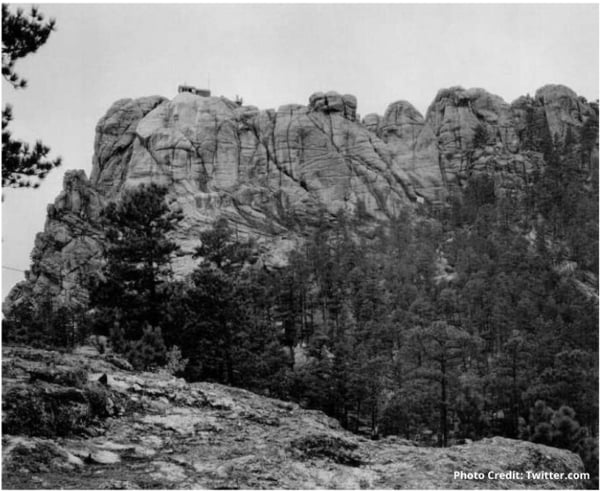
Purpose moves on with time. Maybe that’s why I’m so mesmerized by the Prague hotel I always stay at. It was the same building seven hundred years ago that it is now, only then it was used by servants for the castle. In Russia most of the lands upon which St. Petersburg is built were not lands at all, but marsh, and Peter the Great filled it with stones to create his “Venice of the North.” And a Lakota medicine man, Nicholas Black Elk of what is now South Dakota had a dream in which he saw “Six Grandfathers,” for the directions–North, South, East, West, Up, and Down– and his dream was the vision of a mountain that was to be left alone to symbolize kindness and love and wisdom, as present in human grandfathers, and it was to be carved only by wind and rain, and so it was. Until 1927 when Gutzon Borglum “began his assault” on what became Mt. Rushmore.
I like knowing but I like not knowing too, like accepting truth, like unearthing reality, like facing our fears.What was on the land where you are now? What will be? What traces of us will linger, offering a hint of now to some other now?
This house is the only house which ever stood on this former hunting ground, and is the only place I have lived for this long–twenty-six years. The house is made from western pine forested on land which I assume is either now empty of trees or filled with young pines waiting to become log homes. What will be left a hundred years from now? Will someone sit on this same porch and look right out toward the bay once these oaks have long fallen? I know this house, this land, is a “hotel at best” as Jackson Browne despondently points out. “We’re here as a guest.”
I know nothing is as permanent as nature, despite the constant changes. It simply isn’t going anywhere. We are. So I like to remember that a century ago farmers sat not far from here and talked about the bounty in the soil, or talked to 19th century watermen about the changing tides. And I like to realize that a hundred years before that the nearby swampland, now home to so many osprey and egrets, was a major route for runaway slaves. They’d have been safe in these woods, if there were woods then.
I like to do that because it reminds me a hundred years from now perhaps I will have left some sort of evidence of my passing through; even if just in the cultivation of language, the farming of words.
So I sit on the porch and listen to the wind through the leaves. Itis now; it is right here, now. Sometimes at night we stand in the driveway with the telescope and study Saturn, or contemplate the craters on the moon—both here long before us and in some comforting way, long after we’re gone–all of humanity.
In spring and fall the bay breezes bring music even Vivaldi would envy, and I’ll listen to his Four Seasons, written nearly four hundred years ago, and listen to the wind through the leaves of these majestic, young trees reaching eighty feet high, and be completely, perfectly in the moment.
Despite the warming trends, the extreme tendencies of weather, the fragile ecosystem which sustains life, nature is still the only place I have found that really doesn’t change. It never has. Ice ages and dust bowls will alter it to be certain, but she has mastered the art of adaptation, and eventually some seed will take root.









 a view from this wilderness