The Literary Journey of The Iron Scar

cover photo by Michael Kunzinger/Cover design by Jacqui Davis

The actual journey took about a month in 2013. We left Williamsburg, Virginia, by train to New York, spent precious and never-enough time with my late dear friend Fr. Patrick Brennen Fitzgerald, and laughed all night with my cousin Roy and his wife Patty, two of my favorite people. We ate our way through Manhattan, and the next day flew to St. Petersburg where we boarded the famous trans-Siberian railway. Actual travel time on the train was about a week, but we disembarked for exploration several times, ending about three weeks later in Vladivostok.

I knew from the inception this was a writing project, and my son, Michael, was along to take thousands of photographs. They would be our primary souvenir, of course, and used to trigger memories and tell stories. But they would also go on to be used in solo art shows he displayed as well as for use in a myriad of articles for print and online journals. The book has a healthy selection of Michael’s photographs.

While the text has just over a dozen chapters, various versions have been printed in different combinations of content, style, format, and with or without artwork. Usually with. I knew I didn’t have the authority or expertise to write historically or with any accurate social commentary about Russia or the rail, and others had already done so with more skill than I could have anyway, including one of my favorites, Ian Frazier (Travels in Siberia). David Green, too, of NPR, wrote specifically about the ride in Midnight in Siberia. I had no intention of duplicating these men.

Being the son of a father who was almost ninety years old at the time, and the father of a son who was about to venture out into his own life at the time, I found myself deep in the narrative of middle-age, of letting go, of contemplating what’s next, and of trying to balance planning ahead with my natural tendency toward spontaneity.

So to include my father on the journey, the early stories were framed as letters to my father from the dining car of the railway. I like them; I like personal approaches to writing so long as the reader recognizes herself in the piece as much as the characters on the train. This was going along swimmingly and a handful of journals published the pieces with this format.

Then I went to Ireland and participated in a workshop with the deeply talented Jacki Lyden and Elizabeth Rosner. It was Liz who casually asked when reading a story of mine about floods along the Amur River, “Why the hell is this a letter? Who would possibly, during a once-in-a-century flood sit in a dining car and write a letter?”

Damn. She’s good.

So I took all the pieces published that way and rewrote in standard narrative form and discovered how much more I can do that way, and still include my father in the content without the reader mirroring Liz’s sentiment.

So I republished them all, some in various forms including other essays wrapped into them and some abbreviated and some much longer than other versions. In fact, a few anecdotes ended up in nearly all the stories published. In the end, there are about fifteen chapters rewritten and combined nineteen different ways published in twenty-one magazines and journals. But that’s not the book. The book is not a collection of essays, and I never intended it to be published as such. The Iron Scar is a narrative, one long story from New York to Vladivostok, covering more than ten thousand miles, seventeen times zones, and about two hundred pages.

I must, however, give thanks to those publishers who found something worth sharing in my stories.

Including:

The Maine Review   “On the Occasion of that Inevitable Conversation with my Son”              

Kestrel: A Journal of Literature and Art “Tracks” “Checkmate” “Off-Track”

A View from This Wilderness  

Blue Planet Journal

Warfare Journal  

Ilanot Review       

Connotation Press         

Olive Press “Dissidents”

Foliate Oak Journal      

World War Two History Magazine “Meanwhile in Leningrad”

Columbia Journal   “Tiger, Taiga”

Southern Humanities Review  “Leningrad Story”

Nowhere Magazine   “Exiles and Dissidents”              

Litterateur Magazine

Wanderlust Journal      

All Nations Press           

Silver Birch Press

Foreign Literary Journal               

Adirondack Literary Review

The Alabama Literary Review  (December 2021)         

The Virginian Pilot “It’s Not Their Fault”

My last book, A Third Place: Notes in Nature, was published by Kim Davis of Madville Press in Lake Dallas, Texas. She did a beautiful job and I enjoyed working with her and her team. An editor at a significant publishing house in New York read several of the pieces above and asked to see a more complete manuscript, which I promptly sent to her. Her editorial staff enjoyed the work, loved that it is more about fathers and sons and moving on than it is about Russia or Siberia or trains, but the marketing department said they simply cannot market this book—it is much too niche, and it isn’t worth it unless I had a reach like Frazier or Green. I don’t. I can’t even reach them.

I knew I would be in great hands at Madville, and Kim had shown interest in it before, so I signed a contract. I actually don’t think it has a niche audience, and I believe it can, with the proper marketing and publicity, touch anyone who is a parent, has an aging parent, wonders what the hell to do with their lives.

But for me, this book is a diary, a journal, a remembrance of a time when my son and I rode the railway across two continents one summer, on a journey that continues still.

The Iron Scar: A Father and Son in Siberia is scheduled for release in April 2022.

At the station in Vladivostok

Plastic People of the Universe

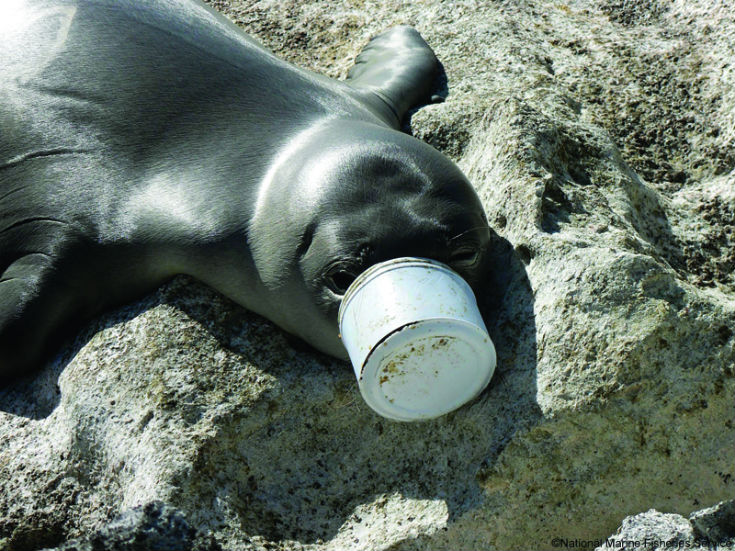
How Dangerous is Ocean Plastic? Insights From Global Experts on the  Greatest Threat to Marine Wildlife - Ocean Conservancy

When I walked out of Wegman’s in Rochester, New York, last week, a man and his two sons walked in with four large garbage bags filled with cans and bottles; each bag had roughly eighty or so in them. Inside the store are large machines into which they were about to dump the bags and receive five cents for each can or bottle. That’s about $20. And I don’t know they didn’t have more in their truck. Everyone in the area saves them or finds them, hauls them to the local market and recycles them and has enough money to buy some groceries or gas. Perhaps this man brought the boys for ice cream since it was ninety degrees out and he had an extra twenty.

I love this. I am disappointed this wasn’t available when I was in college just to the southeast of there. Nowadays in that town, the local Topps Market has the same setup, but back when I was in school, on any given morning the garbage bins in my dorm were overflowing with beer bottles and cans. Since I was always awake hours before my dormmates and knowing well the intake capabilities of the others and the party-reputation of the university, I’m confident I could have funded my education. Why why why why why doesn’t every single state do this?

But this blog is about nature, so let’s get right to it:

Last year this country threw away 1 million tons—TONS—of aluminum cans and packaging, and about thirty-six billion cans landed in landfills. That’s enough to—this is insane—that’s enough to completely rebuild the entire commercial air fleet four times over. Let that hang there for a moment.

A can in the ocean has a longer life expectancy than a human, about eighty to one hundred years. And during that entire time it releases toxic agents into the water that kill fish and damage the environment enough to alter migration patterns, infect our food, and poison the larger sea animals that accidently ingest these cans tossed by lazy ass, howl at the moon stupid people who can’t simply drop them in a recycling bin. Or better yet if they live in such a state, collect the cans and make some money.

This is Coors fault.

They introduced the aluminum can in 1959. Tin cans date back to about 1810, patented by Peter Durand, and those also last a century in the ocean, and can quickly disease and kill sea life both through ingestion and physical disabling, which is common with sea turtles and sea bird life. Off of Kitty Hawk, North Carolina, to the south of here, had Orville or Wilber celebrated that first flight with a tin can filled with Stillhouse Moonshine, and tossed that empty container into the waters off the Outer Banks, it could still be there.

And that’s just cans. Plastic bottles win for demonstrating to aliens who land here in 2525 that we are one selfish species. If I walk to the river tonight drinking a bottle of Dasani and when I get there, throw it as far as I can into the Rappahannock, if it first doesn’t get caught in the mouth of a dolphin or cut the fin of a stingray, it will still be there when those ET’s land on Parrot Island and wade to shore five hundred years from now.

Wade? Ha! They will be able to simply walk across the trash since our human race throws into the ocean every single year enough plastic to make 800 billion—EIGHT HUNDRED BILLION—bottles. Every year. And that’s just the ocean bound bottles; that doesn’t include the thirty-five billion bottles in landfills every year.

Okay—I did the math for you. If those were bottles and I got my son to put them all in bags and bring them to the machine at Wegman’s in Rochester, he’d walk out with $40 BILLION dollars.

Gone. Trashed. Forty Billion Dollars tossed into the surf every single year, just in plastic.

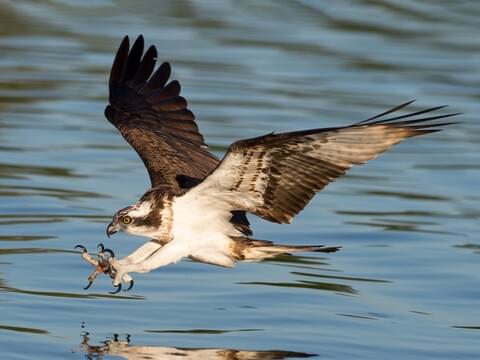
Stop it. Please, on behalf of all humans who think about posterity, about beauty, about the breaching of whales and the graceful rise of a dolphin or the glide of the osprey, cormorants and gulls; on behalf of those of us who understand the toxins being released which destroy the oxygen and compromise the very balance of nature, please, use a reusable bottle. How hard is it? You can even get one with your name on it, or a picture of your favorite Muppet.

When I was still in single digits, Earth Day started, and I remember walking with my class on the property at East Lake Elementary School picking up trash. And it was the sixties, so we already had peace and love and nature and all that on our minds from the songs and signs of the times, so honestly, we thought we were going to grow up and live in a trash-free world of peace.

Not so much.

This place is a toilet. People throw trash out of windows because it’s going to destroy their very soul to drop it in a can at the next gas station or when they get home. People can’t possibly carry canvas bags into Wegmans to shop! “I gotta carry stuff OUT of the store; you want me to carry stuff IN as well! Hell no!”

The planet is having a hard time breathing, and it is absolutely our fault, and karma being what it is, we’re going to pay the price for it. Now, we also can cure this pandemic. It doesn’t take a group effort; no one needs to subscribe to any agency or get a vaccine. Just stop throwing your crap out the window. Use a reusable bag to carry groceries and a reusable bottle to drink out of. That’s it.

Feel free to recycle this blog post to those you know, I mean you absolutely know, are still carrying food to the car in plastic bags.

The osprey thank you.

Osprey Identification, All About Birds, Cornell Lab of Ornithology

From Somewhere Deep Within

I sat on the end of the pier on the top edge of the United States with my legs dangling above the calm waters as gulls dived and fed in the Great Lake Ontario. No wind, the lake like glass, a faint haze from the smoke of the western fires, and Canada the next landfall north about sixty miles.

Contemplation time.

Of all my travels only three times have I stood near one of the Great Five. Erie, at a friends’ wedding in Angola, New York, Michigan, at a reading in Chicago, and now, here, staring out at just before seven am as the sun rises and I instinctively look out for dolphin or pelicans, conditioned by life on the bay and the ocean. It takes me several walks to the water to remember I’m likely not to see any in a lake.

Such vastness! It seems “lake” can’t possibly be the right word; even Great Lake seems insufficient, though it does sum it up. “Is that a lake?” “No, no. It’s a Great Lake.” Yes.

I’ve stared across valleys in my life, distant mountain ranges from the Rockies to the Pyrenees, and their majesty has a humbling effect. But they still seem attainable; I can merely, as John Muir suggested, throw a loaf of bread in a backpack, hop the fence and head out. But the inconceivable crossing of such waters suggests limitations. Even crossing it by boat can be conceived as an act of madness when the weather shifts and the waves become mountains in their own right. Such waters have taken down vessels. Think Edmund Fitzgerald on Great Lake Superior (the double modifier here is nice—“great” and “superior” for extra measure).

There’s something about staring out across the reach and knowing we can only dream about the crossing.

And I have dreamed about it. From the Great South Bay to the Atlantic, I’ve dreamed of hearing the rigging against the mast, even longed for the boredom of the doldrums, leaning against the cabin, reading a book, waiting for a breeze. I like the juxtaposition of aloneness and vastness.

But this isn’t about water or sailing or the call of some distant reach.

I met a man who is a certified genius in electronics. I won’t here detail some of his accomplishments in the sports-technology world because I couldn’t even begin to comprehend them at the time, but it is downright astonishing. He has a significant track record, nearly one hundred people working for him, and is speaking in savant fashion about a subject matter which for me is an entirely different language, a completely different alphabet.

But I did recognize and was swept up by one element of this nice man that I’ve only experienced a few select times in my life: Passion.

I do not mean a love of his work or an obsessive dedication to his ideas, though those exist. I mean a complete absorption of his life, of what he is doing with his life, of how he has completely discovered his purpose for existence and is fulfilling that purpose. It was as close to witnessing some form of nirvana, albeit with something I didn’t understand and have no use for. The thing is, that passion clearly spilled over into his love of life itself. He is an inspiration to be around, to listen to.

He leaves. I sleep. I get up and walk to the end of the pier out back and dangle my legs above Lake Ontario, kicking my feet toward Canada and watch the sun join me; gulls dive, and the water is still, like glass, like a mirror.

Where’s your passion, Bob? I wonder, not in some inferior way or even a self-doubting way. Just in a sweeping wide-open perspective of the surface of my life kind of way. What part of my life moves me to such energy and dedication that I’m all in, body, heart, soul?

Family, of course, when time stands still and there is no need to remember or plan, but simply to be absorbed in the presence of love, and laughter, and being together while we can still be together, passion coming from knowing it won’t last. For me, nature, where something similar happens, and I know I’m where I am most comfortable. But even in those circumstances, that’s not what I’m talking about. I mean the engulfing awareness, the absolute presence of mind to know, to instinctively understand “yes, this is why I’m here, for this.”

Well, like I said, I’ve only experienced it a few times, even among most people I know who love what they do for a living and dedicate themselves to their craft. It is one of the elements we discuss in my Giants of the Arts course. It takes a slew of ingredients to reach such a level of awareness, let alone recognition, to be in the ranks of such greatness for whatever the genre. Talent, luck, internal motivation, timing, knowledge of the form, experience, sometimes money, sometimes connections, and on and on, and most often if you take one or two of the ingredients out, “greatness” becomes “good enough.” But one indisputable element which cannot be compromised is passion. Absolute passion. Van Gogh passion. Hemingway passion. This man I met is an artist. He works in technology instead of oils or octaves or words, but a true artist, nonetheless.

When I was young my father gave me a book about Robin Lee Graham, who at sixteen years old sailed around the world alone for five years. His passion extended beyond his knowledge of and dedication to the art of sailing; it bled into life itself, the way he talked to people, about people, his efforts to be immersed in the cultures he met along the way, the love of his life he also met along the way—in all things his passion extended, and I wonder if it wasn’t sailing that he was passionate about, but life, and sailing was simply the effect of his passion, the outlet, like must of Bach’s works, or sports technology for this gentleman. I’m confident if he knew vacuum cleaners instead of sports technology, he’d have explained the capabilities of that to us with equal enthusiasm.

I knew someone like that once when I was young and it rubbed off on me for a while, but eventually it ebbed; and when that happens it is easy to wonder if one gets caught up in someone else’s passion and that’s all, or if that energy pulls out of you something dormant, waiting for the spring of an idea, a direction, a material manifestation of such love and drive.

I can’t articulate my need at the end of the pier to be out on one of the sailboats, headed toward Ontario, or the Keys, or even the Chesapeake. It’s the same way I feel at airports looking for my gate, or in some foreign city where I am absolutely present, no thoughts of before or next, but present. I wonder, then, if my passion is to remain in the moment, to be present, without stress or anxiety, without regret or anticipation, but now. Like talking to a friend for hours about life; like listening to the excitement in your children’s voices when they talk about their lives.

Like the calm waters of a Great Lake on a warm morning.

Like a carpet of stars across the northern sky.

Or the sound of water lapping at the sand. As it always has. As it always will.

May be an image of ocean

There Will Come Soft Rains

May be an image of nature and sky

One of the common denominators among depressed artists in history is their love of nature. Perhaps it is the consistency, or the lack of mistakes made, the lack of letting people down, the absence of disappointing others–all feelings found among those who bend toward depression. It is often thought that those feelings lead to depression, but the opposite is exactly true.

So why nature?

Because…

There Will Come Soft Rains

by Sara Teasdale

There will come soft rains and the smell of the ground,
And swallows calling with their shimmering sound;

And frogs in the pools singing at night,
And wild-plum trees in tremulous white;

Robins will wear their feathery fire
Whistling their whims on a low fence-wire;

And not one will know of the war, not one
Will care at last when it is done.

Not one would mind, neither bird nor tree,
if mankind perished utterly;

And Spring herself, when she woke at dawn,
Would scarcely know that we were gone.

So Tell Me This

The wilderness today is Facebook.

You’ve seen the questions:

Do you know someone who has had or died from Covid?

You forgot a gift for someone knocking at your door, so you give them the first thing to your left. What is it?

If I broke into your house and stole what is on top of your refrigerator, what would I get?

I bet you can’t think of a man’s name that doesn’t have an E in it.

Okay, first of all, that last one is so ridiculous it actually makes me angry and I’m not sure why; it’s not rational to be angry by stupid questions, but that’s the thing: it is a question I might have asked my son when he was three to test his spelling skills, but this is on Facebook, presumably by someone at least in their teens.

Then there are the people who actually answer these. I admit I’ve answered some because they are fun sometimes, and they don’t give away any information that could possibly hint toward my passwords, and I like to be sarcastic whenever possible, and this gives me a fine opportunity. Most of us are smart enough to avoid the questions which hint toward answers to the secret questions we answer for password recovery: I bet you can’t remember the first car you drove with a standard transmission (probably would be your first car). Or I bet you can’t remember the name of your third-grade teacher (just google the teacher’s name and elementary school teacher and you might find the school). This is “mining” for information. It is usually obvious which to answer and which not to.

More disturbing and the biggest hint that this is some bot-generated scam are the responses. Check closely: the people you know that answer have likes or other such emojis by only one or two people, and usually known by the person. But the rest of the comments are all liked, loved, laughed or cried at, wowed, and angered at by thousands! Come on! We are supposed to really believe that all those people who answered “Steve” or “Ben” to the name without an “e” comment had thousands and thousands of people at home online going “Oh Man! Yes! I gotta like that one!” and often these questions are shared tens of thousands of times. WHY? By WHOM?

So what’s the point?

First, they’re getting you to respond at all, and based upon your settings, this allows them to open your profile and read all about you, or it allows a computer to open your profile and generate ads based upon your likes, views, etc. Simply by responding to any of these for many people because of the privacy settings gives permission for others to surf around your page. Also, some of these questions are put out there by actual companies, such as radio stations or podcasts, and the bot-generator pushes it around the world with tens of thousands of computer generated likes and comments, all of which get thousand of likes, and these places have a “viewership” that pushes its homepage visibility through the roof.

But there’s something more interesting going on. For some reason we all have some deep-rooted need to answer questions, even if there is absolutely no point in doing so. We throw those answers out into the ether to simply be among others, to touch the wet paint next to the wet paint sign. It is as if subconsciously we feel the need to complete this task set before us, perhaps in some effort to participate in this harmless, funny game, giving each of us, depending upon the question, a chance to reminisce, join in, agree, prove our memory strength, or simply laugh for a few minutes.

Are they harmful? It’s probably better to assume that yes, they are. And we can’t blame the creators of these questions; it’s our own fault for answering. But since some of them aren’t problematic, and occasionally I’ve laughed out loud at some of the answers, including mine, I came up with my own. Feel free jump in and respond in the comment section below!

Here we go:

What’s your social security number?
What’s your mother’s maiden name?
What’s your address?

What’s the name of your first pet?

What’s the routing and account numbers of your last checking account?

See, that wasn’t so painful!

Quiet, please.

I would like a quiet day. Just one. One quiet day without the residue of yesterday or headwinds of tomorrow. A quiet one during which I could just let the river run past and feel the cool and heat of the sand and the sounds of gulls or osprey and, of course, waves; when I define quiet, I include birds and waves. I would like one of those days where I’m not waiting for someone or when I’m not anticipating appointments or deadlines. A day where the phone doesn’t ring, or when it does it is simply family, ready with a joke or an old story to get us all laughing and remembering and planning. Usually quiet days include laughter and stories.

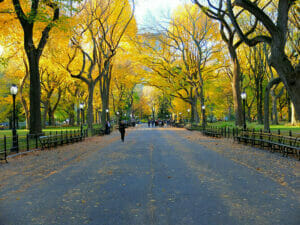
A day to myself like I used to do when I lived in Pennsylvania and drove into Manhattan and walked from Herald Square all the way up and through part of the park, talking to the vendors or checking out the music along the way coming from the cafes and radios. When I explain “quiet day” I must include the sounds of the city as natural and as organic as the osprey and waves at home since they are expected.

My life is not unlike Thoreau’s in that my retreat is near the water in the woods where I am able to regroup, not to ignore civilization as much as be better prepared to face it. So I would like one day. One. One quiet day where I could live deliberately and be in absolute touch with the passing of time solely for the sake of the passing of time, to not watch the seconds, to not count the minutes. I could lean against a tree and hear the combine on the neighbor’s farm or the rigging on the boats on the river. There is a thin, very thin, line between quiet and the sound of rigging in the early morning hours. A good quiet day for me often includes the sound of rigging on a mast.

I was thinking the other day about the quiet days in college when a bunch of us would walk into town just to get something to drink and everyone would be talking at once and laughing at once at different things, and we were always like that and we were always going to be like that. I loved that sweet and passive activity during a time in life of seemingly permanent transience. If I am going to define “quiet days,” I can’t leave off my friends all talking and laughing at once.

I have had many days which I would “formally” call quiet by the Oxford definition. In Spain on the Camino silence was most welcome, and at home on the river when it is early, or late. When I was young and hiked through Heckscher State Park, my friend Eddie and I would either sing or be absolutely quiet, like we both knew nothing would last and we needed to absorb every moment. Sometimes when I am alone at home I fiddle around the house, working out on the property or on the porch, and can go from sunrise to sunset without a sound and it can be delightfully deafening. But those are literal, and I have come to understand that true peace is not the absence of noise but rather the presence of love. It can’t truly be a quiet day without the presence of love, not if we know that “quiet” is also a state of mind.

I want the peace that comes from sitting in an Italian restaurant in a run-down strip mall, eating bread and drinking a bottle of wine and talking for hours with an old friend, and we finished each other’s sentences and we finished the wine. I miss the quiet of a stroll through a busy mall with my dad, stopping to rest, talking about nothing at all. I look forward to the type of quiet that comes from sitting on a bench at the boardwalk and listening to the mixing of music and pounding surf and kids playing in the sand. What peace there is; what quiet is there. A fine, quiet day should include absolute mindfulness so that what was, no matter how long ago, and what will be, no matter how allusive, remain irrelevant to the laughter of a friend who understands.

That kind of quiet. Peace of mind quiet. Trust quiet. Understanding quiet.

I would like more quiet days like that.

Central Park in New York - NewYork.co.uk

Perhaps They’ll Listen Now

Why Did Vincent Van Gogh Cut Off His Ear? - HistoryExtra

Imagine these circumstances:

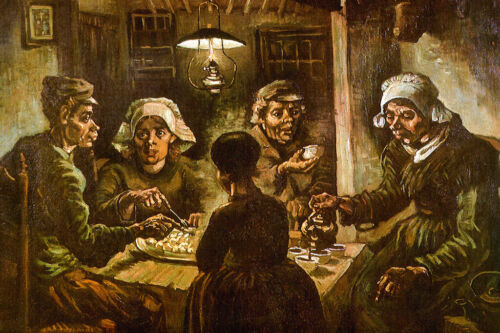
A thirty-seven-year-old man has not held a steady job since he was twenty-seven, and he was fired from the six jobs he held until then in his adult life. He has fallen out with his father, lived with a pregnant prostitute and her daughter, and his younger brother gives him every dime he needs for food, housing, and supplies so he can paint. He claims (after saying he wanted to be a preacher, an art dealer, a tutor, and a bookstore clerk) he wants to be an artist, but every artist save one believes he simply isn’t at all good at it. The critics dismiss him as an amateur with no control over his craft, and everyone believes him to be a bum, a vagrant, a freeloader. He has a handful of maladies such as syphilis, bi-polar, manic depression, and “fits of dismay” we can today label as seizures, but in his day was simply considered signs of insanity. Four months after turning thirty-seven, he still has no job, sold no paintings, received no sign of hope from critics or artists, and has been rejected by women from his cousin to his landlord’s daughter.

Then on July 27th he shoots himself in the side (yes, he did it, not some teenager in town, not some unknown soul, he did it), and two days later on the 29th he dies. There seems every reason to consider this poor man has thrown away his life and took advantage of those he loved for some foolish “obsession” only he seems to believe in.

Yet, within a few dozen years he becomes one of the most influential, inspiring, and successful artists in the history of western culture. His letters found later reveal his passion to show others the humanity so overlooked in the poor and destitute of the world. In his day, this greatest of artists was considered the least of our brothers.

How many of us would pay attention to such a character, listen to what he has to say, get close enough to understand what bothers him, motivates him? How many of us would simply walk past this man?

I am not suggesting we are surrounded by genius disguised as misunderstood, downtrodden individuals. But it seems believing in others even when no one else does, especially when no one else does, can change a person’s life, and who knows what kind of ripple effect that might have.

I feel that there is nothing more truly artistic than to love people.

What would life be if we had no courage to attempt anything?

Vincent van Gogh The Potato Eaters Poster 18x12 inch

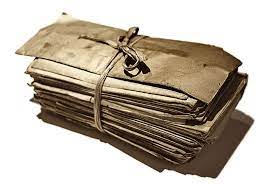
Write to the Letter

Postal services history & origins | Postal history | stamps

Dear You,

This summer I’ve decided to sit at one of the tables here at Aerie, cover my iced tea from flies in the hot summer air, find the spot where the shade hits the table, place my pad down, and write letters. I’ll write about my garden, about the bay, about travel plans or family matters, depending upon who I’m writing. I won’t write about writing. I try not to write about anything negative, and I never have and never will write about politics in a letter.

Letters used to be the sole source of communication. Vincent van Gogh wrote more than two thousand pages of his thoughts to his brother Theo, a sister, as well as fellow artists. Thomas Jefferson and John Adams letters to each other famously expose the thoughts of our forefathers, and even as far back as the early Christian era we have Paul’s letters to the Corinthians.

I’m just planning to write some stuff about my garden and mail it in an envelope to my friends. I learn so much when I write letters. Simply by telling other people what I’m doing, I’m reminding myself how I spend my time. It also allows me to sit in nature, slow down, and take my world one word at a time. In an age that is spinning at Mach 6, writing is like sitting on a stagecoach, but that’s okay.

Remember those days when we would anticipate mail from a friend or a lover? It seems like a long time ago now, but I recall the satisfaction of dropping a thick envelope into a mailbox or opening mine to see that marvelous white rectangle of someone thinking about me. My sister found letters our dad wrote to his mother when he was eighteen. When I was in college my Great Uncle Charlie, who was in his early nineties at the time, wrote me letters and often included poems he wrote. This was a man who fought in France during World War One, and when I was in my late teens he was still writing letters and poems and dropping them in his local postal box. I don’t know what happened to those; I moved around so much. Also lost are letters from my childhood friends on the south shore of Long Island. During the first year or so after my exodus in the mid-seventies, we wrote religiously. I am back in touch with a few of those people from that time, but the one who wrote the most letters, the one I was closest to, died last December, and now I can’t express how much I wish I still had those epistles of what we were like then, our hopes, our plans, our fears, and our indescribable confidence which time has eroded along with our penmanship skills.

On summer vacation from college I wrote friends in other parts of the country, and even after college kept a close written communication going with a few people. One is a woman I’ve known since we were freshmen, and another is a priest who I remained very close to through the years. I still have some of those replies, and some I recently sent back so my friend can see what was on her mind forty years ago. A few years after college, I wrote probably a few hundred letters to someone in the air force. Here’s how far we have come since then: At that time I would have to address the envelope with her full name, followed by her full social security number—right there on the front of the envelope. I still remember it, actually.

I know the problems in resurrecting such an ancient art form: besides the “slowness” of letter writing, there is the “I don’t really know what to write about” aspect my mother used all the time when I was away at school. Then there’s the “I don’t have time” factor which is just a crock. Sitting down to do anything for ten minutes is not an Olympic feat. And can we please just stop with the “it’s just easier to email” laments. Yes, it is. Write anyway. My favorite avoidance mantra is “I think faster than I write and I can’t slow down to do it.” Geez if you don’t think faster than you write than you’re probably legally brain dead.

As Neil Diamond wrote, “Slow it down. Take your time and you’ll find that your time has new meaning.”

Writing letters helps me remember what is important in life, and it reminds me that since I spend the vast amount of my time doing things I don’t deem worthy of including in a letter, I should appreciate the small stuff through the day as much as the grand letter-worthy events. It slows me down, helps with my blood pressure, my stress, and sometimes I might sit back while writing a letter to listen to the wrens or the cardinals, or leave it all on the table and wade in the river a bit before returning to finish. Mostly though, it is instigating a physical presence in another’s life in a completely non-threatening way; it is my DNA sealed and sent to another state.

I wish I had written back and forth with my father or kept in written contact with some friends from Spain, from New England, from New York. I’d love to have heard from my grandparents, or to read a collection of letters from ancestors from another land. They are treasures; they are history, humanity, emotion and time, all in the strokes of a pen.

Always,

Bob

These Five Books

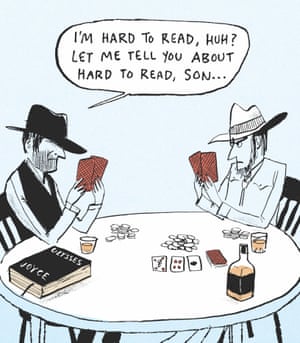
Berger & Wyse on Ulysses – cartoon | Life and style | The Guardian

I started to read five books but simply could not get through them, so they sit on my shelf just daring me to take another shot. Understand, I did not major in English until I received an MFA at Old Dominion University in 2004, and that was strictly creative writing, non-fiction. At Penn State, my Masters’ were in art and humanities, and, sure, that included lit courses since the “humanities” part seems to think it relevant, but my undergraduate degree in mass communications, specifically journalism, didn’t call for it either.

Call me lucky.

As a writer I have read tons of books in my life just out of curiosity or research, and my shelves are filled with non-fiction works. Along the way I picked up books because of the cultural relevance when traveling. I have shelves of works I’ve read from Russia, the Czech Republic, Spain, and various locales in Africa, and good ‘ol American letters as well, including most of this country’s classics like Twain, Steinbeck, and Walker.

But still it has always been a struggle for me to sit and read at length, which my father was always able to do, and through him I read many volumes of Michener, Grisham, and historical works, as well as the great sports writing of Roger Kahn. My son, too, is a prolific reader and every once in a while will give me a book knowing I will like it, and I always do. When he was small I read to him tirelessly, and to this day I can recall just about every story of Pooh, Curious George, Richard Scary, and various zoo books. But that was fatherhood, not reading. Now, I simply don’t turn to literature out of habit. Some of it is my career for three decades demanded I read endless stacks of papers, and also stories and books in preparation for a course. Part of it is when I’m writing something, I avoid reading material not relevant to what I’m working on. And part of it is I simply prefer music, walking, talking at a pub with friends, to reading.

Still, as a humanities professor and a human being who knows books exist, there are a few works I simply know I should finish, but as of yet have not.

  1. The Epic of Gilgamesh. This earliest surviving literature in the world, and the second oldest “religious” text, was written more than three thousand years ago. It’s an epic poem about, well, Gilgamesh. I’ll get there. I do like epic poems—Canterbury Tales, Sir Gwain and the Green Knight, for instance. But the Gil never worked for me.
  2. Beowolf. Okay, to be fair, I have read this one, but that was so long ago and I think I skimmed it because it was, well, boring as hell. So now that I’m some months older I need to give it another shot, particularly since my son has a translation by Seamus Heaney, whom I deeply respect as a poet and writer. It is sitting there, daring me to pick it up. But it is so close to The Far Side Complete Collection, I’m afraid the competition is simply too strong.
  3. Infinite Jest. You’ve got to be kidding. 😊 The reviews as well as my peers in the writing world told me I must read this, and my more astute students said it really captured their generation, which encouraged me to read Wallace’s book, and I tried, I swear, I tried. Once I even made it to page 125. My goal was to get half-way through the thousand or so pages, but no. I put it down and thought, Surely, you… 
  4. Ulysses (the book by Joyce, not Tennyson’s poem which I do love). To my credit, I know a Joyce scholar who said he couldn’t get past page twenty-seven the first dozen times he tried. But still, I loved Joyce’s other works, admire Wolfe and Hemingway who deeply admired Joyce, and, well, I’m forty-two percent Irish, so. I’m not sure what my problem is but I do feel better knowing just about everyone I know who has tried to read the damn thing apparently had the same problem. First of all, I’m not nearly as smart as I should be for the life I have read or the career I have had, so there’s that. But more, I speak English and Spanish with relative ease, dabble in traveler’s Russian, but have never been able to absorb Joycean. Maybe if he drew me a Portrait I’d find a way in.
  5. Middlemarch. A writer friend of mine once said to me about this book, “If you’re going to spend that much time describing a woman’s blouse, that blouse better kill someone before the book is over.” I actually have this on the list as an example of the primary reason so many of us don’t read works we think we should—we find them boring. I know I can read the thing, and I know I’d understand it; George Elliot isn’t that complicated, and she didn’t exactly make it difficult to read. It simply bored the crap out of me, all the seemingly useless details, endless descriptions. I don’t need constant conflict, but I want something a bit more than a fashion lecture. I know that’s not the point, I do. But I also know I’m a modernist, a minimalist with a degree in journalism whose primary influences were of that profession, who learned to get to the point and leave off the fat unless it is absolutely necessary, and I still have difficulty finding so much of Middlemarch necessary.

The truth is, these books aren’t in my comfort zone, and that’s why I keep them near.  Hardly ever does one not gain something by stepping out of the comfort zone and challenging the norms of life. In fact many of my daily activities were, at one time, outside that comfort zone. My routine was at one time not my routine.

It happens.

Adding a book to my list of things to do instead of watching another repeat of a favorite show I’ve seen, and I watch again because it is familiar and predictable and safe; and so I know how my night will go, when I will laugh. But a new book challenges that, like anything new to our routine challenges us to grow a bit more.

Slowing down enough to actually read words on a page is not on most people’s minds, schedules, or even anywhere in their peripheral view of life. It is not “productive” in the contemporary take of that idea, it is not “on the way home,” or “part of my routine.” But step to one side for a second, let the traffic go by, go for a walk instead of, say, not going for a walk. Learn the name of a new bird—just one—each week. Then see if you can spot it. Honestly, how much time does that take? Routine follows the new, it never precedes it. Then it becomes expected. Then it becomes habit. Then not doing it seems wrong.  And as for boring—well, the truth is, most of us get bored because we believe we should be doing something else, or we think that whatever it is that bores us isn’t worth our time, despite the obvious reality that we simply didn’t give it a chance, slow down, take a breath, and let it have its way for a while.

I am reading, however. I just finished Ice Walker by James Raffan. Incredible journey with a polar bear family. Escape Envy, poems by Ace Boggess, who has one of the finest voices I’ve read in the genre. The Total Skywatchers Manual, which my son gave me for Christmas, and I try and learn a little something each week about the stars. Some of it takes, most not, but at this point I’ll take what I can.

I don’t know how long I’ll remember how much I enjoyed a book, will be able to recall the plot. Some books, already, I see on a shelf and know I enjoyed them immensely, but please don’t ask me what happened. I do know that right now, for a little while anyway, I can feel the arctic cold, get tense by the melting ice, as Raffan beautifully and tragically describes the protagonist bears’ trek. Later, I will know a few stars tonight, drink some Blue Lotus Flower Tea and enjoy the peace of stepping outside of myself for as long as I can, understanding fully that in my six decades so far, it has been when I push myself out of routine, challenge myself to understand what I thought I could never understand, and find the beauty in what I foolishly perceived as boring, that I have been truly and fully alive.

“It is a narrow mind which cannot look at a subject from various points of view.”
― George Eliot, Middlemarch

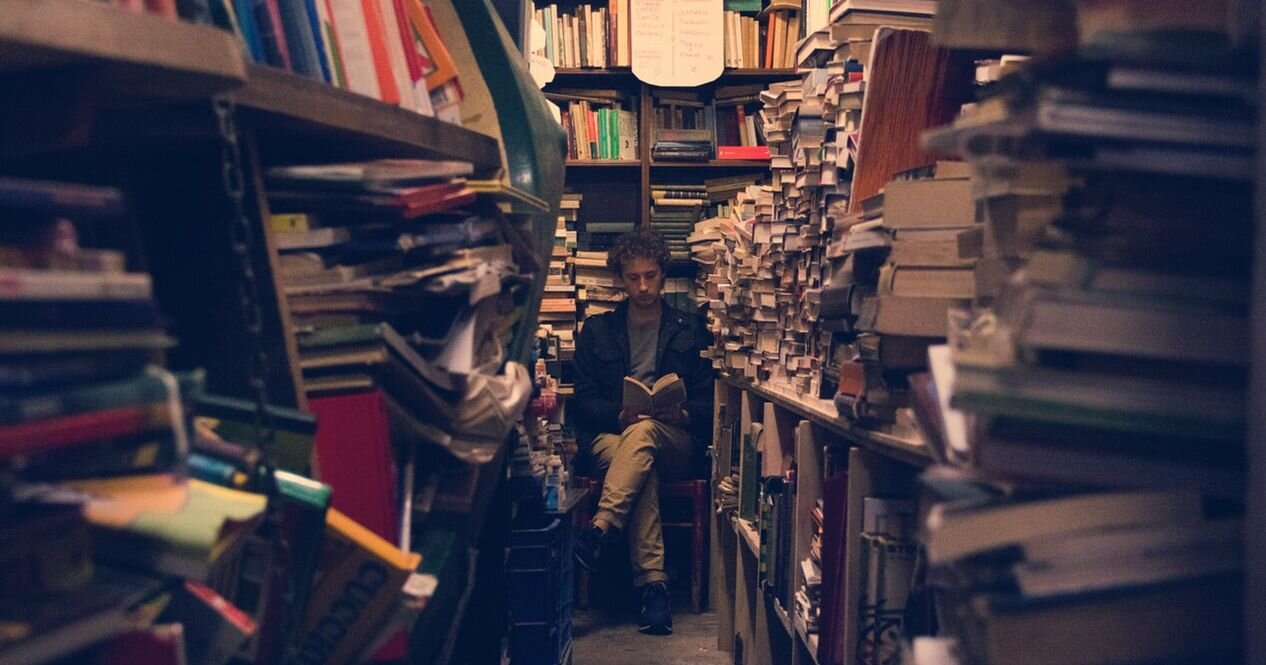
TBR stress - why I want a minimalist library

The Patience it Takes

I am proud now, today, to say I’m at the helm of a project I thought was going to be an easy ride, introducing people to writers who read their own work about nature. It turned out to be a much more involved undertaking than I ever imagined—legal issues, distribution and advertising issues, rights, writers’ rights, wrong turns and relinquishing enough control to start the process to go non-profit. I can honestly say I’ve learned more in the past seven months since the inception of this idea than I did in decades teaching. I am a student again, on the job training, and it is incredible.

As we build our catalogue and make sure everyone is happy and all the I’s are crossed and the t’s are dotted, we move closer to the end of stage one, which culminates in the Live Launch. I apologize to those who have waited, but I decided some months ago that for once in my life I was going to get this right, see it through properly and create something lasting that will continue to grow.

Chris the tech dude, Jamal the screener dude, and I are working in our free hours (I have more than both of them combined and they’re doing most of the work—go figure; it’s a specialty issue), and each day brings a new breakthrough.

We are fully funded thanks to the generosity of friends and nature lovers, the call for submissions has been quite successful as we daily view new incoming videos, and we are trying to make the growing site as user friendly as possible before users use it.

But underneath all of that is something fundamental, which has always been elemental in my life—nature itself. Two things dominate my adult life: First, I love to be in nature—canoeing, hiking, observing wildlife and landscapes from the Great Salt Lake to the alligator-filled swamps of Myakka, Florida. It has always been this way. My youth was spent in a state park, my middle years spent in as much nature as possible no matter where I lived—which was always in rural settings—to my AARP years, which find me where I have been for twenty-five years, here at Aerie on the edge of the river and the bay. And second, as a writer I find some deep need to express myself that I simply can’t, ironically, explain. I keep trying to get it right, find new words and expressions to bring readers closer to what I experience, but time and time again I simply don’t get there.

Then I read someone else who in one small way exposes something I had thought inexplicable. Then someone else from a different perspective, then someone new, and on and on…

So to bring all these voices together on one platform in various genres, for me, is a sort of culmination of the two most essential aspects of my nature-loving world.

I am glad it won’t be long before The Nature Readings Project is fully operational (insert Star Wars music), but I’m glad I was not the impatient, often immature operator I was on so many other projects in my life, from sports to music to people. Eventually we figure it out, and I hope when The Nature Project goes live it is obvious to everyone why we made sure we had it right—the natural world is all that’s left; it deserves the same patience it has always had with us.

but first, this: