An Amendment or Two

40772801_303

I’m likely to piss off some friends with this one. But enough is enough. 

Many (not all) gun advocates do not understand the need to restrict certain weapons. They see it as an infringement on their second amendment rights; that to prohibit American citizens from buying and responsibly owning any weapon they choose—whether assault rifle, grenade launcher, or something, you know, dangerous—is to deny them the rights set down in the constitution, even if some lost souls abuse that right and commit atrocities such as in Las Vegas.

And Orlando.

And Columbine.

And Sandy Hook.

And Tucson

And Aurora

And Oak Leaf, Wisconsin

And the Washington Navy Yard

And Fort Hood

And Charleston

And Chattanooga

And…

Do I describe that correctly, gun advocates? Does that sweeping little generalization pretty much sum up the primary defense of gun ownership?

I don’t mind the belief system as much as I do the repulsive hypocrisy.

To simplify: Americans are free to practice their rights as guided by the constitution, even if an over-abuse of those rights deeply and tragically infringe upon the rights of others, including their right to life?

Okay, my turn.

You see, the amendment just before your borderline violence-inducing one is the First Amendment; the free speech one. The one that allows you to shout down gun-control advocates, the one that allows you to display clever little bumper stickers that say, “Insured by Smith and Weston” or “Stop honking; I’m reloading.” That simple amendment that the founders found to be so essential to the progress of democracy they made it number one. Yeah, that one. The one that says if we are not happy with the way the country is going we can protest, so long as it is peaceful, organized, and does not infringe upon anyone else’s rights.

I heard way too many gun advocates shooting off their mouths about NFL players taking their knee during the National Anthem to protest how the government is treating them. Too many second-amendmentizers seemed more concerned that people were not standing during the National Anthem than they were why those people were not standing. It seems these people would be pissed at their children for getting blood all over their new shirt before they found out what caused the bleeding.  Did it even cross anyone’s mind to stop and ask what the problem is? To find out if something can be done for those men to rise again and have a reason to be grateful to be born in this country.

Why didn’t it cross the minds of those naysayers to pay attention to these men on their knees in protest of the government’s inability to create a society in which all men and women are treated as equal? When you see football players on their knees during the National Anthem, instead of instantly deciding they are being disrespectful to the country and flag, or are not patriots because they didn’t fight for the country, remember that they have a different fight; their battlefield is the prejudice in the workplace, the hatred on the city streets, the racial profiling on the highways, the assumption of guilt. Their battlefield is just about everywhere they go, and they must fight daily. These people do not whine, they do not turn tail and run away, they do not attempt to stir violence or shoot up a concert or a school or a platform with a congresswoman. They take a knee so that exactly what happened happens—that people talk about it, complain about it, draw attention to it, because they are saying, despite the uphill climb since before this country began, that things can be better and they want to be a part of making it so. They insist on standing in front of the line of fire from self-declared protectors of the flag so that the rest of their race and oppressed people have a fighting chance. Many of them fought in various wars only to come home to a country that wanted nothing to do with them; many were abandoned by the V.A. And many simply are tired of being ridiculed for speaking their mind while the same ones who ridicule them are defending the rights of others to own the guns which shoot up the streets.

How dare anyone question the patriotism of anyone else simply because they don’t wear a uniform or don’t stand and cheer to Lee Greenwood. Patriotism has included from the earliest days of this nation the right to protest, to sit down at counters, to refuse to relinquish a seat, to march down Fifth Avenue in silence, to march on Washington in song, to write small little pamphlets inciting people not to violence but to action, not to rebellion but to conversation.

Nowhere nowhere, not one place in the constitution does any line indicate that anyone should sit down and shut up. And that includes taking a knee to stand for something that those with blind faith refuse to accept. Democracy was designed to change with the times by allowing protest and conversation. Yes, it also allows the possession of firearms. But in both amendments, restrictions have always applied. You can’t yell fire in a theater. You can’t commit acts of libel or slander.

And you cannot you cannot you cannot advocate the ownership of arms which are designed for the sole purpose of mass destruction.

iStock-187848640


How to Make an Omelet

Step-4-930x930

Writers face a task unlike most of the arts. In music you can judge how well you’re doing by simple comparison to the original song you’re trying to cover. In visual arts it isn’t unusual to see young painters in museums copying the masters, measuring their progress by their ability to replicate Van Gogh or Rembrandt. But writers have no such opportunity. We can’t simply retype a volume of Hemingway and hold it up at the end and say, “Check it out! For Whom the Bell Tolls Baby! I’m getting better every day!” No. It is a crapshoot. If we appear too much like one of our idols, we are emulating too closely. If we have too much of our own voice too quickly we are terrified and, often, ridiculed for straying from the canon (in that way all the arts are the same–music in particular and writing remain siblings in this difficult balance).

That’s why I love small chores with immediate results. Washing the dishes is a good one. Laundry. Cleaning the porch or cleaning out the shed. Mowing might be my classic example. These are all activities I can simply do while thinking of mostly other things, then after not-too-long of a time I can stand back and see the results. I can quickly assess whether or not I did a good job and redo parts that are obviously in need of another go at it.

Not a lot of guesswork is necessary; very little, if any, subjective viewpoints. It is what it is.

I have so little of that in my life. As a writer I am naturally dealing with material which can constantly be changed based upon my mood, the time of day, my caffeine intake. Even when I decide I’ve butchered a piece into place the best I can, I rewrite it again, restructure it, dump the intro and move the conclusion. Shred it. Eventually the editor will send the usual note indicating “only small grammatical corrections from this point on,” and I’ll panic realizing that means the journal is probably going to send back the four replacement paragraphs I shot off to them at the last minute. Instead, if the piece comes out in some anthology or another journal under a different title, I’ll include the new addition then, still knowing it will never be close to finished. Some things will never be finished.

Still, when something does come out in print or online I like to do just one quick take on it to see if they did something strange like add words I’d never use such as “spurious” or take out words I do use, like my name. Then I’m done. To look at the material again is just a way of seeing how differently I’d write it—not necessarily better, just different.

Right after that I mow the lawn. I admire the straight lines of cut grass; grass that was long but is now short. I trim the long grass around the stones and, ouila, done. Nothing to question; it is finished until next time.

However, in the best of days my usually unorthodox approach to everything from work to parenthood to travel and writing has always raised more questions than answers. Part of it is I take a lot of chances; another part is an overwhelming need to experience the passing of time as if I’m taking a dip in the ocean. I want to be absorbed in it, saturated by it. Maybe that’s why I write to begin with; to conjure a counterpoint to the persistence that is time.

Cooking is another task which can be immediately graded. I cook seafood mostly, but I also can make an amazing omelet. I knew a sous chef named Willie at the Hotel Hershey when I worked there half a lifetime ago. Sometimes he would take a weekend off to go to see his family in Puerto Rico, or just stay home, and I’d get to spend that day making omelets to order for the guests. The trick is to let it cook awhile on one side before the flip. I got good and I still love making them. Immediate gratification. Like playing Freecell or Tumbling Towers. I know instantly whether or not I did a good job.

If the temperature is too hot the egg will burn but if it is not hot enough it will not solidify well. The butter first (not spray not margarine not bacon grease butter just butter and if that bothers you eat oatmeal), followed by any hard ingredients—peppers, shrimp, etc—and after they’ve been thoroughly sautéed, pour in the room temperature, already beaten eggs—three is perfect. Keep pushing the egg toward the middle or sides to let the uncooked egg slide under the cooked part, making for a fluffy, well distributed omelet. When the whole thing seems un-oozy, flip it with a snap of the wrist so it lands in the same spot only upside down. Cover with shredded cheese and then fold in half and let it slide in perfect placement with the half-moon side matching the curve of the plate like two ballet dancers in unison.

Then eat.

This doesn’t work in writing. The second paragraph of this piece, for instance, was originally the beginning. The one starting with, “I love small chores with immediate results.” I changed it a few seconds ago. Writing has no guideline, no recipe, no set ingredients. I wonder now why I didn’t write, “When I mow the lawn I always start near the driveway and work my way to the woods.” Or “I do the larger dishes first when I clean and the silverware last.” Both decent starts. I can also point out now that originally the omelet section was the first paragraph, but I buried it later to back off of the “process” style which can be overbearing and misleading. I also couldn’t decide whether or not to include Willie. I kept putting him in and then leaving him out thinking it irrelevant, but then I decided to leave him in because I thought it a small detail that personifies the example. And yet another part of the writer side of me is constantly saying, “Who gives a shit?” as I write. Writers must constantly strive toward uniqueness without the benefit of example which itself defines contradiction.

Thank God I love to cook. Balance is everything.

Still, I like not knowing if what I’m working on is on the right track; not being able to see too far into the work. I like discovering where I’m going only when I get there or maybe slightly before that, and then getting lost again, trying different directions until the landscape reveals itself.

I wonder if I live the way I do because I write, or if I write the way I do because of how I live?

I don’t always want to know what’s going to happen. Maybe what I’ve been working on for all these years will turn out to have a happy ending; or maybe some tragedy will strike and I’ll need to write myself out of a corner and make some alternative escape from the monotony of a three-decade-old narrative. Whatever. I just know that in the end, the old axiom, “Watch pot never boils,” is not true. Of course it will boil. Einstein’s theories aside, the pot on the heat is going to boil. It is one of the few predictable aspects of life we can count on. Time is selfish that way. Not one fat second will ever lose an once on my account.

And no matter how many ways I approach it in the years I have left, I am never going to be finished with this life I’ve been writing. There are just too many ways to rewrite it; and far too many people already are too accepting of their first draft.

A quick nod to Paul Simon: “I’ve been working on a rewrite, that’s right. Gonna change the ending. Gonna throw away the title and toss it in the trash. Every evening after midnight is time I’m spending, working on a rewrite; I’m gonna turn it into cash.”

ba02ec3830cff1feb1767adc74611b80

A Pathless Wood

depositphotos_24008289-stock-photo-a-man-walking-along-a


The details aren’t important, but in a nutshell: Toward the end of last week I was walking along a steep cliff and slipped. A friend of mine reached down, caught me by the fingertips, and pulled me back up. I have never felt such relief; he’ll just say he was giving me a hand.

As years pass and the events of what turned out to be one of the truly shittiest weeks of my life fade to some horrible memory, what I will always now remember instead of the stress and the lack of sleep and the uncertainty, will be this gesture. It is difficult for any of us to translate the significance of another’s actions to someone who helps us out. I’ll avoid the “butterfly effect” metaphor, and I definitely will steer clear of the pebble in the pond bit, but it is along those lines—in a good way.

This is about perspective, of course. This is about what will become important to us in retrospect.

I remember a story once about a man who went fishing with his young son. The father had a lousy time because he so wanted to catch a fish for his son, or even better help his son hook one. He was so disappointed when they drove home with nothing, silent the entire time. Some months later his son had tragically passed and when going through his things he found a diary in which the boy wrote for the entry on that day of fishing, “Spent the whole day at the lake with my dad. Best day of my life!” Sometimes we miss the point.

I wonder how often we just assume the person falling will land on a ledge somewhere and be fine? Or even more, how many times do we figure “It isn’t all that bad! Look on the bright side”? Sometimes someone trusts us at our word and, without question, hooks in and helps out. What seems like a simple kindness to someone else might be the equivalent of a second birth to the guy who can’t hang on any longer.

So with what seems like a great deal of weight lifted from my shoulders I made a list of what is truly essential. I’ll avoid references to Antoine de Saint-Exupery, I’ll by-pass the five or so predictable Hallmarkesque choices such as “family” and “health,” and I’ll swiftly move to the following:

6. Walking in nature. There is an absolute presence of timelessness there. It is as it was hundreds of years ago and will be from now, it doesn’t pass judgement, it holds no grudges, it suffers no criticism. It is as close to perfection as one can get for the passing of time. It boggles my mind how it can clear my head so easily.

7. A sense of humor. I don’t mean reacting to jokes or watching a comedy. I mean exactly the opposite: I mean being able to see something unexpectedly tragic as an opportunity and a chance, seeing something that changes as simply something new, looking at getting lost as discovery, looking at losing something as simplifying.

8. Trust. I heard someone once quote St. Bernard of Clairvoux as saying. “We must learn to make excuses for other people.” I loved that. I want to move forward trusting that the excuses others have are pleas for forgiveness or help. I want to have more humility when someone needs to rush around me on the highway. I want to look at people as having good reasons for questionable actions. I just think it is healthier to trust and lose than spend life with the bitter aftertaste of doubt.

9. Talking to strangers. Everyone I know in my life was at one time a stranger. At the start I didn’t know the names of my closest confidants. I want to sit more on boardwalk benches for just five minutes if that’s all we can spare and talk. I did that a few weeks ago and an old man on vacation from Poughkeepsie and I talked about the smell of salt water in the air.

10. Laugh. (okay, I had to throw in at least one trite, predictable choice). We need to laugh for fun, of course, but just as much for survival, to blanket our fears, to extinguish our anxiety, to take away the hurt.

But you know what? At times I think Robert Frost was right: Life can seem like a pathless wood. Sometimes it hurts really bad anyway and you feel like a man on a cliff whose legs are about to give out. So we laugh and hope Buddha’s Vinaya was wrong when it called for ancient monks in India to go to confession for such an offense as laughing. I want to laugh like we did when we were young and we would tickle, entice, and play the clown or the fool. It is the ultimate in now, the definitive value of absolute present. It’s Nietzsche’s need to call every truth false which was not accompanied by at least one laugh. We laugh and nothing hurts and no one is going to die. We laugh and we must stop eating, talking, drinking, even moving because it is time to laugh and no one worries when someone laughs. No one is plotting damage or pouring hemlock; no time when we are laughing and we enjoy the break from the cold reality of life where things fall apart. But not when we let ourselves rejoice and be glad.

Eventually, I will forget the stress and the anxiety of these days, but I will never forget the friend who chased it away. Time is going faster now than ever before. And if I can slow it down just a little bit, it would be to spend more moments laughing with good friends, drinking wine, and try and finally understand that every single morning is a second chance.

forest

Verbal Abuse

negative-007

I wrote this a long time ago, but with my full schedule starting Monday it seemed dreadfully appropriate now:

I suppose it started when my son and I shopped at a local food store. Some five year old near us called to his mother, “Hey Mama! Do we be needin’ potatoes?” To which his mother replied, “We ain’t be gottin’ no need for no potatoes.” The kid paused, looked up, and I said it sounded like they didn’t need them but that I hadn’t done the math yet.

It’s a big bad negative world we live in.

“No, I ain’t feeling bad.”

“I don’t be needin’ none of your shit.”

“Don’t be talkin’ no trash to no one.”

The bad grammar is not the problem, though that’s a problem. It’s the not-so-vague undercurrent of negativity which surfaces in conversation and conduct that is the true issue. The “ain’t”s, “no”s, and “don’t”s run out front of their ramblings like offensive tackles, pushing and shoving as soon as the sentence comes off the tongue. It’s hard to avoid them.

These grammatically-challenged people subconsciously convinced themselves that nothing good is going to happen. Worse, something negative precedes all of their actions, both verbal and proverbial. It’s positively shocking. Listen:

At a McDonalds where two workers tried to fix a blender: “It don’t do nothing, do it?”

At a restaurant when the hostess asked another customer where he’d like to sit: “It don’t make no difference.”

At the counseling office on campus: “You mean he don’t need no developmental English?”

No kidding.

Maybe I’m simply not a negative person—except now of course.

Truth is, I really couldn’t care less about the speech, though it is annoying. And I can easily attempt to administer editing drills that eliminate this moron-babble from their essays; what I can’t control is the rising tide of helplessness that’s the true problem. Why does anyone want the primary root idea of every thought and conversation to be a variation of “no”?

I really don’t know.

I asked my students what they hoped to accomplish after college, where they hoped to be. They hadn’t thought about it. One student said, “I don’t want to think about it. It don’t look too good out there.”

Momentum is dead. These people feel like they’re running on ice. Was a time they knew they could defeat anything that kept them from their goals. They believed in themselves. Their natural mental state bent toward something positive. No more.

Everything, after all, is negative. War pervades the American mind in little more than a stream of body counts and car-bomb updates. Hurricanes slam our shores and send us reeling into “he should have” “she should have” volleys. The news has always been negative, but now the news is on all the time, from computers, I-phones, television, radio, and newspapers. None of it is good and it ain’t getting no better. And college isn’t a hiding place either. Most students would rather pull a lower grade than have a professor look at a rough draft; students immediate reaction to any question, proposal, suggestion, or instruction is absolute defense and anxiety; if it happened before they were born, it really doesn’t have any affect on them and therefore they shouldn’t be required to learn about it. Hamlet is boring; Oedipus is stupid; statistics is tedious; bio lab is too long; developmental classes are a waste of money; introduction to lit is a waste of time; history is not relevant; philosophy has no practical application; psychology is fucked up and so are the instructors; text messages are read more than text books; face to face communication is obsolete; and when I tell them they are better than their attitudes, that they can achieve every single one of their goals despite being trained for twelve years to simply do what they’re told and shut up, they laugh and say, “I ain’t got no time for none of that.”

In their defense, however, who really cares? After all, I do know what the students are saying, or trying to say, and I understand why they have slipped into such lazy, uneducated speech. I know the times they live in now demand this mindless reactionary talk in order to be accepted by other mindless friends. But these people graduated from a high school in the United States. They are what we define as “educated” and “literate.”

“Professor Kunzinger, I ain’t had no time to finish no works cited page.”

“Mr. Kunzinger, my car don’t have no spare tire and I be stuck out here.”

“Bob, I don’t need no developmental English. I didn’t do bad in high school.” This is what I’m talking about: Not, “I did well in high school,” but “I didn’t do bad.” But they fit in. Bottom line remains—you’ve got to fit in.

These kids are so passive that sounding intelligent is of no value. They don’t understand that command of the language is not about being taught some med-evil construct carried over the pond by mostly snotty old white upper class Englishmen. Using the language as a sword with skill and finesse allows them to outwit anyone, any age, any income. It allows them to move without being noticed from group to group to take command, to lead, to sway the argument in their favor. It is the basis of all advancement, and it acts as the sharpest tool against a dull public out to take advantage of everyone.

This is real–these are actual responses:

“My dad don’t have no computer at home, and I ain’t got no time to spend in no library.”

“You ain’t going to accept my paper? But my math teacher don’t give me no time to work on no paper with all the lab shit she got us doin.”

“I don’t remember no requirement to turn in no rough draft? That ain’t what you said. Bullshit.”

“I don’t need to be hearin nuttin bout no work I gotta be doin.”

This is standard now. This is the formal reply understood by most of the students roaming the hallways. They believe the art of communication is simply to be understood; it has nothing to do with being respected and taken seriously. “I should be accepted for who I am, not how I speak,” I’ve been told many times.

Listen: How you speak IS who you are. You may be brilliant, but prove it for God’s sake. Stop hiding the Mensa tendencies.

I call it “Tonal Directed Conversation.” The literal translation of the words is not nearly as important as understanding what the person means. Back to the store: “I ain’t be gotten no need for no potatoes,” in tone, is crystal clear. This woman is not buying the spuds. In fact, if I did do the math, it even comes out that way. She’s got three negatives floating through that amoebae sentence; it actually spins back toward “no” in the end. But that aside, the tone is clearer than the language. Knowing that, she might as well have been speaking Russian or Turkish. What difference does it make even if she merely grunted and pointed, so long as the tonal inference clearly shut out the potato-buying possibility.

Everyone knew what she meant; it don’t make no difference.

I figured she had been in high school during the Reagan administration. But when Reagan told them to “Just say no,” this is so not what he meant. So now the question remains: Is it enough to know what someone means?

I’ve been teaching too long to know it wasn’t always like this. I don’t remember any (note: “any” not “no”) such verbal abuse years ago. Students could complete a coherent sentence without round-kicking the language. And when I tell my students this, they tell me I’m arrogant and offensive. Well, there they’ve got me.

The thing is, sometimes, I am also wrong.

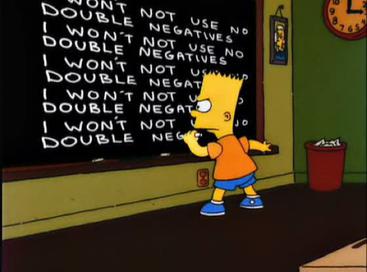
History compels me to admit maybe I don’t know nothing about what I’m saying. A little homework reveals how English ain’t so easy to master: Turns out most other languages thrive on the negative, and double negatives in fact were once wholly acceptable in English. Chaucer says of the Friar, “There was no man nowhere so virtuous”; and Shakespeare’s Viola says of her heart, “Nor never none/Shall mistress of it be, save I alone.” It’s all about emphasis. English remains, in fact, the only major language that doesn’t allow double negatives. Why? Well, it simply ain’t logical. Grammarians since the Renaissance have objected to the double negative because these humanists who emerged during the age or reason demanded English conform to formal logic. They pointed out that two negatives destroy each other and make a positive. Since then, half a millennia later, this rule advocated by teachers of grammar and writing has become fundamental.

Nevertheless, all speakers of all educational backgrounds continue to use multiple negatives when they want to make a point, as when President Reagan taunted his political opponents by saying “You ain’t seen nothing yet.” That line uttered earlier by Al Jolson in The Jazz Singer was the first spoken words of cinema. And the movies ain’t got no better since.

I don’t like being wrong, however, so I called a linguist.

“What is the problem with ‘ain’t’?” I asked.

“Well,” he said. “It first appeared in English in 1778, evolving from an earlier form an’t, which arose almost a century earlier as a contraction of are not and am not. In fact, ain’t comes from the same era that introduced ‘don’t’ and ‘won’t.’” He took what sounded like a sip of tea. “Ain’t and some of these other contractions came under criticism in the 1700s for being inelegant and low-class, even though they had actually been used by upper-class speakers. But while don’t and won’t eventually became perfectly acceptable at all levels of speech and writing, ain’t does not come from any direct word sequence, making it a “vulgarism,” that is, a term used by the lower classes.”

He stopped talking. “Cool,” I said. “But are not contractions of any form vulgar to a true linguist?”

“No, Bob,” he said. “I do not think so. Even a linguist can not avoid using them.”

I was not clear about this so he clarified. “Distaste for the word ‘ain’t’ is still alive, Bob. Its use is still regarded as a mark of ignorance.”

“But technically then,” I argued, “these students are not wrong, they are just living in the Middle Ages.”

“Well, I would not say that. I believe we must accept that vulgarisms have no place in our language. The worst of these vulgarisms is the double negative and ‘ain’t. It also thrusts their mentality toward depression. With language, however, we can contract hope and the future into a vulgarism we can all live with. Emphasis should be on the meaning.”

“So you are saying that without meaning in our words we are simply grunting with accents and scratching our stupidity.”

“Exactly, Robert. Well put,” he said.

I had to disagree. “Wait, though. You’re the linguist here, but maybe the nay-sayers are correct.”

“But they could not possibly…”

“Isn’t it possible that tone really is more important than meaning?”

“No! That simply does not make sense.”

“That seems a bit negative?”

“Perhaps if these students understood education…”

“Well now you’re being arrogant and offensive!”

“Are you suggesting that the rudiments of the language are enough?”

“Well what difference does it make how they say it. You know what they meant?”

After he hung up I thought more about it. English has evolved for a thousand years, leaving behind meaning, gaining new meaning through time. We’ve dropped words completely, changed the definition of others. In America’s early days, the Irish, the English, the Italians and the Dutch beat the crap out of English. Webster came along and fearful of a country with multiple languages each with nearly unrelated dialects, homogenized us all to the English we banter about today. But why would be believe we’re done? The language is still evolving. Maybe we’re at the start of a neo-Renaissance. While Newton would have taken issue with the illogical taste of double negatives, Voltaire would have loved it. The language is changing, there is no doubt about that. How we speak today is a far cry from where we were, and a faint hint of what’s to come.

Truth is, you ain’t seen nothing yet.
I_wont_not_use_no_double_negatives


Dunkirk on the Bayou

imagesC5T7EXIC

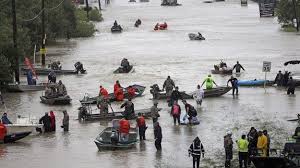
They took to helms and crossed flooded streets to rescue friends from rooftops, from windows, from roaming reptiles at river bends. They rowed and motored and sailed down interstate highways.

The catch of the day: A grandmother, some children, their friends. Pets. Strangers.

A fisherman says, “I have to do this.” His daughter nods, says, “I know” as he fires up the Evinrude. The river moves closer to his own backyard and across the street a neighbor waves him by. He passes a cop consoling a man on a white van. He passes a reporter saving an old couple from drowning. “I know,” the reporter says, “that the line between covering a flood and being covered is fluid, often difficult to navigate. It is important to remain professional,” he adds as he lifts the old man into the boat, microphone and notepad tossed to the side.

Some retired trucker sits on his roof; he can’t find his wife. “She was just here,” he tells a boater who stops to help.

Sometimes people can’t help themselves, so they help others.

The Cajun Navy deployed a fleet of flat bottom carriers captained by construction workers, Wal-Mart employees, hardware store clerks, and off-duty police. Judge Ed Emmett put out the word for anyone who had a boat to help out. He only had to ask once. These men and women moved in fast, dropped off first responders, left with bags of belongings grasped by Texans in shock. This went on for days. In some parts of Houston it continues.

How much can you fit in a 16 foot flat bottom boat? Wait: there are already other people in it, some pets, the responders, and gas cans. The waters are rising fast, and everything you’ve ever owned is now or is about to be under water. How much can you hold in your arms as the boat speeds away from the last look at the flooded eaves.

What matters most now?

My brother lives between Houston and Galveston. He let us know the waters had not reached his house and he still had power. This is most likely a combination of excellent planning when searching for a home, and luck. Either way, his house was fine so far and I walked outside relieved.

I went for a walk along the Rappahannock River toward the bay and considered my 17-foot canoe. How much could I fit? What would I grab when the Chesapeake climbed the shore and rolled through the windows? Can I box up the memories? Can I stow away the years here raising my son, dinners with my parents, mementos of my travels? My house is quite high above and away from the water so I’ve little to worry about with flooding, but I’d most certainly be cut off from getting out, and Hurricane Isabel didn’t flood so much as she ripped thirty oaks out of the ground on my property. There are still plenty of trees left standing to fall.

It’s a terrifying sound—an eighty-foot oak cracking in half in the dead of night. The sound of waves, too, which normally bring some organic sense of peace, can terrorize the tenant in a first floor flat.

Of course I don’t want anything to change. I don’t want to lose what I spent decades building. But honestly, at some point little matters more than the chance to get to higher ground. For many, choice isn’t part of the equation. And when that’s the case, I’m certain the heroes in the double-hulled boats will remember the people they saved longer than the items they lost. And those who held tight to the bow as they left behind their pictures, their journals, their children’s toys, their clothes and sense of security, their sense of place, probably understand more than any of us that no matter how hard you try and keep control over what’s going on around you, no matter how much you cling to the notion of choice, we may not be the one’s at the helm.

Sometimes the only way to be saved is by letting go.

Hurricane Irma is on the prowl, eyeing down the Leeward Islands, contemplating Puerto Rico. It isn’t clear just yet if she will settle under the keys and into the gulf, rip like Andrew did across southern Florida, or, as some projections anticipate, curve up the coast, across the Outer Banks and into the Chesapeake Bay. Luckily in Deltaville where I live boats out number people seven to one.

Life has changed for the tens of thousands of Texans now forced to start over, many with absolutely nothing at all. But when we make an accounting of what is absolutely necessary to salvage, to protect, the list is quite short. All the footage I’ve seen of people being saved and brought back to dry land in and around Houston show residents with absolutely nothing at all, grasping each other and declaring almost like a chorus, “Thank God we’re okay; oh thank God we are okay. Thank you for saving us.”

At the very least, they understand better than many what matters most.

image

You Had to Be There

1467405_10201963967008246_27760241_n

Time reference: It’s late Friday night while I’m writing this and the years are swirling around inside my head right now. I’m in my study in my dad’s old easy chair, where I often sit at night to write, and it is quiet this late. My brother and sister-in-law are battening down in their house south of Houston as Hurricane Harvey approaches; my sister is with our mom in Virginia Beach as all sorts of changes keep forcing new ways of thinking.

A few weeks past I found an old cassette tape I forgot I had. You see, thirty-five years ago I got through college (emotionally) with the help of my best friend—an old 12 string Takamine guitar. I played in my dorm. I played at a nursing home, at a few local pubs, and in the campus café where once every two months or so the musicians on campus would gather and play for a packed house. As those few, short years passed it became more and more fun, and of all the activities I did during those four years, those coffeehouses with fellow musicians were easily some of the most memorable. The stories I have from those gigs could fill a hundred pages and just thinking of a few of them while sitting here gives me goose bumps and makes me all at once feel very young, ready for the world, and very old and tired. That was so long ago yet I can hear every note, the sound of the crowd, the lights above the stage, the odd backdrop of an Olympic size swimming pool behind the curtains and glass, and some anecdotes I could never properly capture in a blog. For me, it is the ultimate “you had to be there” situation.

A lot of musicians came and went those years but one in particular stood out; Mike was a resident director who played guitar. We played a lot of music together. He and I once drove to Rochester to buy a piano and bring it back in a van, and we talked the entire time, stopping at Letchworth State Park to rest and watch the waterfalls and talk about dreams and hopes and fears. We stood at the scenic overview and talked about music and the passing of time. We talked about Walt Whitman and Thoreau. On another occasion we went to an International Coffeehouse competition. Out of a hundred or so participants Mike and I both made the final five and he won. What a time that was. After my junior year he took a new job somewhere else, but senior year the college had him back to perform a coffeehouse by himself. He was a mixture of James Taylor and Paul Simon. The café filled to capacity again and he played. The night was all Mike and a room filled with friends who we knew we would know the rest of our lives. Of course, that wasn’t the case. A few of us remained close, a few others I’ve been back in touch with and it has enriched my life with the only thing that matters in the end, the love of friends. Still, I don’t know what happened to Mike.

But I found this tape of that night at the café when he returned to campus, and I burned a cd from it, and now I’m sitting here in my study in my dad’s old easy chair listening to where I was and who I was thirty-five years ago.

Does anyone pull out the wedding video twenty years later and reminisce? Does anyone peruse old tapes of childhood birthdays? Perhaps. I generally don’t. I watched a video of Michael when he was five riding his bike around the property yelling gleeful things, while on the porch you can see my dad, my uncle and aunt, all laughing and talking with the energy of the ages. Quickly I was sorry I pulled the tapes out—maybe my memory is still sharp enough to hear their voices without any aid, or maybe I’m too melancholic to drown in the sentiment of “back then.” I like looking ahead, I really do.

But sometimes it is okay to look back carefully, because as Jackson Browne depressingly points out, “There’s still something there for me.” It can’t be a bad thing to get a glimpse of the good parts of the past.

At the café all those years ago, I know I sat next to my friends Maria and Jennifer, and Sean and Debbie were at a table on the other side of the stage. The entire resident staff was there with a case of beer. I recognize a lot of the voices on the tape from the crowd as they called out. It is odd to find proof of a different version of myself. Photographs are too static, and video is too animated and distracting as we comment on clothes or hairstyles or the lack of lines on our faces. But just audio, an old tape on which my voice is the same as it is now, is like standing outside of twenty-two again and overhearing who I thought I was. Do people that young today still dream like that? As a professor I have stared at twenty-two for twenty-eight years now and I don’t see the spark and raw ambition I remember when I was young. Maybe, but a lot of what we did back then was the result of a rare combination of passion and lack of distraction. For the most part technology was not in our lives so we were more a part of each others’. Or maybe it’s Mike’s choice of songs, or maybe it is just this easy chair, but something was different then; we actually believed in the craziest part of ourselves.

I am closer now to ninety-years-old than I am to that night.

Most of what he played was original, but one song, playing right now, is a Peter Yarrow song, and in the refrain Mike sings “Must have been the wrong rainbow, because I don’t see any pot of gold. All I see is a man too old to start again.”

Okay, so tonight this can go two ways: I can drown in the used-to-be’s of that energy in our innocent youth. Or I can get up tomorrow and smile and know parts of who I was back then are still here, a bit more weathered and a little more tired, but here just the same.

I wasn’t very good. Oh my God we made so many mistakes. But what I was excellent at back then was not being afraid to embarrass myself in pursuit of a passion. We laid it all out there for better or worse, mostly worse, and said, “This is who I am and what I’m feeling right now.” I was so anxious, every single time. So was Mike. But we kept doing it because that comes with the territory. If you’re going to be in the arts, whether music or writing, visual arts or the art of being human, you have to step in your own direction despite the urge of those around you to push you back in line. So we played and we weren’t afraid of making mistakes.

And people kept showing up.

I suppose that even at twenty-two I was simply more terrified of falling into a rut, following anyone into anything. I was going to be the Greater Fool, the “other” one, the guy who wasn’t afraid to embarrass himself in an effort to pursue a dream. I guess I got distracted after all. It is good to listen to then and remember me.

So now I am sitting here in my late father’s easy chair wondering how my mother is doing with so many changes and how my brother is doing with the weather down near Galveston. I’m thinking about my adult son and the miles he has already logged in pursuit of his own dreams. He is older now than I am in this tape I’m listening to. Yet I am as far from sad or melancholy as can be. Because I’m still here, I’m still doing coffeehouses but instead of music I’m telling stories in which I tend to write things which say, “This is who I am and what I’m feeling right now.” It seems the more things change, the more they stay the same. It might be nearly four decades later, but I’m still embarrassing myself in pursuit of an art, which is, for any artist, a way of exposing the soul. Back then I wanted anyone to listen. Now, I write for myself, and if an audience finds something worthy in the words, that’s a bonus. I’m just doing what my soul tells me to do, just like I did at twenty-two.

As Whitman pointed out: “The powerful play goes on and you might contribute a verse.”

07948c28-65df-40e1-ae17-2fd4a1307d42


Darkness Visible

supermoon_americanflag_1443429660083_24477274_ver1_0_640_480

Apparently there’s a solar eclipse this week. Unless you’ve been living in the dark you’re aware of it already, and how to protect yourself, and where to have the best view, and the history and lore and horror stories along with the science. Here on the bay we will be able to view about 86% of a total eclipse. That’s pretty good. It’s going to be one for the history books.

Speaking of which:

On August 21st Nat Turner killed fifty-five people in a slave revolt which caused panic among slaveholders everywhere. It has to be an entirely new level of tragic irony that 186 years later tension between those who wish to eliminate all remnants of the repulsive system of enslavement and those who wish to preserve the traditions of the south still throws a shadow on this land.

Casey struck out on August 21st.

The “Mona Lisa” was stolen, which is, by the way, the only reason the very small and somewhat unimpressive painting is so famous.

Emmett Till walked into Money, Mississippi, a week before he was murdered on one of the darkest days of the fifties.

In 1959 Hawaii became a State, and in 1968 the Soviets invaded Czechoslovakia to end the Prague Spring casting a shadow on the light of creativity and freedom emerging from Bohemia.

Oh, and in 2017 a total eclipse of the sun could be spotted across the United States.

I’ve been walking along the river at sunset for more than twenty years now and they never get old, the way the sun tries like hell not to touch the horizon. And then the way it does, particularly on partly cloudy nights when the sky turns colors and the sun streams out from the edges of clouds. I try and watch the sunset nightly, and the sunrise as often as possible. I try and love the science of nature on a daily basis.

But this arc of the eclipse crossing the country couldn’t come at a better time. It will be like a moment of silence, where everyone along the path will stand outside in our goofy looking glasses and think about the crazy reality that because the sun is 400 times larger than the moon yet 400 times farther away, they both appear to be the same size. So we will watch the clock then go outside and mark time by the crossing of one in front of the other. It won’t last long, and later I’ll walk along the river again and wait for that same sun to settle down.

Maybe that moment of silence in the shadow of the moon when people are talking to each other about science, sharing stories of time and place, talking about the next time or the last time, will briefly take our minds off of the turmoil and terror that has cast its own shadow on the United States. Jeez, look at us: racism is rampant, hatred, brutality, murder, threat of nuclear war, the decline of the protection of nature, the fear of refugees fleeing conflict and starvation, the fear of each other, the fear of fear itself. Flint. Charlottesville. Chicago. The border wall. Transgender issues. Bannon. Spicer. DJT. Raging fires. The Paris Accord. North Korea. Syria.

Seriously, our beloved nation has been in some dark shadows for a while now, and it just might be this brief total eclipse is the brightest spot in quite some time.

aug 4 17 006 (2)

Along Mill Creek

rappahannockriverwt

We canoed yesterday up the Rappahannock to a small tributary where we paddled up to the low-tide flats and eventually to a small swampy area near a farm. Along the way abundant osprey moved from branches to docks and back while several gulls stood their ground on pilings closer to the river. By the time we worked our way back to the Rappahannock the current had increased so that we paddled much harder to gain less distance. In fact, we stayed against the strong current all the way back toward the bay.

We didn’t take pictures; in fact, all we brought was water and peanut butter sandwiches. I didn’t even bring a phone. If we capsized or otherwise tumbled into the water, nothing would be lost. It was very freeing, and relaxing of course. We spent a good part of the morning drifting past large embankments with old houses set back.  Each has an extensive dock reaching to the channel, and some homes are so hidden by trees it was only the sun hitting the windows that made me realize a house was on the hill at all. Further along, the shrinking creek moved toward corn and soybean fields, so we turned around and worked against the rising tide. At one point a tern plummeted into the water exactly in front of us stealing away with a small croaker.

We’ve paddled along these small creeks and the wide Rap right at the mouth of the Bay for twenty years now. Sometimes we bring food and something to drink and we’ll rest on the beaches of one of the islands and have lunch then collect sea-worn oyster and scallop shells. When I was in high school we had a canoe and explored the shores of the Lynnhaven River in Virginia Beach years before development turned the area into more of a city. Back then I’d often bring a book to read and let myself drift in an inlet. Sometimes a fish would jump and slap the side of the aluminum boat. Those waters and these, about seventy-five nautical miles apart, are fantastically similar in their vistas, tides, and even their life; both are a source of oysters, crabs, and small fish. In both cases it was a short distance from the inlet to the Chesapeake, and in both cases I preferred not to bring anything along—no phones, no music, and often very little conversation.

These days, however, I’m not bringing along so much more than ever. Today we left behind the weight of negative thought from the media. I left behind the comments of politicians, the commentary of news hawks, the criticism of the swarming public. I consciously left behind fears of nuclear war and domestic terrorism.

I opted out of bringing along enrollment numbers at the college, my to-do list around the house, and any concerns I have had about food. I just pushed off and paddled back. I love the art of canoeing. The very nature of moving through the water demands I sweep the engulfing waters behind me in order to move forward. In fact, the river and bay have enough information already to occupy my continuing curiosity about time. Just a few miles to the south of nearby Stingray Point is an underwater crater near Gwynn’s Island in Mathews County where some long-ago meteor helped form the east coast. And throughout the Bay and River are reefs of shipwrecks hundreds of years old, lost during storms while exploring the wilds of these now domesticated shores. Out there we are constantly reminded of the fragility of time and the futile pursuit of hurtful, damaging, misplaced energy.

I can clear my head while out on the river. I can remind myself that nature is the best example of how if all is ever lost, one of our strongest traits is the ability to start again. It helps in times like these to know that no matter how bad things might seem, we can adjust our course, and if we tack correctly, we can even move with grace against the current problems.

This morning we saw a man at a boat slip, alone, returning his small fishing boat to the trailer behind his truck. It took him just minutes and then he was off. He hadn’t caught anything, but he waved with the pleasure of a man who had just completely let go of whatever might have weighed him down. I was never a fisherman, but right then I knew I would be good at it since catching anything is not really required. I would do as well as Thoreau, who wrote, “Many men go fishing all their lives without knowing it is not fish they are after.”

I am not trying to hide; I am not paddling away from anything. I am moving into the permanence which is nature as I did forty years ago, as I hope to do for years to come. It doesn’t ridicule; it doesn’t pass judgement. It doesn’t change the rules or tease or taunt. And while it can be brutal, it is brutally honest. And when I again navigate those waters and can deliberately move through the day, I will be, like Thoreau, ready to return to civilization.

Contest

3:30 pm

nclock-03-30_33804_lg

If life happened in a day, and Einstein is horrifically more accurate than we would like, then let’s make a 6 am sunrise birth and place death around a 9pm sunset. I’ve always preferred summers for the extended daylight hours.

And if we break a life of ninety years (I’m an optimist) into a day, we live about six years an hour, or a year every ten minutes. Goes fast doesn’t it? In fact, my clock reads 3:30 pm. School’s out, lunch has been made, eaten, and cleaned up, and the morning hours are so long ago I barely recall them anymore.

If life happened in a day, we’d make sure we didn’t miss much, no matter the weather or how tired we are. We’d call our closest companions and ask them to join us—we’d go through this together. It is too bad we can’t do this again, we’d admit. I don’t want to miss any of it, we’d say, suddenly aware of how fast time goes by, how many moments we let slip away. In fact, just talking about the fleeting morning might make us miss those hours of the day’s youth when discovery is ripe and exploration is new. Those hours of life when no one but us has yet discovered the forest out back, the rapids in the creek down the road, or the view from the bent branches of a birch.

Looking back at my own day, around 10 am I lived in Massachusetts in a yellow house next to a reservoir. It was a quaint village surrounded by a larger town, and across the street was a small post office and an antique store. Just up the winding road was an apple orchard where I bought bags of apples and where my neighbor the postmaster would buy me an apple pie for shoveling her driveway. I loved then, and I often talk about how I wish it was 10am again, and I again was leaving work to head to the mountain to hike to the summit to see kettles of hawks.

Just an hour later, I was gone, living in a different latitude and finding myself finding myself once again. Love was easier than it should be and shorter than I had hoped, and the lessons learned so late in the morning stole my energy for a while. Exhaustion isn’t always because of age; sometimes it is momentum. But time passes. I’d give the next six hours to have a few minutes back, but we can’t. We must look forward. If I spend too much time regretting what happened at 11 this morning I’ll blow right through the afternoon without noticing the way the light of the sun can bring everything to life.

At noon I walked to the river with my son on my shoulders, and we laughed our way through the early afternooon, hiking through woods and eventually continents. It was just about three this afternoon we trained across Siberia, and ten minutes later hiked across Spain. If my clock battery broke between three and four, I’d consider myself a lucky man.

What a day it has been so far. I can’t recall a single hour of my life I’d not do again. From sunrise on I’ve had a great time trying to stay one clip in front of the bend, with golden moments I couldn’t have scripted myself. Maybe that’s why the day seems so fast—I’m really having a great time.

Did you ever stop and just recall a moment from years ago like it had just happened, just now? I mean so that you can taste the meal and smell where you were, feel it, so real like it just happened, just now, but it didn’t. That happened to me today, over and over and over, and now it is 3:30, and it is happening again. Thank God happy hour is so close; I need a drink.

Tonight, from 6 to 9, I’m going to take my time and do the best I can.

What time is it in your world?

sunrise 012

Humanity Can Use Some Editing


sonogram

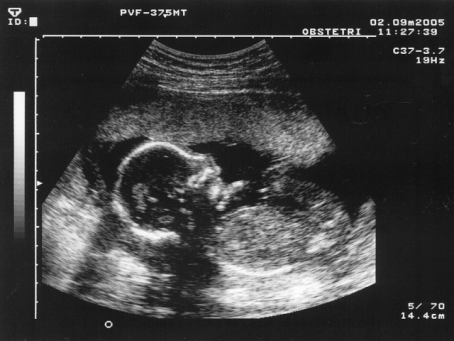
Now scientists can “edit” genes in a human embryo to prevent a disease. As a writer and a professor of writing I stand strongly behind any form of editing. It is, after all, an attempt to make something better either by adding clarity, eliminating awkwardness, or, in this case, correcting errors. It is difficult to find fault with this.

I know the arguments.

Gene manipulation of any sort can lead to “designer” babies. Sure, parents with money will be able to not only eliminate disease but order up some character traits not already fine-tuned in the sperm. Those without the means will suffer the process of natural selection and have to be satisfied with what God offered up. Further, the embryo-envy group will insist that this could lead us into dangerous territory including cloning, or possibly creating a robot-like race.

Slow down. There are regulatory speed-bumps still to overcome. In the meantime, if we can scrape the cancer out of a kid why would we not want to? And when someone suggests it really should be “God’s will” how the baby comes out, I get frustrated, pissed off, and down right angry. All of my reactions are traits that could have been removed with one more run through of gene-check when I was born. But how can anyone not become infuriated? It is God’s will that children be born with cancer? Cerebal Palsy? Cystic Fibrosis? Seriously? That’s sick. How (in God’s name) do these people not know it possibly was God’s will to enable scientists to finally have this moment, where in some lab somewhere someone sat back, looked up and stared straight ahead, blinked, and said, softly to herself, “Praise God. We did it”? Under the acutely pretentious mentality that it was “God’s will” that misfortune remain standard, we should have no medicines, eye glasses, or deodorant. You can’t have it both ways; the same God that “allows” tragedy to befall a newborn might just have balanced His intent with a scientist’s capability to solve the problem.

If some baby has a dangling modifier or comma splice, I say have at it. Eliminate the gene that bends toward polio, Chron’s, leukemia, or blindness. Clean up the embryonic paragraph which begins with an incomplete digestive system, a fragmented spine, a misspelled heart valve. And, my dear scientists, surgeons, or managing editors—however you will be so labeled—while you’re in there, quickly skim through the frontal lobe and fine-tune the common sense. See what you can do about the math scores on SATs and the gene that enables tail-gating, stealing, lying, and pain. This little move toward disease control could be a step toward babies designed to share with others, to empathize, to help the needy and to not text and drive.

I wonder, though, if personality traits can be manipulated as easily as cancer control. If so, can we finally make a move toward understanding and compassion? Is it possible that this discovery is the end to the common trend toward gluttony and greed? These designer babies might, by design, be intolerant of hunger, might make it a crime to be homeless because of some doctor who checked the fetus galley sheets and noticed a gene which still allowed unnecessary suffering and had the presence of mind to grab a bottle of amniotic white-out.

In a world where so many have no issue with the swerve toward technology and computers that think ahead, robots with limbs not unlike our own, what is so wrong with a step toward humanity? Instead of improving machines to help us make life more convenient and comfortable, how about making the technology obsolete by improving the people?

How much embryonic manipulation will it take before hunger is no longer an issue? How many edits is it before the desire for war doesn’t even enter someone’s mind?

People must stop being suspicious of science and finally understand that the human race is dying; we are on a slow decline and have become more accustomed to crude comments than constructive conversation, indifferent toward arms buildup and troop movement, and infinitely more blasé about hope, possibility, and peace. When did we decide that disease and suffering were simply part of humanity and will never change?

Still not convinced that gene-manipulation might be worth investigating further just to understand the possibilities? Than ask yourself this: If you knew your child was going to be born with a painful disease or perhaps die at ten-years-old from cancer, and you could stop it from happening, would you?

121bcc20deea53147835f579bee3c349