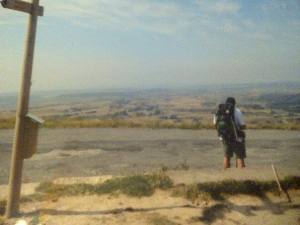

Earlier today my brother and I walked around Colonial Williamsburg and through the old part of the College of William and Mary. Of course, most of CW is recreated, rebuilt, and replicad to death, but I’ve been going there since I’m fourteen-years-old, and I never tire of the landscape, the costumed near-historians acting their parts, the oxen in the field, and the horses and sheep.
This is, after all, the same ground, the very same foundations, as our Colonial counterparts. In fact. Bruton Parish, in particular, is original and you can walk the same stairs and sit in the same pews as this country’s forefathers. Original, too, is the Wren Building on campus, where Thomas Jefferson among others studied. As a professor, I can’t help but imagine the late 18th century classroom filled with such minds in a building already one hundred years old at the time. As a writer I want to communicate how real it all is, how those figures are not characters in an historical graphic novel or songs on a Broadway stage; they were real, and it happened immediately here, beneath our feet today, only earlier.
Once back home, I filled the birdbaths thinking about the rest of eastern Virginia during those times. To get home we pass several former plantation houses still surrounded by fields where enslaved women and men were whipped, raped, denied rights to family, education, life itself. Such a contrast to the “wisdom” wielded in those hallowed halls forty miles southwest. And here at Aerie, this land was the Powhatan hunting ground, and the “Great Shellfish Bay” provided Chief Powhatan and his daughter Pocahontas with sustenance in their village on the other side of this narrow peninsula. It sat, actually, just across the York River (called the Pamunkee River then) from what would become Williamsburg. This river here at Aerie, the Rappahannock (“River of Quick, Rising Water”—makes me feel safe—one of only four rivers in Virginia to still use the name given it by the Native Americans who lived here), was farmed by the Powhatan and Europeans alike for oysters for centuries.
It’s hard to walk about here and in Williamsburg and not think about what was, what people back then saw when they crested the hill out on the road and headed down the hill to the river. And at the river, which was narrower then, with Parrot Island—a mere marshland today just offshore—large enough then to maintain an agricultural community, they would have looked east past the cliffs along what is now Deltaville, past Stingray Point where John Smith was stung while swimming—and who knew Chief Powhatan—then out across the Chesapeake.
As I did this very night with my son and some dude fishing. We knew what was about to happen. We all stood and looked northeast, just across Windmill Point on the other side of the river, and across the Bay to where Wallops Island sits just offshore on the edge of the Atlantic, and we watched the explosive fires from the engines of the Antares rocket carrying a payload of supplies to the International Space Station.
Powhatan missed this one.
Time is slippery. Ten hours ago I wondered about men in wigs a few hundred years ago wandering about the college, walking to the courthouse just past the parish, perhaps on to the Colonial Capital building. This evening I thought about astronauts onboard a spinning building two hundred and fifty-four miles in space waiting to catch a tube of supplies sent from a small island fifty-six miles from me. Add to this the fact that earlier in this very day, NASA regained communication with the Voyager Two spacecraft which left our solar system six years ago and is tumbling through interstellar space. Tonight seven people who pass by every ninety minutes inside paper-thin casing separating them from temperatures outside bouncing from 250 degrees below zero to 250 degrees above are waiting for that tube of stuff.
Humans have done so much since Aerie was a hunting ground and the roads of Williamsburg were filled with people during the Jacobean Era.
Yet still this world is dying, and the people of this planet seem dead set on ending humanity’s reign, despite all of the gained wisdom, harnessed possibilities, and collective ambitions of the most brilliant people on earth; people who figured out how to send a tube into space to dock with a station run by humans spinning about the planet.
How cool is that?
How very sad is that?
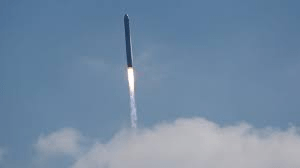
 a view from this wilderness