
A student actually asked me if it was okay to allow artificial intelligence (I see no reason to capitalize that) to write his paper. He didn’t try and plagiarize and pass it off as his; he didn’t unintentionally use someone or something else’s material and mistakenly claimed it to be original. No. He sat at his computer, opened his browser, addressed an email to me, and wrote, “Is it okay if we allow ai to write our papers? Will I lose points for this?”
Once again, we have slid right past the founding problem and into the next level, where we have already accepted the premise but now we must fight small issues. It happened with cell phones when we moved from not allowing them in class at all to penalizing students if they use them at the wrong times or for the wrong reasons. What happened to “No cell phones. Pay attention to me”?
We have so much technology in our lives and in our classes that time must be spent powering up and down, downloading, transferring, waiting, and on and on that the actual time a student is truly “present” and looking at who is talking, making notes, discussing, has diminished by nearly eighty percent according to Pew Research and a study at the University of Pennsylvania. The productivity and scores at every level of education in this country suck and we cannot figure out why. Here’s why: No one is paying attention.
Problems:
*As soon as cell phones or laptops entered the classroom, teachers had competition for already questionable attention.
*Students who consumer energy drinks have an attention span nearly twenty minutes shorter than just one generation (pre-cell phone and energy drinks) ago.
*It was proven many decades ago that writing things down, even just once, increases the ability to remember information tenfold. It is called “writing to learn.” But today students do not write down a single note choosing instead to take a picture of the information.
Education is easy: Listen intently (that means with intent to learn) to the person who knows what they’re talking about, ask questions of those areas you are not sure you clearly understand, write it down somewhere to see if you will remember it all. This is how it was done by slaves like Frederick Douglass who battled opposition from overseers who would whip him for reading, plantation owners who would kill him for learning, national laws forbidding him to read and write. This is how it was done by the Irish who were forbidden to learn in their own land so they had to hide behind the hedges in small groups to learn reading and writing from their “hedge master.” This is how it was done by immigrants who needed English to get a job and wanted to make a better life for themselves. This is how it is done. All the technology available will not replace internal motivation necessary to achieve your purpose. Nor will it explain to you what that purpose is.
But students today read texts from friends, use a program to write their papers, believe they can only get through the next five minutes with another Five Hour Energy drink.
There is no more quiet, no more earbudless, phoneless people walking peacefully from one place to another, listening to nature, listening to each other, listening to themselves, thinking about the day or about the moment. There is no more sense of now. They don’t yet realize that you have to put down the past and the future if you want to learn to unwrap the present.
There is no more sense that people are paying attention. Not on the highway where distracted driving is the number once cause of accidents; not in the classroom where distracted students are missing nearly eighty percent of the material. Not in our souls, where we need to pay attention to our own compass, our own course.
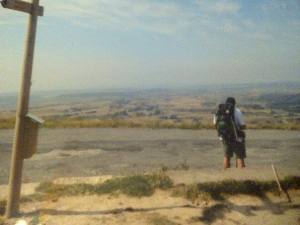
Artificial intelligence can certainly write a pretty decent paper, but it will read like the blind date pretending to get along with you so that the night isn’t a complete waste of time. Yes, it will fulfill the requirements and might even be acceptable, but I won’t feel it in my soul. When I read someone’s writing, I need to believe they stood in that spot, felt the sand, tasted the old wine. Ai cannot make me believe your heart raced when you got closer to some destination. Ai cannot convince me you actually lived.
Ai is not alive. Cell phones are not alive. The energy gained by ingredients in even the most natural of power drinks is not the fire you need to be truly alive, present.
We are dying. Slowly for certain; but dying equally for certain. And the only way to make that worthwhile is to be absolutely present on the way. To do the work, to grow tired from trying so hard.
Our pace is all wrong. Somewhere we believed that advances were always a good idea. We convinced ourselves that convenience was the best approach. The number of people fighting depression is at unprecedented levels; the suicide rate is increasing nearly daily; the dropout rate is growing exponentially; and our success in English, Math, and Science is nearly out of competition with all other industrialized nations. Our priorities are wrong.
Artificial intelligence assumes some level of intelligence to begin with. But it is not intelligence that is the problem to begin with that we need to use artificial versions like we do with sweeteners and flavors and levels of energy. It is purpose.
On the first day of class I ask my students to put everything away—laptops, cellphones, notepads, energy drinks, earbuds, bluetooths, all of it. We sit and I ask them where they’re from. Then I ask them this: Why are you here? What are you doing here? You can be anywhere–tending bar in the Caribbean, backpacking around Europe, working and making money at some resort hotel, absolutely anywhere you want. But you’re here. Why? And we spend the rest of class exploring purpose.
Does it work? I have no idea. But on my long drive home I ask myself that same question trying hard to answer it before my mind melts and I put on the radio instead, relying upon some noise to fill that dangerous space of silence.
Life is paper thin, Toni Wynn wrote. How are we spending it?
What did I really do with my time?

 a view from this wilderness
AI is, I suppose, not a tool like Word? The fact that Word makes and shows corrections that allow writers to make work better without “really” thinking about revision. Auto correct. Strange new world
LikeLike
Good one Bob!
LikeLike
I love “ but it will read like the blind date pretending to get along with you so that the night isn’t a complete waste of time”. And here I sit reading and commenting on your blog on my personal device.
LikeLiked by 1 person
By the way, I use AI to help me writing computer programs. Damn useful, amazing, yet scary.
LikeLiked by 1 person