65

It’s that time again. When I was born Dwight Eisenhauer was president and Richard Nixon was his vice. The average household income was just over $5000 a year, the average house just about twice that and the average new care just about half.

I appear on the scene just hours after the first fifty-star flag had been revealed noting Hawaii, and a week before the Pulitzer Prize winning Harper Lee book To Kill a Mockingbird is published.

Benin, Niger, Ivory Coast, Ghana, all gain independence, and Aretha Franklin makes her first recording. Cyprus, the Central African Republic, and Chad gain independence. And in August, the Beatles with Pete Best perform for the first time with their new moniker in Hamburg.

Belka and Strelka board Sputnik with forty mice, two rats, and a rabbit and actually make it back to earth alive.

Hurricane Donna rips up the east coast and in my home state of New York, Governor Nelson Rockefeller declares September 19th Grandma Moses Day in honor of her 100th birthday. She was born at the start of the Civil War and died when I was a toddler. Time is deceptively swift.

I’m amazed by the people I shared this space with. First and foremost, birthdays remind us in fine mathematical style that we are alive and are still part of the population which constantly expands like bottle rockets in the deep blue sky. It bends my small mind to think of this reality that I’m certain everyone knows but few contemplate: I shared this planet with every other human who ever breathed the air. Read Carl Sagan’s “Pale Blue Dot” as a brilliant reference.

Just in my lifetime: Mother Theresa. Malcolm X. Neil Armstrong. Jimi Hendrix. Pope Paul the Sixth. Lech Walesa. St. John Paul the Second. Thomas Merton. President General Eisenhower. Elvis. Pablo Picasso. Albert Schweitzer.

Rwandan Tutsis. The Lost Boys of Sudan. Steven Biko. Pol Pot.

I shared time with these people; these saints and sinners brushed my sleeve simply by sharing the earth during my stay. I have a loose connection to miracles and massacres.

This world has some serious issues; always has. It is at best, though, a hotel, and every once in a while I take a look at the register to remind myself who else stayed here. Alexander the Great, Charlemagne, Mohammed, Ivan the Terrible, Ghengas Khan, all guests just over the slope of the horizon, just beyond some small slice of linear time. On the same human trajectory as mine but before is Geronimo, Moses, Jesus, think about the gentle bend of time, the careen of place that separates me from the disciples, the Visigoths, the founding fathers. All here but just before.

Closer to now, when I look inside the lines of my coming and going, I can see the souls who at one time or another shared with me this spinning blue wad. Not short of miraculous, we claim the same particles of stardust, and that’s what keeps me looking around when I walk down some city street; I want to know who on earth is with me on earth.

Time has ripped past. I was born a month ago. I waded through foreign rivers last month. My son was born last Tuesday. Fleeting. Swift. Impatient. And my thin life falls on the same graph as Richard Wright and Ernest Hemingway.

Carl Jung lectured during my youth, and Ty Cobb watched the same Mets players as me. When I was still cutting new teeth and outgrowing my Keds, I could have headed downtown with my Dad and possibly been on the same train as William Faulkner, ee cummings or Marilyn Monroe. I might have passed them on the street, maybe stood in line at some drug store counter with my mom and behind us because of the blending of circumstance might have been Sylvia Plath or Sam Cooke; Nat King Cole; Otis Redding. We have overlapping lives. On a Venn graph, we share the shaded space.

Judy Garland and I watched the New York Jets in Super Bowl Three. When I was born World War One vets weren’t yet senior citizens and World War Two Vets were in their thirties. Vietnam isn’t history to me; it is my childhood, my early teens. The fall of Saigon was announced over the loud speakers at my high school.

There are empty fields save monuments and markers where soldiers died defending this land against the British, against ourselves, and they stood where I stand and watched the hazy sun rise. Same sun; same beach, same blessed Commonwealth. Don’t mistake history for “back then.” Those people just happened to check out before us. It could have been us. It is us now, watching the orange moon like we do, noticing the calm river, sharing time with loved ones, thinking about others. Getting ready to die since it won’t be long before our lives overlap with the crying call of a newborn Einstein. Did you see that boy running at the park? That girl climbing the tree at her home? Did I just pass by some senator, some Cicero or Socrates, some St Augustine?

Like a couple today buying the same house that young lovers lived in centuries ago, like sour-dough starter. Like a relay race.

My adult son is trying to get a shot of fireworks in front of the moon, but the angle is wrong. When he was just five months old I held him with my hand over his ear, the other ear against my chest, as we watched fireworks out over the Atlantic in Virginia Beach. That was last Friday or so.

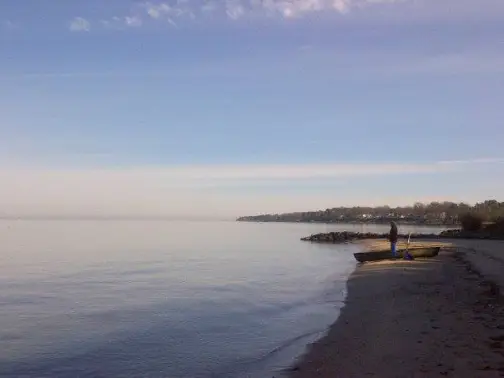
What a life. How many times do we reinvent ourselves? How often do we stop in our tracks, get out of the rush and inertia of humanity pushing from behind, and let it all go by, catch the moon over the Chesapeake? Why do we so rarely rest easy in the love of those near and of those still far away when our stay in this world in our time is brief at best.

I love getting older, knowing more people, turning the pages. I miss my mom and dad, I miss Dave and Fr. Dan, and I miss Letty. My parents lived longer than I thought and the others I really didn’t think would check out as soon as they did. Thank Buddha for Ghosts and reincarnation. Just in case I watch the birds on my porch.

Listen, please:
Winging It

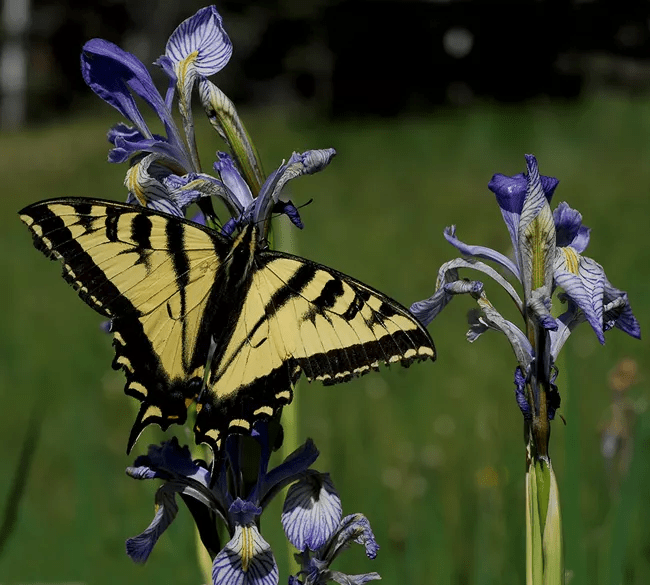
I no longer like butterflies. Those miserable little hyperactive buzzards flutter around like drunk scraps of tracing paper. “Oh they’re beautiful, especially the Monarchs,” everyone says. Why? Because of their colors? Their fragility? We just like things more delicate than we are. As George Carlin famously pointed out, we eat more lobsters than bunnies because bunnies are soft and furry and lobsters look like miniature monsters. No contest. Honestly, I used to love the little beauties, butterflies. I was always intrigued that the average life span is less than a year. I watched documentaries about the monarchs’ migration from northern regions of the states to the mountains of southern Mexico. I couldn’t find my way there with a map and a guide, and these little fuckers do just fine every single year. But lately I have lost interest. They’re as disturbing to me now as the flying monkeys in “The Wizard of Oz.”

I turn sixty-five this week and I’ve been thinking about that trite and necessary Bucket List. I figure I have another good–good being solidly vertical–fifteen years. Hopefully more, of course, but with some adjustment for pace. Still, the first six and a half decades found me mostly pinballing through life. This evening I sat setting up my new Snoopy and Woodstock 3D light and thought about what I might still be able to accomplish.

Here’s my list:

Whatever. It’s all good to me. Just glad to be here, really. A good garden and a small grove of fig trees. Go for walks in various countries, through marketplaces, along coasts, small villages. Nice walks, hikes, talking and laughing. Sit at a café near the ocean with drinks and a soft breeze.

Not what you were expecting, huh? I guess I’ve already done what I wanted to do. The time left is reserved for those I love and as much laughter as possible.

And as for the “The Wizard of Oz, ” the scariest scene is not the flying monkeys, or the balls of fire the Wicked Witch of the West throws down upon the bone-dry scarecrow. It is the hour glass filled with red sand set up in the castle room with Dorothy. Such a small scene in an irritating film still affects me half a century later. “You see that?” the witch cries to the terrified Judy Garland, “That’s how much longer you have to be alive! And it isn’t long, my sweetie. It isn’t long!” This scared the crap out of me. You mean it’s that easy, I thought, to no longer exist? Someone just flips the hourglass and the sands run out? My heart raced every time the camera focused on the depleting red grains dripping through the huge timepiece.

It didn’t help that during those years my mother watched “Days of Our Lives,” and the opening sequence was always, “Like sand through the hourglass, so go the Days of Our Lives.” Whoa! Talk about depressing. I was raised saturated in this daily dose of “you’re going to die soon.” Growing up near the beach probably didn’t help; the shifting patterns of sand symbolized to me the passing of seconds and hours and days and years. And when aunts and uncles exclaimed I had an “old soul” I thought they were ordering last rites.

So some sense of urgency festered in me from quite early on. I started attacking my ambitions like I had just three weeks left before the sand ran out. When I was young, I had an outrageous list of dreams, ambitions, or “fantasies” as most others called them. One of the first brilliant ideas was doomed for failure: My friend Eddie and I had been sending up rockets; the ones with a gun-powder-filled battery shoved up their tails which we bought from a hobby shop. We were getting good at this and our imagination ran away fast. This was around 1973 and I was totally into adventure. Papillon had just come out and my mind was already bent on traveling to faraway lands. Mostly, though, I was obsessed with becoming an astronaut. I knew all their names, and I had memorized every detail I could find about rockets, their speeds, thrust, history and expectations. I had a brown cpo jacket and asked my mother to sew on an American flag and a NASA patch. When we went into stores I liked to pretend people thought I must have something to do with the space program. I played it cool, of course, holding my mom’s car keys like I just got back from the Johnson Space Center. I was twelve.

Even so, Eddie and I had a plan. We were going to take apart the batteries to study how they are made, and then we would make a large one that could carry one of us, me, into the clouds. We knew we would have needed a heat shield to exit the atmosphere and return—we weren’t dumb—so we planned to use a metal garbage can. We only were going to lift a few hundred feet just to show the naysayers we earned our patches. So we slowly filled a coffee can with the gun powder from several dozen batteries bought over several months. But one night Eddie left the coffee can on his patio in the rain. We didn’t have enough money to buy more batteries so we tossed the plan and played baseball. A few years later I moved away and found more pragmatic plans. I am not certain, however, if I was ever so serious or energetic as I was when I thought I was going into the clouds. To me that fantasy was simply reality’s childhood.

Back then I couldn’t possibly know that eventually the most treasured content of my bucket list would be the simplest of thoughts—plans really—like lying on the floor playing Risk and Boggle with my son and sharing a bowl of pretzels while we laughed at the anxious final seconds of each round. Or the one of walking slowly through a mall with my dad, sitting on a bench reminiscing or being quiet, sitting having Scotch on Tuesday nights. I was always excited to be able to sit and watch a baseball game on television with him, neither of us saying a word. That doesn’t sound a bit like a dream for anyone’s bucket list, but it makes it into most of ours at some point. I thought of all those small moments while standing in the doorway to his room during his last days. I’d lean against the wall and stare at the paper butterfly, the universal symbol of comfort care, on the door jam.   It’s crazy how the simple moments like time together get overshadowed by fleeting ideas like skydiving and hot air ballooning.

I’m certain at some point early on in my life while listening to “Days of Our Lives” my mind turned toward adventure. I’m equally sure that my dad had a lot to do with that. Every Christmas he bought us books and for some reason, perhaps intuition, the ones he picked for me all focused on outrageous escapades. Robin Lee Graham’s The Boy Who Sailed Around the World Alone; Peter Jenkin’s A Walk Across AmericaBound for Glory about Woody Guthie, Heart of Darkness by Joseph Conrad, and more. These were obvious influences for me, and growing up a child of the late sixties certainly added to the action. From the moment of Kennedy’s decree to reach the moon to actually reaching the moon occupied exactly my first nine years of life. Many moments in my youth lit a fire under me that still burns. This can be both exhilarating and exasperating.

Still no one ever told me I was wrong. No one ever indicated anything I suggested was a bad idea, only that it was too early, or that I was “too young.” So dreams got pushed aside, never making it to the “did that already” bucket but never really leaving the list. It took me years to realize the dreams we fill our lives with don’t necessarily play out in chronological order. I’m lucky, actually, that some chaotic appearances on my radar don’t coincide with their fruition. I learned quickly that if things don’t play out as planned to just toss them back in the bucket and let them simmer around awhile like a lottery ball.

I have only a little desire left to climb in a garbage can and light a fire under my ass, but since then biking around Ireland made the list. Or maybe I’ll just go back to Spain. And more than a few folks older than me sail the Caribbean well into their sixties. Many many years ago I had hopes of getting to Greece. Maybe I’ll still get there and share a bottle of wine. Sometimes it’s just that we take the long way. I had other bad ideas besides dying in a flaming piece of metal. There was the time my friend Tom and I were going to push a desk from Tucson to Washington, DC to point out corporate waste while people were starving to death. Even philosopher and writer Leo Buscaglia dropped us a line to wish us luck. It took us a while to realize he was being sarcastic. No good Monarch would waste his time on such nonsense, no matter how noble. Butterflies, man. Butterflies are bad examples; they offer false hope.

Whenever my son and I would play that Boggle game, he flipped that damn hourglass with the three-minute timer and tap his finger. Tap. Tap. Tap. My anxiety level increased and my blood pressure peaked. OH, he knew what he was doing. But he couldn’t know he was feeding the trauma of PTSD from some fictional witch. “In good time,” I can hear her saying. It was that threatening decree, “In good time,” that motivated me. Still, she never said “in time”; it was always, “In good time.”

I suppose even a witch, like turning sixty-five, can have some redeeming qualities.

Learn. Everything. All of it.

At the risk of being logical and empathetic, I offer my plan for the best teaching and parenting. I call it The Bob Plan.

Dear Everyone:

Learn everything. All of it. Memorize the multiplication and periodic tables, memorize the dictionary, the standard one, of course, but also the Slang Dictionary, and the Urban one, the Rural, the Southern, and the New England Elitist one. Know how to talk to everyone; know what everyone is saying. In that vein learn French and Spanish. Find yourself fluent in Arabic and Mandarin, Farsi and all other ways in which others speak. Know sign language. Study the click languages.

Read the history of the world by writers in the United States, China, Russia, Ethiopia, and the Vatican. Know the sacred texts as well as you know your phone texts. Read the Torah in Hebrew and the Bible in Greek. Know the differences between the New Standard Bible and the King James Version and talk about it with friends after reciting the Koran. Know the Pali Cannon.

Why would any teacher, parent, civic leader, country leader, anyone not want their own people to know more than others? Why would anyone want to send their children/students/citizens into battle without at least as much knowledge as those they might face? It is a supreme derelict of duties to march our young into the world half-dressed, but there are some who believe to send those same humans into school, the workplace, the world arena, with only a portion of the material everyone else might have, makes sense. But it is not only neglect, it is criminal. If our students, children, citizens, can have the answers to life’s questions which might be put to them at the most inopportune time, what sane-thinking person would deny them that information?

Know the laws, all of them—the local dictates and the constitutional arguments. Say whatever you want to say about the ideas of those you disagree with and know the amendment which allows you to do so without interference. Know the statutes and precedents, know the case names and dates and understand their practical application.

Understand every sexual preference, position, and disease. Be able to converse with the unlicensed prostitute and the Surgeon General at the same table with equal respect and knowledge. Understand the schedules to the subway system and the history behind the Great Migration in the 1930’s. Be able to discuss the effects of slavery on the industrial stagnancy of the sub-Sahel as well as the disenfranchisement of your neighbors two streets away. Be able to predict the weather and prevent heart attacks. Know CPR and how to use a defibrillator.

What would happen if everyone in a society turned out to be the smartest person in the room?

How could that hurt anything or anyone?

Arguments would be tight and based upon verifiable evidence gathered cautiously and patiently. Accuracy would be a given, sources would be well vetted, and mutual respect would engulf the debate.

Know the value of diplomacy and the value of gardening. Understand short- and long-term investments, the advantages and dangers of credit, and the National Highway numbering system. Know how to use a slide rule and AI. Know how to spot any constellation at a glance and the species of every bird just by hearing its call.

Who would have a problem with all of this knowledge except someone who, by keeping the public ignorant, can take advantage of them? There is no other value of ignorance. None.

Learn to make an omelet and a whiskey sour. Learn to pick up after yourself and how to greet a stranger. Learn to say “thank you” and “you’re welcome.”

Know seventh grade Social Studies as well as eleventh grade English. Memorize the twenty-seven amendments to the constitution and read Dickens, Dickenson, and Stephen King. Read Flaubert in French and Dostoevsky in Russian. Kafka in German. Watch Citizen Kane and Fifty Shades of Grey. Read and watch and listen to it all. All of it. The entire everything.

Learn how to learn; observe, ingest, swallow. Learn diplomacy and humor, learn nuance and grandeur. Recognize hyperbole and subtle inflections. All of it. Understand how to fix a car, build a rabbit pen, and stack wood. Learn the proper methods to painting a room and the best way to get red wine stains out of a white carpet.

Why would anyone want their citizens to be less knowledgeable than others? It makes no sense. Study with the people of your community and those from small villages in other hemispheres. Find out what they know, share what you’ve got. Remember their names and learn their customs. Knowledge guarantees inclusion and diversity. Those who learn not only have the answers, they know how to find new answers, decipher fact from falsehood.

Be smarter than AI, more efficient than algorithms, more fluent than the translators. Be a step ahead.

No one should want someone they care about or are responsible for to be less prepared than anyone else.

Choose your own path based upon ambition instead of statistics, your own pronoun based upon preference not ordinance, your own partner based upon love not gender. Understand why that makes sense. Learn how to show others that makes sense.

Find out why we’re still talking about Mozart three hundred years later. Find out what happened at the Second Continental Congress, what did Henry Highland Garnett and WEB Dubois know? Read the slave narratives, read all of Shakespeare. Learn how to gamble; learn how to smuggle. Try the haggis. Taste the raw fish. Find out.

Everything. Learn absolutely everything. It is the only course of action you should want so you can navigate this world on your own terms with all the information necessary; and it should be the only logical ambition all true leaders should desire for their citizens.

Student Comes to See Me

A Personal Reflection This Week:

I woke about three this morning; it happens a lot. This time it happened because this weekend has always represented change in my life. Growing up, of course, the school year is just about over and summer is waiting; throughout my college summers not only was one year over and another still three months away, during that time I worked at a beachfront resort hotel every summer, so the “season” started this weekend. And for more than thirty-five years in higher ed, this is about the time of year we finally exhale for a few months. At three this morning I woke thinking about those changes this weekend those years, but this time I found myself surrounded by the ghosts of those dear to me, and in my tired, gummy-induced thought process, they all had the same opinion.

This weekend might feel more significant because so much of my life completely changed in the past twelve months, beginning about mid-May last year, and I added to that weight by spending this same year tuning my manuscript for my next book about a time in my life when I had to grow up and move on, about learning what to let go of and what to hold on to and guessing wrong in both cases. The brain decides on its own when it will dump all of this in your lap to stare at and make sense of. Usually it’s at three am. And raining.

It’s safe to say that my life has been anything but consistent and predictable, but when we’re young we have more courage to change. I believe that’s because if whatever we try falls apart, well, we’re still young enough to laugh it off and start over. But as the years pass, we tie ourselves down, let the roots take hold, gather more responsibilities and obligations. So change is usually subtle, a series of nuanced negotiations that are closer related to diversions than anything resembling a complete abandonment of one way in favor of another.

When I was young, I would regularly jump into some unknown ideal. Now, with Realism as my guide, I am more apt to step off carefully, insuring there is solid ground ahead. But at three am the smallest variation in our path can seem like a canyon. This morning started like that as I listened to the rain on the skylight. I felt my anxiety simmer just below the surface and I was in danger of completely waking up, so I tried to repress it, remind myself that whatever status quo I find myself part of is not only fine but damn near ideal. But that didn’t hold. I thought of a line from, of all people, Barry Manilow: “My life goes along as it should; it’s all very nice but not very good.”

Just wait. I’m one of the more fortunate souls I’ve ever known, and I know that; but that is an external judgement. “Very good” is a relative term. We are in the awful habit of comparing ourselves to others when we should be measuring ourselves against ourselves alone: What are we capable of? What do we wish we had done? What are you going to do with the time that is left? This is that old axiom, “The only way to fail is to not even try.” And this isn’t about you. I swear it’s not. It’s about me, from the young boy in the park, to the young teen on the courts, to the young man on the go. The distance between where I am and where I will end up can only be measured by how I feel about where I am and where I am going; this has nothing to do with “accomplishment” and “achievement.” I think I’ve done okay. It’s has something to do with fulfillment and a personal sense of purpose. Honestly, success has many definitions; just ask the ghosts.

So I stumbled to my desk to organize my thoughts, write down my list for the day to help settle my simmering mind before my anxiety won, and in the pile of stuff I created on the floor while trying to find a piece of paper to write on, I found a postcard from one of my earliest students.

It was about 1994.  

Student comes to see me. He says he can’t handle the pressure of school. I tell him I think he’s a good student and he says yes, he can do the work, he just can’t stand it. He hates it, he says. He gets bored fast. It’s a good conversation, honest. Had we been somewhere else we would have talked over beers. He looks at his watch and says he has to work in a few hours and sighs. He’s twenty-five and runs his own roofing company but hates that too. He has six grand invested in equipment and no help and he just dreads doing the work now. He says he’s at some fork in the road, referencing our work in class, two paths that look the same, so he’s frozen, finds it easier to just stay put. He gets quiet and stares at a photograph on my wall of a village in Africa. Looks nice he says, like he wants to say anything to forget what he’s really thinking about. Then he remembers and sighs again. He’s quiet for some time and I find myself drifting.

I worked at a bar. Good money and mindless work; the kind of work where if you don’t think too much about what you’re doing, you can keep on working. I know I only spent a few years there but it seems like it was always winter, all grey and bone-cold. One morning I woke on a bench near a lake in a park and didn’t know how I got there. I had to work a few hours later but never made it. I quit the bar, withdrew most of my money, and bought a ticket to Africa. Turns out changing my life was as easy as jumping off a cliff knowing for certain I would either land on my feet or learn how to fly. “Boring” disappeared from my life.

But this student has trouble talking about it, so I talk: I tell him I get that feeling in my chest too. Tight, constricting, difficulty breathing. You know what I’m talking about. It’s the sense that something needs to change. I tell him all of that, and then I think, but I don’t say, that it’s the Philosophy class with five minutes left of three hours and the prof starts another chapter because there are still five minutes left; it’s the meeting you can’t tolerate but you’re in a row of seats with too many people on both sides so you can’t leave and all you can think about is how if this is your career, if this is how you’ve chosen to spend your life, shouldn’t you love being here, love the interaction and discussions instead of dreading every word that someone says; it’s that this-homily-is-way-too-long feeling. It’s the feeling you’re just one day away from something else, but then that day comes and you find yourself one day away from something. I tell him it’s the Whitman poem about astronomy; the wide awake at three am feeling and you can’t move so you stare at the alarm clock wondering what your someday-dying self would say to you now.

Exactly, he says. I’m always staring at the clock. I’d love to know what you’d do, he says. I tell him about a bar somewhere I didn’t belong. I remember working and then not working but I don’t remember what happened between the two. I just recall waking up one day in the peace-of-mind of another world, centuries away from being behind bars; like I could finally breathe on my own. I remember dreading the moment between what was and what was next, so I just kept pouring drinks, hesitating, putting off change. But then one day I didn’t, and when I looked back from where I ended up, the “what used to be” that so engulfed my life didn’t even exist anymore. He looks at me like I am looking in a mirror. I tell him if it were me, I’d withdraw from school, liquidate my roofing equipment, put some in the bank and some in the gas tank and take just one slice of life to myself for a while. School isn’t going anywhere, I tell him. We’ll wait for you.

He stares at me a long time then laughs, sweeps his long blond hair back and blinks his eyes a few times, as if to restrain some emotion. “I’m not that brave,” he says, and we laugh. Then he says he’s going to work and he leaves. 

Six months later he sends me this postcard from Australia. “Don’t know when I’ll return,” it says. “When I am, let’s get some beers and talk.

I look forward to it but, of course, way leads on to way, and I doubt he ever came back

Fifty Days and Counting

It is fifty days from my mother’s birthday to mine. This year feels different since this was the first of Mom’s birthdays that she is no longer with us, and this year I will turn sixty-five. Funny, but I don’t feel my age; I think of myself as about fifty-two. Maybe, on good mornings, fifty. Let’s call it that; so with fifty days to go to my birthday and feeling all of about fifty, I’ve decided to change a few things. I’m going with a “Fifties” theme this year. Cue Buddy Holly.

Fifty.

I can’t lose fifty pounds. I mean I can, but then my weight would be about what I weighed in high school when I was slightly more active and my body could digest Tupperware and be fine. So let’s try for some variation of fifty pounds to keep with this year’s magic number. Five pounds should do it. I re-joined the Y near my home, so I think for the next fifty days I’m going to get on the treadmill and walk for fifty minutes five days a week. If the Cartoon Network is available, I’ll stretch that out to fifty-five.

I’m going to write five pages a night on one or another book project I’ve got going—I really do have five files of work-in-progress here, but then I’ve had the same ones for going on five years now. Still, this next month and two thirds is different.

Damn right. High five.

Listen, like the rest of us, I know about time. I’ve read about it, watched it tick away, felt it creep up my spine and into my mind with new drips of hesitation and doubt. Geez I know about time, the way it tricked Bobbie into thinking she could get better, never knowing the addiction had already won, and the slight of hand it pulled with Letty, and Dave, and Cole, and others; tricked them all, so yeah, I know something about the passing of time. We all do, especially as we move through the years, and about how Mom and Dad made it to their nineties—no complaints there—but how Rachel didn’t make it out of her twenties. I’m sure I’ll be thinking a lot about time in the next fifty days, and about Mom and Dad as I hit the Medicare mark, and about Letty who died on my birthday, and about Michael who right now is exactly half my age yet when I was his age I felt like I had already lived several lifetimes. Honestly, I think I turned sixty-five when I was nineteen. Time, man. I can count on it to keep pace, not lose one fat second on my account. It doesn’t take a time out, doesn’t sit one out, doesn’t find any value at all in changing the pace. Yeah, we all know a little bit about time.

Fifty days. Forty-nine days and about seven hours actually. Fifty glasses of wine, fifty gummies, fifty mornings at the bay watching the sun crack the surface, fifty evenings at the river watching it take forever to fade. This year I’m going to make fifty phone calls and write fifty letters to old and new friends; I’m going to find fifty beautiful moments—one a day—and keep that habit going another fifty, then fifty more. That’s the thing about time; it can’t decide for me what I do with it, only when it will end.

And it will end.

So fifty songs that give me chills and fifty minutes spent each day finding just a little peace of mind.

Fifty is the fifth magical number in nuclear physics. It’s the Golden Anniversary. It’s half of whatever whole you fall into. Fifty is the traditional number of years for a jubilee. Fifty in both the Torah and the Bible is associated with the concepts of freedom and abundance.

There are fifty stars for the fifty states. It’s two bits. It’s just sitting out there as some sort of centennial half-way point.

In fifty days I’ll be ready to turn sixty-five and feel fifteen years younger than that. It was fifty years ago my life completely changed as a chasm fell between everything that was when I lived in New York and everything that would be when we moved to Virginia that June 18th. I was terrified. I was just a few weeks short of fifteen, which is young at any age. But looking back now fifty years on, it seems to have turned out okay.

Seriously, what a time it turned out to be. For fifty days I’m going to remind myself I have a home and food, I was not born in a refugee camp in Somalia, was not born during a bombing campaign in the Middle East, was not born on the streets of just about any American city.

I’m going to remind myself of passion and hope, and that I still have the energy to climb mountains or simply just fall asleep. That I’m really good at. But for now, I’m going to keep moving, keep noticing the beauty and continue to look for the peace. I’m going to remember the grace I experienced being able to have the parents and siblings and friends I did for these years, I’m going to remember all of the love I had in my life from those who passed this past year, and I’m going to look forward to what happens next.

Time is persistent, yes. But how we measure it is completely up to us. Hell, they’ve already changed the calendar several times out of little more than convenience; I can do that too. For the next fifty days, I’m going to grow young again.

May 15, 1933

May 15th would have been Mom’s 92nd Birthday.

I can write volumes about her life which is a true record of life in the twentieth century, or about her ethnicity which rewrote itself in her mid ’80s, or her uncanny ability to make friends with a two by four; I could write about how she’d become friends with the ladies in the bakery or the fish market or the produce section of Farm Fresh. One day I stopped by and Dad was all dressed waiting for Mom. I asked where they were going. “To a wedding,” he said. “Oh? Who’s getting married?” “The daughter of the lady who sells fish at the food store.” Of course.

60492314_10217427106297064_3713656275783909376_n

But before that:

I can recall going to A&S’s with my mom, walking through racks of skirts, pushing aside blouses a few racks away, my face near the metal pole waiting for her to call me out. I made her laugh, but, honestly, everyone could make her laugh; she was light, light as air, and laughed like that too, aware of her deep breath.

I remember her making Irish Soda Bread for Ethnic Food Day in second grade, and she said, “Wouldn’t you rather have German potato salad,” noting to my father how much easier it is to make. “Please Mom?” I pleaded. Of course. Yes, of course. She joked with me not long ago about that day and how if she knew then what she knows now I would have just brought a bowl of spaghetti with marinara sauce.

Mom was always there. I remember in the East Islip Public Library asking the librarian a question and when she answered, I was looking down, and Mom said, “Always look in the eyes of someone talking to you.” I never didn’t again. I remember after that we went to Stanley’s Bakery for black and whites and hard rolls with butter. Non-New Yorker’s need to trust me on that one. To get to Stanley’s Mom would tell guests at our house to “turn right two blocks before you get to the mailbox.” It made sense to her.

We went to the doctor when my lower back hurt shortly after joining the track team at Islip Terrace Junior High. Dr. Wagner said, “I’m afraid he has strained his sacroiliac,” and my mother sat quietly a second and then laughed and said, “Are you making that up? There’s something in him called a sacroiliac?” There is and I did so I dropped off the team and she bought me a tennis racket. She had a subtle way of changing my life that way.

Can anyone truly grasp the lessons we learn from our mom’s who somehow manage to teach us things without doing anything more than practicing unconditional love? That’s it; that’s everything, the secret to parenting. Mom would yell–and she could yell–if I did something stupid, which was not that unusual, and it took me years—years—to understand she was yelling at herself, not at me.

Then life got interesting.

My sister was at St Bonaventure, my brother at Notre Dame, Dad had moved to Virginia to buy the house we would eventually move to, but Mom and I stayed on the Island because it was a recession and it took more than a year to sell the house out in Suffolk County. It was just her and me, driving once a month four hundred miles to Virginia Beach and back. We had fun dinners like pizza and omelets, family over for visits, and I had more freedom than most fourteen year old’s as I’d explore the state park day after day, endlessly. And that winter in the mornings I’d sit in the kitchen before school while she made breakfast, the radio playing a bank commercial. “F. B. L. I. Leaves you more money for living…” and I’d walk to the bus stop with the rising sun. In the evening she’d make spaghetti, or we’d have eggs and fries, or we’d have subs from the deli out on River Road, and once a week I’d get to watch “All in the Family.”  

That last day there in the house which I consider to be where I grew up, she had to be at a lawyer’s office to close on the house, so I walked home from school on the last day of ninth grade with my friends Steve and Eddie. My aunt met me in the driveway and we went back to her house where Mom picked me up and we drove the eight hours to Virginia Beach, June 18th, 1975. Life completely changed; everything I had ever known was suddenly an eight hour drive north, and Mom and I adjusted to our new life together.

Time passes.

High School.

Gap Year.

College.

In the Summer of 1983 I decided to move to Tucson, and I packed my small, light blue Monza and she stood at the door early one morning as I backed out of the driveway to head west. She waved once then closed the door. At the time I didn’t know why.

90985029_10221846708906783_1493911370691772416_n
20525210_10213091627061910_3614873885981443811_n
60646290_10217430003889502_4693851135096651776_o
12042929_10208076662904239_7710928146587044887_n
11241235_10206009578145996_746548987303048614_o
35519481_10215783638240507_6545947767364124672_o

I could add more, of course. Yes, of course. Like how no matter the conversation she could without missing a beat turn one of the lines into a song she remembered from her youth, and she’d sing it. Like the time my siblings and I locked her out on the roof of the house on the Island when she was washing windows, and by the time she was back inside we were all laughing. Or how our German Shepard was so terrified of her that when the dog was in my sister’s room one morning, all my mother did was whisper “Is the dog up here?” and that poor dog didn’t touch a step flying down the stairs and into the safety of the kitchen. Or how when it was time to give my dog Sandy away, a dog which won Mom’s heart, when she dropped him off at the new owner’s house, Sandy jumped up on Mom and put his paws on her shoulders and whined for her not to go, and Mom cried all the way home.

I can clearly recall several years worth of five thirty am talks in her condo kitchen while Dad was still sleeping, and I’d complain about problems at the college and she’d listen so well, and then she’d talk about Dad’s health and small signs she’d notice or which I had noticed the night before, and we’d compare notes. She loved him, honestly she loved that man like a person who should be used as an example of love, for sixty-three years she loved him like that. And no matter how frustrated she got, that always rose to the surface, that love.

Laughter and Love. That was my mom.

60331955_10217404363728514_5299847754724409344_o
45543138_1167797236755361_7357009606289129472_n

She loved light blue.

She loved music.

She always worn a Miraculous Medal.

She had a life I can’t write about properly except to say she took on serious responsibility at a very young age, walked through some serious fires in her life, and always maintained a strength and intelligence and a sense of humor that set an example I can never match. She taught me how to be alive. 

But, with apologies to my late beautiful mother, Joan Catherine, she has one blemish, one which scarred me for, well, I’m going to be sixty-five and I still remember it:

In 1974 or 75 I stayed up to watch The Poseidon Adventure on television and with just fifteen minutes left she yelled down for me to go to bed. I said, “Ma! Gene Hackman’s hanging from a pipe!!” “I don’t care it is getting late and you have school!” she called back, and so I went to bed and wouldn’t see Hackman fall into the fiery water for another fifteen years.  

Some people think their mom’s are just oh so perfect and easy to love and can tell stories about what amazing women they are and that’s fine, really, that’s fine, and I’ve tried, I really have, and she comes close, but, seriously, the Poseidon Adventure, Hackman, the freaking climax of the movie for God’s sake. Come on. There’s simply no forgiving that.

96736454_10220734689904587_1902999128665751552_o

Periods of Long Ago

A few days ago I walked out on the 14th Street Pier in Virginia Beach and stopped in Ocean Eddies. It was the dive I would frequent the summers during college. Back then the bar money was kept in a box and the register was a big brown monster. There was no a/c and the windows had to stay open in the oppressively humid night, but the live bands would wake up guests at the hotel I managed next door, so I had a deal with management: I’d not call the cops on him and he quit the music by 1 am, and I’d get free drinks and a burger. Now, almost fifty years later, there is a  deck around the outside, inside has ac, and the food is better. The tide, however, is still just a few feet below the floorboards.

I was nineteen when I got the job at the Sandcastle Hotel at 14th Street on the beach. The owner, Johnny Vakos, and I got along, and the manager, Jack, had a heart attack about a month after I started, so John made me manager. I stayed that way for four summers, May until August, working all shifts, dealing with every character conceivable. Sometimes at night I’d head out to Eddie’s and swap stories with other locals over margaritas. Sometimes when I worked the overnight shift, come morning I’d head up to the seventies past all the hotels and sleep on the beach, and later in the day friends would show up and we’d waste away an afternoon swimming and listening to music. At night we’d all head to Sondra’s Restaurant or the Jewish Mother or Fantastic Fenwick’s Flying Food Factory to listen to my dear (still) friend Jonmark Stone play guitar. But come the following morning I was back at the beach, working the desk, talking to Niki the bike rental girl, bs-ing with guests about where to eat or about the weather or surf conditions. I only have to think about those days and I can smell the salt air.

Something was different this time, like I really won’t be back this time. It happens.

Still, that part of my life stayed in my blood and every once in a while it passes through my heart and becomes real again. We all have periods of long ago like that. For me it’s probably this place because I’ve almost always lived near the ocean, or maybe it’s because our brains and bodies and this planet are all about seventy percent water and I simply feel the tug of the tide. Perhaps I just like the sound of the surf. But I’ve not come upon many places in my travels which simply don’t change. Old neighborhoods seem smaller, the trees suffocate the once open fields, and old hangouts usually have new crowds, or shut down, weeds pushing through parking lot pavement, some windows broken and boarded near the rusted dumpster. Sometimes it’s simply that people pass away, and the reasons for being somewhere pass away with them.

But the ocean and me, well, we go way back. The rest of nature can show signs of change as well. Forests give way to fires, or new growth simply pushes out old oaks changing the landscape; rivers erode at the banks, and while the mountains can retain their majesty, trails and roads can rip small scars across the land, or some new cabin is built whose windows catch the sun and the glare flickers across the valley.

But I can stand on the sand behind the pier and know what i’m going to see. Certainly some days are rougher than others, and in winter a white foam can gather at the break point, but it is the same as it ever has been. The strength of a wave is like no other natural force on earth. Just to stand in the surf waist deep is a lesson in mobility and resistance no physics class could replicate. At some point you give in and fall back or dive forward, and feel that dark, salty, always slightly cool water sweep across every aspect of your body.

And when you look out across the vastness of nothing but blue water, steel blue, metallic greenish slate blue water, you are looking out at exactly what John Smith saw when he first landed a mile and half up the beach four hundred years ago. It is what Powhatan saw, and whatever wandering seaman or viking or ancient civilization saw, exactly the same. Maybe rougher, maybe in the morning perfectly still like glass. Maybe the tide was higher, or so low they could walk out to the scallop beds and pull them up by the load. But it is the same. Exactly.

I can stand here and it might as well be 1979, or ten years earlier and four hundred miles further north, on the beaches of Long Island. It simply makes sense to me. We all need a place to go that makes sense. It was just ten blocks north of here at my son’s tent for a juried art show in 2017 that my mother walked for the last time without assistance; it was just fourteen blocks south at The Inlet House that my dad lived when he first moved to Virginia Beach before buying the house we would all move into four miles west. They’re all gone now, Mom and Dad, the Art Show moved to October, the Inlet House is a parking lot. But this ocean, well, it’s right there keeping my anxiety at bay.

I read once that we all should discover a “third place.” We have home, which comes with it certain responsibilities and routines. We have work with its predictable patterns of give and take. But we need a third place that is neither, that is ours to claim how we want, and gather with friends, or be alone, and let our stresses and expectations dilute in the deluge of “somewhere else.” For many it is a bar, or a coffee shop, or a park or a gym. For me, back then, I thought it was Ocean Eddies where I learned more about people than I ever cared to know. But it wasn’t; it was outside, on the sand, looking out toward Portugal, toward Spain, and Africa. Looking up the coast toward the Island. It’s lonelier now than it ever has been, and maybe I’ll not be back for some time, or ever. But I like knowing it is here. I like that I can depend upon this. I like that I know it is time to leave.

Somewhere Down the Road

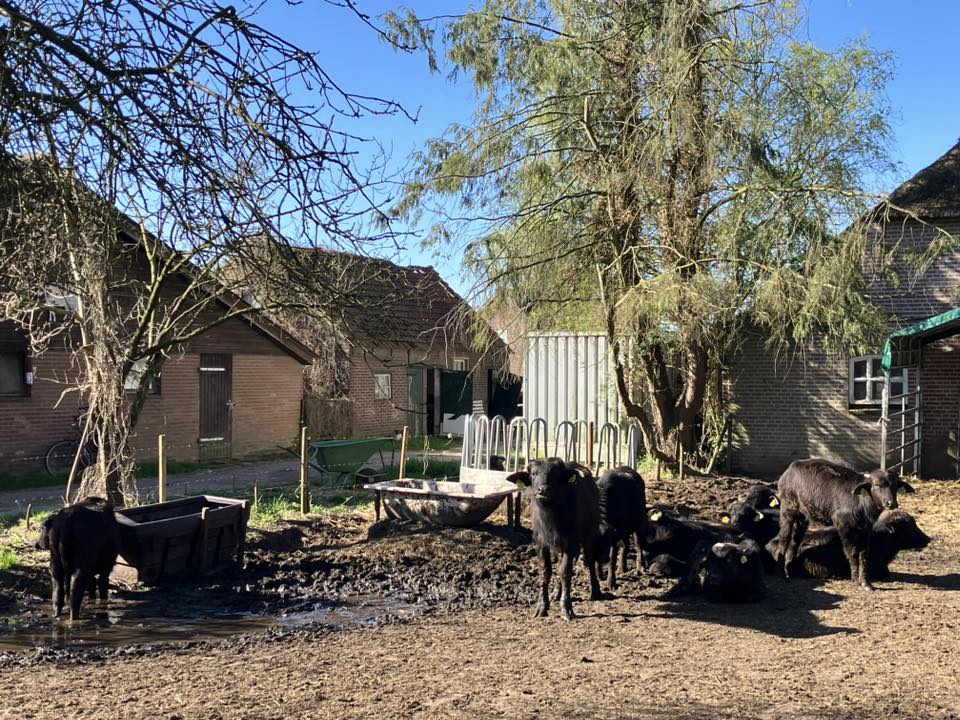
Asian water buffalo of course

Since I’m a child I have wanted to travel the world–I think it was Pippy Longstocking who first turned me on to the idea of exploration and adventure. Certainly Robin Lee Graham and Woody Guthrie and Mark Twain. And I have done just that; more than I imagined. Ironically, for almost thirty years I’ve lived in one house which I built here in the country. My previous homes lasted, from birth, four months, eight years, six years, four years, four years, eight months, three years, three years, three years, two years, two years, and now, well Aerie since my mid-thirties. 

If I had to choose between being always on the go for the rest of my days, or always at home for the same life, I’d choose home. I’d learn to garden and each year expand the crops with more tomatoes and cucumbers, and I’d have a fig farm on the land, perhaps more apple trees, and I’d share the results with neighbors. I’d know the names of the birds, and their migratory dates, and over time I’d have the hummingbird feeder ready for their return every spring. I’d add flowers to the land each year so that the back trail was lined with impatiens and the front with marigolds, and the north side toward the river would have a new trail with hanging baskets of herbs. I’d build by hand and bricks and stone a small guest house, with carvings in the doorframe and a wood-burning stove in the corner on clay tiles I made myself in the kiln I would build in the field. I’d have a dog, some cats of course, and a goat or two. Watermen and farmers would swing by sometimes to chat out front in the gazebo. And I’d walk to the post office to mail my manuscripts; I’d no longer be in a hurry. 

Just as easily I might simply leave, keep going

I’d do the Camino again, perhaps for years, and everyone would come to know the “old American” who is always out there heading toward Santiago. I’d relish the knowledge that no matter what else happens in my life, I have as a foundation to keep going the Way, the pilgrimage trail from France to the west of Spain. I would take Paulo Coelho’s advice and unbecome all the things that I’ve accumulated over the years which were not me at all, until finally I become who I was supposed to be to begin with. 

If I needed a break I’d head up to Connemara in August each year to walk the Sky Road near Clifden. Or I’d head to Prague in May for the music festivals in Old Town and stop and see my friends at the university. I’d have strudel and tell newbies about the time I used to write in the corner of Nerudova 19 when it was a tea room, and I’d write and have a pot of tea and strudel, and I’ll say it is too bad they weren’t around then since now it is an ice cream shop and it isn’t the same. 

Parts of me are already scattered all over the world. Pieces of my twenties are in Mexico and Africa, and large portions of my thirties are in Russia. Some of my forties made it there along with Prague and Amsterdam, and slices of my fifties are sprinkled like diction across this country from St Augustine to Seattle. If I had been able to simply keep moving, I’d have distributed what’s left of me in Spain and Ireland, with a small sampling saved for a state park on Long Island’s Great South Bay where most of the elements in my being come from to begin with. 

Still, I like the idea of spending my life in a small town where I’ve always known everyone, and I leave the doors unlocked, and I have a running tab at a local shack of a pub. Equally I like the notion of having friends all over the world, writers in cities throughout Europe to call up and spend time with on my way through again. I like knowing other cities in other countries as well as I know the trails here at Aerie. 

I wrote a book once about a guy who traveled the world until he settled in a small town and meets a woman who knows everyone and is from there, and they fall in love and the idea of staying grows on him, but she, by meeting him, understands she isn’t stuck in a small town after all and there is a world out there to see and experience, so she leaves. He decides the small town life isn’t the same without someone to share it with, so he leaves too, ironically also traveling the world, always wondering where she went, looking for her in crowds and metro stations, but he never finds her. It was a great idea and a decent manuscript, called An Innocent Season, but I could never figure out how it should end. That and I suck at writing fiction.

Life has a way, doesn’t it?

Last week I pet a water buffalo. This was near Neunen in the Netherlands. He was quite cute, still relatively small, and I scratched his neck and rubbed his face between his eyes, and he kept nudging me to continue, licking my shoes and pushing my hand. Luckily he was an Asian water buffalo who are kind, unlike the mean African ones. We stood at the fence and I pet him and we had just bought water buffalo yogurt and cheese but passed on the water buffalo ice cream. This little guy was loving on my shoes and my hand but I had stepped back and he came closer and his nose hit the electric fence, and we could hear the “zap!” and a small spark shot out and that little guy backtracked to his mother near a muddy area across the pen. He just stared at me with scared eyes as if to say, “Why?!” It wasn’t anger; no sense of “you bastard” in his face. Just a questioning “why did you hurt me like that?” and it made me a bit sad. I ate the yogurt anyway, though, with raspberry jam and some nuts. 

But we do that, we get close and then our perception is thrown off. Something zaps us and we associate that pain with those close to us when they might have had nothing to do with it; it was more than likely just circumstance, timing, the time of day. I wonder now how long will the little guy remember the pain. Will it make him leery to get close to the next guy with Hokas on and a hand stretched out? Or will he just keep getting hurt because the pleasure is worth all the pain? 

I would. In fact, I have more than a few times. Emily Saliers wrote we must “take part in the pain of this passion play” if we must love. The worst pain of course is departure, leaving again, and one comes to realize that eventually you’re best off either to just keep going, following whatever Camino you find yourself on, or agree to stick around awhile and simply accept that the pain is part of it all. 

So we ate the yogurt and gave away the cheese and went back to Amsterdam and flew home. Three days later my beautiful mother passed away. I’ve been thinking about my youth, and mostly I remember laughing. My childhood included every emotion possible, but what comes to mind first and strongest is the laughter. I remember going to the supermarket as a kid and pushing the cart and getting a treat. I remember her making food for my class in elementary school and not minding when my friend Eddie and I dragged in mud from the state park. I remember her making lemon meringue pie because I liked it, and I recall perfectly her listening to me attempt to play the guitar for the first time as I butchered John Denver’s “Sunshine on my Shoulders.” I am sure I was zapped more than a few times back then by her voice when I inevitably did something wrong, but I can’t pull those memories up right now; only the good things. Like all the laughter and the music; these two things I inherited from my Irish-Italian mother–laughter and music. 

That and to keep going. Perhaps the finest lesson of all; just keep going.

The Laughter Never Stopped

neither did I

Best. Professor. Ever.

To start, one of my students wrote this sentence: “The iridescent luminescence of the phosphorescent fungi, a phenomenon both ephemeral and mesmerizing, cast an ethereal glow upon the cavern’s labyrinthine corridors.”

I am a bloody brilliant professor. It took me more than thirty-five years to reach this level of excellence as a teacher, but at last I have proof of my abilities to teach college freshman to produce excellent work. Allow me to set aside any semblance of humility for this moment to suggest some rewards should be forthcoming. Teacher of the year, perhaps; a newly-imagined accommodation introduced this year for the purpose of honoring me, maybe. If there is still a Department of Education, maybe a plaque on a wall. 

For the first time in my career, more than fifty students (out of sixty five) wrote nearly perfect papers. Every sentence structured with absolute perfection, diction equivalent to PhD candidates of some Ivy League institution after the work has been combed by editors with a thesaurus, and not a single comma out of place, even the Oxford commas; every single one of them exactly where they should be. 

There’s more. Oh, and wait for the Big Reveal.

The expert sources, despite their association nearly exclusively with universities in Southeast Asia and India, all precisely attributed. What is especially satisfying is that I managed to enable my students, on only their second paper ever in a collegiate class, to write better than any student I have had since the end of the Reagan administration. These magnificent students used compound sentences with five-syllable words with such accuracy and topic-specific precision I have a renewed faith in this country’s education system. Bravo! primary, middle, and high school teachers! You have passed to us college instructors the finest composition writers in a generation.  

But here’s the real reason to celebrate: These students are all high school students taking my college writing class in a Dual Enrollment Program. Again, Bravo! And, well, just Wow! And imagine, they’re almost all just seventeen-years-old.

Okay, so this can’t be a unique situation, one might think, and therefore not worthy of the accolades I suggest. So here’s more: This all happened in the past few weeks in West Virginia where 27% of high school students failed to meet the reading proficiency. And according to an extensive study by the University of Wisconsin of English Learners in Middle Schools and High Schools Pre, During, and Post Covid, English scores declined steadily and significantly just about the time my current students were in ninth grade. The most dramatic decline was in writing skills, followed closely by listening skills. And yet, I pulled their previously unrecognized talents out of the hidden depths of their inattentive minds and produced extraordinary students writing exquisitely ideal papers. 

I’m that good. 

Some suggest I investigate the possibility the papers were ChatGPT generated, but I say there’s no need. I understand their defense of AI with the car-replaces-the-horse analogy, and that the need to know how to write the essay is secondary to their ability to know how to find one that meets the requirements when they need to do so. The previous example in education might be the Texas Instruments primitive calculator replacing the slide rule. I do understand. But these seventeen-year-old Best-Essay-Writers EVER students would not use such devices since I specifically and clearly instructed them that to do so would result in failing the course and possible expulsion from the university for Academic Dishonesty; why would anyone smart enough to write such pristine essays at the same time be dumb enough to risk their entire college career and subsequently their livelihoods by cheating on a college essay by plagiarizing, even if from a computer? Nay! This work must be original! 

Honestly, I had doubts at one time that I ever should have been teaching college. I wanted to raise goats. But I’m convinced now that this path I stumbled onto was the right one. I have written my own essays for more than forty years, shared them with best-selling authors and acclaimed writing faculty at the finest colleges for suggestions and assistance, and have an extensive publishing record–pardon my lack of humility here. I just write this to highlight the fact that I find myself surrounded by minors–for only a couple of these students are yet eighteen-years-old–who have clearly surpassed anything I have been capable of, editing and sentence structure wise, I mean. Nothing can be done about how dreadfully boring their essays are. But I do not grade college compositions based upon their level of “excitement.” No, these 900 and 1200 word essays, all in perfect APA format, stand alone as unblemished. 

I’ll be straight–I was a bit worried at the beginning of the semester when I posted on the online discussion board for each of them to explain their interests, hobbies, and hopes for their future, and the responses were riddled with incomprehensible fragments and more dangling modifiers than I’ve ever seen dangled before. But my worries where unfounded. After just five weeks I have successfully produced a stellar group of writers, all in a school district ranked 41st out of 55 in the state. All in a state ranked last–50th–in overall education.

At the very least I deserve a raise. 

The Joanie Channel

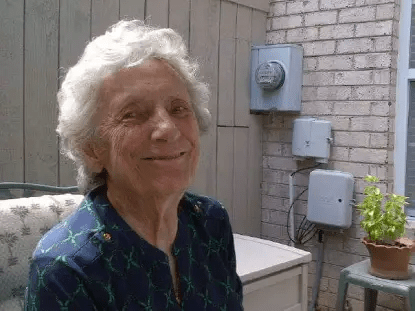
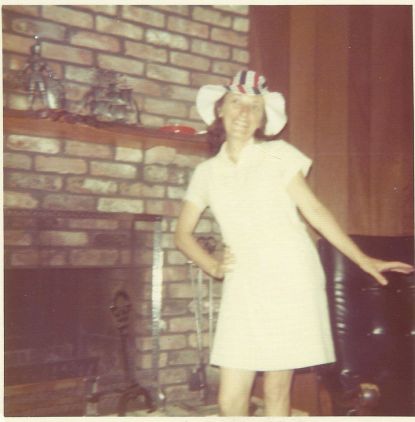
Joan in the Great River house, circa 1969

On June 22, 2002, my sister sat at our parents’ kitchen table and recorded an audio interview she did with them about their lives, about life during the depression and World War 2. She asked other questions, and just like Terri Gross on Fresh Air, did a great job of bouncing off of their responses. She sent copies to my brother and me about five years ago, and when I sat to listen to them, a few things struck me. One, my father was precise in his responses, and my mother was hysterical in hers. He was 77 at the time, and Mom was 69. But what hit me hardest was hearing our father’s voice for the first time in half a decade. I can hear his voice in my mind, of course, but to actually hear his voice like he was sitting there made him young again. The last few years of his life I was around him all the time and his dementia grew worse and worse. So when I played the cd, I heard not just my father, but my father younger, still alert to everything. It was nice to push past the sound of his weak and confused voice that had filled the corners of my mind and hear him as he had been. Ironically, at the same time it makes it hard to listen.

About two years ago while out to lunch I randomly recorded a video of my mother talking about something. I don’t remember what and the video is gone, but the idea took hold, and for the last two years every couple of weeks when we were at lunch or getting coffee, I’d ask her a specific question, or I’d encourage her to remember a particular time in her life. Note that she is one of the funniest and smartest people I’ve ever known, and understand too that she has had quite the life from the streets of Bushwick, Brooklyn, to Long Island, to Virginia Beach, and now in Williamsburg, Va. There are fifty plus videos here, but I recorded more than a hundred and deleted many. Some were redundant, and some in the past year or so I got rid of when Mom would struggle with a memory, or lose track of what she was talking about.

Still, this is decidedly not about Joan Catherine.

It is about time. This has everything to do with the brief flash of time we have to share with each other. Watch how a person can at once both change so much and still be themselves, who they are in their heart. The truth is at some point as we age we realize that we must set aside our anger and anxiety and arguments, and we seem to do so far too late in life. In the past year I’ve lost a half dozen people I loved very much who were my confidants and companions, and every one of them died relatively young, three of them in their early sixties. At the same time, my mother has nose-dived into a wall, fallen and slammed her head on a porcelain tub, fallen on the floor, faced cancer–again–had a pacemaker put in, battled neuropathy, and moved from her spacious condo where she lived with my dad, to an independent living apartment in Virginia Beach, to an assisted living apartment in Williamsburg, and she just keeps going. Last July she was in the hospital with pneumonia and sleeping eighteen hours a day, and the doctor did not think she would leave the hospital. Yesterday we went to lunch at an Italian restaurant and she woofed down a massive piece of tiramisu. She Just. Keeps. On. Going. And always with a sense of humor. She talks here about her move from Brooklyn to Long Island, from there to Virginia, and about how patient she can be. Or not. She sings the Banana Song, Woody Guthrie, a Shampoo commercial, and in one of my favorites when she had no idea I was taping from the cup holder of my car as we drove along, she sings “New York, New York.”

But this isn’t about Joan. This is about brevity. When we look ahead–when we anticipate–time can slow to a tragically slow pace. But when we look back, when we recall, we can transport our mind instantly to another era, as if it happened two seconds ago. This makes it seem like time goes by so fast. But it is the same now as it was when we were children. That’s the thing about time: it is dependable. Not one fat second will lose an ounce on my account. But the older we get, the more we recall instead of plan, so the clock can be deceptive. In these videos, Mom is full of energy, sitting up and laughing, with immediate recall of incidents an hour earlier as well as two generations ago; at the same time, here Mom is wearing oxygen, sometimes softly gasping for air, and her memory is nearly non-existent.

Time. It is the only measurement that matters. And we are endlessly distracted by the news and entertainment and the stress of finances and politics and health. But all of it slides away when we start to list what is essential. Then, the answer is easy: each other. That’s it. People leave us, sometimes slowly and sometimes with the swiftness of a cool, autumn morning that takes us by surprise. But they do, in fact, leave.

These videos are in no order, so one of Mom recently trying to remember her Uncle’s name might be followed by one of her looking stronger, heavier, talking about her favorite foods. I decided against a strict chronological order so that instead of watching a woman’s slow decline as age takes hold, we can see how life is, in the words of my friend poet Toni Wynn, “Paper thin.” I will add more to her page as time permits. Thanks for enjoying our mother’s beautiful sense of humor and simple take on what matters the most.

Note: There are some videos on the “Video” tab, but most of the videos are on the “Shorts” tab. Please check out both. And “follow” The Joanie Channel.

https://www.youtube.com/@TheJoanieChannel/shorts