When Power Corrupts, Poetry Cleanses

“If you ask me what I came to do in this world, I, an artist, will answer you: I am here to live out loud.”       –Emile Zola

I moved through several stages of grief in the hours and days following Election Day. Denial hung on a while, anger held court the longest, at about three am I woke up bargaining that it all be a dream, at five I woke up depressed, and at six I got up but instead of moving to acceptance, I back-peddled to anger again. Acceptance is a distant, blue ghost waiting in the shadows.

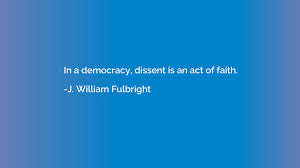
This is an appeal to my colleagues in the art community. There has rarely been a more important time for us to be writers and musicians. Our discouragement at watching this country move backwards into what many in the past few days have called that horrific term “Melting Pot” instead of forward into a multi-cultural society must be met by our abilities to give voice to our frustration.

It has always been the task of the artist to expose inequity, injustice, and fascist tendencies. It was Thomas Paine whose small seditious book Common Sense instilled in the citizens of the colonies the ability to move forward; it was David Walker who called upon his Black brethren to resist; it was Thoreau’s Civil Disobedience; it was Ida Tarbell and Carl Sandburg. It was the writings of John Stuart Mill, and Richard Wright. It was the writings of Woody Guthrie and Bob Dylan.  

It was, it is, the poets.

President John F Kennedy said, “When power leads man toward arrogance, poetry reminds him of his limitations. When power narrows the area of man’s concern, poetry reminds him of the richness and diversity of existence. When power corrupts, poetry cleanses.”

Some have suggested that one voice doesn’t weigh much anymore in a world of a million sound bites. However, other than bad flash mobs, there has never been such a thing as a spontaneous chorus. The artist, despite their isolation, has it in their power to put voice to what others wish to say but cannot, but once they hear it said, sing along with the harmony of their generation. Ginsberg wrote, “Poetry is the outlet for people to say in public what is known in private.” And Robert Frost said, “A poem begins as a lump in the throat, a sense of wrong.”

I can’t swallow.

I can’t do most things that will benefit this country and prevent its further demise, but I can write. I can do that. This is an appeal, then, to the writers and poets and to the musicians and actors and painters to combine our talents with our grief, to blend our anxiety with our refrain, to risk exposing truth.

And what do we say, exactly?

In whatever way we can, with whatever genre we can, that we can do better than this. Simply, that we are better than this.

“We must always take sides. neutrality helps the oppressor, never the victim. Silence encourages the tormentor, never the tormented.” –Elie Wiesel

Can You Say “Non-fictionalist”?

Last night I had dinner with seven other writers at an Italian restaurant (manicotti, meatball, salad with blue cheese dressing, chianti). I never before met the two women on either side of me, or a few of the others for that matter. We talked about weather, of course, and about the food. Where we’re from, what genre we write in (most of these people are poets). The talk turned to “what we’re working on,” and that’s when I ordered the wine. I’m not comfortable talking about what I’m working on unless I, a. know you very well, and even then, b. will change the subject. I’m not alone in this. One of my closest friends for twenty years is a poet and in all of our lunches or dinners through the years we only ever talked about writing when we read together at some event, and even then we don’t. Rick, another very dear friend, was there last night and we sideswipe the writing conversation nearly all the time. We’ll send each other drafts for comments, but don’t really talk about it

I never saw the point. I’m interested in what they’re working on, sure, kinda, but I’d rather really just read the final copy. If they do mention it, I’m really looking for little more than, “A collection about warts” or the like, no details. Peek my interest and step back. And who am I kidding; I’m not going to ask what anyone is working on, particularly people I don’t know. I don’t think it’s rude; I’m more comfortable with my work if it goes from brain to screen without getting blown around in the air between other people. I don’t mind the question; I get it all the time. But my answer will be little more than “some work about teaching,” or “several things going right now,” which doesn’t answer the question at all, which works best.

I find it revealing that the writers I know well also simply don’t really talk about it. We’ll talk about the process, or the stages of publication, or past work (ugh), but what’s on the front burner now is simmering and it’s best not to get too close.

It might be different for poets, or even novelists. But then those monikers right there in the previous sentence explains a lot–they are, in fact, “poets” and “novelists.” I’m neither, and what I do do does not translate to such a label. “Hi, I’m Bob, I’m a non-fictionalist.” Memoirist comes closest, I suppose, but most of my writing is not (my last book and my next book excepted, since both are full-length manuscripts about a certain time and place in my past). I write essays, or observations. A book slated for 2025 is a Sedarisest-style book about teaching; it’s not a memoir, so in that case I could be called an essayist, but that’s not accurate either since, it’s very memoiry, but, well, never mind.

The point is the manicotti. Growing up my mother always pronounced in manigaut (I’m not even sure how to spell this, but assume it is said as might an Italian who doesn’t speak English–without offense to my Italian cousins, and you know who you are). I was old enough to order my own food when I pronounced it that way and some server somewhere looked at me for a minute and replied in all her Virginian perfection, “OH! ManiCATTi!” Okay. Last night I heard a lot of menu items pronounced by the staff in a very non-West Virginian way of saying it, so when I knew I was going to order this dish (avoidance there, thank you), and when our excellent server, Jaimie, asked what I would like, I replied, as might my mother fifty years ago, “Manigaut.” She looked over my shoulder for a few seconds at the menu and replied, “Oh, the manicAtti, excellent.” Sigh.

Do you say what is the proper way to say things or do you say what they simply need to hear, are used to hearing? “I’m working on a piece about being nineteen years old.” “I’m working on a group of short essays, really nearly flash non-fiction, about stages of life, the patience we need when our children are very young and the patience we need when our parents are very old.”

That usually gets an accepting “Sigh. That sounds so good.” But it sucks, so I can’t agree, it might be good later, maybe tomorrow maybe in a dozen years by someone else. And that’s why I don’t talk about it.

Another writer I’m very close to is working on quite an involved work of fiction and is already nearly 100,000 words into it, and does not mind talking about it. But it helps, I believe, that writer clarify all the various aspect of this work, so talking about it somehow sharpens the mind about it. And I truly loved hearing about it.

But that’s not me. I don’t do small talk to begin with, and certainly have more trouble with it when even I don’t know what I’m talking about yet. So I’m more of the grunting type. “What are you working on, Bob?” “A book.” “Nonfictional stuff.” “Being nineteen.”

I was honest and as thorough as I could be. Jaimie returned and asked if I wanted anything else. I was about to order another chianti but hesitated. In America, shouldn’t that be che ante, hitting the ch, instead of the keeantay, pronouncing it as it should be in Italian? And if not, then why are we calling it ManAcotti? It’s Managaut.

A real non-fictionalist would know that.

Proof:

Rewrite

Writers face a task unlike most of the arts. In music you can judge how well you’re doing by simple comparison to the original song you’re trying to cover. In visual arts it isn’t unusual to see young painters in museums copying the masters, measuring their progress by their ability to replicate Van Gogh or Rembrandt. But writers have no such opportunity. We can’t simply retype a volume of Hemingway and hold it up at the end and say, “Check it out! For Whom the Bell Tolls Baby! I’m getting better every day!” No. It is a crapshoot. If we appear too much like one of our idols, we are emulating too closely. If we have too much of our own voice too quickly we are terrified and, often, ridiculed for straying from the canon.

That’s why I love small chores with immediate results. Washing the dishes is a good one. Laundry. Cleaning the porch or cleaning out the shed. Mowing might be my classic example. These are all activities I can simply do while thinking of mostly other things, then after not-too-long of a time I can stand back and see the results. I can quickly assess whether or not I did a good job and redo parts that are obviously in need of another go at it.

Not a lot of guesswork is necessary; very little, if any, subjective viewpoints. It is what it is.

I have so little of that in my life. As a writer I am naturally dealing with material which can constantly be changed based upon my mood, the time of day, my caffeine intake. Even when I decide I’ve butchered a piece into place the best I can, I rewrite it again, restructure it, dump the intro and move the conclusion. Shred it. Eventually the editor will send the usual note indicating “only small grammatical corrections from this point on,” and I’ll panic realizing that means the journal is probably going to send back the four replacement paragraphs I shot off to them at the last minute. Instead, if the piece comes out in some anthology or another journal under a different title, I’ll include the new addition then, still knowing it will never be close to finished. Some things will never be finished.

This life of mine, too, needs serious rewriting. Just when I think I’m publishable again, I tumble backwards, and one gets tired of asking for help. So we hack away again, knowing (praying?) it will be okay this time, afraid to ask others for input, afraid not to. I glance at my progress with one eye, afraid to see where I screwed up again.

Same when I write. When something does come out in print or online I like to do just one quick take on it to see if they did something strange like add words I’d never use such as “spurious” or take out words I do use, like my name. Then I’m done. To look at the material again is just a way of seeing how differently I’d write it—not necessarily better, just different.

Right after that I mow the lawn. I admire the straight lines of cut grass; grass that was long but is now short. I trim the long grass around the stones and, ouila, done. Nothing to question; it is finished until next time.

However, in the best of days my usually unorthodox approach to everything from work to parenthood to travel and writing has always raised more questions than answers. Part of it is I take a lot of chances; another part is an overwhelming need to experience the passing of time as if I’m taking a dip in the ocean. I want to be absorbed in it, saturated by it. Maybe that’s why I write to begin with; to conjure a counterpoint to the persistence that is time.

Cooking is another task which can be immediately graded. I cook seafood mostly, but I also can make an amazing omelet. I knew a sous chef named Willie at the Hotel Hershey when I worked there half a lifetime ago. Sometimes he would take a weekend off to go to see his family in Puerto Rico, or just stay home, and I’d get to spend that day making omelets to order for the guests. The trick is to let it cook awhile on one side before the flip. I got good and I still love making them. Immediate gratification. Like playing Jenga–I know instantly whether or not I did a good job.

If the temperature is too hot the egg will burn but if it is not hot enough it will not solidify well. The butter first (not spray not margarine not bacon grease butter just butter and if that bothers you go eat oatmeal), followed by any hard ingredients—peppers, shrimp, etc—and after they’ve been thoroughly sautéed, pour in the room temperature, already beaten eggs—three is perfect. Keep pushing the egg toward the middle or sides to let the uncooked egg slide under the cooked part, making for a fluffy, well distributed omelet. When the whole thing seems un-oozy, flip it with a snap of the wrist so it lands in the same spot only upside down. Cover with shredded cheese and then fold in half and let it slide in perfect placement with the half-moon side matching the curve of the plate like two ballet dancers in unison.

Then eat.

This doesn’t work in writing. The second paragraph of this piece, for instance, was originally the beginning. The one starting with, “I love small chores with immediate results.” I changed it a few seconds ago. Writing has no guideline, no recipe, no set ingredients. I wonder now why I didn’t write, “When I mow the lawn I always start near the driveway and work my way to the woods.” Or “I do the larger dishes first when I clean and the silverware last.” Both decent starts. I can also point out now that originally the omelet section was the first paragraph, but I buried it later to back off of the “process” style which can be overbearing and misleading. I also couldn’t decide whether or not to include Willie. I kept putting him in and then leaving him out thinking it irrelevant, but then I decided to leave him in because I thought it a small detail that personifies the example. And yet another part of the writer side of me is constantly saying, “Who gives a shit?” as I write. Writers must constantly strive toward uniqueness without the benefit of example which itself defines contradiction.

Thank God I like eggs.

It would be great if I could go back and rearrange a few of my own paragraphs–I’d move the trip to Austria I didn’t take to the top, and the one I did take to another foreign land I’d delete entirely. The Massachusetts section definitely needed more development, and I’m not really sure how the Arizona got in there. Some cosmic editor would circle that one with a red pen and say, “This is really interesting and I like the Diego blanket-selling character, but it doesn’t fit in the rest of the narrative.”

Too bad we couldn’t have taken all of life’s ingredients out of the cupboard and put them on the counter at the start, decide then what to leave in and what to leave out.

Still, I like not being able to see too far into the work. I like discovering where I’m going only when I get there or maybe slightly before that, and then getting lost again, trying different directions until the landscape reveals itself. Once again I rearranged just now three paragraphs in this piece. You’ll never guess which ones or where they went because by the time I hit publish I’d change them again.

I wish the cosmos could have waited until they got things right before hitting “publish.” This draft of ours, this world, is a very weak draft not nearly living up to the author’s potential.

In any case, I wonder if I live the way I do because I write, or if I write the way I do because of how I live?

I don’t always want to know what’s going to happen. Maybe what I’ve been working on for all these years will turn out to have a happy ending; or maybe some tragedy will strike and I’ll need to write myself out of a corner and make some alternative escape from the monotony of a three-decade-old narrative. Whatever. I just know that in the end, the old axiom, “Watch pot never boils,” is not true. Of course it will boil. Einstein’s theories aside, the pot on the heat is going to boil. It is one of the few predictable aspects of life we can count on. Time is selfish that way. Not one fat second will ever lose an once on my account.

And no matter how many ways I approach it in the years I have left, I am never going to be finished with this life I’ve been writing. There are just too many ways to rewrite it; and far too many people already are too accepting of their first draft. I’m simply not, not because I can be so much better than this–though I am sure that is true. But because this simply doesn’t read well at all.

I need a good copyeditor.

“I’ve been working on a rewrite, that’s right. Gonna change the ending.”

–paul simon
Write on. Peace out.

I suppose when I worked at the hotel when I was young, I could go home and leave work at work. It wasn’t my hotel, after all. Certainly, I’d get calls at various times since I was manager, but not often since the owner was often on site. And when I worked for Richard Simmons, it was a similar situation. As manager, I’d get calls at home if there was a significant problem, like when the other manager, Andrea, slammed her finger in a metal door and couldn’t work for several weeks. But overall, when I went home, work stayed at the studio.

This was less true as a college professor. Certainly before computers and cellphones I was able to compartmentalize my papers into office-hours work, and if I planned things well, I could get everything done for my normal eighteen teaching hours at one college, twelve more at the university, each semester. It was an insane schedule I maintained for almost three decades, including summers. But the luxury of making my own schedule, remaining primarily responsible for when things were due, allowed me to keep some sort of retentive check on everything, so, once again, when I was home, so was my mind. Sure, there were times the stack of essays followed me to my porch, sat down next to me, and would not stop babbling until I finished them. But mostly not.

Yet I have another occupation, one which chose me, therefore I cannot simply quit, lay down some sort of guidelines, and go about my business. As a writer, my mind does not clock out, ever. I have many writer friends who can do that, but I simply can’t and I’m not sure why. It might be one of several conditions, or it could be one of several medicines, or perhaps it is simply my inexplicable need to describe and highlight the miraculous beauty of life juxtaposed with the insistently rapid pace of life. But I cannot turn off my mind. I see narratives and characters, I hear stories and elements of distress, and the dynamic moments of everyday life can be overwhelming.

I actually and literally feel completely better when I’ve written something. The fact is this very blog started as an effort to relieve my mind. I know Van Gogh was like this as well, and Hemingway, and Jake the plumber at the hotel who could not rest if there was a pipe that could be fitted just a bit better, but after a solid attempt, even if he fell short, he could rest. Vincent wrote often about how his mind is eased either by absinthe or a good day of painting. My poison is nature and a few moments of trying to say something right.

But I remember fondly the days when I’d go home from the club and absolutely nothing felt undone or needed to be reworked. I could watch a football game and have some drinks with friends and never once glance at a somber face and need to make notes. That’s gone. Maybe that’s why I’m always searching for some peace of mind.

I was in a local store earlier and someone said to someone else, “No I haven’t been able to find him. I’ll call later.” That’s it. But that was enough and for the past three hours my mind has been beating the hell out of a piece I’ve been working on for far too long. This morning my son mentioned he might make biscuits today, and “process” stayed with me like a bad song that won’t leave your mind, and I either need to write things down or dive into some waves, let the cold ocean saltwater wash across me and make me present.

Nature can do that for me, more than anything else, really, make me present. A few months ago I was hiking the mountains in Utah and found myself nowhere else. Nowhere. I wasn’t writing in my mind, I wasn’t rewriting, or making notes. I was hiking. Yesterday I sat at the bay legs in the water to my calves and I watched two egrets fish for dinner. When I walked away I knew I’d spend time with them again late at night on these pages, finding that peace again on the page that I found on the bay. But at that moment, it was just me and them, kin.

I haven’t had a day off since I started working on a book about Van Gogh more than thirty years ago. Wine helps, though more often it can just fuel the flames. Lollipops certainly help. But my mind is growing tired lately. I’m always writing, even when I don’t mean to be. Still, I’ve come to terms with that. My friend Linda used to tell me, “Don’t die with the music in you.” This keeps me going. As long as I have some endless swirl of vocabulary beating at the exits of my mind, I should be fine. Maybe I never needed medicine to begin with. Just a notebook.

Painters see colors and perspective even when walking their dogs. Musicians hear that quartertone in the cardinal’s call, and writers, well, we keep indenting and backspacing, even when trying to eat a bowl of fruit loops.

That’s just how we are.