Just, before Dawn

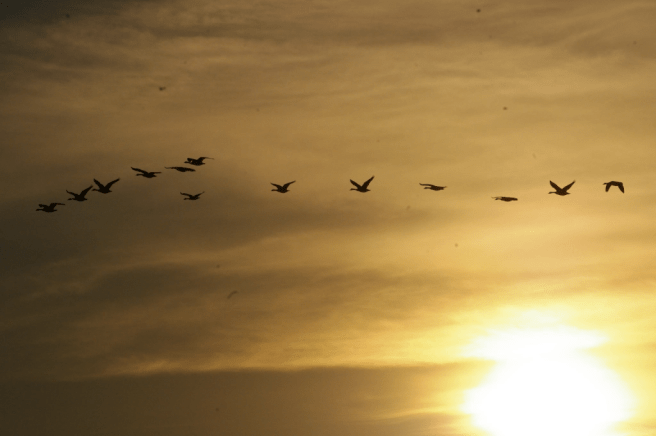
I rose early this morning since I needed to be in Norfolk by 8. That’s okay, though. I am drawn toward the early morning hours of dawn when I feel ahead of the world, and I can sense some small hint of hope. The geese flew by headed to the river, and to hear life around the water in those moments motivates me. Before the sun rises, often just after the first sliver of light reaches up across the bay, I can hear osprey and other sea birds who at that hour never seem to mind my presence.

But earlier, when that glimmer on the eastern horizon is still merely a possibility, I have taken to walks by moonlight, sometimes not even that. In the woods where I live and down along the water, something is going on. There is life out there wide awake and moving through the dark hours like spirits who need to finish their errands before the sun gives them up.

Fox come about the edges of the woods looking for scraps of food or the peels and rinds of bananas and melons. I can stand patiently off the side of the drive and one fox will wander across the yard from the woods behind me to those on the south and stop before disappearing again beyond the laurel, and he will stare at me, relaxed, nosing around the base of a tree where I occasionally put food. Then he’s off—not swiftly or in fear, but nonchalantly, demonstrating that he lives here as well and has decided to stretch his legs. That’s all.

Owls, too—some barred but mostly screech owls, perch in the oaks and elms, sometimes swooping down and moving through branches with precision. But my favorite are the geese which cover the night sky in flocks sometimes so enormous the swoosh of their wings alone creates a breeze, and their call to “Go! Go! Go!” is startling.

Closer to home, out front near the edge of the trees, deer nearly always feed on the dew-soaked grass and often the hostas, and if they sense me sitting on the porch or standing in the clearing, they will look up, briefly, ears turned forward—just for a moment—and then return to their grass, not minding me, aware just the same.

And it is then, when I am well acclimated with the night and my eyes have adjusted, and my soul too has adjusted, that I think of my way in the world, the motivation behind the turns and hesitations, my purpose of this passing in time. Oh, do I ever have an internal monologue underway with long-gone friend now gathered in my nocturnal imagination. There’s Cole nodding his head and insisting I follow my own path. I can hear him clearly when I’m out there, see his small sardonic smile as he says, “Come on Kunzinger. You know how to do this, stop waiting for approval or it’s never going to happen.” And there, too, is another friend whose smile is as wide as dawn pressing his sense of adventure into my spirit with an “all or nothing” carelessness about him which brings me up short yet livens my ambition. In one brief moment I am eased by no longer thinking of them in the past tense, but just as quickly, we all move on; usually just as the sun surfaces.

The sky in the distance across the reach lightens ever so slightly, from dark, almost Navy blue to something slightly more pale, like powder, and I’m alone again—the fox rushing off into the woods, the geese at rest in the harvested field or at the river’s edge, and the murmurs of chickadees and wrens and cardinals chase away what’s left of the stillness, and even my friends bow off, and I have trouble separating memory from imagination. So I get in the car and head south to the city where I simply don’t belong.

It’s as if time offers a small reward for some of us who stay up late or get up early to gather as much out of our moments as we can. Then, just briefly, it eases me back into this new reality I never anticipated. It remains for me the most honest time of day, the most just, when all thoughts have a chance of pushing through the darkness, and the truth about what we are here for is ironically illuminated.

I’ve started to live for the deep hours of the night at the twilight of dawn.

Bulldozer Leadership (and herons)

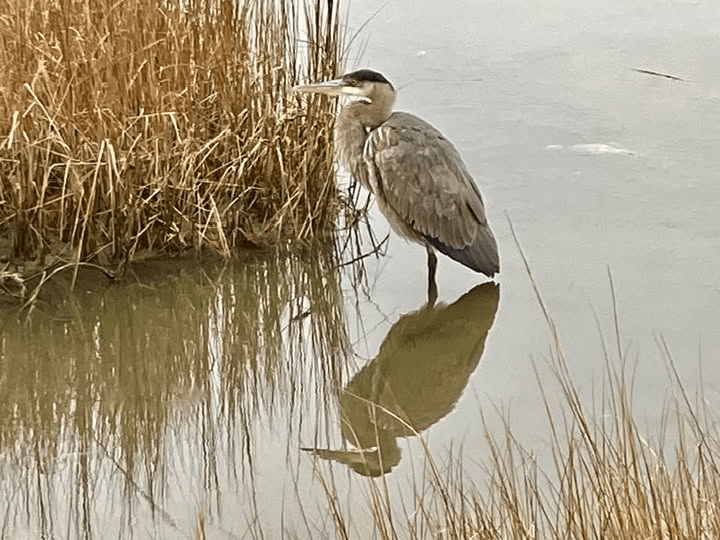
This morning a heron—the same one that seems to be there every day all day long—caught a fish in the icy pond at the bottom of the hill. My presence didn’t disturb her as she fished out small crabs and one six inch or so fish. She seriously did not appear to be stressed at all; not even when my phone rang. I left quietly so she could eat in peace.

It’s the morning of January 20, 2025, and here at Aerie along the Rappahannock River and Chesapeake Bay, it’s cold; temperatures won’t rise above 35 degrees Fahrenheit. It’s sunny, which somehow saves the day.

There’s a transfer of power taking place today, fyi.

Strength has two determinants: The ability to overpower if one so desires to do so, and the ability to refrain from such actions simply because one can. The first is the result of many factors including money, relationships, status, and position. The second is the result of character. It is a symptom of intelligence and humility. The vast majority of leaders in history shared the first, but only the truly “great” leaders embodied the latter.

True strength is the ability to overlook, to forgive, to accept without judgement, and to understand without pretense. Any other action is usually a characteristic of those who fear, those with low self-esteem. The need to overpower the weak and degrade the defenseless is the result of an absolute conviction no one but them can possibly lead, so they simply use what can best be described as “bulldozer leadership” by using the mechanisms at their disposal for their own sense of security, albeit a false one.

Strength is the ability to accept criticism and learn, the ability to recognize the truth despite its contradiction to one’s own belief system and accept that truth. A true leader delegates and discerns instead of dictating and determining.

The Reverend Dr. Martin Luther King, Jr. seemed to embody those characteristics. He recognized that the true power was when the people stood up—or in some literal cases, sat down—for what they knew was right, to destroy what was unjust and degrading. He knew such an ideology could mean his death from those without the strength or character to accept that truth. But he also knew that true leadership perhaps above all else means sacrifice for the greater good.

I am spending today at the river, watching the heron feed and the geese fly. The ice on the tide has gathered for more than thirty feet out and that hasn’t happened here in several years. At the Bay the current is strong enough to keep from freezing, but Buffleheads dive and rise continuously, oblivious to the goings-on just 100 miles to the northwest.

I wish things were the way they used to be, when leaders acknowledged, even if only publicly, another’s victories and strengths, when there was hope for inclusion and safety in truth. I really do.

Dr. King said, “A genuine leader is not a searcher of consensus but a molder of consensus.” Where is that leader?

I’m headed back to the heron to watch her eat fish. It’s going to be cold for a while, but I have hope things will change. King also said, “We must accept finite disappointment, but never lose infinite hope.”

Rutting Season

I spent time tonight outside watching Saturn slide west, and the half-moon along with an abundance of stars visible along route 33 east on Virginia’s Middle Peninsula. From my vantage just up the side of an embankment three miles from any town, stars filled the ordinarily black sky.

It gave me pause. Jupiter started to reveal itself just about the time the State Trooper showed up to take pictures of my car and the deer, but once he put out the flares and made sure I was okay before he left, I moved right back up that hill and found what is probably a nebulous, and other than talking to three or four kind people who stopped to make sure I was okay and to see if I needed a ride, I spent the night focused on the distant lights.

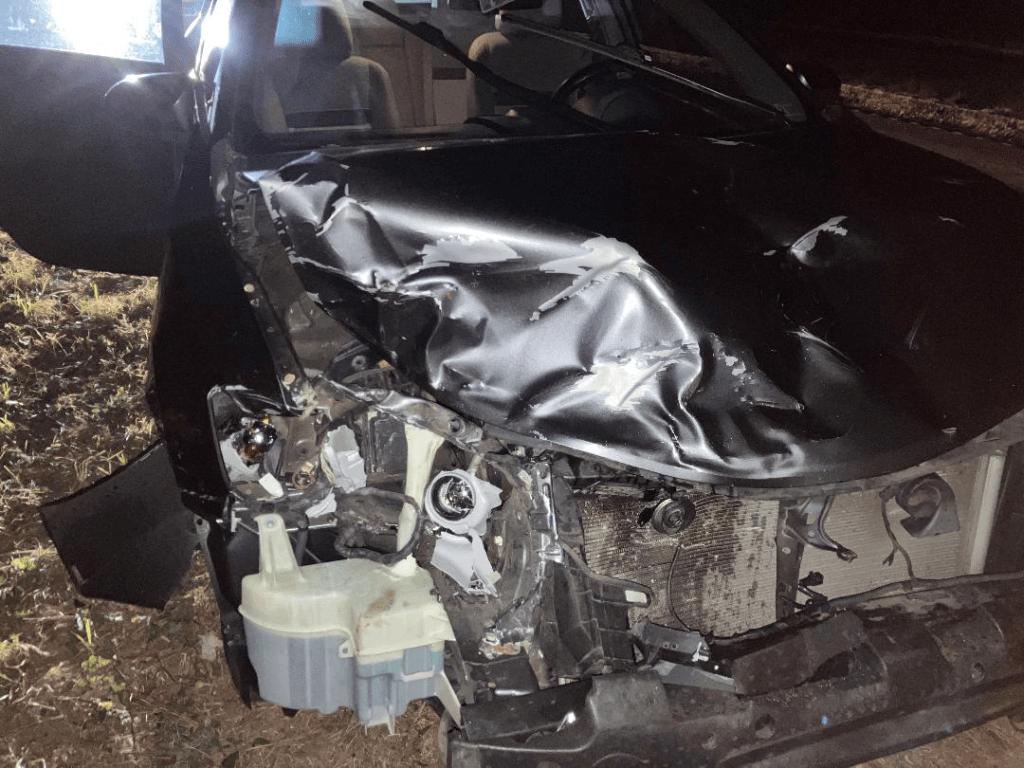
A deer hit me. I think we need to dispense with the ridiculous notion that we “hit” deer. Sometimes, perhaps, if we are distracted and a deer happens to be minding her own business in the middle of a road. But usually, and this time in particular, we are moving along fine when from the woods on the right a deer hit me, a beautiful tall, strong buck leaped to clear a small ravine between the road and the hill, and landed on the front of the passenger side of the car, crushing it entirely to the ground. I managed to stop on the shoulder but the deer went spinning through the air another twenty feet in front of me. He never twitched. Never looked back up. Dead on contact, both the deer and the Toyota.

But man, those stars. Just this morning on NPR I heard that a good friend of Galileo, Simon Marious, named the moons of Jupiter. I couldn’t see them with the naked eye, nor the rings of Saturn, but our own moon was perfectly visible. When the State Trooper lit the flares I thought I wouldn’t be able to see as well, but it was fine.

I was trying to remember some song from the seventies about the moon when a pick-up pulled up and a man got out. He asked if I needed help and if everything was okay. His license plate noted Disabled Vet so I asked and he had served two tours in Afghanistan. We walked up the road to the deer, still in perfect shape except for being dead, and the vet asked what I was going to do with it.

I’ll be honest. It never crossed my mind to do anything with it other than pull it off the road. I told him since the police already got pictures and filled out the police report for the insurance, he was welcome to the buck. I helped him load it on the bed of his truck and he was so pleased. “This is a ton of fresh meat” he told me. I wished him a Happy Veterans Day and thanked him for his service, and he drove off. I climbed back up the hill to wait for the tow truck. Almost two hours later he arrived. It was a flatbed since my engine is more or less crumbled beneath the new accordion style hood. I climbed in his cab and after he hauled my car onto the truck, we drove off. The car now sits in a field in the front of my property since he was able to make it around the first bend of the driveway.

I’ll deal with the car tomorrow.

Tonight my mind is on stardust and the million tons of meteor dust that fall every day, some of it fell tonight while I waited, almost bridging the distance between me and the cosmos, uniting us, like a deer and the hood of my car but with more grace.

I can have an anxiety problem on occasion. It hit tonight and it might take a few days to subside, but it will dissipate faster because of the stars, and the sky, and the way it never minded what went on. I kept thinking of my mother who in so many videos I’ve made of her, says, “It is what it is.” Trudat Joanie. Damn straight. I actually thought “It is what it is” as I climbed back up the small embankment and watched the sky, fixed on some bright star not far from Ursa Minor. Maybe Vega.

I have been in need of slowing down, of taking my time, being more present. I have been on the go for far too long cruising in the left lane, and lately I’ve been thinking about that, about walking the Camino in the summer of ’26, about just slowing down in everything I do. Then a deer hit me.

The tow truck driver was like Obi Wan, the way he talked with such exactness, with a kind tone. He said he was glad I was okay, and he put his hand on my shoulder when he saw the car and said, “Brother you are not having a great night, but I’m glad we’re here and talking about it.”

Way to slide the worst of this night immediately behind me.

We drove home and he slid the car off the truck bed onto the grass in the field on the front of the property, where it sits right now in the cold instead of down here near the house under the porch lights, warm and comfortable.

After I emptied it of most of the stuff inside, I stood in the field and looked at it, thinking about the myriad trips to western New York and Maryland, to Florida so many times, and to all the state parks my son and I have hiked in the past five years or so, and I sighed, looked up, and found Vega again, lighting my way, walking me back from the car to the house. Before I went inside I heard something in the woods. Deer bed down around here all the time, and when I heard several I knew that’s what was out there behind the shed. More likely a fox, but that just ruins this story, so I’m going with the deer.

I wanted to apologize. I mean, I can replace the car. But that poor deer is now on his way to some Vets freezer.

Eostre: The Goddess of Dawn

aerie one

Eōstre is the Old English way of saying Easter. The reference is to a new birth, a sense of rising quite appropriate for the holiday. Few realize, I’m sure, that Eostre was the name of the pre-Christian Goddess of Dawn.

Life is always being reborn, whether the result of the changing seasons or divine intervention, rising from the past to try again.

I’m home now, and it is Easter Sunday, and I’m thinking about the need to start over. In that frame of mind with the buzz of a dozen candy coated chocolate malted eggs, I found again a metaphor in nature.

Back to this wilderness.

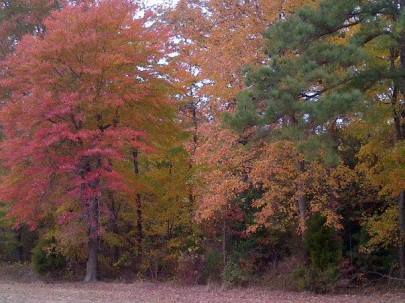
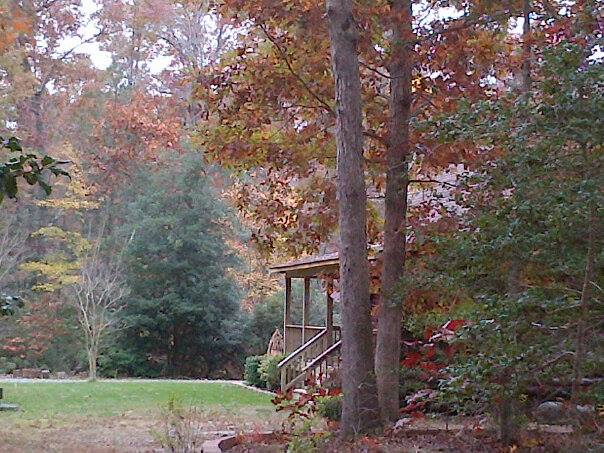
It occurred to me one day on my porch while staring at the surrounding woods, that at some point less than one hundred years ago none of those trees were there. The land has beautiful eighty foot oaks, some maples, tall thin pines and various other hardwoods including black walnut trees, which I am told can provide the ingredient necessary in the liqueur, Wild Spiced Nocino.

The branches protect birds as diverse as red-tailed hawks, downy woodpeckers, and countless chickadees, and they are habitat to other wildlife including one flying squirrel we spotted a few years ago when his tree fell. The squirrel was fine and found a new home in a white oak.

But a hundred years ago this was just land, sandy land, edged by the running Rappahannock River and backed by equally treeless farmland. A century before that these nearby plantations provided food for the region at the expense of slavery, and some slave descendants remain, selling vegetables at food carts out on the main road, or working the bay as watermen, telling stories about how the Chesapeake is just about farmed clean every season by crabbers at the mouth or the headwaters leaving nothing left for those working the midland shoals.

This area hasn’t changed much in one hundred years.

It is like this everywhere, the coming and going of things. In Manhattan a few hundred years before the wild construction on bedrock, coyote and deer were common. It was hilly (Manhattan means land of hills), and where the United Nations stands once stood grand oaks. The Lower West side was a sandy beach, and ecologists say if left to do what it wanted, most of the upper west side would be covered in trees and vines, shrubbery and wildflowers inside twenty years.

I can’t imagine what my house would look like if left untouched. When I don’t mow the lawn for a few weeks it looks like a refuge for timber wolves.

But these trees weren’t here a century ago and I sat on my porch and wondered if there had been other trees or if this land was barren, or was it used by the Powhatans, or was it home to some former slave family, or just a dumping ground. Evidence is scarce, buried beneath the roots of this small forest. Local historians settled long ago that this lower part of the peninsula was primarily hunting ground for the Powhatans, including Chief Powhatan and his daughter Pocahontas.

It’s changed since then. Four hundred years of rebirth in these woods finds me on the porch contemplating the ghosts of Aerie

This happens to me everywhere I lived; I like to imagine what was on that spot one hundred, two hundred, a millennium earlier. The house I rented in Pennsylvania was used as a hospital during the civil war. Before that it was a farm. Now it is a Real Estate office. The maples which lined the road and shaded the living room are gone. Someone planted new ones but it will be decades before they mature. My house in Massachusetts was a fish market a century earlier. Purpose moves on with time. Maybe that’s why I’m so mesmerized by the Prague hotel I always stay at. It was the same building seven hundred years ago that it is now. But here on my porch I realize this house is the only place in my life I’ve lived for twenty years, and I was curious if five times that score of years ago I could sit on this spot and see right out on the water, or were there trees then as well, different ones which died or were timbered to make room for crops.

The house is made from western pine forested on land which I assume is either now empty of trees or filled with young pines waiting to become log homes. What will be left a hundred years from now? Will someone sit on this same porch and look right out toward the bay once these oaks have long fallen? I know this house, this land, is a “hotel at best” as Jackson Browne despondently points out. “We’re here as a guest.”

Wow. Wrote myself into some sad corner there. Thanks Jackson.

I know nothing is as permanent as nature, despite the constant changes. It simply isn’t going anywhere. We are. So I like to remember that a century ago farmers sat here and talked about the bounty in the soil, or talked to 19th century watermen about the changing tides. And I like to realize that a hundred years before that the nearby swampland, now home to so many osprey and egrets, was a major route for runaway slaves. They’d have been safe in these woods, if there were woods then.

I like to do that because it reminds me a hundred years from now perhaps I will have left some sort of evidence of my passing through; even if just in the cultivation of language, the farming of words.

So I sit on the porch and listen to the wind through the leaves. It is now; it is right here, now. Sometimes at night we stand in the driveway with the telescope and study Saturn, or contemplate the craters on the moon—both here long before us and in some comforting way, long after we’re gone.

In spring and fall the bay breezes bring music even Vivaldi would envy, and I’ll listen to his Four Seasons, written nearly four hundred years ago, and listen to the wind through the leaves of these majestic, young trees reaching eighty feet high, and be completely, perfectly in the moment.

Despite the warming trends, the extreme tendencies of weather, the fragile ecosystem which sustains life, nature is still the only place I have found that really doesn’t change. It never has. Ice ages and dust bowls will alter it, but eventually some seed will take root.

aerie two