The following is an excerpt from my 2018 bookBlessed Twilight: The Life of Vincent van Gogh; however, the words are his from a letter he wrote to his brother Theo in 1888. Often, an artist who excels in one genre dos so in others as well; Vincent was no exception. I believe his writing to be as artful as his paintings.
Vincent van Gogh: March 30, 1853-July 29, 1890
From a letter to Theo:
It certainly is a strange phenomenon that all of the artists, poets, musicians, writers, and painters are unfortunate in material things—the happy ones as well. Maupassant is a fresh example of that. It brings the eternal question: Is the whole of life visible to us or isn’t it rather that on this side of death we see one hemisphere only? Painters, taking them only, dead and buried, speak to the next generation and very often several after in their work. Is that all or is there more besides? In a painter’s life, death perhaps is not the hardest thing there is.
The earth has been thought to be flat. It was true, and is today, that between Paris and Arles, it is. But science has proven the world is round and nobody contradicts that nowadays. But notwithstanding all of this people persist in believing that life is flat and runs from birth to death. However, life too is probably round and very superior in expanse and capacity to the hemisphere we know at present. For my part, I know nothing of it. But to look at the stars always makes me dream as simply as I dream over the black dots of a map representing towns and villages. Why, I ask myself, should the shining dots of the sky not be as accessible as the black dots on a map of France? If we take a train to get to Rouen, we take death to reach a star. One thing undoubtably true in this reasoning is this: that while we are alive, we cannot get to a star any more than while we are dead we can take the train. So it seems to me possible that cholera and cancer are the celestial means of locomotion just as steamboats and railways are the terrestrial means.
To die quietly of old age would be to go there on foot.
I feel more and more that we must not judge God on the basis of this world; it is a study that didn’t come off. What can you do in a study that has gone wrong if you are fond of the artist? You do not find much to criticize; you hold your tongue. But you have a right to ask for something better. It is only a master that can make such a muddle as this, since then we have a right to hope that we’ll see the same creative hand get even with itself. And this life of ours, so much criticized and for such good and exalted reasons—we must not take it for anything more than what it is and go on hoping that in some other life we’ll see a better thing than this.
I’d like to peel away the layers I’ve adopted over the course of decades. I’d love to let go of tethers, let the twirling plates drop to the ground and shatter. When we were in Spain, I discovered how wealthy I felt when I had just what I carried across the Pyrenees. And when we were at Spirit Lake, I learned quickly how much more at peace I am and remain when the distractions are three thousand miles east. And when I was sitting around a camp fire in eastern Senegal with no water, no news, no electricity, not anything different over the course of a hundred years, the conversation never ran dry, the laughter always pure and honest, and the stars—oh, wow, the stars—I lay on my back at night and drifted in the saturated sky for hours.
I find myself in less need now of most things than I ever have before. I’m going to spend more time in nature, in Oregon, in the Catskills, in France. In Ireland and Alaska. I want to listen to the earth as she was meant to be heard, not through the filters of inventions and progress.
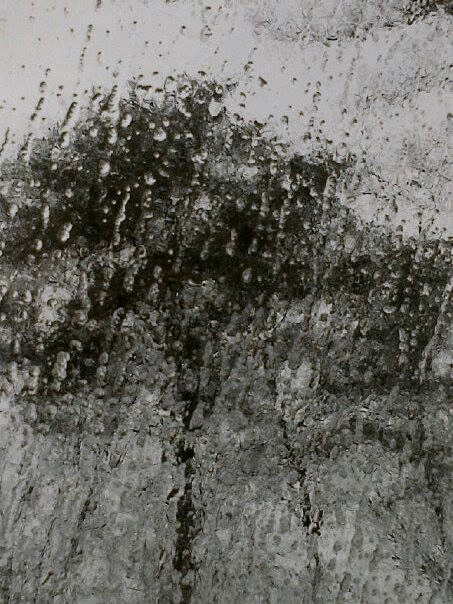
It’s raining tonight, finally warm enough to not snow or sleet, but cool enough to know it’s winter. The drops on the skylight above my head soothe me like they do when they do so on a tent when I am inside resting and the world is raining. There is something magical about how being in the wilderness can keep my attention, and Muir is right when he wrote that the clearest way to the universe is through a forest wilderness. Still, it’s taken me some time to understand why: it is absolute presence. I am wholly in the moment, the rain, the cool temperature and the sound of the rain and often geese in the distance looking for a field or pond just at the bottom of the hill.
Nature knows nothing except now. I sit at this desk and everything in this room has ties to back when. Mementos of travels, piles of unfinished work, guitars and a few bins of items from autumn or Christmas I’ve not yet put in the attic. It is the same anywhere in the house, with songlines running right through to some other where or when. But the minute I step outside and gaze deep into the woods or walk the hill to the river and look out across the bay, nothing exists but now in that nature, and I am completely aware of the air, the sounds, the conditions on the water and the cloud cover. And Zhuangzi’s note that “the sound of water says what I think” is present and true. There is nothing else like the sound of water in nature, rain, rivers, small creeks which have carved around and through rocks since before humans created the notion of earlier and later, created the beasts known as before and after, created the disabling “remember when we” and “why don’t we.” Cities and towns are linked always to others and plans and histories. Even at events people sit and talk about other places, different times.
But in nature, in the mountains out west or the porch out front, I can sit and listen to the rain and slow my pulse to something primitive, something organic, and I can dial up Emerson who suggested we adopt “the pace of nature; her secret is patience.”
No, I’ve had no mushrooms tonight, no Rioja or Malibu. Maybe a little. But no, my awareness tonight is from the rain, and I know Dar Williams’ comments “The beauty of the rain is how it falls” brings me closer to why I’ve managed to suspend the passing of time, for now, anyway.
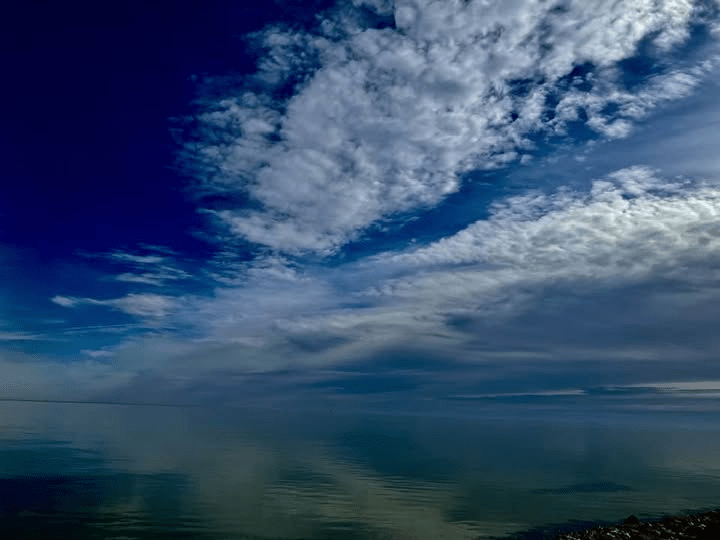
The river is icy tonight; not frozen at all but frothy on the whitecaps, foam along the sand. The sky was clear last night adding to the bone-chilling air, and the stars and planets filled the horizon. Tonight, however, it is cloudy, low dark clouds heavy with snow and eventual ice as a storm approaches, one like we have never seen before, so we are told. This is, this is not, a metaphor. Yesterday morning the sky and the bay seemed one, both calm, a mirror, still, complete peace, and the blue of the sky and the blue of the bay were only interrupted by a white cloud stretching across both. Tonight the water is rough, choppy, the spray stings the skin, and standing outside too long is dangerous, deadly.
Nature does what she wants, as well.
A soft sound came out of the woods earlier, rustling but heavier. I thought it was a deer at first, or the fox who visited the other night, or perhaps the racoon family which lives in one of the trees behind the shed and spends much of their time under the shed. But it wasn’t. A cat came out of the brush and sat on the icy stones and stared at me. I tried to coax her to the porch, but she simply meowed and moved away. I followed briefly but that only chased her further, so I retreated inside remembering my own cat who died some years ago and who, when he wanted to come inside, would leap from the front rail to high up the screen door to look through the thin windows at the top. When he saw me get up to go to the door in the back, he’d leap back to the porch, run around the house and slide inside. The cat earlier looked a little like him, a grey tabby, but this one had too much white. For a little while I was fine in the encompassing world of the cat in the driveway, and I felt such peace to be so present.
There will be Ice tomorrow. Again. So before I went inside, I stood for a moment in the chilly air and listened to the silence stretching far across the river and the bay, far inland as well, through the woods and into the night. No marches here tonight, no protests, no threats. No starving children waiting for medical care in Gaza or homeless in Ukraine, freezing. No unpredictable folly, no disparaging comments, no ridicule or mockery or distasteful gestures. No needless deaths or poor excuses, no narcissistic nonsense, no impatient though warranted commentary from allies. We live in a world now where no one is reading opinions unless they already agree. Heather Cox Richardson is preaching to the choir. So is Fox news. ICE shoots at will. The president acts without restraint. Congress doesn’t act at all. The news stopped covering the Epstein Files, Venezuela, the bombing of boats in the Gulf, the skyrocketing cost of healthcare, the impending shutdown, the redistricting debacle, the purchase of the Supreme Court justices. I can’t breathe.
I’m moving on, maybe longer than planned. Across the pond and then the river and far out beyond the Norris Bridge up river I heard geese approaching, their honks growing in volume and number, until they scattered about and landed in the fields and the ponds and the shoreline, hundreds of them, more, and they quieted down so that only a few calls could be heard and after ten minutes or so it was quiet again, the water choppy forcing them to find the sand, and other than that, just the silence of a heavy sky about to snow.
I have spent mornings here for three decades and no mornings are the same, the geese or ducks or herons and me, the rising sun, the setting sun, the hole in the sky of the moon, and we, it, are never the same. It is the same in the Uinta’s, the Catskills, the Blue Ridge, the same in the fields of Neunen, the trails throughout the Commonwealth, Nogales, St Petersburg, the Mala Strana, the Sahel, the Lofoton’s, the same silence, same presence, the same sense I never want to leave. The peace that comes when you know you have no need for yet more change.
I am fine here, at the water, or there, in the hills, or down along the clear endless coastline with water moving in and then away, completely oblivious to the mayhem, the seeming end of a republic. I am fine in a state of unknowing, cousin to the ostrich, brother to the deceased, though still here just the same.
And it occurs to me tonight as the streets of Minneapolis are aglow with the burning fires of defiance, and the world is ridden with anxiety because of one demented mind, that I have always been this way, along the Great South Bay, the Allegany, the canyons in Arizona, and the central New England hills where kettles of hawks kept me company on clear summer nights, not so much avoidance as control, predictability and allowance. I could so easily disappear to the east of Tangier, to the west of Coos Bay, to the North of Minnesota where if we focus on what we should focus on, is exactly where the light gets in.
So I have chosen, as well, in the spirit of Shen Yu, to only experience what I choose to focus on.
Sure, some of you will tune in to watch the Apple Drop in Times Square, if it is, in fact, dropping this year. In fact, throughout New York State, balls drop at midnight. But some of us prefer the big bologna drop in Lebanon, Pennsylvania, while others tune in to the Peach Drop in Atlanta.
But if you prefer to go to sleep early, catch the Lego Drop in Winterhaven, Florida, at 8pm. At Sloppy Joe’s in Key West, a giant conch shell drops to the bar, while in Indianapolis they drop a car. Honestly, a car. In Easton, Maryland they drop a crab while in Havre de Grace, Maryland they drop an eight foot by five foot foam, illuminated duck. In Hagerstown, of course, it’s a donut. In Pensacola, Theresa will be watching the Pelican Drop, while in Bethlehem, Pennsylvania, I fully expect both my friends Barbara and Sean to watch the Peep Drop. It should be pretty quiet.
In Beaufort, North Carolina, they drop a pirate, and in Chagrin Falls, Ohio, much to their…they drop a ball of popcorn. In Dillsburg, Pennsylvania, just ten miles from where I used to live, they drop two pickles, while in the capital of Harrisburg it’s a strawberry. I have no idea why. My cousin Ed said his head will drop on the pillow in Austin just after midnight, whereas Toledo will weigh in when it drops its Cheese Ball. In Boise they’ll drop their new Glowtato–a potato internally illuminated, of course. My favorite, however, is in Las Cruces, New Mexico, where they drop a 19 foot illuminated chrome chili pepper.
The whole notion of dropping the ball in Times Square began in 1907, organized by Adolph Ochs, owner of the New York Times, with nothing dropping at all in 1942 and 1943 due to “dimouts” during the war in case of invasion. Instead, attendees spent a moment in silence for the fallen. This year, the ball which descends at midnight is more than twelve feet in diameter, has a surface of crystal panels made by Waterford, and contains roughly 32,000 LEDs. But this year for the first time ever, there will be two balls (have at it late night hosts). The second, which will begin to fall at 12:04 am, is red, white, and blue to commemorate the 250 anniversary of the country.
It’s definitely a night to drop things. We drop hints about things we want and a few pounds as part of the new resolutions. Plenty of people in the entertainment industry use this significant date to drop their new album, their new book, their new movie, their old boyfriend, and the occasional dime bag.
In the old days neighbors would take it upon themselves to drop in and wish everyone a Happy New Year, while relatives are likely after a few more rounds to drop the charade and tell us how they really feel, and we’ll argue and argue until one of us, finally, says, “let’s just drop it.”
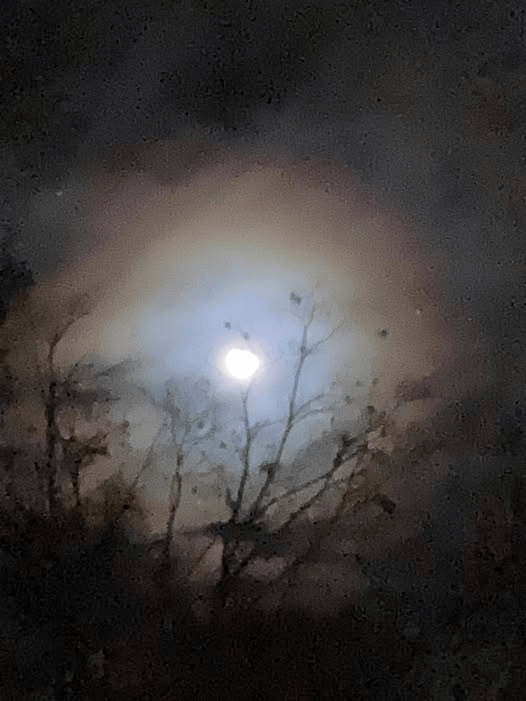
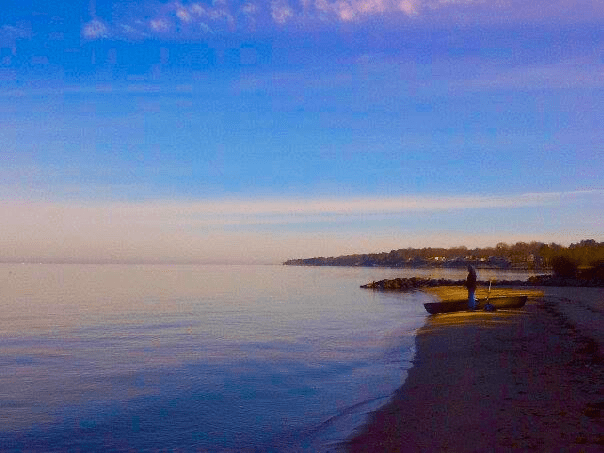
I’ll be outside as well, at the river, watching the nearly full waxing gibbous moon wash over the Chesapeake and it will take my mind off of the passing of time, the coming of the New Year, and the spinning of the earth like a ball, like a top, like a “tiny blue dot.”
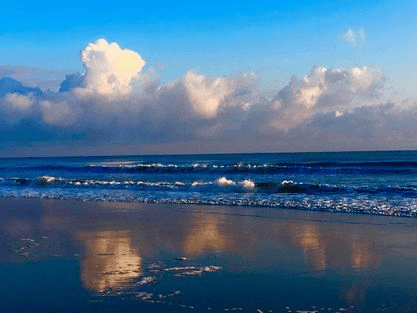
We used to meet at either 77th or 78th street, depending on who went first and when they graduated (or would graduate). I was in the class of ’78 so I would park across Atlantic Avenue and walk across the dunes to the beach and spread out the blanket and then swim. I was not a fan of laying around soaking up sun. I preferred to throw a frisbee or walk down the beach to the tourist areas from 42nd Street down. But when everyone showed up, usually by late morning, we’d all hang out and talk, music on some transistor.
And we’d swim, body surf, wade at waist level talking, the occasional jelly fish finding one of our calves. I remember several years of almost always having salty lips and hair, the soft, warm feel of sun on my shoulders and neck. This was how I grew up, at least during my high school years. When in the water, though, I spent most of the time scanning the horizon. Spain, Portugal. Africa. They were out there. The war in Vietnam had ended my sophomore year and when I graduated, Ford was president. None of that mattered. No, what mattered was where we’d meet that night, whose house, and should we keep it to ourselves or should we let everyone know, like the time fifty or more people showed up to Dave’s house over on Broad Bay, and an equal amount at my house once when my parents were off to a convention. It was all very innocent, and no one had to call the police. We were teenagers figuring it out, and the best I could figure, what I wanted was out there somewhere, across the horizon, past where Robin Lee Graham and Joshua Slocum had sailed. Down the beach toward the places Jimmy Buffett talked about in his early music we and other beach-dwellers were listening to ten years before the rest of the world. He spoke of margaritas in mason jars and friends from Monserrat. Jonmark would get out his guitar when he got home, noting exactly how the songs were played, whereas I would get out the maps noting exactly where I planned to go. Funny, JM still plays and I still navigate my way around this globe. And we’re still dear friends. Yeah, who we are is tethered very much to who we were.
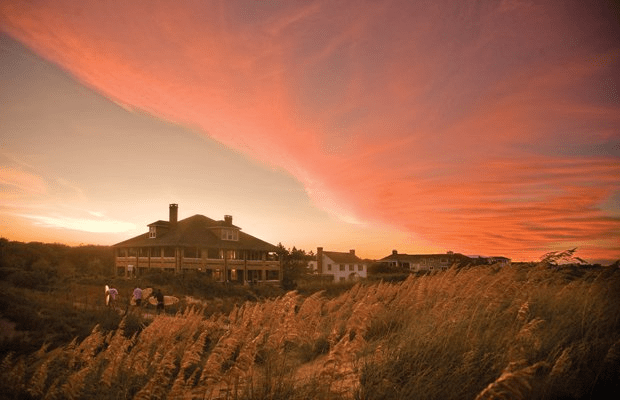
At 77th Street, though, back when we went there, there was an old huge, two story house with first and second floor covered wrap around porches right on the dunes, and I wanted that place so bad. At the time I believed I could have spent the rest of my life on that porch, walking to the water, back to the house, put on some music and talk to friends. I thought that was a pretty ambitious plan. And, in fact, it was, but I was missing the ambitious part. Go figure.
Anyway.
I was at the bay this morning watching a long “shelf” cloud settle in from the north, and the water was glassy, the sun almost above the clouds in the southeast, but not yet, and I understood something with an acute sort of clarity—sitting out in nature with someone, or alone, but with someone is far more engaging, with enough to make the day comfortable—some water, some food, a comfortable chair, is my Minimum Acceptable Required Stuff.
It turns out that after several million miles it is all I need. Oh, and music playing. When I was young I was certain I needed to “make it” in the world, not yet knowing that my true ambition would be to end up where I started. Gotta love irony.
Here’s what I’ve learned since then: nothing. I know a lot more than I did at that time, of course. I’ve been around the block and that kind of experience alone prepares me for what’s next. But the only lesson I absorbed since then is that I really didn’t need to go seek happiness; I needed to create it where I already was. It reminds me of my young college days when I was in constant search of peace of mind in a place I was having trouble adjusting to, and one night I wandered into a friend’s apartment in the dorm—Fr Dan Rily—who was sitting with three or four guys from the floor, and I joined them for a few hours where we talked about nothing at all, but we laughed a lot, and when they left I stood up and told Fr. Dan that I hadn’t been that much at peace since I had arrived on campus, and he smiled his wide, mustache-covered smile and said, “Bobby, that’s because tonight you brought the peace with you.”
I won’t stop traveling; it’s in my blood. I just might stop looking for something else. A hike to some snow covered trail or a morning trip to the bay to watch the geese wing by or the dolphin surface on their way back to the ocean is enough to mark the day. Then it becomes easier to allow that “Sweet Surrender” John Denver sang about back during those beach days take over.
New Year’s Resolution List: To eliminate everything from my life that doesn’t make me feel alive and present. I don’t have enough time anymore for the rest of it. I think Ill head down to 77th street this week and see if that house is still there.
“My” cottage at 77th Street. Built in 1917 by fertilizer magnate F.S. Royster.
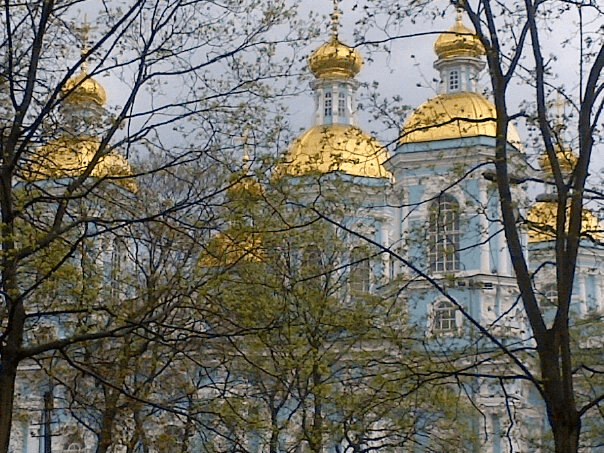
St Nicholas Cathedral (one of the rare churches to never close during Soviet days)
I’ve been thinking a lot about Russia lately, about how so much these days reminds me of my time there. Over the course of more than twenty years, I came to know the backroads and alleys of St. Petersburg, Russia. I found the coolest little cafes and late night jazz joints, made friends in shacks serving Georgian wine and shashleek—a kind of shish kabob—in a small room with low ceilings and dirt floors, the Gulf of Finland pounding at the sand outside. I returned again and again to long embraces from friends like Igor and Dima and Valentine the crazy man and brilliant artist.
I taught American culture at the college, endured endless people wanting to practice their English, celebrated Victory Day on Palace Bridge year after year, mourned the losses of people during the siege with veterans who sat telling me their stories all the while holding my arm, connecting to me through touch.
I prayed with old nuns in shrines, climbed the rubble of the ruined St Catherine of Alexandria Catholic Church with American priest Frank Sutman who raised enough money to rebuild this first Catholic Church in all of Russia back to its glory from the ruins of the storage facility it had become during the Soviet Era. I met musicians in old bars—Gypsies—and played music with them until the sun came up, read my own work at the famed Stray Dog Café surrounded by the ghosts of Anna Akhmatova and Trotsky and Brodsky.
What a time it was.
With friends I toured palace after palace, attended private concerts by quintets from the Kirov who played just for us before dinner at the Nikolaevsky, walked the halls of the Summer Palace and wondered about the infamous Amber Room, learned every crevice of the Winter Palace and its five building complex that is the Hermitage Museum. Had drinks in the basement of the Yusopov Palace where Rasputin had drinks just before he was killed for the fifth time. Walked the grounds of Galinka Palace, the Church of Spilled Blood, St Isaacs, St Nicholas, Trinity, and more. I climbed to the top of the tower of Smolney from which St Seraphim supposedly fell the ninety feet to the ground when he was ten but landed softly and got up and ran toward canonization.
I learned where to buy vodka and where not to sip it at all. I found the best places for authentic borsch and had Beef Stroganoff at the Stroganoff Palace.
I ate at McDonalds, Pizza Hut, Kentucky Fried Chicken, and more western joints filled to the gills with Russians all in love with the taste of America, drinking in the swell of western culture, surrounding my friends and me trying to fit more English into their Cyrillic mouths.
We took canal rides and saw folk shows where more than a few times I was dragged on stage to dance with the Russian women and men as balalaika music filled the packed arena. I’ve seen Swan Lake at the Marinksy Theatre more than a dozen times and have seen Hamlet in Russian.
I’ve made friends with former Soviet Naval Captains, countless professors, writers, and artists. I’ve become friends with translators and more than a few vets of the Chechnya War who would have rather stayed home and continued their studies in Engineering at St Petersburg University than return with no legs, one arm, half a face blown away, leaning against the Metro Walls, cap in hand—handicapped, hopeless.
I’ve sat on the rocks of the Gulf of Finland drinking champagne during the White Nights while one of Russia’s finest flautists performed privately for us, laughing, making us cry with Tchaikovsky and Bach. I’ve sat backstage at the St Petersburg Conservatory with a dear friend who is a choreographer, and his teacher, who used to dance with Baryshnikov, and watched them practice.
We’ve had food from an Uzbekistan Restaurant, and I came to understand the plight of the refugees from Azerbaijan after the slaughter by Armenians. I’ve read at the flat of Dostoevsky with an original volume of Pushkin on the table next to me and one of Fyodor’s own manuscripts two feet away. We have wandered through the massive marketplace next door and carried home to our apartment bags of fresh vegetables and chunks of meat cut before my eyes off of a carcass.
I’ve battled with border patrol over textbooks, bribed cemetery guards to let us wander sacred grounds, sat in the cell that held Dostoevsky and other dissidents, and watched the ruble gain strength, take a beating, then recover, then fall. I’ve sat on benches with women who were survivors of the siege during the Great Patriotic War and talked about family, talked about poppyseed rolls, talked about the flowers that grow in the dirt.
I was there when they reinterned the remains of Czar Nicholas II and his family, including Anastasia and Alexi. I was there for the celebration of the 300th anniversary of the city that Peter the Great called the Window to the West.
I watched as Marlboro came to town, then Clairol and every Russian woman suddenly had bright red hair. Adidas showed up and all the men wore warmup suits. I’ve walked past too many men in cheap three piece suits holding semi-automatic rifles guarding some boss’ SUV as money exchanged hands—all cash, USD, in suitcases.
I had just turned thirty-one when Communism fell and two years later I went to St Petersburg. The city streets were dank and barren, not a single neon sign, not a single advertisement, nothing to see or do. I toured the lab of Pavlov where dogs are still used, and I stood on the Field of Mars next to the eternal flame commemorating those lost during the siege. I met then-Vice Mayor Vladimir Putin. I met ambassadors. I met Sophia, who was a young teen when the Czar was still in charge, who lost her husband and son during the siege, and who sat in the shadow of the Smolensky Shrine and told me they can take anything they want from her, but they’ll never take her faith from her again. She blessed herself in the large Orthodox way and held my arm with her ninety-something year old transparent hands. She could tell me whatever she wanted. I could talk about anything I wished. I watched this country I was raised to fear fixate on all things west, becoming a strong and welcome presence in world culture and exchange. Every person I brought returned home amazed at the life that was Russia, hoping to return, knowing they had friends there, and dozens did return with me for a second, some for a forth or fifth time. Russia was addicting.
I’ve brought dozens of US faculty, hundreds of college students, a dozen cousins, pilots, performers, writers, and a four star Army General, twice.
Now, exactly half a lifetime since my first trip, I’ve watched it all go full circle. The little western influence that is still there can’t be changed, but the welcome presence has faded away—no more McDonalds, Pizza Hut, or KFC. No more Starbucks. Open readings are tolerated only if no one, no one, absolutely no one uses the word “War” in reference to the Ukraine.
After the invasion, I sat by hopelessly four thousand miles away as friends wished me well and hoped we’d someday meet again. I told them, my friends, including those now in Germany and France, a few in Norway, that I cannot wait to see them again, perhaps in New York, or Paris. Maybe Oslo. Not Russia. Those who had left or since left Russia, I talk to, but too many to mention I can no longer get ahold of, and I have no idea whatever happened to them. Many were men in their twenties and thirties. All had terrific senses of humor and the hopes young artists and engineers who knew only democratic principles their entire lives. Gone.
I have taken a train from one end of that massive empire to the other with my son, creating memories to last all our lives, spent late nights drinking shots of vodka with Siberian businessmen. I’ve sat in the home of tour operators and laughed and became brothers with them. I have mementos on bookshelves, on walls. I’ve written three books about my times in Russia, and more than fifty articles. I’ve developed three college courses about Russian Culture and mentored more than two hundred students who received Study Abroad credit. I miss the beauty of the architecture, the beauty of the people, and the mystical way history bathes me when I walk the streets at night. I miss my friends. I miss laughing with Valentine and talking about butterflies and angels. I miss sitting alone at this one café I love drinking tea, making notes, listening to contemporary folk music and enjoying this impossible life I’ve had the chance to live that brought me more than two dozen times to a place that until I was in my thirties, I never thought I’d ever see. I miss the people very much.
I miss the way old women swept the streets with birch brooms. I miss the Hermitage and the Hidden Treasures Collection, and that time I helped spread the ashes of my artist friend, James Cole Young, in the crevices of one of his favorite paintings. I miss counting stripes on the wallpaper and chasing pigeons in the park.
I miss the hope that was Russia. I miss that hope. Even now, here, I miss hope.
I suppose my parents were the original plunger to my pinball life. From the time I was born they slowly pulled back on that spring, maintained that illusion of safety and determination. “We’ll move him to the Island,” they said. “We’ll go out to a quiet village,” they said, “where he can grow up in nature with friends.” I think their hands got sweaty and slipped a bit when they said we’d all move to Virginia, but they recovered just fine.
But then it happened.
Release.
Suddenly I moved about life bouncing from one influence to another, bouncing and tumbling from high scores to near elimination, and all my parents could do was keep their fingers on the flippers so if by chance—and a slight chance it usually was since I mastered the art of bouncing around—I moved anywhere close, they could try and catch me for a moment in metallic suspension, then send me in their chosen direction, or at least back into some middle-ground where I was safe from an early exit.
The thing is, others got their hands on the flippers too. Advisors, sometimes friends, sometimes lovers, holding me out on the end of the bar, deciding which way and how hard to send me on. Too gentle and I’ll tumble right out of the game; too hard and I’ll inevitably come back to haunt. That happened a lot.
The thing is when I was at the height of my ricocheting life, I was in my prime, in my element. I liked not always knowing where I was headed and what might happen. It kept me perilously in the moment, so blatantly aware of the “now” as I kicked off one bad experience and bulleted toward hopefully something better, a tiny cannonball without any ability to steer. Yeah, that was me for a long, beautiful and exciting time.
Then something game-changing occurred: I had a son, and I found myself pulling back on that plunger, looking ahead at the same time wondering if I could help him score the most points by spinning him toward a certain destination of my choosing. I remembered what that was like to not simply be without control, which has its own benefits and limitations, but to be at the mercy of others with their fingers on the flippers. A coach told me I needed more discipline and I could compete at a higher level in tennis, but the parental plunger pulled back a bit more declaring a difference of opinion. I decided not to go to college for a while and I really thought that plunger would let me go in any direction I chose, but no, as a year later I was tucked nicely away in the safety of a university chamber. Truly, my parents weren’t the best in letting this loose cannon follow my own lack of control, but it was to their credit they recognized in me that carelessness. Ironically, life went very well for me because of their foresight, their ability to look ahead, having played the game before. Sure. But it was their game. Not mine. In subsequent years they handled the flippers just fine, often helping me get back on the course I had chosen. So with my son, I wanted so desperately to simply let go and watch that ball of a boy rip out on his own. But I’d been around the block by then, and while I thought I could help by holding the plunger as long as possible, I let go earlier than I wanted, maybe even earlier than he wanted, and he’s found the right bumpers to play off of in his life.
But the point is I’m bored again. Certainly I’m too old to just richochet about hoping to bump into something good, but I’m too young to leave the game. So I looked at some maps and noticed places I want to go and haven’t yet been, and I can’t remember the last time I put myself out there, risked embarrassment in hopes of chance. If I remember correctly, I always got five balls when playing pinball, and when I got to that last one I needed to savor it, and the tendency was to try and manipulate and control those flippers as much as possible, create some illusion I can make this last longer than possible.
But it is in that way that we lose those very years; we slow down, play it safe, find comfort in the flipper that holds us a moment before deciding which way to propel the time that remains.
You know what would be really interesting? Pull the plunger all the way back, and even beyond back, then let it rip. Yes. Maybe go to the Islands, bounce about the South Pacific, perhaps walk the Pacific Coast, maybe train through India or take a river cruise on the Danube. Whatever. But that’s my new plan: I’ll let my imagination control the flippers and see what happens.
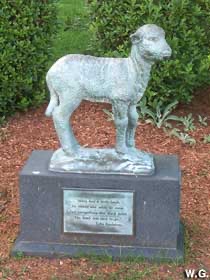
Which in reality was a small schoolhouse in central Massachusetts where Mary Elizabeth Sawyer walked each day from her farm, followed by the lamb.
I’ll come back to this.
I worked for some time at a quaint inn in Sterling, Massachusetts. The restaurant with a small lounge and several rooms upstairs sat just near the Wachusett Reservoir, at the bottom of a hill in the village. It was owned by the Roy family, and Al Roy had studied cooking in France. His son, Mark, ran the restaurant and inn, along with his wife Patti. The staff consisted of about ten of us. Dave was a chef, Tom the bartender, Rich—a student at the time at the Culinary Institute of America—assisted Dave, and the wait staff. We were like family and shared each other’s lives.
I’d go hawk watching at the Quabbin Reservoir an hour west with Dave and his wife, and often Cathy and Stacy and others would come to my place—an old yellow house just down the shore of the reservoir a few miles past the cider mill—and sometimes after the dining room closed we’d sit around and have a drink and talk. There were funny times, like when I went out one cold winter night to put the trash out and the only other person left was Cathy who was placing the fine China plates out for the next evening’s guests, but I locked myself out. I went to the back windows of the dining room which faced the wooded hillside, standing two feet deep in snow, and knocked on the window. It scared the crap out of Cathy and the stack of plates sailed out of her arms and crashed to the floor. She screamed. I laughed. It was an accident, truly. Or when a couple from Quebec came to dinner just as the dining room closed and kept just Tom and me there for hours, well past midnight. Dave had closed up the kitchen after their meal and went home, but they still had wine and dessert. At about 1 am they left and when I opened their bill folder to see what kind of tip they left on the $40 tab for keeping us there so late, the credit card receipt showed no tip at all. I cursed loud enough for Tom to laugh and say, “No tip, huh?” and when I picked up the folder, a $100 bill was underneath.
Some tragic times as well, mostly January 28th, 1986, two months to the day after Thanksgiving, and just about a week before I moved to Pennsylvania. Most Americans will never forget this day, but it was particularly poignant for those of us in New England since Christa McAuliffe had lived just across the border in New Hampshire, and on that morning and afternoon, the inn was packed with people—many friends of Christa’s—to watch the Challenger launch on television. I was tapping a keg of Budweiser and looked up as Patti said, “Oh wow, that doesn’t seem right.”
It was completely silent, followed by cries. I can still smell the beer, hear the dishes from the kitchen, Cathy saying, “What’s going on?” and Tom behind the bar quietly repeating, “Holy Shit. Oh wow. Holy Shit.”
But today I remember a happier time there. Thanksgiving Day, 1985. Forty years ago next week. We had a limited menu of Turkey, Scallops, or Prime Rib, and we were booked for all three seatings. The last guests left about 7 that night, and after we cleaned the dining room and the kitchen, we all sat around a bunch of tables pushed together and had a full meal with all three entrees, bottles of wine, pies, and stories, constant and hilarious stories. It was a beautiful time in my life and I loved where I lived, what I did, and the people I spent my time with.
But something had to change; I knew this. I did not know what needed to happen, but something else needed to be next. I had graduated from college, traveled through Mexico, lived in Tucson, managed a health club, and was happy, but stagnant, and this state of being, albeit pleasant, contradicted my very nature. It would not be long before I would turn in my notice and move to Pennsylvania, but on that Thanksgiving where a dozen misfits all sat around the table together laughing and drinking and wishing it could be like that forever but knowing it had to change—and would, for every single one of us—I got up to open another bottle of wine but instead walked out the front door to see that even more snow had accumulated on the couple of feet we already had.
I walked to the center of the village just a half block away and found a statue I’d never seen before. It was of Mary Elizabeth Sawyer’s lamb. Mary is the young girl in Sterling, Massachusetts, who had a small lamb that followed her everywhere, including school. It was a big event in the small school, and the next day a classmate of Mary’s, John Roulstone, a year older than Mary, handed her a poem he had written about the event. The poem had three stanzas—the first of which is at the top of this page.
Some years later, a poet, Sarah Hale who lived not far from there, published a small book of poems which contained a longer version of the poem, but Hale insisted it was original and based upon imaginary events. The controversy lasted for some years, well after both Mary and Hale had died. Until Henry Ford—yes, that one—investigated the incident and not only sided with Sterling’s own Mary, but purchased the schoolhouse from the village of Sterling, moved it to Sudbury, Massachusetts, and then published a book about Mary.
Back to me.
I stood at the small statue watching snow slowly cover the lamb’s wool now truly white as snow, and waited in perfect silence, listening to the quiet of rural Massachusetts. I can feel that moment today, that sense of peace braided with a sense of restlessness. I had to leave. I had to stay. Back then for people my age riding the tail of the Baby Boomer generation, the urge to “change” something usually meant going to the liquor store for boxes, filling them with books I’d never read again, tying them up with string, and moving somewhere else. Boston was out of the question—geez, an hour to the east was too far. Staying meant improving my life where I was—figuring out how to take the best of my situation and improve it, and I stood in front of Mary’s lamb and knew I didn’t know how to begin to do that. I only knew how to pack up and leave; that I was good at.
I went back in and grabbed the wine bottle and while I was opening it, Mark came in the kitchen.
“Where the hell have you been? We’re a bottle a head of you!”
“I was talking to the lamb.”
“What lamb?”
“Mary’s.”
“Ha. Oh. Well…”
“Mark, I think I’m going to have to turn in my notice, but, I don’t know, maybe January, maybe February. I need to find something else to do.”
“Oh wow, well, okay. We can talk about this later. You’re here for the holidays, though?”
“Yes, of course.”
We drank wine. I suddenly felt a little out of place, more like a visiting cousin than immediate family.
At the end of the night, everyone had left, Mark and Patti had retired upstairs, and just Cathy and I were left, she placed the dinner plates out for the next day, and I put out the trash, where I accidently locked myself out.
I moved. Cathy moved. Dave opened his own restaurant. Tom died. And the Sterling Inn fell into disrepair over the next few decades, abandoned, with vines taking over the building, the parking lot cracked and covered with weeds. Someone bought it from the Roy family a few years ago with the intent of restoring it to its full original glory. Same red trim; same black shutters.But some town controversy has kept it from proceeding. I miss the place. I’m glad I moved but I’m sorry I left.
That was forty Thanksgivings ago. Some memories follow us around, waiting for us to notice them.
This blog is about reading some of the most motivational writing you will find while helping fight Parkinson’s Disease.
So here’s what happened: About four decades ago I put together a book called Vincent which my former advisor at Penn State, Eton Churchill, and I published. It did okay and had rave reviews for its simplicity combined with insightfulness on the part of the author. I did not write this book; I pared down more than 2000 pages of letters that Vincent van Gogh wrote to others–mostly his brother Theo, but also other artists. The book became about 160 pages of startlingly beautiful first person prose in which Vincent tells his own life story including his turmoil with depression, his passion for life, his visions in art, his relationship with God, and his relationships with women. It truly is captivating writing.
In 2017, a real press picked it up and reissued it as Blessed Twilight: The Story of Vincent van Gogh, with a gorgeous cover and more wide-spread distribution. especially since the release coincided with the release of the movie Loving Vincent. It did incredibly well, but eventually went out of print as the publisher in Florida shut down and the people in Ohio who took it over also closed their doors.
The overstock of these books floated around the east coast and the mid-west, and with great generosity on the part of the people in Ohio, arrived at my door yesterday.
I am selling them and all the money is going to aid in the fight against Parkinson’s Disease.
These make fantastic Christmas gifts or just reading material for yourself. I can’t overstate how everyone who reads this book is captivated by Vincent’s philosophy, perspective, and passion. I can compliment it since I only organized the material, Vincent van Gogh did the writing.
Order copies for yourself and your friends. They are $25 a piece including shipping, or 5 for $100.
You can:
Venmo: @Robert-kunzinger
Zelle: rskunzinger@gmail.com
or send a check made out to APDA (American Parkinson Disease Association) and mail it to me at Bob Kunzinger, PO Box 70, Deltaville, VA 23043. ALL the money (except postage) will go to assist the research for Parkinson’s.
“There’s nothing more truly artistic than loving people“
Some of us are masters of self-deception; we can convince ourselves of just about anything and we learn to look for the smallest of clues to justify whatever illusion keeps our delusion alive.
I am certain this all sounds somewhat psychotic, even sinister at times. I know. Yet this mental acuity of delusion and ambition is not only necessary, it’s what separates those of us in lives of quiet desperation from those whose names are synonymous with acts of greatness.
Two truisms:
One, “Insanity is doing the same thing over and over hoping to reach a different result.” Okay.
Two, “The Greater Fool is the one who thinks they can succeed where others before have consistently failed.”
But notice the problem; no advancement in technology, science, the arts, moves forward without a delicate balance of both: Science in particular means doing the same thing over and over to check results, to see if it comes out differently even once, only once in a million trials, to make certain everything is okay or everything just changed. The movie The Right Stuff which begins in California with test pilots does an excellent job of showing how insane those fools were to get into yet another new jet after everyone else had died, only to take flight to another level and eventually out of this world. Certainly the engineers made alterations each time, so it wasn’t the same thing over and over, but with patience and caution.
It is a difficult thing to keep trying to get something right that continually fails. And worse, everyone that cares about you watches and calls you insane for still persisting when nothing positive has happened, and they call you a fool for not listening to the sage advice of intelligent and caring people. But the reality is only we know what we are capable of and so few of us ever try to find out what that is.
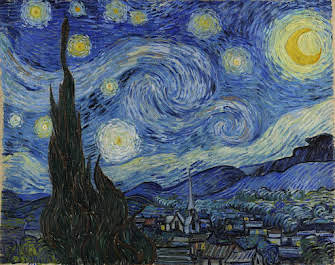
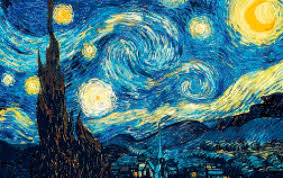
Example: Vincent van Gogh kept painting the way he believed was right despite being told to change his ways by the most respected art critics and dealers—including his own brother—of the day. When he failed, they said, “The fool is insane, and he lived off of his brother!” When he succeeded, they said, “His persistence paid off, and he had the undying support of his family.” When he painted “Starry Night” from a room in the asylum, it wasn’t liked at all by others in the art world. Today, some estimates place its value at just about one billion dollars. Can you point out the genius among delusional if pressed to do so? Can we ever know for certain the guy on the corner in St. Augustine I met decades ago who was screaming to passers by that the voices in his head told him the “water is rising my brothers and sisters; the water is rising,” wasn’t talking about Hurricane Mathew? There’s a thin line between genius and delusion; and history has proven it takes an insane person, a fool, to be exalted for their persistence and determination. “How pathetic” they say beforehand; “How original” they say later.
I’m sure that, like me, this all makes you think of the overweight patrons at the health club I managed forty years ago. Some of the members were there to lose well over one hundred pounds, some fifty. I taught an advanced class for the football squad at Holy Cross College as well as a class where the minimum desired weight loss was fifty pounds, and some wanted to shed triple that. They tried everything. Everything, over and over.
One day I walked into class with five, five-pound bags of sugar in a backpack. I sat on the small riser at the front of the room and put the pack on the floor and told everyone to sit down. We talked a bit about weight, about the physicalness of carrying it around, the mental weight we carry with it; the ridicule from others, the spouses telling them they’ll never lose it and to give up, the neighbors calling them fools for going to the club everyday when “you should have thought of that before you gained all that weight,” never understanding, never ever empathizing.
So I asked a woman to come up and pick up the pack. She gasped when she tried, of course, and she barely got it off the ground. So I told her to crouch down and I put the pack on her thighs so that she could wrap her hands around it, and then I told her to stand up, helping her at the elbows. She laughed when she was all the way up, and then I told her to drop the back, which she gladly did, and it made a thud when it hit the gray carpeting so that everyone jumped. She sat back down; I picked up the backpack and put my arms through the straps.
“This is heavy,” I said, and we laughed. When I asked if anyone else wanted to try and pick it up they all shied back, laughing, looking away. I sat again and opened the pack and pulled out the yellow bags of sugar one at a time and lined them up on the riser.
“Sugar! Not-yet-completed cake!” We laughed. “How many people want to lose twenty-five pounds?” Everyone’s hands went up, of course.
“Of course! You have to want to lose fifty just to get in this class. This is just half of that–this is twenty-five pounds that you could not lift without great effort! Should I get another five bags so it meets the minimum of the classes’ desires?”
Everyone was quiet.
“Buy a backpack. Buy ten bags of sugar—granulated sugar of course.” We laughed some more. We had to; we had to laugh to do this at all. “Buy the backpack and fill it with ten five pound bags of sugar, and when someone tells you to give up, when you tell you to give up, when someone calls you a fool or says you’re insane for trying what you’ve already tried before and it clearly isn’t working, hand them the back pack—give your weight to them and tell them to carry it for a while. And then come to another class. Let them know that this time it’s different.”
“Persistent and determined remains crazy and foolish unless you keep going and succeed, but to keep going short of success is insanity. That’s where you come in. You believing in yourself is all that’s necessary for everything to work out. The others are just more grains of sugar you have to carry around.”
Why is it we praise the people who stay within our boundaries of expectation and understanding, but when someone pushes the envelope a bit, heads out toward Mach One on the meter, they’re crazy because they’re doing something we wouldn’t.
“Maybe people laugh at you because they know they do not have the determination and persistence you do to do what you’re doing, and they don’t have the vocabulary to tell you that. Don’t get upset, just keep emptying that backpack one bag of at a time.”
I have felt foolish lately and it has slowed down a project I am working on, and I thought of the members of the club, and I thought of Richard, the club owner who himself at one time needed to lose more than twenty bags of sugar, but he played the role of The Greater Fool, and he persisted to the point of insanity, until he crossed that thin line into “inspirational.”
There’s a thin line between so many things, but most allusive is the one between failure and unprecedented success. The problem is sometimes that line is so far ahead of us giving up seems not only easier, but logical. “No one would blame you if you just strapped the pack on and kept going; it’s easier than trying to empty the damn thing.”
But that’s why when we’re working on something you believe in that no one else does, something which everyone else might consider insane and foolish, it’s important not to look toward the distance for that line, but to look at the next step, then the next step, then the next one after that.






 a view from this wilderness