I ask my students the same question the first class every semester. I pull a chair into the middle of the front of the room, ask them their names and where they’re from, and we talk about the area, hobbies, majors, quirks, travel favorites, and more. Half the class—I find it a priceless investment in time as they warm up, get to know me and each other, find themselves more able to talk throughout the semester, ask questions, share ideas.
Then I sit quietly for a second and ask them the same question every time:
What are you capable of?
What do you think you are capable of? I don’t mean “What do you hope you can do?” but what tangible proof from previous experiences has convinced you it is worth reaching out a little further than your grasp this time because you know you can do it?
It’s not an easy question to answer because it is difficult to know if we can achieve that which we have not yet attempted, so at best we need to guess. And even the most educated guess is still hypothetical. Yeah, I lose a few at this point, but I usually can reel them back in by jumping that chasm to the goal. “Okay then,” I continue. “What do you wish you were capable of?”
I remind them that unfortunately, every semester the evidence gets worse that freshmen in college are capable of anything other than having technology complete their assignments for them. I insist, then, that one of the finest results of college beyond the degree and the friends and the job prospects is the sense, the absolute pure sense, of accomplishment. To achieve something, to find out we are capable of so much more than we thought, becomes part of one’s bloodstream.
I asked myself that recently, the Capable Question. It was my birthday, sixty-five years to the day after I showed up at the now defunct Shore Road hospital in Brooklyn; one year to the day after Letty “closed the door behind her.” I looked back at what I have done with my life, who is in it and who no longer is, and who is again, and the good news is I’ve been around the block a few times and that’s one thing I always wanted to do. The bad news is as it turns out the block isn’t in my neighborhood.
Sometimes I don’t know where the hell I am. For a person who has traveled as much as I have, I still need direction an awful lot of the time.
So I asked myself, “What are you capable of?” I figure I still have a couple of decades, surprisingly. Maybe more on a good day, maybe just a few weeks when my mind downshifts. But let’s call it twenty years.
I just agreed to a location to perform a one man play in New York. My book Curious Men comes out in just a few months. My book Office Hours comes out in about eighteen months. My fig trees need watering. I’m thinking of getting a new cat or two. Maybe a dog. A goat for sure.
A few months before she died, Letty and I sat in Starbucks at the beach and after a lot of laughing, she said, “I always thought I’d be here past sixty-five, Bawb. I just never thought it would all be over; my life would be completely done at sixty-five.” I nodded. I tended to avoid trying to come up with a response. She didn’t want one. She wanted me to listen, to hear her existence, to be there while she was being alive. After a while she leaned forward and said, “Since I’m not using the rest of me, you can have those years. I trust you to use them well. What will you do with them?”
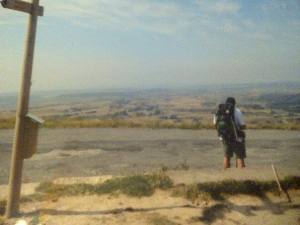
I thought about it like she had some power to give me twenty more years. “I am going to walk the Camino de Santiago again. I’m going to drive through the northwest for a few weeks. I’m going to take a river cruise in Europe with a friend of mine. I’m going to camp in Havasu Falls.”
“…and?”
The perfect response. “And?”
This is all to bring up a point:
After something I wrote went online about a month ago, several people, some I don’t know, wrote to tell me how good it is that someone my age still thinks I can do something new. They wanted me to know how much they are behind me no matter how outrageous it is that I’d try something besides enjoying retirement.
Two things here: One, I have no idea what they’re talking about. And two, Seriously? I mean, I’m sorry you took a nose dive as soon as you were eligible for Social Security, but I can’t wrap my mind around that mentality. Maybe it’s because retirement is somewhat irrelevant if you never really worked to begin with, but also in the world of arts, in the realm of love, there is no “retirement.” You can’t turn it off, you just can’t. And I want to spend my time with people I care about, seeing things together. I felt the same way when I was in my twenties. Did you guys grow tired of those you know?
“Someone my age” my ass.
I’m not going to republish the litany of accomplishments by people in their seventies and eighties. If you understand then you’re not sitting around lamenting anyway; and if you don’t, you’ll just shake your head.
I have done okay until now, and parts of my life turned out to be riddled with circles, as if Einstein was right—there is no actual “time,” humans have just made it linear so we can comprehend our passage here. Well, I’ve never been good at staying inside the lines anyway.
Honestly, I don’t know what’s going to work and what won’t work from day to day. I just hope for the best for the rest of me.
But, at the risk of being in over my head, here’s my plan:To speak my mind, about love, about hopes, about what is working and what is not. To keep writing as long as I have something to say.To fulfil some plans that I can’t shake.
I’ll retire when I’m dead, and then I’ll close the door behind me. If something should happen to abort those plans, feel free to take the rest of me and see what you’re capable of.
It is fifty days from my mother’s birthday to mine. This year feels different since this was the first of Mom’s birthdays that she is no longer with us, and this year I will turn sixty-five. Funny, but I don’t feel my age; I think of myself as about fifty-two. Maybe, on good mornings, fifty. Let’s call it that; so with fifty days to go to my birthday and feeling all of about fifty, I’ve decided to change a few things. I’m going with a “Fifties” theme this year. Cue Buddy Holly.
Fifty.
I can’t lose fifty pounds. I mean I can, but then my weight would be about what I weighed in high school when I was slightly more active and my body could digest Tupperware and be fine. So let’s try for some variation of fifty pounds to keep with this year’s magic number.Five pounds should do it.I re-joined the Y near my home, so I think for the next fifty days I’m going to get on the treadmill and walk for fifty minutes five days a week. If the Cartoon Network is available, I’ll stretch that out to fifty-five.
I’m going to write five pages a night on one or another book project I’ve got going—I really do have five files of work-in-progress here, but then I’ve had the same ones for going on five years now. Still, this next month and two thirds is different.
Damn right. High five.
Listen, like the rest of us, I know about time. I’ve read about it, watched it tick away, felt it creep up my spine and into my mind with new drips of hesitation and doubt. Geez I know about time, the way it tricked Bobbie into thinking she could get better, never knowing the addiction had already won, and the slight of hand it pulled with Letty, and Dave, and Cole, and others; tricked them all, so yeah, I know something about the passing of time. We all do, especially as we move through the years, and about how Mom and Dad made it to their nineties—no complaints there—but how Rachel didn’t make it out of her twenties. I’m sure I’ll be thinking a lot about time in the next fifty days, and about Mom and Dad as I hit the Medicare mark, and about Letty who died on my birthday, and about Michael who right now is exactly half my age yet when I was his age I felt like I had already lived several lifetimes. Honestly, I think I turned sixty-five when I was nineteen. Time, man. I can count on it to keep pace, not lose one fat second on my account. It doesn’t take a time out, doesn’t sit one out, doesn’t find any value at all in changing the pace. Yeah, we all know a little bit about time.
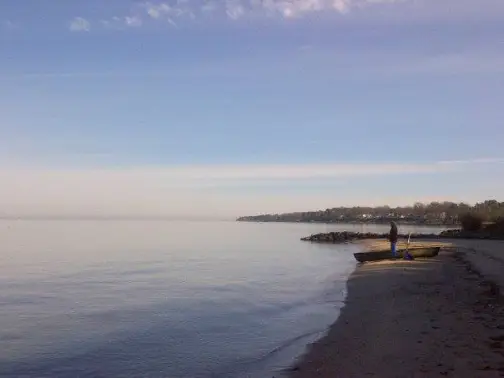
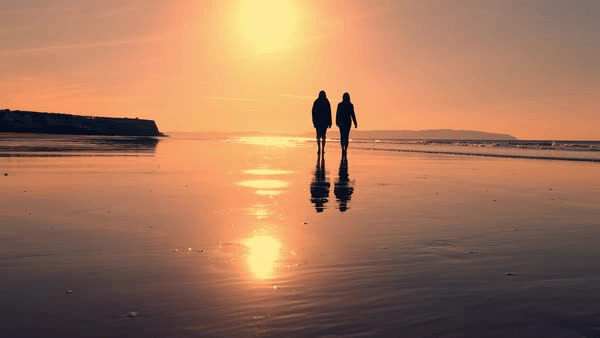
Fifty days. Forty-nine days and about seven hours actually. Fifty glasses of wine, fifty gummies, fifty mornings at the bay watching the sun crack the surface, fifty evenings at the river watching it take forever to fade. This year I’m going to make fifty phone calls and write fifty letters to old and new friends; I’m going to find fifty beautiful moments—one a day—and keep that habit going another fifty, then fifty more. That’s the thing about time; it can’t decide for me what I do with it, only when it will end.
And it will end.
So fifty songs that give me chills and fifty minutes spent each day finding just a little peace of mind.
Fifty is the fifth magical number in nuclear physics. It’s the Golden Anniversary. It’s half of whatever whole you fall into. Fifty is the traditional number of years for a jubilee. Fifty in both the Torah and the Bible is associated with the concepts of freedom and abundance.
There are fifty stars for the fifty states. It’s two bits. It’s just sitting out there as some sort of centennial half-way point.
In fifty days I’ll be ready to turn sixty-five and feel fifteen years younger than that. It was fifty years ago my life completely changed as a chasm fell between everything that was when I lived in New York and everything that would be when we moved to Virginia that June 18th. I was terrified. I was just a few weeks short of fifteen, which is young at any age. But looking back now fifty years on, it seems to have turned out okay.
Seriously, what a time it turned out to be. For fifty days I’m going to remind myself I have a home and food, I was not born in a refugee camp in Somalia, was not born during a bombing campaign in the Middle East, was not born on the streets of just about any American city.
I’m going to remind myself of passion and hope, and that I still have the energy to climb mountains or simply just fall asleep. That I’m really good at. But for now, I’m going to keep moving, keep noticing the beauty and continue to look for the peace. I’m going to remember the grace I experienced being able to have the parents and siblings and friends I did for these years, I’m going to remember all of the love I had in my life from those who passed this past year, and I’m going to look forward to what happens next.
Time is persistent, yes. But how we measure it is completely up to us. Hell, they’ve already changed the calendar several times out of little more than convenience; I can do that too. For the next fifty days, I’m going to grow young again.
On June 22, 2002, my sister sat at our parents’ kitchen table and recorded an audio interview she did with them about their lives, about life during the depression and World War 2. She asked other questions, and just like Terri Gross on Fresh Air, did a great job of bouncing off of their responses. She sent copies to my brother and me about five years ago, and when I sat to listen to them, a few things struck me. One, my father was precise in his responses, and my mother was hysterical in hers. He was 77 at the time, and Mom was 69. But what hit me hardest was hearing our father’s voice for the first time in half a decade. I can hear his voice in my mind, of course, but to actually hear his voice like he was sitting there made him young again. The last few years of his life I was around him all the time and his dementia grew worse and worse. So when I played the cd, I heard not just my father, but my father younger, still alert to everything. It was nice to push past the sound of his weak and confused voice that had filled the corners of my mind and hear him as he had been. Ironically, at the same time it makes it hard to listen.
About two years ago while out to lunch I randomly recorded a video of my mother talking about something. I don’t remember what and the video is gone, but the idea took hold, and for the last two years every couple of weeks when we were at lunch or getting coffee, I’d ask her a specific question, or I’d encourage her to remember a particular time in her life. Note that she is one of the funniest and smartest people I’ve ever known, and understand too that she has had quite the life from the streets of Bushwick, Brooklyn, to Long Island, to Virginia Beach, and now in Williamsburg, Va. There are fifty plus videos here, but I recorded more than a hundred and deleted many. Some were redundant, and some in the past year or so I got rid of when Mom would struggle with a memory, or lose track of what she was talking about.
Still, this is decidedly not about Joan Catherine.
It is about time. This has everything to do with the brief flash of time we have to share with each other. Watch how a person can at once both change so much and still be themselves, who they are in their heart. The truth is at some point as we age we realize that we must set aside our anger and anxiety and arguments, and we seem to do so far too late in life. In the past year I’ve lost a half dozen people I loved very much who were my confidants and companions, and every one of them died relatively young, three of them in their early sixties. At the same time, my mother has nose-dived into a wall, fallen and slammed her head on a porcelain tub, fallen on the floor, faced cancer–again–had a pacemaker put in, battled neuropathy, and moved from her spacious condo where she lived with my dad, to an independent living apartment in Virginia Beach, to an assisted living apartment in Williamsburg, and she just keeps going. Last July she was in the hospital with pneumonia and sleeping eighteen hours a day, and the doctor did not think she would leave the hospital. Yesterday we went to lunch at an Italian restaurant and she woofed down a massive piece of tiramisu. She Just. Keeps. On. Going. And always with a sense of humor. She talks here about her move from Brooklyn to Long Island, from there to Virginia, and about how patient she can be. Or not. She sings the Banana Song, Woody Guthrie, a Shampoo commercial, and in one of my favorites when she had no idea I was taping from the cup holder of my car as we drove along, she sings “New York, New York.”
But this isn’t about Joan. This is about brevity. When we look ahead–when we anticipate–time can slow to a tragically slow pace. But when we look back, when we recall, we can transport our mind instantly to another era, as if it happened two seconds ago. This makes it seem like time goes by so fast. But it is the same now as it was when we were children. That’s the thing about time: it is dependable. Not one fat second will lose an ounce on my account. But the older we get, the more we recall instead of plan, so the clock can be deceptive. In these videos, Mom is full of energy, sitting up and laughing, with immediate recall of incidents an hour earlier as well as two generations ago; at the same time, here Mom is wearing oxygen, sometimes softly gasping for air, and her memory is nearly non-existent.
Time. It is the only measurement that matters. And we are endlessly distracted by the news and entertainment and the stress of finances and politics and health. But all of it slides away when we start to list what is essential. Then, the answer is easy: each other. That’s it. People leave us, sometimes slowly and sometimes with the swiftness of a cool, autumn morning that takes us by surprise. But they do, in fact, leave.
These videos are in no order, so one of Mom recently trying to remember her Uncle’s name might be followed by one of her looking stronger, heavier, talking about her favorite foods. I decided against a strict chronological order so that instead of watching a woman’s slow decline as age takes hold, we can see how life is, in the words of my friend poet Toni Wynn, “Paper thin.” I will add more to her page as time permits. Thanks for enjoying our mother’s beautiful sense of humor and simple take on what matters the most.
Note: There are some videos on the “Video” tab, but most of the videos are on the “Shorts” tab. Please check out both. And “follow” The Joanie Channel.
It’s Fourth of July week and I’m about to get older, and I’m in a café on the Bay thinking how I’d love for this place to be open at night, late, like 4am, and sit and have beers or wine and talk to strangers about where they’ve been, literally and figuratively. I’m sitting here thinking about the the past four or five decades. “Fortunate” doesn’t come close to describing this pilgrimage; but something is different lately. I’m just turning sixty-four and I’m outliving so many people I know. This makes me curious about what’s next, about this brief span before me. I thought I’d grow tired by now, start to unwind, but curiously I find myself gaining momentum.
Here’s a decidedly oversimplified explanation of what runs through my mind on an almost daily basis: We are going to die, of course, but we have no idea when, and even if I live to my mother’s age of ninety-one, that’s just twenty-seven years form now. That’s nothing. And after that we close the door behind us and slip into that nothingness of never being this way again, through the eternal and infinite future of all futures. My point is, to be trite, “Today is my moment; now is my story.”
And today while sipping a cappuccino and after talking to a couple who are sailing down the bay to cross back to the Netherlands, I felt awake, like that crystal-clear awake you have sometimes after it rains. Like all of my senses were cleansed and rebooted. Happy Birthday to me.
To be sure, I’ve had my share of everything: I’ve had a lot of chances to travel. I’ve walked across Spain, trained across Siberia, drove around North and Central America, stood in rivers from the Connetquot to the Congo, and I’ve followed a herd of moose through the woods in Northern Norway. But still it simply isn’t enough; not on this abbreviated timeline. There’s not enough time, never enough love, too much wasted energy, too many spoiled days and nights, not nearly enough love.
In looking back, the moments that stick out most in my mind are the ones where I stepped out of my comfort zone and risked being embarrassed, rejected, and humiliated. Sometimes those things happened, to be sure, but those times are still better and more memorable than sitting safely at home watching reruns of an old show, watching other people live still other people’s lives.
Oh there have been moments. And they all have one thing in common; my memories are of the people I was with completely engaged with each other. It might have been my son in Spain and Russia, or just us taking pictures down at the river. It could have been sitting on a beach in Florida or drinking champagne while watching a sunset on the Great Salt Lake.
Sitting around a club I ran in Massachusetts after hours and swapping stories, laughing, eating pizza from down the road after all the people left. It’s the one am stop at Ocean Eddies on the pier in Virginia Beach in the late ’70’s for a drink and a talk with someone from somewhere else, nothing but the sound of waves crashing under us.
One Fourth of July I was in Massachusetts and drove to Boston to watch the fireworks and I stopped at the Bull and Finch Pub, made famous for being the model for “Cheers.” I sat at the bar and had a beer and got talking to someone who was there to play music. I told him I had played and he asked me to play a short set during one of his breaks. Okay, so this is an example of knowing as sure as I’m sitting here that ten minutes after I said no I’d be absolutely pissed at myself, so I said yes. Rarely am I 100 percent in the moment, not distracted by next or was, but moments like that I am present, completely present–like on the Camino or the Train or the Lake or the river. I said yes and risked being myself. I even had the balls to play “Please Come to Boston.” When I got home to my house on the reservoir that night, I got out my guitar and played while my cat Huey sat on my knee and listened.
Alive. I was so freaking alive that night. The next day friends came by for my birthday and I told them about it and they were excited for me but like with most things in our lives, you absolutely had to be there. I was.
Geez I’ve been fortunate.
But there was one night in particular which stands out a bit more than most of the others. It took place in a bar which long ago burned down. We called it The Shack because it had no name.
This happened about twenty-five years ago.
Just off the Gulf of Finland not far from an exclusive hotel but well in the woods was one of this world’s coolest bars—a dive really—a place to drink and sing and meet people you’d never want mad at you. It was small, with broken-down shed-like walls and windows which barely kept out the storm blowing off the Baltic one May night in the nineties. It was well after midnight and we ordered a bottle of Georgian Merlot and several plates of shashleek, a Russian shish kabob dish. A gypsy band showed up, including a guitar and violin player I’d met before and had played with there along with a friend of theirs, a woman singer. Hours passed as we played and sang and drank. There were four others, three of them, a waitress, the owner and his cat, and we sang and drank while what must have been that hurricane from The Perfect Storm slammed to shore. This duck blind of a building sat amongst birch trees, but that simply made me more aware of the weather, wondering when one might topple through the roof. It was exhilarating, an adrenaline rush that had nothing to do with the wine. It was being alive, right then at 3 am, with total strangers, live gypsy music, Georgian wine, and shashleek, that kept us awake. It felt dangerous, subversive, but it was just a bar in the woods.
I had been in my hotel room, ready to call it a night since the next day we were all going on a river cruise, but I got dressed to head back up the beach to The Shack and have some wine. I didn’t want to wake up the next morning and wished I had gone. The storm hadn’t yet kicked up. But it was coming; you could see it in the haziness of the midnight sun.
The band took a break and came to our table and we spoke in broken Russian and English about the storm and how we hoped it wasn’t high tide soon since the water was just a hundred feet west, maybe less. Then Alexi, a two hundred eighty pound drunk Russian who hated Americans started screaming at us like he had the first time I ever met him, the first time I walked in the place a few years earlier. He had kept to himself mostly since then, sometimes talking to me, mostly not, but this night something got under his skin and he screamed at me like he did that first time, “I hate Fucking Americans.” He startled me, but he had a drink in front of him, and another regular customer, a friend of the gypsy band, was sitting with him and told him to quiet down so he did.
But then I saw his eyes. They were deep and vacant, like he’d seen a ghost, and when he saw me watching him he stood up and said, “I hate fucking Americans!” and he tossed his beer at me. Sasha, the guitar player, stood up and yelled at him in Russian. But just then thunder, with a sound like the sky opening up and dropping two tons of hard earth on our shack, rattled the walls and ceiling and we all cringed. I thought for sure one of the birch trees cracked and was going to kill us all. I went down on the floor with my friends and the gypsy band, and Alexi cursed and fell against the back of his chair. He suddenly looked so small, and the thunderclap crashed on us again, this time blowing open one of the windows, and rain and wind sheered a path across our booth and against the other wall. Dima put his violin under his coat and our shasleek flew off the table onto the floor. The shack cat went for it but the wind and rain chased him back under the bar and into his bed.
Another flash of light lit up the shack and Alexi was trying to hide under his table but he was too big, and just as he glanced out the window on his way to the floor, he stopped and stared. I was watching him, and he looked out the window for some time, then looked at me, and with a nod he said, “Horosho. Horosho” which means, “okay. It’s okay.” And he looked out the window again when the window slammed back and forth. He grabbed it before it hit him and he held it a second, staring out over the Gulf. He looked at me as if to ask me to come see but he didn’t know how. Instead he closed the window and latched it again and turned and sat down. He nodded to me, “Horosho. Edeesuda.” It’s okay, come here. A few of us gathered and sat at his table, and Dima took out his violin. Alexi smiled at me, looked out the window and peered with a stoic face, then turned and smiled again. He looked at the waitress and said “pivo,” beer, and he motioned to us all so she brought us all beer. The rest of the night we laughed and sang songs. I asked Alexi what he saw outside but he just nodded at me and said, “I hate fucking Americans,” and we laughed and toasted and Dima played, then Sasha joined in and then the woman singer, and the beer tasted good. Alexi sat quietly the rest of the night.
The storm passed and the sky quieted down. I almost had stayed at the hotel that evening, turned in early, read in bed. Those are all good things, quiet ambitions which keep me grounded and invested in whatever happens next. But that night I didn’t. Like the time we went Ghost Hunting at midnight at the Saint Augustine Lighthouse, or when my son and I sat up all night in the town square of Portomarin, Spain, because we couldn’t find a place to stay. One time a friend of mine and I hitchhiked to Niagara Falls and it took no longer than it would have to drive, but coming back we walked for eight hours along dark roads through small towns. But if we had been given a ride right away, I’m not so sure I’d remember we even made the trip to begin with. We talked a lot that night, and I wish I could walk like that with more people, and talk, and just walk quietly too.
Sometimes you have to stay up until dawn to understand what’s hiding behind the night. It’s the rest stop at three am with two truckers talking about the next town; or the sound of wildlife in the desert brush, or tall pines scraping together in winter in the woods with no light but the moon. It’s walking up an Arctic path at four am in snow-deep March with Northern Lights bouncing past like a bull whip; or lying on my back on a cot in a compound in Africa beneath more stars than could possibly exist, the distant sound of someone chanting the Koran. It’s walking out of a shack in the woods after a storm passed, the sun just lifting over the raised bridges, ears buzzing from loud live music. It’s the perfect silence on a salt bed and the music of family talking about old times, talking about now. My new year needs to start not just remembering the beautiful path it has been so far, but what made it beautiful to begin with. Its enjoying the passing of time, as JT wrote.
On that night on the gulf after the storm, after the music and the wine, when I stood in the quiet light of morning and shook hands with Alexi as we went separate ways, most likely for good, I began to understand that this crudely brief life of ours is best punctuated with those we love.
I started this blog twenty-three times tonight and ended up with nothing. It is one of those times when nothing I write comes close to what I want to say.
So instead, this:
for Dave
“I counted my years and realized that I have less time to live by, than I have lived so far.
I feel like a child who won a pack of candies: at first, he ate them with pleasure but when he realized that there was little left, he began to taste them intensely.
I have no time for endless meetings where the statutes, rules, procedures and internal regulations are discussed, knowing that nothing will be done.
I no longer have the patience to stand absurd people who, despite their chronological age, have not grown up.
My time is too short: I want the essence; my spirit is in a hurry. I do not have much candy in the package anymore.
I want to live next to humans, very realistic people who know how to laugh at their mistakes and who are not inflated by their own triumphs and who take responsibility for their actions. In this way, human dignity is defended and we live in truth and honesty.
It is the essentials that make life useful.
I want to surround myself with people who know how to touch the hearts of those whom hard strokes of life have learned to grow with sweet touches of the soul.
Yes, I’m in a hurry. I’m in a hurry to live with the intensity that only maturity can give.
I do not intend to waste any of the remaining desserts. I am sure they will be exquisite, much more than those eaten so far.
My goal is to reach the end satisfied and at peace with my loved ones and my conscience.
We have two lives and the second begins when you realize you only have one.”
~Mário de Andrade (San Paolo 1893-1945) Poet, novelist, essayist and musicologist
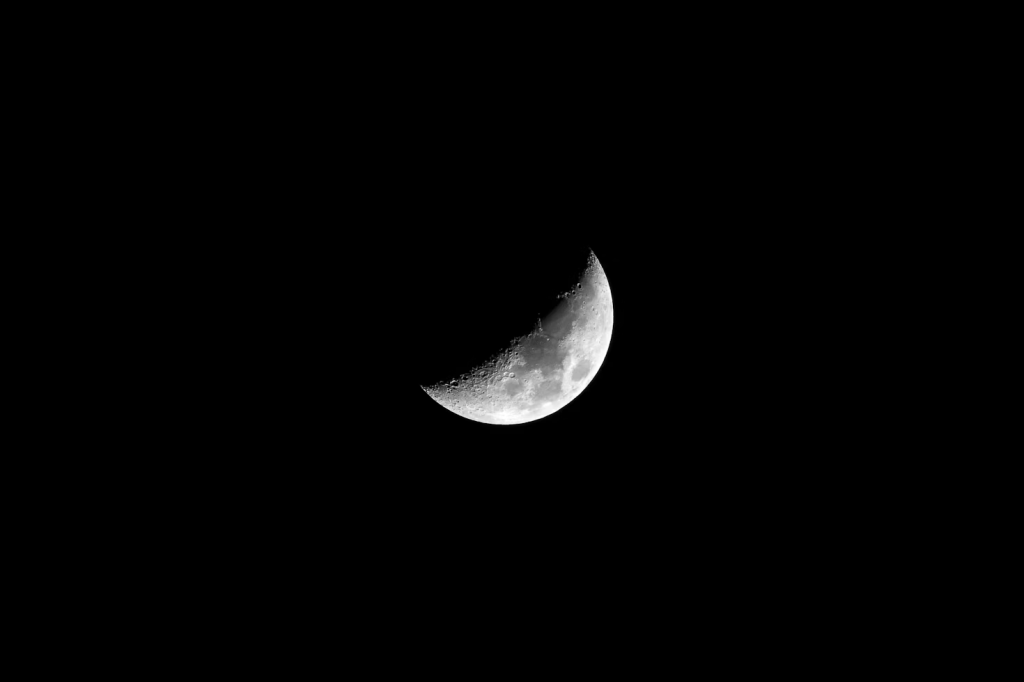
The moon last week through the telescope looked like a golf ball, the dimple-craters and the bright white side imbedded in the mud of the dark side. We looked at it a long time with the perspective Apollo 8 must have had when it orbited the place, moving around it like Tiger Woods circling his next putt.
It’s cold, but still, and the air off the bay bites a bit, and some rustling in the leaves makes me think the fox is around tonight, or a cat from a house through the woods, but it is how it should be–we seem to look at the stars most in winter because it gets dark so much sooner, the air is cleaner, the humidity low.
But last week despite the bright half-moon, the sky was dark and the telescope picked up an amazing nebula all ablaze not far from Orion, shining out from billions of years ago. It is the middle star on the belt and the brightest nebulae up there. I’ve needed perspective lately. When “the world is too much with me” and “life is like a pathless wood,” it is good to look at the same stars as did Copernicus and Galileo and ancient astronomers who saw bulls and crabs and horseheads where I can only see a random sampling of bright dots, like dots on a map.
And the top half of a golf ball stuck in the mud of space.
“Why, I ask myself, shouldn’t the shining dots of the sky be as accessible as the black dots on the map of France?” wrote Van Gogh to his brother, Theo. “Perhaps we take death to reach a star. We cannot get to a star while we are alive any more than we can take the train when we are dead. So to me it seems possible that cholera, tuberculosis and cancer are the celestial means of locomotion. Just as steamboats, buses and railways are the terrestrial means. To die quietly of old age would be to go there on foot.”
I like that, the illusion that death is another mode of transportation, and those we love and lose here are simply on some galactic pilgrimage. I have several books about the stars given to me by my brother, by my son, and I’ve read them, returned to them for reference, for maps, and I have such trouble remembering the names of space stuff. I mostly use my cellphone app, point, and then say with absolute authority, “I’m nearly positive that’s Avior. I think it’s a star in Corina if I’m not mistaken.” But I swear ten minutes later if anyone asked me to repeat it, I couldn’t.
So I’ve started making up my own star names, like the International Star Registry, only specific to Bob. Deep in the Pleiades I can see “Cole,” leaning into the other stars, preaching, pushing them into agreement about the colors he should use to paint Jupiter with all her moons. And what used to be Lesath in the Scorpio constellation according to my Backyard Guide to the Night Sky is now “Eddie.” I can almost hear some Janis wailing from his band of Red Dwarfs. “Dad” is clearly Polaris, my North Star, up there to guide me if I wish, follow him when I’m lost. I wish I had turned to him more when I couldn’t find my way.
Now, I know from these books from my brother and son that the brightest star in the night sky should be Sirius. Orion’s belt points right at it, yet more than a few times I’ve mistaken it for her sisters, like Vega and Canopus. So I’m saving her, putting a sticky note on Sirius. I have a special name for her I’m keeping to myself and will send to the Star Registry—though I doubt they’ll change the name of such an important celestial body; but I will, if only in my mind. And I’m going to memorize her location so I can go outside on a clear night and talk, reminisce, find a bit of permanence in an all too temporal existence.
This work originally appeared in Susurrus Magazine, with portions published in various other journals.
Happy New Year. Sort of. I can’t keep track anymore, what with shifts and adjustments through the ages. Hell, I can’t even keep track of the days of the week. Last Monday was Christmas, which made Tuesday feel like Monday, but my son works on Mondays and Wednesdays so being around all day made Monday feel like Sunday or Thursday, until Wednesday came and it felt like Monday again. Next week I’m certain to go through this once more, with Monday being a holiday, and Tuesday feeling like Monday, and to add to that I’ll still date everything 2023, though, really, what difference does it make?
It’s only time after all.
Time Piece
The truth is, if we made lists of all the reasons why we need to know the days of the week, those lists would not be that long, nor the reasons to remember the year for that matter. It’s all relative, and they can be as irrelevant as they are essential to our lives, existing in the extremes.
No calendar can keep measure of how much time has passed since my father died; I can argue it was a month ago, I can claim it decades ago. And my childhood on Long Island ended about fifty years ago, but when I recently spoke to a friend from then, my adolescence seemed to have happened on Tuesday. No education I can conceive can inform how I feel when I stand on the sand along these beaches in Virginia before dawn, quietly watching the surfacing sun as buffleheads swim by and oyster boats churn out to sea; it is timeless in its immediacy. Einstein’s relativity metaphor aside, nothing says “it depends” more than our references to time—sweet, delicate, ethereal time. Certainly, calendars keep track of the days of the week, the months, but they can never measure moments, they cannot calculate how long we love, how long we have mourned.
Which makes the measurement of time as problematic now as it was in pre-recorded history, when sundials and seasons were used instead of Big Ben and Prague’s Atomic Clock. Still, they managed to mark holidays and celestial changes with the most primitive tools. Some people had that rare ability to look up to the stars, do a double-take, and say, “Shit. I think it’s Friday,” and then things change.
New Year’s Day, for instance, is New Year’s Day for a reason. Since my tenth birthday on a warm Fifth of Quintilis, in 1970, I have wondered why the New Year often starts smack dab in the middle of a blizzard. Simple, actually: First of all, ancient Romans had a God for everything. One of them held the key that unlocked that “passage” between what is and what is to come; or, metaphorically speaking, this particular God was the key master that opened the way for new things to occur.
His name was Janus. He was also the God of doors, by the way, which makes sense. New Year’s used to begin in March, but in 46 BC, the world’s most popular Caesar and favorite orange drink, Julius, decided the calendar needed reform. He was right, actually, as the Roman calendar already in place for six centuries followed the phases of the moon, and that totally screwed with people over time as the seasons seemed to “shift.” Worse, the politicians who oversaw the calendar kept adding or subtracting days to affect the length of their terms one way or the other.
So JC met an astronomer named Sosigenes who convinced him to trash the lunar module and follow the Egyptians’ lead—they followed the sun. To balance it out, JC added sixty-seven days to 46 BC, which put the solar calendar on track, and the first New Year’s Day of the Julian calendar fell on the First of Janus’ month, January. Mr. Sosigenes also instructed that a true “year” around the sun is six hours longer than 365 days, so JC decreed that once every four years an extra day be added.
We know most of this. Let’s leap to the good part.
After JC was killed, his successor, Mark Anthony, changed the name of Quintilis to “July” to honor him. But JC and Professor Sosigenes had miscalculated slightly, so by the end of the first millennium there were seven extra days, fifteen by the time Prague was founded in the fourteenth century. The Czechs were royally confused. And to add to this cluster of cloistered calendar decision makers, a monk, Dionysius Exiguus, figured out in the early 500s that Christ was born about 753 years after the founding of the city of Rome, so he called that year “zero.” Up until then, Roman years from 753 BC forward were numbered from the founding of the city, making what we call 753 BC, they called zero (founding of Rome). So according to Brother Dionysius, Christ was born in 753 Ab Urbe Condita: “after the founding of the city.” The monk decided, conveniently during a time when Christianity was sweeping the empire, to call that year “zero,” but it was not widely adapted until the eighth century just as the Roman Empire was becoming the Holy Roman Empire, so that nearly until the time of Charlemagne, people mostly counted time Ab Urbe Condita. Once more then, what we call 800 A.D., people at the time mostly called it 1553 Ab Urbe Condita, or AUC.
All of this speculation was finally confirmed in the 1740s by Jacques Cassini with his astronomical skills, and it was only then that the Roman years before Brother Dionysius’ declared year “zero” were labeled “Before Christ.” If it wasn’t for Brother D and Dr. Cassini, New Year’s this Janus the 1st would be the year 2774 AUC.
There is more; hang in there.
With all that timeline information, we cut to the 1570s, about the time St. Augustine, Florida, was beginning to flourish. St. Gregory the XIII noted the days were still not accurate based upon both the lunar and the solar measurements, so he hired a Jesuit astronomer named Chris to fix the damn thing once and for all and get the dates aligned with the sun, and he did so by dropping ten days from the calendar for that year only—a realignment, if you will. Thursday, December 21st, 1581, was followed by Friday, January 1st, 1582, the first day of the Gregorian calendar. You know they partied hardy that New Year’s Eve. Honestly, I have awakened on January First with some serious hangovers in my years, but I have never thought, “What the hell happened to the last ten days?”
And while most of the time I’m not really sure what day of the week it is anyway, I do know of one consistency through the ages from 753 BC through some hot summer Quintilis afternoons, and on past zero to today: people from kings and popes to paupers and astronomers made resolutions and promises, and maintained the hope that life would not pass them by. Most certainly, for all of these January Firsts, people resolved to spend more time with those they love, go for more walks in nature, stare at the moon, wake up with the sun, sit and talk to their dad, tell him how much he is loved, how much he is missed, and not one of them could imagine how swiftly life would dissolve.
‘We mark time, humanity; calculate how long it has been, how long it will be. We measure and subtract, add, and subsequently deduce that we know what time it is according to astronomical wizards and Holy Texts. Yet we can’t grasp the speed of the fleeting lives of those we love and lost.’
Now let’s assume you follow the Chinese calendar, which follows the moon, with an extra month every three years, and it dates from 2637 BC, when Emperor Huangdi started counting. This worked for farmers, and the fact the emperor “knew” the astronomical cycles made him a bit other-worldly (with thanks to his astronomers). In the seventeenth century, Jesuits introduced the Gregorian calendar in the east, but the tradition of the Years of the Monkey, Rat, Ox, Tiger, Rabbit, Dragon, Snake, Horse, Goat, Rooster, Dog and Pig continue.
The Hebrew, or Jewish, calendar is the official calendar of Israel and is used throughout the world to determine religious holidays and readings from the Torah. The clock started ticking in 3761 BC, which, according to the Old Testament, is the date of the creation of the world. It is also the oldest calendar in use, dating back to the ninth century BC.
We mark time, humanity; calculate how long it has been, how long it will be. We measure and subtract, add, and subsequently deduce that we know what time it is according to astronomical wizards and Holy Texts. Yet we can’t grasp the speed of the fleeting lives of those we love and lost.
For some years before his death, my dad and I drank scotch. Dad always liked blends to which he probably became accustomed early on. On special occasions he drank Chivas, aged just right. And on Tuesday nights we poured two glasses on the rocks. Routine is important when one pushes ninety years of age, so I’d always try and get there about nine and was no sooner in the door when he’d jokingly say, “My coaster seems to be empty,” or something similar with a laugh and a welcoming smile. I would put down my things and offer to pour, and he would insist he was just fooling and didn’t mind at all getting our drinks, which was true. He would walk in the kitchen, and I could hear the cabinet and the ice and the heavy bottle he put back in the cabinet, never leaving it on the counter for more because we never had more. He’d return steadily and slowly and hand me my glass, and we’d raise them to toast and he’d say, “Well,” nodding his head politely at a loss of words, aphasia setting in some time before those last months, and I’d interrupt and say, “To your health,” to which he would again nod and with his deep voice reply, “And to yours.” Then we watched baseball, not really talking much. It was late. He sipped his scotch.
But I don’t like scotch, so I preferred to pour. When I went in the kitchen everything was the same, but instead of scotch in my glass I had mostly water. Dad’s eyes had faded in those last few years, and he wouldn’t have noticed the lighter tint of my drink. And anyway, it wasn’t about the scotch; we would sit together a long time those Tuesday nights and he would always turn once and say, “Boy this is good, isn’t it?” and I would agree. Sometimes I felt guilty and would pour a bit more for myself as well, but usually only when it was the Chivas. After a while he would head upstairs to bed. Then I would sit alone in peace after a long day, but inevitably I’d wish he had stayed up longer even just to sit quietly. I’d promise myself that the next Tuesday while drinking scotch I’d make more conversation, talk more about the baseball game or about my day or anything really, since he wouldn’t have minded even turning the game off, but the following week would come and, like clockwork, I’d be exhausted and silent and he would get tired and go to bed.
My father aged well and sitting with him on those nights was the purest time I had during those days. When I get home late and stand in the driveway on a clear, cold night, it is too real to think about, and I know Virgil was right when he said that time passes irrevocably. But memory tosses linear time to the wind and leaves us with years which shift positions from our perspective, and we come to understand what Elie Wiesel meant when he said, “In the end, it is all about memory.” Death, perhaps, is the consequence of time, but so is memory, whether that time be linear or ephemeral.
Even before he died, time slipped out of joint those last few months, passing quickly, moving slow. And our calendar certainly needed adjustments along the way. Of his ninety years, I was alive for fifty-five of them. Of those, I was out of his life, physically, for thirty-five of them, and of the rest he worked and I played or went to school.
It was only those last years, the fleeting ones which cannot be calculated by astronomers or priests, when we truly bonded. In the end, I would give anything to add that extra day, set my world right again, realign my time with his.
An old dilapidated house near my home dates to the seventeen hundreds. It sits in the middle of what was once a slave plantation. Just across the land long ago gone were the slave quarters. Today the house is covered by vines and trees; some dying themselves after a century of life. Generations of neighbors have come and gone, and generations of foliage and storms and crops have come and gone and what’s left of the house crumbles into the earth.
Some say let it crumble; some say tear it down and build a new place on the land and give it to the slaves’ descendants, many of whom still live on the same road; oppressed people either stay close to home or never come back.
When I walk past I am painfully aware that I shared this space, separated only by time, with people who whipped men and women, others who were whipped and shackled. This isn’t a movie; it isn’t even history when you stand on the muddy lane at the end of the path and look toward the once-was porch and picture a fine-dressed overseer ordering humans to commit inhumane acts. This is where I live. We live. My family on the Island and my friends on the Gulf Coast all live here too; just beyond reach, a little off the calendar.
In my time, since my arrival, I’ve breathed in and out at the same time as Mother Theresa and Malcolm X. Neil Armstrong. Jimi Hendrix. Pope Paul the Sixth. Lech Walesa. St. John Paul the Second. Thomas Merton. President Eisenhower. Elvis. Pablo Picasso. Albert Schweitzer.
Wait.
Rwandan Tutsi’s. The Lost Boys of Sudan. Steven Biko. Pol Pot and Treyvon Martin.
I did time with these people; I stood witness to these events. These saints and sinners brushed my sleeve simply by sharing the earth on my watch. We have a loose affiliation with miracles and massacres as if life wasn’t less timeless than it is; but we’re just guests here.
This world is at best a hotel, and every once in awhile I take a look at the register to remind myself who else stayed here. Alexander the Great, Charlemagne, Mohammed, Ivan the Terrible, Genghis Khan, all guests just over the slope of the horizon, just beyond some small slice of linear measure. On the same human trajectory as mine but before is Geronimo, Moses, Jesus, Christ think about the gentle bend of time, the careening swerve of place that separates me from the Disciples, the Visigoths, the founding fathers. All here but just before.
My swift life falls on the roll call as Richard Wright and Ernest Hemingway. And when that shack in the woods around the corner from my home was still in its prime, the walls still absorbing the shrieks of rape, the cries of bleeding men, Grandma Moses was a toddler. Grandma Moses, who painted her last work about the time I learned to swim. I was alive when someone was alive who was alive during the Civil War.
Closer to now, when I look inside the lines of my coming and going, between those two rays shooting off from my birth and my death, I can see the souls who at one time or another shared with me this spinning blue wad. Not short of miraculous, we claim the same particles of stardust, and that’s what keeps me looking around when I walk down some city street; I want to know who on earth is with me.
Carl Jung lectured during my youth, and Ty Cobb watched the same Mets players as me. When I was still cutting new teeth and outgrowing my Keds, I could have headed downtown with my Dad and possibly been on the same train as William Faulkner, e.e. cumming or Marilyn Monroe. I might have passed them on the street, maybe stood in line at some drug store counter with my mom and behind us because of the blending of circumstance might have been Sylvia Plath or Sam Cooke; Nat King Cole; Otis Redding. We have overlapping lives. On a Venn Graph, we share the shaded space.
If my family had gone for a drive the summer I turned eight and stopped to get a room in Memphis instead of the Poconos, we would have heard the shot that killed King. And in ’63, I was the same age, same small height as John-John and could have stood next to him, shoulder to shoulder, to salute his dad’s coffin.
Judy Garland and I watched the New York Jets in Super Bowl Three. When I was born, World War One vets weren’t yet senior citizens and World War Two Vets were in their thirties. Vietnam isn’t history to me; it is my childhood, my early teens. The fall of Saigon was announced over the loud speakers at my high school.
There are empty fields save monuments and markers where soldiers died defending this land against the British, against ourselves, and at some point before their demise they stood where I stand and watched the hazy sun rise. Same sun; same beach. Don’t mistake history for “back then.” Those people just happened to check out before us. It could have been us. It is us now. And it won’t be long before our lives overlap with the crying call of a newborn Einstein. Did you see that boy running at the park? That girl climbing the tree at her home? Did I just pass by some senator, some Cicero or Socrates, some St Augustine? Now is the only history we know firsthand.
I find it a crime we are not incessantly aware we were preceded by the likes of ancient civilizations, but also by evil. For God’s sake, Eichmann and I did common time, Hitler was my grandfather’s age; so was Stalin. But so was Isak Dineson and Winston Churchill. My grandfather lived into my youth, yet was born before flight, about the time of the first automobile, before radio, and before long some sweet woman and man will find each other softly adding to who comes next.
Like strangers buying the same house decades before and after, like seeing the list of who owned the used car, like getting a job replacing some retiree. Like standing in line. Like sour-dough starter. Like a relay race.
I like knowing the people I know now, these brothers and sisters, whose overlapping lives linger just within my time frame; we share the same air, watch the same news and celebrate the same wins. In some divine book somewhere, these people and I are on the same page. My parents, my siblings, my children, my God what grace to have shared this passage from cradle to grave.
And you, there, reading this; we’ve shared wine and we’ve laughed together, disappeared, collided, and sat quietly and finished each others’ sighs–what are the…I mean, is it even possible to figure the odds and calculate the multitudes of humans in these millennia that I might even know your name?
I have updated this piece since it was first published at 3:30 pm. Perhaps you have a few seconds:
If life happened in a day, and Einstein is horrifically more accurate than we would like, then let’s make a 6 am sunrise birth and place death around a 9pm sunset. I’ve always preferred summers for the extended daylight hours.
And if we break a life of ninety years (I’m an optimist) into a day, we live about six years an hour, or a year every ten minutes. Goes fast doesn’t it? In fact, my clock reads 4:20 pm. School’s out, lunch has been made, eaten, and cleaned up, and the morning hours are so long ago I barely recall them anymore.
If life happened in a day, we’d make sure we didn’t miss much, no matter the weather or how tired we are. We’d call our closest companions and ask them to join us—we’d go through this together. It is too bad we can’t do this again, we’d admit. I don’t want to miss any of it, we’d say, suddenly aware of how fast time goes by, how many moments we let slip away. In fact, just talking about the fleeting morning might make us miss those hours of the day’s youth when discovery is ripe and exploration is new. Those hours of life when no one but us has yet discovered the forest out back, the rapids in the creek down the road, or the view from the bent branches of a birch.
Looking back at my own day, around 10 am I lived in Massachusetts in a yellow house next to a reservoir. It was a quaint village surrounded by a larger town, and across the street was a small post office and an antique store. Just up the winding road was an apple orchard where I bought bags of apples and where my neighbor the postmaster would buy me an apple pie for shoveling her driveway. I loved then, and I often talk about how I wish it was 10am again, and I again was leaving work to head to the mountain to hike to the summit to see kettles of hawks.
Just an hour later, I was gone, living in a different latitude and finding myself finding myself once again. Love was easier than it should be and shorter than I had hoped, and the lessons learned so late in the morning stole my energy for a while. Exhaustion isn’t always because of age; sometimes it is momentum. But time passes. I’d give the next six hours to have a few minutes back, but we can’t. We must look forward. If I spend too much time regretting what happened at 11 this morning I’ll blow right through the afternoon without noticing the way the light of the sun can bring everything to life.
At noon I walked to the river with my son on my shoulders, and we laughed our way through the early afternoon, hiking through woods and eventually continents. It was just about three this afternoon we trained across Siberia, and ten minutes later hiked across Spain. If my clock battery broke between three and four, I’d consider myself a lucky man.
What a day it has been so far. I can’t recall a single hour of my life I’d not do again. From sunrise on I’ve had a great time trying to stay one clip in front of the bend, with golden moments I couldn’t have scripted myself. Maybe that’s why the day seems so fast—I’m really having a great time.
Did you ever stop and just recall a moment from years ago like it had just happened, just now? I mean so that you can taste the meal and smell where you were, feel it, so real like it just happened, just now, but it didn’t. That happened to me today, over and over and over, and now it is 4:20, and it is happening again. Thank God happy hour is so close; I need a drink.
Tonight, from 6 to 9, I’m going to take my time and do the best I can. I’m going to wander, both literally and metaphorically, until I run out of time. Want to come?








 a view from this wilderness