The real question, I suppose, is how much of what happens to us, or better stated, how much of what happens in our lives, is the result of uncontrollable outside forces and how much do we simply let happen either out of ignorance of the situation, inability to handle the situation, or, closely related to that, some particular condition (addiction, learning disorders, etc)?
It seems understandable when students with particular disorders don’t produce as well as others, even though they might have the knowledge or ambition; this makes sense these days and we make accommodations. But where is that thin line between true inability to see something through and simple negligence? I’ve written before about my challenge on the first day to my writing students. I ask them if they thought they could write a 500 word paper about being in college and I get them all to acknowledge they can. That’s an easy one, I say. They actually have to write more than that just to get in the college, I remind them. Okay, then, I continue. But if I read them all and the five best would receive one thousand dollars each, would they be better? Would they be among the five best? And they all sit up, excited by the false proposition, exclaiming that, yes, indeed, they would make sure theirs was among the best for a grand. I remain quiet for a bit for effect and to see if anyone realizes what I just did. “Well, look at that,” I say. “You just admitted to me and to everyone else you actually can do better, you just apparently can’t be bothered. Not unless I pay you. Then, sure, you’ll put in the effort if there’s something tangible in it for you. Stop telling me you can’t write or that you’ve done your best when you know if you focus and work like there’s more of a reward at the end of this than a grade. Because there is.”
It usually has a profound effect. I’ve turned that on myself at times when working on a project. The Siberian book, for instance, went through several growth spurts each time I reminded myself that the better the prose, the more people will read it. I’m not quite sure and never will be quite sure if it is the best I could have done—every writer’s curse. But there is a time to move on as well. Hard call, to be sure.
Shift one:
I turn sixty-two next week. Sigh. And I’ve let a few things slip past me, writing it off to depressive tendencies, side-effects of medicines, basic aging, and of course a complete indifference. That one’s a killer.
But here’s the thing: with a week out from my Grand Old Welcome into the world of Social Security Eligibility, I am seeing just how much I can do better and how much of these less than hoped for conditions truly are my new companions.
I have needed to lose weight for quite some time—not a lot, but more than enough for it to be an issue addressed by my doctor, who indicated two of my medicines could go away if I lost twenty pounds. It’s the proverbial vicious cycle: the side effects of the meds include weight gain, but if I lost the weight I wouldn’t need the meds. Sigh.
So a few weeks ago, disgusted more than usual with my condition among other things, I reminded myself that I actually used to be an expert in weight loss and exercise—true story. And I helped more than a few people lose a lot more weight than I need to lose. Tons more. I then recognized that when I’m traveling or very busy I don’t eat that much—at least not bad stuff—and I walk everywhere.
Could I do better than this or can I just not be bothered? So I stopped eating poorly (this after doing that before with several nutritional programs); I just stopped. And I started walking six and seven miles a day. Not every day but some days more. Bottom line? In the past ten days I’ve lost twelve pounds. There’s MY thousand dollars. It seems the older we get the more excuses we come up with. But I’m not doing anything any average sixty-one (for another seven days, thank you) year old can’t do. I walk. I eat right. Go figure. The weight is dropping. I’ll add more exercise again in a few pounds.
But there’s more. My life was on one trajectory for thirty years, and then it came completely off the rails (train metaphor—stop here and go order my book). I have made excuses about why it has taken so long to reinvent myself, but the truth is I just didn’t know where to start. I took shots at different ways of getting back on my feet but always in a half-hearted effort thinking things would continue to move along smoothly as they have for me since I am in my teens. Not so much.
I remembered a common response from that first day of writing classes for all those years: “Professor, I have no idea what to write about but even when I do I can’t get started. I sit and stare at the computer and just really don’t know where to begin!”
It’s a valid point. My response has several layers. First, yes, welcome to everything in life. We simply don’t know where to start, how to get going. I tell them that first of all stop trying to write about world peace or the rain forest. That’s like trying to fit a tractor trailer into a one car garage. The best writers in the world cannot take a subject the size of a room and fit it in a small box. Don’t write about the rainforest—write about one plant. Don’t write about world peace, write about one person, one event. So for me then, in essence, instead of thinking “Okay I need to reinvent myself by returning to that level I was at of senior faculty and three decades of pull behind me,” I need to walk out the front door, volunteer at the food bank one day and see what it’s like. I also remind them that the first step in writing, according to my mentor, the late Pete Barrecchia, is to “just write the fucking thing, you can fix it up later.”
And there it is. It’s Nike’s “Just do it” campaign; it’s Hemingway defying the blank page every morning before booze; it’s not thinking too much about what might go wrong and understanding if you’re going to sculpt an elephant out of a block of clay, the first step is to start whacking away at whatever doesn’t look like an elephant.
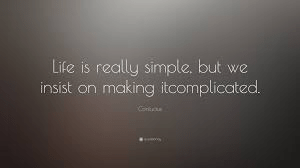
If this all seems a tad like oversimplification, you’d be right. There are times that demand a simplified look at what’s next, because sometimes what’s next is not some grand achievement but a simple subject followed by a verb.
And once you get a good verb down there’s no stopping you.
I know it seems silly for some specific date to mean anything. But we do that a lot—New Year’s resolutions, for example. Well this is mine. I saw this birthday coming for quite some time now, so I got a head start. By next week I’m planning on hitting sixty-two running.
But here’s the thing… I saw a guy on a corner last week in Virginia Beach with a “God Bless You—Help if you Can” sign. I helped the best I can. And I’ll be honest: partly because I’m a human being and to not help even in some small way seems ridiculous, partly because he was clearly a vet and I taught vets for nearly three decades and I understand the circumstances which may have found this man hoping for a few dollars at a red light. But also, I must admit, because I wonder sometimes how close we all are at times to the corner, sign in hand. How close are we to the acceptance of things we cannot change when we know, I mean we have the absolute conviction, that usually those “things” fall in the category of “change the things we can.” I may not be wise enough most of the time to recognize the difference, but at sixty-one years, eleven months, and twenty-seven days, I’ll be damned if simple acceptance is going to be my game plan for whatever comes next.
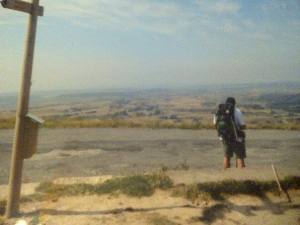
I’m going for a walk now, and I’m going to walk like someone’s holding out ten Ben Franklins at the other end.



 a view from this wilderness