The Russian Arc

Trinity Cathedral inside the Nevsky Monastery

The following is the longest blog post to date at A View. It is the result of news today that going to Russia is dangerous even for Russians with dual-American citizenship. I miss the place, the people, the endless laughter and outrageous stories from decades of travel. The country has come full circle in that time. For anyone wondering what the hell happened, here’s what happened:

The Russian Arc

In 1994, the streets of St Petersburg were dank, a monotone of browns absent of advertising, neon, or anything other than some Soviet style atmosphere. The only placards placed in random spots on Nevsky Prospect—the city’s Fifth Avenue—were Marlboro signs, the only western clothing of note worn by the suddenly displaced masses was Adidas warm-up suits. It appeared a parody of itself as presented in 1970’s and ‘80’s anti-Soviet movies. For seventy-five years the country, and Leningrad, moved in darkness under the Soviet leadership, and for centuries before that under the long reach of the Czars.

But in 1994 when I first arrived to teach American culture to faculty at Baltic State University, the first of what would end up being more than twenty-five trips in thirty years, democracy had found the streets of Leningrad, which had just changed its name back to the Imperial “St. Petersburg,” and Russians struggled to figure it out. The first week there, I stood in line for two hours at a bakery, and when I pointed this out at the college, my colleagues shrugged and said, “Da. Canushna.” Yes, of course. I explained that in the States, a new bakery would open across the street and be faster, charge less, offer discounts. Then I had to explain discounts and why, explain that the cashier who stood outside smoking while twenty people were in line would be fired. This led to a conversation about capitalism, and everyone was suddenly enthralled to hear about businesses and learn how to make money, the advantages of choices, the value of options. The men of the previous generation on through to the college students present when I first taught in the city, simply understood service to their country as paramount; it involved time away from family, but also provided pensions and a chance to protect their living conditions.

But after the coup, and certainly in the few years which followed leading up to 1994, it was a brand-new way of existence, and the long, cold winter of communism had finally ended. Things changed—and this is where it got tricky. At first everything was different overnight, like their currency, living conditions, international relationships, and availability of goods. But then the changes slowed to an immeasurable pace. People couldn’t find jobs or food, or they had to work for some organized crime group. Old folks lined the metro begging for money or selling items—shoes, loose cigarettes, empty bottles. But within a few years they figured it out.  One afternoon that first year I went to the market behind a cathedral in the arts district. It was a park area with tables covered in tourist items: matryoshka dolls, the famous Russian wooden bowls known as khokloma, pins, small wooden toys bears. Scarfs, shawls, icons, amber jewelry. The following year the market built small booths in long rows instead of random tables. A year or two later, the booths had roofs over them, then lighting was put in for night shopping, and by the 300th anniversary of the city in 2003, the entire market was covered, gates out front, a veritable mall filled with all the previous items, but also fine art, expensive purses, technology, and food were added to the shelves. The Russians were figuring it all out, and many made more money in a month than they had in a year under the Soviet regime. Organized crime groups took over and took a cut, and the city streets once filled with just Russian-made Ladas were now lined with black SUVs.

A friend of mine in the marketplace, photographer and artist Valentine, remained my source of all things business, and the changes almost became too much for him to handle. In 1995, I went in the Catholic Church nearby to find piles of rubble where an altar used to stand eighty years earlier, and the walls had been painted black, on the floor lay statues without heads. The priest, Fr. Frank Sutman, explained it had been used as a storage facility for motorcycles since the Great Patriotic War, World War Two, but the church took it over for the first time since 1917. By the turn of the millennium, the grandeur of the marble floors and beautiful walls had been restored. Across the street was a small shop. In the early years, I had to point to the item I wanted on the shelf behind a counter or in a glass case, and if I liked it, I took a handwritten receipt to the cashier who figured out the total on an abacus (no kidding), gave me a new receipt which I took back to the first worker to retrieve the items. This is how it was in the few grocers, the pharmacies, the bakeries. Only in the tourist market did one deal directly with one person.

Years pass.

A supermarket opened with cashiers at the end of conveyor belts who rang up your items, bagged them, and you walked out like you just left Walmart. The discovered calculators, paper bags, and the shelves were stocked with European goods. And on the streets, neon signs dominated the avenue: KFC, McDonalds, Pizza Hut, clothing brands, cigarettes, alcohol, appliances, cars. Except for the language I could have been in my native New York. The once empty streets were filled with people, all on their new phones, all taking pictures, all donning expensive jackets and shoes.

These were the years of tourism, of an entire generation and the next growing up without memory of Gorbachev, even of Yeltsin. We went on canal rides and took videos, wandered through neighborhoods and graveyards. I went to Victory Day a dozen times, talked to Vets of the Great Patriotic War, who loved to share their experiences, and I talked to the women—St Petersburg became known as a city of old women since the men mostly died in the war and children starved to death—about the changes, often as they swept the streets with brooms made from birch branches.

We went to the Kirov Ballet, the opera, folk shows, and soccer games. We dined in restaurants from Germany, Italy, China, and played music, danced and drink at The Liverpool, a Beatles bar.

Peter the Great’s dream of a city of culture, his “Window to the West” as he called it, had come to fruition.

By 2014, after twenty-years of going to Russia, anyone thirty or thirty-five years old and younger only new this new way of life. The very notion that the government would dictate what they could and could not do was as foreign to them as it is to us in the west. Students graduated from college and set up businesses, tech companies, they traveled freely and often to Portugal, the United States, Hong Kong, Sicily, everywhere. After almost a century of needing to walk everywhere and live with two other families in small communal apartments, they now owned cars and nice apartments. The once common practice of tourists bringing Levis or other western brands to trade for Russian trinkets was not only over, but laughable, with malls opening up with shoe stores, clothing stores, phone, sporting goods, and music stores, all filled with western brands.

The “old country” of Russia had so modified over the course of just two decades, one had to be in their forties to remember the Soviet system. What the average Russian citizen could not know, of course, was that the modifications made in palaces throughout the country, but in particular St Petersburg, was paid for by organized crime to increase tourism and international trade. The city where I could in those early years buy items for a few dollars, quickly figured it out and charged twenty or thirty dollars for the same items. Restaurants appeared everywhere with prices for those driving the SUVs, not for the Lada crowd.

My friends from Russia adjusted. A tour operator learned business well and built a company that dealt with tourists from all over the world. My artist and writer friends found new freedom in being able to take pictures of anything and anyone they wanted without recourse. They criticized the Yeltsin administration without worry of harm. For seventy-five years, the notion of dissidence, which not only included those who wrote against the government, but those who simply didn’t always write positive things about the government; particularly Stalin, had in just a few shaky years, slipped into history. Going to St Petersburg became simple. There was even talk for a while of dropping all the VISA requirements. I wouldn’t call it democracy, as such, but communism was dead. Gone. Lenin’s statues which had been everywhere in the early ‘90s were much more difficult to find. It became simple for a Russian to leave home and travel to the United States. And the did, gladly, relishing in being a part of the world, finally. This wasn’t simply détente; this was the start of a beautiful relationship.

In 2013, my son and I rode the trans-Siberian railway from St. Petersburg to Vladivostok, across more than six-thousand miles, and seemingly across decades as we retreated into the previous century the further east we traveled. In Yekaterinburg the western influence was still obvious, but in Irkutsk, another few days east, Soviet style practices still appeared common. The one fortunate thread remained the people, all deeply rooted in new democratic, even capitalistic practices. They drove Kias and Toyotas, they wore Levis and Ray-Ban sunglasses, and they spoke of their vacations in Australia, the Canary Islands, Florida. If I had not been already in my fifties, there would be no basis of comparison to the old, Soviet ways I grew up learning about, fearing, hating. Nothing I had learned about these people was true, even in the early nineties. The propaganda machine, practiced just as efficiently in the west, had turned out to be shallow, and that was with a generation of Russians whose experience had only ever been Soviet or Czarist. This new generation, those already well into their careers, families, homeownership, and substantial investments, just two decades old, was the dominant population across the country, and they knew less about living under a fascist regime than I did.

Until Putin.

He came in early and soft, almost friendly, certainly acceptable. He was a man with a vision for this new country who followed the floundering Boris Yeltsin, and as Putin’s power and wealth increased, he rebuilt his native St. Petersburg. He saved the former Soviet Union from ruin and the economic disaster of the Yeltsin years, which left a rampant homeless and starving population to fend for themselves. Right after the coup to end communism, the nationalization of all businesses and housing ended, but so did the pensions. Housing privatized and if the residents couldn’t afford the new rent they were kicked out. Hospitals quite literally rolled patients out the door and left them near churches to fend for themselves. Putin moved from the city’s Vice Mayor up the ladder to President on the promise he would “clean up” the homeless problem, “employ” people willing to work for anyone, and made business deals that brought unprecedented wealth to the nation. Russians welcomed him; so did western leaders. And the population which benefited the most were under forty, tech-savvy millennials who worked their way up, drove expensive cars, and lived in large sweeping apartments on Nevsky Prospect with beautiful dachas in the countryside or Ekaterinburg. Tourists who visited St Petersburg discovered open palaces with gourmet dining rooms, clean hotels with five-star service, shops with icons, malachite and amber jewels, and all-things-fashion. Russians, too, became tourists able to see more than the dachas they shared with other families. They traveled to Italy, to Portugal, France, and the United States. Satellite television common in the nineties became fast internet service enabling partnerships and communication with anyone anywhere.

Then Ukraine happened.

Those same students just out of communism and thrust into capitalism are now in their late forties, at least, and their children, raised in nothing but a mostly free-capital society with all the advantages and freedoms we understand here in the States, are being drafted into an army to attack a country they spent their entire lives visiting on vacation. When the news speaks of “Russian military,” this is who they’re talking about; men and women whose only reference and background was freedom of choice, of employment, of wandering, of economic wealth. Their only requirement was the possibility of two years mandatory service before they turned twenty-seven. Piece of cake; their billets ranged from one end of the earth to the other. So while their parents may not have been surprised to have been called to service in Afghanistan in the seventies for the Soviet government, these men and women dreading duty in neighboring Ukraine had anticipated their best-laid plans to pursue personal ambitions, and went to schools which had been teaching them international relations and economics, until the hope they had for life was disturbingly aborted for reasons beyond their comprehension or desire.

Then western sanctions hit and the country shut down, banks stopped all business outside the borders, foreign companies which lined Nevsky Prospect with signs and tables and parties were suddenly gone. The streets once again seemed grey, empty of life. Employment disappeared and no pension waited by to save them, so the army promised to pay their bills, which they did for a short while, and when word spread that the truth is they could barely feed their soldiers, let alone pay them wagers a fraction of what they had been used to, many fled.

Back in the mid-nineties, a friend of mine would write complaining about Yeltsin, about the lack of support from the United States, about the homelessness and difficulties dealing with “Old Russians,” who knew Soviet Ways, and how the “New Russians,” assume they have a right to whatever they can get. The anecdote which circulated then was how a New Russian in a Mercedes SUV waited at a stoplight when an Old Russian in a Lada with no brakes hit him from behind. The Old Russian got out of his car terrified, but the New Russian simply said, “Aren’t you glad I’m here to stop you? Otherwise you would have run out of control and killed yourself.” That was the propaganda which took hold and brought this nation to life; this nation now isolated and quite possibly on life support.

In the last few months, after a year of no word from friends who still live behind this new Putin Curtain, I heard from the friend who twenty years ago spoke openly of the problems in the city, back when the place was starting to shine. This time he speaks only of pleasantries, of how beautiful the weather is, and how he loves his city. No word of Putin; my friend remains uncharacteristically quiet about all things governmental. Another friend in Europe tells me his own family in St. Petersburg reports the lines are back for the purchase of many goods, like before the coup thirty-five years ago, and families are once again forced to move in together to save money, and he cried knowing his family whom he could visit whenever he wanted and who came to see him often, no longer has the ability to travel anywhere, nor the means even if they could leave. And he spoke as if this was the early fifties and Stalin was still in charge, that “to speak negatively about President Putin is to be thrown in jail.” And today come reports that anyone with dual citizenship with the US and Russia who had been contemplating going back to Russia should not do so lest they be detained indefinitely in Russian “holding” areas.

Maintaining control over the population of the Russian Empire after the Civil War following World War One was not difficult; the people had never truly known freedom as we understand it; Czarist Russia ruled for nearly a millennium. Russians appreciated the promises made by the Bolsheviks, and despite many of those promises never coming to fruition, most people abided by the Soviet system, even out of fear. And following the fall of communism in the late eighties and early nineties, Russians welcomed the opportunity to break free of the limitations of their previous government, but when almost a decade passed and things got worse, not better, it was not difficult for someone like Putin to convince them a little more government control, “like it used to be,” was a good thing. For a while, he maintained a perfect balance of top-heavy government—albeit one on the take to the tune of billions of dollars—and the personal freedom to come and go, grow and expand, as one pleased. This lasted until February 24th, 2022, when Russia invaded Ukraine.

But something is different this time. One hundred years ago the people had only known an oppressive government, as was the case thirty-five years ago, so leading them down the path the new leaders desired was not difficult. But now, two generations into a country used to most of the freedoms we have in the west, the population, despite the Russian propaganda to the contrary, is displeased with their government’s bombing of an innocent nation, ending the freedoms of the people of both countries. When the war began, Russia had 360,000 active troops. In the past two years, 315,000 of them have been killed or badly wounded, only to be replaced by new “recruits.” According to the UN, that amounts to 87% of their numbers at the start of the war. In the Ukraine since the world changed two years ago, more than 30,000 soldiers and civilians have been killed or wounded.   

The Russia I knew is dead. I miss my friends, Valentine, Igor, Sasha, and Dima the violin player. I miss the atmosphere, the storied example of perseverance that was the St Petersburg I knew, filled with veterans who miraculously survived the siege of their city for nine hundred days in World War Two; a siege and destruction of people which one of the city’s own, Vladimir Putin, once exclaimed must never be allowed to happen again, until he did just that. The promise and beauty of the Russian artists, the teachers, and the children, are simply gone. And in Ukraine with a history deeper, older, and more beautiful than even Russia’s, a civilization has been annihilated. Historians will not point to a myriad of reasons for this incomprehensible tragedy; studies will not have to be undertaken to better comprehend the causes of the invasion. The brunt of this brutality falls squarely on the shoulders of Vladimir Putin.
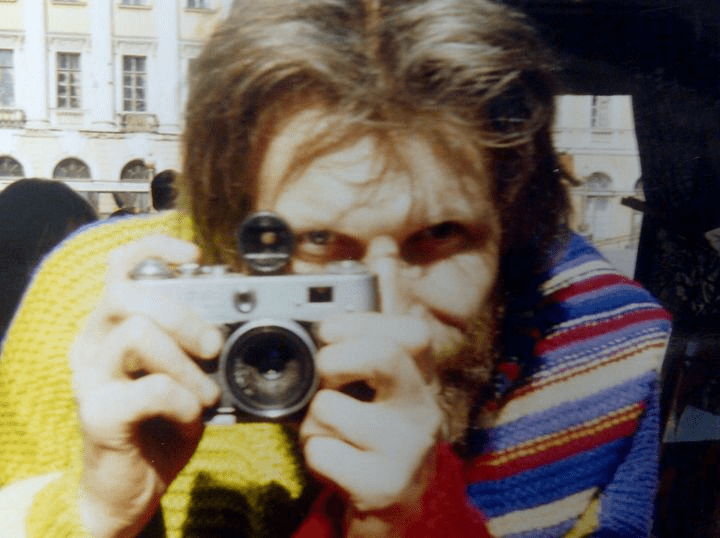
Valentine
Me and Valentine

The Books

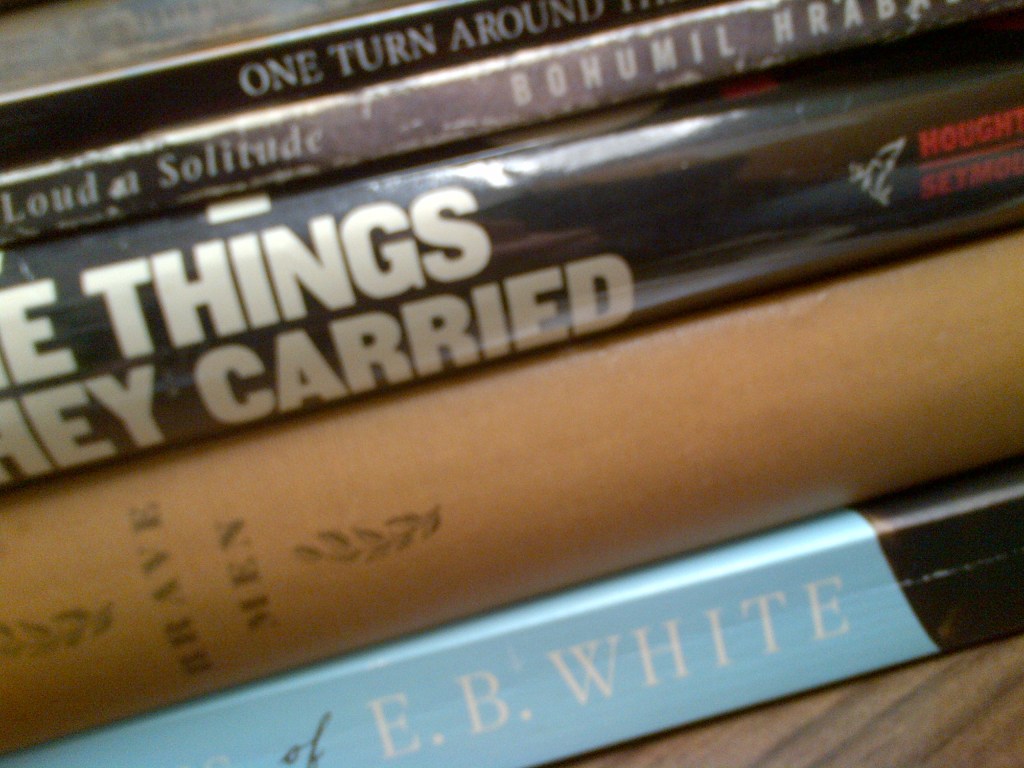
I have a collection of books I received on Christmas nights through the years. All Creatures Great and Small by James Herriott, A Walk Across America by Peter Jenkins, Bound for Glory by Woody Guthrie, Robin Lee Graham’s Dove, and more. Of course, growing up, Christmas morning was filled with the normal toys, candy, clothes, sporting goods, one year a bike, a guitar another, a whirlybird which my Uncles commandeered for the day, and many more memorable gifts. Honest to God, we were very lucky; it was an awesome childhood.

But the books have a different history. While Mom and Dad collaborated in many things, like in most families my mother was Santa when it came to shopping, wrapping, hiding, and organizing the gifts. She went to great lengths to make sure she spent exactly the same amount on each of us. And while I really don’t think we were spoiled, mostly because our parents made sure we appreciated everything, I also don’t remember ever thinking there was something I was expecting but didn’t get; that is, I was never disappointed. Yes, Mom did well. On Christmas morning as we unwrapped our presents, we’d make sure to say, “Wow, thanks Mom!” even on gifts we saw coming. By the end of the morning, though, we’d make sure to also throw in “and Dad” to the thanks, but he didn’t mind when we didn’t, ever.

And like in most families we drifted into that quiet period after opening gifts when we were engaged in our new items, and Mom was getting breakfast ready as well as dinner for the company which inevitably filled the house. Dad would read the paper. But later in the day after everything settled down, Dad would emerge from some quiet place and have a stack of gifts for us, chosen, purchased, and wrapped by him alone.

Books. It was amazing how he seemed to know exactly which ones to choose, and I don’t remember him ever asking what we were interested in. He just observed and took it from there. He’d hand us each a book he had signed inside with a “Merry Christmas, Love, Dad” and the year. I don’t remember when the tradition started but it had to have been early since one that I received was The Boy Who Sailed Around the World Alone, which is the kids’ version of Dove. I wasn’t yet a teen.

As the years went by we came to anticipate the books earlier in the day, though he usually held out. There were some exceptions; like one year when he gave us each money. I bought Illusions by Richard Bach and asked Dad to sign “Merry Christmas, Love, Dad” in the book anyway. Another year he replaced the books with Broadway tickets to see Katherine Hepburn in “West Side Waltz.”

It became my favorite part of the day. It wasn’t just the books, though. While I cherish the memories of Christmas evenings on the couch or stretched out on the floor with our books, it was also a specific moment I got to share with my father and keep up on a shelf . 

I have kept the tradition going since my son was born. When he was younger it was Winnie the Pooh, Curious GeorgeHamlet, anything by Dr. Seuss, Charles Schulz, or Thor Heyerdahl, and more fill his shelves. Today I gave him a beautiful, color guide to trees and leaves. We really do formulate our lives based upon what we’re exposed to growing up. Michael has the kindness of Pooh, the curiosity of George, Schultz’s sense of humor, and Heyerdahl’s sense of adventure. And we have trees. Go figure.

I try and wait until the end of the day, but it doesn’t always work out that way. Now I understand that Dad didn’t just give us books; he gave us his sense of understanding, of knowing, of remembering and anticipating. When I look at the books Dad gave me, they absolutely anticipate my life—music, adventure, the sea. What did he think was going to happen with a list like that? I’m guessing he knew exactly what would happen.

As the years moved on and we all moved out, we started giving him books; he absolutely loved reading. We had to coordinate sometimes so we didn’t get him the same one, and I don’t think we ever did. He received volumes about Brooklyn, about baseball and golf, about history—one of his passions. The last book I gave him was a first edition copy of John Grisham’s first book, A Time to Kill. He loved Grisham’s work. That book is now on my shelf now alongside the books he gave me.

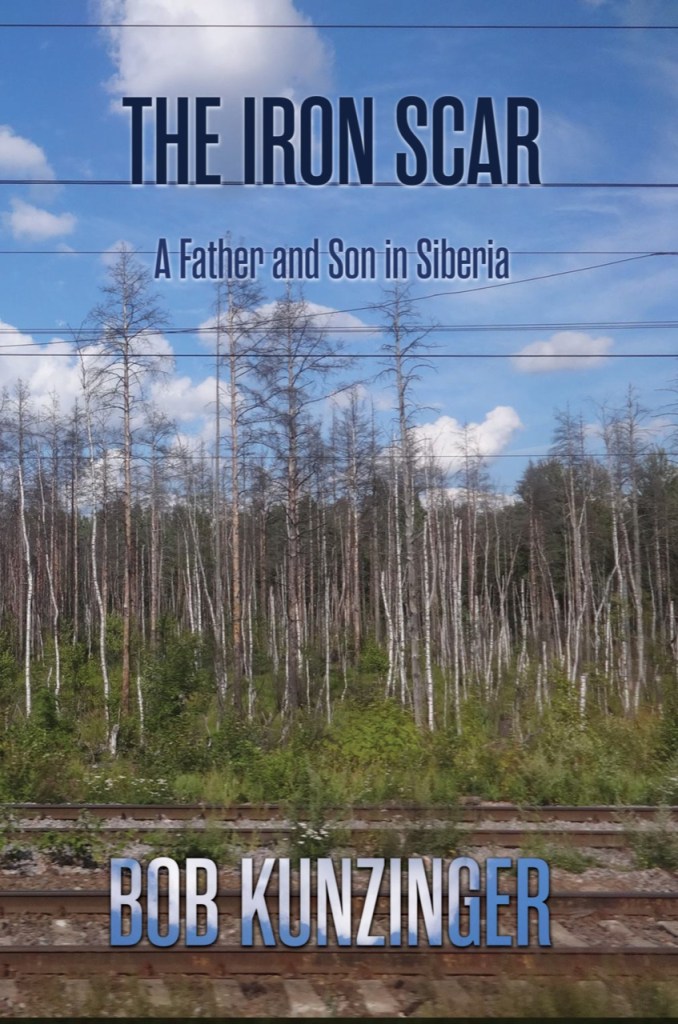
I thought the book exchange between Dad and me would end, but they have not. I can’t give him books anymore, so I write them. My last book had originally been framed as letters to him from a train barreling across Siberia. I ended up changing it to a straight narrative, but he is very present on our journey in those pages, and the work is dedicated to both him and my son. I truly wanted it to be a book he would have bought for me, signed, wrapped, and given to me one Christmas; probably about the time of day I was getting tired and his gift would wake me up and send me on some adventure well into the night.

I would have loved for him to been around when that book came out. I would have given it to him later, after dinner, after football, after the pie and coffee when we were all just sitting around talking, reading. And inside I would have signed it, “Merry Christmas Dad, Love, Robert.”

September 8th

The Siege of Leningrad is one of the more disturbing and inspiring events in history. The Nazi’s blockaded Leningrad (present day St. Petersburg) on this day, and for the next 900 days bombarded the city in an attempt at first to take the city, but when they couldn’t, they tried to wipe it from the face of the earth.

The following is a chapter from my last book The Iron Scar, in remembrance of those lost and the survivors.

Persistence

(from The Iron Scar: A Father and Son in Siberia)

Bob Kunzinger

This evening I sit in the dining car somewhere in eastern Siberia, writing, drinking tea, and the only other passengers are an elderly man and his son, also drinking tea. They’re quiet and both glance at me from time to time. Eventually, I walk to their booth and ask if I can join them—the younger of the two speaks broken English and he waves to the empty spot next to his father.  He introduces himself as Dima; and the elderly man, Sergei, wears two or three medals on his green shirt, and I ask if one particular medal is the same as another I had seen in St. Petersburg, given for bravery during the siege of Leningrad. It is.

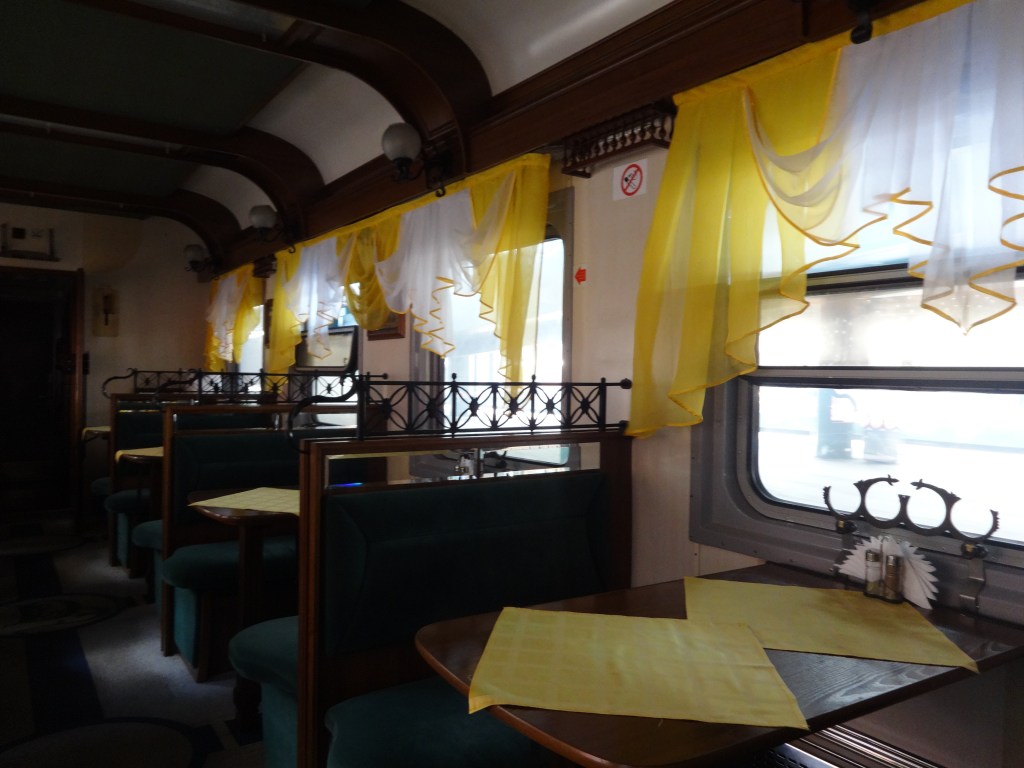
The dining car on the trans-Siberian railroad looks much like old Airstream-style diners in America, with booths along both sides, full size windows at each one with small curtains, and all are kept clean, with flowers, a napkin holder and place mats. At one end of the car is a bar with well drinks as well as a small variety of more expensive liquor on a higher shelf, and a generous selection of domestic and imported beers and soft drinks. The menu rivals the most common pub at home. Grilled chicken, hamburgers with French fries and other sides are available, as well as more complete dinners and some appetizers. Caviar, too, and salmon slices with toast, borsch, and traditional fare such as cabbage and sausages for tourists like us who wish to feel part of the landscape, and for locals whose daily diet includes such items anyway.

The prices are about the same as they would be at stateside diners, but Russians for the most part can’t afford that and usually buy their food from the babushkas at the stops along the way. Seeing as how there are so few tourists, the booths are always available, so Michael and I spend much of our time here, playing chess, eating, and working.

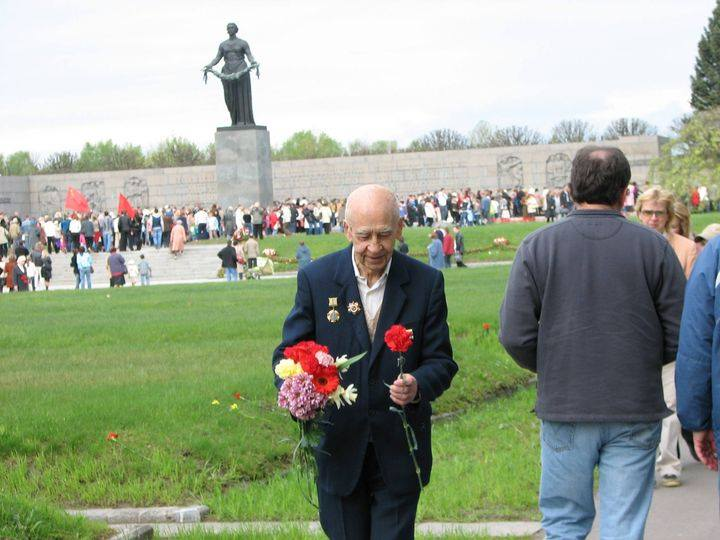
Paying attention to this sudden mixture of cultures is the tender. This always smiling woman sits at her own booth near the bar with several pads spread about which apparently need her attention. From time to time she looks up, partly to see if we need anything and partly, it seems, to catch what she can of our conversation. She normally likes to play traditional music on the player whenever I sit down, but when she sees me join this veteran and his son, she puts on Shostakovich. We all recognize it immediately and the old man smiles. Composer Dmitri Shostakovich wrote his Seventh Symphony, the Leningrad Symphony, in the forties and performed it for the first time to a packed theater in his besieged city of Leningrad. Despite the rattle of Nazi bombs exploding in the background, no one left the performance. Today in the memorial cemetery in that city where nearly 700,000 people are buried, Piskaryovskoye Cemetery, it is still played while thousands of people pay their respects. I have spent many Victory Days there, meeting veterans, offering them a carnation in thanks for their work in the war, so it is an honor to share tea with this veteran.

It would be negligent of any traveler, foreign or domestic, to make this journey without learning about and acknowledging the Blockade in Leningrad, the horrors of the Great Patriotic War, and the incomprehensible courage displayed by the citizens of what is now St. Petersburg, which was bombarded by the Nazi’s for 900 days in an effort to complete Hitler’s desire to “wipe Leningrad from the map.” That history is this old man’s youth; and the fact he survived and went on to raise a son is nothing short of miraculous.

This is where this great railway and Russian history collide.

Some background: 

The original name in Russia for the railway was the “Great Siberian Way,” and it was only in the west we called it the trans-Siberian railway. At the World’s Fair in Paris in 1900, the railway was an exhibit with the most extravagant interior cars on display and promoted as the ride of Czars. While it was true the line from St. Petersburg to Yekaterinburg was indeed the rail for Czar Nicholas II and his family to seek refuge in their palace on the Iset River, the promotion at the Fair was misleading since from the start this railway mostly carried people to war. When Czar Alexander put his son Nicholas on the project, he did so with the assistance of Sergei Witte, a minister in the Russian government and confidant of the Czar. The heart of the empire was, indeed, in the western third of the country. St. Petersburg and Moscow were, and still are for that matter, the center of the Russian universe, and from the time of Peter the Great’s ambition to create a “Window to the West,” the powers-that-be focused their attentions there. But in the late 1800’s, the government noted the potential resources available in the east, thinking Siberia might be an economic boon instead of simply a destiny for dissidents. At the same time, St. Petersburg had its eye on parts of Manchuria and moved forward with the rail to that destination under the pretense of trade; the truth is they eventually occupied the territory, a move which aggravated Japan who also wanted control of the area. Japan saw the TSRR as a tool of expansion and eventual invasion, which, of course, it was. Hence, the Russo-Japanese War in 1904. But the tracks weren’t finished yet, and troop movement in the area where roads even today are poor, meant ultimate defeat for Russia.

Still, they had their rail, which a few years later was completed to the Pacific port of Vladivostok. But Japan had its day, and instead of Russia using the railway to dominate the eastern Asian region, Japan did just that by defeating Russia’s Pacific fleet and controlling territory they long wanted. Their rise to power anticipated the conflict in the Pacific which would be that part of the globe’s World War Two.

During World War One, the United States had many economic interests in the region, not the least of which was a ton of weapons strewn north from Vladivostok along the rail. To protect those interests, President Wilson sent eight thousand US troops to the region—the only time US soldiers were stationed in Russia. The War in Europe would not be over for another three months, but in Russia, change was constant. The Mensheviks had ousted Czar Nicholas and replaced him with Kerensky, who the Bolsheviks quickly ousted, so the allies had no one with whom to work in eastern Asia. But it was during that short and welcome reign of Kerensky that the US took over the operation of the trans-Siberian railway, a move supported by the allies in Europe and seen as the spread of democracy the western world had hoped for. At the same time, however, the Bolshevik Revolution swept east literally following the tracks all the way to Vladivostok. The United States withdrew their interests and in a few short years the noble ambitions of the entire empire would quickly derail.

Josef Stalin took over the Soviet Union in 1922, a post he would hold for thirty-one years. He longed for a railway across the polar region of Russia to expedite travel to the Far East. This “Dead Road” was built by “enemies of the people” of Russia. It is estimated that 300,000 prisoners worked on this project with a third of them dying in the brutal northern winters. The entire project proved short-lived, however, when the short part of the line which had been completed sank into the ice and snow. But Stalin understood the value of rail transport, and the pogroms started by the Czar to relocate Jews to eastern Russia were continued under his rule with the aid of the Trans-Siberian railway further south. It was no possible to purge entire towns, exile anyone who so much as spoke about him without praise, as well as those who outwardly opposed the oppressive government. In fact, not many people during those years rode the railway by choice. It was a means for guards to get to work or to send prisoners east. The rail between St. Petersburg and Moscow remained a crucial route between what is considered the cultural capital in the north and the political capital an eight-hour ride south. And the cross-continental railway in post-coup Russia became a means of transport for workers heading to and from a job, families going to a dacha, and the rare and idealistic tourist heading to Beijing or Vladivostok.

Aside from so much death associated with this transport, there is one glaring and essential exception when rail travel was, in fact, a lifeline in Russia: The Great Patriotic War. World War Two. A separate rail from the trans-Siberian route was built by hand every single winter during the war across the frozen Lake Ladoga just to the east of Leningrad to try and bring in supplies and bring out citizens of the city, which was besieged from September 8th, 1941, until January 27th, 1944. During that time nearly one and a half million people in the city—mostly women and children—died of starvation. The people of the city to this day are most proud of the fact that, despite nine-hundred days of bombardment, the Nazi’s still couldn’t defeat the “defenders of Leningrad.” And because of the invading Germans, factories were moved from the western part of the country to the most eastern reaches of European Russia, in the Ural Mountains, where more than three hundred plants were rebuilt close to the railway, mostly by the prisoner population.

Before me now, however, is a man who refused to leave Leningrad. I mention my understanding of his courage and struggle, and the old man smiles. He places his hand on my wrist and says, yes, he could have ridden the rail across the lake during that first winter—he was just a young teenager, and no one would have questioned it. But he chose to stay and help transport whatever food he could to the front line, which during the blockade was in every direction.

The tender brings a plate of salmon and bread which they share with me, and we drink more tea. Sergei dips some bread in his tea, and his son offers me salmon.

We speak for quite some time about the trail, about Michael and I and our wild idea to see Siberia, and about their present journey to a Dacha to spend August. Eventually, I ask about his medal, about the war, and how much he remembers. Sergei takes a long bite of his bread and nods toward the plate of salmon. “Food was the most significant issue,” Dima translates as he looks in despair at his father, clearly knowing what comes next. “Leningrad’s population of dogs, cats, horses, rats, and crows disappeared as they became the main courses on many dinner tables. Nothing was off limits. People ate dirt, paper, and wood. The vast majority of casualties were not soldiers, but women and children.”

This much I know already: The siege of Leningrad is political history as well as military history, yet it is also personal. It is the story of a child living on a few grams of bread, his mother making sure he only takes small bites throughout the day for fear if he eats it all at once he will surely starve to death. He will anyway, and the history of the siege of Leningrad must include the story of these women who survived, these sorrowful mothers, who had to grasp whatever sliver of hope they could that they would win in the end so to save their beloved Mother Russia.

The siege is one of the chapters in books about 20th-century atrocities; yet it is also the conversation over beers in a corner pub, where as late as the nineties when I first started coming here, most veterans still held back their emotions against the questions of the curious’. Some allowed others to cross the line into their world, allowed them to suffer the starvation through stories and tears because they knew it might be the only way these great heroes, the defenders of Leningrad, will be remembered.

Me on the right after giving the carnation to the veteran (photo by Kay Debow)

I recall a conversation I had once with a woman in St. Petersburg’s Palace Square. She was fifteen during the siege when she had to pull a sleigh carrying the body of her sister, who had died of starvation. She made it to the graveyard and left her sister on the pile of bodies. Another there, Alexander, remembered how he would cut up a piece of bread once a day for his brothers. His parents had died of starvation some time earlier.

Nearly three million civilians, including nearly half a million children, refused to surrender despite having to deal with extreme hardships in the encircled city. Food and fuel would last only about two months after the siege began, and by winter there was no heat, no water, almost no electricity, and little sustenance. These citizens still had two more years of this to endure. Leningrad is roughly at the same latitude as Anchorage, Alaska. It gets cold.

During that first January and February, 200,000 people died of cold and starvation. Because disease was a problem, the bodies were carried to various locations in the city. Even so, people continued to work in the deplorable conditions to keep the war industries operating. When they were not working or looking for food and water, they were carrying the dead, dragging bodies on children’s sleighs or pulling them through the snow by their wrists to the cemetery.

One man said, “To take someone who has died to the cemetery is an affair of so much labor that it exhausts the last strength in the survivors. The living, having fulfilled their duty to the dead, are themselves brought to the brink of death.”

But the people of Leningrad would not surrender. I met a woman named Sophia in a graveyard on the north side of the city. She had been an adolescent during the reign of Czar Nicholas II and thirty years later lost her husband and son during the siege. We sat on a bench, and she told me of her life, of her family, as if time had turned it into a hazy event she had heard someone talk about years earlier. Her hands were transparent, and she spoke of Leningrad as being a prisoner of war, with no rations and no electricity and little hope. The city became a concentration camp, its citizens condemned to death by Hitler.

But thousands of people were evacuated across Lake Ladoga via the famous frozen Doroga Zhinzni, the Road of Life. During warm weather, some were boated across, but in winter they were carried on trucks across the frozen lake under German fire and moved via the railway. Heading north was pointless; the Finnish Army, allied with the Germans since the bitter Winter War with the Soviets in 1939-1940, held the line there. But once across the lake, this very train took people further east until the rails simply could not run. When we stand between the cars and rumble along, listening to the clashing of metal beneath us, it is hard for me not to think of the thousands of starving citizens transported east, listening to the same sounds.

“We simply had nothing to eat.” Yes, starvation was the Nazi’s objective. The blockade was a time during which one gauged success by being alive or not. Some survivors, however, tell of encounters with people who had such severe mental illness from disease and starvation that it had become unbearable. The accounts are sometimes spurious, but too many narratives contain too many parallel events to write them off as exaggerated. Several wrote of what became known as “blockade cannibalism,” including the story of a boy who was enticed to enter someone’s apartment to eat warm cereal

One woman used one of her dead children to feed the others.

For nearly three years, Leningrad was under attack night and day, and almost half its population, including 700,000 women and children, perished. The Germans left the city of Peter the Great, his “Window to the West,” in ruins. Still, the Nazis could not defeat Leningrad.

The likes of that bravery and sacrifice will never be seen again.

During those years as well as a decade before and past Stalin’s death in 1954, Soviet industrialization moved many citizens to the region stretching from Omsk to the Pacific, and the vast majority of these people worked in towns built for the sole purpose of some factory. But the most infamous use of the railroad during this dark period was to transport prisoners to the Gulag system. Prisoners in the penal system in Russia were tapped to exploit the natural resources in the mineral-rich east. It started officially in 1929, but just five years later, nearly half a million Soviet citizens with a prison term of three years or longer were loaded on these railcars and transported to the Gulags. Five years after that, the camp population totaled more than two million. Some eighteen to twenty million inmates, while suffering the most inhumane conditions, facilitated the exploitation of timber and minerals in remote areas in slightly more than two decades. They also laid railroads which branched off of this one, constructed roads, secured dams, and worked in the factories and on the farms,

The veteran looks around and says more quietly as his son again translates, “Every single person on this train is connected to the war; either a grandparent or parent was killed, or less likely, survived. Everyone on this train is fortunate to be alive because of citizens of Leningrad under the most horrific conditions. I played a very small part, but I am glad I survived to be able to raise my own family.” He smiles at his son, who places his own hand on his father’s sleeve.

Today, war monuments dot the landscape. Most of them honor veterans of the two World Wars, but many as well for those who served in Afghanistan, the most notable being the Black Tulip memorial in Yekaterinburg, named for the ship which carried home the Soviet deceased. The monuments to the Siege of Leningrad, or the “Blockade” as Russians refer to those dark nine-hundred days, are numerous in St. Petersburg, of course, but they also spread surprising far to the east, following the tracks taken by those souls who managed to get out of the city under cover of a cold, dark winter. The same chance Sergei turned down, as his medal clearly shows.

I grew up during the age of the Evil Empire, the Red Menace. Siberia and Irkutsk might as well have been on the moon—I was never going. All I knew of this land when I was young was from playing RISK with my older brother. He usually won but I had fun moving my armies around the board, sometimes skipping from Alaska to Kamchatka, proving to me capture of the Russian coast was key in controlling the outcome. When Michael was growing up we did the same thing. But it wasn’t until I was much older that I learned something valuable: that miserable game screwed up my sense of geography. Siberia is not a country or a state, it is a region, like the American West or heading out to the Plains. Ian Frazier wrote Siberia is more of an idea than a place. Irkutsk is not a country but a city, and Yakutsk is not east of Siberia it is in Siberia. The Ukraine does not take up most of map, doesn’t run from the Arctic to the Med, and doesn’t replace Russia, which that Soviet era game completely left off the planet. Still, those faraway places in beautiful colors with brightly colored armies became mythical. In the end, I didn’t have to move armies to travel to Siberia; no opponents waited across Parker Brother’s boundaries. I didn’t roll doubles. I didn’t pick the wild cards. I just came, and in doing so I wiped out decades of ignorance about these people over a cup of tea and some salmon slices.

The old man looks out the window into the dark evening, and I can sense his mind has recessed into some sharp and tortured memories. His son leaves his hand on his father’s and nods to me, indicating he sees I understand. We sit quietly like this for a long time, drinking tea, as the train rolls forward through history. 

photo by Michael Kunzinger

You can order The Iron Scar: A Father and Son in Siberia, by clicking here

Full Exposure

I read from my new book the past few days and it went well and I enjoyed it and the food was fine and the wine was just right and I was happy and they seemed to enjoy it.

During the last question and answer session, a twenty-something woman stood up and established herself as a non-fiction writer, a journalist, with an inquisitive mind, and she believes small details can truly reveal a person more than the longest discourse with them. I expected a question about Siberia, or about one of our cabinmates on the journey, or the food, or my son, or anything anyone might ask, only smaller and with more detail. But no:

“How did you get that scar on your cheek?”

I sipped my water, and several attendees seemed suddenly uncomfortable. It felt like a 19th century question, like she should have been standing too close in some flowing corset gown and I would sip cognac in some dapper suit, and she’d say, “Tell me Robert,” putting her finger just a little too close to my face, “how did you acquire this scar? Do tell.”

But she was a j-student working on her masters, took copious notes during the reading, and sat with her pierced, tattooed boyfriend.

I touched my face. “I forget, to be honest.”

She nodded, and I knew she was thinking about it, wanted to push me, since she must have noticed it too big to “forget,” but she held enough decorum to let it go. But my host? No such luck. “You wrote about it, though, Bob, didn’t you?” he called from the back of the room. “Unless that is different.”

“I did write about a scar, but, ironically enough, this time I wrote about a different scar; The Iron Scar.” Everyone laughed. “Shall I tell you how I arrived at that title for a book about the Siberian railway? They encouraged me to do so. And I did, and she took more notes, and her boyfriend listened intently, and my host kept the pace and let it go.

But he was right. And here is the piece which appeared first in Southern Humanities Review and later the collection Borderline Crazy. But I should say that since the reading my mind has tumbled into a place I’d not thought about for quite a long time. We wonder what it is that will trigger a memory. Usually it is an aroma–smell is the strongest catalyst for recall. Often a photograph. But without really thinking about it, when she asked, I touched my cheek, almost as if to see if the scar was still there, if that part of my life really did happen, and my mind just kept spinning away.

Full Exposure

I have a scar on my cheek from a jagged section of chain link fence. But that is not what I told my son when he was two and ran his finger across it. One hand rested behind my neck the other outlined the scar, or pushed it, or pulled at it. “How did this happen, Daddy?”

I would smile, and with a story-telling voice, say something different each time, like: “I was escaping from a lioness when I accidently stepped on her cub, and just as I dove off the edge of the waterfall, her right paw clawed at my face.”

“Wow!” he responded, amazed for a moment, and then, “No, really. How did you hurt your face?” I’d laugh that laugh we use to dismiss what we said as recognizable nonsense, as if what we are about to say is the real story, and I would tell him “I fell off a train in Mexico and when I rolled safely into the Sonoran Desert, a scorpion stung me. Since I had no antidote for such stings, I had to dig out the poison myself with a dull pocketknife.” I would set Michael back down on the floor and he’d run off satisfied, not with the truth but with adventure, mystery, and more to think about. His vocabulary and imagination gathered these non-sequiturs—scorpion, lion, desert, waterfalls—and they would dance in his mind as he made up his own tales of near-death encounters and narrow escape.

At night I read Curious George to him and when the stories were finished, he would lean against me and ask what’s new or how my day was. And then after a few minutes of silence he might say, “Daddy. It wasn’t a scorpion.”

“What do you think it was?”

“I think you were born that way.”

“Well I wasn’t. I can show you pictures.”

“Well, then it must have happened at work. I think a student did that to you.”

“I’m sure many have wanted to, but none have tried…yet…so that isn’t it.”

“Then what?”

I would think a minute and say, “Son, honestly, it was a rabid vulture,” and he would sneer at me, laugh, and jump off the couch exclaiming, “I guess it’s time for bed.” After he ran off, I would sit and think awhile; kids do that to you. They say something, or ask, or sometimes just laugh a certain way that rakes up what had been settled matters, and you can’t help but think awhile before heading up and tucking them in and letting them know everything is fine and that you’ll be fine and when they wake up, you’ll be there, safe and whole, albeit with a few imperfections.

Scars are not unusual. For some, they are the unfortunate leftovers of disease, for others battle scars not treated or tended to, or untreatable. And for some they are souvenirs, notches on the skin akin to those carved on walking sticks or gun barrels. George Washington had scars left over from Smallpox, as did Soviet leader Josef Stalin, whom as a result was called “Pocky.” When Andrew Jackson was a boy, a British officer demanded Jackson shine the officer’s shoes. When the boy refused, the soldier cut his forehead with a saber—a mark which the future President of the United States did not hide.

George Custer’s younger brother, Thomas Ward Custer, a two-time Medal of Honor recipient, was shot in the face by a confederate color bearer when Custer reached for the man’s flag. The younger Custer killed the confederate and carried off his flag only to be shot and killed eleven years later beside his brother at Little Big Horn. Ironically, Crazy Horse had also survived a shot to the face, his by a war chief whose wife he stole. Go figure.

Me, well, I can still taste the dust, smell the rotten fruit of the nearby marketplace. I can still feel the fence, not on the way in but on the way back out.

When Harriet Tubman was young, an overseer threw a weight at her head which not only caused seizures most of her life but left a “horrific scar” which she said never let her forget “the horrors suffered during slavery.” A glance in the mirror may remind some of a tragic event, but that same memory might serve as inspiration, the signature of survival, the markings of the moments they overcame unthinkable odds. The picture of the slave’s back whipped to shreds and left to heal like a topographical map is also a document of inhumanity recorded for posterity. Branded numbers on holocaust survivors’ forearms forever keep alive the knowledge that evil walked these lands. Scars are history; they infect our psyche with sometimes unconscionable reality to make our history present. They are proof we survived our past despite odds, sometimes despite logic.

Some marks are merely fictional scars which, because of literature and film, are closer to legend than falsities teased by a father to his son. Harrison Ford’s marked chin comes from a car accident at twenty, but has since become an asset, a distinctive feature and part of his personality, even incorporated into the storyline of movies like Indiana Jones and the Last Crusade. Robert Shaw and Richard Dreyfuss exchange stories in Jaws of which sharks left their teeth marks on their legs. The scars render pride in their ability to survive. These souvenirs and conversation starters carve their credibility into bone, and they read like brail to tell us that these people have been there.

But who we are is more than the aesthetic; we are all branded in one way or another. The injury, disease, or self-inflicted wound caused the mark, but our character traits, from malicious villain to a hero with integrity are what we see. In both fiction and reality, the imperfection is just that because of its diversion from “normal.” Most people do not have scars, not visible ones. So when someone does expose such diversion from the expected aesthetic, judgment often follows. “If not for the wound,” they say; “He should have done something about it,” they say; “He should get it taken care of and move on,” some say. Of course, I didn’t seek out the wound like some scarification ritual; it isn’t an African osilumi—a mark of sorrow made after the passing of a loved one. It isn’t for fashion, similar to the tattoo-like Mehndi in India. It isn’t even political or ethnic as most African traditional markings. Some scars prove the woman can meet the demands of childbirth; some symbolize lost children either during childbirth or to slavery. And slaves themselves were branded or scarred to make less attractive or more noticeable. In other locations scars were burned or cut and then left to heal on their own to mark temples or foreheads or forearms for the pride or disgrace of a group. And paleontologists trace scarification to 50,000 BC.

When Michael was three, he slipped on monkey bars at a park and hit his head on the crossbeam. He wrapped himself around me and cried, but it was only when I checked to see if he had a bump that I noticed a hole in his forehead where a bolt on the beam had punctured his skull above his eye. Ultimately, he was fine, and his tears quickly resulted not from pain but because we left the park to go to the hospital where they sewed him up and we went home. More than two decades later there really isn’t any scar, but for a few years when he was little it was obvious. For others the scar briefly took attention away from his head of thick curls.  For me it was a crevice through which I traveled back to that moment, my shirt covered in blood, his piercing screams, the hole in his head. The scar is no longer visible. The markings of that moment of impact cannot keep pace with the persistence of my memory.

Years may pass before someone once again asks what happened. And by then, what happened often gets watered down and what seemed to happen takes over. Then, the story is either exaggerated or forgotten altogether.

Until you touch the cheek.

A border patrol guard asked for my papers but actually wanted another payoff.  I can still smell rotten fruit; taste the red dust. That was more than three decades ago; that was just now. You see a scar; I smell sweat, I hear the low buzz of a generator not far away, the diesel sound of a truck. I smell rotten fruit and feel the tug of children begging for money. You barely see the unevenness of my face; I feel and taste the sweetness of my blood dripping into the corner of my mouth, I taste the significance of a terrifying moment. Sometimes the worst of our scars marks the best of who we were at that point in our lives. 

After the monkey bar incident, Michael and I returned home from the hospital, his head bandaged and a new book in his hands. We moved on. The physical wounds of war or personal battles are transient. Even when they seem permanent, they fade to some accessory-like marking, barely noticeable for seeing it all the time. No, the wounds which usually keep opening are the stinging reality of memory which wakes us at three am. For someone it is the love which melted into hatred and bitterness; for someone else it is the belittling by siblings, spouses, parents; it is the cuts on the wrist; the two-thirds of a man; the inability to vote—look at their scars, just under the skin, healed, forgotten, and then like magma rise out to flow through months and years, to grab us and say, “Yeah, now you remember.” It’s the vet. It’s the abused wife. It’s the battered child, the neglected, the forgotten, the Jew, the Serf, the back of the bus, the separate water fountain, the depression; the depressed. You can touch my scars, run your finger along the ragged edge where skin never really met skin again, and find some tale there, but it might be closer to myth. It can never be simply facts and dermatology. Really, it could totally have been a hot curling iron; no, a kitchen knife. Cancer. Ask me again, and I swear I will tell you the truth this time. The thing is: the truth never completely heals.

Maybe I was born this way. Perhaps my DNA bends toward crossing borders. It is possible I simply was not cut out to keep intact, and these scars have always been just below the surface waiting for the right place and time. Check points and jagged fences might have been inside somewhere while I was still gathering adventurous words and fantastic ideas.

That night after the hospital, on the couch after listening to me read him another story from one of his books, Michael touched his forehead, freshly stitched and bandaged, and then touched my face. “Will I have a scar like yours?” he asked, paying more attention to his bandage.

“No, of course not,” I said.

“How come?” he asked, and I truly wasn’t sure if he was curious or actually disappointed.

“Well, the doctor fixed yours right away and it won’t be long before it isn’t there anymore. But I couldn’t get medical help for a while.”

“How come?” 

I pulled his hand away from his bandage. “Well,” I said. “Once I pushed the mother dingo away from my head and pulled her paw far enough away to come out of my cheek, I had to rush her cubs to a vet to get them care.”

He was quiet, opened his book and fingered his forehead, then said. “Daddy, you can do better than that.”

Shameless Self Promotion

You can now order books direct from me at my book page. Think summer reading. Think early holiday shopping. For the Van Gogh lover, for the traveler, for the fathers and sons, the ones who walk, the ones who pray.

Order the books then email me (bobkunzinger@yahoo.com) the titles and addresses for inscription.

Thank you for supporting freelance writers, small presses, and the arts in general:

Go to the “books” link in the menu above, or tap “Continue reading” in the box below

May 9th

The Dining Car (photo by Michael Kunzinger)

Author’s note:

For two decades I traveled to St. Petersburg, Russia, to teach, to write, and to lead Study Abroad groups. In that time I had the privilege of celebrating Victory Day a dozen times in the city on May 9th. During the day I would attend memorial services at the Priskarevskoe Cemetery, where three quarters of a million people–mostly women and children–are buried. I was there when Bill Clinton was in attendance, and George W. Bush, and Vladimir Putin. It is a somber place, and Shostakovich and Pachelbel play on the speakers while thousands walk around and pay respects to the vets in attendance. Then that night a million people fill the streets and drink and watch fireworks and remember that Hitler, despite his demands to wipe the city from the face of the map, could not defeat the “Defenders of Leningrad.”

This is their story as related in a chapter from my new book. Thank you for reading. –BK

*********

Persistence

(from The Iron Scar: A Father and Son in Siberia)

Bob Kunzinger

This evening I sit in the dining car somewhere in eastern Siberia, writing, drinking tea, and the only other passengers are an elderly man and his son, also drinking tea. They’re quiet and both glance at me from time to time. Eventually, I walk to their booth and ask if I can join them—the younger of the two speaks broken English and he waves to the empty spot next to his father.  He introduces himself as Dima; and the elderly man, Sergei, wears two or three medals on his green shirt, and I ask if one particular medal is the same as another I had seen in St. Petersburg, given for bravery during the siege of Leningrad. It is.

The dining car on the trans-Siberian railroad looks much like old Airstream-style diners in America, with booths along both sides, full size windows at each one with small curtains, and all are kept clean, with flowers, a napkin holder and place mats. At one end of the car is a bar with well drinks as well as a small variety of more expensive liquor on a higher shelf, and a generous selection of domestic and imported beers and soft drinks. The menu rivals the most common pub at home. Grilled chicken, hamburgers with French fries and other sides are available, as well as more complete dinners and some appetizers. Caviar, too, and salmon slices with toast, borsch, and traditional fare such as cabbage and sausages for tourists like us who wish to feel part of the landscape, and for locals whose daily diet includes such items anyway.

The prices are about the same as they would be at stateside diners, but Russians for the most part can’t afford that and usually buy their food from the babushkas at the stops along the way. Seeing as how there are so few tourists, the booths are always available, so Michael and I spend much of our time here, playing chess, eating, and working.

Paying attention to this sudden mixture of cultures is the tender. This always smiling woman sits at her own booth near the bar with several pads spread about which apparently need her attention. From time to time she looks up, partly to see if we need anything and partly, it seems, to catch what she can of our conversation. She normally likes to play traditional music on the player whenever I sit down, but when she sees me join this veteran and his son, she puts on Shostakovich. We all recognize it immediately and the old man smiles. Composer Dmitri Shostakovich wrote his Seventh Symphony, the Leningrad Symphony, in the forties and performed it for the first time to a packed theater in his besieged city of Leningrad. Despite the rattle of Nazi bombs exploding in the background, no one left the performance. Today in the memorial cemetery in that city where nearly 700,000 people are buried, Piskaryovskoye Cemetery, it is still played while thousands of people pay their respects. I have spent many Victory Days there, meeting veterans, offering them a carnation in thanks for their work in the war, so it is an honor to share tea with this veteran.

It would be negligent of any traveler, foreign or domestic, to make this journey without learning about and acknowledging the Blockade in Leningrad, the horrors of the Great Patriotic War, and the incomprehensible courage displayed by the citizens of what is now St. Petersburg, which was bombarded by the Nazi’s for 900 days in an effort to complete Hitler’s desire to “wipe Leningrad from the map.” That history is this old man’s youth; and the fact he survived and went on to raise a son is nothing short of miraculous.

This is where this great railway and Russian history collide.

Some background: 

The original name in Russia for the railway was the “Great Siberian Way,” and it was only in the west we called it the trans-Siberian railway. At the World’s Fair in Paris in 1900, the railway was an exhibit with the most extravagant interior cars on display and promoted as the ride of Czars. While it was true the line from St. Petersburg to Yekaterinburg was indeed the rail for Czar Nicholas II and his family to seek refuge in their palace on the Iset River, the promotion at the Fair was misleading since from the start this railway mostly carried people to war. When Czar Alexander put his son Nicholas on the project, he did so with the assistance of Sergei Witte, a minister in the Russian government and confidant of the Czar. The heart of the empire was, indeed, in the western third of the country. St. Petersburg and Moscow were, and still are for that matter, the center of the Russian universe, and from the time of Peter the Great’s ambition to create a “Window to the West,” the powers-that-be focused their attentions there. But in the late 1800’s, the government noted the potential resources available in the east, thinking Siberia might be an economic boon instead of simply a destiny for dissidents. At the same time, St. Petersburg had its eye on parts of Manchuria and moved forward with the rail to that destination under the pretense of trade; the truth is they eventually occupied the territory, a move which aggravated Japan who also wanted control of the area. Japan saw the TSRR as a tool of expansion and eventual invasion, which, of course, it was. Hence, the Russo-Japanese War in 1904. But the tracks weren’t finished yet, and troop movement in the area where roads even today are poor, meant ultimate defeat for Russia.

Still, they had their rail, which a few years later was completed to the Pacific port of Vladivostok. But Japan had its day, and instead of Russia using the railway to dominate the eastern Asian region, Japan did just that by defeating Russia’s Pacific fleet and controlling territory they long wanted. Their rise to power anticipated the conflict in the Pacific which would be that part of the globe’s World War Two.

During World War One, the United States had many economic interests in the region, not the least of which was a ton of weapons strewn north from Vladivostok along the rail. To protect those interests, President Wilson sent eight thousand US troops to the region—the only time US soldiers were stationed in Russia. The War in Europe would not be over for another three months, but in Russia, change was constant. The Mensheviks had ousted Czar Nicholas and replaced him with Kerensky, who the Bolsheviks quickly ousted, so the allies had no one with whom to work in eastern Asia. But it was during that short and welcome reign of Kerensky that the US took over the operation of the trans-Siberian railway, a move supported by the allies in Europe and seen as the spread of democracy the western world had hoped for. At the same time, however, the Bolshevik Revolution swept east literally following the tracks all the way to Vladivostok. The United States withdrew their interests and in a few short years the noble ambitions of the entire empire would quickly derail.

Josef Stalin took over the Soviet Union in 1922, a post he would hold for thirty-one years. He longed for a railway across the polar region of Russia to expedite travel to the Far East. This “Dead Road” was built by “enemies of the people” of Russia. It is estimated that 300,000 prisoners worked on this project with a third of them dying in the brutal northern winters. The entire project proved short-lived, however, when the short part of the line which had been completed sank into the ice and snow. But Stalin understood the value of rail transport, and the pogroms started by the Czar to relocate Jews to eastern Russia were continued under his rule with the aid of the Trans-Siberian railway further south. It was no possible to purge entire towns, exile anyone who so much as spoke about him without praise, as well as those who outwardly opposed the oppressive government. In fact, not many people during those years rode the railway by choice. It was a means for guards to get to work or to send prisoners east. The rail between St. Petersburg and Moscow remained a crucial route between what is considered the cultural capital in the north and the political capital an eight-hour ride south. And the cross-continental railway in post-coup Russia became a means of transport for workers heading to and from a job, families going to a dacha, and the rare and idealistic tourist heading to Beijing or Vladivostok.

Aside from so much death associated with this transport, there is one glaring and essential exception when rail travel was, in fact, a lifeline in Russia: The Great Patriotic War. World War Two. A separate rail from the trans-Siberian route was built by hand every single winter during the war across the frozen Lake Ladoga just to the east of Leningrad to try and bring in supplies and bring out citizens of the city, which was besieged from September 8th, 1941, until January 27th, 1944. During that time nearly one and a half million people in the city—mostly women and children—died of starvation. The people of the city to this day are most proud of the fact that, despite nine-hundred days of bombardment, the Nazi’s still couldn’t defeat the “defenders of Leningrad.” And because of the invading Germans, factories were moved from the western part of the country to the most eastern reaches of European Russia, in the Ural Mountains, where more than three hundred plants were rebuilt close to the railway, mostly by the prisoner population.

Before me now, however, is a man who refused to leave Leningrad. I mention my understanding of his courage and struggle, and the old man smiles. He places his hand on my wrist and says, yes, he could have ridden the rail across the lake during that first winter—he was just a young teenager, and no one would have questioned it. But he chose to stay and help transport whatever food he could to the front line, which during the blockade was in every direction.

The tender brings a plate of salmon and bread which they share with me, and we drink more tea. Sergei dips some bread in his tea, and his son offers me salmon.

We speak for quite some time about the trail, about Michael and I and our wild idea to see Siberia, and about their present journey to a Dacha to spend August. Eventually, I ask about his medal, about the war, and how much he remembers. Sergei takes a long bite of his bread and nods toward the plate of salmon. “Food was the most significant issue,” Dima translates as he looks in despair at his father, clearly knowing what comes next. “Leningrad’s population of dogs, cats, horses, rats, and crows disappeared as they became the main courses on many dinner tables. Nothing was off limits. People ate dirt, paper, and wood. The vast majority of casualties were not soldiers, but women and children.”

This much I know already: The siege of Leningrad is political history as well as military history, yet it is also personal. It is the story of a child living on a few grams of bread, his mother making sure he only takes small bites throughout the day for fear if he eats it all at once he will surely starve to death. He will anyway, and the history of the siege of Leningrad must include the story of these women who survived, these sorrowful mothers, who had to grasp whatever sliver of hope they could that they would win in the end so to save their beloved Mother Russia.

The siege is one of the chapters in books about 20th-century atrocities; yet it is also the conversation over beers in a corner pub, where as late as the nineties when I first started coming here, most veterans still held back their emotions against the questions of the curious’. Some allowed others to cross the line into their world, allowed them to suffer the starvation through stories and tears because they knew it might be the only way these great heroes, the defenders of Leningrad, will be remembered.

Author on right after giving the carnation to the veteran (photo by Kay Debow)

I recall a conversation I had once with a woman in St. Petersburg’s Palace Square. She was fifteen during the siege when she had to pull a sleigh carrying the body of her sister, who had died of starvation. She made it to the graveyard and left her sister on the pile of bodies. Another there, Alexander, remembered how he would cut up a piece of bread once a day for his brothers. His parents had died of starvation some time earlier.

Nearly three million civilians, including nearly half a million children, refused to surrender despite having to deal with extreme hardships in the encircled city. Food and fuel would last only about two months after the siege began, and by winter there was no heat, no water, almost no electricity, and little sustenance. These citizens still had two more years of this to endure. Leningrad is roughly at the same latitude as Anchorage, Alaska. It gets cold.

During that first January and February, 200,000 people died of cold and starvation. Because disease was a problem, the bodies were carried to various locations in the city. Even so, people continued to work in the deplorable conditions to keep the war industries operating. When they were not working or looking for food and water, they were carrying the dead, dragging bodies on children’s sleighs or pulling them through the snow by their wrists to the cemetery.

One man said, “To take someone who has died to the cemetery is an affair of so much labor that it exhausts the last strength in the survivors. The living, having fulfilled their duty to the dead, are themselves brought to the brink of death.”

But the people of Leningrad would not surrender. I met a woman named Sophia in a graveyard on the north side of the city. She had been an adolescent during the reign of Czar Nicholas II and thirty years later lost her husband and son during the siege. We sat on a bench, and she told me of her life, of her family, as if time had turned it into a hazy event she had heard someone talk about years earlier. Her hands were transparent, and she spoke of Leningrad as being a prisoner of war, with no rations and no electricity and little hope. The city became a concentration camp, its citizens condemned to death by Hitler.

But thousands of people were evacuated across Lake Ladoga via the famous frozen Doroga Zhinzni, the Road of Life. During warm weather, some were boated across, but in winter they were carried on trucks across the frozen lake under German fire and moved via the railway. Heading north was pointless; the Finnish Army, allied with the Germans since the bitter Winter War with the Soviets in 1939-1940, held the line there. But once across the lake, this very train took people further east until the rails simply could not run. When we stand between the cars and rumble along, listening to the clashing of metal beneath us, it is hard for me not to think of the thousands of starving citizens transported east, listening to the same sounds.

“We simply had nothing to eat.” Yes, starvation was the Nazi’s objective. The blockade was a time during which one gauged success by being alive or not. Some survivors, however, tell of encounters with people who had such severe mental illness from disease and starvation that it had become unbearable. The accounts are sometimes spurious, but too many narratives contain too many parallel events to write them off as exaggerated. Several wrote of what became known as “blockade cannibalism,” including the story of a boy who was enticed to enter someone’s apartment to eat warm cereal

One woman used one of her dead children to feed the others.

For nearly three years, Leningrad was under attack night and day, and almost half its population, including 700,000 women and children, perished. The Germans left the city of Peter the Great, his “Window to the West,” in ruins. Still, the Nazis could not defeat Leningrad.

The likes of that bravery and sacrifice will never be seen again.

During those years as well as a decade before and past Stalin’s death in 1954, Soviet industrialization moved many citizens to the region stretching from Omsk to the Pacific, and the vast majority of these people worked in towns built for the sole purpose of some factory. But the most infamous use of the railroad during this dark period was to transport prisoners to the Gulag system. Prisoners in the penal system in Russia were tapped to exploit the natural resources in the mineral-rich east. It started officially in 1929, but just five years later, nearly half a million Soviet citizens with a prison term of three years or longer were loaded on these railcars and transported to the Gulags. Five years after that, the camp population totaled more than two million. Some eighteen to twenty million inmates, while suffering the most inhumane conditions, facilitated the exploitation of timber and minerals in remote areas in slightly more than two decades. They also laid railroads which branched off of this one, constructed roads, secured dams, and worked in the factories and on the farms,

The veteran looks around and says more quietly as his son again translates, “Every single person on this train is connected to the war; either a grandparent or parent was killed, or less likely, survived. Everyone on this train is fortunate to be alive because of citizens of Leningrad under the most horrific conditions. I played a very small part, but I am glad I survived to be able to raise my own family.” He smiles at his son, who places his own hand on his father’s sleeve.

Today, war monuments dot the landscape. Most of them honor veterans of the two World Wars, but many as well for those who served in Afghanistan, the most notable being the Black Tulip memorial in Yekaterinburg, named for the ship which carried home the Soviet deceased. The monuments to the Siege of Leningrad, or the “Blockade” as Russians refer to those dark nine-hundred days, are numerous in St. Petersburg, of course, but they also spread surprising far to the east, following the tracks taken by those souls who managed to get out of the city under cover of a cold, dark winter. The same chance Sergei turned down, as his medal clearly shows.

I grew up during the age of the Evil Empire, the Red Menace. Siberia and Irkutsk might as well have been on the moon—I was never going. All I knew of this land when I was young was from playing RISK with my older brother. He usually won but I had fun moving my armies around the board, sometimes skipping from Alaska to Kamchatka, proving to me capture of the Russian coast was key in controlling the outcome. When Michael was growing up we did the same thing. But it wasn’t until I was much older that I learned something valuable: that miserable game screwed up my sense of geography. Siberia is not a country or a state, it is a region, like the American West or heading out to the Plains. Ian Frazier wrote Siberia is more of an idea than a place. Irkutsk is not a country but a city, and Yakutsk is not east of Siberia it is in Siberia. The Ukraine does not take up most of map, doesn’t run from the Arctic to the Med, and doesn’t replace Russia, which that Soviet era game completely left off the planet. Still, those faraway places in beautiful colors with brightly colored armies became mythical. In the end, I didn’t have to move armies to travel to Siberia; no opponents waited across Parker Brother’s boundaries. I didn’t roll doubles. I didn’t pick the wild cards. I just came, and in doing so I wiped out decades of ignorance about these people over a cup of tea and some salmon slices.

The old man looks out the window into the dark evening, and I can sense his mind has recessed into some sharp and tortured memories. His son leaves his hand on his father’s and nods to me, indicating he sees I understand. We sit quietly like this for a long time, drinking tea, as the train rolls forward through history. 

photo by Michael Kunzinger

You can order The Iron Scar: A Father and Son in Siberia, by clicking here

Staying on Track

I’m on a train again, headed north out of Virginia, through DC, Maryland, and into Pennsylvania. I wandered from my wide and roomy comfortable seat up to the empty dining car where I hung out for a while in a booth the size of those at Applebee’s, had a breakfast sandwich and coffee I brought with me, and watched the farms and rivers retreat as we swung through Richmond and Fredericksburg. At some point we paralleled the Potomac through an area so wild it seemed more like a ride out west.

I took pictures.

It costs about $25 to get from Williamsburg to DC; another $7 to continue on to Philly. Gas is $4 a gallon; it’s 292 miles. At a generous 30 miles per gallon, that’s 10 gallons of gas. So for $8 less than the gas right now, I left Williamsburg at 5:40 and will arrive at 30th Street Station in Philadelphia at 12:10, wandered about the cars and stretched out in the dining car, walked around Union Station in DC, took pictures and texted friends, and even napped early on. No wear and tear on the car or my body or my eyes, no traffic jams, no parking expenses, tolls, nothing. $32 bucks.

I’m never driving again to a place I can take the train. I’d fly, of course, if it was a great distance. Well, except if the purpose of the trip IS the train, like in The Iron Scar, which, ironically, is why I’m on this train to begin with—to get to a convention in Philadelphia for the launch of The Iron Scar, do some book signings and readings, and hang out with friends. $32 bucks. Geez.

The dining car earlier filled me with a sense of some sort of powerful memory of chess, and vodka and beer,

of onions and sliced salmon and borsch. Of loud laughter from new friends and the cacophony that is a group of drunk Russians speaking their Slavic tongue for hours. The rumble of the train, the traditional music,

the hard, heavy slamming of the cabin door when others are trying to sleep, the low glow of Michael’s book lamp on the bunk below me while I’m trying to sleep, his harmonica playing American folk music in the passageways between cars, the uproar at “Checkmate,” which apparently is a universal word,

the old man in the dining car late one night just above the Mongolian border, of the hallways lined with travelers gaping at the dangerously swollen Amur River, of the ease of heart and spirit when the skyline of Vladivostok came into view, of

the disappointment when the skyline of Vladivostok came into view, because the beautiful bonding journey was coming to an end, of course.

I hope people read my new book and discover this for themselves, discover the hesitancy of letting go of their children when they are no longer children, of letting go of their fathers when they are no longer able to live the life they had lead, of letting go of our own trepidation at getting older, of being next in the line of succession, of moving further down the tracks without knowing what to expect, trying to enjoy the ride the best they can without losing sight of the horizon.

I hope they read my book that is not so much about trains but the ride, not so much about Siberia but those distant places ahead of us which seem so foreign and barren yet comprehensible once we are forced to face it.

I’m almost in Phlly. This was a deeply fast ride. I tried to enjoy it the best I could, tried to meet people and equally avoid them, spending time alone in the booth looking at the beautiful passing of the world outside.

If I could only take with me one thing from this ride I’ve been on, it is that I tried to spend as much time as possible witnessing the beautiful planet I’ve been privileged to see so much of.

It’s been one hell of a journey. A bargain to be sure.

Special Edition/The Iron Scar

I’m excited to announce here on A View from this Wilderness, the release of my ninth book, this time a memoir; The Iron Scar: A Father and Son in Siberia.

The official release date from Madville Publishing in Texas is April 22nd, though word on the street is it will be available in March at the Associated Writers Programs conference in Philadelphia. And I’ll be there for that.

It is difficult to promote a book without sounding like one is bragging, but the reviews have been beyond my expectations. From Martin Sheen (actor, author of Along the Way: The Journey of a Father and Son, written with Emilio Estevez) to Tim O’Brien (writer, The Things They Carried and Going After Cacciato) to Sam Pickering and more, it has been a true journey that did not end in Vladivostok.

Mostly, I’m excited and proud of this book because not only was my then-twenty-year-old son (now turning twenty-nine), Michael, along with me for the entire journey, venturing out, exploring the world, but as a professional photographer I used him and his talents for the brilliant Photo Gallery within the book. Talk about proud.

This is about traveling across Europe and Asia by train, of course, but it is also about fathers and sons, about feeling like you’re starting brand new whether you’re in your twenties or your fifties. My father is very present in these pages, and the book is dedicated to him and Michael.

You can order right now and for the next few days by clicking here: inscribed copies directly from me for $20 each, which includes shipping, and when the books arrive on my doorstop I will sign them and send them right off to you (or wherever you’d like them to go); or you can order directly through the publisher at Madville Publishing once the site is ready to accept pre-orders.

I’ve made many trips to Russia–nearly thirty–but that trip, that summer, meeting new friends, playing chess, sharing meals and drinks, walking the streets of Irkutsk and Yekaterinburg, of Vladivostok and St Petersburg, walking the hills near Chersky Rock high above Lake Baikal, nearly getting completely stranded on the edge of Siberia, inching over a once-in-a-100 year flood in tiger-saturated taiga region of eastern Siberia, living for several days in a cramped cabin with a large, mostly drunk, boisterous Russia, playing chess against a gang of four chessmen, negotiating for food on platforms, talking about movies, about music, about the rain all those countless times just the two of us stood between train cars, and on and on

I hope you take this ride with us. It is an exciting place to be. If you wish to support the arts, writers, photographers, all in one shot, head up to that link above and order some copies for you and your friends.

Here are some reviews:

From National Book Award Winner, Tim O’Brien:

I just finished again– it’s wonderful.  I wish every book and manuscript I’ve read over the past two months had been as moving, gripping, and/or loaded with fascinating information about a huge swath of our planet.  Your relationship with Michael leads the way, of course, and binds the journey into an emotional and thematic whole that transcends the standard “look what I saw” travel book.  The chess, the harp, the photography, and the desire to take a 7-time-zone journey with his dad — wow, what a son to have.  And bravo to you for risking it, especially the whole language problem, which would’ve stopped me in my tracks, pun intended.  So many things stick with me.  The czar and Alexi and their fate.  I’ve read a book — read it twice — about the ending days, execution, disposal, and eventual recovery of the Romanovs, or what little was left of them, so I didn’t go into it blind with your book, but I felt the father-son, sharing-death connection much more powerfully.  Boris (Alexander Ivanovich, that is) was a memorable character portrait in all kinds of ways, and your descriptions (along with the photo of him) certainly match my memories of the cartoon character!  Moscow time.  What a nightmare.  What a miraculous ending to the nightmare.  The royal blue station shacks, the birches with no tops, the meat and potato  pastries — if pastry is the correct word — the smell of onions, the vodka, the wheel tapping, the once-in-hundred-year flooding, the vast vacancies of human presence, the moving village of the train, the Leningrad hero, the Leningrad ghosts, the ungraspable Leningrad numbers . . . Just so much. Well done, Bob.  My congratulations.  And thank you for a pleasurable few hours.

From Actor and Author, Martin Sheen:

The Iron Scar brought me on a journey that unexpectedly and artfully had me thinking about my own father and my sons throughout the book, as well as introducing me to the wild, warm, and colorful world of Siberia. Thank you for bringing me onboard with you and your son.

In Vladivostok at the end of the line (photo by some French guy)

The Literary Journey of The Iron Scar

cover photo by Michael Kunzinger/Cover design by Jacqui Davis

The actual journey took about a month in 2013. We left Williamsburg, Virginia, by train to New York, spent precious and never-enough time with my late dear friend Fr. Patrick Brennen Fitzgerald, and laughed all night with my cousin Roy and his wife Patty, two of my favorite people. We ate our way through Manhattan, and the next day flew to St. Petersburg where we boarded the famous trans-Siberian railway. Actual travel time on the train was about a week, but we disembarked for exploration several times, ending about three weeks later in Vladivostok.

I knew from the inception this was a writing project, and my son, Michael, was along to take thousands of photographs. They would be our primary souvenir, of course, and used to trigger memories and tell stories. But they would also go on to be used in solo art shows he displayed as well as for use in a myriad of articles for print and online journals. The book has a healthy selection of Michael’s photographs.

While the text has just over a dozen chapters, various versions have been printed in different combinations of content, style, format, and with or without artwork. Usually with. I knew I didn’t have the authority or expertise to write historically or with any accurate social commentary about Russia or the rail, and others had already done so with more skill than I could have anyway, including one of my favorites, Ian Frazier (Travels in Siberia). David Green, too, of NPR, wrote specifically about the ride in Midnight in Siberia. I had no intention of duplicating these men.

Being the son of a father who was almost ninety years old at the time, and the father of a son who was about to venture out into his own life at the time, I found myself deep in the narrative of middle-age, of letting go, of contemplating what’s next, and of trying to balance planning ahead with my natural tendency toward spontaneity.

So to include my father on the journey, the early stories were framed as letters to my father from the dining car of the railway. I like them; I like personal approaches to writing so long as the reader recognizes herself in the piece as much as the characters on the train. This was going along swimmingly and a handful of journals published the pieces with this format.

Then I went to Ireland and participated in a workshop with the deeply talented Jacki Lyden and Elizabeth Rosner. It was Liz who casually asked when reading a story of mine about floods along the Amur River, “Why the hell is this a letter? Who would possibly, during a once-in-a-century flood sit in a dining car and write a letter?”

Damn. She’s good.

So I took all the pieces published that way and rewrote in standard narrative form and discovered how much more I can do that way, and still include my father in the content without the reader mirroring Liz’s sentiment.

So I republished them all, some in various forms including other essays wrapped into them and some abbreviated and some much longer than other versions. In fact, a few anecdotes ended up in nearly all the stories published. In the end, there are about fifteen chapters rewritten and combined nineteen different ways published in twenty-one magazines and journals. But that’s not the book. The book is not a collection of essays, and I never intended it to be published as such. The Iron Scar is a narrative, one long story from New York to Vladivostok, covering more than ten thousand miles, seventeen times zones, and about two hundred pages.

I must, however, give thanks to those publishers who found something worth sharing in my stories.

Including:

The Maine Review   “On the Occasion of that Inevitable Conversation with my Son”              

Kestrel: A Journal of Literature and Art “Tracks” “Checkmate” “Off-Track”

A View from This Wilderness  

Blue Planet Journal

Warfare Journal  

Ilanot Review       

Connotation Press         

Olive Press “Dissidents”

Foliate Oak Journal      

World War Two History Magazine “Meanwhile in Leningrad”

Columbia Journal   “Tiger, Taiga”

Southern Humanities Review  “Leningrad Story”

Nowhere Magazine   “Exiles and Dissidents”              

Litterateur Magazine

Wanderlust Journal      

All Nations Press           

Silver Birch Press

Foreign Literary Journal               

Adirondack Literary Review

The Alabama Literary Review  (December 2021)         

The Virginian Pilot “It’s Not Their Fault”

My last book, A Third Place: Notes in Nature, was published by Kim Davis of Madville Press in Lake Dallas, Texas. She did a beautiful job and I enjoyed working with her and her team. An editor at a significant publishing house in New York read several of the pieces above and asked to see a more complete manuscript, which I promptly sent to her. Her editorial staff enjoyed the work, loved that it is more about fathers and sons and moving on than it is about Russia or Siberia or trains, but the marketing department said they simply cannot market this book—it is much too niche, and it isn’t worth it unless I had a reach like Frazier or Green. I don’t. I can’t even reach them.

I knew I would be in great hands at Madville, and Kim had shown interest in it before, so I signed a contract. I actually don’t think it has a niche audience, and I believe it can, with the proper marketing and publicity, touch anyone who is a parent, has an aging parent, wonders what the hell to do with their lives.

But for me, this book is a diary, a journal, a remembrance of a time when my son and I rode the railway across two continents one summer, on a journey that continues still.

The Iron Scar: A Father and Son in Siberia is scheduled for release in April 2022.

At the station in Vladivostok