I’ve Got Your Number

I recently had to get a new phone. It didn’t work out, but that’s a different issue. You see, I have had an iPhone since my Blackberry died years ago. But I ordered an Android by accident. It came and I gave it one day and could not deal with it. Quick sidebar: I’m not remotely interested in pursuing a discussion of the differences, advantages, and quirks of phones in this space, or the comments, or casually—like, ever. I mention it only to illustrate that transitioning from the I to the A simply didn’t work out.

Ironically, the transition itself was ridiculously easy. I simply took the SIM card out of one and put it in the other. Done. Everything transferred. Very cool. But that wasn’t always the case. Some years ago I gave up my Blackberry for my first iPhone and in doing so I lost everyone’s phone numbers. Gone.

I wrote about it back then. What happened was I had to send an email to everyone I knew. It went something like this:

“Can you please text me, ‘Hi, this is _____’ so I can put your phone number back in my contact list?”

It was, I thought, a simple request.

First, my friends Robert and Molly in Ohio carried this out perfectly. From both I received a text with their names in the text. Understand, when you send a text to me, I can only see a phone number; it does not come through with your name on it unless you are already in my address book, which obviously no one was. So for the twelve people who wrote, “Here you go” or “It’s me” or “Sorry about your phone, here’s my number” or “Here ya go, let’s get beers,” some deciphering was necessary.

“Let’s get beers” was easy—Jose. It is his standard comment to me, so perhaps he wrote that on purpose knowing I’d know he’d know I knew. Someone else wrote, “So if I don’t say who I am, will you be able to figure it out?” which I figured out immediately because I could hear her “tone” in the response. For a few of the texts I had to look up the area code to figure out who it might be. One of them was on Long Island, so I knew it was a cousin, but that really doesn’t narrow it down much in my family. Then the message said, “Funny I just saw someone who looks just like you and I was smiling, thinking, ‘Hey there’s my cousin’ when he clearly thought I was smiling at him and it kind of got me in trouble,” so I knew it was Lisa. My cousins, all of them, have distinct personalities. Lisa has several.

My late friend Dave emailed his name, address, current location, plans for the weekend, apologies for my troubles, offers of assistance, and his next week’s schedule. But no phone number. No kidding. And since it was an email and not a text, I still couldn’t call him. Eventually I received a random song lyric from a Florida number and added “Dave” to my contacts. He’s one of a dozen or so contacts no longer with us. I am not sure how long I should wait until I delete them. I don’t think I ever will.

My brother, my friend Jack, and several others just replied to my email with their phone numbers, which was actually much easier and made more sense, but they also took that opportunity to welcome me to the 21st century and the world of Smart Phones (though my Blackberry was pretty smart). And that really is the point here.

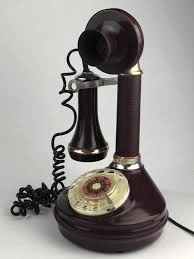
There was a time back in the last millennium when I knew everyone’s number by heart. That was when I had no “contact list” in my phone; back when “my” phone was a fat machine on the counter used by the entire family, long before the invention of voice mail, call waiting, or answering machines. When we looked up someone’s number in a small address book enough times and then dialed it (rotary) enough times that the digits tended to stick in our minds. I can recall most of my own numbers well back into my childhood, most of my friends’ from then and through my twenties, as well as work numbers and relatives’ numbers, including my grandmother’s from her apartment in Queens in the eighties. It is not age that stole my retention; it is convenience. We now live in a world where, “If we don’t have to, we don’t.” In fact I know it isn’t age because I once went into one of my classes and asked fifteen twenty-year-olds if they could tell me the phone number of their best friend, and only one of them could. These are the same people who don’t take notes or rewrite notes from a peer after they’ve missed class, but instead simply take a picture of the pages and then can’t understand why they don’t understand.

I had a friend at Penn State who asked me for the date and time of something I was involved in. When I told her and asked if she wanted a pen to write it down, she said, “No, if I write it down I’ll forget it.” Exactly. Certainly, my memory is not what it used to be. Students’ names for me are nearly impossible, though to be fair that has less to do with memory than it does interest. One young lady said I don’t remember their names because I’m not trying hard enough to do so, and I said she was wrong, that I wasn’t trying at all. Ironically, I can tell you the name of every single person in my first class I taught thirty-five years ago. Much like the phone numbers, however, I had more reason to retain them years ago than I do now.

Numbers, though, have always come easy for me. I never had trouble committing to memory zip codes, addresses, bank account numbers, as well as phone numbers, and I still can. I even still remember one particular airman’s social security number, because in the ‘80s when you addressed letters to people in the Air Force, you followed their name on the envelope with their complete social security number. It was a different world. Today’s world has made it easy to forget what is essential—the phone numbers of my loved ones. Shouldn’t those numbers be second nature?

Apparently not, so I emailed everyone. Some people didn’t respond at all, which made me realize, yeah, maybe I don’t need them in my life. What a great opportunity to weed out the ones I wonder why I knew to begin with. Worse, there were numbers for people for whom I don’t have emails and can’t contact them at all. I know if there is a reason to contact me they will, but something more revealing crossed my apparently feeble mind: I don’t need nearly so many people in my life. My average contact-scroll used to take a while. This turned out to be a great way to clean house. I thought it would happen again moving from iPhone to Android, but no.

I most likely will not return to memorizing numbers, though I will attempt to retain a dozen or so of those people I can’t imagine not being able to call in an instant. What if I had to borrow someone’s phone? I’d like to remember those numbers or recall someone’s birthday without a Facebook prompt. One response via text was, “Hey, it’s me! Shouldn’t you know my number by heart?!”

My immediate thought was, “Yes, of course.” But then I thought, “No, I shouldn’t.” What I should be doing is seeing loved ones often enough that we have no reason to call. We should be laughing together at pubs, at picnic tables, across the fence in the yard, across the room, across time. Numbers should be pointless. Memory should be irrelevant for our consistent commitment to spending time together now. Too many numbers have no recipient anymore. People get deleted too quickly, and before you know it we’re wishing we could just meet them somewhere—no phones, no devices. Just the human touch.

One text came through as “Poetry is Bread Brother!!! Eat it up!!” so I entered, “Tim.” My favorite response to my email was the last text I received. It said simply, “Just put me in your contact list as ‘Tumbleweed’.” I knew exactly who it was even though that handle had been unknown to me before that text.  

I had no reason to contact everyone this time, which was a bit sad, actually. But in the end I gave up on the Android—it has no Facetime. So I simply moved the SIM card back to my iPhone and said, “Hey Siri. Text everyone,” to which she (mine’s a she from Ireland) replied, “What would you like to say?” I thought about it while the little squiggly thing moved back and forth, then replied, “Call me. Let’s talk.”

“Send it?”

“Yes.”

“Done.”  

3.5 Decades

I completed my thirty-fifth year of teaching college this week, reaching into five decades, and I’ve collected some observations through six presidential administrations, hundreds of school shootings, several wars, and three blood pressure medications.

When I began, students did not have cell phones, laptops, pcs, Starbucks, energy drinks, vapes, internet or any of its time-sucking programs like Spotify, TikTok, Facebook, Instagram, and so on—there was no device with which to communicate with others other than the house phone or pay phone. We didn’t have GPS or Uber, relying upon paper maps and taxis, or hitchhiking. We learned through experience instead of Google; research was completed at the card catalogue and microfiche section of the library. Students were less distracted and profoundly less hyper.

At the beginning of it all, it took the first five minutes of class to get students to stop talking; friendships and even marriages were conceived in classrooms where everyone moved swiftly away from high school friends and old neighborhood habits into new relationships which would last a lifetime. They looked at each other, talked and laughed and worried with each other. They took notes in notebooks, asked questions, and they learned how to figure things out instead of find things out. I kept attendance in an attendance book, and everyone knew everyone else’s names. The need to reestablish oneself at eighteen without a net (and without the Net), forced first-timers away from home to grow up faster, mature without the crutch of pre-teen friends a tweet away.

The campus grassy areas, the student center, the dorm lounges were filled with students studying, throwing a frisbee or football, standing behind tables proselytizing about organizations or providing information about that month’s cause. Lounges were packed, the line to my office was long with students ready to ask questions, review a paper, attempt to con me into extended due dates. Some just came by to talk and they’d sit in the office for hours, sometimes on the floor and some in the door as my officemate Tom and I would share stories of our college days, which even then seemed archaic—so when compared to my students today, our own freshman ways are tales from neanderthals.

But they were there, the students, laughing and talking, enlivening the office and the next day the classroom, trying a bit harder, doing a bit more.

When cell phones first entered the classroom, they were quickly forbidden, and students’ common claim was they carried one just in case of an emergency. That evolved to constant texts and phone calls before and after class, which morphed to phones behind books and in laps during lectures. In recent years when I walk down the hallway to the classroom it is quiet, deafeningly so, as if no one is going to be in the room when I turn into the doorway. But of course they are there, staring at their phones, texting their friends from middle school, watching TikTok videos. One semester with fourteen weeks gone I asked them the names of those sitting next to them, and no one—not one—knew anybody else’s name. I told them they might have spent the semester next to someone who could have been a good friend, a confidant, a soulmate. I remind them someone else in the class might have an answer to some question, a thought that completes theirs. They shrug.

In the beginning, students plagiarized out of books; then they bought papers online; today they turn in AI generated work, which they don’t realize is more often vague and filled with generalities, and while well documented, lacks in any significant attribution that is necessary in excellent collegiate writing, so they do poorly and can’t figure out why.

But there’s something else which has changed and is difficult to define that has something to do with simplicity. In thirty-five years the world has grown more angry, more impatient, and aggressive. This isn’t an old prof ragging on their generation staring at me from the silence of the seats; I hear the same thing from twenty-something year old colleagues. Most of today’s students don’t think they can face the day without a few Red Bulls, coffee, or three Five Hour Energy Drinks. This isn’t an exaggeration. In the beginning it seems students had big hearts—helping others in class, stopping by (pre-email, remember) my office to ask for help or offer thanks, willingly teaming up with two or three others for projects and study groups. Today, students’ hearts are big—physically I mean, often fifty percent larger than they should be from the synthetic drinks, in turn causing anxiety, insomnia, intestinal issues, muscle spasms, and excessive restlessness, all from the B vitamins and caffeine coursing through their veins, causing classroom issues including tardiness, inattentiveness, impatience, irritability and a desperately clear lack of focus.

And me? Thirty-five years ago was I a better teacher? Ha. No. I feel so bad for those students those first few years, mostly because of my own arrogance borne of insecurity, my impatience resulting from fear of my own ignorance about a subject. I was almost the same age as them back then. The average age at that college was twenty-nine; exactly my age when I started teaching. So sure, I’ve changed too. But hopefully for the better.

Last week I pulled the chair in front of students, most of whom could be my grandkids, and I sat quietly for a bit. I told them

you just arrived at college this year and within a few weeks a half dozen adults my age want to know what major you wish to declare to invest your entire college education in for the next four years, what discipline you wish to focus on, what your plans are for the rest of your life, all while you’re attempting to navigate fifteen credit hours with professors who have no intention of holding your hands like high school teachers might have, while living with total strangers in tight quarters, sharing bathrooms. For the first time in your life, now, at eighteen, you’re thrust into this whirling processor trying to find your bearings, and you find safety and security in your phone which is your only remaining umbilical back to a more organized and predictable life. I get it.

In the beginning, when I first started teaching—I go on—students were forced into dealing with this new life with little ability to retreat, and it is how they found out what they’re capable of. And when they did, their energy didn’t come from a can; it came from knowing they could handle so much more than they thought they could.

Do you even know what you’re capable of? Because until you let go, you haven’t moved on.

I stood to leave. Abby, a fine student who takes notes and drinks water from a reusable vessel, asked, “What was college like when you were a freshman?”

I laughed because I have spent the better part of my writing life recently writing about just that. “Terrifying,” I said, and they laughed. “I was not only cut off from home because of the stone-age communication system we used in those pre-historic times, I also went to college ten hours away. I didn’t drink much and lived in a dorm with those who did drink, nonstop, at a time the drinking age was eighteen. I was never a great student so there’s that, and I tried to balance it all by getting involved in the radio station and newspaper and local coffeehouse scene, but that just made me neglect my work even more.” A “D” student in the back sat up and listened.

“You survived, I guess,” he said, reflectively.

“I did. Though it didn’t always seem that way. But I’d go back and do it again in a Monster Drink-infused heartbeat.” We all laughed, which is how I always preferred to leave them.

It’s been thirty-five years since I first walked into B-100, a small auditorium on the Beach campus of Tidewater Community College, to teach a college comp course. I sat in the seats like any other student while thinking of my lesson for my first ever class, as students walked in. Two behind me, of course not knowing who I was, said, “Geez I hope this one’s not an asshole.” I stood up and walked to the front and the faces on those two dropped.

“I hope not too,” I said. “But if I am, be sure to let me know,” and we all laughed.

Yeah, I’d do it again.