SAD

Sometimes you can sense some sort of lethargy this time of year revealing itself in blatant ways, like not wanting to go to work, not filling out some forms or editing some article, not bothering to return important calls completely out of a sense of avoidance, as if you might be able to wait long enough and all of this will pass—this stuff that brings you down, and to be honest, you’re not really sure what that stuff is. The idleness of society maybe, the constant sense of impending doom reported in all forms of media about democracy, about pandemics, about weather, about climate, about the economy, about depression and isolation. You have no reason to take any of it personally, but some people can’t let it go, and it weighs heavy, so you aim for avoidance, which unfortunately ends up a heavier burden.  

Sometimes the withdrawal is subtle. You can sense yourself not trying as hard or caring as much, like eating whatever is around instead of thinking it through, not going for a walk because you don’t want to be bothered putting on a coat or dealing with any sensory change. You’re sitting; you’re comfortable, and you’re numb. It works. 

Numb is good.

In both situations you are absolutely aware of it. Going for a walk helps. Filing out the forms, returning calls, all help by providing a sense of accomplishment and forward motion, like checking things off the to-do list, it leaves you with the hint that if you keep going there’s something worthwhile on the other side.

There’s the rub. It seems you keep reaching the other side and there’s still nothing there to lift the spirits, not this season anyway—more hostility in the east, more pessimism in our government, more variants on deck ready to step to the plate after Omicron smacks a triple into right field, and fires in LA so out of control it’s hard to watch or imagine. So you try a little less at one task, and it spirals from there. You realize your handwashing time has dropped to about 12 seconds. It’s not depression; it’s, well, yeah, it’s depression, but not in the deeply caving sense; in the “whatever” sense.

The problem with this type of malaise is it can be debilitating to you without being scary to others if you are not suicidal. The truth is, the vast majority of people who deal with depression are not contemplating suicide and will never kill themselves, which is what most friends fear most, and when those friends learn that is not part of the equation, they feel better. But that can often make it worse since the objective is for you to feel better, not them. But that’s fair since you know what they don’t: that a different suicide exists, a slow erosion of sorts, which anonymously eats away at ambition and accomplishment, takes the edge off of energy and momentum. It’s the guy sitting at a bar nursing a beer, nowhere to go despite having a million things to do. It’s the one on the park bench watching people walk by but not noticing a single one of them; it’s the inability to concentrate, the disinterest in listening, the short responses to questions, the inability to make it through the most basic of activities. It’s writing endless emails about nothing to others in some attempt to reach out; but that just backfires. Rational thought has nothing to do with it. “Knowing” what to do is not relevant. Your mind is suspended, your thought process withdraws into some elementary state.  

On the one hand it’s situational—financial problems, relationship problems, blizzards. But it can also be chemical if you don’t have medical help. It’s addiction without restraint. It’s a combination of these, and it is unpredictable because the same thing that leaves you in bed staring at the ceiling feeling hopeless can drive you to your feet to tackle whatever it is that left you prostrate to begin with. It is a conundrum that plays handball in your brain.

The guy at the bar with the beer, the woman in the park, the man at the river watching the tide roll out, all know exactly what the problem is. But their brains are aflush with fog, their anxiety has disabled their decision-making capabilities, and their strongest assets and most celebrated talents that normally keep them going the rest of the year, are no longer applicable since they carry a sense that those traits are probably what brought them to this place to begin with. They sit and wonder what if. They sit.

“Maybe if I had just…”

“Perhaps I should have…”

“Fuck it.”

At some point it seems you stop fighting altogether and are either not afraid to hit bottom, or you hope to use that bottom to bounce back, not afraid to fail since it can’t be worse than this. It is extreme but that is part of the diagnosis—extremes, polar reactions—sometimes both in one day. Sometimes within one hour.

More often than not, the guy on the corner holding the cardboard sign didn’t “decide” to quit, didn’t give up, but “felt” a pressure that he no longer could handle or define, caught in some stream of disconnect and hopeless confusion. Sometimes the one who does, in fact, tragically go that last fatal step didn’t “decide” to do anything at all, and that is the point. Suicide is not a decision. It is one step beyond decision making. The vast majority of people who deal with depression have that in check, less so in the dead of winter, of course.

But that’s not you. Truly. And that is the problem; you really aren’t suicidal at all. And when suicide is not part of the equation, others feel that you must be “okay,” or “going through something right now.”

Yeah, winter, you’re going through a snow bank. This is the worst time of year for many people with depressive issues. Seasonal Affective Disorder is real and feels like all of the above. Nothing helps but time, but time to some people sounds like the slow drip of icicle melt. Others say you’ll get over it, it will pass, hang in there, talk to someone. Yes, all of the above, but right now–right this minute–you need help and you don’t know it.

Other people try to help so they talk about the weather or sports or anything at all with enthusiasm and a sense of caring, but it often makes it worse, only emphasizes that others get excited about the minutia while you can no longer find value in a sunrise.

And the disguises are nothing short of cunning. I’ve known people fighting depression who on the outside resonate as the very poster image of Carpe Diem. I’ve been friends with people who contemplated overdosing on Monday while making plans for Tuesday, who loved others more than the average soul but only wanted their puppy nearby at checkout time, and people who fought depressive ways by pushing adventure to the limit, and beyond. “What a lust for life!” people exclaimed. They had no idea.

It isn’t exactly depression, by the way, though it is easier to simply call it that because it certainly wears the same eyeshadow as depression. It is indifference; it is a vague inability to muster the energy to lift your spirits enough to give a damn about anything. It’s not like you woke up depressed so you decided to stay on the couch all day; you simply don’t care that you’re on the couch to begin with. Complete apathy. You’re not down about anything; you answer “fine” because you really are fine; fine’s a fine word; vague and indifferent. It has the definitive weight of a horse shoe and the value of fog. “I’m fine, really,” should never be left alone with a person who fights depression.

Ironically, for most of these afflicted people, life is amazing, every half-beat is a moment of “miracles and wonder” which is why you cannot comprehend the misuse of time. The abuse of time in so short a life, you think, is as suicidal as the abuse of substances, and that can be depressing as well.

It is the time of year when you wake at three am knowing nothing is going to work, and you’re going to lose your house and your sense of security and no answer makes sense, no way forward seems rational. Equally, the dawn can come with new ideas and hope, and if you push those moments far enough into the morning, you just might be able to make a day of it. But January has 285 days. And February is several months long. March? Well you well know that March is merely a tease. April comes and breathing is easier. May, and nothing stands in your way. But in January it is safe to say yet difficult for others to understand that May hasn’t even been invented yet. It doesn’t exist and neither will you by then.

On the outside you seem to be fine. On the inside you’re grasping the thin rope of enthusiasm with clenched fists, pretending all will be well, but your insides—much against your will—are shredding at the thought of what to do next.

You “hang in there.” You “get through it.” You suffer the trite suggestions of others who simply can’t understand what the big deal is. That’s okay though, you think. Really. There are no solutions, per se. Just more questions. And “hang in there” is at the very least an acknowledgement you really aren’t trying to dismiss your very existence; it just happens sometimes. Depressed people do not feign depression; they feign contentment.

This afternoon I went to the river where a bitter breeze is pushing down from the west. There’ll be ice tonight somewhere, and snow, but I sat reminding myself I have been there, touched that ring of undefinable despair, and I’ve moved through it, sometimes with difficulty, often with ease, always with the knowledge that I’ve had one freaking incredible life so far, and time enough left, I hope, to continue my pilgrimage well into the next mood swing. But there are moments, collisions with frustration at the gap between the way things are and the way things should be, that catch some people off guard. “You’ve been like this before,” a dear friend told me not long ago when things were less than fine. “And you’ll be like this again.” And all you can think is, “Yes I will, like right now.” But what she meant was this is you, this is part of your DNA, this is as much you as your skin. What she meant was there is no “fighting” the tigers that come at night. Better to sit and dine with them, and wait. Just wait.

And Eventually you remember that the seasons, like everything else, change. And love is holding the other end of that thin line you’re grasping.

I’ve been released
And I’ve been regained
And I’ve been this way before
And I’m sure to be this way again
Once more time again

–N. Diamond
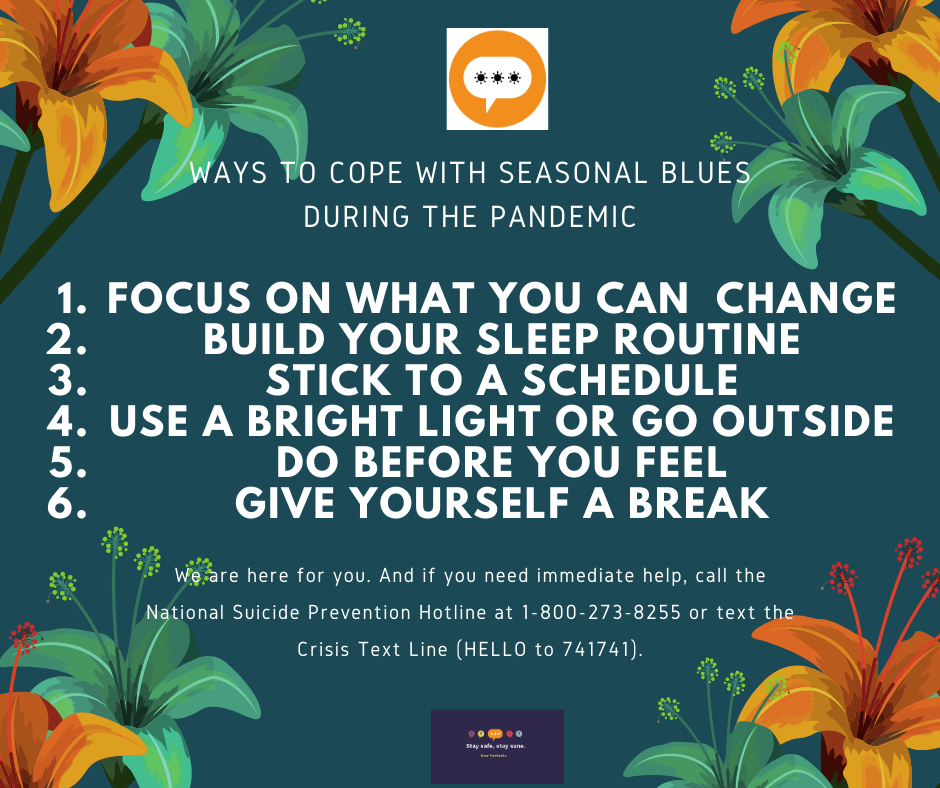
First the COVID-19 pandemic, now winter….is seasonal depression coming my  way? — Dear Pandemic

Vincent

The following is an excerpt from my 2018 book Blessed Twilight: The Life of Vincent van Gogh; however, the words are his from a letter he wrote to his brother Theo in 1888. Often, an artist who excels in one genre does so in others as well; Vincent was no exception. I believe his writing to be as artful as his paintings.

Vincent van Gogh: March 30, 1853-July 29, 1890

From a letter to Theo:

It certainly is a strange phenomenon that all of the artists, poets, musicians, writers, and painters are unfortunate in material things—the happy ones as well. Maupassant is a fresh example of that. It brings the eternal question: Is the whole of life visible to us or isn’t it rather that on this side of death we see one hemisphere only? Painters, taking them only, dead and buried, speak to the next generation and very often several after in their work. Is that all or is there more besides? In a painter’s life, death perhaps is not the hardest thing there is. 

The earth has been thought to be flat. It was true, and is today, that between Paris and Arles, it is. But science has proven the world is round and nobody contradicts that nowadays. But notwithstanding all of this people persist in believing that life is flat and runs from birth to death. However, life too is probably round and very superior in expanse and capacity to the hemisphere we know at present. For my part, I know nothing of it. But to look at the stars always makes me dream as simply as I dream over the black dots of a map representing towns and villages. Why, I ask myself, should the shining dots of the sky not be as accessible as the black dots on a map of France? If we take a train to get to Rouen, we take death to reach a star. One thing undoubtably true in this reasoning is this: that while we are alive, we cannot get to a star any more than while we are dead we can take the train. So it seems to me possible that cholera and cancer are the celestial means of locomotion just as steamboats and railways are the terrestrial means.

To die quietly of old age would be to go there on foot. 

I feel more and more that we must not judge God on the basis of this world; it is a study that didn’t come off. What can you do in a study that has gone wrong if you are fond of the artist? You do not find much to criticize; you hold your tongue. But you have a right to ask for something better. It is only a master that can make such a muddle as this, since then we have a right to hope that we’ll see the same creative hand get even with itself. And this life of ours, so much criticized and for such good and exalted reasons—we must not take it for anything more than what it is and go on hoping that in some other life we’ll see a better thing than this.  

For Those Who Stay Behind

Note: This is a very serious one. Read. Share. Forgive. It’s all we’ve got.

This is for Dave W, Bobbie B, Bud D, Tricia K, and the one’s who live with those unseen wounds which simply won’t heal.

***

A broken limb is obvious. A cast, a sling, a set of crutches or even a knee cart, and people can see the problem, understand the delays and compromises. We move aside or assist in any way we can.

What happens when someone injures their mind, breaks their thought process, when a person cracks their perception of reality and ration? The world is quick to judge the results of some unseen wound festering in their frontal lobe. “They’re lazy,” we say; “They’ve given up,” we say; “They keep asking for help and I’ve had enough,” we say. No one replies to the unfortunate soul with some walker, “No, sorry. I’m not helping you anymore.”

Well, in both cases the likelihood of one asking for help is pretty slim anyway.    

Monsters such as depression, anxiety, and nervous breakdowns can destroy a person’s ability to function. People can’t think as clearly so they lose jobs, they make bad financial decisions and lose money and property. “They could have done something else; they could have sought help from a professional if that was true,” we say.

And when nothing makes sense anymore and the world is too much with them and there is absolutely no meaning in anything—when numbness overtakes the idle sadness, they find a way out.  

The truth is suicide is not always the result of depression; it is not always a person simply giving up. In fact, it is often seen by the psychologically afflicted as the perfect solution. It is not doing harm; it is solving problems. The mind no longer functions the same as others’ minds. If they even want to ask for help, they don’t even know what it looks like to ask for anything in particular, so they seek solutions on their own, like sleep, like cutting off contact, like shutting the brain down for good. It is not life they fear or wish to escape; it is their mind. It is a difficult task to escape one’s own thoughts.

“There is medicine for that,” we say.

Not really. Sure, there is medicine to help someone cover up the wound, like a Band Aid, but the sore doesn’t heal as much as it is buried. The infection will return as soon as

well 

as soon as it rains, or when the next call comes from a creditor because they can’t work enough to keep up, or, worse, when a call doesn’t come any longer from friends and they suddenly remember they were better once, and they won’t be like that again. But even that’s not accurate since they simply are like this now, and apparently always were, and the moment it happened is an allusive memory.

Because while in the movies when someone has a nervous breakdown, they flail their hands and scream, cry, and someone might slap them, tell them to snap out of it, in reality that’s not what happens. The truth doesn’t play well on film. In reality they say nothing. They might drink, of course, or become addicted to some pain reliever, some vice that keeps their brain in the moment like alcohol or other self-defeating measures that keep their mind from dwelling on some past or future attack, but they might just as easily sleep all day, or more likely not sleep at night. They try and work but the ability to focus is gone; not ignored or delayed—the actual part of the brain that helps them do work or see a reason to exist at all has a hole in the middle of it, the circuits are infected and surrounded by puss, but no one can see that, so it can’t possibly be anything other than “a phase,” “laziness.”

Later, afterwards, people say they didn’t know, “They always seemed fine.” “I thought they were going through something.” “They said it was no big deal.”

They say, “I wish they had asked for help.” They say, “I did all I could.”

They say, “What a shame.”

Indeed.

Did Hemingway have another novel, Van Gogh another masterpiece, Robin Williams another routine for the thousands of kids he used to visit in hospitals?

Depression and mental illness often caused by a mental breakdown can cause lives to rip apart, and the only explanation they have when they ask for help again and again is “I’m trying.” And eventually that simply isn’t good enough no matter how much they are loved. They live out on the fringe, they hold signs, they sleep on grates. Likewise, they live in country houses and city apartments. They seem to try, they try to seem to fit in.

Maybe if they wore a cast, had sutures across their forehead. We like to see problems before we help solve them. We don’t offer help to people when we don’t know they’re suffering; how could we? Unless we know them well.

And that’s the problem. No one knows them at all. They’re funny and outgoing. They make light of serious situations. They can work a room. So they either never ask at all or, when they do so too often say “I need help,” it is difficult to see how. “Again?” we reply. “Why now?” we ask. The thing is in a few days they will not even remember they ever asked for help to begin with. This is true; the compromised brain actually blocks that out completely. To us they can either be absolutely silent or seem constantly desperate; but to them it just happened.

Here’s the problem:

How can we find that line between someone who really needs help and someone who just needs a bit more tough love? What do we do if there is no visible “mistake” that needs correcting? What do we say when they say nothing at all, or if we do ask if they need help, they say, “No thank you, it’ll be fine,” more out of a notion of being too embarrassed to say yes. Too ashamed. They’d rather…what?

They’d rather die. To be sure. I remember a phone call early one morning when I just didn’t want to hear it again. I remember a visit from someone who needed more than I could give. I recall calling once and the phone kept ringing. I’ll never forget that one.

Where is the line between knowing whether we helped enough and we could have done more?

Honestly, it runs right down the middle of the rest of our lives, and we walk it aimlessly, hoping we made the right call, that there was nothing we could do. Even if we’d rather be on the side of foolishness, helping people way more than they probably deserve, we can’t ever know.

So we call and talk, stop by, we get them to laugh because apparently we think laughter is the best medicine.

That’s not how a nervous breakdown plays out. Trust me on this one. But there is no Habitat for Humanity that helps people rebuild their minds. So they lose everything: their homes, their families, their purpose. And there’s not a damn thing we can do about it. Well, sure there is, but the place between knowing and not knowing is dark and difficult to navigate.

So. What do we do?

We forgive them for finding a solution the rest of us thinks is foolish. We forgive them for believing that the pleasure found by watching their kids and grandkids grow, watching another sunset with someone, laughing at lunch with friends, still isn’t worth the pain—the constant and debilitating pain—that comes constantly to infect their mind; constantly, day and night. Even their dreams are saturated with pain.

Forgiveness for something we do not understand is a monumental task. But then for some, so is life.

If you need help, Call 988 immediately.

If you know someone who needs help, Call them. You don’t have to know what to say. Say anything.

If you are living with the memory of someone you feel like you could have helped more, it isn’t your fault. It isn’t their fault. Forgive them. Forgive yourself.

Remember what we learned as toddlers: How would we want them to react if it was us? What would we want them to remember if it was us?

Not everyone is fine. It’s that simple.

Bob Kunzinger writes the weekly blog, A View from this Wilderness, which premiered in January 2016, and is the author of eleven books, including the forthcoming Office Hours, as well as hundreds of articles in national and international publications. He lives in Virginia.

I Never Needed Anybody’s Help in Any Way

I heard an interesting comment on NPR last week. When talking about someone who died by suicide, the victim’s brother said he didn’t think his sibling didn’t like life anymore as their mother had suggested, but just didn’t like one particular part of life, and somewhere over the course of time—maybe weeks, maybe months or longer—the poor man hyper focused on that one aspect until it became a monster, blocking his view of any other aspect of existence remotely salvageable; even the finest reasons to continue were saturated with the pain of one part, perhaps even a small part, of life.

On the one had it made their mother feel a bit stronger—that her late son did not despise life, and in particular perhaps not the life she and her husband had built for them, but one thing happened, who knows what, and that overtook him despite the beauty around him. He couldn’t see past that monster any longer, and in his then-compromised view, nothing else existed any longer. Life became about the pain-inflicting monster, so killing oneself seemed the only clear way to end the pain.

On the other hand, for those who still know someone with some form of depression, particularly situational depression and not chronic or manic depression, being able to unearth and understand that aspect of life which has the potential to take over a person’s mind can help isolate it and, over time maybe, destroy it. At the very least the knowledge of the issue might help others keep it in perspective, perhaps even eliminate it.

The surviving brother then, almost off-handedly, said, “I wish we had gone hiking more.” No one picked up on it; at least not on air. But I did. It slid right in my thought process and simmered all day. His brother must have been considering how things might be different if he had helped replace the monster with something more powerful, more soul-owning. For them, apparently, hiking. Had they gone enough times, or consistently enough anyway, for the deceased to have discovered that hiking was his life and he now could own that choice, his routine and whatever negative issues came up—a problem with a partner, finances, even simple malaise that chronically depressed people will never be able to explain—would be minimized by the power found in something positive.

It doesn’t have to be hiking. Could be music, sports, food. But something active, something visceral and kinetic.

I asked my students the other day how much time each day do they spend watching other people live their lives or pretend to live life. That is, how much time are they stagnant viewing other people’s happenings on tv, movies, TikTok, etc. I’m not talking about going to events like sports or lectures or the like. No, those are very participatory. I mean the dead-brained observation we do that when we’re done—or better stated, when we take a break–we are exhausted, and we never did a damn thing.

The suicide rate among college-aged students is about 2 percent, about 1100 per year, and about 25% know of someone who killed themselves, and just over that percentage thought about it themselves, all of them offering as their primary motivators pressure, helplessness, relationships, loneliness, and money.

It takes just one issue to debilitate a person, make them feel hopeless, and all the time in the world trying to balance it with positive acts cannot extract that monster from the mind, and eventually ration slides away so that suicide is not a conscious decision but in itself a rational act to eliminate the pain, which by that point is all there is.

And later people say they wish they knew, they say they would have helped. The man on the radio said, “He asked for help; we told him we had helped him all we could and he had to do this alone.” He was riddled with guilt, but then realized that the way he could have helped may not have been clear to either his brother or him at the time. One just assumes the help one asks for when in a bad place is the only way to help them out of that place, but that’s not always accurate; in fact, it is often hardly ever accurate. “I just should have been there more, called and asked how he was doing more, had lunch,” the brother added. Exactly.

Yes. He should have, but not because of his tragic loss, but because we are humans, responsible for each other, and I am so guilty of not being there for others it is disturbing. I can change that, but there are some things I cannot change. We can at least change the things we can. I’ll leave the wisdom part for someone else.

I guy I knew a long time ago told me a story about a friend who couldn’t see past a bad relationship, a mentally abusive relationship, and saw no way out of it, particularly since they just had a baby girl. In all other aspects of his life he was okay, very giving, impossibly kind to others, but he felt he had nowhere to turn. His mother ignored him, his father tried to help but without emotion, making it difficult. And he thought his friends had moved on. One morning the troubled one called a friend, but the friend didn’t answer the phone. The friend was pretty sure he knew who was calling and that he was probably depressed, but he didn’t want to deal with it at that moment. Three hours later the guy I knew called to tell him that the troubled one killed himself. He told the friend that the widow told him his last outgoing call was to the friend. He thought it would make him feel good to know the dead guy was thinking of him, probably missed him. He had no way of knowing that the man had ignored that very call. I knew these people; and it is easy to say there was nothing anyone could have done, but that simply isn’t true. We just tell ourselves that. Certainly we may not be able to save someone’s life, but we can save some time for them. It’s a tough call but an easy decision; make the call, stop by, go for a walk. Grab some tea.

Give them a reason.

We are here for each other. It’s all we have. We are only here for each other. We can’t save others if they don’t want to be saved, but by trying to help others we just might end up saving ourselves.

The Girl in the Third Row

“We teach everything in the world to people, except the most essential thing.  And that is life.  Nobody teaches you about life.  You’re supposed to know about it.  Nobody teaches you how to be a human being and what it means to be a human being, and the dignity that it means when you say, “I am a human being.”

–Leo Buscaglia, “The Art of Being Fully Human

About a month ago my students seemed unengaged during a lecture about literary terms. I sat down and was quiet for several minutes. Few things can grab the attention of a disinterested student like a professor’s sudden silence.

I told this story:

When I was a freshman, we had orientation where we broke into small groups and were led by a couple of seniors and a guidance counselor or other such school official, and we did various activities together from the obvious, like a school tour of where everything is that you could possibly need, to the ludicrous, like a swimming competition where we all had to wear pantyhose and do laps in the college pool.

At some point each group gathered in the library and watched a video called, “The Art of Being Fully Human,” by  the late Leo Buscaglia, a philosophy professor at USC, and a bestselling author/lecturer. In the video he tells of how when teaching he finds “friendly eyes,” someone in class who is mentally present, and he talks to them. He found them in the eyes of an alert young woman in the third row. She didn’t always agree with him, he says, but she was there. So he was looking forward to her showing up to his request of everyone to stop by his office and introduce themselves. She didn’t show, and several classes went by without her being present. So he went to the dean to inquire about her, and it turns out she had driven up to Pacific Palisades, got out of her car, and in front of many witnesses, jumped off the cliff.

I sat silently for a moment more.

Buscaglia says it changed his life, because that was the moment he became fully aware that we teach everything in the world to people, from calculus to literature to engineering to chemistry, but we don’t spend one moment teaching the art, the absolute art and beauty, of being alive. We leave that lecture off the syllabus. We’re supposed to just “know” how to deal with troubles and bullying and failure and insecurity and disappointment. No one teaches us the value of being ourselves, of being alive and human.

I then asked my students a familiar question to anyone who has ever taken one of my classes: What are you doing here? Why did you decide in your life that right now out of all the options available to you, you chose to sit here, now, with me, and learn about Melville? Because we need to remind ourselves of two things: one, we chose to be here instead of anywhere else; and two, while this class, or this semester even, may not be what you enjoy, we need to keep the big picture in mind; that this might be the slow part of an exciting life ahead.

End of story. That was in October.

Last night one of my students who had not been in class in a few weeks waited until everyone else had left and she stopped me. We’ve had discussions before as she is transitioning and it has been more than a little difficult with family, friends, and her own confidence. She had told me her depression can spin out of control.

She apologized for not being in class and asked if it was okay to still turn in the writing that had been due. I assured her it was absolutely fine, and I’d read it first to make suggestions before she turns it in for a grade. Then she reminded me of the Buscaglia lecture.

“I’m the girl in the third row,” she said. “If she were here she’d look around the room and recognize me as herself.”

I was quiet.

“I had written letters to everyone I know apologizing for what I planned to do. Again. I was completely at peace with the decision to die.” She was visibly shaking as she talked. “But then I searched online everywhere for who you were talking about, and I didn’t even know how to spell his name, but my mother knew who I meant, and I read a few of his books. I’m still alive now because of that.”

“How are you feeling?”

“Different. I feel different. I’m back in counseling.”

We talked a bit more and then walked outside. “You’re an engineering major, right?”

“I was. I am switching it for next semester.”

“To?”

“Philosophy.”

I laughed. “Leo Buscaglia would be very happy!”

She was crying a bit, and then said she feels like being in college, finally.

I nodded. “But you know, as a philosophy major, you’re never going to get a job, right?”

She laughed. “I’ll teach.”

I started my very long drive home up the bay and realized, quite clearly and positively, had she been in my class thirty years ago, my entire career would have been different. I’m so glad she showed up now.

***

 A school principal gave this to Haim Ginott.  She said:

“I am a survivor of a concentration camp.  My eyes saw what no person should witness.  Gas chambers built by learned engineers.  Children poisoned by educated physicians.  Infants killed by trained nurses.  Women and children shot and killed by high school and college graduates.  So I’m suspicious of education.  My request is:  help your students to be human.  Your efforts must never produce learned monsters, skilled psychopaths, or educated Eichmanns.  Reading and writing and spelling and history and arithmetic are only important if they serve to make our students human.”

The Full Lecture:

https://www.pbs.org/video/kvie-public-television-leo-buscaglia-art-being-fully-human/

The Dead

I guess the first was Karen. Karen was from Pennsylvania–this was quite early in my career and I had just moved back to the Beach from Pennsylvania myself, so I could relate to her writing. She spoke in class about adjusting to being away from home for the first time. Her husband was military and they were stationed here. Her paper was about the changes. I sat on my couch and read about her excitement to start life anew and all the places they would finally see together like they planned. She took a job–not because she needed the money, she wrote–but because she wanted to do something. So she took classes and got a new job as a server at the North Witchduck Inn in Virginia Beach. She got lucky, I read; another worker had been fired and she filled the opening in the place not far from their home.

I had just put her paper down and moved on to the next when the phone rang and it was the provost of the college. He wanted to tell each of her professors before we heard it on the news. The fired server and her boyfriend returned to the North Witchduck Inn and shot four people in the back of the head, execution style, including Karen. For a few years I held on to that paper. It reminded me how in a class filled with “I’d rather be anywhere else but here” students, someone was glad to be present, to be truly present.

Then there was Mark. Mark stopped me in the library and asked if we could talk. He had just received orders he was headed to Kuwait for the first Gulf War, and he was told to get his “affairs” in order. “Talk about telling you you’re going to die,” he said. I assured him everyone going overseas in the military is told to make sure their affairs are in order. We laughed a while about nothing; really nothing at all. The smallest of things that day were funny, the simplest of moments were beautiful. We walked to his car and he showed me a picture of his son. We talked about how when he got home our boys could play together. I don’t remember Mark’s last name, but I will always remember his face.

Tricia and I used to talk at the copier every day. We talked about music and travel. We talked about food and how the smell of cinnamon buns is better than the aroma of coffee. She had braces and said her students haven’t said anything about them yet, but she was certain they noticed. I remember her asking if I noticed her braces and I laughed out loud, right there, like the laughter was my answer, then I said, “Well, T…yeah! They’re right there! But they’re beautiful. I can’t imagine you without them. They’re just so you!” We laughed a long time. T got depressed easily and I could usually tell from the faculty workshops about recognizing various issues with students when she was in a down cycle. The dean came to me and said Tricia’s medicine was messed up and her husband found her hanging in the kitchen.

Stay with me. Please.

Then there was Rachel. Dear, beautiful, full-of-life Rachel. On a study abroad in St. Petersburg, we walked freely down Nevsky Prospect, the Fifth Avenue of the city. I was right behind Rachel on the crowded street so we were all pretty close to each other. As usual, she was engaged in taking pictures and writing in her notebook, jotting down “Kazan Cathedral” which was just to our right. Of all the people I’ve traveled with—numbering well over four hundred—Rachel was by far the most diligent about drinking it all in, making notes, taking countless photographs. She always smiled anyway and could make everyone around her laugh, and there on the other side of the world she was in her element. She absorbed every single moment. In the evenings she’d come into my room and show me what pictures she had taken that day and double-checked their locations. Then we’d sit and talk about her impending motherhood, what it’s like being a parent—my son had just turned ten. We walked past Kazan Cathedral; she was absorbed in her notes and stepped right off the curb and into the cross street where a bus was ripping past us at forty miles an hour. I was close enough to Rachel to grab her hair which she had pulled back in a pony tail, and I yanked her back into my chest, and the bus was close enough to knock her bag out of her hand on into the street. Those around us screamed and Rachel turned back somewhat unaware of what had just happened. “He saw me,” she said, to which I replied, “Yeah, he did. He just didn’t care. Pedestrians don’t have the right of way here.” We picked up her belongings and in no time she was back into enjoying her tour of Russia; my heart didn’t settle down for hours. The last time I saw her she brought her daughter, Shaylyn, to my office. This beautiful woman with her beautiful little girl was so excited to move on with her life; she’d be a single mother, she told me, and hoped she could set a good example. Then we remembered the bus in Petersburg, laughing at the nearly tragic outcome, and she assured me I had saved two lives that day. I laughed and told her I was just glad she hadn’t cut her long, curly hair. “Yeah that hurt, by the way,” she joked, grabbing the back of her head.

Her daughter has her eyes.

Not much later, in May of 2005, the little girl’s father went to find Rachel who was hanging out with some friends at their apartment. When she refused to let him in, he cut a hole in the screen and climbed through. Rachel ran out the back door and called 911. Her ex walked through the house and shot four people killing two of them before he found Rachel hiding outside. She had called 911 and the operator had to ask several times what was going on, but Rachel was quiet, until finally she replied, “He saw me,” and her ex put his gun to her skull and shot her in the back of the head, killing her instantly. This one breaks my heart.

I sat in class last week and watched my students do group work. A few engaged students carried the rest, but more than half the class kept reading their phones, staring out the window, messing with their hair. “What are you doing here?” I asked in a general fashion. They were quiet. “What are you doing here?” I asked again. They just stared at me. I remembered the rule of threes: First time they hear it; second time they think about it; third time they start to understand it, so I hit it once more: “Seriously,” I said. “What are you doing here?”

They remained quiet.

Bobbie slipped slowly inside herself. First alcohol, then drugs, then homelessness, until this beautiful woman who became a neonatal nurse was found dead next to a dumpster. Carrie OD’d and ended up in a brain center where she kept telling me the same joke when I’d go visit to talk to the patients: “Knock Knock. Who’s there? Cargo. Cargo who? Cargo beep beep.” We’d always laugh and she’d keep laughing long after I moved over to Dave who was learning to walk again. Carrie was a biomed major, graduated high school early and had applied for Drexel University to transfer and had just been accepted. The stress got the better of her and she “used a little something to keep her nerves in tact.” Dave was found in the garage. He brought the dog.

“For the next project,” I told my students before leaving on a reading trip to Ohio two weeks ago, “I want you to tell me what you are doing here. Include your short range and long term plans. Include your hidden ambitions, your unspoken dreams, that secret that can ignite your internal motivation. Tell me what you hope this moment looks like when you look back five years from now.”

They stared at me. No one, not one, not a single student: NOT. ONE. TOOK. NOTES.

I asked Geoff, who bares a stringing resemblance to Johnny Depp, and is someone I can usually count on to keep up, what they need to do. “Write about what we’re doing here.”

“And?”

“And…be ambitious with it.”

I repeated what I had said, asking them to write it down, which they all did–on their phones. Fine. I looked at a woman on the right side of the room. Sometimes I hope to see Karen. Or Rachel. I asked her the name of the woman immediately next to her who she had been talking to during group work for a half hour for the fourth time this semester, and it was already late October. “What is her name?” I asked. She looked out the side of her eyes as if the woman wore a badge.

I stared at them. “What are you people doing here?”

I am haunted, some days. Not by the dead or their memories; not by the tragic loss of life and the repulsively early departure of far too many souls–a dozen more of whom I’ve left out of this. I am haunted by how easy it is to not live at all. I stopped at the door. “If it makes you feel better, most of the time I have no idea what I’m doing here either.”

They laughed, and I thought of Bobbie. They laughed and the woman introduced herself to her classmate of ten weeks, and I thought of Karen. I thought of Rachel and Trish–adorable Trish. They laughed and I realized not every moment should be one of ecstatic joy. But we certainly should be closer to life than death, shouldn’t we?

Oh, and there’s Kevin, who simply disappeared, and Charlotte, who just three weeks ago tried to kill herself. Charlotte is transitioning and has just about as little support as a person can get. I leaned against the door jam and asked if they understood the assignment. So I asked again, knowing, waiting, certain someone would give me the answer I absolutely knew they all knew, and someone finally did.

“What are you doing here?”

“It’s required.”

I smiled. “No. It’s not,” I said. “You’ve been deceived. Certainly to attend this college, to graduate, this is a required course. But nothing is required of you anymore. You’re not children. You can tend bar in Key West. You can hike across Europe. You can be anywhere, do anything, and you, for some apparently unknown reason, chose to be in my class on this day at this hour and sit and stare at your phones even though you could be anywhere else.” I laughed at the last part. “Anywhere!”

“With that in mind,” I added, “What are you doing here?”

Oh, and Bo, who got killed when the car he was riding in hit a tree on the way to Florida. And Eddie. Dearest, kindest Eddie. And Marcus. Jamal. Chris. Joe.

Karen wanted to have kids. Rachel wanted to be a teacher. Mark wanted to come home and bring his son out for ice cream. Bobbie wanted to dance.

All she ever wanted to do was dance.

Listen:

https://www.youtube.com/watch?v=Kg-Qdrr3XSk

Too Early for the Sun

Sometimes you have to stay up until dawn to understand what’s hiding behind the night. It’s been a tough two days, and I need a significant diversion. For me, anyway, I find hope in the same time of day that can push me over the edge; late night, early morning, just after the tigers come out but too early for the sun.

Like a rest stop at three am with two truckers and a couple of local high school kids screwing around, or the sound of wildlife in the desert brush, or tall pines scraping together in winter in the woods with no light but the moon. It’s walking up an Arctic Path at four am in a snow-deep March with Northern Lights bouncing past like a bull whip; or lying on my back on a cot in a compound in Africa beneath more stars than could possibly exist, the distant sound of someone chanting the Koran. It’s walking out of a shack in the Russian woods after a storm passes and you see the sun just lifting over the raised bridges, ears still buzzing from loud live music. That’s when you know it’ll be okay.

In Portomarin, Spain, one night, my son and I stayed up as long as we could because the rooms were all filled. We hung out in a small café until one am and then walked around the misty, cooling waterfront. Then we settled on the town square with covered walkways running next to a medieval church. Against some storefront we pulled together folding chairs and wrapped ourselves in whatever we could and tried to sleep in rapidly dropping temperatures. A kid on a bike did tricks on the steps of the church until three am which anyway kept me amused. But for a brief time after that, it seemed like dawn would never arrive, like I totally screwed up, and I couldn’t believe I would put myself and, worse, my nineteen-year-old son in danger. But at 4:30 we got out our flashlights and headed west. You can see a million stars in Spain at 4:30 in the morning, and the darkness makes the silence nearly sacred.

If I can make it past the tigers, I’m usually just fine. Better than fine.

That shack in the Russian woods was just off the Gulf of Finland—a dive really—a place to drink and sing and meet people you’d never want mad at you. It was small, with broken-down shed-like walls and windows which barely kept out the storm blowing off the Baltic one May night in the nineties. I use past tense since sometime just after 911 it burned to the ground. But back then, it was well after midnight, closer to dawn than dusk, and we ordered a bottle of Georgian Merlot and several plates of shashleek, a Russian shish kabob dish. A gypsy band showed up, including a guitar and violin player I’d met before, along with a friend of theirs, a woman singer. I played with them for thirty minutes or so, and hours passed as we sang and drank. I long ago forgot what night-terror sent me walking into the Russian night, let alone up the beach into the woods and this shack, but I did, and we sang and drank while what must have been that hurricane from The Perfect Storm slammed to shore. This duck blind of a building sat amongst birch trees, but that simply made me more aware of the weather, wondering when one might topple through the roof. It was exhilarating, an adrenaline rush that had nothing to do with the wine. It was being alive, right then at three am, with total strangers, live gypsy music, Georgian wine, and shashleek, that kept me awake and okay.

But those are extremes, aren’t they? Right before that, you wake up in a sweat and your heart is racing and your mouth is bone dry, and you know everything is going to fail. The hot water heater blows out and you can’t afford the five grand for a new one, the car needs work, the dentist is waiting for the call back, things are tight, and your chest gets tighter. You are at that line, the one some use as an excuse to check out, the one that can terrorize others into submissive acceptance, but the one some simply cross. I keep thinking of that line from Dar Williams: “And when I chose to live, there was no joy it’s just a line I crossed.”

.It doesn’t have to be a broken down bar or some desert hike. It could be a porch, and you sit there with tea and note the coming of the first birds, and you have an hour on the sun. And whatever it was that shoved a hot blade into your chest just thirty minutes earlier has been doused by the deluge of the new day, the sky, dark blue, then pale yellow.

There is no miracle. It is something on the other side of hopelessness; the place too many people I know could not hold out long enough to find.

One night in Virginia Beach some years ago when someone dropped a brick wall right in my line of trajectory, I could not sleep so I went to the oceanfront, walked on the pier I have walked out on since I’m a teenager, and sat listening to the surf in the still-dark night. A fisherman walked up the pier on his way to try his luck and he stopped to adjust his bucket and gear. I asked if the water seemed flat enough for good fishing, and he said he didn’t think so, but he added, “I ain’t got no other reason to get up, so I’m here. I guess I’ll find out.”

We laughed, but not really.

When a hot water heater breaks it sounds like the surf; it wakes you up, sends you ankle deep on hardwood floors for mops and valves and towels. And you know you can’t do a damn thing about it, and you know it’s going to be a long time before you can, so you go back to bed telling the tigers to go ahead, have at it.

But the whippoorwill is doing her thing, and a few house wrens have come out of the nest. If it’s early enough you grab a bottle of cab, head to the café table on the front porch and fill a small glass, and you look east, out over the bay, and wait for that sliver of light. It’s not so bad you tell yourself. You don’t need help you tell yourself. And you remember some story that was told to you to hold on to for just this moment. Like this one: When I lived in the Sonoran Desert, I would spend a lot of time at the San Javier Mission down Route 19 toward Nogales. There I learned that the Navajo used to run toward the sunrise every morning to visit and welcome the spirits who watch from the sky over their people below.

When the priest at the mission told us that story, a friend of mine said she thought it was beautiful how they ran toward the sunrise, but I couldn’t help but wonder what they were running from. What tiger’s grasp did they narrowly escape, barely pushing across that line?

If you ever see a picture I have taken of dawn, the sun slipping out of the water on the horizon, you’ll know I ran there, narrowly escaping some grasp, to welcome the new day.