
It’s Fourth of July week and I’m about to get older, and I’m in a café on the Bay thinking how I’d love for this place to be open at night, late, like 4am, and sit and have beers or wine and talk to strangers about where they’ve been, literally and figuratively. I’m sitting here thinking about the the past four or five decades. “Fortunate” doesn’t come close to describing this pilgrimage; but something is different lately. I’m just turning sixty-four and I’m outliving so many people I know. This makes me curious about what’s next, about this brief span before me. I thought I’d grow tired by now, start to unwind, but curiously I find myself gaining momentum.
Here’s a decidedly oversimplified explanation of what runs through my mind on an almost daily basis: We are going to die, of course, but we have no idea when, and even if I live to my mother’s age of ninety-one, that’s just twenty-seven years form now. That’s nothing. And after that we close the door behind us and slip into that nothingness of never being this way again, through the eternal and infinite future of all futures. My point is, to be trite, “Today is my moment; now is my story.”
And today while sipping a cappuccino and after talking to a couple who are sailing down the bay to cross back to the Netherlands, I felt awake, like that crystal-clear awake you have sometimes after it rains. Like all of my senses were cleansed and rebooted. Happy Birthday to me.
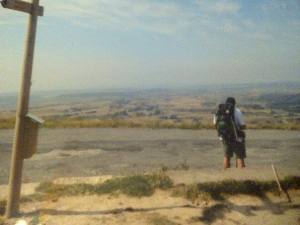
To be sure, I’ve had my share of everything: I’ve had a lot of chances to travel. I’ve walked across Spain, trained across Siberia, drove around North and Central America, stood in rivers from the Connetquot to the Congo, and I’ve followed a herd of moose through the woods in Northern Norway. But still it simply isn’t enough; not on this abbreviated timeline. There’s not enough time, never enough love, too much wasted energy, too many spoiled days and nights, not nearly enough love.
In looking back, the moments that stick out most in my mind are the ones where I stepped out of my comfort zone and risked being embarrassed, rejected, and humiliated. Sometimes those things happened, to be sure, but those times are still better and more memorable than sitting safely at home watching reruns of an old show, watching other people live still other people’s lives.
Oh there have been moments. And they all have one thing in common; my memories are of the people I was with completely engaged with each other. It might have been my son in Spain and Russia, or just us taking pictures down at the river. It could have been sitting on a beach in Florida or drinking champagne while watching a sunset on the Great Salt Lake.
Sitting around a club I ran in Massachusetts after hours and swapping stories, laughing, eating pizza from down the road after all the people left. It’s the one am stop at Ocean Eddies on the pier in Virginia Beach in the late ’70’s for a drink and a talk with someone from somewhere else, nothing but the sound of waves crashing under us.
One Fourth of July I was in Massachusetts and drove to Boston to watch the fireworks and I stopped at the Bull and Finch Pub, made famous for being the model for “Cheers.” I sat at the bar and had a beer and got talking to someone who was there to play music. I told him I had played and he asked me to play a short set during one of his breaks. Okay, so this is an example of knowing as sure as I’m sitting here that ten minutes after I said no I’d be absolutely pissed at myself, so I said yes. Rarely am I 100 percent in the moment, not distracted by next or was, but moments like that I am present, completely present–like on the Camino or the Train or the Lake or the river. I said yes and risked being myself. I even had the balls to play “Please Come to Boston.” When I got home to my house on the reservoir that night, I got out my guitar and played while my cat Huey sat on my knee and listened.
Alive. I was so freaking alive that night. The next day friends came by for my birthday and I told them about it and they were excited for me but like with most things in our lives, you absolutely had to be there. I was.
Geez I’ve been fortunate.
But there was one night in particular which stands out a bit more than most of the others. It took place in a bar which long ago burned down. We called it The Shack because it had no name.
This happened about twenty-five years ago.
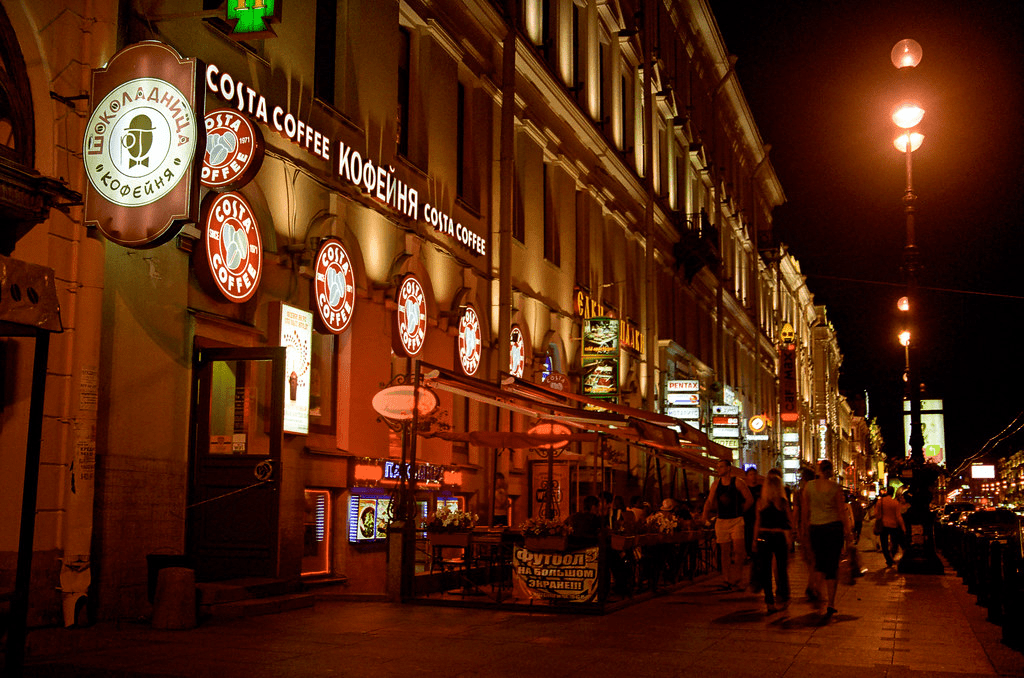
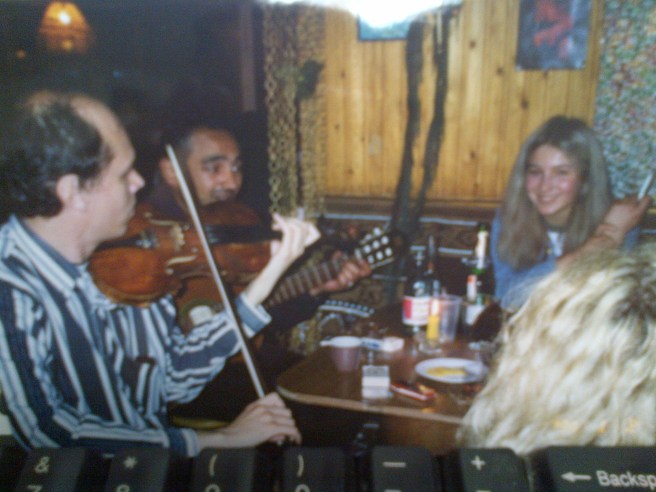
Just off the Gulf of Finland not far from an exclusive hotel but well in the woods was one of this world’s coolest bars—a dive really—a place to drink and sing and meet people you’d never want mad at you. It was small, with broken-down shed-like walls and windows which barely kept out the storm blowing off the Baltic one May night in the nineties. It was well after midnight and we ordered a bottle of Georgian Merlot and several plates of shashleek, a Russian shish kabob dish. A gypsy band showed up, including a guitar and violin player I’d met before and had played with there along with a friend of theirs, a woman singer. Hours passed as we played and sang and drank. There were four others, three of them, a waitress, the owner and his cat, and we sang and drank while what must have been that hurricane from The Perfect Storm slammed to shore. This duck blind of a building sat amongst birch trees, but that simply made me more aware of the weather, wondering when one might topple through the roof. It was exhilarating, an adrenaline rush that had nothing to do with the wine. It was being alive, right then at 3 am, with total strangers, live gypsy music, Georgian wine, and shashleek, that kept us awake. It felt dangerous, subversive, but it was just a bar in the woods.
I had been in my hotel room, ready to call it a night since the next day we were all going on a river cruise, but I got dressed to head back up the beach to The Shack and have some wine. I didn’t want to wake up the next morning and wished I had gone. The storm hadn’t yet kicked up. But it was coming; you could see it in the haziness of the midnight sun.
The band took a break and came to our table and we spoke in broken Russian and English about the storm and how we hoped it wasn’t high tide soon since the water was just a hundred feet west, maybe less. Then Alexi, a two hundred eighty pound drunk Russian who hated Americans started screaming at us like he had the first time I ever met him, the first time I walked in the place a few years earlier. He had kept to himself mostly since then, sometimes talking to me, mostly not, but this night something got under his skin and he screamed at me like he did that first time, “I hate Fucking Americans.” He startled me, but he had a drink in front of him, and another regular customer, a friend of the gypsy band, was sitting with him and told him to quiet down so he did.
But then I saw his eyes. They were deep and vacant, like he’d seen a ghost, and when he saw me watching him he stood up and said, “I hate fucking Americans!” and he tossed his beer at me. Sasha, the guitar player, stood up and yelled at him in Russian. But just then thunder, with a sound like the sky opening up and dropping two tons of hard earth on our shack, rattled the walls and ceiling and we all cringed. I thought for sure one of the birch trees cracked and was going to kill us all. I went down on the floor with my friends and the gypsy band, and Alexi cursed and fell against the back of his chair. He suddenly looked so small, and the thunderclap crashed on us again, this time blowing open one of the windows, and rain and wind sheered a path across our booth and against the other wall. Dima put his violin under his coat and our shasleek flew off the table onto the floor. The shack cat went for it but the wind and rain chased him back under the bar and into his bed.
Another flash of light lit up the shack and Alexi was trying to hide under his table but he was too big, and just as he glanced out the window on his way to the floor, he stopped and stared. I was watching him, and he looked out the window for some time, then looked at me, and with a nod he said, “Horosho. Horosho” which means, “okay. It’s okay.” And he looked out the window again when the window slammed back and forth. He grabbed it before it hit him and he held it a second, staring out over the Gulf. He looked at me as if to ask me to come see but he didn’t know how. Instead he closed the window and latched it again and turned and sat down. He nodded to me, “Horosho. Edeesuda.” It’s okay, come here. A few of us gathered and sat at his table, and Dima took out his violin. Alexi smiled at me, looked out the window and peered with a stoic face, then turned and smiled again. He looked at the waitress and said “pivo,” beer, and he motioned to us all so she brought us all beer. The rest of the night we laughed and sang songs. I asked Alexi what he saw outside but he just nodded at me and said, “I hate fucking Americans,” and we laughed and toasted and Dima played, then Sasha joined in and then the woman singer, and the beer tasted good. Alexi sat quietly the rest of the night.
The storm passed and the sky quieted down. I almost had stayed at the hotel that evening, turned in early, read in bed. Those are all good things, quiet ambitions which keep me grounded and invested in whatever happens next. But that night I didn’t. Like the time we went Ghost Hunting at midnight at the Saint Augustine Lighthouse, or when my son and I sat up all night in the town square of Portomarin, Spain, because we couldn’t find a place to stay. One time a friend of mine and I hitchhiked to Niagara Falls and it took no longer than it would have to drive, but coming back we walked for eight hours along dark roads through small towns. But if we had been given a ride right away, I’m not so sure I’d remember we even made the trip to begin with. We talked a lot that night, and I wish I could walk like that with more people, and talk, and just walk quietly too.
Sometimes you have to stay up until dawn to understand what’s hiding behind the night. It’s the rest stop at three am with two truckers talking about the next town; or the sound of wildlife in the desert brush, or tall pines scraping together in winter in the woods with no light but the moon. It’s walking up an Arctic path at four am in snow-deep March with Northern Lights bouncing past like a bull whip; or lying on my back on a cot in a compound in Africa beneath more stars than could possibly exist, the distant sound of someone chanting the Koran. It’s walking out of a shack in the woods after a storm passed, the sun just lifting over the raised bridges, ears buzzing from loud live music. It’s the perfect silence on a salt bed and the music of family talking about old times, talking about now. My new year needs to start not just remembering the beautiful path it has been so far, but what made it beautiful to begin with. Its enjoying the passing of time, as JT wrote.
On that night on the gulf after the storm, after the music and the wine, when I stood in the quiet light of morning and shook hands with Alexi as we went separate ways, most likely for good, I began to understand that this crudely brief life of ours is best punctuated with those we love.

 a view from this wilderness