Speechless

Some years ago while working at a different college, I wrote this essay loosely ripping off an essay by Tim O’Brien. I’m not ashamed. I found it recently and thought about how I still neglect to complete the very assignment I encouraged my students to complete as often as possible. . Something needs to change.

What Have We Learned

Older students are better than those just out of high school. The big dude with the pierced face and tattooed eyelids is probably a great writer. Many students would rather pull a lower grade than have a professor look at a rough draft. Students who take copious notes don’t always fair as well as students who just listen intently. If it happened before they were born, it really doesn’t have any affect on them and therefore they shouldn’t be required to learn about it.

Hamlet is boring; Oedipus is stupid; statistics is tedious; bio lab is too long; developmental classes are a waste of money; introduction to literature is a waste of time; history is not relevant; philosophy has no practical application; psychology is disturbing and the instructors are disturbed; text messages are read more than text books; face to face communication is obsolete; and the only source of information is the internet.

Here’s the great irony of education: While we should become smarter as time goes by because we’ve been given the answers through the centuries, watched the lessons played out on the battlefields and in seminar rooms, we’re actually ignoring more, learning less, and not really keeping tabs of our decline.

Maybe if I text my lectures they’ll pay attention. Phones go off in class, in the hallways, in their backpacks. They reach in to quickly shut it off because they “forgot it was on,” and spilling out onto the floor are the books they need, a few small notebooks, and various articles of clothing. They carry more in their bags then in their minds. 

The science and math books are ten-pounders, and the anthologies aren’t lightweights either. For lab they need their lab equipment, gloves, goggles, special notebooks, dead animals. Rough drafts, final copies, required journals, various books read besides the textbook, art supplies, tape decks, language discs, keys, wallets, games and personal items. Some have staplers, toothbrushes, condoms, aspirin, medicine bottles, and hand soap. Some carry crayons and cookies because their kids come to class sometimes when elementary school is out or cancelled, or when the kid is sick but the Prof told the parent if she missed one more day she’d fail the course. They carry medicine for those kids, bi-polar, attention-deficit, hyperactive. They carry the same for themselves, medicine for their own ADD, ADHD, OCD, diabetes and manic-depression. They carry a lot. They need to remember when papers are due, when tests are scheduled, including their math tests, their physics test, algebra, pregnancy, special needs tests, mammograms, CT scans, and various other tests they’ve got on their mind and written down in their notebooks at the bottom of their parcel.

They carry cell phones with various rings, various friends calling during class, right before class. They have small machines attached to their ear so they can remotely answer the phone without having to move their arms or lift their hands. They have the numbers of everyone they know automatically programmed in. They no longer have to walk to see anyone, walk to find a phone, remember any numbers, lift their arms, or turn their heads.

Once someone’s phone vibrated during class. The vibration on the desk was as loud as a ring, but she politely excused herself. Some professors insist the phones be off during class, and they won’t even allow them to be turned to vibrate. But this student came back in and said she was sorry and that she had to go, that was her babysitter calling and someone from her husband’s command post was at her house waiting for her to come home. A week later I discovered her husband had been blown up at a roadside bombing on the airport road from Baghdad. Another student’s brother was on television. He worked for Blackwater in Baghdad and she watched her brother’s charred body swing from a bridge in Iraq.

One student shot himself in the head because he thought the paper was due and he thought his medicine wasn’t. True story. A colleague of mine listened quietly one day to a near-suicidal student explain why her paper was late and how her daughter was going through depression and they were bringing her to the doctor to see what was wrong, and it weighed so heavily on her mind that she couldn’t really concentrate on the paper and would the professor mind the paper turned in a few days late, and she agreed. Students knew this about her—she would work with anyone. A few days later my colleague hung herself in her kitchen because her medicine was fucked up.

This is the American Community College. These are the trenches, in the city; some of these students come to get ahead, knock off some basic education classes before transferring and paying more at the university. But some come here instead of jail, or to bide their time, or to hang with old friends and maybe hook up with new ones. Some come to keep off the streets; it can get dangerous these days. But some of these students come from real war-torn areas. My student Deng walked across Somalia to Ethiopia twice looking for safety. Before he found it at ten-years-old in a Red Cross camp, he was given an automatic rifle and taught to kill. Now he tries to write about gun control and crime in seven hundred words, making sure the grammar is right. His mother was raped and hacked to death in front of his eyes. His father “disappeared.” He was a Lost Boy. Sometimes he didn’t concentrate. Yeah, okay, sometimes he didn’t pay attention. But when he came to my office we talked about politics and survival. We talked about Africa and faith. We talked about ideas, and he told me Chinua Achebe knows Africa. He told me how Sartre would not be popular in Somalia but Descartes would. He knew the differences, understood the gentle nuances that separate philosophy and politics. I didn’t ask about his scars. He didn’t ask about mine. Deng came here with an education the likes of which we can’t possibly conceive. He told me he as soon as he found the camp he knew he needed to leave. I said I understood. He said it was too much, and he wanted to die so badly and that’s when he knew he just had to get out. I didn’t answer. I had nothing left to say to him.

What I know now is this: all the lectures in all the classrooms from all the professors in the world will not prepare us to be anything of value if we don’t find any value in what we do and how we live our lives.

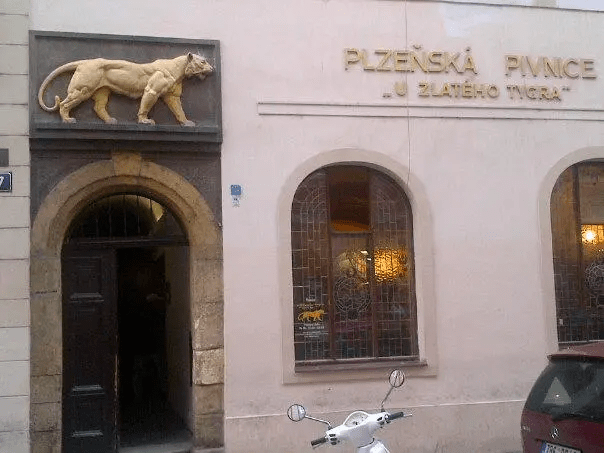
Of course we would all do things differently; even just a few small moments. I’d never have left Massachusetts. I’d have gone to Monterrey anyway. I would have passed on the Trout in Prague, the oysters in Asheville. When I left Tucson that last time I’d have headed west instead of back east.

We are always in pursuit of ourselves, aren’t we? Even if we don’t consciously consider such notions day to day. In class one morning I asked my students if there was anything they would have done differently in their short but tech-dominated past. They all laughed and had answers that ranged from staying off-line to trying harder in high school to treating a loved one better while she had the chance. They talked for a bit; they got quiet. They thought a while. And I added this: What are you doing now that five years from now you will wish you had done differently?

They looked at me for a moment with just a little confusion and some wonder about their future, and they waited for me to talk.

But honestly, I have nothing left to say.

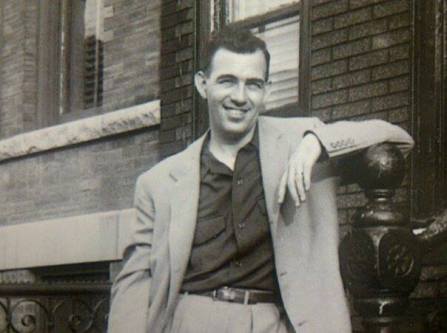
May 23, 1925-October 21, 2015

Dad died ten years ago this Tuesday, the 21st. Words can’t express how I miss him. The following essay first appeared in Kestrel: A Journal of Literature and Art, as well as my collection Fragments, and anthologized in a few other publications. It was the last piece of my writing I am aware my father read.

12063306_10207030426106557_3199067376729529480_n

Instructions for Walking with an Old Man at the Mall

First of all, he’s walking, you’re joining him. Don’t stop if he doesn’t. Don’t keep walking if he doesn’t. You are a shadow, an imitation.

Stand on his side where he can better hear you. If he can’t, repeat yourself as if for the first time, no matter how many times. Never say “never mind.” When he tells you something, you have never heard that story before, even if you can repeat it word for word. When he tells you about the baseball games with his Dad seventy years earlier, they are new stories, and your response must sound genuine. When he tells you about the time he went swimming at camp with his friends, and how when they went to retrieve their clothes from under a boat they found a snake, be amazed again, ask what happened. Laugh again since he will laugh.

When he pauses in front of a store, don’t question it. At that moment, allow his sole purpose in pausing is to look at whatever item is in that display. He might mention how he used to own that tool, those pants. Let him know you remember; do not make a big deal that he remembered. He needs you to know he didn’t stop “to rest”—he stopped to look at the display. When he says he could use that new suit, a new pair of shoes, or a new whatever is new, agree. If he happens to stop in front of Frederick’s of Hollywood, there’s no need to joke; it will only emphasize he couldn’t get past a place he would never stop with his son. This time he simply couldn’t continue. Talk instead about his grandkids. Talk about the rain. Do not talk about old times. There’s no need to recall the time he drove you to the airport for a flight to college and you saw him hours later waving to you onboard the plane. Avoid bringing up the time just the two of you spent the day at Shea Stadium when you were a child. Instead, ask about the Mets and if he happened to catch the game last week. You know he did. Let him tell you about it.

When he seems tired but doesn’t want you to keep stopping, stop to fix your shoe, to read a sign; look for a bench and suggest you sit and talk. He’ll ask about your son; he’ll ask about work. Have something to say other than “fine, Dad.”

Do not look at your watch. Do not check your phone; most definitely do not check your phone. Leave both in the car. Do not indicate in any way he is keeping you from anything. No other time is relevant anymore. But you will grow tired and restless. If he senses this, he will insist you leave. He will say he knows you have a lot going on, and he’ll say he’ll see you later, and he’ll do whatever he can to make you feel he is completely fine with it. Stay anyway. Then sit a bit longer. Do not ask about the doctors; the walk is to forget about the doctors. Do not quiz him on medicine or schedules. He is out for a walk, you joined him, it is something about which he will tell others—that he went for a walk at the mall and his son was there and joined him. Do not let his story end with “but he had to go.”

When he can’t remember where he parked his car, ask if he parked in the usual area. He did. Sit down for a few minutes. It will come to him. There’s no need to ask probing questions like “which stores” or “what street” he was near. Just sit a while. He’ll remember. You’re not in a rush.

When you leave the mall be near him as he steps from the curb, but do not help. He will be fragile and unstable. The step from curb to parking lot is a leap; he used to do it with you on his shoulders and two others running out front. Let him step down on his own but be ready. He bruises easily and a simple scrape is a trip to the doctor. Have the patience he had when your childhood curbs seemed like the cliffs of Dover.

Don’t say “I guess I’d better get going.” Don’t make plans. Don’t make any comment to indicate he did well or that it was a “good walk.” He didn’t do well and it wasn’t a good walk. He’s older now. He’s slower now, but he knows this. Really, once the walk is done, the time spent together always seems to have passed faster than we recall. He knows this as well.

12143183_10207071237766823_459922957598238343_n

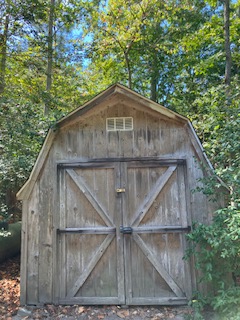
The Shed

The Shed was twenty-feet deep by eight feet wide, with two windows, two lofts, double doors, and sturdy enough to withstand everything except Hurricane Isabel.

Of course, I bought the shed to hold supplies when I was building the house. Before I started, when I had first cleared the small portion of the property for the home, I had this shed delivered figuring I might need to sleep in during bad weather while up here for three of four days in a row seventy-five miles from the place in Virginia Beach. Michael and I went together to the shed place in Virginia Beach. Some guy paid for it but never picked it up so I bought it brand new for a song and the father and son team I bought it from delivered it seventy-five miles, across the Hampton Roads Bridge Tunnel, across the still-narrow Coleman Bridge, the Piankatank bridge, and down my winding driveway through the woods—for twenty-five dollars. I also bought them lunch.

It didn’t take long, as it tends not to take, to have stories to tell from the shed.

Back in ’99 we had fifteen inches of rain in two days and the water ran from the river side of the property down to the woods beyond the shed. I had the shed leveled off the ground by about eight inches on blocks, so the water rushed toward the door but instead dug crevices under the shed. The shed, miraculously was dry, but impossible to get to.

Isabel didn’t do a thing to the shed, but she knocked down thirty oak trees here at Aerie, and one of them lingered for weeks right above the shed. I knew it had to come down but this was a job I couldn’t pull off myself. Scavengers wanted more than fifteen thousand dollars to clear the fallen trees, so I said I’d do them myself, which I did, but I was afraid to cut the half-fallen tree in fear it would crush the shed. Instead, another storm just a few months later cracked the trunk and it crushed the back half of the shed for me. I remembering thinking, “Hell, I could have done that.”

So in the lemonade tradition, I made the back half into a greenhouse with plastic sheets for the roof, but it didn’t really work, and over time the mold and mildew and various snakes and wood rot got the best of The Shed. It took about twenty-seven years.

One time early when Michael was about five, we played hide and seek as we often did, and I ran in the shed while he was still too far away to follow me right in, but he could see me. I then climbed out the back window and settled behind the back wall. I heard him come in the shed and was quiet for a minute then said, to no one in particular, “Holy Cow, How did he do that? Daddy?”

I remember how we laughed.

We built things with wood and made signs and birdhouses. None of them were well done but they were all perfect. Occasionally we’d take a break and play “Voices.” That is, we’d recreate “Wind in the Willows,” and I was the voice of most of the characters—Badger, Toad, Moley, even the stoats.

And we kept the sporting equipment in there and played frisbee, football, golf, and ring toss, which we still do nearly thirty years later when outside barbequing.

The bikes he kept in the shed got bigger, and the toys were relegated to the loft while more accessible spaces were reserved for tools, chemistry sets, then inflatable kayaks and eventually equipment to hold his art supplies and frames.

When he was little, he would tie me up in a chair with a lasso his uncle sent him from Texas, and he kept lizards and frogs in tanks until he couldn’t feed them anymore and would let them go behind the shed, in the woods.

He kept buckets of fake snakes and lizards in there when he was young, and when the roof collapsed and water raged in, it carried the rubber reptiles out the door and under the shed. The next day I spent an hour reaching under the shed and pulling out the toys, until one reach pulled out amongst the fake snakes a real one with red and yellow and black, and I forgot the rhyme about poisonous snakes so I just threw everything as far as I could.

There were other days like that.

But there’s a hole out there tonight. And Michael is in Ireland, far from the fallen shed. It had to come down. I had to do it now or we’d be still out in the still standing shed telling stories.

I destroyed the last of it a few hours ago, and I rested on the nearby patio remembering the times we shared for his entire life, and the talks we had—so many talks we had safe in the shed, just the two of us, about growing up and traveling and things that frustrated us, and things we were scared of. Out in the country like this along the bay when a father and son go into the shed, usually it is for some form of punishment, “a whooping” as they say. Well I never had a reason to punish Michael; but we did have plans to make, so out to the shed we’d go, and he’d make notes on wood with a nail, and we’d plan adventures like training across Siberia or walking across Spain.

We kept tools in that shed, and mowers, bikes, grills, and more. And memories filled the spaces between everything else. We let a lot of memories occupy that space.

Funny though. I sat out there today when I had finished knocking it down and thought about the next week or so during which I will haul away the remnants, clean up the ground, lay down some field stones and mulch in front of a much smaller, new shed, put a few chairs and a small table there, and I tried to imagine the new way it will be, and it made me a bit sad, of course, but excited for a new place to talk. But lingering a bit in the hot afternoon air was the sound of ten-year-old Michael playing his harmonica and the distant hint of his unchanged voice asking if I want to play hide and seek.

There are some things that shed kept safe for us I’ll never be able to destroy.    

Now:

Next:

However,

I mean, it isn’t exactly “Everything” I’ve lost interest in.

Sunrises still can manage to get me out of bed before dawn for a saunter to the bay where the best moments are about fifteen minutes before the actual sunrise, when the sky is still dark blue, with a streak of burnt orange in one smooth paint stroke near the horizon.

Then coffee, the sound of cups in a diner kitchen, the sound of the pour into the cup, tables and stools of people talking laughing, planning the day, remembering the night.

And children of course, the non-starving, not yet war-torn ones. The ones who remain the way they should, laughing at the simplest nuance, and drinking milk with two hands. It’s the laughter that gets most of us, especially when it reminds me of my own son at a young age, laughing at some lizard in his hands. That memory still holds my attention.

I stood in line behind a World War Two vet a few months ago–ninety-eight years old–stood strong and told me he was driving to Richmond that afternoon to watch his great-grandson play baseball. That is worth the time any day of the week.

I once waited half the night for the moon to rise above a mountain but it never did. That night, the stars, the floating dock, the non-moon night was filled with such peace both literally and psychologically, such complete presence and stillness, that would keep me going a long time during the worst of days. That day closed up decades and reminded me something so essential: Everything we are, we remain. And that real friends are often the only thing worth our attention.

The sound of geese keeps my interest, and talking to local farm workers from Mexico about where they’re from, villages I don’t know, some I do sometimes.

Talking about Ireland, or Prague. Talking about Spain and how the stretch from Southern France to the first village in Spain is so beautiful you hardly notice the climb is trying to kill you.

Yeah, that one always keeps my interest.

Acoustic guitar music. Pachelbel’s Canon in D on piano, slowly, ice in a glass. These remind me of life. Listening to a musical piece written nearly four centuries ago reminds me of the emotions that transcend time while connecting everyone. When I hear the Canon I imagine Johann playing on his organ, thinking about the night he stood outside waiting for the moon to rise above some hill outside Nuremberg, and how it took his breath away, the stars he saw while waiting, the absence of indifference, the absence of apathy. Nothing mattered more than that moment then, and he forgot all about the news of the day. He just watched the moon not rise above the hills and in his mind he played those keys, slowly, as if it was the only thing he cared about in the world.

Close your eyes and let this play, and remember all there is in life to be passionate about.

Parenthood: A Lesson in Algebra

I’ve told this story before.

When Michael was about three or four, he used to play “Sir Michael the Knight.” Sometimes it would be on the sand in the yard of a beach house we rented one winter where we would build elaborate castles and he’d be Sir Michael and I was the dragon inevitably slain by the knight, culminating in my plunging death into the castle. Most often he occupied himself on rainy days when he would don his shield and sword and cardboard helmet and then barrel around the house. One time he ran through his grandmother’s home, cardboard sword before him, through the kitchen to the living room to the dining room and back into the kitchen, several times always calling “Sir Michael the Knight is going to slay the dragon!” or “You can’t get away from me dragon!” as he passed again, his voice fading in some Doppler effect as he disappeared into the kitchen, emerging around the corner seconds later. On one turn he was mid-sentence running into the dining room when his shoulder clipped the table and his feet flew out before him and his entire body slammed to the floor in perfect professional wrestling fashion. I jumped from the couch when I heard his head hit the ground, but he only lay there a second before he said, “Sir Michael the Knight hurts himself bad.” He got up and kept running.

He is still running. Michael turns thirty-two tomorrow; half my age. When he was born, I was thirty-two times his age, and now we’re down to twice his age. He’s aging, I’m not, is how I like to look at it.

What’s crazy is the obvious math here: The time it took for me to get to Michael’s birth is the time it took to get from his birth to now. It makes me examine everything I did in those first thirty-two years, and it was a lot. By the time he was born I had been around the block, to be sure. Time pushes us in multiple directions. A week from now seems a stretch compared to thirty-two years ago. Anticipation slows down time, but recollection instantly thrusts us back to one moment like it just happened. And when I look back at what happened, I often wonder how I’m still here. But all of those years are nothing at all compared to what we’ve done since 1993. It’s been one hell of a ride.

It isn’t unusual to find us at a local oyster bar splitting a dozen and drinking hard cider. Together we’ve ventured to various east coast spots like Long Island and the Outer Banks of North Carolina, trained across Europe and Asia on the Trans-Siberian Railway, and walked across Spain. We’ve seen more together than most fathers and sons get to experience in a lifetime. I am constantly aware of this and deeply grateful.

But none of those journeys compare to the pilgrimage we make to the river every evening when we’re both home to take pictures of the setting sun, and we wander around in silence to listen to the water and watch the wildlife. One of us might mention a colorful cloud formation or the approach of an osprey, but mostly we take pictures and point out the peacefulness. This has been a steady routine since he was four; the picture taking started just a few years later. In the summer the sand fleas can be unbearable but we tolerate them, swatting our legs and faces determined to remain at the river a bit longer. In winter we bundle up ready for whatever wind whips down the Rappahannock toward the bay.

Over these nearly three decades we must have taken thousands of pictures. I prefer to point my camera up at the ever-changing cloud formations picking up the last bit of light from the fading sun. I try not to allow anything “earthbound” into the frame, including trees or even the water. I like the fluidity of clouds, how beautiful they are ever so briefly before they dissipate. Michael aims at the surface, seeing hues and shapes that swirl and gather and disperse as fast as he can find them, capturing just the right combination of color and design before the tide takes over.

It is about perspective.

He’s been around the world on his own. Ireland, Spain, Cuba. And he holds together the art community here on the Bay. He’s done alright. When someone asks who he is like in the family, I don’t have to hesitate: My father. And I wouldn’t have it any other way.

These days I prefer to look forward. There’s a lot to look forward to, and more often than not these days it is separate from each other, but always letting each other know how it’s going.  I am not sure where Michael’s headed next but wherever it is and for whatever reason, I am confident it is with faith, a sense of humor, and an instinctive ability to be kind to people. I am as excited as he is about what’s laying out there ahead of him in that land of hopes and dreams.

Happy Birthday, Sir Michael.

On This Silent Night

The Blue’s Brother’s Light Display

It’s misty tonight but not raining, and all the lights have halos from the soft air. Today I slowed down after sixteen weeks of not, followed by a few days of noise–it was all in my mind, of course, but noisy just the same, so this evening I decided to slow down and after standing on the front lawn looking at the moon through the haze in the east, I drove down into town.

I put on some solo piano music from George Winston’s December and rolled slowly past the fish market to the real estate office where Steve and Randy Blue have the best lights I’ve seen. They have music synced with a radio station across the river, and the largest tree in the front keeps beat with the sounds, but I kept my windows rolled up and just listened to George’s deep rendition of Variations on Canon in D. Kids with parents ran through the paths between light displays, and I assume they were yelling, or calling out what they saw, but I heard nothing. Just George and Pachelbel.

I stopped next door at 711 and bought some hot chocolate, talked to Wayne a while in the parking lot, but families started moving past the Nutcracker display to the parking lot, so I drove off toward the bay, pausing in front of Hurd’s Hardware. Jack Hurd has the entire front window filled with illuminated Christmas trees in various colors, and on the left side the trees are several deep. This window against a black sky with no other stores around makes it more silent than it should be. I turned off the car and the radio and rolled the window down and still heard nothing but quiet, a faint spill of music from the light display at the realtors.

Behind Hurd’s and across the street is the village branch of the county library, and tonight my son worked while a local Y hosted kids who had entered their artwork to be hung in the library gallery in the back. I rolled down the street and looked back into the window. This, right here, is one of my favorite things to do in the dead of a cold night in December; to see kids and families laughing and warm inside a window, not able to hear them, but watching them play and talk while outside I can see my breath and my face is tight from the cold. At one table near the front Michael talked to a woman, while over near the door a few kids entered to head back to show their parents their work.

On the way home I rolled into the IGA and could see Kristin from the museum and one of her kids at the checkout, talking to the clerk, laughing. The lot was empty, mostly because it’s Monday but also the rain, and I headed to the river, rolled down the windows, and turned off the car and sat quietly. Out on the Norris Bridge I could hear the whining of truck wheels moving across to White Stone, and the light at the airfield was circling, indicating someone will land at some point tonight, probably Mike in his PT-13 headed back from some weekend show. All of this going on yet all I can hear is the lapping of the Rap on the sand and the slow movement of a heron about fifty feet away in the marsh. To my right in the windows of the yellow house across the reeds is a blue light of a computer or television flashing on the walls.

I like the peace I find when I am outside looking in at Christmastime, and some rebirth of familiar connections take hold of everyone. It is fleeting of course, but present for now. I enjoy watching these flashes of life around me. I try not to be creepy and prefer only to look in public spaces like convenience and hardware stores, but it is nice to catch a place like the library where so much activity is going on behind my music, like shadows on some cave wall. But this year is different than last. Some of the people I used to talk to every day have gone silent, somewhere beyond the ideas and anticipations of those still here. So my world in general has gone mostly silent in the past several months for the first time in three decades.

So tonight I decided a drive made perfect sense; not only because it fills me with some sort of hope to see life being lived, but also because I’ve always been just outside looking in.

This happens to a lot of people, especially this time of year; we have a sense that we’re better off a step back, perhaps a small part of the conversation but not participating as much as others, preferring instead the safety of the next row back instead of the circle of talkers; we are more comfortable on the patio bench quietly watching the stars until someone else who feels awkward comes out and quips about needing some air. That’s where I am, away from the small talk, and I turn around, place my elbows on some wrought iron fence behind me, and look in a everyone laughing. I am okay a step back.

But at the river I sat in silence and thought about why this distance works for me.

It is safely consistent. I know blindfolded how to walk through most of the Blue’s Brother’s light display, and I know Wayne and Maria will be at 711 at this hour. Monday nights Michael always works the library, and Jack’s trees make everyone smile for a few weeks. They make me smile anyway, and I appreciate that. It is predictable and consistent at the end of a year that has been anything but either.

So I drove around listening to Winston’s version of Bach’s Joy and felt completely and literally at peace. Life is out there, through the windows, in the market and the front steps of the convenience store. The kids in the library laugh like Michael used to when I brought him in to sit at those same tables two and a half decades ago. This is what we can count on when we are running out of things to rely upon; that Christmas will bring out people with lights and once dark window displays are somehow almost personified, the trees in Jack’s window display appear more like watermen at the cafe standing around talking about the coming snow.

I slowly rolled down my long, winding driveway until I reached the lamppost near the lawn at the house. The porch is lit with white lights, as usual, and the wreathes illuminate the walls and windows. I had one other significant loss this past year; the Penguin, affectionately known as Pengy, died last January. His wires were shredded from years of moisture and his skin simply popped. Sad really, because I liked seeing him for twenty years at the corner of the porch.

But things change. I have new light displays now someone sent me, and after tonight’s Chocolate Bailey’s on ice I’m not going to care so much anyway. But I do have a suggestion: Turn off the music except for something peaceful, and stay outside for a bit–watch life for a while from the outside, observe it’s consistent laugher and predictable love. Watch others enjoy the moments they have together while they still have those moments.

But don’t stay out there too long. The love is inside.

Hurd’s Hardware, Deltaville
west on the Rappahannock tonight