May 23, 1925-October 21, 2015

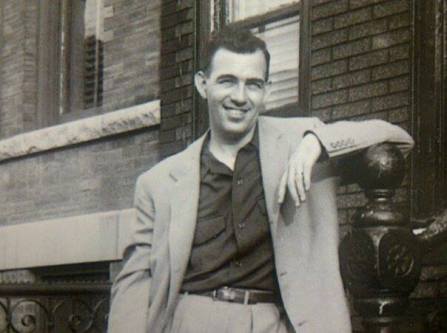
Dad died ten years ago this Tuesday, the 21st. Words can’t express how I miss him. The following essay first appeared in Kestrel: A Journal of Literature and Art, as well as my collection Fragments, and anthologized in a few other publications. It was the last piece of my writing I am aware my father read.

12063306_10207030426106557_3199067376729529480_n

Instructions for Walking with an Old Man at the Mall

First of all, he’s walking, you’re joining him. Don’t stop if he doesn’t. Don’t keep walking if he doesn’t. You are a shadow, an imitation.

Stand on his side where he can better hear you. If he can’t, repeat yourself as if for the first time, no matter how many times. Never say “never mind.” When he tells you something, you have never heard that story before, even if you can repeat it word for word. When he tells you about the baseball games with his Dad seventy years earlier, they are new stories, and your response must sound genuine. When he tells you about the time he went swimming at camp with his friends, and how when they went to retrieve their clothes from under a boat they found a snake, be amazed again, ask what happened. Laugh again since he will laugh.

When he pauses in front of a store, don’t question it. At that moment, allow his sole purpose in pausing is to look at whatever item is in that display. He might mention how he used to own that tool, those pants. Let him know you remember; do not make a big deal that he remembered. He needs you to know he didn’t stop “to rest”—he stopped to look at the display. When he says he could use that new suit, a new pair of shoes, or a new whatever is new, agree. If he happens to stop in front of Frederick’s of Hollywood, there’s no need to joke; it will only emphasize he couldn’t get past a place he would never stop with his son. This time he simply couldn’t continue. Talk instead about his grandkids. Talk about the rain. Do not talk about old times. There’s no need to recall the time he drove you to the airport for a flight to college and you saw him hours later waving to you onboard the plane. Avoid bringing up the time just the two of you spent the day at Shea Stadium when you were a child. Instead, ask about the Mets and if he happened to catch the game last week. You know he did. Let him tell you about it.

When he seems tired but doesn’t want you to keep stopping, stop to fix your shoe, to read a sign; look for a bench and suggest you sit and talk. He’ll ask about your son; he’ll ask about work. Have something to say other than “fine, Dad.”

Do not look at your watch. Do not check your phone; most definitely do not check your phone. Leave both in the car. Do not indicate in any way he is keeping you from anything. No other time is relevant anymore. But you will grow tired and restless. If he senses this, he will insist you leave. He will say he knows you have a lot going on, and he’ll say he’ll see you later, and he’ll do whatever he can to make you feel he is completely fine with it. Stay anyway. Then sit a bit longer. Do not ask about the doctors; the walk is to forget about the doctors. Do not quiz him on medicine or schedules. He is out for a walk, you joined him, it is something about which he will tell others—that he went for a walk at the mall and his son was there and joined him. Do not let his story end with “but he had to go.”

When he can’t remember where he parked his car, ask if he parked in the usual area. He did. Sit down for a few minutes. It will come to him. There’s no need to ask probing questions like “which stores” or “what street” he was near. Just sit a while. He’ll remember. You’re not in a rush.

When you leave the mall be near him as he steps from the curb, but do not help. He will be fragile and unstable. The step from curb to parking lot is a leap; he used to do it with you on his shoulders and two others running out front. Let him step down on his own but be ready. He bruises easily and a simple scrape is a trip to the doctor. Have the patience he had when your childhood curbs seemed like the cliffs of Dover.

Don’t say “I guess I’d better get going.” Don’t make plans. Don’t make any comment to indicate he did well or that it was a “good walk.” He didn’t do well and it wasn’t a good walk. He’s older now. He’s slower now, but he knows this. Really, once the walk is done, the time spent together always seems to have passed faster than we recall. He knows this as well.
12143183_10207071237766823_459922957598238343_n

The Rest of Me

I ask my students the same question the first class every semester. I pull a chair into the middle of the front of the room, ask them their names and where they’re from, and we talk about the area, hobbies, majors, quirks, travel favorites, and more. Half the class—I find it a priceless investment in time as they warm up, get to know me and each other, find themselves more able to talk throughout the semester, ask questions, share ideas.

Then I sit quietly for a second and ask them the same question every time:

What are you capable of?

What do you think you are capable of? I don’t mean “What do you hope you can do?” but what tangible proof from previous experiences has convinced you it is worth reaching out a little further than your grasp this time because you know you can do it?

It’s not an easy question to answer because it is difficult to know if we can achieve that which we have not yet attempted, so at best we need to guess. And even the most educated guess is still hypothetical. Yeah, I lose a few at this point, but I usually can reel them back in by jumping that chasm to the goal. “Okay then,” I continue. “What do you wish you were capable of?”

I remind them that unfortunately, every semester the evidence gets worse that freshmen in college are capable of anything other than having technology complete their assignments for them. I insist, then, that one of the finest results of college beyond the degree and the friends and the job prospects is the sense, the absolute pure sense, of accomplishment. To achieve something, to find out we are capable of so much more than we thought, becomes part of one’s bloodstream.

I asked myself that recently, the Capable Question. It was my birthday, sixty-five years to the day after I showed up at the now defunct Shore Road hospital in Brooklyn; one year to the day after Letty “closed the door behind her.” I looked back at what I have done with my life, who is in it and who no longer is, and who is again, and the good news is I’ve been around the block a few times and that’s one thing I always wanted to do. The bad news is as it turns out the block isn’t in my neighborhood.

Sometimes I don’t know where the hell I am. For a person who has traveled as much as I have, I still need direction an awful lot of the time.

So I asked myself, “What are you capable of?” I figure I still have a couple of decades, surprisingly. Maybe more on a good day, maybe just a few weeks when my mind downshifts. But let’s call it twenty years.

I just agreed to a location to perform a one man play in New York. My book Curious Men comes out in just a few months. My book Office Hours comes out in about eighteen months. My fig trees need watering. I’m thinking of getting a new cat or two. Maybe a dog. A goat for sure.

A few months before she died, Letty and I sat in Starbucks at the beach and after a lot of laughing, she said, “I always thought I’d be here past sixty-five, Bawb. I just never thought it would all be over; my life would be completely done at sixty-five.” I nodded. I tended to avoid trying to come up with a response. She didn’t want one. She wanted me to listen, to hear her existence, to be there while she was being alive. After a while she leaned forward and said, “Since I’m not using the rest of me, you can have those years. I trust you to use them well. What will you do with them?”

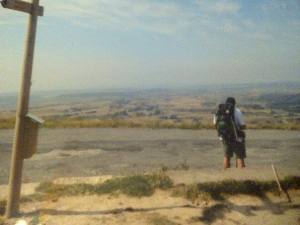
I thought about it like she had some power to give me twenty more years. “I am going to walk the Camino de Santiago again. I’m going to drive through the northwest for a few weeks. I’m going to take a river cruise in Europe with a friend of mine. I’m going to camp in Havasu Falls.”

“…and?”

The perfect response. “And?”

This is all to bring up a point:

After something I wrote went online about a month ago, several people, some I don’t know, wrote to tell me how good it is that someone my age still thinks I can do something new. They wanted me to know how much they are behind me no matter how outrageous it is that I’d try something besides enjoying retirement.

Two things here: One, I have no idea what they’re talking about. And two, Seriously? I mean, I’m sorry you took a nose dive as soon as you were eligible for Social Security, but I can’t wrap my mind around that mentality. Maybe it’s because retirement is somewhat irrelevant if you never really worked to begin with, but also in the world of arts, in the realm of love, there is no “retirement.” You can’t turn it off, you just can’t. And I want to spend my time with people I care about, seeing things together. I felt the same way when I was in my twenties. Did you guys grow tired of those you know?

“Someone my age” my ass.

I’m not going to republish the litany of accomplishments by people in their seventies and eighties. If you understand then you’re not sitting around lamenting anyway; and if you don’t, you’ll just shake your head.

I have done okay until now, and parts of my life turned out to be riddled with circles, as if Einstein was right—there is no actual “time,” humans have just made it linear so we can comprehend our passage here. Well, I’ve never been good at staying inside the lines anyway.

Honestly, I don’t know what’s going to work and what won’t work from day to day. I just hope for the best for the rest of me.

But, at the risk of being in over my head, here’s my plan: To speak my mind, about love, about hopes, about what is working and what is not. To keep writing as long as I have something to say. To fulfil some plans that I can’t shake.

I’ll retire when I’m dead, and then I’ll close the door behind me. If something should happen to abort those plans, feel free to take the rest of me and see what you’re capable of.

Fill in the Blank

First, the analogy:

People in the literary world criticize formula fiction as “less than” literary. With good reason. It is predicable, redundant, and can be decidedly boring. I’m speaking in general terms, of course. Some of those formula-based works are exciting; they keep your attention and on occasion surprise you with some plot twist toward the end.

The thing is the vast majority of written work follows a formula. And in cinema, plot-driven material is the bread and butter of film productions. Sometimes we might catch a glimpse of a work whose crisis is created by some setting, and more often these days, character-driven material has become more common—those works which receive the vast majority of nods from awards committees. But the public at large is comfortable with the tried and true; they like predictability, and they find some refuge in knowing what to expect.

Reality jump:

We graduate high school, maybe college, in some cases post-graduate work. We find a job and then a career. We raise a family, we retire, pursuing those hobbies we either only dabbled in or hoped to learn someday. It is the Great American Dream. We live the best we can, we work hard, we play hard, we relax, we watch our children move further than we did.

My great-grandfather was a butcher, his father as well, came here from Germany with his brothers, presumably to “make a better life of it” than they had in 1850’s Bavaria. My grandfather owned a successful glass company in Brooklyn, was heavily involved in the Knights of Columbus, raised six kids, had an apartment in Brooklyn and a house on Long Island. All of his offspring moved on still, and my own father excelled on Wall Street, providing for us a childhood we could not have dreamed of being better (except for that one liver and onion incident). And when things got tough in the world in the early 1970’s, Dad stepped to the plate and kept everything in spin, eventually retiring and pursuing his passion since 1969—golf. He spent another solid twenty years living his life, enjoying his children, his grandkids, and eventually toward the end, his great-grandchildren.

Textbook successful life. Formula narrative line at its best, to be certain. Dad was one of my heroes. If I could have chosen a life of the people I’ve known, I’d have chosen his.

But I’m not a patient man. I’m not close to as intelligent as my father was, and I am too easily distracted by big picture stuff—I have trouble with the minutia in life, the details he was so good at corralling into a successful career.

But I can be creative.

I am sixty-two now, ten years an AARP member and now eligible for Social Security—all the stuff in life I was convinced I’d die before ever participating in. I had a terrific career as a college professor, as a writer, and I literally built my own home and have a son who I could not be prouder of—in fact, he reminds me in so very many ways of my father.

So—here we go. What’s next?

Sidebar: My boss at Saint Leo’s for a few years was a retired military man who went on to teach college math and become the director of the Little Creek amphibious Base college offices of the university. I know him well, and his daughter is a friend, having been in every class I taught as well as traveling to Russia on a study abroad. Just about at retirement age, beyond actually, his lovely wife passed away, and his children—now grown—moved out. He did his time—he served his country and then some by assisting military in pursing degrees so they can start their own second careers. He is a beautiful man, and just when you know he earned the right in his early seventies to settle into the “what’s next” in life, he made a left turn.

He joined the Peace Corps and did a tour teaching math to children in Ghana. After that he did a six-month extension in Micronesia. He remains, for me anyway, one of the more inspiring humans I’ve known.

While I have left my career at one college, I’m still teaching, and plan to for a while, and as a writer I will never be able to retire—my mind simply won’t allow it. It is why every writer, artist, and musician, dies with a pile of “unfinished” work. It isn’t an option for us, retiring. It isn’t a hobby. It is how we breath in and out.

But what’s next? I don’t know, but I know without question what’s next cannot be an extension of what was. It doesn’t work for me; that is not where this narrative arc is going.

I don’t want some great-grandchild to blog about me and write, “He taught college and was a writer and retired at” whatever age it is I can no longer tolerate twenty-year old’s.

No. Instead, let it read, “He taught college and was a writer, but then, get this, at sixty-five years old he…”

I like the blanks in life. I like that we get to fill in those blanks ourselves. I have great admiration for the formula—and there is not a day that goes by that I don’t wish I had set myself up to spend my waning years simply enjoying the passing of time. But my chemistry simply doesn’t blend like that. I really wish it did. Instead, I’ll stop worrying about the plot or the setting and focus on my character. It needs work, but this script isn’t finished yet.