It’s been a year since Dave died. A year next week on my birthday since Letty died, a year two weeks later since Richard died and then Fr Dan, then Billy…
There was more to say. But then, of course, there is always more to say, isn’t there?
That’s the lesson, I suppose, if one were to look for a lesson: Say it now.
“These days I seem to think a lot about the things that I forgot to dofor you,
and all the times I had the chance to.”
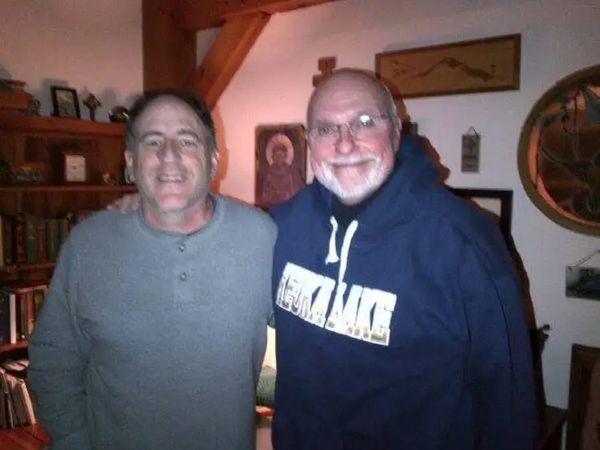
Fr. Dan Riley, ofm
Bobbie Roehren Buckman
Fr. Brennen Fitzgerald, ofm
Mom
Dad
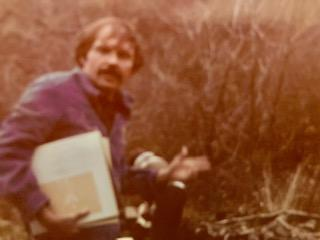
Dave Szymanski
Eddie Radtke
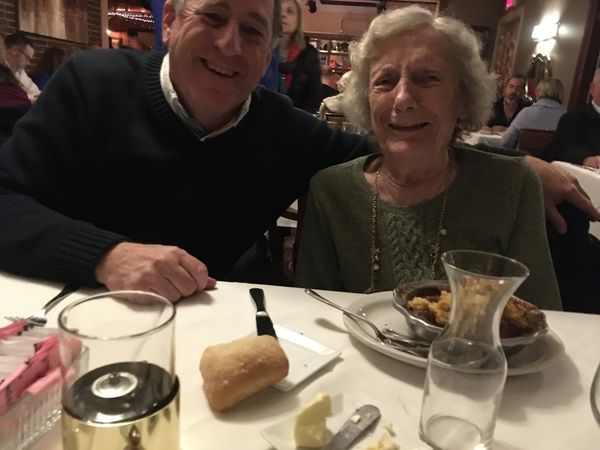
Letty Stone
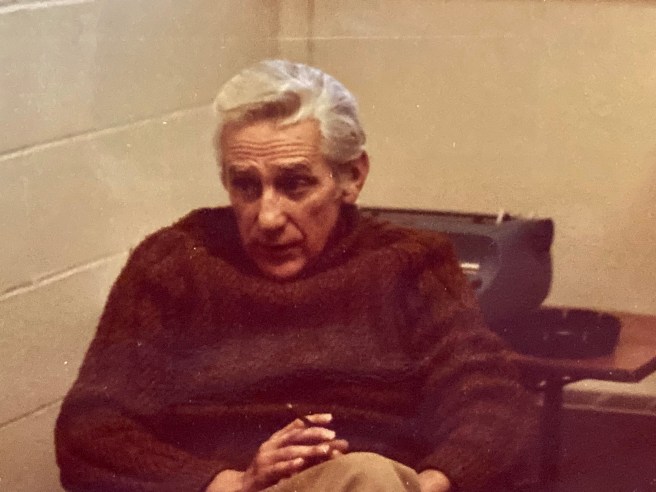
Fr. Dan Riley, ofm
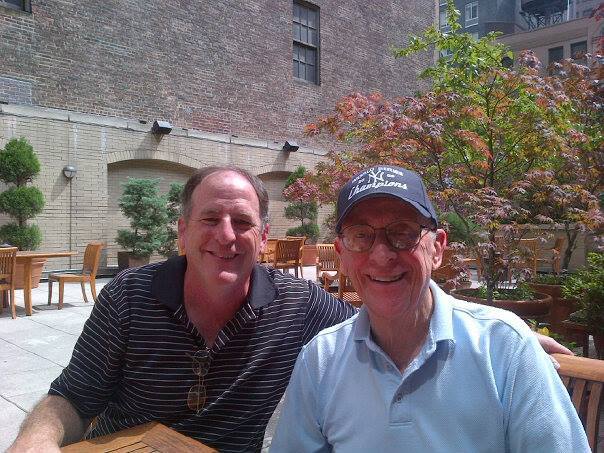
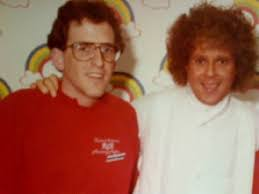
Richard Simmons
Dad and Mom
Pete Barrecchia
Fr. Dan
Cole Young
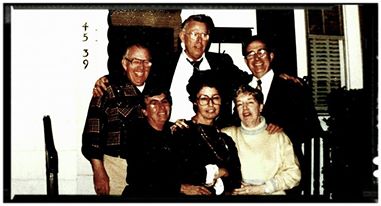
Dad and his siblings, Howard, Ed, Audrey, Phyllis, and Joan
Doug Dunn
Rachel Scher
Letty
My cousin Bill (with my cousin JoAnn)
Dave Weir (on left, with Mike Russell)
You’re the color of the sky Reflected in each store-front window pane You’re the whispering and the sighing of my tires in the rain
You’re the hidden cost and the thing that’s lost In everything I do and I’ll never stop looking for you In the sunlight and the shadows
And the faces on the avenue That’s the way love is
I don’t remember losing track of you You were always dancing in and out of view I must’ve thought you’d always be around
For the first time in fifty years—1974—I have no reason to go to Virginia Beach other than a Bloody Mary at the Beach Pub or breakfast at Ocean Eddies, and of course to visit my father’s resting place. 1974 was the year my parents purchased a house on the Lynnhaven River, and this year my mother left the Beach for Williamsburg. It’s odd, really, not needing to go to a place I needed to go for five decades. And while I’m the sort that never needs a reason to go somewhere, I’m painfully aware that Virginia Beach has permanently aligned itself with other towns of my past, such as Massapequa Park and Great River. Oakdale and Wellsville.
Forty-five years ago this past September I met two people that would change and influence me for years—Fr. Dan Riley, who would visit me every night late in the infirmary for a few weeks while I had the Russian flu, during which time we bonded and came up with the idea of a radio show—Inscape. And Dave Szymanski, who joined me many mornings every week in the campus radio station as we tried to figure our way through the gives and takes of that freshman year—him pulling news off the wire, me spinning albums, both of us talking, sharing, hoping. Both of them died this year, exactly forty-five years later, and I meet them sometimes in my mind when I need some advice or companionship.
Forty years ago I walked into a hotel room in Worcester, Massachusetts, thinking I was trying out for a part time job as an exercise instructor at some local health club, and walked out that day a member of the management staff of that club, working for Richard Simmons. It was a wild ride for a while, and the fall of ’84 found me moving into a beautiful yellow house near a reservoir, making a ton of money from America’s Favorite Exercise Guru, and having a blast while getting in shape. This year, forty years later, Richard died, reminding us all it doesn’t matter how full of life we are, how much joy we bring others, eventually we too pass all too quickly.
Thirty-five years ago this past summer my car broke down in the parking lot of Tidewater Community College. This was pre-cell phone of course, so I wandered into an office to use a phone to call AAA. While on hold, the dean—Bill DeWeese—said to his assistant—Eleanor Shannon—that he needed someone to teach Humanities on Wednesdays. I hung up and got the job. One week later I stood outside the door of my first class waiting for students and talking to a woman in an office across the hall. She had a heavy French accent and in those first five minutes we laughed more than I had the previous five months. Letty welcomed me to the college, and the next day we went for coffee. Eleanor passed away some years ago, Bill last year, and Letty this past July, nearly thirty-five years to the day after we met.
Thirty years ago this year I made my first of two and a half dozen trips to St. Petersburg Russia. Prior to that initial journey with my colleague and friend Joe Antinarella for a grant with the Commonwealth, it was much more difficult to travel there. But through the years I watched the city move from vacant streets without advertising or western influence, to restaurants and concerts, European clothing lines and shoe stores, American coffeeshops and fast-food joints, and we wandered freely throughout the backstreets of the Window to the West, knowing Peter the Great’s idea of a “New Amsterdam” had finally been fulfilled. And now, thirty years after that first month-long stay, the streets are again vacant of advertising and western influence, and I cannot go back, nor do I plan to go back.
Twenty-five years ago I made my first of many trips to Prague. It was a month-long stay as I taught at Charles University, was befriended by the great Czech writer, Arnost Lustig, and read all the works of one of the more influential writers in my life, Bohumil Hrabal. I also discovered Pilsner and Terezine, the Hunger Wall and 19 Nerudova Tea Room where I wrote an entire manuscript at night over apple strudel and Irish Crème tea in just over three weeks, and some years later published it as Penance. Since then I’ve come to know Prague as well as I know any city, though much there has changed. It seems change tends to happen.
We like round numbers, don’t we? We like even years, silver and golden anniversaries. More people showed up for the fiftieth anniversary of Victory Day in St Petersburg than the forty-ninth. More people observed a moment of silence on September 11th, 2021, than the same day a year earlier or a year later. We count in decades, we measure in leap years. You can buy birthday cards for someone’s 45th or 50th or 60th, but not their 64th, as if there is less reason to celebrate a life until they finish some imaginary five-year plan.
Still, on this fiftieth anniversary, I understand that I have no real reason to return to the Beach anyway, other than see my Dad’s headstone and tell him about the Mets. I remember the city like it was last week, and what a time it was, managing the hotel those summers during college, attending gigs with my oldest friend, musician Jonmark Stone, and lounging on the beach or at Ocean Eddies back when the drinking age was eighteen. I’m not nostalgic—we had our day in the sun; a lot of them, and I’m lucky enough to carry those memories with me. When I talk to Jonmark on the phone we don’t reminisce, we talk about when we can make our next tee time or when I might get out to Indiana. No, looking back is fine, really, as there’s always going to be something there for me, but it’s not nearly as productive as looking ahead. Fr Dan and Letty would agree; Dave maybe not so much but I didn’t love him less because of his instinct to recall our Glory Days at the radio station.
Many of my habits ended this year, some for the better and some absolutely for the worse, but they ended just the same—they aren’t sitting just behind me in some fog. They’re done. No more weekly phone calls or thrice a week walks. No more late-night Bailey’s on Ice at a mountain on New York’s Southern Tier. That’s why I knew as fall slipped away that this New Year’s is going to be an important one; this is not going to be the same old lang syne.
This year I’m traveling again. First stop, the Netherlands. This year two books are slated for release, one about teaching college, Office Hours, and one I started more than forty years ago and which I finally completed, Curious Men, which tied me to the past for four decades, and which ironically enough is about a time in my life I learned to jump first and invent the parachute on the way down.Perhaps I was simply in denial back then, or a little too angry. For certain I was depressed. But if I understand psychology correctly, this is the acceptance part. And just in time, too. It’s nearly New Year’s.
I understand most people live between the two, comfortable in the daily life of here and now, glad for the past, at the same time they have prepared for their future. Their New Year’s Resolutions are practical and fulfilling, and while some are broken, a birthday is an inevitable chance for a reboot.
So this year, borrowing from Fitzgerald’s Jay Gatsby, I have but one resolve. This year, after the loss of three people I spoke to nearly daily, the completion of a manuscript that on a daily basis brought me back to when I was nineteen-years-old, and a nearly complete amputation of a city that shaped my very existence, as my one resolution for 2025 I’ve decided to simply get out of my own way. In the words of John Denver, who has been there for me from the start,
It’s time to make mistakes again
It’s time to change the show
It’s time and time and time again to find another way
It’s time to gather forces and get out of yesterday.
Happy New Year everyone. Thank you for another year of reading my small entries here.
This is Part Five of a Five Part Series here at A View.
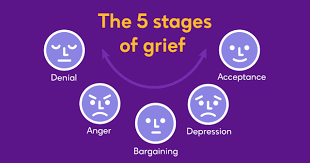
The five stages of grief as outlined in Elizabeth Kubler-Ross’ On Death and Dying are Denial, Anger, Bargaining, Depression, and Acceptance.
To wit:
Denial: A natural reaction to loss, denial can help people slow down the grieving process and avoid feeling overwhelmed. It can also be a way to try to understand what’s happening.
Anger: A common reaction to the frustration of no longer being able to live in denial, anger can feel like an emotional outlet as people adjust to a new reality. It can also provide temporary structure and a connection to the person who died.
Bargaining: People may try to change the circumstances that are causing their grief, such as hoping that things will improve if they take certain actions.
Depression: A stage of grief
Acceptance: A stage of grief where people find control and figure out how to proceed
PART FIVE:
Acceptance:
The truth is I accepted some deaths nearly immediately. Letty is the best example. We saw it coming eighteen months out and we talked about it often, particularly her take on the post-life expectations. She told me to look for the birds feeding on the porch and she’d be among them. She told me she’s just going to close the door behind her. So by the time July rolled around and she slipped away, acceptance of that new reality was already on the table.
Dave was more difficult having not told a soul about his impending death due to cancer. Richard was a shock but his self-isolation from society for several years prior to falling and dying made his death closer to acceptance than any sort of anger or denial.
They’re all different, and Ms. Ross is clear that the stages weave in and out of our consciousness, rising then receding, and just when acceptance seems at hand, depression might pop back on the scene.
The thing is acceptance is about knowing someone you love is gone and finally learning to accept that your new reality is one without them and learning to live that way. The less involved someone has been in your life, the easier acceptance becomes. Dave and Letty and Fr Dan and Dad maintained an absolute presence in my life, so accepting their absence, particularly since with the exception of my father, the rest all checked out at nearly the same time, has been more difficult. Accepting is a sense of no longer being lost when a particular time of the day might have been occupied by conversation or even texting, a long walk to the Farmer’s Market or a slow walk around the mall. The instinct might remain to wish you could do that again, or at the very least to slip into a funk because you can’t do that again. But acceptance is being able to remember those times, smile, appreciate how lucky you were to have at least had them, and continue.
Caution: Just when that happens, depression might snap back. Just saying. These stages are circular.
In any case, when my father died nine years ago, acceptance was easy because of the conditions of those last few years, but to this day I have trouble sometimes understanding that loss of security, even at my age. There’s something about the loss of your father that says, “You’re on your own, Pal,” even if I was an AARP member when it happened.
What I have found interesting is the larger picture here that I’m trying to frame for myself. Accepting the deaths of the primary people in my life from all stages of my life—Eddie from childhood, Dave and Bobbie and Debbie from high school, Joe and Cole and Dave from college, Richard from a time I was learning to live on my own, and through those years and the rest of my years until recently, Dad, Letty, and Fr. Dan, has caused an unexpected twist: the acceptance of my own death. While it has not become something I welcome, it has become something I don’t worry about, as if everyone else on my team went on ahead and is waiting, but that’s not right either.
Maybe it is just that I accept that the world keeps turning without them, and so must I, maybe even by living more, experiencing more, particularly for those who left too soon. Acceptance for me—and this isn’t for everyone—means that death is more a motivator, like a new teammate; we’re working together here, this unusual macabre mentor whispering in my ear through the absence of my friends and family, “Keep going,” or as Virgil noted, Death “twitches my ear and says, ‘Live. I am coming,’”
Acceptance comes quickly when you hope for someone to no longer suffer, but it soon evaporates and is replaced by those other stages, like soccer players on a pitch replacing each other, taking a break so that the entire Grief Team remains strong. Eventually acceptance will return and dominate until it is our turn to put others through those same stages with our own departure, closing that door behind us.
For me there has been one exception, and those who knew Fr. Dan, and more specifically had a relationship with him like I did, as many have had, my “acceptance” of Fr. Dan’s death was nearly immediate. Of course the suddenness of his death, particularly only a day after we talked and hours before we planned to talk again, allowed Denial to dominate, but with Dan it is different. It has to do with his spiritual presence in all he did, his nearly reincarnation of the life of St. Francis and how Dan discussed saints and holiness as if they were brothers and sisters and he was already in and out of the otherworld, and more often than not it felt like he was heavenly from the start and took some time to visit us on occasion. This is difficult to explain, but he was not of this world anyway, so his departure from it seemed right. Letty wanted to stay, as did Dave and all the others. But Fr. always struck me as someone who couldn’t wait to die despite his absolute love of life and nature and all that exists, not in any depressive, suicidal way, but as if he knew something we didn’t, and we’d just have to see for ourselves.
People over the last six months have not missed the chance to remind me “you don’t get over one’s death or grief, but you learn to live with it, live differently.” Yeah, I know, and I do appreciate the sentiment and concern, but while acceptance is the ultimate goal, denial remains my favorite.
The Yankees lost the World Series
(how’s that for a non-sequitur—hang in there)
and while I’m not a fan having pulled for the Mets during the playoffs, once the Mets were out of it, as a native New Yorker I had to pull for the Boys from the Bronx. I know many Yankee fans, including close friends and a handful of misguided cousins, and I could observe the five stages of grief play out over the course of the last twenty-four hours. Denial, of course, that they could make it that far and lose so swiftly, despite the game they kept for themselves. Anger, of course; I mean they left the bases loaded with one out! Come on! That lead to bargaining of what could have been done differently, followed by the harsh reality you could see on the players faces after the Dodgers won, and, of course like all players of all games, eventual acceptance that this one got away but wait until next year. Having been a Bills fan for decades I’m well used to the routine.
So Liz’s efforts to label the stages of grief allow us to stretch beyond just death and find them applicable to many situations. But at the end of it all is death, which for the rest of us is the beginning of life without someone we loved and still love.
When I go for a walk I think of these people, and sometimes simply by having a wandering mind I end up in some pseudo conversation with them, talking to Letty about the floods in Spain, talking to Dad about his putting, talking to Fr. Dan about how hard it is sometimes to keep going.
And in my head he tilts his head back and smiles that wide smile, lets out a small laugh, and says, “I know Bobby, I know. It’s exciting, isn’t it? To not always know what happens next?”
In these days now when this happens, he walks away just then and I watch him move into my neighbor’s cornfield like James Earl Jones, and I turn to see Letty staring at me, saying, “He’s right Bawb. You need to keep going. Just ask him,” and she points behind me where I see Richard bouncing from foot to foot, saying, “She’s right Bob! Move your tooshie!”
and that thought makes me laugh out loud, until depression settles back in, and just as EKR warns, it gets heavier and heavier, and heavier, until I put it down and spin back into denial, wondering what everyone is up to that day, out doing their own thing in the world.
But I know better.
You’re the color of the sky Reflected in each store-front window pane You’re the whispering and the sighing of my tires in the rain
You’re the hidden cost and the thing that’s lost In everything I do Yeah and I’ll never stop looking for you In the sunlight and the shadows
And the faces on the avenue That’s the way love is
Note: The following essay was originally titled “Carry That Weight” and published in the collection Borderline Crazy, as well as reproduced in several anthologies. Some years ago I received a call from Richard to whom I had mailed the essay. He loved it, and he bought several hundred copies of Borderline Crazy to give out to everyone at his club in LA, “Slimmons.” Not recorded in this essay is the crazy coincidence of me meeting Richard at St Bonaventure University where I was a senior and ran sound for the college two years before I went to work for him. He came to do a show, and during rehearsals he asked how loud I could get the music. When I said as loud as he wanted, he called me a smartass and walked away. I didn’t think I was, since I really could turn it up; we had equipment used by Springsteen. I cranked the music and the room shook. He gave me a dirty look. When I got to know him well, I recounted the incident and of course he had no recollection. “But I was so arrogant then,” he said. Some lessons we learn too late.
When Richard died today, my oldest friend, Jonmark Stone, gave me the news, and while I was just guessing that he was probably on his way out, it still shocked me. I think because he was so full of life. That always seems the be the case.
For those who know me, the publication here of this essay is absolutely predictable, but I’m happy to say it comes with the imprimatur of Richard himself, may he finally, finally rest in much peace.
Carry That Weight
I managed a health club in Worcester, Massachusetts. Before it opened, we trained at another club in Natick, Massachusetts, thirty minutes away. I went to as many classes as I could, sometimes just to get exercise, and sometimes to lead the session for practice. Once, after the lower body workout, the instructor, Ellen, asked me to do the arm isometrics.
“You want me to work their arms?” I asked, prodding Ellen for an “Oh, never mind.”
“Yes, Bob. Come on.” She looked in the mirror and pulled at the skin under her chin.
“Just do what Richard Simmons would do,” she said and smiled wide. Ellen was in perfect shape, and the break was not to give her a rest but to offer me experience. Ellen swept the hair back behind her ear, not a drop of perspiration on her.
“And what would Richard Simmons do?” I asked, sarcastically.
“Well, okay. But do what you want to keep them going for about eight minutes. Let them rest whenever they want. Smile. Sing. Scream. I don’t care,” she said, and kneeled on the platform behind me, seemingly praying to Our Lady of Vanity.
I swallowed hard and put my arms up in an appropriate crucified position, palms pointed out. I moved them to the beat, slowly gliding about the room trying to get everyone’s arms higher than their hips. Ellen whispered for me to take it easy, but I couldn’t. I moved about and got their arms tottering to Wham and called about the studio for everyone to think of their favorite thing and yell it out:
“Spaghetti! Discount stores! Discount food stores! Malted Milk Shakes and French Fries!”
I laughed and switched to pushing the palms toward the ceiling, walking about to keep them from turning isometrics into jumping jacks.
I needed to keep their minds occupied. “What are you holding?” I screamed.
“A Plate of Spaghetti and French Fries!” “Two Pizzas!”
“Seven Snickers Bars!” called one woman, Betty, and I moved over to her.
A few weeks earlier, the regional supervisor, Niki, had asked me to sign people up at a trailer near the construction site in Webster Square when I wasn’t training or attending classes in Natick. Sure, I thought. More money–I’d be paid per signature. And since the average woman in Worcester wanted to lose weight, this would be easy. Cars pulled up and women came in, signed up. Fourteen dollars down, fourteen a month for the lowest plan. Three hundred sixty five a year for the highest. For that, they got classes from nine till eight, six days a week, exercise bikes, showers, a nursery, and nutritional counseling.
When Betty came to the trailer, she signed for the complete package, and immediately recounted her caloric intake so far that day. I stopped her when she got to the ten Snickers bars. I laughed, thinking she was joking. She got quiet and the silence weighed heavy for a moment. I told her I’d like to see her down to about seven Snickers bars a day by the time the club opened.
She notified her friends and two days later I signed up eighteen people in one hour, setting a record. Oh, some were in fine shape, fine in every way, and probably didn’t need to be there. But winter in Worcester is brutal, and they wanted a fun, indoor setting to work out with friends and meet people. They came with questions: How long will it take to lose 135 pounds? “About two years.” Can I still eat at Papa Gino’s once a week? “Salad, yes, with water, not Diet Pepsi.” Will exercising make my breasts smaller? “Sure.” Or sometimes, “absolutely not,” depending upon who asked. They came with doubts. They came with their defenses high, ready to quit. We built the club and they came. I was quickly designated a manager along with a slender woman named Andrea, and we kept the clients coming. I got my pitch down to a minute before they wrote the check. I hated to leave each day; the money was coming in already and I hadn’t taught a class yet.
And sometimes these new members summoned the nerve to attend classes at the other clubs as well while waiting for the new one to open. Betty found her way to Natick, along with some of her friends, and stood before me, arms stretched out, longingly imagining seven Snickers bars in her palms. We laughed and I slapped her hands as they went up and down, calling for her to keep them going. I heard moans and sighs, grunts and “Oh God” and it was then I knew I’d never see opening day. I had no business being there. I mocked and ridiculed these people in my mind while hypocritically encouraging them. For God’s sake I was only twenty-four and deeply arrogant, mostly from absolute insecurity. I didn’t fit in. I had trouble relating to the women and difficulty justifying a job not remotely close to comfortable for me. At twenty-four I had other plans. I was going to do something with my life. I was going to make a difference, not schlep my time to some small city women wanting to look better.
This all bantered about my brain while Wham slammed against the studio walls. Women toppled fast. And just then, before anyone else could see him, Richard Simmons entered the studio from behind, put his arms out to join into the rhythm, and then, at the top of his red-afro lungs, squealed “Come on! Keep it up!”
Let me back up:
Several years after college I moved to central Massachusetts. I read the papers and the bulletin boards, perusing them for good paying, low effort jobs. I found one advertisement for a job as a sound engineer for a radio station in Winchester, a town toward the New Hampshire border.
Then I saw this:
“Wanted: Exercise Instructors at new health club in Webster Square, Worcester. No experience necessary, will train. $12 an hour per class taught. Tryouts at Quality Inn, Worcester.”
Cool. I was in shape.
About one hundred people showed for fifteen positions. Not many guys were there, maybe six.Most of them were a bit chunky, with waxed hair and wavy voices. They wore leg-warmers outside their neon Adidas suits and hummed dance re-mixes to themselves. One guy weighed about 200 pounds standing five four. He wore tan slacks, a white shirt buttoned past the neck, and brown socks lazy about his sneakers. I peered at the women. They ranged from athletic to asthmatic. Most were in their late teens and early twenties, though a few former Chorus Line looking ladies showed up, late forties, too much make-up, too little sense, sporting matching headbands and leg warmers, car keys on twirly, neon wires about their upper arms. Most of them flocked in front of the one mirror in the room, plucking the skin under their chin trying to shape it.
A woman wearing a red warm-up suit entered carrying a clip board and gave us simple instructions. We were to line up like an exercise class. Then one at a time we had to take turns motivating each other to move; the training would come later. When advanced to the lead, some screamed in faces, micro-managing us into twisted pretzel-like contortions. A few sweet-talked us to bend and fold and tuck and turn, teaching while tugging on their skin. The brown sock guy got up and, during some arm isometrics, yelled for us to “Keep it up! Keep It Up! KEEP IT UP!” and then collapsed, barely breathing, spent. He lay on the floor till all his body parts stopped twitching.
After three days they picked the team: Fourteen girls and me. A few of those chosen were quite rotund, while others had no reading on the fat scale. One small girl, Susan, was transparent. Our instructions were clear: The club would open in seven weeks, during which time we would train seven hours a day, five days a week. We would learn to warm up, work the neck and arms, the waist and thighs. We would know the butt, the abdomen, and the names and purposes of the muscles; how to measure, motivate, choose music, and tender nutritional counseling. We trained in a large hotel room and when not training were told to attend classes at the other clubs. We showed up to the hotel the first Monday at eight to meet the directors. Maureen, or Mo, was the ring leader–the one who got us mobilized during tryouts, and she brought with her some California-type women, carrying mats and hair clips and red sweatshirts.
I almost left. This was not my scene, and I was clearly the focal point from the outset since I was the token male. Clearly, I’d be the one to maintain gender balance, bring in the male population of Worcester. Ferry in the overweight, brown-socked guys.
We gathered and sat cross-legged, ready to embark on the grueling two-month march toward hard-bodies and well-balanced diets. To start though, we briefly met the owner of the club. Turns out this was his sixth club in New England after expanding from L.A.
And in he pranced. Red shorts, stripped tank-top shirt, orange afro and deep tan. He came in calling, “Come on and move those tuschees!” his arms flailing about, his mouth somewhere between a pout and a pucker. With no escape, with no warning I found myself with fourteen female trainees, three female trainers, and Richard Simmons in a sweaty hotel room. I watched him ricochet about in his tight red shorts and tank top.
At the hotel in Massachusetts, we primed from the top down. The neck, bending and rolling it, had to be loose, and the waist and the arms and the legs, thighs, butts, calves, abdomens, again and again, rolling and stretching and challenging them, from the top down until they were limber or taught and firm or loose. For a while I burned, then I ached, then I could not move at all. Finally, I was relaxed and ready, but the club was still a few weeks from completion. They were adding the grey carpet with red stripes, the grey, red and white walls, and the “Richard Simmons Anatomy Asylum” sign. Women waded into the trailer after that sign went up, and membership increased to the thousands.
So at the Natick club, when Richard sprayed into the studio, I prayed it didn’t turn into a rumble. Betty dropped her hands and started to cry. Women wailed. Walls vibrated. Richard slid behind Betty and slapped her hands from behind, calling out, me in front, him behind, and Betty separating us by a good three feet.
“Come on!” he called. “Keep them up!”
“You’re doing great, Betty” I said, with as much gusto as I could gather. She grew pale and distant, her eyes watering.
“Come on Betty! Keep it going!” Richard screamed, and the women flapped their arms again hoping he’d move near them. But he stayed with Betty and me. “Keep it up! Keep It Up! KEEP IT UP!” he kept howling.
“Keep it up, please!” he yelled, and I retreated toward the platform, allowing him the floor. Ellen smiled at me, coming out of her trance.
“You knew that was going to happen, didn’t you?” I whispered to her. Richard sat everyone down and they panted. Some continued to walk about, getting their breath. He sat and crossed his legs, straightening his back and looking at each person, slowly, smiling.
“Do you know why you’re here?” he asked. Some laughed and said “no,” and a few kept panting. “It isn’t to lose weight.” Everyone laughed. Even I laughed, perhaps too loudly.
“You’re here because you want to feel good about yourself again.” He nodded, getting everyone else to nod. Soon the whole room was nodding. Even I nodded. “You want to feel good about yourself again,” he repeated, as if it didn’t make sense the first time. Actually, it didn’t Now, however, people stopped breathing heavily. They stopped walking around. They listened now.
“Just being here shows me that you already are feeling good about yourself. Do you remember how depressed you used to get?!” he asked, laughing at the same time, brilliantly moving their problems immediately to their past. “Do you remember when food was kinder to you than your husbands? When the only thing that calmed you down was eating? Sitting around, watching “General Hospital” and eating?” Everyone clapped, acknowledging the show upon which Richard spent four years early in his career.
“I KNOW girls! I was you!!! I really really really was!” He was. He tipped the scales at weights never revealed but well over the size of anyone in the studio. He grew up in New Orleans, and after overcoming some of his weight problem, he moved to LA where he could not find a single health club for anyone not yet in great shape. It all started then.
“It’s about feeling good, girls! Be proud of who you are and remember you have two choices! Not one! TWO! Say it with me,” and the whole studio chanted with Richard “I’VE GOT TWO CHOICES!”
They grew quiet. “You can let the simplest thing depress you. Or you can let the simplest thing make you laugh, make you say “I am too good to feel bad!”
They cheered and Ellen put on Donna Summer’s “Last Dance” as everyone followed Richard’s cue to start bouncing about the studio.
I left and went to the shower. There was a men’s bath and shower by law, but it might as well have said, “Bob” on the door. I don’t recall having ever seen another male inside.
I sat on the bench in the locker room for awhile, and then showered. When I came out, Richard came into the cramped quarters.
“You had them going beautifully!” he said. “Oh, isn’t it so exciting when they laugh and move around so much! It makes me shake to think about it!” he said, his arms to his chest in a self-hugging hold. His left eye was tearing.
“Yes, very exciting,” I agreed. I sat on the bench staring at the red and grey cinder blocks, counting them.
“Niki tells me you are going to help manage the club!” he said. He hadn’t heard a thing. His grey roots were barely visible past the red strands of live electrical wire flaring from his scalp.
“Yes. Manage, yes.”
“You’ll help them loose weight, sure, but oh how they’re going to love you for making them feel better!” He held my hands. “Do you realize what can happen if they don’t feel better about themselves and don’t lose some of their weight?”
He told me:
Hypertension. Cerebrovascular accidents. Myocardial infarction. Congestive heart failures. Prostate cancer. Colon cancer. Rectum cancer. Gall bladder disease. Gouty arthritis. Osteoarthritis. Sleep apnea. Richard pushed his head forward with each disease, to accentuate the seriousness of it all. “And Pickwickian syndrome.”
Pickwickian syndrome. That can’t be real, I thought. You’re making this up. I’m living in a bad Dicken’s novel, I thought.
But it’s real. Obesity, red face, under-ventilation, and drowsiness. Pickwickian syndrome.
“But we can help them feel good about themselves and then they’ll lose the weight. They’re not heavy simply because they eat too much. They eat too much because they are depressed,” he said. Husbands belittle them; strangers make fun of them. They eat to gain immediate sensory pleasure, which depresses them, which causes them to eat. It is a bloody cycle.
I nodded. “Well,” I said, “I’ll do what I can to change that.”
“Good. I will see you at the opening! Good work today! Keep an eye on Betty!” He took my hands in his. “Really, please keep an eye on her,” he said, and he left, a wave of screams and “Oh Richards” washed into the room as the door gently closed. I stared at the wall and thought of Snickers Bars. I thought of Richard and how he really moved those women. Then I thought of the money, and repeated what had become my mantra: “The money is great and I’m getting in shape…the money is great and I’m getting in shape…the money…”
Money. “You whore,” I thought. Yeah, whatever. I was 24.
On opening day in Worcester, between the classes and autographs with Richard, and pictures and parties, Andrea and I met with women in our cubicles down a short hallway. We left the doors open to the small boxes called our offices.
“I love the smell of new carpet,” she said from her office to mine.
“Uh-huh,” I replied. I picked up papers available at the desk about obesity and depression and had been reading them. “Andrea,” I called across the wall, “check this out.”
“The average American woman weighs 140 and stands 5,4. The average model weighs 115 and stands 5,10. Fashion models are thinner than 98% of American women. 91% of college going women attempt a diet. 22% are always dieting. Between 5-10% of women will have an eating disorder as a result of dieting. That’s between 5-10 million women. Shit. 50,000 of them will die from an eating disorder. 95% of dieters will gain back the weight within one year.”
She walked to the door and leaned against it, listening more closely.
“45% of American women are on a diet at any given time and spend over 50 billion dollars a year on diet-related products.” I looked up. “That’s more than the gross national product for Ethiopia, Somalia, and Mozambique combined! And everyone there is starving to death! Don’t you see the irony? And the money is all being spent on diet related products!”
“Like health clubs,” Andrea said, reminding me of why I was there to begin with: to make some of that money. We walked to the lobby to greet more members.
We met women for sign ups, weigh-ins, and nutritional counseling. Some ate more for breakfast than I would the entire day. Others refused to eat thinking that will be a smart weight-loss program. Some signed just to meet Richard. Some were too embarrassed to come alone. Some hid if they recognized someone else. After teaching one of the advanced classes, I sat recovering in my office, signing up some Pickwickian chick from Auburn, Massachusetts, who left her family at Papa Gino’s pizza place a few doors down and she had to get back before dessert. As she left, Betty walked in, crying.
“Are you hurt? Betty? Are you alright?” I asked. Andrea came in quickly, asking if she should call someone.
Betty looked up. “No, thank you. I’m fine. I just need to talk to Bob.”
Andrea left and closed the door, cutting off the last remaining source of oxygen.
I sat for a moment while Betty amassed herself.
“Bob, I need to quit. I cannot continue,” Betty said. She was serious, staring right at me, confident in her decision.
“What happened, Betty? Was class tough? You hung in alright in Natick. What’s going on?”
“I am fat,” she said. “I will always be fat. Have you looked at those people out there?”
Okay, now, I had this empathy problem. I had no problem sympathizing with these women because that is an intelligently charged reaction. I could think through their problem and understand why they felt bad, depressed, why they felt like quitting. But empathy is an emotionally charged reaction. To empathize is to identify with their situation because I could so easily stand in their shoes. Sympathy is the generalization; that is, it is to understand the big picture and comprehend the difficulties involved. But empathy demands a more specific reaction. It is to target a specific individual, that person’s circumstances, and truly understand.
I really wanted to empathize, but I already knew I didn’t belong.
“I see them Betty, I do. And I somehow can sympathize with you.”
Betty got excited. “But I can never be like them! To be around the thin ones reminds me of what will never be! To be around the fat ones reminds me of who I am, and I don’t like me!” She started to cry again. She opened her purse pulled out a Snickers Bar, looked at my disapproving smile, and put the bar on the desk.
“Bob,” she said, after a long sigh to gather the guts to ask this, “Do you notice how fat I am?”
Wow. How do I answer that one? Yes, and she cries, affirmed of what the world has already grasped; No, and she loses trust in me, who is to counsel her in nutrition, exercise, and motivation. Andrea called out for me to come to her office, and I dismissed myself before I had to answer.
“Would you excuse me for a minute, Betty? Promise you won’t go anywhere, right?”
“I’ll be here. I am not leaving till after everyone else does,” she said.
I moved into Andrea’s office. “Geez, Andrea, she’s suicidal in there.”
“Richard has to go and we are getting our picture taken with him in the nursery,” Andrea said.
When we got to the nursery, Richard was talking to the parents and the kids and other workers. The room was quiet, and he stood perfectly still, rubbing his hands together. Everyone listened while he talked, and he made eye contact with every single person in the room. He touched those close to him. He stared hard at those across the room. When we entered, he waved, but kept on talking. The crowd was enormous. People had come from Worcester to Boston. And they all listened to Richard:
He put his hand on a child’s head, a little girl about eight. “How you feel about yourselves is how they will feel about themselves. How you act is how they will act” He choked up a bit. From this close, however, I noticed something quite revealing: he meant it. Pure empathy. “What you do is what they will do. Love them, but don’t forget to love yourselves. Truly, love yourselves.”
I recalled the fact sheet in my office: More than half of the children in this country only feel good about themselves if they are on a diet. And almost half of first to third graders want to be thinner.
Richard looked across the room and whispered. He whispered because his voice broke when he spoke loud. He whispered so he could get through. His eyes caught those of everyone else’s. “YOU are important! And when YOU believe it, she will believe it!” Then everyone talked and moved about and hugged Richard and each other and hugged the kids. And Richard hugged the kids.
We did the picture thing, fluffy ballooned wallpaper surrounding our heads, Richard between us, smiling, his hair tickling our faces.
“What do you want from working here?” Richard asked Andrea. He held her hands between his.
“To have fun,” she said. “And make money,” she added
I knew it was coming. “To pay my rent,” I returned, smiling.
“Oh but you are going to help people so much!” he said. “Think of all the people you will help!” We moved to a quiet corner, and he asked if we had any questions.
“Richard,” I asked. “How long is it going to take some of these people to lose, say 135 pounds?”
Without hesitation: It doesn’t matter.
“Is it okay to tell them places like Papa Gino’s Pizza are okay to go to?”
For salad, yes, with water, but not Diet Pepsi.
“Will exercising make their breasts smaller?” Andrea took me by the arm and escorted me out of the nursery before I got an answer. We headed for the door and Andrea reminded me Betty was waiting.
“Betty?” Richard asked. “Our Betty?” He stared at my eyes trying to read me, trying to understand me. Completely intense. Completely honest.
I nodded. Our Betty, I thought. I started to feel shallow, and that feeling began to weigh heavy.
“What’s the matter? Is she alright?” He became serious; his hands rubbed each other in a nervous, compulsive manner. I rubbed my face and sighed.
“Richard, she’s doing seven to ten Snicker’s Bars a day, just asked if I notice how fat she is, and wants to quit because the thin people here make her realize she never will be and the…heavy…ones make her feel hopeless. She’s in my office,” I said, finally completely aware of my inability to relate to these people. I could never have the look and intensity Richard had at that moment. I headed back to tell her, yes, she is massive, but it is no big deal, and she should be proud of who she is inside and blah blah blah and yada yada yada, and no there is nothing wrong with that, and we worry too much about the superficial elements instead of the spiritual ones and on and on. Mr. Cliche. Dr. Trite. I turned down the short hallway to my office when Richard caught up, springing up next to me saying he’d like to join me with Betty.
I walked in first and Richard followed, sitting in the chair next to Betty. She screamed and cried. A crowd gathered outside and I closed the door and sat down.
“Betty, this, of course, is Richard Simmons. He asked if he could join us. I hope you don’t mind, but I told him what we were talking about and what you asked, if I thought you looked fat.”
“Oh my God, it is so great to meet you!” she said. They hugged and recounted the Natick club experience for a moment. “Well?” Betty asked, looking at me then to Richard.
Richard sat up, his torso seemingly in perpetual motion. “Can I answer you Betty?” he said, grasping her hands.
“Of course,” she answered. Thank God, I thought.
“Yes, people notice how fat you are. You are, and people will notice.”
“Oh God, I know,” she said, laughing and crying at once at the reality of it all.
“But who cares?” Richard said. “Who cares? Why do you care?”
“I want to be pretty. I want to feel good about myself,” Betty said.
“They are not the same thing, Darling,” he said, shaking his finger at her. Richard picked up the Snickers Bar. “Does this make you feel good, Betty? Or does it make you feel bad?”
“Both,” she said.
“You can’t have it both ways, Betty. Come on. I love you Betty. I know what you are going through. You can not have it both ways. Feel good or feel bad?” Again he held the Snickers Bar, this time unwrapping it some.
“Bad,” Betty said, and Richard put the bar back down.
“Betty. Betty. Betty, Richard kept saying. He hugged her and kept staring into her eyes and hugged her again, holding her hands and then staring into her eyes. I hadn’t eaten since dawn, had taught an advanced workout, and focused on the Snickers Bar.
“Betty, don’t quit. You don’t have to come to the club, but you can’t quit on yourself. God is too great, Betty. You are part of it all. You can’t quit. And quitting is more than just leaving, it is abandoning yourself, inside. Don’t quit. I know it isn’t simple, Betty.”
They sat quietly for a moment, and Richard sat up, wiping some tears from his face.
I decided to give this advice thing a shot. “Betty,” I said, “It is simple. It really is. You going to stop on the way home and pour coke in your car?”
She laughed, “No,” she said.
“No, it won’t run, but we pour that filth in our body and can’t figure out why it won’t run. But we choose to pour it in. We do it to ourselves by choice! Are you going to consciously drive your car into a ditch on route 12 going home?”
Again she laughed. Richard sat nodding, a smile on his tanned face.
“But you’re going to do things that drive your body to its death. Sure you’re depressed, but you are more depressed because you make choices that are wrong. Don’t! Remember what Richard said in Natick–you have two choices!”
He spoke up. “You worry too much about what is superficial. You worry too much about what things look like and what you are looking at in the mirror. A person must seek refuge inside, and then work on the rest. Work on the inside, and then on the outside, okay? You are so beautiful, Betty.”
She nodded, standing with Richard, who took her by the arm and walked down the hallway to “Oh Richards,” and screams and wails. She hugged him. She hugged me. Richard hugged me. Richard hugged her. “Come and let Bob know all the time how you are. Go to classes and just walk around in the back whenever you want. You have a great attitude You will lose the weight someday, but first, weigh yourself inside” he said, touching his heart, tilting his head, tearing up. “Promise you’ll come?”
“I will,” she said, and he embraced her a long time. He turned and waved to everyone, standing on his toes and waving with his arm stretched up and his hand bent down. He blew kisses with both hands and I hedged back into my office and closed the door. “Your choice, Bob,” I said to myself, “I stared at the candy.” Andrea came in, took a bite of the snickers, and leaned against the desk.
“What do you think?” she asked. I shook my head. The club was relatively quiet, everyone moving to the parking lot to wave goodbye to Richard. A class continued in the rear studio, but no one was about the offices.
“This is serious. These people have some serious problems. He can really make these people feel good no matter what they look like. What a difference,” I said. “Shouldn’t we have a shrink on staff?”
“Nah,” Andrea said. “Just a refrigerator.”
“Oh don’t be a smart ass,” I quipped back.
Andrea laughed. “No, we work on the body, not the mind,” she said.I thought of Richard and knew that just wasn’t true. This place had less to do with weight loss than it did therapy. It was all about the mind, all about choices. Andrea handed me the Snickers Bar and left for the lobby. I tossed the candy in the can and walked out and watched Richard’s limo drive off. The women all turned toward the club, toward Andrea and I standing in the window, and I realized the burden we carried.
Afterward: To note Richard’s sincerity. About a month after the incident in this piece, Richard called the club and we talked a bit and then he asked for Betty’s phone number so he could call and check in with her. The woman who went home on Friday before the phone call came in to the club on Monday after the phone call with an entirely new outlook on life. It is safe to say he deeply touched the lives of millions of people, some of which he quite literally saved.
I am twelve pounds over what I want to be. The reasons aren’t relevant; I can make excuses as is customary in situations like this. I have had a stressful year; circumstances with obligations kept me from my routine, I was pretty sick for a while, and my son constantly makes delicious bread.
Whatever—here I am.
At the same time, I was once a highly trained and practicing expert in exercise and weight loss. I ran a club for one of the most celebrated and accomplished exercise gurus in America, and I went through months of training, eight hours a day, five days a week, to learn about how to properly work every muscle in the body, how to eat, how to lose weight and keep it off. I helped work out everyone from college football teams to excessively obese women. Granted, that was more than thirty years ago, but I still remember the process.
I know, for instance, age has little to do with it. DNA plays a part, of course, but in most situations, adjustments can be made as we grow older. Certain conditions and diseases are as close as we come to a true “reason” for weight gain. Certainly, metabolism slows making it more difficult to shed pounds as you age, but most of the gain or lack of loss is environmental, and there are compensations readily available to make up for that. Schedules are another oft-referenced excuse, but the exercise aspect doesn’t take long and the eating, well, if you’re doing it right, takes less time than you think.
No, we simply don’t bother doing what is necessary because of lack of will power, bad habits, pressure from loved ones, bad associations, and a slew of other contestable dissents.
I am not trying to go back to being twenty-five-years old, though how cool would that be? No, I’m going to apply the knowledge of then-me to the increasingly discouraged now-me. This has nothing to do with how I look; it is about how I feel. I used to tell all people who came to the club that it is not about the scale, it is not about how it weighs on your mind. It is about how you feel about yourself. Friends say I don’t look like I need to lose that much; but it isn’t about what they think.
For some reason in my life right now it feels like a good time for a complete renaissance. So here are a few guidelines I plan to follow to help me lose weight by New Years Day. I used these at the club, and they helped some members lose upwards of one hundred and fifty pounds:
It’s an old axiom but it is true: breakfast like a king, lunch like a prince, dinner like a pauper. 2. Cut back the carbs, cut out the sugar, cut out the salt. 3. Plan the day’s food the night before and stick to the plan. 4. Drink a lot of water; often we aren’t hungry we’re dehydrated. 5. Cardio ten to fifteen minutes a day through swift walking or climbing stairs. 6. Get on the floor and do simple sit-ups, leg lifts, and a few others you can learn by Googling “lower body exercises” to work the waists and thighs fifteen minutes a day. And move slowly; speed during exercise is counterproductive. 7. Abdominal work 8 minutes every other day. 8. Arm isometrics for five minutes every day.
And the small things:
1. Park far away from anywhere I’m going (not too far). 2. Wear comfortable shoes. 3. Carry water. 4. Stop thinking about food, talking about food, and watching shows with food.
And the quirky things:
1. Brush your teeth when you start to feel hungry. No one ever enjoys following teeth-brushing with chocolate or sugars. That’s disgusting. 2. Eat food with natural sugars like oranges and apples, which are healthy and curb the desire for junk. People say to me, “You know fruit has sugar.” Come on. Show me one friend who is obese because of figs and oranges and I’ll go back to Oreos now. 3. Leave your money at home. Empty the wallet except for what you need for gas. Carry no change and convince yourself that charging fast food is just pathetic. 4. Keep the list with you of what you’re going to eat for the day. 5. Avoid dairy; it screws with the digestive system. 6. Until you reach your goal don’t agree to go to the normal places with family or friends where you always end up getting something to eat. 7. Wear tight clothes. Everyone feels thin in sweatpants. And yoga pants are for yoga; not for airports or classrooms or grocery stores. You might as well come naked and start in the cookie aisle. 8. Choose one day (and it must be the same day—Sunday works for me) that you’ll allow yourself to not worry about what you eat (still worry about how much you eat, keeping the calories below 2000). This gives you something to look forward to instead of constant denial, which inevitably results in binge eating. When someone at the club would crave pizza, I’d suggest they make plans to have pizza that Sunday while watching football. 9. Set up a plan to cut back on bad habits. To cut out completely is always a mistake, just like with alcohol or heroin, there will be some serious withdrawal problems resulting in falling off the wagon. So if you’re doing ten snickers bars a day like someone I knew at the club was doing, go down to eight, then six, then four, in subsequent weeks until you’re only having one a day, then one a week. 10. Don’t check the scale. Stop worrying about how much you are losing; you’re going to go up and down for quite some time until the body adjusts and then will finally find the slope back down to what you are working toward. If you must must must must check the scale, do it once a week at the same time wearing the same clothes, and then make sure you laugh at the lack of results when they don’t happen. If you have a deadline for losing weight, count on no more than two pounds a week, ever. If you do more, that’s great, but losing just two pounds a week insures you are seventy percent more likely to keep it off 11. Stop going to grocery stores; send someone else. Tell your son to stop making bread. 12. Stop STOP STOP!! Eating out!! The sodium alone in processed foods will keep the weight on and cause unwanted heart problems.
Do. Not. Quit. After three weeks if you stick to this, you’ll more naturally start to accept this way of doing things, and it will work. I’m using the second person here but really that is mostly so when I read this again I will talk to myself (which is more normal for me than you might think). And this is key: I’m not trying to lose twelve pounds; I’m trying to lose three pounds in two weeks. At that point I’ll think about the next three. Eventually it will be the twelve. Think about it: We are adamant about what type gas we put in our car but not what food we put in our body. That’s insane.
One more trick, and I am not trying to be mean. Find two pictures of yourself: one when you thought you were at your best, and one when you were at your worst, and keep them somewhere visible. If you don’t have any, find a picture of some poor slob eating a box of Krispy Kremes, and find another of some buff person. In both sets of examples, ask yourself which direction you’d prefer to go and are you doing anything to get there. Two pictures; two ideas; two dreams of what can emerge, and shelf any notion that starting over is more difficult. I won’t list examples from the club or from the world at large of people who made up their minds to see it through. And the list of people who lost their target weight only on the fourth, fifth, or tenth attempt is extensive. In the end, though, it only worked when they did it for themselves. Just for themselves.
The first time I ever heard my boss at the club offer advice I was sitting right next to him and I not only never forgot it, I used it many times both at the club and in classes at the college:
To paraphrase: Too often we do things because we are bored or depressed or because we aren’t getting along with someone we love or something isn’t going right at work, and we do something self-defeating because it is something we can control, such as eating. We can eat what we want and no one can stop us and it makes us feel good and empowered. The immediate satisfaction is worth the price of any long term problems. Sometimes when we eat it is the only time we feel alive. But you always have two choices. Always. You can do what brings you toward your goal or do what takes you further from your goal. Two choices. Immediate gratification at a cost or a lifetime of satisfaction. You decide. YOU decide.
For me? Well, twelve pounds to go doesn’t seem like much. But that’s more than two five pound bags of sugar strapped to my body. Try that. Go buy bags of sugar to equal the amount you want to lose, strap them on, then walk around. THEN, take them off. That’s step one.
Step two? That’s up to you.
Merry Christmas. I’ll raise a glass of eggnog to our mutual ambitions. Next Sunday.
Yesterday I sat with someone who asked questions about my past. Vague questions, searching, I assume, for some root cause or instigator of both good and bad changes.
“You’ve worked a lot of jobs,” she said, recalling an earlier conversation some months ago. “What was your favorite?”
Easy.
When I was twenty-four years old, I managed a health club in central Massachusetts. It was a great job, and I started before the building was even built, signing up members in a trailer next to the site. When it opened, it smelled new. The grey carpet, the red and grey paint on the walls, and the wallpaper glue in the nursery.
We had two studios, the one up front being larger, both soundproof—kind of—and beyond the studios down the hallway were about ten Lifecycles, the nursery and two locker rooms, though only the women’s locker room could be considered such, the men’s might as well have been a closet with a shower since out of about four thousand members, the overwhelming majority of them—I’d be safe to call it one hundred and ninety nine out of two hundred—were women.
The workout lasted an hour, and we worked every muscle in the body from the neck down. We did aerobics as part of the program, of course, but also lengthy isometrics, abdominal work, thigh and butt work, everything. We also did motivational talks during the warm-up and cool-down. We were trained for this for eight weeks, eight hours a day, five days a week. We were trained in muscle work, exercise, breathing, health concerns, CPR, nutrition, and, of course, motivation.
The music would seep out of the studio windows and drift down the short hallway to my office. Music like Wham’s “Wake me Up before you GO Go,” which, while I despise that stupid song, ignites something in me that makes me feel strong enough to run uphill all out for hours whenever I hear it. “We are the World” had just happened, so there was that, and Springsteen’s “Born in the USA.” Madonna, Mariah, Michael, Seegar (Bob not Pete), and more. What a life it was then. I went to work managing this place, making a ton of money wearing a sweatsuit, listening to music surrounded by a sea of women, and I lived in a cool house on a reservoir.
Oh, we had no problem signing up members. In Central Massachusetts in the winter there are only two things to do: ski at Mt. Wachusett just up the road from my one-hundred-year-old yellow house, or nothing at all. So they built the club and people flocked in. They came to this particular club for a very good reason. You see, a good number of the members needed to lose weight, many of them more than a hundred pounds, and while I taught advanced classes that included the Holy Cross and Boston College football teams, I also taught women who on a daily basis did not move; they were an entire other human being overweight, and many could and did eat a box of ice cream by lunch. We needed to show these souls that they did not directly have a weight problem, they had a depression problem—bad marriage, bad finances, no education—whatever, and the depression emerged from their psyche as hunger. They were not going to lose weight unless they lost the depression, so we had to work on both.Some took much longer than others to understand this; myself in particular.
This was before Yoga hit the mainstream, so we had our share of twenty-something thin beautiful women who wanted to workout right in front of the mirror. Still, we had four thousand members and only two studios, each which held 40 to 70 people. We used to joke that one day everyone was going to show up at the same time. But studies showed ninety percent of members will never return after signing up. Well, that was still four hundred people, so we stayed busy. But the main reason people came to our club was not the weather or inability to ski—it was the name that went up on the marquee six weeks before opening: “Richard Simmons Anatomy Asylum.”
Richard himself owned it, came to the club, called on a regular basis, and checked in both on the phone or in person. This was during the height of his popularity, and no one ever, ever could change the life of a depressed, overweight woman like Richard. A master.
Of the piddling of men at the club, one came to my advanced class then spent an hour on the lifecycle: John. John was sixty-three. I remember because I thought how disturbingly old he was, four years older than my own dad at the time, and he bounced in and outpaced the BC running backs. This guy was good. Tall, thin, grey curly hair, a club sweatshirt with the sleeves cut off. Way too cool for Central Massachusetts I thought.
When you’re twenty-four years old, someone sixty-three is almost dead.
I’d wander about the club talking to members, making sure they were doing okay. I’d observe classes, sit on the floor in the back taking notes, listening to my favorite music, laughing with everyone as the instructor joked. In my office I filled out forms for everyone. One of the questions we always asked was “What are you goals?” Some were straight forward: Get in shape; lose one-hundred-fifty pounds; get out of the house; daycare; an hour of him not yelling at me; an hour of peace and quiet—and really loud music.
John said to me after staring at me with a Sam Elliot smile, “I’m not going to tell you. They’re my goals. I hope that’s alright.”
There was something about his increased time in the studio, on the bike, his quicker step, his friendlier attitude toward other members, that somewhere inside he was satisfied he had been reaching his goals, whatever they were.
Damn, it was a great job. I’d sign up people or work with members who requested nutritional counseling. I’d take lunch at Papa Ginos a few buildings away or Christo’s Italian Restaurant across the road. I’d joke with Andrea, the other manager, with Melissa, the clerk, and the fourteen instructors ranging from overweight to transparent. I was the only guy. In fact, except for two guys in LA and Dan the regional manager, I was the only guy working for Richard in the entire Asylum network.
I couldn’t wait to go to work. At home I was walking all the time, quick hikes to the summit of Mt. Wachusett, runs around the reservoir. My typewriter was on my kitchen table, and I would write while I cooked, after I ran, before I hiked. Energy is right, but something else; something even chemical maybe. Everything clicked.
Then I left. Different story. Life happened until about five years ago when I left a job I held for thirty years. Not long later I was prescribed medicine with a primary side effect of weight gain and depression—and by the way, I nailed both of them. Went through some traumatic experiences, slept more or not at all, fumbled through some editing, started and quit a dozen projects, until last night when I had shrimp for dinner. That brings me to today.
Except for one thing.
About three weeks ago I was sitting down near the river. It was hot, and I had been at the store so instead of driving up to the house, I parked at the river and sat on the rocks watching the river run by.
There are moments you remember all your life. If we were even conscious enough to know what was happening, we’d anticipate them, but we’re not; we tend to careen into them. I sat on the rocks and realized everything has to change. All of it. It was like a valve opened up in my brain, or a switch I had accidently tapped off clicked back on.
And for some bizarre reason I thought of John. I suppose I had been thinking about the past and when I was in the best shape of my life, which made me think of John; John, the sixty-three-year-old dude from the club, He popped into my mind for the first time in thirty-nine years.
Thirty-nine years.
Yes, I did the math right there on the rocks: that would make him one-hundred-two years old if he were alive, which, I suppose, is possible for the shape he was in. That time then, those days at Richard’s, don’t seem so long ago to me, they really don’t. I can recall events like they happened Tuesday, and please don’t even look at me if Wham comes on the radio. Seriously, I know life goes by fast, but those days were right there, just over the edge of time, like those days are just up the beach a bit.
The thing is, I’m the same age now as John was then. The distance from my days then to now is the same time frame as now to when I’m one-hundred-two years old.
It truly stopped me in my tracks at the river. Even the heron looked at me like, “You okay?”
Everything. Diet, movement, prescriptions, work ethic, the time I spend on myself, the time I spend volunteering to help others; the time I spend. How I spend the time.
That moment at the river was fifteen pounds and six-miles-a-day ago. But it’s not enough. I know this because I know inside what my goals are, and I’m headed that way for the same reason people came into the club to change their lives to begin with: they just decided to.
Yeah, I have goals. But I’m not going to tell you what they are. They’re my goals. I hope that’s alright.


















 a view from this wilderness