This will work better if when you come to a song you click the link and listen to it. Please.
I’ve put away all my notes, maps, pictures, and other paraphernalia surrounding the life I led when I was nineteen-years-old. I had much of it hanging on my back for decades as I wrote, rewrote, trashed, rewrote, destroyed, started over, ripped up, burned, buried, and then rewrote one more time my newest book, about when I was that age and spent time with a friend of mine at the time. The book will never be what I wanted it to be, but it is finally about what I had envisioned–it isn’t about him, it’s not even about me. It’s about that hope you carry with you, often blindly, when you are first on your own and you still believe you can do anything.
At the time I listened to a song by Dan Hill which to this day reminds me of him and back then, “If Dreams Had Wings.” I listened to it tonight one more time.
I’ve been immersed in music since I’m a child. My mother always had the radio on, and she was always singing. If she didn’t know the words she would make them up, but singing, dancing, that was Mom. I most definitively inherited my love of music from her. Even now I remember the words to nearly every song from my youth, from the late sixties when I was still in single digits through the seventies and right on into the now. So when a song from then comes on the radio–yes, I still listen to the radio so I keep track of memories and stay up to date on what’s new–I not only can sing along, much to the disappointment of those around me, but I can usually tell you exactly where I was and what I was doing when I first heard the music. And I can always associate a person with the song.
Early on was the Beatles (my sister) or teen idols like Bobby Sherman (my sister) or British invaders like Herman’s Hermits and the Dave Clark Five (my brother). But when we moved further out on the Island and I spent most of my time in nature along the Great South Bay, the music changed with the landscape. It was John Denver most of the time, and later when hiking with my friend Eddie through the trails it was anything by Neil Diamond or Harry Chapin and the Fab Four. When I hear “The Long and Winding Road” I think of Eddie. The Beatles had just broken up and we sang that one to death.
Then I learned guitar. That, combined with a move south and new friendships, most notably to my still-dear friend, musician Jonmark Stone, considerably expanded my knowledge of music. We had the same taste in writers and performers, but he knew of people I hadn’t heard of. When I went to college with my guitar, I brought along John and Neil, but also Dan Fogelberg and Dylan, CSN and Dan Hill, and in a way, Jonmark.
Music takes me right to places he played back in Virginia Beach, right to Eddie’s side, right to Mom in the kitchen as she made dinner and sang something nonsensical to make me laugh. It always worked.
Over time we formulate a soundtrack that transports us to a particular person or place, and especially a unique time. Obviously, environment is everything with this; I know the lyrics to a slew of songs from the forties and fifties because of my mom, and while I was too young to catch most of the sixties folk music the first time through, my sister’s interest fell squarely on my shoulders, as did quite literally her guitar.
And because there are some friends who go and then come back as if they had never left to begin with, just like there are memories which go and come back as if I am young again, standing in the kitchen watching my mom dance to some tune on the radio, because my life is riddled with repeats and reappearances, the one song which seems to define it all is “Circle.” Some music I can’t listen to much anymore. It is too real or too recent. But Harry reminds me, as music has always reminded me, that “we’ll all be together again.”
Honestly, if you’ve skipped all the other tunes until now, at the very least listen to this one:
When I was sixteen, I spent part of the summer living in Granville Towers on the campus of UNC Chapel Hill with fifty one other high school students from around the country, including my best friend and tennis partner, Mike Russell. We were there for the National Radio, Television, and Motion Picture Workshop. We learned much about all of these mediums, and we made several films. I knew already I wanted to be a writer and a filmmaker, and some years later was actually accepted by USC Film School during my junior year of college, but I opted out of Southern Cal and headed to Mexico instead. The first of a series of moves to avoid committing to anything.
I’ve always believed eventually we live out our lives as they were meant to be, but not always the way we thought it would happen.
To that end, here’s what happened:
In the fall of 2026 I’ll be performing in a one man play at a theatre in the Catskills. After the three days of performances, a full film crew will arrive and we will spend the week shooting the play in the theatre with all the perks–lights, sound, make-up, sound engineers, and then post-production to turn it into a full fledged, albeit experimental and theater-like movie, which will be sent to Indie Lit Festivals and Streaming services everywhere.
“Front Row Seat” is about a professor on the last day of his career while he packs up his office, and what he files away triggers stories and memories, and philosophy, through his career, including too many tragedies and a lot of laughter. His observation of the behavior of nineteen-year-olds over the course of nearly four decades is a reflection on the changes in society, education, and family life, with always a sliver of hope.
Important note: The most impact this production will have is no-cost distribution to high schools and colleges throughout the country so students understand going in what they need to do and what not to do. These aren’t simply “stories” from an old guy leaving his job. They are carefully composed movements which together expose the deep-rooted aspects of college life that keep students from succeeding. Please help. This is truly an investment in education–as well as an enjoyable play/movie.
I started writing “Front Row Seat” many years ago and I kept adding stories; stories that included anecdotes, like the student who plagiarized me, and one who plagiarized my cousin, the one who threw a desk at me, and the Russian student who freaked out when I spoke Russian to him and he ran full speed out of the building and was never seen again. The brilliant student who became a friend who almost got killed on a study abroad trip only to come home and lose her life to her ex, and the poignant and often horrific stories from military students who came home from war with a different kind of education. There was that paper that belonged to a student who was shot and killed while at work the same time I was grading her paper, and how it took me years to throw it out, and the confrontation with a gang member in the bathroom late one night when I stayed to do my own work. Yeah, I had enough material for a play and a book
Hence, my forthcoming book (2027) Office Hours. But the “performance” part remained, and after several more years of ironing it out and trying out pieces of it to various classes and seminars, I knew it was ready. I’ve consulted with friends in the entertainment industry who, behind the scenes, steer me in the correct direction, and instead of “trying this play thing,” I decided to, how shall I say it, go all in on this. This isn’t me “taking a shot,” at anything; this isn’t getting my feet wet. This is me jumping off a freaking cliff with plans to land right in the middle of the Catskills with a full-fledged, professional film crew, editorial consultants, a PR person, supportive friends. Confidants, really, and a killer script.
So, we’ve started an Indigogo campaign for supporters, including the prized “Executive Producer” roles (the money people), tutors for acting, with still another year to fine tune the material. This is not hotel management or health club management. This isn’t teaching college, though it is about that. This project is a whole new way of life, and it is important. High School seniors and college freshman throughout the country will want to watch this movie. There’s no preaching, just reflection and regret, anecdotes and apologies.
Imagine that; a one-man play on stage in the most artsy community in the country, and a film capturing it all for distribution. That’s my life now. I’m still teaching college, of course. I mean, I could always use more material. But look, I found the people who are the best in their field and can remain a step ahead of me when I explain what I have in mind, and people who all you have to do is make a spark and they’ll burn bright for days on end.
I found the people who know what they are dong.
Something had to change. I decided it would be me.
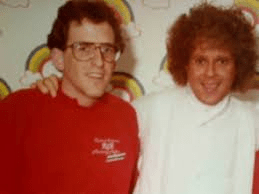
Note: The following essay was originally titled “Carry That Weight” and published in the collection Borderline Crazy, as well as reproduced in several anthologies. Some years ago I received a call from Richard to whom I had mailed the essay. He loved it, and he bought several hundred copies of Borderline Crazy to give out to everyone at his club in LA, “Slimmons.” Not recorded in this essay is the crazy coincidence of me meeting Richard at St Bonaventure University where I was a senior and ran sound for the college two years before I went to work for him. He came to do a show, and during rehearsals he asked how loud I could get the music. When I said as loud as he wanted, he called me a smartass and walked away. I didn’t think I was, since I really could turn it up; we had equipment used by Springsteen. I cranked the music and the room shook. He gave me a dirty look. When I got to know him well, I recounted the incident and of course he had no recollection. “But I was so arrogant then,” he said. Some lessons we learn too late.
When Richard died today, my oldest friend, Jonmark Stone, gave me the news, and while I was just guessing that he was probably on his way out, it still shocked me. I think because he was so full of life. That always seems the be the case.
For those who know me, the publication here of this essay is absolutely predictable, but I’m happy to say it comes with the imprimatur of Richard himself, may he finally, finally rest in much peace.
Carry That Weight
I managed a health club in Worcester, Massachusetts. Before it opened, we trained at another club in Natick, Massachusetts, thirty minutes away. I went to as many classes as I could, sometimes just to get exercise, and sometimes to lead the session for practice. Once, after the lower body workout, the instructor, Ellen, asked me to do the arm isometrics.
“You want me to work their arms?” I asked, prodding Ellen for an “Oh, never mind.”
“Yes, Bob. Come on.” She looked in the mirror and pulled at the skin under her chin.
“Just do what Richard Simmons would do,” she said and smiled wide. Ellen was in perfect shape, and the break was not to give her a rest but to offer me experience. Ellen swept the hair back behind her ear, not a drop of perspiration on her.
“And what would Richard Simmons do?” I asked, sarcastically.
“Well, okay. But do what you want to keep them going for about eight minutes. Let them rest whenever they want. Smile. Sing. Scream. I don’t care,” she said, and kneeled on the platform behind me, seemingly praying to Our Lady of Vanity.
I swallowed hard and put my arms up in an appropriate crucified position, palms pointed out. I moved them to the beat, slowly gliding about the room trying to get everyone’s arms higher than their hips. Ellen whispered for me to take it easy, but I couldn’t. I moved about and got their arms tottering to Wham and called about the studio for everyone to think of their favorite thing and yell it out:
“Spaghetti! Discount stores! Discount food stores! Malted Milk Shakes and French Fries!”
I laughed and switched to pushing the palms toward the ceiling, walking about to keep them from turning isometrics into jumping jacks.
I needed to keep their minds occupied. “What are you holding?” I screamed.
“A Plate of Spaghetti and French Fries!” “Two Pizzas!”
“Seven Snickers Bars!” called one woman, Betty, and I moved over to her.
A few weeks earlier, the regional supervisor, Niki, had asked me to sign people up at a trailer near the construction site in Webster Square when I wasn’t training or attending classes in Natick. Sure, I thought. More money–I’d be paid per signature. And since the average woman in Worcester wanted to lose weight, this would be easy. Cars pulled up and women came in, signed up. Fourteen dollars down, fourteen a month for the lowest plan. Three hundred sixty five a year for the highest. For that, they got classes from nine till eight, six days a week, exercise bikes, showers, a nursery, and nutritional counseling.
When Betty came to the trailer, she signed for the complete package, and immediately recounted her caloric intake so far that day. I stopped her when she got to the ten Snickers bars. I laughed, thinking she was joking. She got quiet and the silence weighed heavy for a moment. I told her I’d like to see her down to about seven Snickers bars a day by the time the club opened.
She notified her friends and two days later I signed up eighteen people in one hour, setting a record. Oh, some were in fine shape, fine in every way, and probably didn’t need to be there. But winter in Worcester is brutal, and they wanted a fun, indoor setting to work out with friends and meet people. They came with questions: How long will it take to lose 135 pounds? “About two years.” Can I still eat at Papa Gino’s once a week? “Salad, yes, with water, not Diet Pepsi.” Will exercising make my breasts smaller? “Sure.” Or sometimes, “absolutely not,” depending upon who asked. They came with doubts. They came with their defenses high, ready to quit. We built the club and they came. I was quickly designated a manager along with a slender woman named Andrea, and we kept the clients coming. I got my pitch down to a minute before they wrote the check. I hated to leave each day; the money was coming in already and I hadn’t taught a class yet.
And sometimes these new members summoned the nerve to attend classes at the other clubs as well while waiting for the new one to open. Betty found her way to Natick, along with some of her friends, and stood before me, arms stretched out, longingly imagining seven Snickers bars in her palms. We laughed and I slapped her hands as they went up and down, calling for her to keep them going. I heard moans and sighs, grunts and “Oh God” and it was then I knew I’d never see opening day. I had no business being there. I mocked and ridiculed these people in my mind while hypocritically encouraging them. For God’s sake I was only twenty-four and deeply arrogant, mostly from absolute insecurity. I didn’t fit in. I had trouble relating to the women and difficulty justifying a job not remotely close to comfortable for me. At twenty-four I had other plans. I was going to do something with my life. I was going to make a difference, not schlep my time to some small city women wanting to look better.
This all bantered about my brain while Wham slammed against the studio walls. Women toppled fast. And just then, before anyone else could see him, Richard Simmons entered the studio from behind, put his arms out to join into the rhythm, and then, at the top of his red-afro lungs, squealed “Come on! Keep it up!”
Let me back up:
Several years after college I moved to central Massachusetts. I read the papers and the bulletin boards, perusing them for good paying, low effort jobs. I found one advertisement for a job as a sound engineer for a radio station in Winchester, a town toward the New Hampshire border.
Then I saw this:
“Wanted: Exercise Instructors at new health club in Webster Square, Worcester. No experience necessary, will train. $12 an hour per class taught. Tryouts at Quality Inn, Worcester.”
Cool. I was in shape.
About one hundred people showed for fifteen positions. Not many guys were there, maybe six.Most of them were a bit chunky, with waxed hair and wavy voices. They wore leg-warmers outside their neon Adidas suits and hummed dance re-mixes to themselves. One guy weighed about 200 pounds standing five four. He wore tan slacks, a white shirt buttoned past the neck, and brown socks lazy about his sneakers. I peered at the women. They ranged from athletic to asthmatic. Most were in their late teens and early twenties, though a few former Chorus Line looking ladies showed up, late forties, too much make-up, too little sense, sporting matching headbands and leg warmers, car keys on twirly, neon wires about their upper arms. Most of them flocked in front of the one mirror in the room, plucking the skin under their chin trying to shape it.
A woman wearing a red warm-up suit entered carrying a clip board and gave us simple instructions. We were to line up like an exercise class. Then one at a time we had to take turns motivating each other to move; the training would come later. When advanced to the lead, some screamed in faces, micro-managing us into twisted pretzel-like contortions. A few sweet-talked us to bend and fold and tuck and turn, teaching while tugging on their skin. The brown sock guy got up and, during some arm isometrics, yelled for us to “Keep it up! Keep It Up! KEEP IT UP!” and then collapsed, barely breathing, spent. He lay on the floor till all his body parts stopped twitching.
After three days they picked the team: Fourteen girls and me. A few of those chosen were quite rotund, while others had no reading on the fat scale. One small girl, Susan, was transparent. Our instructions were clear: The club would open in seven weeks, during which time we would train seven hours a day, five days a week. We would learn to warm up, work the neck and arms, the waist and thighs. We would know the butt, the abdomen, and the names and purposes of the muscles; how to measure, motivate, choose music, and tender nutritional counseling. We trained in a large hotel room and when not training were told to attend classes at the other clubs. We showed up to the hotel the first Monday at eight to meet the directors. Maureen, or Mo, was the ring leader–the one who got us mobilized during tryouts, and she brought with her some California-type women, carrying mats and hair clips and red sweatshirts.
I almost left. This was not my scene, and I was clearly the focal point from the outset since I was the token male. Clearly, I’d be the one to maintain gender balance, bring in the male population of Worcester. Ferry in the overweight, brown-socked guys.
We gathered and sat cross-legged, ready to embark on the grueling two-month march toward hard-bodies and well-balanced diets. To start though, we briefly met the owner of the club. Turns out this was his sixth club in New England after expanding from L.A.
And in he pranced. Red shorts, stripped tank-top shirt, orange afro and deep tan. He came in calling, “Come on and move those tuschees!” his arms flailing about, his mouth somewhere between a pout and a pucker. With no escape, with no warning I found myself with fourteen female trainees, three female trainers, and Richard Simmons in a sweaty hotel room. I watched him ricochet about in his tight red shorts and tank top.
At the hotel in Massachusetts, we primed from the top down. The neck, bending and rolling it, had to be loose, and the waist and the arms and the legs, thighs, butts, calves, abdomens, again and again, rolling and stretching and challenging them, from the top down until they were limber or taught and firm or loose. For a while I burned, then I ached, then I could not move at all. Finally, I was relaxed and ready, but the club was still a few weeks from completion. They were adding the grey carpet with red stripes, the grey, red and white walls, and the “Richard Simmons Anatomy Asylum” sign. Women waded into the trailer after that sign went up, and membership increased to the thousands.
So at the Natick club, when Richard sprayed into the studio, I prayed it didn’t turn into a rumble. Betty dropped her hands and started to cry. Women wailed. Walls vibrated. Richard slid behind Betty and slapped her hands from behind, calling out, me in front, him behind, and Betty separating us by a good three feet.
“Come on!” he called. “Keep them up!”
“You’re doing great, Betty” I said, with as much gusto as I could gather. She grew pale and distant, her eyes watering.
“Come on Betty! Keep it going!” Richard screamed, and the women flapped their arms again hoping he’d move near them. But he stayed with Betty and me. “Keep it up! Keep It Up! KEEP IT UP!” he kept howling.
“Keep it up, please!” he yelled, and I retreated toward the platform, allowing him the floor. Ellen smiled at me, coming out of her trance.
“You knew that was going to happen, didn’t you?” I whispered to her. Richard sat everyone down and they panted. Some continued to walk about, getting their breath. He sat and crossed his legs, straightening his back and looking at each person, slowly, smiling.
“Do you know why you’re here?” he asked. Some laughed and said “no,” and a few kept panting. “It isn’t to lose weight.” Everyone laughed. Even I laughed, perhaps too loudly.
“You’re here because you want to feel good about yourself again.” He nodded, getting everyone else to nod. Soon the whole room was nodding. Even I nodded. “You want to feel good about yourself again,” he repeated, as if it didn’t make sense the first time. Actually, it didn’t Now, however, people stopped breathing heavily. They stopped walking around. They listened now.
“Just being here shows me that you already are feeling good about yourself. Do you remember how depressed you used to get?!” he asked, laughing at the same time, brilliantly moving their problems immediately to their past. “Do you remember when food was kinder to you than your husbands? When the only thing that calmed you down was eating? Sitting around, watching “General Hospital” and eating?” Everyone clapped, acknowledging the show upon which Richard spent four years early in his career.
“I KNOW girls! I was you!!! I really really really was!” He was. He tipped the scales at weights never revealed but well over the size of anyone in the studio. He grew up in New Orleans, and after overcoming some of his weight problem, he moved to LA where he could not find a single health club for anyone not yet in great shape. It all started then.
“It’s about feeling good, girls! Be proud of who you are and remember you have two choices! Not one! TWO! Say it with me,” and the whole studio chanted with Richard “I’VE GOT TWO CHOICES!”
They grew quiet. “You can let the simplest thing depress you. Or you can let the simplest thing make you laugh, make you say “I am too good to feel bad!”
They cheered and Ellen put on Donna Summer’s “Last Dance” as everyone followed Richard’s cue to start bouncing about the studio.
I left and went to the shower. There was a men’s bath and shower by law, but it might as well have said, “Bob” on the door. I don’t recall having ever seen another male inside.
I sat on the bench in the locker room for awhile, and then showered. When I came out, Richard came into the cramped quarters.
“You had them going beautifully!” he said. “Oh, isn’t it so exciting when they laugh and move around so much! It makes me shake to think about it!” he said, his arms to his chest in a self-hugging hold. His left eye was tearing.
“Yes, very exciting,” I agreed. I sat on the bench staring at the red and grey cinder blocks, counting them.
“Niki tells me you are going to help manage the club!” he said. He hadn’t heard a thing. His grey roots were barely visible past the red strands of live electrical wire flaring from his scalp.
“Yes. Manage, yes.”
“You’ll help them loose weight, sure, but oh how they’re going to love you for making them feel better!” He held my hands. “Do you realize what can happen if they don’t feel better about themselves and don’t lose some of their weight?”
He told me:
Hypertension. Cerebrovascular accidents. Myocardial infarction. Congestive heart failures. Prostate cancer. Colon cancer. Rectum cancer. Gall bladder disease. Gouty arthritis. Osteoarthritis. Sleep apnea. Richard pushed his head forward with each disease, to accentuate the seriousness of it all. “And Pickwickian syndrome.”
Pickwickian syndrome. That can’t be real, I thought. You’re making this up. I’m living in a bad Dicken’s novel, I thought.
But it’s real. Obesity, red face, under-ventilation, and drowsiness. Pickwickian syndrome.
“But we can help them feel good about themselves and then they’ll lose the weight. They’re not heavy simply because they eat too much. They eat too much because they are depressed,” he said. Husbands belittle them; strangers make fun of them. They eat to gain immediate sensory pleasure, which depresses them, which causes them to eat. It is a bloody cycle.
I nodded. “Well,” I said, “I’ll do what I can to change that.”
“Good. I will see you at the opening! Good work today! Keep an eye on Betty!” He took my hands in his. “Really, please keep an eye on her,” he said, and he left, a wave of screams and “Oh Richards” washed into the room as the door gently closed. I stared at the wall and thought of Snickers Bars. I thought of Richard and how he really moved those women. Then I thought of the money, and repeated what had become my mantra: “The money is great and I’m getting in shape…the money is great and I’m getting in shape…the money…”
Money. “You whore,” I thought. Yeah, whatever. I was 24.
On opening day in Worcester, between the classes and autographs with Richard, and pictures and parties, Andrea and I met with women in our cubicles down a short hallway. We left the doors open to the small boxes called our offices.
“I love the smell of new carpet,” she said from her office to mine.
“Uh-huh,” I replied. I picked up papers available at the desk about obesity and depression and had been reading them. “Andrea,” I called across the wall, “check this out.”
“The average American woman weighs 140 and stands 5,4. The average model weighs 115 and stands 5,10. Fashion models are thinner than 98% of American women. 91% of college going women attempt a diet. 22% are always dieting. Between 5-10% of women will have an eating disorder as a result of dieting. That’s between 5-10 million women. Shit. 50,000 of them will die from an eating disorder. 95% of dieters will gain back the weight within one year.”
She walked to the door and leaned against it, listening more closely.
“45% of American women are on a diet at any given time and spend over 50 billion dollars a year on diet-related products.” I looked up. “That’s more than the gross national product for Ethiopia, Somalia, and Mozambique combined! And everyone there is starving to death! Don’t you see the irony? And the money is all being spent on diet related products!”
“Like health clubs,” Andrea said, reminding me of why I was there to begin with: to make some of that money. We walked to the lobby to greet more members.
We met women for sign ups, weigh-ins, and nutritional counseling. Some ate more for breakfast than I would the entire day. Others refused to eat thinking that will be a smart weight-loss program. Some signed just to meet Richard. Some were too embarrassed to come alone. Some hid if they recognized someone else. After teaching one of the advanced classes, I sat recovering in my office, signing up some Pickwickian chick from Auburn, Massachusetts, who left her family at Papa Gino’s pizza place a few doors down and she had to get back before dessert. As she left, Betty walked in, crying.
“Are you hurt? Betty? Are you alright?” I asked. Andrea came in quickly, asking if she should call someone.
Betty looked up. “No, thank you. I’m fine. I just need to talk to Bob.”
Andrea left and closed the door, cutting off the last remaining source of oxygen.
I sat for a moment while Betty amassed herself.
“Bob, I need to quit. I cannot continue,” Betty said. She was serious, staring right at me, confident in her decision.
“What happened, Betty? Was class tough? You hung in alright in Natick. What’s going on?”
“I am fat,” she said. “I will always be fat. Have you looked at those people out there?”
Okay, now, I had this empathy problem. I had no problem sympathizing with these women because that is an intelligently charged reaction. I could think through their problem and understand why they felt bad, depressed, why they felt like quitting. But empathy is an emotionally charged reaction. To empathize is to identify with their situation because I could so easily stand in their shoes. Sympathy is the generalization; that is, it is to understand the big picture and comprehend the difficulties involved. But empathy demands a more specific reaction. It is to target a specific individual, that person’s circumstances, and truly understand.
I really wanted to empathize, but I already knew I didn’t belong.
“I see them Betty, I do. And I somehow can sympathize with you.”
Betty got excited. “But I can never be like them! To be around the thin ones reminds me of what will never be! To be around the fat ones reminds me of who I am, and I don’t like me!” She started to cry again. She opened her purse pulled out a Snickers Bar, looked at my disapproving smile, and put the bar on the desk.
“Bob,” she said, after a long sigh to gather the guts to ask this, “Do you notice how fat I am?”
Wow. How do I answer that one? Yes, and she cries, affirmed of what the world has already grasped; No, and she loses trust in me, who is to counsel her in nutrition, exercise, and motivation. Andrea called out for me to come to her office, and I dismissed myself before I had to answer.
“Would you excuse me for a minute, Betty? Promise you won’t go anywhere, right?”
“I’ll be here. I am not leaving till after everyone else does,” she said.
I moved into Andrea’s office. “Geez, Andrea, she’s suicidal in there.”
“Richard has to go and we are getting our picture taken with him in the nursery,” Andrea said.
When we got to the nursery, Richard was talking to the parents and the kids and other workers. The room was quiet, and he stood perfectly still, rubbing his hands together. Everyone listened while he talked, and he made eye contact with every single person in the room. He touched those close to him. He stared hard at those across the room. When we entered, he waved, but kept on talking. The crowd was enormous. People had come from Worcester to Boston. And they all listened to Richard:
He put his hand on a child’s head, a little girl about eight. “How you feel about yourselves is how they will feel about themselves. How you act is how they will act” He choked up a bit. From this close, however, I noticed something quite revealing: he meant it. Pure empathy. “What you do is what they will do. Love them, but don’t forget to love yourselves. Truly, love yourselves.”
I recalled the fact sheet in my office: More than half of the children in this country only feel good about themselves if they are on a diet. And almost half of first to third graders want to be thinner.
Richard looked across the room and whispered. He whispered because his voice broke when he spoke loud. He whispered so he could get through. His eyes caught those of everyone else’s. “YOU are important! And when YOU believe it, she will believe it!” Then everyone talked and moved about and hugged Richard and each other and hugged the kids. And Richard hugged the kids.
We did the picture thing, fluffy ballooned wallpaper surrounding our heads, Richard between us, smiling, his hair tickling our faces.
“What do you want from working here?” Richard asked Andrea. He held her hands between his.
“To have fun,” she said. “And make money,” she added
I knew it was coming. “To pay my rent,” I returned, smiling.
“Oh but you are going to help people so much!” he said. “Think of all the people you will help!” We moved to a quiet corner, and he asked if we had any questions.
“Richard,” I asked. “How long is it going to take some of these people to lose, say 135 pounds?”
Without hesitation: It doesn’t matter.
“Is it okay to tell them places like Papa Gino’s Pizza are okay to go to?”
For salad, yes, with water, but not Diet Pepsi.
“Will exercising make their breasts smaller?” Andrea took me by the arm and escorted me out of the nursery before I got an answer. We headed for the door and Andrea reminded me Betty was waiting.
“Betty?” Richard asked. “Our Betty?” He stared at my eyes trying to read me, trying to understand me. Completely intense. Completely honest.
I nodded. Our Betty, I thought. I started to feel shallow, and that feeling began to weigh heavy.
“What’s the matter? Is she alright?” He became serious; his hands rubbed each other in a nervous, compulsive manner. I rubbed my face and sighed.
“Richard, she’s doing seven to ten Snicker’s Bars a day, just asked if I notice how fat she is, and wants to quit because the thin people here make her realize she never will be and the…heavy…ones make her feel hopeless. She’s in my office,” I said, finally completely aware of my inability to relate to these people. I could never have the look and intensity Richard had at that moment. I headed back to tell her, yes, she is massive, but it is no big deal, and she should be proud of who she is inside and blah blah blah and yada yada yada, and no there is nothing wrong with that, and we worry too much about the superficial elements instead of the spiritual ones and on and on. Mr. Cliche. Dr. Trite. I turned down the short hallway to my office when Richard caught up, springing up next to me saying he’d like to join me with Betty.
I walked in first and Richard followed, sitting in the chair next to Betty. She screamed and cried. A crowd gathered outside and I closed the door and sat down.
“Betty, this, of course, is Richard Simmons. He asked if he could join us. I hope you don’t mind, but I told him what we were talking about and what you asked, if I thought you looked fat.”
“Oh my God, it is so great to meet you!” she said. They hugged and recounted the Natick club experience for a moment. “Well?” Betty asked, looking at me then to Richard.
Richard sat up, his torso seemingly in perpetual motion. “Can I answer you Betty?” he said, grasping her hands.
“Of course,” she answered. Thank God, I thought.
“Yes, people notice how fat you are. You are, and people will notice.”
“Oh God, I know,” she said, laughing and crying at once at the reality of it all.
“But who cares?” Richard said. “Who cares? Why do you care?”
“I want to be pretty. I want to feel good about myself,” Betty said.
“They are not the same thing, Darling,” he said, shaking his finger at her. Richard picked up the Snickers Bar. “Does this make you feel good, Betty? Or does it make you feel bad?”
“Both,” she said.
“You can’t have it both ways, Betty. Come on. I love you Betty. I know what you are going through. You can not have it both ways. Feel good or feel bad?” Again he held the Snickers Bar, this time unwrapping it some.
“Bad,” Betty said, and Richard put the bar back down.
“Betty. Betty. Betty, Richard kept saying. He hugged her and kept staring into her eyes and hugged her again, holding her hands and then staring into her eyes. I hadn’t eaten since dawn, had taught an advanced workout, and focused on the Snickers Bar.
“Betty, don’t quit. You don’t have to come to the club, but you can’t quit on yourself. God is too great, Betty. You are part of it all. You can’t quit. And quitting is more than just leaving, it is abandoning yourself, inside. Don’t quit. I know it isn’t simple, Betty.”
They sat quietly for a moment, and Richard sat up, wiping some tears from his face.
I decided to give this advice thing a shot. “Betty,” I said, “It is simple. It really is. You going to stop on the way home and pour coke in your car?”
She laughed, “No,” she said.
“No, it won’t run, but we pour that filth in our body and can’t figure out why it won’t run. But we choose to pour it in. We do it to ourselves by choice! Are you going to consciously drive your car into a ditch on route 12 going home?”
Again she laughed. Richard sat nodding, a smile on his tanned face.
“But you’re going to do things that drive your body to its death. Sure you’re depressed, but you are more depressed because you make choices that are wrong. Don’t! Remember what Richard said in Natick–you have two choices!”
He spoke up. “You worry too much about what is superficial. You worry too much about what things look like and what you are looking at in the mirror. A person must seek refuge inside, and then work on the rest. Work on the inside, and then on the outside, okay? You are so beautiful, Betty.”
She nodded, standing with Richard, who took her by the arm and walked down the hallway to “Oh Richards,” and screams and wails. She hugged him. She hugged me. Richard hugged me. Richard hugged her. “Come and let Bob know all the time how you are. Go to classes and just walk around in the back whenever you want. You have a great attitude You will lose the weight someday, but first, weigh yourself inside” he said, touching his heart, tilting his head, tearing up. “Promise you’ll come?”
“I will,” she said, and he embraced her a long time. He turned and waved to everyone, standing on his toes and waving with his arm stretched up and his hand bent down. He blew kisses with both hands and I hedged back into my office and closed the door. “Your choice, Bob,” I said to myself, “I stared at the candy.” Andrea came in, took a bite of the snickers, and leaned against the desk.
“What do you think?” she asked. I shook my head. The club was relatively quiet, everyone moving to the parking lot to wave goodbye to Richard. A class continued in the rear studio, but no one was about the offices.
“This is serious. These people have some serious problems. He can really make these people feel good no matter what they look like. What a difference,” I said. “Shouldn’t we have a shrink on staff?”
“Nah,” Andrea said. “Just a refrigerator.”
“Oh don’t be a smart ass,” I quipped back.
Andrea laughed. “No, we work on the body, not the mind,” she said.I thought of Richard and knew that just wasn’t true. This place had less to do with weight loss than it did therapy. It was all about the mind, all about choices. Andrea handed me the Snickers Bar and left for the lobby. I tossed the candy in the can and walked out and watched Richard’s limo drive off. The women all turned toward the club, toward Andrea and I standing in the window, and I realized the burden we carried.
Afterward: To note Richard’s sincerity. About a month after the incident in this piece, Richard called the club and we talked a bit and then he asked for Betty’s phone number so he could call and check in with her. The woman who went home on Friday before the phone call came in to the club on Monday after the phone call with an entirely new outlook on life. It is safe to say he deeply touched the lives of millions of people, some of which he quite literally saved.


 a view from this wilderness