Let Go

Taxi Driver by Martin Scorsese (1976) | SP Film Journal

It’s the second week of classes and something new and exciting is happening that reminds me of my first days away at college: No one is using their phones. They are actually all in class talking to each other and to me, and listening. I have no idea why.

The first time I went away by myself, other than a few extended trips with a high school friend of mine to Chapel Hill, North Carolina, and camping in the mountains, was my freshman year at college. That was a nine-hour drive from my home, so returning on a weekend was simply out of the question. This was a time when communication by today’s standards was archaic. We had no cell phones, no computers, no answering machines if we even had a regular phone, which I didn’t. Mine was a payphone at the end of the dorm hallway which I shared with ninety, often drunk guys. So even if someone did try to reach me, one of us on the floor would not only have to hear it ring, but we’d have to muster up the energy to walk down the hall and answer it. Doing so then entailed learning who the person was calling for, walking to that person’s door, banging until they answered as you yelled “Bob! Phone!” and then return to bed without letting the caller know if the person was even home. So no “message” would be left.

We wrote letters, on paper, with stamps and envelopes, and walked them to the post office on campus. But with papers to write, parties to attend, basketball games, and hikes along the river, letter-writing was not a priority. Instead, when we went away to school, we went away. Gone, out of their lives. See you in someday.

I arrived that first year in August and returned to Virginia Beach in November, and during that time away, while I often called my father at his office due to his toll-free line, and my mother much less often due to my lack of ability to plug the payphone with quarters, I didn’t talk to a single high school friend in any way for three solid months.

But when I got home. Oh, wow, when I returned home that first Thanksgiving weekend, I headed to my friend Mike’s house, and our friends Dave and Michele and Kathy and Patti all came over, and we sat out back or went to Pizza Hut and we talked. We told stories and talked and laughed so hard I can still picture us sitting there like it happened last week.

We had so much to catch up on. I told them about college, about the hills of western New York, about my roommate and floormates and others I met and became close to. I told them about apple picking in Albion, New York, with a friend, or about how two other friends and I drove to the Billy Joel concert in Buffalo and got lost on the way back. I had an endless bag of stories to share with them, and they caught me up on life there. Dave was married, Michele had her first son, another was still out in Nashville and another in nursing school.

We all looked different than four months earlier. Older somehow, despite the probable lack of change. But nineteen is a time when even just a little bit of maturity comes from the slightest change. We met new people, added new dimensions to our personality and experiences. I was hitchhiking to Niagara Falls, Jonmark was doing well in Nashville, Mike was doing traffic and news for a local television station. We had stories to tell that we would never have had to share if we all stayed a part of each other’s lives on a daily basis. What’s more, other people entered our narrative. When you break off completely and start anew elsewhere, you learn new ways—it truly is that simple. I’m not suggesting that one doesn’t mature and learn and grow without leaving. But one point is indisputable: I had no idea what any of them had been up to, no clue. And they couldn’t possibly conceive of what I’d been doing. And there was no device save the US Postal Service to keep us informed.

So we had to catch up, and I had new friends.

You see, something unexpected happened that I just now tried to tell my students about. When I returned to college, the same thing happened as when I went home that first time. It had only been a week since I left for Thanksgiving, but upon return, I could not wait to see my new friends, those I was literally living with, ate with three meals a day, walked home with at three am, cried with. The few days away from them felt longer than the time away from those friends from high school I’d known for some years. Something was different. All those changes that had scared me to death before leaving for college turned out to be the best thing for me, and that time then would not have been nearly as significant had those changes occurred while still holding the hands of friends through some WIFI umbilical back to the beach.

Fast forward.

During my first few years teaching college in the early nineties, I’d walk down the hallway toward class and could hear the students talking, multiple conversations overlapping about the weekend, about plans, majors, transfers, food, concerts, about life, all of it. New friends mostly, evolving into new relationships, new ways of thinking. I’ve seen strangers become partners become parents. And after a long college break, it took ten minutes to quiet down the room, everyone catching up, seemingly happier to be back then to have gone home to begin with.

But that eroded; slowly at first, and then with discouraging speed. When I approach a room for class these days, it might as well be empty for the silence. It’s easy to think it is, until I turn in the door and see twenty-three students sitting silently, staring at their phone, texting the same friends they’ve been texting since seventh grade, not knowing even the names of those next to them, one of whom might be their significant other, or a friend with similar interests, or someone with familiar plans and hopes. They don’t seem to even care.

They’ve never learned the art of missing someone, the value of silence, the strength that comes from a complete lack of ability to communicate. The time spent in their own thoughts, without music, without social media, without letting go for a period of time without knowing what happens, has slipped away. College students remain knee deep in high school conversations well into their collegiate years, and it leaves them all with a much more provincial perspective.

Today, just now, that seemed to change again, and my students–all away from home for the first time–talked to each other, learned names, made plans. It felt right, like some semblance of humanity has survived the technological advances.

There was a time we were all prodigal children, and those we loved embraced our return from that unreachable place we went to, be it away at school or another state. And we learned how love can survive such incommunicado. I once went twenty-two years without talking to someone and then spent two straight days catching up. And honestly, I don’t think I would have appreciated her half as much had we never lost touch. It helps to let go, to follow different paths and not be tethered by technology, and then find each other again and find out how friendship has little to do with constant communication.

And more, during those times I was somewhere else–Arizona, Massachusetts, abroad, and had no means of reaching someone, I discovered more about myself than I ever would have by holding on. I see my students now using expressions I had thought were long gone:

I hope to see you soon.

Keep in touch.

Drop me a line.

How have you been?

So, what happened?

I have missed you.

These simple phrases have brought me such growth, such love, and such peace, they remind me that the strongest connections come after letting go.

Student Comes to See Me

A Personal Reflection This Week:

I woke about three this morning; it happens a lot. This time it happened because this weekend has always represented change in my life. Growing up, of course, the school year is just about over and summer is waiting; throughout my college summers not only was one year over and another still three months away, during that time I worked at a beachfront resort hotel every summer, so the “season” started this weekend. And for more than thirty-five years in higher ed, this is about the time of year we finally exhale for a few months. At three this morning I woke thinking about those changes this weekend those years, but this time I found myself surrounded by the ghosts of those dear to me, and in my tired, gummy-induced thought process, they all had the same opinion.

This weekend might feel more significant because so much of my life completely changed in the past twelve months, beginning about mid-May last year, and I added to that weight by spending this same year tuning my manuscript for my next book about a time in my life when I had to grow up and move on, about learning what to let go of and what to hold on to and guessing wrong in both cases. The brain decides on its own when it will dump all of this in your lap to stare at and make sense of. Usually it’s at three am. And raining.

It’s safe to say that my life has been anything but consistent and predictable, but when we’re young we have more courage to change. I believe that’s because if whatever we try falls apart, well, we’re still young enough to laugh it off and start over. But as the years pass, we tie ourselves down, let the roots take hold, gather more responsibilities and obligations. So change is usually subtle, a series of nuanced negotiations that are closer related to diversions than anything resembling a complete abandonment of one way in favor of another.

When I was young, I would regularly jump into some unknown ideal. Now, with Realism as my guide, I am more apt to step off carefully, insuring there is solid ground ahead. But at three am the smallest variation in our path can seem like a canyon. This morning started like that as I listened to the rain on the skylight. I felt my anxiety simmer just below the surface and I was in danger of completely waking up, so I tried to repress it, remind myself that whatever status quo I find myself part of is not only fine but damn near ideal. But that didn’t hold. I thought of a line from, of all people, Barry Manilow: “My life goes along as it should; it’s all very nice but not very good.”

Just wait. I’m one of the more fortunate souls I’ve ever known, and I know that; but that is an external judgement. “Very good” is a relative term. We are in the awful habit of comparing ourselves to others when we should be measuring ourselves against ourselves alone: What are we capable of? What do we wish we had done? What are you going to do with the time that is left? This is that old axiom, “The only way to fail is to not even try.” And this isn’t about you. I swear it’s not. It’s about me, from the young boy in the park, to the young teen on the courts, to the young man on the go. The distance between where I am and where I will end up can only be measured by how I feel about where I am and where I am going; this has nothing to do with “accomplishment” and “achievement.” I think I’ve done okay. It’s has something to do with fulfillment and a personal sense of purpose. Honestly, success has many definitions; just ask the ghosts.

So I stumbled to my desk to organize my thoughts, write down my list for the day to help settle my simmering mind before my anxiety won, and in the pile of stuff I created on the floor while trying to find a piece of paper to write on, I found a postcard from one of my earliest students.

It was about 1994.  

Student comes to see me. He says he can’t handle the pressure of school. I tell him I think he’s a good student and he says yes, he can do the work, he just can’t stand it. He hates it, he says. He gets bored fast. It’s a good conversation, honest. Had we been somewhere else we would have talked over beers. He looks at his watch and says he has to work in a few hours and sighs. He’s twenty-five and runs his own roofing company but hates that too. He has six grand invested in equipment and no help and he just dreads doing the work now. He says he’s at some fork in the road, referencing our work in class, two paths that look the same, so he’s frozen, finds it easier to just stay put. He gets quiet and stares at a photograph on my wall of a village in Africa. Looks nice he says, like he wants to say anything to forget what he’s really thinking about. Then he remembers and sighs again. He’s quiet for some time and I find myself drifting.

I worked at a bar. Good money and mindless work; the kind of work where if you don’t think too much about what you’re doing, you can keep on working. I know I only spent a few years there but it seems like it was always winter, all grey and bone-cold. One morning I woke on a bench near a lake in a park and didn’t know how I got there. I had to work a few hours later but never made it. I quit the bar, withdrew most of my money, and bought a ticket to Africa. Turns out changing my life was as easy as jumping off a cliff knowing for certain I would either land on my feet or learn how to fly. “Boring” disappeared from my life.

But this student has trouble talking about it, so I talk: I tell him I get that feeling in my chest too. Tight, constricting, difficulty breathing. You know what I’m talking about. It’s the sense that something needs to change. I tell him all of that, and then I think, but I don’t say, that it’s the Philosophy class with five minutes left of three hours and the prof starts another chapter because there are still five minutes left; it’s the meeting you can’t tolerate but you’re in a row of seats with too many people on both sides so you can’t leave and all you can think about is how if this is your career, if this is how you’ve chosen to spend your life, shouldn’t you love being here, love the interaction and discussions instead of dreading every word that someone says; it’s that this-homily-is-way-too-long feeling. It’s the feeling you’re just one day away from something else, but then that day comes and you find yourself one day away from something. I tell him it’s the Whitman poem about astronomy; the wide awake at three am feeling and you can’t move so you stare at the alarm clock wondering what your someday-dying self would say to you now.

Exactly, he says. I’m always staring at the clock. I’d love to know what you’d do, he says. I tell him about a bar somewhere I didn’t belong. I remember working and then not working but I don’t remember what happened between the two. I just recall waking up one day in the peace-of-mind of another world, centuries away from being behind bars; like I could finally breathe on my own. I remember dreading the moment between what was and what was next, so I just kept pouring drinks, hesitating, putting off change. But then one day I didn’t, and when I looked back from where I ended up, the “what used to be” that so engulfed my life didn’t even exist anymore. He looks at me like I am looking in a mirror. I tell him if it were me, I’d withdraw from school, liquidate my roofing equipment, put some in the bank and some in the gas tank and take just one slice of life to myself for a while. School isn’t going anywhere, I tell him. We’ll wait for you.

He stares at me a long time then laughs, sweeps his long blond hair back and blinks his eyes a few times, as if to restrain some emotion. “I’m not that brave,” he says, and we laugh. Then he says he’s going to work and he leaves. 

Six months later he sends me this postcard from Australia. “Don’t know when I’ll return,” it says. “When I am, let’s get some beers and talk.

I look forward to it but, of course, way leads on to way, and I doubt he ever came back

Somewhere Down the Road

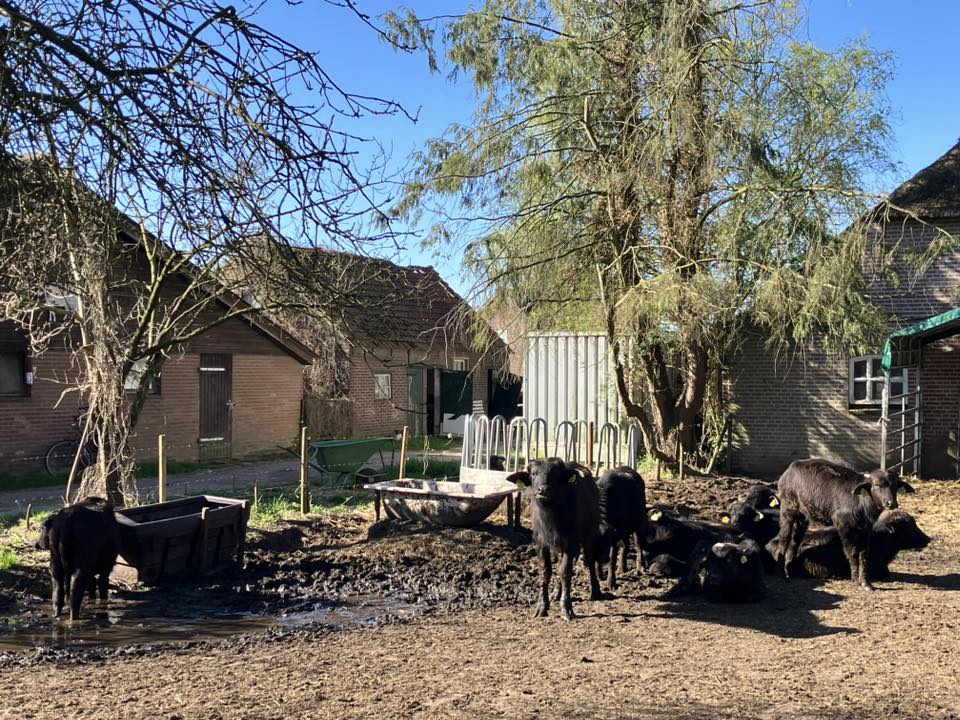
Asian water buffalo of course

Since I’m a child I have wanted to travel the world–I think it was Pippy Longstocking who first turned me on to the idea of exploration and adventure. Certainly Robin Lee Graham and Woody Guthrie and Mark Twain. And I have done just that; more than I imagined. Ironically, for almost thirty years I’ve lived in one house which I built here in the country. My previous homes lasted, from birth, four months, eight years, six years, four years, four years, eight months, three years, three years, three years, two years, two years, and now, well Aerie since my mid-thirties. 

If I had to choose between being always on the go for the rest of my days, or always at home for the same life, I’d choose home. I’d learn to garden and each year expand the crops with more tomatoes and cucumbers, and I’d have a fig farm on the land, perhaps more apple trees, and I’d share the results with neighbors. I’d know the names of the birds, and their migratory dates, and over time I’d have the hummingbird feeder ready for their return every spring. I’d add flowers to the land each year so that the back trail was lined with impatiens and the front with marigolds, and the north side toward the river would have a new trail with hanging baskets of herbs. I’d build by hand and bricks and stone a small guest house, with carvings in the doorframe and a wood-burning stove in the corner on clay tiles I made myself in the kiln I would build in the field. I’d have a dog, some cats of course, and a goat or two. Watermen and farmers would swing by sometimes to chat out front in the gazebo. And I’d walk to the post office to mail my manuscripts; I’d no longer be in a hurry. 

Just as easily I might simply leave, keep going

I’d do the Camino again, perhaps for years, and everyone would come to know the “old American” who is always out there heading toward Santiago. I’d relish the knowledge that no matter what else happens in my life, I have as a foundation to keep going the Way, the pilgrimage trail from France to the west of Spain. I would take Paulo Coelho’s advice and unbecome all the things that I’ve accumulated over the years which were not me at all, until finally I become who I was supposed to be to begin with. 

If I needed a break I’d head up to Connemara in August each year to walk the Sky Road near Clifden. Or I’d head to Prague in May for the music festivals in Old Town and stop and see my friends at the university. I’d have strudel and tell newbies about the time I used to write in the corner of Nerudova 19 when it was a tea room, and I’d write and have a pot of tea and strudel, and I’ll say it is too bad they weren’t around then since now it is an ice cream shop and it isn’t the same. 

Parts of me are already scattered all over the world. Pieces of my twenties are in Mexico and Africa, and large portions of my thirties are in Russia. Some of my forties made it there along with Prague and Amsterdam, and slices of my fifties are sprinkled like diction across this country from St Augustine to Seattle. If I had been able to simply keep moving, I’d have distributed what’s left of me in Spain and Ireland, with a small sampling saved for a state park on Long Island’s Great South Bay where most of the elements in my being come from to begin with. 

Still, I like the idea of spending my life in a small town where I’ve always known everyone, and I leave the doors unlocked, and I have a running tab at a local shack of a pub. Equally I like the notion of having friends all over the world, writers in cities throughout Europe to call up and spend time with on my way through again. I like knowing other cities in other countries as well as I know the trails here at Aerie. 

I wrote a book once about a guy who traveled the world until he settled in a small town and meets a woman who knows everyone and is from there, and they fall in love and the idea of staying grows on him, but she, by meeting him, understands she isn’t stuck in a small town after all and there is a world out there to see and experience, so she leaves. He decides the small town life isn’t the same without someone to share it with, so he leaves too, ironically also traveling the world, always wondering where she went, looking for her in crowds and metro stations, but he never finds her. It was a great idea and a decent manuscript, called An Innocent Season, but I could never figure out how it should end. That and I suck at writing fiction.

Life has a way, doesn’t it?

Last week I pet a water buffalo. This was near Neunen in the Netherlands. He was quite cute, still relatively small, and I scratched his neck and rubbed his face between his eyes, and he kept nudging me to continue, licking my shoes and pushing my hand. Luckily he was an Asian water buffalo who are kind, unlike the mean African ones. We stood at the fence and I pet him and we had just bought water buffalo yogurt and cheese but passed on the water buffalo ice cream. This little guy was loving on my shoes and my hand but I had stepped back and he came closer and his nose hit the electric fence, and we could hear the “zap!” and a small spark shot out and that little guy backtracked to his mother near a muddy area across the pen. He just stared at me with scared eyes as if to say, “Why?!” It wasn’t anger; no sense of “you bastard” in his face. Just a questioning “why did you hurt me like that?” and it made me a bit sad. I ate the yogurt anyway, though, with raspberry jam and some nuts. 

But we do that, we get close and then our perception is thrown off. Something zaps us and we associate that pain with those close to us when they might have had nothing to do with it; it was more than likely just circumstance, timing, the time of day. I wonder now how long will the little guy remember the pain. Will it make him leery to get close to the next guy with Hokas on and a hand stretched out? Or will he just keep getting hurt because the pleasure is worth all the pain? 

I would. In fact, I have more than a few times. Emily Saliers wrote we must “take part in the pain of this passion play” if we must love. The worst pain of course is departure, leaving again, and one comes to realize that eventually you’re best off either to just keep going, following whatever Camino you find yourself on, or agree to stick around awhile and simply accept that the pain is part of it all. 

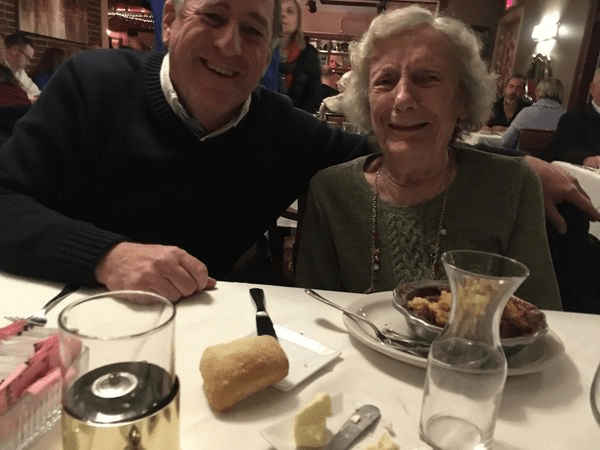
So we ate the yogurt and gave away the cheese and went back to Amsterdam and flew home. Three days later my beautiful mother passed away. I’ve been thinking about my youth, and mostly I remember laughing. My childhood included every emotion possible, but what comes to mind first and strongest is the laughter. I remember going to the supermarket as a kid and pushing the cart and getting a treat. I remember her making food for my class in elementary school and not minding when my friend Eddie and I dragged in mud from the state park. I remember her making lemon meringue pie because I liked it, and I recall perfectly her listening to me attempt to play the guitar for the first time as I butchered John Denver’s “Sunshine on my Shoulders.” I am sure I was zapped more than a few times back then by her voice when I inevitably did something wrong, but I can’t pull those memories up right now; only the good things. Like all the laughter and the music; these two things I inherited from my Irish-Italian mother–laughter and music. 

That and to keep going. Perhaps the finest lesson of all; just keep going.

The Laughter Never Stopped

neither did I