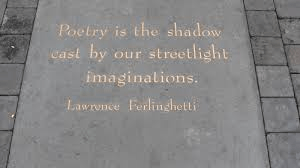
The Rain that Day

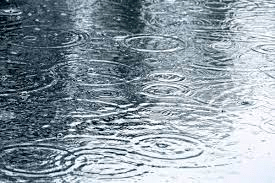
There’s a scene in one of the Hunger Games films where Jennifer Lawrence and Josh Hutcherson are sitting in the doorway to their house. The shot is from deep inside the room and we can see them almost silhouetted on the floor leaning against the door frame looking outside where a heavy, steady rain is falling. It’s summer or fall. The door is open yet and they seem comfortable, and it is raining. 

That image stayed with me. I want to call the director and say, “Well done,” you nailed one of the most comforting images I can recall–inside warm and dry away from the storm but close enough to appreciate it. 

I loved sitting on the patio when I was a child, under the canvas awning when it rained, and I just assumed it was raining everywhere, which at eight years old was probably a three block radius. What did I know of everywhere? But that closeness of rain never left me. In Spain on more than one occasion we donned our raingear and walked out onto the Camino to keep going, a heavy fog sometimes filled the air, and on one day near the village of Cee on the way back from Fisterra to Santiago, we couldn’t even see ten feet forward. But here I am eleven years off the Way and I remember that day as if I just walked in the door from the path and set my walking stick against the fireplace stones. 

What is it about the rain? 

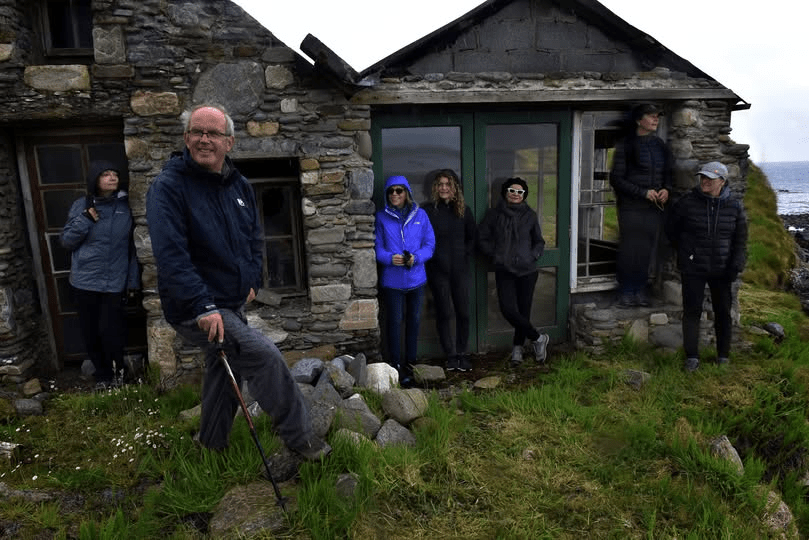
On a trip to Ireland, the only day out of ten it rained was the very day archeologist Michael Gibbons planned to give us a walking tour of the Renvyle Peninsula in Connemara just along the Wild Atlantic Way. We went anyway, along roads and across bogs for a half dozen miles, and sometimes it was only cloudy, but more often a steady Irish rain fell as more of a pleasing accompaniment than any nuisance of weather. In fact, when we walked near an abandoned home we stood under the eaves to wait out a downpour and during the short break we laughed and joked with each other about nonsensical things, but it is the time from the walk we remember most, the moment we all took pictures and realized how stunning the Irish Pete could smell in a rain, and how we didn’t mind, not in the least.

I took a moment just now to look up the history of rain, already knowing the first evidence dates back 4 billion years, and the first mention of it in literature dates back to both Gilgamesh and The Iliad. What I didn’t know until just now is that raindrops are not shaped like teardrops but more like hamburger buns, that one inch of rain over one acre of land weights over 110 tons, that Mawsynram, India, is the wettest place on Earth with more than 450 inches of rain annually, and that rain really does have its own odor, called petrichor, caused by the wetness releasing the oils from plants and soil which then fill the air. 

“The beauty of the rain is how it falls”

–Dar Williams

I love the smell of rain, the feel of it on my back and neck, but my reason has little to do with any enjoyment of being wet, soggy, drenched; it is because I can, because I am here in nature still, well after so many I love have closed the door behind them, all of whom if they could would love to be drenched in the rain with me, and we would laugh at being here, alive, and I’d say how moist I am and we’d laugh even harder. 

I love feeling alive and rain does that, even if I’m just on the patio at an old picnic table sixty years ago and the sound on the canvas above me and the steam off of the sidewalk nearby all kept me present, absorbing the moment before the next one came. How often in life can we be so acutely aware of a moment so that we can hear the nudge of the one that follows? Time is too swift for rain; life is too short for the subtle rise of mist from the pavement. 

“Let the rain kiss you, Let the rain beat upon your head with silver liquid drops, Let the rain sing you a lullaby.” –Langston Hughes

It’s the same with the sun, the feeling-alive thing. The heat and scorch on my neck and back energizes me like nothing else can, and everything around me is hyper-present, like I can feel the molecules, the very atoms of the light, and too of the rain, like the coursing of blood. 

It’s raining now, and I’m going to pour a cup of tea, put on a sweatshirt and go sit on the porch and listen to the rain in the woods and on the porch roof here at Aerie. I’ll let my mind wander and try and remember the last time I heard my father laugh and remember the last time my mother and I talked about nothing at all. I’ll think about Eddie and that time we walked all day in the rain through Heckscher State Park on the Great South Bay, just two fourteen-year-olds who suddenly owned the planet, and we spent all day out there and sang “The Long and Winding Road,” and now when I hear that song I think of rain, and Eddie, and how it always takes me a moment and a shake of my head to understand that day was fifty years ago, forty-five years before he closed the door behind him, and how that rain that day was like a third friend laughing along with us, singing along with us. When it rains now I can have that day again, and I like that. So I walked up here to my desk and settled into this chair and I’ll listen to the rain on the skylight before I turn out the lights. 

“Some people feel the rain. Others just get wet”

–Bob Marley

However,

I mean, it isn’t exactly “Everything” I’ve lost interest in.

Sunrises still can manage to get me out of bed before dawn for a saunter to the bay where the best moments are about fifteen minutes before the actual sunrise, when the sky is still dark blue, with a streak of burnt orange in one smooth paint stroke near the horizon.

Then coffee, the sound of cups in a diner kitchen, the sound of the pour into the cup, tables and stools of people talking laughing, planning the day, remembering the night.

And children of course, the non-starving, not yet war-torn ones. The ones who remain the way they should, laughing at the simplest nuance, and drinking milk with two hands. It’s the laughter that gets most of us, especially when it reminds me of my own son at a young age, laughing at some lizard in his hands. That memory still holds my attention.

I stood in line behind a World War Two vet a few months ago–ninety-eight years old–stood strong and told me he was driving to Richmond that afternoon to watch his great-grandson play baseball. That is worth the time any day of the week.

I once waited half the night for the moon to rise above a mountain but it never did. That night, the stars, the floating dock, the non-moon night was filled with such peace both literally and psychologically, such complete presence and stillness, that would keep me going a long time during the worst of days. That day closed up decades and reminded me something so essential: Everything we are, we remain. And that real friends are often the only thing worth our attention.

The sound of geese keeps my interest, and talking to local farm workers from Mexico about where they’re from, villages I don’t know, some I do sometimes.

Talking about Ireland, or Prague. Talking about Spain and how the stretch from Southern France to the first village in Spain is so beautiful you hardly notice the climb is trying to kill you.

Yeah, that one always keeps my interest.

Acoustic guitar music. Pachelbel’s Canon in D on piano, slowly, ice in a glass. These remind me of life. Listening to a musical piece written nearly four centuries ago reminds me of the emotions that transcend time while connecting everyone. When I hear the Canon I imagine Johann playing on his organ, thinking about the night he stood outside waiting for the moon to rise above some hill outside Nuremberg, and how it took his breath away, the stars he saw while waiting, the absence of indifference, the absence of apathy. Nothing mattered more than that moment then, and he forgot all about the news of the day. He just watched the moon not rise above the hills and in his mind he played those keys, slowly, as if it was the only thing he cared about in the world.

Close your eyes and let this play, and remember all there is in life to be passionate about.

Rejection. Acceptance. Whatever.

6 Mistakes That Will Get Your Short Story Rejected | Celadon Books

I’ve been rejected plenty of times. Sure it hurts. Of course I always hoped that “this would be the one.” It would be one thing if I was talking about a woman. That I could get over, and have. But my writing? That’s when it gets personal.

I have known rejection.

I sent an essay to a journal and they rejected it. This is year’s ago. Their brief note suggested they enjoyed the piece but ultimately decided to pass. It was a nice note; no one died in it. About a year later I did a reading at a conference and read that very piece, completely unchanged. After the reading, the very same editor came up and asked if the piece was available, that he loved it and would like to publish it. Not only did he do so, but the work went on to be my first essay noted by Best American Essays. The same journal with two different editors went on to publish four more works of mine, with two more going on to further recognition at BAE.

My point: publishing and rejection can be completely random. It can depend upon the particular style of the journal, or a particular editor, or even the theme of one particular edition, but it can often be equally dependent upon the caffeine intake of whoever read the work, the time of day, the weather, how much it reminds the reader of an old lover, or even whether or not the Pirates won that day. Sometimes essays and poems are rejected simply because the journal already had enough pieces for that time, and other times they’re rejected with great scrutiny and long epistles explaining all the changes that could be made for whichever other journal might publish it, though that new journal may just as easily prefer the essay in its original form. Sometimes editors try and make the rejection letter sound like the literary equivalent of “It’s not you, it’s me.” Get over yourselves, guys. Yes or no?

With a new book launching this Christmas, I’ve been sending out excerpts to journals and magazines. Over the course of the last week or so I was rejected twice, accepted three times, and had two publications hit market.  So tonight seemed like the appropriate time to think about my writing. It comes with the job.

Writing has taught me to trust myself and let go of my concerns and anxiety over what others think, how others perceive my decisions. In the writing world, editors can be helpful or random, can understand what they want but not what you do, or appreciate what you do but still not want it. Some like snark, some like drama, some like biting humor and some aren’t happy unless the piece sounds like it was written by some foulmouthed hack. It is essential to study the journal, to understand its history and style, its preference for length and how free one can be with language. In fact, for an editor to suggest in the rejection letter that the writer should first study the journal before submitting is so pretentious I can only assume the editors who make such suggestions don’t know their audience.

Bottom line: Editors can be hacks as can writers. It’s all disturbingly random.

I once sent a piece to a place and it was rejected. A few days later, forgetting I submitted it there because my mind sometimes slips, resubmitted the same piece without changes to the same journal and they accepted it with great thanks. Random. I sent one piece to four different places. This isn’t unusual, but as soon as one accepts it, the writer is responsible for letting the other editors know it is no longer available.  Sometimes, though, writers forget and several places accept the same piece. Oops. It helps to change the title of pieces.

I usually don’t pay attention to the comments and suggestions from the readers at journals about how I should change the work they have no intention of publishing anyway. That’s just silly. “Hey, we didn’t like your work enough to publish it but make these changes and we still have no intention of publishing it, but then you will ‘learn’ from us.” Freaks. I do not know them; I do not know their style or ability; and I may be fine with the piece as it is but need to find another journal instead. In the end, I simply need to trust myself or I will forever be second guessing myself.  However, once it is accepted, editors suggestions are welcome. Usually. Here’s something: One editor accepted my work but during the proof stage questioned one of my facts. I proposed that when Marie Antoinette said, “Let them eat cake” it was a subtle reference to the fact that bread was too good for the masses. Editorman questioned if it actually happened. After research and discussions, I asked him to just scratch the line completely; it wasn’t that important. But instead, Editorman added the word “spurious” to the sentence, as in “According to spurious account, Marie…” I’m not kidding—I had to look it up. I turned to my friend, Tom, also a writer, and said, “That pisses me off! I wish he had just dropped the Marie Antoinette line!” Not because it wasn’t a good suggestion—it was, but because I’m not the type to use the word “spurious,” and I thought it sounded awkward with the rest of my prose. I think I had a good argument, but it was too late. So, in retribution for making the change without my input, in the four other essays that journal published, I used the word “spurious” in every one.

Writers need to humor themselves with things like this.

My favorite rejections are the simple ones. I received one which read, “Dear Bob, Pass. The Editors.”  Perfect. They don’t want it; got it. I understand. That one is crystal clear. I also once received what appeared to be a detailed rejection from a journal which mentioned my piece by name several times in the letter, and which truly made me feel as if they took their time and honestly wished to communicate with me. Then I mentioned it to a friend of mine who is a writer in Ohio, and she revealed she received the identical rejection from the same journal, only the name and title changed in the paragraphs. How do they expect us to take their thoughts seriously?

Last year I received a rejection from the journal which published five essays of mine, but which turned down this particular piece with the suggestion I study their prose style before considering submitting to them and that they expect their writers to read their journal before expecting to be published in it. First of all, the rejection of the essay didn’t bother me; after reevaluating the work I agree it needed much more polishing, and I have since done so and sent it out elsewhere and it has been published. The trouble I had with the thoughtless rejection was that editor’s inability to simply say no. I wanted to write back and say, “I took your suggestion and read old issues to get to know your prose style and, oh, hey, look! You did publish FIVE essays I found particularly excellent–moron.” Instead I deleted it. I delete lots of rejections. I have one friend who adheres to the trend to tape the rejections to the wall and shoot for 100 rejections in a month or maybe in a year, I forget. I prefer to keep the negative crap out of my line of sight.  Besides, the implication that the writer did not study the prose style of the journal is condescending. One writer/friend commented I might not recognize the editor is new and the prose style is no longer the same therefore the comment was valid, but that makes no sense. Then why did they send me to old issues to study their style?

But it is the nature of rejection; I’m used to it, both socially and professionally. When the percentage of acceptances goes up, it is mostly because those essays have been rejected enough for me to rework them and then they all do well. It is a numbers game.

I know a writer who for a while every time a journal accepted one of his works, the journal subsequently folded.  

Another example: I have a close friend whose manuscript was at a publisher getting ready for publication when a new editor there decided it needed a LOT of changes; “very invasive editing suggestions,” my friend told me. Instead of making the changes he pulled the manuscript and sent it somewhere else which accepted it and published it as my friend wanted it. The work went on to be a finalist for the National Book Award. Editors and readers are like teachers: just because they’re qualified to get the job doesn’t mean they don’t suck at it.

I swear I once got a rejection from a journal I never sent anything to. It was like a “Snoopy” cartoon. I mean, I must have sent them something and simply forgot, but I could never find what I sent them, didn’t have an email in my sent file or a file in my Submittable account, and have nothing on my list of “works submitted” which I keep. Perhaps they just anticipated receiving crap from me and wanted to cut me off at the pass.

A writer’s history with a journal is irrelevant to acceptance. The new piece must stand on its own and it must meet the criteria for the new reading period. But that doesn’t mean the writer started from scratch when the piece was sent. It helps to mention previous successes in a cover letter, especially if some of those successes are the result of publication in that very journal. I don’t know a single writer who doesn’t do this. But like a famous comedian taking the stage; the audience will give you a break and listen more intently for a few minutes, but if you don’t quickly start making them laugh, you’re outta there. A track record with a journal may get you read faster, but that’s about it. You still can’t suck. But neither should the journal treat any writer like he or she is a moron. Just read the damn thing and Pass or Accept.

I have no idea what my win/loss record is at this point. Better than the Mets I’m guessing, certainly better than the Pirates, but really, I stopped keeping track. I think it’s pretty good. Mostly that’s because I do a fine job of rejecting my own work several times through scrutiny before I decide it is ready to head out on its own. I don’t believe writers should listen to the advice of anyone who criticizes the work unless the writer knows and trusts that person. I have a few I trust, very few. Of course, finding someone to criticize the work is as easy as finding a relative to praise it. In the end it is a waste of time trying to “improve” through blind criticism. You must know and understand and trust the person who makes suggestions. And this isn’t because these other people don’t have something beneficial to contribute; they very well may.

The list of famous rejections is out there; check it out. You’ve got to be one hell of an accomplished writer to make the list of famous rejections, and I don’t play at that level. Still, in my own little world I show up enough to understand the process pretty well, and I understand this most: my audience is me, I’m the first and most important editor, and only when I’m pleased does the work move along. I’m the primary reader, no one else. If someone finds something in what I do worthy of passing along to her or his readers, that’s tremendous, but if I’m not happy with the prose style, I probably won’t send it out; and if I am, I probably won’t change it for someone else I don’t even know. I write this stuff for me, not you. I just hope you like it anyway.

I exaggerate, a little. Yes, I read the comments editors make and every once in a while one of those comments hangs on long enough for me to consider it. And editors, too, change their minds. I met one at a conference once who rejected a piece of mine and subsequently read it in another journal and told me he regretted passing on it—on the new reading, he saw what I was doing and really enjoyed it.

I like to think all rejection is this way: that somewhere someone who rejected me socially is thinking, “Damn, I screwed up,” sad because I’m being edited by someone else now. It’s a crazy world of rejections and self-doubt. I’ve sent out more stories in one week than resumes I ever sent out in my life. I’ve not gotten jobs I wanted, but I’ve also fallen backwards into the best opportunities in my life. Writing is like that too. Some rejections force us into a new direction, and often that new direction has more meaning and purpose than the original goal. I once wrote a piece in about fifteen minutes, thought it was pretty good and planned to send it to a local paper which has published my editorials before. But I couldn’t find the email address, so on a whim I shot it off to the Washington Post. By the time I returned from the bathroom, the Post had accepted it. Lightning strike. On the other hand, one of my favorite pieces I wrote many years ago and sent out dozens of times still has not found a home. I guess that one’s for me.

One more thing: There’s only one thing worse than rejection and that’s completely ignoring the work or the writer. This is true in the submission world and the reading and book signing world. If you see us sitting at a table of our books, don’t walk past because you don’t plan on buying a book. Come say hi—we’re an intensely lonely bunch of people. And besides, someone else might come over if you’re standing there and that person won’t feel pressured since I’ll be talking to you.

Listen, in the end writers write because somewhere deep inside is a deeply-seeded need to scream, “Holy Crap! Did you SEE that??!!” from some rooftop after an amazing sunset or an incredible connection with someone new, but we don’t want to get arrested. Banned, yes. But not arrested.
When Power Corrupts, Poetry Cleanses

“If you ask me what I came to do in this world, I, an artist, will answer you: I am here to live out loud.”       –Emile Zola

I moved through several stages of grief in the hours and days following Election Day. Denial hung on a while, anger held court the longest, at about three am I woke up bargaining that it all be a dream, at five I woke up depressed, and at six I got up but instead of moving to acceptance, I back-peddled to anger again. Acceptance is a distant, blue ghost waiting in the shadows.

This is an appeal to my colleagues in the art community. There has rarely been a more important time for us to be writers and musicians. Our discouragement at watching this country move backwards into what many in the past few days have called that horrific term “Melting Pot” instead of forward into a multi-cultural society must be met by our abilities to give voice to our frustration.

It has always been the task of the artist to expose inequity, injustice, and fascist tendencies. It was Thomas Paine whose small seditious book Common Sense instilled in the citizens of the colonies the ability to move forward; it was David Walker who called upon his Black brethren to resist; it was Thoreau’s Civil Disobedience; it was Ida Tarbell and Carl Sandburg. It was the writings of John Stuart Mill, and Richard Wright. It was the writings of Woody Guthrie and Bob Dylan.  

It was, it is, the poets.

President John F Kennedy said, “When power leads man toward arrogance, poetry reminds him of his limitations. When power narrows the area of man’s concern, poetry reminds him of the richness and diversity of existence. When power corrupts, poetry cleanses.”

Some have suggested that one voice doesn’t weigh much anymore in a world of a million sound bites. However, other than bad flash mobs, there has never been such a thing as a spontaneous chorus. The artist, despite their isolation, has it in their power to put voice to what others wish to say but cannot, but once they hear it said, sing along with the harmony of their generation. Ginsberg wrote, “Poetry is the outlet for people to say in public what is known in private.” And Robert Frost said, “A poem begins as a lump in the throat, a sense of wrong.”

I can’t swallow.

I can’t do most things that will benefit this country and prevent its further demise, but I can write. I can do that. This is an appeal, then, to the writers and poets and to the musicians and actors and painters to combine our talents with our grief, to blend our anxiety with our refrain, to risk exposing truth.

And what do we say, exactly?

In whatever way we can, with whatever genre we can, that we can do better than this. Simply, that we are better than this.

“We must always take sides. neutrality helps the oppressor, never the victim. Silence encourages the tormentor, never the tormented.” –Elie Wiesel

Pravda

Eleven years ago I read a not-so-subversive piece called “Driving Under the Influence” at St Petersburg, Russia’s, infamous Stray Dog Café, where in earlier years Pasternak had read, and before him Mandelstam, who died in a gulag near Vladivostok for his threatening words, and also Anna Akhmatova, and a string of dissidents who risked their lives so their prose and poetry might be read and heard.

We sat at a long table, and while everyone listened to my innocent story of teaching my son to drive, I imagined the whispers and quiet conversations in those same corners about the Czar, who walked the hallways of the Winter Palace a few hundred yards away. What a world it must have been, I thought, but also, how good those days of revolution and dissidence were in the past. The city in 2013 was alive with artists, writers, photographers, musicians, and mostly legal political opposition to everything, with St Petersburg University students free to protest, complain, object, and support whatever they desired. As a result, no one needed to so much. It’s the greatest value of freedom; when people are free to choose, fighting and uprising recede. The horror of seventy-five years of Soviet oppression, preceded by three centuries of Czarist rule, was finally over.

My Russian friend and photographer Valentine shot pictures of old women, survivors of the siege, and of his children, his “Butterflies,” and laughed through a cloud of vodka, ever ecstatic at being able to express himself in marketplaces, newspapers, and galleries. Full of life and hope, these artists pushed their mediums to the max and shared stories of “darker” times when pointing a camera at anyone meant a possible sentence in Siberia, just east of Irkutsk, not far from the archipelago of dead poets. Not any longer, Valentine told me again and again over shots of Russian Standard and tables of photographs that just a few years earlier he had to hide those photographs inside the lining of books. “You should write here, Bob,” he told me. “You’d be free to write here,” he said. “Those dark days of Soviet Russia are dead.”

That was then.

The truth has once again folded up her tables and left the marketplace; transparency has turned away in shame. The Russia that Valentine came to love for three decades, and the only one I ever knew firsthand, is gone. It is gone. The citizens still attempt to navigate the streets of Peter the Great, the backroads of their “Window to the West,” but they are once again driving under the influence of a Neo-Stalinism, Vladimir Putin’s Fascist Regime.

Russia needs dissidents again. It is a time for poets. The Stray Dog should be crowded again with college students and artists listening to new poets risk everything for a few stanzas of truth. A contemporary Mandelstam, a modern-day Pasternak, should come out of the corners of the university classrooms and set ablaze a bonfire of observations and digressions. Because nothing ignites writers more than the attempt to extinguish truth.

Can You Say “Non-fictionalist”?

Last night I had dinner with seven other writers at an Italian restaurant (manicotti, meatball, salad with blue cheese dressing, chianti). I never before met the two women on either side of me, or a few of the others for that matter. We talked about weather, of course, and about the food. Where we’re from, what genre we write in (most of these people are poets). The talk turned to “what we’re working on,” and that’s when I ordered the wine. I’m not comfortable talking about what I’m working on unless I, a. know you very well, and even then, b. will change the subject. I’m not alone in this. One of my closest friends for twenty years is a poet and in all of our lunches or dinners through the years we only ever talked about writing when we read together at some event, and even then we don’t. Rick, another very dear friend, was there last night and we sideswipe the writing conversation nearly all the time. We’ll send each other drafts for comments, but don’t really talk about it

I never saw the point. I’m interested in what they’re working on, sure, kinda, but I’d rather really just read the final copy. If they do mention it, I’m really looking for little more than, “A collection about warts” or the like, no details. Peek my interest and step back. And who am I kidding; I’m not going to ask what anyone is working on, particularly people I don’t know. I don’t think it’s rude; I’m more comfortable with my work if it goes from brain to screen without getting blown around in the air between other people. I don’t mind the question; I get it all the time. But my answer will be little more than “some work about teaching,” or “several things going right now,” which doesn’t answer the question at all, which works best.

I find it revealing that the writers I know well also simply don’t really talk about it. We’ll talk about the process, or the stages of publication, or past work (ugh), but what’s on the front burner now is simmering and it’s best not to get too close.

It might be different for poets, or even novelists. But then those monikers right there in the previous sentence explains a lot–they are, in fact, “poets” and “novelists.” I’m neither, and what I do do does not translate to such a label. “Hi, I’m Bob, I’m a non-fictionalist.” Memoirist comes closest, I suppose, but most of my writing is not (my last book and my next book excepted, since both are full-length manuscripts about a certain time and place in my past). I write essays, or observations. A book slated for 2025 is a Sedarisest-style book about teaching; it’s not a memoir, so in that case I could be called an essayist, but that’s not accurate either since, it’s very memoiry, but, well, never mind.

The point is the manicotti. Growing up my mother always pronounced in manigaut (I’m not even sure how to spell this, but assume it is said as might an Italian who doesn’t speak English–without offense to my Italian cousins, and you know who you are). I was old enough to order my own food when I pronounced it that way and some server somewhere looked at me for a minute and replied in all her Virginian perfection, “OH! ManiCATTi!” Okay. Last night I heard a lot of menu items pronounced by the staff in a very non-West Virginian way of saying it, so when I knew I was going to order this dish (avoidance there, thank you), and when our excellent server, Jaimie, asked what I would like, I replied, as might my mother fifty years ago, “Manigaut.” She looked over my shoulder for a few seconds at the menu and replied, “Oh, the manicAtti, excellent.” Sigh.

Do you say what is the proper way to say things or do you say what they simply need to hear, are used to hearing? “I’m working on a piece about being nineteen years old.” “I’m working on a group of short essays, really nearly flash non-fiction, about stages of life, the patience we need when our children are very young and the patience we need when our parents are very old.”

That usually gets an accepting “Sigh. That sounds so good.” But it sucks, so I can’t agree, it might be good later, maybe tomorrow maybe in a dozen years by someone else. And that’s why I don’t talk about it.

Another writer I’m very close to is working on quite an involved work of fiction and is already nearly 100,000 words into it, and does not mind talking about it. But it helps, I believe, that writer clarify all the various aspect of this work, so talking about it somehow sharpens the mind about it. And I truly loved hearing about it.

But that’s not me. I don’t do small talk to begin with, and certainly have more trouble with it when even I don’t know what I’m talking about yet. So I’m more of the grunting type. “What are you working on, Bob?” “A book.” “Nonfictional stuff.” “Being nineteen.”

I was honest and as thorough as I could be. Jaimie returned and asked if I wanted anything else. I was about to order another chianti but hesitated. In America, shouldn’t that be che ante, hitting the ch, instead of the keeantay, pronouncing it as it should be in Italian? And if not, then why are we calling it ManAcotti? It’s Managaut.

A real non-fictionalist would know that.

Proof:

(Re)Solution

I wish we could design our own year, like some magical date book we get for Christmas that comes with a special pen, and we sit near the fire, pour some wine, a bowl of gummies. and start with January, marking away at how the year will go. And, whoosh, it just happens.

It used to feel that way, didn’t it?

But lately as I get closer to the New Year, I feel more like a first-time marathoner dragging my tired ass across the finish line. I used to hold that C.S. Lewis wasn’t far off when he said, “There are better things ahead than any we leave behind,” but not so much lately.

I don’t like feeling this way. 

It’s the last week of December and the full moon is on its way out with the old year. It is beautiful, and the air is chilly, but still, and quiet, and clear across the river to the north and the bay to the east is nothing but the same peace. The few lights of Windmill Point are faint, and the stars fill the sky despite the bold, recessive moon. It’s hard to imagine anyone anywhere is awake. I am absolutely alone, save some ghosts. It’s not as depressing as Frost’s darkest night of the year; poor guy. No, though too many of us will do anything, as Jung suggested, “to avoid facing their own soul.” But I’ve learned to embrace three a.m. I’ve taken to these internal battles between what I need to get done and what I need to never do again.

I won’t rehash the news here; but we demonstrated this past year just how far below the angels we truly are. The human race has mastered the art of being inhumane. It is hard to get up some mornings, for me anyway. I certainly hope the hostility and sheer madness and genocide of 2023 doesn’t hemorrhage into 2024. Lao Tzu is on a loop in my head: “If we do not change directions, we may end up where we are heading.” One truth is absolute for me: I’ve spent way too much time accepting the things I thought I couldn’t change only to discover later through time and self-analysis that I got it wrong; I totally could have changed it.

So tonight in this indescribable, beautiful stillness of peace, and with a calm soul, I’ve decided this year to open the magical date book and make note of what the next year will be, and what it won’t be. I’ve talked it over with my other selves who tend to gather around this time of late night/early morning, and we all agree—if I work together on this, I can turn things around. It seems time to listen to some long gone old friends still whispering at this hour, telling me to trust myself, and not to forget that we can’t do a damn thing about the world at large; each of us is a constituency of one.

This coming year some of my hopes are based less upon what I want to happen and more focused on what I don’t want to happen anymore. But where in the list of resolutions does one make note of something that won’t ever happen again? Where do you put that on your calendar?

When I was working at a health club in New England, the owner and I talked often about how the most promising members of the club–that is, the ones most likely to stick with it and go the distance–were the ones who came with what we called “a quiet resolve.” We didn’t know what drove them, and they didn’t post signs or make announcements; they didn’t have mini celebrations along the way; they didn’t make it something separate from their life that needed to be tackled or climbed or conquered. If there had been social media then, these driven individuals would not have posted a single word about their accomplishments. They simply came in, did their thing–sometimes a little more each time–wiped off the sweat and went about their business.

That is not a resolution. That is resolve. There is a difference. One is a statement; the other is a way of being. So, the question is do I have the resolve to quietly yet decisively change the things I can? I’m not going for the wisdom to know the difference; not this year. Maybe 2025.

It’s a beautiful late night here along the Chesapeake, and these early morning stars reach beyond my imagination. Perhaps some of us need to forget about that “to do” list we tend to create this time of year, and simply “let the old ways die,” as Jason Isbell noted. That just might be the solution to a lot of issues that wake me up to begin with.

Poetics

I have several writing projects at various stages of incompletion.

My manuscript Front Row Seat is under negotiation; one of my early books, Penance, is getting attention and I’m seeking a new publishing home for it to find new life; I’m talking to a few publishers about my second book of short non-fiction prose, Wait/Loss, and I’m still in a boxing match—the same boxing match I’ve been in for decades—with my manuscript, Curious Men.

Shifting between projects is quite easy—oh, I can abandon one for another without much effort. It is sticking with one for a while that alludes me sometimes.

And I have drawers filled with starts and near-finishes, segments and introductions, good lines, decent paragraphs, and scribbles I can’t decipher but I keep them in case I learn my written language again.

This is all on my mind because at an online creative writing workshop recently someone asked the standard “Where do you get your ideas from?” question. I used to say, “Trenton. I use a mail-order catalogue,” but I realized that was somewhat snarky. Now I quote my good friend Tim Seibles:

Some things take root in the brain and just don’t let go

I love when someone says exactly what I’m thinking. Saves me time.

As for ideas, yes, that’s how it works. I might be out for a walk along the water, or perhaps driving somewhere, and one thought leads to another, and then just the right song comes on, or a smell—yes, sometimes it might be an aroma that makes me think of a place, and then the receptors in my head are off and running; I’m just along for the ride, somehow simply a spokesperson who never really gets the translation right. That’s the problem with writing; it is rarely right. If someone looks at a piece they’re working on and very comfortably suggests there is nothing more that can be done, I am weary of reading it.

But of all the writers I know it has always been the poets who can get me to sit back and say, “Yes! Exactly.” I can carry on conversations all day long about a subject and then toss it around in my head for a few days, write it out, readdress it, and pour some decent energy into it, only to turn to a few lines some poet wrote and find the need to burn my work. I’ll do it too; I’ll sit here with a match and hold the pages while they flare up. It has a very cleansing effect.

Here’s an example: Tim and I went to lunch at this same divey joint in Norfolk we always go to, and we talked. We talked about our fathers, or about something in the news. We talked about a variety of things that good friends talk about; no, we rarely talk about writing. Well, somewhere over the course of the last year I have several times talked about my dad, about how I miss him; I know Tim can relate so I don’t’ have to say much, but still, talking is always helpful. Unfortunately, my words are trite, predictable, and lazy descriptions of how missing a person feels. Of course, I’m not trying to compose a play; I’m just talking about my dad. Still, I want to get it right.

Then not too long ago I flipped through one of Tim’s books and came across this:

Missing someone is like hearing a

name sung quietly from somewhere

behind you. Even after you know no

one is there, you keep looking back.

I could write a thousand lines about how I miss my dad, but that covers it. That’s poetry.

Anyone who listens to a lot of music knows what I mean. Some lines just say it all.

I have tried to write essays about nature, already handicapped by the vast selection of the genre from people such as Thoreau, Muir, and E.O. Wilson. In my files are dozens of starts in an attempt to finish a piece about the closing of autumn and the onset of winter. Those particular brain receptors often click into the passing of time, the end of things, the changes beyond our control. I wrote one “epic” diatribe that might be the most bloated piece of crap I’ve ever attempted. The only way to make it more pretentious would have been to have it translated into Latin. Then Frost does this:

So dawn goes down to day,

Nothing gold can stay

Bastard.

I prefer conversations at lunch, of course. I like to sit and have a beer and talk about our dads; I like running into a friend and grabbing a bite and laughing about simple things like sports and movies.

But I also like reminders of our glide across this thin layer of life.

Still, over the course of the past bundle of time I found a way to handle my frustrations when I can’t find the right words to express our need to celebrate being alive: I call a friend and meet him for lunch. I head to a favorite café and have a beer and talk to strangers. After all, every single one of my closest friends was, at one time, a complete stranger. I walk along the water and watch the dolphins breech and disappear. I feel the coolness of morning give way to the warmth of the sun on my face.

I am surrounded by poetry.

I sat in an Irish pub in Prague once during a soccer match between Dublin and Manchester United. The excitement and roar of the crowd, the explosion of being in the moment, alive, right then ever-so-briefly, was poetry.

There was the time my friend Tom and I sat on a rock in the mountains west of Tucson and watched the sun work its way across the desert. Or that same year when my friend Renee and I walked through a Mexican village and found a restaurant inside a cave where, incredibly, someone who had babysat her sat at another table. Or the time Kay and I stood atop a supposedly haunted lighthouse and laughed uncontrollably, or when Michael and I walked past the small sign that said “Santiago de Compostella” five hundred miles and five weeks after we left France. Or when we watched the seals at Lake Baikal. Or nearly every night when we watch the sun slide away.

Poetry.

Or Tuesday nights after I finished teaching and Dad and I would have some Scotch. I can still hear the announcers of the baseball game, the sounds of ice in Dad’s glass.

So many poetic sounds.

The sound of the golf ball dropping into the cup.

The sound of cardinals on the porch, looking for food.

Waves. Rain on a lake.

A very long hug from an old, old friend when we knew there was no reason on Earth we should have lost touch.

My dad’s laugh.

His deep “Hello.”

A name sung quietly from somewhere behind you

A Non-Poet’s Tribute for National Poetry Month

At a creative writing workshop someone asked the standard “Where do you get your ideas from?” question. I used to say, “Trenton. I use a mail-order catalogue,” but I realized that was somewhat snarky. Now I quote my good friend Tim Seibles:

Some things take root in the brain and just don’t let go

I love when someone says exactly what I’m thinking. Saves me time.

As for ideas, yes, that’s how it works. I might be out for a walk along the water, or perhaps driving somewhere, and one thought leads to another, and then just the right song comes on, or a smell—yes, sometimes it might be an aroma that makes me think of a place, and then the receptors in my head are off and running; I’m just along for the ride, somehow simply a spokesperson who never really gets the translation right. That’s the problem with writing; it is never right. If someone looks at a piece they’re working on and very comfortably suggests there is nothing more that can be done, I am weary of reading it.

But of all the writers I know it has always been the poets who can get me to sit back and say, “Yes! Exactly.” I can carry on conversations all day long about a subject and then toss it around in my head for a few days, write it out, readdress it, and pour some decent energy into it, only to turn to a few lines some poet wrote and I find the need to burn my work. I’ll do it too; I’ll sit here with a match and hold the pages while they flare up. It has a very cleansing effect. Plus, you know, toasted peeps.

Here’s an example: Tim and I went to lunch at this same divey joint in Norfolk we always go to, and we talked. We talked about our fathers, or about something in the news. We talked about a variety of things that good friends talk about; we rarely talk about writing. Well, somewhere over the course of the last year I have several times talked about my dad, about how I miss him; I know Tim gets it so I don’t’ have to say much, but still, talking is always helpful. Unfortunately, my words are trite, predictable, and lazy descriptions of how missing a person feels. Of course, I’m not trying to compose a play; I’m just talking about my dad. Still, I want to get it right.

Then not too long ago I flipped through one of Tim’s books and came across this:

Missing someone is like hearing a

name sung quietly from somewhere

behind you. Even after you know no

one is there, you keep looking back.

I could write a thousand lines about how I miss my dad, but that covers it. That’s poetry.

Anyone who listens to a lot of music knows what I mean. Some lines just say it all.

I have tried to write essays about nature, already handicapped by the vast selection of the genre from people such as Thoreau, Muir, and E.O. Wilson. In my files are dozens of starts in an attempt to finish a piece about the fall of the year and the coming of winter. Those brain receptors often click into the passing of time, the end of things, the changes beyond our control. I wrote one “epic” diatribe that might be the most bloated, pretentious vomit I’ve ever attempted. The only way to make it more pretentious would have been to have it translated into Latin. Then Frost does this:

So dawn goes down to day,

Nothing gold can stay

Asshole.

I prefer conversations, of course. I like to sit and have a beer and talk about our dads; I like running into a friend and grabbing a bite and laughing about simple things like sports and movies. But I also like reminders of our glide across this thin layer of life.

Over the course of the past several years I found a way to handle my frustrations when I can’t find the right words to express our need to celebrate being alive. I call a friend and meet him for lunch; luckily, he’s usually a poet—I know a lot of poets. If I can’t find one, I head instead to a favorite café and have a glass of wine and talk to strangers. Every single one of my closest friends was, at one time, a complete stranger. I walk along the water and watch the dolphins breech and disappear. I feel the coolness of morning give way to the warmth of the sun on my face.

Note: We are surrounded by poetry.

I sat in an Irish pub in Prague once during a soccer match between Dublin and Manchester United. The excitement and roar of the crowd, the explosion of being in the moment, alive, then, ever-so-briefly, was poetry.

There was the time my friend Tom and I sat on a rock in the mountains west of Tucson and watched the sun work its way across the desert. Or when Michael and I walked past the small sign that said “Santiago de Compostella” five hundred miles and five weeks after we left France. Or when we watched the seals at Lake Baikal.

Poetry. Like when we walk to the river at sunset, most nights for twenty-five years now, and catch the colors, find the light on the water. Or those Tuesday nights a long time ago after I finished teaching and Dad and I would have some Scotch.

The sound of a golf ball dropping into the cup. The sound of cardinals on the porch, looking for food. Whippoorwills at dusk. Gulls at dawn. Rigging. Waves.

A very long hug from an old, old friend.

My dad’s laugh. His deep “Hello.”

A name sung quietly from somewhere behind you