When Power Corrupts, Poetry Cleanses

“If you ask me what I came to do in this world, I, an artist, will answer you: I am here to live out loud.”       –Emile Zola

I moved through several stages of grief in the hours and days following Election Day. Denial hung on a while, anger held court the longest, at about three am I woke up bargaining that it all be a dream, at five I woke up depressed, and at six I got up but instead of moving to acceptance, I back-peddled to anger again. Acceptance is a distant, blue ghost waiting in the shadows.

This is an appeal to my colleagues in the art community. There has rarely been a more important time for us to be writers and musicians. Our discouragement at watching this country move backwards into what many in the past few days have called that horrific term “Melting Pot” instead of forward into a multi-cultural society must be met by our abilities to give voice to our frustration.

It has always been the task of the artist to expose inequity, injustice, and fascist tendencies. It was Thomas Paine whose small seditious book Common Sense instilled in the citizens of the colonies the ability to move forward; it was David Walker who called upon his Black brethren to resist; it was Thoreau’s Civil Disobedience; it was Ida Tarbell and Carl Sandburg. It was the writings of John Stuart Mill, and Richard Wright. It was the writings of Woody Guthrie and Bob Dylan.  

It was, it is, the poets.

President John F Kennedy said, “When power leads man toward arrogance, poetry reminds him of his limitations. When power narrows the area of man’s concern, poetry reminds him of the richness and diversity of existence. When power corrupts, poetry cleanses.”

Some have suggested that one voice doesn’t weigh much anymore in a world of a million sound bites. However, other than bad flash mobs, there has never been such a thing as a spontaneous chorus. The artist, despite their isolation, has it in their power to put voice to what others wish to say but cannot, but once they hear it said, sing along with the harmony of their generation. Ginsberg wrote, “Poetry is the outlet for people to say in public what is known in private.” And Robert Frost said, “A poem begins as a lump in the throat, a sense of wrong.”

I can’t swallow.

I can’t do most things that will benefit this country and prevent its further demise, but I can write. I can do that. This is an appeal, then, to the writers and poets and to the musicians and actors and painters to combine our talents with our grief, to blend our anxiety with our refrain, to risk exposing truth.

And what do we say, exactly?

In whatever way we can, with whatever genre we can, that we can do better than this. Simply, that we are better than this.

“We must always take sides. neutrality helps the oppressor, never the victim. Silence encourages the tormentor, never the tormented.” –Elie Wiesel

Pravda

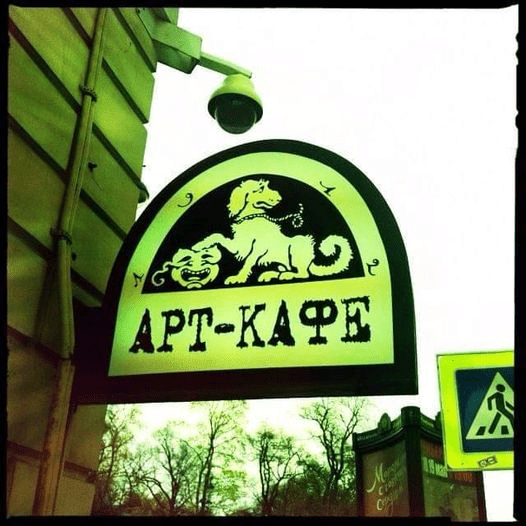
Eleven years ago I read a not-so-subversive piece called “Driving Under the Influence” at St Petersburg, Russia’s, infamous Stray Dog Café, where in earlier years Pasternak had read, and before him Mandelstam, who died in a gulag near Vladivostok for his threatening words, and also Anna Akhmatova, and a string of dissidents who risked their lives so their prose and poetry might be read and heard.

We sat at a long table, and while everyone listened to my innocent story of teaching my son to drive, I imagined the whispers and quiet conversations in those same corners about the Czar, who walked the hallways of the Winter Palace a few hundred yards away. What a world it must have been, I thought, but also, how good those days of revolution and dissidence were in the past. The city in 2013 was alive with artists, writers, photographers, musicians, and mostly legal political opposition to everything, with St Petersburg University students free to protest, complain, object, and support whatever they desired. As a result, no one needed to so much. It’s the greatest value of freedom; when people are free to choose, fighting and uprising recede. The horror of seventy-five years of Soviet oppression, preceded by three centuries of Czarist rule, was finally over.

My Russian friend and photographer Valentine shot pictures of old women, survivors of the siege, and of his children, his “Butterflies,” and laughed through a cloud of vodka, ever ecstatic at being able to express himself in marketplaces, newspapers, and galleries. Full of life and hope, these artists pushed their mediums to the max and shared stories of “darker” times when pointing a camera at anyone meant a possible sentence in Siberia, just east of Irkutsk, not far from the archipelago of dead poets. Not any longer, Valentine told me again and again over shots of Russian Standard and tables of photographs that just a few years earlier he had to hide those photographs inside the lining of books. “You should write here, Bob,” he told me. “You’d be free to write here,” he said. “Those dark days of Soviet Russia are dead.”

That was then.

The truth has once again folded up her tables and left the marketplace; transparency has turned away in shame. The Russia that Valentine came to love for three decades, and the only one I ever knew firsthand, is gone. It is gone. The citizens still attempt to navigate the streets of Peter the Great, the backroads of their “Window to the West,” but they are once again driving under the influence of a Neo-Stalinism, Vladimir Putin’s Fascist Regime.

Russia needs dissidents again. It is a time for poets. The Stray Dog should be crowded again with college students and artists listening to new poets risk everything for a few stanzas of truth. A contemporary Mandelstam, a modern-day Pasternak, should come out of the corners of the university classrooms and set ablaze a bonfire of observations and digressions. Because nothing ignites writers more than the attempt to extinguish truth.

Can You Say “Non-fictionalist”?

Last night I had dinner with seven other writers at an Italian restaurant (manicotti, meatball, salad with blue cheese dressing, chianti). I never before met the two women on either side of me, or a few of the others for that matter. We talked about weather, of course, and about the food. Where we’re from, what genre we write in (most of these people are poets). The talk turned to “what we’re working on,” and that’s when I ordered the wine. I’m not comfortable talking about what I’m working on unless I, a. know you very well, and even then, b. will change the subject. I’m not alone in this. One of my closest friends for twenty years is a poet and in all of our lunches or dinners through the years we only ever talked about writing when we read together at some event, and even then we don’t. Rick, another very dear friend, was there last night and we sideswipe the writing conversation nearly all the time. We’ll send each other drafts for comments, but don’t really talk about it

I never saw the point. I’m interested in what they’re working on, sure, kinda, but I’d rather really just read the final copy. If they do mention it, I’m really looking for little more than, “A collection about warts” or the like, no details. Peek my interest and step back. And who am I kidding; I’m not going to ask what anyone is working on, particularly people I don’t know. I don’t think it’s rude; I’m more comfortable with my work if it goes from brain to screen without getting blown around in the air between other people. I don’t mind the question; I get it all the time. But my answer will be little more than “some work about teaching,” or “several things going right now,” which doesn’t answer the question at all, which works best.

I find it revealing that the writers I know well also simply don’t really talk about it. We’ll talk about the process, or the stages of publication, or past work (ugh), but what’s on the front burner now is simmering and it’s best not to get too close.

It might be different for poets, or even novelists. But then those monikers right there in the previous sentence explains a lot–they are, in fact, “poets” and “novelists.” I’m neither, and what I do do does not translate to such a label. “Hi, I’m Bob, I’m a non-fictionalist.” Memoirist comes closest, I suppose, but most of my writing is not (my last book and my next book excepted, since both are full-length manuscripts about a certain time and place in my past). I write essays, or observations. A book slated for 2025 is a Sedarisest-style book about teaching; it’s not a memoir, so in that case I could be called an essayist, but that’s not accurate either since, it’s very memoiry, but, well, never mind.

The point is the manicotti. Growing up my mother always pronounced in manigaut (I’m not even sure how to spell this, but assume it is said as might an Italian who doesn’t speak English–without offense to my Italian cousins, and you know who you are). I was old enough to order my own food when I pronounced it that way and some server somewhere looked at me for a minute and replied in all her Virginian perfection, “OH! ManiCATTi!” Okay. Last night I heard a lot of menu items pronounced by the staff in a very non-West Virginian way of saying it, so when I knew I was going to order this dish (avoidance there, thank you), and when our excellent server, Jaimie, asked what I would like, I replied, as might my mother fifty years ago, “Manigaut.” She looked over my shoulder for a few seconds at the menu and replied, “Oh, the manicAtti, excellent.” Sigh.

Do you say what is the proper way to say things or do you say what they simply need to hear, are used to hearing? “I’m working on a piece about being nineteen years old.” “I’m working on a group of short essays, really nearly flash non-fiction, about stages of life, the patience we need when our children are very young and the patience we need when our parents are very old.”

That usually gets an accepting “Sigh. That sounds so good.” But it sucks, so I can’t agree, it might be good later, maybe tomorrow maybe in a dozen years by someone else. And that’s why I don’t talk about it.

Another writer I’m very close to is working on quite an involved work of fiction and is already nearly 100,000 words into it, and does not mind talking about it. But it helps, I believe, that writer clarify all the various aspect of this work, so talking about it somehow sharpens the mind about it. And I truly loved hearing about it.

But that’s not me. I don’t do small talk to begin with, and certainly have more trouble with it when even I don’t know what I’m talking about yet. So I’m more of the grunting type. “What are you working on, Bob?” “A book.” “Nonfictional stuff.” “Being nineteen.”

I was honest and as thorough as I could be. Jaimie returned and asked if I wanted anything else. I was about to order another chianti but hesitated. In America, shouldn’t that be che ante, hitting the ch, instead of the keeantay, pronouncing it as it should be in Italian? And if not, then why are we calling it ManAcotti? It’s Managaut.

A real non-fictionalist would know that.

Proof: