We don’t get up early enough. We don’t play with the kids enough. We don’t walk on the grass enough, we worry too much about losing. We don’t throw the ball enough, hike through the woods, climb the low trees, eat fruit off the vine, go for a drive. We don’t tell enough stories, listen to records, dance for no reason at all. We don’t call old friends who are hard to find, aunts and uncles who made us laugh, stay longer with our parents talking about the times we had, talking about the rain. We don’t journey enough to places close by, we don’t find beauty in what there is plenty of, we don’t appreciate what is common, we don’t celebrate what is in our grasp. We’ve lost the art of contemplation, of solitude, of fasting, of quiet walks. We forget the world exists in each step, the saints and martyrs, philosophers and missionaries walk with us, whisper about the temporal state of life, the immortal flight of a bird. Life is the way we sit around and laugh until two. Life is the feet on the coffee table, the tie undone, the kids asleep in their beds. Life is the sound of water in a pool, the sound of tea poured into china cups, the sound of distant thunder at dusk. Life is unwrapped gifts, cards in the mail, the smell of bacon on Sunday morning; drinking beer with friends on Friday night, the first cold day in autumn we need to wear a sweater, life is the spring grass showing beneath the melting snow. It’s the mother in the door waving to her youngest child moving away. It’s the father at the observation deck waving to his son on the plane. It’s the letting go of small hands; it’s the giving away of the bride, it’s the days that pass without a phone call.
Life is the distance between a falling leaf and the ground.
Not for nothing, here are three definitions straight from my lecture on the first day of my Critical Writing and Thinking course:
Fact. A fact is anything independently verifiable. No one should disagree with the facts unless they haven’t done their homework to find out what is and what is not factual. There are no such things as alternative facts; true facts can be verified and are not obtained from biased individuals with personal agendas. They come from independent sources. Note: The opposing side of an argument would still agree with the facts.
Opinion. A lot of people have the wrong opinion about what an opinion is. It is not how you feel about something. We’ll get to that. It is a “judgement based upon the facts.” So the value of the opinion is dependent on whose judgement it is. Ideally, experts; that is, people who have taken the time, education, and research to find out as much information as possible about a particular idea and disseminate the results for us. They know more about the subject than anyone else and have no agenda in the results. Their experience at being able to decipher information through time and in consultation with various other independent researchers, validates the perspective. If someone offers an opinion without finding out the expertise or validity of the source, the opinion is in question and often wrong. Yes, it is possible to have a bad or wrong opinion if the judgement is not based upon independent experts.
Belief. This is what many think of as an opinion. A belief is a judgement based upon faith. Not necessarily religious, but that too. It is a conviction not based upon anything directly and empirically verifiable, but through trust. No one is wrong for their beliefs as they are not opinions, that is, judgements based upon facts; they are judgements based upon convictions.
Here’s the example:
No one questions that when we buy a house and we need to get it inspected, we are wholly concerned about the opinion of the inspector. We want expert inspectors to tell us what is wrong and right with the place and present factual evidence, and we certainly don’t want an inspector who works for the seller and only has their welfare in mind, nor do we want one who doesn’t have the experience and expertise to do the inspection to begin with. No one questions this, but there are people who insist the opinion of a botanist about political affairs is valid. It is not. The botanist has beliefs one may align with—so be it, but do not pretend the information is valid from independent sources.
This leads to the most important question in all of discussions about politics, world affairs, and finances. It is also the question I tell my students is the primary concern of every professor from the time students write a paper for freshman comp to when they obtain a PhD:
Where did you get your information?
That’s it. Everything else isn’t even worth discussing without first establishing that the opinions and facts come from independent, verifiable sources who can study not only historical trends but predict pretty accurately what is likely to happen based upon that knowledge. This is what economists are best at, and so too political scientists. They are able to say, “Based upon these legal notations and previous attempts in various situations, the most likely outcome of these actions is….”
Hope and faith have nothing to do with it.
The emotion swirling through today’s atmosphere is unprecedented, and some of it isn’t because decisions being made are necessarily wrong but because they are unprecedented and seemingly dangerous as they negatively affect millions of people. Those people who are affected—all of us actually—want to know upon what basis these decisions are being made to do whatever it is being done, and who are the independent and valid experts who suggested those actions to begin with. A full disclosure of that information from researchers and experts would curb much anxiety.
No one should be out to change another person’s convictions. But if there is an argument at hand, the only way to win is by presenting facts and opinions, not beliefs, and one must maintain the belief that others will accept those facts and opinions.
“We teach everything in the world to people, except the most essential thing. And that is life. Nobody teaches you about life. You’re supposed to know about it. Nobody teaches you how to be a human being and what it means to be a human being, and the dignity that it means when you say, “I am a human being.”
–Leo Buscaglia, “The Art of Being Fully Human
About a month ago my students seemed unengaged during a lecture about literary terms. I sat down and was quiet for several minutes. Few things can grab the attention of a disinterested student like a professor’s sudden silence.
I told this story:
When I was a freshman, we had orientation where we broke into small groups and were led by a couple of seniors and a guidance counselor or other such school official, and we did various activities together from the obvious, like a school tour of where everything is that you could possibly need, to the ludicrous, like a swimming competition where we all had to wear pantyhose and do laps in the college pool.
At some point each group gathered in the library and watched a video called, “The Art of Being Fully Human,” by the late Leo Buscaglia, a philosophy professor at USC, and a bestselling author/lecturer. In the video he tells of how when teaching he finds “friendly eyes,” someone in class who is mentally present, and he talks to them. He found them in the eyes of an alert young woman in the third row. She didn’t always agree with him, he says, but she was there. So he was looking forward to her showing up to his request of everyone to stop by his office and introduce themselves. She didn’t show, and several classes went by without her being present. So he went to the dean to inquire about her, and it turns out she had driven up to Pacific Palisades, got out of her car, and in front of many witnesses, jumped off the cliff.
I sat silently for a moment more.
Buscaglia says it changed his life, because that was the moment he became fully aware that we teach everything in the world to people, from calculus to literature to engineering to chemistry, but we don’t spend one moment teaching the art, the absolute art and beauty, of being alive. We leave that lecture off the syllabus. We’re supposed to just “know” how to deal with troubles and bullying and failure and insecurity and disappointment. No one teaches us the value of being ourselves, of being alive and human.
I then asked my students a familiar question to anyone who has ever taken one of my classes: What are you doing here? Why did you decide in your life that right now out of all the options available to you, you chose to sit here, now, with me, and learn about Melville? Because we need to remind ourselves of two things: one, we chose to be here instead of anywhere else; and two, while this class, or this semester even, may not be what you enjoy, we need to keep the big picture in mind; that this might be the slow part of an exciting life ahead.
End of story. That was in October.
Last night one of my students who had not been in class in a few weeks waited until everyone else had left and she stopped me. We’ve had discussions before as she is transitioning and it has been more than a little difficult with family, friends, and her own confidence. She had told me her depression can spin out of control.
She apologized for not being in class and asked if it was okay to still turn in the writing that had been due. I assured her it was absolutely fine, and I’d read it first to make suggestions before she turns it in for a grade. Then she reminded me of the Buscaglia lecture.
“I’m the girl in the third row,” she said. “If she were here she’d look around the room and recognize me as herself.”
I was quiet.
“I had written letters to everyone I know apologizing for what I planned to do. Again. I was completely at peace with the decision to die.” She was visibly shaking as she talked. “But then I searched online everywhere for who you were talking about, and I didn’t even know how to spell his name, but my mother knew who I meant, and I read a few of his books. I’m still alive now because of that.”
“How are you feeling?”
“Different. I feel different. I’m back in counseling.”
We talked a bit more and then walked outside. “You’re an engineering major, right?”
“I was. I am switching it for next semester.”
“To?”
“Philosophy.”
I laughed. “Leo Buscaglia would be very happy!”
She was crying a bit, and then said she feels like being in college, finally.
I nodded. “But you know, as a philosophy major, you’re never going to get a job, right?”
She laughed. “I’ll teach.”
I started my very long drive home up the bay and realized, quite clearly and positively, had she been in my class thirty years ago, my entire career would have been different. I’m so glad she showed up now.
***
A school principal gave this to Haim Ginott. She said:
“I am a survivor of a concentration camp. My eyes saw what no person should witness. Gas chambers built by learned engineers. Children poisoned by educated physicians. Infants killed by trained nurses. Women and children shot and killed by high school and college graduates. So I’m suspicious of education. My request is: help your students to be human. Your efforts must never produce learned monsters, skilled psychopaths, or educated Eichmanns. Reading and writing and spelling and history and arithmetic are only important if they serve to make our students human.”
I applied recently to take graduate courses in Philosophy; I thought it might explain the inexplicable, or at least help me realize the greatest minds in human history haven’t got a clue either. It’s clear that depression and anxiety do not filter through the subconscious to the surface because people find the world too sad; it is because they find it too miraculous, overwhelmingly beautiful and vast and unconquerable in a dozen lifetimes, making the average 9-5 seem pointless.
So, philosophy. For fun, of course.
Application question option six (there were eight options):
What are your thoughts about our place as humans in this world in this time? Keep your answer brief.
Answer:
We don’t live then die; we don’t exist and then not. No. We find ourselves dying on a daily basis. In reality, and with respect to The Garden and other such origin theories, we start complete and lose a little as we go, like that small bozzetti of the Visitation by Tagliapietra that started as a block of terra cotta clay and ended with Elizabeth and Mary, both with child. We blow through our teens until we’re twenty when we know we’ll live forever. At thirty we think we’ll die so we open the Book of Hours to the “Office of the Dead” at night when we’re alone to prepare ourselves for the hereafter and do our best to rise above it. At least that’s the assumption.
So we leave our marks: carve our names, write our memoirs, sign the canvas, pee on trees. We look for spices and find new worlds, we avoid persecution and found religion, we speak our minds and lose our heads, we say what’s right and get left behind. We find out fast that Orwell knew in a “time of universal deceit, telling the truth becomes a revolutionary act.” We teach such a small portion of information it’s barely noticeable—but leave out that amount and life crumbles, falls, and can’t be found. It’s about proof. Of course it’s about proof. Proof of first cause, proof of the passing of time, proof we were here at all, so we take pictures to show, to recall, and to immortalize; but we can’t remember faces since we forget to write it down. Slowly, we lose our energy, our memory, our courage, our determination, our purpose, our identity, our drive, our car keys. We vow—to ourselves, to each other, to the boss, to our parents, to our children, to our God, we vow to do better next time. This breeds confidence. Cockiness. Attitude. So we take vows of chastity, of obedience, of poverty, marriage. We vow to improve, get even, avenge. But all the while we stand on the dock and mock our hesitation while foot soldiers garrison themselves and face death for an eggshell.
Of course we start slow. Always have. One channel, then two, off the air by 11:30 to the sound of fuzz, a long annoying beep, a circle with an x across the white noise screen until six am when the flag flies and the National Anthem plays and the new broadcasting day begins. This taught us patience. It lessoned us in anticipation and quiet. But we pick up a few more channels, we add public broadcasting, we add some locals, then some nationals, then the sky cracks open and we spit out hundreds of possibilities from porn to pygmies on the Discovery channel which tricks us into believing we haven’t yet turned over every stone, and we find ourselves suddenly obsessed with speed and convenience, as if we wonder “how the hell did we do so well and get so far without the speed and convenience of computers, of drive throughs, of touchless cards and curbside pick-up.” We forget so easily.
We avoid topics which indicate endings, so we euphemize the crap out of everything. “He passed.” “We have to let you go.” “I need more space.” Even death, especially death, has been metaphored to, well, death. But still we dig up the bones to point to the obvious: that we’re not the first, not the last and not here long. We get dumped at sea, mummified, burned at the stake. Been going on forever and since we pass through only once in this present form, we direct our energies toward fleeting moments of hyper-existence. But the universal truth is everyone, how shall we say it, everyone will die. Some drink the poison, some lose their heads, some get trampled at coronations, millions die in battle, hundreds of thousands of hunger, many of disease, some assassinated, a couple crucified, some of old age, as if they walked there by foot.
This scares us. So we pray. We say the rosary, go to mass, thank God for the bounty. We eat what’s on the plate because some are starving somewhere else and we keep our mouths closed as we eat and hope no one quotes Isaiah Chapter 49 Verse 10 proclaiming “they will not hunger or thirst, for he who has compassion on them will lead them” and we pick up our forks and swallow the damn peas. We follow St Mark’s quill to the Lion of the Tribe of Judah and hope He’ll help us through. Just in case, though, we pick up the toys because some kids must go without. We keep our lives neat for those who have no life. We want it to look perfect. We want to look right. We want to always look just right. We buy mirrors that don’t reflect what we really believe—that it’s all too much, and our goal is to balance two opposing thoughts: We want to experience it all but can’t, so why bother experiencing any of it at all? What was the point of us? Yeah, that question. Talk about proof.
We make mistakes, call the wrong number, bounce a check, steal a pen and run down the stairs; we speed, we waste food, we waste time, we worry more about our waist than the serving size of rice in a village. They eat grain, millet, rice, wheat, ground in a bowl in the sun, they wait at the well for the women to haul the camel-skin bags and pour them into buckets, they wait at the truck for relief, they wait in line for bread, they wait for the allies to break the blockade, they wait for the sentence, they wait for the end. But they keep going. They haven’t yet learned about convenience and speed. They haven’t yet heard about bounty.
They hike across deserts and seek something else; the were lost, they were just boys who became soldiers. That was their point, apparently. Apparently, that was their purpose. They were Francis Bok who escaped a shed in Sudan, they were Socrates drinking an avoidable cup. Maybe they were born in Brooklyn not Baghdad, they went to school and ate custard. They played little league and went to summer camp where the local villagers put on a show at night near a fire; they moved to the suburbs and got a new car, they shot off fireworks and fired at pop bottles; they ate barbequed burgers and corn on the cob, boxes of clams and played with a little red Spalding ball. They swam in ponds, they hiked the hills and bought postcards; they stayed too long, it passed so fast, what year was that? Who is that in the picture? How did that song go? When did we own that Oldsmobile? Where did we get that painting? We forget to write it down, we’ll remember. We make the mistake of assuming we have total recall. But the books remind us it was some leak somewhere, some crack, some fractured moment that finds us on a couch covered in plastic talking about anniversaries instead of a mat in Mali talking about the dust, wondering about the rain. Such randomness pushes a compromised moody mind toward the abyss, through no fault of anyone’s. But we can’t find fault without proof. So we endure.
Still.
We like to laugh. For fun, of course, but just as much for survival, to blanket our fears, to extinguish our anxiety, to take away the hurt. It hurts anyway so we laugh and hope Buddha’s Vinaya was wrong when it called for ancient monks in India to go to confession for such an offense as laughing. But we laugh. We tickle, we entice, we ridicule, we play the clown, the fool. We work the mirror and tell jokes into mock mics to an imaginary crowd and wait for the laughter to subside before emerging at school or the office or the party to make others laugh, the ultimate in now, the definitive value of absolute present. Why did the chicken cross the road? A man walks into a bar. It’s Nietzsche’s need to call every truth false which was not accompanied by at least one laugh. We laugh and nothing hurts, no one is going to die. We laugh and we must stop eating, talking, drinking, even moving because it is time to laugh, and no one worries when someone laughs. No one is plotting damage or pouring hemlock.
But contrarily and diametrically true is that no one is studying philosophy or English or history because we’re terrified—the ones who are down, depressed, the ones who are accused of “thinking too much” or are called “too melancholic” or “never easily satisfied,” are terrified– not at the sadness of life, the pointlessness of it all–but the grandness, the exquisiteness, the incomprehensible awe of it all, and the slow erosion of patience, the almost indistinguishable drift of simplicity. We are petrified that no one, no one, absolutely no one will understand. It is all too simple. Imagine, apparently it is simply too simple.
Have you ever sat and had dried fish on a rock in the sun, a cup of water from some clear-running stream? Do so and then you will agree with Lord Byron’s decree that he loves not man less but nature more. And I’ve wondered: With such a catalogue of rapturous places to be and explore and exist, who really ever needed the “Dialogues” anyway?
Please.
I wish to study philosophy because I’m looking for proof of something I can’t put my finger on; I need verification of something I have never heard of.


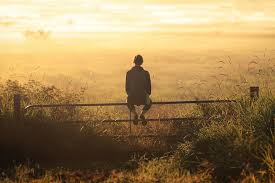
 a view from this wilderness