Bob Unplugged

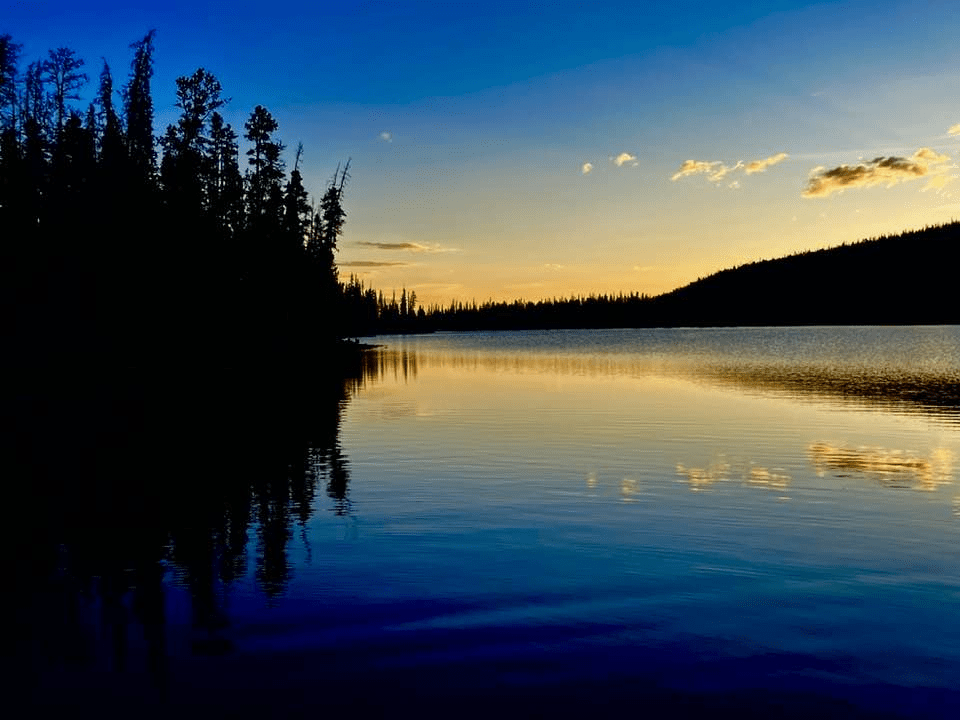
No running water, no electricity, no means of communication. We hiked from our cabin at just over ten thousand feet in the Uinta Mountains to just over eleven thousand feet. Snowpack remained, and while the temperature was pleasant, often even warm, a quick turn into the shade marked the cool dryness. In the evening we kept a fire going in front of the cabin, cooked on a camp stove, drank, went for a walk to watch the moon rise—which didn’t—walked to the dock at Spirit Lake and lay on our backs to watch the abundance of stars. An otter or two swam by, a few moose showed up in the field, chipmunks buzzed about, and the unmistakable peace of absolute silence dominated the days to the point I didn’t even notice. The nights turned cold and we fed the small, nearly 100-year-old cabin’s wood burning stove long enough to make it to morning.

Absent was the news, cellphone reception, communication with anyone else save the lodge owner and his wife, no neighbors in the few other working cabins to chat with, just the indescribable silence and laughter, a lot of laughing.

I worried about grizzlies. “There are no grizzlies here; they’re over in Colorado. Just black or brown bears.” So I worried about black and brown bears.

I worried about snakes. “There are no snakes at this altitude. Too cold.”

Damnit, I needed something to worry about. Habit. What I didn’t worry about was the disconnection with the world; being above the tangled waves of electronics saturating the air just a few thousand feet below. I could breathe; well, except for the air being so thin that I couldn’t breathe. And I could in that brief stretch of days, for the first time in a long time, be unapologetically myself because I knew I could. Sometimes it takes a friend to reveal who you really are. Sometimes it takes a lifetime.

Bob Unplugged.

I’ve been this way before, a long time ago during my sometimes-weeklong jaunts into Mexico before cellphones, or two excursions into Africa, and other places where I was mostly alone, or where the people I was with were equally absent of some umbilical to all things civilized, and all that was left to do was to talk, so we talked. Indeed. We talked about how we missed our moms, we talked about what breaks our hearts, we talked about what we dream of and what we don’t dream of, we talked, as Harry Chapin described, “of the tiny difference between ending and starting to begin.” We talked about how sometimes it takes years to understand the beauty of silence, the value of peace. Remember talking? Not words out loud, but real talking.

The night before I left Virginia I hit “Send” on the email to my publisher which contains the final draft of a book which talks about, in fact, celebrates, that very sense of disconnect, the abandonment of society, the push into the unknown. Early one morning after wandering to the outhouse and then up to the field to see if the moose had returned, I wandered to the lake and walked out on the dock. A soft orange sky spilled just to the top of the mountains, and the water worked from dark black to its normal greens and blues, and I stood alone before the dawn and my mind dislocated itself from time. This could be 1981, I thought, remembering a solid portion of my just-sent book; or it could be 1984 half a world away. It could be 1986 in Pennsylvania, or a year later waist deep in some equatorial river.

It might be years from now or just as easily the Jurassic or Cretaceous periods when dinosaurs tramped about these very hills. I forgot what day it was, and then I forgot how old I was. And then everything fell apart because that happens, things fall apart, but as it turns out that just makes it easier to rebuild from scratch.

I found myself on the dock completely at peace no longer worried about anything. I lay again on the dock as we had the previous night but this time alone and looked up and felt transported in such realistic ways that to describe it here would be to hack my way through this short reflection, but I was transported not to Pennsylvania 1986, not to Senegal or Allegany or the Congo. My entire presence slipped into Great River, New York, nearly fifty years earlier to the very day, and Eddie Radtke must have been somewhere in the woods looking for firewood, and I stared past what must have been the Great South Bay early one morning which he and I had explored daily for a solid wave of our childhood. That’s where my mind went; it reeled northeast about as far as one can, and slipped into 1975.

It was like being back in 1975 at the start of something but this time knowing how to handle it, knowing what to say right and what not to say at all, this time. I had not yet unearthed tennis courts and guitar shops, not yet swallowed the ocean water of the southeast beaches, not yet changed my mind, not yet learned hesitation and self-doubt that befell me just a decade later.

I turn sixty-five in two weeks. This year that day is tangled up in so many memories and symbolism, but something is different now than just a few weeks ago, pre-disconnect, if you will.

At one point in the book to be published later this year, I had been working in a bar in Harrisburg, Pennsylvania, with no true sense of direction except the absolute conviction that the lack of direction was not working for me. Late one night, early one morning I woke on a bench near a lake in a local State Park with no real recollection as to how I got there. I had not been drinking, no drugs, no overworked exhaustive excuses led me to the familiar shore where I had at one time laughed so hard. No, it was my complete indifference that brought me there. And I sat up and waded into the lake to my waist. When I returned to my home that morning, everything changed; or, better said, I changed everything.

Peace does that. Silence, and the depth of some connection that is difficult to find does that.

I lay on the dock at Spirit Lake and remembered the bench two thousand miles east. I’ve had so many changes this past year, perhaps more than in all my previous years combined, and I thought of Jackson Browne: “Oh God, this is some shape I’m in.” But I recalled not the last twelve months but my long drives into Mexico more than forty years ago when I thought I’d find the answers, or the walk across Spain, or the train across Siberia. All those times I was so at peace, so much in the moment and loving my existence, but I had not been this much at peace with myself and who I am—or, better said, who I need to be—since that morning in the park when I felt some sense of absolute clarity, when on a dime I let everything go, disconnected from absolutely all aspects of thought and commitment and simply let myself be myself as I imagined I was meant to be. And I lay on the dock and thought of Paulo Coelho who wrote, “Maybe it’s about un-becoming everything that isn’t really you, so you can be who you were meant to be in the first place,” and things seemed suddenly obvious.

Thank you clarity.

We packed, we meandered our way four days later though the mountains to the lowlands through a small swatch of Wyoming and back into now, back to suburbia, back to the news—the bombing of Iran, the bombing of Israel, the war in Ukraine, the disarray of Washington, the murder of protestors, the abandonment of morality, the sacrifice of truth—all of it, and I briefly envied those who left—Eddie and Letty, Dan and Dave and Mom and Dad. They have been spared this nonsense.

But, briefly, so was I, by choice. We sat in chairs around the fire and laughed like hell when I accidently burned off the soles of my sneakers, laughed harder when after banging my head several times on the exceptionally low doorframe, returned at one point to find the door jam covered in bubble wrap, laughed at the sudden appearance almost on demand of a family of moose, and laughed at the nature of change, the value of friendship. We too often choose not to step away from it all. Seriously, metaphor warning: If you keep your feet too close to the flames something’s going to burn.

I’m stepping away from the nonsense; life is too short. Six and a half decades down and I’ve already outlived nearly everyone I know, so I suppose it’s “time and time and time again to find another way.”
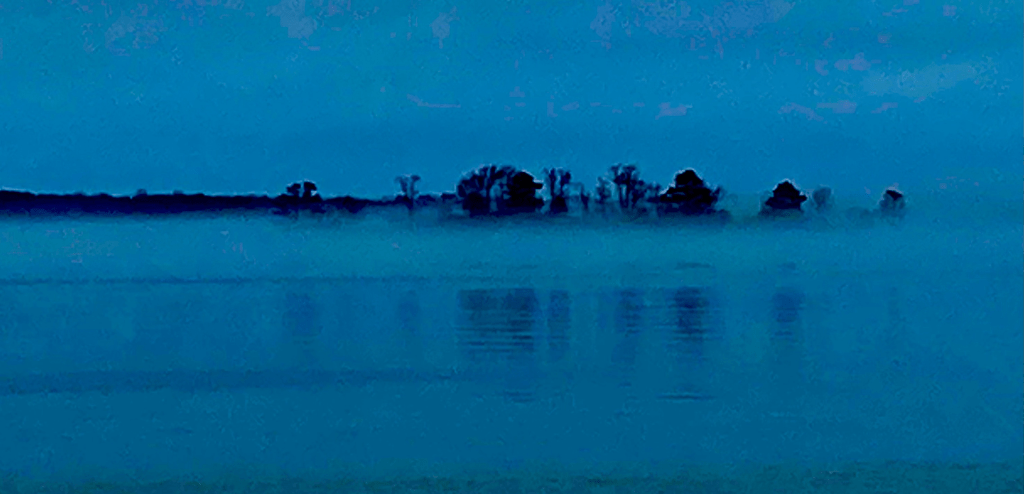
Stopping by the River on an Icy Morning

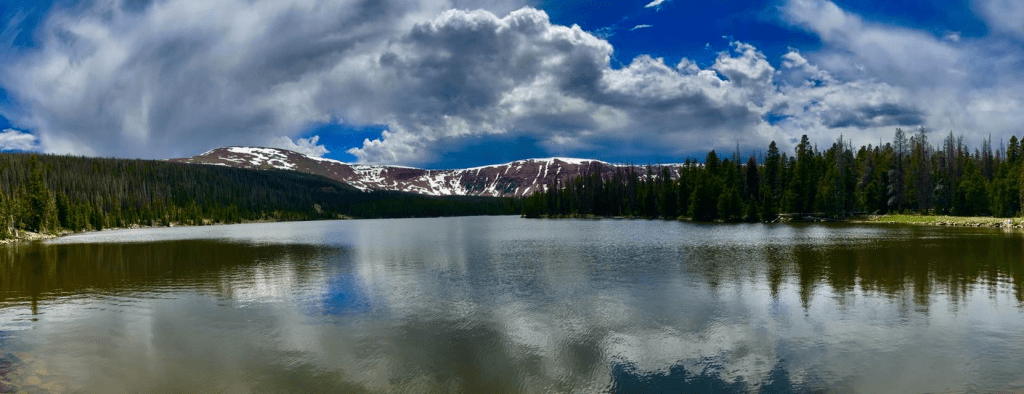
The tide is lower than I’ve seen in some time, mud flats running into the river easily one hundred feet or more. Fiddler crabs scurry about and seagulls land to grab them in the same place they normally would dive from on high into water three or four feet deep. This ebb is unusual.

Where the water does lap at the mud, foam formed from the icy cold winds, with temps in the upper twenties and lower thirties early this morning, and the winds pushing down from the northwest drop those another eight degrees or so. It is cold, and damp, so I feel it in my bones.

I like this. I mean, no, not all the time. But every so often I need some visceral reminder that I am alive now, not tomorrow when I have a laundry list of things to do or yesterday when some punk in my college comp class complained because I didn’t pass his plagiarized paper. Now, I am aware of the cold, the mudflats and panicked crabs, and my skin is tight, my eyes water from the wind, and my breath is frozen. It cleanses my entire world. I move about, which gets my blood flowing, and that not only warms me but awakens my senses even more. My mind, too, is clear, as if the winds and the cold blew off the soot that settled all semester.

Then the obligations seem fleeting, the problems which yesterday boiled my blood from the sheer weight of such minute interruptions, are cooled and dismissed by the ripple of foam running down the beach to Locklies Creek near Rappahannock River Oysters.

Here’s what is important, that I am still here. Alive, but more so, aware that I am alive, here, along this river today, and the cold pulls tight the skin on my face.

I thought of Richard Bach this morning and his work Illusions, in which the protagonist says almost as an aside, “Here’s a test to see if your mission on this earth is complete: If you’re alive, it isn’t.”

Hard to know sometimes, though, what that mission might be, isn’t it? You’d think by my age it would not only be second nature, but nearly complete, but I’m just waking up to the fact I should probably do something with my life. To do that I’m going to have to suppress the cold reality that I’m not young.

Except today, when what could have been some stagnant morning happened to turn kinetic because of the cold. My energy returned like a flood tide, and I stood on the sand wondering how to channel it. I think we do that sometimes; we have ambition, energy, even a wave of hope, but we simply don’t know what to do with it.

And for the first time in a long time, I understood my immediate response:

Nothing. Do nothing.

See the day, walk along the river and watch the eagles find food, and the lingering osprey who has not yet left for points south, dive for his meal. The most essential elements for life go ignored, or worse, aren’t even considered, for our need to be “productive.” But is it any less productive to walk on a leaf-covered path and watch cardinals move from holly tree to the ground and back? Is it any less productive to look east across the bay or the Atlantic and contemplate the waves, their calm and their power, as they approach and recede?

It is the same in summer for me, the blazing heat on my neck and face insist I remain present, the sweat on my forehead somehow similar to the tears from the cold wind, catch me and hold me tight in the moment, and I welcome it because at some point it will no longer be, or, better said, I will no longer be.

But not today. Today a dozen geese came in low across the duck pond and settled on the river just to the west, their honking subsiding, their journey paused for now. It doesn’t end exactly, not yet, but they take a moment and rest before they need to continue their flight.

And maybe they discover their purpose is in these moments, aware of the peace around them when they’re not rushing from one place to another, leading a flock or following the same. For geese, it is when they land and rest that it is impossible to tell who was in charge and who fell behind.

I came home, eventually, made some tea, organized my thoughts, responded to a few inquiries, but I did so with added calm I didn’t have before. I have a sense of peace now, of some sort of presence I can’t quite define, which is good, since I still have more than a little to do in front of me.

Yes, much more to do still in front of me.

Thankful 4

I am not yet among the dead of this world, scattered ashes or sunken corpse. Not yet discussed in past tense, not yet absolved at last rites.

I am still conscious of the leaves on the red maple, hanging on, like me, trying to express brilliance before the fall.

I wake up in soft, fresh cotton sheets and see the trees through the skylight turning toward the sun, and a bird scatters to the porch rail, just like she promised she would.

I can call my mother and say hello, talk to my siblings, laugh with people I have loved since I was nineteen, since I was twenty-five, grateful to have closed those gaps in our lives when we lost track of each other. Grateful to know what it’s like to be quiet and know peace. I can climb hills with my son, stop for lunch and talk about what is beautiful, talk about what is next.

For the peace that can only be found in life, that stillness of the soul that keeps us present. Yes, for that peace and stillness and presence, which one must be conscious of to understand.

For consciousness.  

For the fox at the edge of the woods waiting for apple slices.

The veteran who stopped to see if I was okay.

The homeless man in Norfolk last week who let me help, which reminded me I could; his gift to me.

For having had the type of relationships—so close, so intimate and alive—so that when those souls died, my sadness which is alive still simply reminds me I have known such love, even briefly.

For the way the river still keeps tabs on my moods, washes clean the extremes which constrict my hopes, tugs me back to the Island, or off across the equator to distant mountains on the moon and then washes me ashore here on the edge of what’s next, giving me the strength to fight the tigers that come at night.

Thankful is a shallow word. There must be something better to express our gratitude for being alive, now, with the aroma of leaves, the chill at night pulling the skin taut on my face, the stars stretched out like compassion through the universe. Thankful is not enough.

To still be able to string together a battalion of words which might make someone cry when I remind them of a loved one or make someone laugh when they recall a moment they once knew but thought they had long ago forgotten.

For forgiveness.

For compassion.

For the way I feel when I reach for the phone to call someone who left this world before me, and my heart sinks, and my stomach drops, and I remember, and I put the phone down. For remembering that is another way you can measure love; you remember how you almost called anyway but then didn’t.  

Thankful for the ones who see my mistakes and don’t give up on me.

For the soft touch of another soul who understands.

For understanding.

Peace. Out.

The Peaceful Priest on the left/the asshole on the right/1980’s

A friend of mine is a Franciscan priest who remains calm no matter what happens.

We are not alike.

He is compassionate, understanding, patient, and saint-like. He is perfect for his job and does it 24/7; that is, he is one of those rare souls that couldn’t be anything but some sort of man of God. If he gets stuck in traffic, for instance, he keeps it all in perspective. If someone cuts him off, his response remains, “They really must be in a hurry. I hope they’re careful.” Or, “Wow, God bless them and watch over them, they really must be anxious about some appointment.” His is a peaceful soul.

This contrasts directly with my “Use a frigging turn signal, butthead!” approach. When entering a tunnel and the traffic decelerates from sixty to forty, the good Father cares: “Oh, thank our Lord they are all being careful going into this tunnel. It really must be frightening to so many people.” I handle it with my own style: “It’s a tunnel. IT IS A TUNNEL! It is not a brick wall! Wilie E. Coyote didn’t paint the f***ing thing! The Road did NOT shrink! It’s a damn TUNNEL!”

We obviously address frustration differently, which makes me wonder how we ended up this way. Would Monastery-Bob and Professor-priest keep their temperaments? If I lived on a mountain in prayer would I be less likely to want to kill the cashier for needing a pen to subtract $5 from $20?

I was like him once, my friend the peaceful priest.

When we met during college we talked a long time about peace and where it comes from. To search for peace in the world is a fruitless act. Even if we find it, it can disappear with war, with stress, with distractions and interruptions. It is like turning to others to find what you want to do with your life; it must come from within. And peace, too, must be a spring, not a shower. I always liked that thought.

I once went to Father’s room and found dozens of people drinking beer and laughing as they told stories about their lives. Afterwards, I said I had a great time and found it strange that I could feel so lost among friends on one day and on another feel so connected and centered. He said, “Bobby—tonight you brought the peace with you.”

Man, he made it sound so simple: Bring the peace with you.

So a few years ago when some dirtbag student of mine called me an asshole in class, I thought of Father, and how it is never the situation but how we handle it. I could picture him with his wide smile and deep laugh and huge hands on my shoulders telling me I’m going to be just fine. I brought the student into the division office and sat the little bastard’s ass in a chair while I filled out a withdrawal form. Before I could finish the paperwork, however, and before he stopped crying, I decided to give this “peace” thing a shot.

“Are you scared?” He looked at me. “College, I mean, the assignments? Are you worried?”

“I suppose,” he said, calming down.

“Why?”

It took him a long time to answer something other than the moronic, I don’t know. “I’m not a good student. I was never good at school.”

“You get confused?”

“Yeah,” he said, nodding, knowing I hit on his fear.

“Yeah,” I said. “A lot of people do. I know I did. What you might try doing is stepping back a bit. Sit to the side and watch everything from a distance for awhile—get some perspective. Instead of calling me an asshole, ask me some questions.”

“Right,” he said, with not just a little indignation.

Bring the peace, Bob. Bring the peace.

“Sometimes we need to see things from a different point of view.”

He was quiet a long time and I believed I got through to him, and I wondered what he pictured as I recalled sitting in Father’s room listening to stories of scared and lost students like myself still trying to get a handle on our place in the world.

“Wow, thanks for your psycho-babble bullshit, Dude,” he said.

I took a breath, thought of Father, and told the little prick to get out of my site; that Hardees is hiring and someone has to clean the toilets.

It’s a gift, really, knowing one’s place in the world.

I headed home thinking about peace and frustration, fear and anxiety. He’s where he should be, this former student of mine. He’s out in the real world where he can seek out only those challenges he knows he can conquer. He is part of the masses that only face what they’re not afraid of. I wondered, though, how often I only face what I know I can conquer.

Bringing peace to an otherwise hostile environment is a difficult task and it gets harder when we watch the world simmering in anything but serenity. Maybe that’s why I, too, often avoid the challenge and instead wander down country roads, watch the water ebb and flow rather than suffer the anxiety hurled at us from the news of Ukraine, of Gaza, of DC, of course. It’s why I don’t drive during rush hour, avoid fast food restaurants and box store checkout lines. Hell, maybe I’ll just start giving everyone A’s so less people will call me bad names.

Yes. Let there be peace and let it begin with me, Bob the Asshole. I’m going for a walk and I’m bringing my peace with me.

Aerie: noun: 1. A Hawk or Eagle’s Nest. 2. Bob’s Home.

It’s colder today, and a strong wind blows out of the northeast, off the water, and the last of the leaves are letting go. It’s desperately Autumn here along the Bay. Yesterday the colors were brilliant, at their “peak,” and today they are muted. Tomorrow the leaves will mostly have fallen. I walked the paths just now here at Aerie, and the skin on my face feels tighter, the back of my neck is cold.

The sound of dry leaves and the wind is immediate. The clouds are low and dark—steel blue—layered deep clear past the horizon, as if they’re keeping out the rest of the world. They threaten, of course, but somehow they protect as well. It only took a few turns around the property and a meander past the duck pond and river to let go of the world for a while. Genocide cannot find me here; bombings will not find me here. Invasions and deficits and brashness and ridicule cannot locate me when I’m here at Aerie, and the sky is low like this, and the only sounds are the leaves in the wind and the water pushing back on the rocks, and the geese over the recently harvested fields.  

I left home far more than I should have. It was always interesting and exciting to come home after a month somewhere else and see how so much had changed; leaves either completely fallen or fully alive. I am glad for the places I’ve been and the people I’ve grown close to in my travels. But in retrospect it seems I was mostly out there looking for something allusive, some semblance of peace, perhaps. And today walking up the hill from the river I realized it might be the kind of peace I find here at Aerie. I almost find it here in Spring, working in the garden, osprey calling above while teaching their young to fly; and in Summer when we scull out on the Rappahannock, up the inlets to the west, stopping for oysters at a small grill near the bridge. In Winter, when deer and fox come closer to the house looking for food, finding apples, and I can sit on the steps for hours teasing one fox closer, and then closer still, and she eats a few slices before taking a large core in her mouth to bring back to her den to share with her young.

But it is Fall, of course, when I come closest, and the smell of leaves is deep, and white oak burns in the fireplace, and we heat up apple cider and I can sit on the patio at night for hours, bundled against November, working on something in my mind, remembering the reach from some other time.

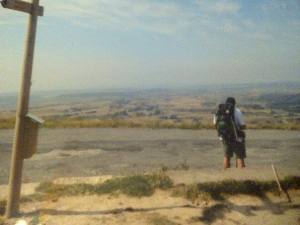
Last week I walked to the river and a bald eagle stood in the field to the east where corn had been just a few weeks ago. It never fails that every time the eagles return this time of year, I remember a song by one of the primary influences in my life for my love of nature–John Denver. He wrote, “I know he’d be a poorer man if he never saw and eagle fly.” I always knew it to be true; I just never dreamed it would happen from my front porch. I have hiked in the Rockies, and I’d hike there every day if I could. And I’ve walked across the Pyrenees, through the Berkshires, along the Camino de Santiago where I must return to truly unearth that peace. Yet here where the Rappahannock meets the Chesapeake is where all my songlines converge.

It’s colder today, and grey. The paths are covered in leaves, as they should be this time of year, and my son is baking biscuits and heating up apple cider downstairs. I have some serious metaphorical hills still to climb, but today, outside, I can hear squirrels arguing, and the driveway is covered in acorns. A close friend of mine pointed out recently that to him Autumn is hope, it is life tucked away for awhile giving us a chance to start over in a few months. He’s right, of course, but I wish I could slow the whole thing down. I don’t want things to change so fast anymore. I like the sound of the leaves as I walk the paths, the colors as I lay in my hammock and watch them fall. I find peace in the carpet of stars at night, out early enough in these winter months for me to spend hours looking up, wondering. My anxiety settles down when I sit on the patio at night and hear rustling in the woods as the fox comes to call. I have lost so much faith in humanity it is difficult to write about. I need a breath; I need to be restored. It seems that despite our potential to banish the evil in the world, we continue to falter. But here at Aerie on the eastern edge of Virginia’s Middle Peninsula, something eternal is happening even as life let’s go and settles softy around me, marking time like decades.

Peace. Pax. Mir. Salam.

Peace-Typography-Wallpaper-Widescreen-HD

I do not understand why everyone doesn’t celebrate Christmas; I really don’t. I understand the ones who shun Easter; Easter, after all, is what makes Christianity what it is with the resurrection as the foundation of the faith. It is Easter, after all, that set the whole religion in motion. So if you don’t buy into the resurrection part, well then Easter is not for you. Some say Christianity as a faith began with his birth, but I don’t think so. It is the resurrection that turned the prophet into a savior. So if you’re not good with that savior part, okay; but come on–how can you disagree with his ideas, his philosophy? (that’s rhetorical people)

Christmas is when we celebrate the birth of someone—Son of God, Messiah, Prophet, call him what you will based upon your faith, or lack thereof—who is literally the personification of peace. It is not the season to directly recognize his divinity; Christmas is decidedly about his humanity. The man preached absolute peace, encouraged us to love our enemies and forgive them, reminded us to remember our own shortcomings, and insisted on love as the basic tenet of life. Who can possibly have a problem with that?

It seems a lot of people.

I have one friend who hates Christmas. Despises it. Absolute contempt. Though to be fair, he feels that way about everything and everyone. But this time of year he is especially hostile. I don’t know why except he believes not believing in the divine means you shouldn’t believe in the humanity. That makes no sense to me. Shouldn’t we start with humanity? Isn’t that the point to begin with? If you don’t comprehend the mystery of the resurrection, you can at least understand the life of this rebel who stopped history in its tracks. For God’s sake, he cracked history in half so that even those who crucified him must be dated relative to his life. Christmas Day is a chance to remember the one Person who had perhaps the greatest effect on all of humanity.

Some don’t like the shopping, the carols, the crowds, and the commercialization of Christmastime. I never understood that either. If you don’t like the commercialization and crowds and shopping then don’t buy anything. But to put a positive spin on it all: it is the season when retailers do well enough to keep the prices down, when even the most tight-assed co-workers buy a tray of food for the luncheon, and strangers greet you with something other than disgust. It’s like a big, seasonal “time out” where everyone gets to pretend to get along. In July when a six-pack of Corona is reasonably priced, Merry Christmas. Some of those naysayers prefer to point out the hypocrisy of the season, noting the phoniness of pretending to be nice one day, saying “Merry Christmas,” and not giving you the time of day the next.

Okay, but listen: if you have the choice of those around you being nasty only eleven months of the year instead of twelve, wouldn’t you take it? And since when is your peace of mind and happiness dependent upon what someone else says or does? If that is true then there is no better time to pause and contemplate the peace that is the season. That WWJD wristband so popular for a short time some years ago makes perfect sense. Here is The example of how we should act toward other people; here is The Ideal—a Birth that happened only one time in the history of ever—surely it isn’t a bad idea to take one day to recognize his time here on earth and his absolutely radical ideas of, you know, peace on earth and goodwill toward everyone. Have you read his bio? Go ahead, Wiki Him, and then tell me his birth isn’t worth celebrating.

How about this: make dinner and invite friends and family and tell stories of days long ago—like something out of a Norman Rockwell painting. Put some extra spice in the stuffing and make sure someone finishes off the wine. Put the game on, sit near the fire and have a drink and remember those who can’t be with us any longer. They’re missed, especially this time of year. Remember those in homeless shelters and under bridges. Because we, all of us, are the peacemakers, We have to be. There’s no one else.

Peace my friends.

And Merry Christmas.